

HPS2-THRIVE randomized placebo-controlled trial in 25 673 high-risk patients of ER niacin/laropiprant: trial design, pre-specified muscle and liver outcomes, and reasons for stopping study treatment
Open accessThe DOI matches its Crossref record; 25 of the 25 references it cites were found in a registry or an index.
Abstract
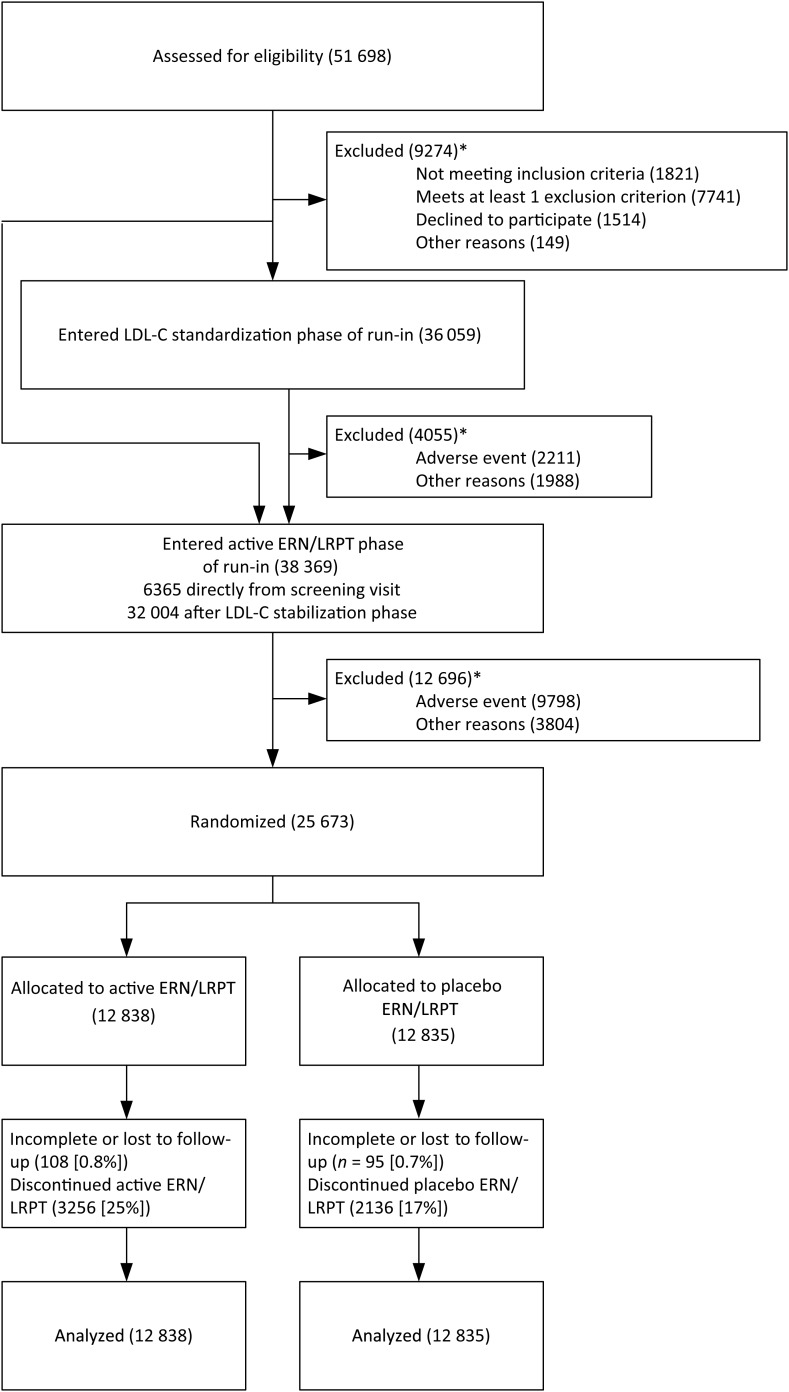
AIMS: Niacin has potentially favourable effects on lipids, but its effect on cardiovascular outcomes is uncertain. HPS2-THRIVE is a large randomized trial assessing the effects of extended release (ER) niacin in patients at high risk of vascular events. METHODS AND RESULTS: Prior to randomization, 42 424 patients with occlusive arterial disease were given simvastatin 40 mg plus, if required, ezetimibe 10 mg daily to standardize their low-density lipoprotein (LDL)-lowering therapy. The ability to remain compliant with ER niacin 2 g plus laropiprant 40 mg daily (ERN/LRPT) for ~1 month was then assessed in 38 369 patients and about one-third were excluded (mainly due to niacin side effects). A total of 25 673 patients were randomized between ERN/LRPT daily vs. placebo and were followed for a median of 3.9 years. By the end of the study, 25% of participants allocated ERN/LRPT vs. 17% allocated placebo had stopped their study treatment. The most common medical reasons for stopping ERN/LRPT were related to skin, gastrointestinal, diabetes, and musculoskeletal side effects. When added to statin-based LDL-lowering therapy, allocation to ERN/LRPT increased the risk of definite myopathy [75 (0.16%/year) vs. 17 (0.04%/year): risk ratio 4.4; 95% CI 2.6-7.5; P < 0.0001]; 7 vs. 5 were rhabdomyolysis. Any myopathy (definite or incipient) was more common among participants in China [138 (0.66%/year) vs. 27 (0.13%/year)] than among those in Europe [17 (0.07%/year) vs. 11 (0.04%/year)]. Consecutive alanine transaminase >3× upper limit of normal, in the absence of muscle damage, was seen in 48 (0.10%/year) ERN/LRPT vs. 30 (0.06%/year) placebo allocated participants. CONCLUSION: The risk of myopathy was increased by adding ERN/LRPT to simvastatin 40 mg daily (with or without ezetimibe), particularly in Chinese patients whose myopathy rates on simvastatin were higher. Despite the side effects of ERN/LRPT, among individuals who were able to tolerate it for ~1 month, three-quarters continued to take it for ~4 years.
Overview
The claims and statistics of this paper haven’t been checked yet.
Free: it reads the open-access text and checks the first 5 claims that cite a source we can check. Create a free account to check every claim.
Integrity signals
Registry
Cites
Statistics
Figures
Verification
Claims the paper makes
The claims and statistics of this paper haven’t been checked yet.
Free: it reads the open-access text and checks the first 5 claims that cite a source we can check. Create a free account to check every claim.
Claims other papers make about this one
Each is checked against this paper’s own text: does it say what the citing paper says it does?
The source backs part of the claim, not all of it — or backs it for a different population, condition or comparison.
In the citing paper
“Niacin also lowers LDL-C levels by 15–20%,49 but recent large randomized trials showed a significant excess of adverse effects and no significant CVD benefit when added to background statin treatment; therefore, niacin derivatives are no longer available for prescription in Europe.50,51”
From Statin-associated muscle symptoms: impact on statin therapy—European Atherosclerosis Society Consensus Panel Statement on Assessment, Aetiology and Management (2015) · cites this paper as [51]
Experimental — accuracy not yet measuredThe source backs part of the claim, not all of it — or backs it for a different population, condition or comparison.
In the citing paper
“outcome trials that have targeted HDL-C pharmacologically and have included patients with low HDL-C at baseline, have not demonstrated reduced CVD risk despite appreciable increases in HDL-C.5-10”
From Is Isolated Low High-Density Lipoprotein Cholesterol a Cardiovascular Disease Risk Factor?: New Insights From the Framingham Offspring Study (2016) · cites this paper as [8]
Experimental — accuracy not yet measuredThe source backs part of the claim, not all of it — or backs it for a different population, condition or comparison.
In the citing paper
“In contrast, recent studies have failed to demonstrate that high HDL-C acquired naturally or pharmacologically, is associated with reduced CVD risk.5-11,18”
From Is Isolated Low High-Density Lipoprotein Cholesterol a Cardiovascular Disease Risk Factor?: New Insights From the Framingham Offspring Study (2016) · cites this paper as [8]
Experimental — accuracy not yet measuredThe source backs part of the claim, not all of it — or backs it for a different population, condition or comparison.
In the citing paper
“Prior CV outcome studies that administered therapies with TG‐lowering effects (niacin or fenofibrate) on top of statin therapy did not reach their primary endpoints.”
From Rationale and design of REDUCE‐IT : Reduction of Cardiovascular Events with Icosapent Ethyl–Intervention Trial (2017) · cites this paper as [12]
Experimental — accuracy not yet measuredThe source backs part of the claim, not all of it — or backs it for a different population, condition or comparison.
In the citing paper
“Benefits in outcome studies appear limited to subgroups with high TG and low HDL-C, highlighting the complexity of translating TG reduction into ASCVD risk reduction [61, 74–77].”
From Targeting Triglycerides in Cardiovascular Disease Prevention: Evidence, Mechanisms, and Emerging Therapies (2026) · cites this paper as [77]
Experimental — accuracy not yet measured
3 more claims about this paper
Create a free account to see every claim other papers make about this one.
Self-check
Percentages, sums and reported differences re-computed from the paper’s own numbers.
The self-check needs the paper’s full text.
Citations
Cites
European Guidelines on cardiovascular disease prevention in clinical practice (version 2012)
Authors/Task Force Members:, Perk, J., De Backer, G., Gohlke, H., Graham, I., Reiner, Ž., Verschuren, M., Albus, C., Benlian, P., Boysen, G., et al. (2012) · European Heart Journal · doi:10.1093/eurheartj/ehs092 · Cited by 8,490
Self-citationCholesterol Treatment Trialists' (CTT) Collaboration (2010) · The Lancet · doi:10.1016/s0140-6736(10)61350-5 · Cited by 6,550
Authors/Task Force Members, Graham, I., Atar, D., Borch-Johnsen, K., Boysen, G., Burell, G., Cifkova, R., Dallongeville, J., De Backer, G., Ebrahim, S., et al. (2007) · European Heart Journal · doi:10.1093/eurheartj/ehm316 · Cited by 3,753
Self-citationNiacin in Patients with Low HDL Cholesterol Levels Receiving Intensive Statin Therapy
The AIM-HIGH Investigators (2011) · New England Journal of Medicine · doi:10.1056/nejmoa1107579 · Cited by 2,911
Major lipids, apolipoproteins, and risk of vascular disease
The Emerging Risk Factors Collaboration* (2009) · JAMA · doi:10.1001/jama.2009.1619 · Cited by 2,731
SLCO1B1 Variants and Statin-Induced Myopathy — A Genomewide Study
(2008) · New England Journal of Medicine · doi:10.1056/nejmoa0801936 · Cited by 2,043
Clofibrate and Niacin in Coronary Heart Disease
(1975) · JAMA: The Journal of the American Medical Association · doi:10.1001/jama.1975.03240160024021 · Cited by 1,747
Genetic Variants Associated with Lp(a) Lipoprotein Level and Coronary Disease
Clarke, R., Peden, J. F., Hopewell, J. C., Kyriakou, T., Goel, A., Heath, S. C., Parish, S., Barlera, S., Franzosi, M. G., Rust, S., et al. (2009) · New England Journal of Medicine · doi:10.1056/nejmoa0902604 · Cited by 1,671 · cited 1×
“There is also evidence for a causal association between Lp(a) and CHD, with lower Lp(a) associated with lower CHD risk.(7) Niacin does, therefore, have multiple effects on lipid metabolism which might be beneficial.”
BackgroundSelf-citationGraham (2007) · doi:10.1097/01.hjr.0000277983.23934.c9 · Cited by 1,647
The safety of statins in clinical practice
Armitage, J. (2007) · The Lancet · doi:10.1016/s0140-6736(07)60716-8 · Cited by 833 · cited 1×
“Niacin does not inhibit cytochrome P450 3A4 or interfere with statin-glucuronidation, but it has been found to increase simvastatin blood concentrations by about one-third,(24) and statin-induced myopathy is known to be associated with higher blood statin levels.(25) Asian subjects are also recognized to have higher b…”
BackgroundSelf-citation
Research works printed but not linked: 4
- The Emerging Risk Factors Collaboration, 2009, JAMA, 302, 1993, 10.1001/jama.2009.1619 · DOI · Paper page
- 2011, New England Journal of Medicine, 365, 2255, 10.1056/nejmoa1107579 · DOI · Paper page
- 2008, New England Journal of Medicine, 359, 789, 10.1056/nejmoa0801936 · DOI · Paper page
- 2007, The American journal of cardiology, 99, S22, 10.1016/j.amjcard.2006.11.018 · DOI · Paper page
Cited by
Items 101–200 of 685
Ross, S., D’Mello, M., Anand, S. S., Eikelboom, J., CARDIoGRAMplusC4D Consortium*, Stewart, A. F. R., Samani, N. J., Roberts, R., & Paré, G. (2015) · Circulation: Cardiovascular Genetics · doi:10.1161/circgenetics.114.000952 · Cited by 90
Efficacy and safety of nicotinamide in haemodialysis patients: the NICOREN study
Lenglet, A., Liabeuf, S., Esper, N. E., Brisset, S., Mansour, J., Lemaire‐Hurtel, A., Mary, A., Brazier, M., Kamel, S., Mentaverri, R., et al. (2016) · Nephrology Dialysis Transplantation · doi:10.1093/ndt/gfw042 · Cited by 94
The role of adiponectin in cholesterol efflux and HDL biogenesis and metabolism
Hafiane, A., Gasbarrino, K., & Daskalopoulou, S. S. (2019) · Metabolism · doi:10.1016/j.metabol.2019.153953 · Cited by 93
Triglyceride and Triglyceride-Rich Lipoproteins in Atherosclerosis
Zhang, B., Yin, F., Qiao, Y.-N., & Guo, S. (2022) · Frontiers in Molecular Biosciences · doi:10.3389/fmolb.2022.909151 · Cited by 105
Consensus statement on management of dyslipidemia in Indian subjects
Chandra, K. S., Bansal, M., Nair, T., Iyengar, S. S., Gupta, R., Manchanda, S. C., Mohanan, P. P., Rao, V. D., Manjunath, C. N., Sawhney, J. P. S., et al. (2014) · Indian Heart Journal · doi:10.1016/j.ihj.2014.12.001 · Cited by 102
Joo, H. J., Cho, S.-A., Hong, S. J., Hur, S., Bae, J., Choi, D., Ahn, Y., Park, J., Choi, R. K., Choi, D., et al. (2016) · Lipids in Health and Disease · doi:10.1186/s12944-016-0374-5 · Cited by 85
Wissing, K. M., & Pipeleers, L. (2014) · Transplantation Reviews · doi:10.1016/j.trre.2013.12.004 · Cited by 91
Saroglitazar for the treatment of dyslipidemia in diabetic patients
Joshi, S. R. (2015) · Expert Opinion on Pharmacotherapy · doi:10.1517/14656566.2015.1009894 · Cited by 79
Muntean, D. M., Thompson, P. D., Catapano, A. L., Stasiolek, M., Fabis, J., Muntner, P., Serban, M.-C., & Banach, M. (2017) · Drug Discovery Today · doi:10.1016/j.drudis.2016.09.001 · Cited by 82
Safety Profile of Extended-Release Niacin in the AIM-HIGH Trial
Anderson, T. J., Boden, W. E., Desvigne-Nickens, P., Fleg, J. L., Kashyap, M. L., McBride, R., & Probstfield, J. L. (2014) · New England Journal of Medicine · doi:10.1056/nejmc1311039 · Cited by 82
WEINTRAUB, H. S. (2013) · Atherosclerosis · doi:10.1016/j.atherosclerosis.2013.07.041 · Cited by 90
An atlas of G-protein coupled receptor expression and function in human subcutaneous adipose tissue
Amisten, S., Neville, M. J., Hawkes, R. G., Persaud, S. J., Karpe, F., & Salehi, A. A. (2014) · Pharmacology & Therapeutics · doi:10.1016/j.pharmthera.2014.09.007 · Cited by 93
HDL, Atherosclerosis, and Emerging Therapies
Hafiane, A., & Genest, J. (2013) · Cholesterol · doi:10.1155/2013/891403 · Cited by 80
Mason, R. P., & Jacob, R. F. (2015) · Biochimica et Biophysica Acta (BBA) - Biomembranes · doi:10.1016/j.bbamem.2014.10.016 · Cited by 77
High-Density Lipoproteins in the Prevention of Cardiovascular Disease: Changing the Paradigm
Tuteja, S., & Rader, D. J. (2014) · Clinical Pharmacology & Therapeutics · doi:10.1038/clpt.2014.79 · Cited by 84
The pathogenesis of atherosclerosis
Douglas, G., & Channon, K. M. (2014) · Medicine · doi:10.1016/j.mpmed.2014.06.011 · Cited by 92
New Therapeutic Approaches to the Treatment of Dyslipidemia
Rader, D. J. (2016) · Cell Metabolism · doi:10.1016/j.cmet.2016.01.005 · Cited by 78
Gilbert, O. N., Croffoot, J. R., Taylor, A. J., Nash, M. S., Schomer, K. G., & Groah, S. L. (2013) · Atherosclerosis · doi:10.1016/j.atherosclerosis.2013.11.028 · Cited by 82
Kianbakht, S., Abasi, B., & Hashem-Dabaghian, F. (2013) · Phytotherapy Research · doi:10.1002/ptr.5011 · Cited by 80
“It should be noted, however, that niacin is the most powerful drug for increasing HDL-C levels with its ability to increase values by an average of 15–40% (Tavintharan and Kashyap, 2001; Bays and Stein, 2003; Haynes et al., 2013).”
BackgroundMechanisms of Atherosclerosis Induced by Postprandial Lipemia
Zhao, Y., Liu, L., Yang, S., Liu, G., Pan, L., Gu, C., Wang, Y., Li, D. X., Zhao, R., & Wu, M. (2021) · Frontiers in Cardiovascular Medicine · doi:10.3389/fcvm.2021.636947 · Cited by 78
Niacin, an old drug with a new twist
Song, W.-L., & FitzGerald, G. A. (2013) · Journal of Lipid Research · doi:10.1194/jlr.r040592 · Cited by 69
Niesor, E. J., Schwartz, G. G., Perez, A., Stauffer, A., Durrwell, A., Suchánková, G., Benghozi, R., Abt, M., & Kallend, D. G. (2015) · Cardiovascular Drugs and Therapy · doi:10.1007/s10557-015-6570-0 · Cited by 72
The Therapeutic Role of Niacin in Dyslipidemia Management
Boden, W. E., Sidhu, M. S., & Toth, P. P. (2013) · Journal of Cardiovascular Pharmacology and Therapeutics · doi:10.1177/1074248413514481 · Cited by 75
“04%/ year]).(136) The reasons for the excess SAEs observed in HPS-2 THRIVE are not entirely clear.”
BackgroundIto, M. K. (2015) · Atherosclerosis · doi:10.1016/j.atherosclerosis.2015.06.012 · Cited by 77
Mendelian randomisation applied to drug development in cardiovascular disease: a review
Mokry, L. E., Ahmad, O., Forgetta, V., Thanassoulis, G., & Richards, J. B. (2015) · Journal of Medical Genetics · doi:10.1136/jmedgenet-2014-102438 · Cited by 68
Sherratt, S. C. R., Juliano, R. A., & Mason, R. P. (2020) · Biochimica et Biophysica Acta (BBA) - Biomembranes · doi:10.1016/j.bbamem.2020.183254 · Cited by 67
Inflammation modulation and cardiovascular disease prevention
Awan, Z. A., & Genest, J. J. (2014) · European Journal of Preventive Cardiology · doi:10.1177/2047487314529350 · Cited by 73
Sosale, A., Saboo, B., & Sosale, B. (2015) · Diabetes Metabolic Syndrome and Obesity · doi:10.2147/dmso.s49592 · Cited by 72
Liu, Q. K. (2021) · Journal of Clinical Lipidology · doi:10.1016/j.jacl.2021.05.007 · Cited by 60
Croyal, M., Ouguerram, K., Passard, M., Ferchaud-Roucher, V., Chétiveaux, M., Billon-Crossouard, S., de Gouville, A.-C., Lambert, G., Krempf, M., & Nobécourt, E. (2015) · Arteriosclerosis, Thrombosis, and Vascular Biology · doi:10.1161/atvbaha.115.305835 · Cited by 62
Kingwell, B. A., & Chapman, M. J. (2013) · Circulation · doi:10.1161/circulationaha.113.002683 · Cited by 68
Safitri, N., Alaina, M. F., Pitaloka, D. A. E., & Abdulah, R. (2021) · Drug Healthcare and Patient Safety · doi:10.2147/dhps.s333738 · Cited by 72
“5 mmol/L.(13) This combination therapy-induced rhabdomyolysis at the same rate as the placebo group (simvastatin 40 mg/day), at 0.”
BackgroundEmerging strategies, applications and challenges of targeting NAD+ in the clinic
Zhang, J., Wang, H., Lautrup, S., Nilsen, H. L., Treebak, J. T., Watne, L. O., Selbæk, G., Wu, L. E., Omland, T., Pirinen, E., et al. (2025) · Nature Aging · doi:10.1038/s43587-025-00947-6 · Cited by 68
New Perspectives on Atherogenic Dyslipidaemia and Cardiovascular Disease
Lorenzatti, A. J., & Toth, P. P. (2020) · European Cardiology Review · doi:10.15420/ecr.2019.06 · Cited by 72
The lipid theory in the pathogenesis of calcific aortic stenosis
Parisi, V., Leosco, D., Ferro, G., Bevilacqua, A., Pagano, G., de Lucia, C., Filardi, P. P., Caruso, A., Rengo, G., & Ferrara, N. (2015) · Nutrition Metabolism and Cardiovascular Diseases · doi:10.1016/j.numecd.2015.02.001 · Cited by 67
Chen, Y., Li, L., Zhang, Q., Clarke, R., Chen, J., Yu, C., Bian, Z., Pan, X.-H., Peto, R., Tao, R., et al. (2014) · International Journal of Cardiology · doi:10.1016/j.ijcard.2013.12.065 · Cited by 65
Self-citationDysfunctional HDL: From Structure-Function-Relationships to Biomarkers
Riwanto, M., Rohrer, L., von Eckardstein, A., & Landmesser, U. (2014) · Handbook of experimental pharmacology · doi:10.1007/978-3-319-09665-0_10 · Cited by 68
Lipoprotein(a) Levels and Recurrent Vascular Events After First Ischemic Stroke
Lange, K. S., Nave, A. H., Liman, T., Grittner, U., Endres, M., & Ebinger, M. (2016) · Stroke · doi:10.1161/strokeaha.116.014436 · Cited by 63
Hunter, W. G., McGarrah, R. W., Kelly, J. P., Khouri, M. G., Craig, D. M., Haynes, C. S., Felker, G. M., Hernandez, A. F., Velazquez, E. J., Kraus, W. E., et al. (2019) · Journal of the American College of Cardiology · doi:10.1016/j.jacc.2018.10.059 · Cited by 61
Xu, R., Li, S., Li, X., Zhang, Y., Guo, Y., Zhu, C., Wu, N., Qing, P., Sun, J., Dong, Q., et al. (2014) · Journal of clinical lipidology · doi:10.1016/j.jacl.2014.11.003 · Cited by 60
Self-citationKassner, U., Schlabs, T., Rosada, A., & Steinhagen‐Thiessen, E. (2015) · Atherosclerosis Supplements · doi:10.1016/j.atherosclerosissup.2015.02.039 · Cited by 68
Masana, L., Ibarretxe, D., & Plana, N. (2020) · Current Cardiology Reports · doi:10.1007/s11886-020-01326-w · Cited by 54
Sosnowska, B., Stępińska, J., Mitkowski, P. P., Bielecka-Dabrowa, A. M., Bobrowska, B., Budzianowski, J., Burchardt, P., Chlebus, K., Dobrowolski, P., Gąsior, M., et al. (2024) · Archives of Medical Science · doi:10.5114/aoms/183522 · Cited by 65
Overcoming toxicity and side-effects of lipid-lowering therapies
Wilkinson, M. J., Laffin, L. J., & Davidson, M. H. (2014) · Best Practice & Research Clinical Endocrinology & Metabolism · doi:10.1016/j.beem.2014.01.006 · Cited by 64
High-Density Lipoprotein Mediated Cellular Cholesterol Efflux in Acute Coronary Syndromes
Hafiane, A., Jabor, B., Ruel, I. L., Ling, J., & Genest, J. J. (2013) · The American Journal of Cardiology · doi:10.1016/j.amjcard.2013.09.006 · Cited by 64
The Year in Cardiology 2013: cardiovascular disease prevention
Gielen, S., & Landmesser, U. (2014) · European Heart Journal · doi:10.1093/eurheartj/eht551 · Cited by 71
Murphy, A. J., Funt, S., Gorman, D., Tall, A. R., & Wang, N. (2013) · Circulation Research · doi:10.1161/circresaha.113.301112 · Cited by 57
Therapeutic strategies for atherosclerosis and atherothrombosis: Past, present and future
Weber, C., Badimón, L., Mach, F., & van der Vorst, E. P. C. (2017) · Thrombosis and Haemostasis · doi:10.1160/th16-10-0814 · Cited by 60
Detrimental Effect of Hypercholesterolemia on High-Density Lipoprotein Particle Remodeling in Pigs
Padró, T., Cubedo, J., Camino-López, S., Béjar, M. T., Ben‐Aicha, S., Mendieta, G., Escolá‐Gil, J. C., Escate, R., Gutiérrez, M., Casaní, L., et al. (2017) · Journal of the American College of Cardiology · doi:10.1016/j.jacc.2017.05.018 · Cited by 58
Lipid lowering combination therapy: From prevention to atherosclerosis plaque treatment
Masana, L., Plana, N., Andreychuk, N., & Ibarretxe, D. (2023) · Pharmacological Research · doi:10.1016/j.phrs.2023.106738 · Cited by 59
Human genetics of HDL: Insight into particle metabolism and function
Brunham, L. R., & Hayden, M. R. (2015) · Progress in Lipid Research · doi:10.1016/j.plipres.2015.01.001 · Cited by 53
Triglycerides, Atherosclerosis, and Cardiovascular Outcome Studies: Focus on Omega-3 Fatty Acids
Handelsman, Y., & Shapiro, M. D. (2016) · Endocrine Practice · doi:10.4158/ep161445.ra · Cited by 60
An Overview of the New Frontiers in the Treatment of Atherogenic Dyslipidemias
Rached, F. H., Chapman, M. J., & Kontush, A. (2014) · Clinical Pharmacology & Therapeutics · doi:10.1038/clpt.2014.85 · Cited by 59
High Density Lipoproteins and Diabetes
Cochran, B. J., Ong, K. L., Manandhar, B., & Rye, K. (2021) · Cells · doi:10.3390/cells10040850 · Cited by 62
Ishikawa, T., Ayaori, M., Uto‐Kondo, H., Nakajima, T., Mutoh, M., & Ikewaki, K. (2015) · Atherosclerosis · doi:10.1016/j.atherosclerosis.2015.06.028 · Cited by 59
Combination therapy in dyslipidemia: Where are we now?
Catapano, A. L., Farnier, M., Foody, J. M., Toth, P. P., Tomassini, J. E., Brudi, P., & Tershakovec, A. M. (2014) · Atherosclerosis · doi:10.1016/j.atherosclerosis.2014.09.026 · Cited by 56
Zafrir, B., & Jain, M. (2014) · Cardiovascular Drugs and Therapy · doi:10.1007/s10557-014-6534-9 · Cited by 57
Validation of the Pooled Cohort equations in a long-term cohort study of Hong Kong Chinese
Lee, C., Woo, Y. C., Lam, J. K. Y., Fong, C. H.-Y., Cheung, B. M. Y., Lam, K. S. L., & Tan, K. C. B. (2015) · Journal of clinical lipidology · doi:10.1016/j.jacl.2015.06.005 · Cited by 56
Fogacci, F., Cicero, A. F. G., D’Addato, S., D'Agostini, L., Rosticci, M., Giovannini, M., Bertagnin, E., & Borghi, C. (2016) · European Journal of Internal Medicine · doi:10.1016/j.ejim.2016.08.018 · Cited by 53
Inflammation and beyond: new directions and emerging drugs for treating atherosclerosis
Bertrand, M.-J., & Tardif, J. (2016) · Expert Opinion on Emerging Drugs · doi:10.1080/14728214.2017.1269743 · Cited by 59
Current Cardiovascular Risk Reports
(2013) · Current Cardiovascular Risk Reports · doi:10.1007/12170.1932-9563 · Cited by 52
High-Density Lipoproteins: Biology, Epidemiology, and Clinical Management
Choi, H. Y., Hafiane, A., Schwertani, A. G., & Genest, J. J. (2016) · Canadian Journal of Cardiology · doi:10.1016/j.cjca.2016.09.012 · Cited by 60
Enkhmaa, B., Surampudi, P. N., Anuurad, E., & Berglund, L. (2015) · Europe PMC (PubMed Central) · Cited by 65
Drug‐Induced Diabetes Mellitus: Evidence for Statins and Other Drugs Affecting Glucose Metabolism
Anyanwagu, U., IDRIS, I. R., & Donnelly, R. (2015) · Clinical Pharmacology & Therapeutics · doi:10.1002/cpt.274 · Cited by 54
Gaidarov, I., Chen, X., Anthony, T. L., Maciejewski-Lenoir, D., Liaw, C. W., & Unett, D. J. (2013) · Cellular Signalling · doi:10.1016/j.cellsig.2013.06.008 · Cited by 48
Niacin as antidyslipidemic drug
Julius, U. (2015) · Canadian Journal of Physiology and Pharmacology · doi:10.1139/cjpp-2014-0478 · Cited by 53
van de Woestijne, A. P., van der Graaf, Y., Liem, A. H., Cramer, M. J., Westerink, J., & Visseren, F. L. J. (2013) · Journal of the American College of Cardiology · doi:10.1016/j.jacc.2013.04.101 · Cited by 52
Sibley, C. T., Vavere, A. L., Gottlieb, I., Cox, C., Matheson, M. B., Spooner, A. E., Godoy, G., Fernandes, V., Wasserman, B. A., Bluemke, D. A., et al. (2013) · Heart · doi:10.1136/heartjnl-2013-303926 · Cited by 47
Monitoring of lipids, enzymes, and creatine kinase in patients on lipid-lowering drug therapy
Wiklund, O., Pirazzi, C., & Romeo, S. (2013) · Current Cardiology Reports · doi:10.1007/s11886-013-0397-8 · Cited by 45
Pharmacotherapies for lipid modification: beyond the statins
Gotto, A. M., & Moon, J. E. (2013) · Nature Reviews Cardiology · doi:10.1038/nrcardio.2013.117 · Cited by 46
Chalmers, A. D., Bursill, C. A., & Myerscough, M. R. (2017) · PLoS ONE · doi:10.1371/journal.pone.0187674 · Cited by 48
Effect of Statin Therapy on Outcomes of Patients With Acute Ischemic Stroke and Atrial Fibrillation
Choi, K., Seo, W., Park, M., Kim, J., Chung, J., Bang, O. Y., Kim, G., Song, T., Kim, B. J., Heo, S. H., et al. (2019) · Journal of the American Heart Association · doi:10.1161/jaha.119.013941 · Cited by 46
Ambegaonkar, B. M., Tipping, D., Polis, A. B., Tomassini, J. E., & Tershakovec, A. M. (2014) · Atherosclerosis · doi:10.1016/j.atherosclerosis.2014.10.105 · Cited by 45
Residual risks and evolving atherosclerotic plaques
Noothi, S. K., Ahmed, M. R., & Agrawal, D. K. (2023) · Molecular and Cellular Biochemistry · doi:10.1007/s11010-023-04689-0 · Cited by 49
“These trials were either prematurely terminated [38] or showed only modest effects [39] in primary end-points.”
BackgroundHDL/ApoA-1 infusion and ApoA-1 gene therapy in atherosclerosis
Chyu, K., & Shah, P. K. (2015) · Frontiers in Pharmacology · doi:10.3389/fphar.2015.00187 · Cited by 48
Association of lipoprotein(a) levels with recurrent events in patients with coronary artery disease
Liu, H., Cao, Y., Jin, J., Zhang, H., Hua, Q., Li, Y., Guo, Y., Zhu, C., Wu, N., Gao, Y., et al. (2020) · Heart · doi:10.1136/heartjnl-2020-316586 · Cited by 48
Self-citationAjala, O. N., Demler, O., Liu, Y., Farukhi, Z. M., Adelman, S. J., Collins, H. L., Ridker, P. M., Rader, D. J., Glynn, R. J., & Mora, S. (2020) · Journal of the American Heart Association · doi:10.1161/jaha.119.016507 · Cited by 44
Franceschini, G., Favari, E., Calabresi, L., Simonelli, S., Bondioli, A., Adorni, M. P., Zimetti, F., Gomaraschi, M., Coutant, K., Rossomanno, S., et al. (2013) · Journal of clinical lipidology · doi:10.1016/j.jacl.2013.06.007 · Cited by 46
Ooi, E. M. M., Afzal, S., & Nordestgaard, B. G. (2014) · Circulation Cardiovascular Genetics · doi:10.1161/circgenetics.113.000416 · Cited by 44
Lipoprotein (a), an independent cardiovascular risk marker
Saeedi, R., & Frohlich, J. (2016) · Clinical Diabetes and Endocrinology · doi:10.1186/s40842-016-0024-x · Cited by 43
Hu, D., Liu, J., Zhang, L., Bai, X., Tian, A., Huang, X., Zhou, K., Gao, M., Ji, R., Miao, F., et al. (2021) · JACC Heart Failure · doi:10.1016/j.jchf.2021.06.015 · Cited by 46
Self-citationImpact of lipoprotein(a) levels and apolipoprotein(a) isoform size on risk of coronary heart disease
Hopewell, J. C., Seedorf, U., Farrall, M., Parish, S., Kyriakou, T., Goel, A., Hamsten, A., Collins, R., Watkins, H. C., & Clarke, R. (2014) · Journal of Internal Medicine · doi:10.1111/joim.12187 · Cited by 48
Self-citationThe metabolic and pharmacologic bases for treating atherogenic dyslipidaemia
Chan, D. C., Barrett, P. H. R., & Watts, G. F. (2013) · Best Practice & Research Clinical Endocrinology & Metabolism · doi:10.1016/j.beem.2013.10.001 · Cited by 50
Huang, X., Yu, Y., Li, X., Masoudi, F. A., Spertus, J. A., Yan, X., Krumholz, H. M., Jiang, L., & Li, J. (2019) · BMJ Open · doi:10.1136/bmjopen-2018-025144 · Cited by 42
Self-citationStatins for primary prevention of venous thromboembolism
Li, L., Zhang, P., Tian, J. H., & Yang, K. (2014) · Cochrane Database of Systematic Reviews · doi:10.1002/14651858.cd008203.pub3 · Cited by 40
Zhang, L., He, G., Huo, X., Tian, A., Ji, R., Pu, B., & Peng, Y. (2023) · Journal of the American Heart Association · doi:10.1161/jaha.123.029386 · Cited by 42
Secondary prevention after coronary artery bypass graft surgery: a primer
Kulik, A. (2016) · Current Opinion in Cardiology · doi:10.1097/hco.0000000000000331 · Cited by 42
Statin Responses in Chinese Patients
Tomlinson, B., Chan, P., & Liu, Z.-M. (2017) · Journal of Atherosclerosis and Thrombosis · doi:10.5551/jat.40204 · Cited by 40
Ooi, E. M. M., Barrett, P. H. R., & Watts, G. F. (2013) · International Journal of Cardiology · doi:10.1016/j.ijcard.2013.06.069 · Cited by 42
Streja, E., Kovesdy, C. P., Streja, D. A., Moradi, H., Kalantar‐Zadeh, K., & Kashyap, M. L. (2015) · American Journal of Kidney Diseases · doi:10.1053/j.ajkd.2014.11.033 · Cited by 39
Update on Lipoprotein(a) as a Cardiovascular Risk Factor and Mediator
Boffa, M. B., & Koschinsky, M. L. (2013) · Current Atherosclerosis Reports · doi:10.1007/s11883-013-0360-6 · Cited by 43
Kühnast, S., Louwe, M. C., Heemskerk, M. M., Pieterman, E. J., van Klinken, J. B., van den Berg, S. A. A., Smit, J. W. A., Havekes, L. M., Rensen, P. C. N., van der Hoorn, J. W. A., et al. (2013) · PLoS ONE · doi:10.1371/journal.pone.0066467 · Cited by 37
Statin-associated muscle symptoms: position paper from the Luso-Latin American Consortium
Sposito, A. C., Faria‐Neto, J. R., de Carvalho, L. S. F., Lorenzatti, A. J., Cafferata, A., Elikir, G. D., Esteban, E., Villegas, E. C. M., Bodanese, L. C., Alonso, R., et al. (2016) · Current Medical Research and Opinion · doi:10.1080/03007995.2016.1252740 · Cited by 38
Trends in statin prescription prevalence, initiation, and dosing: Hong Kong, 2004–2015
Blais, J. E., Chan, E. W., Law, S. W. Y., Mok, M. T. C., Huang, D., Wong, I. C. K., & Siu, C. (2018) · Atherosclerosis · doi:10.1016/j.atherosclerosis.2018.11.015 · Cited by 40
“Even moderate doses of simvastatin (40 mg/day) resulted in higher rates of myopathy in Chinese patients in the Heart Protection Study 2Treatment of HDL to Reduce the Incidence of Vascular Events (HPS2-THRIVE) trial,[8] which led to the new regulatory authority recommendations that the lowest dose of simvastatin should…”
BackgroundEducation level and outcomes after acute myocardial infarction in China
Huo, X., Khera, R., Zhang, L., Herrin, J. S., Bai, X., Wang, Q., Lu, Y., Nasir, K., Hu, S., Li, J., et al. (2019) · Heart · doi:10.1136/heartjnl-2018-313752 · Cited by 42
“18 We collected information on clinical events through follow-up interviews, and local clinic staff sought information systematically from relevant hospital records and death certificates.”
Self-citationDyslipidemia and prevention of atherosclerotic cardiovascular disease in the elderly
LUCCHI, T. (2022) · Minerva Medica · doi:10.23736/s0026-4806.21.07347-x · Cited by 42
Targeting NAD Metabolism for the Therapy of Age-Related Neurodegenerative Diseases
Li, F., Wu, C., & Wang, G. (2023) · Neuroscience Bulletin · doi:10.1007/s12264-023-01072-3 · Cited by 39
“…due to the lack of efficacy demonstrated in two long-term clinical trials [104, 105] and the undesirable side-effects associated with its use [102, 105] NAM serves as the starting material for the salvage synthesis of NAD, and its supplementation has been reported to have a protective effect in…”
BackgroundLipid efflux mechanisms, relation to disease and potential therapeutic aspects
Castaño, D., Rattanasopa, C., Monteiro-Cardoso, V. F., Corlianò, M., Liu, Y., Zhong, A., Rusu, M., Liehn, E. A., & Singaraja, R. R. (2020) · Advanced Drug Delivery Reviews · doi:10.1016/j.addr.2020.04.013 · Cited by 38
Implications of reverse cholesterol transport: Recent studies
Levinson, S. S., & Wagner, S. G. (2014) · Clinica Chimica Acta · doi:10.1016/j.cca.2014.10.018 · Cited by 39
Novel concepts in HDL pharmacology
Remaley, A. T., Norata, G. D., & Catapano, A. L. (2014) · Cardiovascular Research · doi:10.1093/cvr/cvu141 · Cited by 41
Metadata
- Authors
- HPS2-THRIVE Collaborative Group, Haynes, R., Jiang, L., Hopewell, J. C., Li, J., Chen, F., Parish, S., Landray, M. J., Collins, R., Armitage, J., Collins, R., Armitage, J., Baigent, C., Chen, Z., Landray, M., Chen, Y., Jiang, L., Pedersen, T., Landray, M., Bowman, L., Chen, F., Hill, M., Haynes, R., Knott, C., Rahimi, K., Tobert, J., Sleight, P., Simpson, D., Parish, S., Baxter, A., Lay, M., Bray, C., Wincott, E., Leijenhorst, G., Skattebol, A., Moen, G., Mitchel, Y., Kuznetsova, O., MacMahon, S., Kjekshus, J., Hill, C., Lam, T. H., Sandercock, P., Peto, R., & Hopewell, J. C.
- Affiliations
- Chinese Academy of Medical Sciences & Peking Union Medical College (CN)
- ORCID
- Venue
- European Heart Journal
- Publisher
- Oxford University Press (OUP)
- Published
- 2013-02-26
- Volume
- 34
- Issue
- 17
- Pages
- 1279-1291
- ISSN
- 0195-668X (ISSN-L)
- 1522-9645
- PMC
- PMC3640201
- OpenAlex
- W2410405995
- Cited by
- 676
- References
- 25
- Citations by year
- 2026: 16 · 2025: 22 · 2024: 19 · 2023: 23 · 2022: 37 · 2021: 27 · 2020: 25 · 2019: 40 · 2018: 32 · 2017: 34 · 2016: 66 · 2015: 98 · 2014: 140 · 2013: 94
- FWCI
- 130.88
- Type
- journal article
- Language
- en
- Open access
- hybrid
- doi.org
- Licence
- cc-by-nc
- Locations
- European Heart Journal (publishedVersion, cc-by-nc)
- Europe PMC (PubMed Central) (publishedVersion, cc-by-nc)
- PubMed Central (publishedVersion, cc-by-nc)
- PubMed (publishedVersion)
- HighWire Press Open Archive (submittedVersion)
- Funders
- Cancer Research UK
- National Institute for Health and Care Research (CDF-2013-06-012)
- British Heart Foundation (RE/08/004)
- University of Oxford (RE/08/004)
- BHF Centre of Research Excellence, Oxford (RE/08/004)
- Medical Research Council (MC_EX_G0801669)
- Topics
- Health Sciences › Medicine › Cardiology and Cardiovascular Medicine › Lipoproteins and Cardiovascular Health
- Health Sciences › Medicine › Cardiology and Cardiovascular Medicine › Blood Pressure and Hypertension Studies
- Health Sciences › Medicine › Surgery › Peripheral Artery Disease Management
- Keywords
- extended-release niacin, laropiprant, rhabdomyolysis, liver enzymes, alanine aminotransferase, statin therapy, ezetimibe, arterial occlusive disease, cardiovascular risk, adverse drug reactions, treatment discontinuation, lipid-lowering therapy
- MeSH terms
- Hypolipidemic Agents, Arterial Occlusive Diseases, Delayed-Action Preparations, Drug Therapy, Combination, Female, Humans, Indoles, Male, Middle Aged, Muscular Diseases, Myocardial Infarction, Niacin, Myocardial Reperfusion, Death, Sudden, Cardiac, Simvastatin, Stroke, Chemical and Drug Induced Liver Injury
About these checks
Registry, retraction, Cites and statistics results are computed, not judged, with one exception: a printed reference that no index lists is read once by a model before it counts as a citation error. Claims are extracted by a model and kept only when their quote appears verbatim in the text; each cited source is then checked, with a model’s help, for whether it says what the claim relies on. Those verdicts can be wrong — read the claim’s quote and the cited source before relying on one.
Statistics and arithmetic are recomputed, not judged.
Confidence bands are shown only for fields calibrated on our annotated test set. None is calibrated yet, so no band is shown.
What counts as a claim ›How we measure confidence ›How we check this ›
Are you an author, or do you see a problem with this page? Request a review
Data sources
Bibliographic data: Semantic Scholar, OpenAlex, Crossref.
Contains information from the Semantic Scholar Academic Graph Datasets, made available under the ODC Attribution License (ODC-BY 1.0).
Semantic Scholar’s data is described in: Kinney, R., et al. (2023). The Semantic Scholar Open Data Platform. arXiv:2301.10140.
