

Statin-associated muscle symptoms: impact on statin therapy—European Atherosclerosis Society Consensus Panel Statement on Assessment, Aetiology and Management
Open accessThe DOI matches its Crossref record; 120 of the 124 references it cites were found in a registry or an index; 24 of the 148 sources its claims cite were checked for support.
Abstract
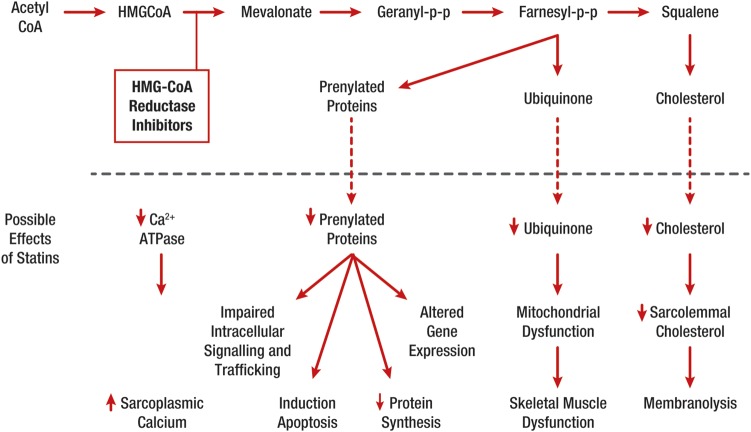
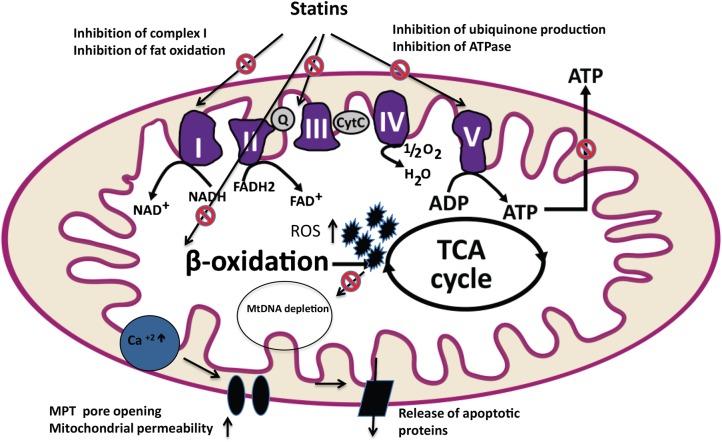
Statin-associated muscle symptoms (SAMS) are one of the principal reasons for statin non-adherence and/or discontinuation, contributing to adverse cardiovascular outcomes. This European Atherosclerosis Society (EAS) Consensus Panel overviews current understanding of the pathophysiology of statin-associated myopathy, and provides guidance for diagnosis and management of SAMS. Statin-associated myopathy, with significant elevation of serum creatine kinase (CK), is a rare but serious side effect of statins, affecting 1 per 1000 to 1 per 10 000 people on standard statin doses. Statin-associated muscle symptoms cover a broader range of clinical presentations, usually with normal or minimally elevated CK levels, with a prevalence of 7-29% in registries and observational studies. Preclinical studies show that statins decrease mitochondrial function, attenuate energy production, and alter muscle protein degradation, thereby providing a potential link between statins and muscle symptoms; controlled mechanistic and genetic studies in humans are necessary to further understanding. The Panel proposes to identify SAMS by symptoms typical of statin myalgia (i.e. muscle pain or aching) and their temporal association with discontinuation and response to repetitive statin re-challenge. In people with SAMS, the Panel recommends the use of a maximally tolerated statin dose combined with non-statin lipid-lowering therapies to attain recommended low-density lipoprotein cholesterol targets. The Panel recommends a structured work-up to identify individuals with clinically relevant SAMS generally to at least three different statins, so that they can be offered therapeutic regimens to satisfactorily address their cardiovascular risk. Further research into the underlying pathophysiological mechanisms may offer future therapeutic potential.
Overview
CoChat Summary
TL;DR
This European Atherosclerosis Society Consensus Panel statement reviews statin-associated muscle symptoms (SAMS), their assessment, aetiology, and management. It proposes a clinical definition based on symptoms and temporal association with statin discontinuation/re-challenge, and recommends maximally tolerated statin doses plus non-statin lipid-lowering therapies to achieve LDL-C targets.
Key findings
- Statin-associated myopathy with significant CK elevation is rare, affecting 1 per 1000 to 1 per 10 000 people on standard statin doses; myopathy with CK >10× ULN occurs in approximately 1 per 10 000 per year, and rhabdomyolysis in ∼1 in 100 000 per year.
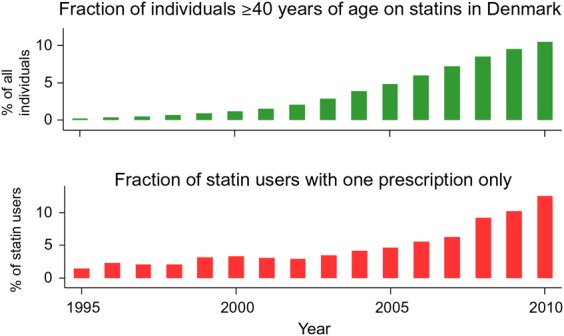
- SAMS are much more common in registries and observational studies, with a prevalence of 7–29%, usually with normal or minimally elevated CK; they contribute to statin discontinuation, which can be up to 75% within 2 years, and in 65% of former statin users the main reason for non-adherence/discontinuation was side effects, predominantly muscle-related.
- In the STOMP randomized trial of 420 statin-naïve subjects, 9.4% of atorvastatin 80 mg-treated and 4.6% of placebo subjects met the study definition of myalgia (P = 0.054), with no differences in muscle strength or exercise performance.
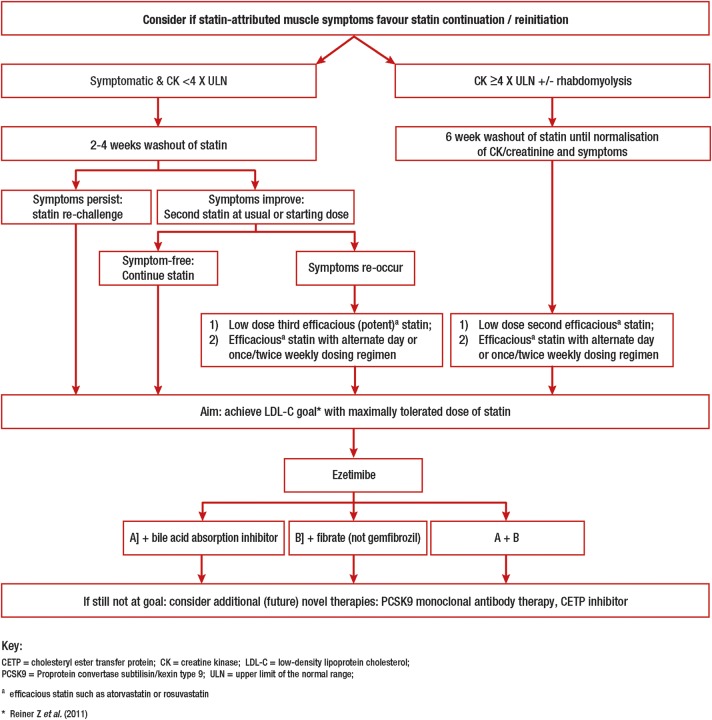
- Management recommendations include using a maximally tolerated statin dose, switching statins, alternate-day or twice-weekly dosing (which reduced LDL-C by 12–38% and was tolerated by ∼70% of previously intolerant patients), and adding non-statin therapies such as ezetimibe (LDL-C reduction 15–20%).
Methods
- Design: European Atherosclerosis Society Consensus Panel statement providing an overview of pathophysiology and guidance for diagnosis and management of SAMS.
- Data/sample: Narrative synthesis of randomized controlled trials, patient registries, observational studies, preclinical studies, and genetic studies; no new primary patient sample was collected.
- Analysis: Expert consensus; the Panel proposes SAMS definitions by CK categories and a therapeutic flow-chart based on symptoms, CK levels, and temporal association with statin initiation, discontinuation, and re-challenge.
Limitations
- The paper states that a definitive diagnosis of SAMS is difficult because symptoms are subjective, there is no gold standard diagnostic test, and there is no validated muscle symptom questionnaire.
- The paper notes that observational studies lack a placebo comparator, so causality cannot be established, while RCTs may underrepresent patients with comorbidities predisposing to musculoskeletal symptoms and do not always incorporate dedicated muscle-complaint questionnaires.
- Evident from the text: this is a consensus statement rather than a systematic review or meta-analysis, and several recommendations rely on expert opinion and limited or conflicting evidence, including insufficient evidence to recommend genetic testing as part of routine SAMS work-up.
Model-written summary. Check it against the paper before relying on it.
Integrity signals
Registry
Cites
Statistics
Figures
Verification
Claims the paper makes
13 Valid · 4 Not valid · 72 Not checked · 29 Own results and interpretations
The sources with a verdict support this claim; the rest weren’t checked yet, have no full text we could read, or their verdicts aren’t rated yet.
In the paper
“Muscle complaints in other clinical trials have been similar in statin-treated and placebo subjects.4,20,23,24”
§ Statin-associated muscle symptoms: impact on statin therapy—European Atherosclerosis Society Consensus Panel Statement on Assessment, Aetiology and Management > Introduction
What the sources say
- Supportedcites [4] Kashani A Phillips CO Foody JM Wang Y Mangalmurti S Ko DT Krumholz HM Risks associated with statin therapy: a systematic overview of randomized clinical trials. Circulation 2006; 114: 2788– 2797. 17159064 source
The Results section (p. 1 of our copy, 'Myalgias'/overall results) states that myalgias, reported in 21 studies including 48 138 patients, were not significantly more common with statins, with a pooled RR of 0.99 (95% CI 0.96-1.03) versus placebo — i.e. muscle complaints were essentially similar between arms. The Abstract and Discussion repeat this: excluding cerivastatin, statin therapy produced no significant absolute increase in myalgia risk (RD 2.7; 95% CI -3.2 to 8.7), with a nonsignificant trend toward fewer myalgia reports on statins across 35 randomized placebo-controlled trials. The only qualifier is that atorvastatin alone showed a significantly higher myalgia RD, which the citing sentence's general 'other clinical trials' framing does not carry, but the aggregate statement attributed here is what the paper reports. (LLM, conf=0.88)
- Not checked yetcites [20] Ganga HV Slim HB Thompson PD A systematic review of statin-induced muscle problems in clinical trials. Am Heart J 2014; 168: 6– 15. 24952854 source
- Not checked yetcites [23] Keech A Collins S MacMahon S Armitage J Lawson A Wallendszus K Fatemian M Kearney E Lyon V Mindell J Mount J Painter R Parish S Slavin B Sleight P Youngman L Peto R Three-year follow-up of the Oxford Cholesterol Study: assessment of the efficacy and safety of simvastatin in preparation for a large mortality study. Eur Heart J 1994; 15: 255– 269. 8005129 source
- Supportedcites [24] MRC/BHF Heart Protection Study Collaborative Group. Effects of simvastatin 40 mg daily on muscle and liver adverse effects in a 5-year randomized placebo-controlled trial in 20,536 high-risk people. BMC Clin Pharmacol 2009; 9: 6. 19442259 PMC2676245 source
The Results section 'Effects on muscle' of the HPS report states that muscle pain or weakness was reported at each visit by about 6% of those allocated simvastatin and about 6% of those allocated placebo, with 33% in each group reporting muscle symptoms at least once, and no significant between-group differences; the Discussion ('Effects on muscle') repeats that approximately one third reported muscle symptoms with no significant differences at any time or in any subgroup. So this randomized placebo-controlled statin trial is exactly an example of muscle complaints being similar in statin-treated and placebo subjects. The plural framing 'other clinical trials' is carried by the sentence's several citations (4,20,23,24), of which this source supplies one trial; note HPS does describe a small, non-significant excess of true myopathy (0.10% vs 0.04%), but that is distinct from the muscle symptoms/complaints the claim addresses. (LLM, conf=0.85)
plain- Asserted: passes — The authors put it forward as true.
- Checkable: passes — It can be checked against evidence.
- Load-bearing: passes — The paper’s conclusions depend on it.
- Based: passes — The paper gives a reason why it holds.
- Supported
The cited sources support only part of this claim — read each source’s verdict below.
In the paper
“with a prevalence of 7–29% in registries and observational studies.”
§ Statin-associated muscle symptoms: impact on statin therapy—European Atherosclerosis Society Consensus Panel Statement on Assessment, Aetiology and Management > Abstract
What the sources say
- Not checked yetcites [11] Bruckert E Hayem G Dejager S Yau C Begaud B Mild to moderate muscular symptoms with high-dosage statin therapy in hyperlipidemic patients—the PRIMO study. Cardiovasc Drugs Ther 2005; 19: 403– 414. 16453090 source
- Could not verifycites [12] Buettner C Rippberger MJ Smith JK Leveille SG Davis RB Mittleman MA Statin use and musculoskeletal pain among adults with and without arthritis. Am J Med 2012; 125: 176– 182. 22269621 PMC3266514 sourceExperimental — accuracy not yet measured
The Results (page unavailable) report musculoskeletal pain in 30% of statin users overall and 23% of statin users without arthritis. The paper measures self-reported pain, not confirmed statin-associated muscle symptoms (SAMS), and the searched passages do not report a 7–29% prevalence range from registries or observational studies. (LLM, conf=0.76)
- Not checked yetcites [13] Cohen JD Brinton EA Ito MK Jacobson TA Understanding statin use in America and gaps in patient education (USAGE): an internet-based survey of 10,138 current and former statin users. J Clin Lipidol 2012; 6: 208– 215. 22658145 source
- Partly supportedcites [14] Zhang H Plutzky J Skentzos S Morrison F Mar P Shubina M Turchin A Discontinuation of statins in routine care settings: a cohort study. Ann Int Med 2013; 158: 526– 534. 23546564 PMC3692286 sourceExperimental — accuracy not yet measured
The Results (Statin-related events; page unavailable) report myalgia or myopathy in 4.7% of all patients, while the Discussion says musculoskeletal symptoms accounted for 40% of reported statin-related events. This routine-care observational study supports the general point that statin-associated muscle symptoms occur, but it does not establish a 7–29% prevalence range across registries and observational studies. (LLM, conf=0.84)
- Not checked yetcites [15] El-Salem K Ababeneh B Rudnicki S Malkawi A Alrefai A Khader Y Saadeh R Saydam M Prevalence and risk factors of muscle complications secondary to statins. Muscle Nerve 2011; 44: 877– 881. 22102457 source
plain- Asserted: passes — The authors put it forward as true.
- Checkable: passes — It can be checked against evidence.
- Load-bearing: unclear — It is unclear whether the paper’s conclusions depend on it.
- Based: passes — The paper gives a reason why it holds.
The cited sources support only part of this claim — read each source’s verdict below.
In the paper
“From a treatment viewpoint, Zhang et al.14 showed that 90% of patients reporting SAMS to one statin were able to tolerate an alternative statin with continued use after 12 months”
§ Statin-associated muscle symptoms: impact on statin therapy—European Atherosclerosis Society Consensus Panel Statement on Assessment, Aetiology and Management > Introduction
What the sources say
- Partly supportedcites [14] Zhang H Plutzky J Skentzos S Morrison F Mar P Shubina M Turchin A Discontinuation of statins in routine care settings: a cohort study. Ann Int Med 2013; 158: 526– 534. 23546564 PMC3692286 sourceExperimental — accuracy not yet measured
The Results section reports that over 90% of patients rechallenged after a documented statin-related event were taking a statin 12 months later. That figure covers all documented statin-related events and rechallenges with either the same or a different statin; it does not establish a 90% rate specifically for patients with statin-associated muscle symptoms who switched to an alternative statin. (LLM, conf=0.90)
plain- Asserted: passes — The authors put it forward as true.
- Checkable: passes — It can be checked against evidence.
- Load-bearing: passes — The paper’s conclusions depend on it.
- Based: passes — The paper gives a reason why it holds.
- Partly supported
Every source the paper cites for this claim was checked and supports it.
In the paper
“The STOMP study also found no differences in the measures of muscle strength or exercise performance between statin-treated and placebo subjects.”
§ Statin-associated muscle symptoms: impact on statin therapy—European Atherosclerosis Society Consensus Panel Statement on Assessment, Aetiology and Management > Introduction
What the sources say
- Supportedcites [22] Parker BA Capizzi JA Grimaldi AS Clarkson PM Cole SM Keadle J Chipkin S Pescatello LS Simpson K White CM Thompson PD Effect of statins on skeletal muscle function. Circulation 2013; 127: 96– 103. 23183941 PMC4450764 source
The Results section (‘Effects of Atorvastatin on Muscle and Exercise Performance’) reports no differential effects on muscle strength, endurance, or aerobic performance compared with placebo. The finding applies to healthy subjects treated with atorvastatin 80 mg daily for six months; the citing sentence does not claim otherwise. (LLM, conf=0.94)
plain- Asserted: passes — The authors put it forward as true.
- Checkable: passes — It can be checked against evidence.
- Load-bearing: passes — The paper’s conclusions depend on it.
- Based: passes — The paper gives a reason why it holds.
- Supported
The sources with a verdict support this claim; the rest weren’t checked yet, have no full text we could read, or their verdicts aren’t rated yet.
In the paper
“Studies have consistently shown large LDL-C reductions of 50–60% in a variety of patient groups,64,65 including those identified as statin intolerant,66–68”
§ Statin-associated muscle symptoms: impact on statin therapy—European Atherosclerosis Society Consensus Panel Statement on Assessment, Aetiology and Management > Future low-density lipoprotein-lowering therapies for patients with statin-associated muscle symptoms > PSCK9 inhibitors
What the sources say
- Supportedcites [64] Stein EA Raal F Reduction of low-density lipoprotein cholesterol by monoclonal antibody inhibition of PCSK9. Annu Rev Med 2014; 65: 417– 431. 24422577 source
The Abstract reports large, consistent LDL-C reductions across the studied groups, including people intolerant to statins. The phase II discussion (page not available in our copy) reports reductions approaching 55% with evolocumab alone in statin-intolerant patients, supporting the stated 50–60% range. (LLM, conf=0.92)
- Supportedcites [65] Norata GD Tibolla G Catapano AL Targeting PCSK9 for hypercholesterolemia. Annu Rev Pharmacol Toxicol 2014; 54: 273– 293. 24160703 source
The Phase II studies section reports a further LDL-C reduction of 50–60%. Its Table 1 shows reductions across several patient groups, including a range of 41–63% in statin-intolerant patients. The reported ranges vary by trial, but support the citing sentence’s broad summary. (LLM, conf=0.91)
- Supportedcites [66] Stroes E Colquhoun D Sullivan D Civeira F Rosenson RS Watts GF Bruckert E Cho L Dent R Knusel B Xue A Scott R Wasserman SM Rocco M; GAUSS-2 Investigators. Anti-PCSK9 antibody effectively lowers cholesterol in patients with statin intolerance: the GAUSS-2 randomized, placebo-controlled phase 3 clinical trial of evolocumab. J Am Coll Cardiol 2014; 63: 2541– 2548. 24694531 source
The GAUSS-2 Efficacy outcomes section reports LDL-C reductions of 55.3% and 56.1% with evolocumab in statin-intolerant patients. This supports the portion of the citing sentence about 50–60% reductions in that patient group; the broader variety of groups is cited to other studies. The indexed passage does not specify a page. (LLM, conf=0.93)
- Not checked yetcites [67] Sullivan D Olsson AG Scott R Kim JB Xue A Gebski V Wasserman SM Stein EA Effect of a monoclonal antibody to PCSK9 on low-density lipoprotein cholesterol levels in statin-intolerant patients: the GAUSS randomized trial. JAMA 2012; 308: 2497– 2506. 23128163 source
- Not checked yetcites [68] Moriarty PM Thompson PD Cannon CP Guyton JR Bergeron J Zıeve FJ Bruckert E Jacobson TA Baccara-Dinet MT Zhao J Du Y Pordy R Gipe D ODYSSEY ALTERNATIVE: efficacy and safety of alirocumab versus ezetimibe, in patients with statin intolerance as defined by a placebo run-in and statin rechallenge arm. http://my.americanheart.org/idc/groups/ahamah-public/@wcm/@sop/@scon/documents/downloadable/ucm_469684.pdf (22 November 2014).
boostedstates a cause- Asserted: passes — The authors put it forward as true.
- Checkable: passes — It can be checked against evidence.
- Load-bearing: passes — The paper’s conclusions depend on it.
- Based: passes — The paper gives a reason why it holds.
- Supported
72 more claims · 6 with their cited sources checked
Create a free account to see all 118 claims and to verify the 124 references still open.
- It may state two separate claims as one. 35
- Probably not a substantial claim. 9
Claims other papers make about this one
Each is checked against this paper’s own text: does it say what the citing paper says it does?
The cited source doesn’t support the claim as written.
In the citing paper
“There was no reduction of plasma CK after CoQ10 supplementation, suggesting that the effect of CoQ10 on statin‐induced myopathy might be attributed to maintaining mitochondrial function rather than protecting the membrane of muscle cells.3”
From Effects of Coenzyme Q10 on Statin‐Induced Myopathy: An Updated Meta‐Analysis of Randomized Controlled Trials (2018) · cites this paper as [3]
Checked by a reasoning model — may be wrong.
Experimental — accuracy not yet measuredThe source backs part of the claim, not all of it — or backs it for a different population, condition or comparison.
In the citing paper
“7-29% of statin treated patients and cover a spectrum from myalgia without biomarker elevations to rhabdomyolysis [1].”
From Effect of Coenzyme Q10 on statin-associated myalgia and adherence to statin therapy: A systematic review and meta-analysis (2020) · cites this paper as [1]
Experimental — accuracy not yet measuredThe source backs part of the claim, not all of it — or backs it for a different population, condition or comparison.
In the citing paper
“The 2015 European Atherosclerosis Society Consensus Panel Statement recommended multiple strategies to optimize statin tolerance in patients with previous SAMS based on expert opinion due to lack of sufficient data [14,15].”
From Safety outcomes of statin vs non-statin lipid-lowering interventions in patients with prior statin-associated muscle symptoms: A systematic review and meta-analysis (2025) · cites this paper as [14]
Experimental — accuracy not yet measuredThe source backs part of the claim, not all of it — or backs it for a different population, condition or comparison.
In the citing paper
“SAMS usually occur 4–6 weeks after statin introduction and can last for up weeks to months after statin therapy discontinuation [14,54].”
From Safety outcomes of statin vs non-statin lipid-lowering interventions in patients with prior statin-associated muscle symptoms: A systematic review and meta-analysis (2025) · cites this paper as [14]
Experimental — accuracy not yet measuredThe cited source says what the claim attributes to it.
In the citing paper
“While current guidelines do not recommend CoQ10 [1,27], updated versions may base their recommendations on the work by Qu et al., the limitations of which are detailed above.”
From Effect of Coenzyme Q10 on statin-associated myalgia and adherence to statin therapy: A systematic review and meta-analysis (2020) · cites this paper as [1]
7 more claims about this paper
Create a free account to see every claim other papers make about this one.
Citations
Cites
Goodman & Gilman's The Pharmacological Basis of Therapeutics
Brunton, L. L. (1985) · Cited by 7,321
Rosuvastatin to Prevent Vascular Events in Men and Women with Elevated C-Reactive Protein
Ridker, P. M., Danielson, E., Fonseca, F. A. H., Genest, J., Gotto, A. M., Kastelein, J. J. P., Koenig, W., Libby, P., Lorenzatti, A. J., MacFadyen, J. G., et al. (2008) · New England Journal of Medicine · doi:10.1056/nejmoa0807646 · Cited by 6,674
Self-citationDahlöf, B., Devereux, R. B., Kjeldsen, S. E., Julius, S., Beevers, G., de Faire, U., Fyhrquist, F., Ibsen, H., Kristiansson, K., Lederballe-Pedersen, O., et al. (2002) · The Lancet · doi:10.1016/s0140-6736(02)08089-3 · Cited by 5,407
Rosuvastatin to Prevent Vascular Events in Men and Women With Elevated C-Reactive Protein
Ridker, P. M., Danielson, E., Fonseca, F. A. H., Genest, J., Gotto, A. M., Kastelein, J. J. P., Koenig, W., Libby, P., Lorenzatti, A. J., MacFadyen, J. G., et al. (2009) · Obstetrical & Gynecological Survey · doi:10.1097/01.ogx.0000344393.60303.0a · Cited by 3,641
Self-citationESC/EAS Guidelines for the management of dyslipidaemias
Reiner, Ž., Catapano, A. L., De Backer, G., Graham, I., Taskinen, M.-R., Wiklund, O., Agewall, S., Alegria, E., Chapman, M. J., Durrington, P., et al. (2011) · European Heart Journal · doi:10.1093/eurheartj/ehr158 · Cited by 3,549
Self-citationNiacin in Patients with Low HDL Cholesterol Levels Receiving Intensive Statin Therapy
The AIM-HIGH Investigators (2011) · New England Journal of Medicine · doi:10.1056/nejmoa1107579 · Cited by 2,911
Effects of Combination Lipid Therapy in Type 2 Diabetes Mellitus
(2010) · New England Journal of Medicine · doi:10.1056/nejmoa1001282 · Cited by 2,837
Research works printed but not linked: 1
- Vladutiu GD Tarnopolsky M Baker S Christopher-Stine L Peltier W Weisman M Isackson PJ Inborn errors of muscle metabolism implicated in risk for statin-induced myopathy. Molec Genet Metab 2014; 111: 264– 265.
Cited by
Items 101–200 of 1,005
Poli, A., Barbagallo, C. M., Cicero, A. F. G., Corsini, A., Manzato, E., Trimarco, B., Bernini, F., Visioli, F., Bianchi, A., Canzone, G., et al. (2018) · Pharmacological Research · doi:10.1016/j.phrs.2018.05.015 · Cited by 134
Self-citationGender-Related Factors in Medication Adherence for Metabolic and Cardiovascular Health
Venditti, V., Bleve, E., Morano, S., & Filardi, T. (2023) · Metabolites · doi:10.3390/metabo13101087 · Cited by 135
Statins Neuromuscular Adverse Effects
Attardo, S., Musumeci, O., Velardo, D., & Toscano, A. (2022) · International Journal of Molecular Sciences · doi:10.3390/ijms23158364 · Cited by 132
Potential Benefits and Risks Associated with the Use of Statins
Khatiwada, N., & Hong, Z. (2024) · Pharmaceutics · doi:10.3390/pharmaceutics16020214 · Cited by 134
The nocebo effect in the context of statin intolerance
Tobert, J. A., & Newman, C. B. (2016) · Journal of clinical lipidology · doi:10.1016/j.jacl.2016.05.002 · Cited by 134
Self-citation2024 EACTS Guidelines on perioperative medication in adult cardiac surgery
Jeppsson, A., (Sweden), (.-C., Rocca, B., (Italy), (.-C., Hansson, E. C., (Sweden), Guðbjartsson, T., (Iceland), James, S. K., (Sweden), et al. (2024) · European Journal of Cardio-Thoracic Surgery · doi:10.1093/ejcts/ezae355 · Cited by 131
2023 China Guidelines for Lipid Management
Li, J., Zhao, S., Zhao, D., Lü, G., Peng, D., Liu, J., Chen, Z., Guo, Y., Wu, N., Yan, S.-K., et al. (2023) · 老年心脏病学杂志:英文版 · doi:10.26599/1671-5411.2023.09.008 · Cited by 131
Packard, C., Chapman, M. J., Sibartie, M., Laufs, U., & Masana, L. (2021) · Heart · doi:10.1136/heartjnl-2020-318760 · Cited by 108
Self-citationTargeting ATP-Citrate Lyase in Hyperlipidemia and Metabolic Disorders
Pinkosky, S. L., Groot, P. H. E., Lalwani, N. D., & Steinberg, G. R. (2017) · Trends in Molecular Medicine · doi:10.1016/j.molmed.2017.09.001 · Cited by 127
Nidorf, S. M., Fiolet, A. T. L., Eikelboom, J. W., Schut, A., Opstal, T. S. J., Bax, W. A., Budgeon, C. A., Tijssen, J. G. P., Mosterd, A., Cornel, J. H., et al. (2019) · American Heart Journal · doi:10.1016/j.ahj.2019.09.011 · Cited by 126
Self-citationNew and Emerging Therapies for Reduction of LDL-Cholesterol and Apolipoprotein B
Nurmohamed, N. S., Návar, A. M., & Kastelein, J. J. P. (2021) · Journal of the American College of Cardiology · doi:10.1016/j.jacc.2020.11.079 · Cited by 131
Arai, H., Yamashita, S., Yokote, K., Araki, E., Suganami, H., & Ishibashi, S. (2017) · Atherosclerosis · doi:10.1016/j.atherosclerosis.2017.03.032 · Cited by 124
Writing Committee Members, Blumenthal, R. S., Morris, P. B., Gaudino, M., Johnson, H. M., Anderson, T. S., Bittner, V. A., Blankstein, R., Brewer, L. C., Cho, L., et al. (2026) · Circulation · doi:10.1161/cir.0000000000001423 · Cited by 122
Vallejo-Vaz, A. J., Akram, A., Kondapally Seshasai, S. R., Cole, D., Watts, G. F., Hovingh, G. K., Kastelein, J. J. P., Mata, P., Raal, F. J., Santos, R. D., et al. (2016) · Atherosclerosis Supplements · doi:10.1016/j.atherosclerosissup.2016.10.001 · Cited by 111
Self-citationYin-xing-tong-mai decoction attenuates atherosclerosis via activating PPARγ-LXRα-ABCA1/ABCG1 pathway
Zheng, S., Huang, H., Li, Y., Wang, Y., Zheng, Y., Liang, J., Zhang, S., Liu, M., & Fang, Z. (2021) · Pharmacological Research · doi:10.1016/j.phrs.2021.105639 · Cited by 122
Low-density lipoprotein cholesterol in a global cohort of 57,885 statin-treated patients
Gitt, A. K., Lautsch, D., Ferrières, J., Kastelein, J. J. P., Drexel, H., Horack, M., Brudi, P., Vanneste, B., Bramlage, P., Chazelle, F., et al. (2016) · Atherosclerosis · doi:10.1016/j.atherosclerosis.2016.09.004 · Cited by 119
Diagnosis and Management of Statin Intolerance
Alonso, R., Cuevas, A., & Cafferata, A. (2019) · Journal of Atherosclerosis and Thrombosis · doi:10.5551/jat.rv17030 · Cited by 109
Guidelines for the Diagnosis and Treatment of Adult Familial Hypercholesterolemia 2022
Harada‐Shiba, M., Arai, H., Ohmura, H., Okazaki, H., Sugiyama, D., Tada, H., Dobashi, K., Matsuki, K., Minamino, T., Yamashita, S., et al. (2023) · Journal of Atherosclerosis and Thrombosis · doi:10.5551/jat.cr005 · Cited by 118
Medical Therapy for Long-Term Prevention of Atherothrombosis Following an Acute Coronary Syndrome
Gallone, G., Baldetti, L., Pagnesi, M., Latib, A., Colombo, A., Libby, P., & Giannini, F. (2018) · Journal of the American College of Cardiology · doi:10.1016/j.jacc.2018.09.052 · Cited by 118
Cicero, A. F. G., Fogacci, F., Hernandez, A. V., Banach, M., & on behalf of the Lipid and Blood Pressure Meta-Analysis Collaboration (LBPMC) Group and the International Lipid Expert Panel (ILEP) (2020) · PLOS Medicine · doi:10.1371/journal.pmed.1003121 · Cited by 105
Fu, X., Sun, Z., Long, Q., Tan, W., Ding, H., Liu, X., Wu, L., Wang, Y., & Zhang, W. (2022) · Phytomedicine · doi:10.1016/j.phymed.2022.154385 · Cited by 116
Inclisiran for the Treatment of Cardiovascular Disease: the Orion Clinical Development Program
Stoekenbroek, R. M., Kallend, D., Wijngaard, P. L., & Kastelein, J. J. (2018) · Future Cardiology · doi:10.2217/fca-2018-0067 · Cited by 106
Pharmacogenomics of statins: understanding susceptibility to adverse effects
Kitzmiller, J., Mikulik, E., Dauki, A., Mukherjee, C., & Luzum, J. (2016) · Pharmacogenomics and Personalized Medicine · doi:10.2147/pgpm.s86013 · Cited by 90
Warden, B. A., Guyton, J. R., Kovacs, A. C., Durham, J. A., Jones, L. K., Dixon, D. L., Jacobson, T. A., & Duell, P. B. (2023) · Journal of Clinical Lipidology · doi:10.1016/j.jacl.2022.09.001 · Cited by 111
Self-citationEffects of phytosterols on markers of inflammation: A systematic review and meta-analysis
Rocha, V. Z., Ras, R. T., Gagliardi, A. C. M., Mangili, L. C., Trautwein, E. A., & Santos, R. D. (2016) · Atherosclerosis · doi:10.1016/j.atherosclerosis.2016.01.035 · Cited by 111
Self-citationA robust neuromuscular system protects rat and human skeletal muscle from sarcopenia
Pannérec, A., Springer, M., Migliavacca, E., Ireland, A., Piasecki, M., Karaz, S., Jacot, G., Métairon, S., Danenberg, E., Raymond, F., et al. (2016) · Aging · doi:10.18632/aging.100926 · Cited by 110
“In addition, statins, which are widely used clinically to mitigate cardiovascular risks by reducing cholesterol levels through HMG-CoA reductase inhibition, have been proposed to increase the risk for peripheral neuropathy [51], on top of their wellknown side effects on muscle [52].”
BackgroundLi, Y., Zhang, L., Ren, P., Yang, Y., Li, S., Qin, X., Zhang, M., Zhou, M., & Liu, W. (2021) · Phytomedicine · doi:10.1016/j.phymed.2021.153812 · Cited by 110
Stroes, E., Guyton, J. R., Lepor, N., Civeira, F., Gaudet, D., Watts, G. F., Baccara‐Dinet, M. T., Lecorps, G., Manvelian, G., Farnier, M., et al. (2016) · Journal of the American Heart Association · doi:10.1161/jaha.116.003421 · Cited by 102
Self-citationFerrari, R., Aguiar, C., Alegria, E., Bonadonna, R. C., Cosentino, F., Elisaf, M., Farnier, M., Ferrières, J., Filardi, P. P., Hancu, N., et al. (2016) · European Heart Journal Supplements · doi:10.1093/eurheartj/suw009 · Cited by 97
Self-citationNurmohamed, N. S., Ditmarsch, M., & Kastelein, J. J. P. (2021) · Cardiovascular Research · doi:10.1093/cvr/cvab350 · Cited by 107
The Treatment of Disorders of Lipid Metabolism
Parhofer, K. G. (2016) · Deutsches Ärzteblatt international · doi:10.3238/arztebl.2016.0261 · Cited by 107
Samsoondar, J. P., Burke, A. C., Sutherland, B. G., Telford, D. E., Sawyez, C. G., Edwards, J. Y., Pinkosky, S. L., Newton, R. S., & Huff, M. W. (2017) · Arteriosclerosis, Thrombosis, and Vascular Biology · doi:10.1161/atvbaha.116.308963 · Cited by 96
Hypercholesterolemia: The role of PCSK9
Melendez, Q. M., Krishnaji, S. T., Wooten, C. J., & Lopez, D. (2017) · Archives of Biochemistry and Biophysics · doi:10.1016/j.abb.2017.06.001 · Cited by 103
Safety of Alirocumab (A PCSK9 Monoclonal Antibody) from 14 Randomized Trials
Jones, P. H., Bays, H. E., Chaudhari, U., Pordy, R. C., Lorenzato, C., Miller, K., & Robinson, J. G. (2016) · The American Journal of Cardiology · doi:10.1016/j.amjcard.2016.08.072 · Cited by 100
Statins in the Prevention and Treatment of Heart Failure: a Review of the Evidence
Lee, M. M. Y., Sattar, N. A., McMurray, J. J. V., & Packard, C. J. (2019) · Current Atherosclerosis Reports · doi:10.1007/s11883-019-0800-z · Cited by 100
Physiological and therapeutic regulation of PCSK9 activity in cardiovascular disease
Glerup, S., Schulz, R., Laufs, U., & Schlüter, K.-D. (2017) · Basic Research in Cardiology · doi:10.1007/s00395-017-0619-0 · Cited by 93
Self-citationPCSK9 Inhibition: Insights From Clinical Trials and Future Prospects
Katzmann, J. L., Gouni-Berthold, I., & Laufs, U. (2020) · Frontiers in Physiology · doi:10.3389/fphys.2020.595819 · Cited by 87
Self-citationStatins, Muscle Disease and Mitochondria
Ramachandran, R., & Wierzbicki, A. S. (2017) · Journal of Clinical Medicine · doi:10.3390/jcm6080075 · Cited by 96
Hou, Y., Ojo, O., Wang, L., Wang, Q., Jiang, Q., Shao, X., & Wang, X. (2018) · Nutrients · doi:10.3390/nu10111565 · Cited by 97
Lipids, blood pressure and kidney update 2014
Banach, M., Aronow, W. S., Șerban, M.-C., Sahabkar, A., Rysz, J., Voroneanu, L. E., & Covic, A. C. (2015) · Pharmacological Research · doi:10.1016/j.phrs.2015.03.009 · Cited by 96
Novel strategies to target proprotein convertase subtilisin kexin 9: beyond monoclonal antibodies
Seidah, N. G., Prat, A., Pirillo, A., Catapano, A. L., & Norata, G. D. (2019) · Cardiovascular Research · doi:10.1093/cvr/cvz003 · Cited by 87
Self-citationPenson, P. E., Bruckert, É., MARAIS, D. P., Reiner, Ž., Pirro, M., Sahebkar, A., Bajraktari, G., Mirrakhimov, E. M., Rizzo, M., Mikhailidis, D. P., et al. (2022) · Journal of Cachexia Sarcopenia and Muscle · doi:10.1002/jcsm.12960 · Cited by 95
Treatment Options for Statin-Associated Muscle Symptoms
Laufs, U., Scharnagl, H., Halle, M., Windler, E., Endres, M., & März, W. (2015) · Deutsches Ärzteblatt international · doi:10.3238/arztebl.2015.0748 · Cited by 84
Self-citationStatin-associated muscle symptoms—Managing the highly intolerant
Backes, J. M., Ruisinger, J. F., Gibson, C., & Moriarty, P. M. (2017) · Journal of clinical lipidology · doi:10.1016/j.jacl.2017.01.006 · Cited by 92
Nonadherence to statins: individualized intervention strategies outside the pill box
Lansberg, P. J., Lee, A., Lee, Z.-V., Subramaniam, K., & Setia, S. (2018) · Vascular Health and Risk Management · doi:10.2147/vhrm.s158641 · Cited by 90
Unmet Needs in LDL-C Lowering: When Statins Won’t Do!
Krähenbühl, S., Pavik-Mezzour, I., & von Eckardstein, A. (2016) · Drugs · doi:10.1007/s40265-016-0613-0 · Cited by 89
Grip strength as a frailty diagnostic component in geriatric inpatients
Dudziňska-Griszek, J., Szuster-Kowolik, K., & Szewieczek, J. (2017) · Clinical Interventions in Aging · doi:10.2147/cia.s140192 · Cited by 90
Statin associated lower cancer risk and related mortality in patients with heart failure
Ren, Q. W., Yu, S.-Y., Teng, T. K., Li, X., Cheung, K. S., Wu, M., Li, H., Wong, P., Tse, H., Lam, C. S. P., et al. (2021) · European Heart Journal · doi:10.1093/eurheartj/ehab325 · Cited by 88
Safety and Tolerability of Inclisiran for Treatment of Hypercholesterolemia in 7 Clinical Trials
Wright, R. S., Koenig, W., Landmesser, U., Leiter, L. A., Raal, F. J., Schwartz, G. G., Lesogor, A., Maheux, P., Stratz, C., Zang, X., et al. (2023) · Journal of the American College of Cardiology · doi:10.1016/j.jacc.2023.10.007 · Cited by 79
Self-citationPoLA/CFPiP/PCS guidelines for the management of dyslipidaemias for family physicians 2016
Banach, M., Jankowski, P., Jóźwiak, J., Cybulska, B., Windak, A., Guzik, T., Mamcarz, A., Broncel, M., & Tomasik, T. (2017) · Archives of Medical Science · doi:10.5114/aoms.2017.64712 · Cited by 86
“It needs to be noted that there are multiple risk factors which may increase the likelihood of statin intolerance including physical activity, particularly after its initiation or increase in intensity; hepatic and/or renal diseases, hypothyroidism, vitamin D deficiency [157], alcohol intake, rheumatic diseases, exten…”
BackgroundInfluentialPrevention of cardiovascular disease in rheumatoid arthritis
Hollan, I., Dessein, P. H., Ronda, N., Wasko, M. C., Svenungsson, E., Agewall, S., Tervaert, J.-W. C., Maki-Petaja, K. M., Grundtvig, M., Karpouzas, G. A., et al. (2015) · Autoimmunity Reviews · doi:10.1016/j.autrev.2015.06.004 · Cited by 86
Nonalcoholic fatty liver disease and statins
Τζιόμαλος, Κ., Athyros, V. G., Paschos, P., & Karagiannis, A. I. (2015) · Metabolism · doi:10.1016/j.metabol.2015.07.003 · Cited by 87
2020 ESC Guidelines on Sports Cardiology and Exercise in Patients with Cardiovascular Disease
Pelliccia, A., Sharma, S., Gati, S., Bäck, M., Börjesson, M., Caselli, S., Collet, J., Corrado, D., Drezner, J. A., Halle, M., et al. (2021) · Revista Española de Cardiología (English Edition) · doi:10.1016/j.rec.2021.05.003 · Cited by 86
Self-citationRole of PCSK9 in lipid metabolism and atherosclerosis
Lin, X., Xiao, L., Tang, Z., Jiang, Z., & Liu, M. (2018) · Biomedicine & Pharmacotherapy · doi:10.1016/j.biopha.2018.05.024 · Cited by 84
Muntean, D. M., Thompson, P. D., Catapano, A. L., Stasiolek, M., Fabis, J., Muntner, P., Serban, M.-C., & Banach, M. (2017) · Drug Discovery Today · doi:10.1016/j.drudis.2016.09.001 · Cited by 82
Self-citationLeblanc, A., Taylor, B. A., Thompson, P. D., Capizzi, J. A., Clarkson, P. M., White, C. M., & Pescatello, L. S. (2015) · SpringerPlus · doi:10.1186/s40064-015-1357-0 · Cited by 82
Self-citationStatin Adherence: Does Gender Matter?
Goldstein, K. M., Zullig, L. L., Bastian, L. A., & Bosworth, H. B. (2016) · Current Atherosclerosis Reports · doi:10.1007/s11883-016-0619-9 · Cited by 82
From Mitochondria to Atherosclerosis: The Inflammation Path
Suarez-Rivero, J. M., Pastor‐Maldonado, C. J., Povea-Cabello, S., Álvarez-Córdoba, M., Villalón-García, I., Talaverón-Rey, M., Suárez-Carrillo, A., Munuera-Cabeza, M., & Sánchez-Alcázar, J. A. (2021) · Biomedicines · doi:10.3390/biomedicines9030258 · Cited by 83
Glenn, A. J., Lo, K. K.-H., Jenkins, D. J. A., Boucher, B. A., Hanley, A. J., Kendall, C. W. C., Manson, J. E., Vitolins, M. Z., Snetselaar, L., Liu, S., et al. (2021) · Journal of the American Heart Association · doi:10.1161/jaha.121.021515 · Cited by 83
Statin Intolerance: A Literature Review and Management Strategies
Saxon, D. R., & Eckel, R. H. (2016) · Progress in Cardiovascular Diseases · doi:10.1016/j.pcad.2016.07.009 · Cited by 80
Statins as anti‐tumor agents: A paradigm for repurposed drugs
Tripathi, S., Gupta, E., & Galande, S. (2024) · Cancer Reports · doi:10.1002/cnr2.2078 · Cited by 80
Cholesterol metabolism in tumor microenvironment: cancer hallmarks and therapeutic opportunities
Jiang, W. G., Jin, W., & Xu, A. (2024) · International Journal of Biological Sciences · doi:10.7150/ijbs.92274 · Cited by 79
Yi, S., Zhang, X., Sangji, M. H., Liu, Y., Allen, S. D., Xiao, B., Bobbala, S. K. R., Braverman, C. L., Cai, L., Hecker, P. I., et al. (2019) · Advanced Functional Materials · doi:10.1002/adfm.201904399 · Cited by 78
Muscle Toxicity of Drugs: When Drugs Turn Physiology into Pathophysiology
Janssen, L., Allard, N. A. E., Saris, C. G. J., Keijer, J., Hopman, M. T. E., & Timmers, S. (2019) · Physiological Reviews · doi:10.1152/physrev.00002.2019 · Cited by 78
Wilkinson, M. J., Lepor, N. E., & Michos, E. D. (2023) · Journal of the American Heart Association · doi:10.1161/jaha.122.028892 · Cited by 79
Lee, Y., Hong, S., Kang, W. C., Hong, B., Lee, J., Lee, J., Cho, H.-J., Yoon, J., Lee, S., Ahn, C., et al. (2023) · BMJ · doi:10.1136/bmj-2023-075837 · Cited by 79
Cyclodextrins: Potential therapeutics against atherosclerosis
Mahjoubin‐Tehran, M., Kovanen, P. T., Xu, S., Jamialahmadi, T., & Sahebkar, A. (2020) · Pharmacology & Therapeutics · doi:10.1016/j.pharmthera.2020.107620 · Cited by 76
Tuñón, J., Bäck, M., Badimón, L., Bochaton‐Piallat, M., Cariou, B., Daemen, M. J. A. P., Egido, J., Evans, P. C., Francis, S., Ketelhuth, D. F. J., et al. (2018) · European Journal of Preventive Cardiology · doi:10.1177/2047487318773384 · Cited by 75
Self-citationBrunham, L. R., Baker, S. K., Mammen, A. L., Mancini, G. B. J., & Rosenson, R. S. (2018) · Cardiovascular Research · doi:10.1093/cvr/cvy119 · Cited by 75
Drug-Induced Mitochondrial Toxicity
Hargreaves, I. P., Shahrani, M. M. A., Wainwright, L., & Heales, S. (2016) · Drug Safety · doi:10.1007/s40264-016-0417-x · Cited by 74
Egom, E. E. A., & Hafeez, H. (2016) · Advances in clinical chemistry · doi:10.1016/bs.acc.2015.10.005 · Cited by 74
Comprehensive efforts to increase adherence to statin therapy
Vonbank, A., Agewall, S., Kjeldsen, K. P., Lewis, B. S., Torp-Pedersen, C. T., Ceconi, C., Funck‐Brentano, C., Kaski, J. C., Niessner, A., Tamargo, J. L., et al. (2017) · European Heart Journal · doi:10.1093/eurheartj/ehw628 · Cited by 80
Comparing the Role of Mechanical Forces in Vascular and Valvular Calcification Progression
Gomel, M. A., Lee, R., & Grande-Allen, K. J. (2019) · Frontiers in Cardiovascular Medicine · doi:10.3389/fcvm.2018.00197 · Cited by 75
PCSK9 inhibitors and cardiovascular disease: heralding a new therapeutic era
Chapman, M. J., Stock, J. K., & Ginsberg, H. N. (2015) · Current Opinion in Lipidology · doi:10.1097/mol.0000000000000239 · Cited by 65
Self-citationAn overview of statin-induced myopathy and perspectives for the future
Nikolić, D., Banach, M., Chianetta, R., Luzzu, L. M., Stoian, A. P., Diaconu, C. C., Citarrella, R., Montalto, G., & Rizzo, M. (2020) · Expert Opinion on Drug Safety · doi:10.1080/14740338.2020.1747431 · Cited by 74
Klug, E., Raal, F. J., Marais, A., Smuts, C. M., Schamroth, C., Jankelow, D., Blom, D. J., & Webb, D. A. (2018) · South African Medical Journal · doi:10.7196/samj.2018.v108i11.13383 · Cited by 76
Self-citationCurcumin: an effective adjunct in patients with statin-associated muscle symptoms?
Sahebkar, A., Saboni, N., Pirro, M., & Banach, M. (2017) · Journal of Cachexia Sarcopenia and Muscle · doi:10.1002/jcsm.12140 · Cited by 72
PCSK9 inhibitors in clinical practice: Delivering on the promise?
Stoekenbroek, R. M., Hartgers, M. L., Rutte, R., de Wijer, D. D., Stroes, E. S. G., & Hovingh, G. K. (2017) · Atherosclerosis · doi:10.1016/j.atherosclerosis.2017.11.027 · Cited by 73
Self-citationMedicinal Plants as a Potential and Successful Treatment Option in the Context of Atherosclerosis
Kirichenko, T. V., Sukhorukov, V. N., Markin, A. M., Nikiforov, N. G., Liu, P., Sobenin, I. A., Tarasov, V. V., Orekhov, A. N., & Aliev, G. (2020) · Frontiers in Pharmacology · doi:10.3389/fphar.2020.00403 · Cited by 71
Safitri, N., Alaina, M. F., Pitaloka, D. A. E., & Abdulah, R. (2021) · Drug Healthcare and Patient Safety · doi:10.2147/dhps.s333738 · Cited by 72
Beyond statins: New pharmacological targets to decrease LDL-cholesterol and cardiovascular events
Raschi, E., Casula, M., Cicero, A. F. G., Corsini, A., Borghi, C., & Catapano, A. (2023) · Pharmacology & Therapeutics · doi:10.1016/j.pharmthera.2023.108507 · Cited by 59
Self-citationTargeting cellular cholesterol for anticancer therapy
Gu, L., Saha, S. T., Thomas, J., & Kaur, M. (2019) · FEBS Journal · doi:10.1111/febs.15018 · Cited by 72
Wang, X., Zhang, Y., Tan, H., Wang, P., Zha, X., Chong, W., Zhou, L., & Fang, F. (2020) · Cardiovascular Diabetology · doi:10.1186/s12933-020-01101-9 · Cited by 59
Portfolio Diet Score and Risk of Cardiovascular Disease: Findings From 3 Prospective Cohort Studies
Glenn, A. J., Guasch‐Ferré, M., Malik, V., Kendall, C. W. C., Manson, J. E., Rimm, E. B., Willett, W. C., Sun, Q., Jenkins, D. J. A., Hu, F. B., et al. (2023) · Circulation · doi:10.1161/circulationaha.123.065551 · Cited by 70
Ma, B., Xiao, Y., Lv, Q., Li, G., Wang, Y., & Fu, G. (2022) · Advanced Materials · doi:10.1002/adma.202206129 · Cited by 67
Blom, D. J., Koren, M. J., Roth, E., Monsalvo, M. L., Djedjos, C. S., Nelson, P., Elliott, M., Wasserman, S. M., Ballantyne, C. M., & Holman, R. R. (2017) · Diabetes, Obesity and Metabolism · doi:10.1111/dom.12788 · Cited by 64
Contemporary Management of Dyslipidemia
Ferraro, R., Leucker, T. M., Martin, S. S., Banach, M., Jones, S. R., & Toth, P. P. (2022) · Drugs · doi:10.1007/s40265-022-01691-6 · Cited by 67
Statins Affect Skeletal Muscle Performance: Evidence for Disturbances in Energy Metabolism
Allard, N. A. E., Schirris, T. J. J., Verheggen, R. J. H. M., Rüssel, F. G. M., Rodenburg, R. J., Smeitink, J. A. M., Thompson, P. D., Hopman, M. T. E., & Timmers, S. (2017) · The Journal of Clinical Endocrinology & Metabolism · doi:10.1210/jc.2017-01561 · Cited by 66
Self-citationEvolocumab (AMG 145) for primary hypercholesterolemia
Langslet, G., Emery, M. G., & Wasserman, S. M. (2015) · Expert Review of Cardiovascular Therapy · doi:10.1586/14779072.2015.1030395 · Cited by 65
Appropriateness of statin prescription in the elderly
Ruscica, M., Macchi, C., Pavanello, C., Corsini, A., Sahebkar, A., & Sirtori, C. R. (2018) · European Journal of Internal Medicine · doi:10.1016/j.ejim.2017.12.011 · Cited by 65
Self-citationHovingh, G. K., Gandra, S. R., McKendrick, J., Dent, R. E., Wieffer, H., Catapano, A. L., OH, P. I., Rosenson, R. S., & Stroes, E. S. G. (2015) · Atherosclerosis · doi:10.1016/j.atherosclerosis.2015.12.015 · Cited by 64
Self-citationStatin Intolerance: the Clinician’s Perspective
Stulc, T., Ceška, R., & Gotto, A. M. (2015) · Current Atherosclerosis Reports · doi:10.1007/s11883-015-0552-3 · Cited by 58
Qu, H., Meng, Y., Chai, H., Liang, F., Zhang, J., Gao, Z.-Y., & Shi, D. (2018) · European journal of medical research · doi:10.1186/s40001-018-0353-6 · Cited by 64
Kim, J., Lee, H. S., & Lee, K. (2018) · Cardiovascular Diabetology · doi:10.1186/s12933-018-0799-4 · Cited by 67
Katzmann, J. L., Sorio-Vilela, F., Dornstauder, E., Fraas, U., Smieszek, T., Zappacosta, S., & Laufs, U. (2022) · Clinical Research in Cardiology · doi:10.1007/s00392-020-01740-8 · Cited by 63
Self-citationLipids, blood pressure and kidney update 2015
Banach, M., Aronow, W. S., Serban, M.-C., Rysz, J., Voroneanu, L., & Covic, A. (2015) · Lipids in Health and Disease · doi:10.1186/s12944-015-0169-0 · Cited by 56
Statin-Regulated Efferocytosis in Physiological and Pathological Conditions
Tajbakhsh, A., Hayat, S. M. G., Askari, H., Savardashtaki, A., Pirro, M., Johnston, T. P., & Sahebkar, A. (2022) · Pharmacology & Therapeutics · doi:10.1016/j.pharmthera.2022.108282 · Cited by 63
Khan, S., Huda, B., Bhurka, F., Patnaik, R., & Banerjee, Y. (2025) · International Journal of Molecular Sciences · doi:10.3390/ijms26178429 · Cited by 64
The Effects of Diosgenin on Hypolipidemia and Its Underlying Mechanism: A Review
Sun, F., Yang, X., Ma, C., Zhang, S., Yu, L., Lu, H., Yin, G., Liang, P., Feng, Y., & Zhang, F. (2021) · Diabetes Metabolic Syndrome and Obesity · doi:10.2147/dmso.s326054 · Cited by 64
Ruscica, M., Banach, M., Sahebkar, A., Corsini, A., & Sirtori, C. R. (2019) · Expert Opinion on Pharmacotherapy · doi:10.1080/14656566.2019.1583209 · Cited by 62
Self-citation
Metadata
- Authors
- Stroes, E. S., Thompson, P. D., Corsini, A., Vladutiu, G. D., Raal, F. J., Ray, K. K., Roden, M., Stein, E., Tokgözoğlu, L., Nordestgaard, B. G., Bruckert, E., De Backer, G., Krauss, R. M., Laufs, U., Santos, R. D., Hegele, R. A., Hovingh, G. K., Leiter, L. A., Mach, F., März, W., Newman, C. B., Wiklund, O., Jacobson, T. A., Catapano, A. L., Chapman, M. J., Ginsberg, H. N., European Atherosclerosis Society Consensus Panel, Stroes, E., Thompson, P. D., Corsini, A., Vladutiu, G. D., Raal, F. J., Ray, K. K., Roden, M., Stein, E., Tokgözoğlu, L., Nordestgaard, B. G., Bruckert, E., Krauss, R. M., Laufs, U., Santos, R. D., März, W., Newman, C. B., John Chapman, M., Ginsberg, H. N., John Chapman, M., Ginsberg, H. N., de Backer, G., Catapano, A. L., Hegele, R. A., Kees Hovingh, G., Jacobson, T. A., Leiter, L., Mach, F., & Wiklund, O.
- Affiliations
- Department of Vascular Medicine, Academic Medical Center, Amsterdam, The Netherlands
- Academic Medical Center, University of Amsterdam, The Netherlands
- Li Ka Shing Knowledge Institute and Keenan Research Centre for Biomedical Science, St. Michael's Hospital, University of Toronto, Canada
- INSERM, Pitié-Salpetriere University Hospital, Paris, France
- Amsterdam UMC Location University of Amsterdam (NL)
- Venue
- European Heart Journal
- Publisher
- Oxford University Press (OUP)
- Published
- 2015-02-18
- Volume
- 36
- Issue
- 17
- Pages
- 1012-1022
- ISSN
- 0195-668X (ISSN-L)
- 1522-9645
- PMC
- PMC4416140
- OpenAlex
- W2134159541
- Cited by
- 1,443
- References
- 124
- Citations by year
- 2026: 103 · 2025: 109 · 2024: 112 · 2023: 103 · 2022: 118 · 2021: 152 · 2020: 122 · 2019: 134 · 2018: 127 · 2017: 143 · 2016: 161 · 2015: 54
- FWCI
- 162.77
- Type
- journal article
- Language
- en
- Open access
- hybrid
- doi.org
- Licence
- Locations
- European Heart Journal (publishedVersion, cc-by-nc)
- Europe PMC (PubMed Central) (publishedVersion, cc-by-nc)
- PubMed Central (publishedVersion, cc-by-nc)
- PubMed (publishedVersion)
- Research at the University of Copenhagen (University of Copenhagen) (publishedVersion, other-oa)
- Data Archiving and Networked Services (DANS) (submittedVersion)
- Archivio Istituzionale della Ricerca (Universita Degli Studi Di Milano) (submittedVersion, other-oa)
- eScholarship (California Digital Library) (submittedVersion)
- eScholarship (California Digital Library) (submittedVersion, cc-by-nc)
- Hacettepe University Institutional Repository (hacettepe.edu.tr) (submittedVersion, other-oa)
- Pure Amsterdam UMC (submittedVersion, other-oa)
- Spiral (Imperial College London) (submittedVersion, other-oa)
- Funders
- Amgen
- Eli Lilly and Company
- Pfizer
- AstraZeneca
- GlaxoSmithKline
- Sanofi
- F. Hoffmann-La Roche
- Danone
- Regeneron Pharmaceuticals
- Valeant Pharmaceuticals International
- Quest Diagnostics
- Kowa Company
- European Atherosclerosis Society
- Servier
- Esperion Therapeutics
- Genentech
- Topics
- Health Sciences › Medicine › Cardiology and Cardiovascular Medicine › Lipoproteins and Cardiovascular Health
- Life Sciences › Biochemistry, Genetics and Molecular Biology › Cancer Research › Cancer, Lipids, and Metabolism
- Life Sciences › Pharmacology, Toxicology and Pharmaceutics › Toxicology › Pharmacovigilance and Adverse Drug Reactions
- Keywords
- statin-associated muscle symptoms, statin-induced myopathy, statin intolerance, statin rechallenge, statin discontinuation, creatine kinase elevation, mitochondrial dysfunction, muscle protein degradation, statin dose reduction, non-statin lipid-lowering therapy, LDL cholesterol targets, cardiovascular risk
- MeSH terms
- Proprotein Convertase 9, Complementary Therapies, Hypolipidemic Agents, Creatine Kinase, Diet, Humans, Mitochondria, Muscle, Muscular Diseases, Risk Factors, Serine Endopeptidases, Hydroxymethylglutaryl-CoA Reductase Inhibitors, Genetic Predisposition to Disease, Mitochondrial Diseases, Consensus, Proprotein Convertases, Cholesterol Ester Transfer Proteins
About these checks
Registry, retraction, Cites and statistics results are computed, not judged, with one exception: a printed reference that no index lists is read once by a model before it counts as a citation error. Claims are extracted by a model and kept only when their quote appears verbatim in the text; each cited source is then checked, with a model’s help, for whether it says what the claim relies on. Those verdicts can be wrong — read the claim’s quote and the cited source before relying on one.
The claim verdicts this report counts are experimental: their accuracy is not yet measured.
A language model drew the claims from the paper on 2026-10-04, under version 3 of the claim definition (model deepseek-v4.1-flash, prompt extract-v3).
A second model labelled each claim on 2026-10-04 (model jev-1.13-20260917, definition revision gold-guideline-v0.2).
Cited sources are checked with a language model’s help (qwen3.8-omni-flash and gpt-6-sol).
Statistics and arithmetic are recomputed, not judged.
Confidence bands are shown only for fields calibrated on our annotated test set. None is calibrated yet, so no band is shown.
What counts as a claim ›How we measure confidence ›How we check this ›
Are you an author, or do you see a problem with this page? Request a review
Data sources
Bibliographic data: Semantic Scholar, OpenAlex, Crossref.
Contains information from the Semantic Scholar Academic Graph Datasets, made available under the ODC Attribution License (ODC-BY 1.0).
Semantic Scholar’s data is described in: Kinney, R., et al. (2023). The Semantic Scholar Open Data Platform. arXiv:2301.10140.
