

Adverse effects of statin therapy: perception vs. the evidence – focus on glucose homeostasis, cognitive, renal and hepatic function, haemorrhagic stroke and cataract
Open accessThe DOI matches its Crossref record; 143 of the 143 references it cites were found in a registry or an index.
Abstract
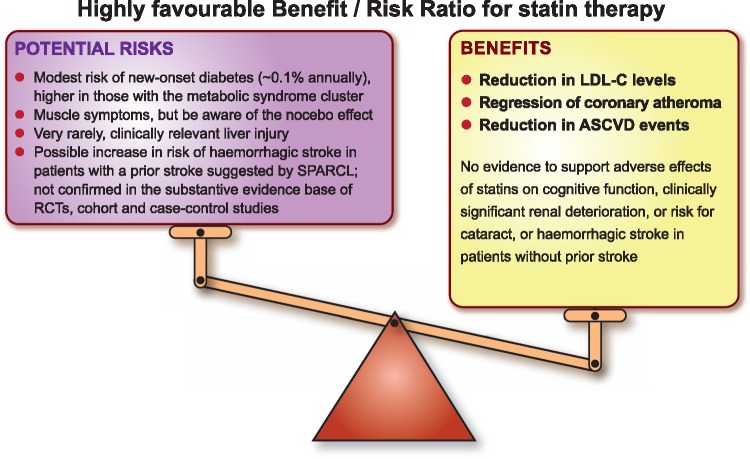
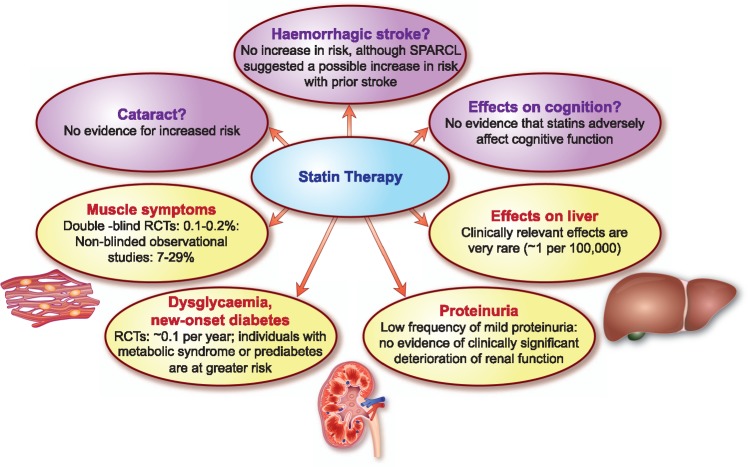
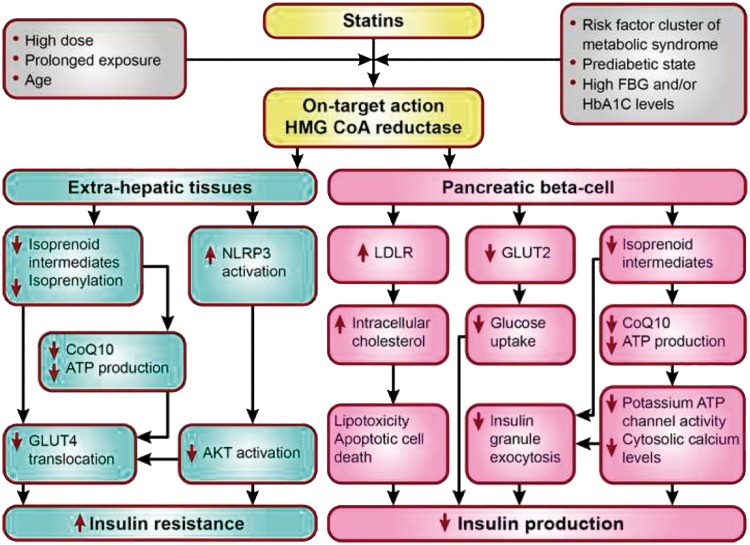
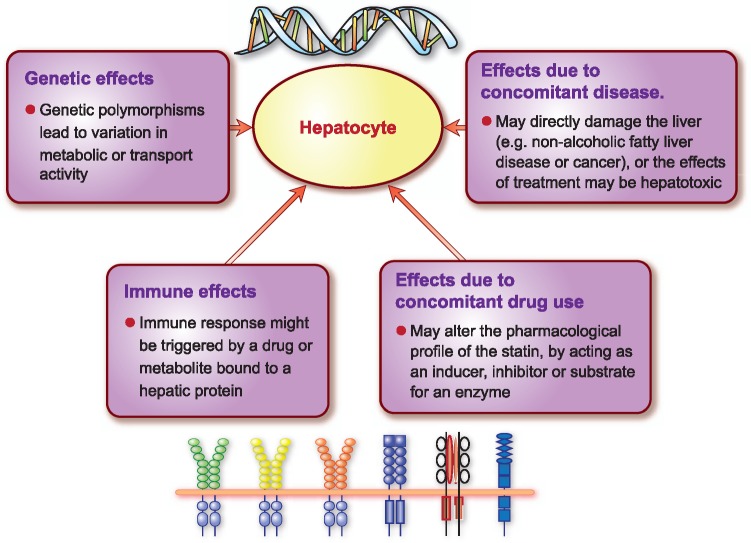
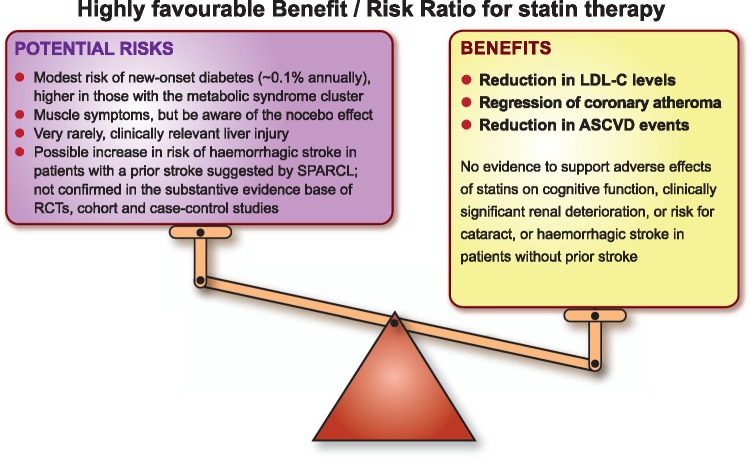
Aims: To objectively appraise evidence for possible adverse effects of long-term statin therapy on glucose homeostasis, cognitive, renal and hepatic function, and risk for haemorrhagic stroke or cataract. Methods and results: A literature search covering 2000-2017 was performed. The Panel critically appraised the data and agreed by consensus on the categorization of reported adverse effects. Randomized controlled trials (RCTs) and genetic studies show that statin therapy is associated with a modest increase in the risk of new-onset diabetes mellitus (about one per thousand patient-years), generally defined by laboratory findings (glycated haemoglobin ≥6.5); this risk is significantly higher in the metabolic syndrome or prediabetes. Statin treatment does not adversely affect cognitive function, even at very low levels of low-density lipoprotein cholesterol and is not associated with clinically significant deterioration of renal function, or development of cataract. Transient increases in liver enzymes occur in 0.5-2% of patients taking statins but are not clinically relevant; idiosyncratic liver injury due to statins is very rare and causality difficult to prove. The evidence base does not support an increased risk of haemorrhagic stroke in individuals without cerebrovascular disease; a small increase in risk was suggested by the Stroke Prevention by Aggressive Reduction of Cholesterol Levels study in subjects with prior stroke but has not been confirmed in the substantive evidence base of RCTs, cohort studies and case-control studies. Conclusion: Long-term statin treatment is remarkably safe with a low risk of clinically relevant adverse effects as defined above; statin-associated muscle symptoms were discussed in a previous Consensus Statement. Importantly, the established cardiovascular benefits of statin therapy far outweigh the risk of adverse effects.
Overview
The claims and statistics of this paper haven’t been checked yet.
Free: it reads the open-access text and checks the first 5 claims that cite a source we can check. Create a free account to check every claim.
Integrity signals
Registry
Cites
Statistics
Figures
Verification
Claims the paper makes
The claims and statistics of this paper haven’t been checked yet.
Free: it reads the open-access text and checks the first 5 claims that cite a source we can check. Create a free account to check every claim.
Claims other papers make about this one
Each is checked against this paper’s own text: does it say what the citing paper says it does?
The source backs part of the claim, not all of it — or backs it for a different population, condition or comparison.
In the citing paper
“Evidence for an increased risk of haemorrhagic stroke remains inconclusive [38, 54, 55].”
From Established and Emerging Lipid-Lowering Drugs for Primary and Secondary Cardiovascular Prevention (2023) · cites this paper as [54]
Experimental — accuracy not yet measuredThe cited source says what the claim attributes to it.
In the citing paper
“an elevation of liver enzymes, hyperglycaemia [53], new onset of diabetes mellitus type 2 [54] and proteinuria.”
From Established and Emerging Lipid-Lowering Drugs for Primary and Secondary Cardiovascular Prevention (2023) · cites this paper as [54]
The cited source says what the claim attributes to it.
In the citing paper
“Although concerns regarding a potential adverse impact of lipid-lowering agents on cognitive function have been raised, several lines of evidence argue against this association, as detailed in a 2018 European Atherosclerosis Society Consensus Panel statement (165).”
From 10. Cardiovascular Disease and Risk Management: Standards of Care in Diabetes—2025 (2025) · cites this paper as [165]
The cited source says what the claim attributes to it.
In the citing paper
“Although concerns regarding a potential adverse impact of lipid-lowering agents on cognitive function have been raised, several lines of evidence argue against this association, as detailed in a 2018 European Atherosclerosis Society Consensus Panel statement (159).”
From 10. Cardiovascular Disease and Risk Management: Standards of Care in Diabetes—2026 (2026) · cites this paper as [159]
Self-check
Percentages, sums and reported differences re-computed from the paper’s own numbers.
The self-check needs the paper’s full text.
Citations
Cites
Reduction in the incidence of type 2 diabetes with lifestyle intervention or metformin
(2002) · New England Journal of Medicine · doi:10.1056/nejmoa012512 · Cited by 19,011
Ahmed, A., Jorna, T., & Bhandari, S. (2016) · Nephron · doi:10.1159/000447068 · Cited by 11,717
European Guidelines on cardiovascular disease prevention in clinical practice (version 2012)
Authors/Task Force Members:, Perk, J., De Backer, G., Gohlke, H., Graham, I., Reiner, Ž., Verschuren, M., Albus, C., Benlian, P., Boysen, G., et al. (2012) · European Heart Journal · doi:10.1093/eurheartj/ehs092 · Cited by 8,490
Self-citationGenetics of Food Intake Self-Regulation in Childhood: Literature Review and Research Opportunities
Faith, M. S., Carnell, S., & Kral, T. V. E. (2013) · Human Heredity · doi:10.1159/000353879 · Cited by 7,601
Cholesterol Treatment Trialists' (CTT) Collaboration (2010) · The Lancet · doi:10.1016/s0140-6736(10)61350-5 · Cited by 6,550
2016 European Guidelines on cardiovascular disease prevention in clinical practice
Piepoli, M. F., Hoes, A. W., Agewall, S., Albus, C., Brotons, C., Catapano, A. L., Cooney, M.-T., Corrà, U., Cosyns, B., Deaton, C., et al. (2016) · European Heart Journal · doi:10.1093/eurheartj/ehw106 · Cited by 6,457
Self-citationFerence, B. A., Ginsberg, H. N., Graham, I., Ray, K. K., Packard, C. J., Bruckert, E., Hegele, R. A., Krauss, R. M., Raal, F. J., Schunkert, H., et al. (2017) · European Heart Journal · doi:10.1093/eurheartj/ehx144 · Cited by 3,962
Self-citationColhoun, H. M., Betteridge, D. J., Durrington, P. N., Hitman, G. A., W Neil, H. A., Livingstone, S. J., Thomason, M. J., Mackness, M. I., Charlton-Menys, V., & Fuller, J. H. (2004) · The Lancet · doi:10.1016/s0140-6736(04)16895-5 · Cited by 3,755 · cited 1×
“These data are consistent with findings among patients with DM treated with statins who derive a similar relative risk (RR) reduction per unit reduction in LDL-C but a greater absolute benefit.(4,26) Determining whether the effect of statins on DM risk is an ontarget (i.”
Result2016 ESC/EAS Guidelines for the Management of Dyslipidaemias
Catapano, A. L., Graham, I., De Backer, G., Wiklund, O., Chapman, M. J., Drexel, H., Hoes, A. W., Jennings, C. S., Landmesser, U., Pedersen, T. R., et al. (2016) · European Heart Journal · doi:10.1093/eurheartj/ehw272 · Cited by 3,162
Self-citation
Cited by
Items 201–300 of 417
Wu, Z., Chen, S., Tao, X., Liu, H., Sun, P., Richards, M., Tan, H. C., Yu, Y., Yang, Q., Wu, S., et al. (2024) · Clinical Research in Cardiology · doi:10.1007/s00392-024-02381-x · Cited by 7
“On the other hand, atorvastatin has the longest half-life (7–20 h) of the seven statins [47], so a period of 60 days is long enough to ensure that all kinds of statins are cleared from the body even if the patient uses a statin just before the screening period.”
Insani, W. N., Whittlesea, C., Ju, C., Man, K. K. C., Alwafi, H. H., Alsharif, A. A., Chapman, S., & Wei, L. (2022) · British Journal of Clinical Pharmacology · doi:10.1111/bcp.15438 · Cited by 7
“22% patients, which was lower than in previous studies.(9,10) Secondly, we could not identify the degree of severity of the ADR, which might influence the treatment changes in our secondary analysis.”
Response to statin therapy in the real world
Attar, A. (2020) · European Journal of Preventive Cardiology · doi:10.1177/2047487320905718 · Cited by 7
Ward, N. C., Reid, C. M., & Watts, G. F. (2022) · Frontiers in Cardiovascular Medicine · doi:10.3389/fcvm.2022.1060252 · Cited by 6
Dyslipidemia management in stroke prevention: An individualized approach
Stefanou, M., Panagiotopoulos, E., Liberopoulos, E. N., Milionis, H. J., Theodorou, A., Mira, K., de Sousa, D. A., Palaiodimou, L., Vlachopoulos, C., Siasos, G., et al. (2026) · International Journal of Stroke · doi:10.1177/17474930261418388 · Cited by 6
“71 Consequently, current ESC/EAS guidelines emphasize that, in high-risk patients, potential of diabetes is far outweighed by the absolute reduction in CVD risk.”
Low-Density Lipoprotein Cholesterol Goal Attainment in Indian Patients With Coronary Artery Disease
Puri, R., Bansal, M., Mahajan, K., Gupta, R., Mehta, V., Iyengar, S., Dorairaj, P., Agarwala, R., Khan, A., Bordoloi, N., et al. (2026) · JACC Asia · doi:10.1016/j.jacasi.2026.04.020 · Cited by 6
Zhou, Y., Kumarapperuma, H., Sichone, S., Chia, Z.-J., Little, P. J., Xu, S., & Kamato, D. (2020) · Biochemical and Biophysical Research Communications · doi:10.1016/j.bbrc.2020.08.013 · Cited by 6
Ермоленко, В. М. (2024) · Nephrology (Saint-Petersburg) · doi:10.36485/1561-6274-2024-28-1-13-29 · Cited by 6
Alam, U., Al-Bazz, D. Y., & Soran, H. (2021) · Diabetes Therapy · doi:10.1007/s13300-021-01070-6 · Cited by 6
Pallarés‐Carratalá, V., Barrios, V., Fierro-González, D., García, J. P., & Cinza‐Sanjurjo, S. (2023) · International Journal of Environmental Research and Public Health · doi:10.3390/ijerph20032388 · Cited by 6
“Despite the proven safety of statins [39], results such as those from our survey or from the SAMSON study confirm that both patients and physicians have a higher perception than reality about the side-effects associated with statins [40].”
ResultGolshani, S., Tavasoli, P., Farsavian, A. A., Farsavian, H., & Charati, J. Y. (2022) · Journal of Family Medicine and Primary Care · doi:10.4103/jfmpc.jfmpc_1344_21 · Cited by 6
“Therefore, screening high‑risk patients and using appropriate preventive regimens play an important role in reducing the incidence of CIN.”
BackgroundInfluentialKim, B. J., Cha, K. S., Cho, W. H., Kim, E. J., Choi, S., Kim, M. H., Kim, S., Park, J., Park, S., Sohn, I. S., et al. (2023) · Journal of Cardiovascular Pharmacology and Therapeutics · doi:10.1177/10742484231205204 · Cited by 6
Effect of alirocumab on cataracts in patients with acute coronary syndromes
Suc, G., Schwartz, G. G., Goodman, S. G., Jukema, J. W., Manvelian, G. Z., Poulouin, Y., Pordy, R. C., Scemama, M., Szarek, M. J., Steg, P. G., et al. (2023) · BMC Ophthalmology · doi:10.1186/s12886-023-03012-1 · Cited by 5
“Hence, concerns have been raised that low levels of low-density lipoprotein cholesterol (LDL-C) may increase the risk of cataracts [5], but clinical trial data have not confirmed this association with statins [6, 7].”
ResultKobalava, J. D., Gurevich, V. S., Galyavich, A. M., Каминный, А. И., Кашталап, В. В., Mareev, V. Y., Susekov, A. V., & Иосифович, Ш. И. (2019) · Kardiologiia · doi:10.18087/cardio.n581 · Cited by 5
FISIOPATOLOGIA E TRATAMENTOS ATUALMENTE DISPONÍVEIS PARA DISLIPIDEMIA
Almeida, A. B., Pontes, B. B., Gioia, L. N., & Rangel, V. (2023) · EPITAYA eBooks · doi:10.47879/ed.ep.2023809p32 · Cited by 6
miR-181d-5p ameliorates hypercholesterolemia by targeting PCSK9
Wang, Y., Li, F., Gao, X., Yu, H., Du, Z., Li, L., Yunhui, D., Hu, C., & Qin, Y. (2024) · Journal of Endocrinology · doi:10.1530/joe-23-0402 · Cited by 5
Statins - From Lipid-Lowering Benefits to Pleiotropic Effects
Liu, D. (2023) · IntechOpen eBooks · doi:10.5772/intechopen.1001540 · Cited by 5
La carne bovina como parte de una dieta saludable. Una revisión
Arias, R., Velásquez, A., Morales, R., & Alvarado-Gilis, C. (2022) · Agro Sur · doi:10.4206/agrosur.2021.v50n1-03 · Cited by 5
Magavern, E. F., van Heel, D. A., Smedley, D. P., & Caulfield, M. J. (2023) · The Pharmacogenomics Journal · doi:10.1038/s41397-023-00307-w · Cited by 5
“As a result of this widespread use, adverse drug reactions associated with statins have attracted significant attention [4].”
BackgroundVafadar, A., Vosough, P., Jahromi, H. K., Tajbakhsh, A., Savardshtaki, A., Butler, A. E., & Sahebkar, A. (2023) · Cell Biochemistry and Function · doi:10.1002/cbf.3852 · Cited by 5
Chikatimalla, R., Trivedi, Y. V., Ruhela, N., Singh, S., Lal, A., Pawa, A., Singh, B., & Jain, R. (2025) · Postgraduate Medicine · doi:10.1080/00325481.2025.2548199 · Cited by 5
“Mild, transient increases in proteinuria may occur at high doses, but routine clinical use following recommended dose adjustments generally poses minimal risk to renal function [49].”
Statin use and incident type 2 diabetes mellitus in women after menopause
Anelli, V., Armeni, E., Paschou, S. Α., & Lambrinoudaki, I. V. (2024) · Maturitas · doi:10.1016/j.maturitas.2024.107914 · Cited by 5
Lee, J., Choi, J. Y., Choi, B. G., Choi, Y.-J., Park, S., Kang, D. O., Park, E. J., Kim, J. B., Roh, S., Na, J. O., et al. (2024) · Scientific Reports · doi:10.1038/s41598-024-67585-7 · Cited by 5
“The relatively small number of patients treated with rosuvastatin 20 mg might have contributed to this lack of association of the cumulative incidence of MACE with rosuvastatin treatment.”
BackgroundStatin-induced diabetes mellitus
Khidirova, L. D., & Gordeev, A. I. (2023) · Russian Journal of Preventive Medicine · doi:10.17116/profmed20232605185 · Cited by 5
Optimal Prescribing of Statins to Reduce Cardiovascular Disease
Schade, D. S., Duro, T., & Eaton, R. P. (2023) · The American Journal of Medicine · doi:10.1016/j.amjmed.2023.06.030 · Cited by 5
Chen, J., Zha, L., Jin-hong, X., & Chen, G. (2024) · Food, Nutrition and Health. · doi:10.1007/s44403-024-00001-0 · Cited by 5
“The adverse effects of statin use in humans include muscle symptoms, statin-induced necrotizing autoimmune myopathy, neuropathy, and development of type 2 diabetes (T2D) [5–16].”
Pleiotropic effects of ezetimibe
Иосифович, Ш. И., & Genkel, V. V. (2020) · Kardiologiia · doi:10.18087/cardio.n875 · Cited by 6
“Помимо этого, принимая во внимание потенциальную гепатотоксичность статинов, печень привлекает особое внимание как мишень действия гиполипидемических препаратов [25].”
Inpatient statin use and stroke recurrence in patients with or without diabetes mellitus
Zhang, X., Li, S., Jing, J., Pan, Y., Yan, H., Meng, X., Zhao, X., Liu, L., Wang, C., Wang, Y., et al. (2019) · Neurological Research · doi:10.1080/01616412.2019.1642436 · Cited by 5
“that statins may increase the risk of new-onset diabetes mellitus [11,24] and accelerate the progression of diabetes via molecular mechanisms that impact insulin resistance and cellular metabolism of carbo-”
BackgroundUse of Hypolipidemic Drugs and the Risk of Second Primary Malignancy in Colorectal Cancer Patients
Halámková, J., Bohovicová, L., Pehalová, L., Goněc, R., Staněk, T., Kazda, T., Mouková, L., Krákorová, D. A., Kozáková, Š., Svoboda, M., et al. (2022) · Cancers · doi:10.3390/cancers14071699 · Cited by 5
“Most statins are metabolized by the liver and excreted to the bile, except for hydrophilic statins (pravastatin and rosuvastatin), simvastatin, and lovastatin that are typically eliminated by renal clearance [64].”
BackgroundSabbour, H. M., Bhatt, D. L., Elhenawi, Y., Aljaberi, A. K., Bennani, L., Fiad, T. M., Hasan, K. Y., Hashmani, S., Hijazi, R. A., Khan, Z., et al. (2024) · Cardiovascular Drugs and Therapy · doi:10.1007/s10557-023-07519-z · Cited by 4
“…robust evidence of the CV risk reduction upon long-term statin use [37] makes statins the drugs of choice in the treatment of dyslipidemia and the prevention of atherosclerotic CVD [12, 38], with a rather positive risk/benefit ratio even with the lowest LDL-cholesterol achieved on therapy [39].”
Bersch-Ferreira, Â. C., Weschenfelder, C., Waclawovsky, G., da Silva, L. R., Stein, E., Machado, R. H. V., Figueiró, M. F., Suzumura, É. A., Santos, R. H. N., Duarte, G. B. S., et al. (2024) · Nutrition Reviews · doi:10.1093/nutrit/nuae054 · Cited by 4
Self-citationRationale for the use of metformin and exercise to counteract statin‐associated side effects
Haxhi, J., & Thompson, P. D. (2020) · International Journal of Clinical Practice · doi:10.1111/ijcp.13900 · Cited by 4
Self-citationDiévart, F., Bruckert, É., Aboyans, V., Bekka, S., Boccara, F., Munoz, B. B. B., Emmerich, J., Farnier, M., Gallo, A., Lemesle, G., et al. (2024) · Archives of cardiovascular diseases · doi:10.1016/j.acvd.2024.02.004 · Cited by 4
Can LDL cholesterol ever be lowered too much?
Laight, D. W. (2018) · Prescriber · doi:10.1002/psb.1694 · Cited by 4
Бойцов, С. А., Пирадов, М. А., Tanashyan, M. М., Voznyuk, I. A., Yezhov, S., Oshchepkova, E. V., Сергиенко, В. И., Shamalov, N. A., Skiba, I. B., & Yanishevskiy, S. N. (2022) · S S Korsakov Journal of Neurology and Psychiatry · doi:10.17116/jnevro20221220517 · Cited by 4
Sohn, M., Park, Y. H., & Lim, S. (2025) · Diabetes & Metabolism Journal · doi:10.4093/dmj.2024.0482 · Cited by 4
“Known complications, such as muscle symptoms leading to treatment discontinuation [23] and a modest elevation in blood glucose levels and diabetes onset risk [24], underscore the need for vigilant thera-page 11 of 13 Initial statin vs. statin-ezetimibe in diabetes Diabetes Metab J 2025 Forthcoming.”
Sohn, S. Y., Kim, Y. J., Doh, J., & Cho, S. W. (2025) · Cardiovascular Drugs and Therapy · doi:10.1007/s10557-025-07729-7 · Cited by 4
“However, there are discrepancies between guideline recommendations and implementation in real-world practice [4, 5], partly because of potential side effects or intolerance of patients to high-intensity statin [6, 7].”
The problem of safety of lipid-lowering therapy
Zykov, M. V. (2019) · Kardiologiia · doi:10.18087/cardio.2505 · Cited by 4
“Европейским обществом кардиологов еще раз подчеркивается, что установленные сердечно-сосудистые преимущества терапии статинами намного перевешивают риск любых неблагоприятных эффектов [135].”
Pavlyuk, E. I., Васильевич, И. М., Alieva, A. S., Avdonina, N. G., Yakovlev, A. N., & Звартау, Н. Э. (2021) · Russian Journal of Cardiology · doi:10.15829/1560-4071-2021-4608 · Cited by 4
Shuja, D., Mian, M. U., Dhanjal, M. K., Mengar, J., Butt, A. A., Chaudhari, S. S., Wei, C. R., & Khan, A. A. (2024) · Cureus · doi:10.7759/cureus.68602 · Cited by 4
“On the other hand, rosuvastatin is commended for its high potency, enabling it to achieve substantial reductions in LDL-C even at lower doses compared to other statins [7].”
BackgroundEscores de Risco Cardiovascular entre Adultos Assintomáticos com Hemofilia
Camelo, R. M., Caram‐Deelder, C., Duarte, B. P., de Moura, M. C. B., Costa, N. C. D. M., Costa, Í. M., Vanderlei, A. M., Guimarães, T. M. R., Gouw, S. C., Rezende, S. M., et al. (2023) · Arquivos Brasileiros de Cardiologia · doi:10.36660/abc.20230004 · Cited by 4
“Circunferência da cintura (cm) 91,5 [82,3-97,5] 2 88,5 [80,8-94,5] 92,0 [84,3-103,0] 0,329*”
Maximizing Benefits and Minimizing Adverse Effects of Statins
Schade, D. S., Blankenship, J. C., & Eaton, R. P. (2023) · Endocrine Practice · doi:10.1016/j.eprac.2023.07.029 · Cited by 4
The effect of statins intake on sleep quality
Trambowicz, K., Staciwa, M., Broncel, M., & Gorzelak‐Pabiś, P. (2023) · Journal of Health Inequalities · doi:10.5114/jhi.2023.131805 · Cited by 4
Dağlı, H. Y., Artan, R., Civan, D. D., Aydemir, N. İ., & Yılmaz, A. (2024) · Pediatric Transplantation · doi:10.1111/petr.14853 · Cited by 4
“However, long-term use of statins has been shown to have many negative muscle symptoms such as pain or weakness, and on liver, kidney, and cognitive functions [8, 9].”
Cannon, C. P. (2019) · European Heart Journal · doi:10.1093/eurheartj/ehz629 · Cited by 4
Statin-induced necrotizing autoimmune myopathy
Huda, S. A., Yadava, S. K., Kahlown, S. A., Farooqi, M. S., Bryant, S., & Russo, R. C. (2020) · Baylor University Medical Center Proceedings · doi:10.1080/08998280.2020.1831298 · Cited by 4
“Less common side effects include proteinuria, kidney dysfunction, and increased risk of developing diabetes mellitus.(2) Statin-induced necrotizing”
BackgroundABDULLAH, S. S. B., Chong, M. C., Abdullah, K. L., Abidin, I. Z., & Yap, B. W. (2021) · Sains Malaysiana · doi:10.17576/jsm-2021-5012-18 · Cited by 4
“Besides that, it is well documented that Statin medication itself, which is consumed by ACS patients, may cause Statin induced DM (Ford et al. 2016; Gasiorek 2016; Mach et al. 2018).”
BackgroundReviews on Statin-associated Side Effects
Wu, Q., Lu, F. Y., Zhu, Y., & Zheng, L. (2023) · IntechOpen eBooks · doi:10.5772/intechopen.1000845 · Cited by 4
Statins associated diabetes: state of the problem in 2018
Kobalava, Z. D., Lazarev, P. V., & Вадимовна, В. С. (2018) · Russian Cardiology Journal (Russian Cardiology Society) · doi:10.15829/1560-4071-2018-9-89-99 · Cited by 4
Ruscica, M., Pavanello, C., Gandini, S., Macchi, C., Botta, M., Dall’Orto, D., Puppo, M. D., Bertolotti, M., Bosisio, R., Mombelli, G. G., et al. (2019) · Nutrition Journal · doi:10.1186/s12937-019-0483-x · Cited by 4
SEA 2026 Standards for Global Control of Vascular Risk
Mostaza, J. M., Pintó, X., Armario, P., Guijarro, C., Masana, L., Real, J. T., Arrobas-Velilla, T., Baeza‐Trinidad, R., Calmarza, P., Cebollada, J., et al. (2026) · Clínica e Investigación en Arteriosclerosis (English Edition) · doi:10.1016/j.artere.2026.500889 · Cited by 3
Bouillet, B., Boulestreau, R., Aboyans, V., Béliard, S., Boccara, F., Cariou, B., Charrière, S., Moulin, P., Vergès, B. L., Valéro, R., et al. (2026) · Diabetes & Metabolism · doi:10.1016/j.diabet.2026.101725 · Cited by 3
Clinical Care of Lipids in People with Type 1 Diabetes
Lan, N. S. R., Jenkins, A. J., & Fegan, P. G. (2023) · Contemporary diabetes · doi:10.1007/978-3-031-26681-2_28 · Cited by 4
Bansal, M., Kasliwal, R. R., Chandra, P., Kapoor, R., Chouhan, N., Bhan, A., & Trehan, N. K. (2024) · Indian Heart Journal · doi:10.1016/j.ihj.2024.11.244 · Cited by 3
Újabb lipidológiai evidenciák és ajánlások
Bajnok, L. (2018) · Orvosi Hetilap · doi:10.1556/650.2018.31192 · Cited by 3
‘The lower the better’ revisited: low-density lipoprotein and lipoprotein(a)
Lüscher, T. F. (2018) · European Heart Journal · doi:10.1093/eurheartj/ehy444 · Cited by 3
Unveiling the Antibacterial Properties of Statins: An In Vitro Study on Helicobacter pylori
Pirshahid, M. E., Asgharpour, F., Shokri‐Shirvani, J., Kazemi, S., & Moghadamnia, A. A. (2024) · Advances in Pharmacological and Pharmaceutical Sciences · doi:10.1155/2024/6380155 · Cited by 3
“However, some studies suggest that statin use may also increase the risk of hemorrhagic stroke, cataracts, cognitive impairment, and liver injury [33–35].”
BackgroundYe, J.-W., Shi, D.-W., Xiong, L., Chu, T.-J., Zheng, L., Sun, C., Dai, O., & Su, H. (2025) · Journal of Molecular Structure · doi:10.1016/j.molstruc.2025.144558 · Cited by 3
Key strategies for addressing the rising global burden and cost of healthcare
Bujang, M. A. (2026) · Journal of Public Health Research · doi:10.1177/22799036251388595 · Cited by 3
“33,34 Scientists and pharmaceutical companies bear the responsibility of researching and developing improved medications that aim for a cure.”
The case for statin use to reduce perioperative adverse cardiovascular and cerebrovascular events
Ratcliffe, F. M., & Rothwell, P. M. (2020) · British Journal of Anaesthesia · doi:10.1016/j.bja.2020.01.010 · Cited by 3
Future of Statins in Sepsis: A Review on Its Safety and Efficacy
eladwy, S., & Bazan, N. S. (2020) · Archives of Pharmaceutical Sciences Ain Shams University · doi:10.21608/aps.2020.2001.1022 · Cited by 3
“Also, mild transient proteinuria sometimes occurs when using high doses of statin, but this does not lead to renal impairment [60].”
BackgroundMcKechnie, T., Talwar, G., Lee, Y., Levine, O. H., & Eskicioglu, C. (2021) · International Journal of Colorectal Disease · doi:10.1007/s00384-021-04016-3 · Cited by 3
“Importantly, statin therapy has a relatively benign side effect profile, and thus would be a safe addition to treatment protocols [60].”
BackgroundCrea, F. (2020) · European Heart Journal · doi:10.1093/eurheartj/ehaa781 · Cited by 3
Beneficial effects of statins on adropin level in patients with arterial hypertension
Pokrovska, N. K., & Sklyarov, E. (2023) · Clinical and Preventive Medicine · doi:10.31612/2616-4868.1(23).2023.05 · Cited by 3
Liu, Y., Peng, P., Hung, W., Wu, P., Kao, C., Wu, P.-Y., Huang, J., Chen, S., & Kuo, C. (2025) · Nutrition Metabolism and Cardiovascular Diseases · doi:10.1016/j.numecd.2025.104465 · Cited by 2
Estándares SEA 2026 para el control global del riesgo vascular
Mostaza, J. M., Pintó, X., Armario, P., Guijarro, C., Masana, L., Real, J. T., Arrobas-Velilla, T., Baeza‐Trinidad, R., Calmarza, P., Cebollada, J., et al. (2026) · Clínica e Investigación en Arteriosclerosis · doi:10.1016/j.arteri.2025.500889 · Cited by 2
Sychev, D. A., Оstroumova, Т. М., Ostroumova, O. D., Кочетков, А. И., Владимировна, Б. С., & Mironova, E. V. (2023) · Safety and Risk of Pharmacotherapy · doi:10.30895/2312-7821-2023-11-3-252-270 · Cited by 2
Bouillet, B., Boulestreau, R., Aboyans, V., Béliard, S., Boccara, F., Cariou, B., Charrière, S., Moulin, P., Vergès, B. L., Valéro, R., et al. (2026) · Archives of cardiovascular diseases · doi:10.1016/j.acvd.2026.01.001 · Cited by 2
Research Progress on Hyperlipidemia
李, 成. (2024) · Advances in Clinical Medicine · doi:10.12677/acm.2024.141235 · Cited by 2
Topical issues concerning modern lipid-lowering therapy
Susekov, A. V. (2022) · Consilium Medicum · doi:10.26442/20751753.2022.1.201484 · Cited by 2
“В другом метаанализе (33 исследования, n=37 391) статинотерапия у больных с ХБП приводила к достоверному снижению уровней альбумина и белка в моче, повышала клиренс креатинина, но не влияла на скорость клубочковой фильтрации и уровень креатинина [33].”
Zárate-Correa, L. C., García-Peña, Á. A., Kaiser, S. E., Aguilar-Salinas, C. A., Méndez-Castillo, M., Mehta, R., Valério, C. M., Moreira, R. O., Mancillas‐Adame, L. G., Canto, J. A. C., et al. (2026) · Atherosclerosis · doi:10.1016/j.atherosclerosis.2026.120783 · Cited by 2
Rationale for Increasing Doses of Statins in Everyday Clinical Practice
Susekov, A. V. (2024) · Kardiologiia · doi:10.18087/cardio.2024.8.n2709 · Cited by 2
Tian, Y., Yang, Y., Li, Q., Hu, Y., Hu, Q., Ran, S., Zhou, S., Yang, X., Li, S., & Zhang, Q. (2026) · Advanced Science · doi:10.1002/advs.75850 · Cited by 3
“Pharmacological therapies mainly consist of lipid-regulating drugs [ 6, 7 ], anti-inflammatory or anti-oxidant agents [ 8 ], and anti-platelet drugs [ 9 ].”
Brain, benefit, or burden? Revisiting statins and cognitive function in older adults
Liu, Y., & Kunutsor, S. K. (2026) · GeroScience · doi:10.1007/s11357-026-02259-y · Cited by 2
“Clinicians were encouraged to be reassured about the cognitive safety of statins when used at guideline-recommended doses [69].”
Sung, K., Kang, D., Lee, J., Lee, S.-J., Cho, E. J., Jeong, J. A., Rhee, M., & Sung, D.-E. (2025) · Cardiovascular Diabetology · doi:10.1186/s12933-025-03003-0 · Cited by 2
“[23–25] While the absolute increase in risk is modest, media coverage and the lack of immediate symptomatic benefit in primary prevention settings contribute to poor adherence and high early discontinuation rates, exceeding 30% within two years of treatment.”
Robin, N., Barra, N. G., Foley, K. P., Li, Y. E., Tamrakar, A. K., Patoli, D., Rebalka, I. A., Cree, T., Bibby, K., Nguyen, K., et al. (2026) · Science Advances · doi:10.1126/sciadv.adz3612 · Cited by 2
“Overt statin myopathy is rare, but low-level myopathy, weakness, and exercise intolerance are common side effects of statins and a key reason for discontinuation of statin use ( 3 , 47 , 48 ).”
Beasley, M., Broce, M., & Mousa, A. Y. (2021) · Vascular · doi:10.1177/17085381211059660 · Cited by 2
Tokgözoğlu, L. S., Orringer, C. E., & Saseen, J. J. (2023) · Elsevier eBooks · doi:10.1016/b978-0-323-88286-6.00017-0 · Cited by 2
Self-citationOpportunità e prospettive per l’impiego dell’acido bempedoico nella pratica clinica
Fusco, S. A. D., Scicchitano, P., & Colivicchi, F. (2021) · Giornale Ialiano di Cardiologia · doi:10.1714/3582.35673 · Cited by 2
Pharmacokinetics and pharmacodynamic interaction of bergamottin with atorvastatin in rats
Zhang, X., Guo, J., Li, J., Chen, C., & Su, G. (2022) · Xenobiotica · doi:10.1080/00498254.2022.2090301 · Cited by 2
“Statin-induced newly diagnosed diabetes mellitus, myotoxicity, and hepatotoxicity are all statin-related side effects (Mach et al. 2018).”
BackgroundKoristi zdravljenja s statini odtehtajo njihove stranske učinke
Sotler, T., & Šebeštjen, M. (2022) · Slovenian Medical Journal · doi:10.6016/zdravvestn.3217 · Cited by 2
The use of apricot oil emulsions for the transdermal delivery of selected statins
Marais, S. (2019) · Boloka Institutional Repository (North-west University) · Cited by 2
Relevant sind nur die Muskelsymptome
Medizin, S. (2018) · InFo Neurologie + Psychiatrie · doi:10.1007/s15005-018-2785-5 · Cited by 2
Aspide, R., Berselli, B., Piazza, O., Recchia, A., & Bilotta, F. (2024) · Neurocritical Care · doi:10.1007/s12028-024-01989-1 · Cited by 2
“Finally, there is no evidence of an increased risk of hemorrhagic stroke in individuals without cerebrovascular disease [4].”
Yao, X., Lai, H., Ma, K., Zhao, B., He, A., Sun, W., Wang, Y., & Song, H. (2025) · Lipids in Health and Disease · doi:10.1186/s12944-025-02698-0 · Cited by 1
“…the “lowest is best” in sLDL-C management of populations with defined ASCVD risks and refuted concerns about safety-driven undertreatment [8, 89, 90], this practice statement should be framed as reassurance against withholding intensive treatment when clinically indicated rather than…”
Tkachyshyn, O. V. (2021) · ScienceRise Medical Science · doi:10.15587/2519-4798.2021.224387 · Cited by 1
“There are present several concerns in relation to the lipid-lowering therapy in patients after the hemorrhagic stroke [7].”
BackgroundSumathy, T., Maheshkumar, V. P., & Jaikumar, S. (2022) · International Journal of Life Science and Pharma Research · doi:10.22376/ijpbs/lpr.2022.12.5.p205-214 · Cited by 1
Therapie von Begleiterkrankungen: Diabetes mellitus und Dyslipoproteinämie
Apostolopoulou, M., & Roden, M. (2022) · Springer eBooks · doi:10.1007/978-3-662-62484-5_20 · Cited by 1
Self-citationAntibody-Based Therapeutics for Hypercholesterolemia
Tomlinson, B., & Chan, P. (2025) · Biologics · doi:10.2147/btt.s500456 · Cited by 1
Management of Dyslipidemia after Stroke
Chang, Y., & Song, T. (2022) · Journal of the Korean Neurological Association · doi:10.17340/jkna.2022.3.1 · Cited by 1
Chen, W. L., Ge, M., Sun, S., Zhang, H., Wang, Z., Guo, Y., & Luo, Z. (2025) · Scientific Reports · doi:10.1038/s41598-025-32406-y · Cited by 1
Choo, E. H., Kim, C. J., Hwang, B., Lee, K. Y., Oh, G. C., Lim, S., Choi, I. J., Kim, D., Kwon, O. S., Lee, S., et al. (2025) · BMJ Open · doi:10.1136/bmjopen-2025-104127 · Cited by 1
Federici, M., Buzzetti, R., Candido, R., Cosmo, S. D., Pirillo, A., Russo, G., Sesti, G., & Avogaro, A. (2026) · Cardiovascular Diabetology · doi:10.1186/s12933-026-03185-1 · Cited by 1
“As bempedoic acid is activated only in the liver and not in skeletal muscle, it is associated with a low risk of muscle adverse effects [35], a clinically relevant advantage in people with diabetes, who commonly report statin-associated muscle symptoms [78].”
Statins: 50 years old and with new surprises in store
Osnes, J., Andressen, K. W., & Levy, F. O. (2024) · Tidsskrift for Den norske legeforening · doi:10.4045/tidsskr.24.0165 · Cited by 1
Elsődleges, másodlagos, harmadlagos gyógyszeres megelőzés az újabb lipidajánlások kaleidoszkópjában
Bajnok, L. (2019) · Cardiologia Hungarica · doi:10.26430/chungarica.2019.49.1.44 · Cited by 1
Tajudin, N. H. M., Fahrni, M. L., Ghani, R. A., Awang, M. H., Chopra, H., & Alkhoshaiban, A. S. (2024) · Journal of Pharmacology and Pharmacotherapeutics · doi:10.1177/0976500x241268964 · Cited by 1
“4,13 In the Effects of Statins on Muscle Performance (STOMP) trial, which was the first randomized, double-blind, placebo-controlled study, the prevalence of SAMS was reported to be 9.4%.”
InfluentialDiabetogenic Effects of Antihypertensive Drugs and Statins
Mancia, G., Seravalle, G., & Grassi, G. M. (2023) · Updates in hypertension and cardiovascular protection · doi:10.1007/978-3-031-13009-0_26 · Cited by 1
Andevari, A. N., & Koolivand, M. (2026) · Endocrinology Diabetes & Metabolism · doi:10.1002/edm2.70305 · Cited by 1
“In general, due to the extensive hepatic metabolism of atorvastatin, lovas-tatin and simvastatin, their bioavailability is lower than that of other statins [21, 22].”
SAMSON, SAMS and nocebo effects
Stock, J. K. (2021) · Atherosclerosis · doi:10.1016/j.atherosclerosis.2021.02.005 · Cited by 1
Self-citationNaing, C. M., & Ni, H. (2019) · Cochrane Database of Systematic Reviews · doi:10.1002/14651858.cd013268 · Cited by 1
Metadata
- Authors
- Mach, F., Ray, K. K., Wiklund, O., Corsini, A., Catapano, A. L., Bruckert, E., De Backer, G., Hegele, R. A., Hovingh, G. K., Jacobson, T. A., Krauss, R. M., Laufs, U., Leiter, L. A., März, W., Nordestgaard, B. G., Raal, F. J., Roden, M., Santos, R. D., Stein, E. A., Stroes, E. S., Thompson, P. D., Tokgözoğlu, L., Vladutiu, G. D., Gencer, B., Stock, J. K., Ginsberg, H. N., Chapman, M. J., & European Atherosclerosis Society Consensus Panel
- Affiliations
- University Hospital of Geneva (CH)
- Imperial College London (GB)
- Sahlgrenska University Hospital (SE)
- University of Milan (IT)
- National Institute for Health and Medical Research (INSERM) UMRS1166, Department of Endocrinology-Metabolism, ICAN—Institute of CardioMetabolism and Nutrition, AP-HP, Hôpital de la Pitié, Paris, France
- Department of Public Health, University Hospital Ghent, Ghent, Belgium
- Western University (CA)
- Amsterdam UMC Location University of Amsterdam (NL)
- Emory University (US)
- Department of Atherosclerosis Research, Children's Hospital Oakland Research Institute, Oakland, CA, USA
- Leipzig University (DE)
- St. Michael's Hospital (CA)
- University of Graz (AT)
- University of Copenhagen (DK)
- University of the Witwatersrand (ZA)
- Deutsches Diabetes-Zentrum e.V. (DE)
- Universidade de São Paulo (BR)
- Metabolic and Atherosclerosis Research Center, Cincinnati, OH, USA
- Hartford Hospital (US)
- Hacettepe University (TR)
- University at Buffalo, State University of New York (US)
- Division of Cardiology, Department of Medical Specialties, Foundation for Medical Researches, Geneva University Hospital, Rue Gabrielle-Perret-Gentil 4 1205 Geneva, Switzerland
- European Atherosclerosis Society (SE)
- Columbia University (US)
- Inserm (FR)
- Corresponding author
- Mach, François
- ORCID
- Mach, François
- Ray, Kausik K
- Wiklund, Olov
- Corsini, Alberto
- Catapano, Alberico L
- Hegele, Robert A
- Hovingh, G Kees
- Jacobson, Terry A
- Krauss, Ronald M
- Laufs, Ulrich
- Leiter, Lawrence A
- März, Winfried
- Nordestgaard, Børge G
- Raal, Frederick J
- Roden, Michael
- Santos, Raul D
- Stroes, Erik S
- Thompson, Paul D
- Tokgözoğlu, Lale
- Ginsberg, Henry N
- Chapman, M John
- Venue
- European Heart Journal
- Publisher
- Oxford University Press (OUP)
- Published
- 2018-04-27
- Volume
- 39
- Issue
- 27
- Pages
- 2526-2539
- ISSN
- 0195-668X (ISSN-L)
- 1522-9645
- PMC
- PMC6047411
- OpenAlex
- W2801534920
- Semantic Scholar
- 8ac6b81429dbb12d7fb652293904d44437af6936
- Cited by
- 370
- References
- 143
- Citations by year
- 2026: 23 · 2025: 27 · 2024: 49 · 2023: 40 · 2022: 57 · 2021: 43 · 2020: 50 · 2019: 57 · 2018: 23
- FWCI
- 45.21
- Type
- journal article
- Language
- en
- Open access
- hybrid
- doi.org
- Licence
- Locations
- European Heart Journal (publishedVersion, cc-by-nc)
- Europe PMC (PubMed Central) (publishedVersion, cc-by-nc)
- PubMed Central (publishedVersion, cc-by-nc)
- PubMed (publishedVersion)
- Research at the University of Copenhagen (University of Copenhagen) (publishedVersion, cc-by-nc)
- HAL (submittedVersion)
- Archivio Istituzionale della Ricerca (Universita Degli Studi Di Milano) (submittedVersion, other-oa)
- eScholarship (California Digital Library) (submittedVersion)
- eScholarship (California Digital Library) (submittedVersion, cc-by-nc)
- IRIS (submittedVersion)
- Hacettepe University Institutional Repository (hacettepe.edu.tr) (submittedVersion, other-oa)
- Spiral (Imperial College London) (submittedVersion, other-oa)
- Funders
- European Atherosclerosis Society
- Amgen, AstraZeneca, Eli Lilly, Esperion, Merck, Pfizer, and Sanofi-Regeneron
- Topics
- Health Sciences › Medicine › Cardiology and Cardiovascular Medicine › Lipoproteins and Cardiovascular Health
- Life Sciences › Biochemistry, Genetics and Molecular Biology › Cancer Research › Cancer, Lipids, and Metabolism
- Life Sciences › Pharmacology, Toxicology and Pharmaceutics › Toxicology › Pharmacovigilance and Adverse Drug Reactions
- Keywords
- statins, adverse drug reactions, glucose homeostasis, new-onset diabetes, cognitive function, renal function, liver function, hemorrhagic stroke, cataract, statin-induced liver injury, metabolic syndrome, prediabetes, LDL cholesterol, drug safety
- MeSH terms
- Cataract, Cerebral Hemorrhage, Cognition Disorders, Glucose, Homeostasis, Humans, Kidney Diseases, Hydroxymethylglutaryl-CoA Reductase Inhibitors, Stroke, Chemical and Drug Induced Liver Injury
About these checks
Registry, retraction, Cites and statistics results are computed, not judged, with one exception: a printed reference that no index lists is read once by a model before it counts as a citation error. Claims are extracted by a model and kept only when their quote appears verbatim in the text; each cited source is then checked, with a model’s help, for whether it says what the claim relies on. Those verdicts can be wrong — read the claim’s quote and the cited source before relying on one.
Statistics and arithmetic are recomputed, not judged.
Confidence bands are shown only for fields calibrated on our annotated test set. None is calibrated yet, so no band is shown.
What counts as a claim ›How we measure confidence ›How we check this ›
Are you an author, or do you see a problem with this page? Request a review
Data sources
Bibliographic data: Semantic Scholar, OpenAlex, Crossref.
Contains information from the Semantic Scholar Academic Graph Datasets, made available under the ODC Attribution License (ODC-BY 1.0).
Semantic Scholar’s data is described in: Kinney, R., et al. (2023). The Semantic Scholar Open Data Platform. arXiv:2301.10140.
