

Adverse effects of statin therapy: perception vs. the evidence – focus on glucose homeostasis, cognitive, renal and hepatic function, haemorrhagic stroke and cataract
Open accessThe DOI matches its Crossref record; 143 of the 143 references it cites were found in a registry or an index.
Abstract
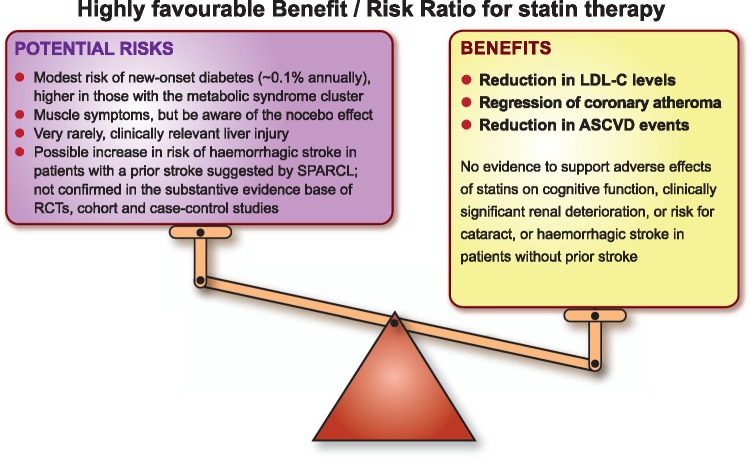
Aims: To objectively appraise evidence for possible adverse effects of long-term statin therapy on glucose homeostasis, cognitive, renal and hepatic function, and risk for haemorrhagic stroke or cataract. Methods and results: A literature search covering 2000-2017 was performed. The Panel critically appraised the data and agreed by consensus on the categorization of reported adverse effects. Randomized controlled trials (RCTs) and genetic studies show that statin therapy is associated with a modest increase in the risk of new-onset diabetes mellitus (about one per thousand patient-years), generally defined by laboratory findings (glycated haemoglobin ≥6.5); this risk is significantly higher in the metabolic syndrome or prediabetes. Statin treatment does not adversely affect cognitive function, even at very low levels of low-density lipoprotein cholesterol and is not associated with clinically significant deterioration of renal function, or development of cataract. Transient increases in liver enzymes occur in 0.5-2% of patients taking statins but are not clinically relevant; idiosyncratic liver injury due to statins is very rare and causality difficult to prove. The evidence base does not support an increased risk of haemorrhagic stroke in individuals without cerebrovascular disease; a small increase in risk was suggested by the Stroke Prevention by Aggressive Reduction of Cholesterol Levels study in subjects with prior stroke but has not been confirmed in the substantive evidence base of RCTs, cohort studies and case-control studies. Conclusion: Long-term statin treatment is remarkably safe with a low risk of clinically relevant adverse effects as defined above; statin-associated muscle symptoms were discussed in a previous Consensus Statement. Importantly, the established cardiovascular benefits of statin therapy far outweigh the risk of adverse effects.
Overview
The claims and statistics of this paper haven’t been checked yet.
Free: it reads the open-access text and checks the first 5 claims that cite a source we can check. Create a free account to check every claim.
Integrity signals
Registry
Cites
Statistics
Figures
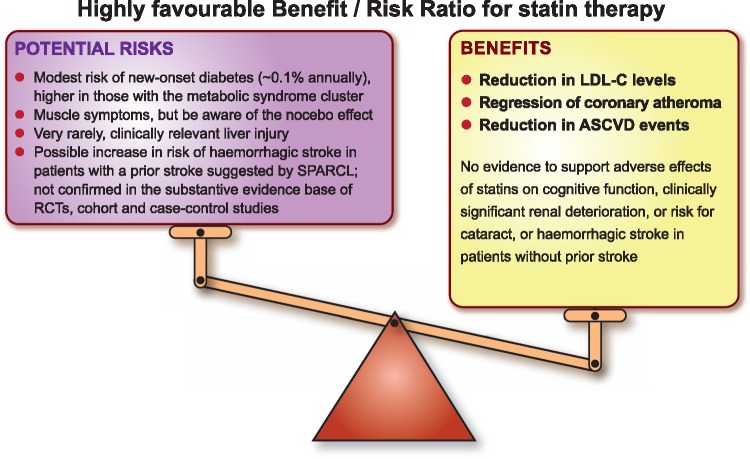
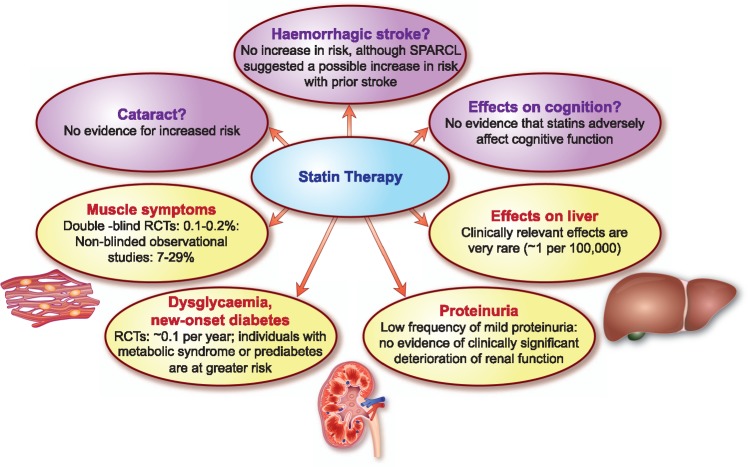
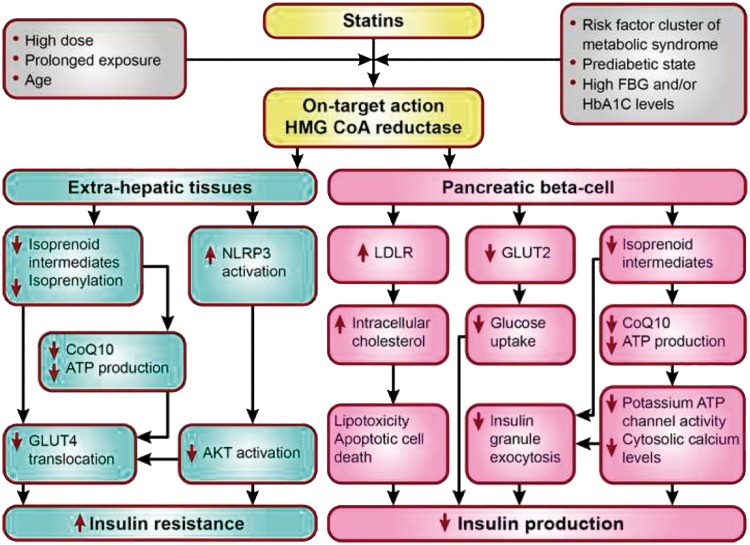
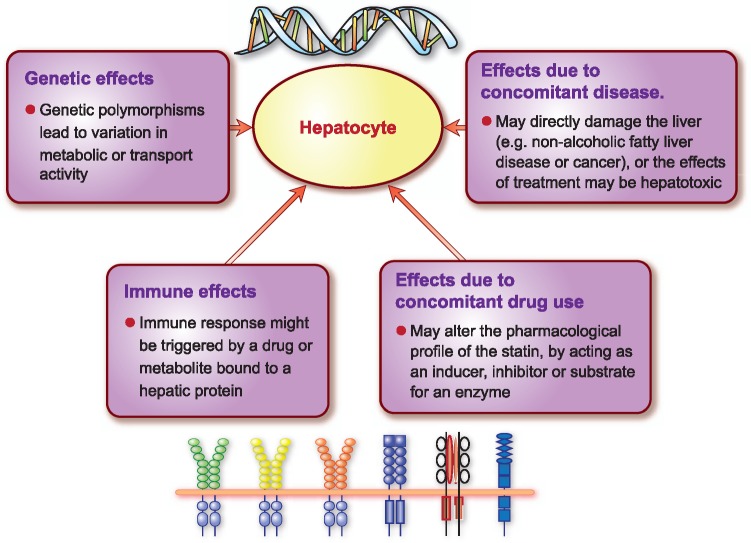
Verification
Claims the paper makes
The claims and statistics of this paper haven’t been checked yet.
Free: it reads the open-access text and checks the first 5 claims that cite a source we can check. Create a free account to check every claim.
Claims other papers make about this one
Each is checked against this paper’s own text: does it say what the citing paper says it does?
The source backs part of the claim, not all of it — or backs it for a different population, condition or comparison.
In the citing paper
“Evidence for an increased risk of haemorrhagic stroke remains inconclusive [38, 54, 55].”
From Established and Emerging Lipid-Lowering Drugs for Primary and Secondary Cardiovascular Prevention (2023) · cites this paper as [54]
Experimental — accuracy not yet measuredThe cited source says what the claim attributes to it.
In the citing paper
“an elevation of liver enzymes, hyperglycaemia [53], new onset of diabetes mellitus type 2 [54] and proteinuria.”
From Established and Emerging Lipid-Lowering Drugs for Primary and Secondary Cardiovascular Prevention (2023) · cites this paper as [54]
The cited source says what the claim attributes to it.
In the citing paper
“Although concerns regarding a potential adverse impact of lipid-lowering agents on cognitive function have been raised, several lines of evidence argue against this association, as detailed in a 2018 European Atherosclerosis Society Consensus Panel statement (165).”
From 10. Cardiovascular Disease and Risk Management: Standards of Care in Diabetes—2025 (2025) · cites this paper as [165]
The cited source says what the claim attributes to it.
In the citing paper
“Although concerns regarding a potential adverse impact of lipid-lowering agents on cognitive function have been raised, several lines of evidence argue against this association, as detailed in a 2018 European Atherosclerosis Society Consensus Panel statement (159).”
From 10. Cardiovascular Disease and Risk Management: Standards of Care in Diabetes—2026 (2026) · cites this paper as [159]
Self-check
Percentages, sums and reported differences re-computed from the paper’s own numbers.
The self-check needs the paper’s full text.
Citations
Cites
Reduction in the incidence of type 2 diabetes with lifestyle intervention or metformin
(2002) · New England Journal of Medicine · doi:10.1056/nejmoa012512 · Cited by 19,011
Ahmed, A., Jorna, T., & Bhandari, S. (2016) · Nephron · doi:10.1159/000447068 · Cited by 11,717
European Guidelines on cardiovascular disease prevention in clinical practice (version 2012)
Authors/Task Force Members:, Perk, J., De Backer, G., Gohlke, H., Graham, I., Reiner, Ž., Verschuren, M., Albus, C., Benlian, P., Boysen, G., et al. (2012) · European Heart Journal · doi:10.1093/eurheartj/ehs092 · Cited by 8,490
Self-citationGenetics of Food Intake Self-Regulation in Childhood: Literature Review and Research Opportunities
Faith, M. S., Carnell, S., & Kral, T. V. E. (2013) · Human Heredity · doi:10.1159/000353879 · Cited by 7,601
Cholesterol Treatment Trialists' (CTT) Collaboration (2010) · The Lancet · doi:10.1016/s0140-6736(10)61350-5 · Cited by 6,550
2016 European Guidelines on cardiovascular disease prevention in clinical practice
Piepoli, M. F., Hoes, A. W., Agewall, S., Albus, C., Brotons, C., Catapano, A. L., Cooney, M.-T., Corrà, U., Cosyns, B., Deaton, C., et al. (2016) · European Heart Journal · doi:10.1093/eurheartj/ehw106 · Cited by 6,457
Self-citationFerence, B. A., Ginsberg, H. N., Graham, I., Ray, K. K., Packard, C. J., Bruckert, E., Hegele, R. A., Krauss, R. M., Raal, F. J., Schunkert, H., et al. (2017) · European Heart Journal · doi:10.1093/eurheartj/ehx144 · Cited by 3,962
Self-citationColhoun, H. M., Betteridge, D. J., Durrington, P. N., Hitman, G. A., W Neil, H. A., Livingstone, S. J., Thomason, M. J., Mackness, M. I., Charlton-Menys, V., & Fuller, J. H. (2004) · The Lancet · doi:10.1016/s0140-6736(04)16895-5 · Cited by 3,755 · cited 1×
“These data are consistent with findings among patients with DM treated with statins who derive a similar relative risk (RR) reduction per unit reduction in LDL-C but a greater absolute benefit.(4,26) Determining whether the effect of statins on DM risk is an ontarget (i.”
Result2016 ESC/EAS Guidelines for the Management of Dyslipidaemias
Catapano, A. L., Graham, I., De Backer, G., Wiklund, O., Chapman, M. J., Drexel, H., Hoes, A. W., Jennings, C. S., Landmesser, U., Pedersen, T. R., et al. (2016) · European Heart Journal · doi:10.1093/eurheartj/ehw272 · Cited by 3,162
Self-citation
Cited by
Mach, F., Baigent, C., Catapano, A. L., Koskinas, K. C., Casula, M., Badimon, L., Chapman, M. J., De Backer, G. G., Delgado, V., Ference, B. A., et al. (2020) · European Heart Journal · doi:10.1093/eurheartj/ehz455 · Cited by 8,961
Self-citationMach, F., Baigent, C., Catapano, A. L., Koskinas, K. C., Casula, M., Badimon, L., Chapman, M. J., De Backer, G. G., Delgado, V., Ference, B. A., et al. (2019) · Atherosclerosis · doi:10.1016/j.atherosclerosis.2019.08.014 · Cited by 4,854
Self-citation10. Cardiovascular Disease and Risk Management: Standards of Medical Care in Diabetes—2022
American Diabetes Association Professional Practice Committee (2022) · Diabetes Care · doi:10.2337/dc22-s010 · Cited by 869
“Lipid-Lowering Agents and Cognitive Function Although concerns regarding a potential adverse impact of lipid-lowering agents on cognitive function have been raised, several lines of evidence point against this association, as detailed in a 2018 European Atherosclerosis Society Consensus Panel statement (129).”
BackgroundStatin Toxicity: Mechanistic Insights and Clinical Implications
Ward, N. C., Watts, G. F., & Eckel, R. H. (2019) · Circulation Research · doi:10.1161/circresaha.118.312782 · Cited by 757
10. Cardiovascular Disease and Risk Management: Standards of Medical Care in Diabetes—2021
American Diabetes Association (2021) · Diabetes Care · doi:10.2337/dc21-s010 · Cited by 495
10. Cardiovascular Disease and Risk Management: Standards of Medical Care in Diabetes—2020
American Diabetes Association (2020) · Diabetes Care · doi:10.2337/dc20-s010 · Cited by 487
10. Cardiovascular Disease and Risk Management: Standards of Care in Diabetes—2025
American Diabetes Association Professional Practice Committee, ElSayed, N. A., McCoy, R. G., Aleppo, G., Balapattabi, K., Beverly, E. A., Briggs Early, K., Bruemmer, D., Das, S. R., Echouffo-Tcheugui, J. B., et al. (2025) · Diabetes Care · doi:10.2337/dc25-s010 · Cited by 486
10. Cardiovascular Disease and Risk Management: Standards of Medical Care in Diabetes—2019
American Diabetes Association (2019) · Diabetes Care · doi:10.2337/dc19-s010 · Cited by 471
A Modern Approach to Dyslipidemia
Berberich, A. J., & Hegele, R. A. (2022) · Endocrine Reviews · doi:10.1210/endrev/bnab037 · Cited by 469
“Statins are very widely used (250), are generally well tolerated, and only very rarely cause severe myopathy or hepatic toxicity (251).”
BackgroundSelf-citation10. Cardiovascular Disease and Risk Management: Standards of Care in Diabetes—2023
ElSayed, N. A., Aleppo, G., Aroda, V. R., Bannuru, R. R., Brown, F. M., Bruemmer, D., Collins, B. S., Das, S. R., Hilliard, M. E., Isaacs, D., et al. (2023) · Diabetes Care · doi:10.2337/dc23-s010 · Cited by 465
10. Cardiovascular Disease and Risk Management: Standards of Care in Diabetes—2024
American Diabetes Association Professional Practice Committee, ElSayed, N. A., Aleppo, G., Bannuru, R. R., Bruemmer, D., Collins, B. S., Das, S. R., Ekhlaspour, L., Hilliard, M. E., Johnson, E. L., et al. (2024) · Diabetes Care · doi:10.2337/dc24-s010 · Cited by 438
Watts, G. F., Gidding, S. S., Hegele, R. A., Raal, F. J., Sturm, A. C., Jones, L. K., Sarkies, M. N., Al-Rasadi, K., Blom, D. J., Daccord, M., et al. (2023) · Nature Reviews Cardiology · doi:10.1038/s41569-023-00892-0 · Cited by 250
Self-citationHandelsman, Y., Jellinger, P. S., Guerin, C. K., Bloomgarden, Z. T., Brinton, E. A., Budoff, M. J., Davidson, M. H., Einhorn, D., Fazio, S., Fonseca, V. A., et al. (2020) · Endocrine Practice · doi:10.4158/cs-2020-0490 · Cited by 248
“Statin therapy is associated with a modestly increased risk of increased glucose levels and new-onset diabetes (87,124,125).”
Self-citationRuscica, M., Ferri, N., Banach, M., Sirtori, C. R., & Corsini, A. (2023) · Cardiovascular Research · doi:10.1093/cvr/cvac020 · Cited by 243
Self-citationHydrophilic or Lipophilic Statins?
Climent, E., Benaiges, D., & Pedro-Botet, J. (2021) · Frontiers in Cardiovascular Medicine · doi:10.3389/fcvm.2021.687585 · Cited by 241
10. Cardiovascular Disease and Risk Management: Standards of Care in Diabetes—2026
American Diabetes Association Professional Practice Committee for Diabetes*, Bajaj, M., McCoy, R. G., Balapattabi, K., Bannuru, R. R., Bellini, N. J., Bennett, A. K., Beverly, E. A., Briggs Early, K., ChallaSivaKanaka, S., et al. (2026) · Diabetes Care · doi:10.2337/dc26-s010 · Cited by 225
Olmastroni, E., Molari, G., De Beni, N., Colpani, O., Galimberti, F., Gazzotti, M., Zambon, A., Catapano, A. L., & Casula, M. (2022) · European Journal of Preventive Cardiology · doi:10.1093/eurjpc/zwab208 · Cited by 197
Self-citationWang, N., Fulcher, J., Abeysuriya, N., Park, L., Kumar, S., Di Tanna, G. L., Wilcox, I., Keech, A., Rodgers, A., & Lal, S. (2020) · The Lancet Diabetes & Endocrinology · doi:10.1016/s2213-8587(19)30388-2 · Cited by 187
Newman, C. B., Blaha, M. J., Boord, J. B., Cariou, B., Chait, A., Fein, H. G., Ginsberg, H. N., Goldberg, I. J., Murad, M. H., Subramanian, S., et al. (2020) · The Journal of Clinical Endocrinology & Metabolism · doi:10.1210/clinem/dgaa674 · Cited by 172
Self-citationAntioxidant Effects of Statins by Modulating Nrf2 and Nrf2/HO-1 Signaling in Different Diseases
Mansouri, A., Reiner, Ž., Ruscica, M., Tedeschi-Reiner, E., Radbakhsh, S., Bagheri Ekta, M., & Sahebkar, A. (2022) · Journal of Clinical Medicine · doi:10.3390/jcm11051313 · Cited by 162
Familial hypercholesterolaemia: evolving knowledge for designing adaptive models of care
Watts, G. F., Gidding, S. S., Mata, P., Pang, J., SULLIVAN, D. R., Yamashita, S., Raal, F. J., Santos, R. D., & Ray, K. K. (2020) · Nature Reviews Cardiology · doi:10.1038/s41569-019-0325-8 · Cited by 154
Self-citationWorld Heart Federation Cholesterol Roadmap 2022
Ray, K. K., Ference, B. A., Séverin, T., Blom, D., Nicholls, S. J., Shiba, M. H., Almahmeed, W., Alonso, R., Daccord, M., Ezhov, M., et al. (2022) · Global Heart · doi:10.5334/gh.1154 · Cited by 146
Self-citationKrychtiuk, K. A., Ahrens, I., Drexel, H., Halvorsen, S., Hassager, C., Huber, K., Kurpas, D., Niessner, A., Schiele, F., Semb, A. G., et al. (2022) · European Heart Journal Acute Cardiovascular Care · doi:10.1093/ehjacc/zuac123 · Cited by 137
Self-citationPotential Benefits and Risks Associated with the Use of Statins
Khatiwada, N., & Hong, Z. (2024) · Pharmaceutics · doi:10.3390/pharmaceutics16020214 · Cited by 134
“The effects of statins on renal function remain a topic of controversy with conflicting findings [104].”
BackgroundFamilial Hypercholesterolemia: The Most Frequent Cholesterol Metabolism Disorder Caused Disease
Benito-Vicente, A., Uribe, K. B., Jebari, S., Galicia-Garcia, U., Ostolaza, H., & Martin, C. (2018) · International Journal of Molecular Sciences · doi:10.3390/ijms19113426 · Cited by 130
“in cases where the FH is diagnosed later in life, thus side effects derived from aggressive statin use are avoided [131].”
BackgroundDoes nonalcoholic fatty liver disease cause cardiovascular disease? Current knowledge and gaps
Santos, R. D., Valenti, L. V. C., & Romeo, S. (2019) · Atherosclerosis · doi:10.1016/j.atherosclerosis.2019.01.029 · Cited by 124
Self-citationCardiovascular Risk and Statin Therapy Considerations in Women
Gheorghe, G., Toth, P. P., BUNGAU, S. G., Behl, T., Ilie, M., Stoian, A. P., Bratu, O. G., Bacalbaşa, N., Rus, M., & Diaconu, C. C. (2020) · Diagnostics · doi:10.3390/diagnostics10070483 · Cited by 112
“There is a clear proof of the benefits of statin treatment in the reduction of cardiovascular morbidity/mortality by reducing the levels of LDL-C, as well as regression or stabilization of coronary atheromatous plaques [83].”
BackgroundMethodInfluentialCadby, G., Giles, C., Melton, P. E., Huynh, K., Mellett, N. A., Duong, T., Nguyen, T. A., Cinel, M. A., Smith, A., Olshansky, G., et al. (2022) · Nature Communications · doi:10.1038/s41467-022-30875-7 · Cited by 111
Established and Emerging Lipid-Lowering Drugs for Primary and Secondary Cardiovascular Prevention
Michaeli, D. T., Michaeli, J. C., Albers, S., Boch, T., & Michaeli, T. (2023) · American Journal of Cardiovascular Drugs · doi:10.1007/s40256-023-00594-5 · Cited by 109
“Evidence for an increased risk of haemorrhagic stroke remains inconclusive [38, 54, 55].”
BackgroundPackard, C., Chapman, M. J., Sibartie, M., Laufs, U., & Masana, L. (2021) · Heart · doi:10.1136/heartjnl-2020-318760 · Cited by 108
“27 35 Increased risk of haemorrhagic stroke has been a lingering concern from meta-analyses of the statin trials, particularly in patients with very low LDL-C levels.”
BackgroundSelf-citationHandelsman, Y., Anderson, J. E., Bakris, G. L., Ballantyne, C. M., Bhatt, D. L., Bloomgarden, Z. T., Bozkurt, B., Budoff, M. J., Butler, J., Cherney, D. Z. I., et al. (2024) · Metabolism · doi:10.1016/j.metabol.2024.155931 · Cited by 103
Self-citationStatin liver safety in non‐alcoholic fatty liver disease: A systematic review and metanalysis
Pastori, D., Pani, A., Rocco, A. D., Menichelli, D., Gazzaniga, G., Farcomeni, A., D’Erasmo, L., Angelico, F., Ben, M. D., & Baratta, F. (2021) · British Journal of Clinical Pharmacology · doi:10.1111/bcp.14943 · Cited by 101
“12,13 However, a minority of patients may experience side effects, such as myalgia rarely associated to rhabdomyolysis, and less frequently, elevation of liver enzymes.”
BackgroundTargeting RNA With Antisense Oligonucleotides and Small Interfering RNA in Dyslipidemias
Katzmann, J. L., Packard, C. J., Chapman, M. J., Katzmann, I., & Laufs, U. (2020) · Journal of the American College of Cardiology · doi:10.1016/j.jacc.2020.05.070 · Cited by 99
Self-citationDyslipidemia Management in Adults With Diabetes
Lazarte, J., & Hegele, R. A. (2019) · Canadian Journal of Diabetes · doi:10.1016/j.jcjd.2019.07.003 · Cited by 99
Self-citationPenson, P. E., Bruckert, É., MARAIS, D. P., Reiner, Ž., Pirro, M., Sahebkar, A., Bajraktari, G., Mirrakhimov, E. M., Rizzo, M., Mikhailidis, D. P., et al. (2022) · Journal of Cachexia Sarcopenia and Muscle · doi:10.1002/jcsm.12960 · Cited by 95
“including serious liver injury, memory loss, cataract, and kidney injury.(3,7) However, for these symptoms, causality has not been demonstrated.”
BackgroundCognition After Lowering LDL-Cholesterol With Evolocumab
Gencer, B., Mach, F., Guo, J., Im, K., Ruzza, A., Wang, H., Kurtz, C. E., Pedersen, T. R., Keech, A. C., Ott, B. R., et al. (2020) · Journal of the American College of Cardiology · doi:10.1016/j.jacc.2020.03.039 · Cited by 94
Self-citationThe role of statins in the differentiation and function of bone cells
Chamani, S., Liberale, L., Mobasheri, L., Montecucco, F., Al‐Rasadi, K., Jamialahmadi, T., & Sahebkar, A. (2021) · European Journal of Clinical Investigation · doi:10.1111/eci.13534 · Cited by 94
Diabetogenic Action of Statins: Mechanisms
Carmena, R., & Betteridge, D. J. (2019) · Current Atherosclerosis Reports · doi:10.1007/s11883-019-0780-z · Cited by 85
Puri, R., Bansal, M., Mehta, V., Duell, P. B., Wong, N. D., Iyengar, S., Kalra, D. K., Nair, D. R., Nanda, N. C., Narula, J., et al. (2024) · Journal of clinical lipidology · doi:10.1016/j.jacl.2024.01.006 · Cited by 83
Molecular targets of statins and their potential side effects: Not all the glitter is gold
Patel, K. K., Sehgal, V. S., & Kashfi, K. (2022) · European Journal of Pharmacology · doi:10.1016/j.ejphar.2022.174906 · Cited by 81
Lee, Y., Hong, S., Kang, W. C., Hong, B., Lee, J., Lee, J., Cho, H.-J., Yoon, J., Lee, S., Ahn, C., et al. (2023) · BMJ · doi:10.1136/bmj-2023-075837 · Cited by 79
Lipid-Modifying Agents, From Statins to PCSK9 Inhibitors
Preiss, D., Tobert, J. A., Hovingh, G. K., & Reith, C. (2020) · Journal of the American College of Cardiology · doi:10.1016/j.jacc.2019.11.072 · Cited by 75
Self-citationNovel Interventions for the Prevention of Preeclampsia
Ma’ayeh, M., Rood, K. M., Kniss, D. A., & Costantine, M. M. (2020) · Current Hypertension Reports · doi:10.1007/s11906-020-1026-8 · Cited by 74
Estándares SEA 2022 para el control global del riesgo cardiovascular
Mostaza, J. M., Pintó, X., Armario, P., Masana, L., Real, J. T., Valdivielso, P., Arrobas-Velilla, T., Baeza‐Trinidad, R., Calmarza, P., Cebollada, J., et al. (2022) · Clínica e Investigación en Arteriosclerosis · doi:10.1016/j.arteri.2021.11.003 · Cited by 72
Ko, M. J., Jo, A. J., Kim, Y. J., Kang, S. H., Cho, S., Jo, S., Park, C., Yun, S., Lee, W. J., & Park, D. (2019) · Journal of the American Heart Association · doi:10.1161/jaha.118.011320 · Cited by 69
“Different ethnicity also has been suggested to link between statin use and new-onset diabetes mellitus: it is suggested that Asian ethnicity may be more prone to developing new-onset diabetes mellitus with statin use.(35) The genetic differences in statin pharmacokinetics and pharmacodynamics, as well as a genetic sus…”
BackgroundSharpton, S. R., & Loomba, R. S. (2023) · Hepatology · doi:10.1097/hep.0000000000000278 · Cited by 69
Statins and cognition: Modifying factors and possible underlying mechanisms
Jamshidnejad-Tosaramandani, T., Kashanian, S., Al-Sabri, M. H., Kročianová, D., Clemensson, L. E., Gentreau, M., & Schiöth, H. B. (2022) · Frontiers in Aging Neuroscience · doi:10.3389/fnagi.2022.968039 · Cited by 67
Investigating Lipid-Modulating Agents for Prevention or Treatment of COVID-19
Talasaz, A. H., Sadeghipour, P., Aghakouchakzadeh, M., Dreyfus, I., Kakavand, H., Ariannejad, H., Gupta, A., Madhavan, M. V., Tassell, B. W. V., Jiménez, D., et al. (2021) · Journal of the American College of Cardiology · doi:10.1016/j.jacc.2021.08.021 · Cited by 65
“Other risks associated with statin use, including hemorrhagic stroke in those with previous stroke, are not of clinically important magnitude (69-71).”
BackgroundStatin Use and the Risk of Cataracts: A Systematic Review and Meta‐Analysis
Yu, S., Chu, Y., Li, G., Ren, L., Zhang, Q., & Wu, L. (2017) · Journal of the American Heart Association · doi:10.1161/jaha.116.004180 · Cited by 65
Handelsman, Y., Anderson, J. E., Bakris, G. L., Ballantyne, C. M., Beckman, J. A., Bhatt, D. L., Bloomgarden, Z. T., Bozkurt, B., Budoff, M. J., Butler, J., et al. (2022) · Journal of Diabetes and its Complications · doi:10.1016/j.jdiacomp.2021.108101 · Cited by 64
“193 ,194 Ezetimibe, a cholesterol absorption inhibitor, is often used adjunctively with statins or other non-statin agents to further lower LDL-C.”
Pleotropic effects of statins: the dilemma of wider utilization of statin
Choudhary, A., Rawat, U., Kumar, P., & Mittal, P. (2023) · The Egyptian Heart Journal · doi:10.1186/s43044-023-00327-8 · Cited by 64
“There are contradictory evidences about the safety and efficacy of statins in individuals with kidney disease, mulitple randomized trials and studies have depicted that use of statins is not linked to deterioration of renal function but may have a Reno protective effect [35].”
BackgroundPastori, D., Baratta, F., Novo, M., Cocomello, N., Violi, F., Angelico, F., & Ben, M. D. (2018) · Journal of Clinical Medicine · doi:10.3390/jcm7110378 · Cited by 64
“The relationship between RLP-C and statin treatment in NAFLD deserves more research, as statins have been shown to be safe and effective for the treatment of NAFLD [31,32] especially in patients with increased liver enzymes [33], but are frequently not prescribed because of feared potential side effects [34].”
BackgroundKhan, S., Huda, B., Bhurka, F., Patnaik, R., & Banerjee, Y. (2025) · International Journal of Molecular Sciences · doi:10.3390/ijms26178429 · Cited by 64
Mechanisms of statin‐induced new‐onset diabetes
Paseban, M., Butler, A. E., & Sahebkar, A. (2019) · Journal of Cellular Physiology · doi:10.1002/jcp.28123 · Cited by 64
“Mach et al. (2018) demonstrated that statin use is not associated with adverse effects on cognitive function or with clinically significant deterioration of renal function and does not increase the risk of cataract or hemorrhagic stroke in individuals without prior stroke.”
BackgroundAzemawah, V., Movahed, M. R., Centuori, P., Penaflor, R., Riel, P. L., Situ, S., Shadmehr, M., & Hashemzadeh, M. (2019) · Cardiovascular Drugs and Therapy · doi:10.1007/s10557-019-06904-x · Cited by 62
“Their criteria for drug-induced liver damage was defined as transaminase elevation > 5× ULN and/or ALP > 2× ULN, serum bilirubin > 60 μmol/L, AST or ALT > 200 U/L, and alkaline phosphatase > 1200 U/L.”
BackgroundEstándares SEA 2019 para el control global del riesgo cardiovascular
Mostaza, J. M., Pintó, X., Armario, P., Masana, L., Ascaso, J. F., Valdivielso, P., Velilla, T. A., Brea, Á., Calmarza, P., Cebollada, J., et al. (2019) · Clínica e Investigación en Arteriosclerosis · doi:10.1016/j.arteri.2019.03.004 · Cited by 84
Statin therapy: does sex matter?
Faubion, S. S., Kapoor, E., Moyer, A. M., Hodis, H. N., & Miller, V. M. (2019) · Menopause The Journal of The North American Menopause Society · doi:10.1097/gme.0000000000001412 · Cited by 61
Ruscica, M., Pavanello, C., Gandini, S., Macchi, C., Botta, M., Dall’Orto, D., Del Puppo, M., Bertolotti, M., Bosisio, R., Mombelli, G., et al. (2019) · Nutrition Journal · doi:10.1186/s12937-019-0438-2 · Cited by 59
Dai, X., Zhai, L., Chen, Q., Miller, J. D., Lu, L., Hsue, C., Liu, L., Yuan, X., Wei, W., Ma, X., et al. (2019) · Diabetes/Metabolism Research and Reviews · doi:10.1002/dmrr.3143 · Cited by 56
“Ezetimibe's effect of decreasing blood glucose has been revealed by studies,(33,34) while statins have been proved to increase the risk of developing type 2 diabetes.(35) We analysed the effects of these medications on the results of this study.”
BackgroundLow-Density Lipoprotein Cholesterol-Lowering Drugs: A Narrative Review
Ferri, N., Ruscica, M., Fazio, S., & Corsini, A. (2024) · Journal of Clinical Medicine · doi:10.3390/jcm13040943 · Cited by 52
“This effect seems dose-related with a temporary pattern and, thus, clinicians should not be discouraged to prescribe statins even when a mild rise of serum liver enzyme is present [34].”
Self-citationStatins and Peripheral Arterial Disease: A Narrative Review
Jansen‐Chaparro, S., Lopez-Carmona, M. D., Cobos-Palacios, L., Sanz‐Cánovas, J., Bernal-López, M. R., & Gómez‐Huelgas, R. (2021) · Frontiers in Cardiovascular Medicine · doi:10.3389/fcvm.2021.777016 · Cited by 53
Vonbank, A., Drexel, H., Agewall, S., Lewis, B. S., Dopheide, J. F., Kjeldsen, K. P., Ceconi, C., Savarese, G., Rosano, G. M. C., Waßmann, S., et al. (2018) · European Heart Journal - Cardiovascular Pharmacotherapy · doi:10.1093/ehjcvp/pvy028 · Cited by 51
Familial Hypercholesterolaemia in 2020: A Leading Tier 1 Genomic Application
Pang, J., SULLIVAN, D. R., Brett, T., Kostner, K., Hare, D. L., & Watts, G. F. (2019) · Heart Lung and Circulation · doi:10.1016/j.hlc.2019.12.002 · Cited by 50
Cholesterol-Lowering Agents: Statins—For Everyone?
Hadjiphilippou, S., & Ray, K. K. (2019) · Circulation Research · doi:10.1161/circresaha.118.313245 · Cited by 49
Self-citationBétrisey, S., Haller, M. L., Efthimiou, O., Speierer, A., Giovane, C. D., Moutzouri, E., Blum, M. R., Aujesky, D., Rodondi, N., & Gencer, B. (2024) · Journal of the American Heart Association · doi:10.1161/jaha.123.030714 · Cited by 49
Self-citationThe year in cardiology 2018: prevention
Reiner, Ž., Laufs, U., Cosentino, F., & Landmesser, U. (2019) · European Heart Journal · doi:10.1093/eurheartj/ehy894 · Cited by 50
“two-factorial design, n-3 fatty acids reported neutral results.(45) In summary, the findings of the ASCEND trial provides a direct evidence of the balance of benefits and hazards of aspirin use for prevention purpose in contemporary patients with diabetes but without history of CVD receiving other cardioprotective tre…”
Self-citationNew Insights Into the Treatment of Hyperlipidemia: Pharmacological Updates and Emerging Treatments
Abbasi, S., Khan, A. A., & Choudhry, M. W. (2024) · Cureus · doi:10.7759/cureus.63078 · Cited by 49
“Meta-analysis of 27 randomized statin trials revealed a 9% and 21% reduction in all-cause mortality and atherosclerotic cardiovascular disease events respectively for every 1 mmol/L (38.7 mg/dL) decrease in LDL-C [23-25].”
InfluentialMa, Q., Wu, S., Yang, L., Wei, Y., He, C., Wang, W., Zhao, Y., Wang, Z., Yang, S., Shi, D., et al. (2022) · Advanced Science · doi:10.1002/advs.202202416 · Cited by 47
Casula, M., Gazzotti, M., Bonaiti, F., Olmastroni, E., Arca, M., Averna, M. R., Zambon, A., Catapano, A. L., & the PROSISA Study Group (2020) · Journal of Internal Medicine · doi:10.1111/joim.13219 · Cited by 47
Self-citationPCSK9 Inhibition and Risk of Diabetes: Should We Worry?
Carugo, S., Sirtori, C. R., Corsini, A., Tokgözoğlu, L. S., & Ruscica, M. (2022) · Current Atherosclerosis Reports · doi:10.1007/s11883-022-01074-y · Cited by 45
Self-citationSimvastatin impairs hippocampal synaptic plasticity and cognitive function in mice
Guo, Y., Zou, G., Qi, K., Jin, J., Yao, L., Pan, Y., & Xiong, W. (2021) · Molecular Brain · doi:10.1186/s13041-021-00758-x · Cited by 43
Santosa, A., Franzén, S., Nåtman, J., Wettermark, B., Parmryd, I., & Nyberg, F. (2022) · Scientific Reports · doi:10.1038/s41598-022-16357-2 · Cited by 43
Dyslipidemia and prevention of atherosclerotic cardiovascular disease in the elderly
LUCCHI, T. (2022) · Minerva Medica · doi:10.23736/s0026-4806.21.07347-x · Cited by 42
Diabetes and Familial Hypercholesterolemia: Interplay between Lipid and Glucose Metabolism
González-Lleó, A. M., Sánchez-Hernández, R. M., Boronat, M., & Wägner, A. M. (2022) · Nutrients · doi:10.3390/nu14071503 · Cited by 42
“Nevertheless, this association with NODM should not discourage health professionals from prescribing these drugs, given their proven cardiovascular benefit, especially in high-risk individuals [99,100].”
BackgroundMunir, A., Javed, G. A., Javed, S., & Arshad, N. (2022) · Journal of Applied Microbiology · doi:10.1111/jam.15678 · Cited by 40
“…S BSH activity, carnivores, cholesterol- lowering mechanisms, hypocholesterolaemic potential, Levilactobacillus brevis diabetes and muscle disorders (myalgia, myopathy, myositis, myonecrosis and rhabdomyolysis) have been identified as their side effects (Havranek et al., 2006; Mach et al., 2018).”
BackgroundIntensive LDL Cholesterol Targeting in Atherosclerotic Cardiovascular Disease
Lee, Y., Lee, S. J., Kim, J. W., Lee, S., Kim, G.-S., Park, J. H., Cho, J., Kang, W. C., Yoon, H., Kim, W., et al. (2026) · New England Journal of Medicine · doi:10.1056/nejmoa2600283 · Cited by 40
Statins: Complex outcomes but increasingly helpful treatment options for patients
Mohammadkhani, N., Gharbi, S., Rajani, H. F., Farzaneh, A., Mahjoob, G., Hoseinsalari, A., & Korsching, E. (2019) · European Journal of Pharmacology · doi:10.1016/j.ejphar.2019.172704 · Cited by 38
Huber, D., Wikén, C., Henriksson, R., Söderström, L., & Mooe, T. (2019) · Scientific Reports · doi:10.1038/s41598-019-48540-3 · Cited by 39
Alagaratnam, J., van Bremen, K., Behrens, G. M. N., Boccara, F., Cinque, P. M., Gisslén, M., Guaraldi, G., Konopnicki, D., Kowalska, J. D., Mallon, P. W. G., et al. (2025) · The Lancet HIV · doi:10.1016/s2352-3018(25)00047-5 · Cited by 36
Viñals, C., Conget, I., Pané, A., Boswell, L., Perea, V., Blanco, J., Ruiz, S., Giménez, M., Vinagre, I., Esmatjes, E., et al. (2020) · Diabetes/Metabolism Research and Reviews · doi:10.1002/dmrr.3320 · Cited by 35
Recent advances in synthetic pharmacotherapies for dyslipidaemias
Sirtori, C. R., Yamashita, S., Greco, M. F., Corsini, A., Watts, G. F., & Ruscica, M. (2019) · European Journal of Preventive Cardiology · doi:10.1177/2047487319845314 · Cited by 35
“This agent has neutral effects on glycaemic controls.(34)”
Self-citationLee, Y., Hong, B., Yun, K. H., Kang, W. C., Hong, S. J., Lee, S., Lee, S., Hong, S., Ahn, C., Kim, J., et al. (2024) · JAMA Cardiology · doi:10.1001/jamacardio.2024.3911 · Cited by 34
Li, L., Wang, H., Zhang, S., Gao, S., Lu, X., You, P., Tang, W., Huang, R., Qiao, K., & Ning, S. (2024) · International Journal of Surgery · doi:10.1097/js9.0000000000001582 · Cited by 34
“…that over a quarter of all 40-year-old Americans have used statins, yet their use may pose potential risks (such as affecting glucose homeostasis, cognitive function, renal and hepatic function, increasing the risk of hemorrhagic stroke, and cataracts) to certain high-risk patients [59,60] .”
Katsiki, N., Mikhailidis, D. P., Bajraktari, G., Miserez, A. R., Cicero, A. F. G., Bruckert, É., Șerban, M.-C., Mirrakhimov, E. M., Alnouri, F., Reiner, Ž., et al. (2020) · Pharmacological Research · doi:10.1016/j.phrs.2020.104719 · Cited by 34
Self-citationStatin Intolerance Clinical Guide 2018
Kajinami, K., Tsukamoto, K., Koba, S., Inoue, I., Yamakawa, M., Suzuki, S., Hamano, T., Saito, H., Saito, Y., Masuda, S., et al. (2019) · Journal of Atherosclerosis and Thrombosis · doi:10.5551/jat.50948 · Cited by 33
Modulating mTOR Signaling as a Promising Therapeutic Strategy for Atherosclerosis
Poznyak, A. V., Sukhorukov, V. N., Zhuravlev, A. D., Orekhov, N. A., Kalmykov, V. A., & Orekhov, A. N. (2022) · International Journal of Molecular Sciences · doi:10.3390/ijms23031153 · Cited by 32
Lipid-lowering therapy and percutaneous coronary interventions
Koskinas, K. C., Mach, F., & Räber, L. (2021) · EuroIntervention · doi:10.4244/eij-d-20-00999 · Cited by 32
Self-citationMedical Management of Dyslipidemia for Secondary Stroke Prevention: Narrative Review
Chang, Y., Eom, S., Kim, M.-J., & Song, T. (2023) · Medicina · doi:10.3390/medicina59040776 · Cited by 32
“Liver toxicity: Although a slight increase of transaminase occurs in approximately 1% of statin-treated patients, it is not clinically significant and usually normalizes in 3 months without specific treatment [39,51,52].”
BackgroundInfluentialUse of Statins in Heart Failure with Preserved Ejection Fraction: Current Evidence and Perspectives
Ovchinnikov, A. G., Potekhina, A. V., Arefieva, T. I., Filatova, A. Y., Ageev, F. T., & Belyavskiy, E. (2024) · International Journal of Molecular Sciences · doi:10.3390/ijms25094958 · Cited by 31
“It is believed that these effects of statins are realized through the dysfunction of pancreatic β -cells and insulin resistance of peripheral tissues [188].”
BackgroundBadr-Eldin, S. M., Alhakamy, N. A., Fahmy, U. A., Ahmed, O. A. A., Asfour, H. Z., Althagafi, A. A., Aldawsari, H. M., Rizg, W. Y., Mahdi, W. A., Alghaith, A. F., et al. (2021) · Frontiers in Pharmacology · doi:10.3389/fphar.2020.642171 · Cited by 31
Katzmann, J. L., Mahfoud, F., Böhm, M., Schulz, M., & Laufs, U. (2018) · Patient Preference and Adherence · doi:10.2147/ppa.s182765 · Cited by 31
Self-citationPredictors of urinary tract infection in acute stroke patients: A cohort study
Li, Y., Xu, J., & Zhao, Y. (2020) · Medicine · doi:10.1097/md.0000000000020952 · Cited by 30
“The use of anti-platelet aggregation drugs([84]) and statins([85,86]) for patients with ischemic stroke can improve the prognosis of patients.”
Drugs for dyslipidaemia: the legacy effect of the Scandinavian Simvastatin Survival Study (4S)
Strandberg, T. E., Kovanen, P. T., Lloyd‐Jones, D. M., Raal, F. J., Santos, R. D., & Watts, G. F. (2024) · The Lancet · doi:10.1016/s0140-6736(24)02089-0 · Cited by 30
Self-citationOksal, E., Pangestika, I., Muhammad, T. S. T., Mohamad, H., Amir, H., Kassim, M. N. I., & Andriani, Y. (2020) · Saudi Pharmaceutical Journal · doi:10.1016/j.jsps.2020.08.017 · Cited by 30
“These include effects on the gastrointestinal tract (Geng et al., 2014) and liver damage (Mach et al., 2018).”
Evidence and mechanisms for statin-induced cognitive decline
Tan, B., Rosenfeldt, F., Ou, R., & Stough, C. K. K. (2019) · Expert Review of Clinical Pharmacology · doi:10.1080/17512433.2019.1606711 · Cited by 30
“’ [18] The existence of these effects is being denied by other investigators who were unable to find statin-related cognitive decline [19,20].”
BackgroundZingel, R., Bohlken, J., Riedel-Heller, S. G., Barth, S., & Kostev, K. (2020) · Journal of Alzheimer s Disease · doi:10.3233/jad-201176 · Cited by 29
Therapeutic strategy for atherosclerosis based on bone-vascular axis hypothesis
Kim, J., Lee, W. S., & Kim, J. (2019) · Pharmacology & Therapeutics · doi:10.1016/j.pharmthera.2019.107436 · Cited by 29
Wan, S., Huang, C., & Zhu, X. (2019) · BMJ Open · doi:10.1136/bmjopen-2019-030038 · Cited by 29
Statins Aggravate the Risk of Insulin Resistance in Human Muscle
Grunwald, S. A., Haafke, S., Grieben, U. I., Kassner, U., Steinhagen‐Thiessen, E., & Spuler, S. (2022) · International Journal of Molecular Sciences · doi:10.3390/ijms23042398 · Cited by 29
Lin, T., Lan, W.-H., Chiu, Y., Feng, C., Chiu, C., Kuo, C., & Lai, C. (2021) · Antioxidants · doi:10.3390/antiox10081293 · Cited by 28
“However, a study found that statin use was not correlated with myopathy [22], and did not increase the risk of hemorrhagic stroke in patients without prior incidence of stroke [23].”
Background
Metadata
- Authors
- Mach, F., Ray, K. K., Wiklund, O., Corsini, A., Catapano, A. L., Bruckert, E., De Backer, G., Hegele, R. A., Hovingh, G. K., Jacobson, T. A., Krauss, R. M., Laufs, U., Leiter, L. A., März, W., Nordestgaard, B. G., Raal, F. J., Roden, M., Santos, R. D., Stein, E. A., Stroes, E. S., Thompson, P. D., Tokgözoğlu, L., Vladutiu, G. D., Gencer, B., Stock, J. K., Ginsberg, H. N., Chapman, M. J., & European Atherosclerosis Society Consensus Panel
- Affiliations
- University Hospital of Geneva (CH)
- Imperial College London (GB)
- Sahlgrenska University Hospital (SE)
- University of Milan (IT)
- National Institute for Health and Medical Research (INSERM) UMRS1166, Department of Endocrinology-Metabolism, ICAN—Institute of CardioMetabolism and Nutrition, AP-HP, Hôpital de la Pitié, Paris, France
- Department of Public Health, University Hospital Ghent, Ghent, Belgium
- Western University (CA)
- Amsterdam UMC Location University of Amsterdam (NL)
- Emory University (US)
- Department of Atherosclerosis Research, Children's Hospital Oakland Research Institute, Oakland, CA, USA
- Leipzig University (DE)
- St. Michael's Hospital (CA)
- University of Graz (AT)
- University of Copenhagen (DK)
- University of the Witwatersrand (ZA)
- Deutsches Diabetes-Zentrum e.V. (DE)
- Universidade de São Paulo (BR)
- Metabolic and Atherosclerosis Research Center, Cincinnati, OH, USA
- Hartford Hospital (US)
- Hacettepe University (TR)
- University at Buffalo, State University of New York (US)
- Division of Cardiology, Department of Medical Specialties, Foundation for Medical Researches, Geneva University Hospital, Rue Gabrielle-Perret-Gentil 4 1205 Geneva, Switzerland
- European Atherosclerosis Society (SE)
- Columbia University (US)
- Inserm (FR)
- Corresponding author
- Mach, François
- ORCID
- Mach, François
- Ray, Kausik K
- Wiklund, Olov
- Corsini, Alberto
- Catapano, Alberico L
- Hegele, Robert A
- Hovingh, G Kees
- Jacobson, Terry A
- Krauss, Ronald M
- Laufs, Ulrich
- Leiter, Lawrence A
- März, Winfried
- Nordestgaard, Børge G
- Raal, Frederick J
- Roden, Michael
- Santos, Raul D
- Stroes, Erik S
- Thompson, Paul D
- Tokgözoğlu, Lale
- Ginsberg, Henry N
- Chapman, M John
- Venue
- European Heart Journal
- Publisher
- Oxford University Press (OUP)
- Published
- 2018-04-27
- Volume
- 39
- Issue
- 27
- Pages
- 2526-2539
- ISSN
- 0195-668X (ISSN-L)
- 1522-9645
- PMC
- PMC6047411
- OpenAlex
- W2801534920
- Semantic Scholar
- 8ac6b81429dbb12d7fb652293904d44437af6936
- Cited by
- 370
- References
- 143
- Citations by year
- 2026: 23 · 2025: 27 · 2024: 49 · 2023: 40 · 2022: 57 · 2021: 43 · 2020: 50 · 2019: 57 · 2018: 23
- FWCI
- 45.21
- Type
- journal article
- Language
- en
- Open access
- hybrid
- doi.org
- Licence
- Locations
- European Heart Journal (publishedVersion, cc-by-nc)
- Europe PMC (PubMed Central) (publishedVersion, cc-by-nc)
- PubMed Central (publishedVersion, cc-by-nc)
- PubMed (publishedVersion)
- Research at the University of Copenhagen (University of Copenhagen) (publishedVersion, cc-by-nc)
- HAL (submittedVersion)
- Archivio Istituzionale della Ricerca (Universita Degli Studi Di Milano) (submittedVersion, other-oa)
- eScholarship (California Digital Library) (submittedVersion)
- eScholarship (California Digital Library) (submittedVersion, cc-by-nc)
- IRIS (submittedVersion)
- Hacettepe University Institutional Repository (hacettepe.edu.tr) (submittedVersion, other-oa)
- Spiral (Imperial College London) (submittedVersion, other-oa)
- Funders
- European Atherosclerosis Society
- Amgen, AstraZeneca, Eli Lilly, Esperion, Merck, Pfizer, and Sanofi-Regeneron
- Topics
- Health Sciences › Medicine › Cardiology and Cardiovascular Medicine › Lipoproteins and Cardiovascular Health
- Life Sciences › Biochemistry, Genetics and Molecular Biology › Cancer Research › Cancer, Lipids, and Metabolism
- Life Sciences › Pharmacology, Toxicology and Pharmaceutics › Toxicology › Pharmacovigilance and Adverse Drug Reactions
- Keywords
- statins, adverse drug reactions, glucose homeostasis, new-onset diabetes, cognitive function, renal function, liver function, hemorrhagic stroke, cataract, statin-induced liver injury, metabolic syndrome, prediabetes, LDL cholesterol, drug safety
- MeSH terms
- Cataract, Cerebral Hemorrhage, Cognition Disorders, Glucose, Homeostasis, Humans, Kidney Diseases, Hydroxymethylglutaryl-CoA Reductase Inhibitors, Stroke, Chemical and Drug Induced Liver Injury
About these checks
Registry, retraction, Cites and statistics results are computed, not judged, with one exception: a printed reference that no index lists is read once by a model before it counts as a citation error. Claims are extracted by a model and kept only when their quote appears verbatim in the text; each cited source is then checked, with a model’s help, for whether it says what the claim relies on. Those verdicts can be wrong — read the claim’s quote and the cited source before relying on one.
Statistics and arithmetic are recomputed, not judged.
Confidence bands are shown only for fields calibrated on our annotated test set. None is calibrated yet, so no band is shown.
What counts as a claim ›How we measure confidence ›How we check this ›
Are you an author, or do you see a problem with this page? Request a review
Data sources
Bibliographic data: Semantic Scholar, OpenAlex, Crossref.
Contains information from the Semantic Scholar Academic Graph Datasets, made available under the ODC Attribution License (ODC-BY 1.0).
Semantic Scholar’s data is described in: Kinney, R., et al. (2023). The Semantic Scholar Open Data Platform. arXiv:2301.10140.
