

Adverse effects of statin therapy: perception vs. the evidence – focus on glucose homeostasis, cognitive, renal and hepatic function, haemorrhagic stroke and cataract
Open accessThe DOI matches its Crossref record; 143 of the 143 references it cites were found in a registry or an index.
Abstract
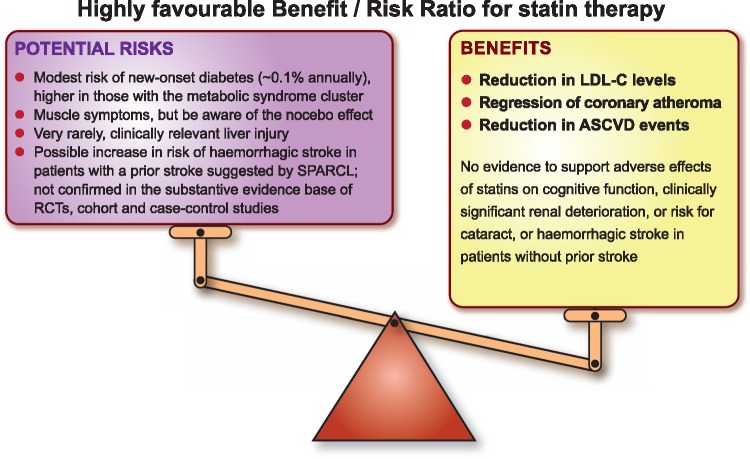
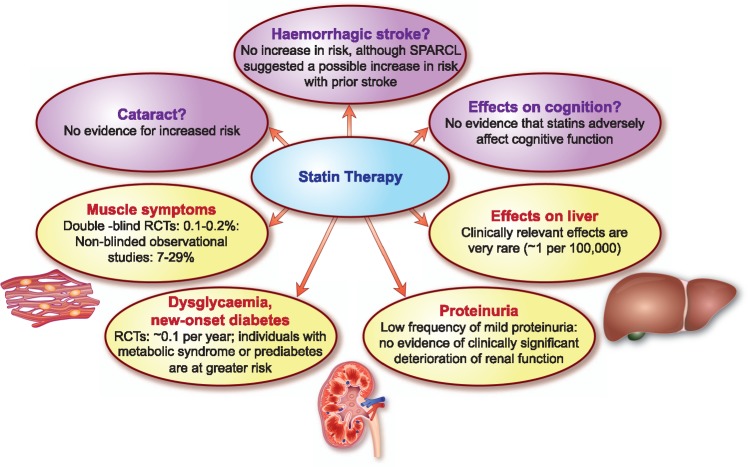
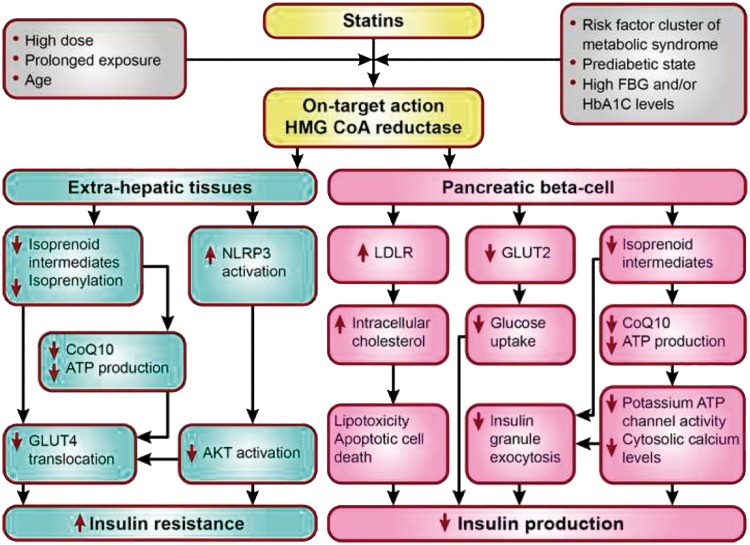
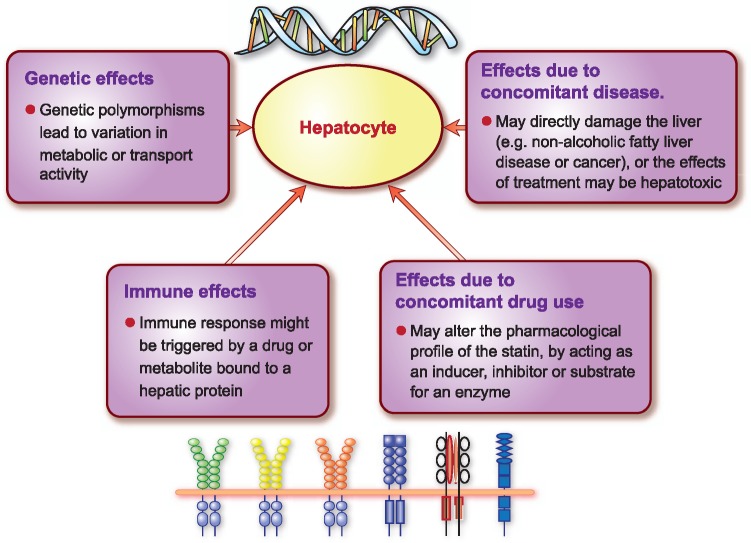
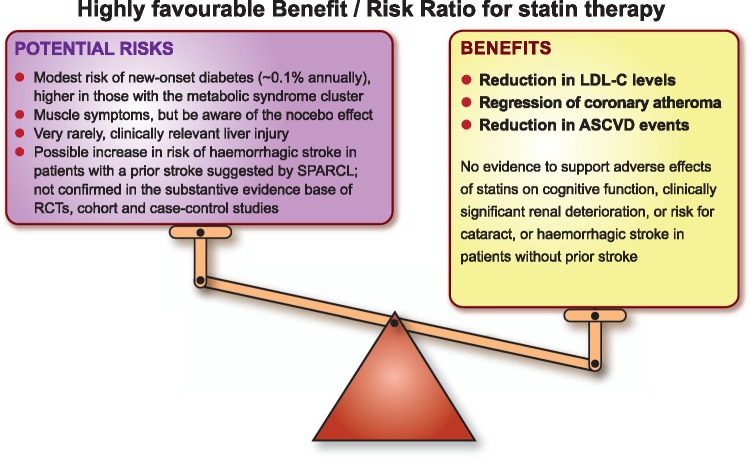
Aims: To objectively appraise evidence for possible adverse effects of long-term statin therapy on glucose homeostasis, cognitive, renal and hepatic function, and risk for haemorrhagic stroke or cataract. Methods and results: A literature search covering 2000-2017 was performed. The Panel critically appraised the data and agreed by consensus on the categorization of reported adverse effects. Randomized controlled trials (RCTs) and genetic studies show that statin therapy is associated with a modest increase in the risk of new-onset diabetes mellitus (about one per thousand patient-years), generally defined by laboratory findings (glycated haemoglobin ≥6.5); this risk is significantly higher in the metabolic syndrome or prediabetes. Statin treatment does not adversely affect cognitive function, even at very low levels of low-density lipoprotein cholesterol and is not associated with clinically significant deterioration of renal function, or development of cataract. Transient increases in liver enzymes occur in 0.5-2% of patients taking statins but are not clinically relevant; idiosyncratic liver injury due to statins is very rare and causality difficult to prove. The evidence base does not support an increased risk of haemorrhagic stroke in individuals without cerebrovascular disease; a small increase in risk was suggested by the Stroke Prevention by Aggressive Reduction of Cholesterol Levels study in subjects with prior stroke but has not been confirmed in the substantive evidence base of RCTs, cohort studies and case-control studies. Conclusion: Long-term statin treatment is remarkably safe with a low risk of clinically relevant adverse effects as defined above; statin-associated muscle symptoms were discussed in a previous Consensus Statement. Importantly, the established cardiovascular benefits of statin therapy far outweigh the risk of adverse effects.
Overview
The claims and statistics of this paper haven’t been checked yet.
Free: it reads the open-access text and checks the first 5 claims that cite a source we can check. Create a free account to check every claim.
Integrity signals
Registry
Cites
Statistics
Figures
Verification
Claims the paper makes
The claims and statistics of this paper haven’t been checked yet.
Free: it reads the open-access text and checks the first 5 claims that cite a source we can check. Create a free account to check every claim.
Claims other papers make about this one
Each is checked against this paper’s own text: does it say what the citing paper says it does?
The source backs part of the claim, not all of it — or backs it for a different population, condition or comparison.
In the citing paper
“Evidence for an increased risk of haemorrhagic stroke remains inconclusive [38, 54, 55].”
From Established and Emerging Lipid-Lowering Drugs for Primary and Secondary Cardiovascular Prevention (2023) · cites this paper as [54]
Experimental — accuracy not yet measuredThe cited source says what the claim attributes to it.
In the citing paper
“an elevation of liver enzymes, hyperglycaemia [53], new onset of diabetes mellitus type 2 [54] and proteinuria.”
From Established and Emerging Lipid-Lowering Drugs for Primary and Secondary Cardiovascular Prevention (2023) · cites this paper as [54]
The cited source says what the claim attributes to it.
In the citing paper
“Although concerns regarding a potential adverse impact of lipid-lowering agents on cognitive function have been raised, several lines of evidence argue against this association, as detailed in a 2018 European Atherosclerosis Society Consensus Panel statement (165).”
From 10. Cardiovascular Disease and Risk Management: Standards of Care in Diabetes—2025 (2025) · cites this paper as [165]
The cited source says what the claim attributes to it.
In the citing paper
“Although concerns regarding a potential adverse impact of lipid-lowering agents on cognitive function have been raised, several lines of evidence argue against this association, as detailed in a 2018 European Atherosclerosis Society Consensus Panel statement (159).”
From 10. Cardiovascular Disease and Risk Management: Standards of Care in Diabetes—2026 (2026) · cites this paper as [159]
Self-check
Percentages, sums and reported differences re-computed from the paper’s own numbers.
The self-check needs the paper’s full text.
Citations
Cites
Reduction in the incidence of type 2 diabetes with lifestyle intervention or metformin
(2002) · New England Journal of Medicine · doi:10.1056/nejmoa012512 · Cited by 19,011
Ahmed, A., Jorna, T., & Bhandari, S. (2016) · Nephron · doi:10.1159/000447068 · Cited by 11,717
European Guidelines on cardiovascular disease prevention in clinical practice (version 2012)
Authors/Task Force Members:, Perk, J., De Backer, G., Gohlke, H., Graham, I., Reiner, Ž., Verschuren, M., Albus, C., Benlian, P., Boysen, G., et al. (2012) · European Heart Journal · doi:10.1093/eurheartj/ehs092 · Cited by 8,490
Self-citationGenetics of Food Intake Self-Regulation in Childhood: Literature Review and Research Opportunities
Faith, M. S., Carnell, S., & Kral, T. V. E. (2013) · Human Heredity · doi:10.1159/000353879 · Cited by 7,601
Cholesterol Treatment Trialists' (CTT) Collaboration (2010) · The Lancet · doi:10.1016/s0140-6736(10)61350-5 · Cited by 6,550
2016 European Guidelines on cardiovascular disease prevention in clinical practice
Piepoli, M. F., Hoes, A. W., Agewall, S., Albus, C., Brotons, C., Catapano, A. L., Cooney, M.-T., Corrà, U., Cosyns, B., Deaton, C., et al. (2016) · European Heart Journal · doi:10.1093/eurheartj/ehw106 · Cited by 6,457
Self-citationFerence, B. A., Ginsberg, H. N., Graham, I., Ray, K. K., Packard, C. J., Bruckert, E., Hegele, R. A., Krauss, R. M., Raal, F. J., Schunkert, H., et al. (2017) · European Heart Journal · doi:10.1093/eurheartj/ehx144 · Cited by 3,962
Self-citationColhoun, H. M., Betteridge, D. J., Durrington, P. N., Hitman, G. A., W Neil, H. A., Livingstone, S. J., Thomason, M. J., Mackness, M. I., Charlton-Menys, V., & Fuller, J. H. (2004) · The Lancet · doi:10.1016/s0140-6736(04)16895-5 · Cited by 3,755 · cited 1×
“These data are consistent with findings among patients with DM treated with statins who derive a similar relative risk (RR) reduction per unit reduction in LDL-C but a greater absolute benefit.(4,26) Determining whether the effect of statins on DM risk is an ontarget (i.”
Result2016 ESC/EAS Guidelines for the Management of Dyslipidaemias
Catapano, A. L., Graham, I., De Backer, G., Wiklund, O., Chapman, M. J., Drexel, H., Hoes, A. W., Jennings, C. S., Landmesser, U., Pedersen, T. R., et al. (2016) · European Heart Journal · doi:10.1093/eurheartj/ehw272 · Cited by 3,162
Self-citation
Cited by
Items 101–200 of 417
An evaluation of pitavastatin for the treatment of hypercholesterolemia
Chan, P., Shao, L., Tomlinson, B., Zhang, Y., & Liu, Z.-M. (2018) · Expert Opinion on Pharmacotherapy · doi:10.1080/14656566.2018.1544243 · Cited by 28
“is remarkably safe with a low risk of clinically relevant adverse effects on cognitive, renal and hepatic function, hemorrhagic stroke and cataract [3].”
BackgroundVahedian‐Azimi, A., Shojaie, S., Banach, M., Heidari‐Beni, F., Cicero, A. F. G., Khoshfetrat, M., Jamialahmadi, T., & Sahebkar, A. (2021) · Annals of Medicine · doi:10.1080/07853890.2021.1956686 · Cited by 28
“5–2% of patients taking statins, while idiosyncratic liver injury due to statins is very rare and causality is difficult to be proven [34].”
BackgroundThe Impact of Statin Use and Breast Cancer Recurrence - A Retrospective Study in Singapore
Sim, Y., Lim, C., Nitar, P., Tan, B. K. T., Chew, L. S. T., Wong, C. Y., Madhukumar, P., Yong, W. S., Lim, S. Z., Hamzah, J. L., et al. (2022) · Frontiers in Oncology · doi:10.3389/fonc.2022.835320 · Cited by 27
Fischer, L. T., Hochfellner, D. A., Knoll, L., Pöttler, T., Mader, J. K., & Aberer, F. (2021) · Cardiovascular Diabetology · doi:10.1186/s12933-021-01283-w · Cited by 26
“age, prediabetes, metabolic syndrome) were at an even increased risk [19].”
BackgroundCurrent pharmacotherapeutic options for primary dyslipidemia in adults
Cicero, A. F. G., Landolfo, M., Ventura, F., & Borghi, C. (2019) · Expert Opinion on Pharmacotherapy · doi:10.1080/14656566.2019.1604687 · Cited by 26
“patients and physicians), the alarm for statin-related side effects (by patients and physicians), and the therapeutic inertia (by physicians) [115,116].”
BackgroundThe year in cardiovascular medicine 2021: dyslipidaemia
Tokgözoğlu, L. S., Orringer, C. E., Ginsberg, H. N., & Catapano, A. L. (2022) · European Heart Journal · doi:10.1093/eurheartj/ehab875 · Cited by 26
Self-citationMostaza, J. M., Pintó, X., Armario, P., Masana, L., Real, J. T., Valdivielso, P., Arrobas-Velilla, T., Baeza‐Trinidad, R., Calmarza, P., Cebollada, J., et al. (2024) · Clínica e Investigación en Arteriosclerosis · doi:10.1016/j.arteri.2024.02.001 · Cited by 26
Chronic Renal Failure and Cardiovascular Disease: A Comprehensive Appraisal
Skalsky, K., Shiyovich, A., Steinmetz, T., & Kornowski, R. (2022) · Journal of Clinical Medicine · doi:10.3390/jcm11051335 · Cited by 25
“statin treatment, but current evidence suggest that this is not associated with a deterioration in renal function [73,78].”
BackgroundLin, M., Lin, Y., Chang, S., Wang, P., Wu, V. C., Lin, W., & Chung, C. (2019) · Atherosclerosis · doi:10.1016/j.atherosclerosis.2019.07.009 · Cited by 24
A phenome-wide association study of genetically mimicked statins
Li, S., & Schooling, C. M. (2021) · BMC Medicine · doi:10.1186/s12916-021-02013-5 · Cited by 24
“Statins increasing BMI [12, 34] and HbA1c [33, 50] have been reported previously, consistent with our findings.”
ResultInfluentialNaing, C. M., & Ni, H. (2020) · Cochrane Database of Systematic Reviews · doi:10.1002/14651858.cd013268.pub2 · Cited by 27
“[PMID: 17353040] Mach 2018 Mach F, Ray KK, Wiklund O, Corsini A, Catapano AL, Bruckert E, et al. Adverse eHects of statin therapy: perception vs. the evidence — focus on glucose homeostasis, cognitive, renal and hepatic function, haemorrhagic stroke and cataract.”
BackgroundMatos, C. M. (2019) · Portuguese National Funding Agency for Science, Research and Technology (RCAAP Project by FCT) · Cited by 24
Ramchoun, M., Khouya, T., Harnafi, H., Alem, C., Benlyas, M., Simmet, T., Ouguerram, K., & Amrani, S. (2020) · Future Journal of Pharmaceutical Sciences · doi:10.1186/s43094-020-00097-z · Cited by 23
Ma, Y.-B., Chan, P., Zhang, Y., Tomlinson, B., & Liu, Z. (2019) · Expert Opinion on Pharmacotherapy · doi:10.1080/14656566.2019.1594776 · Cited by 23
“stroke has not been confirmed in other clinical trials or observational studies [86].”
ResultNtaios, G., & Milionis, H. J. (2019) · International Journal of Stroke · doi:10.1177/1747493019851283 · Cited by 23
Differential effects of simvastatin on membrane organization and dynamics in varying phases
Sahu, S. S., Sarkar, P., Shrivastava, S. K., & Chattopadhyay, A. (2019) · Chemistry and Physics of Lipids · doi:10.1016/j.chemphyslip.2019.104831 · Cited by 23
Statin intolerance: an updated, narrative review mainly focusing on muscle adverse effects
Li, J., Liu, H.-H., Wu, N., Yeo, K. K., Tan, K. C. B., Ako, J., Krittayaphong, R., Tan, R., Aylward, P. E., Baek, S. H., et al. (2020) · Expert Opinion on Drug Metabolism & Toxicology · doi:10.1080/17425255.2020.1802426 · Cited by 22
Cell-Permeable Succinate Rescues Mitochondrial Respiration in Cellular Models of Statin Toxicity
Avram, V. F., Chamkha, I., Frostner, E. Å., Ehinger, J. K., Timar, R. Z., Hansson, M. J., Muntean, D. M., & Elmér, E. (2021) · International Journal of Molecular Sciences · doi:10.3390/ijms22010424 · Cited by 23
“Among these, statin-associated muscle symptoms (SAMS) that vary in intensity from weakness and myalgias to myopathy and in most severe (yet very rare) cases, rhabdomyolysis, are most frequently encountered [5,6].”
BackgroundWhen cardiovascular medicines should be discontinued
Krychtiuk, K. A., Gersh, B. J., Washam, J. B., & Granger, C. B. (2024) · European Heart Journal · doi:10.1093/eurheartj/ehae302 · Cited by 21
Lee, Y., Kim, M. Y., Han, K., Kim, B., Park, J., Kim, G., Hur, K. Y., Kim, J. H., & Jin, S. (2022) · Scientific Reports · doi:10.1038/s41598-022-24153-1 · Cited by 21
Marková, I., Malínská, H., Hüttl, M., Miklánková, D., Oliyarnyk, O., Poruba, M., Rácová, Z., Kazdová, L., & Večeřa, R. (2021) · Physiological Research · doi:10.33549/physiolres.934587 · Cited by 21
“…statins has been documented and 56 statins are well tolerated, some studies have revealed adverse effects of statin therapy on an 57 increased risk of new-onset type 2 diabetes mellitus (mainly in prediabetic individuals) or 58 hepatotoxicity (Aiman et al. 2014, Mach et al. 2018, Ward et al. 2019).”
BackgroundNew Insights in the Control of Low-Density Lipoprotein Cholesterol to Prevent Cardiovascular Disease
Katzmann, J. L., & Laufs, U. (2019) · Current Cardiology Reports · doi:10.1007/s11886-019-1159-z · Cited by 20
Self-citationKim, K., Bang, W.-D., Han, K., Kim, B., Lee, J., & Chung, H. (2021) · Journal of Lipid and Atherosclerosis · doi:10.12997/jla.2021.10.3.291 · Cited by 20
Adverse effects of statin therapy and their treatment
Cheon, D. Y., & Jo, S. (2022) · Cardiovascular Prevention and Pharmacotherapy · doi:10.36011/cpp.2022.4.e4 · Cited by 20
“In this review, we cover the common and important side effects of statins and their management based on the fourth edition of the Korean guidelines for the management of dyslipidemia, which were revised in 2020 [12–14], European guidelines released in 2019 (European Society of Cardiology [ESC] and European Atheroscler…”
BackgroundSoran, H., France, M. W., Adam, S., Iqbal, Z., Ho, J. H., & Durrington, P. N. (2020) · Atherosclerosis · doi:10.1016/j.atherosclerosis.2020.06.023 · Cited by 19
Maximizing the benefits of cholesterol-lowering drugs
Feingold, K. R. (2019) · Current Opinion in Lipidology · doi:10.1097/mol.0000000000000631 · Cited by 19
SPPARM alpha: the Lazarus effect
Fruchart, J., & Santos, R. D. (2019) · Current Opinion in Lipidology · doi:10.1097/mol.0000000000000640 · Cited by 19
Self-citationGaengler, S., Sadlon, A., Molino, C. D. G. R. C., Willett, W. C., Manson, J. E., Vellas, B. J., Steinhagen‐Thiessen, E., von Eckardstein, A., Ruschitzka, F. T., Rizzoli, R., et al. (2024) · The journal of nutrition health & aging · doi:10.1016/j.jnha.2024.100037 · Cited by 20
Hepatocyte Rap1a contributes to obesity- and statin-associated hyperglycemia
Wang, Y., Spolitu, S., Zadroga, J. A., Sarecha, A. K., & Özcan, L. (2022) · Cell Reports · doi:10.1016/j.celrep.2022.111259 · Cited by 19
“Finally, while our results have defined an important mechanism that may underlie statins’ hyperglycemic effects, it is important to note that the benefits of statin use for the reduction of cardiovascular disease risk outweigh the risk of developing T2D in the majority of patients, especially in individuals with highe…”
An overview on nanoplatforms for statins delivery: Perspectives for safe and effective therapy
Etemad, L., Salmasi, Z., Moosavian Kalat, S. A., Moshiri, M., Zamanian, J., Kesharwani, P., & Sahebkar, A. (2023) · Environmental Research · doi:10.1016/j.envres.2023.116572 · Cited by 18
Lipids, lipid-lowering therapy, and neuropathy: a narrative review
Pasha, R., Azmi, S., Ferdousi, M., Kalteniece, A., Bashir, B., Gouni-Berthold, I., Malik, R. A., & Soran, H. (2022) · Clinical Therapeutics · doi:10.1016/j.clinthera.2022.03.013 · Cited by 18
Weir, M. R. (2024) · Diabetes Obesity and Metabolism · doi:10.1111/dom.15764 · Cited by 18
“44 There are no data suggesting an adverse effect of lipid lowering on cognitive function.”
Obesity phenotypes and atherogenic dyslipidemias
Choe, H. J., Almas, T., Neeland, I. J., Lim, S. K., & Després, J. (2025) · European Journal of Clinical Investigation · doi:10.1111/eci.70151 · Cited by 18
SEA 2024 Standards for Global Control of Vascular Risk
Mostaza, J. M., Pintó, X., Armario, P., Masana, L., Real, J. T., Valdivielso, P., Arrobas-Velilla, T., Baeza‐Trinidad, R., Calmarza, P., Cebollada, J., et al. (2024) · Clínica e Investigación en Arteriosclerosis (English Edition) · doi:10.1016/j.artere.2024.06.001 · Cited by 22
Zolotaryova, N. A., & Gunenko, I. I. (2023) · Reports of Vinnytsia National Medical University · doi:10.31393/reports-vnmedical-2023-27(2)-14 · Cited by 17
Effectiveness of Coenzyme Q10 Supplementation in Statin-Induced Myopathy: A Systematic Review
Ahmad, K., Manongi, N. J., Rajapandian, R., Wala, S. M., AlEdani, E. M., Samuel, E. A., & Franchini, A. P. A. (2024) · Cureus · doi:10.7759/cureus.68316 · Cited by 17
“The elevation of transaminase enzymes in the liver, new-onset diabetes, and statin-associated muscular symptoms are major side effects that result in statin intolerance [28,29].”
BackgroundPharmacokinetics of current and emerging treatments for hypercholesterolemia
Tomlinson, B., Chan, P., Zhang, Y., Liu, Z., & Lam, C. W. K. (2020) · Expert Opinion on Drug Metabolism & Toxicology · doi:10.1080/17425255.2020.1749261 · Cited by 17
“allowing once daily administration and they are generally safe and well tolerated [157].”
BackgroundAvram, V. F., Bînă, A. M., Sima, A. C., Aburel, O. M., Sturza, A., Burlacu, O. N., Timar, R. Z., Muntean, D. M., Elmér, E., & Cretu, O. M. (2021) · Life · doi:10.3390/life11040288 · Cited by 17
“As mitochondrial dysfunction has been tied to both DM and statin treatment [9,10,15–18], we thought to perform an in–depth study of high–resolution respirometry in platelets harvested from diabetic patients chronically treated with statins.”
X chromosome dosage drives statin-induced dysglycemia and mitochondrial dysfunction
Zhang, P., Munier, J. J., Wiese, C. B., Vergnes, L., Link, J. C., Abbasi, F., Ronquillo, E., Scheker, K., Muñoz, A., Kuang, Y., et al. (2024) · Nature Communications · doi:10.1038/s41467-024-49764-2 · Cited by 17
“3 Introduction Statins, or HMG-CoA reductase enzyme inhibitors, are the most widely prescribed drug class for reducing blood cholesterol levels and risk of cardiovascular disease (Mach et al., 2018).”
Self-citationVillano, I., Marra, M. L., Allocca, S., Ilardi, C. R., Polito, R., Porro, C., Chieffi, S., Messina, G., Monda, V., Maio, G. D., et al. (2022) · Biomolecules · doi:10.3390/biom12081118 · Cited by 16
Sheth, S., Banach, M., & Toth, P. P. (2024) · Expert Review of Cardiovascular Therapy · doi:10.1080/14779072.2024.2398444 · Cited by 16
“However, several randomized placebo studies have found that adverse events do not significantly increase with statin therapy [68– 71].”
Hong, S., Lee, Y., Kang, W. C., Hong, B., Lee, J., Lee, J., Yang, T., Yoon, J., Lee, S., Ahn, C., et al. (2024) · Cardiovascular Diabetology · doi:10.1186/s12933-024-02386-w · Cited by 16
Iwaki, Y., Lee, W., & Sugiyama, Y. (2019) · Expert Opinion on Drug Metabolism & Toxicology · doi:10.1080/17425255.2019.1681399 · Cited by 17
“Statins are generally safe and well-tolerated, although statinassociated adverse effects, such as muscle symptoms and newonset diabetes mellitus, may occur [4,5].”
BackgroundThongtang, N., Tangkittikasem, N., Samaithongcharoen, K., Piyapromdee, J., Srinonprasert, V., & Sriussadaporn, S. (2020) · Vascular Health and Risk Management · doi:10.2147/vhrm.s270751 · Cited by 17
Caracciolo, A., Scalise, R. F. M., Ceresa, F., Bagnato, G., Versace, A. G., Licordari, R., Perfetti, S., Lofrumento, F., Irrera, N., Santoro, D., et al. (2022) · Journal of Clinical Medicine · doi:10.3390/jcm11092380 · Cited by 16
Choo, E. H., Moon, D., Choi, I. J., Lim, S., Lee, J., Kang, D., Hwang, B., Kim, C. J., Lee, J. M., Yoo, K., et al. (2024) · Cardiovascular Diabetology · doi:10.1186/s12933-024-02498-3 · Cited by 15
“Although high-intensity statins are essential for lowering LDL-C, they are associated with more side effects than lower-intensity statins [16].”
BackgroundBarter, P. J., Yamashita, S., Laufs, U., Ruiz, Á. J., Sy, R. G., Fang, M. D. G., Folco, E., Libby, P., Matsuzawa, Y., & Santos, R. D. (2020) · Lipids in Health and Disease · doi:10.1186/s12944-020-01265-z · Cited by 15
Self-citationD’Erasmo, L., Commodari, D., Costanzo, A. D., Minicocci, I., Polito, L., Ceci, F., Montali, A., Maranghi, M., & Arca, M. (2020) · Nutrition Metabolism and Cardiovascular Diseases · doi:10.1016/j.numecd.2020.06.028 · Cited by 15
Statin intolerance: how common is it and how do we work with patients to overcome it?
Cannon, C. P. (2022) · European Heart Journal · doi:10.1093/eurheartj/ehac156 · Cited by 15
Familial Hypercholesterolaemia as a Predisposing Factor for Atherosclerosis
Poznyak, A. V., Litvinova, L. S., Poggio, P., Orekhov, A. N., & Melnichenko, A. А. (2022) · Biomedicines · doi:10.3390/biomedicines10102639 · Cited by 15
Challenges in achieving LDL cholesterol targets and novel approaches to lipid lowering
Malick, W. A., Choi, D., Langsted, A., Bittner, V., Nordestgaard, B. G., Stroes, E. S. G., & Rosenson, R. S. (2025) · European Journal of Preventive Cardiology · doi:10.1093/eurjpc/zwaf123 · Cited by 15
Self-citationDrug Treatment of Hypercholesterolemia in Older Adults: Focus on Newer Agents
Stoll, F., Eidam, A., Michael, L., Bauer, J. M., & Haefeli, W. E. (2022) · Drugs & Aging · doi:10.1007/s40266-022-00928-z · Cited by 14
“Notably, PCSK9 inhibitors do not appear to have a negative impact on cognition [20, 21] (nor do statins [9]).”
BackgroundWu, H., Wang, X., Fang, X., Lian, F., Li, M., Liao, J., Dai, D., & Tian, J. (2022) · BMJ Open Diabetes Research & Care · doi:10.1136/bmjdrc-2022-003149 · Cited by 14
Statin intolerance: myths and facts
Laufs, U., & Isermann, B. (2020) · European Heart Journal · doi:10.1093/eurheartj/ehaa582 · Cited by 14
Self-citationDyslipidaemia in adults with type 1 diabetes—when to treat?
Lan, N. S. R., Fegan, P. G., Yeap, B. B., Bell, D. A., & Watts, G. F. (2018) · Diabetes/Metabolism Research and Reviews · doi:10.1002/dmrr.3090 · Cited by 14
“Side effects were rare in large double‐blind placebo‐ controlled trials.(14) It may be worthwhile gauging the patient's understanding and perceived risk.”
BackgroundManagement of Hyperlipidemia After Stroke
Brooks, D. C., & Schindler, J. (2019) · Current Treatment Options in Cardiovascular Medicine · doi:10.1007/s11936-019-0774-8 · Cited by 14
Nishikido, T., & Ray, K. K. (2019) · British Journal of Pharmacology · doi:10.1111/bph.14851 · Cited by 13
“These include statin‐associated muscle symptoms (SAMs), onset of type 2 diabetes mellitus (DM), rare hepatotoxicity, and a small excess risk of haemorrhagic stroke (Mach et al., 2018).”
BackgroundSelf-citationAnagnostis, P. G., Antza, C., Florentin, M., & Kotsis, V. (2023) · Kardiologia Polska · doi:10.33963/v.kp.97845 · Cited by 13
“Regarding the increased risk of new-onset DM, this is indeed a consistent, dose-related effect of (mainly potent) statin treatment [50]; however, the absolute cardiovascular risk reduction in high-risk patients clearly outweighs this small increase in the incidence of DM [51].”
BackgroundBiological Actions, Implications, and Cautions of Statins Therapy in COVID-19
Liu, C., Yan, W., Shi, J., Wang, S., Peng, A., Chen, Y., & Huang, K. (2022) · Frontiers in Nutrition · doi:10.3389/fnut.2022.927092 · Cited by 15
Cuccioloni, M., Bonfili, L., Cecarini, V., Cocchioni, F., Petrelli, D., Crotti, E., Zanchi, R., Eleuteri, A. M., & Angeletti, M. (2020) · Scientific Reports · doi:10.1038/s41598-020-70042-w · Cited by 13
Frattaruolo, L., Marra, F., Lauria, G., Siciliano, C., Curcio, R., Muto, L., Brindisi, M., Aiello, D., Napoli, A., Fiermonte, G., et al. (2023) · International Journal of Molecular Sciences · doi:10.3390/ijms24043060 · Cited by 13
“Their administration is also not recommended in patients with type 2 diabetes mellitus and metabolic syndrome [18], as although they promote a significant reduction in LDL levels, they are not effective in reducing the onset of cardiovascular diseases.”
BackgroundPCSK9 Inhibitor: Safe Alternative to Fill the Treatment Gap in Statin-Limited Conditions?
Xiao, Y., Ba, Z., Pang, S., Liu, D., Wang, H., Liang, H., Wang, Y., & Yuan, J. (2022) · Reviews in Cardiovascular Medicine · doi:10.31083/j.rcm2311380 · Cited by 12
“SAMS are characterized by myalgias, and weakness with or without elevated serum muscle enzymes [26], and ranges from 7–29% among all patients on statin therapy and has become the predominant cause for discontinuation in 62% of patients [5,30,31].”
BackgroundSEA 2022 standards for the comprehensive control of cardiovascular risk
Mostaza, J. M., Pintó, X., Armario, P., Masana, L., Real, J. T., Valdivielso, P., Arrobas-Velilla, T., Baeza‐Trinidad, R., Calmarza, P., Cebollada, J., et al. (2022) · Clínica e Investigación en Arteriosclerosis (English Edition) · doi:10.1016/j.artere.2022.06.002 · Cited by 12
Aspirin and Pravastatin for Preeclampsia Prevention in High-Risk Pregnancy
Eid, J., Rood, K. M., & Costantine, M. M. (2023) · Obstetrics and Gynecology Clinics of North America · doi:10.1016/j.ogc.2022.10.005 · Cited by 12
Statins for primary prevention of cardiovascular disease and the risk of acute kidney injury
Coste, J., Karras, A., Rudnichi, A., Dray‐Spira, R., Pouchot, J., Giral, P., & Zureik, M. (2019) · Pharmacoepidemiology and Drug Safety · doi:10.1002/pds.4898 · Cited by 12
Evolving concepts on the management of dyslipidaemia
Descamps, O. S., Verhaegen, A. A., Demeure, F., Langlois, M. R., Rietzschel, E. R., Mertens, A. C., SUTTER, J. D., Wallemacq, C., Lancellotti, P., & Backer, G. D. (2019) · Acta Clinica Belgica · doi:10.1080/17843286.2019.1702823 · Cited by 11
“summarized the problems related to side-effects of statins and how to handle these [48,51].”
BackgroundBrecklinghaus, T., Albrecht, W., Duda, J., Kappenberg, F., Gründler, L., Edlund, K., Marchan, R., Ghallab, A., Cadenas, C., Rieck, A., et al. (2022) · Toxicology Letters · doi:10.1016/j.toxlet.2022.08.006 · Cited by 12
RSSDI consensus recommendations for dyslipidemia management in diabetes mellitus
Saboo, B., Agarwal, S., Makkar, B. M., Chawla, R., Ghosh, S. K., Viswanathan, V., Gupta, S., Kumar, C. V., Maheshwari, A., Sreenivasamurthy, L., et al. (2022) · International Journal of Diabetes in Developing Countries · doi:10.1007/s13410-022-01063-6 · Cited by 11
Xie, L., Liu, J., Wang, X., Liu, B., Li, J., Li, J., & Wu, H. (2024) · Frontiers in Cardiovascular Medicine · doi:10.3389/fcvm.2024.1407536 · Cited by 11
Yang, X., Xiong, T., Dong, N., Wang, T., Zhong, H., Tang, S., Mao, Y., Zhu, G., & Wang, D. (2020) · Toxicology and Applied Pharmacology · doi:10.1016/j.taap.2020.115132 · Cited by 11
dos Santos, J. L., Portal, V. L., Markoski, M. M., de Quadros, A. S., Bersch-Ferreira, Â. C., & Marcadenti, A. (2021) · European Journal of Clinical Nutrition · doi:10.1038/s41430-021-01045-7 · Cited by 11
“In addition, statins are expected to increase HbA1c levels, and impair other glycemic parameters [52].”
BackgroundAdachi, K., Ohyama, K., Tanaka, Y., Saito, Y., Shimizu, M., & Yamazaki, H. (2024) · Biological and Pharmaceutical Bulletin · doi:10.1248/bpb.b24-00012 · Cited by 11
Statin use and outcome risks according to predicted CVD risk in Korea: A retrospective cohort study
Jung, H. H. (2021) · PLoS ONE · doi:10.1371/journal.pone.0245609 · Cited by 11
Thongtang, N., Piyapromdee, J., Tangkittikasem, N., Samaithongcharoen, K., Srikanchanawat, N., & Sriussadaporn, S. (2020) · Diabetes Metabolic Syndrome and Obesity · doi:10.2147/dmso.s219496 · Cited by 10
Kommentar zu den Leitlinien (2019) der ESC/EAS zur Diagnostik und Therapie der Dyslipidämien
Weingärtner, O., Landmesser, U., März, W., Katzmann, J. L., Laufs, U., & Kommission für Klinische Kardiovaskuläre Medizin der, D. G. K. (2020) · Der Kardiologe · doi:10.1007/s12181-020-00399-9 · Cited by 10
“Demenz, Neoplasien oder eine Steatosis hepatis treten unter Statintherapie nicht häufiger auf als unter Placebo [21].”
BackgroundSelf-citationHammad, M. A., Abdo, M. S., Mashaly, A. M., Sulaiman, S. A. S., Alghamdi, S., Mangi, A. A., & Noor, D. A. M. (2019) · Diabetes & Metabolic Syndrome Clinical Research & Reviews · doi:10.1016/j.dsx.2019.07.005 · Cited by 10
Pacheco, R., & Coelho, M. (2023) · Life · doi:10.3390/life13061325 · Cited by 10
“Statins are well tolerated but may promote hepatotoxicity or kidney toxicity and other adverse effects such as diabetes mellitus type 2, specific effects on muscles, as well as neurologic and neurocognitive effects [16,17].”
BackgroundComparative Effectiveness of Rosuvastatin Versus Atorvastatin in Acute Ischemic Stroke Treatment
Kim, J., Lee, J. S., Kim, H., Kim, B. J., Kang, J., Lee, K., Park, J., Kang, K., Lee, S. J., Kim, J. G., et al. (2025) · Journal of the American Heart Association · doi:10.1161/jaha.124.038080 · Cited by 10
“26,27 Future prospective randomized trials are essential to address these concerns.”
Pharmacoepidemiology of statins
Bezin, J., & Moore, N. D. (2019) · Therapies · doi:10.1016/j.therap.2019.01.004 · Cited by 9
Kotovskaya, Y. V., Ткачева, О. Н., & Сергиенко, И. В. (2020) · Kardiologiia · doi:10.18087/cardio.2020.6.n1037 · Cited by 9
Folahan, J. T., Olorundare, O. E., Ajayi, A. M., Oyewopo, A. O., Soyemi, S. S., Adeneye, A. A., Okoye, I. I., Afolabi, S. O., & Njan, A. A. (2023) · Lipids in Health and Disease · doi:10.1186/s12944-023-01818-y · Cited by 9
“ATV inhibits HMG-CoA reductase while EZE inhibits dietary and biliary cholesterol uptake in the intestine [43].”
BackgroundInfluentialKidney Toxicity of Drugs for the Heart: An Updated Perspective
Caiati, C., Arrigoni, R., Stanca, A., & Lepera, M. E. (2025) · Metabolites · doi:10.3390/metabo15030191 · Cited by 10
“Guidelines on cholesterol and statins are often created by experts who have conflicts of interest so we think that the officially reported data on statins’ toxicity are downplayed [136].”
Nurm, M., Reigo, A., Nõukas, M., Leitsalu, L., Nikopensius, T., Palover, M., Annilo, T., Alver, M., Saar, A., Marandi, T., et al. (2022) · Frontiers in Genetics · doi:10.3389/fgene.2022.936131 · Cited by 9
“As myopathy is the most predominant statin-related adverse effect and a major reason for poor LLT adherence (Mach et al., 2018), our results suggest the role of pharmacogenomic predisposition and highlight the value of pharmacogenomic profiling for the improvement of LLT adherence.”
BackgroundRiehle, L., Maier, B., Behrens, S., Bruch, L., Schoeller, R., Schühlen, H., Stockburger, M. A., Theres, H., Leistner, D. M., Landmesser, U., et al. (2020) · International Journal of Cardiology · doi:10.1016/j.ijcard.2020.04.021 · Cited by 9
Yuet, W. C., Ebert, D., & Jann, M. (2021) · Therapeutic Advances in Drug Safety · doi:10.1177/2042098620959271 · Cited by 8
Clinical Lipidology and the Prevention of Vascular Disease: Time for Personalized Therapy
Brown, W. V. (2018) · Clinical Pharmacology & Therapeutics · doi:10.1002/cpt.1127 · Cited by 9
Lipoprotein and Lipid Metabolism
Hegele, R. A. (2021) · Elsevier eBooks · doi:10.1016/b978-0-12-812535-9.00007-8 · Cited by 8
Self-citationWei, C. R., Lakhdhir, F., Rawat, A., Isaak, A. K., Riaz, A., Omari, M. A., Bandaru, R. R., & Amin, A. (2023) · Cureus · doi:10.7759/cureus.50421 · Cited by 8
“Apart from the demonstrated efficacy of statins in reducing LDL-C levels and averting future adverse cardiovascular events, it is crucial to consider safety concerns such as statin-related adverse effects and intolerance in practical, real-world settings [7-8].”
BackgroundEuropäische Leitlinien zu Lipiden 2019: Was ist neu?
Katzmann, J. L., Tünnemann-Tarr, A., & Laufs, U. (2019) · Herz · doi:10.1007/s00059-019-04861-7 · Cited by 8
Self-citationDagli-Hernandez, C., Borges, J. B., Marçal, E. D. S. R., de Freitas, R. C. C., Mori, A. A., Gonçalves, R. M., Faludi, A. Á., de Oliveira, V. F., Ferreira, G. M., Bastos, G. M., et al. (2022) · Pharmaceutics · doi:10.3390/pharmaceutics14050944 · Cited by 8
“Statin-related adverse events (SRAE) have also been widely studied, and statin-associated muscular events (SAMS) in particular are commonly observed with frequencies ranging from 7 to 29% [7,8].”
BackgroundLee, Y., Lee, S., You, S. C., Lee, Y., Lee, S., Hong, S., Ahn, C., Kim, B., Ko, Y., Choi, D., et al. (2023) · Diabetes Obesity and Metabolism · doi:10.1111/dom.15374 · Cited by 8
“1,2,12,13 17 Therefore, combining ezetimibe with moderate-intensity statins may be an attractive alternative to high-intensity statins, with less concern for statin intolerance or related adverse effects.”
BackgroundStatin-associated side effects in patients attending a lipid clinic: evidence from a 6-year study
Barkas, F., Adamidis, P. S., Koutsogianni, A.-D., Liamis, G. L., & Liberopoulos, E. N. (2021) · Archives of Medical Science - Atherosclerotic Diseases · doi:10.5114/amsad.2021.111313 · Cited by 8
“2 per 100,000 patients) [15], liver enzymes might increase in clinical practice [2, 4].”
BackgroundInfluentialAdverse effects of statin therapy: real evidence
Bubnova, M. G. (2019) · Cardiosomatics · doi:10.26442/22217185.2019.1.190264 · Cited by 8
“Сообщается о 75 случаях серьезных повреждений печени, включая трансплантацию печени (n=11) или смерть (n=37), из которых 30 были с высокой степенью вероятности обусловлены именно терапией статинами [34].”
An integrative model of cardiometabolic traits identifies two types of metabolic syndrome
Frishberg, A., van den Munckhof, I., ter Horst, R., Schraa, K., Joosten, L. A. B., Rutten, J. H. W., Iancu, A. C., Dregoesc, M. I., Țigu, A. B., Netea, M. G., et al. (2021) · eLife · doi:10.7554/elife.61710 · Cited by 8
Ravindran, A. S. K., Venkatabalasubramanian, S., Manickam, R., Anusuyadevi, M., & Swaminathan, J. K. (2020) · Journal of Biomolecular Structure and Dynamics · doi:10.1080/07391102.2020.1847196 · Cited by 8
“Even though several medicines are considered for MI, most of them are reported for their adverse effects in the chronic usage (Mach et al., 2018; Moore et al., 2015; Vostinaru, 2017).”
BackgroundLi, X., Wang, S. W., Zhang, Z., Luo, Z., Tang, J., & Tao, T. (2025) · Frontiers in Pharmacology · doi:10.3389/fphar.2025.1498191 · Cited by 8
Fucoidans as a Potential Nutraceutical in Combating Atherosclerotic Cardiovascular Diseases
Alvarez-Leite, J. I. (2019) · Biomedical Journal of Scientific & Technical Research · doi:10.26717/bjstr.2019.21.003616 · Cited by 7
“Despite the increasing number of drugs to prevent and treat atherosclerosis, diet still integrates the first-line treatment [8].”
BackgroundHDL-Based Therapy: Vascular Protection at All Stages
Poznyak, A. V., Sukhorukov, V. N., Eremin, I. I., Nadelyaeva, I. I., Gutyrchik, N. A., & Orekhov, A. N. (2023) · Biomedicines · doi:10.3390/biomedicines11030711 · Cited by 7
“Nevertheless, the decrease in CV risk appears to be more essential compared with the mild increase in incident diabetes risk [52].”
BackgroundJunaid, V., Minhas, A. M. K., Inam, M., Hinkamp, C. A., Talha, K. M., Meloche, C., Sheikh, S. S., Khoja, A. A., Krittanawong, C., Vaughan, E. M., et al. (2024) · Current Atherosclerosis Reports · doi:10.1007/s11883-024-01253-z · Cited by 7
Braczko, A., Harasim, G., Kawecka, A., Walczak, I., Kapusta, M., Narajczyk, M., Stawarska, K., Smolenski, R. T., & Kutryb-Zając, B. A. (2023) · Frontiers in Physiology · doi:10.3389/fphys.2023.1216267 · Cited by 7
“Despite these benefits, long-term statin therapy is not optimal due to adverse reactions such as myopathy (Mach et al., 2018).”
Background
Metadata
- Authors
- Mach, F., Ray, K. K., Wiklund, O., Corsini, A., Catapano, A. L., Bruckert, E., De Backer, G., Hegele, R. A., Hovingh, G. K., Jacobson, T. A., Krauss, R. M., Laufs, U., Leiter, L. A., März, W., Nordestgaard, B. G., Raal, F. J., Roden, M., Santos, R. D., Stein, E. A., Stroes, E. S., Thompson, P. D., Tokgözoğlu, L., Vladutiu, G. D., Gencer, B., Stock, J. K., Ginsberg, H. N., Chapman, M. J., & European Atherosclerosis Society Consensus Panel
- Affiliations
- University Hospital of Geneva (CH)
- Imperial College London (GB)
- Sahlgrenska University Hospital (SE)
- University of Milan (IT)
- National Institute for Health and Medical Research (INSERM) UMRS1166, Department of Endocrinology-Metabolism, ICAN—Institute of CardioMetabolism and Nutrition, AP-HP, Hôpital de la Pitié, Paris, France
- Department of Public Health, University Hospital Ghent, Ghent, Belgium
- Western University (CA)
- Amsterdam UMC Location University of Amsterdam (NL)
- Emory University (US)
- Department of Atherosclerosis Research, Children's Hospital Oakland Research Institute, Oakland, CA, USA
- Leipzig University (DE)
- St. Michael's Hospital (CA)
- University of Graz (AT)
- University of Copenhagen (DK)
- University of the Witwatersrand (ZA)
- Deutsches Diabetes-Zentrum e.V. (DE)
- Universidade de São Paulo (BR)
- Metabolic and Atherosclerosis Research Center, Cincinnati, OH, USA
- Hartford Hospital (US)
- Hacettepe University (TR)
- University at Buffalo, State University of New York (US)
- Division of Cardiology, Department of Medical Specialties, Foundation for Medical Researches, Geneva University Hospital, Rue Gabrielle-Perret-Gentil 4 1205 Geneva, Switzerland
- European Atherosclerosis Society (SE)
- Columbia University (US)
- Inserm (FR)
- Corresponding author
- Mach, François
- ORCID
- Mach, François
- Ray, Kausik K
- Wiklund, Olov
- Corsini, Alberto
- Catapano, Alberico L
- Hegele, Robert A
- Hovingh, G Kees
- Jacobson, Terry A
- Krauss, Ronald M
- Laufs, Ulrich
- Leiter, Lawrence A
- März, Winfried
- Nordestgaard, Børge G
- Raal, Frederick J
- Roden, Michael
- Santos, Raul D
- Stroes, Erik S
- Thompson, Paul D
- Tokgözoğlu, Lale
- Ginsberg, Henry N
- Chapman, M John
- Venue
- European Heart Journal
- Publisher
- Oxford University Press (OUP)
- Published
- 2018-04-27
- Volume
- 39
- Issue
- 27
- Pages
- 2526-2539
- ISSN
- 0195-668X (ISSN-L)
- 1522-9645
- PMC
- PMC6047411
- OpenAlex
- W2801534920
- Semantic Scholar
- 8ac6b81429dbb12d7fb652293904d44437af6936
- Cited by
- 370
- References
- 143
- Citations by year
- 2026: 23 · 2025: 27 · 2024: 49 · 2023: 40 · 2022: 57 · 2021: 43 · 2020: 50 · 2019: 57 · 2018: 23
- FWCI
- 45.21
- Type
- journal article
- Language
- en
- Open access
- hybrid
- doi.org
- Licence
- Locations
- European Heart Journal (publishedVersion, cc-by-nc)
- Europe PMC (PubMed Central) (publishedVersion, cc-by-nc)
- PubMed Central (publishedVersion, cc-by-nc)
- PubMed (publishedVersion)
- Research at the University of Copenhagen (University of Copenhagen) (publishedVersion, cc-by-nc)
- HAL (submittedVersion)
- Archivio Istituzionale della Ricerca (Universita Degli Studi Di Milano) (submittedVersion, other-oa)
- eScholarship (California Digital Library) (submittedVersion)
- eScholarship (California Digital Library) (submittedVersion, cc-by-nc)
- IRIS (submittedVersion)
- Hacettepe University Institutional Repository (hacettepe.edu.tr) (submittedVersion, other-oa)
- Spiral (Imperial College London) (submittedVersion, other-oa)
- Funders
- European Atherosclerosis Society
- Amgen, AstraZeneca, Eli Lilly, Esperion, Merck, Pfizer, and Sanofi-Regeneron
- Topics
- Health Sciences › Medicine › Cardiology and Cardiovascular Medicine › Lipoproteins and Cardiovascular Health
- Life Sciences › Biochemistry, Genetics and Molecular Biology › Cancer Research › Cancer, Lipids, and Metabolism
- Life Sciences › Pharmacology, Toxicology and Pharmaceutics › Toxicology › Pharmacovigilance and Adverse Drug Reactions
- Keywords
- statins, adverse drug reactions, glucose homeostasis, new-onset diabetes, cognitive function, renal function, liver function, hemorrhagic stroke, cataract, statin-induced liver injury, metabolic syndrome, prediabetes, LDL cholesterol, drug safety
- MeSH terms
- Cataract, Cerebral Hemorrhage, Cognition Disorders, Glucose, Homeostasis, Humans, Kidney Diseases, Hydroxymethylglutaryl-CoA Reductase Inhibitors, Stroke, Chemical and Drug Induced Liver Injury
About these checks
Registry, retraction, Cites and statistics results are computed, not judged, with one exception: a printed reference that no index lists is read once by a model before it counts as a citation error. Claims are extracted by a model and kept only when their quote appears verbatim in the text; each cited source is then checked, with a model’s help, for whether it says what the claim relies on. Those verdicts can be wrong — read the claim’s quote and the cited source before relying on one.
Statistics and arithmetic are recomputed, not judged.
Confidence bands are shown only for fields calibrated on our annotated test set. None is calibrated yet, so no band is shown.
What counts as a claim ›How we measure confidence ›How we check this ›
Are you an author, or do you see a problem with this page? Request a review
Data sources
Bibliographic data: Semantic Scholar, OpenAlex, Crossref.
Contains information from the Semantic Scholar Academic Graph Datasets, made available under the ODC Attribution License (ODC-BY 1.0).
Semantic Scholar’s data is described in: Kinney, R., et al. (2023). The Semantic Scholar Open Data Platform. arXiv:2301.10140.
