

The DOI matches its Crossref record; 31 of the 31 references it cites were found in a registry or an index.
Prenatal and early life influences on epigenetic age in children: a study of mother–offspring pairs from two cohort studies
Open accessAbstract
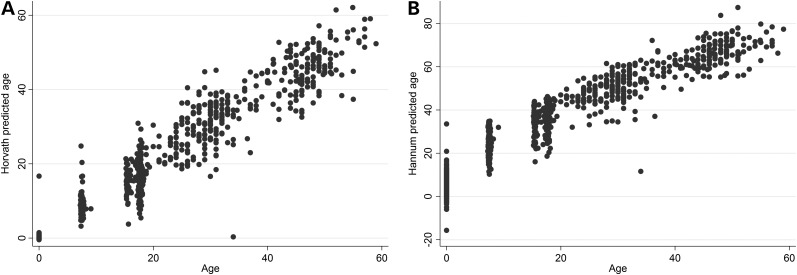
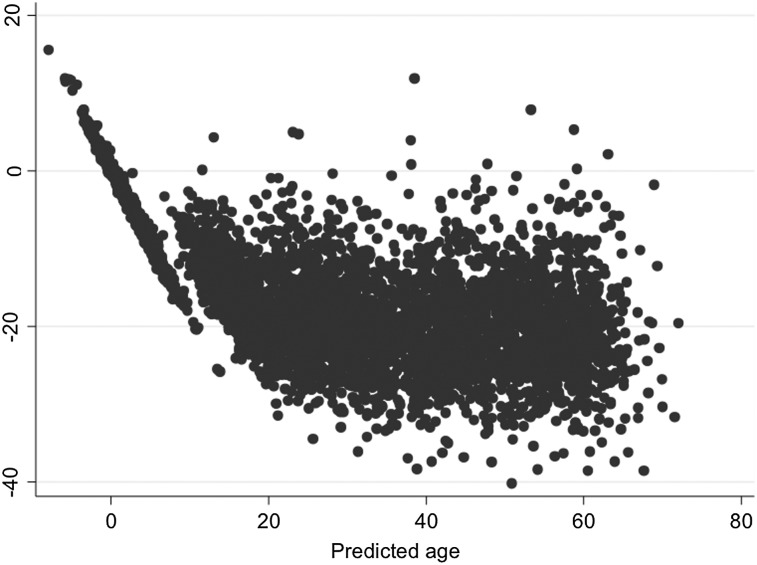
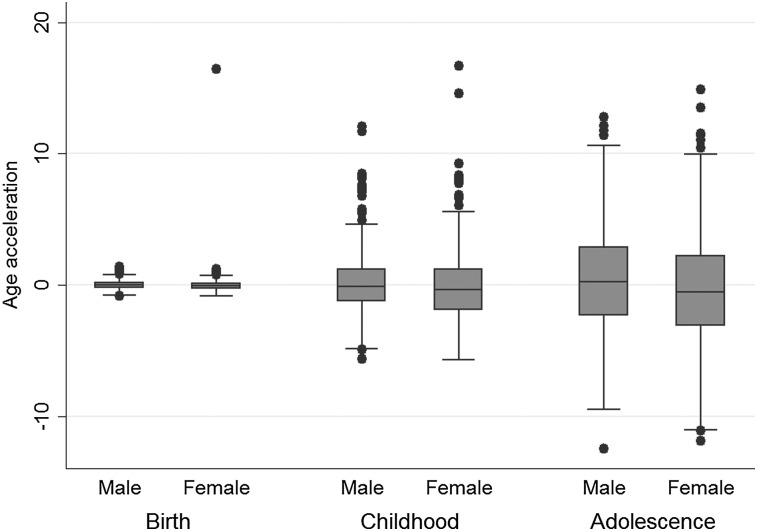
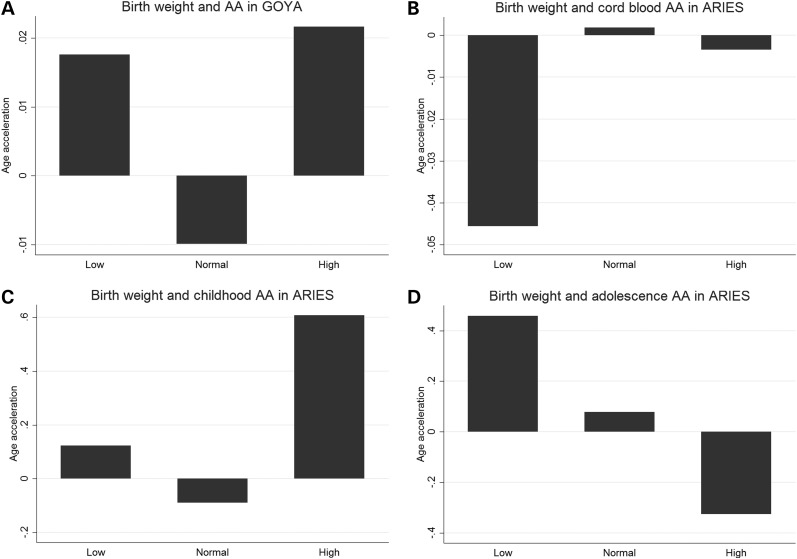
DNA methylation-based biomarkers of aging are highly correlated with actual age. Departures of methylation-estimated age from actual age can be used to define epigenetic measures of child development or age acceleration (AA) in adults. Very little is known about genetic or environmental determinants of these epigenetic measures of aging. We obtained DNA methylation profiles using Infinium HumanMethylation450 BeadChips across five time-points in 1018 mother-child pairs from the Avon Longitudinal Study of Parents and Children. Using the Horvath age estimation method, we calculated epigenetic age for these samples. AA was defined as the residuals from regressing epigenetic age on actual age. AA was tested for associations with cross-sectional clinical variables in children. We identified associations between AA and sex, birth weight, birth by caesarean section and several maternal characteristics in pregnancy, namely smoking, weight, BMI, selenium and cholesterol level. Offspring of non-drinkers had higher AA on average but this difference appeared to resolve during childhood. The associations between sex, birth weight and AA found in ARIES were replicated in an independent cohort (GOYA). In children, epigenetic AA measures are associated with several clinically relevant variables, and early life exposures appear to be associated with changes in AA during adolescence. Further research into epigenetic aging, including the use of causal inference methods, is required to better our understanding of aging.
Overview
The claims and statistics of this paper haven’t been checked yet.
Run the check — free, no account needed. It reads the open-access text and checks the sources it cites.
Integrity signals
Registry
Cites
Statistics
Figures
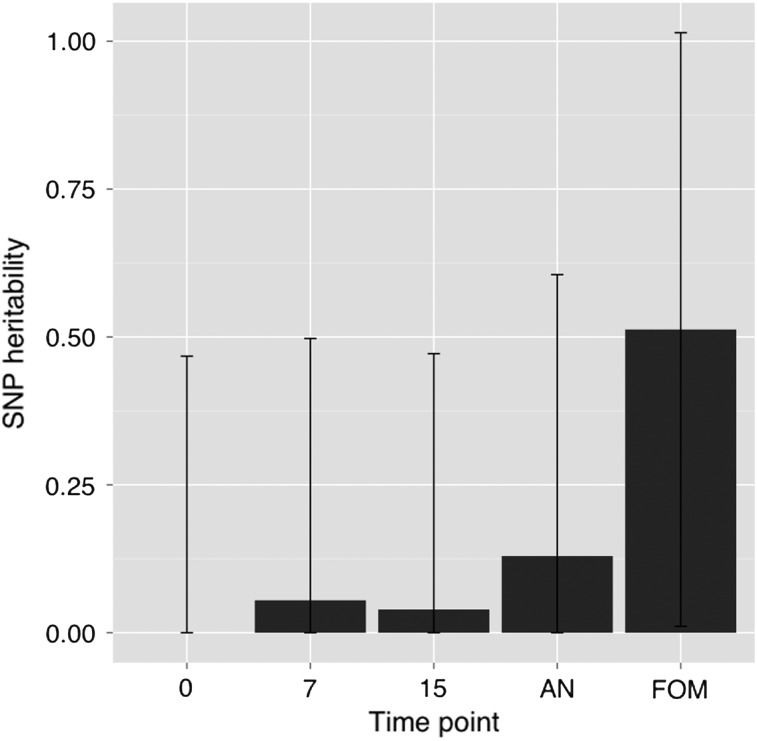
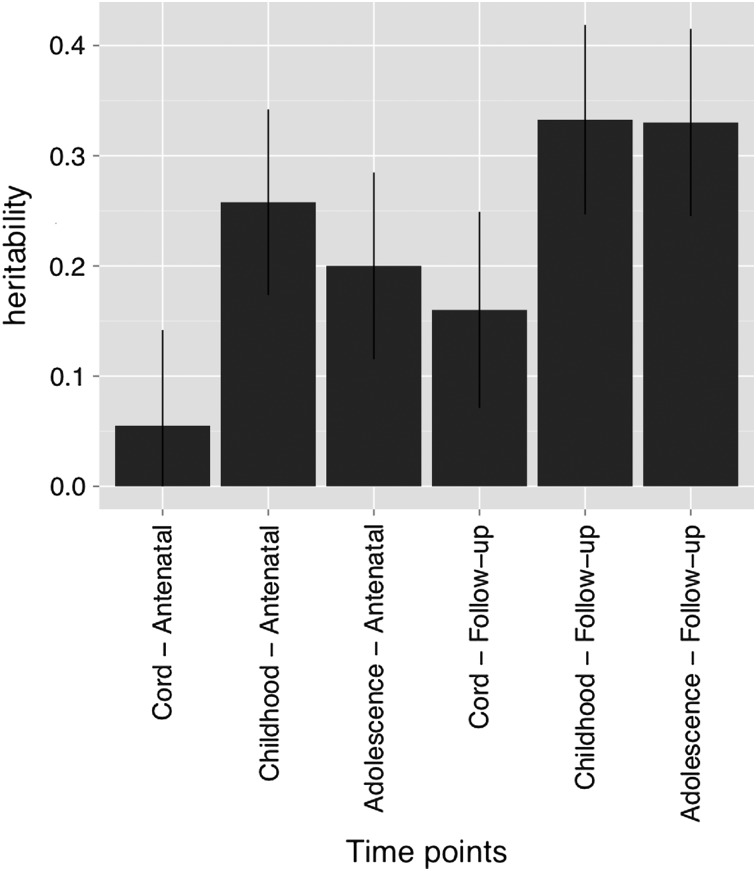
Verification
Claims the paper makes
The claims and statistics of this paper haven’t been checked yet.
Run the check — free, no account needed. It reads the open-access text and checks the sources it cites.
Claims other papers make about this one
Each is checked against this paper’s own text: does it say what the citing paper says it does?
The source backs part of the claim, not all of it — or backs it for a different population, condition or comparison.
In the citing paper
“Placental and offspring epigenetic signatures, telomere biology and mitochondrial function provide measurable molecular readouts of prenatal exposure at birth or during childhood [116,117,118].”
From Placental Pathophysiology and Developmental Programming of Adult Cardiometabolic Risk: A Narrative Review of Pregnancy Exposures (2026) · cites this paper as [116]
Experimental — accuracy not yet measured
Self-check
Percentages, sums and reported differences re-computed from the paper’s own numbers.
The self-check needs the paper’s full text.
Citations
Cites
Random-Effects Models for Longitudinal Data
Laird, N. M., & Ware, J. H. (1982) · Biometrics · doi:10.2307/2529876 · Cited by 8,923
DNA methylation age of human tissues and cell types
Horvath, S. (2013) · Genome Biology · doi:10.1186/gb-2013-14-10-r115 · Cited by 7,075
Self-citationDavey Smith, G., & Ebrahim, S. (2003) · International Journal of Epidemiology · doi:10.1093/ije/dyg070 · Cited by 5,882
Common SNPs explain a large proportion of the heritability for human height
Yang, J., Benyamin, B., McEvoy, B. P., Gordon, S., Henders, A. K., Nyholt, D. R., Madden, P. A., Heath, A. C., Martin, N. G., Montgomery, G. W., et al. (2010) · Nature Genetics · doi:10.1038/ng.608 · Cited by 4,446
Genome-wide methylation profiles reveal quantitative views of human aging rates
Hannum, G., Guinney, J., Zhao, L., Zhang, L., Hughes, G., Sadda, S., Klotzle, B., Bibikova, M., Fan, J.-B., Gao, Y., et al. (2013) · Molecular Cell · doi:10.1016/j.molcel.2012.10.016 · Cited by 4,270
Boyd, A., Golding, J., Macleod, J., Lawlor, D. A., Fraser, A., Henderson, J., Molloy, L., Ness, A., Ring, S., & Davey Smith, G. (2013) · International Journal of Epidemiology · doi:10.1093/ije/dys064 · Cited by 2,996
Self-citationCohort Profile: The Avon Longitudinal Study of Parents and Children: ALSPAC mothers cohort
Fraser, A., Macdonald-Wallis, C., Tilling, K., Boyd, A., Golding, J., Davey Smith, G., Henderson, J., Macleod, J., Molloy, L., Ness, A., et al. (2013) · International Journal of Epidemiology · doi:10.1093/ije/dys066 · Cited by 2,494
Self-citationHeritability in the genomics era — concepts and misconceptions
Visscher, P. M., Hill, W. G., & Wray, N. R. (2008) · Nature Reviews Genetics · doi:10.1038/nrg2322 · Cited by 1,921
DNA methylation age of blood predicts all-cause mortality in later life
Marioni, R. E., Shah, S., McRae, A. F., Chen, B. H., Colicino, E., Harris, S. E., Gibson, J., Henders, A. K., Redmond, P., Cox, S. R., et al. (2015) · Genome Biology · doi:10.1186/s13059-015-0584-6 · Cited by 1,261
Self-citationThe Danish National Birth Cohort - its background, structure and aim
Olsen, J., Melbye, M., Olsen, S. F., Sørensen, T. I. A., Aaby, P., Andersen, A. N., Taxbøl, D., Hansen, K. D., Juhl, M., Schow, T. B., et al. (2001) · Scandinavian Journal of Public Health · doi:10.1177/14034948010290040201 · Cited by 1,071
Self-citation
Cited by
Sorted by citations
DNA methylation-based biomarkers and the epigenetic clock theory of ageing
Horvath, S., & Raj, K. (2018) · Nature Reviews Genetics · doi:10.1038/s41576-018-0004-3 · Cited by 3,095
Self-citationDNA methylation aging clocks: challenges and recommendations
Bell, C. G., Lowe, R., Adams, P. D., Baccarelli, A. A., Beck, S., Bell, J. T., Christensen, B. C., Gladyshev, V. N., Heijmans, B. T., Horvath, S., et al. (2019) · Genome Biology · doi:10.1186/s13059-019-1824-y · Cited by 1,025
Self-citationAn epigenetic clock analysis of race/ethnicity, sex, and coronary heart disease
Horvath, S., Gurven, M., Levine, M. E., Trumble, B. C., Kaplan, H. S., Allayee, H., Ritz, B. R., Chen, B. H., Lu, A. T.-H., Rickabaugh, T. M., et al. (2016) · Genome biology · doi:10.1186/s13059-016-1030-0 · Cited by 749
Self-citationBelsky, D. W., Moffitt, T. E., Cohen, A. A., Corcoran, D. L., Levine, M. E., Prinz, J. A., Schaefer, J. D., Sugden, K., Williams, B. S., Poulton, R., et al. (2017) · American Journal of Epidemiology · doi:10.1093/aje/kwx346 · Cited by 436
Epigenetic clock: A promising biomarker and practical tool in aging
Duan, R., Fu, Q., Sun, Y., & Li, Q. (2022) · Ageing Research Reviews · doi:10.1016/j.arr.2022.101743 · Cited by 371
Metadata
- Authors
- Simpkin, A. J., Hemani, G., Suderman, M., Gaunt, T. R., Lyttleton, O., Mcardle, W. L., Ring, S. M., Sharp, G. C., Tilling, K., Horvath, S., Kunze, S., Peters, A., Waldenberger, M., Ward-Caviness, C., Nohr, E. A., Sørensen, T. I. A., Relton, C. L., & Smith, G. D.
- Affiliations
- MRC Integrative Epidemiology Unit (GB)
- University of Bristol (GB)
- University of California, Los Angeles (US)
- Helmholtz Munich (DE)
- University of Southern Denmark (DK)
- University of Copenhagen (DK)
- Corresponding author
- Simpkin, Andrew J.
- ORCID
- Venue
- Human Molecular Genetics
- Publisher
- Oxford University Press (OUP)
- Published
- 2015-11-05
- Volume
- 25
- Issue
- 1
- Pages
- 191-201
- ISSN
- 0964-6906 (ISSN-L)
- 1460-2083
- PMC
- PMC4690495
- OpenAlex
- W2158554646
- Cited by
- 246
- References
- 31
- Citations by year
- 2026: 14 · 2025: 7 · 2024: 24 · 2023: 22 · 2022: 18 · 2021: 30 · 2020: 57 · 2019: 19 · 2018: 22 · 2017: 21 · 2016: 11 · 2015: 1
- FWCI
- 7.96
- Type
- journal article
- Language
- en
- Open access
- hybrid
- doi.org
- Licence
- cc-by
- Locations
- Human Molecular Genetics (publishedVersion, cc-by)
- Europe PMC (PubMed Central) (publishedVersion, cc-by)
- PubMed Central (publishedVersion, cc-by)
- University of Southern Denmark Research Portal (University of Southern Denmark) (publishedVersion, cc-by)
- PubMed (publishedVersion)
- Bristol Research (University of Bristol) (publishedVersion, cc-by)
- eScholarship (California Digital Library) (submittedVersion)
- eScholarship (California Digital Library) (submittedVersion, cc-by)
- Site cant be reached (submittedVersion, cc-by)
- Research at the University of Copenhagen (University of Copenhagen) (submittedVersion)
- Explore Bristol Research (submittedVersion, cc-by)
- Newcastle University ePrints (Newcastle Univesity) (cc-by)
- Funders
- UK Economic & Social Research Council (RES-060-23-0011)
- UK Medical Research Council (G0601625, G0600705 and MR/L011824/1)
- European Research Council (269874)
- the BBSRC (BBI025751/1 and BB/I025263/1)
- the Medical Research Council (MRC) and the Wellcome Trust (102215/2/13/1)
- NIH
- the auspices of the MRC Integrative Epidemiology Unit at the University of Bristol (MC_UU_12013/2, MC_UU_12013/8, MRC_UU_12013/9)
- German Federal Ministry of Education and Research (01ZX1313A-2014)
- Topics
- Life Sciences › Biochemistry, Genetics and Molecular Biology › Molecular Biology › Epigenetics and DNA Methylation
- Health Sciences › Medicine › Pediatrics, Perinatology and Child Health › Birth, Development, and Health
- Life Sciences › Biochemistry, Genetics and Molecular Biology › Genetics › Genetic Syndromes and Imprinting
- Keywords
- epigenetic age, accelerated aging, DNA methylation, prenatal exposure, early life exposure, mother-child pairs, birth weight, cesarean section, maternal smoking, maternal cholesterol, sex differences, adolescence, child development, Avon Longitudinal Study of Parents and Children
- MeSH terms
- Aging, Birth Weight, Child, Humans, Longitudinal Studies, Mothers, Cohort Studies, DNA Methylation, Epigenesis, Genetic
About these checks
Registry, retraction, Cites and statistics results are computed, not judged, with one exception: a printed reference that no index lists is read once by a model before it counts as a citation error. Claims are extracted by a model and kept only when their quote appears verbatim in the text; each cited source is then checked, with a model’s help, for whether it says what the claim relies on. Those verdicts can be wrong — read the claim’s quote and the cited source before relying on one.
Statistics and arithmetic are recomputed, not judged.
Confidence bands are shown only for fields calibrated on our annotated test set. None is calibrated yet, so no band is shown.
What counts as a claim ›How we measure confidence ›How we check this ›
Are you an author, or do you see a problem with this page? Request a review
