

ESHRE guideline: endometriosis
Open accessThe DOI matches its Crossref record; 231 of the 250 references it cites were found in a registry or an index; 42 of the 130 sources its claims cite were checked for support.
Abstract
European Society of Human Reproduction and Embryology (ESHRE) clinical guideline on diagnosis and management of endometriosis. Focuses on recommendations for surgical and medical management of pain and infertility. Provides guidance on when to perform surgery for deep infiltrating endometriosis.
Overview
CoChat Summary
TL;DR
This 2022 ESHRE guideline provides 109 recommendations on the diagnosis and management of endometriosis, covering pain, infertility, recurrence, adolescents, menopause, extrapelvic and asymptomatic disease, prevention, and cancer. It updates prior ESHRE guidelines, with five topics where significant changes in clinical practice are expected.
Key findings
- The guideline contains 109 recommendations: 79 supported by research data and 30 good practice points (GPPs), plus 30 research recommendations.
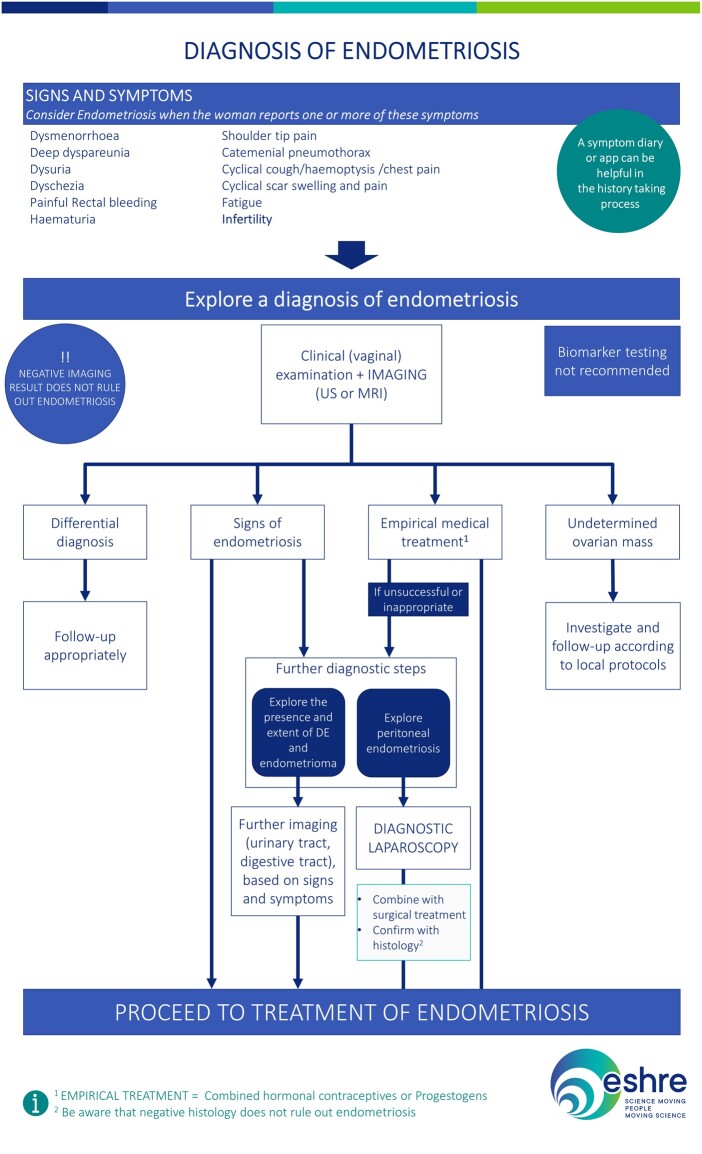
- The diagnostic process challenges laparoscopy and histology as gold standard tests; it recommends imaging (ultrasound or MRI) in the diagnostic work-up, advises against biomarkers for diagnosis, and reserves laparoscopy for patients with negative imaging or unsuccessful/inappropriate empirical treatment.
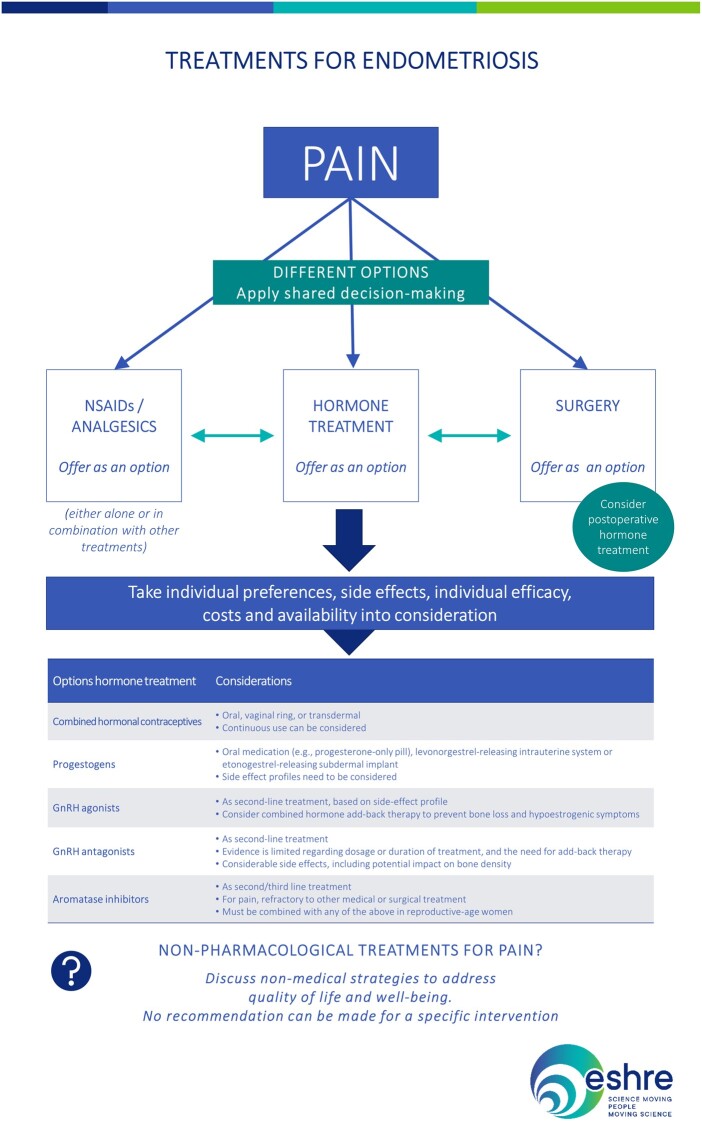
- Treatment options for endometriosis-associated pain include analgesics/NSAIDs, hormonal treatments (combined hormonal contraceptives, progestogens, GnRH agonists or antagonists, aromatase inhibitors), and surgery; five topics with significant changes include the diagnostic process, GnRH antagonists as second-line, postoperative medical treatment for pain, no extended GnRH agonist before ART, and use of the endometriosis fertility index (EFI).
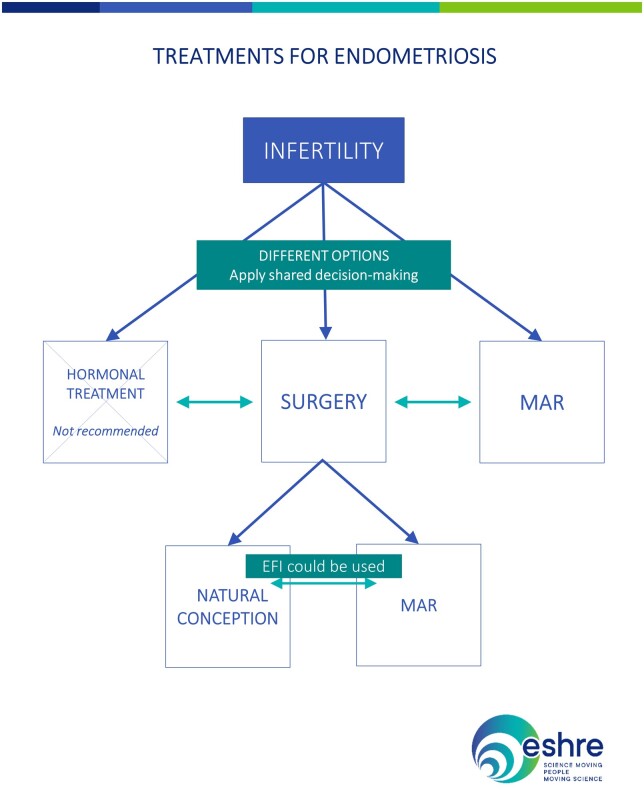
- For endometriosis-associated infertility, surgery and/or medically assisted reproduction are feasible; ovarian suppression, pentoxifylline/anti-inflammatory drugs/letrozole outside ovulation induction, and routine surgery before ART for rASRM stage I/II or endometrioma are not recommended.
Methods
- The guideline was developed according to ESHRE’s structured methodology; 42 key questions were formulated (7 narrative, 35 PICO), with PubMed/MEDLINE and Cochrane searches from inception to 1 December 2020, limited to English-language studies.
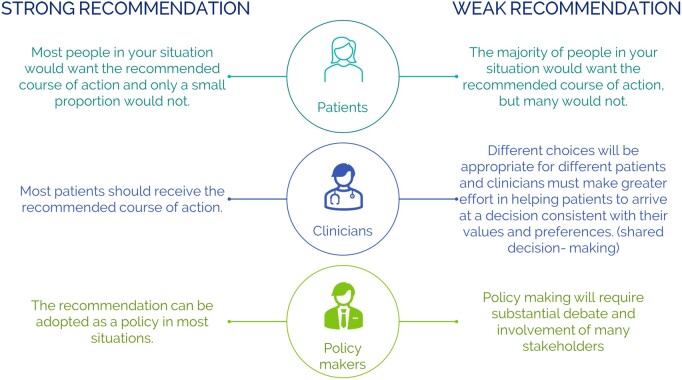
- Evidence was assessed and summarized in evidence tables; recommendations were drafted by specialist subgroups, discussed in core guideline development group meetings until consensus, labelled strong or weak, and graded High, Moderate, Low, or Very low; GPPs were added where relevant.
- A stakeholder review ran from 24 June to 15 August 2021; 56.5% of the 253 comments resulted in an adaptation or correction. The guideline will be considered for update 4 years after publication, with an intermediate assessment at 2 years.
Limitations
- Stated: the guideline describes different management options but, based on existing evidence, no firm recommendations could be formulated on the most appropriate treatments; for specific clinical issues such as asymptomatic endometriosis or extrapelvic endometriosis, evidence is too scarce to make evidence-based recommendations.
- Stated: there is an urgent need for more research on the most appropriate diagnostic and treatment options and on the natural course of the disease.
- Evident from the text: many recommendations are weak or based on low/very low-quality evidence or GPPs; no prognostic markers exist to select patients who would benefit from surgery; no specific non-medical intervention can be recommended; and heterogeneity prevented conclusions on surgical techniques for deep endometriosis-associated pain.
Model-written summary. Check it against the paper before relying on it.
Integrity signals
Registry
Cites
Statistics
Figures
Verification
Claims the paper makes
30 Valid · 5 Not valid · 26 Not checked · 25 Own results and interpretations
At least one cited source doesn’t support this claim or points to a different paper, and none confirmed it — see the verdicts below.
In the paper
“Clinicians may consider operative laparoscopy for the treatment of endometrioma-associated infertility as it may increase their chance of natural pregnancy, although no data from comparative studies exist (Dan and Limin, 2013; Alborzi et al., 2019; Candiani et al., 2020).”
§ ESHRE guideline: endometriosis† > Results > Treatment of endometriosis-associated infertility
What the sources say
- Not checked — no full text of the sourcecites Dan and Limin, 2013 matched to “Laparoscopic ovarian cystectomy versus fenestration/coagulation or laser vaporization for the treatment of endometriomas: a meta-analysis of randomized controlled trials” (2013) source
- Disputedcites Alborzi et al., 2019 matched to “The success of various endometrioma treatments in infertility: a systematic review and meta-analysis of prospective studies” (2019) sourceExperimental — accuracy not yet measured
The Results describe a prospective randomized trial comparing two laparoscopic treatments for endometriomas and reporting pregnancy rates after treatment without medication. That contradicts the categorical claim that no comparative-study data exist for operative laparoscopy and natural pregnancy. The trial compares two operations, however, not surgery against no surgery. (LLM, conf=0.83)
Checked by a reasoning model — may be wrong.
- Not checked — no full text of the sourcecites Candiani et al., 2020 matched to “Recurrence Rate after “One-Step” CO2 Fiber Laser Vaporization versus Cystectomy for Ovarian Endometrioma: A 3-Year Follow-up Study” (2020) source
hedged- Asserted: passes — The authors put it forward as true.
- Checkable: passes — It can be checked against evidence.
- Load-bearing: passes — The paper’s conclusions depend on it.
- Based: passes — The paper gives a reason why it holds.
The cited sources support only part of this claim — read each source’s verdict below.
In the paper
“Both GnRH antagonist and agonist protocols can be offered based on patients’ and physicians’ preferences as no difference in pregnancy or live birth rate has been demonstrated (Pabuccu et al., 2007; Rodriguez-Purata et al., 2013; Bastu et al., 2014; Kolanska et al., 2017; Drakopoulos et al., 2018).”
§ ESHRE guideline: endometriosis† > Results > Treatment of endometriosis-associated infertility
What the sources say
- Not checked — no full text of the sourcecites Pabuccu et al., 2007 matched to “GnRH agonist and antagonist protocols for stage I-II endometriosis and endometrioma in in vitro fertilization/intracytoplasmic sperm injection cycles” (2007) source
- Not checked — no full text of the sourcecites Rodriguez-Purata et al., 2013 matched to “Endometriosis and IVF: are agonists really better? Analysis of 1180 cycles with the propensity score matching” (2013) source
- Partly supportedcites Bastu et al., 2014 matched to “Comparison of ovulation induction protocols after endometrioma resection” (2014) sourceExperimental — accuracy not yet measured
The Results (Table 2; page not provided) show no significant difference in pregnancy or ongoing-pregnancy rates between protocols among IVF patients who had undergone endometrioma resection. The Conclusions (page not provided) call for further studies evaluating live birth rates, so this paper does not establish that live birth rates are similar. Its study population is also narrower than women with endometriosis generally. (LLM, conf=0.91)
boosted- Asserted: passes — The authors put it forward as true.
- Checkable: passes — It can be checked against evidence.
- Load-bearing: passes — The paper’s conclusions depend on it.
- Based: passes — The paper gives a reason why it holds.
The cited sources support only part of this claim — read each source’s verdict below.
In the paper
“Women with endometriosis can be reassured regarding the safety of ART since the recurrence rates are not increased compared to those women not undergoing ART (Benaglia et al., 2008; Somigliana et al., 2019).”
§ ESHRE guideline: endometriosis† > Results > Treatment of endometriosis-associated infertility
What the sources say
- Could not verifycites Benaglia et al., 2008 matched to “Endometrioma and oocyte retrieval-induced pelvic abscess: a clinical concern or an exceptional complication?” (2008) sourceExperimental — accuracy not yet measured
The Abstract (page unavailable) says the study estimated pelvic-abscess frequency after oocyte retrieval in women with endometriomas. Searches for endometriosis recurrence after IVF and a comparison with women not undergoing IVF found no passage addressing either point. (LLM, conf=0.76)
- Partly supportedcites Somigliana et al., 2019 matched to “Ovarian stimulation and endometriosis progression or recurrence: a systematic review” (2019) sourceExperimental — accuracy not yet measured
The Discussion (page unavailable) describes moderately supported, reassuring evidence that IVF has a limited impact on endometriosis recurrence. But the claim extends that reassurance to ART generally: the review's discussion of IUI (page unavailable) identifies a possible increased recurrence risk, and the Discussion says the evidence is incomplete. (LLM, conf=0.88)
plain- Asserted: passes — The authors put it forward as true.
- Checkable: passes — It can be checked against evidence.
- Load-bearing: passes — The paper’s conclusions depend on it.
- Based: passes — The paper gives a reason why it holds.
- Could not verify
The cited sources support only part of this claim — read each source’s verdict below.
In the paper
“The extended administration of GnRH agonist prior to ART treatment to improve live birth rate in infertile women with endometriosis is not recommended, as the benefit is uncertain (Georgiou et al., 2019; Cao et al., 2020; Kaponis et al., 2020).”
§ ESHRE guideline: endometriosis† > Results > Treatment of endometriosis-associated infertility
What the sources say
- Not checked — no full text of the sourcecites Georgiou et al., 2019 matched to “Long-term GnRH agonist therapy before in vitro fertilisation (IVF) for improving fertility outcomes in women with endometriosis” (2019) source
- Partly supportedcites Cao et al., 2020 matched to “The effectiveness of different down-regulating protocols on in vitro fertilization-embryo transfer in endometriosis: a meta-analysis” (2020) sourceExperimental — accuracy not yet measured
The Discussion reports that a Cochrane review found uncertain effects of long-term GnRH agonist therapy on pregnancy outcomes in infertile patients with endometriosis. Cao et al. do not establish uncertainty specifically for live birth rate or recommend against extended treatment; their own analysis reports improved clinical pregnancy rates in some groups. (LLM, conf=0.82)
- Not checked — no full text of the sourcecites Kaponis et al., 2020 matched to “Ultralong administration of gonadotropin-releasing hormone agonists before in vitro fertilization improves fertilization rate but not clinical pregnancy rate in women with mild endometriosis: a prospective, randomized, controlled trial” (2020) source
plain- Asserted: passes — The authors put it forward as true.
- Checkable: passes — It can be checked against evidence.
- Load-bearing: passes — The paper’s conclusions depend on it.
- Based: passes — The paper gives a reason why it holds.
The cited sources support only part of this claim — read each source’s verdict below.
In the paper
“Presacral neurectomy (PSN) is beneficial for treatment of endometriosis-associated midline pain as an adjunct to conventional laparoscopic surgery, but it should be stressed that PSN requires a high degree of skill and is associated with an increased risk of adverse effects such as intraoperative bleeding, and postoperative constipation, urinary urgency and painless first stage of labour (Miller e”
§ ESHRE guideline: endometriosis† > Results > Treatment of endometriosis-associated pain
What the sources say
- Partly supportedcites Miller et al., 2020 matched to “Clinical utility of presacral neurectomy as an adjunct to conservative endometriosis surgery: systematic review and meta-analysis of controlled studies” (2020) sourceExperimental — accuracy not yet measured
The Discussion reports that adjunctive presacral neurectomy reduced treatment failure for endometriosis-related midline pain. However, the Conclusion limits the finding to well-selected patients and says it *may* provide greater relief; the Results include both laparoscopic and open surgery, rather than establishing the benefit specifically for conventional laparoscopic surgery. (LLM, conf=0.84)
plainstates a cause- Asserted: passes — The authors put it forward as true.
- Checkable: passes — It can be checked against evidence.
- Load-bearing: passes — The paper’s conclusions depend on it.
- Based: passes — The paper gives a reason why it holds.
- Partly supported
54 more claims · 22 with their cited sources checked
Create a free account to see all 86 claims and every source verdict.
- Probably not a substantial claim. 26
- It may state two separate claims as one. 3
Claims other papers make about this one
Each is checked against this paper’s own text: does it say what the citing paper says it does?
The source backs part of the claim, not all of it — or backs it for a different population, condition or comparison.
In the citing paper
“although the major associations have difficulty siding sharply in favour of one treatment over another”
From IVF/ICSI or surgery as first approach for the treatment of infertility associated with ovarian and deep infiltrating endometriosis? A systematic review and meta-analysis. (2026) · cites this paper as Becker et al., 2022
Experimental — accuracy not yet measuredThe source backs part of the claim, not all of it — or backs it for a different population, condition or comparison.
In the citing paper
“it appears that, for some of them, patients with ovarian endometriomas (OMA) should not be referred for surgery, except in cases of pelvic pain”
From IVF/ICSI or surgery as first approach for the treatment of infertility associated with ovarian and deep infiltrating endometriosis? A systematic review and meta-analysis. (2026) · cites this paper as Becker et al., 2022
Experimental — accuracy not yet measuredThe source backs part of the claim, not all of it — or backs it for a different population, condition or comparison.
In the citing paper
“Therefore, optimal HRT in young women who have undergone pelvic clearance for endometriosis remains uncertain.”
From HRT in Women Undergoing Pelvic Clearance for Endometriosis—A Case Report and a National Survey (2023) · cites this paper as [10]
Experimental — accuracy not yet measuredThe source backs part of the claim, not all of it — or backs it for a different population, condition or comparison.
In the citing paper
“This has led the British Menopause Society (BMS) and European Society of Human Reproduction and Embryology (ESHRE) to recommend continuous C-HRT and avoidance of EO-HRT in this group of women at least until age of natural menopause [9,10].”
From HRT in Women Undergoing Pelvic Clearance for Endometriosis—A Case Report and a National Survey (2023) · cites this paper as [10]
Experimental — accuracy not yet measuredThe source backs part of the claim, not all of it — or backs it for a different population, condition or comparison.
In the citing paper
“Danazol is no longer recommended as a first-line therapy due to its bothersome side effect profile, such as acne, edema, vaginal spotting, weight gain, muscle cramps, deepening of voice, and increase in facial hair [ 79 ].”
From Thoracic Endometriosis Syndrome: A Comprehensive Review and Multidisciplinary Approach to Management (2024) · cites this paper as [79]
Experimental — accuracy not yet measured
3 more claims about this paper
Create a free account to see every claim other papers make about this one.
Citations
Cites
Zondervan, K. T., Becker, C. M., & Missmer, S. A. (2020) · New England Journal of Medicine · doi:10.1056/nejmra1810764 · Cited by 2,249
Self-citationESHRE guideline: management of women with endometriosis
Dunselman, G. A. J., Vermeulen, N., Becker, C., Calhaz-Jorge, C., D'Hooghe, T., De Bie, B., Heikinheimo, O., Horne, A. W., Kiesel, L., Nap, A., et al. (2014) · Human Reproduction · doi:10.1093/humrep/det457 · Cited by 2,211 · cited 2×
“The current guideline and recommendations are an update of the ESHRE endometriosis guidelines published in 2013 and 2005 (Kennedy et al. , 2005; Dunselman et al. , 2014).”
Self-citationEskenazi, B., & Warner, M. L. (1997) · Obstetrics and Gynecology Clinics of North America · doi:10.1016/s0889-8545(05)70302-8 · Cited by 1,617
ESHRE guideline for the diagnosis and treatment of endometriosis
Kennedy, S., Bergqvist, A., Chapron, C., D’Hooghe, T., Dunselman, G., Greb, R., Hummelshoj, L., Prentice, A., & Saridogan, E. (2005) · Human Reproduction · doi:10.1093/humrep/dei135 · Cited by 1,584
Pearce, C. L., Templeman, C., Rossing, M. A., Lee, A., Near, A. M., Webb, P. M., Nagle, C. M., Doherty, J. A., Cushing-Haugen, K. L., Wicklund, K. G., et al. (2012) · The Lancet Oncology · doi:10.1016/s1470-2045(11)70404-1 · Cited by 939 · cited 1×
“Routine US monitoring of asymptomatic endometriosis can be considered (Maouris, 1991; Alca´zar et al. , 2005; Pearce et al. , 2012; Serati et al. , 2013).”
High prevalence of endometriosis in infertile women with normal ovulation and normospermic partners
Meuleman, C., Vandenabeele, B., Fieuws, S., Spiessens, C., Timmerman, D., & D'Hooghe, T. (2009) · Fertility and Sterility · doi:10.1016/j.fertnstert.2008.04.056 · Cited by 606
Cervical cancer and use of hormonal contraceptives: a systematic review
Smith, J. S., Green, J., de Gonzalez, A. B., Appleby, P., Peto, J., Plummer, M., Franceschi, S., & Beral, V. (2003) · The Lancet · doi:10.1016/s0140-6736(03)12949-2 · Cited by 544
Imaging modalities for the non-invasive diagnosis of endometriosis
Nisenblat, V., Bossuyt, P. M., Farquhar, C., Johnson, N., & Hull, M. L. (2016) · Cochrane Database of Systematic Reviews · doi:10.1002/14651858.cd009591.pub2 · Cited by 538 · cited 2×
“…in endometrial tissue, blood, menstrual or uterine fluids to diagnose endometriosis (Mol et al. , 1998; May et al. , 2010; May et al. , 2011; Liu et al. , 2015; Cosar et al. , 2016; Gupta et al. , 2016; Hirsch et al. , 2016; Nisenblat et al. , 2016a; Vanhie et al. , 2019; Moustafa et al. , 2020).”
Sutton, C. J. G., Ewen, S. P., Whitelaw, N., & Haines, P. (1994) · Fertility and Sterility · doi:10.1016/s0015-0282(16)56990-8 · Cited by 525
Wentzensen, N., Poole, E. M., Trabert, B., White, E., Arslan, A. A., Patel, A. V., Setiawan, V. W., Visvanathan, K., Weiderpass, E., Adami, H.-O., et al. (2016) · Journal of Clinical Oncology · doi:10.1200/jco.2016.66.8178 · Cited by 514 · cited 1×
“…about the risk of malignancy associated with the use of hormonal contraceptives (Smith et al. , 2003; Zucchetto et al. , 2009; Gierisch et al. , 2013; Havrilesky et al. , 2013; Braganza et al. , 2014; Berlanda et al. , 2016; Wentzensen et al. , 2016; Butt et al. , 2018; Michels et al. , 2018).”
Cited by
Items 1,401–1,500 of 1,654
Endométriose : quels éléments fournir en réunion de concertation pluridisciplinaire ?
Mezzetta, L. (2023) · Imagerie de la Femme · doi:10.1016/j.femme.2023.03.012
Die medikamentöse Therapie der Patientin mit Endometriose
Lermann, J., Krauss, I., Burghaus, S., Beckmann, M. W., & Renner, S. P. (2023) · Frauenheilkunde up2date · doi:10.1055/a-1794-4547
Endometriosis: a new look at an old problem
Lovkina, О. L., Prolygina, I. V., & Oleksiienko, I. V. (2025) · Reports of Vinnytsia National Medical University · doi:10.31393/reports-vnmedical-2025-29(2)-24 · Cited by 1
de Almeida, L. D. N. G., Lopes, F. C., de Castro, L. F. F., & Requeijo, M. J. R. (2026) · Research Society and Development · doi:10.33448/rsd-v15i6.51204
Nyzova, O. A. (2025) · Reports of Vinnytsia National Medical University · doi:10.31393/reports-vnmedical-2025-29(3)-03
Nigdelis, M. P., & Lambrinoudaki, I. V. (2025) · Maturitas · doi:10.1016/j.maturitas.2025.108749
(2000) · Time to knit · doi:10.1016/s0246-1064(23)47743-2
Patient experience surveys for endometriosis care: A scoping review
King, J., & Killpack, C. (2025) · Women s Health · doi:10.1177/17455057251358042 · Cited by 2
Surgery for Pain Symptoms in Women With Isolated Superficial Peritoneal Endometriosis
Maslenko, M., Tabib, Y., Saar, T. D., Khattab, A. A., & Dior, U. P. (2026) · Journal of Minimally Invasive Gynecology · doi:10.1016/j.jmig.2026.03.039
Xu, W., & Du, J. (2026) · Frontiers in Immunology · doi:10.3389/fimmu.2026.1855106 · Cited by 1
Karakelleoğlu, G., Karadağ, C., & Çelik, L. (2026) · Journal of Ovarian Research · doi:10.1186/s13048-026-02094-x
Zioło, K., Zarzycka, W., Skrzypek, J., Fidut, N., Szyprowski, K., Kisielewski, M., Wawerska, J., Wrzosek, W., Zugaj, M., & Okliński, B. (2026) · International Journal of Innovative Technologies in Social Science · doi:10.31435/ijitss.2(50).2026.5695
Jha, A., Prabhu, M., Behera, A., et al. (2026) · Indian Journal of Nuclear Medicine · doi:10.25259/ijnm_57_2026
Endometriosis and IVF: Clinical, Surgical, and Biological Factors Affecting OutcomesPreprint
Firdaus, A., Mundkur, A. S., Poojari, V. G., Kumar, P., & Adiga, P. K. (2025) · Research Square · doi:10.21203/rs.3.rs-6103638/v1
EDIL3 promotes apoptosis resistance through an integrin αvβ5-KLF2-CDC20 axis in endometriosis
Zhang, D., Zhu, J., Wu, P., Huang, Y., Wang, X., Peng, C., Zhou, Y., & Xue, Q. (2026) · Current Molecular Pharmacology · doi:10.1016/j.cmp.2026.09.004
Risk Factors of Adolescent Endometriosis Onset and Recurrence: A Retrospective Study
Jin, Y., Pan, Y., Bao, Y. Y., Xu, F., Yang, Y., Fan, J., Jin, Y., Zhou, Y., & Wu, R. (2026) · International Journal of Women s Health · doi:10.2147/ijwh.s584873
“Aligning with current clinical practice guidelines 19 and established international terminology 20,21 endometriosis recurrence encompasses various established categories: symptomatic recurrence, ima-ging-confirmed recurrence, and recurrence verified by laparoscopic visualization.”
Samanta, N., Schiller, E. A., López-Molini, I., Martin, M., Flores, I., Meyer, A. S., & Chen, N. X. (2024) · Journal of Endometriosis and Pelvic Pain Disorders · doi:10.1177/22840265241257295
Yang, X.-C., Han, Q., Xu, R., Zhang, Y., Shi, G., Liu, Y., Sun, W.-W., Wu, Y., & Zhao, R. (2026) · Chinese Journal of Integrative Medicine · doi:10.1007/s11655-026-4240-7
Takaoka, O., Okimura, H., Tarumi, Y., Kawamata, M., Ito, F., Koshiba, A., Kusuki, I., Kitawaki, J., & Mori, T. (2026) · Research Square · doi:10.21203/rs.3.rs-9799296/v1
Imam, N., Joseph, T., Rebekah, G. J., Singh, S., Karthikeyan, M., Kunjummen, A. T., & Kamath, M. S. (2025) · Reproductive BioMedicine Online · doi:10.1016/j.rbmo.2025.105074 · Cited by 2
Duong, M. A., & Ramdass, P. V. A. K. (2026) · Biomedicines · doi:10.3390/biomedicines14091891 · Cited by 1
“Endometriosis affects approximately 10% of women of reproductive age and is characterized by the ectopic implantation of endometrial-like tissue, resulting in chronic pelvic pain, dysmenorrhea, dyspareunia, infertility, and gastrointestinal symptoms [2].”
Qiao, X., Zhong, Y., Cao, Q., Huang, X. H., Li, F., Wang, R., Liu, D., & Huang, W. (2025) · BMJ Open · doi:10.1136/bmjopen-2025-105382
Santhamma, B., Chacon, J. A., Deemer, E. M., Stary, D., Hernandez, S. A., Subramani, R., Lakshmanaswamy, R., Nickisch, K. J., Batra, S., & Nair, H. B. B. (2026) · Cancer Letters · doi:10.1016/j.canlet.2026.218845 · Cited by 1
Khashchenko, K. E. P., Alekseeva, M. N., Uvarova, E. V., Sivirinova, A., Salnikovа, I. A., & Олегович, К. С. (2023) · Meditsinskiy sovet = Medical Council · doi:10.21518/ms2023-345 · Cited by 1
Wang, Y., 饶群仙, Zeng, Z., Li, M., Liu, R., Xiang, R., Wang, F., Deng, W., Liang, X., Peng, J., et al. (2026) · Frontiers in Endocrinology · doi:10.3389/fendo.2026.1959548
Cheng, L., Wang, C., Xia, Y., Tian, C., Jiao, H., & Lou, Y. (2026) · Journal of Minimally Invasive Gynecology · doi:10.1016/j.jmig.2026.03.014
Хирургическое лечение бесплодия при глубоком инфильтрирующем эндометриозе
Kalachev, V. N., Podgornaya, A. S., Бик-Мухаметова, Я. И., Кононова, О. Н., & Каплан, Ю. Д. (2025) · Репродуктивное здоровье Восточная Европа · doi:10.34883/pi.2025.15.6.009
Growth Arrest-Specific Protein 6 Is Elevated in Endometriosis but Shows Poor Diagnostic Performance
Pušić, M. N., Marijan, R., Klančič, T., Knific, T., Frangež, H. B., & Rižner, T. L. (2025) · International Journal of Molecular Sciences · doi:10.3390/ijms26178348 · Cited by 1
“Common diagnostic procedures include laparoscopy with subsequent histological analysis or imaging procedures such as TVU or MRI [6].”
InfluentialServing Those Who Served: Tailored Approaches for Military and Veteran Women With CPP
Wang, A., Taggart, J., & Ouyang, C. (2026) · Clinical Obstetrics & Gynecology · doi:10.1097/grf.0000000000001026
Wang, Z., Yang, J., Huang, C., & Xu, Y. (2026) · Gynecological Endocrinology · doi:10.1080/09513590.2026.2668866
Endometriosis: current challenges and treatment prospects
Сергеевна, Д. М., Khudzhaev, S. B., Bontsevich, R. A., & Maksimov, М. L. (2025) · Hirurg (Surgeon) · doi:10.33920/med-15-2501-05
Meng, X., Qi, J., Yang, X., Zhang, L., Fu, X., Li, J., & Chen, J. (2026) · Journal of Ethnopharmacology · doi:10.1016/j.jep.2026.121602
Tsai, M.-H., Weng, S., Su, L.-J., & Lai, T. (2026) · International Journal of Molecular Sciences · doi:10.3390/ijms27062572
Nyzova, O. A., Chaika, H. V., Skoruk, R. V., Smoiko, D. G., Ivanitsa, А. О., & Strii, V. V. (2025) · Reports of Vinnytsia National Medical University · doi:10.31393/reports-vnmedical-2025-29(1)-07
Garcia-Acero, P., Sanz, F., Sebastián-León, P., Devesa-Peiró, A., Párraga-Leo, A., & Díaz-Gimeno, P. (2026) · Reproduction and Fertility · doi:10.1101/2025.10.06.25337149
Sajida, S., Gertenstein, J., & Mullins, C. (2026) · SN Comprehensive Clinical Medicine · doi:10.1007/s42399-026-02665-5
“Diagnosis is delayed by a mean of seven to twelve years, largely owing to the absence of reliable non-invasive diagnostic tools and to wide variability in clinical presentation [2].”
Gibbons, T., Ghesani, M., Burch, D., Cade, S. C., Graham, R., Chiara, F., Patel, N., Barnett, J., Zondervan, K. T., & Becker, C. M. (2026) · The Lancet Obstetrics Gynaecology & Women s Health · doi:10.1016/s3050-5038(26)00048-8 · Cited by 2
Self-citationŠalamun, V., Riemma, G., Klemenc, A., Laganà, A. S., FRANCISCIS, P. D., Štimpfel, M., Korošec, S., & Frangež, H. B. (2024) · Medicina · doi:10.3390/medicina60060959 · Cited by 1
“Between 5% and 10% of women who are of reproductive age have endometriosis, a major health issue that is described histologically as functioning endometrial glands and stroma growing outside of the uterine cavity [1].”
BackgroundSelf-citationEndometriosis and robotic surgery
Moretti‐Marques, R., Rossette, M. C., Kamergorodsky, G., Alvarenga‐Bezerra, V., & Podgaec, S. (2024) · Elsevier eBooks · doi:10.1016/b978-0-443-13271-1.00069-8
Literature update and MRI case collection of unusual localizations
Rosaria, M., Garaci, F. G., Fiaschetti, V., Montesanto, F., Rufi, F., Laudazi, M., Ryan, C. P., Russo, C., & Manenti, G. (2025) · Discover Medicine · doi:10.1007/s44337-025-00429-z · Cited by 3
van Haaps, A. P., Schreurs, A. M. F., de Leeuw, R. A., Erwteman, M., Dekker, J. J. M. L., Melgers, I., van der Horst, H. J. R., Nieuwenhuijzen, J. A., Tytgat, K. M. A. J., Heineman, D. J., et al. (2026) · European Journal of Obstetrics & Gynecology and Reproductive Biology · doi:10.1016/j.ejogrb.2026.115040 · Cited by 1
Self-citationManagement of bowel dysfunction after pelvic surgery for endometriosis
Martellucci, J., & Orlandi, S. (2026) · International Journal of Colorectal Disease · doi:10.1007/s00384-026-05163-1
Pelvic health physiotherapy and its role in the treatment of endometriosis. A pilot study
Hosni, M. M., Jones, V., & Disu, S. (2026) · Journal of Endometriosis and Pelvic Pain Disorders · doi:10.1177/22840265261476529
Miller, K. A. R., Servidoni, A. C. P., dos Santos, P. L., et al. (2026) · Journal of Minimally Invasive Gynecology · doi:10.1016/j.jmig.2026.01.039
Advances in Metabolic Syndrome and Endometriosis: Emerging Insights and Therapeutic Horizons
Baloyi, S. M.-A. (2026) · IntechOpen eBooks · doi:10.5772/intechopen.1013379 · Cited by 1
Chung, Y. S., Kim, H.-R., Baek, J. K., Kim, H., Yun, B. H., Kim, M. D., Lee, Y. J., & Seo, S. (2026) · Journal of Clinical Medicine · doi:10.3390/jcm15051959 · Cited by 1
“Endometriosis diagnosis is confirmed through vaginal examination and imaging techniques, such as ultrasonography and magnetic resonance imaging [8].”
Comorbidity of endometriosis and uterine fibroid: genetic insights from cohort analysis
Chen, J., Tang, L., Zou, L.-L., Zhou, C.-B., Yang, L., & Zhang, Y.-Q. (2026) · Reproductive and Developmental Medicine · doi:10.1097/rd9.0000000000000157
Iaconis, A., & Cordaro, M. (2026) · Nutrients · doi:10.3390/nu18193252
Surya, I. U., Situmorang, H., Purwosunu, Y., et al. (2026) · International Journal of Surgery Case Reports · doi:10.1097/rc9.0000000000000154
“For more superficial implants of endometriosis, CO2 laser vaporization can ablate ectopic endometrial tissue, thus preserving more ovarian follicles [ 13 , 14 ] .”
Tresso, A., Thota, N., James, C., Borash, N., Brennan, E., Bayat, S., Vollenhoven, B. J., & Tapmeier, T. T. (2026) · Scandinavian Journal of Immunology · doi:10.1111/sji.70138 · Cited by 1
“…pain; hormonal treatments like combined hormonal contraceptives, progestogens, gonadotropin releasing hormone (GnRH) agonists or antagonists used to shut down the menstrual cycle and thus alleviate endometriosis-related symptoms [3], and surgery to try and remove endometriosis lesions [4].”
Brunoro, M. M., Servidoni, A. C. P., Wakabayashi, S. D. N., Dagola, C. R., Andres, M. P., & Abrão, M. S. (2026) · International Journal of Gynecology & Obstetrics · doi:10.1002/ijgo.70988
Pietrzak, K., Szablewska, A. W., Prajzner, A., Gaworska‐Krzemińska, A., & Pryba, B. (2026) · Healthcare · doi:10.3390/healthcare14111449 · Cited by 1
“In accordance with current international guidelines (e.g., ESHRE 2022) [15], the study focused on reproductive-age patients assigned female sex at birth, as this group represents the vast majority of those affected in the clinical setting.”
The dilemma of management of patients with endometrioma and infertility
Vardanyan, V. A., Smolnikova, V. Y., & Adamyan, L. V. (2024) · Russian Journal of Human Reproduction · doi:10.17116/repro20243004129 · Cited by 1
Novas perspectivas para o tratamento da endometriose
Barbosa, M. L. S., Duarte, T. L., Rousso, I. R., da Silva, A. B. F., & de Siqueira, E. C. (2024) · Revista Eletrônica Acervo Médico · doi:10.25248/reamed.e16056.2024 · Cited by 1
Recent Advances in Drug Treatment for Endometriosis in Adolescents
孔, 文. (2025) · Journal of Clinical Personalized Medicine · doi:10.12677/jcpm.2025.46490
Safeguarding Gaps in the PATHWAYS Trial: Insights from GnRH Analogue Use in Gynecology
Jorgensen, S. C. J. (2026) · Journal of Sex & Marital Therapy · doi:10.1080/0092623x.2026.2641107 · Cited by 1
“…is typically restricted to a maximum of six months; when treatment is extended to 12 months, add-back therapy, most commonly with norethindrone acetate or low dose estrogen-progestin, is strongly recommended (Becker et al., 2022; Hornstein, 2023; Kennedy et al., 2005; Martin et al., 2018).”
Cancer-like Hallmarks of Endometriosis: The Role of Estrogen Signaling and Stem Cell Plasticity
Signorile, P. G., Baldi, A., Mazzotti, A., Montanaro, M., & Boccellino, M. (2026) · International Journal of Molecular Sciences · doi:10.3390/ijms27104510 · Cited by 1
“More specifically, hypoxia, cytokines such as G-CSF, TNF-alpha, and IL-6, mitochondrial DNA alterations, and hormonal signals contribute to the maintenance of CSC stemness [125,126].”
Deng, S., Koch, A., Krämer, B., Cannet, C., Singh, Y., Bae, G., Sklut, J., Reinsperger, T., Millet, Ó., Andress, J., et al. (2026) · BMC Medicine · doi:10.1186/s12916-026-04999-2 · Cited by 1
“In severe cases, surgical intervention becomes necessary [11, 16].”
InfluentialMarín‐Sánchez, P., Ortega-Suárez, D., Soto, Á. L., Kozak, I., Benito-Villena, R., Vives-Ramírez, M., Postigo-Corrales, F., Montero, A. I., Conesa‐Zamora, P., & Luengo‐Gil, G. (2026) · International Journal of Molecular Sciences · doi:10.3390/ijms27167234
“No blood, endometrial, menstrual effluent, or uterine fluid biomarker is currently recommended as a routine stand-alone diagnostic test [2,28].”
Duvnjak, M., Mueller, A., Binder, S., Guttenberg, P., Hornaus, M. T., Helfenritter, J., Boosz, A. S., & Baev, E. (2026) · Archives of Gynecology and Obstetrics · doi:10.1007/s00404-026-08545-6
Liu, J. J., & Chaudhari, A. (2025) · Digestive Diseases and Sciences · doi:10.1007/s10620-025-08845-y
Sun, Y., Wang, Z., Zhou, J., Cui, L., & Wang, H. (2026) · Clinical Epidemiology · doi:10.2147/clep.s588848 · Cited by 1
“55 It is difficult to formulate a recommendation for patients with endometriomas.”
Technique and Reporting of the Imaging Techniques and Classifications: Laparoscopic Surgery
Crestani, A., Merlot, B., & Roman, H. (2025) · Springer eBooks · doi:10.1007/978-3-031-82750-1_16
Motafeghi, F., Naz, M. S. G., Tehrani, F. R., & Behboudi‐Gandevani, S. (2026) · Frontiers in Global Women s Health · doi:10.3389/fgwh.2026.1895443
“In such situations, local treatments such as the levonorgestrel-releasing intrauterine system (LNG-IUS) or the use of GnRH agonists with early and planned add-back therapy may be more appropriate (43).”
InfluentialEndometriosis mimicking an ovarian malignancy: A rare case report
Laura, B., Kooreman, L. F. S., Lambrechts, S., & Maas, J. W. M. (2026) · Journal of Endometriosis and Pelvic Pain Disorders · doi:10.1177/22840265261426915
Fertility index after surgical treatment of endometriosis as a predictor of pregnancy
Ivshin, А. А., & Pogodin, O. O. (2026) · Meditsinskiy sovet = Medical Council · doi:10.21518/ms2025-555
Ligne directrice No. 345 : Dysménorrhée primaire
Burnett, M. (2025) · Journal of Obstetrics and Gynaecology Canada · doi:10.1016/j.jogc.2025.102841
Endometriose und assoziiertes Malignomrisiko
Knochenhauer, S. I., Schäfer, S. D., & Kiesel, L. (2023) · Die Gynäkologie · doi:10.1007/s00129-022-05051-z
Self-citationNisa, L. O. K., Andriyani, & Yehuda, Y. (2026) · MEDICINUS · doi:10.56951/89my9384
Filho, N. D. N., Crispi, C. P., de Oliveira, B. R. S., Crispi, C. P., & Fonseca, M. D. F. (2026) · Journal of Personalized Medicine · doi:10.3390/jpm16060307
“The treatment for deep dyspareunia may include the use of contraceptives, physical therapy, and lifestyle changes [8], but surgery has often been the chosen approach when medical treatment has not succeeded [9,10].”
Hudelist, G., Baştu, E., Bokor, A., Basta, P., & Darıcı, E. (2026) · Acta Obstetricia Et Gynecologica Scandinavica · doi:10.1111/aogs.70212
Self-citationParametrium ultrasound in patients with deep endometriosis
Buryakova, S. I., Анатольевна, А. Н., & Kabeshov, A. M. (2024) · Ultrasound & Functional Diagnostics · doi:10.24835/1607-0771-268
Kiselev, M. A., Репина, Н. Б., Nikiforov, А. А., Николаевна, Д. М., & Kiselev, A. M. (2026) · Perm Medical Journal · doi:10.17816/pmj431111-123
Madar, A., Ferrier, C., Dabi, Y., Dahan, M., Zerbib, E., Touboul, C., & Daraï, É. (2026) · Journal of Minimally Invasive Gynecology · doi:10.1016/j.jmig.2026.07.026
Komatsu, H., Uchida, M., Hasegawa, Y., Tsukui, Y., Kobayashi, M., Hiraishi, H., Kitahara, Y., & Iwase, A. (2026) · Journal of obstetrics and gynaecology research · doi:10.1111/jog.70275
“Hormonal therapy is not an effective treatment for endometriosis-associated infertility; therefore, infertility treatment or surgery is used [4, 5].”
Is the Paradigm Shift in Treating Endometriosis and Endometriomas Evidence-Based?
Johnson, N. P. (2024) · Fertility & Reproduction · doi:10.1142/s2661318224300022
Khanova, A. M., Khachaturyan, A. R., Khusnutdinova, T. А., Savicheva, A. M., & Yarmolinskaya, M. I. (2023) · Journal of obstetrics and women s diseases · doi:10.17816/jowd601844
Endometriosis and the Risk of Adnexal Torsion
Pando, C., Seshan, M. L., & Beran, B. D. (2025) · Journal of Gynecologic Surgery · doi:10.1177/10424067251408807
Actual problems of dysmenorrhea in adolescent girls
Kryuchkova, O. M., Baranov, A. N., Клавдиевич, Д. С., & Михайлович, Б. Г. (2023) · Pediatric and Adolescent Reproductive Health · doi:10.33029/1816-2134-2023-19-2-83-90
Firdaus, A., Mundkur, A. S., Poojari, V. G., Kumar, P., Vitthala, S., & Adiga, P. K. (2025) · Middle East Fertility Society Journal · doi:10.1186/s43043-025-00265-2
Evaluating the role of radiology in endometriosis in Spain
Campos, A. V., Salgado-Parente, A., Sebastia, M. C., & Otero-García, M. (2026) · Radiología (English Edition) · doi:10.1016/j.rxeng.2026.501748
Villegas‐Echeverri, J. D. (2026) · Women & Health · doi:10.1080/03630242.2026.2687969
“For decades, the management of CPP has been driven by an organ-centered biomedical model that assumes pain severity directly reflects a single peripheral source – such as endometriosis, adenomyosis, or fibroids (Becker et al. 2022; Villegas-Echeverri et al. 2025).”
Karamisheva, V., Vladimirov, M., Koleva, D., Kolev, A., Karamishev, B., Koleva, L., Tacheva, D. M., & Vladimirov, I. K. (2026) · Obstetrics and gynecology. · doi:10.5772/intechopen.1016130
Dymanowska-Dyjak, I., Frankowska, K., Abramiuk, M., Popławska, M., Przeniosło, K., & Polak, G. (2025) · Journal of Endometriosis and Pelvic Pain Disorders · doi:10.1177/22840265251324105
Endometriosis as very common cause of chronic pelvic pain – overview of actual knowledge
Miszczyk, K., Gonet, M., Kania, A., Lazar, M., Maj, P., Maternia, J., Mozer, P., Sergiel, N., Serwik-Trandasir, A., & Włodarczyk-Cybulska, K. (2023) · Journal of Education Health and Sport · doi:10.12775/jehs.2023.46.01.026
Aslan, K., Kasapoğlu, I., Kosan, B., & Uncu, G. (2026) · Journal of Minimally Invasive Gynecology · doi:10.1016/j.jmig.2026.08.001
Self-citationOBESITY, ENDOMETRIOSIS, AND GLP-1 RECEPTOR AGONISTS: A NARRATIVE REVIEW
Wróblewska, O., Majewski, J., Witaszczyk, M., Hałabuda, Z., Jędryka, M., Paczyna, J., Benecka, A., & Kawka-Bryk, I. (2026) · International Journal of Innovative Technologies in Social Science · doi:10.31435/ijitss.3(51).2026.6411
Tomczyk, K., Kampioni, M., Adamczyk, M., et al. (2026) · Journal of Clinical Medicine · doi:10.3390/jcm15145603
Vitamin D levels in women with chronic pelvic pain syndrome in endometriosis
Adamchuk, N. V., Охабська, І. І., Корнієнко, В. Г., Палапа, В. В., Мялюк, О. П., & Марущак, М. І. (2023) · Україна Здоров’я нації · doi:10.32782/2077-6594/2023.4/07
Wang, Y. L., Zhang, Y., Xinzhe, W. A. N. G., Duan, N., Sun, Z., Zhao, R., & Yin, Y. (2026) · BMC Pregnancy and Childbirth · doi:10.21203/rs.3.rs-8614148/v1
Menopausal hormone therapy after endometriosis-related hysterectomy: clinical reflections
Öz, Ö. F., Dinç, C., Doğan, S., Doğan, N. U., Ozekinci, M., & Mendilcioğlu, İ. (2026) · Climacteric · doi:10.1080/13697137.2026.2713389
Endometriosis Unveiled: A Tale of Two Extremes, From Acute Sepsis to Silent Suspicion
Fardous, A., Sivasuriam, A., & Khalifa, M. (2026) · Cureus · doi:10.7759/cureus.112908
“Recent guidelines increasingly support imaging-based diagnosis of endometriosis in selected cases, particularly when characteristic magnetic resonance imaging findings are present [6].”
InfluentialMooney, S. S., Ross, V., Dior, U. P., Reddington, C., Hicks, L. J., Cheng, C. A. Y., Amir, M., Harlow, K., Holdsworth‐Carson, S. J., Stern, K., et al. (2026) · BMJ Open · doi:10.1136/bmjopen-2025-114124
“18 Laparoscopic surgery to remove endometriosis exposes women to surgical risks.”
Educational Case: Endometriosis
Markovic, N., Glatz, G., Oladipo, A. F., & Zepf, J. (2025) · Academic Pathology · doi:10.1016/j.acpath.2025.100216
Limena, A., Invernici, D., Dallagiovanna, C., Reschini, M., Benaglia, L., Viganò, P., Vitagliano, A., Vercellini, P., & Somigliana, E. (2025) · European Journal of Obstetrics & Gynecology and Reproductive Biology · doi:10.1016/j.ejogrb.2025.114096
Greco, S., Carpini, G. D., González, A. D., Goteri, G., Ciavattini, A., & Ciarmela, P. (2026) · Nutrients · doi:10.3390/nu18172883
“From a clinical perspective, it is important to emphasize that, given the current state of evidence, nutritional and microbiome-targeted interventions cannot be considered disease-modifying therapies but rather complementary strategies to standard endometriosis management [120].”
InfluentialŻywiec, W., Dorota, A., Dorota, M., Karaban, K., Maryniak, N., & Rzeszutek, J. (2026) · International Journal of Innovative Technologies in Social Science · doi:10.31435/ijitss.1(49).2026.4981
Dubovecak, M., Turudić, T. P., Luetić, A. T., Hafner, D., Klenkar, M., Cvrtila, S., & Medić, N. (2026) · Middle East Fertility Society Journal · doi:10.1186/s43043-026-00346-w
Superficial heat therapy in women’s health
Puhakka, A. M., Mechsner, S., Placek, K. M., Reis, J. L., Saccone, G., & Cagnacci, A. (2026) · Frontiers in Medicine · doi:10.3389/fmed.2026.1832193 · Cited by 2
“Endometriosis-related pelvic and abdominal pain Endometriosis affects approximately 6–10% of women of reproductive age, and despite increased awareness recent studies reported an average delay of approximately 7 years between symptom onset and definitive diagnosis (25).”
Influential
Metadata
- Authors
- Becker, C. M., Bokor, A., Heikinheimo, O., Horne, A., Jansen, F., Kiesel, L., King, K., Kvaskoff, M., Nap, A., Petersen, K., Saridogan, E., Tomassetti, C., van Hanegem, N., Vulliemoz, N., Vermeulen, N., ESHRE Endometriosis Guideline Group, Altmäe, S., Ata, B., Ball, E., Barra, F., Bastu, E., Bianco-Anil, A., Knudsen, U. B., Brubel, R., Cambitzi, J., Cantineau, A., Cheong, Y., Daniilidis, A., De Bie, B., Exacoustos, C., Ferrero, S., Gelbaya, T., Goetz-Collinet, J., Hudelist, G., Hussain, M., Indrielle-Kelly, T., Khazali, S., Kumar, S. L., Leone Roberti Maggiore, U., Maas, J. W. M., McLaughlin, H., Metello, J., Mijatovic, V., Miremadi, Y., Muteshi, C., Nisolle, M., Oral, E., Pados, G., Parades, D., Pluchino, N., Supramaniam, P. R., Schick, M., Seeber, B., Seracchioli, R., Laganà, A. S., Stavroulis, A., Tebache, L., Uncu, G., Van den Broeck, U., van Peperstraten, A., Vereczkey, A., Wolthuis, A., Bahat, P. Y., & Yazbeck, C.
- Affiliations
- University of Oxford (GB)
- Semmelweis University (HU)
- University of Helsinki (FI)
- MRC Centre for Reproductive Health (GB)
- EndoHome—Endometriosis Association Belgium , Belgium
- University Hospital Münster (DE)
- Individual Endometriosis Advocate , Ireland
- Inserm (FR)
- Radboud University Nijmegen (NL)
- University College London Hospitals NHS Foundation Trust (GB)
- Department of Obstetrics and Gynaecology, University College London Hospital , London, UK
- Universitair Ziekenhuis Leuven (BE)
- Department of Reproductive Medicine and Gynecology, University Medical Center Utrecht , Utrecht, The Netherlands
- Department of Woman Mother Child, Fertility Medicine and Gynaecological Endocrinology, Lausanne University Hospital , Lausanne, Switzerland
- European Society of Human Reproduction and Embryology (BE)
- Aarhus University (DK)
- Centre Hospitalier Universitaire Vaudois (CH)
- Bursa Uludağ Üni̇versi̇tesi̇ (TR)
- Corresponding author
- Becker, Christian M
- ORCID
- Becker, Christian M
- Bokor, Attila
- Heikinheimo, Oskari
- Horne, Andrew
- Kiesel, Ludwig
- King, Kathleen
- Kvaskoff, Marina
- Nap, Annemiek
- Tomassetti, Carla
- Vermeulen, Nathalie
- Altmäe, Signe
- Ball, Elizabeth
- Barra, Fabio
- Knudsen, Ulla Breth
- Cantineau, Astrid
- Cheong, Ying
- Daniilidis, Angelos
- Hudelist, Gernot
- Indrielle-Kelly, Tereza
- Khazali, Shaheen
- Maas, Jacques W M
- Metello, José
- Mijatovic, Velja
- Muteshi, Charles
- Nisolle, Michelle
- Oral, Engin
- Pados, George
- Pluchino, Nicola
- Supramaniam, Prasanna Raj
- Schick, Maren
- Seeber, Beata
- Seracchioli, Renato
- Laganà, Antonio Simone
- Uncu, Gürkan
- Wolthuis, Albert
- Bahat, Pınar Yalçın
- Yazbeck, Chadi
- Venue
- Human Reproduction Open
- Publisher
- Oxford University Press (OUP)
- Published
- 2022-01-01
- Volume
- 2022
- Issue
- 2
- Pages
- hoac009-hoac009
- ISSN
- 2399-3529 (ISSN-L)
- PMC
- PMC8951218
- OpenAlex
- W4214754424
- Semantic Scholar
- 9b3b56ba47277eeae136f9c369e90b91f4b39fc2
- Cited by
- 1,712
- References
- 250
- Citations by year
- 2026: 482 · 2025: 452 · 2024: 401 · 2023: 278 · 2022: 97
- FWCI
- 258.47
- Type
- journal article
- Language
- en
- Open access
- gold
- doi.org
- Licence
- Locations
- Human Reproduction Open (publishedVersion, cc-by-nc)
- PubMed Central (publishedVersion, cc-by-nc)
- PubMed (publishedVersion)
- Cineca Institutional Research Information System (Tor Vergata University) (publishedVersion, other-oa)
- Research Publications (Maastricht University) (publishedVersion, cc-by-nc)
- Pure Amsterdam UMC (publishedVersion, cc-by)
- SERVAL (Université de Lausanne) (publishedVersion, cc-by-nc)
- Repository of the Academy's Library (Library of the Hungarian Academy of Sciences) (acceptedVersion)
- ePrints Soton (University of Southampton) (acceptedVersion)
- IRIS (submittedVersion, cc-by-nc)
- Lirias (submittedVersion, cc-by)
- Archivio istituzionale della ricerca (Alma Mater Studiorum Università di Bologna) (submittedVersion, cc-by-nc)
- Työväentutkimus Vuosikirja (submittedVersion)
- ORBi (University of Liège) (submittedVersion, other-oa)
- Edinburgh Research Explorer (University of Edinburgh) (submittedVersion, cc-by-nc)
- Radboud Repository (Radboud University) (submittedVersion)
- Radboud Repository (Radboud University) (submittedVersion, other-oa)
- Funders
- ESHRE
- Topics
- Health Sciences › Medicine › Reproductive Medicine › Endometriosis Research and Treatment
- Health Sciences › Medicine › Obstetrics and Gynecology › Gynecological conditions and treatments
- Health Sciences › Medicine › Obstetrics and Gynecology › Ectopic Pregnancy Diagnosis and Management
- Keywords
- endometriosis, endometriosis diagnosis, endometriosis-associated pain, endometriosis-associated infertility, asymptomatic endometriosis, extrapelvic endometriosis, endometriosis prevention, medical treatment
About these checks
Registry, retraction, Cites and statistics results are computed, not judged, with one exception: a printed reference that no index lists is read once by a model before it counts as a citation error. Claims are extracted by a model and kept only when their quote appears verbatim in the text; each cited source is then checked, with a model’s help, for whether it says what the claim relies on. Those verdicts can be wrong — read the claim’s quote and the cited source before relying on one.
The claim verdicts this report counts are experimental: their accuracy is not yet measured.
A language model drew the claims from the paper on 2026-10-12, under version 3 of the claim definition (model deepseek-v4.1-flash, prompt extract-v3).
A second model labelled each claim on 2026-10-12 (model jev-1.13-20260917, definition revision gold-guideline-v0.2).
Cited sources are checked with a language model’s help (gpt-6-sol).
Statistics and arithmetic are recomputed, not judged.
Confidence bands are shown only for fields calibrated on our annotated test set. None is calibrated yet, so no band is shown.
What counts as a claim ›How we measure confidence ›How we check this ›
Are you an author, or do you see a problem with this page? Request a review
Data sources
Bibliographic data: Semantic Scholar, OpenAlex, Crossref.
Contains information from the Semantic Scholar Academic Graph Datasets, made available under the ODC Attribution License (ODC-BY 1.0).
Semantic Scholar’s data is described in: Kinney, R., et al. (2023). The Semantic Scholar Open Data Platform. arXiv:2301.10140.
