

ESHRE guideline: endometriosis
Open accessThe DOI matches its Crossref record; 231 of the 250 references it cites were found in a registry or an index; 42 of the 130 sources its claims cite were checked for support.
Abstract
European Society of Human Reproduction and Embryology (ESHRE) clinical guideline on diagnosis and management of endometriosis. Focuses on recommendations for surgical and medical management of pain and infertility. Provides guidance on when to perform surgery for deep infiltrating endometriosis.
Overview
CoChat Summary
TL;DR
This 2022 ESHRE guideline provides 109 recommendations on the diagnosis and management of endometriosis, covering pain, infertility, recurrence, adolescents, menopause, extrapelvic and asymptomatic disease, prevention, and cancer. It updates prior ESHRE guidelines, with five topics where significant changes in clinical practice are expected.
Key findings
- The guideline contains 109 recommendations: 79 supported by research data and 30 good practice points (GPPs), plus 30 research recommendations.
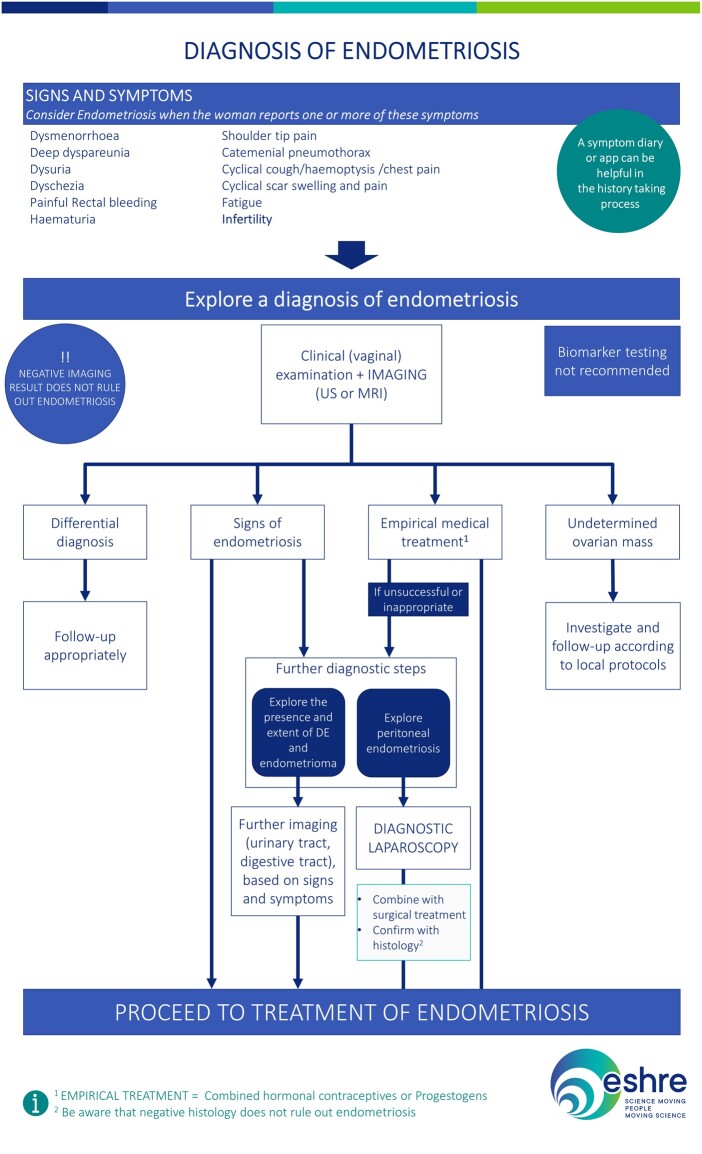
- The diagnostic process challenges laparoscopy and histology as gold standard tests; it recommends imaging (ultrasound or MRI) in the diagnostic work-up, advises against biomarkers for diagnosis, and reserves laparoscopy for patients with negative imaging or unsuccessful/inappropriate empirical treatment.
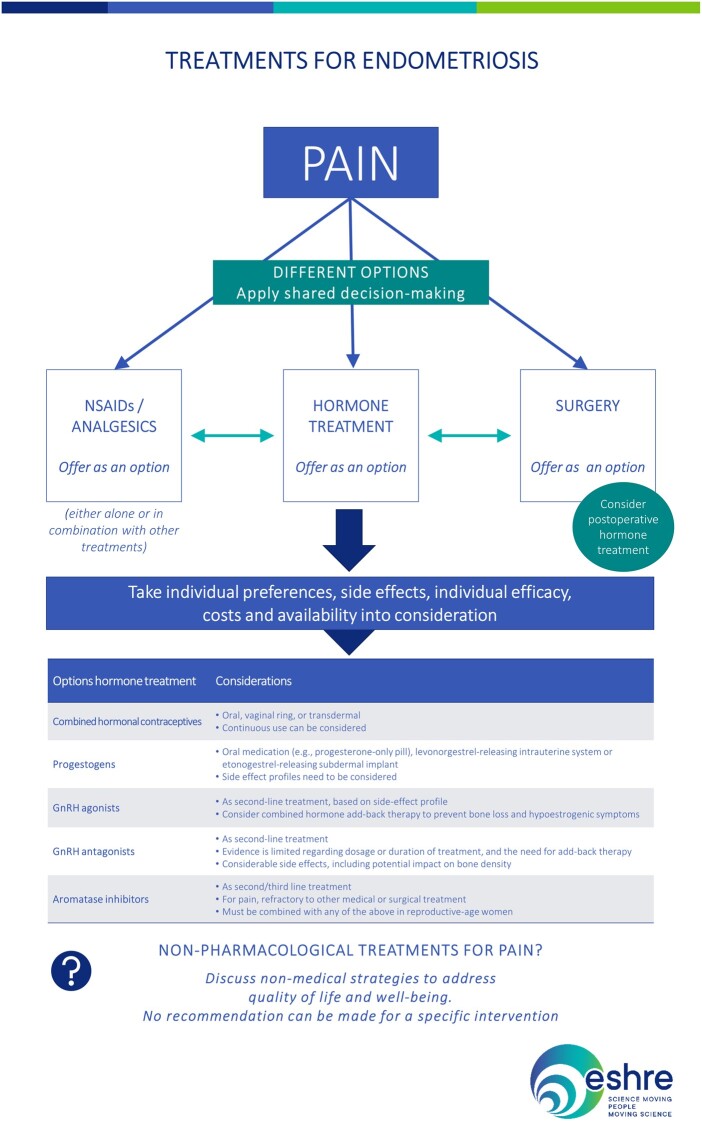
- Treatment options for endometriosis-associated pain include analgesics/NSAIDs, hormonal treatments (combined hormonal contraceptives, progestogens, GnRH agonists or antagonists, aromatase inhibitors), and surgery; five topics with significant changes include the diagnostic process, GnRH antagonists as second-line, postoperative medical treatment for pain, no extended GnRH agonist before ART, and use of the endometriosis fertility index (EFI).
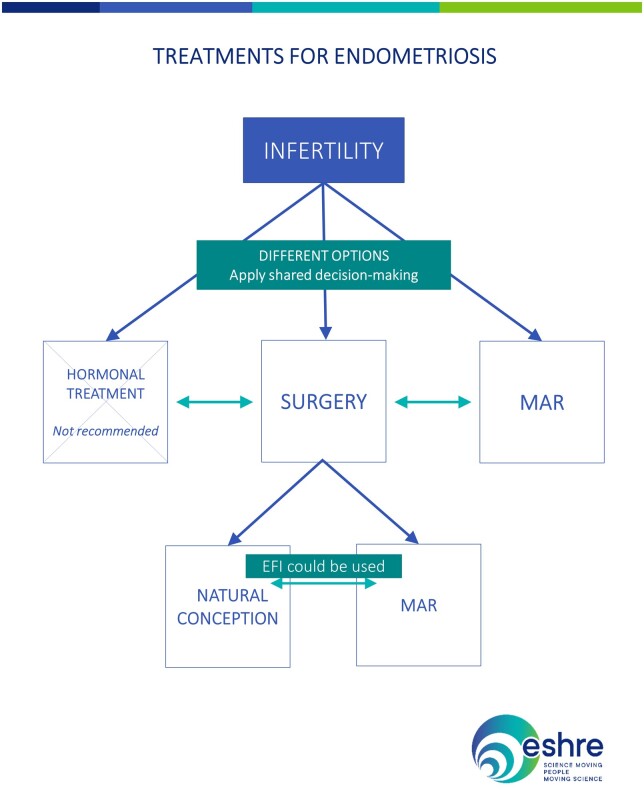
- For endometriosis-associated infertility, surgery and/or medically assisted reproduction are feasible; ovarian suppression, pentoxifylline/anti-inflammatory drugs/letrozole outside ovulation induction, and routine surgery before ART for rASRM stage I/II or endometrioma are not recommended.
Methods
- The guideline was developed according to ESHRE’s structured methodology; 42 key questions were formulated (7 narrative, 35 PICO), with PubMed/MEDLINE and Cochrane searches from inception to 1 December 2020, limited to English-language studies.
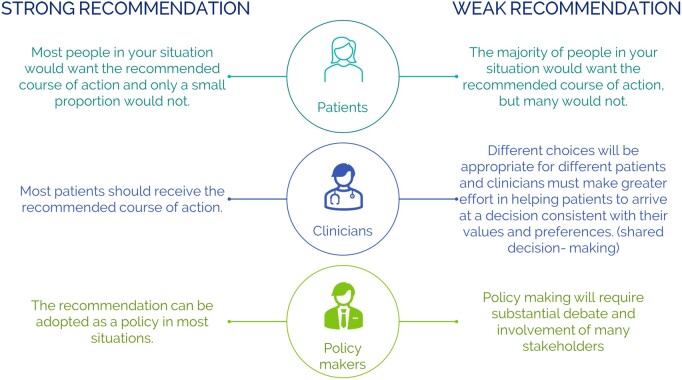
- Evidence was assessed and summarized in evidence tables; recommendations were drafted by specialist subgroups, discussed in core guideline development group meetings until consensus, labelled strong or weak, and graded High, Moderate, Low, or Very low; GPPs were added where relevant.
- A stakeholder review ran from 24 June to 15 August 2021; 56.5% of the 253 comments resulted in an adaptation or correction. The guideline will be considered for update 4 years after publication, with an intermediate assessment at 2 years.
Limitations
- Stated: the guideline describes different management options but, based on existing evidence, no firm recommendations could be formulated on the most appropriate treatments; for specific clinical issues such as asymptomatic endometriosis or extrapelvic endometriosis, evidence is too scarce to make evidence-based recommendations.
- Stated: there is an urgent need for more research on the most appropriate diagnostic and treatment options and on the natural course of the disease.
- Evident from the text: many recommendations are weak or based on low/very low-quality evidence or GPPs; no prognostic markers exist to select patients who would benefit from surgery; no specific non-medical intervention can be recommended; and heterogeneity prevented conclusions on surgical techniques for deep endometriosis-associated pain.
Model-written summary. Check it against the paper before relying on it.
Integrity signals
Registry
Cites
Statistics
Figures
Verification
Claims the paper makes
30 Valid · 5 Not valid · 26 Not checked · 25 Own results and interpretations
At least one cited source doesn’t support this claim or points to a different paper, and none confirmed it — see the verdicts below.
In the paper
“Clinicians may consider operative laparoscopy for the treatment of endometrioma-associated infertility as it may increase their chance of natural pregnancy, although no data from comparative studies exist (Dan and Limin, 2013; Alborzi et al., 2019; Candiani et al., 2020).”
§ ESHRE guideline: endometriosis† > Results > Treatment of endometriosis-associated infertility
What the sources say
- Not checked — no full text of the sourcecites Dan and Limin, 2013 matched to “Laparoscopic ovarian cystectomy versus fenestration/coagulation or laser vaporization for the treatment of endometriomas: a meta-analysis of randomized controlled trials” (2013) source
- Disputedcites Alborzi et al., 2019 matched to “The success of various endometrioma treatments in infertility: a systematic review and meta-analysis of prospective studies” (2019) sourceExperimental — accuracy not yet measured
The Results describe a prospective randomized trial comparing two laparoscopic treatments for endometriomas and reporting pregnancy rates after treatment without medication. That contradicts the categorical claim that no comparative-study data exist for operative laparoscopy and natural pregnancy. The trial compares two operations, however, not surgery against no surgery. (LLM, conf=0.83)
Checked by a reasoning model — may be wrong.
- Not checked — no full text of the sourcecites Candiani et al., 2020 matched to “Recurrence Rate after “One-Step” CO2 Fiber Laser Vaporization versus Cystectomy for Ovarian Endometrioma: A 3-Year Follow-up Study” (2020) source
hedged- Asserted: passes — The authors put it forward as true.
- Checkable: passes — It can be checked against evidence.
- Load-bearing: passes — The paper’s conclusions depend on it.
- Based: passes — The paper gives a reason why it holds.
The cited sources support only part of this claim — read each source’s verdict below.
In the paper
“Both GnRH antagonist and agonist protocols can be offered based on patients’ and physicians’ preferences as no difference in pregnancy or live birth rate has been demonstrated (Pabuccu et al., 2007; Rodriguez-Purata et al., 2013; Bastu et al., 2014; Kolanska et al., 2017; Drakopoulos et al., 2018).”
§ ESHRE guideline: endometriosis† > Results > Treatment of endometriosis-associated infertility
What the sources say
- Not checked — no full text of the sourcecites Pabuccu et al., 2007 matched to “GnRH agonist and antagonist protocols for stage I-II endometriosis and endometrioma in in vitro fertilization/intracytoplasmic sperm injection cycles” (2007) source
- Not checked — no full text of the sourcecites Rodriguez-Purata et al., 2013 matched to “Endometriosis and IVF: are agonists really better? Analysis of 1180 cycles with the propensity score matching” (2013) source
- Partly supportedcites Bastu et al., 2014 matched to “Comparison of ovulation induction protocols after endometrioma resection” (2014) sourceExperimental — accuracy not yet measured
The Results (Table 2; page not provided) show no significant difference in pregnancy or ongoing-pregnancy rates between protocols among IVF patients who had undergone endometrioma resection. The Conclusions (page not provided) call for further studies evaluating live birth rates, so this paper does not establish that live birth rates are similar. Its study population is also narrower than women with endometriosis generally. (LLM, conf=0.91)
boosted- Asserted: passes — The authors put it forward as true.
- Checkable: passes — It can be checked against evidence.
- Load-bearing: passes — The paper’s conclusions depend on it.
- Based: passes — The paper gives a reason why it holds.
The cited sources support only part of this claim — read each source’s verdict below.
In the paper
“Women with endometriosis can be reassured regarding the safety of ART since the recurrence rates are not increased compared to those women not undergoing ART (Benaglia et al., 2008; Somigliana et al., 2019).”
§ ESHRE guideline: endometriosis† > Results > Treatment of endometriosis-associated infertility
What the sources say
- Could not verifycites Benaglia et al., 2008 matched to “Endometrioma and oocyte retrieval-induced pelvic abscess: a clinical concern or an exceptional complication?” (2008) sourceExperimental — accuracy not yet measured
The Abstract (page unavailable) says the study estimated pelvic-abscess frequency after oocyte retrieval in women with endometriomas. Searches for endometriosis recurrence after IVF and a comparison with women not undergoing IVF found no passage addressing either point. (LLM, conf=0.76)
- Partly supportedcites Somigliana et al., 2019 matched to “Ovarian stimulation and endometriosis progression or recurrence: a systematic review” (2019) sourceExperimental — accuracy not yet measured
The Discussion (page unavailable) describes moderately supported, reassuring evidence that IVF has a limited impact on endometriosis recurrence. But the claim extends that reassurance to ART generally: the review's discussion of IUI (page unavailable) identifies a possible increased recurrence risk, and the Discussion says the evidence is incomplete. (LLM, conf=0.88)
plain- Asserted: passes — The authors put it forward as true.
- Checkable: passes — It can be checked against evidence.
- Load-bearing: passes — The paper’s conclusions depend on it.
- Based: passes — The paper gives a reason why it holds.
- Could not verify
The cited sources support only part of this claim — read each source’s verdict below.
In the paper
“The extended administration of GnRH agonist prior to ART treatment to improve live birth rate in infertile women with endometriosis is not recommended, as the benefit is uncertain (Georgiou et al., 2019; Cao et al., 2020; Kaponis et al., 2020).”
§ ESHRE guideline: endometriosis† > Results > Treatment of endometriosis-associated infertility
What the sources say
- Not checked — no full text of the sourcecites Georgiou et al., 2019 matched to “Long-term GnRH agonist therapy before in vitro fertilisation (IVF) for improving fertility outcomes in women with endometriosis” (2019) source
- Partly supportedcites Cao et al., 2020 matched to “The effectiveness of different down-regulating protocols on in vitro fertilization-embryo transfer in endometriosis: a meta-analysis” (2020) sourceExperimental — accuracy not yet measured
The Discussion reports that a Cochrane review found uncertain effects of long-term GnRH agonist therapy on pregnancy outcomes in infertile patients with endometriosis. Cao et al. do not establish uncertainty specifically for live birth rate or recommend against extended treatment; their own analysis reports improved clinical pregnancy rates in some groups. (LLM, conf=0.82)
- Not checked — no full text of the sourcecites Kaponis et al., 2020 matched to “Ultralong administration of gonadotropin-releasing hormone agonists before in vitro fertilization improves fertilization rate but not clinical pregnancy rate in women with mild endometriosis: a prospective, randomized, controlled trial” (2020) source
plain- Asserted: passes — The authors put it forward as true.
- Checkable: passes — It can be checked against evidence.
- Load-bearing: passes — The paper’s conclusions depend on it.
- Based: passes — The paper gives a reason why it holds.
The cited sources support only part of this claim — read each source’s verdict below.
In the paper
“Presacral neurectomy (PSN) is beneficial for treatment of endometriosis-associated midline pain as an adjunct to conventional laparoscopic surgery, but it should be stressed that PSN requires a high degree of skill and is associated with an increased risk of adverse effects such as intraoperative bleeding, and postoperative constipation, urinary urgency and painless first stage of labour (Miller e”
§ ESHRE guideline: endometriosis† > Results > Treatment of endometriosis-associated pain
What the sources say
- Partly supportedcites Miller et al., 2020 matched to “Clinical utility of presacral neurectomy as an adjunct to conservative endometriosis surgery: systematic review and meta-analysis of controlled studies” (2020) sourceExperimental — accuracy not yet measured
The Discussion reports that adjunctive presacral neurectomy reduced treatment failure for endometriosis-related midline pain. However, the Conclusion limits the finding to well-selected patients and says it *may* provide greater relief; the Results include both laparoscopic and open surgery, rather than establishing the benefit specifically for conventional laparoscopic surgery. (LLM, conf=0.84)
plainstates a cause- Asserted: passes — The authors put it forward as true.
- Checkable: passes — It can be checked against evidence.
- Load-bearing: passes — The paper’s conclusions depend on it.
- Based: passes — The paper gives a reason why it holds.
- Partly supported
54 more claims · 22 with their cited sources checked
Create a free account to see all 86 claims and every source verdict.
- Probably not a substantial claim. 26
- It may state two separate claims as one. 3
Claims other papers make about this one
Each is checked against this paper’s own text: does it say what the citing paper says it does?
The source backs part of the claim, not all of it — or backs it for a different population, condition or comparison.
In the citing paper
“although the major associations have difficulty siding sharply in favour of one treatment over another”
From IVF/ICSI or surgery as first approach for the treatment of infertility associated with ovarian and deep infiltrating endometriosis? A systematic review and meta-analysis. (2026) · cites this paper as Becker et al., 2022
Experimental — accuracy not yet measuredThe source backs part of the claim, not all of it — or backs it for a different population, condition or comparison.
In the citing paper
“it appears that, for some of them, patients with ovarian endometriomas (OMA) should not be referred for surgery, except in cases of pelvic pain”
From IVF/ICSI or surgery as first approach for the treatment of infertility associated with ovarian and deep infiltrating endometriosis? A systematic review and meta-analysis. (2026) · cites this paper as Becker et al., 2022
Experimental — accuracy not yet measuredThe source backs part of the claim, not all of it — or backs it for a different population, condition or comparison.
In the citing paper
“Therefore, optimal HRT in young women who have undergone pelvic clearance for endometriosis remains uncertain.”
From HRT in Women Undergoing Pelvic Clearance for Endometriosis—A Case Report and a National Survey (2023) · cites this paper as [10]
Experimental — accuracy not yet measuredThe source backs part of the claim, not all of it — or backs it for a different population, condition or comparison.
In the citing paper
“This has led the British Menopause Society (BMS) and European Society of Human Reproduction and Embryology (ESHRE) to recommend continuous C-HRT and avoidance of EO-HRT in this group of women at least until age of natural menopause [9,10].”
From HRT in Women Undergoing Pelvic Clearance for Endometriosis—A Case Report and a National Survey (2023) · cites this paper as [10]
Experimental — accuracy not yet measuredThe source backs part of the claim, not all of it — or backs it for a different population, condition or comparison.
In the citing paper
“Danazol is no longer recommended as a first-line therapy due to its bothersome side effect profile, such as acne, edema, vaginal spotting, weight gain, muscle cramps, deepening of voice, and increase in facial hair [ 79 ].”
From Thoracic Endometriosis Syndrome: A Comprehensive Review and Multidisciplinary Approach to Management (2024) · cites this paper as [79]
Experimental — accuracy not yet measured
3 more claims about this paper
Create a free account to see every claim other papers make about this one.
Citations
Cites
Zondervan, K. T., Becker, C. M., & Missmer, S. A. (2020) · New England Journal of Medicine · doi:10.1056/nejmra1810764 · Cited by 2,249
Self-citationESHRE guideline: management of women with endometriosis
Dunselman, G. A. J., Vermeulen, N., Becker, C., Calhaz-Jorge, C., D'Hooghe, T., De Bie, B., Heikinheimo, O., Horne, A. W., Kiesel, L., Nap, A., et al. (2014) · Human Reproduction · doi:10.1093/humrep/det457 · Cited by 2,211 · cited 2×
“The current guideline and recommendations are an update of the ESHRE endometriosis guidelines published in 2013 and 2005 (Kennedy et al. , 2005; Dunselman et al. , 2014).”
Self-citationEskenazi, B., & Warner, M. L. (1997) · Obstetrics and Gynecology Clinics of North America · doi:10.1016/s0889-8545(05)70302-8 · Cited by 1,617
ESHRE guideline for the diagnosis and treatment of endometriosis
Kennedy, S., Bergqvist, A., Chapron, C., D’Hooghe, T., Dunselman, G., Greb, R., Hummelshoj, L., Prentice, A., & Saridogan, E. (2005) · Human Reproduction · doi:10.1093/humrep/dei135 · Cited by 1,584
Pearce, C. L., Templeman, C., Rossing, M. A., Lee, A., Near, A. M., Webb, P. M., Nagle, C. M., Doherty, J. A., Cushing-Haugen, K. L., Wicklund, K. G., et al. (2012) · The Lancet Oncology · doi:10.1016/s1470-2045(11)70404-1 · Cited by 939 · cited 1×
“Routine US monitoring of asymptomatic endometriosis can be considered (Maouris, 1991; Alca´zar et al. , 2005; Pearce et al. , 2012; Serati et al. , 2013).”
High prevalence of endometriosis in infertile women with normal ovulation and normospermic partners
Meuleman, C., Vandenabeele, B., Fieuws, S., Spiessens, C., Timmerman, D., & D'Hooghe, T. (2009) · Fertility and Sterility · doi:10.1016/j.fertnstert.2008.04.056 · Cited by 606
Cervical cancer and use of hormonal contraceptives: a systematic review
Smith, J. S., Green, J., de Gonzalez, A. B., Appleby, P., Peto, J., Plummer, M., Franceschi, S., & Beral, V. (2003) · The Lancet · doi:10.1016/s0140-6736(03)12949-2 · Cited by 544
Imaging modalities for the non-invasive diagnosis of endometriosis
Nisenblat, V., Bossuyt, P. M., Farquhar, C., Johnson, N., & Hull, M. L. (2016) · Cochrane Database of Systematic Reviews · doi:10.1002/14651858.cd009591.pub2 · Cited by 538 · cited 2×
“…in endometrial tissue, blood, menstrual or uterine fluids to diagnose endometriosis (Mol et al. , 1998; May et al. , 2010; May et al. , 2011; Liu et al. , 2015; Cosar et al. , 2016; Gupta et al. , 2016; Hirsch et al. , 2016; Nisenblat et al. , 2016a; Vanhie et al. , 2019; Moustafa et al. , 2020).”
Sutton, C. J. G., Ewen, S. P., Whitelaw, N., & Haines, P. (1994) · Fertility and Sterility · doi:10.1016/s0015-0282(16)56990-8 · Cited by 525
Wentzensen, N., Poole, E. M., Trabert, B., White, E., Arslan, A. A., Patel, A. V., Setiawan, V. W., Visvanathan, K., Weiderpass, E., Adami, H.-O., et al. (2016) · Journal of Clinical Oncology · doi:10.1200/jco.2016.66.8178 · Cited by 514 · cited 1×
“…about the risk of malignancy associated with the use of hormonal contraceptives (Smith et al. , 2003; Zucchetto et al. , 2009; Gierisch et al. , 2013; Havrilesky et al. , 2013; Braganza et al. , 2014; Berlanda et al. , 2016; Wentzensen et al. , 2016; Butt et al. , 2018; Michels et al. , 2018).”
Cited by
Items 1,501–1,600 of 1,654
Endometriosis and adverse pregnancy outcomes in primiparous women: a retrospective cohort study
Téoule, J., Zikarsky, L., Bundschu, K., Andres, S., & Hancke, K. (2026) · Archives of Gynecology and Obstetrics · doi:10.1007/s00404-026-08465-5 · Cited by 2
Nyzova, O. A., Chaika, H. V., Kucherenko, O., Dereziuk, A. V., Strii, V. V., Tkach, A. A., & Symonyshen, A. A. (2025) · Reports of Vinnytsia National Medical University · doi:10.31393/reports-vnmedical-2025-29(4)-05
Lojanica, M. V., Ivanovic, S., Milic, N., Jovic, N., Rakic, N., Pilic, I. Z., Ivanović, K., Matijašević, M., Rakic, D., Joksimović, J., et al. (2026) · Journal of Clinical Medicine · doi:10.3390/jcm15124517 · Cited by 1
“…and Embryology, increasingly recognize endometriosis as a systemic disease with the potential for extrapelvic manifestations, which requires a diagnostic approach that extends beyond traditional gyne-cologic frameworks and involves interdisciplinary evaluation of atypical presentations [3].”
InfluentialDisputable issues of non–invasive diagnosis of small forms of endometriosis
Ефимова, А. А., St. Petersburg, R. F., Sergienya, O. V., Maschenko, I. A., Kuznetcova, A. A., Gorelova, I. V., & Zazerskaya, I. E. (2023) · Women s Health and Reproduction · doi:10.31550/2712-8598-zhzir-2023-1-8 · Cited by 1
Endometriosis and Ovarian Cancer: Should we be worried? Five Cases Report and Literature Review
Pereira, J. S., Nave, M., & Magro, M. (2023) · Gazeta Médica · doi:10.29315/gm.v1i1.722
Nazri, H. M., Fischer, R., Steele, J. R., Manek, S., Subramaniam, K. S., Kessler, B. M., Zondervan, K. T., Tapmeier, T. T., & Becker, C. M. (2026) · BJOG An International Journal of Obstetrics & Gynaecology · doi:10.1111/1471-0528.70334
Self-citationTakasaki, H., Sato, S., Tamehisa, T., Yoneda, T., Shiroshita, A., Fujimura, T., Tamura, I., Maekawa, R., & Sugino, N. (2026) · Scientific Reports · doi:10.1038/s41598-026-41956-8
An assisted reproductive technology workup for the couple
Varma, M., & Gupta, S. (2026) · Journal of Reproductive Healthcare and Medicine · doi:10.25259/jrhm_47_2025
EGF as a non-invasive biomarker of endometriosis: a case control study
Rashes, E. R., Daisy, C. C., Kaplan, K., Staffa, S. J., Zurakowski, D., Vitonis, A. F., Terry, K. L., Shafrir, A. L., Dillon, S. T., Missmer, S. A., et al. (2026) · Biomarker Research · doi:10.1186/s40364-026-00976-2
Qendri, V., Al, M., van Dongen‐Leunis, A., Krijkamp, E., Poley, M. J., Mynett, Z. R., Tian, X., Wolff, R., Yang, H., Armstrong, N., et al. (2026) · PharmacoEconomics · doi:10.1007/s40273-026-01596-2
“Endometriosis management is therefore highly individualised [4, 5].”
InfluentialTragantzopoulou, P., Tragantzopoulou, A., & Giannouli, V. (2026) · Healthcare · doi:10.3390/healthcare14162496
Actualización en Ginecología Vol. 2
Alarcón, G. E. C., Villar, Y. K. A. B. D., Morales, W., Camacho, L. S. A., Vélez, F. D. C., Peña, R. D. S., & Romero, B. A. V. (2023) · Juan Cuevas eBooks · doi:10.56470/978-9942-627-83-4
Cirkel, C., Degen, H., Zimmermann, C., et al. (2024) · Gesundheitsökonomie & Qualitätsmanagement · doi:10.1055/a-2422-8660
“In der Diagnostik der Endometriose werden leitliniengerecht auch kostenintensive Großgeräte wie z. B. MRT eingesetzt [8].”
Трухан, Д. И., Shuganova, P. V., & Viktorova, I. A. (2026) · Meditsinskiy sovet = Medical Council · doi:10.21518/ms2026-229
Sinha, R., Singh, S. S., & Flaxman, T. E. (2025) · Case Reports in Obstetrics and Gynecology · doi:10.1155/crog/5513823
Shim, J. Y., & Laufer, M. R. (2025) · Elsevier eBooks · doi:10.1016/b978-0-443-15940-4.00015-4
Menakaya, U. A., Agholor, K. N., Haieg, D. E., Patel, Y., Malele, K., Njagi, J., & Constantin, A. (2025) · International Journal of Gynecology & Obstetrics · doi:10.1002/ijgo.70606
Research Progress on the Treatment of Ovarian Endometrioma
卢, 珊. (2025) · Advances in Clinical Medicine · doi:10.12677/acm.2025.1551582
Tratamento da endometriose ovariana Número 1 – 2026
Tcherniakovsky, M., Carneiro, M. M., Cunha‐Filho, J. S., Petta, C. A., Lino, C. A. P. C., de Castro, C. L. A., Schor, E., Nogueira, J., de Oliveira, M. A. P., Abrão, M. S., et al. (2026) · Femina · doi:10.61622/0100-7254531202604
Dawoud, M. A. M., Alhalwagy¹, A., Fathy, R. O., Gamal, M., & Sediek, M. M. (2026) · Middle East Fertility Society Journal · doi:10.21203/rs.3.rs-10691781/v1
Rectosigmoid Endometriosis Mimicking Colorectal Cancer: A Case Report
Khaissidi, K., Karimi, J., Ouazzani, H., Chaouche, I., Akammar, A., Bouardi, N. E., Alami, B., Haloua, M., Hassani, K. I. M., Bοubbοu, M., et al. (2026) · Cureus · doi:10.7759/cureus.105437
“Hormonal therapies may alleviate pain and reduce lesion activity, but they do not reliably resolve deep bowel nodules and are not sufficient when obstruction or a cancer-like mass is present [3,16].”
Nyzova, O. A., Chaika, H. V., Berenshtein, E. L., Kryvonis, T., Kyrychenko, V. I., Сорокоумов, В. П., & Gunas, I. V. (2025) · Reports of Morphology · doi:10.31393/morphology-journal-2025-31(1)-08
Diagnóstico de Endometriosis: Exactitud de Ultrasonido Transvaginal Frente a Laparoscopia
Iglesias, M. E. P., Martínez, A. Y. F., Rocha, M. S. C., & Alvear, A. C. F. (2026) · Estudios y Perspectivas Revista Científica y Académica · doi:10.61384/r.c.a..v6i1.1952
Pedraza, A., Yang, Q., Clayton, N., & Opsha, O. (2026) · Respiratory Medicine Case Reports · doi:10.1016/j.rmcr.2026.102401
“Current evidence does not demonstrate clear superiority between cyclic and continuous hormonal regimens, and treatment is therefore typically individualized according to patient characteristics and therapeutic response [17].”
Tofan, B. Y. (2025) · Bulletin of Problems Biology and Medicine · doi:10.29254/2077-4214-2025-1-176-305-314 · Cited by 1
EndoCompass Project: Environmental Endocrinology
Andersson, A., Cianfarani, S., Köhrle, J., Main, K. M., Parent, A., Peeters, R. P., Reincke, M., Saravinovska, K., & Street, M. E. (2025) · Hormone Research in Paediatrics · doi:10.1159/000549151 · Cited by 1
“Endometriosis is a chronic inflammatory disease, characterized by the presence of endometrium-like tissue outside the uterus, with a prevalence of up to 10% in women of reproductive age [108].”
Alexander, K. G., Nordahl, E. J. B., Newton, T. I. J., & Georgiou, C. (2025) · Academia Mental Health and Well-Being · doi:10.20935/mhealthwellb7938 · Cited by 2
de Venezuela, S. O. G., Curiel, M. A., y Metabolismo, S. V. D. E., & y Osteoporosis, S. V. D. M. (2024) · Revista de Obstetricia y Ginecología de Venezuela · doi:10.51288/0084s107 · Cited by 2
Chen, Z., & Zheng, Y. (2026) · BMC Women s Health · doi:10.1186/s12905-026-04636-3
“As a first-line medical therapy for endometriosis, COC offers advantages such as ease of use, high accessibility, relatively low cost, and the ability to regulate menstrual cycles, making it a preferred option for many patients [21].”
Pluchino, N., Vibert, J. J. M., Viganò, P., Tomassetti, C., Roman, H., Bokor, A., Carmona, F., & Mueller, M. D. (2026) · Journal of Endometriosis and Uterine Disorders · doi:10.1016/j.jeud.2026.100176
Self-citationTherapeutic outcomes and patient-reported experiences for endometriosis in the canal of Nuck
van Duin, L., Kol, S. Q., Cantineau, A. E., et al. (2026) · European Journal of Obstetrics & Gynecology and Reproductive Biology · doi:10.1016/j.ejogrb.2026.114944
Self-citationKunnaiah, A., & Keerthana, M. (2026) · Cureus · doi:10.7759/cureus.104335
“Surgical intervention remains a key treatment modality for patients with endometriosis who do not respond adequately to pharmacologic endocrine therapy and for those diagnosed with DIE[5,6].”
Lee, J., Park, E., Park, H., Lee, I., Choi, Y. S., 조시현, & Kim, S. J. (2026) · Frontiers in Reproductive Health · doi:10.3389/frph.2026.1906041
Research Advances in Stem Cell-Mediated Immune and Inflammatory Mechanisms in Endometriosis
肖, 婷. (2026) · Advances in Clinical Medicine · doi:10.12677/acm.2026.1641235
Preoperative Medication for Ovarian Endometrioma Reduces Cyst Size and Pain but Not rASRM Score
Jung, H.-J., Kim, S. E., Hong, H., Lee, D., & Choi, D. (2025) · Journal of Minimally Invasive Gynecology · doi:10.1016/j.jmig.2025.01.010
Thoracic endometriosis in an inoperable patient
Sadowska, A. M., Maas, J. W. M., Kooreman, L. F. S., Mihl, C., Menger, N., Veer, H. G. L. V., Bafort, C., & Tomassetti, C. (2026) · BMJ Case Reports · doi:10.1136/bcr-2025-271732
Self-citationA biopsychosocial perspective on endometriosis: the importance of psychological inflexibility
Åkerblom, S., Jönsson, I. P., Ringqvist, Å., Nordengren, J., & Zhao, X. (2026) · Archives of Gynecology and Obstetrics · doi:10.1007/s00404-025-08276-0 · Cited by 1
Spagnolo, E., Hernández, M. R., Fuentes, B. D., Morín, C. F.-C., López, A., Casas, C. C., García-Rodríguez, J., Hernández, A., & Ramiro‐Cortijo, D. (2026) · Frontiers in Nutrition · doi:10.3389/fnut.2026.1921186
Polyzystisches Ovarialsyndrom und Endometriose – Konventionelle Therapien
Imesch, P. (2026) · Springer eBooks · doi:10.1007/978-3-662-68171-8_27
La crénothérapie dans l’orientation gynécologique
Demmerlé*, C., Senninger, L., Tabary, A., et al. (2026) · La Presse thermale et climatique · doi:10.3917/ptc.163.0146
(2000) · Time to knit · doi:10.1016/s2211-0666(24)48060-2
Teixeira, A. I., Vieira, R. J., Martinho, M. S. L., Raimondo, D., Aguzzi, A., Salmeri, N., Lazzeri, L., Raffone, A., Scarperi, S., Mabrouk, M., et al. (2026) · Journal of Minimally Invasive Gynecology · doi:10.1016/j.jmig.2026.06.019 · Cited by 1
Self-citationAdvances in endometriosis research: animal models for the study of reproductive disorders
Zhou, M., Zhou, X., & Wang, X. (2025) · Biology of Reproduction · doi:10.1093/biolre/ioaf089 · Cited by 1
Stefano, G. D., Bourdon, M., Casalechi, M., Bellinghieri, R., Reschini, M., Viganò, P., & Santulli, P. (2026) · Journal of Endometriosis and Uterine Disorders · doi:10.1016/j.jeud.2026.100185
Xu, H., Jiang, H., & Ma, C. (2026) · Clinical and Experimental Obstetrics & Gynecology · doi:10.31083/ceog47790
Cancer‐associated mutations in endometriosis reframe a benign disease through molecular oncology
Mujacic, C., Vitale, M. C., Siino, R., Giovanni, E. D., Bannera, C. F., Marco, E. D., Gottardo, A., Russo, T. D. B., Barraco, N., Perez, A., et al. (2026) · Molecular Oncology · doi:10.1002/1878-0261.70295
“In addition, none of the drugs cited have been clinically approved, according to the European Society of Human Reproduction and Embryology (ESHRE) guidelines which offer analgesics, surgery or hormone therapy as the only available treatments [43].”
Balpataki, L., Balogh, D. B., Hudelist, G., M.Becker, C., W.Horne, A., Miklós, D., Acs, N., & Bokor, A. (2026) · Preventive Medicine Reports · doi:10.1016/j.pmedr.2026.103652
Self-citationChen, Y., Peng, X., Chen, Y., Chen, L., Yin, X., Jiang, W., Chen, B., & Tang, Y. (2025) · European Journal of Obstetrics & Gynecology and Reproductive Biology · doi:10.1016/j.ejogrb.2025.114595
Die ESHRE-Endometrioseleitlinien: Neuigkeiten und Bestehendes
Fruscalzo, A., Zebedin, M., Féki, A., et al. (2024) · Journal für Gynäkologische Endokrinologie/Schweiz · doi:10.1007/s41975-024-00336-z
“überarbeitete Version der Endometrioseleitlinien publiziert [1].”
Nguyen, K., Wu, J., Mallinder, H., Niranjan, M. S., Gerstl, B., Abbott, J. A., & Deans, R. (2024) · Australian and New Zealand Journal of Obstetrics and Gynaecology · doi:10.1111/ajo.13930 · Cited by 1
Fertility preservation in endometriosis: current strategies and outcomes
Bourdon, M., Fornelli, G., Maignien, C., Parpex, G., Marcellin, L., Melka, L., Patrat, C., Chapron, C., & Santulli, P. (2025) · Minerva Obstetrics and Gynecology · doi:10.23736/s2724-606x.25.05766-5
Actualización en Ginecología Vol. 9
Calderón, G. P. J., Cruz, K. V. L., Cruz, M. D. L. A. O., Bailon, V. M. D., Paredes, D. X. A., Pedraza, A. C. C., Cobo, F. C. A., Alcívar, P. M. C., Angulo, S. B. M., Sinchi-Naranjo, S. M., et al. (2024) · Juan Cuevas eBooks · doi:10.56470/978-9942-650-92-4
Between love and pain: A qualitative analysis of menstrual distress and romantic relationships
Koch, T., Christlein, N., & König, L. M. (2026) · Applied Psychology Health and Well-Being · doi:10.1111/aphw.70219
“This study also underlines the need to improve current programmes for menstrual distress management, which primarily focus on biomedical aspects of menstrual distress and largely neglect the role of social or partner support (e.g., Becker et al., 2022; Kalaitzopoulos et al., 2021).”
Bowel endometriosis: from pathogenesis to clinical management
Barra, F., Giannini, E. G., Centurioni, M. G., Gustavino, C., Alessandri, F., & Ferrero, S. (2026) · The Lancet. Gastroenterology & hepatology · doi:10.1016/s2468-1253(26)00117-2
Self-citationThe impact of ovarian endometrioma on the in vitro fertilization outcomes
Vardanyan, V. A., Smolnikova, V. Y., Makarova, N. P., Kalinina, E. A., & Adamyan, L. V. (2026) · Russian Journal of Human Reproduction · doi:10.17116/repro20263204151
Scaling Expertise in Endometriosis Diagnosis: Can Artificial Intelligence Close the Gap?
Bajka, M., & Hoopmann, M. (2026) · Ultraschall in der Medizin - European Journal of Ultrasound · doi:10.1055/a-2876-6072
Firoozabadi, Z. D., Derakhshan, R., Chaichian, S., Sabet, B., Hashemi, N. S., & Rokhgireh, S. (2026) · Journal of Endometriosis and Pelvic Pain Disorders · doi:10.1177/22840265251366379
Rousset‐Jablonski, C. (2024) · Elsevier eBooks · doi:10.1016/b978-2-294-78270-1.00029-6
Li, C.-L., Lu, J.-P., Lan, Q.-X., Li, L., Lu, S.-S., Chen, Z.-K., Shi, J., He, Q., Hou, P., Dai, W.-B., et al. (2026) · Journal of Ovarian Research · doi:10.1186/s13048-026-02088-9
“Based on these findings, patients with ovarian endometriotic cysts or deep infiltrating endometriosis should undergo systematic ovarian cancer risk assessment and individualized preventive strategies and may be considered as a target population for screening and prophylactic interventions [29–31].”
Mondrzik, E., Wszołek, K., Wierzchowski, M., Wilczak, M., & Chmaj-Wierzchowska, K. (2026) · Clinical and Experimental Obstetrics & Gynecology · doi:10.31083/ceog47529
Postmenopausal endometriosis: current evidence and clinical challenges in diagnosis and treatment
Lalla, A., Kohn, J. R., Pasternak, D., & Guan, X. (2026) · Current Opinion in Obstetrics & Gynecology · doi:10.1097/gco.0000000000001127
Tresso, A., Thota, N., James, C., Borash, N., Brennan, E. A., Bayat, S., Vollenhoven, B. J., & Tapmeier, T. T. (2024) · bioRxiv (Cold Spring Harbor Laboratory) · doi:10.1101/2024.08.30.610573
“…pain; hormonal treatments like combined hormonal contraceptives, progestogens, gonadotropin releasing hormone (GnRH) agonists or antagonists used to shut down the menstrual cycle and thus alleviate endometriosis-related symptoms 3 ; and surgery to try and remove endometriosis lesions 4 .”
BackgroundLegendre, G., Rocher, M., Delbos, L., Descamps, P., Bouet, P., & Astruc, A. (2026) · European Journal of Obstetrics & Gynecology and Reproductive Biology · doi:10.1016/j.ejogrb.2026.115201
Hong, P., Xiong, W., Xu, R., et al. (2023) · PubMed · doi:10.12182/20230960205
Mangileva, Y. A., Kudryavtseva, E. V., Георгиевна, П. Л., Shakiryanova, E., Potapov, N. N., & Kovalev, V. V. (2024) · V F Snegirev Archives of Obstetrics and Gynecology · doi:10.17816/aog630395
Эндометриоздың ооциттер мен фертильділікке ұзақ мерзімді әсері
Байкошкарова, С. Б., Джантаева, З. Б., Кулбаева, С. Н., & Сантаев, Б. А. (2024) · Репродуктивная медицина (Центральная Азия) · doi:10.37800/rm.4.2024.422 · Cited by 2
“Аналық безді ын-таландыру хаттамасына келетін болсақ, Еуропалық Адам Репродукциясы Және Эмбриология Қоғамы ұсынымда-рына сәйкес эндометриозда қысқа гонатропинрилизинг гормон (ГнРГ) антагонистері де, ұзын ГнРГ агонистері де бірдей ұсынылады [17].”
Cowley, L., Bianchim, M. S., Isherwood, K., Roberts, J., Rees, A., Joseph, R., & Anthony, R. (2026) · BMJ Open · doi:10.1136/bmjopen-2026-120614
“13 However, these treatments are not universally effective, and recurrence or persistence of symptoms is common.”
Villegas‐Echeverri, J. D., Paiva, L. R., Rodríguez, L. F. G., López-Isanoa, J. D., Posada, J. F. D. L. R., Orjuela, J. C., Paúl, C. M., Bastidas-Guarín, C., Flórez, Á. J. E., Cuello-Salcedo, A. M., et al. (2026) · Revista Colombiana de Obstetricia y Ginecología · doi:10.18597/rcog.4671
Strakhovetskyi, V. S., & Katamadze, S. N. (2026) · Bulletin of Problems Biology and Medicine · doi:10.29254/2077-4214-2026-1-180-364-372
Male and Female Pelvic Overview
Meola, M. (2026) · Springer eBooks · doi:10.1007/978-3-032-24767-4_18
Alson, S., Mattsson, K., & Sladkevicius, P. (2026) · Human Reproduction · doi:10.1093/humrep/deag084
Management of Common Benign Gynecologic Diseases in Postmenopausal Women
Yu, E., Lee, H., Joo, J. K., & Na, Y. J. (2024) · Journal of Menopausal Medicine · doi:10.6118/jmm.24017 · Cited by 2
Neves, L. B. M. (2026) · Medical Hypotheses · doi:10.1016/j.mehy.2026.112040
Tewhaiti-Smith, J. M. K., Gannott, M., Semprini, A., Bush, D., Anderson, A., Eathorne, A., Johnson, N., Girling, J. E., East, M., Marriott, J., et al. (2025) · Women · doi:10.3390/women5040047 · Cited by 6
“This aligns with both local and international guidelines, which emphasize pain impact over staging in referral and treatment decisions [29–32].”
Ferrari, S. M., Dolci, C., Taccagni, G., Congia, C., Ottolina, J., Schimberni, M., Bartiromo, L., & Candiani, M. (2025) · European Journal of Obstetrics & Gynecology and Reproductive Biology · doi:10.1016/j.ejogrb.2025.114532 · Cited by 1
Spiridonova, N. V., Андреевна, Б. А., & Egorkina, M. M. (2026) · Russian Bulletin of Obstetrician-Gynecologist · doi:10.17116/rosakush20262604179
Betiuk, Z., Błażyca, M., Bartoszczyk, M., Kutyła, K., Gierulska, N., Tarkowski, R., & Kułak, K. (2026) · Journal of Clinical Medicine · doi:10.3390/jcm15187238
“Currently recommended treatments do not affect the factors causing the development of the endometriosis [1,3].”
InfluentialMartínez‐Zamora, M. Á., Perelló-Capó, J., Calaf, J., & Quílez-Conde, J. C. (2026) · Women s Health Reports · doi:10.1177/26884844261476400
GiglioAyers, P., Cunningham, A., Rios, K., & Ulrich, A. (2026) · Journal of Minimally Invasive Gynecology · doi:10.1016/j.jmig.2026.06.021
dos Reis, F. M., Santulli, P., Marcellin, L., Bourdon, M., Maignien, C., & Chapron, C. (2025) · Gynecologic and Obstetric Investigation · doi:10.1159/000543910
Individualized fertility preservation counselling for women with endometriosis—a systematic review
Téoule, J., Bundschu, K., & Hancke, K. (2026) · Wiener Medizinische Wochenschrift · doi:10.1007/s10354-026-01151-w
Anwar, A., Ajith, T., Lewis, R., Kimandi, V., Drakeley, A., Hapangama, D. K., & Tempest, N. (2025) · European Journal of Integrative Medicine · doi:10.1016/j.eujim.2025.102597
Raimondo, D., Bertoldo, L., Giorgi, M., et al. (2025) · Journal of Minimally Invasive Gynecology · doi:10.1016/j.jmig.2025.11.013
Self-citationEndometriosis and the missed diagnosis: a discussion on women's experiences and nursing practice
Wamburu, A., & Bartley, N. (2026) · Women s Health in Primary Care · doi:10.12968/whpc.2026.0009
Blum, S., Hofbeck, L., Sipulina, N., Au, K., Lotz, L., Giacomozzi, M., Fasching, P. A., Beckmann, M., & Burghaus, S. (2026) · Journal of Obstetrics and Gynaecology · doi:10.1080/01443615.2026.2649743 · Cited by 1
Resultados quirúrgicos en mujeres diagnosticadas de endometriosis profunda con afectación urológica
Lorente, D., Tapia, M., Suarez, M. E., Mañalich, L., & Trilla, E. (2024) · Actas Urológicas Españolas · doi:10.1016/j.acuro.2024.02.002
EARLY DETECTION OF ENDOMETRIOSIS – A LITERATURE REVIEW OF DIAGNOSTIC METHODS AND FUTURE PERSPECTIVES
Harpula, I., Bębenek, N., Baljon, B., Bogdan, J., Ramotowski, R., Brzezicki, P., Frączkiewicz, P., Barszcz, G., Błądek, M., Drygała, K., et al. (2026) · International Journal of Innovative Technologies in Social Science · doi:10.31435/ijitss.3(51).2026.6129
Haznedar, N. K., & Kopuz, T. N. Y. (2026) · Gynecologic and Obstetric Investigation · doi:10.1159/000552625
A clinical case of diagnosis and complex treatment of endometriosis in a patient with infertility
Ефимова, А. А., Saint Petersburg, R. F., Gorelova, I. V., Makolkin, M. A. A., Sergienya, O. V., & Zazerskaya, I. E. (2023) · Women s Health and Reproduction · doi:10.31550/2712-8598-zhzir-2023-3-6
Nyzova, O. A., Chaika, H. V., Ishchuk, O. H., Kucherenko, O., & Gunas, V. (2025) · World of Medicine and Biology · doi:10.26724/2079-8334-2025-2-92-125-130
Hurni, Y., Torre, F. L., Barbany‐Freixa, N., Platón-Galofré, C., Coll, S., García-Martínez, S., Cabrera, S., & Barri, P. N. (2025) · Reproductive BioMedicine Online · doi:10.1016/j.rbmo.2025.105409
Dysmenorrhea and endometriosis in the adolescent female
Davis‐Kankanamge, C., & Vash‐Margita, A. (2024) · Elsevier eBooks · doi:10.1016/b978-0-443-10512-8.00019-9 · Cited by 4
Controversias en el tratamiento de la endometriosis en la mujer estéril
Gilabert–Estellés, J., & Rodríguez-Tabernero, L. (2023) · Clínica e Investigación en Ginecología y Obstetricia · doi:10.1016/j.gine.2023.100890 · Cited by 1
Evidence to action: how good is the evidence for fertility treatments and what can we do?
Farquhar, C. M. (2025) · Global Reproductive Health · doi:10.1097/grh.0000000000000120
Teng, P., Wang, L., Ding, C., Gu, K., Luo, X., Su, C., Ni, G., Lyu, Y., & Ding, J. (2026) · PLoS ONE · doi:10.1371/journal.pone.0350751
“Endometriosis is defined by the presence of endometrium-like epithelium and/or stroma outside the uterus [1].”
The effect of prophylactic antibiotic administration for endometriosis surgery
Hamilton, K. M., Meyer, R., Schneyer, R. J., Wright, K. N., & Siedhoff, M. T. (2026) · Women s Health · doi:10.1177/17455057261426914
“17 24 Currently, the American College of Obstetrics and Gynecology (ACOG) does not recommend antibiotic prophylaxis for gynecologic laparoscopic procedures that do not include entry into the bowel or the vagina.”
Metadata
- Authors
- Becker, C. M., Bokor, A., Heikinheimo, O., Horne, A., Jansen, F., Kiesel, L., King, K., Kvaskoff, M., Nap, A., Petersen, K., Saridogan, E., Tomassetti, C., van Hanegem, N., Vulliemoz, N., Vermeulen, N., ESHRE Endometriosis Guideline Group, Altmäe, S., Ata, B., Ball, E., Barra, F., Bastu, E., Bianco-Anil, A., Knudsen, U. B., Brubel, R., Cambitzi, J., Cantineau, A., Cheong, Y., Daniilidis, A., De Bie, B., Exacoustos, C., Ferrero, S., Gelbaya, T., Goetz-Collinet, J., Hudelist, G., Hussain, M., Indrielle-Kelly, T., Khazali, S., Kumar, S. L., Leone Roberti Maggiore, U., Maas, J. W. M., McLaughlin, H., Metello, J., Mijatovic, V., Miremadi, Y., Muteshi, C., Nisolle, M., Oral, E., Pados, G., Parades, D., Pluchino, N., Supramaniam, P. R., Schick, M., Seeber, B., Seracchioli, R., Laganà, A. S., Stavroulis, A., Tebache, L., Uncu, G., Van den Broeck, U., van Peperstraten, A., Vereczkey, A., Wolthuis, A., Bahat, P. Y., & Yazbeck, C.
- Affiliations
- University of Oxford (GB)
- Semmelweis University (HU)
- University of Helsinki (FI)
- MRC Centre for Reproductive Health (GB)
- EndoHome—Endometriosis Association Belgium , Belgium
- University Hospital Münster (DE)
- Individual Endometriosis Advocate , Ireland
- Inserm (FR)
- Radboud University Nijmegen (NL)
- University College London Hospitals NHS Foundation Trust (GB)
- Department of Obstetrics and Gynaecology, University College London Hospital , London, UK
- Universitair Ziekenhuis Leuven (BE)
- Department of Reproductive Medicine and Gynecology, University Medical Center Utrecht , Utrecht, The Netherlands
- Department of Woman Mother Child, Fertility Medicine and Gynaecological Endocrinology, Lausanne University Hospital , Lausanne, Switzerland
- European Society of Human Reproduction and Embryology (BE)
- Aarhus University (DK)
- Centre Hospitalier Universitaire Vaudois (CH)
- Bursa Uludağ Üni̇versi̇tesi̇ (TR)
- Corresponding author
- Becker, Christian M
- ORCID
- Becker, Christian M
- Bokor, Attila
- Heikinheimo, Oskari
- Horne, Andrew
- Kiesel, Ludwig
- King, Kathleen
- Kvaskoff, Marina
- Nap, Annemiek
- Tomassetti, Carla
- Vermeulen, Nathalie
- Altmäe, Signe
- Ball, Elizabeth
- Barra, Fabio
- Knudsen, Ulla Breth
- Cantineau, Astrid
- Cheong, Ying
- Daniilidis, Angelos
- Hudelist, Gernot
- Indrielle-Kelly, Tereza
- Khazali, Shaheen
- Maas, Jacques W M
- Metello, José
- Mijatovic, Velja
- Muteshi, Charles
- Nisolle, Michelle
- Oral, Engin
- Pados, George
- Pluchino, Nicola
- Supramaniam, Prasanna Raj
- Schick, Maren
- Seeber, Beata
- Seracchioli, Renato
- Laganà, Antonio Simone
- Uncu, Gürkan
- Wolthuis, Albert
- Bahat, Pınar Yalçın
- Yazbeck, Chadi
- Venue
- Human Reproduction Open
- Publisher
- Oxford University Press (OUP)
- Published
- 2022-01-01
- Volume
- 2022
- Issue
- 2
- Pages
- hoac009-hoac009
- ISSN
- 2399-3529 (ISSN-L)
- PMC
- PMC8951218
- OpenAlex
- W4214754424
- Semantic Scholar
- 9b3b56ba47277eeae136f9c369e90b91f4b39fc2
- Cited by
- 1,712
- References
- 250
- Citations by year
- 2026: 482 · 2025: 452 · 2024: 401 · 2023: 278 · 2022: 97
- FWCI
- 258.47
- Type
- journal article
- Language
- en
- Open access
- gold
- doi.org
- Licence
- Locations
- Human Reproduction Open (publishedVersion, cc-by-nc)
- PubMed Central (publishedVersion, cc-by-nc)
- PubMed (publishedVersion)
- Cineca Institutional Research Information System (Tor Vergata University) (publishedVersion, other-oa)
- Research Publications (Maastricht University) (publishedVersion, cc-by-nc)
- Pure Amsterdam UMC (publishedVersion, cc-by)
- SERVAL (Université de Lausanne) (publishedVersion, cc-by-nc)
- Repository of the Academy's Library (Library of the Hungarian Academy of Sciences) (acceptedVersion)
- ePrints Soton (University of Southampton) (acceptedVersion)
- IRIS (submittedVersion, cc-by-nc)
- Lirias (submittedVersion, cc-by)
- Archivio istituzionale della ricerca (Alma Mater Studiorum Università di Bologna) (submittedVersion, cc-by-nc)
- Työväentutkimus Vuosikirja (submittedVersion)
- ORBi (University of Liège) (submittedVersion, other-oa)
- Edinburgh Research Explorer (University of Edinburgh) (submittedVersion, cc-by-nc)
- Radboud Repository (Radboud University) (submittedVersion)
- Radboud Repository (Radboud University) (submittedVersion, other-oa)
- Funders
- ESHRE
- Topics
- Health Sciences › Medicine › Reproductive Medicine › Endometriosis Research and Treatment
- Health Sciences › Medicine › Obstetrics and Gynecology › Gynecological conditions and treatments
- Health Sciences › Medicine › Obstetrics and Gynecology › Ectopic Pregnancy Diagnosis and Management
- Keywords
- endometriosis, endometriosis diagnosis, endometriosis-associated pain, endometriosis-associated infertility, asymptomatic endometriosis, extrapelvic endometriosis, endometriosis prevention, medical treatment
About these checks
Registry, retraction, Cites and statistics results are computed, not judged, with one exception: a printed reference that no index lists is read once by a model before it counts as a citation error. Claims are extracted by a model and kept only when their quote appears verbatim in the text; each cited source is then checked, with a model’s help, for whether it says what the claim relies on. Those verdicts can be wrong — read the claim’s quote and the cited source before relying on one.
The claim verdicts this report counts are experimental: their accuracy is not yet measured.
A language model drew the claims from the paper on 2026-10-12, under version 3 of the claim definition (model deepseek-v4.1-flash, prompt extract-v3).
A second model labelled each claim on 2026-10-12 (model jev-1.13-20260917, definition revision gold-guideline-v0.2).
Cited sources are checked with a language model’s help (gpt-6-sol).
Statistics and arithmetic are recomputed, not judged.
Confidence bands are shown only for fields calibrated on our annotated test set. None is calibrated yet, so no band is shown.
What counts as a claim ›How we measure confidence ›How we check this ›
Are you an author, or do you see a problem with this page? Request a review
Data sources
Bibliographic data: Semantic Scholar, OpenAlex, Crossref.
Contains information from the Semantic Scholar Academic Graph Datasets, made available under the ODC Attribution License (ODC-BY 1.0).
Semantic Scholar’s data is described in: Kinney, R., et al. (2023). The Semantic Scholar Open Data Platform. arXiv:2301.10140.
