

HIV-1 Infection Accelerates Age According to the Epigenetic Clock
Open accessThe DOI matches its Crossref record; 100 of the 100 references it cites were found in a registry or an index.
Abstract
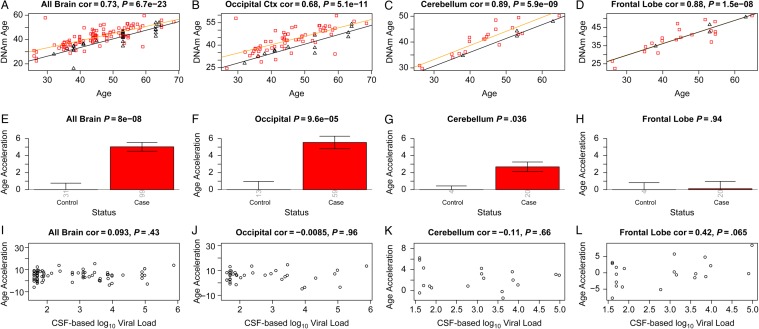
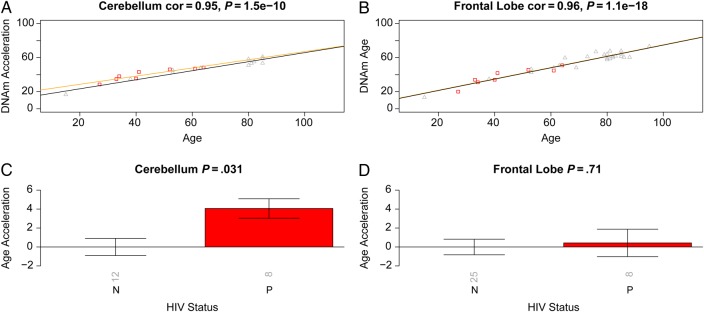
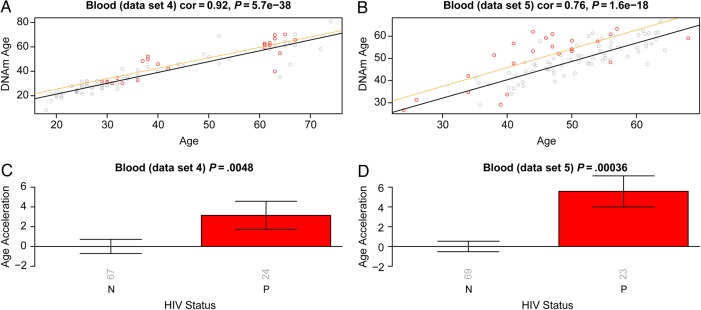
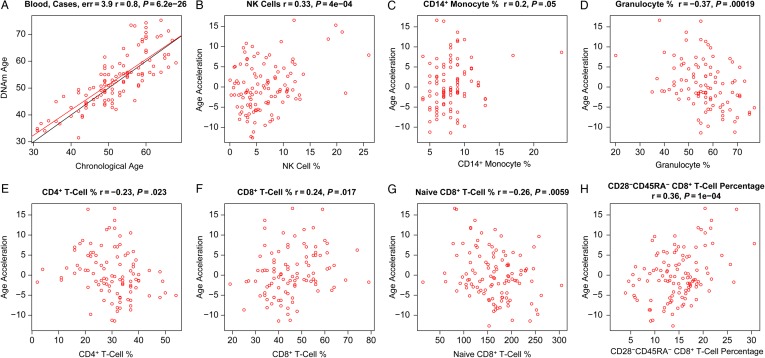
BACKGROUND: Infection with human immunodeficiency virus type 1 (HIV) is associated with clinical symptoms of accelerated aging, as evidenced by the increased incidence and diversity of age-related illnesses at relatively young ages and supporting findings of organ and cellular pathologic analyses. But it has been difficult to detect an accelerated aging effect at a molecular level. METHODS: Here, we used an epigenetic biomarker of aging based on host DNA methylation levels to study accelerated aging effects due to HIV infection. DNA from brain and blood tissue was assayed via the Illumina Infinium Methylation 450 K platform. RESULTS: Using 6 novel DNA methylation data sets, we show that HIV infection leads to an increase in epigenetic age both in brain tissue (7.4 years) and blood (5.2 years). While the observed accelerated aging effects in blood may reflect changes in blood cell composition (notably exhausted cytotoxic T cells), it is less clear what explains the observed accelerated aging effects in brain tissue. CONCLUSIONS: Overall, our results demonstrate that the epigenetic clock is a useful biomarker for detecting accelerated aging effects due to HIV infection. This tool can be used to accurately determine the extent of age acceleration in individual tissues and cells.
Overview
The claims and statistics of this paper haven’t been checked yet.
Free: it reads the open-access text and checks the first 5 claims that cite a source we can check. Create a free account to check every claim.
Integrity signals
Registry
Cites
Statistics
Figures
Verification
Claims the paper makes
The claims and statistics of this paper haven’t been checked yet.
Free: it reads the open-access text and checks the first 5 claims that cite a source we can check. Create a free account to check every claim.
Claims other papers make about this one
Each is checked against this paper’s own text: does it say what the citing paper says it does?
The source backs part of the claim, not all of it — or backs it for a different population, condition or comparison.
In the citing paper
“While it is incontrovertible that certain types of DNA damage mimic aging, including chemotherapy, radiation, smoking, and progeria”
From Loss of epigenetic information as a cause of mammalian aging (2023) · cites this paper as Horvath and Levine, 2015
Experimental — accuracy not yet measured
Self-check
Percentages, sums and reported differences re-computed from the paper’s own numbers.
The self-check needs the paper’s full text.
Citations
Cites
WGCNA: an R package for weighted correlation network analysis
Langfelder, P., & Horvath, S. (2008) · BMC Bioinformatics · doi:10.1186/1471-2105-9-559 · Cited by 27,252
Self-citationDNA methylation age of human tissues and cell types
Horvath, S. (2013) · Genome Biology · doi:10.1186/gb-2013-14-10-r115 · Cited by 7,075 · cited 11×
“eral recent studies support measuring accelerated aging effects by using DNA methylation levels [24, 25].”
BackgroundMethodInfluentialSelf-citationGenome-wide methylation profiles reveal quantitative views of human aging rates
Hannum, G., Guinney, J., Zhao, L., Zhang, L., Hughes, G., Sadda, S., Klotzle, B., Bibikova, M., Fan, J.-B., Gao, Y., et al. (2013) · Molecular Cell · doi:10.1016/j.molcel.2012.10.016 · Cited by 4,270
Clearance of p16Ink4a-positive senescent cells delays ageing-associated disorders
Baker, D. J., Wijshake, T., Tchkonia, T., LeBrasseur, N. K., Childs, B. G., van de Sluis, B., Kirkland, J. L., & van Deursen, J. M. (2011) · Nature · doi:10.1038/nature10600 · Cited by 3,670 · cited 1×
“[56] demonstrated that removal of senescent cells expressing p16 from a murine model of Progeria delayed the onset of aging-related diseases in several tissue and organ systems.”
BackgroundDNA methylation arrays as surrogate measures of cell mixture distribution
Houseman, E. A., Accomando, W. P., Koestler, D. C., Christensen, B. C., Marsit, C. J., Nelson, H. H., Wiencke, J. K., & Kelsey, K. T. (2012) · BMC Bioinformatics · doi:10.1186/1471-2105-13-86 · Cited by 3,175 · cited 2×
“Yun Liu [37], using the Houseman method [38].”
MethodUpdated research nosology for HIV-associated neurocognitive disorders
Antinori, A., Arendt, G., Becker, J. T., Brew, B. J., Byrd, D. A., Cherner, M., Clifford, D. B., Cinque, P., Epstein, L. G., Goodkin, K., et al. (2007) · Neurology · doi:10.1212/01.wnl.0000287431.88658.8b · Cited by 2,630 · cited 1×
“b HIV-related neurocognitive disorder was assessed as described elsewhere [33, 34].”
MethodDefining clusters from a hierarchical cluster tree: the Dynamic Tree Cut package for R
Langfelder, P., Zhang, B., & Horvath, S. (2008) · Bioinformatics · doi:10.1093/bioinformatics/btm563 · Cited by 1,892
Self-citationAn operational definition of epigenetics: Figure 1.
Berger, S. L., Kouzarides, T., Shiekhattar, R., & Shilatifard, A. (2009) · Genes & Development · doi:10.1101/gad.1787609 · Cited by 1,884
Teschendorff, A. E., Marabita, F., Lechner, M., Bartlett, T., Tegner, J., Gomez-Cabrero, D., & Beck, S. (2013) · Bioinformatics · doi:10.1093/bioinformatics/bts680 · Cited by 1,683
Triant, V. A., Lee, H., Hadigan, C., & Grinspoon, S. K. (2007) · The Journal of Clinical Endocrinology & Metabolism · doi:10.1210/jc.2006-2190 · Cited by 1,613 · cited 1×
“ease, osteoporosis, cancer, neurocognitive impairment, and frailty [1–11].”
Cited by
Items 101–200 of 611
Fate of microglia during HIV‐1 infection: From activation to senescence?
Chen, N. C., Partridge, A. T., Sell, C., Torres, C., & Martín‐García, J. (2017) · Glia · doi:10.1002/glia.23081 · Cited by 95
Reproduction predicts shorter telomeres and epigenetic age acceleration among young adult women
Ryan, C. P., Hayes, M. G., Lee, N. R., McDade, T. W., Jones, M. J., Kobor, M. S., Kuzawa, C. W., & Eisenberg, D. T. A. (2018) · Scientific Reports · doi:10.1038/s41598-018-29486-4 · Cited by 102
New targeted approaches for epigenetic age predictions
Han, Y., Franzen, J., Stiehl, T., Gobs, M., Kuo, C., Nikolić, M., Hapala, J., Koop, B. E., Strathmann, K., Ritz‐Timme, S., et al. (2020) · BMC Biology · doi:10.1186/s12915-020-00807-2 · Cited by 99
Aging biomarkers and the brain
Higgins‐Chen, A., Thrush, K., & Levine, M. E. (2021) · Seminars in Cell and Developmental Biology · doi:10.1016/j.semcdb.2021.01.003 · Cited by 95
Vetter, V. M., Meyer, A., Karbasiyan, M., Steinhagen-Thiessen, E., Hopfenmüller, W., & Demuth, I. (2019) · The Journals of Gerontology: Series A · doi:10.1093/gerona/gly184 · Cited by 92
The old guard: Age-related changes in microglia and their consequences
Costa, J., Martins, S., Ferreira, P. A., Cardoso, A. M., Guedes, J. R., Peça, J., & Cardoso, A. L. (2021) · Mechanisms of Ageing and Development · doi:10.1016/j.mad.2021.111512 · Cited by 94
“infection has also been associated with clinical symptoms of accelerated aging, as evidenced by both the precipitation of age-related illnesses, as well as of molecular alterations related to the epigenetic clock (Horvath and Levine, 2015).”
BackgroundKozlenkov, A., Jaffe, A., Timashpolsky, A., Apontes, P., Rudchenko, S., Barbu, M., Byne, W., Hurd, Y., Horvath, S., & Dracheva, S. (2017) · Genes · doi:10.3390/genes8060152 · Cited by 86
“Further, the utility of the epigenetic clock method using various tissues and organs has been demonstrated in applications surrounding Alzheimer’s disease [52], centenarian status [47,53], development [54], Down syndrome [55], HIV infection [56], Huntington’s disease [57], obesity [58], lifetime stress [59], and Parki…”
MethodSelf-citationPerinatally acquired HIV infection accelerates epigenetic aging in South African adolescents
Horvath, S., Stein, D. J., Phillips, N., Heany, S. J., Kobor, M. S., Lin, D. T. S., Myer, L., Zar, H. J., Levine, A. J., & Hoare, J. (2018) · AIDS · doi:10.1097/qad.0000000000001854 · Cited by 83
“cells, monocytes) have roughly the same age [10].”
InfluentialSelf-citationBiological Age is a predictor of mortality in Ischemic Stroke
Soriano‐Tárraga, C., Steinhauer, E. G., Mola-Caminal, M., Ois, Á., Rodríguez-Campello, A., Cuadrado‐Godia, E., Fernández‐Cadenas, I., Cullell, N., Roquer, J., & Jiménez-Conde, J. (2018) · Scientific Reports · doi:10.1038/s41598-018-22579-0 · Cited by 90
DNA methylation signatures reflect aging in patients with nonalcoholic steatohepatitis
Loomba, R., Gindin, Y., Jiang, Z., Lawitz, E., Caldwell, S., Djedjos, C. S., Xu, R., Chung, C., Myers, R. P., Subramanian, G. M., et al. (2018) · JCI Insight · doi:10.1172/jci.insight.96685 · Cited by 76
“by nearly 14 years in some studies (12, 21).”
BackgroundIschemic stroke patients are biologically older than their chronological age
Soriano‐Tárraga, C., Steinhauer, E. G., Mola-Caminal, M., Vivanco‐Hidalgo, R. M., Ois, Á., Rodríguez-Campello, A., Cuadrado‐Godia, E., Sayols-Baixeras, S., Elosúa, R., Roquer, J., et al. (2016) · Aging · doi:10.18632/aging.101028 · Cited by 87
DNA methylation age is elevated in breast tissue of healthy women
Sehl, M. E., Henry, J. E., Storniolo, A. M., Ganz, P. A., & Horvath, S. (2017) · Breast Cancer Research and Treatment · doi:10.1007/s10549-017-4218-4 · Cited by 75
“The epigenetic clock method has shown that certain tissues exhibit age acceleration due to obesity [6], Alzheimer’s disease [7], Down syndrome [8], Parkinson’s disease [9], HIV [10, 11], Huntington’s disease [12], lifetime stress [13], and menopause [14].”
MethodSelf-citationDevelopment of an epigenetic clock resistant to changes in immune cell composition
Tomusiak, A., Floro, A., Tiwari, R., Riley, R. R., Matsui, H., Andrews, N., Kasler, H. G., & Verdin, E. M. (2024) · Communications Biology · doi:10.1038/s42003-024-06609-4 · Cited by 85
HIV and kidney diseases: 35 years of history and consequences
Campos, P., Ortíz, A., & Soto, K. (2016) · Clinical Kidney Journal · doi:10.1093/ckj/sfw104 · Cited by 81
Genetic variants near MLST8 and DHX57 affect the epigenetic age of the cerebellum
Lu, A. T., Hannon, E., Levine, M. E., Hao, K., Crimmins, E. M., Lunnon, K., Kozlenkov, A., Mill, J., Dracheva, S., & Horvath, S. (2016) · Nature Communications · doi:10.1038/ncomms10561 · Cited by 71
Self-citationDNA Methylation Analysis Validates Organoids as a Viable Model for Studying Human Intestinal Aging
Lewis, S., Nachun, D. C., Martín, M. G., Horvath, S., Coppola, G., & Jones, D. L. (2019) · Cellular and Molecular Gastroenterology and Hepatology · doi:10.1016/j.jcmgh.2019.11.013 · Cited by 79
Self-citationKananen, L., Marttila, S., Nevalainen, T., Kummola, L., Junttila, I., Mononen, N., Kähönen, M. A. P., Raitakari, O. T., Hervonen, A., Jylhä, M. K., et al. (2016) · AGE · doi:10.1007/s11357-016-9927-9 · Cited by 78
Sehl, M. E., Carroll, J., Horvath, S., & Bower, J. E. (2020) · npj Breast Cancer · doi:10.1038/s41523-020-0161-3 · Cited by 79
Self-citationA DNA methylation age predictor for zebrafish
Mayne, B. T., Korbie, D. J., Kenchington, L. M., Ezzy, B. J., Berry, O., & Jarman, S. (2020) · Aging · doi:10.18632/aging.202400 · Cited by 75
Pang, A. P. S., Higgins‐Chen, A., Comite, F., Raica, I., Arboleda, C., Went, H., Mendez, T. L., Schotsaert, M., Dwaraka, V. B., Smith, R. C., et al. (2022) · Frontiers in Genetics · doi:10.3389/fgene.2022.819749 · Cited by 76
Cao, W., Mehraj, V., Trottier, B., Baril, J.-G., LeBlanc, R. P., Lebouché, B., Cox, J., Tremblay, C. L., Lu, W., Singer, J., et al. (2015) · Clinical Infectious Diseases · doi:10.1093/cid/civ809 · Cited by 75
“which persist even after early initiated ART [15, 26].”
BackgroundCell-type-specific effects of age and sex on human cortical neurons
Chien, J.-F., Liu, H., Wang, B.-A., Luo, C., Bartlett, A., Castanon, R., Johnson, N. D., Nery, J. R., Osteen, J., Li, J., et al. (2024) · Neuron · doi:10.1016/j.neuron.2024.05.013 · Cited by 79
Human epigenetic ageing is logarithmic with time across the entire lifespan
Snir, S., Farrell, C. P., & Pellegrini, M. A. (2019) · Epigenetics · doi:10.1080/15592294.2019.1623634 · Cited by 73
Accelerated and accentuated neurocognitive aging in HIV infection
Sheppard, D. P., Iudicello, J. E., Morgan, E. E., Kamat, R., Clark, L. R., Avci, G., Bondi, M. W., & Woods, S. P. (2017) · Journal of NeuroVirology · doi:10.1007/s13365-017-0523-2 · Cited by 72
“Epigenetic studies of postmortem brain tissues of HIV+ individuals show increased DNA methylation (Horvath and Levine 2015), suggestive of accelerated aging that may be particularly pronounced in individuals with HIV-associated neurocognitive disorders (HAND; Levine et al.”
BackgroundEpigenetic clock and methylation studies in elephants
Prado, N. A., Brown, J. L., Zoller, J. A., Haghani, A., Yao, M., Bagryanova, L. R., Campana, M. G., E. Maldonado, J., Raj, K., Schmitt, D., et al. (2021) · Aging Cell · doi:10.1111/acel.13414 · Cited by 67
Self-citationImmunosenescence in atherosclerosis: A role for chronic viral infections
Talepoor, A. G., & Doroudchi, M. (2022) · Frontiers in Immunology · doi:10.3389/fimmu.2022.945016 · Cited by 72
In utero exposure to the Great Depression is reflected in late-life epigenetic aging signatures
Schmitz, L. L., & Duque, V. (2022) · Proceedings of the National Academy of Sciences · doi:10.1073/pnas.2208530119 · Cited by 62
Hibernation slows epigenetic ageing in yellow-bellied marmots
de Pinho, G. M., Martin, J. G. A., Farrell, C. P., Haghani, A., Zoller, J. A., Zhang, J., Snir, S., Pellegrini, M. A., Wayne, R. K., Blumstein, D. T., et al. (2022) · Nature Ecology & Evolution · doi:10.1038/s41559-022-01679-1 · Cited by 70
Self-citationTelomere length and epigenetic clocks as markers of cellular aging: a comparative study
Pearce, E., Alsaggaf, R., Katta, S., Dagnall, C. L., Aubert, G., Hicks, B. D., Spellman, S. R., Savage, S. A., Horvath, S., & Gadalla, S. M. (2022) · GeroScience · doi:10.1007/s11357-022-00586-4 · Cited by 69
“The statistical adjustment for white blood cell (WBC) composition allows IEAA to capture biological aging across tissue types, independent of immune cell aging; and (c) extrinsic epigenetic age acceleration [EEAA]: a measure of immune system age acceleration defined as the weighted average of DNAmAge and predicted pro…”
BackgroundSelf-citationKabacik, S., Horvath, S., Cohen, H., & Raj, K. (2018) · Aging · doi:10.18632/aging.101588 · Cited by 68
“Our study suggests that these interventions might not arrest epigenetic aging, which is disconcerting considering the over-whelming evidence that point to the association between accelerated epigenetic ageing and a host of disparate diseases and conditions [17, 28-41].”
BackgroundSelf-citationTargeted bisulfite sequencing for biomarker discovery
Morselli, M., Farrell, C. P., Rubbi, L., Fehling, H. L., Henkhaus, R. S., & Pellegrini, M. A. (2020) · Methods · doi:10.1016/j.ymeth.2020.07.006 · Cited by 68
T Follicular Helper Cells and B Cell Dysfunction in Aging and HIV-1 Infection
Pallikkuth, S., de Armas, L. R., Rinaldi, S., & Pahwa, S. G. (2017) · Frontiers in Immunology · doi:10.3389/fimmu.2017.01380 · Cited by 68
“Based upon epigenetic changes, age of HIV inflected people is approximately 5 years greater (and more without viral suppression) than uninfected people (30, 31) of the same chronologic age.”
BackgroundZhang, Z., Reynolds, S. R., Stolrow, H. G., Chen, J., Christensen, B. C., & Salas, L. A. (2023) · Aging Cell · doi:10.1111/acel.14071 · Cited by 67
“…including cancer, cardiovascular disease, neurodegenerative diseases, metabolic disorders, and infections (Baldelli et al., 2023; Dong et al., 2022; Horvath & Levine, 2015; Liu et al., 2022; McCartney et al., 2018; Monasso et al., 2021; Nannini et al., 2019 Epigenetic clocks have become valuable…”
BackgroundMacdonald-Dunlop, E., Taba, N., Klarić, L., Frkatović-Hodžić, A., Walker, R. M., Hayward, C., Esko, T., Haley, C., Fischer, K., Wilson, J. F., et al. (2022) · Aging · doi:10.18632/aging.203847 · Cited by 68
“Our clocks avoid this limitation due to the wide age range (16-100) of individuals in the ORCADES cohort.”
BackgroundSingh, S. T., Giron, L. B., Shaikh, M. W., Shankaran, S., Engen, P. A., Bogin, Z. R., Bambi, S. A., Goldman, A. R., Azevedo, J. L. L. C., Orgaz, L., et al. (2024) · Microbiome · doi:10.1186/s40168-024-01758-4 · Cited by 67
“Previous research indicates that, even under ART, HIV infection accelerates biological aging in the blood [32, 35, 92].”
MethodNelson, K. N., Hui, Q., Rimland, D., Xu, K., Freiberg, M. S., Justice, A. C., Marconi, V. C., & Sun, Y. V. (2017) · AIDS · doi:10.1097/qad.0000000000001360 · Cited by 60
“These associations are consistent with previous work showing that methylation patterns are different in HIVpositive as compared with healthy individuals [11,13], and support the theory that infection precipitates changes in”
InfluentialAn Epigenetic Clock Measures Accelerated Aging in Treated HIV Infection
Boulias, K., Lieberman, J., & Greer, E. L. (2016) · Molecular Cell · doi:10.1016/j.molcel.2016.04.008 · Cited by 64
“These papers (Gross et al., 2016; Horvath and Levine, 2015; Rickabaugh et al., 2015) have shown that diseases as complex as HIV can be assessed for their effects on aging.”
BackgroundResultInfluentialStevenson, A. J., McCartney, D. L., Harris, S. E., Taylor, A. M., Redmond, P., Starr, J. M., Zhang, Q., McRae, A. F., Wray, N. R., Spires-Jones, T. L., et al. (2018) · Clinical Epigenetics · doi:10.1186/s13148-018-0585-x · Cited by 59
“The Horvath method, calculated via the advanced analysis option in the above-mentioned epigenetic age calculator software, was used to estimate the percentage of exhausted/senescent CD8+ T cells and plasmablasts (24, 25).”
MethodZhang, X., Hu, Y., Aouizerat, B. E., Peng, G., Marconi, V. C., Corley, M. J., Hulgan, T., Bryant, K. J., Zhao, H., Krystal, J. H., et al. (2018) · Clinical Epigenetics · doi:10.1186/s13148-018-0591-z · Cited by 60
Clock Work: Deconstructing the Epigenetic Clock Signals in Aging, Disease, and Reprogramming
Levine, M. E., Higgins-Chen, A., Thrush, K., Minteer, C., & Niimi, P. (2022) · bioRxiv (Cold Spring Harbor Laboratory) · doi:10.1101/2022.02.13.480245 · Cited by 58
Human Immunodeficiency Virus and Aging in the Era of Effective Antiretroviral Therapy
Epps, P. V., & Kalayjian, R. C. (2017) · Infectious Disease Clinics of North America · doi:10.1016/j.idc.2017.07.007 · Cited by 61
“9 years older than the chronologic age in 1 study of highly adherent ART-treated individuals.(20,23) In contrast with the mechanisms that follow, however, there is thus far no direct experimental evidence that alterations in DNA methylation can change the lifespan of an organism.”
BackgroundSchoepf, I. C., Esteban-Cantos, A., Thorball, C. W., Rodés, B., Reiss, P., Rodríguez-Centeno, J., Riebensahm, C., Braun, D. L., Marzolini, C., Seneghini, M., et al. (2023) · The Lancet Healthy Longevity · doi:10.1016/s2666-7568(23)00037-5 · Cited by 61
Epigenetic Biomarkers for Parkinson’s Disease: From Diagnostics to Therapeutics
Jakubowski, J. L., & Labrie, V. (2016) · Journal of Parkinson s Disease · doi:10.3233/jpd-160914 · Cited by 60
“It detected accelerated epigenetic aging due to progeria [89], obesity, Down syndrome [91], and HIV infection [92], and it predicted all-cause mortality even after adjusting for various risk factors [93].”
BackgroundLeukocyte telomere length, T cell composition and DNA methylation age
Chen, B. H., Carty, C. L., Kimura, M., Kark, J. D., Chen, W., Li, S., Zhang, T., Kooperberg, C., Levy, D., Assimes, T., et al. (2017) · Aging · doi:10.18632/aging.101293 · Cited by 55
“EEAA is defined as the weighted average of DNAm age and imputed proportions of naïve CD8 T cells, memory CD8 T cells and plasmablasts [12].”
BackgroundSelf-citationWarner, B., Ratner, E. R., Datta, A., & Lendasse, A. (2024) · Aging · doi:10.18632/aging.206098 · Cited by 60
“Other disease states associated with elevated biological age include HIV [54–57], chronic obstructive pulmonary disease (COPD) [41, 58, 59], schizophrenia [60], post-traumatic stress disorder (PTSD) [61], smoking [62–67], particulate AGING matter [68–70], diabetes [71–75], frailty [76] and…”
BackgroundEmerging Role of C/EBPβ and Epigenetic DNA Methylation in Ageing
Niehrs, C., & Calkhoven, C. F. (2020) · Trends in Genetics · doi:10.1016/j.tig.2019.11.005 · Cited by 54
Paradoxical aging in HIV: immune senescence of B Cells is most prominent in young age
Rinaldi, S., Pallikkuth, S., George, V. K., de Armas, L. R., Pahwa, R., Sanchez, C. M., Pallin, M. F., Pan, L., Cotugno, N., Dickinson, G., et al. (2017) · Aging · doi:10.18632/aging.101229 · Cited by 56
“com 1308 AGING infected persons age faster by about 5 years [6, 7].”
BackgroundVerhoeven, J. E., Yang, R., Wolkowitz, O. M., Bersani, F. S., Lindqvist, D., Mellon, S. H., Yehuda, R., Flory, J. D., Lin, J., Abu-Amara, D., et al. (2018) · Complex Psychiatry · doi:10.1159/000491431 · Cited by 51
Morin, S. J., Tao, X., Marín, D., Zhan, Y., Landis, J. N., Bedard, J., Scott, R. T. W., & Seli, E. U. (2018) · Aging · doi:10.18632/aging.101670 · Cited by 58
“While many reports across multiple medical disciplines have illustrated the accuracy of Horvath’s model for predicting chronologic age [17-19], and the association between accelerated epigenetic age (AgeAccel) and morbidity and mortality [7-9], reproductive medicine may provide a unique lens with which to evaluate use…”
BackgroundEpigenetic clock and methylation studies in cats
Raj, K., Szladovits, B., Haghani, A., Zoller, J. A., Li, C. Z., Black, P., Maddox, D., Robeck, T. R., & Horvath, S. (2021) · GeroScience · doi:10.1007/s11357-021-00445-8 · Cited by 51
Self-citationEpigenetic Drift Is a Determinant of Mammalian Lifespan
Mendelsohn, A. R., & Larrick, J. W. (2017) · Rejuvenation Research · doi:10.1089/rej.2017.2024 · Cited by 58
“…14 obesity, 19 menopause, 20 osteoarthritis, 21 neurodegenerative diseases including Alzheimer’s disease, 22 Huntington’s disease, 23 and Parkinson’s disease 24 and Down syndrome, 25 lung cancer, 26 HIV infection, 27 while centenarians 18,28 exhibit a more youthful less altered pattern.”
Epigenetic Clocks: Beyond Biological Age, Using the Past to Predict the Present and Future
Liang, R., Tang, Q., Chen, J., & Zhu, L. (2024) · Aging and Disease · doi:10.14336/ad.2024.1495 · Cited by 58
Aliferi, A., Sundaram, S., Ballard, D., Freire-Aradas, A., Phillips, C., Lareu, M. V., & Court, D. S. (2021) · Forensic Science International Genetics · doi:10.1016/j.fsigen.2021.102637 · Cited by 57
Mechanisms of immune aging in HIV
Chauvin, M., & Sauce, D. (2022) · Clinical Science · doi:10.1042/cs20210344 · Cited by 56
Quantitative characterization of biological age and frailty based on locomotor activity records
Pyrkov, T. V., Getmantsev, E., Zhurov, B., Avchaciov, K., Pyatnitskiy, M., Menshikov, L., Khodova, K., Gudkov, A. V., & Fedichev, P. O. (2018) · Aging · doi:10.18632/aging.101603 · Cited by 55
“The DNAm clock predicts all-cause mortality in later life more accurately than chronological age [34] – and is elevated in groups of individuals with HIV [35], Down syndrome [36, 37], and obesity [38]– but is not correlated with smoking status [39].”
Joshi, D., González, A., Lin, D. T. S., & Raina, P. S. (2023) · Aging Cell · doi:10.1111/acel.13779 · Cited by 55
“…experiences, CLSA, epigenetic age acceleration, GrimAge, PhenoAge between accelerated biological aging, where the epigenetic age is higher than the chronological age, and morbidity and mortality (Fransquet et al., 2019; Horvath, 2013; Horvath & Levine, 2015; Levine et al., 2018; Liu et al., 2018).”
BackgroundDNA methylation age is not accelerated in brain or blood of subjects with schizophrenia
McKinney, B. C., Huang, L., Ding, Y., Lewis, D. A., & Sweet, R. A. (2017) · Schizophrenia Research · doi:10.1016/j.schres.2017.09.025 · Cited by 55
“For blood dataset #1, DNAm age acceleration was corrected for differences in blood cell counts using the “Horvath” approach (Horvath and Levine, 2015).”
Epigenetic clock and methylation studies in the rhesus macaque
Horvath, S., Zoller, J. A., Haghani, A., Jasinska, A. J., Raj, K., Breeze, C. E., Ernst, J., Vaughan, K. L., & Mattison, J. A. (2021) · GeroScience · doi:10.1007/s11357-021-00429-8 · Cited by 52
Self-citationEpigenetic clock and DNA methylation analysis of porcine models of aging and obesity
Schachtschneider, K. M., Schook, L. B., Meudt, J. J., Shanmuganayagam, D., Zoller, J. A., Haghani, A., Li, C. Z., Zhang, J., Yang, A., Raj, K., et al. (2021) · GeroScience · doi:10.1007/s11357-021-00439-6 · Cited by 48
Self-citationUncovering Forensic Evidence: A Path to Age Estimation through DNA Methylation
Castagnola, M. J., Medina-Paz, F., & Zapico, S. C. (2024) · International Journal of Molecular Sciences · doi:10.3390/ijms25094917 · Cited by 54
“Furthermore, infections like HIV [184], Helicobacter pylori [185], and cytomegalovirus [186] have been associated with increasing age prediction.”
BackgroundRubin, L. H., Sundermann, E. E., & Moore, D. J. (2019) · Journal of NeuroVirology · doi:10.1007/s13365-018-0702-9 · Cited by 54
“Using an epigenetic prediction of age based on DNA methylation levels, PWH demonstrate accelerated aging of 7.4 years in brain tissue and 5 years in peripheral blood versus HIV-uninfected (HIV-) persons (Horvath and Levine 2015).”
MethodInfluentialBobak, C. A., Abhimanyu, A., Natarajan, H., Gandhi, T., Grimm, S. L., Nishiguchi, T., Koster, K. J., Longlax, S. C., Dlamini, Q., Kahari, J., et al. (2022) · Aging · doi:10.18632/aging.203936 · Cited by 53
“The “Horvath clock” calculates biological age based on DNA methylation and has previously identified that HIV induced premature cellular aging [24, 25].”
BackgroundDNA methylation aging and transcriptomic studies in horses
Horvath, S., Haghani, A., Peng, S., Hales, E. N., Zoller, J. A., Raj, K., Larison, B., Robeck, T. R., Petersen, J. L., Bellone, R. R., et al. (2022) · Nature Communications · doi:10.1038/s41467-021-27754-y · Cited by 52
Self-citationSimpkin, A. J., Cooper, R., Howe, L. D., Relton, C. L., Smith, G. D., Teschendorff, A. E., Widschwendter, M., Wong, A., Kuh, D. J., & Hardy, R. (2017) · BMJ Open · doi:10.1136/bmjopen-2017-016708 · Cited by 52
Thrush, K. L., Higgins-Chen, A. T., Liu, Z., & Levine, M. E. (2022) · bioRxiv (Cold Spring Harbor Laboratory) · doi:10.1101/2022.07.13.499978 · Cited by 43
Fuentealba, M., Rouch, L., Guyonnet, S., Lemaitre, J.-M., de Souto Barreto, P., Vellas, B., Andrieu, S., & Furman, D. (2025) · Nature Aging · doi:10.1038/s43587-025-00883-5 · Cited by 51
Epigenetic age is a cell‐intrinsic property in transplanted human hematopoietic cells
Søraas, A., Matsuyama, M., de Lima, M., Wald, D., Buechner, J., Gedde‐Dahl, T., Søraas, C. L., Chen, B., Ferrucci, L., Dahl, J. A., et al. (2019) · Aging Cell · doi:10.1111/acel.12897 · Cited by 44
Self-citationPetersen, K. J., Metcalf, N. V., Cooley, S., Tomov, D., Vaida, F., Paul, R. H., & Ances, B. M. (2021) · Clinical Infectious Diseases · doi:10.1093/cid/ciab169 · Cited by 50
“Human immunodeficiency virus (HIV) may accelerate or accentuate aging by increasing cellular abnormalities or conferring additional risk for comorbidities [1, 2].”
BackgroundOri, A. P. S., Lu, A. T.-H., Horvath, S., & Ophoff, R. A. (2022) · Genome biology · doi:10.1186/s13059-022-02793-w · Cited by 49
Self-citationCorley, M. J., Dye, C. K., D’Antoni, M. L., Byron, M. M., Yo, K. L.-A., Lum‐Jones, A., Nakamoto, B. K., Valcour, V., SahBandar, I. N., Shikuma, C. M., et al. (2016) · Scientific Reports · doi:10.1038/srep33310 · Cited by 51
Reevaluation of immune activation in the era of cART and an aging HIV-infected population
de Armas, L. R., Pallikkuth, S., George, V., Rinaldi, S., Pahwa, R., Arheart, K. L., & Pahwa, S. G. (2017) · JCI Insight · doi:10.1172/jci.insight.95726 · Cited by 49
“age acceleration compared with healthy controls (2, 3).”
BackgroundDNA methylation as a tool to explore ageing in wild roe deer populations
Lemaître, J., Rey, B., Gaillard, J., Régis, C., Gilot‐Fromont, E., Débias, F., Duhayer, J., Pardonnet, S., Pellerin, M., Haghani, A., et al. (2021) · Molecular Ecology Resources · doi:10.1111/1755-0998.13533 · Cited by 49
“…(i.e., epigenetic acceleration) is associated in humans with a wide range of metabolic, infectious and degenerative diseases (Horvath et al., 2014; Horvath & Levine, 2015), as well as cancer (Levine et al., 2015) and mortality (Chen et al., 2016; Christiansen et al., 2016; Marioni et al., 2015).”
BackgroundSelf-citationDefective HIV-1 genomes and their potential impact on HIV pathogenesis
Kuniholm, J., Coote, C., & Henderson, A. J. (2022) · Retrovirology · doi:10.1186/s12977-022-00601-8 · Cited by 50
Esteban-Cantos, A., Montejano, R., Rodríguez-Centeno, J., Saiz-Medrano, G., Buckley, R. D. M., Barrúz, P., Bernardino, J. I., Mena-Garay, B., Cadiñanos, J., Jiménez-González, M., et al. (2021) · The Journal of Infectious Diseases · doi:10.1093/infdis/jiab338 · Cited by 50
Kallianpur, A. R., Wang, Q., Jia, P., Hulgan, T., Zhao, Z., Letendre, S. L., Ellis, R. J., Heaton, R. K., Franklin, D. R., Barnholtz‐Sloan, J. S., et al. (2015) · The Journal of Infectious Diseases · doi:10.1093/infdis/jiv754 · Cited by 48
“be a manifestation of the accelerated aging in HIV-infected persons due to chronic immune activation and for which epigenetic evidence has recently been reported [45].”
BackgroundAn augmented aging process in brain white matter in HIV
Kuhn, T. P., Kaufmann, T., Doan, N. T., Westlye, L. T., Jones, J. D., Núñez, R. A., Bookheimer, S. Y., Singer, E. J., Hinkin, C. H., & Thames, A. D. (2018) · Human Brain Mapping · doi:10.1002/hbm.24019 · Cited by 48
Chen, J., Huang, Y., Hui, Q., Mathur, R., GWINN, M. L., So‐Armah, K., Freiberg, M. S., Justice, A. C., Xu, K., Marconi, V. C., et al. (2019) · Clinical Infectious Diseases · doi:10.1093/cid/ciz240 · Cited by 47
Reverse inflammaging: Long-term effects of HCV cure on biological age
Oltmanns, C., Liu, Z., Mischke, J., Tauwaldt, J., Mekonnen, Y. A., Urbanek‐Quaing, M., Debarry, J., Maasoumy, B., Wedemeyer, H. H., Kraft, A. R. M., et al. (2022) · Journal of Hepatology · doi:10.1016/j.jhep.2022.08.042 · Cited by 47
Epigenetic age analysis of children who seem to evade aging
Walker, R. F., Liu, J. S., Peters, B. A., Ritz, B. R., Wu, T., Ophoff, R. A., & Horvath, S. (2015) · Aging · doi:10.18632/aging.100744 · Cited by 39
“a) obesity accelerates epigenetic aging in liver tissue [13], b) trisomy 21 (Down syndrome) accelerates epigenetic aging [16], c) HIV infection accelerates epigenetic age [22], and d) the cerebellum ages slowly [23].”
BackgroundSelf-citationMcErlean, P. K., Bell, C. G., Hewitt, R. J., Busharat, Z., Ogger, P. P., Ghai, P., Albers, G. J., Calamita, E., Kingston, S., Molyneaux, P. L., et al. (2021) · American Journal of Respiratory and Critical Care Medicine · doi:10.1164/rccm.202101-0004oc · Cited by 48
“The ‘clocks’ provide a strongly validated age in years estimate and, subsequently, have led to the observation of an older prediction than actual chronologic age, or positively ‘accelerated’ ageing, with a number of specific diseases(26-28) as well as morbidity and mortality(29).”
BackgroundMap of epigenetic age acceleration: A worldwide analysis
Yusipov, I., Kalyakulina, A., Trukhanov, A., Franceschi, C., & Ivanchenko, M. (2024) · Ageing Research Reviews · doi:10.1016/j.arr.2024.102418 · Cited by 47
Zhao, X., Fan, Y., Vann, P. H., Wong Jessica, M., Sumien, N., & He, J. J. (2020) · Aging and Disease · doi:10.14336/ad.2019.0323 · Cited by 47
“HIV infection has been shown to accelerate biological aging process of HIV-infected individuals by five years in blood cells [108] and seven years in the brain [109].”
BackgroundSpartano, N. L., Wang, R., Yang, Q., Chernofsky, A., Murabito, J. M., Vasan, R. S., Levy, D. A., Beiser, A., & Seshadri, S. S. (2022) · Medicine & Science in Sports & Exercise · doi:10.1249/mss.0000000000003041 · Cited by 45
“Therefore, IEAA is, instead, under tighter genetic control andmay bemore stable in response to extrinsic forces in the environment or lifestyle (11,26,28,38,39).”
BackgroundHanson, B. M., Tao, X., Zhan, Y., Jenkins, T. G., Morin, S. J., Scott, R. T. W., & Seli, E. U. (2020) · Human Reproduction · doi:10.1093/humrep/deaa206 · Cited by 45
Epigenetic Age Acceleration Was Delayed in Schizophrenia
Wu, X., Ye, J., Wang, Z., & Zhao, C. (2020) · Schizophrenia Bulletin · doi:10.1093/schbul/sbaa164 · Cited by 45
Centenarian clocks: epigenetic clocks for validating claims of exceptional longevity
Dec, E., Clement, J., Cheng, K., Church, G. M., Fossel, M., Rehkopf, D. H., Rosero‐Bixby, L., Kobor, M. S., Lin, D. T. S., Lu, A. T.-H., et al. (2023) · GeroScience · doi:10.1007/s11357-023-00731-7 · Cited by 46
“In general, epigenetic age estimates can be influenced by conditions such as Down syndrome [41, 42], HIV [43], obesity [44], diet [26], and onset of menopause [45].”
BackgroundSelf-citationLongitudinal study of surrogate aging measures during human immunodeficiency virus seroconversion
Leung, J. M., Fishbane, N., Jones, M. J., Morin, A. M., Xu, S., Liu, J. C., MacIsaac, J. L., Milloy, M., Hayashi, K., Montaner, J. S. G., et al. (2017) · Aging · doi:10.18632/aging.101184 · Cited by 45
“…its accurate measurement of age across tissues is unprecedented [14]; b) it has been found to be useful for studying aging effects in HIV infection [18]; c) it is prognostic for all-cause mortality [15, 44]; d) it correlates with measures of cognitive and physical fitness in the elderly [45]; e)…”
Self-citationReversing age: dual species measurement of epigenetic age with a single clock
Horvath, S., Singh, K., Raj, K., Khairnar, S., Sanghavi, A., Shrivastava, A., Zoller, J. A., Li, C. Z., Herenu, C. B., Canatelli-Mallat, M., et al. (2020) · bioRxiv (Cold Spring Harbor Laboratory) · doi:10.1101/2020.05.07.082917 · Cited by 41
Self-citationMale-specific age estimation based on Y-chromosomal DNA methylation
Vidaki, A., González, D. M., Jiménez, B. P., & Kayser, M. (2021) · Aging · doi:10.18632/aging.202775 · Cited by 44
“This so called Horvath clock was developed from microarray data of >8,000 individuals and 51 healthy tissues, and has also been tested for the effect of accelerated aging in disease, such as in obesity [2], HIV infection [3] and cancer [4].”
BackgroundBanszerus, V. L., Vetter, V. M., Salewsky, B., König, M., & Demuth, I. (2019) · International Journal of Molecular Sciences · doi:10.3390/ijms20123032 · Cited by 43
“Moreover, DNA methylation age was reported to correlate with a range of investigated aging-related phenotypes and clinical diseases [17,19,22,24,25].”
Frailty—A promising concept to evaluate disease vulnerability
Ribeiro, A. R., Howlett, S. E., & Fernandes, A. M. A. (2020) · Mechanisms of Ageing and Development · doi:10.1016/j.mad.2020.111217 · Cited by 43
Oriol-Tordera, B., Berdasco, M., Llano, A., Mothe, B., Gálvez, C., Martínez‐Picado, J., Carrillo, J., Blanco, J., Duran-Castells, C., Ganoza, C., et al. (2020) · PLoS Pathogens · doi:10.1371/journal.ppat.1008678 · Cited by 44
Levine, A. J., Sacktor, N. C., & Becker, J. T. (2020) · Journal of NeuroVirology · doi:10.1007/s13365-020-00897-2 · Cited by 42
“…are more prevalent in the context of HIV (Silverberg et al. 2009, 2011;Womack et al. 2011; Kirk et al. 2013; Lucas et al. 2007; Desquilbet et al. 2011), possibly due to accelerated biological aging caused by the retrovirus (Horvath and Levine 2015; Gross et al. 2016; Rickabaugh et al. 2015).”
BackgroundSelf-citationWhy are people with HIV considered “older adults” in their fifties?
Sánchez‐Conde, M., Díaz-Álvarez, J., Dronda, F., & Brañas, F. (2018) · European Geriatric Medicine · doi:10.1007/s41999-018-0148-x · Cited by 44
Epigenetic Clock: Just a Convenient Marker or an Active Driver of Aging?
Ashapkin, V. V., Kutueva, L. I., & Vanyushin, B. F. (2019) · Advances in experimental medicine and biology · doi:10.1007/978-3-030-25650-0_10 · Cited by 42
Epigenetic clocks provide clues to the mystery of uterine ageing
Deryabin, P. I., & Borodkina, A. V. (2022) · Human Reproduction Update · doi:10.1093/humupd/dmac042 · Cited by 42
Emerging Omics Approaches in Aging Research
Lorusso, J. S., Sviderskiy, O., & Labunskyy, V. M. (2018) · Antioxidants and Redox Signaling · doi:10.1089/ars.2017.7163 · Cited by 41
“Moreover, accelerated epigenetic aging was associated with HIV infection (69) and was observed in patients with Down syndrome (68).”
BackgroundVance, D. E., Blake, B. J., Brennan‐Ing, M., DeMarco, R. F., Fazeli, P. L., & Relf, M. V. (2019) · Journal of the Association of Nurses in AIDS Care · doi:10.1097/jnc.0000000000000029 · Cited by 41
Bannister, S., Messina, N. L., Novakovic, B., & Curtis, N. C. (2020) · Epigenetics · doi:10.1080/15592294.2020.1712814 · Cited by 41
“Viruses ● Human immunodeficiency virus-1 [16– 20,70,78,79] ● Influenza A virus [21–25] ● Epstein Barr virus [26] ● Human rhinovirus [27,113] ● Respiratory syncytial virus [11] ● Human herpesvirus-6B [80] ● Dengue virus [28] ● Human immunodeficiency virus-1 [29,72,75,94,95,107,108] ● Human T-cell lymphotropic virus-1 […”
BackgroundWard-Caviness, C. K., Russell, A. G., Weaver, A. M., Slawsky, E. D., Dhingra, R., Kwee, L. C., Jiang, R., Neas, L., Díaz-Sánchez, D., Devlin, R. B., et al. (2020) · Aging · doi:10.18632/aging.202341 · Cited by 41
“AAD is associated with multiple clinical outcomes including obesity [10, 21], birth weight [21], hemostasis and blood clotting [12], infection [22], and cancer [8].”
Background
Metadata
- Authors
- Horvath, S., & Levine, A. J.
- Affiliations
- University of California, Los Angeles (US)
- Corresponding author
- Horvath, Steve
- Venue
- Journal of Infectious Diseases
- Publisher
- Oxford University Press (OUP)
- Published
- 2015-05-12
- Volume
- 212
- Issue
- 10
- Pages
- 1563-1573
- ISSN
- 0022-1899 (ISSN-L)
- 1537-6613
- PMC
- PMC4621253
- OpenAlex
- W2163887613
- Cited by
- 556
- References
- 100
- Citations by year
- 2026: 35 · 2025: 33 · 2024: 66 · 2023: 51 · 2022: 66 · 2021: 59 · 2020: 50 · 2019: 43 · 2018: 54 · 2017: 51 · 2016: 36 · 2015: 11
- FWCI
- 25.62
- Type
- journal article
- Language
- en
- Open access
- hybrid
- doi.org
- Licence
- cc-by-nc-nd
- Locations
- The Journal of Infectious Diseases (publishedVersion, cc-by-nc-nd)
- PubMed Central (publishedVersion, cc-by-nc-nd)
- PubMed (publishedVersion)
- Funders
- National Institute on Aging
- National Institutes of Health
- NIH (5R01AG042511-02, R01DA030913, U01-AI-35040)
- the University of California, Los Angeles (UCLA) AIDS Institute
- UCLA Center for AIDS Research (AI28697)
- the UCLA Clinical and Translational Science Institute
- National Center for Advancing Translational Sciences (UL1TR000124)
- the National Institute for Drug Abuse
- the National Institute of Allergy and Infectious Diseases
- the Los Angeles site of the Multicenter AIDS Cohort Study [
- the National NeuroAIDS Tissue Consortium
- National Neurological AIDS Bank (U01-MH08021 and R24-NS38841;)
- Texas NeuroAIDS Research Center (U01-MH083507 and R24-NS45491;)
- Manhattan HIV Brain Bank (U01-MH083501 and R24-MH59724)
- California NeuroAIDS Tissue Network (U01-MH083506 and R24-MH59745)
- Topics
- Life Sciences › Immunology and Microbiology › Virology › HIV Research and Treatment
- Life Sciences › Biochemistry, Genetics and Molecular Biology › Molecular Biology › Epigenetics and DNA Methylation
- Health Sciences › Medicine › Infectious Diseases › HIV-related health complications and treatments
- Keywords
- HIV-1 infection, accelerated aging, epigenetic clocks, DNA methylation, epigenetic age, brain tissue, blood, aging biomarkers
- MeSH terms
- Adolescent, Adult, Aged, Aging, Blood Cells, Brain, DNA, Humans, Male, Methylation, Middle Aged, HIV-1, HIV Infections, Epigenesis, Genetic, Young Adult
About these checks
Registry, retraction, Cites and statistics results are computed, not judged, with one exception: a printed reference that no index lists is read once by a model before it counts as a citation error. Claims are extracted by a model and kept only when their quote appears verbatim in the text; each cited source is then checked, with a model’s help, for whether it says what the claim relies on. Those verdicts can be wrong — read the claim’s quote and the cited source before relying on one.
Statistics and arithmetic are recomputed, not judged.
Confidence bands are shown only for fields calibrated on our annotated test set. None is calibrated yet, so no band is shown.
What counts as a claim ›How we measure confidence ›How we check this ›
Are you an author, or do you see a problem with this page? Request a review
Data sources
Bibliographic data: Semantic Scholar, OpenAlex, Crossref.
Contains information from the Semantic Scholar Academic Graph Datasets, made available under the ODC Attribution License (ODC-BY 1.0).
Semantic Scholar’s data is described in: Kinney, R., et al. (2023). The Semantic Scholar Open Data Platform. arXiv:2301.10140.
