

The DOI matches its Crossref record; 52 of the 53 references it cites were found in a registry or an index.
Walnut Consumption Alters the Gastrointestinal Microbiota, Microbially Derived Secondary Bile Acids, and Health Markers in Healthy Adults: A Randomized Controlled Trial
Open accessAbstract
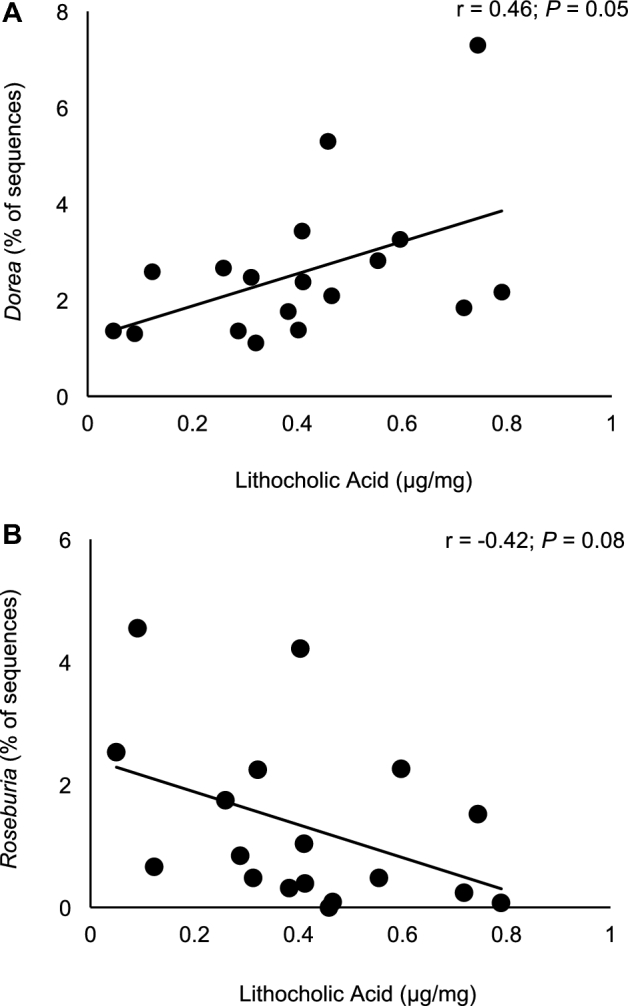
Background: Epidemiologic data suggest that diets rich in nuts have beneficial health effects, including reducing total and cause-specific mortality from cancer and heart disease. Although there is accumulating preclinical evidence that walnuts beneficially affect the gastrointestinal microbiota and gut and metabolic health, these relations have not been investigated in humans. Objective: We aimed to assess the impact of walnut consumption on the human gastrointestinal microbiota and metabolic markers of health. Methods: A controlled-feeding, randomized crossover study was undertaken in healthy men and women [n = 18; mean age = 53.1 y; body mass index (kg/m2): 28.8]. Study participants received isocaloric diets containing 0 or 42 g walnuts/d for two 3-wk periods, with a 1-wk washout between diet periods. Fecal and blood samples were collected at baseline and at the end of each period to assess secondary outcomes of the study, including effects of walnut consumption on fecal microbiota and bile acids and metabolic markers of health. Results: Compared with after the control period, walnut consumption resulted in a 49-160% higher relative abundance of Faecalibacterium, Clostridium, Dialister, and Roseburia and 16-38% lower relative abundances of Ruminococcus, Dorea, Oscillospira, and Bifidobacterium (P < 0.05). Fecal secondary bile acids, deoxycholic acid and lithocholic acid, were 25% and 45% lower, respectively, after the walnut treatment compared with the control treatment (P < 0.05). Serum LDL cholesterol and the noncholesterol sterol campesterol concentrations were 7% and 6% lower, respectively, after walnut consumption compared with after the control treatment (P < 0.01). Conclusion: Walnut consumption affected the composition and function of the human gastrointestinal microbiota, increasing the relative abundances of Firmicutes species in butyrate-producing Clostridium clusters XIVa and IV, including Faecalibacterium and Roseburia, and reducing microbially derived, proinflammatory secondary bile acids and LDL cholesterol. These results suggest that the gastrointestinal microbiota may contribute to the underlying mechanisms of the beneficial health effects of walnut consumption. This trial was registered at www.clinicaltrials.gov as NCT01832909.
Overview
The claims and statistics of this paper haven’t been checked yet.
Run the check — free, no account needed. It reads the open-access text and checks the sources it cites.
Integrity signals
Registry
Cites
Statistics
Figures
Verification
Claims the paper makes
The claims and statistics of this paper haven’t been checked yet.
Run the check — free, no account needed. It reads the open-access text and checks the sources it cites.
Claims other papers make about this one
Each is checked against this paper’s own text: does it say what the citing paper says it does?
In the citing paper
“A significant impact on the gut microbiota has previously been displayed through the consumption of cruciferous vegetables, walnuts, and almonds (consumption and processing) amongst others [113,114,115].”
From Effect of Diet on the Gut Microbiota: Rethinking Intervention Duration (2019) · cites this paper as [114]
In the citing paper
“For example, in a randomized, controlled, crossover study, daily consumption of 42 g of walnuts for 3 wk in healthy volunteers increased the relative abundances of Firmicutes genera, including some butyrate producers (e.g., Faecalibacterium and Roseburia) as well as Clostridium and Dialister (61).”
From Diet and the Microbiota–Gut–Brain Axis: Sowing the Seeds of Good Mental Health (2021) · cites this paper as [61]
Self-check
Percentages, sums and reported differences re-computed from the paper’s own numbers.
The self-check needs the paper’s full text.
Citations
Cites
A SIMPLE METHOD FOR THE ISOLATION AND PURIFICATION OF TOTAL LIPIDES FROM ANIMAL TISSUES
Folch, J., Lees, M., & Stanley, G. H. S. (1957) · Journal of Biological Chemistry · doi:10.1016/s0021-9258(18)64849-5 · Cited by 65,189
QIIME allows analysis of high-throughput community sequencing data
Caporaso, J. G., Kuczynski, J., Stombaugh, J., Bittinger, K., Bushman, F. D., Costello, E. K., Fierer, N., Peña, A. G., Goodrich, J. K., Gordon, J. I., et al. (2010) · Nature Methods · doi:10.1038/nmeth.f.303 · Cited by 34,887
Diet rapidly and reproducibly alters the human gut microbiome
David, L. A., Maurice, C. F., Carmody, R. N., Gootenberg, D. B., Button, J. E., Wolfe, B. E., Ling, A. V., Devlin, A. S., Varma, Y., Fischbach, M. A., et al. (2014) · Nature · doi:10.1038/nature12820 · Cited by 10,100
Predictive functional profiling of microbial communities using 16S rRNA marker gene sequences
Langille, M. G. I., Zaneveld, J., Caporaso, J. G., McDonald, D., Knights, D., Reyes, J. A., Clemente, J. C., Burkepile, D. E., Vega Thurber, R. L., Knight, R., et al. (2013) · Nature Biotechnology · doi:10.1038/nbt.2676 · Cited by 9,116
Ultra-high-throughput microbial community analysis on the Illumina HiSeq and MiSeq platforms
Caporaso, J. G., Lauber, C. L., Walters, W. A., Berg-Lyons, D., Huntley, J., Fierer, N., Owens, S. M., Betley, J., Fraser, L., Bauer, M., et al. (2012) · The ISME Journal · doi:10.1038/ismej.2012.8 · Cited by 8,839
A metagenome-wide association study of gut microbiota in type 2 diabetes
Qin, J., Li, Y., Cai, Z., Li, S., Zhu, J., Zhang, F., Liang, S., Zhang, W., Guan, Y., Shen, D., et al. (2012) · Nature · doi:10.1038/nature11450 · Cited by 6,762
Linking long-term dietary patterns with gut microbial enterotypes
Wu, G. D., Chen, J., Hoffmann, C., Bittinger, K., Chen, Y.-Y., Keilbaugh, S. A., Bewtra, M., Knights, D., Walters, W. A., Knight, R., et al. (2011) · Science · doi:10.1126/science.1208344 · Cited by 6,513
Obesity alters gut microbial ecology
Ley, R. E., Bäckhed, F., Turnbaugh, P., Lozupone, C. A., Knight, R. D., & Gordon, J. I. (2005) · Proceedings of the National Academy of Sciences · doi:10.1073/pnas.0504978102 · Cited by 6,176
Cancer Incidence in Five Continents
(1966) · doi:10.1007/978-3-642-85849-9 · Cited by 5,936
Gut flora metabolism of phosphatidylcholine promotes cardiovascular disease
Wang, Z., Klipfell, E., Bennett, B. J., Koeth, R., Levison, B. S., DuGar, B., Feldstein, A. E., Britt, E. B., Fu, X., Chung, Y.-M., et al. (2011) · Nature · doi:10.1038/nature09922 · Cited by 5,597
Research works printed but not linked: 1
- Nakanishi, 2016, Effects of walnut consumption on colon carcinogenesis and microbial community structure, Cancer Prev Res, 9, 692, 10.1158/1940-6207.CAPR-16-0026 · DOI
Cited by
Sorted by citations
Effect of Diet on the Gut Microbiota: Rethinking Intervention Duration
Leeming, E. R., Johnson, A. J., Spector, T. D., & Le Roy, C. I. (2019) · Nutrients · doi:10.3390/nu11122862 · Cited by 817
Diet and the Microbiota–Gut–Brain Axis: Sowing the Seeds of Good Mental Health
Berding, K., Vlckova, K., Marx, W., Schellekens, H., Stanton, C., Clarke, G., Jacka, F., Dinan, T. G., & Cryan, J. F. (2021) · Advances in Nutrition · doi:10.1093/advances/nmaa181 · Cited by 451
The effects of plant-based diets on the body and the brain: a systematic review
Medawar, E., Hühn, S., Villringer, A., & Witte, A. V. (2019) · Translational Psychiatry · doi:10.1038/s41398-019-0552-0 · Cited by 355
Rethinking healthy eating in light of the gut microbiome
Armet, A. M., Deehan, E. C., O’Sullivan, A. F., Mota, J. F., Field, C. J., Prado, C. M., Lucey, A. J., & Walter, J. (2022) · Cell Host & Microbe · doi:10.1016/j.chom.2022.04.016 · Cited by 252
Leveraging diet to engineer the gut microbiome
Wolter, M., Grant, E. T., Boudaud, M., Steimle, A., Pereira, G. V., Martens, E. C., & Desai, M. S. (2021) · Nature Reviews Gastroenterology & Hepatology · doi:10.1038/s41575-021-00512-7 · Cited by 211
Metadata
- Authors
- Holscher, H. D., Guetterman, H. M., Swanson, K. S., An, R., Matthan, N. R., Lichtenstein, A. H., Novotny, J. A., & Baer, D. J.
- Affiliations
- University of Illinois Urbana-Champaign (US)
- Tufts University (US)
- Agricultural Research Service (US)
- Corresponding author
- Holscher, Hannah D
- ORCID
- Venue
- The Journal of Nutrition
- Publisher
- Elsevier BV
- Published
- 2018-06
- Volume
- 148
- Issue
- 6
- Pages
- 861-867
- ISSN
- 0022-3166 (ISSN-L)
- PMC
- PMC5991202
- OpenAlex
- W2800131331
- Cited by
- 182
- References
- 53
- Citations by year
- 2026: 22 · 2025: 20 · 2024: 16 · 2023: 17 · 2022: 21 · 2021: 26 · 2020: 32 · 2019: 17 · 2018: 10
- FWCI
- 7.56
- Type
- journal article
- Language
- en
- Open access
- hybrid
- doi.org
- Licence
- Locations
- Journal of Nutrition (publishedVersion, cc-by-nc)
- Europe PMC (PubMed Central) (publishedVersion, cc-by-nc)
- PubMed Central (publishedVersion, cc-by-nc)
- PubMed (publishedVersion)
- Topics
- Life Sciences › Biochemistry, Genetics and Molecular Biology › Molecular Biology › Gut microbiota and health
- Health Sciences › Nursing › Nutrition and Dietetics › Nuts composition and effects
- Health Sciences › Medicine › Public Health, Environmental and Occupational Health › Nutritional Studies and Diet
- Keywords
- walnut consumption, gut microbiota, secondary bile acids, deoxycholic acid, lithocholic acid, Faecalibacterium, Roseburia, Clostridium cluster XIVa, Clostridium cluster IV, Firmicutes, LDL cholesterol, campesterol, non-cholesterol sterols, dietary intervention, isocaloric diet, healthy adults
- MeSH terms
- Gastrointestinal Microbiome, Adult, Aged, Bacteria, Bile Acids and Salts, Diet, Female, Humans, Male, Middle Aged, Biomarkers, Cross-Over Studies, Juglans
About these checks
Registry, retraction, Cites and statistics results are computed, not judged, with one exception: a printed reference that no index lists is read once by a model before it counts as a citation error. Claims are extracted by a model and kept only when their quote appears verbatim in the text; each cited source is then checked, with a model’s help, for whether it says what the claim relies on. Those verdicts can be wrong — read the claim’s quote and the cited source before relying on one.
Statistics and arithmetic are recomputed, not judged.
Confidence bands are shown only for fields calibrated on our annotated test set. None is calibrated yet, so no band is shown.
What counts as a claim ›How we measure confidence ›How we check this ›
Are you an author, or do you see a problem with this page? Request a review
