

euL1db: the European database of L1HS retrotransposon insertions in humans
Open accessThe DOI matches its Crossref record; 43 of the 45 references it cites were found in a registry or an index.
Abstract
Retrotransposons account for almost half of our genome. They are mobile genetics elements-also known as jumping genes--but only the L1HS subfamily of Long Interspersed Nuclear Elements (LINEs) has retained the ability to jump autonomously in modern humans. Their mobilization in germline--but also some somatic tissues--contributes to human genetic diversity and to diseases, such as cancer. Here, we present euL1db, the European database of L1HS retrotransposon insertions in humans (available at http://euL1db.unice.fr). euL1db provides a curated and comprehensive summary of L1HS insertion polymorphisms identified in healthy or pathological human samples and published in peer-reviewed journals. A key feature of euL1db is its sample--wise organization. Hence L1HS insertion polymorphisms are connected to samples, individuals, families and clinical conditions. The current version of euL1db centralizes results obtained in 32 studies. It contains >900 samples, >140,000 sample-wise insertions and almost 9000 distinct merged insertions. euL1db will help understanding the link between L1 retrotransposon insertion polymorphisms and phenotype or disease.
Overview
The claims and statistics of this paper haven’t been checked yet.
Free: it reads the open-access text and checks the first 5 claims that cite a source we can check. Create a free account to check every claim.
Integrity signals
Registry
Cites
Statistics
Figures
Verification
Claims the paper makes
The claims and statistics of this paper haven’t been checked yet.
Free: it reads the open-access text and checks the first 5 claims that cite a source we can check. Create a free account to check every claim.
Claims other papers make about this one
Each is checked against this paper’s own text: does it say what the citing paper says it does?
The check wasn’t confident either way, so it gives no verdict — never disputed.
In the citing paper
“However, the majority of de novo insertions in cancers are located in non-coding sequences and do not show hotspots near tumor suppressor or oncogene loci7, 90.”
From The role of retrotransposable elements in ageing and age-associated diseases (2021) · cites this paper as [90]
Experimental — accuracy not yet measured
Self-check
Percentages, sums and reported differences re-computed from the paper’s own numbers.
The self-check needs the paper’s full text.
Citations
Cites
Repbase Update, a database of eukaryotic repetitive elements
Jurka, J., Kapitonov, V. V., Pavlicek, A., Klonowski, P., Kohany, O., & Walichiewicz, J. (2005) · Cytogenetic and Genome Research · doi:10.1159/000084979 · Cited by 3,370 · cited 1×
“Repbase is a database of consensus repetitive DNA sequence and as such does not contain any localization information (42).”
BackgroundLuan, D. D., Korman, M. H., Jakubczak, J. L., & Eickbush, T. H. (1993) · Cell · doi:10.1016/0092-8674(93)90078-5 · Cited by 1,173 · cited 1×
“A new L1 copy is produced when ORF2p nicks the genomic DNA and extends this newly formed 3′ end using the L1 mRNA as a template, a process known as target-primed reverse transcription (TPRT) (7,10,11).”
MethodHuman L1 retrotransposon encodes a conserved endonuclease required for retrotransposition
Feng, Q., Moran, J. V., Kazazian, H. H., & Boeke, J. D. (1996) · Cell · doi:10.1016/s0092-8674(00)81997-2 · Cited by 1,139 · cited 2×
“ORF1p is an RNAbinding protein (5) and ORF2p an enzyme with endonuclease and reverse transcriptase activities (6,7).”
BackgroundMethodHot L1s account for the bulk of retrotransposition in the human population
Brouha, B., Schustak, J., Badge, R. M., Lutz-Prigge, S., Farley, A. H., Moran, J. V., & Kazazian, H. H. (2003) · Proceedings of the National Academy of Sciences · doi:10.1073/pnas.0831042100 · Cited by 1,073 · cited 2×
“A tiny fraction of human retrotransposons is still able to autonomously generate new copies in modern humans (1).”
BackgroundKazazian, H. H., Wong, C., Youssoufian, H., Scott, A. F., Phillips, D. G., & Antonarakis, S. E. (1988) · Nature · doi:10.1038/332164a0 · Cited by 929 · cited 1×
“These recent studies have also led to the discovery that L1HS is not only able to mobilize in the germline––resulting in inheritable genetic variations (3,28,29)–––but can also jump in some somatic tissues, such as brain (30–32) or in many cancers (26,33–39).”
BackgroundL1 retrotransposition in human neural progenitor cells
Coufal, N. G., Garcia-Perez, J. L., Peng, G. E., Yeo, G. W., Mu, Y., Lovci, M. T., Morell, M., O’Shea, K. S., Moran, J. V., & Gage, F. H. (2009) · Nature · doi:10.1038/nature08248 · Cited by 814
Reverse Transcriptase Encoded by a Human Transposable Element
Mathias, S. L., Scott, A. F., Kazazian, H. H., Boeke, J. D., & Gabriel, A. (1991) · Science · doi:10.1126/science.1722352 · Cited by 773
Landscape of Somatic Retrotransposition in Human Cancers
Lee, E., Iskow, R., Yang, L., Gokcumen, O., Haseley, P., Luquette, L. J., Lohr, J. G., Harris, C. C., Ding, L., Wilson, R. K., et al. (2012) · Science · doi:10.1126/science.1222077 · Cited by 762
Somatic retrotransposition alters the genetic landscape of the human brain
Baillie, J. K., Barnett, M. W., Upton, K. R., Gerhardt, D. J., Richmond, T. A., De Sapio, F., Brennan, P. M., Rizzu, P., Smith, S., Fell, M., et al. (2011) · Nature · doi:10.1038/nature10531 · Cited by 684 · cited 1×
“publication (6) contains two distinct sets of data obtained by RC-seq: (i) germline polymorphic retrotransposon insertions discovered in a pool of genomic DNA isolated from the blood of several individuals; and (ii) putative somatic and germline retrotransposon insertions discovered in genomic DNA isolated from differ…”
BackgroundThe UCSC Genome Browser database: 2014 update
Karolchik, D., Barber, G. P., Casper, J., Clawson, H., Cline, M. S., Diekhans, M., Dreszer, T. R., Fujita, P. A., Guruvadoo, L., Haeussler, M., et al. (2014) · Nucleic Acids Research · doi:10.1093/nar/gkt1168 · Cited by 670 · cited 2×
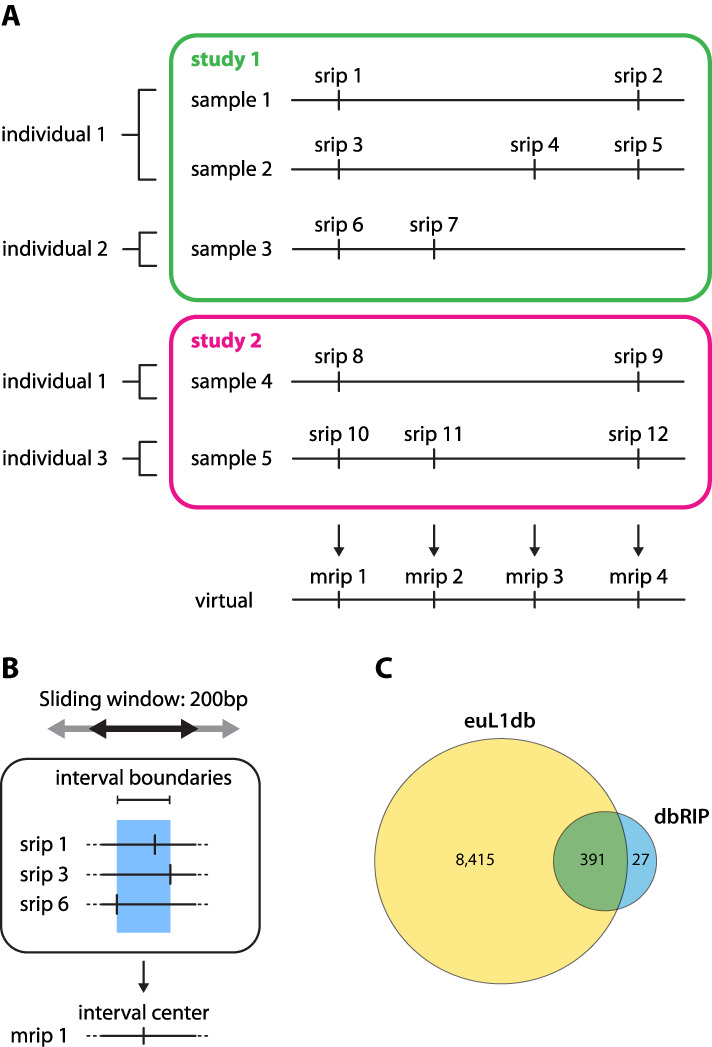
“Users can choose to display L1 insertions as SRIP or MRIP in (i) graphical- (UCSC genome browser, dbVar genome browser) (40,41); (ii) tabular- (sortable html tables); or (iii) text-formats (including in standard BED format for subsequent analyses with other tools).”
Method
Cited by
Transposable elements in cancer
Burns, K. H. (2017) · Nature Reviews Cancer · doi:10.1038/nrc.2017.35 · Cited by 572
The role of retrotransposable elements in ageing and age-associated diseases
Gorbunova, V., Seluanov, A., Mita, P., McKerrow, W., Fenyö, D., Boeke, J. D., Linker, S. B., Gage, F. H., Kreiling, J. A., Petrashen, A. P., et al. (2021) · Nature · doi:10.1038/s41586-021-03542-y · Cited by 446
Measuring and interpreting transposable element expression
Lanciano, S., & Cristofari, G. (2020) · Nature Reviews Genetics · doi:10.1038/s41576-020-0251-y · Cited by 401
Self-citationComputational tools to unmask transposable elements
Goerner-Potvin, P., & Bourque, G. (2018) · Nature Reviews Genetics · doi:10.1038/s41576-018-0050-x · Cited by 234
SQuIRE reveals locus-specific regulation of interspersed repeat expression
Yang, W. R., Ardeljan, D., Pacyna, C. N., Payer, L. M., & Burns, K. H. (2019) · Nucleic Acids Research · doi:10.1093/nar/gky1301 · Cited by 187
“Polymorphic TE insertions have been reported to databases such as euL1db (99), dbRIP (100) and by large studies like the 1000 Genomes Project (83).”
Philippe, C., Vargas-Landin, D. B., Doucet, A. J., van Essen, D., Vera-Otarola, J., Kuciak, M., Corbin, A., Nigumann, P., & Cristofari, G. (2016) · eLife · doi:10.7554/elife.13926 · Cited by 179
“, 2011), to known polymorphic L1HS 526 (euL1db, (Mir et al., 2015)), or to Refseq gene positions (Fujita et al.”
InfluentialSelf-citationL1Base 2: more retrotransposition-active LINE-1s, more mammalian genomes
Penzkofer, T., Jäger, M., Figlerowicz, M., Badge, R., Mundlos, S., Robinson, P. N., & Zemojtel, T. (2017) · Nucleic Acids Research · doi:10.1093/nar/gkw925 · Cited by 155
“Ongoing and future studies will likely continue to report novel humanspecific polymorphic LINE-1s and database resources, like euL1db (26), will aid greatly in collecting these L1 insertions.”
BackgroundTransposable element detection from whole genome sequence data
Ewing, A. D. (2015) · Mobile DNA · doi:10.1186/s13100-015-0055-3 · Cited by 155
“Existing published resources to this end include dbRIP [48] and euL1db [49].”
Sultana, T., van Essen, D., Siol, O., Bailly-Bechet, M., Philippe, C., Zine El Aabidine, A., Pioger, L., Nigumann, P., Saccani, S., Andrau, J.-C., et al. (2019) · Molecular Cell · doi:10.1016/j.molcel.2019.02.036 · Cited by 154
Self-citationResponse of transposable elements to environmental stressors
Miousse, I. R., Chalbot, M.-C. G., Lumen, A., Ferguson, A., Kavouras, I. G., & Koturbash, I. (2015) · Mutation Research/Reviews in Mutation Research · doi:10.1016/j.mrrev.2015.05.003 · Cited by 148
“Finally, the current knowledge on L1 insertions in humans has been summarized in euL1db – the European database of L1 retrotransposon insertions that contains over 140,000 sample-wise insertions and almost 9,000 distinct merged insertions [76].”
Klawitter, S., Fuchs, N. V., Upton, K. R., Muñoz-Lopez, M., Shukla, R., Wang, J., Garcia-Cañadas, M., Lopez-Ruiz, C., Gerhardt, D. J., Sebe, A., et al. (2016) · Nature Communications · doi:10.1038/ncomms10286 · Cited by 127
L1 Mosaicism in Mammals: Extent, Effects, and Evolution
Faulkner, G. J., & Garcia-Perez, J. L. (2017) · Trends in Genetics · doi:10.1016/j.tig.2017.07.004 · Cited by 111
Tang, Z., Steranka, J. P., Ma, S., Grivainis, M., Rodić, N., Huang, C. R. L., Shih, I.-M., Wang, T.-L., Boeke, J. D., Fenyö, D., et al. (2017) · Proceedings of the National Academy of Sciences · doi:10.1073/pnas.1619797114 · Cited by 103
Retrotransposon insertions can initiate colorectal cancer and are associated with poor survival
Cajuso, T., Sulo, P., Tanskanen, T. J., Katainen, R., Taira, A., Hänninen, U. A., Kondelin, J., Forsström, L. M., Välimäki, N., Aavikko, M., et al. (2019) · Nature Communications · doi:10.1038/s41467-019-11770-0 · Cited by 105
Post-Transcriptional Control of LINE-1 Retrotransposition by Cellular Host Factors in Somatic Cells
Pizarro, J. G., & Cristofari, G. (2016) · Frontiers in Cell and Developmental Biology · doi:10.3389/fcell.2016.00014 · Cited by 89
“In addition, many polymorphic L1 elements, not included in the reference genome, also have the potential to mobilize (Beck et al., 2010; Ewing, 2015; Mir et al., 2015).”
BackgroundSelf-citationZhao, B., Wu, Q., Ye, A. Y., Guo, J., Zheng, X., Yang, X., Yan, L., Liu, Q.-R., Hyde, T. M., Wei, L., et al. (2019) · PLOS Genetics · doi:10.1371/journal.pgen.1008043 · Cited by 83
The tumor suppressor microRNA let-7 inhibits human LINE-1 retrotransposition
Tristán-Ramos, P., Rubio-Roldán, A., Peris, G., Sánchez, L., Amador‐Cubero, S., Viollet, S., Cristofari, G., & Heras, S. R. (2020) · Nature Communications · doi:10.1038/s41467-020-19430-4 · Cited by 76
Self-citationLanciano, S., Philippe, C., Sarkar, A., Pratella, D., Domrane, C., Doucet, A. J., van Essen, D., Saccani, S., Ferry, L., Defossez, P., et al. (2024) · Cell Genomics · doi:10.1016/j.xgen.2024.100498 · Cited by 62
Self-citationRetrotransposons as a Source of DNA Damage in Neurodegeneration
Pezé-Heidsieck, E., Bonnifet, T., Znaidi, R., Ravel‐Godreuil, C., Massiani-Beaudoin, O., Joshi, R. L., & Fuchs, J. (2022) · Frontiers in Aging Neuroscience · doi:10.3389/fnagi.2021.786897 · Cited by 59
“Based on the L1Basev2 annotation (Penzkofer et al., 2017), there are about 253 individual LINE-1 elements with a complete open reading frame for ORF2p in addition to the full-length LINE-1 elements which, when activated, could constitute an additional source of genome instability in somatic cells.”
BackgroundGuffanti, G., Gaudi, S., Klengel, T., Fallon, J. H., Mangalam, H. J., Madduri, R., Rodriguez, A., DeCrescenzo, P., Glovienka, E., Sobell, J. L., et al. (2016) · American Journal of Medical Genetics Part B Neuropsychiatric Genetics · doi:10.1002/ajmg.b.32437 · Cited by 49
“…Non-Reference L1 Polymorphisms Reported in dbRIP and euL1db We compared the final set of computationally validated L1 calls by Retroseq and Tangram with RIPs reported in dbRIP (http://dbrip. brocku.ca/) [Wang et al., 2006] and euL1db (http://eul1db.unice. fr/db/searchmenu.jsp) [Mir et al., 2014].”
Characterizing mobile element insertions in 5675 genomes
Niu, Y., Teng, X., Zhou, H., Shi, Y., Li, Y., Tang, Y., Zhang, P., Luo, H., Kang, Q., Xu, T., et al. (2022) · Nucleic Acids Research · doi:10.1093/nar/gkac128 · Cited by 49
“Of note, we found that non-reference L1 MEIs were drastically enriched in centromere regions, which was also supported by independent data from the euL1db (55).”
InfluentialHistone Demethylase KDM4B Promotes DNA Damage by Activating Long Interspersed Nuclear Element-1
Xiang, Y., Yan, K., Zheng, Q., Ke, H., Cheng, J., Xiong, W., Shi, X., Wei, L., Zhao, M., Yang, F., et al. (2019) · Cancer Research · doi:10.1158/0008-5472.can-18-1310 · Cited by 43
“A recent study indicated that in humans only evolutionarily young LINE-1 retains retrotransposition activity (29).”
BackgroundLou, C., Goodier, J. L., & Qiang, R. (2020) · Reproductive Biology and Endocrinology · doi:10.1186/s12958-020-0564-x · Cited by 36
Paterson, A., Weaver, J. M. J., Eldridge, M., Tavaré, S., Fitzgerald, R. C., & Edwards, P. A. (2015) · BMC Genomics · doi:10.1186/s12864-015-1685-z · Cited by 34
“Neither of these two are near reference L1s or known polymorphic L1s [13, 25, 26].”
InfluentialSomatic retrotransposition is infrequent in glioblastomas
Achanta, P., Steranka, J. P., Tang, Z., Rodić, N., Sharma, R., Yang, W. R., Ma, S., Grivainis, M., Huang, C. R. L., Schneider, A. M., et al. (2016) · Mobile DNA · doi:10.1186/s13100-016-0077-5 · Cited by 27
“Several others, including the insertions at GUCY1B2, NPAS3, SAMD12-AS1 and SCFD1 loci had been previously reported to be polymorphic LINE-1 insertions [30].”
Baba, Y., Yasuda, N., Bundo, M., Nakachi, Y., Ueda, J., Ishimoto, T., Iwatsuki, M., Miyamoto, Y., Yoshida, N., Oshiumi, H., et al. (2023) · Cancer Science · doi:10.1111/cas.16007 · Cited by 24
Akbari, F., Peymani, M., Salehzadeh, A., & Ghaedi, K. (2020) · Cancer Cell International · doi:10.1186/s12935-020-01633-w · Cited by 22
Evolutionary insights from profiling LINE-1 activity at allelic resolution in a single human genome
Yang, L., Metzger, G. A., Valle, R. P. D., Rubalcaba, D. D., & McLaughlin, R. N. (2023) · The EMBO Journal · doi:10.1038/s44318-023-00007-y · Cited by 13
“Decades of research have bridged the fi rst report of an active LINE-1 in humans to extensive databases of LINE-1 insertions in hundreds of human genomes (Brouha et al, 2003; Ewing and Kazazian, 2011; Beck et al, 2010; Iskow et al, 2010; Mir et al, 2015).”
InfluentialA cell type-aware framework for nominating non-coding variants in Mendelian regulatory disorders
Lee, A. S., Ayers, L. J., Kosicki, M., Chan, W. M., Fozo, L., Pratt, B. M., Collins, T. E., Zhao, B., Rose, M. F., Sanchis‐Juan, A., et al. (2024) · Nature Communications · doi:10.1038/s41467-024-52463-7 · Cited by 12
Doucet-O’Hare, T. T., & Kazazian, H. H. (2016) · Methods in molecular biology · doi:10.1007/978-1-4939-3372-3_5 · Cited by 12
Lee, H., Min, J. W., Mun, S., & Han, K. (2022) · Life · doi:10.3390/life12101583 · Cited by 10
“The human genome has an average of one Alu copy per 3 kb, making it the most successful TE in terms of copy number [1].”
BackgroundInfluentialMerkerová, M. D., & Krejčík, Z. (2021) · International Journal of Oncology · doi:10.3892/ijo.2021.5285 · Cited by 10
The Regulation and Immune Signature of Retrotransposons in Cancer
Alkailani, M. I., & Gibbings, D. (2023) · Cancers · doi:10.3390/cancers15174340 · Cited by 10
Human transposon insertion profiling by sequencing (TIPseq) to map LINE-1 insertions in single cells
McKerrow, W., Tang, Z., Steranka, J. P., Payer, L. M., Boeke, J. D., Keefe, D. L., Fenyö, D., Burns, K. H., & Liu, C. (2020) · Philosophical Transactions of the Royal Society B Biological Sciences · doi:10.1098/rstb.2019.0335 · Cited by 10
Alkailani, M. I., Palidwor, G., Poulin, A., Mohan, R., Pépin, D., Vanderhyden, B. C., & Gibbings, D. (2021) · NAR Cancer · doi:10.1093/narcan/zcaa040 · Cited by 9
“European database of L1-HS retrotransposon insertions (EUL1Db) (28,29), and therefore likely inherited, were eliminated.”
BackgroundCombining Amplification Typing of L1 Active Subfamilies (ATLAS) with High-Throughput Sequencing
Rahbari, R., & Badge, R. M. (2016) · Methods in molecular biology · doi:10.1007/978-1-4939-3372-3_6 · Cited by 8
Systematics for types and effects of DNA variations
Vihinen, M. (2018) · BMC Genomics · doi:10.1186/s12864-018-5262-0 · Cited by 11
Surveying mutation density patterns around specific genomic features
Yu, H., Ness, S. A., Li, C.-I., Bai, Y., Mao, P., & Guo, Y. P. (2022) · Genome Research · doi:10.1101/gr.276770.122 · Cited by 8
Structural features of somatic and germline retrotransposition events in humans
Sulo, P., Cajuso, T., Norri, T., Taira, A., Kuisma, H., Välimäki, N., Lepistö, A., Renkonen‐Sinisalo, L., Koskensalo, S., Seppälä, T. T., et al. (2025) · Mobile DNA · doi:10.1186/s13100-025-00357-w · Cited by 6
“To further understand where the breakpoints of the 5 ′ inversion occurred, we aligned both the noninverted and inverted cDNA to the L1 reference sequence [50] (Fig.”
Doyle, G. A. R., Reiner, B. C., Crist, R. C., Rao, A. M., Ojeah, N. S., Arauco‐Shapiro, G., Levinson, R. N., Shah, L. D., Sperling, M. R., Ferraro, T. N., et al. (2021) · Epilepsia · doi:10.1111/epi.16897 · Cited by 7
Jumping in the human brain: A review on somatic transposition
Zhang, Y., Guo, Y., Jia, H., Ma, H., Tan, S., & Zhang, Y. E. (2025) · Fundamental Research · doi:10.1016/j.fmre.2025.03.001 · Cited by 5
Identification of novel exonic mobile element insertions in epithelial ovarian cancers
Hayano, T., YAMADA, S., Hosomichi, K., Nakaoka, H., Yoshihara, K., Adachi, S., Kashima, K., Tanaka, K., Enomoto, T., & Inoue, I. (2015) · Human Genome Variation · doi:10.1038/hgv.2015.30 · Cited by 5
Neuronal Genome Plasticity: Retrotransposons, Environment and Disease
Kempen, M.-J. H. C., Bodea, G. O., & Faulkner, G. J. (2017) · Springer eBooks · doi:10.1007/978-3-319-48344-3_5 · Cited by 5
Yu, H., Zhao, S., Ness, S. A., Kang, H., Sheng, Q., Samuels, D. C., Oyebamiji, O., Zhao, Y., & Guo, Y. P. (2020) · PLoS Computational Biology · doi:10.1371/journal.pcbi.1007968 · Cited by 5
“Database euL1db [43] and a published supplementary table [44] collected the confirmed insertion sites (target-site duplication) of human Retrotransposons Insertion Polymorphisms (RIPs).”
BackgroundA map of mobile DNA insertions in the NCI-60 human cancer cell panel
Zampella, J. G., Rodić, N., Yang, W. R., Huang, C. R. L., Welch, J. A., Gnanakkan, V. P., Cornish, T. C., Boeke, J. D., & Burns, K. H. (2016) · Mobile DNA · doi:10.1186/s13100-016-0078-4 · Cited by 7
“Lists of known insertions were obtained from previously published databases [14, 19, 52, 53].”
MethodA birth of bipartite exon by intragenic deletion
Nozu, K., Iijima, K., Igarashi, T., YAMADA, S., Královičová, J., Nozu, Y., Yamamura, T., Minamikawa, S., Morioka, I., Ninchoji, T., et al. (2017) · Molecular Genetics & Genomic Medicine · doi:10.1002/mgg3.277 · Cited by 5
SeqURE – a new copy-capture based method for sequencing of unknown Retroposition events
Komkov, A. Y., Urazbakhtin, S. Z., Saliutina, M. V., Komech, E. A., Shelygin, Y. A., Nugmanov, G. A., Шубин, В. П., Smirnova, A., Bobrov, M. Y., Цуканов, А. С., et al. (2020) · Mobile DNA · doi:10.1186/s13100-020-00228-6 · Cited by 5
“(hg38), 188 previously known non-reference insertions (present in 1000 genomes, dbRIP or euL1db [27]) and”
BackgroundXing, B., Liu, J., Xie, Y., Liu, P., Zhang, L., Tian, W., Yu, W., Wang, H., Wang, J., Sun, Z., et al. (2026) · Cancer Research · doi:10.1158/0008-5472.can-25-2611 · Cited by 4
ZNF146/OZF and ZNF507 target LINE-1 sequences
Creamer, K. M., Larsen, E. C., & Lawrence, J. B. (2022) · G3 Genes Genomes Genetics · doi:10.1093/g3journal/jkac002 · Cited by 3
Proceedings of the inaugural Dark Genome Symposium: November 2022
Boeke, J. D., Burns, K. H., Chiappinelli, K. B., Classon, M., Coffin, J. M., DeCarvalho, D., Dukes, J. D., Greenbaum, B. D., Kassiotis, G., Knutson, S. K., et al. (2023) · Mobile DNA · doi:10.1186/s13100-023-00306-5 · Cited by 3
“Most appear to be passenger events in non-coding regions [60, 61].”
BackgroundGenome-Wide Young L1 Methylation Profiling by bs-ATLAS-seq
Philippe, C., & Cristofari, G. (2022) · Methods in molecular biology · doi:10.1007/978-1-0716-2883-6_8 · Cited by 4
Self-citationBundo, M., & Iwamoto, K. (2022) · Methods in molecular biology · doi:10.1007/978-1-0716-2724-2_10 · Cited by 2
The expression patterns of NBAT1 and CASC15 are associated with colorectal cancer
Amir-Shahkarami, M., & Peymani, M. (2020) · Gene Reports · doi:10.1016/j.genrep.2020.100876 · Cited by 1
Kohlrausch, F. B., Wang, F., McKerrow, W., Grivainis, M., Fenyo, D., & Keefe, D. L. (2024) · Journal of Assisted Reproduction and Genetics · doi:10.1007/s10815-024-03176-9 · Cited by 1
“In the present study, we also successfully detected L1 sequences in human embryos using scTIP-seq and discovered a number of unknown insertions not described previously in the human reference genome and L1 databases [32].”
Exploiting Public Human Genome NGS Datasets to Characterize Repetitive DNA and Recover Assembly Gaps
Ogeh, D. N. (2018) · Figshare · Cited by 1
Retrotransposon Contribution to Genomic Plasticity
Doucet-O’Hare, T. T., & Kazazian, H. H. (2017) · Springer eBooks · doi:10.1007/978-3-319-48344-3_3
SQuIRE: Software for Quantifying Interspersed Repeat ElementsPreprint
Yang, W. R., Ardeljan, D., Pacyna, C. N., Payer, L. M., & Burns, K. H. (2018) · bioRxiv (Cold Spring Harbor Laboratory) · doi:10.1101/313999
“Polymorphic TE insertions have been reported to databases such as euL1db (Mir et al. 2015), dbRIP (Wang et al. 2006) and 1000 Genomes Project (Sudmant et al. 2015).”
L1 is dynamic during neurogenesis
Salvador‐Palomeque, C. (2019) · The University of Queensland · doi:10.14264/uql.2020.75
Brakeleer, S. D., Grève, J. D., & Teugels, E. (2020) · bioRxiv (Cold Spring Harbor Laboratory) · doi:10.1101/2020.06.04.123240
“events should be further expanded[7, 26, 54], with inclusion of population specific allele 298”
BackgroundAli, R. A. (2023) · PEARL (University of Plymouth) · doi:10.24382/1020
Regulation of Transposable Elements by microRNAs in Cancer
Tristán-Ramos, P. (2020) · Institutional Repository of the University of Granada (University of Granada)
Structural variations of the human genome and transcriptome induced by LINE-1 retrotransposons
Mir, A. A. (2015) · theses.fr (ABES) · doi:10.70675/3abbc688zb1cez4260z80f4zf4d28b23276e
Self-citationCellular factors controlling human L1 retrotransposition
Galantonu, R. N. (2017) · theses.fr (ABES) · doi:10.70675/f24810a8z4f50z444fz84f0z11863b900b95
L1 retrotransposon activity in muscle cells
Lopez, P. P. (2020) · theses.fr (ABES) · doi:10.70675/d6a87136z1044z4451z9156z5fd79eb81aff
Modelling retrotransposon-induced mutations in human cells through genome engineering
Weber, V. M. (2022) · theses.fr (ABES) · doi:10.70675/8c669c08z975fz47bbz972ez2503204edf64
Cellular factors and genomic features influencing transcription elongation
Billon, V. (2024) · theses.fr (ABES) · doi:10.70675/affba1abzd110z4bcbza7ccz700a53914d56
FAIRsharing record for: euL1db, the European database of L1-HS retrotransposon insertions in humans
FAIRsharing Team, & Cristofari, G. (2015) · FAIRsharing.org · doi:10.25504/fairsharing.ekrvbq
Self-citation
Metadata
- Authors
- Mir, A. A., Philippe, C., & Cristofari, G.
- Affiliations
- Centre National de la Recherche Scientifique (FR)
- Corresponding author
- Cristofari, Gaël
- ORCID
- Cristofari, Gaël
- Venue
- Nucleic Acids Research
- Publisher
- Oxford University Press (OUP)
- Published
- 2014-10-28
- Volume
- 43
- Issue
- D1
- Pages
- D43-D47
- ISSN
- 0305-1048 (ISSN-L)
- 1362-4962
- PMC
- PMC4383891
- OpenAlex
- W2121996896
- Cited by
- 62
- References
- 45
- Citations by year
- 2026: 1 · 2025: 2 · 2024: 3 · 2023: 4 · 2022: 7 · 2021: 5 · 2020: 10 · 2019: 5 · 2018: 4 · 2017: 7 · 2016: 9 · 2015: 4 · 2014: 1
- FWCI
- 8.57
- Type
- journal article
- Language
- en
- Open access
- gold
- doi.org
- Locations
- Nucleic Acids Research (publishedVersion, cc-by)
- Europe PMC (PubMed Central) (publishedVersion, cc-by)
- PubMed Central (publishedVersion, cc-by)
- PubMed (publishedVersion)
- HAL (acceptedVersion, cc-by)
- Funders
- Agence Nationale de la Recherche (ANR-11-LABX-0028)
- Institut National Du Cancer (ANR-11-LABX-0028-01)
- Université Nice Sophia Antipolis
- FP7 Ideas: European Research Council (243312)
- Topics
- Life Sciences › Biochemistry, Genetics and Molecular Biology › Genetics › Chromosomal and Genetic Variations
- Life Sciences › Biochemistry, Genetics and Molecular Biology › Genetics › Genomic variations and chromosomal abnormalities
- Life Sciences › Biochemistry, Genetics and Molecular Biology › Genetics › Genome Rearrangement Algorithms
- Keywords
- LINE-1 insertion, human genome, somatic retrotransposition
- MeSH terms
- Disease, Humans, Phenotype, Polymorphism, Genetic, Long Interspersed Nucleotide Elements, Databases, Nucleic Acid
About these checks
Registry, retraction, Cites and statistics results are computed, not judged, with one exception: a printed reference that no index lists is read once by a model before it counts as a citation error. Claims are extracted by a model and kept only when their quote appears verbatim in the text; each cited source is then checked, with a model’s help, for whether it says what the claim relies on. Those verdicts can be wrong — read the claim’s quote and the cited source before relying on one.
Statistics and arithmetic are recomputed, not judged.
Confidence bands are shown only for fields calibrated on our annotated test set. None is calibrated yet, so no band is shown.
What counts as a claim ›How we measure confidence ›How we check this ›
Are you an author, or do you see a problem with this page? Request a review
Data sources
Bibliographic data: Semantic Scholar, OpenAlex, Crossref.
Contains information from the Semantic Scholar Academic Graph Datasets, made available under the ODC Attribution License (ODC-BY 1.0).
Semantic Scholar’s data is described in: Kinney, R., et al. (2023). The Semantic Scholar Open Data Platform. arXiv:2301.10140.
