

UniProt: the universal protein knowledgebase
Open accessThe DOI matches its Crossref record; 30 of the 30 references it cites were found in a registry or an index.
Abstract
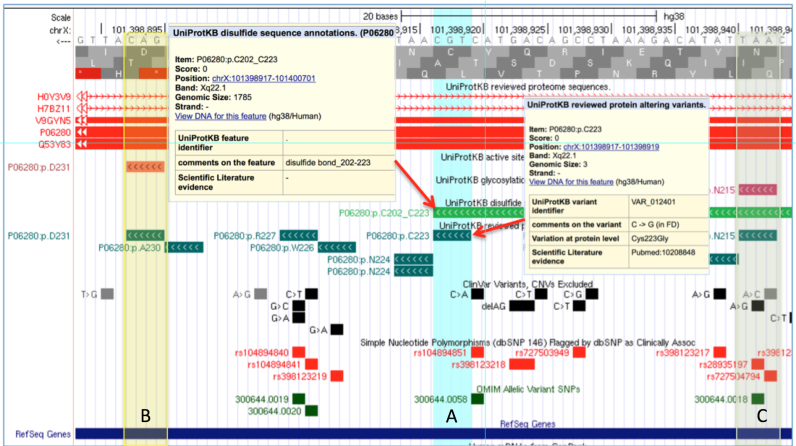
The UniProt knowledgebase is a large resource of protein sequences and associated detailed annotation. The database contains over 60 million sequences, of which over half a million sequences have been curated by experts who critically review experimental and predicted data for each protein. The remainder are automatically annotated based on rule systems that rely on the expert curated knowledge. Since our last update in 2014, we have more than doubled the number of reference proteomes to 5631, giving a greater coverage of taxonomic diversity. We implemented a pipeline to remove redundant highly similar proteomes that were causing excessive redundancy in UniProt. The initial run of this pipeline reduced the number of sequences in UniProt by 47 million. For our users interested in the accessory proteomes, we have made available sets of pan proteome sequences that cover the diversity of sequences for each species that is found in its strains and sub-strains. To help interpretation of genomic variants, we provide tracks of detailed protein information for the major genome browsers. We provide a SPARQL endpoint that allows complex queries of the more than 22 billion triples of data in UniProt (http://sparql.uniprot.org/). UniProt resources can be accessed via the website at http://www.uniprot.org/.
Overview
The claims and statistics of this paper haven’t been checked yet.
Free: it reads the open-access text and checks the first 5 claims that cite a source we can check. Create a free account to check every claim.
Integrity signals
Registry
Cites
Statistics
Figures




Verification
Claims the paper makes
The claims and statistics of this paper haven’t been checked yet.
Free: it reads the open-access text and checks the first 5 claims that cite a source we can check. Create a free account to check every claim.
Claims other papers make about this one
Each is checked against this paper’s own text: does it say what the citing paper says it does?
The source backs part of the claim, not all of it — or backs it for a different population, condition or comparison.
In the citing paper
“Less than 1% of the 148 million protein sequences in UniProt5 are annotated with experimentally confirmed functions in the Gene Ontology (GO)6 (April 2019).”
From Environmental conditions shape the nature of a minimal bacterial genome (2019) · cites this paper as [5]
Experimental — accuracy not yet measuredThe cited source says what the claim attributes to it.
In the citing paper
“Specifically, a set of 103 genes having autophagy (ATG) associated annotations from GO terms, UniProt131 and KEGG,132 were used to derive ML models using the metapath approach combined with the XGBoost algorithm.133”
From QSAR without borders (2020) · cites this paper as [131]
The check wasn’t confident either way, so it gives no verdict — never disputed.
In the citing paper
“Since more than 200 out of 343 yeast/fungi species are not annotated in UniProt 58 and KEGG 62”
From Deep learning-based kcat prediction enables improved enzyme-constrained model reconstruction (2022) · cites this paper as [58]
Experimental — accuracy not yet measuredThe check wasn’t confident either way, so it gives no verdict — never disputed.
In the citing paper
“Thanks to the human genome project, we can now estimate the number of protein-coding genes to be in the range of 19,587-20,245 (refs. 1,3,4).”
From How many human proteoforms are there? (2018) · cites this paper as [4]
Experimental — accuracy not yet measured
Self-check
Percentages, sums and reported differences re-computed from the paper’s own numbers.
The self-check needs the paper’s full text.
Citations
Cites
Richards, S., Aziz, N., Bale, S., Bick, D., Das, S., Gastier-Foster, J., Grody, W. W., Hegde, M., Lyon, E., Spector, E., et al. (2015) · Genetics in Medicine · doi:10.1038/gim.2015.30 · Cited by 32,594
UniProt: a hub for protein information
The UniProt Consortium (2015) · Nucleic Acids Research · doi:10.1093/nar/gku989 · Cited by 5,106
Self-citation2016 update of the PRIDE database and its related tools
Vizcaíno, J. A., Csordas, A., del-Toro, N., Dianes, J. A., Griss, J., Lavidas, I., Mayer, G., Perez-Riverol, Y., Reisinger, F., Ternent, T., et al. (2016) · Nucleic Acids Research · doi:10.1093/nar/gkv1145 · Cited by 3,451
UniRef clusters: a comprehensive and scalable alternative for improving sequence similarity searches
Suzek, B. E., Wang, Y., Huang, H., McGarvey, P. B., Wu, C. H., & the UniProt Consortium (2015) · Bioinformatics · doi:10.1093/bioinformatics/btu739 · Cited by 1,928
UniRef: comprehensive and non-redundant UniProt reference clusters
Suzek, B. E., Huang, H., McGarvey, P., Mazumder, R., & Wu, C. H. (2007) · Bioinformatics · doi:10.1093/bioinformatics/btm098 · Cited by 1,613
Proteoform: a single term describing protein complexity
The Consortium for Top Down Proteomics, Smith, L. M., & Kelleher, N. L. (2013) · Nature Methods · doi:10.1038/nmeth.2369 · Cited by 1,528
Medini, D., Donati, C., Tettelin, H., Masignani, V., & Rappuoli, R. (2005) · Current Opinion in Genetics & Development · doi:10.1016/j.gde.2005.09.006 · Cited by 1,299
The InterPro protein families database: the classification resource after 15 years
Mitchell, A., Chang, H.-Y., Daugherty, L., Fraser, M., Hunter, S., Lopez, R., McAnulla, C., McMenamin, C., Nuka, G., Pesseat, S., et al. (2015) · Nucleic Acids Research · doi:10.1093/nar/gku1243 · Cited by 1,274
Guidelines for investigating causality of sequence variants in human disease
MacArthur, D. G., Manolio, T. A., Dimmock, D. P., Rehm, H. L., Shendure, J., Abecasis, G. R., Adams, D. R., Altman, R. B., Antonarakis, S. E., Ashley, E. A., et al. (2014) · Nature · doi:10.1038/nature13127 · Cited by 1,224
Giraldo-Calderón, G. I., Emrich, S. J., MacCallum, R. M., Maslen, G., Dialynas, E., Topalis, P., Ho, N., Gesing, S., the VectorBase Consortium, Madey, G., et al. (2015) · Nucleic Acids Research · doi:10.1093/nar/gku1117 · Cited by 610
Cited by
Items 901–1,000 of 1,041
Oxidative Stress Promotes Liver Cancer Metastasis via RNF25‐Mediated E‐Cadherin Protein Degradation
Huang, Z., Zhou, L., Duan, J., Qin, S., Wang, Y., JIANG, J., Jin, P., Liu, R., Luo, M., He, B., et al. (2024) · Advanced Science · doi:10.1002/advs.202306929 · Cited by 49
Wehbi, S., Wheeler, A. L., Morel, B., Manepalli, N., Minh, B. Q., LAURETTA, D. S., & Masel, J. (2024) · Proceedings of the National Academy of Sciences · doi:10.1073/pnas.2410311121 · Cited by 49
Hyndman, K. A., & Knepper, M. A. (2017) · American Journal of Physiology-Renal Physiology · doi:10.1152/ajprenal.00313.2017 · Cited by 49
Comparison of histone-like HU protein DNA-binding properties and HU/IHF protein sequence alignment
Kamashev, D., Agapova, Y. К., Rastorguev, S., Talyzina, A. A., Boyko, K. M., Korzhenevskiy, D. A., Vlaskina, A. V., Vasilov, R. G., Timofeev, V. I., & Rakitina, T. V. (2017) · PLoS ONE · doi:10.1371/journal.pone.0188037 · Cited by 50
Amala, M., Rajamanikandan, S., Prabhu, D., Kanagarajan, S., & Jeyakanthan, J. (2018) · Journal of Biomolecular Structure and Dynamics · doi:10.1080/07391102.2018.1427633 · Cited by 49
Weiss, A. K. H., Loeffler, J. R., Liedl, K. R., Gstach, H., & Jansen‐Dürr, P. (2018) · Biochemical Society Transactions · doi:10.1042/bst20170518 · Cited by 49
CD9 and CD81 Interactions and Their Structural Modelling in Sperm Prior to Fertilization
Frolíková, M., Manaskova-Postlerova, P., Černý, J., Jankovičová, J., Šimoník, O., Pohlová, A. (., Sečová, P., Antalíková, J., & Komrsková, K. (2018) · International Journal of Molecular Sciences · doi:10.3390/ijms19041236 · Cited by 49
Meriem, D., Gupta, S., Ivanov, I., Omidbakhshfard, M. A., Benina, M., Alseekh, S., Staykov, N., Hauenstein, M., Dijkwel, P. P., Hörtensteiner, S., et al. (2018) · PLANT PHYSIOLOGY · doi:10.1104/pp.18.00055 · Cited by 49
Lozier, E., Konovalov, F. A., Kanivets, I. V., Pyankov, D. V., Koshkin, P. A., Baleva, L. S., Sipyagina, A. E., Yakusheva, E. N., Kuchina, A. E., & Korostelev, S. A. (2018) · Journal of Human Genetics · doi:10.1038/s10038-018-0464-5 · Cited by 49
Babilonia, J., Conesa, A., Casaburi, G., Pereira, C., Louyakis, A. S., Reid, R. P., & Foster, J. S. (2018) · Frontiers in Microbiology · doi:10.3389/fmicb.2018.01359 · Cited by 49
COSMIC-3D provides structural perspectives on cancer genetics for drug discovery
Jubb, H. C., Saini, H. K., Verdonk, M. L., & Forbes, S. A. (2018) · Nature Genetics · doi:10.1038/s41588-018-0214-9 · Cited by 49
Targeted interplay between bacterial pathogens and host autophagy
Sudhakar, P., Jacomin, A., Hautefort, I., Samavedam, S., Fatemian, K., Ari, E. E., Gul, L., Demeter, A., Jones, E. J., Korcsmáros, T., et al. (2019) · Autophagy · doi:10.1080/15548627.2019.1590519 · Cited by 49
Aguirre‐Plans, J., Piñero, J., Sanz, F., Furlong, L. I., Fernández‐Fuentes, N., Oliva, B., & Güney, E. (2019) · Journal of Molecular Biology · doi:10.1016/j.jmb.2019.02.027 · Cited by 49
Peruzza, L., Shekhar, M. S., Kumar, K. V., Swathi, A., Krishnan, K., Hauton, C., & Vijayan, K. K. (2019) · Scientific Reports · doi:10.1038/s41598-019-49836-0 · Cited by 49
Choi, Y.-J., Fontenla, S., Fischer, P., Le, T. H., Costábile, A., Blair, D., Brindley, P. J., Tort, J. F., Cabada, M. M., & Mitreva, M. (2019) · Molecular Biology and Evolution · doi:10.1093/molbev/msz204 · Cited by 49
Ahn, H., Kim, J. H., Jeong, H., Yu, J., Yeom, J., Song, S. H., Kim, S. S., Kim, I. J., & Kim, K. (2020) · International Journal of Molecular Sciences · doi:10.3390/ijms21124236 · Cited by 51
Variants in Mitochondrial ATP Synthase Cause Variable Neurologic Phenotypes
Zech, M., Kopajtich, R., Steinbrücker, K., Bris, C., Guéguen, N., Feichtinger, R. G., Achleitner, M. T., Düzkale, N., Périvier, M., Koch, J., et al. (2021) · Annals of Neurology · doi:10.1002/ana.26293 · Cited by 49
Assessing the functional relevance of splice isoforms
Pozo, F., Martinez-Gomez, L., Walsh, T. A., Rodriguez, J. M., Di Domenico, T., Abascal, F., Vazquez, J., & Tress, M. L. (2021) · NAR Genomics and Bioinformatics · doi:10.1093/nargab/lqab044 · Cited by 49
Sonderegger, C., Váradi, G., Galgóczy, L., Kocsubé, S., Posch, W., Borics, A., Dubrac, S., Tóth, G. K., Wilflingseder, D., & Marx, F. (2018) · Frontiers in Microbiology · doi:10.3389/fmicb.2018.01655 · Cited by 48
Towards rational computational peptide design
Chang, L., Mondal, A., & Pérez, A. (2022) · Frontiers in Bioinformatics · doi:10.3389/fbinf.2022.1046493 · Cited by 48
Machine learning for drug repositioning: Recent advances and challenges
Cai, L., Chu, J., Xu, J., Meng, Y., Lu, C., Tang, X., Wang, G., Tian, G., & Yang, J. (2023) · Current Research in Chemical Biology · doi:10.1016/j.crchbi.2023.100042 · Cited by 48
The third wave: Intermediate filaments in the maturing nervous system
Kirkcaldie, M., & Dwyer, S. (2017) · Molecular and Cellular Neuroscience · doi:10.1016/j.mcn.2017.05.010 · Cited by 48
Rídl, J., Šuman, J., Fraraccio, S., Hradilová, M., Strejcek, M., Cajthaml, T., Zubrova, A., Macek, T., Strnad, H., & Uhlík, O. (2018) · Standards in Genomic Sciences · doi:10.1186/s40793-017-0306-7 · Cited by 48
Defining the Mammalian Peroxisomal Proteome
Yifrach, E., Fischer, S., Oeljeklaus, S., Schuldiner, M., Zalckvar, E., & Warscheid, B. (2018) · Sub-cellular biochemistry/Subcellular biochemistry · doi:10.1007/978-981-13-2233-4_2 · Cited by 48
Miller, A. D., Hoffmann, A. A., Tan, M. H., Young, M. A., Ahrens, C. W., Cocomazzo, M., Rattray, A., Ierodiaconou, D. A., Treml, E. A., & Sherman, C. D. H. (2019) · Molecular Ecology · doi:10.1111/mec.15128 · Cited by 48
Raptor genomes reveal evolutionary signatures of predatory and nocturnal lifestyles
Cho, Y. S., Jun, J. H., Kim, J. A., Kim, H., Chung, O., Kang, S.-G., Park, J.-Y., Kim, H.-J., Kim, S., Kim, H.-J., et al. (2019) · Genome biology · doi:10.1186/s13059-019-1793-1 · Cited by 49
Bartels, J., Blüher, A., Castellanos, S. L., Richter, M., Günther, M., & Mascher, T. (2019) · Molecular Microbiology · doi:10.1111/mmi.14381 · Cited by 48
Metabolic Modeling of Streptococcus mutans Reveals Complex Nutrient Requirements of an Oral Pathogen
Jijakli, K., & Jensen, P. A. (2019) · mSystems · doi:10.1128/msystems.00529-19 · Cited by 48
Attique, M., Farooq, M. S., Khelifi, A., & Abid, A. (2020) · IEEE Access · doi:10.1109/access.2020.3015792 · Cited by 49
Klotz, C., Goh, Y. J., O’Flaherty, S., & Barrangou, R. (2020) · BMC Microbiology · doi:10.1186/s12866-020-01908-2 · Cited by 48
Khan, S., Ali, S. S., Zaheer, I., Saleem, S., Ziaullah, Zaman, N., Iqbal, A., Suleman, M., Wadood, A., Rehman, A. U., et al. (2020) · Journal of Biomolecular Structure and Dynamics · doi:10.1080/07391102.2020.1819423 · Cited by 48
iNetModels 2.0: an interactive visualization and database of multi-omics data
Arif, M., Zhang, C., Li, X., Güngör, C., Çakmak, B., Arslantürk, M., Tebani, A., Özcan, B., Subaş, O., Zhou, W., et al. (2021) · Nucleic Acids Research · doi:10.1093/nar/gkab254 · Cited by 48
Evolution of Protein Domain Architectures
Forslund, S. K., Kaduk, M., & Sonnhammer, E. L. L. (2019) · Methods in molecular biology · doi:10.1007/978-1-4939-9074-0_15 · Cited by 49
Lee, K., Famiglietti, M. L., McMahon, A., Wei, C.-H., MacArthur, J. A. L., Poux, S., Breuza, L., Bridge, A., Cunningham, F., Xenarios, I., et al. (2018) · PLOS Computational Biology · doi:10.1371/journal.pcbi.1006390 · Cited by 47
Mihaylov, I., Kańduła, M. M., Krachunov, M., & Vassilev, D. I. (2019) · Biology Direct · doi:10.1186/s13062-019-0249-6 · Cited by 47
Nagakannan, P., & Eftekharpour, E. (2017) · Free Radical Biology and Medicine · doi:10.1016/j.freeradbiomed.2017.05.005 · Cited by 48
Castro, J. F., Nouioui, I., Sangal, V., Choi, S.-B., Yang, S., Kim, B., Trujillo, M. E., Riesco, R., Montero‐Calasanz, M. D. C., Rahmani, T. P. D., et al. (2018) · INTERNATIONAL JOURNAL OF SYSTEMATIC AND EVOLUTIONARY MICROBIOLOGY · doi:10.1099/ijsem.0.002828 · Cited by 47
West, B. R., Moyer, C. L., King, L., Fusco, M. L., Milligan, J. C., Hui, S., & Saphire, E. O. (2018) · mBio · doi:10.1128/mbio.01674-18 · Cited by 47
Enhancing the Production of the Fungal Pigment Aurofusarin in Fusarium graminearum
Westphal, K. R., Wollenberg, R. D., Herbst, F., Sørensen, J. L., Søndergaard, T. E., & Wimmer, R. (2018) · Toxins · doi:10.3390/toxins10110485 · Cited by 47
Little, K., Austerman, J. L., Zheng, J., & Gibbs, K. A. (2019) · Journal of Bacteriology · doi:10.1128/jb.00726-18 · Cited by 47
Brinkworth, A. J., Wildung, M. R., & Carabeo, R. A. (2018) · mSystems · doi:10.1128/msystems.00184-17 · Cited by 47
Etter, A. J., West, A. M., Burnett, J. L., Wu, S. T., Veenhuizen, D. R., Ogas, R. A., & Oliver, H. F. (2019) · Applied and Environmental Microbiology · doi:10.1128/aem.01065-19 · Cited by 47
Kläui, A., Boss, R., & Graber, H. U. (2019) · Journal of Bacteriology · doi:10.1128/jb.00777-18 · Cited by 47
Conotoxin Diversity in the Venom Gland Transcriptome of the Magician’s Cone, Pionoconus magus
Pardos-Blas, J. R., Irisarri, I., Abalde, S., Jimenez-Tenorio, M., & Zardoya, R. (2019) · Marine Drugs · doi:10.3390/md17100553 · Cited by 47
Balamurali, D., Gorohovski, A., Detroja, R., Palande, V., Shay, D. R., & Frenkel‐Morgenstern, M. (2019) · Nucleic Acids Research · doi:10.1093/nar/gkz1025 · Cited by 48
An enumeration of natural products from microbial, marine and terrestrial sources
Ntie‐Kang, F., & Svozil, D. (2020) · Physical Sciences Reviews · doi:10.1515/psr-2018-0121 · Cited by 47
GNAO1 organizes the cytoskeletal remodeling and firing of developing neurons
Akamine, S., Okuzono, S., Yamamoto, H., Setoyama, D., Sagata, N., Ohgidani, M., Kato, T. A., Ishitani, T., Kato, H., Masuda, K., et al. (2020) · The FASEB Journal · doi:10.1096/fj.202001113r · Cited by 47
Gios, E., Mosley, O. E., Weaver, L., Close, M. E., Daughney, C., & Handley, K. M. (2023) · ISME Communications · doi:10.1038/s43705-023-00223-x · Cited by 47
Fullmer, M. S., Ouellette, M., Louyakis, A. S., Papke, R. T., & Gogarten, J. P. (2019) · Genes · doi:10.3390/genes10030233 · Cited by 48
Farahi, N., Lazar, T., Wodak, S. J., Tompa, P., & Pancsa, R. (2021) · International Journal of Molecular Sciences · doi:10.3390/ijms22063017 · Cited by 46
Multi-omics approaches to human biological age estimation
Solovev, I., Shaposhnikov, M., & Moskalev, A. (2020) · Mechanisms of Ageing and Development · doi:10.1016/j.mad.2019.111192 · Cited by 46
Dornbos, P., Koesterer, R., Ruttenburg, A., Nguyen, T., Cole, J. B., AMP-T2D-GENES Consortium, Leong, A., Meigs, J. B., Florez, J. C., Rotter, J. I., et al. (2022) · Nature Genetics · doi:10.1038/s41588-022-01200-1 · Cited by 46
Biogenesis and iron-dependency of ribosomal RNA hydroxylation
木村聡, Sakai, Y., Ishiguro, K., & Suzuki, T. (2017) · Nucleic Acids Research · doi:10.1093/nar/gkx969 · Cited by 46
“Personalized Cancer Therapy”: A Publicly Available Precision Oncology Resource
Kurnit, K. C., Bailey, A. M., Zeng, J., Johnson, A. M., Shufean, M. A., Brusco, L., Litzenburger, B. C., Sánchez, N., Khotskaya, Y. B., Holla, V. R., et al. (2017) · Cancer Research · doi:10.1158/0008-5472.can-17-0341 · Cited by 46
Genome-wide identification of miRNAs and lncRNAs in Cajanus cajan
Nithin, C., Thomas, A., Basak, J., & Bahadur, R. P. (2017) · BMC Genomics · doi:10.1186/s12864-017-4232-2 · Cited by 46
Hu, G., Wang, K., Song, J., Uversky, V. N., & Kurgan, L. (2018) · PROTEOMICS · doi:10.1002/pmic.201800243 · Cited by 46
Yu, Y., Wang, Y., Xia, Z., Zhang, X., Jin, K., Yang, J., Ren, L., Zhou, Z., Yu, D. S., Qing, T., et al. (2018) · Nucleic Acids Research · doi:10.1093/nar/gky1042 · Cited by 46
Caspase-4 disaggregates lipopolysaccharide micelles via LPS-CARD interaction
An, J., Kim, S. H., Hwang, D., Lee, K. E., Kim, J. M., Yang, E. G., Kim, S. Y., & Chung, H. S. (2019) · Scientific Reports · doi:10.1038/s41598-018-36811-4 · Cited by 46
Ma, G., Liu, M., Du, K., Zhong, X., Gong, S., Jiao, L., & Wei, M. (2019) · BioMed Research International · doi:10.1155/2019/8179145 · Cited by 46
Comprehensive Review of Human Plasmodium falciparum-Specific CD8+ T Cell Epitopes
Heide, J., Vaughan, K. C., Sette, A., Jacobs, T., & Wiesch, J. S. Z. (2019) · Frontiers in Immunology · doi:10.3389/fimmu.2019.00397 · Cited by 46
A Multidimensional Characterization of E3 Ubiquitin Ligase and Substrate Interaction Network
Chen, D., Liu, X., Xia, T., Tekcham, D. S., Wang, W., Chen, H., Li, T., Lu, C., Ning, Z., Liu, X., et al. (2019) · iScience · doi:10.1016/j.isci.2019.05.033 · Cited by 46
Lim, M., Witt, C. C., Graham, C. H., & Dávalos, L. M. (2019) · Genome Biology and Evolution · doi:10.1093/gbe/evz101 · Cited by 46
PRRDB 2.0: a comprehensive database of pattern-recognition receptors and their ligands
Kaur, D., Patiyal, S., Sharma, N., Usmani, S. S., & Raghava, G. P. S. (2019) · Database · doi:10.1093/database/baz076 · Cited by 46
Yu, F., Lam, T. C., Sze, Y. H., Li, K. K., Chun, R. K. M., Shan, S. W., & To, C. H. (2020) · Journal of Proteomics · doi:10.1016/j.jprot.2020.103684 · Cited by 46
Sang, X., Xiao, W., Zheng, H., Yang, Y., & Liu, T. (2020) · Computational and Mathematical Methods in Medicine · doi:10.1155/2020/1384749 · Cited by 46
Genomic and phenotypic evolution of Escherichia coli in a novel citrate-only resource environment
Blount, Z. D., Maddamsetti, R., Grant, N. A., Ahmed, S. T., Jagdish, T., Baxter, J. A., Sommerfeld, B. A., Tillman, A. M., Moore, J., Slonczewski, J. L., et al. (2020) · eLife · doi:10.7554/elife.55414 · Cited by 46
North, O. I., & Davidson, A. R. (2020) · Journal of Bacteriology · doi:10.1128/jb.00406-20 · Cited by 46
Resilience in Greenland intertidal Mytilus: The hidden stress defense
Clark, M. S., Peck, L. S., & Thyrring, J. (2021) · The Science of The Total Environment · doi:10.1016/j.scitotenv.2020.144366 · Cited by 46
Xiang, R., Ma, L., Yang, M., Zheng, Z., Chen, X., Jia, F., Xie, F., Zhou, Y., Li, F., Wu, K., et al. (2021) · Communications Biology · doi:10.1038/s42003-021-02007-2 · Cited by 46
Verbruggen, S., Ndah, E., Van Criekinge, W., Gessulat, S., Kuster, B., Wilhelm, M., Van Damme, P., & Menschaert, G. (2019) · Molecular & Cellular Proteomics · doi:10.1074/mcp.ra118.001218 · Cited by 45
Fert-Bober, J., Murray, C. I., Parker, S. J., & Van Eyk, J. E. (2018) · Circulation Research · doi:10.1161/circresaha.118.310966 · Cited by 45
Alexander, W. M., Ficarro, S. B., Adelmant, G., & Marto, J. A. (2017) · PROTEOMICS · doi:10.1002/pmic.201700091 · Cited by 45
Català-Senent, J. F., Hidalgo, M. R., Berenguer, M., Parthasarathy, G., Malhi, H., Malmierca-Merlo, P., de la Iglesia-Vayá, M., & Garcia‐García, F. (2021) · Biology of Sex Differences · doi:10.1186/s13293-021-00368-1 · Cited by 45
Arginine methylation of MTHFD1 by PRMT5 enhances anoikis resistance and cancer metastasis
Meng, Q., Lu, Y., Chen, W., Wang, Z., Lin, J., Liao, K. L., Luo, X.-J., Yu, K., Han, Y., Li, J., et al. (2022) · Oncogene · doi:10.1038/s41388-022-02387-7 · Cited by 45
Mapping variant effects on anti-tumor hallmarks of primary human T cells with base-editing screens
Walsh, Z. H., Shah, P., Kothapalli, N., Shah, S. B., Nikolényi, G., Brodtman, D. Z., Leuzzi, G., Rogava, M., Mu, M., Ho, P., et al. (2024) · Nature Biotechnology · doi:10.1038/s41587-024-02235-x · Cited by 45
Principles of cotranslational mitochondrial protein import
Zhu, Z., Mallik, S., Stevens, T. A., Huang, R., Levy, E. D., & Shan, S. (2025) · Cell · doi:10.1016/j.cell.2025.07.021 · Cited by 45
Du, L., Lu, W., Cai, Z., Bao, L., Hartmann, C., Gao, B., & Yu, L. L. (2017) · Food Chemistry · doi:10.1016/j.foodchem.2017.07.107 · Cited by 45
Feizi, A., Gatto, F., Uhlén, M., & Nielsen, J. (2017) · npj Systems Biology and Applications · doi:10.1038/s41540-017-0021-4 · Cited by 47
Coarse-grained molecular dynamics simulations reveal lipid access pathways in P-glycoprotein
Barreto-Ojeda, E., Corradi, V., Gu, R., & Tieleman, D. P. (2018) · The Journal of General Physiology · doi:10.1085/jgp.201711907 · Cited by 45
Capt, C., Renaut, S., Ghiselli, F., Milani, L., Johnson, N. A., Sietman, B. E., Stewart, D. T., & Breton, S. (2018) · Genome Biology and Evolution · doi:10.1093/gbe/evy019 · Cited by 45
Alguwaizani, S., Park, B., Zhou, X., Huang, D.-S., & Han, K. (2018) · Journal of Healthcare Engineering · doi:10.1155/2018/1391265 · Cited by 45
Nakládal, D., Buikema, H., Romero, A. R., Lambooy, S., Bouma, J., Krenning, G., Vogelaar, P. C., van der Graaf, A. C., Groves, M. R., Kyselovič, J., et al. (2019) · Scientific Reports · doi:10.1038/s41598-018-36788-0 · Cited by 45
Ca2+-dependent regulation of sodium channels NaV1.4 and NaV1.5 is controlled by the post-IQ motif
Yoder, J. B., Johny, M. B., Farinelli, F., Srinivasan, L., Shoemaker, S. R., Tomaselli, G. F., Gabelli, S. B., & Amzel, L. M. (2019) · Nature Communications · doi:10.1038/s41467-019-09570-7 · Cited by 45
Oliveira, C. C. S. D., Pereira, G. R. C., Alcantara, J. Y. S. D., Antunes, D., Caffarena, E. R., & Mesquita, J. F. D. (2019) · PLoS ONE · doi:10.1371/journal.pone.0215508 · Cited by 45
MitoRibo-Tag Mice Provide a Tool for In Vivo Studies of Mitoribosome Composition
Busch, J. D., Cipullo, M., Atanassov, I., Bratić, A. M., Ramos, E. S., Schöndorf, T., Li, X., Pearce, S. F., Milenkovic, D., Rorbach, J., et al. (2019) · Cell Reports · doi:10.1016/j.celrep.2019.09.080 · Cited by 45
do Amaral, M. C. F., Frisbie, J., Crum, R. J., Goldstein, D. L., & Krane, C. M. (2020) · BMC Genomics · doi:10.1186/s12864-020-6602-4 · Cited by 45
Zottel, A., Jovčevska, I., Šamec, N., Mlakar, J., Šribar, J., Križaj, I., Vidmar, M. S., & Komel, R. (2020) · Therapeutic Advances in Medical Oncology · doi:10.1177/1758835920915302 · Cited by 45
Proteomic analysis of platelet-rich and platelet-poor plasma
Miroshnychenko, O., Chalkley, R. J., Leib, R. D., Everts, P. A., & Dragoo, J. L. (2020) · Regenerative Therapy · doi:10.1016/j.reth.2020.09.004 · Cited by 45
Brown, K. A., Tucholski, T., Alpert, A. J., Eken, C., Wesemann, L., Kyrvasilis, A., Jin, S., & Ge, Y. (2020) · Analytical Chemistry · doi:10.1021/acs.analchem.0c02533 · Cited by 45
The identification and characterisation of novel bioactive peptides derived from porcine liver
Pearman, N. A., Ronander, E., Smith, A. M., & Morris, G. A. (2020) · Current Research in Food Science · doi:10.1016/j.crfs.2020.11.002 · Cited by 45
BtsT, a Novel and Specific Pyruvate/H + Symporter in Escherichia coli
Krištofičová, I., Vilhena, C., Behr, S., & Jung, K. (2017) · Journal of Bacteriology · doi:10.1128/jb.00599-17 · Cited by 45
Vora, B., Wang, A., Kosti, I., Huang, H., Paranjpe, I., Woodruff, T. J., MacKenzie, T. C., & Sirota, M. (2018) · Frontiers in Immunology · doi:10.3389/fimmu.2018.00993 · Cited by 45
Tandon, H., Sharma, A., Wadhwa, S., Varadarajan, R., Singh, R., Srinivasan, N., & Sandhya, S. (2019) · Journal of Biological Chemistry · doi:10.1074/jbc.ra118.006814 · Cited by 46
Generation of a zebrafish SWATH-MS spectral library to quantify 10,000 proteins
Blattmann, P., Stutz, V., Lizzo, G., Richard, J., Gut, P., & Aebersold, R. H. (2019) · Scientific Data · doi:10.1038/sdata.2019.11 · Cited by 45
Accurate Estimation of Context-Dependent False Discovery Rates in Top-Down Proteomics
LeDuc, R. D., Fellers, R. T., Early, B. P., Greer, J. B., Shams, D. P., Thomas, P. M., & Kelleher, N. L. (2019) · Molecular & Cellular Proteomics · doi:10.1074/mcp.ra118.000993 · Cited by 44
Yeast metabolic innovations emerged via expanded metabolic network and gene positive selection
Lu, H., Li, F., Yuan, L., Domenzain, I., Yu, R., Wang, H., Li, G., Chen, Y., Ji, B., Kerkhoven, E. J., et al. (2021) · Molecular Systems Biology · doi:10.15252/msb.202110427 · Cited by 44
Laing, E. E., Möller-Levet, C. S., Dijk, D.-J., & Archer, S. N. (2019) · Sleep · doi:10.1093/sleep/zsy186 · Cited by 44
Nearest neighbor search on embeddings rapidly identifies distant protein relations
Schütze, K., Heinzinger, M., Steinegger, M., & Rost, B. (2022) · Frontiers in Bioinformatics · doi:10.3389/fbinf.2022.1033775 · Cited by 42
HFSP: high speed homology-driven function annotation of proteins
Mahlich, Y., Steinegger, M., Rost, B., & Bromberg, Y. (2018) · Bioinformatics · doi:10.1093/bioinformatics/bty262 · Cited by 42
Comprehensive understanding of Saccharomyces cerevisiae phenotypes with whole‐cell model WM_S288C
Ye, C., Xu, N., Gao, C., Liu, G., Xu, J., Zhang, W., Chen, X., Nielsen, J., & Liu, L. (2020) · Biotechnology and Bioengineering · doi:10.1002/bit.27298 · Cited by 42
Metadata
- Authors
- The UniProt Consortium
- Affiliations
- SIB Swiss Institute of Bioinformatics (CH)
- Corresponding author
- The UniProt Consortium
- Venue
- Nucleic Acids Research
- Publisher
- Oxford University Press (OUP)
- Published
- 2016-11-29
- Volume
- 45
- Issue
- D1
- Pages
- D158-D169
- ISSN
- 0305-1048 (ISSN-L)
- 1362-4962
- PMC
- PMC5210571
- OpenAlex
- W4210702584
- Cited by
- 4,436
- References
- 30
- Citations by year
- 2026: 137 · 2025: 181 · 2024: 239 · 2023: 238 · 2022: 378 · 2021: 491 · 2020: 610 · 2019: 898 · 2018: 910 · 2017: 349
- FWCI
- 375.36
- Type
- journal article
- Language
- en
- Open access
- gold
- doi.org
- Licence
- Locations
- Nucleic Acids Research (publishedVersion, cc-by)
- PubMed Central (publishedVersion, cc-by)
- PubMed (publishedVersion)
- HighWire Press Open Archive (submittedVersion)
- Funders
- Wellcome Trust
- European Molecular Biology Laboratory
- Australian Government
- British Heart Foundation (RG/13/5/30112)
- Parkinson's UK (G-1307)
- National Institutes of Health
- Biotechnology and Biological Sciences Research Council (BB/M011674/1)
- Staatssekretariat für Bildung, Forschung und Innovation
- National Human Genome Research Institute (U41HG002273, U41HG007822)
- National Institute of General Medical Sciences (U01GM120953, R01GM080646, R13GM109648, P20GM103446)
- Topics
- Life Sciences › Biochemistry, Genetics and Molecular Biology › Molecular Biology › Genomics and Phylogenetic Studies
- Life Sciences › Biochemistry, Genetics and Molecular Biology › Molecular Biology › Bioinformatics and Genomic Networks
- Physical Sciences › Chemistry › Spectroscopy › Advanced Proteomics Techniques and Applications
- Keywords
- UniProt, protein sequences, protein annotation, reference proteomes, genome browser tracks, genetic variants, SPARQL endpoint, taxonomic diversity
- MeSH terms
- Computational Biology, Proteome, Genomics, Databases, Protein, Proteomics, Web Browser
About these checks
Registry, retraction, Cites and statistics results are computed, not judged, with one exception: a printed reference that no index lists is read once by a model before it counts as a citation error. Claims are extracted by a model and kept only when their quote appears verbatim in the text; each cited source is then checked, with a model’s help, for whether it says what the claim relies on. Those verdicts can be wrong — read the claim’s quote and the cited source before relying on one.
Statistics and arithmetic are recomputed, not judged.
Confidence bands are shown only for fields calibrated on our annotated test set. None is calibrated yet, so no band is shown.
What counts as a claim ›How we measure confidence ›How we check this ›
Are you an author, or do you see a problem with this page? Request a review
Data sources
Bibliographic data: Semantic Scholar, OpenAlex, Crossref.
Contains information from the Semantic Scholar Academic Graph Datasets, made available under the ODC Attribution License (ODC-BY 1.0).
Semantic Scholar’s data is described in: Kinney, R., et al. (2023). The Semantic Scholar Open Data Platform. arXiv:2301.10140.
