

UniProt: the universal protein knowledgebase
Open accessThe DOI matches its Crossref record; 30 of the 30 references it cites were found in a registry or an index.
Abstract
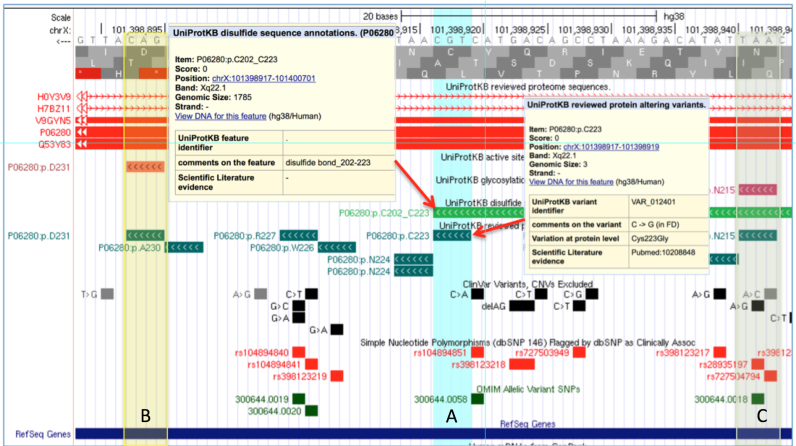
The UniProt knowledgebase is a large resource of protein sequences and associated detailed annotation. The database contains over 60 million sequences, of which over half a million sequences have been curated by experts who critically review experimental and predicted data for each protein. The remainder are automatically annotated based on rule systems that rely on the expert curated knowledge. Since our last update in 2014, we have more than doubled the number of reference proteomes to 5631, giving a greater coverage of taxonomic diversity. We implemented a pipeline to remove redundant highly similar proteomes that were causing excessive redundancy in UniProt. The initial run of this pipeline reduced the number of sequences in UniProt by 47 million. For our users interested in the accessory proteomes, we have made available sets of pan proteome sequences that cover the diversity of sequences for each species that is found in its strains and sub-strains. To help interpretation of genomic variants, we provide tracks of detailed protein information for the major genome browsers. We provide a SPARQL endpoint that allows complex queries of the more than 22 billion triples of data in UniProt (http://sparql.uniprot.org/). UniProt resources can be accessed via the website at http://www.uniprot.org/.
Overview
The claims and statistics of this paper haven’t been checked yet.
Free: it reads the open-access text and checks the first 5 claims that cite a source we can check. Create a free account to check every claim.
Integrity signals
Registry
Cites
Statistics
Figures




Verification
Claims the paper makes
The claims and statistics of this paper haven’t been checked yet.
Free: it reads the open-access text and checks the first 5 claims that cite a source we can check. Create a free account to check every claim.
Claims other papers make about this one
Each is checked against this paper’s own text: does it say what the citing paper says it does?
The source backs part of the claim, not all of it — or backs it for a different population, condition or comparison.
In the citing paper
“Less than 1% of the 148 million protein sequences in UniProt5 are annotated with experimentally confirmed functions in the Gene Ontology (GO)6 (April 2019).”
From Environmental conditions shape the nature of a minimal bacterial genome (2019) · cites this paper as [5]
Experimental — accuracy not yet measuredThe cited source says what the claim attributes to it.
In the citing paper
“Specifically, a set of 103 genes having autophagy (ATG) associated annotations from GO terms, UniProt131 and KEGG,132 were used to derive ML models using the metapath approach combined with the XGBoost algorithm.133”
From QSAR without borders (2020) · cites this paper as [131]
The check wasn’t confident either way, so it gives no verdict — never disputed.
In the citing paper
“Since more than 200 out of 343 yeast/fungi species are not annotated in UniProt 58 and KEGG 62”
From Deep learning-based kcat prediction enables improved enzyme-constrained model reconstruction (2022) · cites this paper as [58]
Experimental — accuracy not yet measuredThe check wasn’t confident either way, so it gives no verdict — never disputed.
In the citing paper
“Thanks to the human genome project, we can now estimate the number of protein-coding genes to be in the range of 19,587-20,245 (refs. 1,3,4).”
From How many human proteoforms are there? (2018) · cites this paper as [4]
Experimental — accuracy not yet measured
Self-check
Percentages, sums and reported differences re-computed from the paper’s own numbers.
The self-check needs the paper’s full text.
Citations
Cites
Richards, S., Aziz, N., Bale, S., Bick, D., Das, S., Gastier-Foster, J., Grody, W. W., Hegde, M., Lyon, E., Spector, E., et al. (2015) · Genetics in Medicine · doi:10.1038/gim.2015.30 · Cited by 32,594
UniProt: a hub for protein information
The UniProt Consortium (2015) · Nucleic Acids Research · doi:10.1093/nar/gku989 · Cited by 5,106
Self-citation2016 update of the PRIDE database and its related tools
Vizcaíno, J. A., Csordas, A., del-Toro, N., Dianes, J. A., Griss, J., Lavidas, I., Mayer, G., Perez-Riverol, Y., Reisinger, F., Ternent, T., et al. (2016) · Nucleic Acids Research · doi:10.1093/nar/gkv1145 · Cited by 3,451
UniRef clusters: a comprehensive and scalable alternative for improving sequence similarity searches
Suzek, B. E., Wang, Y., Huang, H., McGarvey, P. B., Wu, C. H., & the UniProt Consortium (2015) · Bioinformatics · doi:10.1093/bioinformatics/btu739 · Cited by 1,928
UniRef: comprehensive and non-redundant UniProt reference clusters
Suzek, B. E., Huang, H., McGarvey, P., Mazumder, R., & Wu, C. H. (2007) · Bioinformatics · doi:10.1093/bioinformatics/btm098 · Cited by 1,613
Proteoform: a single term describing protein complexity
The Consortium for Top Down Proteomics, Smith, L. M., & Kelleher, N. L. (2013) · Nature Methods · doi:10.1038/nmeth.2369 · Cited by 1,528
Medini, D., Donati, C., Tettelin, H., Masignani, V., & Rappuoli, R. (2005) · Current Opinion in Genetics & Development · doi:10.1016/j.gde.2005.09.006 · Cited by 1,299
The InterPro protein families database: the classification resource after 15 years
Mitchell, A., Chang, H.-Y., Daugherty, L., Fraser, M., Hunter, S., Lopez, R., McAnulla, C., McMenamin, C., Nuka, G., Pesseat, S., et al. (2015) · Nucleic Acids Research · doi:10.1093/nar/gku1243 · Cited by 1,274
Guidelines for investigating causality of sequence variants in human disease
MacArthur, D. G., Manolio, T. A., Dimmock, D. P., Rehm, H. L., Shendure, J., Abecasis, G. R., Adams, D. R., Altman, R. B., Antonarakis, S. E., Ashley, E. A., et al. (2014) · Nature · doi:10.1038/nature13127 · Cited by 1,224
Giraldo-Calderón, G. I., Emrich, S. J., MacCallum, R. M., Maslen, G., Dialynas, E., Topalis, P., Ho, N., Gesing, S., the VectorBase Consortium, Madey, G., et al. (2015) · Nucleic Acids Research · doi:10.1093/nar/gku1117 · Cited by 610
Cited by
Items 601–700 of 1,041
Brázda, V., Červeň, J., Bartas, M., Mikysková, N., Coufal, J., & Pečínka, P. (2018) · Molecules · doi:10.3390/molecules23092341 · Cited by 76
Charging the code — tRNA modification complexes
Krutyhołowa, R., Zakrzewski, K., & Glatt, S. (2019) · Current Opinion in Structural Biology · doi:10.1016/j.sbi.2019.03.014 · Cited by 74
Mei, S., Li, F., Xiang, D., Ayala, R., Faridi, P., Webb, G. I., Illing, P. T., Rossjohn, J., Akutsu, T., Croft, N. P., et al. (2021) · Briefings in Bioinformatics · doi:10.1093/bib/bbaa415 · Cited by 74
Hu, Z., Zhang, C., Wang, S., Gao, S., Wei, J., Li, M., Hou, L., Mao, H., Wei, Y., Qi, T., et al. (2021) · Nucleic Acids Research · doi:10.1093/nar/gkab148 · Cited by 73
Mulvey, C. M., Breckels, L. M., Crook, O. M., Sanders, D. J., Ribeiro, A. L. R., Geladaki, A., Christoforou, A., Britovšek, N. K., Hurrell, T., Deery, M. J., et al. (2021) · Nature Communications · doi:10.1038/s41467-021-26000-9 · Cited by 73
Zhang, H., Pérez-García, P., Dierkes, R. F., Applegate, V. M., Schumacher, J., Chibani, C. M., Sternagel, S., Preuss, L., Weigert, S., Schmeisser, C., et al. (2022) · Frontiers in Microbiology · doi:10.3389/fmicb.2021.803896 · Cited by 74
Akbar, S., Raza, A., Shloul, T. A., Ahmad, A., Saeed, A., Ghadi, Y. Y., Mamyrbayev, O. J., & Eldin, S. M. (2023) · IEEE Access · doi:10.1109/access.2023.3321100 · Cited by 73
López‐Pedrouso, M., Pérez-Santaescolástica, C., Franco, D., Fulladosa, E., Carballo, J., Zapata, C., & Lorenzo, J. M. (2017) · Food Chemistry · doi:10.1016/j.foodchem.2017.10.068 · Cited by 73
Small leucine-rich proteoglycans and matrix metalloproteinase-14: Key partners?
Pietraszek‐Gremplewicz, K., Καραμάνου, Κ., Niang, A., Dauchez, M., Belloy, N., Maquart, F., Baud, S., & Brézillon, S. (2017) · Matrix Biology · doi:10.1016/j.matbio.2017.12.006 · Cited by 73
Single and multiple phenotype QTL analyses of downy mildew resistance in interspecific grapevines
Divilov, K., Barba, P., Cadle-Davidson, L. E., & Reisch, B. I. (2018) · Theoretical and Applied Genetics · doi:10.1007/s00122-018-3065-y · Cited by 73
Hegarty, B., Dannemiller, K. C., & Peccia, J. (2018) · Indoor Air · doi:10.1111/ina.12459 · Cited by 73
Grandi, N., Cadeddu, M., Pisano, M. P., Esposito, F., Blomberg, J., & Tramontano, E. (2017) · Mobile DNA · doi:10.1186/s13100-017-0099-7 · Cited by 72
van Ree, R., Ballerda, D. S., Berin, M. C., Beuf, L., Chang, A. R., Gadermaier, G., Guevera, P. A., Hoffmann‐Sommergruber, K., Islamovic, E., Koski, L. B., et al. (2021) · Frontiers in Allergy · doi:10.3389/falgy.2021.700533 · Cited by 72
AOD: the antioxidant protein database
Feng, P., Ding, H., Lin, H., & Chen, W. (2017) · Scientific Reports · doi:10.1038/s41598-017-08115-6 · Cited by 72
Montgomery, S. L., Pushpanath, A., Heath, R. S., Marshall, J. R., Klemstein, U., Galman, J. L., Woodlock, D., Bisagni, S., Taylor, C. J., Mangas‐Sánchez, J., et al. (2020) · Science Advances · doi:10.1126/sciadv.aay9320 · Cited by 72
TEX15 is an essential executor of MIWI2-directed transposon DNA methylation and silencing
Schöpp, T., Zoch, A., Berrens, R. V., Auchynnikava, T., Kabayama, Y., Vasiliauskaitė, L., Rappsilber, J., Allshire, R. C., & O’Carroll, D. (2020) · Nature Communications · doi:10.1038/s41467-020-17372-5 · Cited by 72
Rio, A. L.-D., Martin, M. J., Perera-Lluna, A., & Saidi, R. (2020) · Scientific Reports · doi:10.1038/s41598-020-71450-8 · Cited by 72
Singla, J., McClary, K. M., White, K. L., Alber, F., Sali, A., & Stevens, R. C. (2018) · Cell · doi:10.1016/j.cell.2018.03.014 · Cited by 71
IonchanPred 2.0: A Tool to Predict Ion Channels and Their Types
Zhao, Y.-W., Su, Z.-D., Yang, W., Lin, H., Chen, W., & Tang, H. (2017) · International Journal of Molecular Sciences · doi:10.3390/ijms18091838 · Cited by 71
Systematic Identification of Lysine 2-hydroxyisobutyrylated Proteins in Proteus mirabilis
Dong, H., Guo, Z., Feng, W., Zhang, T., Zhai, G., Palusiak, A., Różalski, A., Tian, S., Bai, X., Shen, L., et al. (2018) · Molecular & Cellular Proteomics · doi:10.1074/mcp.ra117.000430 · Cited by 71
Updates in Rhea: SPARQLing biochemical reaction data
Lombardot, T., Morgat, A., Axelsen, K. B., Aimo, L., Hyka‐Nouspikel, N., Niknejad, A., Ignatchenko, A., Xénarios, I., Coudert, E., Redaschi, N., et al. (2018) · Nucleic Acids Research · doi:10.1093/nar/gky876 · Cited by 71
Spatially Resolved Cell Tagging and Surfaceome Labeling via Targeted Photocatalytic Decaging
Liu, Z., Xie, X., Huang, Z., Lin, F., Liu, S., Chen, Z., Qin, S., Fan, X., & Chen, P. R. (2021) · Chem · doi:10.1016/j.chempr.2022.04.016 · Cited by 71
Diniz, M. R. V., Paiva, A. L. B., Guerra-Duarte, C., Nishiyama, M. Y., Mudadu, M. A., de Oliveira, Ú. C., Borges, M. H., Yates, J. R., & Junqueira-de-Azevedo, I. L. M. (2018) · PLoS ONE · doi:10.1371/journal.pone.0200628 · Cited by 72
A Systematic Overview of Type II and III Toxin-Antitoxin Systems with a Focus on Druggability
Kang, S., Kim, D., Jin, C., & Lee, B. (2018) · Toxins · doi:10.3390/toxins10120515 · Cited by 71
Constructing biomedical domain-specific knowledge graph with minimum supervision
Yuan, J., Jin, Z., Guo, H., Jin, H., Zhang, X., Smith, T. H., & Luo, J. (2019) · Knowledge and Information Systems · doi:10.1007/s10115-019-01351-4 · Cited by 71
Microtubule number and length determine cellular shape and function in Plasmodium
Spreng, B., Fleckenstein, H., Kübler, P., Biagio, C. D., Benz, M., Patra, P., Schwarz, U. S., Cyrklaff, M., & Frischknecht, F. (2019) · The EMBO Journal · doi:10.15252/embj.2018100984 · Cited by 71
Protein Structural Bioinformatics: An Overview
Gromiha, M. M., Raju, N., & Selvaraj, S. (2018) · Elsevier eBooks · doi:10.1016/b978-0-12-809633-8.20278-1 · Cited by 71
Recent Advances in Conotoxin Classification by Using Machine Learning Methods
Dao, F., Yang, H. Q., Su, Z.-D., Yang, W., Wu, Y., Hui, D., Chen, W., Tang, H., & Lin, H. (2017) · Molecules · doi:10.3390/molecules22071057 · Cited by 72
Xiang, N., Wu, S., Wei, Z., Shao, P., & Sun, P. (2021) · Food Chemistry · doi:10.1016/j.foodchem.2021.129420 · Cited by 70
Non-Specific Binding and Cross-Reaction of ELISA: A Case Study of Porcine Hemoglobin Detection
Jiang, X., Wu, M., Albo, J., & Rao, Q. (2021) · Foods · doi:10.3390/foods10081708 · Cited by 70
p62-Dependent Phase Separation of Patient-Derived KEAP1 Mutations and NRF2
Cloer, E. W., Siesser, P. F., Cousins, E. M., Goldfarb, D., Mowrey, D. D., Harrison, J. S., Weir, S., Dokholyan, N. V., & Major, M. B. (2018) · Molecular and Cellular Biology · doi:10.1128/mcb.00644-17 · Cited by 70
Pereira, G. R. C., Silva, A. N. R. D., Nascimento, S. S. D., & Mesquita, J. F. D. (2018) · Journal of Cellular Biochemistry · doi:10.1002/jcb.27636 · Cited by 70
TelNet - a database for human and yeast genes involved in telomere maintenance
Braun, D. M., Chung, I., Kepper, N., Deeg, K. I., & Rippe, K. (2018) · BMC Genetics · doi:10.1186/s12863-018-0617-8 · Cited by 70
Protein Secondary Structure Prediction: A Review of Progress and Directions
Smolarczyk, T., Roterman‐Konieczna, I., & Stąpor, K. (2019) · Current Bioinformatics · doi:10.2174/1574893614666191017104639 · Cited by 70
Azimi, F., Ghasemi, J. B., Azizian, H., Najafi, M. B., Faramarzi, M. A., Saghaei, L., Sadeghi‐Aliabadi, H., Larijani, B. A., Hassanzadeh, F., & Mahdavi, M. R. (2020) · International Journal of Biological Macromolecules · doi:10.1016/j.ijbiomac.2020.10.263 · Cited by 70
Jarada, T. N., Rokne, J. G., & Alhajj, R. (2021) · BMC Bioinformatics · doi:10.1186/s12859-020-03950-3 · Cited by 70
PIM kinases: From survival factors to regulators of cell motility
Santio, N. M., & Koskinen, P. J. (2017) · The International Journal of Biochemistry & Cell Biology · doi:10.1016/j.biocel.2017.10.016 · Cited by 69
Zhu, N., & Hou, J. (2020) · Computational Biology and Chemistry · doi:10.1016/j.compbiolchem.2020.107240 · Cited by 69
Ergothioneine controls mitochondrial function and exercise performance via direct activation of MPST
Sprenger, H., Mittenbühler, M. J., Sun, Y., Vranken, J. G. V., Schindler, S., Jayaraj, A., Khetarpal, S. A., Smythers, A. L., Vargas‐Castillo, A., Puszynska, A. M., et al. (2025) · Cell Metabolism · doi:10.1016/j.cmet.2025.01.024 · Cited by 69
Targeting of epigenetic regulators in neuroblastoma
Jubierre, L., Jiménez, C., Rovira, E., Soriano, A., Sábado, C., Gros, L., Llort, A., Hladun, R., Roma, J. M., de Toledo, J. S., et al. (2018) · Experimental & Molecular Medicine · doi:10.1038/s12276-018-0077-2 · Cited by 69
Structure and hydrodynamics of a DNA G-quadruplex with a cytosine bulge
Meier, M. R., Moya, A., Krahn, N., McDougall, M., Orriss, G. L., McRae, E. K. S., Booy, E. P., McEleney, K., Patel, T. R., McKenna, S. A., et al. (2018) · Nucleic Acids Research · doi:10.1093/nar/gky307 · Cited by 69
Influenza virus infection causes global RNAPII termination defects
Zhao, N., Sebastiano, V., Moshkina, N., Mena, I., Hultquist, J. F., Jimenez‐Morales, D., Ma, Y., Rialdi, A., Albrecht, R. A., Fenouil, R., et al. (2018) · Nature Structural & Molecular Biology · doi:10.1038/s41594-018-0124-7 · Cited by 70
Ley, S. D., de Vos, M., Rie, A. V., & Warren, R. M. (2019) · Microbiology and Molecular Biology Reviews · doi:10.1128/mmbr.00062-18 · Cited by 69
Gómez‐Santos, N., Glatter, T., Koebnik, R., Świątek, M., & Søgaard‐Andersen, L. (2019) · Nature Communications · doi:10.1038/s41467-019-09366-9 · Cited by 69
Lertampaiporn, S., Vorapreeda, T., Hongsthong, A., & Thammarongtham, C. (2021) · Genes · doi:10.3390/genes12020137 · Cited by 69
Detecting genome-wide directional effects of transcription factor binding on polygenic disease risk
Reshef, Y. A., Finucane, H. K., Kelley, D. R., Gusev, A., Kotliar, D., Ulirsch, J. C., Hormozdiari, F., Nasser, J., O’Connor, L., van de Geijn, B., et al. (2018) · Nature Genetics · doi:10.1038/s41588-018-0196-7 · Cited by 68
Zhang, P., Bigio, B., Rapaport, F., Zhang, S.-Y., Casanova, J.-L., Abel, L., Boisson, B., & Itan, Y. (2018) · Bioinformatics · doi:10.1093/bioinformatics/bty536 · Cited by 68
Piombo, E., Sela, N., Wisniewski, M., Hoffmann, M., Gullino, M. L., Allard, M. W., Levin, E., Spadaro, D., & Droby, S. (2018) · Frontiers in Microbiology · doi:10.3389/fmicb.2018.00593 · Cited by 68
Qiao, N., Zhao, X., & Ma, Z. (2021) · IEEE Transactions on Computational Biology and Bioinformatics · doi:10.1109/tcbb.2021.3095482 · Cited by 68
Naushad, S., Naqvi, S. A., Nóbrega, D. B., Luby, C. D., Kastelic, J. P., Barkema, H. W., & Buck, J. D. (2019) · mSystems · doi:10.1128/msystems.00098-18 · Cited by 68
Automated exploration of gene ontology term and pathway networks with ClueGO-REST
Mlecnik, B., Galon, J., & Bindea, G. (2019) · Bioinformatics · doi:10.1093/bioinformatics/btz163 · Cited by 68
Felicio, P. S., Grasel, R. S., Campacci, N., de Paula, A. E., Galvão, H. C. R., Torrezan, G. T., Sabato, C. S., Fernandes, G. C., Souza, C. D. P., Michelli, R. A. D., et al. (2020) · Human Mutation · doi:10.1002/humu.24158 · Cited by 68
Gene3D: Extensive prediction of globular domains in proteins
Lewis, T. E., Sillitoe, I., Dawson, N. L., Lam, S. D., Clarke, T., Lee, D., Orengo, C. A., & Lees, J. (2017) · Nucleic Acids Research · doi:10.1093/nar/gkx1187 · Cited by 68
Loose ends: almost one in five human genes still have unresolved coding status
Abascal, F., Juan, D., Jungreis, I., Martinez, L., Rigau, M., Rodriguez, J. M., Vazquez, J., & Tress, M. L. (2018) · Nucleic Acids Research · doi:10.1093/nar/gky587 · Cited by 68
Dayon, L., Cominetti, O., Wojcik, J., Galindo, A. N., Oikonomidi, A., Henry, H., Migliavacca, E., Kussmann, M., Bowman, G. L., & Popp, J. (2019) · Journal of Proteome Research · doi:10.1021/acs.jproteome.8b00809 · Cited by 67
A New Census of Protein Tandem Repeats and Their Relationship with Intrinsic Disorder
Delucchi, M., Schaper, E., Sachenkova, O., Elofsson, A., & Anisimova, M. (2020) · Genes · doi:10.3390/genes11040407 · Cited by 67
Chen, L.-L., Wang, Y.-B., Song, J.-X., Deng, W.-K., Lu, J.-H., Ma, L.-L., Yang, C.-B., Li, M., & Xue, Y. (2017) · Autophagy · doi:10.1080/15548627.2017.1371393 · Cited by 67
The Evolution of Reverse Gyrase Suggests a Nonhyperthermophilic Last Universal Common Ancestor
Catchpole, R. J., & Forterre, P. (2019) · Molecular Biology and Evolution · doi:10.1093/molbev/msz180 · Cited by 67
Reis, L. M., & Semina, E. V. (2018) · Human Genetics · doi:10.1007/s00439-018-1932-x · Cited by 67
Chen, H., Li, F., Wang, L., Jin, Y., Chi, C., Kurgan, L., Song, J., & Shen, J. (2020) · Briefings in Bioinformatics · doi:10.1093/bib/bbaa068 · Cited by 67
LGR4 deficiency results in delayed puberty through impaired Wnt/β-catenin signaling
Mancini, A., Howard, S. R., Marelli, F., Cabrera, C., Barnes, M. R., Sternberg, M. J. E., Leprovots, M., Hadjidemetriou, I., Monti, E., David, A., et al. (2020) · JCI Insight · doi:10.1172/jci.insight.133434 · Cited by 67
Haynes, W. A., Kamath, K., Bozekowski, J. D., Baum, E., Campbell, M., Casanovas‐Massana, A., Daugherty, P. S., Cruz, C. S. D., Dhal, A., Farhadian, S., et al. (2021) · Communications Biology · doi:10.1038/s42003-021-02835-2 · Cited by 67
Shah, N. H., Löbel, M., Weiss, A., & Kuriyan, J. (2018) · eLife · doi:10.7554/elife.35190 · Cited by 67
de Oliveira, I. S., Cardoso, I. A., Bordon, K. D. C. F., Carone, S. E. I., Boldrini-França, J., Pucca, M. B., Zoccal, K. F., Faccioli, L. H., Sampaio, S. V., Rosa, J. C., et al. (2018) · Journal of Proteomics · doi:10.1016/j.jprot.2018.02.020 · Cited by 67
Evans, J. D., McKenna, D. D., Scully, E. D., Cook, S. C., Dainat, B., Egekwu, N. I., Grubbs, N., Lopez, D., Lorenzen, M. D., Reyna, S. M., et al. (2018) · GigaScience · doi:10.1093/gigascience/giy138 · Cited by 68
Vuong, H. Q., & McFrederick, Q. S. (2019) · Genome Biology and Evolution · doi:10.1093/gbe/evz136 · Cited by 67
Targeting B7‐1 in immunotherapy
Chen, R., Ganesan, A., Okoye, I., Arutyunova, E. I., Elahi, S., Lemieux, M. J., & Barakat, K. (2019) · Medicinal Research Reviews · doi:10.1002/med.21632 · Cited by 67
Soza, V. L., Lindsley, D., Waalkes, A., Ramage, E. R., Patwardhan, R. P., Burton, J. N., Adey, A., Kumar, A., Qiu, R., Shendure, J., et al. (2019) · Genome Biology and Evolution · doi:10.1093/gbe/evz245 · Cited by 67
A ubiquitous disordered protein interaction module orchestrates transcription elongation
Cermakova, K., Demeulemeester, J., Lux, V., Nedomova, M., Goldman, S. R., Smith, E. A., Srb, P., Hexnerova, R., Fabry, M., Madlikova, M., et al. (2021) · Science · doi:10.1126/science.abe2913 · Cited by 67
Protein design via deep learning
Ding, W., Nakai, K., & Gong, H. (2022) · Briefings in Bioinformatics · doi:10.1093/bib/bbac102 · Cited by 66
OrthoInspector 3.0: open portal for comparative genomics
Nevers, Y., Kress, A., Defosset, A., Ripp, R., Linard, B., Thompson, J. D., Poch, O., & Lecompte, O. (2019) · Nucleic Acids Research · doi:10.1093/nar/gky1068 · Cited by 66
Low, J. K. K., Silva, A. P. G., Sharifi Tabar, M., Torrado, M., Webb, S. R., Parker, B. L., Sana, M., Smits, C., Schmidberger, J. W., Brillault, L., et al. (2020) · Cell Reports · doi:10.1016/j.celrep.2020.108450 · Cited by 66
Zhao, Z., Xie, L., & Bourne, P. E. (2018) · Journal of Chemical Information and Modeling · doi:10.1021/acs.jcim.8b00458 · Cited by 66
Artificial neural networks enable genome-scale simulations of intracellular signaling
Nilsson, A., Peters, J. M., Meimetis, N., Bryson, B. D., & Lauffenburger, D. A. (2022) · Nature Communications · doi:10.1038/s41467-022-30684-y · Cited by 66
Pieczyński, M., Wyrzykowska, A., Milanowska, K., Boguszewska‐Mańkowska, D., Zagdańska, B., Karlowski, W. M., Jarmołowski, A., & Szweykowska-Kulińska, Z. (2017) · Plant Biotechnology Journal · doi:10.1111/pbi.12800 · Cited by 66
Hochberg, G. K. A., Shepherd, D. A., Marklund, E. G., Santhanagoplan, I., Degiacomi, M. T., Laganowsky, A., Allison, T. M., Basha, E., Marty, M. T., Galpin, M. R., et al. (2018) · Science · doi:10.1126/science.aam7229 · Cited by 65
Biase, F. H., & Kimble, K. M. (2018) · BMC Genomics · doi:10.1186/s12864-018-4738-2 · Cited by 66
Háda, V., Bagdi, A., Bihari, Z., Timári, S. B., Fizil, Á., & Szántay, C. (2018) · Journal of Pharmaceutical and Biomedical Analysis · doi:10.1016/j.jpba.2018.08.024 · Cited by 66
Ask1 and Akt act synergistically to promote ROS-dependent regeneration in Drosophila
Santabárbara-Ruiz, P., Esteban-Collado, J., Pérez, L., Viola, G., Abril, J. F., Milán, M., Corominas, M., & Serras, F. (2019) · PLoS Genetics · doi:10.1371/journal.pgen.1007926 · Cited by 66
Chemical Profiling of the Endoplasmic Reticulum Proteome Using Designer Labeling Reagents
Fujisawa, A., Tamura, T., Yasueda, Y., Kuwata, K., & Hamachi, I. (2018) · Journal of the American Chemical Society · doi:10.1021/jacs.8b08606 · Cited by 66
Fanelli, F., Pinto, A. D., Mottola, A., Mulè, G., Chieffi, D., Baruzzi, F., Tantillo, G. M., & Fusco, V. (2019) · Frontiers in Microbiology · doi:10.3389/fmicb.2019.00670 · Cited by 67
OPA1: 516 unique variants and 831 patients registered in an updated centralized Variome database
Roux, B. L., Lenaers, G., Zanlonghi, X., Amati‐Bonneau, P., Chabrun, F., Foulonneau, T., Caignard, A., Leruez, S., Gohier, P., Procaccio, V., et al. (2019) · Orphanet Journal of Rare Diseases · doi:10.1186/s13023-019-1187-1 · Cited by 67
Essential roles for deubiquitination in Leishmania life cycle progression
Damianou, A., Burge, R. J., Catta‐Preta, C. M. C., Geoghegan, V., Nievas, Y. R., Newling, K., Brown, E. H., Burchmore, R., Rodenko, B., & Mottram, J. C. (2020) · PLoS Pathogens · doi:10.1371/journal.ppat.1008455 · Cited by 68
A Review of Prostanoid Receptors: Expression, Characterization, Regulation, and Mechanism of Action
Biringer, R. G. (2020) · Journal of Cell Communication and Signaling · doi:10.1007/s12079-020-00585-0 · Cited by 66
Li, Z., Chen, S., Jhong, J.-H., Pang, Y., Huang, K.-Y., Li, S., & Lee, T.-Y. (2021) · Database · doi:10.1093/database/baab010 · Cited by 65
Molecular Recognition Features in Zika Virus Proteome
Mishra, P. M., Uversky, V. N., & Giri, R. (2017) · Journal of Molecular Biology · doi:10.1016/j.jmb.2017.10.018 · Cited by 65
Diapause in a tropical oil-collecting bee: molecular basis unveiled by RNA-Seq
Santos, P. K. F., Araujo, N. D. S., Françoso, E., Zuntini, A. R., & Arias, M. C. (2018) · BMC Genomics · doi:10.1186/s12864-018-4694-x · Cited by 65
Post-translational modification: a strategic response to high temperature in plants
Han, D., Yu, Z., Lai, J., & Yang, C. (2022) · aBIOTECH · doi:10.1007/s42994-021-00067-w · Cited by 65
Castro, W., Chelbi, S. T., Niogret, C., Ramón-Barros, C., Welten, S. P. M., Osterheld, K., Wang, H., Rota, G., Morgado, L., Vivier, É., et al. (2018) · Nature Immunology · doi:10.1038/s41590-018-0144-9 · Cited by 65
Blum, B. C., Mousavi, F., & Emili, A. (2018) · Molecular Omics · doi:10.1039/c8mo00136g · Cited by 66
Evidence of polygenic adaptation to high altitude from Tibetan and Sherpa genomes
Gnecchi‐Ruscone, G. A., Abondio, P., Fanti, S. D., Sarno, S., Sherpa, M. G., Sherpa, P. T., Marinelli, G., Natali, L., Marcello, M. D., Peluzzi, D., et al. (2018) · Genome Biology and Evolution · doi:10.1093/gbe/evy233 · Cited by 65
Comparative Analysis of Genomic Island Prediction Tools
Filho, A. C. D. S., Raittz, R. T., Guizelini, D., Pierri, C. R. D., Augusto, D. W., dos Santos-Weiss, I. C. R., & Marchaukoski, J. N. (2018) · Frontiers in Genetics · doi:10.3389/fgene.2018.00619 · Cited by 65
DEPICTER: Intrinsic Disorder and Disorder Function Prediction Server
Barik, A., Katuwawala, A., Hanson, J., Paliwal, K. K., Zhou, Y., & Kurgan, L. (2019) · Journal of Molecular Biology · doi:10.1016/j.jmb.2019.12.030 · Cited by 65
Computational Chemistry on a Budget: Supporting Drug Discovery with Limited Resources
Willems, H. M. G., Cesco, S. D., & Svensson, F. (2020) · Journal of Medicinal Chemistry · doi:10.1021/acs.jmedchem.9b02126 · Cited by 65
Ye, X., Wang, H., Cheng, S.-Q., Xia, L., Xu, X.-F., & Li, X.-R. (2022) · Frontiers in Aging Neuroscience · doi:10.3389/fnagi.2022.890046 · Cited by 65
Gilbert, D. (2019) · bioRxiv (Cold Spring Harbor Laboratory) · doi:10.1101/829184 · Cited by 65
De novo transcriptome assembly for the spiny mouse (Acomys cahirinus)
Mamrot, J., Legaie, R., Ellery, S. J., Wilson, T., Seemann, T., Powell, D., Gardner, D. K., Walker, D. W., Temple-Smith, P. D., Papenfuss, A. T., et al. (2017) · Scientific Reports · doi:10.1038/s41598-017-09334-7 · Cited by 66
Akbar, S., Hayat, M., Tahir, M., & Chong, K. T. (2020) · IEEE Access · doi:10.1109/access.2020.3009125 · Cited by 64
A common TMPRSS2 variant has a protective effect against severe COVID-19
David, A., Parkinson, N., Peacock, T. P., Pairo‐Castineira, E., Khanna, T., Cobat, A., Tenesa, A., Sancho‐Shimizu, V., GenOMICC Investigators, ISARIC4C Investigators, et al. (2022) · Current Research in Translational Medicine · doi:10.1016/j.retram.2022.103333 · Cited by 64
Recent Developments in Clinical Plasma Proteomics—Applied to Cardiovascular Research
Palstrøm, N. B., Matthiesen, R., Rasmussen, L. M., & Beck, H. C. (2022) · Biomedicines · doi:10.3390/biomedicines10010162 · Cited by 64
Metadata
- Authors
- The UniProt Consortium
- Affiliations
- SIB Swiss Institute of Bioinformatics (CH)
- Corresponding author
- The UniProt Consortium
- Venue
- Nucleic Acids Research
- Publisher
- Oxford University Press (OUP)
- Published
- 2016-11-29
- Volume
- 45
- Issue
- D1
- Pages
- D158-D169
- ISSN
- 0305-1048 (ISSN-L)
- 1362-4962
- PMC
- PMC5210571
- OpenAlex
- W4210702584
- Cited by
- 4,436
- References
- 30
- Citations by year
- 2026: 137 · 2025: 181 · 2024: 239 · 2023: 238 · 2022: 378 · 2021: 491 · 2020: 610 · 2019: 898 · 2018: 910 · 2017: 349
- FWCI
- 375.36
- Type
- journal article
- Language
- en
- Open access
- gold
- doi.org
- Licence
- Locations
- Nucleic Acids Research (publishedVersion, cc-by)
- PubMed Central (publishedVersion, cc-by)
- PubMed (publishedVersion)
- HighWire Press Open Archive (submittedVersion)
- Funders
- Wellcome Trust
- European Molecular Biology Laboratory
- Australian Government
- British Heart Foundation (RG/13/5/30112)
- Parkinson's UK (G-1307)
- National Institutes of Health
- Biotechnology and Biological Sciences Research Council (BB/M011674/1)
- Staatssekretariat für Bildung, Forschung und Innovation
- National Human Genome Research Institute (U41HG002273, U41HG007822)
- National Institute of General Medical Sciences (U01GM120953, R01GM080646, R13GM109648, P20GM103446)
- Topics
- Life Sciences › Biochemistry, Genetics and Molecular Biology › Molecular Biology › Genomics and Phylogenetic Studies
- Life Sciences › Biochemistry, Genetics and Molecular Biology › Molecular Biology › Bioinformatics and Genomic Networks
- Physical Sciences › Chemistry › Spectroscopy › Advanced Proteomics Techniques and Applications
- Keywords
- UniProt, protein sequences, protein annotation, reference proteomes, genome browser tracks, genetic variants, SPARQL endpoint, taxonomic diversity
- MeSH terms
- Computational Biology, Proteome, Genomics, Databases, Protein, Proteomics, Web Browser
About these checks
Registry, retraction, Cites and statistics results are computed, not judged, with one exception: a printed reference that no index lists is read once by a model before it counts as a citation error. Claims are extracted by a model and kept only when their quote appears verbatim in the text; each cited source is then checked, with a model’s help, for whether it says what the claim relies on. Those verdicts can be wrong — read the claim’s quote and the cited source before relying on one.
Statistics and arithmetic are recomputed, not judged.
Confidence bands are shown only for fields calibrated on our annotated test set. None is calibrated yet, so no band is shown.
What counts as a claim ›How we measure confidence ›How we check this ›
Are you an author, or do you see a problem with this page? Request a review
Data sources
Bibliographic data: Semantic Scholar, OpenAlex, Crossref.
Contains information from the Semantic Scholar Academic Graph Datasets, made available under the ODC Attribution License (ODC-BY 1.0).
Semantic Scholar’s data is described in: Kinney, R., et al. (2023). The Semantic Scholar Open Data Platform. arXiv:2301.10140.
