

UniProt: the universal protein knowledgebase
Open accessThe DOI matches its Crossref record; 30 of the 30 references it cites were found in a registry or an index.
Abstract
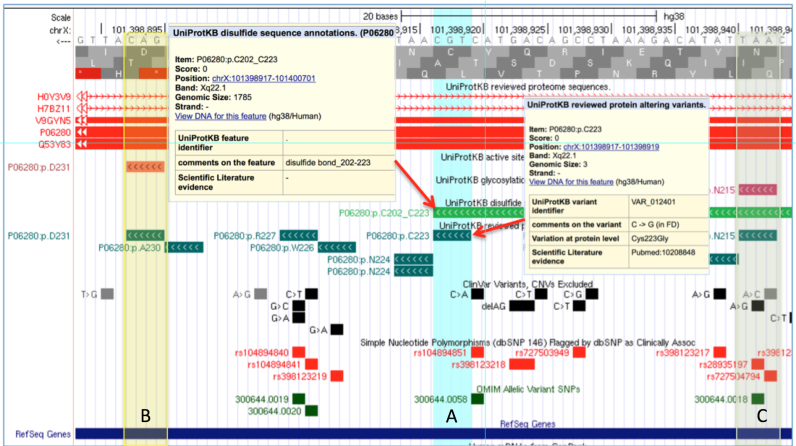
The UniProt knowledgebase is a large resource of protein sequences and associated detailed annotation. The database contains over 60 million sequences, of which over half a million sequences have been curated by experts who critically review experimental and predicted data for each protein. The remainder are automatically annotated based on rule systems that rely on the expert curated knowledge. Since our last update in 2014, we have more than doubled the number of reference proteomes to 5631, giving a greater coverage of taxonomic diversity. We implemented a pipeline to remove redundant highly similar proteomes that were causing excessive redundancy in UniProt. The initial run of this pipeline reduced the number of sequences in UniProt by 47 million. For our users interested in the accessory proteomes, we have made available sets of pan proteome sequences that cover the diversity of sequences for each species that is found in its strains and sub-strains. To help interpretation of genomic variants, we provide tracks of detailed protein information for the major genome browsers. We provide a SPARQL endpoint that allows complex queries of the more than 22 billion triples of data in UniProt (http://sparql.uniprot.org/). UniProt resources can be accessed via the website at http://www.uniprot.org/.
Overview
The claims and statistics of this paper haven’t been checked yet.
Free: it reads the open-access text and checks the first 5 claims that cite a source we can check. Create a free account to check every claim.
Integrity signals
Registry
Cites
Statistics
Figures




Verification
Claims the paper makes
The claims and statistics of this paper haven’t been checked yet.
Free: it reads the open-access text and checks the first 5 claims that cite a source we can check. Create a free account to check every claim.
Claims other papers make about this one
Each is checked against this paper’s own text: does it say what the citing paper says it does?
The source backs part of the claim, not all of it — or backs it for a different population, condition or comparison.
In the citing paper
“Less than 1% of the 148 million protein sequences in UniProt5 are annotated with experimentally confirmed functions in the Gene Ontology (GO)6 (April 2019).”
From Environmental conditions shape the nature of a minimal bacterial genome (2019) · cites this paper as [5]
Experimental — accuracy not yet measuredThe cited source says what the claim attributes to it.
In the citing paper
“Specifically, a set of 103 genes having autophagy (ATG) associated annotations from GO terms, UniProt131 and KEGG,132 were used to derive ML models using the metapath approach combined with the XGBoost algorithm.133”
From QSAR without borders (2020) · cites this paper as [131]
The check wasn’t confident either way, so it gives no verdict — never disputed.
In the citing paper
“Since more than 200 out of 343 yeast/fungi species are not annotated in UniProt 58 and KEGG 62”
From Deep learning-based kcat prediction enables improved enzyme-constrained model reconstruction (2022) · cites this paper as [58]
Experimental — accuracy not yet measuredThe check wasn’t confident either way, so it gives no verdict — never disputed.
In the citing paper
“Thanks to the human genome project, we can now estimate the number of protein-coding genes to be in the range of 19,587-20,245 (refs. 1,3,4).”
From How many human proteoforms are there? (2018) · cites this paper as [4]
Experimental — accuracy not yet measured
Self-check
Percentages, sums and reported differences re-computed from the paper’s own numbers.
The self-check needs the paper’s full text.
Citations
Cites
Richards, S., Aziz, N., Bale, S., Bick, D., Das, S., Gastier-Foster, J., Grody, W. W., Hegde, M., Lyon, E., Spector, E., et al. (2015) · Genetics in Medicine · doi:10.1038/gim.2015.30 · Cited by 32,594
UniProt: a hub for protein information
The UniProt Consortium (2015) · Nucleic Acids Research · doi:10.1093/nar/gku989 · Cited by 5,106
Self-citation2016 update of the PRIDE database and its related tools
Vizcaíno, J. A., Csordas, A., del-Toro, N., Dianes, J. A., Griss, J., Lavidas, I., Mayer, G., Perez-Riverol, Y., Reisinger, F., Ternent, T., et al. (2016) · Nucleic Acids Research · doi:10.1093/nar/gkv1145 · Cited by 3,451
UniRef clusters: a comprehensive and scalable alternative for improving sequence similarity searches
Suzek, B. E., Wang, Y., Huang, H., McGarvey, P. B., Wu, C. H., & the UniProt Consortium (2015) · Bioinformatics · doi:10.1093/bioinformatics/btu739 · Cited by 1,928
UniRef: comprehensive and non-redundant UniProt reference clusters
Suzek, B. E., Huang, H., McGarvey, P., Mazumder, R., & Wu, C. H. (2007) · Bioinformatics · doi:10.1093/bioinformatics/btm098 · Cited by 1,613
Proteoform: a single term describing protein complexity
The Consortium for Top Down Proteomics, Smith, L. M., & Kelleher, N. L. (2013) · Nature Methods · doi:10.1038/nmeth.2369 · Cited by 1,528
Medini, D., Donati, C., Tettelin, H., Masignani, V., & Rappuoli, R. (2005) · Current Opinion in Genetics & Development · doi:10.1016/j.gde.2005.09.006 · Cited by 1,299
The InterPro protein families database: the classification resource after 15 years
Mitchell, A., Chang, H.-Y., Daugherty, L., Fraser, M., Hunter, S., Lopez, R., McAnulla, C., McMenamin, C., Nuka, G., Pesseat, S., et al. (2015) · Nucleic Acids Research · doi:10.1093/nar/gku1243 · Cited by 1,274
Guidelines for investigating causality of sequence variants in human disease
MacArthur, D. G., Manolio, T. A., Dimmock, D. P., Rehm, H. L., Shendure, J., Abecasis, G. R., Adams, D. R., Altman, R. B., Antonarakis, S. E., Ashley, E. A., et al. (2014) · Nature · doi:10.1038/nature13127 · Cited by 1,224
Giraldo-Calderón, G. I., Emrich, S. J., MacCallum, R. M., Maslen, G., Dialynas, E., Topalis, P., Ho, N., Gesing, S., the VectorBase Consortium, Madey, G., et al. (2015) · Nucleic Acids Research · doi:10.1093/nar/gku1117 · Cited by 610
Cited by
Items 301–400 of 1,041
Chen, Z., Liu, X., Li, F., Li, C., Marquez‐Lago, T. T., Leier, A., Akutsu, T., Webb, G. I., Xu, D., Smith, A. I., et al. (2018) · Briefings in Bioinformatics · doi:10.1093/bib/bby089 · Cited by 141
APPRIS 2017: principal isoforms for multiple gene sets
Rodriguez, J. M., Rodriguez-Rivas, J., Di Domenico, T., Vázquez, J., Valencia, A., & Tress, M. L. (2018) · Nucleic Acids Research · doi:10.1093/nar/gkx997 · Cited by 138
Kahlke, T., & Ralph, P. J. (2018) · Methods in Ecology and Evolution · doi:10.1111/2041-210x.13095 · Cited by 138
Deep genome annotation of the opportunistic human pathogen Streptococcus pneumoniae D39
Slager, J., Aprianto, R., & Veening, J.-W. (2018) · Nucleic Acids Research · doi:10.1093/nar/gky725 · Cited by 137
Atlas of the Radical SAM Superfamily: Divergent Evolution of Function Using a “Plug and Play” Domain
Holliday, G. L., Akiva, E., Meng, E. C., Brown, S. D., Calhoun, S., Pieper, U., Šali, A., Booker, S. J., & Babbitt, P. C. (2018) · Methods in enzymology on CD-ROM/Methods in enzymology · doi:10.1016/bs.mie.2018.06.004 · Cited by 137
PDBe-KB: a community-driven resource for structural and functional annotations
PDBe-KB consortium, Varadi, M., Berrisford, J., Deshpande, M., Nair, S. S., Gutmanas, A., Armstrong, D., Pravda, L., Al-Lazikani, B., Anyango, S., et al. (2020) · Nucleic Acids Research · doi:10.1093/nar/gkz853 · Cited by 124
PaperBLAST: Text Mining Papers for Information about Homologs
Price, M. N., & Arkin, A. P. (2017) · mSystems · doi:10.1128/msystems.00039-17 · Cited by 136
Wang, Q., Chen, R., Cheng, F., Wei, Q., Ji, Y., Yang, H., Zhong, X., Tao, R., Wen, Z., Sutcliffe, J. S., et al. (2019) · Nature Neuroscience · doi:10.1038/s41593-019-0382-7 · Cited by 136
On expert curation and scalability: UniProtKB/Swiss-Prot as a case study
Poux, S., Arighi, C. N., Magrane, M., Bateman, A., Wei, C.-H., Lu, Z., Boutet, E., Bye-A-Jee, H., Famiglietti, M. L., Roechert, B., et al. (2017) · Bioinformatics · doi:10.1093/bioinformatics/btx439 · Cited by 135
Self-citationFortelny, N., & Bock, C. (2020) · Genome Biology · doi:10.1186/s13059-020-02100-5 · Cited by 135
Design of metalloproteins and novel protein folds using variational autoencoders
Greener, J. G., Moffat, L., & Jones, D. T. (2018) · Scientific Reports · doi:10.1038/s41598-018-34533-1 · Cited by 135
Unifying the known and unknown microbial coding sequence space
Vanni, C., Schechter, M. S., Acinas, S. G., Barberán, A., Buttigieg, P. L., Casamayor, E. O., Delmont, T. O., Duarte, C. M., Eren, A. M., Finn, R. D., et al. (2022) · eLife · doi:10.7554/elife.67667 · Cited by 134
The Plant PTM Viewer, a central resource for exploring plant protein modifications
Willems, P., Horne, A., Van Parys, T., Goormachtig, S., De Smet, I., Botzki, A., Van Breusegem, F., & Gevaert, K. (2019) · The Plant Journal · doi:10.1111/tpj.14345 · Cited by 134
Rehman, Z. U., & Leiknes, T. (2018) · Frontiers in Microbiology · doi:10.3389/fmicb.2018.01354 · Cited by 134
Complex Portal 2018: extended content and enhanced visualization tools for macromolecular complexes
Meldal, B. H. M., Bye-A-Jee, H., Gajdoš, L., Hammerová, Z., Horáčková, A., Melicher, F., Perfetto, L., Pokorný, D., Lopez, M. R., Türková, A., et al. (2019) · Nucleic Acids Research · doi:10.1093/nar/gky1001 · Cited by 134
In silico approach in reveal traditional medicine plants pharmacological material basis
Yi, F., Li, L., Xu, L., Meng, H., Dong, Y., Liu, H.-B., & Xiao, P. (2018) · Chinese Medicine · doi:10.1186/s13020-018-0190-0 · Cited by 134
Widespread patterns of gene loss in the evolution of the animal kingdom
Guijarro-Clarke, C., Holland, P. W. H., & Paps, J. (2020) · Nature Ecology & Evolution · doi:10.1038/s41559-020-1129-2 · Cited by 133
Murina, V., Kasari, M., Takada, H., Hinnu, M., Saha, C. K., Grimshaw, J. W., Seki, T., Reith, M., Putrinš, M., Tenson, T., et al. (2019) · Journal of Molecular Biology · doi:10.1016/j.jmb.2018.12.013 · Cited by 132
Zapata, L., Pich, O., Serrano, L., Kondrashov, F. A., Ossowski, S., & Schaefer, M. H. (2018) · Genome biology · doi:10.1186/s13059-018-1434-0 · Cited by 135
MitoMiner v4.0: an updated database of mitochondrial localization evidence, phenotypes and diseases
Smith, A. C., & Robinson, A. J. (2019) · Nucleic Acids Research · doi:10.1093/nar/gky1072 · Cited by 125
Retrosynthetic design of metabolic pathways to chemicals not found in nature
Lin, G.-M., Warden‐Rothman, R., & Voigt, C. A. (2019) · Current Opinion in Systems Biology · doi:10.1016/j.coisb.2019.04.004 · Cited by 132
Exploration of databases and methods supporting drug repurposing: a comprehensive survey
Tanoli, Z., Seemab, U., Scherer, A., Wennerberg, K., Tang, J., & Vähä-Koskela, M. (2021) · Briefings in Bioinformatics · doi:10.1093/bib/bbaa003 · Cited by 131
“Among the proteomics databases, UniProt [118] could be the one choice as it integrates a wide variety of data types, such as pathways, protein-protein interactions (PPI), molecular omics, protein sequences, structures, classification and protein disease associations, as shown in Figure 1.”
BackgroundStructure of the peptidoglycan polymerase RodA resolved by evolutionary coupling analysis
Sjodt, M., Brock, K., Dobihal, G., Rohs, P. D. A., Green, A. G., Hopf, T. A., Meeske, A. J., Srisuknimit, V., Kahne, D., Walker, S., et al. (2018) · Nature · doi:10.1038/nature25985 · Cited by 131
Ringel, P. D., Hu, D., & Basler, M. (2017) · Cell Reports · doi:10.1016/j.celrep.2017.12.020 · Cited by 131
Strejcek, M., Šmrhová, T., Junková, P., & Uhlík, O. (2018) · Frontiers in Microbiology · doi:10.3389/fmicb.2018.01294 · Cited by 131
Abdelkhaliq, A., van der Zande, M., Punt, A., Helsdingen, R. J. R., Boeren, S. A., Vervoort, J. J. M., Rietjens, I. M. C. M., & Bouwmeester, H. (2018) · Journal of Nanobiotechnology · doi:10.1186/s12951-018-0394-6 · Cited by 133
Chen, L., Zhu, Q., & Kaufmann, K. (2020) · Planta · doi:10.1007/s00425-020-03480-5 · Cited by 131
RetroRules: a database of reaction rules for engineering biology
Duigou, T., Du, M., Carbonell, P., & Faulon, J. (2018) · Nucleic Acids Research · doi:10.1093/nar/gky940 · Cited by 129
Structures of a dimodular nonribosomal peptide synthetase reveal conformational flexibility
Reimer, J. M., Eivaskhani, M., Harb, I., Guarné, A., Weigt, M., & Schmeing, T. M. (2019) · Science · doi:10.1126/science.aaw4388 · Cited by 128
Rodrigues, T. A., Tuna, K. M., Alli, A. A., Tríbulo, P., Hansen, P. J., Koh, J., & de Paula-Lopes, F. F. (2019) · Reproduction Fertility and Development · doi:10.1071/rd18450 · Cited by 128
Prisingkorn, W., Prathomya, P., Jakovlić, I., Liu, H., Zhao, Y., & Wang, W. (2017) · BMC Genomics · doi:10.1186/s12864-017-4246-9 · Cited by 128
Telonis, A. G., & Rigoutsos, I. (2018) · Cancer Research · doi:10.1158/0008-5472.can-17-1947 · Cited by 127
Roach, M. J., Johnson, D. L., Bohlmann, J., van Vuuren, H. J. J., Jones, S. J. M., Pretorius, I. S., Schmidt, S. A., & Borneman, A. R. (2018) · PLoS Genetics · doi:10.1371/journal.pgen.1007807 · Cited by 127
Zhang, J., Ma, Z., & Kurgan, L. (2017) · Briefings in Bioinformatics · doi:10.1093/bib/bbx168 · Cited by 127
LSTM-PHV: prediction of human-virus protein–protein interactions by LSTM with word2vec
Tsukiyama, S., Hasan, M. M., Fujii, S., & Kurata, H. (2021) · Briefings in Bioinformatics · doi:10.1093/bib/bbab228 · Cited by 126
In silico saturation mutagenesis of cancer genes
Muiños, F., Martínez-Jiménez, F., Pich, O., Gonzalez-Perez, A., & Lopez-Bigas, N. (2021) · Nature · doi:10.1038/s41586-021-03771-1 · Cited by 126
Determining Cysteines Available for Covalent Inhibition Across the Human Kinome
Zhao, Z., Liu, Q., Bliven, S., Xie, L., & Bourne, P. E. (2017) · Journal of Medicinal Chemistry · doi:10.1021/acs.jmedchem.6b01815 · Cited by 126
Membrane protein-regulated networks across human cancers
Lin, C., Lee, C., Chuang, Y.-H., Lee, J.-Y., Chiu, Y.-Y., Lee, Y. W., Jong, Y., Hwang, J.-K., Huang, S., Chen, L.-C., et al. (2019) · Nature Communications · doi:10.1038/s41467-019-10920-8 · Cited by 126
Large-scale Discovery of Substrates of the Human Kinome
Sugiyama, N., Imamura, H., & Ishihama, Y. (2019) · Scientific Reports · doi:10.1038/s41598-019-46385-4 · Cited by 121
Enrichment of extracellular vesicles from human synovial fluid using size exclusion chromatography
Foers, A. D., Chatfield, S., Dagley, L. F., Scicluna, B. J., Webb, A. I., Cheng, L., Hill, A. F., Wicks, I. P., & Pang, K. C. (2018) · Journal of Extracellular Vesicles · doi:10.1080/20013078.2018.1490145 · Cited by 124
A global survey of arsenic-related genes in soil microbiomes
Dunivin, T. K., Yeh, S. Y., & Shade, A. L. (2019) · BMC Biology · doi:10.1186/s12915-019-0661-5 · Cited by 125
GABA-receptive microglia selectively sculpt developing inhibitory circuits
Favuzzi, E., Huang, S., Saldi, G.-A., Binan, L., Ibrahim, L. A., Fernández-Otero, M., Cao, Y., Zeine, A., Sefah, A., Zheng, K., et al. (2021) · Cell · doi:10.1016/j.cell.2021.10.009 · Cited by 124
MoonProt 2.0: an expansion and update of the moonlighting proteins database
Chen, C., Zabad, S., Liu, H., Wang, W., & Jeffery, C. J. (2017) · Nucleic Acids Research · doi:10.1093/nar/gkx1043 · Cited by 122
De novo mutations in mitochondrial DNA of iPSCs produce immunogenic neoepitopes in mice and humans
Deuse, T., Hu, X., Agbor-Enoh, S. T., Koch, M., Spitzer, M. H., Gravina, A., Alawi, M., Marishta, A., Peters, B., Koşaloğlu‐Yalçın, Z., et al. (2019) · Nature Biotechnology · doi:10.1038/s41587-019-0227-7 · Cited by 122
Continuous salt stress-induced long non-coding RNAs and DNA methylation patterns in soybean roots
Chen, R., Li, M., Zhang, H., Duan, L., Sun, X., Jiang, Q., Zhang, H., & Hu, Z. (2019) · BMC Genomics · doi:10.1186/s12864-019-6101-7 · Cited by 122
The draft genome sequence of cork oak
Ramos, A. M., Usié, A., Barbosa, P., Barros, P. M., Capote, T., Chaves, I., Simões, F., Abreu, I. A., Carrasquinho, I., Faro, C., et al. (2018) · Scientific Data · doi:10.1038/sdata.2018.69 · Cited by 122
Engineering peptide ligase specificity by proteomic identification of ligation sites
Weeks, A. M., & Wells, J. A. (2017) · Nature Chemical Biology · doi:10.1038/nchembio.2521 · Cited by 123
Comes, A. L., Papiol, S., Müeller, T., Geyer, P. E., Mann, M., & Schulze, T. G. (2018) · Translational Psychiatry · doi:10.1038/s41398-018-0219-2 · Cited by 121
Peyrot, W. J., & Price, A. L. (2021) · Nature Genetics · doi:10.1038/s41588-021-00787-1 · Cited by 125
Stein, K. C., Kriel, A., & Frydman, J. (2019) · Molecular Cell · doi:10.1016/j.molcel.2019.06.036 · Cited by 120
Sami, S. A., Marma, K. K. S., Mahmud, S., Khan, M. A. N., Albogami, S. M., El‐Shehawi, A. M., Rakib, A., Chakraborty, A., Mohiuddin, M., Dhama, K., et al. (2021) · ACS Omega · doi:10.1021/acsomega.1c04817 · Cited by 120
Planas, R., Santos, R. G., Ojer, P. T., Cruciani, C., Lutterotti, A., Faigle, W., Schaeren‐Wiemers, N., Espejo, C., Eixarch, H., Pinilla, C., et al. (2018) · Science Translational Medicine · doi:10.1126/scitranslmed.aat4301 · Cited by 119
Frioux, C., Singh, D., Korcsmáros, T., & Hildebrand, F. (2020) · Computational and Structural Biotechnology Journal · doi:10.1016/j.csbj.2020.06.028 · Cited by 120
Ayurveda botanicals in COVID-19 management: An in silico multi-target approach
Borse, S., Joshi, M., Saggam, A., Bhat, V., Walia, S., Marathe, A., Sagar, S. R., Chavan, P., Girme, A., Hingorani, L., et al. (2021) · PLoS ONE · doi:10.1371/journal.pone.0248479 · Cited by 119
AMELIE speeds Mendelian diagnosis by matching patient phenotype and genotype to primary literature
Birgmeier, J., Haeussler, M., Deisseroth, C. A., Steinberg, E. H., Jagadeesh, K. A., Ratner, A. J., Guturu, H., Wenger, A. M., Diekhans, M. E., Stenson, P. D., et al. (2020) · Science Translational Medicine · doi:10.1126/scitranslmed.aau9113 · Cited by 118
D’hoe, K., Vet, S., Faust, K., Moens, F., Falony, G., Gonze, D., Lloréns‐Rico, V., Gelens, L., Danckaert, J., Vuyst, L. D., et al. (2018) · eLife · doi:10.7554/elife.37090 · Cited by 118
I-TASSER gateway: A protein structure and function prediction server powered by XSEDE
Zheng, W. H., Zhang, C., Bell, E. W., & Zhang, Y. (2019) · Future Generation Computer Systems · doi:10.1016/j.future.2019.04.011 · Cited by 118
Zolg, D. P., Wilhelm, M., Schmidt, T., Médard, G., Zerweck, J., Knaute, T., Wenschuh, H., Reimer, U., Schnatbaum, K., & Kuster, B. (2018) · Molecular & Cellular Proteomics · doi:10.1074/mcp.tir118.000783 · Cited by 117
Hehenberger, E., Tikhonenkov, D. V., Kolísko, M., del Campo, J., Сергеевич, Е. А., Mylnikov, A. P., & Keeling, P. J. (2017) · Current Biology · doi:10.1016/j.cub.2017.06.006 · Cited by 118
Karcher, N., Pasolli, E., Asnicar, F., Huang, K. D., Tett, A., Manara, S., Armanini, F., Bain, D., Duncan, S. H., Louis, P., et al. (2020) · Genome Biology · doi:10.1186/s13059-020-02042-y · Cited by 116
CANTATAdb 2.0: Expanding the Collection of Plant Long Noncoding RNAs
Szcześniak, M. W., Bryzghalov, O., Ciomborowska-Basheer, J., & Makałowska, I. (2019) · Methods in molecular biology · doi:10.1007/978-1-4939-9045-0_26 · Cited by 117
Gi/o-Protein Coupled Receptors in the Aging Brain
de Oliveira, P. G., Ramos, M. L., Amaro, A. J. M., Dias, R. A., & Vieira, S. I. (2019) · Frontiers in Aging Neuroscience · doi:10.3389/fnagi.2019.00089 · Cited by 116
Proteomic analyses identify ARH3 as a serine mono-ADP-ribosylhydrolase
Abplanalp, J., Leutert, M., Frugier, E., Nowak, K., Feurer, R., Kato, J., Kistemaker, H. V. A., Filippov, D. V., Moss, J., Caflisch, A., et al. (2017) · Nature Communications · doi:10.1038/s41467-017-02253-1 · Cited by 115
Chinook salmon (Oncorhynchus tshawytscha) genome and transcriptome
Christensen, K. A., Leong, J. S., Sakhrani, D., Biagi, C. A., Minkley, D. R., Withler, R. E., Rondeau, E. B., Koop, B. F., & Devlin, R. H. (2018) · PLoS ONE · doi:10.1371/journal.pone.0195461 · Cited by 115
Predicting epitopes for vaccine development using bioinformatics tools
Yurina, V., & Adianingsih, O. R. (2022) · Therapeutic Advances in Vaccines and Immunotherapy · doi:10.1177/25151355221100218 · Cited by 115
Giant tortoise genomes provide insights into longevity and age-related disease
Quesada, V., Freitas-Rodríguez, S., Miller, J., Pérez-Silva, J. G., Jiang, Z.-F., Tapia, W., Santiago-Fernández, O., Campos-Iglesias, D., Kuderna, L. F. K., Quinzin, M., et al. (2018) · Nature Ecology & Evolution · doi:10.1038/s41559-018-0733-x · Cited by 114
The jPOST environment: an integrated proteomics data repository and database
Moriya, Y., Kawano, S., Okuda, S., Watanabe, Y., Matsumoto, M., Takami, T., Kobayashi, D., Yamanouchi, Y., Araki, N., Yoshizawa, A. C., et al. (2019) · Nucleic Acids Research · doi:10.1093/nar/gky899 · Cited by 111
Selective agonist of TRPML2 reveals direct role in chemokine release from innate immune cells
Plesch, E., Chen, C., Butz, E. S., Rosato, A. S., Krogsaeter, E., Yinan, H., Bartel, K., Keller, M., Robaa, D., Teupser, D., et al. (2018) · eLife · doi:10.7554/elife.39720 · Cited by 114
OutCyte: a novel tool for predicting unconventional protein secretion
Zhao, L., Poschmann, G., Waldera-Lupa, D. M., Rafiee, N., Kollmann, M., & Stühler, K. (2019) · Scientific Reports · doi:10.1038/s41598-019-55351-z · Cited by 114
Ancestral Absence of Electron Transport Chains in Patescibacteria and DPANN
Beam, J. P., Becraft, E. D., Brown, J. M., Schulz, F., Jarett, J. K., Bezuidt, O. K. I., Poulton, N. J., Clark, K., Dunfield, P. F., Ravin, N. V., et al. (2020) · Frontiers in Microbiology · doi:10.3389/fmicb.2020.01848 · Cited by 116
Sanders, O., & Rajagopal, L. (2020) · Journal of Alzheimer's Disease Reports · doi:10.3233/adr-200191 · Cited by 113
A new genome-scale metabolic model of Corynebacterium glutamicum and its application
Zhang, Y., Cai, J., Shang, X., Wang, B., Liu, S., Chai, X., Tan, T., Zhang, Y., & Wen, T. (2017) · Biotechnology for Biofuels · doi:10.1186/s13068-017-0856-3 · Cited by 113
Bocchini, M., D’Amato, R., Ciancaleoni, S., Fontanella, M. C., Palmerini, C. A., Beone, G. M., Onofri, A., Negri, V., Marconi, G., Albertini, E., et al. (2018) · Frontiers in Plant Science · doi:10.3389/fpls.2018.00389 · Cited by 113
RNAct: Protein–RNA interaction predictions for model organisms with supporting experimental data
Lang, B., Armaos, A., & Tartaglia, G. G. (2018) · Nucleic Acids Research · doi:10.1093/nar/gky967 · Cited by 113
A galling insect activates plant reproductive programs during gall development
Schultz, J. C., Edger, P. P., Body, M. J. A., & Appel, H. M. (2019) · Scientific Reports · doi:10.1038/s41598-018-38475-6 · Cited by 113
Molecular Atlas of Postnatal Mouse Heart Development
Talman, V., Teppo, J., Pöhö, P., Movahedi, P., Vaikkinen, A., Karhu, S. T., Trôst, K., Suvitaival, T., Heikkonen, J., Pahikkala, T., et al. (2018) · Journal of the American Heart Association · doi:10.1161/jaha.118.010378 · Cited by 113
Papyrus: a large-scale curated dataset aimed at bioactivity predictions
Béquignon, O. J. M., Bongers, B. J., Jespers, W., IJzerman, A. P., van der Water, B., & van Westen, G. J. P. (2023) · Journal of Cheminformatics · doi:10.1186/s13321-022-00672-x · Cited by 113
Predicting bacteriophage hosts based on sequences of annotated receptor-binding proteins
Boeckaerts, D., Stock, M., Criel, B., Gerstmans, H., De Baets, B., & Briers, Y. (2021) · Scientific Reports · doi:10.1038/s41598-021-81063-4 · Cited by 112
CMAUP: a database of collective molecular activities of useful plants
Zeng, X. L., Zhang, P., Wang, Y., Chu, Q., Chen, S., He, W., Tao, L., Tan, Y. C., Gao, D., Wang, B., et al. (2018) · Nucleic Acids Research · doi:10.1093/nar/gky965 · Cited by 112
Collemare, J., & Seidl, M. F. (2019) · FEMS Microbiology Reviews · doi:10.1093/femsre/fuz018 · Cited by 112
Thakur, A., Tawa, G. J., Henderson, M. J., Danchik, C., Liu, S., Shah, P., Wang, A. Q., Dunn, G., Kabir, M., Padilha, E. C., et al. (2020) · Journal of Medicinal Chemistry · doi:10.1021/acs.jmedchem.0c00193 · Cited by 112
Yang, J., Tian, S., Zhao, J., & Zhang, W. (2020) · Pharmacological Research · doi:10.1016/j.phrs.2020.105034 · Cited by 112
Protein composition of the hepatitis A virus quasi-envelope
McKnight, K. L., Xie, L., González‐López, O., Rivera-Serrano, E. E., Chen, X., & Lemon, S. M. (2017) · Proceedings of the National Academy of Sciences · doi:10.1073/pnas.1619519114 · Cited by 112
Hu, G., Wu, Z., Uversky, V. N., & Kurgan, L. (2017) · International Journal of Molecular Sciences · doi:10.3390/ijms18122761 · Cited by 115
Rausch, S., Midha, A., Kuhring, M., Affinass, N., Radonić, A., Kühl, A. A., Bleich, A., Renard, B. Y., & Hartmann, S. (2018) · Frontiers in Immunology · doi:10.3389/fimmu.2018.02282 · Cited by 110
Activity and Phylogenetics of the Broadly Occurring Family of Microbial Nep1-Like Proteins
Seidl, M. F., & den Ackerveken, G. F. J. M. V. (2019) · Annual Review of Phytopathology · doi:10.1146/annurev-phyto-082718-100054 · Cited by 110
Proteomic and Metabolic Elucidation of Solar-Powered Biomanufacturing by Bio-Abiotic Hybrid System
Zhang, R., He, Y., Yi, J., Zhang, L., Shen, C., Liu, S., Liu, L., Liu, B., & Qiao, L. (2019) · Chem · doi:10.1016/j.chempr.2019.11.002 · Cited by 110
Glycosylation of KEAP1 links nutrient sensing to redox stress signaling
Chen, P., Smith, T. J., Wu, J., Siesser, P. F., Bisnett, B. J., Khan, F., Hogue, M., Soderblom, E. J., Tang, F., Marks, J. R., et al. (2017) · The EMBO Journal · doi:10.15252/embj.201696113 · Cited by 109
Schiebenhoefer, H., Van Den Bossche, T., Fuchs, S., Renard, B. Y., Muth, T., & Martens, L. (2019) · Expert Review of Proteomics · doi:10.1080/14789450.2019.1609944 · Cited by 108
Klost, M., Giménez-Ribes, G., & Drusch, S. (2020) · Food Hydrocolloids · doi:10.1016/j.foodhyd.2020.105793 · Cited by 108
Pigment Production by the Edible Filamentous Fungus Neurospora Intermedia
Gmoser, R., Ferreira, J. A., Lundin, M., Taherzadeh, M. J., & Lennartsson, P. R. (2018) · Fermentation · doi:10.3390/fermentation4010011 · Cited by 108
Krassowski, M., Paczkowska, M., Cullion, K., Huang, T., Dzneladze, I., Ouellette, B. F. F., Yamada, J. T., Fradet-Turcotte, A., & Reimand, J. (2018) · Nucleic Acids Research · doi:10.1093/nar/gkx973 · Cited by 95
KAT6A Syndrome: genotype–phenotype correlation in 76 patients with pathogenic KAT6A variants
Kennedy, J., Goudie, D., Blair, E., Chandler, K., Joss, S., McKay, V., Green, A., Armstrong, R., Lees, M., Kamien, B., et al. (2019) · Genetics in Medicine · doi:10.1038/s41436-018-0259-2 · Cited by 107
How good are pathogenicity predictors in detecting benign variants?
Niroula, A., & Vihinen, M. (2019) · PLOS Computational Biology · doi:10.1371/journal.pcbi.1006481 · Cited by 107
Grover, S., Sharma, T., Singh, Y., Kohli, S., Manjunath, P., Singh, A. P., Semmler, T., Wieler, L. H., Tedin, K., Ehtesham, N. Z., et al. (2018) · mBio · doi:10.1128/mbio.01017-18 · Cited by 109
Sea Anemone Toxins: A Structural Overview
Madio, B., King, G. F., & Undheim, E. A. B. (2019) · Marine Drugs · doi:10.3390/md17060325 · Cited by 107
The RNA-Binding Protein YBX3 Controls Amino Acid Levels by Regulating SLC mRNA Abundance
Cooke, A. M., Schwarzl, T., Huppertz, I., Kramer, G., Mantas, P., Alleaume, A.-M., Huber, W. K., Krijgsveld, J., & Hentze, M. W. (2019) · Cell Reports · doi:10.1016/j.celrep.2019.05.039 · Cited by 107
Making the Most of Trait-Based Approaches for Microbial Ecology
Lajoie, G., & Kembel, S. W. (2019) · Trends in Microbiology · doi:10.1016/j.tim.2019.06.003 · Cited by 106
Fan, B., Liao, K., Wang, L., Shi, L., Zhang, Y., Xu, L., Zhou, Y., Li, J., Chen, Y., Chen, Q., et al. (2023) · Molecular Plant · doi:10.1016/j.molp.2023.04.002 · Cited by 106
Systematic discovery of uncharacterized transcription factors in Escherichia coli K-12 MG1655
Gao, Y., Yurkovich, J. T., Seo, S. W., Kabimoldayev, I., Dräger, A., Chen, K., Sastry, A. V., Fang, X. D., Mih, N., Yang, L., et al. (2018) · Nucleic Acids Research · doi:10.1093/nar/gky752 · Cited by 107
Metadata
- Authors
- The UniProt Consortium
- Affiliations
- SIB Swiss Institute of Bioinformatics (CH)
- Corresponding author
- The UniProt Consortium
- Venue
- Nucleic Acids Research
- Publisher
- Oxford University Press (OUP)
- Published
- 2016-11-29
- Volume
- 45
- Issue
- D1
- Pages
- D158-D169
- ISSN
- 0305-1048 (ISSN-L)
- 1362-4962
- PMC
- PMC5210571
- OpenAlex
- W4210702584
- Cited by
- 4,436
- References
- 30
- Citations by year
- 2026: 137 · 2025: 181 · 2024: 239 · 2023: 238 · 2022: 378 · 2021: 491 · 2020: 610 · 2019: 898 · 2018: 910 · 2017: 349
- FWCI
- 375.36
- Type
- journal article
- Language
- en
- Open access
- gold
- doi.org
- Licence
- Locations
- Nucleic Acids Research (publishedVersion, cc-by)
- PubMed Central (publishedVersion, cc-by)
- PubMed (publishedVersion)
- HighWire Press Open Archive (submittedVersion)
- Funders
- Wellcome Trust
- European Molecular Biology Laboratory
- Australian Government
- British Heart Foundation (RG/13/5/30112)
- Parkinson's UK (G-1307)
- National Institutes of Health
- Biotechnology and Biological Sciences Research Council (BB/M011674/1)
- Staatssekretariat für Bildung, Forschung und Innovation
- National Human Genome Research Institute (U41HG002273, U41HG007822)
- National Institute of General Medical Sciences (U01GM120953, R01GM080646, R13GM109648, P20GM103446)
- Topics
- Life Sciences › Biochemistry, Genetics and Molecular Biology › Molecular Biology › Genomics and Phylogenetic Studies
- Life Sciences › Biochemistry, Genetics and Molecular Biology › Molecular Biology › Bioinformatics and Genomic Networks
- Physical Sciences › Chemistry › Spectroscopy › Advanced Proteomics Techniques and Applications
- Keywords
- UniProt, protein sequences, protein annotation, reference proteomes, genome browser tracks, genetic variants, SPARQL endpoint, taxonomic diversity
- MeSH terms
- Computational Biology, Proteome, Genomics, Databases, Protein, Proteomics, Web Browser
About these checks
Registry, retraction, Cites and statistics results are computed, not judged, with one exception: a printed reference that no index lists is read once by a model before it counts as a citation error. Claims are extracted by a model and kept only when their quote appears verbatim in the text; each cited source is then checked, with a model’s help, for whether it says what the claim relies on. Those verdicts can be wrong — read the claim’s quote and the cited source before relying on one.
Statistics and arithmetic are recomputed, not judged.
Confidence bands are shown only for fields calibrated on our annotated test set. None is calibrated yet, so no band is shown.
What counts as a claim ›How we measure confidence ›How we check this ›
Are you an author, or do you see a problem with this page? Request a review
Data sources
Bibliographic data: Semantic Scholar, OpenAlex, Crossref.
Contains information from the Semantic Scholar Academic Graph Datasets, made available under the ODC Attribution License (ODC-BY 1.0).
Semantic Scholar’s data is described in: Kinney, R., et al. (2023). The Semantic Scholar Open Data Platform. arXiv:2301.10140.
