

UniProt: the universal protein knowledgebase
Open accessThe DOI matches its Crossref record; 30 of the 30 references it cites were found in a registry or an index.
Abstract
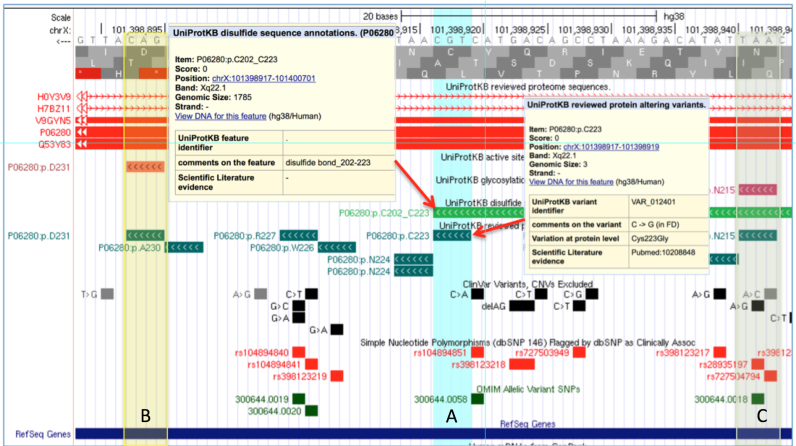
The UniProt knowledgebase is a large resource of protein sequences and associated detailed annotation. The database contains over 60 million sequences, of which over half a million sequences have been curated by experts who critically review experimental and predicted data for each protein. The remainder are automatically annotated based on rule systems that rely on the expert curated knowledge. Since our last update in 2014, we have more than doubled the number of reference proteomes to 5631, giving a greater coverage of taxonomic diversity. We implemented a pipeline to remove redundant highly similar proteomes that were causing excessive redundancy in UniProt. The initial run of this pipeline reduced the number of sequences in UniProt by 47 million. For our users interested in the accessory proteomes, we have made available sets of pan proteome sequences that cover the diversity of sequences for each species that is found in its strains and sub-strains. To help interpretation of genomic variants, we provide tracks of detailed protein information for the major genome browsers. We provide a SPARQL endpoint that allows complex queries of the more than 22 billion triples of data in UniProt (http://sparql.uniprot.org/). UniProt resources can be accessed via the website at http://www.uniprot.org/.
Overview
The claims and statistics of this paper haven’t been checked yet.
Free: it reads the open-access text and checks the first 5 claims that cite a source we can check. Create a free account to check every claim.
Integrity signals
Registry
Cites
Statistics
Figures




Verification
Claims the paper makes
The claims and statistics of this paper haven’t been checked yet.
Free: it reads the open-access text and checks the first 5 claims that cite a source we can check. Create a free account to check every claim.
Claims other papers make about this one
Each is checked against this paper’s own text: does it say what the citing paper says it does?
The source backs part of the claim, not all of it — or backs it for a different population, condition or comparison.
In the citing paper
“Less than 1% of the 148 million protein sequences in UniProt5 are annotated with experimentally confirmed functions in the Gene Ontology (GO)6 (April 2019).”
From Environmental conditions shape the nature of a minimal bacterial genome (2019) · cites this paper as [5]
Experimental — accuracy not yet measuredThe cited source says what the claim attributes to it.
In the citing paper
“Specifically, a set of 103 genes having autophagy (ATG) associated annotations from GO terms, UniProt131 and KEGG,132 were used to derive ML models using the metapath approach combined with the XGBoost algorithm.133”
From QSAR without borders (2020) · cites this paper as [131]
The check wasn’t confident either way, so it gives no verdict — never disputed.
In the citing paper
“Since more than 200 out of 343 yeast/fungi species are not annotated in UniProt 58 and KEGG 62”
From Deep learning-based kcat prediction enables improved enzyme-constrained model reconstruction (2022) · cites this paper as [58]
Experimental — accuracy not yet measuredThe check wasn’t confident either way, so it gives no verdict — never disputed.
In the citing paper
“Thanks to the human genome project, we can now estimate the number of protein-coding genes to be in the range of 19,587-20,245 (refs. 1,3,4).”
From How many human proteoforms are there? (2018) · cites this paper as [4]
Experimental — accuracy not yet measured
Self-check
Percentages, sums and reported differences re-computed from the paper’s own numbers.
The self-check needs the paper’s full text.
Citations
Cites
Richards, S., Aziz, N., Bale, S., Bick, D., Das, S., Gastier-Foster, J., Grody, W. W., Hegde, M., Lyon, E., Spector, E., et al. (2015) · Genetics in Medicine · doi:10.1038/gim.2015.30 · Cited by 32,594
UniProt: a hub for protein information
The UniProt Consortium (2015) · Nucleic Acids Research · doi:10.1093/nar/gku989 · Cited by 5,106
Self-citation2016 update of the PRIDE database and its related tools
Vizcaíno, J. A., Csordas, A., del-Toro, N., Dianes, J. A., Griss, J., Lavidas, I., Mayer, G., Perez-Riverol, Y., Reisinger, F., Ternent, T., et al. (2016) · Nucleic Acids Research · doi:10.1093/nar/gkv1145 · Cited by 3,451
UniRef clusters: a comprehensive and scalable alternative for improving sequence similarity searches
Suzek, B. E., Wang, Y., Huang, H., McGarvey, P. B., Wu, C. H., & the UniProt Consortium (2015) · Bioinformatics · doi:10.1093/bioinformatics/btu739 · Cited by 1,928
UniRef: comprehensive and non-redundant UniProt reference clusters
Suzek, B. E., Huang, H., McGarvey, P., Mazumder, R., & Wu, C. H. (2007) · Bioinformatics · doi:10.1093/bioinformatics/btm098 · Cited by 1,613
Proteoform: a single term describing protein complexity
The Consortium for Top Down Proteomics, Smith, L. M., & Kelleher, N. L. (2013) · Nature Methods · doi:10.1038/nmeth.2369 · Cited by 1,528
Medini, D., Donati, C., Tettelin, H., Masignani, V., & Rappuoli, R. (2005) · Current Opinion in Genetics & Development · doi:10.1016/j.gde.2005.09.006 · Cited by 1,299
The InterPro protein families database: the classification resource after 15 years
Mitchell, A., Chang, H.-Y., Daugherty, L., Fraser, M., Hunter, S., Lopez, R., McAnulla, C., McMenamin, C., Nuka, G., Pesseat, S., et al. (2015) · Nucleic Acids Research · doi:10.1093/nar/gku1243 · Cited by 1,274
Guidelines for investigating causality of sequence variants in human disease
MacArthur, D. G., Manolio, T. A., Dimmock, D. P., Rehm, H. L., Shendure, J., Abecasis, G. R., Adams, D. R., Altman, R. B., Antonarakis, S. E., Ashley, E. A., et al. (2014) · Nature · doi:10.1038/nature13127 · Cited by 1,224
Giraldo-Calderón, G. I., Emrich, S. J., MacCallum, R. M., Maslen, G., Dialynas, E., Topalis, P., Ho, N., Gesing, S., the VectorBase Consortium, Madey, G., et al. (2015) · Nucleic Acids Research · doi:10.1093/nar/gku1117 · Cited by 610
Cited by
Items 101–200 of 1,041
Critical assessment of protein intrinsic disorder prediction
Necci, M., Piovesan, D., Predictors, C., Hoque, M. T., Walsh, I., Iqbal, S., Vendruscolo, M., Sormanni, P., Wang, C., Raimondi, D., et al. (2021) · Nature Methods · doi:10.1038/s41592-021-01117-3 · Cited by 343
Developmental dynamics of lncRNAs across mammalian organs and species
Sarropoulos, I., Marin, R., Cardoso-Moreira, M., & Kaessmann, H. (2019) · Nature · doi:10.1038/s41586-019-1341-x · Cited by 341
Sumbalova, L., Stourac, J., Martinek, T., Bednar, D., & Damborsky, J. (2018) · Nucleic Acids Research · doi:10.1093/nar/gky417 · Cited by 340
Refining the impact of genetic evidence on clinical success
Minikel, E. V., Painter, J. L., Dong, C. C., & Nelson, M. R. (2024) · Nature · doi:10.1038/s41586-024-07316-0 · Cited by 337
Pertea, M., Shumate, A., Pertea, G., Varabyou, A., Breitwieser, F. P., Chang, Y.-C., Madugundu, A. K., Pandey, A., & Salzberg, S. L. (2018) · Genome Biology · doi:10.1186/s13059-018-1590-2 · Cited by 335
Using deep learning to annotate the protein universe
Bileschi, M. L., Belanger, D., Bryant, D. H., Sanderson, T., Carter, B., Sculley, D., Bateman, A., DePristo, M. A., & Colwell, L. J. (2022) · Nature Biotechnology · doi:10.1038/s41587-021-01179-w · Cited by 332
Oncogenic activation of the STAT3 pathway drives PD-L1 expression in natural killer/T-cell lymphoma
Song, T. L., Nairismägi, M.-L., Laurensia, Y., Lim, J.-Q., Tan, J., Li, Z.-M., Pang, W.-L., Kizhakeyil, A., Wijaya, G.-C., Huang, D.-C., et al. (2018) · Blood · doi:10.1182/blood-2018-01-829424 · Cited by 326
GABA-receptive microglia selectively sculpt developing inhibitory circuits
Favuzzi, E., Huang, S., Saldi, G. A., Binan, L., Ibrahim, L. A., Fernández-Otero, M., Cao, Y., Zeine, A., Sefah, A., Zheng, K., et al. (2021) · Cell · doi:10.1016/j.cell.2021.06.018 · Cited by 325
dbCAN-seq: a database of carbohydrate-active enzyme (CAZyme) sequence and annotation
Huang, L., Zhang, H., Wu, P., Entwistle, S., Li, X., Yohe, T., Yi, H., Yang, Z., & Yin, Y. (2018) · Nucleic Acids Research · doi:10.1093/nar/gkx894 · Cited by 323
Li, F., Hitch, T. C. A., Chen, Y., Creevey, C. J., & Guan, L. L. (2019) · Microbiome · doi:10.1186/s40168-019-0618-5 · Cited by 323
Intron retention is a source of neoepitopes in cancer
Smart, A. C., Margolis, C. A., Pimentel, H., He, M. X., Miao, D., Adeegbe, D., Fugmann, T., Wong, K.-K., & Van Allen, E. M. (2018) · Nature Biotechnology · doi:10.1038/nbt.4239 · Cited by 322
Machine learning for metabolic engineering: A review
Lawson, C. E., Martí, J. M., Radivojevic, T., Jonnalagadda, S. V. R., Gentz, R., Hillson, N. J., Peisert, S., Kim, J., Simmons, B. A., Petzold, C. J., et al. (2021) · Metabolic Engineering · doi:10.1016/j.ymben.2020.10.005 · Cited by 313
Erratum: Unexplored therapeutic opportunities in the human genome
Oprea, T. I., Bologa, C. G., Brunak, S., Campbell, A., Gan, G. N., Gaulton, A., Gomez, S. M., Guha, R., Hersey, A., Holmes, J., et al. (2018) · Nature Reviews Drug Discovery · doi:10.1038/nrd.2018.52 · Cited by 311
Learned protein embeddings for machine learning
Yang, K. K., Wu, Z., Bedbrook, C. N., & Arnold, F. H. (2018) · Bioinformatics · doi:10.1093/bioinformatics/bty178 · Cited by 311
Zimmermann, J., Kaleta, C., & Waschina, S. (2021) · Genome Biology · doi:10.1186/s13059-021-02295-1 · Cited by 311
Genenames.org: the HGNC and VGNC resources in 2019
Braschi, B., Denny, P., Gray, K., Jones, T., Seal, R., Tweedie, S., Yates, B., & Bruford, E. (2019) · Nucleic Acids Research · doi:10.1093/nar/gky930 · Cited by 310
Ge, Y., Tian, T., Huang, S., Wan, F., Li, J., Li, S., Wang, X., Yang, H., Hong, L., Wu, N., et al. (2021) · Signal Transduction and Targeted Therapy · doi:10.1038/s41392-021-00568-6 · Cited by 300
Levy Karin, E., Mirdita, M., & Söding, J. (2020) · Microbiome · doi:10.1186/s40168-020-00808-x · Cited by 299
Programmatic access to bioinformatics tools from EMBL-EBI update: 2017
Chojnacki, S., Cowley, A., Lee, J., Foix, A., & Lopez, R. (2017) · Nucleic Acids Research · doi:10.1093/nar/gkx273 · Cited by 295
Burley, S. K., Berman, H. M., Christie, C., Duarte, J. M., Feng, Z., Westbrook, J., Young, J., & Zardecki, C. (2018) · Protein Science · doi:10.1002/pro.3331 · Cited by 293
iPath3.0: interactive pathways explorer v3
Darzi, Y., Letunic, I., Bork, P., & Yamada, T. (2018) · Nucleic Acids Research · doi:10.1093/nar/gky299 · Cited by 292
Microbial genome analysis: the COG approach
Galperin, M. Y., Kristensen, D. M., Makarova, K. S., Wolf, Y. I., & Koonin, E. V. (2019) · Briefings in Bioinformatics · doi:10.1093/bib/bbx117 · Cited by 287
SBML Level 3: an extensible format for the exchange and reuse of biological models
Keating, S. M., Waltemath, D., König, M., Zhang, F., Dräger, A., Chaouiya, C., Bergmann, F. T., Finney, A., Gillespie, C. S., Helikar, T., et al. (2020) · Molecular Systems Biology · doi:10.15252/msb.20199110 · Cited by 285
Expression system for structural and functional studies of human glycosylation enzymes
Moremen, K. W., Ramiah, A., Stuart, M., Steel, J., Meng, L., Forouhar, F., Moniz, H. A., Gahlay, G., Gao, Z., Chapla, D., et al. (2018) · Nature Chemical Biology · doi:10.1038/nchembio.2539 · Cited by 284
Wolf, M., Poupardin, R. W., Ebner‐Peking, P., Andrade, A. C., Blöchl, C., Obermayer, A., Gomes, F. G., Vari, B., Maeding, N., Eminger, E., et al. (2022) · Journal of Extracellular Vesicles · doi:10.1002/jev2.12207 · Cited by 284
Engineering a Rugged Nanoscaffold To Enhance Plug-and-Display Vaccination
Bruun, T. U. J., Andersson, A.-M. C., Draper, S. J., & Howarth, M. (2018) · ACS Nano · doi:10.1021/acsnano.8b02805 · Cited by 281
Cano-Gamez, K., Soskic, B., Roumeliotis, T. I., So, E., Smyth, D. J., Baldrighi, M., Willé, D., Nakic, N., Esparza-Gordillo, J., Larminie, C. G. C., et al. (2020) · Nature Communications · doi:10.1038/s41467-020-15543-y · Cited by 274
Proteome-wide analysis of cysteine oxidation reveals metabolic sensitivity to redox stress
van der Reest, J., Lilla, S., Zheng, L., Zanivan, S., & Gottlieb, E. (2018) · Nature Communications · doi:10.1038/s41467-018-04003-3 · Cited by 270
STAT3, stem cells, cancer stem cells and p63
Galoczova, M., Coates, P., & Vojtesek, B. (2018) · Cellular & Molecular Biology Letters · doi:10.1186/s11658-018-0078-0 · Cited by 269
The Light and Dark Sides of Virtual Screening: What Is There to Know?
Gimeno, A., Ojeda-Montes, M. J., Tomás-Hernández, S., Cereto-Massagué, A., Beltrán-Debón, R., Mulero, M., Pujadas, G., & Garcia-Vallvé, S. (2019) · International Journal of Molecular Sciences · doi:10.3390/ijms20061375 · Cited by 267
Hydrogen Peroxide: Its Role in Plant Biology and Crosstalk with Signalling Networks
Černý, M., Habánová, H., Berka, M., Luklová, M., & Brzobohatý, B. (2018) · International Journal of Molecular Sciences · doi:10.3390/ijms19092812 · Cited by 266
Genome-reconstruction for eukaryotes from complex natural microbial communities
West, P. T., Probst, A. J., Grigoriev, I. V., Thomas, B. C., & Banfield, J. F. (2018) · Genome Research · doi:10.1101/gr.228429.117 · Cited by 266
Schoville, S. D., Chen, Y. H., Andersson, M. N., Benoit, J. B., Bhandari, A., Bowsher, J. H., Brevik, K., Cappelle, K., Chen, M.-J. M., Childers, A. K., et al. (2018) · Scientific Reports · doi:10.1038/s41598-018-20154-1 · Cited by 262
Kühl, I., Miranda, M., Atanassov, I., Kuznetsova, I., Hinze, Y., Mourier, A., Filipovska, A., & Larsson, N.-G. (2017) · eLife · doi:10.7554/elife.30952 · Cited by 261
Zhan, S., Fang, G., Cai, M., Kou, Z., Xu, J., Cao, Y., Bai, L., Zhang, Y., Jiang, Y., Luo, X., et al. (2020) · Cell Research · doi:10.1038/s41422-019-0252-6 · Cited by 260
Ruiz-Villalba, A., Romero, J. P., Hernández, S. C., Vilas-Zornoza, A., Fortelny, N., Castro-Labrador, L., San Martin-Uriz, P., Lorenzo-Vivas, E., García-Olloqui, P., Palacio, M., et al. (2020) · Circulation · doi:10.1161/circulationaha.119.044557 · Cited by 260
Mann, T., Gerwat, W., Batzer, J., Eggers, K., Scherner, C., Wenck, H., Stäb, F., Hearing, V. J., Röhm, K.-H., & Kolbe, L. (2018) · Journal of Investigative Dermatology · doi:10.1016/j.jid.2018.01.019 · Cited by 259
Srinivasan, S., Cui, H., Gao, Z., Liu, M., Lu, S., Mkandawire, W., Narykov, O., Sun, M., & Korkin, D. (2020) · Viruses · doi:10.3390/v12040360 · Cited by 257
Dana, J. M., Gutmanas, A., Tyagi, N., Qi, G., O’Donovan, C., Martin, M., & Velankar, S. (2019) · Nucleic Acids Research · doi:10.1093/nar/gky1114 · Cited by 254
PMut: a web-based tool for the annotation of pathological variants on proteins, 2017 update
López-Ferrando, V., Gazzo, A., de la Cruz, X., Orozco, M., & Gelpí, J. L. (2017) · Nucleic Acids Research · doi:10.1093/nar/gkx313 · Cited by 253
Dixon, L. E., Greenwood, J. R., Bencivenga, S., Zhang, P., Cockram, J., Mellers, G., Ramm, K., Cavanagh, C., Swain, S. M., & Boden, S. A. (2018) · The Plant Cell · doi:10.1105/tpc.17.00961 · Cited by 253
Marinko, J. T., Huang, H., Penn, W. D., Capra, J. A., Schlebach, J. P., & Sanders, C. R. (2019) · Chemical Reviews · doi:10.1021/acs.chemrev.8b00532 · Cited by 252
Marmor-Kollet, H., Siany, A., Kedersha, N., Knafo, N., Rivkin, N., Danino, Y. M., Moens, T. G., Olender, T., Sheban, D., Cohen, N., et al. (2020) · Molecular Cell · doi:10.1016/j.molcel.2020.10.032 · Cited by 252
Capturing variation impact on molecular interactions in the IMEx Consortium mutations data set
The IMEx Consortium Curators, Khadake, J., Meldal, B., Panni, S., Thorneycroft, D., van Roey, K., Abbani, S., Salwinski, L., Pellegrini, M., Iannuccelli, M., et al. (2019) · Nature Communications · doi:10.1038/s41467-018-07709-6 · Cited by 247
MaxDIA enables library-based and library-free data-independent acquisition proteomics
Sinitcyn, P., Hamzeiy, H., Salinas Soto, F., Itzhak, D., McCarthy, F., Wichmann, C., Steger, M., Ohmayer, U., Distler, U., Kaspar-Schoenefeld, S., et al. (2021) · Nature Biotechnology · doi:10.1038/s41587-021-00968-7 · Cited by 244
Esposito, D., Weile, J., Shendure, J., Starita, L. M., Papenfuss, A. T., Roth, F. P., Fowler, D. M., & Rubin, A. F. (2019) · Genome Biology · doi:10.1186/s13059-019-1845-6 · Cited by 242
Protein interaction networks revealed by proteome coevolution
Cong, Q., Anishchenko, I., Ovchinnikov, S., & Baker, D. (2019) · Science · doi:10.1126/science.aaw6718 · Cited by 241
Grancieri, M., Martino, H. S. D., & Gonzalez de Mejia, E. (2019) · Comprehensive Reviews in Food Science and Food Safety · doi:10.1111/1541-4337.12423 · Cited by 238
Network-Based Methods for Prediction of Drug-Target Interactions
Wu, Z., Li, W., Liu, G., & Tang, Y. (2018) · Frontiers in Pharmacology · doi:10.3389/fphar.2018.01134 · Cited by 237
“Sequences of target proteins can be downloaded from UniProt knowledgebase (Bateman et al., 2017).”
BackgroundRibeiro, A. J. M., Holliday, G. L., Furnham, N., Tyzack, J. D., Ferris, K., & Thornton, J. M. (2018) · Nucleic Acids Research · doi:10.1093/nar/gkx1012 · Cited by 235
Baseline human gut microbiota profile in healthy people and standard reporting template
King, C. H., Desai, H., Sylvetsky, A. C., LoTempio, J., Ayanyan, S., Carrie, J., Crandall, K. A., Fochtman, B. C., Gasparyan, L., Gulzar, N., et al. (2019) · PLOS ONE · doi:10.1371/journal.pone.0206484 · Cited by 235
“The mapping was done by identifying UniProt Proteome IDs [35] and the RPG [34] cluster that best matched the organism described.”
BackgroundMethodHe, C., Keren, R., Whittaker, M. L., Farag, I. F., Doudna, J. A., Cate, J. H. D., & Banfield, J. F. (2021) · Nature Microbiology · doi:10.1038/s41564-020-00840-5 · Cited by 235
Evolutionary dynamics of the kinetochore network in eukaryotes as revealed by comparative genomics
van Hooff, J. J., Tromer, E., van Wijk, L. M., Snel, B., & Kops, G. J. (2017) · EMBO reports · doi:10.15252/embr.201744102 · Cited by 229
Charting the Complexity of the Marine Microbiome through Single-Cell Genomics
Pachiadaki, M. G., Brown, J. M., Brown, J., Bezuidt, O., Berube, P. M., Biller, S. J., Poulton, N. J., Burkart, M. D., La Clair, J. J., Chisholm, S. W., et al. (2019) · Cell · doi:10.1016/j.cell.2019.11.017 · Cited by 228
Minimal PAM specificity of a highly similar SpCas9 ortholog
Chatterjee, P., Jakimo, N., & Jacobson, J. M. (2018) · Science Advances · doi:10.1126/sciadv.aau0766 · Cited by 228
Robichaud, S., Fairman, G., Vijithakumar, V., Mak, E., Cook, D. P., Pelletier, A. R., Huard, S., Vanderhyden, B. C., Figeys, D., Lavallée-Adam, M., et al. (2021) · Autophagy · doi:10.1080/15548627.2021.1886839 · Cited by 227
Unlocking the Potential of HK2 in Cancer Metabolism and Therapeutics
Garcia, S. N., Guedes, R. C., & Marques, M. M. (2020) · Current Medicinal Chemistry · doi:10.2174/0929867326666181213092652 · Cited by 227
Gene family innovation, conservation and loss on the animal stem lineage
(2018) · doi:10.7554/elife.34226 · Cited by 226
BitterDB: taste ligands and receptors database in 2019
Dagan-Wiener, A., Di Pizio, A., Nissim, I., Bahia, M. S., Dubovski, N., Margulis, E., & Niv, M. Y. (2019) · Nucleic Acids Research · doi:10.1093/nar/gky974 · Cited by 226
PhaSepDB: a database of liquid–liquid phase separation related proteins
You, K., Huang, Q., Yu, C., Shen, B., Sevilla, C., Shi, M., Hermjakob, H., Chen, Y., & Li, T. (2020) · Nucleic Acids Research · doi:10.1093/nar/gkz847 · Cited by 226
Hsiao, S. J., Zehir, A., Sireci, A. N., & Aisner, D. L. (2019) · The Journal of Molecular Diagnostics · doi:10.1016/j.jmoldx.2019.03.008 · Cited by 226
Combining LOPIT with differential ultracentrifugation for high-resolution spatial proteomics
Geladaki, A., Kočevar Britovšek, N., Breckels, L. M., Smith, T. S., Vennard, O. L., Mulvey, C. M., Crook, O. M., Gatto, L., & Lilley, K. S. (2019) · Nature Communications · doi:10.1038/s41467-018-08191-w · Cited by 225
Discovering protein drug targets using knowledge graph embeddings
Mohamed, S. K., Nováček, V., & Nounu, A. (2020) · Bioinformatics · doi:10.1093/bioinformatics/btz600 · Cited by 224
Brown, M. C., Holl, E. K., Boczkowski, D., Dobrikova, E., Mosaheb, M., Chandramohan, V., Bigner, D. D., Gromeier, M., & Nair, S. K. (2017) · Science Translational Medicine · doi:10.1126/scitranslmed.aan4220 · Cited by 224
Kumar, S., Karuppanan, K., & Subramaniam, G. (2022) · doi:10.1101/2022.02.11.480029 · Cited by 223
Yang, C., Chowdhury, D., Zhang, Z., Cheung, W. K., Lu, A., Bian, Z., & Zhang, L. (2021) · Computational and Structural Biotechnology Journal · doi:10.1016/j.csbj.2021.11.028 · Cited by 223
Structural principles of distinct assemblies of the human α4β2 nicotinic receptor
Walsh, R. M., Roh, S.-H., Gharpure, A., Morales-Perez, C. L., Teng, J., & Hibbs, R. E. (2018) · Nature · doi:10.1038/s41586-018-0081-7 · Cited by 223
Site-specific characterization of endogenous SUMOylation across species and organs
Hendriks, I. A., Lyon, D., Su, D., Skotte, N. H., Daniel, J. A., Jensen, L. J., & Nielsen, M. L. (2018) · Nature Communications · doi:10.1038/s41467-018-04957-4 · Cited by 223
Kumar, S., Karuppanan, K., & Subramaniam, G. (2022) · Journal of Medical Virology · doi:10.1002/jmv.27927 · Cited by 223
The SUPERFAMILY 2.0 database: a significant proteome update and a new webserver
Pandurangan, A. P., Stahlhacke, J., Oates, M. E., Smithers, B., & Gough, J. (2019) · Nucleic Acids Research · doi:10.1093/nar/gky1130 · Cited by 223
The BRENDA enzyme information system–From a database to an expert system
Schomburg, I., Jeske, L., Ulbrich, M., Placzek, S., Chang, A., & Schomburg, D. (2017) · Journal of Biotechnology · doi:10.1016/j.jbiotec.2017.04.020 · Cited by 222
Jaillard, M., Lima, L., Tournoud, M., Mahé, P., van Belkum, A., Lacroix, V., & Jacob, L. (2018) · PLOS Genetics · doi:10.1371/journal.pgen.1007758 · Cited by 222
Altenhoff, A. M., Glover, N. M., Train, C.-M., Kaleb, K., Warwick Vesztrocy, A., Dylus, D., de Farias, T. M., Zile, K., Stevenson, C., Long, J., et al. (2018) · Nucleic Acids Research · doi:10.1093/nar/gkx1019 · Cited by 221
Schmidt, T., Samaras, P., Frejno, M., Gessulat, S., Barnert, M., Kienegger, H., Krcmar, H., Schlegl, J., Ehrlich, H.-C., Aiche, S., et al. (2018) · Nucleic Acids Research · doi:10.1093/nar/gkx1029 · Cited by 221
Heckmann, D., Lloyd, C. J., Mih, N., Ha, Y., Zielinski, D. C., Haiman, Z. B., Desouki, A. A., Lercher, M. J., & Palsson, B. O. (2018) · Nature Communications · doi:10.1038/s41467-018-07652-6 · Cited by 218
Diamond, S., Andeer, P. F., Li, Z., Crits-Christoph, A., Burstein, D., Anantharaman, K., Lane, K. R., Thomas, B. C., Pan, C., Northen, T. R., et al. (2019) · Nature Microbiology · doi:10.1038/s41564-019-0449-y · Cited by 218
AnOxPePred: using deep learning for the prediction of antioxidative properties of peptides
Olsen, T. H., Yesiltas, B., Marin, F. I., Pertseva, M., García-Moreno, P. J., Gregersen, S., Overgaard, M. T., Jacobsen, C., Lund, O., Hansen, E. B., et al. (2020) · Scientific Reports · doi:10.1038/s41598-020-78319-w · Cited by 215
Tao, Q., Du, J., Li, X., Zeng, J., Tan, B., Xu, J., Lin, W., & Chen, X.-L. (2020) · Drug Development and Industrial Pharmacy · doi:10.1080/03639045.2020.1788070 · Cited by 215
Membrane Active Peptides and Their Biophysical Characterization
Avci, F. G., Sariyar Akbulut, B., & Ozkirimli, E. (2018) · Biomolecules · doi:10.3390/biom8030077 · Cited by 214
The neXtProt knowledgebase in 2020: data, tools and usability improvements
Zahn-Zabal, M., Michel, P.-A., Gateau, A., Nikitin, F., Schaeffer, M., Audot, E., Gaudet, P., Duek, P. D., Teixeira, D., Rech de Laval, V., et al. (2019) · Nucleic Acids Research · doi:10.1093/nar/gkz995 · Cited by 214
PRGdb 3.0: a comprehensive platform for prediction and analysis of plant disease resistance genes
Osuna‐Cruz, C. M., Paytuví-Gallart, A., Donato, A. D., Sundesha, V., Andolfo, G., Cigliano, R. A., Sanseverino, W., & Ercolano, M. R. (2017) · Nucleic Acids Research · doi:10.1093/nar/gkx1119 · Cited by 214
Molecular dialogues between Trichoderma and roots: Role of the fungal secretome
Mendoza-Mendoza, A., Zaid, R., Lawry, R., Hermosa, R., Monte, E., Horwitz, B. A., & Mukherjee, P. K. (2018) · Fungal Biology Reviews · doi:10.1016/j.fbr.2017.12.001 · Cited by 213
Wingo, A. P., Dammer, E. B., Breen, M. S., Logsdon, B. A., Duong, D. M., Troncosco, J. C., Thambisetty, M., Beach, T. G., Serrano, G. E., Reiman, E. M., et al. (2019) · Nature Communications · doi:10.1038/s41467-019-09613-z · Cited by 211
ClinVar at five years: Delivering on the promise
Landrum, M. J., & Kattman, B. L. (2018) · Human Mutation · doi:10.1002/humu.23641 · Cited by 210
Mitchell, A. L., Scheremetjew, M., Denise, H., Potter, S., Tarkowska, A., Qureshi, M., Salazar, G. A., Pesseat, S., Boland, M. A., Hunter, F. M. I., et al. (2018) · Nucleic Acids Research · doi:10.1093/nar/gkx967 · Cited by 210
Structure of the Native Muscle-type Nicotinic Receptor and Inhibition by Snake Venom Toxins
Rahman, M., Teng, J., Worrell, B. T., Noviello, C., Lee, M., Karlin, A., Stowell, M. H. B., & Hibbs, R. E. (2020) · Neuron · doi:10.1016/j.neuron.2020.03.012 · Cited by 210
A major lineage of non-tailed dsDNA viruses as unrecognized killers of marine bacteria
Kauffman, K. M., Hussain, F. A., Yang, J., Arevalo, P., Brown, J. M., Chang, W. K., VanInsberghe, D., Elsherbini, J., Sharma, R. S., Cutler, M. B., et al. (2018) · Nature · doi:10.1038/nature25474 · Cited by 208
Piovesan, D., Tabaro, F., Paladin, L., Necci, M., Mičetić, I., Camilloni, C., Davey, N., Dosztányi, Z., Mészáros, B., Monzon, A. M., et al. (2018) · Nucleic Acids Research · doi:10.1093/nar/gkx1071 · Cited by 208
Early Pleistocene enamel proteome from Dmanisi resolves Stephanorhinus phylogeny
Cappellini, E., Welker, F., Pandolfi, L., Ramos-Madrigal, J., Samodova, D., Rüther, P. L., Fotakis, A. K., Lyon, D., Moreno-Mayar, J. V., Bukhsianidze, M., et al. (2019) · Nature · doi:10.1038/s41586-019-1555-y · Cited by 205
PhaSePro: the database of proteins driving liquid–liquid phase separation
Mészáros, B., Erdős, G., Szabó, B., Schád, É., Tantos, Á., Abukhairan, R., Horváth, T., Murvai, N., Kovács, O. P., Kovács, M., et al. (2019) · Nucleic Acids Research · doi:10.1093/nar/gkz848 · Cited by 203
Halogens in Protein–Ligand Binding Mechanism: A Structural Perspective
Shinada, N. K., de Brevern, A. G., & Schmidtke, P. (2019) · Journal of Medicinal Chemistry · doi:10.1021/acs.jmedchem.8b01453 · Cited by 201
A cross-platform approach identifies genetic regulators of human metabolism and health
MacTel Consortium, Lotta, L. A., Pietzner, M., Stewart, I. D., Wittemans, L. B. L., Li, C., Bonelli, R., Raffler, J., Biggs, E. K., Oliver-Williams, C., et al. (2021) · Nature Genetics · doi:10.1038/s41588-020-00751-5 · Cited by 200
Proteomics: a powerful tool to study plant responses to biotic stress
Liu, Y., Lu, S., Liu, K., Wang, S., Huang, L., & Guo, L. (2019) · Plant Methods · doi:10.1186/s13007-019-0515-8 · Cited by 200
Structural basis of ligand recognition at the human MT1 melatonin receptor
Stauch, B., Johansson, L. C., McCorvy, J. D., Patel, N., Han, G. W., Huang, X.-P., Gati, C., Batyuk, A., Slocum, S. T., Ishchenko, A., et al. (2019) · Nature · doi:10.1038/s41586-019-1141-3 · Cited by 199
Plant Glycine-Rich Proteins in Stress Response: An Emerging, Still Prospective Story
Czołpińska, M., & Rurek, M. (2018) · Frontiers in Plant Science · doi:10.3389/fpls.2018.00302 · Cited by 204
Mesenchymal stem cells secretome: The cornerstone of cell-free regenerative medicine
González-González, A., García-Sánchez, D., Dotta, M., Rodríguez-Rey, J. C., & Pérez-Campo, F. M. (2020) · World Journal of Stem Cells · doi:10.4252/wjsc.v12.i12.1529 · Cited by 198
Human proteins that interact with RNA/DNA hybrids
Wang, I. X., Grunseich, C., Fox, J., Burdick, J., Zhu, Z., Ravazian, N., Hafner, M., & Cheung, V. G. (2018) · Genome Research · doi:10.1101/gr.237362.118 · Cited by 198
Molecular and cellular paradigms of multidrug resistance in cancer
Vaidya, F. U., Sufiyan Chhipa, A., Mishra, V., Gupta, V. K., Rawat, S. G., Kumar, A., & Pathak, C. (2022) · Cancer Reports · doi:10.1002/cnr2.1291 · Cited by 197
Drake, J. C., Wilson, R. J., Laker, R. C., Guan, Y., Spaulding, H. R., Nichenko, A. S., Shen, W., Shang, H., Dorn, M. V., Huang, K., et al. (2021) · Proceedings of the National Academy of Sciences · doi:10.1073/pnas.2025932118 · Cited by 196
The eukaryotic linear motif resource – 2018 update
Gouw, M., Michael, S., Sámano-Sánchez, H., Kumar, M., Zeke, A., Lang, B., Bely, B., Chemes, L. B., Davey, N. E., Deng, Z., et al. (2018) · Nucleic Acids Research · doi:10.1093/nar/gkx1077 · Cited by 193
Metadata
- Authors
- The UniProt Consortium
- Affiliations
- SIB Swiss Institute of Bioinformatics (CH)
- Corresponding author
- The UniProt Consortium
- Venue
- Nucleic Acids Research
- Publisher
- Oxford University Press (OUP)
- Published
- 2016-11-29
- Volume
- 45
- Issue
- D1
- Pages
- D158-D169
- ISSN
- 0305-1048 (ISSN-L)
- 1362-4962
- PMC
- PMC5210571
- OpenAlex
- W4210702584
- Cited by
- 4,436
- References
- 30
- Citations by year
- 2026: 137 · 2025: 181 · 2024: 239 · 2023: 238 · 2022: 378 · 2021: 491 · 2020: 610 · 2019: 898 · 2018: 910 · 2017: 349
- FWCI
- 375.36
- Type
- journal article
- Language
- en
- Open access
- gold
- doi.org
- Licence
- Locations
- Nucleic Acids Research (publishedVersion, cc-by)
- PubMed Central (publishedVersion, cc-by)
- PubMed (publishedVersion)
- HighWire Press Open Archive (submittedVersion)
- Funders
- Wellcome Trust
- European Molecular Biology Laboratory
- Australian Government
- British Heart Foundation (RG/13/5/30112)
- Parkinson's UK (G-1307)
- National Institutes of Health
- Biotechnology and Biological Sciences Research Council (BB/M011674/1)
- Staatssekretariat für Bildung, Forschung und Innovation
- National Human Genome Research Institute (U41HG002273, U41HG007822)
- National Institute of General Medical Sciences (U01GM120953, R01GM080646, R13GM109648, P20GM103446)
- Topics
- Life Sciences › Biochemistry, Genetics and Molecular Biology › Molecular Biology › Genomics and Phylogenetic Studies
- Life Sciences › Biochemistry, Genetics and Molecular Biology › Molecular Biology › Bioinformatics and Genomic Networks
- Physical Sciences › Chemistry › Spectroscopy › Advanced Proteomics Techniques and Applications
- Keywords
- UniProt, protein sequences, protein annotation, reference proteomes, genome browser tracks, genetic variants, SPARQL endpoint, taxonomic diversity
- MeSH terms
- Computational Biology, Proteome, Genomics, Databases, Protein, Proteomics, Web Browser
About these checks
Registry, retraction, Cites and statistics results are computed, not judged, with one exception: a printed reference that no index lists is read once by a model before it counts as a citation error. Claims are extracted by a model and kept only when their quote appears verbatim in the text; each cited source is then checked, with a model’s help, for whether it says what the claim relies on. Those verdicts can be wrong — read the claim’s quote and the cited source before relying on one.
Statistics and arithmetic are recomputed, not judged.
Confidence bands are shown only for fields calibrated on our annotated test set. None is calibrated yet, so no band is shown.
What counts as a claim ›How we measure confidence ›How we check this ›
Are you an author, or do you see a problem with this page? Request a review
Data sources
Bibliographic data: Semantic Scholar, OpenAlex, Crossref.
Contains information from the Semantic Scholar Academic Graph Datasets, made available under the ODC Attribution License (ODC-BY 1.0).
Semantic Scholar’s data is described in: Kinney, R., et al. (2023). The Semantic Scholar Open Data Platform. arXiv:2301.10140.
