

The DOI matches its Crossref record; 64 of the 65 references it cites were found in a registry or an index.
Using neural networks for reducing the dimensions of single-cell RNA-Seq data
Open accessPublished version of a preprint
Abstract
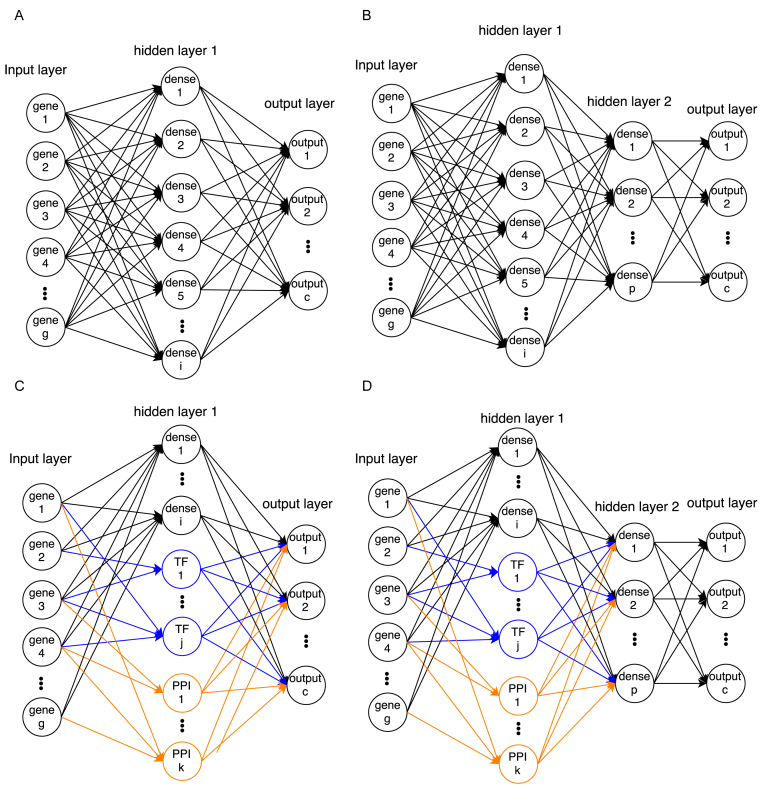
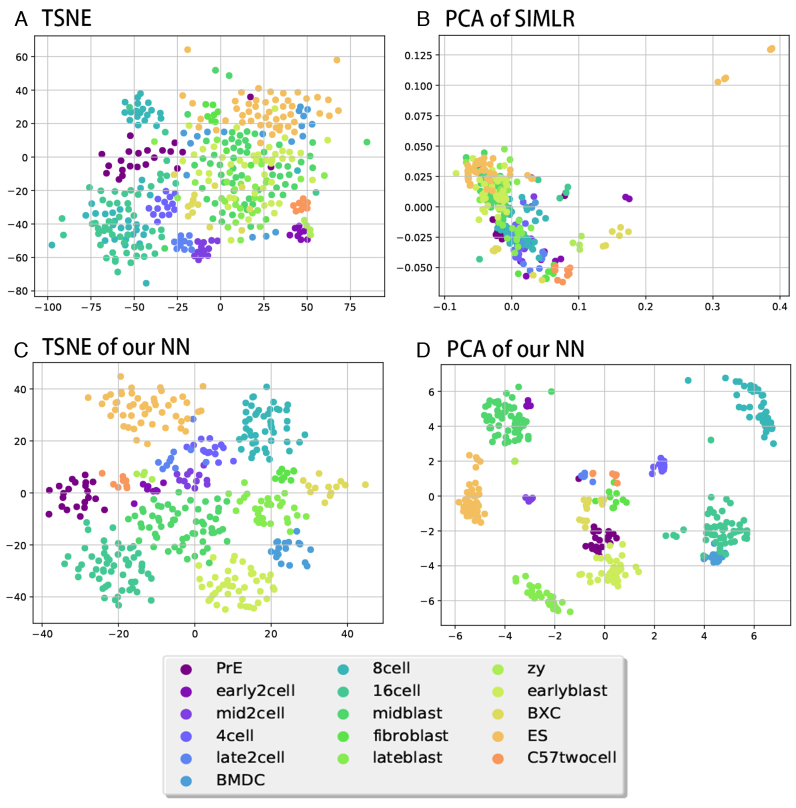
While only recently developed, the ability to profile expression data in single cells (scRNA-Seq) has already led to several important studies and findings. However, this technology has also raised several new computational challenges. These include questions about the best methods for clustering scRNA-Seq data, how to identify unique group of cells in such experiments, and how to determine the state or function of specific cells based on their expression profile. To address these issues we develop and test a method based on neural networks (NN) for the analysis and retrieval of single cell RNA-Seq data. We tested various NN architectures, some of which incorporate prior biological knowledge, and used these to obtain a reduced dimension representation of the single cell expression data. We show that the NN method improves upon prior methods in both, the ability to correctly group cells in experiments not used in the training and the ability to correctly infer cell type or state by querying a database of tens of thousands of single cell profiles. Such database queries (which can be performed using our web server) will enable researchers to better characterize cells when analyzing heterogeneous scRNA-Seq samples.
Overview
The claims and statistics of this paper haven’t been checked yet.
Run the check — free, no account needed. It reads the open-access text and checks the sources it cites.
Integrity signals
Registry
Cites
Statistics
Figures
Verification
Claims the paper makes
The claims and statistics of this paper haven’t been checked yet.
Run the check — free, no account needed. It reads the open-access text and checks the sources it cites.
Claims other papers make about this one
Each is checked against this paper’s own text: does it say what the citing paper says it does?
In the citing paper
“This idea was recently explored by Lin et al. (2017), who predicted cell type and state using a deep neural network for which the structure was determined based on the hierarchical organization of transcriptional regulatory factors in the nucleus.”
From Visible Machine Learning for Biomedicine (2018) · cites this paper as Lin et al., 2017
In the citing paper
“In contrast, direct incorporation of the biological structure of cells and tissues, such as explored by Lin et al. (2017) and Ma et al. (2018), leads to a ready-made working model of how biological inputs, such as genotype, are compressed to determine outcomes.”
From Visible Machine Learning for Biomedicine (2018) · cites this paper as Lin et al., 2017
Self-check
Percentages, sums and reported differences re-computed from the paper’s own numbers.
The self-check needs the paper’s full text.
Citations
Cites
Multilayer feedforward networks are universal approximators
Hornik, K., Stinchcombe, M., & White, H. (1989) · Neural Networks · doi:10.1016/0893-6080(89)90020-8 · Cited by 21,728 · cited 1×
“These networks are universal function approximators (17) and, while training such networks takes longer than the unsupervised methods discussed above, they are very scalable in terms of training when using GPUs.”
BackgroundReducing the dimensionality of data with neural networks
Hinton, G. E., & Salakhutdinov, R. R. (2006) · Science · doi:10.1126/science.1127647 · Cited by 20,928
(2010) · Cited by 14,134
(2016) · Cited by 11,679
NCBI GEO: archive for functional genomics data sets—update
Barrett, T., Wilhite, S. E., Ledoux, P., Evangelista, C., Kim, I. F., Tomashevsky, M., Marshall, K. A., Phillippy, K. H., Sherman, P. M., Holko, M., et al. (2012) · Nucleic Acids Research · doi:10.1093/nar/gks1193 · Cited by 10,418 · cited 2×
“We collected a total of 33 datasets with more than 17 000 single cell expression profiles from published papers and from the Gene Expression Omnibus (21) (GEO).”
MethodMultilayer feedforward networks are universal approximators
HornikK., StinchcombeM., & WhiteH. (1989) · Neural Networks · doi:10.5555/70405.70408 · Cited by 9,266
Hubert, L., & Arabie, P. (1985) · Journal of Classification · doi:10.1007/bf01908075 · Cited by 8,219
(2007) · doi:10.5555/1283383.1283494 · Cited by 7,364
Trapnell, C., Cacchiarelli, D., Grimsby, J., Pokharel, P., Li, S., Morse, M., Lennon, N. J., Livak, K. J., Mikkelsen, T. S., & Rinn, J. L. (2014) · Nature Biotechnology · doi:10.1038/nbt.2859 · Cited by 7,314
Missing Value Estimation Methods for DNA Microarrays
Troyanskaya, O., Cantor, M., Sherlock, G., Brown, P., Hastie, T., Tibshirani, R., Botstein, D., & Altman, R. B. (2001) · Bioinformatics · doi:10.1093/bioinformatics/17.6.520 · Cited by 4,230
Cited by
Sorted by citations
High-performance medicine: the convergence of human and artificial intelligence
Topol, E. J. (2019) · Nature Medicine · doi:10.1038/s41591-018-0300-7 · Cited by 10,450
Deep generative modeling for single-cell transcriptomics
Lopez, R., Regier, J., Cole, M. B., Jordan, M. I., & Yosef, N. (2018) · Nature Methods · doi:10.1038/s41592-018-0229-2 · Cited by 2,530
“In [18], neural networks are used as function approximators reducing the dimension of single-cell RNA sequencing data; however, this model is a supervised learning method and inherently relies on some labeling of the cells.”
MethodOpportunities and obstacles for deep learning in biology and medicine
Ching, T., Himmelstein, D. S., Beaulieu-Jones, B. K., Kalinin, A. A., Do, B. T., Way, G. P., Ferrero, E., Agapow, P.-M., Zietz, M., Hoffman, M. M., et al. (2018) · Journal of The Royal Society Interface · doi:10.1098/rsif.2017.0387 · Cited by 2,310
Eleven grand challenges in single-cell data science
Lähnemann, D., Köster, J., Szczurek, E., McCarthy, D. J., Hicks, S. C., Robinson, M. D., Vallejos, C. A., Campbell, K. R., Beerenwinkel, N., Mahfouz, A., et al. (2020) · Genome Biology · doi:10.1186/s13059-020-1926-6 · Cited by 1,327
Deep learning: new computational modelling techniques for genomics
Eraslan, G., Avsec, Ž., Gagneur, J., & Theis, F. J. (2019) · Nature Reviews Genetics · doi:10.1038/s41576-019-0122-6 · Cited by 1,270
A primer on deep learning in genomics
Zou, J., Huss, M., Abid, A., Mohammadi, P., Torkamani, A., & Telenti, A. (2019) · Nature Genetics · doi:10.1038/s41588-018-0295-5 · Cited by 891
Zitnik, M., Nguyen, F., Wang, B., Leskovec, J., Goldenberg, A., & Hoffman, M. M. (2019) · Information Fusion · doi:10.1016/j.inffus.2018.09.012 · Cited by 675
Single-cell multiomics: technologies and data analysis methods
Lee, J., Hyeon, D. Y., & Hwang, D. (2020) · Experimental & Molecular Medicine · doi:10.1038/s12276-020-0420-2 · Cited by 524
scPred: accurate supervised method for cell-type classification from single-cell RNA-seq data
Alquicira-Hernández, J., Sathe, A., Ji, H. P., Nguyen, Q. H., & Powell, J. E. (2019) · Genome biology · doi:10.1186/s13059-019-1862-5 · Cited by 474
Crow, M., Paul, A., Ballouz, S., Huang, Z. J., & Gillis, J. (2018) · Nature Communications · doi:10.1038/s41467-018-03282-0 · Cited by 365
Clustering single-cell RNA-seq data with a model-based deep learning approach
Tian, T., Wan, J., Song, Q., & Wei, Z. (2019) · Nature Machine Intelligence · doi:10.1038/s42256-019-0037-0 · Cited by 437
“Meanwhile, a study demonstrates that DNNs can reduce the dimensions of scRNA-seq data in a supervised manner 32 .”
BackgroundCox-nnet: An artificial neural network method for prognosis prediction of high-throughput omics data
Ching, T. H., Zhu, X., & Garmire, L. X. (2018) · PLoS Computational Biology · doi:10.1371/journal.pcbi.1006076 · Cited by 428
A Review of Challenges and Opportunities in Machine Learning for Health
Ghassemi, M., Naumann, T., Schulam, P., Beam, A. L., Chen, I. Y., & Ranganath, R. (2018) · PubMed · doi:10.48550/arxiv.1806.00388 · Cited by 368
“There has also been some initial exploration into learning representations of other data types that simultaneously capture hierarchy and similarity 110-112 .”
BackgroundDeep learning for inferring gene relationships from single-cell expression data
Yuan, Y., & Bar‐Joseph, Z. (2019) · Proceedings of the National Academy of Sciences · doi:10.1073/pnas.1911536116 · Cited by 270
“These methods also serve as an initial step in some of the most widely used tools for the analysis of genomics data including network inference and reconstruction approaches (3, 9, 10), methods for classification based on genes expression (11) and many more.”
MethodSpatially aware dimension reduction for spatial transcriptomics
Shang, L., & Zhou, X. (2022) · Nature Communications · doi:10.1038/s41467-022-34879-1 · Cited by 256
ACTINN: automated identification of cell types in single cell RNA sequencing
Ma, F., & Pellegrini, M. (2020) · Bioinformatics · doi:10.1093/bioinformatics/btz592 · Cited by 252
Predicting drug response of tumors from integrated genomic profiles by deep neural networks
Chiu, Y., Chen, H.-I. H., Zhang, T., Zhang, S., Gorthi, A., Wang, L., Huang, Y., & Chen, Y. (2019) · BMC Medical Genomics · doi:10.1186/s12920-018-0460-9 · Cited by 232
Modeling gene regulatory networks using neural network architectures
Shu, H., Zhou, J., Lian, Q., Li, H., Zhao, D. Y., Zeng, J., & Ma, J. (2021) · Nature Computational Science · doi:10.1038/s43588-021-00099-8 · Cited by 223
Clustering and classification methods for single-cell RNA-sequencing data
Qi, R., Ma, A., Ma, Q., & Zou, Q. (2019) · Briefings in Bioinformatics · doi:10.1093/bib/bbz062 · Cited by 218
“t-SNE has been used recently to reduce the dimensionality of scRNA-seq data [46, 47].”
MethodGCNG: graph convolutional networks for inferring gene interaction from spatial transcriptomics data
Yuan, Y., & Bar-Joseph, Z. (2020) · Genome Biology · doi:10.1186/s13059-020-02214-w · Cited by 194
Temporal modelling using single-cell transcriptomics
Ding, J., Sharon, N., & Bar-Joseph, Z. (2022) · Nature Reviews Genetics · doi:10.1038/s41576-021-00444-7 · Cited by 195
“Here, numerous dimensionality reduction methods including t -distributed stochastic neighbour embedding ( t -SNE) 29 , uniform manifold approximation and projection (UMAP) 30 and neural-network-based auto-encoders 31 have been used.”
MethodZheng, R., Li, M., Liang, Z., Wu, F., Pan, Y. F., & Wang, J. (2019) · Bioinformatics · doi:10.1093/bioinformatics/btz139 · Cited by 168
Visible Machine Learning for Biomedicine
Yu, M. K., Ma, J., Fisher, J., Kreisberg, J. F., Raphael, B. J., & Ideker, T. (2018) · Cell · doi:10.1016/j.cell.2018.05.056 · Cited by 162
Cell lineage and communication network inference via optimization for single-cell transcriptomics
Wang, S., Karikomi, M. K., MacLean, A. L., & Nie, Q. H. (2019) · Nucleic Acids Research · doi:10.1093/nar/gkz204 · Cited by 157
“Cell subpopulations can also be identified using machine learning approaches (11,12) or by analyzing cell-specific gene regulatory networks (13).”
BackgroundMicroalgae with Artificial Intelligence: A Digitalized Perspective on Genetics, Systems and Products
Teng, S. Y., Yew, G. Y., Sukačová, K., Show, P. L., Máša, V., & Chang, J.-S. (2020) · Biotechnology Advances · doi:10.1016/j.biotechadv.2020.107631 · Cited by 145
Machine learning for perturbational single-cell omics
Ji, Y., Lotfollahi, M., Wolf, F. A., & Theis, F. J. (2021) · Cell Systems · doi:10.1016/j.cels.2021.05.016 · Cited by 137
Murmu, S., Sinha, D., Chaurasia, H., Sharma, S., Das, R., Jha, G. K., & Archak, S. (2024) · Frontiers in Plant Science · doi:10.3389/fpls.2024.1292054 · Cited by 150
“…in single-cell RNA (scRNA) sequencing are addressed by ML approaches, such as the SIMLR Frontiers in Plant Science frontiersin.org algorithm (Wang et al., 2017) and neural network models (Lin et al., 2017), providing more reliable insights into the intricate landscape of single-cell genomics.”
MethodFortelny, N., & Bock, C. (2020) · Genome Biology · doi:10.1186/s13059-020-02100-5 · Cited by 135
Review of single-cell RNA-seq data clustering for cell-type identification and characterization
Zhang, S., Li, X., Lin, J., Lin, Q., & Wong, K. (2023) · RNA · doi:10.1261/rna.078965.121 · Cited by 120
“In addition, there are also other dimensional reduction methods such as CIDR (Lin et al. 2017b) applied principal coordinate analysis, which preserves the distance information in low-dimension space from its high-dimension space.”
BackgroundMethodInfluentialWhen causal inference meets deep learning
Luo, Y., Peng, J., & Ma, J. (2020) · Nature Machine Intelligence · doi:10.1038/s42256-020-0218-x · Cited by 115
Elyanow, R., Dumitrascu, B., Engelhardt, B. E., & Raphael, B. J. (2020) · Genome Research · doi:10.1101/gr.251603.119 · Cited by 106
Generative adversarial networks simulate gene expression and predict perturbations in single cellsPreprint
Ghahramani, A., Watt, F. M., & Luscombe, N. M. (2018) · bioRxiv (Cold Spring Harbor Laboratory) · doi:10.1101/262501 · Cited by 99
Structure-preserving visualisation of high dimensional single-cell datasets
Szubert, B., Cole, J. E., Monaco, C. G., & Drozdov, I. A. (2019) · Scientific Reports · doi:10.1038/s41598-019-45301-0 · Cited by 95
Reviewing methods of deep learning for intelligent healthcare systems in genomics and biomedicine
Zafar, I., Anwar, S., kanwal, F., Yousaf, W., Nisa, F. U., Kausar, T., Ain, Q. U., Unar, A., Kamal, M. A., Rashid, S., et al. (2023) · Biomedical Signal Processing and Control · doi:10.1016/j.bspc.2023.105263 · Cited by 104
Artificial intelligence in food science and nutrition: A narrative review
Miyazawa, T., Hiratsuka, Y., Toda, M., Hatakeyama, N., Ozawa, H., Abe, C., Cheng, T.-Y., Matsushima, Y., Miyawaki, Y., Ashida, K., et al. (2022) · Nutrition Reviews · doi:10.1093/nutrit/nuac033 · Cited by 91
Zhang, X., Ibrahim, Z., Khaskheli, M. B., Raza, H., Zhou, F., & Shamsi, I. H. (2024) · Sustainability · doi:10.3390/su16177651 · Cited by 93
PASSION: an ensemble neural network approach for identifying the binding sites of RBPs on circRNAs
Jia, C., Bi, Y., Chen, J.-X., Leier, A., Li, F., & Song, J. (2020) · Bioinformatics · doi:10.1093/bioinformatics/btaa522 · Cited by 81
Single-cell lineage tracing by integrating CRISPR-Cas9 mutations with transcriptomic data
Zafar, H., Lin, C. H., & Bar‐Joseph, Z. (2020) · Nature Communications · doi:10.1038/s41467-020-16821-5 · Cited by 85
“20 as ground truth and use Adjusted Rand Index (ARI) as the clustering metric following 47 .”
MethodWay, G. P., Zietz, M., Rubinetti, V., Himmelstein, D. S., & Greene, C. S. (2020) · Genome biology · doi:10.1186/s13059-020-02021-3 · Cited by 76
“Additional methods, like DeepLift, can be used to reveal gene importance values in internal representations of deep networks [55, 56].”
MethodDeep learning of pharmacogenomics resources: moving towards precision oncology
Chiu, Y., Chen, H.-I. H., Gorthi, A., Mostavi, M., Zheng, S., Huang, Y., & Chen, Y. (2019) · Briefings in Bioinformatics · doi:10.1093/bib/bbz144 · Cited by 80
“In genomics, AEs have been successfully used to cluster single-cell RNA-seq data that typically include up to 10 000 samples [24, 25].”
MethodDeep learning tackles single-cell analysis—a survey of deep learning for scRNA-seq analysis
Flores, M. A., Liu, Z., Zhang, T., Hasib, M. M., Chiu, Y., Ye, Z., Paniagua, K., Jo, S., Zhang, J., Gao, S., et al. (2021) · Briefings in Bioinformatics · doi:10.1093/bib/bbab531 · Cited by 73
Single-cell RNA-seq clustering: datasets, models, and algorithms
Peng, L., Tian, X., Tian, G., Xu, J., Huang, X., Weng, Y., Yang, J., & Zhou, L. (2020) · RNA Biology · doi:10.1080/15476286.2020.1728961 · Cited by 77
Trends and Potential of Machine Learning and Deep Learning in Drug Study at Single-Cell Level
Qi, R., & Zou, Q. (2023) · Research · doi:10.34133/research.0050 · Cited by 74
scGMAI: a Gaussian mixture model for clustering single-cell RNA-Seq data based on deep autoencoder
Yu, B., Chen, C., Qi, R., Zheng, R., Skillman-Lawrence, P. J., Wang, X., Ma, A., & Gu, H. (2020) · Briefings in Bioinformatics · doi:10.1093/bib/bbaa316 · Cited by 73
Tzec-Interián, J. A., González‐Padilla, D., & Góngora‐Castillo, E. (2025) · Quantitative Biology · doi:10.1002/qub2.78 · Cited by 89
Deep learning-based prediction model for diagnosing gastrointestinal diseases using endoscopy images
Sharma, A., Kumar, R., & Garg, P. (2023) · International Journal of Medical Informatics · doi:10.1016/j.ijmedinf.2023.105142 · Cited by 72
Autoencoder-based cluster ensembles for single-cell RNA-seq data analysis
Geddes, T. A., Kim, T.-Y., Nan, L., Burchfield, J. G., Yang, J. Y. H., Tao, D., & Yang, P. (2019) · BMC Bioinformatics · doi:10.1186/s12859-019-3179-5 · Cited by 60
“Recently, deep learning techniques such as scvis, a deep generative model [17], and a scNN [18], a neural network model, were developed specifically for scRNA-seq data dimension-reduction.”
MethodWang, L., Nie, R., Yu, Z., Xin, R., Zheng, C., Zhang, Z., Zhang, J., & Cai, J. (2020) · Nature Machine Intelligence · doi:10.1038/s42256-020-00244-4 · Cited by 62
Wi, S., & Steinschneider, S. (2024) · Hydrology and earth system sciences · doi:10.5194/hess-28-479-2024 · Cited by 71
Deep learning in spatially resolved transcriptomics: a comprehensive technical view
Zahedi, R., Ghamsari, M. R. E., Argha, A., MacPhillamy, C., Beheshti, A., Alizadehsani, R., Lovell, N. H., Lotfollahi, M., & Alinejad‐Rokny, H. (2024) · Briefings in Bioinformatics · doi:10.1093/bib/bbae082 · Cited by 82
A web server for comparative analysis of single-cell RNA-seq data
Alavi, A., Ruffalo, M., Parvangada, A., Huang, Z., & Bar‐Joseph, Z. (2018) · Nature Communications · doi:10.1038/s41467-018-07165-2 · Cited by 60
The Pediatric Cell Atlas: Defining the Growth Phase of Human Development at Single-Cell Resolution
Taylor, D. M., Aronow, B. J., Tan, K., Bernt, K. M., Salomonis, N., Greene, C. S., Frolova, A., Henrickson, S. E., Wells, A. D., Pei, L., et al. (2019) · Developmental Cell · doi:10.1016/j.devcel.2019.03.001 · Cited by 64
Dhaka: variational autoencoder for unmasking tumor heterogeneity from single cell genomic data
Rashid, S., Shah, S. P., Bar‐Joseph, Z., & Pandya, R. (2019) · Bioinformatics · doi:10.1093/bioinformatics/btz095 · Cited by 55
Peng, J., Wang, X., & Shang, X. (2019) · BMC Bioinformatics · doi:10.1186/s12859-019-2769-6 · Cited by 56
GSAE: an autoencoder with embedded gene-set nodes for genomics functional characterization
Chen, H.-I. H., Chiu, Y., Zhang, T., Zhang, S., Huang, Y., & Chen, Y. (2018) · BMC Systems Biology · doi:10.1186/s12918-018-0642-2 · Cited by 54
Deriving disease modules from the compressed transcriptional space embedded in a deep autoencoder
Dwivedi, S. K., Tjärnberg, A., Tegner, J. N., & Gustafsson, M. (2020) · Nature Communications · doi:10.1038/s41467-020-14666-6 · Cited by 46
Random forest based similarity learning for single cell RNA sequencing data
Pouyan, M. B., & Kostka, D. (2018) · Bioinformatics · doi:10.1093/bioinformatics/bty260 · Cited by 50
Co-expression in Single-Cell Analysis: Saving Grace or Original Sin?
Crow, M., & Gillis, J. (2018) · Trends in Genetics · doi:10.1016/j.tig.2018.07.007 · Cited by 48
CellVGAE: an unsupervised scRNA-seq analysis workflow with graph attention networks
Buterez, D., Bica, I., Tariq, I., Andrés-Terré, H., & Liò, P. (2022) · Bioinformatics · doi:10.1093/bioinformatics/btab804 · Cited by 44
Wang, J., Zou, Q., & Lin, C. (2021) · Briefings in Bioinformatics · doi:10.1093/bib/bbab345 · Cited by 45
Peng, G., Cui, G., Ke, J., & Jing, N. (2020) · Annual Review of Genomics and Human Genetics · doi:10.1146/annurev-genom-120219-083220 · Cited by 42
Moroz, L. L. (2018) · ACS Chemical Neuroscience · doi:10.1021/acschemneuro.8b00100 · Cited by 41
Incorporating biological structure into machine learning models in biomedicine
Crawford, J., & Greene, C. S. (2020) · Current Opinion in Biotechnology · doi:10.1016/j.copbio.2019.12.021 · Cited by 41
Johnson, T. S., Wang, T., Huang, Z., Yu, C. Y., Wu, Y., Han, Y., Zhang, Y., Huang, K., & Zhang, J. (2019) · Bioinformatics · doi:10.1093/bioinformatics/btz295 · Cited by 44
Machine learning for single-cell genomics data analysis
Raimundo, F., Meng-Papaxanthos, L., Vallot, C., & Vert, J. (2021) · Current Opinion in Systems Biology · doi:10.1016/j.coisb.2021.04.006 · Cited by 46
A primer on machine learning techniques for genomic applications
Monaco, A., Pantaleo, E., Amoroso, N., Lacalamita, A., Giudice, C. L., Fonzino, A., Fosso, B., Picardi, E., Tangaro, S., Pesole, G., et al. (2021) · Computational and Structural Biotechnology Journal · doi:10.1016/j.csbj.2021.07.021 · Cited by 41
“Recently, DNNs have been also used to infer the cell type or subgroup by analyzing thousands of highly heterogeneous scRNAseq data [62].”
MethodSparsely-connected autoencoder (SCA) for single cell RNAseq data mining
Alessandri, L., Cordero, F., Beccuti, M., Licheri, N., Arigoni, M., Olivero, M., Di Renzo, M. F., Sapino, A., & Calogero, R. (2021) · npj Systems Biology and Applications · doi:10.1038/s41540-020-00162-6 · Cited by 40
Single-Cell Genomic Analysis in Plants
Yuan, Y., Lee, H., Hu, H., Scheben, A., & Edwards, D. (2018) · Genes · doi:10.3390/genes9010050 · Cited by 38
“[77] introduced a neural network approach to analyse scRNA sequencing data.”
BackgroundFrom genotype to phenotype: augmenting deep learning with networks and systems biology
Gazestani, V., & Lewis, N. E. (2019) · Current Opinion in Systems Biology · doi:10.1016/j.coisb.2019.04.001 · Cited by 38
“…that incorporating vast amounts of biological knowledge in the learning procedure lowers the number of model parameters, up to an order of magnitude (Figure 1), while preserving or even improving the model performance, compared to DNN models without biologically inspired architectures [14,28].”
BackgroundLatent representation learning in biology and translational medicine
Kopf, A., & Claassen, M. (2021) · Patterns · doi:10.1016/j.patter.2021.100198 · Cited by 37
“Inferring cellular variation across several axes, including space, phenotype, or time – neural network RNA-seq clustering Lin et al.(49)”
BackgroundMethodDeep learning-based advances and applications for single-cell RNA-sequencing data analysis
Bao, S., Li, K., Yan, C., Zhang, Z., Qu, J., & Zhou, M. (2021) · Briefings in Bioinformatics · doi:10.1093/bib/bbab473 · Cited by 40
A Survey of Autoencoder Algorithms to Pave the Diagnosis of Rare Diseases
Pratella, D., Ait-El-Mkadem, S., Bannwarth, S., Paquis‐Flucklinger, V., & Bottini, S. (2021) · International Journal of Molecular Sciences · doi:10.3390/ijms221910891 · Cited by 40
“Different works suggested several methods by using either a classical AE [34] or a VAE [6,11,39,40,60–62].”
MethodAlgorithmic advances in machine learning for single-cell expression analysis
Moreno, S. O., Kloiber, K., Machart, P., & Bonn, S. (2021) · Current Opinion in Systems Biology · doi:10.1016/j.coisb.2021.02.002 · Cited by 35
Single-Cell RNA Sequencing-Based Computational Analysis to Describe Disease Heterogeneity
Zeng, T., & Dai, H. (2019) · Frontiers in Genetics · doi:10.3389/fgene.2019.00629 · Cited by 33
“The detection of cell types from heterogeneous cells is an important step in the development of scRNA-seq data analysis in biological research (Marinov et al., 2014; Lin C. et al., 2017; Jin et al., 2018; Kiselev et al., 2019).”
MethodA data-driven clustering recommendation method for single-cell RNA-sequencing data
Tian, Y., Zheng, R., Liang, Z., Li, S., Wu, F., & Li, M. (2021) · Tsinghua Science & Technology · doi:10.26599/tst.2020.9010028 · Cited by 33
Kinalis, S., Nielsen, F. C., Winther, O., & Bagger, F. O. (2019) · BMC Bioinformatics · doi:10.1186/s12859-019-2952-9 · Cited by 29
Mieth, B., Hockley, J. R. F., Görnitz, N., Vidovic, M. M.-C., Müller, K., Gutteridge, A., & Ziemek, D. (2019) · Scientific Reports · doi:10.1038/s41598-019-56911-z · Cited by 31
Emerging deep learning methods for single‐cell RNA‐seq data analysis
Zheng, J., & Wang, K. (2019) · Quantitative Biology · doi:10.1007/s40484-019-0189-2 · Cited by 29
“[48] 2017 PCA-based dimensionality reduction with denoising autoencoders Dimensionality reduction, cell grouping, inference of cell type or state”
BackgroundMethodSupervised Adversarial Alignment of Single-Cell RNA-seq Data
Ge, S., Wang, H., Alavi, A., Xing, E. P., & Bar‐Joseph, Z. (2021) · Journal of Computational Biology · doi:10.1089/cmb.2020.0439 · Cited by 30
“Experiments MI NN[22] CaSTLe [21] MNN [11] scVI [23] Seurat [35] scDGN scQuery 3.”
InfluentialIntegration of Computational Analysis and Spatial Transcriptomics in Single-Cell Studies
Wang, R., Peng, G., Tam, P., & Jing, N. (2022) · Genomics Proteomics & Bioinformatics · doi:10.1016/j.gpb.2022.06.006 · Cited by 26
“Deep learning approaches have also been introduced into single-cell study, and neural network model (NNM) is a powerful mathematical algorithm that is able to capture and represent complex variable relationships [42,43].”
BackgroundRVAgene: generative modeling of gene expression time series data
Mitra, R., & MacLean, A. L. (2021) · Bioinformatics · doi:10.1093/bioinformatics/btab260 · Cited by 27
“Autoencoders have been developed to perform noise removal/batch correction (Deng et al. 2019, Eraslan et al. 2019, Wang et al. 2019), imputation (Talwar et al. 2018), and visualization & clustering (Lin et al. 2017).”
MethodPezoulas, V. C., Hazapis, O. G., Lаgopati, N., Exarchos, T. P., Goules, A. V., Tzioufas, A. G., Fotiadis, D. I., Stratis, I. G., Yannacopoulos, A. N., & Gorgoulis, V. G. (2021) · Cancer Genomics & Proteomics · doi:10.21873/cgp.20284 · Cited by 29
Performance Evaluation of ANOVA and RFE Algorithms for Classifying Microarray Dataset Using SVM
Abdulsalam, S. O., Mohammed, A. A., Ajao, J. F., Babatunde, R. S., Ogundokun, R. O., Nnodim, C. T., & Arowolo, M. O. (2020) · Lecture notes in business information processing · doi:10.1007/978-3-030-63396-7_32 · Cited by 26
Janßen, R., Zabel, J., von Lukas, U. F., & Labrenz, M. (2019) · Marine Pollution Bulletin · doi:10.1016/j.marpolbul.2019.110530 · Cited by 25
Khoogar, R., Li, F., Chen, Y., Ignatius, M. S., Lawlor, E. R., Kitagawa, K., Huang, T. H. ‐., Phelps, D. A., & Houghton, P. J. (2022) · Cellular Oncology · doi:10.1007/s13402-021-00640-x · Cited by 23
“[74]; the link to their retrieval method is http:// sb.”
MethodTan, X., Su, A., Hajiabadi, H., Tran, M., & Nguyen, Q. H. (2020) · Methods in molecular biology · doi:10.1007/978-1-0716-0826-5_10 · Cited by 24
A hybrid deep clustering approach for robust cell type profiling using single-cell RNA-seq data
Srinivasan, S., Leshchyk, A., Johnson, N. T., & Korkin, D. (2020) · RNA · doi:10.1261/rna.074427.119 · Cited by 24
Pathogenic gene prediction based on network embedding
Liu, Y., Guo, Y., Liu, X., Wang, C., & Guo, M. (2020) · Briefings in Bioinformatics · doi:10.1093/bib/bbaa353 · Cited by 22
Xu, D., Zhang, J., Xu, H., Zhang, Y., Chen, W., Gao, R., & Dehmer, M. (2020) · BMC Genomics · doi:10.1186/s12864-020-07038-3 · Cited by 23
“A neural network-based approach can also be used to reduce the dimensions of single-cell RNA-seq data and predict cellular states and cell types [12].”
MethodUsing interpretable deep learning to model cancer dependencies
Lin, C.-H., & Lichtarge, O. (2021) · Bioinformatics · doi:10.1093/bioinformatics/btab137 · Cited by 20
He, Z., & Yu, Q. (2018) · BMC Genomics · doi:10.1186/s12864-018-4649-2 · Cited by 19
“As shown by the calculated adjusted random index (ARI) [11, 12], choice of insulating parameter did influence the identified modules, but the modular composition remained generally robust (Supplementary Fig.”
BackgroundVisible neural networks for multi-omics integration: a critical review
Selby, D., Jakhmola, R., Sprang, M., Großmann, G., Raki, H., Maani, N., Pavliuk, D., Ewald, J., & Vollmer, S. J. (2025) · Frontiers in Artificial Intelligence · doi:10.3389/frai.2025.1595291 · Cited by 22
Perspectives and applications of machine learning for evolutionary developmental biology
Feltes, B. C., Grisci, B. I., Poloni, J. D. F., & Dorn, M. (2018) · Molecular Omics · doi:10.1039/c8mo00111a · Cited by 17
AutoGenome: An AutoML tool for genomic research
Liu, D., Xu, C., He, W., Xu, Z., Fu, W., Zhang, L., Yang, J., Wang, Z., Liu, B., Peng, G., et al. (2021) · Artificial Intelligence in the Life Sciences · doi:10.1016/j.ailsci.2021.100017 · Cited by 19
Gundogdu, P., Loucera, C., Álamo-Álvarez, I., Dopazo, J., & Nepomuceno, I. (2022) · BioData Mining · doi:10.1186/s13040-021-00285-4 · Cited by 22
“Furthermore, the noise-filtering capabilities of the model, derived from both the topology and the sparsity-inducing priors used, can help with the visualizations [23, 51].”
BackgroundMethodResultInfluentialRoy, G. G., Geard, N. L., Verspoor, K. M., & He, S. (2022) · Bioinformatics · doi:10.1093/bioinformatics/btac636 · Cited by 19
“A VNN with one intermediate layer, designed using protein–protein (PPI) and protein–DNA (PDI) interactions data, for predicting cell type from single cell expression values has been explored [11].”
BackgroundSingle cell RNA-sequencing: replicability of cell types
Crow, M., & Gillis, J. (2019) · Current Opinion in Neurobiology · doi:10.1016/j.conb.2018.12.002 · Cited by 17
A Hybrid Clustering Algorithm for Identifying Cell Types from Single-Cell RNA-Seq Data
Zhu, X., Li, H., Xu, Y., Guo, L., Wu, F., Duan, G., & Wang, J. (2019) · Genes · doi:10.3390/genes10020098 · Cited by 17
The progressive application of single-cell RNA sequencing technology in cardiovascular diseases
Yang, K., Huang, J.-Y., Zhou, P., Wang, Y., Xing, N., Yang, J., Lin, K.-X., Yi-fan, S., Lin, H.-B., & Li, R. (2022) · Biomedicine & Pharmacotherapy · doi:10.1016/j.biopha.2022.113604 · Cited by 17
Cappelletti, L., Fontana, T., Donato, G. W. D., Tucci, L. D., Casiraghi, E., & Valentini, G. (2020) · Computers · doi:10.3390/computers9020037 · Cited by 17
Metadata
- Authors
- Lin, C., Jain, S., Kim, H., & Bar-Joseph, Z.
- Affiliations
- Carnegie Mellon University (US)
- Machine Learning Department, School of Computer Science, Carnegie Mellon University, Pittsburgh, PA 15213, USA
- Venue
- Nucleic Acids Research
- Publisher
- Oxford University Press (OUP)
- Published
- 2017-07-31
- Volume
- 45
- Issue
- 17
- Pages
- e156-e156
- ISSN
- 0305-1048 (ISSN-L)
- 1362-4962
- PMC
- PMC5737331
- OpenAlex
- W2741564801
- Semantic Scholar
- c4d33e602615608d29bb296591591fe4e51b7bf2
- Cited by
- 197
- References
- 65
- Citations by year
- 2026: 4 · 2025: 8 · 2024: 15 · 2023: 14 · 2022: 21 · 2021: 31 · 2020: 43 · 2019: 37 · 2018: 23 · 2017: 1
- FWCI
- 11.62
- Type
- journal article
- Language
- en
- Open access
- gold
- doi.org
- Licence
- Locations
- Nucleic Acids Research (publishedVersion, cc-by-nc)
- bioRxiv (Cold Spring Harbor Laboratory) (acceptedVersion, cc-by-nc-nd)
- PubMed Central (publishedVersion, cc-by-nc)
- PubMed (publishedVersion)
- Funders
- National Science Foundation (1356505)
- National Institutes of Health
- National Heart, Lung, and Blood Institute (U01HL122626)
- Topics
- Life Sciences › Biochemistry, Genetics and Molecular Biology › Molecular Biology › Single-cell and spatial transcriptomics
- Life Sciences › Biochemistry, Genetics and Molecular Biology › Molecular Biology › Gene expression and cancer classification
- Life Sciences › Biochemistry, Genetics and Molecular Biology › Molecular Biology › Gene Regulatory Network Analysis
- Keywords
- single-cell RNA sequencing, dimensionality reduction, artificial neural networks, cell clustering, cell type annotation, heterogeneous cell populations, web server
- MeSH terms
- Gene Expression Regulation, Humans, RNA, Software, Cluster Analysis, Neural Networks, Computer, Sequence Analysis, RNA, Computational Biology, Gene Expression Profiling, Protein Interaction Mapping, Databases, Genetic, Multifactor Dimensionality Reduction, Single-Cell Analysis, Datasets as Topic
About these checks
Registry, retraction, Cites and statistics results are computed, not judged, with one exception: a printed reference that no index lists is read once by a model before it counts as a citation error. Claims are extracted by a model and kept only when their quote appears verbatim in the text; each cited source is then checked, with a model’s help, for whether it says what the claim relies on. Those verdicts can be wrong — read the claim’s quote and the cited source before relying on one.
Statistics and arithmetic are recomputed, not judged.
Confidence bands are shown only for fields calibrated on our annotated test set. None is calibrated yet, so no band is shown.
What counts as a claim ›How we measure confidence ›How we check this ›
Are you an author, or do you see a problem with this page? Request a review
