

CRISPOR: intuitive guide selection for CRISPR/Cas9 genome editing experiments and screens
Open accessThe DOI matches its Crossref record; 14 of the 14 references it cites were found in a registry or an index.
Abstract
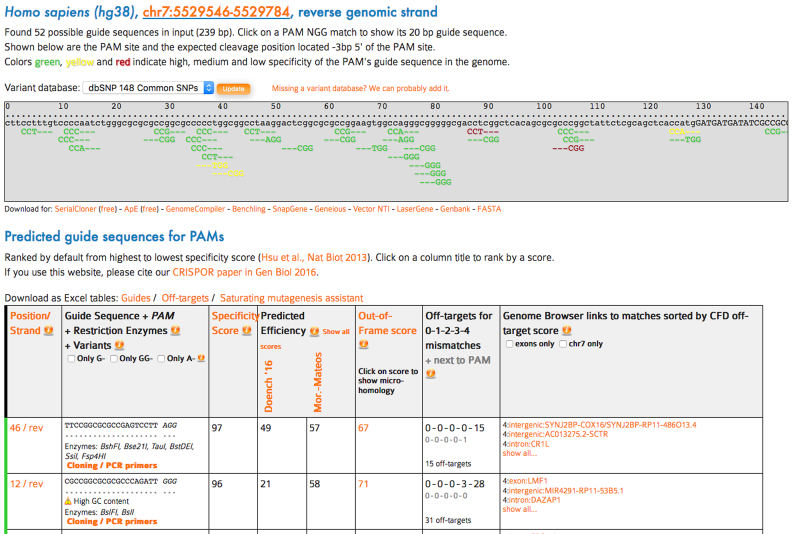
CRISPOR.org is a web tool for genome editing experiments with the CRISPR-Cas9 system. It finds guide RNAs in an input sequence and ranks them according to different scores that evaluate potential off-targets in the genome of interest and predict on-target activity. The list of genomes is continuously expanded, with more 150 genomes added in the last two years. CRISPOR tries to provide a comprehensive solution from selection, cloning and expression of guide RNA as well as providing primers needed for testing guide activity and potential off-targets. Recent developments include batch design for genome-wide CRISPR and saturation screens, creating custom oligonucleotides for guide cloning and the design of next generation sequencing primers to test for off-target mutations. CRISPOR is available from http://crispor.org, including the full source code of the website and a stand-alone, command-line version.
Overview
The claims and statistics of this paper haven’t been checked yet.
Free: it reads the open-access text and checks the first 5 claims that cite a source we can check. Create a free account to check every claim.
Integrity signals
Registry
Cites
Statistics
Figures
Verification
Claims the paper makes
The claims and statistics of this paper haven’t been checked yet.
Free: it reads the open-access text and checks the first 5 claims that cite a source we can check. Create a free account to check every claim.
Self-check
Percentages, sums and reported differences re-computed from the paper’s own numbers.
The self-check needs the paper’s full text.
Citations
Cites
Cpf1 Is a Single RNA-Guided Endonuclease of a Class 2 CRISPR-Cas System
Zetsche, B., Gootenberg, J. S., Abudayyeh, O. O., Slaymaker, I. M., Makarova, K. S., Essletzbichler, P., Volz, S. E., Joung, J., van der Oost, J., Regev, A., et al. (2015) · Cell · doi:10.1016/j.cell.2015.09.038 · Cited by 4,761
Optimized sgRNA design to maximize activity and minimize off-target effects of CRISPR-Cas9
Doench, J. G., Fusi, N., Sullender, M., Hegde, M., Vaimberg, E. W., Donovan, K. F., Smith, I., Tothova, Z., Wilen, C., Orchard, R., et al. (2016) · Nature Biotechnology · doi:10.1038/nbt.3437 · Cited by 4,637 · cited 2×
“Cutting frequency determination (CFD) score is now displayed along potential offtargets because it was shown to more reliably predict offtargets (7).”
BackgroundBae, S., Park, J., & Kim, J.-S. (2014) · Bioinformatics · doi:10.1093/bioinformatics/btu048 · Cited by 2,339
Haeussler, M., Schönig, K., Eckert, H., Eschstruth, A., Mianné, J., Renaud, J.-B., Schneider-Maunoury, S., Shkumatava, A., Teboul, L., Kent, J., et al. (2016) · Genome biology · doi:10.1186/s13059-016-1012-2 · Cited by 1,756 · cited 2×
“While we were developing the website, many design criteria were published, so we compared them, published the comparison (4) and designed CRISPOR such that it recommends scores that are most accurate for a particular assay.”
BackgroundMethodSelf-citationCHOPCHOP: a CRISPR/Cas9 and TALEN web tool for genome editing
Montague, T. G., Cruz, J. M., Gagnon, J. A., Church, G. M., & Valen, E. (2014) · Nucleic Acids Research · doi:10.1093/nar/gku410 · Cited by 1,234
CCTop: An intuitive, flexible and reliable CRISPR/Cas9 target prediction tool
Stemmer, M., Thumberger, T., del Sol Keyer, M., Wittbrodt, J., & Mateo, J. L. (2015) · PLoS ONE · doi:10.1371/journal.pone.0124633 · Cited by 1,088
Horlbeck, M. A., Gilbert, L. A., Villalta, J. E., Adamson, B., Pak, R. A., Chen, Y., Fields, A. P., Park, C. Y., Corn, J. E., Kampmann, M., et al. (2016) · eLife · doi:10.7554/elife.19760 · Cited by 894
The UCSC Genome Browser database: 2018 update
Casper, J., Zweig, A. S., Villarreal, C., Tyner, C., Speir, M. L., Rosenbloom, K. R., Raney, B. J., Lee, C. M., Lee, B. T., Karolchik, D., et al. (2018) · Nucleic Acids Research · doi:10.1093/nar/gkx1020 · Cited by 475
Self-citationAnalyzing CRISPR genome-editing experiments with CRISPResso
Pinello, L., Canver, M. C., Hoban, M. D., Orkin, S. H., Kohn, D. B., Bauer, D. E., & Yuan, G.-C. (2016) · Nature Biotechnology · doi:10.1038/nbt.3583 · Cited by 459
Deep learning improves prediction of CRISPR–Cpf1 guide RNA activity
Kim, H. K., Min, S., Song, M., Jung, S., Choi, J. W., Kim, Y., Lee, S., Yoon, S., & Kim, H. (. (2018) · Nature Biotechnology · doi:10.1038/nbt.4061 · Cited by 382
Cited by
In vivo CRISPR base editing of PCSK9 durably lowers cholesterol in primates
Musunuru, K., Chadwick, A. C., Mizoguchi, T., Garcia, S. P., DeNizio, J. E., Reiss, C. W., Wang, K., Iyer, S., Dutta, C., Clendaniel, V., et al. (2021) · Nature · doi:10.1038/s41586-021-03534-y · Cited by 793
Dynamics of CTCF- and cohesin-mediated chromatin looping revealed by live-cell imaging
Gabriele, M., Brandão, H. B., Grosse-Holz, S., Jha, A., Dailey, G. M., Cattoglio, C., Hsieh, T.-H. S., Mirny, L., Zechner, C., & Hansen, A. S. (2022) · Science · doi:10.1126/science.abn6583 · Cited by 506
Unbiased detection of CRISPR off-targets in vivo using DISCOVER-Seq
Wienert, B., Wyman, S. K., Richardson, C. D., Yeh, C. D., Akcakaya, P., Porritt, M. J., Morlock, M., Vu, J. T., Kazane, K. R., Watry, H. L., et al. (2019) · Science · doi:10.1126/science.aav9023 · Cited by 434
CRISPR in cancer biology and therapy
Katti, A., Diaz, B. J., Caragine, C. M., Sanjana, N. E., & Dow, L. E. (2022) · Nature Reviews Cancer · doi:10.1038/s41568-022-00441-w · Cited by 424
Hsieh, T.-H. S., Cattoglio, C., Slobodyanyuk, E., Hansen, A. S., Darzacq, X., & Tjian, R. (2022) · Nature Genetics · doi:10.1038/s41588-022-01223-8 · Cited by 406
Manghwar, H., Li, B., Ding, X., Hussain, A., Lindsey, K., Zhang, X., & Jin, S. (2020) · Advanced Science · doi:10.1002/advs.201902312 · Cited by 347
SLC25A39 is necessary for mitochondrial glutathione import in mammalian cells
Wang, Y., Yen, F. S., Zhu, X. G., Timson, R. C., Weber, R., Xing, C., Liu, Y., Allwein, B., Luo, H., Yeh, H.-W., et al. (2021) · Nature · doi:10.1038/s41586-021-04025-w · Cited by 261
Precise genomic deletions using paired prime editing
Choi, J., Chen, W., Suiter, C. C., Lee, C., Chardon, F. M., Yang, W., Leith, A., Daza, R. M., Martin, B., & Shendure, J. (2022) · Nature Biotechnology · doi:10.1038/s41587-021-01025-z · Cited by 251
Precise correction of Duchenne muscular dystrophy exon deletion mutations by base and prime editing
Chemello, F., Chai, A. C., Li, H., Rodriguez-Caycedo, C., Sanchez-Ortiz, E., Atmanli, A., Mireault, A. A., Liu, N., Bassel-Duby, R., & Olson, E. N. (2021) · Science Advances · doi:10.1126/sciadv.abg4910 · Cited by 244
An epigenetic barrier sets the timing of human neuronal maturation
Ciceri, G., Baggiolini, A., Cho, H. S., Kshirsagar, M., Benito-Kwiecinski, S., Walsh, R. M., Aromolaran, K. A., Gonzalez-Hernandez, A. J., Munguba, H., Koo, S. Y., et al. (2024) · Nature · doi:10.1038/s41586-023-06984-8 · Cited by 240
An epigenetic barrier sets the timing of human neuronal maturation
(2022) · doi:10.1101/2022.06.02.490114 · Cited by 240
Moretti, A., Fonteyne, L., Giesert, F., Hoppmann, P., Meier, A. B., Bozoglu, T., Baehr, A., Schneider, C. M., Sinnecker, D., Klett, K., et al. (2020) · Nature Medicine · doi:10.1038/s41591-019-0738-2 · Cited by 229
Computational approaches for effective CRISPR guide RNA design and evaluation
Liu, G., Zhang, Y., & Zhang, T. (2020) · Computational and Structural Biotechnology Journal · doi:10.1016/j.csbj.2019.11.006 · Cited by 201
Improving Plant Genome Editing with High-Fidelity xCas9 and Non-canonical PAM-Targeting Cas9-NG
Zhong, Z., Sretenovic, S., Ren, Q., Yang, L., Bao, Y., Qi, C., Yuan, M., He, Y., Liu, S., Liu, X., et al. (2019) · Molecular Plant · doi:10.1016/j.molp.2019.03.011 · Cited by 196
Davis, J. R., Wang, X., Witte, I. P., Huang, T. P., Levy, J. M., Raguram, A., Banskota, S., Seidah, N. G., Musunuru, K., & Liu, D. R. (2022) · Nature Biomedical Engineering · doi:10.1038/s41551-022-00911-4 · Cited by 192
Base editing correction of hypertrophic cardiomyopathy in human cardiomyocytes and humanized mice
Chai, A. C., Cui, M., Chemello, F., Li, H., Chen, K., Tan, W., Atmanli, A., McAnally, J. R., Zhang, Y., Xu, L., et al. (2023) · Nature Medicine · doi:10.1038/s41591-022-02176-5 · Cited by 184
Development of CRISPR-Cas systems for genome editing and beyond
Zhang, F. (2019) · Quarterly Reviews of Biophysics · doi:10.1017/s0033583519000052 · Cited by 181
“This has been facilitated through on-line resources, such as the creation of numerous webbased tools for guide design (Hsu et al., 2013; Bae et al., 2014; Schmid-Burgk et al., 2014; Labun et al., 2016; Pinello et al., 2016; Concordet and Haeussler, 2018; Listgarten et al., 2018), and through the annual CRISPR meetings.”
BackgroundDixit, S., Kumar, A., Srinivasan, K., Vincent, P. M. D. R., & Ramu Krishnan, N. (2024) · Frontiers in Bioengineering and Biotechnology · doi:10.3389/fbioe.2023.1335901 · Cited by 177
Yi, E., Gujar, A. D., Guthrie, M., Kim, H., Zhao, D., Johnson, K. C., Amin, S. B., Costa, M. L., Yu, Q., Das, S., et al. (2022) · Cancer Discovery · doi:10.1158/2159-8290.cd-21-1376 · Cited by 173
CRISPR-Cas9 off-targeting assessment with nucleic acid duplex energy parameters
Alkan, F., Wenzel, A., Anthon, C., Havgaard, J. H., & Gorodkin, J. (2018) · Genome Biology · doi:10.1186/s13059-018-1534-x · Cited by 170
On the genetic basis of tail-loss evolution in humans and apes
Xia, B., Zhang, W., Zhao, G., Zhang, X., Bai, J., Brosh, R., Wudzinska, A., Huang, E., Ashe, H., Ellis, G., et al. (2024) · Nature · doi:10.1038/s41586-024-07095-8 · Cited by 136
Plasma membrane H+-ATPases sustain pollen tube growth and fertilization
Hoffmann, R. D., Portes, M. T., Olsen, L. I., Damineli, D. S. C., Hayashi, M., Nunes, C. O., Pedersen, J. T., Lima, P. T., Campos, C., Feijó, J. A., et al. (2020) · Nature Communications · doi:10.1038/s41467-020-16253-1 · Cited by 162
Clathrin-associated AP-1 controls termination of STING signalling
Liu, Y., Xu, P., Rivara, S., Liu, C., Ricci, J., Ren, X., Hurley, J. H., & Ablasser, A. (2022) · Nature · doi:10.1038/s41586-022-05354-0 · Cited by 161
CRISPR/dCas9-Based Systems: Mechanisms and Applications in Plant Sciences
Karlson, C. K. S., Noor, S. N. M., Nolte, N., & Tan, B. C. (2021) · Plants · doi:10.3390/plants10102055 · Cited by 158
A multi-omic single-cell landscape of human gynecologic malignancies
Regner, M. J., Wisniewska, K., Garcia-Recio, S., Thennavan, A., Mendez-Giraldez, R., Malladi, V. S., Hawkins, G., Parker, J. S., Perou, C. M., Bae-Jump, V. L., et al. (2021) · Molecular Cell · doi:10.1016/j.molcel.2021.10.013 · Cited by 135
Differential mosquito attraction to humans is associated with skin-derived carboxylic acid levels
Obaldia, M. E. D., Morita, T., Dedmon, L. C., Boehmler, D. J., Jiang, C. S., Zeledon, E. V., Cross, J. R., & Vosshall, L. B. (2022) · Cell · doi:10.1016/j.cell.2022.09.034 · Cited by 155
Complementary Alu sequences mediate enhancer–promoter selectivity
Liang, L., Cao, C., Ji, L., Cai, Z., Wang, D., Ye, R., Chen, J., Yu, X., Zhou, J., Bai, Z., et al. (2023) · Nature · doi:10.1038/s41586-023-06323-x · Cited by 152
Nucleolar maturation of the human small subunit processome
Singh, S., Vanden Broeck, A., Miller, L., Chaker-Margot, M., & Klinge, S. (2021) · Science · doi:10.1126/science.abj5338 · Cited by 134
Microinjection for precision genome editing in Caenorhabditis elegans
Ghanta, K. S., Ishidate, T., & Mello, C. C. (2021) · STAR Protocols · doi:10.1016/j.xpro.2021.100748 · Cited by 149
Construct design for CRISPR/Cas-based genome editing in plants
Hassan, M. M., Zhang, Y., Yuan, G., De, K., Chen, J.-G., Muchero, W., Tuskan, G. A., Qi, Y., & Yang, X. (2021) · Trends in Plant Science · doi:10.1016/j.tplants.2021.06.015 · Cited by 138
Ring finger protein 213 assembles into a sensor for ISGylated proteins with antimicrobial activity
Théry, F., Martina, L., Asselman, C., Zhang, Y., Vessely, M., Repo, H., Sedeyn, K., Moschonas, G. D., Bredow, C., Teo, Q. W., et al. (2021) · Nature Communications · doi:10.1038/s41467-021-26061-w · Cited by 144
Regulation of VKORC1L1 is critical for p53-mediated tumor suppression through vitamin K metabolism
Yang, X. P., Wang, Z., Zandkarimi, F., Liu, Y., Duan, S., Li, Z., Kon, N., Zhang, Z., Jiang, X., Stockwell, B. R., et al. (2023) · Cell Metabolism · doi:10.1016/j.cmet.2023.06.014 · Cited by 144
Whole chromosome loss and genomic instability in mouse embryos after CRISPR-Cas9 genome editing
Papathanasiou, S., Markoulaki, S., Blaine, L. J., Leibowitz, M. L., Zhang, C., Jaenisch, R., & Pellman, D. S. (2021) · Nature Communications · doi:10.1038/s41467-021-26097-y · Cited by 140
Massively parallel kinetic profiling of natural and engineered CRISPR nucleases
Jones, S. K., Hawkins, J. A., Johnson, N. V., Jung, C., Hu, K., Rybarski, J. R., Chen, J. S., Doudna, J. A., Press, W. H., & Finkelstein, I. J. (2020) · Nature Biotechnology · doi:10.1038/s41587-020-0646-5 · Cited by 136
Prime Editing in the model plant Physcomitrium patens and its potential in the tetraploid potato
Perroud, P.-F., Guyon-Debast, A., Veillet, F., Kermarrec, M.-P., Chauvin, L., Chauvin, J.-E., Gallois, J.-L., & Nogué, F. (2022) · Plant Science · doi:10.1016/j.plantsci.2021.111162 · Cited by 119
Ablation of CaMKIIδ oxidation by CRISPR-Cas9 base editing as a therapy for cardiac disease
Lebek, S., Chemello, F., Caravia, X. M., Tan, W. H., Li, H. Z., Chen, K., Xu, L., Liu, N., Bassel‐Duby, R., & Olson, E. N. (2023) · Science · doi:10.1126/science.ade1105 · Cited by 135
Human genetic diversity alters off-target outcomes of therapeutic gene editing
Cancellieri, S., Zeng, J., Lin, L. Y., Tognon, M., Nguyen, M. A., Lin, J., Bombieri, N., Maitland, S. A., Ciuculescu, M.-F., Katta, V., et al. (2022) · Nature Genetics · doi:10.1038/s41588-022-01257-y · Cited by 134
Off-target effects in CRISPR-Cas genome editing for human therapeutics: Progress and challenges
Kalter, N., Fuster‐García, C., Silva, A., Ronco-Díaz, V., Roncelli, S., Turchiano, G., Gorodkin, J., Cathomen, T., Benabdellah, K., Lee, C. M., et al. (2025) · Molecular Therapy — Nucleic Acids · doi:10.1016/j.omtn.2025.102636 · Cited by 134
Targeting miRNA by CRISPR/Cas in cancer: advantages and challenges
Hussen, B. M., Rasul, M. F., Abdullah, S. R., Hidayat, H. J., Faraj, G. S. H., Ali, F. A., Salihi, A. B., Baniahmad, A., Ghafouri‐Fard, S., Rahman, M., et al. (2023) · Military Medical Research · doi:10.1186/s40779-023-00468-6 · Cited by 136
Hunker, A. C., Soden, M. E., Krayushkina, D., Heymann, G., Awatramani, R. B., & Zweifel, L. S. (2020) · Cell Reports · doi:10.1016/j.celrep.2020.02.092 · Cited by 128
Advances and Perspectives in Tissue Culture and Genetic Engineering of Cannabis
Hesami, M., Baiton, A., Alizadeh, M., Pepe, M., Torkamaneh, D., & Jones, A. M. P. (2021) · International Journal of Molecular Sciences · doi:10.3390/ijms22115671 · Cited by 128
Seroussi, U., Lugowski, A., Wadi, L., Lao, R. X., Willis, A. R., Zhao, W., Sundby, A. E., Charlesworth, A. G., Reinke, A. W., & Claycomb, J. M. (2023) · eLife · doi:10.7554/elife.83853 · Cited by 123
Bennett, E., Petersen, B. L., Johansen, I. E., Niu, Y., Yang, Z., Chamberlain, C. A., Met, Ö., Wandall, H. H., & Frödin, M. (2020) · Nucleic Acids Research · doi:10.1093/nar/gkaa975 · Cited by 122
Nutrient-regulated control of lysosome function by signaling lipid conversion
Ebner, M., Puchkov, D., López-Ortega, O., Muthukottiappan, P., Su, Y., Schmied, C., Zillmann, S., Nikonenko, I., Koddebusch, J., Dornan, G. L., et al. (2023) · Cell · doi:10.1016/j.cell.2023.09.027 · Cited by 106
Green diatom mutants reveal an intricate biosynthetic pathway of fucoxanthin
Bai, Y. J., Cao, T., Dautermann, O., Buschbeck, P., Cantrell, M., Chen, Y., Lein, C. D., Shi, X., Ware, M. A., Yang, F., et al. (2022) · Proceedings of the National Academy of Sciences · doi:10.1073/pnas.2203708119 · Cited by 121
Widespread contribution of transposable elements to the rewiring of mammalian 3D genomes
Choudhary, M. N. K., Quaid, K., Xing, X., Schmidt, H. K., & Wang, T. (2023) · Nature Communications · doi:10.1038/s41467-023-36364-9 · Cited by 120
CRISPR screens decode cancer cell pathways that trigger γδ T cell detection
Mamedov, M. R., Vedova, S., Freimer, J. W., Sahu, A. D., Ramesh, A., Arce, M. M., Meringa, A. D., Ota, M., Chen, P. A., Hanspers, K., et al. (2023) · Nature · doi:10.1038/s41586-023-06482-x · Cited by 109
Embryo-scale reverse genetics at single-cell resolution
Saunders, L. M., Srivatsan, S. R., Duran, M., Dorrity, M. W., Ewing, B., Linbo, T. H., Shendure, J., Raible, D. W., Moens, C. B., Kimelman, D., et al. (2023) · Nature · doi:10.1038/s41586-023-06720-2 · Cited by 77
Birtele, M., Dosso, A. D., Xu, T., Nguyen, T. N., Wilkinson, B., Hosseini, N., Nguyen, S. C., Urenda, J., Knight, G. T., Rojas, C., et al. (2023) · Nature Neuroscience · doi:10.1038/s41593-023-01477-3 · Cited by 108
Thymic mimetic cells function beyond self-tolerance
Givony, T., Leshkowitz, D., Castillo, D. D., Nevo, S., Kadouri, N., Dassa, B., Gruper, Y., Khalaila, R., Ben‐Nun, O., Gome, T., et al. (2023) · Nature · doi:10.1038/s41586-023-06512-8 · Cited by 107
Base-editing mutagenesis maps alleles to tune human T cell functions
Schmidt, R. L. J., Ward, C. C., Dajani, R., Armour-Garb, Z., Ota, M., Allain, V., Hernandez, R., Layeghi, M., Xing, G., Goudy, L., et al. (2023) · Nature · doi:10.1038/s41586-023-06835-6 · Cited by 107
Kaji, S., Berghoff, S. A., Spieth, L., Schlaphoff, L., Sasmita, A. O., Vitale, S., Büschgens, L., Kedia, S., Zirngibl, M., Nazarenko, T., et al. (2024) · Immunity · doi:10.1016/j.immuni.2024.09.014 · Cited by 104
DOCK2 is involved in the host genetics and biology of severe COVID-19
Namkoong, H., Edahiro, R., Takano, T., Nishihara, H., Shirai, Y., Sonehara, K., Tanaka, H., Azekawa, S., Mikami, Y., Lee, H., et al. (2022) · Nature · doi:10.1038/s41586-022-05163-5 · Cited by 104
Efficient embryonic homozygous gene conversion via RAD51-enhanced interhomolog repair
Wilde, J. J., Aida, T., del Rosario, R. C. H., Kaiser, T., Qi, P., Wienisch, M., Zhang, Q., Colvin, S. M., & Feng, G. (2021) · Cell · doi:10.1016/j.cell.2021.04.035 · Cited by 102
Epigenetic features drastically impact CRISPR–Cas9 efficacy in plants
Weiss, T. J., Crisp, P. A., Rai, K. M., Song, M., Springer, N. M., & Zhang, F. (2022) · PLANT PHYSIOLOGY · doi:10.1093/plphys/kiac285 · Cited by 102
Targeted CRISPR‐Cas9‐based gene knockouts in the model brown alga Ectocarpus
Badis, Y., Scornet, D., Harada, M., Caillard, C., Godfroy, O., Raphalen, M., Gachon, C. M. M., Coelho, S. M., Motomura, T., Nagasato, C., et al. (2021) · New Phytologist · doi:10.1111/nph.17525 · Cited by 102
Yu, H., Chen, M., Hu, Y., Ou, S., Xiu, Y., Liang, S., Li, N., Yang, M., Kong, X., Sun, C., et al. (2022) · Cell stem cell · doi:10.1016/j.stem.2022.06.006 · Cited by 102
Toller-Kawahisa, J. E., Hiroki, C. H., Silva, C. M. S., Nascimento, D. C., Públio, G. A., Martins, T. V., Damasceno, L. E. A., Veras, F. P., Viacava, P. R., Sukesada, F. Y., et al. (2023) · Nature Communications · doi:10.1038/s41467-023-40021-6 · Cited by 99
An integrated protocol for targeted mutagenesis with CRISPR-Cas9 system in the pea aphid
Trionnaire, G. L., Tanguy, S., Hudaverdian, S., Gléonnec, F., Richard, G., Cayrol, B., Monsion, B., Pichon, E., Deshoux, M., Webster, C., et al. (2019) · Insect Biochemistry and Molecular Biology · doi:10.1016/j.ibmb.2019.04.016 · Cited by 98
Toxoplasma gondii secreted effectors co-opt host repressor complexes to inhibit necroptosis
Rosenberg, A., & Sibley, L. D. (2021) · Cell Host & Microbe · doi:10.1016/j.chom.2021.04.016 · Cited by 98
Efficient high-precision homology-directed repair-dependent genome editing by HDRobust
Riesenberg, S., Kanis, P., Macak, D., Wollny, D., Düsterhöft, D., Kowalewski, J., Helmbrecht, N., Maricic, T., & Pääbo, S. (2023) · Nature Methods · doi:10.1038/s41592-023-01949-1 · Cited by 87
Najafi, S., Bertini, E., Erica D’Incà, Fasoli, M., & Zenoni, S. (2022) · Horticulture Research · doi:10.1093/hr/uhac240 · Cited by 94
Association of a common genetic variant with Parkinson’s disease is mediated by microglia
Langston, R. G., Beilina, A., Reed, X., Kaganovich, A., Singleton, A. B., Blauwendraat, C., Gibbs, J. R., & Cookson, M. R. (2022) · Science Translational Medicine · doi:10.1126/scitranslmed.abp8869 · Cited by 93
A benchmark of algorithms for the analysis of pooled CRISPR screens
Bodapati, S., Daley, T., Lin, X., Zou, J., & Qi, L. S. (2020) · Genome biology · doi:10.1186/s13059-020-01972-x · Cited by 94
Villa, C. E., Cheroni, C., Dotter, C. P., López-Tóbon, A., Oliveira, B., Sacco, R., Yahya, A. Ç., Morandell, J., Gabriele, M., Tavakoli, M. R., et al. (2022) · Cell Reports · doi:10.1016/j.celrep.2022.110615 · Cited by 92
Reifschneider, A., Robinson, S., van Lengerich, B., Gnörich, J., Logan, T., Heindl, S., Vogt, M. A., Weidinger, E., Riedl, L., Wind, K., et al. (2022) · The EMBO Journal · doi:10.15252/embj.2021109108 · Cited by 89
“Briefly, we used CRISPOR (http://crispor.tefor.net (Concordet & Haeussler, 2018)) to select guide RNAs and determine putative off-target loci.”
Ren, B., Yang, J., Wang, C., Yang, G., Wang, H., Chen, Y., Xu, R., Fan, X., You, L., Zhang, T., et al. (2021) · Journal of Hematology & Oncology · doi:10.1186/s13045-021-01131-0 · Cited by 88
Targeted mutagenesis using CRISPR-Cas9 in the chelicerate herbivore Tetranychus urticae
Dermauw, W., Jonckheere, W., Riga, M., Livadaras, I., VONTAS, J. G., & Leeuwen, T. V. (2020) · Insect Biochemistry and Molecular Biology · doi:10.1016/j.ibmb.2020.103347 · Cited by 86
The CRL5–SPSB3 ubiquitin ligase targets nuclear cGAS for degradation
Xu, P., Liu, Y., Liu, C., Guey, B., Li, L., Mélénec, P., Ricci, J., & Ablasser, A. (2024) · Nature · doi:10.1038/s41586-024-07112-w · Cited by 87
Genomic and Transcriptomic Approaches to Developing Abiotic Stress-Resilient Crops
Kamali, S., & Singh, A. (2023) · Agronomy · doi:10.3390/agronomy13122903 · Cited by 86
Alon, D. M., Hak, H., Bornstein, M., Pines, G., & Spiegelman, Z. (2021) · Plants · doi:10.3390/plants10061256 · Cited by 84
Transposable elements as tissue-specific enhancers in cancers of endodermal lineage
Karttunen, K., Patel, D., Xia, J., Fei, L., Palin, K., Aaltonen, L. A., & Sahu, B. (2023) · Nature Communications · doi:10.1038/s41467-023-41081-4 · Cited by 84
Arnold, M., Bressin, A., Jasnovidova, O., Meierhofer, D., & Mayer, A. (2021) · Molecular Cell · doi:10.1016/j.molcel.2021.06.026 · Cited by 83
Phosphorylation of muramyl peptides by NAGK is required for NOD2 activation
Stafford, C. A., Gassauer, A.-M., Mann, C. C. D. O., Tanzer, M. C., Fessler, E., Wefers, B., Nagl, D., Kuut, G., Sulek, K., Vasilopoulou, C. G., et al. (2022) · Nature · doi:10.1038/s41586-022-05125-x · Cited by 81
CRISPR/Cas12a-based biosensors for environmental monitoring and diagnostics
Wani, A. K., Akhtar, N., Mir, T. U. G., Chopra, C., Singh, R., Hong, J. C., & Kadam, U. S. (2024) · Environmental Technology & Innovation · doi:10.1016/j.eti.2024.103625 · Cited by 81
Haldrup, J., Andersen, S., Labial, A. R. L., Wolff, J. H., Frandsen, F. P., Skov, T. W., Rovsing, A. B., Nielsen, I. H., Jakobsen, T. S., Askou, A. L., et al. (2023) · Nucleic Acids Research · doi:10.1093/nar/gkad676 · Cited by 80
Super-enhancer switching drives a burst in gene expression at the mitosis-to-meiosis transition
Maezawa, S., Sakashita, A., Yukawa, M., Chen, X., Takahashi, K., Alavattam, K. G., Nakata, I., Weirauch, M. T., Barski, A., & Namekawa, S. H. (2020) · Nature Structural & Molecular Biology · doi:10.1038/s41594-020-0488-3 · Cited by 80
Gene-Editing Technologies and Applications in Legumes: Progress, Evolution, and Future Prospects
Baloğlu, M. C., Altunoğlu, Y. Ç., Baloglu, P., Yildiz, A. B., Türkölmez, N., & Çiftçi, Y. Ö. (2022) · Frontiers in Genetics · doi:10.3389/fgene.2022.859437 · Cited by 79
LncRNA PSMB8-AS1 Instigates Vascular Inflammation to Aggravate Atherosclerosis
Li, S., He, R.-C., Wu, S., Song, Y., Zhang, K., Tang, M.-L., Bei, Y., Zhang, T., Lu, J.-B., Ma, X., et al. (2023) · Circulation Research · doi:10.1161/circresaha.122.322360 · Cited by 80
Bat genomes illuminate adaptations to viral tolerance and disease resistance
Morales, A. E., Dong, Y., Brown, T., Baid, K., Kontopoulos, D. G., Gonzalez, V., Huang, Z., Ahmed, A.-W., Bhuinya, A., Hilgers, L., et al. (2025) · Nature · doi:10.1038/s41586-024-08471-0 · Cited by 78
CRISPR nuclease off-target activity and mitigation strategies
Wienert, B., & Cromer, M. K. (2022) · Frontiers in Genome Editing · doi:10.3389/fgeed.2022.1050507 · Cited by 78
Impact of CRISPR-Cas9-Based Genome Engineering in Farm Animals
Singh, P., & Ali, S. A. (2021) · Veterinary Sciences · doi:10.3390/vetsci8070122 · Cited by 76
White pupae phenotype of tephritids is caused by parallel mutations of a MFS transporter
Ward, C. M., Aumann, R. A., Whitehead, M., Nikolouli, K., Leveque, G., Gouvi, G., Fung, E., Reiling, S. J., Djambazian, H. H. V., HUGHES, M. A., et al. (2021) · Nature Communications · doi:10.1038/s41467-020-20680-5 · Cited by 75
Zhu, X., Xu, Z., Wang, G., Cong, Y., Lu, Y., Jia, R., Qin, Y., Zhang, G., Li, B., Yuan, D., et al. (2023) · Genome biology · doi:10.1186/s13059-023-03032-6 · Cited by 74
Principles of mitoribosomal small subunit assembly in eukaryotes
Harper, N. J., Burnside, C., & Klinge, S. (2023) · Nature · doi:10.1038/s41586-022-05621-0 · Cited by 71
Yang, X. P., Wang, Z., Самович, С. Н., Kapralov, A. A., Amoscato, A. A., Tyurin, V. A., Dar, H. H., Li, Z., Duan, S., Kon, N., et al. (2024) · Cell Metabolism · doi:10.1016/j.cmet.2024.01.006 · Cited by 73
Diatom pyrenoids are encased in a protein shell that enables efficient CO2 fixation
Shimakawa, G., Demulder, M., Flori, S., Kawamoto, A., Tsuji, Y., Nawaly, H., Tanaka, A., Tohda, R., Ota, T., Matsui, H., et al. (2024) · Cell · doi:10.1016/j.cell.2024.09.013 · Cited by 72
Hoberecht, L., Perampalam, P., Lun, A. T. L., & Fortin, J. (2022) · Nature Communications · doi:10.1038/s41467-022-34320-7 · Cited by 72
Feng, A., Thomas, B. J., Purbey, P. K., de Melo, F. M., Liu, X., Daly, A. E., Sun, F., Lo, J. H.-H., Cheng, L., Carey, M., et al. (2024) · Immunity · doi:10.1016/j.immuni.2024.02.004 · Cited by 73
Mitochondrial complexity is regulated at ER-mitochondria contact sites via PDZD8-FKBP8 tethering
Nakamura, K., Aoyama-Ishiwatari, S., Nagao, T., Paraan, M., Obara, C. J., Sakurai-Saito, Y., Johnston, J. D., Du, Y., Suga, S., Tsuboi, M., et al. (2025) · Nature Communications · doi:10.1038/s41467-025-58538-3 · Cited by 71
Current Bioinformatics Tools to Optimize CRISPR/Cas9 Experiments to Reduce Off-Target Effects
Naeem, M., & Alkhnbashi, O. S. (2023) · International Journal of Molecular Sciences · doi:10.3390/ijms24076261 · Cited by 70
Gene Editing and Genotoxicity: Targeting the Off-Targets
Blattner, G., Cavazza, A., Thrasher, A. J., & Turchiano, G. (2020) · Frontiers in Genome Editing · doi:10.3389/fgeed.2020.613252 · Cited by 70
Bulcaen, M., Kortleven, P., Liu, R. B., Maule, G., Dreano, E., Kelly, M., Ensinck, M. M., Thierie, S., Smits, M., Ciciani, M., et al. (2024) · Cell Reports Medicine · doi:10.1016/j.xcrm.2024.101544 · Cited by 69
Mechanisms governing target search and binding dynamics of hypoxia-inducible factors
Chen, Y., Cattoglio, C., Dailey, G. M., Zhu, Q., Tjian, R., & Darzacq, X. (2022) · eLife · doi:10.7554/elife.75064 · Cited by 69
Tools and targets: the dual role of plant viruses in CRISPR–Cas genome editing
Uranga, M., & Daròs, J. (2023) · The Plant Genome · doi:10.1002/tpg2.20220 · Cited by 68
“Another web tool (named CRISPOR) ranks potential sgRNAs for an input sequence according to their predicted on-target activity and potential off-targets in the genome (http://crispor.org) (Concordet & Haeussler, 2018).”
MethodCurrent Advancements and Limitations of Gene Editing in Orphan Crops
Venezia, M., & Krainer, K. M. C. (2021) · Frontiers in Plant Science · doi:10.3389/fpls.2021.742932 · Cited by 69
Genome editing and beyond: what does it mean for the future of plant breeding?
Vu, T. V., Das, S., Hensel, G., & Kim, J. (2022) · Planta · doi:10.1007/s00425-022-03906-2 · Cited by 70
A cortico-amygdala neural substrate for endocannabinoid modulation of fear extinction
Gunduz‐Cinar, O., Castillo, L. I., Xia, M. Y., Leer, E. V., Brockway, E. T., Pollack, G. A., Yasmin, F., Bukalo, O., Limoges, A., Oreizi-Esfahani, S., et al. (2023) · Neuron · doi:10.1016/j.neuron.2023.06.023 · Cited by 68
MECP2 directly interacts with RNA polymerase II to modulate transcription in human neurons
Liu, Y., Flamier, A., Bell, G. W., Diao, A. J., Whitfield, T. W., Wang, H., Wu, Y., Schulte, F., Friesen, M., Guo, R., et al. (2024) · Neuron · doi:10.1016/j.neuron.2024.04.007 · Cited by 69
Chen, P., Chen, L., Ye, X., Tan, B., Zheng, X., Cheng, J., Wang, W., Yang, Q., Zhang, Y., Li, J., et al. (2022) · Horticulture Research · doi:10.1093/hr/uhab032 · Cited by 67
Metadata
- Authors
- Concordet, J.-P., & Haeussler, M.
- Affiliations
- Centre National de la Recherche Scientifique (FR)
- University of California, Santa Cruz (US)
- Corresponding author
- Haeussler, Maximilian
- Venue
- Nucleic Acids Research
- Publisher
- Oxford University Press (OUP)
- Published
- 2018-05-14
- Volume
- 46
- Issue
- W1
- Pages
- W242-W245
- ISSN
- 0305-1048 (ISSN-L)
- 1362-4962
- PMC
- PMC6030908
- OpenAlex
- W2803479625
- Cited by
- 2,655
- References
- 14
- Citations by year
- 2026: 549 · 2025: 449 · 2024: 537 · 2023: 450 · 2022: 348 · 2021: 198 · 2020: 93 · 2019: 28 · 2018: 2
- FWCI
- 23.07
- Type
- journal article
- Language
- en
- Open access
- gold
- doi.org
- Licence
- Locations
- Nucleic Acids Research (publishedVersion, cc-by)
- Europe PMC (PubMed Central) (publishedVersion, cc-by)
- PubMed (publishedVersion)
- PubMed Central (publishedVersion, cc-by)
- eScholarship (California Digital Library) (submittedVersion, cc-by)
- Funders
- California Institute of Regenerative Medicine (GC1R-06673-C)
- National Institutes of Health (5U54HG007990-04)
- National Human Genome Research Institute (2U41HG002371-18)
- Chan-Zuckerberg (182809)
- Topics
- Life Sciences › Biochemistry, Genetics and Molecular Biology › Molecular Biology › CRISPR and Genetic Engineering
- Life Sciences › Biochemistry, Genetics and Molecular Biology › Molecular Biology › RNA regulation and disease
- Life Sciences › Biochemistry, Genetics and Molecular Biology › Molecular Biology › RNA Interference and Gene Delivery
- Keywords
- CRISPR/Cas9, genome editing, off-target prediction, on-target activity, web-based tool, genome-wide CRISPR screen, oligonucleotide design, primer design
- MeSH terms
- Gene Editing, CRISPR-Associated Protein 9, Base Sequence, Oligonucleotides, RNA, Software, Mutagenesis, Genome, Internet, Gene Knockout Techniques, Workflow, CRISPR-Cas Systems
About these checks
Registry, retraction, Cites and statistics results are computed, not judged, with one exception: a printed reference that no index lists is read once by a model before it counts as a citation error. Claims are extracted by a model and kept only when their quote appears verbatim in the text; each cited source is then checked, with a model’s help, for whether it says what the claim relies on. Those verdicts can be wrong — read the claim’s quote and the cited source before relying on one.
Statistics and arithmetic are recomputed, not judged.
Confidence bands are shown only for fields calibrated on our annotated test set. None is calibrated yet, so no band is shown.
What counts as a claim ›How we measure confidence ›How we check this ›
Are you an author, or do you see a problem with this page? Request a review
Data sources
Bibliographic data: Semantic Scholar, OpenAlex, Crossref.
Contains information from the Semantic Scholar Academic Graph Datasets, made available under the ODC Attribution License (ODC-BY 1.0).
Semantic Scholar’s data is described in: Kinney, R., et al. (2023). The Semantic Scholar Open Data Platform. arXiv:2301.10140.
