

The rationale, design and baseline data of FLOW, a kidney outcomes trial with once-weekly semaglutide in people with type 2 diabetes and chronic kidney disease
Open accessThe DOI matches its Crossref record; 10 of the 41 references it cites were found in a registry or an index; 8 of the 37 sources its claims cite were checked for support.
Abstract
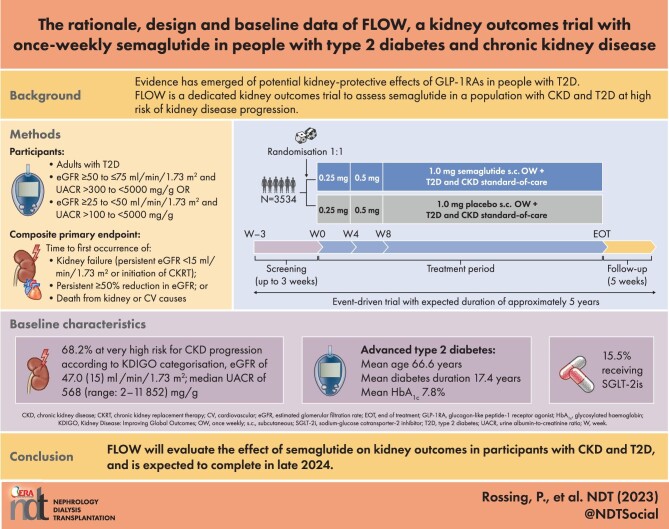
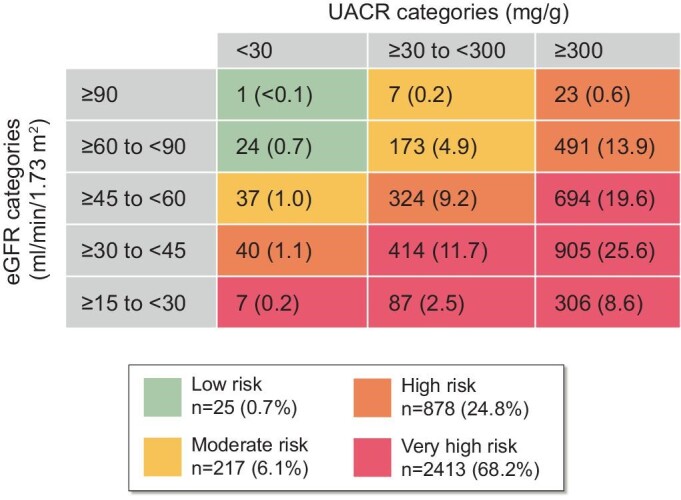
Background: Chronic kidney disease (CKD) is a common complication of type 2 diabetes (T2D). Glucagon-like peptide-1 receptor agonists (GLP-1RAs) improve glycaemic control and lower body weight in people with T2D, and some reduce the risk of cardiovascular (CV) events in those with high CV risk. GLP-1RAs might also have kidney-protective effects. We report the design and baseline data for FLOW (NCT03819153), a trial investigating the effects of semaglutide, a once-weekly (OW) GLP-1RA, on kidney outcomes in participants with CKD and T2D. Methods: FLOW is a randomised, double-blind, parallel-group, multinational, phase 3b trial. Participants with T2D, estimated glomerular filtration rate (eGFR) ≥50‒≤75 ml/min/1.73 m2 and urine albumin:creatinine ratio (UACR) >300‒<5000 mg/g or eGFR ≥25‒<50 ml/min/1.73 m2 and UACR >100‒<5000 mg/g were randomised 1:1 to OW semaglutide 1.0 mg or matched placebo, with renin–angiotensin–aldosterone system blockade (unless not tolerated/contraindicated). The composite primary endpoint is time to first kidney failure (persistent eGFR <15 ml/min/1.73 m2 or initiation of chronic kidney replacement therapy), persistent ≥50% reduction in eGFR or death from kidney or CV causes. Results: Enrolled participants (N = 3534) had a baseline mean age of 66.6 years [standard deviation (SD) 9.0], haemoglobin A1c of 7.8% (SD 1.3), diabetes duration of 17.4 years (SD 9.3), eGFR of 47.0 ml/min/1.73 m2 (SD 15.2) and median UACR of 568 mg/g (range 2‒11 852). According to Kidney Disease: Improving Global Outcomes guidelines categorisation, 68.2% were at very high risk for CKD progression. Conclusion: FLOW will evaluate the effect of semaglutide on kidney outcomes in participants with CKD and T2D, and is expected to be completed in late 2024.
Overview
CoChat Summary
TL;DR
FLOW is a randomised, double-blind, phase 3b kidney outcomes trial testing once-weekly semaglutide 1.0 mg versus placebo in 3534 adults with type 2 diabetes and chronic kidney disease. This report describes the rationale, design, and baseline characteristics; efficacy results are not yet available.
Key findings
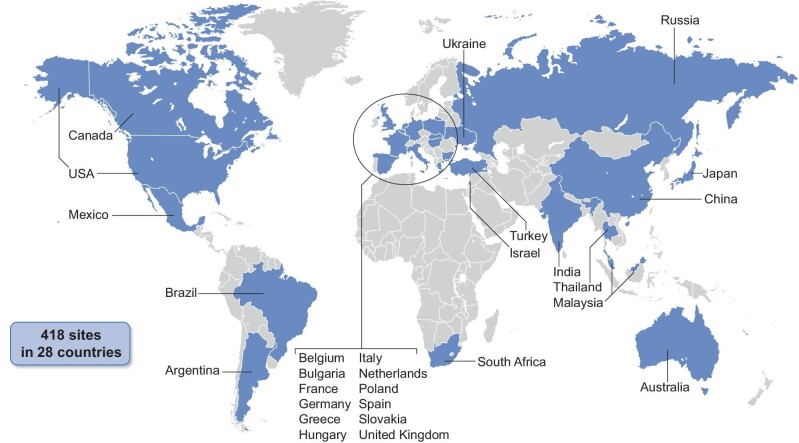
- FLOW enrolled 3534 participants across 418 sites in 28 countries; baseline mean age was 66.6 years (SD 9.0), 69.7% were male, and 65.7% were white.
- Baseline kidney burden was substantial: mean eGFR 47.0 ml/min/1.73 m² (SD 15.2), median UACR 568 mg/g (range 2–11 852), 68.4% had macroalbuminuria, and 68.2% were classified as very high risk for CKD progression by KDIGO criteria.
- Baseline diabetes and cardiovascular burden included mean HbA1c 7.8% (SD 1.3), mean diabetes duration 17.4 years (SD 9.3), BMI 32.0 kg/m² (SD 6.3), 52.0% with previous cardiovascular disease, and 19.1% with previous heart failure.
- At baseline, 95.3% were receiving RAAS inhibitors, 15.5% SGLT2is, 61.5% insulin, and 51.6% metformin; the trial was powered to detect a 20% relative risk reduction (HR 0.8) for the primary composite endpoint, requiring 854 events.
Methods
- Randomised, double-blind, parallel-group, multinational phase 3b trial; adults with type 2 diabetes and CKD were eligible if they had eGFR ≥50–≤75 ml/min/1.73 m² and UACR >300–<5000 mg/g, or eGFR ≥25–<50 ml/min/1.73 m² and UACR >100–<5000 mg/g, on stable maximum labelled or tolerated RAAS blockade unless contraindicated or not tolerated.
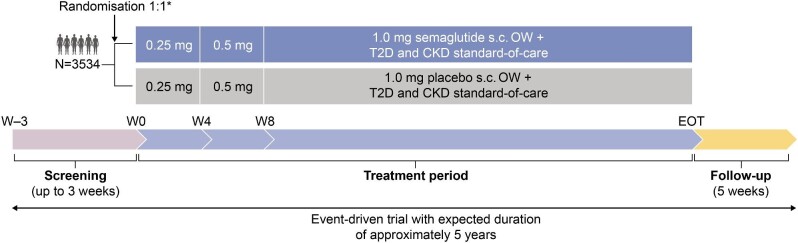
- Participants were randomised 1:1 to once-weekly subcutaneous semaglutide 1.0 mg or matched placebo, stratified by SGLT2i use at baseline; the primary composite endpoint was time to first kidney failure, persistent ≥50% reduction in eGFR, or death from kidney or cardiovascular causes.
- Baseline data are reported descriptively from 3534 randomised participants using central laboratory eGFR and UACR assessments; the event-driven trial uses a group sequential design, intention-to-treat estimand, and stratified Cox proportional hazards model.
Limitations
- The paper states that eligibility could be based on historical laboratory values, but baseline data came from central laboratory assessments, resulting in a small number of participants not fulfilling all inclusion criteria at that specific visit.
- The paper states that the mechanism of kidney protection with GLP-1RAs is not fully elucidated, and that prior kidney data from cardiovascular outcomes trials are hypothesis generating because of low CKD prevalence and secondary endpoints.
- Evident from the text: this report provides rationale, design, and baseline characteristics only; no FLOW efficacy or safety outcome results are reported, so treatment effects on kidney outcomes remain unknown.
Model-written summary. Check it against the paper before relying on it.
Integrity signals
Registry
Cites
Statistics
Figures
Verification
Claims the paper makes
4 Valid · 1 Not valid · 17 Not checked · 57 Own results and interpretations
The cited sources support only part of this claim — read each source’s verdict below.
In the paper
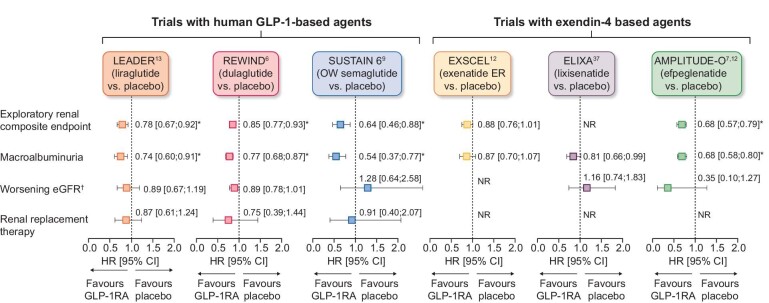
“However, these benefits were driven by a lower risk of persistent macroalbuminuria [6,10,13].”
§ The rationale, design and baseline data of FLOW, a kidney outcomes trial with once-weekly semaglutide in people with type 2 diabetes and chronic kidney disease > INTRODUCTION
What the sources say
- Not checked yetcites [6] Gerstein HC, Colhoun HM, Dagenais GR et al. Dulaglutide and renal outcomes in type 2 diabetes: an exploratory analysis of the REWIND randomised, placebo-controlled trial. Lancet 2019;394:131-8. source
- Partly supportedcites [10] Marso SP, Bain SC, Consoli A et al. Semaglutide and cardiovascular outcomes in patients with type 2 diabetes. N Engl J Med 2016;375:1834-44. sourceExperimental — accuracy not yet measured
The Discussion of our copy states that 'Semaglutide-treated patients had a lower risk of new or worsening nephropathy, according to differences in macroalbuminuria', and the Table 2 footnote (Other Outcomes) defines new or worsening nephropathy as including 'persistent macroalbuminuria', with the composite reduced (HR 0.64; 95% CI, 0.46–0.88; P = 0.005; Results/Microvascular Outcomes). So the driving-component point is supported for semaglutide. However, this source is a single 104-week semaglutide RCT in type 2 diabetes with elevated cardiovascular risk, not a meta-analysis of GLP-1 receptor agonists; the pooled, class-level framing ('kidney benefits of GLP-1 receptor agonists in these meta-analyses') is not what this paper reports. (LLM, conf=0.75)
- Supportedcites [13] Mann JFE, Orsted DD, Brown-Frandsen K et al. Liraglutide and renal outcomes in type 2 diabetes. N Engl J Med 2017;377:839-48. source
Our copy states the attributed point twice: the RESULTS (p. 1) report the composite renal outcome favoured liraglutide (268 vs. 337 patients; HR 0.78) and say 'This result was driven primarily by the new onset of persistent macroalbuminuria' (161 vs. 215; HR 0.74, P = 0.004), while the Discussion (p. 7) repeats that the result 'was driven mainly by a lower incidence of macroalbuminuria', with non-significant effects on doubling of serum creatinine and end-stage renal disease (Table 1, p. 4). The cited work is a prespecified analysis of the single LEADER trial rather than a meta-analysis, and its finding concerns liraglutide specifically; the 'these meta-analyses' framing and the class-level wording belong to the citing authors' own synthesis, for which this citation supplies the liraglutide component it is offered for. (LLM, conf=0.85)
plainstates a cause- Asserted: passes — The authors put it forward as true.
- Checkable: passes — It can be checked against evidence.
- Load-bearing: passes — The paper’s conclusions depend on it.
- Based: passes — The paper gives a reason why it holds.
The cited sources support only part of this claim — read each source’s verdict below.
In the paper
“Some GLP-1RAs [albiglutide, efpeglenatide, dulaglutide, liraglutide and once-weekly (OW) semaglutide] reduce the risk of major adverse CV events (MACE) in people with T2D with established CVD or at high risk of CVD [6][7][8][9][10].”
§ The rationale, design and baseline data of FLOW, a kidney outcomes trial with once-weekly semaglutide in people with type 2 diabetes and chronic kidney disease > INTRODUCTION
What the sources say
- Not checked yetcites [6] Gerstein HC, Colhoun HM, Dagenais GR et al. Dulaglutide and renal outcomes in type 2 diabetes: an exploratory analysis of the REWIND randomised, placebo-controlled trial. Lancet 2019;394:131-8. source
- Supportedcites [7] Gerstein HC, Sattar N, Rosenstock J et al. Cardiovascular and renal out- comes with efpeglenatide in type 2 diabetes. N Engl J Med 2021;385:896- 907. source
AMPLITUDE-O's Conclusions (p. 1) state that in participants with type 2 diabetes who had either a history of cardiovascular disease or current kidney disease plus at least one other cardiovascular risk factor, the risk of cardiovascular events was lower with weekly efpeglenatide (4 or 6 mg) than with placebo; the Discussion (p. 7) quantifies this as a 27% lower risk of incident MACE, and Trial Design (p. 2) defines the high-risk/established-CVD population. The Background (p. 1) additionally supports the class-level framing ('Four GLP-1 receptor agonists ... structurally similar to human GLP-1 have been shown to reduce the risk of adverse cardiovascular events among persons with type 2 diabetes'). The other named agents in the citing sentence's citation cluster are carried by the sibling references, not this one, so nothing attributed to this source is unsupported. (LLM, conf=0.90)
- Partly supportedcites [8] Hernandez AF, Green JB, Janmohamed S et al. Albiglutide and cardiovas- cular outcomes in patients with type 2 diabetes and cardiovascular disease (Harmony Outcomes): a double-blind, randomised placebo-controlled trial. Lancet 2018;392:1519-29. sourceExperimental — accuracy not yet measured
Our copy of Harmony Outcomes supports three of the five drugs listed: the Abstract and Discussion report that once-weekly albiglutide reduced the MACE composite (CV death, non-fatal MI, non-fatal stroke) by 22% (HR 0·78, 95% CI 0·68-0·90) in patients with type 2 diabetes and established cardiovascular disease, and 'Research in context' reports the LEADER MACE reduction with liraglutide (0·87) and the SUSTAIN-6 result with once-weekly semaglutide (0·74). However, dulaglutide appears in our copy only as one of the PubMed search terms, with no trial result reported, and efpeglenatide is not mentioned at all (both the REWIND and AMPLITUDE-O trials postdate this 2018 paper), so those two members of the claim's drug list are not supported here. The 'or at high risk of CVD' qualifier is also broader than this trial's population, which enrolled patients with established cardiovascular disease only. (LLM, conf=0.80)
plainstates a cause- Asserted: passes — The authors put it forward as true.
- Checkable: passes — It can be checked against evidence.
- Load-bearing: passes — The paper’s conclusions depend on it.
- Based: passes — The paper gives a reason why it holds.
The sources with a verdict support this claim; the rest weren’t checked yet, have no full text we could read, or their verdicts aren’t rated yet.
In the paper
“some reduce the risk of cardiovascular (CV) events in those with high CV risk”
- Also stated in: § INTRODUCTION · plain
“Some GLP-1RAs [albiglutide, efpeglenatide, dulaglutide, liraglutide and once-weekly (OW) semaglutide] reduce the risk of major adverse CV events (MACE) in people with T2D with established CVD or at high risk of CVD [6][7][8][9][10].”
§ The rationale, design and baseline data of FLOW, a kidney outcomes trial with once-weekly semaglutide in people with type 2 diabetes and chronic kidney disease > Abstract
What the sources say
- Not checked yetcites [6] Gerstein HC, Colhoun HM, Dagenais GR et al. Dulaglutide and renal outcomes in type 2 diabetes: an exploratory analysis of the REWIND randomised, placebo-controlled trial. Lancet 2019;394:131-8. source
- Supportedcites [7] Gerstein HC, Sattar N, Rosenstock J et al. Cardiovascular and renal out- comes with efpeglenatide in type 2 diabetes. N Engl J Med 2021;385:896- 907. source
The BACKGROUND (p. 1) states that four GLP-1 receptor agonists structurally similar to human GLP-1 'have been shown to reduce the risk of adverse cardiovascular events among persons with type 2 diabetes,' and the ABSTRACT (p. 1-2) says the effects of GLP-1 receptor agonists 'on cardiovascular and renal outcomes in persons with cardiovascular disease have been reported' (citing Kristensen et al. 2019, ref. 10). The Discussion (p. 7) reiterates these 'previously reported salutary effects' in a population of high-risk patients. This is a broad background statement our copy clearly endorses, so the paraphrase ('some reduce the risk of CV events in those with high CV risk') is supported, including the 'some' qualifier and the high-risk population. (LLM, conf=0.85)
- Supportedcites [8] Hernandez AF, Green JB, Janmohamed S et al. Albiglutide and cardiovas- cular outcomes in patients with type 2 diabetes and cardiovascular disease (Harmony Outcomes): a double-blind, randomised placebo-controlled trial. Lancet 2018;392:1519-29. source
The Introduction (p. 1) states that 'not all tested GLP-1 receptor agonists have been shown to reduce cardiovascular events' and that 'Liraglutide and semaglutide... reduced cardiovascular events, whereas no benefit was associated with the exendin-4 based drugs lixisenatide and exenatide' — i.e. some, not all. The Research in context panel and the trial summary place these effects in patients with type 2 diabetes with established cardiovascular disease or risk factors (the high-CV-risk population), and the concluding summary states 'these findings provide more evidence that certain GLP-1-receptor agonists can improve cardiovascular outcomes in patients with type 2 diabetes.' Both the 'some' qualifier and the high-risk population are therefore carried by our copy. (LLM, conf=0.90)
plainstates a cause- Asserted: passes — The authors put it forward as true.
- Checkable: passes — It can be checked against evidence.
- Load-bearing: passes — The paper’s conclusions depend on it.
- Based: passes — The paper gives a reason why it holds.
- Also stated in: § INTRODUCTION · plain
A result the paper reports from its own data — it cites no other source for it, so there is none to check. The quote shows it is in the paper.
In the paper
“median UACR of 568 mg/g (range 2-11 852)”
- Also stated in: § RESULT S · plain
“the median UACR was 568 mg/g (range 2-11 852)”
§ The rationale, design and baseline data of FLOW, a kidney outcomes trial with once-weekly semaglutide in people with type 2 diabetes and chronic kidney disease > Abstract
plainn = 3,534- Asserted: passes — The authors put it forward as true.
- Checkable: passes — It can be checked against evidence.
- Load-bearing: unclear — It is unclear whether the paper’s conclusions depend on it.
- Based: passes — The paper gives a reason why it holds.
- Also stated in: § RESULT S · plain
A result the paper reports from its own data — it cites no other source for it, so there is none to check. The quote shows it is in the paper.
In the paper
“According to Kidney Disease: Improving Global Outcomes guidelines categorisation, 68.2% were at very high risk for CKD progression.”
- Also stated in: § RESULT S · plain
“According to KDIGO categories [3], the majority of participants (68.2%) were classified as very high risk for CKD progression”
§ The rationale, design and baseline data of FLOW, a kidney outcomes trial with once-weekly semaglutide in people with type 2 diabetes and chronic kidney disease > Abstract
plainn = 3,534- Asserted: passes — The authors put it forward as true.
- Checkable: passes — It can be checked against evidence.
- Load-bearing: unclear — It is unclear whether the paper’s conclusions depend on it.
- Based: passes — The paper gives a reason why it holds.
- Also stated in: § RESULT S · plain
25 more claims
Create a free account to see all 79 claims and to verify the 29 references still open.
- It may state two separate claims as one. 12
- Probably not a substantial claim. 39
Claims other papers make about this one
Each is checked against this paper’s own text: does it say what the citing paper says it does?
The source backs part of the claim, not all of it — or backs it for a different population, condition or comparison.
In the citing paper
“Initially approved for T2D management, GLP-1 RAs have also demonstrated cardiovascular and renal benefits [5–7].”
From Triple Agonism Based Therapies for Obesity (2025) · cites this paper as [7]
Experimental — accuracy not yet measuredThe source backs part of the claim, not all of it — or backs it for a different population, condition or comparison.
In the citing paper
“Other outcomes were prespecified as exploratory (see the FLOW protocol in ref. 8).”
From Effects of semaglutide with and without concomitant SGLT2 inhibitor use in participants with type 2 diabetes and chronic kidney disease in the FLOW trial (2024) · cites this paper as [8]
Experimental — accuracy not yet measuredThe cited source says what the claim attributes to it.
In the citing paper
“This trial was event driven and designed to provide 90% power to detect a 20% relative risk reduction for semaglutide versus placebo for the primary outcome8.”
The check wasn’t confident either way, so it gives no verdict — never disputed.
In the citing paper
“The FLOW trial8 recently reported that in participants with T2D and CKD, semaglutide 1.0 mg once weekly reduced the risk of major kidney disease events by 24% and blunted eGFR decline by 1.16 ml min−1/1.73 m2/year4.”
From Effects of semaglutide with and without concomitant SGLT2 inhibitor use in participants with type 2 diabetes and chronic kidney disease in the FLOW trial (2024) · cites this paper as [8]
Experimental — accuracy not yet measured
Self-check
Percentages, sums and reported differences re-computed from the paper’s own numbers.
Each contradiction between two passages listed here was confirmed by an independent check.
Rated minor: it would not touch a result — a value no result rests on, a p-value that stays on the same side of the significance level, or a conflict that is clerical, resolved elsewhere in the paper, or outside its own findings.
In the paper
§ The rationale, design and baseline data of FLOW, a kidney outcomes trial with once-weekly semaglutide in people with type 2 diabetes and chronic kidney disease > Population
“haemoglobin A 1c (HbA 1c ) ≤10% (<86 mmol/mol)”
§ The rationale, design and baseline data of FLOW, a kidney outcomes trial with once-weekly semaglutide in people with type 2 diabetes and chronic kidney disease > Population
“HbA 1c ≤10% (≤86 mmol/mol)”
Citations
Cites
Liraglutide and Cardiovascular Outcomes in Type 2 Diabetes
Marso, S. P., Daniels, G. H., Brown-Frandsen, K., Kristensen, P., Mann, J. F. E., Nauck, M. A., Nissen, S. E., Pocock, S., Poulter, N. R., Ravn, L. S., et al. (2016) · New England Journal of Medicine · doi:10.1056/nejmoa1603827 · Cited by 7,629 · cited 1×
“…2045 [1], there is a clear need for additional treatment options to help mitigate the residual risk in those individuals with concomitant CKD. Secondary analyses, primarily of CVOTs, suggest a potential kidney-protective effect of GLP-1RAs in people with T2D and at risk of CVD [6, 9–12 , 17– 28].”
BackgroundSelf-citationSemaglutide and Cardiovascular Outcomes in Patients with Type 2 Diabetes
Marso, S. P., Bain, S. C., Consoli, A., Eliaschewitz, F. G., Jódar, E., Leiter, L. A., Lingvay, I., Rosenstock, J., Seufert, J., Warren, M. L., et al. (2016) · New England Journal of Medicine · doi:10.1056/nejmoa1607141 · Cited by 6,900
Canagliflozin and Renal Outcomes in Type 2 Diabetes and Nephropathy
Perkovic, V., Jardine, M. J., Neal, B., Bompoint, S., Heerspink, H. J. L., Charytan, D. M., Edwards, R., Agarwal, R., Bakris, G., Bull, S., et al. (2019) · New England Journal of Medicine · doi:10.1056/nejmoa1811744 · Cited by 6,189 · cited 2×
“Despite the availability of established and newer pharma-cotherapies to delay CKD progression in people with T2D, the risk of progression and the associated morbidity and mortality remains substantial [14, 15].”
BackgroundSelf-citationDapagliflozin in Patients with Chronic Kidney Disease
Heerspink, H. J. L., Stefánsson, B. V., Correa-Rotter, R., Chertow, G. M., Greene, T., Hou, F.-F., Mann, J. F. E., McMurray, J. J. V., Lindberg, M., Rossing, P., et al. (2020) · New England Journal of Medicine · doi:10.1056/nejmoa2024816 · Cited by 5,618 · cited 4×
“Despite the availability of established and newer pharmacotherapies to delay CKD progression in people with T2D, the risk of progression and the associated morbidity and mortality remains substantial [14, 15].”
BackgroundInfluentialSelf-citationNew creatinine- and cystatin C-based equations to estimate GFR without race
Inker, L. A., Eneanya, N. D., Coresh, J., Tighiouart, H., Wang, D., Sang, Y., Crews, D. C., Doria, A., Estrella, M. M., Froissart, M., et al. (2021) · New England Journal of Medicine · doi:10.1056/nejmoa2102953 · Cited by 4,695 · cited 1×
“Since the recruitment of FLOW trial participants, a new CKD-EPI formula without race as a factor has been recommended; a pre-specified supplementary analysis has now been added to evaluate the impact of the updated formula on the results [16].”
BackgroundSelf-citationHernandez, A. F., Green, J. B., Janmohamed, S., D'Agostino, R. B., Granger, C. B., Jones, N. P., Leiter, L. A., Rosenberg, A. E., Sigmon, K. N., Somerville, M. C., et al. (2018) · The Lancet · doi:10.1016/s0140-6736(18)32261-x · Cited by 1,829
Kristensen, S. L., Rørth, R., Jhund, P. S., Docherty, K. F., Sattar, N., Preiss, D., Køber, L., Petrie, M. C., & McMurray, J. J. V. (2019) · The Lancet Diabetes & Endocrinology · doi:10.1016/s2213-8587(19)30249-9 · Cited by 1,663
Sattar, N., Lee, M. M. Y., Kristensen, S. L., Branch, K. R. H., Del Prato, S., Khurmi, N. S., Lam, C. S. P., Lopes, R. D., McMurray, J. J. V., Pratley, R. E., et al. (2021) · The Lancet Diabetes & Endocrinology · doi:10.1016/s2213-8587(21)00203-5 · Cited by 1,599
Self-citationKDIGO 2020 Clinical practice guideline for diabetes management in chronic kidney disease
de Boer, I. H., Caramori, M. L., Chan, J. C. N., Heerspink, H. J. L., Hurst, C., Khunti, K., Liew, A., Michos, E. D., Navaneethan, S. D., Olowu, W. A., et al. (2020) · Kidney International · doi:10.1016/j.kint.2020.06.019 · Cited by 1,399
Self-citationKDIGO 2022 Clinical Practice Guideline for Diabetes Management in Chronic Kidney Disease
Rossing, P., Caramori, M. L., Chan, J. C. N., Heerspink, H. J. L., Hurst, C., Khunti, K., Liew, A., Michos, E. D., Navaneethan, S. D., Olowu, W. A., et al. (2022) · Kidney International · doi:10.1016/j.kint.2022.06.008 · Cited by 1,373
Self-citation
Research works printed but not linked: 2
- International Diabetes Federation, Diabetes Atlas
- P. Rossing et al. Downloaded from https://academic.oup.com/ndt/article/38/9/2041/6991221 by guest on 01 September 2023
Cited by
KDIGO 2024 clinical practice guideline for the evaluation and management of chronic kidney disease
Stevens, P. E., Ahmed, S. B., Carrero, J. J., Foster, B., Francis, A., Hall, R. K., Herrington, W. G., Hill, G., Inker, L. A., Kazancıoğlu, R., et al. (2024) · Kidney International · doi:10.1016/j.kint.2023.10.018 · Cited by 8,530
Effects of Semaglutide on Chronic Kidney Disease in Patients with Type 2 Diabetes.
Perkovic, V., Tuttle, K. R., Rossing, P., Mahaffey, K. W., Mann, J. F. E., Bakris, G., Baeres, F. M. M., Idorn, T., Bosch-Traberg, H., Lausvig, N. L., et al. (2024) · New England Journal of Medicine · doi:10.1056/nejmoa2403347 · Cited by 2,099
Self-citationNdumele, C. E., Neeland, I. J., Tuttle, K. R., Chow, S. L., Mathew, R. O., Khan, S. S., Coresh, J., Baker-Smith, C. M., Carnethon, M. R., Després, J.-P., et al. (2023) · Circulation · doi:10.1161/cir.0000000000001186 · Cited by 1,405
“148 In the FIDELITY (Finere-none in Chronic Kidney Disease and Type 2 Diabetes: Combined FIDELIO-DKD and FIGARO-DKD Trial Programme Analysis) pooled analysis, among patients with T2D and CKD on maximally tolerated ACEI/ARB use, fi-nerenone led to reduced risk of kidney disease progression and CVD…”
MethodSelf-citationNeuen, B. L., Heerspink, H. J. L., Vart, P., Claggett, B. L., Fletcher, R. A., Arnott, C., de Oliveira Costa, J., Falster, M. O., Pearson, S.-A., Mahaffey, K. W., et al. (2024) · Circulation · doi:10.1161/circulationaha.123.067584 · Cited by 358
Self-citationKosiborod, M. N., Deanfield, J., Pratley, R., Borlaug, B. A., Butler, J., Davies, M. J., Emerson, S. S., Kahn, S. E., Kitzman, D. W., Lingvay, I., et al. (2024) · The Lancet · doi:10.1016/s0140-6736(24)01643-x · Cited by 308
Self-citationLong-term kidney outcomes of semaglutide in obesity and cardiovascular disease in the SELECT trial
Colhoun, H. M., Lingvay, I., Brown, P. M., Deanfield, J., Brown-Frandsen, K., Kahn, S. E., Plutzky, J., Node, K., Parkhomenko, A., Rydén, L., et al. (2024) · Nature Medicine · doi:10.1038/s41591-024-03015-5 · Cited by 238
“…n = 1,210) with overweight and obesity, which found significant reductions in UACR with semaglutide 1.0 mg and 2.4 mg weekly, with differences versus placebo of −28.0% and −32.9%, respectively 20 , resulting from an increase in UACR in the placebo group and a decrease in the semaglutide group 14 .”
BackgroundInfluentialSelf-citationOxidative Stress: A Culprit in the Progression of Diabetic Kidney Disease
Wang, N., & Zhang, C. (2024) · Antioxidants · doi:10.3390/antiox13040455 · Cited by 218
Mann, J. F. E., Rossing, P., Bakris, G., Belmar, N., Bosch-Traberg, H., Busch, R., Charytan, D. M., Hadjadj, S., Gillard, P., Górriz, J. L., et al. (2024) · Nature Medicine · doi:10.1038/s41591-024-03133-0 · Cited by 200
“The design and main results of this randomized, double-blind, placebo-controlled, international, multicenter kidney outcomes trial have been detailed previously 4,8 ; the trial protocol is available alongside the FLOW primary publication 4 .”
BackgroundMethodSelf-citationRomagnani, P., Agarwal, R., Chan, J. C. N., Levin, A., Kalyesubula, R., Karam, S., Nangaku, M., Rodríguez-Iturbe, B., & Anders, H.-J. (2025) · Nature Reviews Disease Primers · doi:10.1038/s41572-024-00589-9 · Cited by 184
“In the FLOW trial, which recruited patients with T2DM and obesity as well as albuminuria ≥100 mg/g, semaglutide conferred cardiovascular–kidney benefits 199,200 .”
The impact of population ageing on the burden of chronic kidney disease
Chesnaye, N. C., Ortiz, A., Zoccali, C., Stel, V. S., & Jager, K. J. (2024) · Nature Reviews Nephrology · doi:10.1038/s41581-024-00863-9 · Cited by 171
“The FLOW trial of semaglu-tide in participants with CKD (UACR >100 mg/g) and T2DM was stopped prematurely owing to efficacy for kidney, cardiovascular and all-cause mortality outcomes 160,163,164 .”
Pratley, R. E., Tuttle, K. R., Rossing, P., Rasmussen, S., Perkovic, V., Nielsen, O. W., Mann, J. F. E., MacIsaac, R. J., Kosiborod, M. N., Kamenov, Z., et al. (2024) · Journal of the American College of Cardiology · doi:10.1016/j.jacc.2024.08.004 · Cited by 132
Self-citationCombination therapy for kidney disease in people with diabetes mellitus
van Raalte, D. H., Bjornstad, P., Cherney, D. Z. I., de Boer, I. H., Fioretto, P., Gordin, D., Persson, F., Rosas, S. E., Rossing, P., Schaub, J. A., et al. (2024) · Nature Reviews Nephrology · doi:10.1038/s41581-024-00827-z · Cited by 127
“The FLOW study is investigating the effects of semaglutide on hard kidney outcomes in 3,534 participants with eGFR 25–75 ml/min/1.73 m 2 and UACR 300–5,000 mg/g 74 .”
InfluentialSelf-citationGLP-1 receptor agonists and atherosclerosis protection: the vascular endothelium takes center stage
Park, B., Bakbak, E., Teoh, H., Krishnaraj, A., Dennis, F., Quan, A., Rotstein, O. D., Butler, J., Hess, D. A., & Verma, S. (2024) · American Journal of Physiology-Heart and Circulatory Physiology · doi:10.1152/ajpheart.00574.2023 · Cited by 131
Navaneethan, S. D., Bansal, N., Cavanaugh, K. L., Chang, A. R., Crowley, S. T., Delgado, C., Estrella, M. M., Ghossein, C., Ikizler, T. A., Koncicki, H. M., et al. (2024) · American Journal of Kidney Diseases · doi:10.1053/j.ajkd.2024.08.003 · Cited by 128
“158,159 Notably, the rate of eGFR decline measured as slope was significantly slowed along with reduced risks of major atherosclerotic CVD events and all-cause mortality.”
Self-citationRecent Advances in the Management of Diabetic Kidney Disease: Slowing Progression
Wang, N., & Zhang, C. (2024) · International Journal of Molecular Sciences · doi:10.3390/ijms25063086 · Cited by 143
““The Effect of Semaglutide Versus Placebo on the Progression of Renal Impairment in Subjects with T2D and Chronic Kidney Disease” trail (FLOW) is the inaugural study to evaluate the impact of GLP-1RA on the primary kidney disease outcome [171].”
BackgroundGLP1 Receptor Agonists—Effects beyond Obesity and Diabetes
Wilbon, S. S., & Kolonin, M. G. (2023) · Cells · doi:10.3390/cells13010065 · Cited by 101
“The trial’s primary endpoints included time to first kidney failure (persistent eGFR 15 mL/min/1.73 m 2 or initiation of chronic kidney replacement therapy), persistent ≥ 50% reduction in eGFR, or death from kidney or CV causes [72,73].”
BackgroundInfluentialGoldney, J., Sargeant, J. A., & Davies, M. J. (2023) · Diabetologia · doi:10.1007/s00125-023-05988-3 · Cited by 100
Advances in the management of type 2 diabetes in adults
Galindo, R. J., Trujillo, J. M., Wang, C. C. L., & McCoy, R. G. (2023) · BMJ Medicine · doi:10.1136/bmjmed-2022-000372 · Cited by 112
Cardiovascular Disease in Diabetes and Chronic Kidney Disease
Swamy, S., Noor, S. M., & Mathew, R. O. (2023) · Journal of Clinical Medicine · doi:10.3390/jcm12226984 · Cited by 97
“Data from the recently completed A Research Study to See How Semaglutide Works Compared to Placebo in People With Type 2 Diabetes and Chronic Kidney Disease (FLOW; NCT 03819153) is highly anticipated to provide additional kidney and cardiovascular benefits of GLP-1RA in patients with DM and CKD [62].”
MethodObesity and the kidney: mechanistic links and therapeutic advances
Yau, K., Kuah, R., Cherney, D. Z. I., & Lam, T. K. T. (2024) · Nature Reviews Endocrinology · doi:10.1038/s41574-024-00951-7 · Cited by 91
“109).”
Patel, R., Wadid, M., Makwana, B., Kumar, A., Khadke, S., Bhatti, A., Banker, A., Husami, Z., Labib, S., Venesy, D., et al. (2024) · JACC: Heart Failure · doi:10.1016/j.jchf.2024.07.006 · Cited by 72
Bae, J. H. (2025) · Diabetes & Metabolism Journal · doi:10.4093/dmj.2025.0220 · Cited by 104
“2) [74].”
Ortíz, A., Guerra, J. M. A., Chan, J. C. N., Jha, V., Kramer, H., Nicholas, S. B., Pavkov, M. E., Wanner, C., Wong, L. P., Cheung, M., et al. (2025) · Kidney International · doi:10.1016/j.kint.2025.04.005 · Cited by 93
Self-citationKidney Fibrosis and Oxidative Stress: From Molecular Pathways to New Pharmacological Opportunities
Patera, F., Gatticchi, L., Cellini, B., Chiasserini, D., & Reboldi, G. (2024) · Biomolecules · doi:10.3390/biom14010137 · Cited by 78
“The first dedicated GLP1-RA outcome trial of patients with DKD, the FLOW trial (Effect of semaglutide versus placebo on the progression of renal impairment in people with type 2 diabetes and chronic kidney disease) [105], was stopped early for efficacy on 10 October 2023 [106].”
BackgroundPrevention of cardiorenal complications in people with type 2 diabetes and obesity
Drucker, D. J. (2024) · Cell Metabolism · doi:10.1016/j.cmet.2023.12.018 · Cited by 67
Mahaffey, K. W., Tuttle, K. R., Arici, M., Baeres, F. M. M., Bakris, G. L., Charytan, D. M., Cherney, D. Z. I., Chernin, G., Correa‐Rotter, R., Gumprecht, J., et al. (2024) · European Heart Journal · doi:10.1093/eurheartj/ehae613 · Cited by 79
“21,22 The sponsor performed the analyses.”
Self-citationGLP-1 receptor agonists in patients with chronic kidney disease and either overweight or obesity
Abasheva, D., Ortíz, A., & Fernández‐Fernández, B. (2024) · Clinical Kidney Journal · doi:10.1093/ckj/sfae296 · Cited by 70
Tian, S., Zhou, S., Wu, W., Lin, Y., Wang, T., Sun, H., Aniwan, A., Li, Y., Wang, C., Li, X., et al. (2024) · Advanced Science · doi:10.1002/advs.202409781 · Cited by 77
Molecular Targets of Novel Therapeutics for Diabetic Kidney Disease: A New Era of Nephroprotection
Mazzieri, A., Porcellati, F., Timio, F., & Reboldi, G. (2024) · International Journal of Molecular Sciences · doi:10.3390/ijms25073969 · Cited by 64
“The magnitude of the effect is clinically relevant and might translate into long-term beneficial effects on kidney outcomes [106].”
BackgroundCaruso, I., & Giorgino, F. (2024) · Endocrine · doi:10.1007/s12020-024-03757-9 · Cited by 60
Zhang, H., Wang, K., Zhao, H., Qin, B., Cai, X., Wu, M., Li, J., & Wang, J. (2025) · Frontiers in Medicine · doi:10.3389/fmed.2025.1631053 · Cited by 66
“The FLOW trial was the first randomized controlled trial specifically designed to evaluate renal outcomes with GLP-1 RA therapy (184).”
FLOW trial stopped early due to evidence of renal protection with semaglutide
Gragnano, F., De Sio, V., & Calabrò, P. (2024) · European Heart Journal - Cardiovascular Pharmacotherapy · doi:10.1093/ehjcvp/pvad080 · Cited by 51
The Effect of Semaglutide on Mortality and COVID-19–Related Deaths
Scirica, B. M., Lincoff, A. M., Lingvay, I., Bogdanski, P., Buscemi, S., Colhoun, H., Craciun, A.-E., Ezhov, M., Hardt-Lindberg, S., Kleist Jeppesen, O., et al. (2024) · Journal of the American College of Cardiology · doi:10.1016/j.jacc.2024.08.007 · Cited by 51
Semaglutide as a GLP-1 Agonist: A Breakthrough in Obesity Treatment
Salvador, R., Moutinho, C. M. S. G., Sousa, C., Vinha, A. F., Carvalho, M. C., & Matos, C. M. (2025) · Pharmaceuticals · doi:10.3390/ph18030399 · Cited by 56
“…to the cardiovascular system, studies have also been conducted investigating the effect of 1.0 mg of subcutaneous SMG (compared with placebo) on the renal system in individuals with DM2 and chronic kidney disease—the Evaluate Renal Function with Semaglutide Once Weekly (FLOW) studies [138].”
InfluentialMima, A., Nomura, A., & Fujii, T. (2023) · Biomedicine & Pharmacotherapy · doi:10.1016/j.biopha.2023.115032 · Cited by 49
The vascular complications of diabetes: a review of their management, pathogenesis, and prevention
Meir, J., Huang, L., Mahmood, S., Whiteson, H. Z., Cohen, S., & Aronow, W. S. (2023) · Expert Review of Endocrinology & Metabolism · doi:10.1080/17446651.2023.2279533 · Cited by 48
“There are also current randomized trial looking at combination of RAAS inhibitors and semaglutide with primary renal outcomes, which is planned to be completed in 2024 called the FLOW study [30].”
BackgroundSlowing the Progression of Diabetic Kidney Disease
Blazek, O., & Bakris, G. L. (2023) · Cells · doi:10.3390/cells12151975 · Cited by 49
“When the FLOW trial is finished in 2024, perhaps there may be four pillars of therapy to use.”
MethodSelf-citationThe dual role of lipids in chronic kidney disease: Pathogenic culprits and therapeutic allies
Giardini, E., Moore, D., Sadlier, D. M., Godson, C., & Brennan, E. P. (2024) · Atherosclerosis · doi:10.1016/j.atherosclerosis.2024.118615 · Cited by 43
“…as a first-line therapy for the treatment of type-2 diabetes but have currently gained attention in the context of CKD due to their potential effects beyond glucose-lowering and possible direct actions on kidney cell populations, including epithelial cells, mesangial cells and podocytes [11,12].”
Wexler, D. J., de Boer, I. H., Ghosh, A., Younes, N., Bebu, I., Inzucchi, S. E., McGill, J. B., Mudaliar, S., Schade, D., Steffes, M. W., et al. (2023) · JAMA Internal Medicine · doi:10.1001/jamainternmed.2023.1487 · Cited by 39
Gong, B., Li, C., Shi, Z., Wang, F., Dai, R., Chen, G., & Su, H. (2025) · Frontiers in Pharmacology · doi:10.3389/fphar.2025.1675552 · Cited by 36
Cardiovascular and non‐renal complications of chronic kidney disease: Managing risk
Rossing, P. R., Hansen, T. W., & Kümler, T. (2024) · Diabetes Obesity and Metabolism · doi:10.1111/dom.15747 · Cited by 36
“5 This has underlined the importance of identifying CKD as early as possible to implement intervention, as the difference in the postponement of kidney failure in people with CKD ranges from 1.5 years with late intervention (eGFR 30 mL/min/1.73 m 2 ) to 26 years with early intervention (eGFR 80…”
InfluentialSelf-citationSivalingam, S., Wasehuus, V. S., Rotbain Curovic, V., Blond, M. B., Hansen, T. W., Persson, F., & Rossing, P. (2024) · Diabetes, Obesity and Metabolism · doi:10.1111/dom.15287 · Cited by 34
“4,9,10 Despite the success of SGLT2 inhibitors, this is often not sufficient to prevent progression of CKD.”
BackgroundInfluentialSelf-citationFadini, G. P., Longato, E., Morieri, M. L., Bonora, E., Consoli, A., Fattor, B., Rigato, M., Turchi, F., Prato, S. D., Avogaro, A., et al. (2024) · Diabetologia · doi:10.1007/s00125-024-06251-z · Cited by 37
Mechanisms and clinical applications of incretin therapies for diabetes and chronic kidney disease
Alicic, R. Z., Neumiller, J. J., & Tuttle, K. R. (2023) · Current Opinion in Nephrology & Hypertension · doi:10.1097/mnh.0000000000000894 · Cited by 34
Self-citationKrisanapan, P., Sanpawithayakul, K., Pattharanitima, P., Thongprayoon, C., Miao, J., Mao, M. A., Suppadungsuk, S., Tangpanithandee, S., Craici, I. M., & Cheungpasitporn, W. (2024) · Diseases · doi:10.3390/diseases12010014 · Cited by 36
“It is pertinent to note, however, that the preliminary mean eGFR in this study stood at 47 mL/min/1.73 m 2 , an indicative of a non-advanced Diseases 2024 , 12 , 14 13 of 16 CKD or ESKD population [35].”
BackgroundInfluentialOlukorode, J., Orimoloye, D. A., Nwachukwu, N. O., ONWUZO, C. N., Oloyede, P. O., Fayemi, T., Odunaike, O. S., Ayobami-Ojo, P. S., Divine, N., Alo, D. J., et al. (2024) · Cureus · doi:10.7759/cureus.72080 · Cited by 42
Alkhouri, N., Charlton, M., Gray, M. E., & Noureddin, M. (2025) · Expert Opinion on Investigational Drugs · doi:10.1080/13543784.2025.2473062 · Cited by 34
“The multinational Phase IIIb FLOW trial, a long-term kidney outcome trial designed to assess the effect of subcutaneous semaglutide on kidney outcomes in 3534 individuals with CKD and T2D [132], was halted early based on positive efficacy results from the interim analysis [133].”
Sridhar, V. S., Limonte, C. P., Groop, P., Heerspink, H. J. L., Pratley, R. E., Rossing, P. R., Skyler, J. S., & Cherney, D. Z. I. (2023) · Diabetologia · doi:10.1007/s00125-023-06015-1 · Cited by 34
Self-citationRepresentation of Low- and Middle-Income Countries in CKD Drug Trials: A Systematic Review
Cojuc‐Konigsberg, G., Güijosa, A., Moscona-Nissan, A., Nordmann-Gomes, A., Canaviri, V. A., Braverman-Poyastro, A., de la Fuente-Ramírez, R., Sánchez, D. N. T., Fuentes-Cepeda, A. D. L., Noyola‐Perez, A., et al. (2024) · American Journal of Kidney Diseases · doi:10.1053/j.ajkd.2024.06.012 · Cited by 39
Natale, P., Green, S. C., Tunnicliffe, D. J., Pellegrino, G., Toyama, T., & Strippoli, G. F. (2025) · Cochrane Database of Systematic Reviews · doi:10.1002/14651858.cd015849.pub2 · Cited by 40
GLP-1 receptor agonism: a transformative approach for managing type-2 diabetes and obesity
Alharbi, A. (2025) · Saudi Pharmaceutical Journal · doi:10.1007/s44446-025-00038-y · Cited by 36
“The FLOW study particularly indicated that semaglutide decreased the progression to end-stage renal disease by 24% in individuals with diabetic kidney disease (Rossing et al. 2023).”
Glucagon‐like peptide‐1 receptor agonists and kidney outcomes
MacIsaac, R. J., Trevella, P., & Ekinci, E. I. (2024) · Journal of Diabetes · doi:10.1111/1753-0407.13609 · Cited by 31
“18 Here, we summarize the kidney outcomes reported from GLP-1RA CVOTs and briefly describe kidney outcomes from other major GLP-1RA trials to set the scene for the full publication of the FLOW trial results.”
Rossing, P. R., Bakris, G. L., Perkovic, V., Pratley, R. E., Tuttle, K. R., Mahaffey, K. W., Idorn, T., Belmar, N., Bosch‐Traberg, H., Rasmussen, S., et al. (2025) · Diabetes Care · doi:10.2337/dc25-0472 · Cited by 30
Self-citationThe Dual Burden: Exploring Cardiovascular Complications in Chronic Kidney Disease
Caturano, A., Galiero, R., Rocco, M. P., Tagliaferri, G., Piacevole, A., Nilo, D., Lorenzo, G. D., Sardu, C., Russo, V., Vetrano, E., et al. (2024) · Biomolecules · doi:10.3390/biom14111393 · Cited by 36
Marassi, M., & Fadini, G. P. (2024) · Clinical Therapeutics · doi:10.1016/j.clinthera.2024.11.005 · Cited by 27
Ghafoury, R., Malek, M., Ismail‐Beigi, F., & Khamseh, M. E. (2025) · Diabetes Therapy · doi:10.1007/s13300-025-01743-6 · Cited by 31
Georgianos, P. I., Vaios, V., Koufakis, T., & Liakopoulos, V. (2024) · Drugs · doi:10.1007/s40265-024-02091-8 · Cited by 27
“These promising preliminary results provided the rationale for the design of the FLOW study [38], a dedicated, full-scale, phase 3 clinical trial that aimed to elucidate the kidney-protective effect of subcutaneous semaglutide (1.0 g once weekly) versus placebo in 3533 patients with albu-minuric…”
InfluentialAhmad, A., & Sabbour, H. (2024) · Cardiovascular Diabetology · doi:10.1186/s12933-024-02192-4 · Cited by 25
“…the nephroprotective and cardioprotective efficacy of semaglutide, a GLP-1RA, in patients with T2DM and CKD (N = 3534), was stopped prematurely as it met certain pre-specified efficacy criteria, with a very high likelihood of study success on reducing the progression of renal disease [61].”
BackgroundCherney, D. Z. I., Belmar, N., Bjornstad, P., Chacko, M. M., Gunnarsson, T. P., Hodgin, J. B., Kretzler, M., Pruijm, M. T., Schytz, P. A., & Tuttle, K. R. (2025) · Nephrology Dialysis Transplantation · doi:10.1093/ndt/gfaf114 · Cited by 26
“%) had moderately impaired kidney function (eGFR ≥ 30– < 60 ml/min/1.73 m 2 ) and in general had a lower baseline UACR than in similar trials, including FLOW [41 ].”
InfluentialSelf-citationMuzurović, E. M., Katsiki, N., Volčanšek, Š., Plescia, F., Rizzo, M., & Mantzoros, C. S. (2026) · Metabolism · doi:10.1016/j.metabol.2026.156494 · Cited by 25
Phan, J., Chang, P. W., Issa, D., Turner, R., Dodge, J. L., Westanmo, A. D., Karna, R., Olive, L., Bahdi, F., Aldzhyan, V., et al. (2024) · The American Journal of Gastroenterology · doi:10.14309/ajg.0000000000002969 · Cited by 26
Shetty, S., Suvarna, R., Awasthi, A., Bhojaraja, M. V., & Pappachan, J. M. (2025) · Diagnostics · doi:10.3390/diagnostics15080973 · Cited by 25
“GLP-1RA was most recently presented as a possible DKD treatment option in the FLOW trial [106].”
Therapeutic Advances in Diabetic Kidney Disease
Georgianos, P. I., Vaios, V., Eleftheriadis, T., Papachristou, E. C., & Liakopoulos, V. (2023) · International Journal of Molecular Sciences · doi:10.3390/ijms24032803 · Cited by 26
“Placebo on the Progression of Renal Impairment in Subjects with Type 2 Diabetes and Chronic Kidney Disease (FLOW) trial is currently investigating whether the glucagon-like peptide-1 receptor agonist (GLP-1RA) semaglutide is superior to a placebo in improving kidney outcomes in a population of 3534 patients with CKD a…”
BackgroundSchechter, M., Cohen, C. M., Fishkin, A., Rozenberg, A., Yanuv, I., Sehtman-Shachar, D. R., Chodick, G., Clark, A., Abrahamsen, T. J., Lawson, J., et al. (2023) · Cardiovascular Diabetology · doi:10.1186/s12933-023-01829-0 · Cited by 24
“Some evidence also suggests that GLP-1 RAs mitigate kidney function loss, especially in patients with evidence of kidney disease [12, 16], and this subject is being formally tested in the FLOW trial [17].”
BackgroundSelf-citationStrippoli, G. F., & Green, S. C. (2024) · Clinical Kidney Journal · doi:10.1093/ckj/sfae035 · Cited by 23
“No-tably, trials of sodium-glucose cotransporter 2 ( SGLT2) inhibitors and glucagon-like peptide-1 ( GLP1) receptor agonists are also changing the trajectory of evidence in kidney diseases [15 , 16 ].”
BackgroundGhose, S., Satariano, M., Korada, S., Cahill, T., Shah, R., & Raina, R. (2024) · American Journal of Physiology-Endocrinology and Metabolism · doi:10.1152/ajpendo.00026.2024 · Cited by 23
Triple Agonism Based Therapies for Obesity
Goldney, J., Hamza, M., Surti, F., Davies, M. J., & Papamargaritis, D. (2025) · Current Cardiovascular Risk Reports · doi:10.1007/s12170-025-00770-z · Cited by 22
“Initially approved for T2D management, GLP-1 RAs have also demonstrated cardiovascular and renal benefits [ 5–7].”
Reed, J., Bain, S. C., & Kanamarlapudi, V. (2024) · Diabetes Metabolic Syndrome and Obesity · doi:10.2147/dmso.s415934 · Cited by 24
“266,267 Nervous System GLP-1 has also been reported to affect the nervous system.”
Borlaug, B. A., Holse, C., Jung, M. H., Lincoff, A. M., Mulvagh, S. L., Stærk‐Østergaard, J., Tuttle, K. R., & Petrie, M. C. (2025) · JACC Heart Failure · doi:10.1016/j.jchf.2025.102712 · Cited by 25
Self-citationRossing, P. R., Bain, S. C., Bosch‐Traberg, H., Sokareva, E., Heerspink, H. J. L., Rasmussen, S., & Mellbin, L. (2023) · Cardiovascular Diabetology · doi:10.1186/s12933-023-01949-7 · Cited by 25
“In FLOW, the effect of semaglutide on MACE risk will also be evaluated in people with T2D and a wide range of eGFR and UACR at baseline [39, 41].”
BackgroundSelf-citationEmerging role of antidiabetic drugs in cardiorenal protection
Fu, W.-J., Huo, J., Mao, Z., Pan, S.-K., Liu, D., Liu, Z., Wu, P., & Gao, Z. (2024) · Frontiers in Pharmacology · doi:10.3389/fphar.2024.1349069 · Cited by 24
Potential kidney protective effects of glucagon‐like peptide‐1 receptor agonists
Trevella, P., Ekinci, E. I., & MacIsaac, R. J. (2024) · Nephrology · doi:10.1111/nep.14336 · Cited by 27
“2,3 Despite these therapies, there is ongoing burden of DKD, and therefore the need to develop new potential therapies to delay the onset and progression of DKD is a priority.”
A new perspective on proteinuria and drug therapy for diabetic kidney disease
Zhang, R., Wang, Q., Li, Y., Li, Q., Zhou, X., Chen, X., & Dong, Z. (2024) · Frontiers in Pharmacology · doi:10.3389/fphar.2024.1349022 · Cited by 25
Wanner, C., Zhao, M., Amin, A., Nicola, L. D., Sauer, A. J., Allum, A. M., Aranda, U., Nam, Y., & Butler, J. (2025) · Advances in Therapy · doi:10.1007/s12325-025-03228-1 · Cited by 23
Peng, Z., Yang, C.-T., Lin, W., Yao, W., Ou, H., & Kuo, S. (2023) · Cardiovascular Diabetology · doi:10.1186/s12933-023-01991-5 · Cited by 22
Anti-obesity pharmacotherapy in adults with chronic kidney disease
Taber-Hight, E., Gilmore, A. C., & Friedman, A. N. (2023) · Kidney International · doi:10.1016/j.kint.2023.10.014 · Cited by 22
Emerging evidence for glucagon-like peptide-1 agonists in slowing chronic kidney disease progression
Holliday, M. W., Frost, L. A., & Navaneethan, S. D. (2024) · Current Opinion in Nephrology & Hypertension · doi:10.1097/mnh.0000000000000976 · Cited by 22
Aminian, A., Gasoyan, H., Zajichek, A., Alavi, M. H., Casacchia, N. J., Wilson, R. L., Feng, X., Corcelles, R., Brethauer, S. A., Schauer, P. R., et al. (2024) · Annals of Surgery · doi:10.1097/sla.0000000000006379 · Cited by 21
“14,15 In the current analysis, metabolic surgery was superior to GLP-1RA in lowering the risk of progressive kidney impairment in patients with CKD.”
Apperloo, E. M., Cherney, D. Z. I., Kuhlman, A. B., Mann, J. F. E., Rasmussen, S., Rossing, P., Tuttle, K. R., Vrhnjak, B., & Heerspink, H. J. L. (2025) · Nephrology Dialysis Transplantation · doi:10.1093/ndt/gfae150 · Cited by 20
Self-citationDiabetes and cardiovascular disease in older adults
Bilal, A., & Pratley, R. E. (2024) · Annals of the New York Academy of Sciences · doi:10.1111/nyas.15259 · Cited by 21
Self-citationKidney health matters: a global imperative for public health
Torrá, R. (2024) · Nephrology Dialysis Transplantation · doi:10.1093/ndt/gfae083 · Cited by 20
“…agonists, and mineralocorticoid receptor antagonists, slow CKD progression, improve outcomes, and even maintain kidney health, i.e. provide primary prevention of CKD in at least some scenarios [11 , 12 , 13 , 14 ], although they are far from curing the disease in contrast to e.g. some neoplasms.”
BackgroundZamanian, N., Imani, H., Talebi, S., Rahimlou, M., Khosroshahi, R. A., & Mohammadi, H. (2025) · European Journal of Pharmacology · doi:10.1016/j.ejphar.2025.177966 · Cited by 19
Tanaka, K., Kimura, H., Ejiri, H., Saito, H., Watanabe, K., Kazama, S., Shimabukuro, M., Asahi, K., Watanabe, T., & Kazama, J. J. (2024) · Hypertension Research · doi:10.1038/s41440-024-01716-5 · Cited by 18
“A 50% decline in eGFR was widely used as a kidney outcome in many clinical studies in the fi eld of kidney disease [23 – 26].”
Sohn, M., Nam, S., Nauck, M. A., & Lim, S. K. (2024) · BMC Medicine · doi:10.1186/s12916-024-03483-z · Cited by 18
“…ratio, CI confidence interval, PY people years a The composite renal outcome is defined as a sustained reduction in eGFR ³40%, progression to end-stage renal disease, renal death, or the new-onset of macroalbuminuria mortality associated with the administration of semaglu-tide 1.0 mg [21, 22].”
BackgroundInfluentialDiabetes Mellitus and Diabetic Kidney Disease: The Future Is Already Here
Martínez‐Castelao, A. (2023) · Journal of Clinical Medicine · doi:10.3390/jcm12082914 · Cited by 18
“The primary objectives of the FLOW study are renal end-points, and this RCT is projected to be finished by the end of 2024 [8].”
BackgroundNeumiller, J. J., Alicic, R. Z., & Tuttle, K. R. (2023) · Clinical Kidney Journal · doi:10.1093/ckj/sfad285 · Cited by 18
Self-citationIncretin and glucagon receptor polypharmacology in chronic kidney disease
McFarlin, B. E., Duffin, K. L., & Konkar, A. A. (2024) · American Journal of Physiology-Endocrinology and Metabolism · doi:10.1152/ajpendo.00374.2023 · Cited by 17
Bell, D. S. H., & Jerkins, T. W. (2024) · Diabetes Obesity and Metabolism · doi:10.1111/dom.15559 · Cited by 17
Hypertension and Cardiovascular Risk Among Children with Chronic Kidney Disease
Larkins, N., & Craig, J. C. (2024) · Current Hypertension Reports · doi:10.1007/s11906-024-01308-1 · Cited by 18
Biology and Clinical Use of Glucagon-Like Peptide-1 Receptor Agonists in Vascular Protection
Yau, K., Odutayo, A., Dash, S., & Cherney, D. Z. I. (2023) · Canadian Journal of Cardiology · doi:10.1016/j.cjca.2023.07.007 · Cited by 22
G protein-coupled receptors and obesity
Pocai, A. (2023) · Frontiers in Endocrinology · doi:10.3389/fendo.2023.1301017 · Cited by 16
Mima, A., KIDOOKA, S., NAKAMOTO, T., KIDO, S., Gotoda, H., Lee, R., Murakami, A., & Lee, S. (2023) · In Vivo · doi:10.21873/invivo.13440 · Cited by 17
Tuttle, M. L., Fang, J. C., Sarnak, M. J., & McCallum, W. I. (2024) · Seminars in Nephrology · doi:10.1016/j.semnephrol.2024.151516 · Cited by 18
Williams, D. M., Alberts, B.-A., Sharaf, A., Sharaf, G., Bain, S. C., Kalhan, A., & Min, T. (2024) · Diabetes Therapy · doi:10.1007/s13300-024-01590-x · Cited by 16
Scheen, A. J. (2024) · Expert Opinion on Drug Safety · doi:10.1080/14740338.2024.2354885 · Cited by 19
“FLOW, a randomized, double-blind, parallel-group, multi-national, phase 3b trial, was designed to investigate the effects of semaglutide 1 mg once weekly versus placebo on kidney outcomes in participants with CKD and T2DM [41].”
Moreno, Ó., Reyes‐García, R., Pardo, I. M., López-Martínez, M., & Soler, M. J. (2024) · Clinical Kidney Journal · doi:10.1093/ckj/sfae039 · Cited by 15
Zhang, M., Lin, C., Cai, X., Jiao, R., Bai, S., Li, Z., Lv, F., Yang, W., Liu, G., Yang, X., et al. (2024) · Diabetes Obesity and Metabolism · doi:10.1111/dom.16078 · Cited by 15
Kidney and Survival Outcomes with Semaglutide by CKD Severity in the FLOW Trial
Tuttle, K. R., Mann, J. F. E., Mayrdorfer, M., Rayner, B. L., Pugliese, G., Pratley, R. E., Perkovic, V., Mahaffey, K. W., Kashihara, N., Jeppesen, O. K., et al. (2026) · Clinical Journal of the American Society of Nephrology · doi:10.2215/cjn.0000000974 · Cited by 15
“6,7 The relative risk of all-cause death was also reduced by 20%.”
Self-citationEmerging Preventive Strategies in Chronic Kidney Disease: Recent Evidence and Gaps in Knowledge
Pradhan, N., & Dobre, M. A. (2023) · Current Atherosclerosis Reports · doi:10.1007/s11883-023-01172-5 · Cited by 16
“Given the potential kidney protection of GLP-1 agonists, FLOW trial designed to assess the role of semaglutide on primary composite kidney events or death from kidney or cardiovascular causes is currently underway [54].”
Association between malnutrition and adverse renal outcomes in patients with type 2 diabetes
Fujiwara, M., Kimura, H., Tanaka, K., Saito, H., Shimabukuro, M., Asahi, K., Watanabe, T., & Kazama, J. J. (2024) · Journal of Diabetes Investigation · doi:10.1111/jdi.14339 · Cited by 13
Metadata
- Authors
- Rossing, P., Baeres, F. M. M., Bakris, G., Bosch-Traberg, H., Gislum, M., Gough, S. C. L., Idorn, T., Lawson, J., Mahaffey, K. W., Mann, J. F. E., Mersebach, H., Perkovic, V., Tuttle, K., & Pratley, R.
- Affiliations
- University of Copenhagen (DK)
- Novo Nordisk (Denmark) (DK)
- University of Chicago (US)
- Novo Nordisk A/S , Søborg , Denmark
- Stanford Medicine (US)
- Outpatients Clinic, KfH Kidney Center , München , Germany
- UNSW Sydney (AU)
- University of Washington (US)
- AdventHealth Orlando (US)
- Corresponding author
- Rossing, Peter
- ORCID
- Venue
- Nephrology Dialysis Transplantation
- Publisher
- Oxford University Press (OUP)
- Published
- 2023-01-18
- Volume
- 38
- Issue
- 9
- Pages
- 2041-2051
- ISSN
- 0931-0509 (ISSN-L)
- 1460-2385
- PMC
- PMC10469096
- OpenAlex
- W4317213523
- Cited by
- 242
- References
- 41
- Citations by year
- 2026: 37 · 2025: 52 · 2024: 107 · 2023: 46
- FWCI
- 46.96
- Type
- journal article
- Language
- en
- Open access
- hybrid
- doi.org
- Licence
- Locations
- Nephrology Dialysis Transplantation (publishedVersion, cc-by-nc)
- PubMed Central (publishedVersion, cc-by-nc)
- PubMed (publishedVersion)
- Research at the University of Copenhagen (University of Copenhagen) (publishedVersion, cc-by-nc)
- Funders
- Novo Nordisk
- Topics
- Health Sciences › Medicine › Nephrology › Chronic Kidney Disease and Diabetes
- Health Sciences › Medicine › Endocrinology, Diabetes and Metabolism › Diabetes Treatment and Management
- Health Sciences › Medicine › Nephrology › Acute Kidney Injury Research
- Keywords
- semaglutide, type 2 diabetes, chronic kidney disease, renal failure, GLP-1 receptor agonists, FLOW trial, estimated glomerular filtration rate, albuminuria, renin-angiotensin-aldosterone system blockade, renal outcomes, trial design, baseline characteristics, cardiovascular outcomes
- MeSH terms
- Semaglutide, Aged, Diabetes Mellitus, Type 2, Glucagon-Like Peptides, Humans, Hypoglycemic Agents, Kidney, Randomized Controlled Trials as Topic, Clinical Trials, Phase III as Topic, Renal Insufficiency, Chronic
About these checks
Registry, retraction, Cites and statistics results are computed, not judged, with one exception: a printed reference that no index lists is read once by a model before it counts as a citation error. Claims are extracted by a model and kept only when their quote appears verbatim in the text; each cited source is then checked, with a model’s help, for whether it says what the claim relies on. Those verdicts can be wrong — read the claim’s quote and the cited source before relying on one.
The claim verdicts this report counts are experimental: their accuracy is not yet measured.
A language model drew the claims from the paper on 2026-10-05, under version 3 of the claim definition (model deepseek-v4.1-flash, prompt extract-v3).
A second model labelled each claim on 2026-10-05 (model jev-1.13-20260917, definition revision gold-guideline-v0.2).
Cited sources are checked with a language model’s help (qwen3.8-omni-flash).
Statistics and arithmetic are recomputed, not judged.
Confidence bands are shown only for fields calibrated on our annotated test set. None is calibrated yet, so no band is shown.
What counts as a claim ›How we measure confidence ›How we check this ›
Are you an author, or do you see a problem with this page? Request a review
Data sources
Bibliographic data: Semantic Scholar, OpenAlex, Crossref.
Contains information from the Semantic Scholar Academic Graph Datasets, made available under the ODC Attribution License (ODC-BY 1.0).
Semantic Scholar’s data is described in: Kinney, R., et al. (2023). The Semantic Scholar Open Data Platform. arXiv:2301.10140.
