

Human Induced Pluripotent Stem Cells: From Cell Origin, Genomic Stability, and Epigenetic Memory to Translational Medicine
Open accessThe DOI matches its Crossref record; 88 of the 88 references it cites were found in a registry or an index.
Abstract
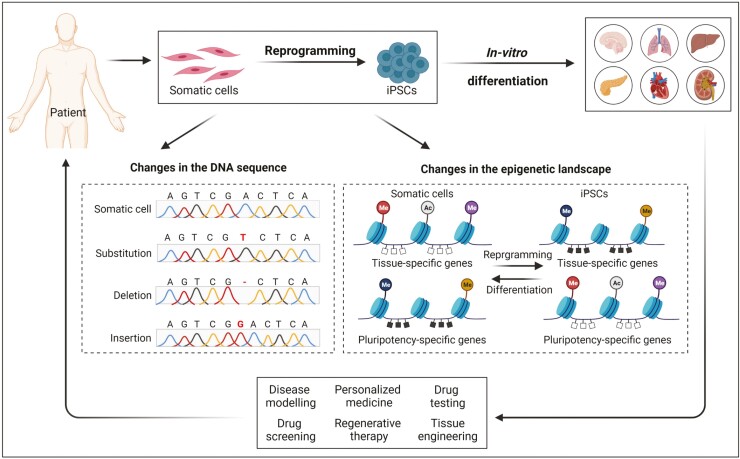
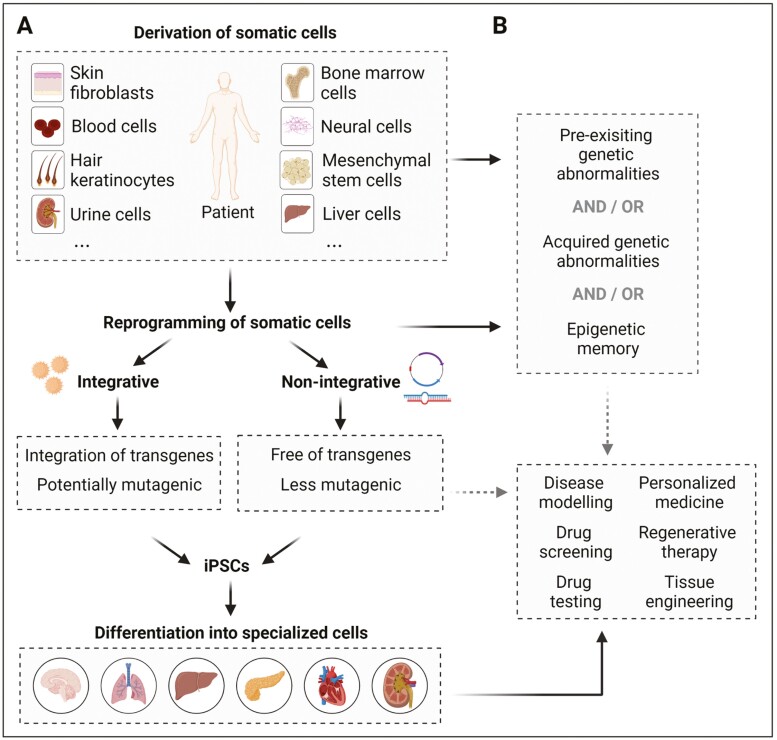
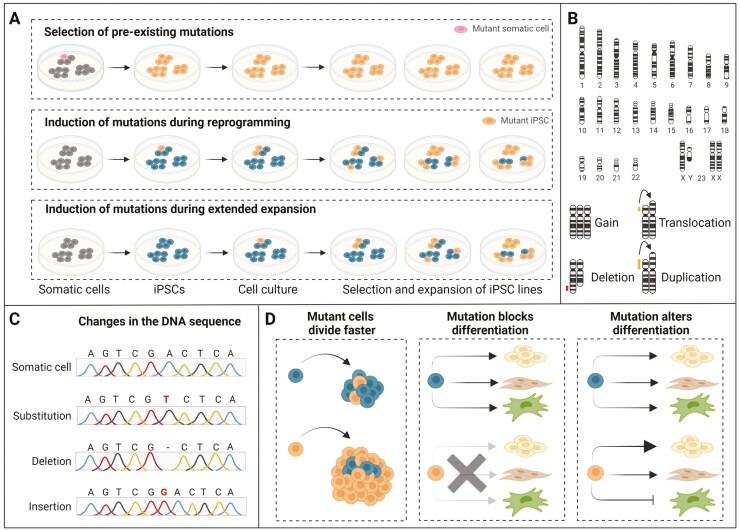
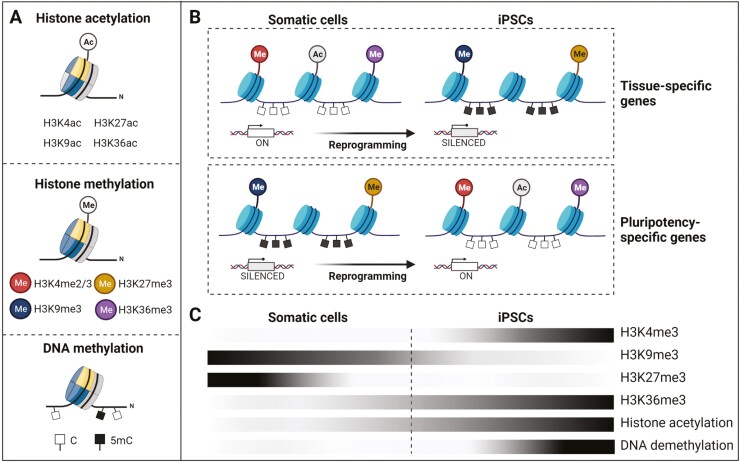
The potential of human induced pluripotent stem cells (iPSCs) to self-renew indefinitely and to differentiate virtually into any cell type in unlimited quantities makes them attractive for in vitro disease modeling, drug screening, personalized medicine, and regenerative therapies. As the genome of iPSCs thoroughly reproduces that of the somatic cells from which they are derived, they may possess genetic abnormalities, which would seriously compromise their utility and safety. Genetic aberrations could be present in donor somatic cells and then transferred during iPSC generation, or they could occur as de novo mutations during reprogramming or prolonged cell culture. Therefore, to warrant the safety of human iPSCs for clinical applications, analysis of genetic integrity, particularly during iPSC generation and differentiation, should be carried out on a regular basis. On the other hand, reprogramming of somatic cells to iPSCs requires profound modifications in the epigenetic landscape. Changes in chromatin structure by DNA methylations and histone tail modifications aim to reset the gene expression pattern of somatic cells to facilitate and establish self-renewal and pluripotency. However, residual epigenetic memory influences the iPSC phenotype, which may affect their application in disease therapeutics. The present review discusses the somatic cell origin, genetic stability, and epigenetic memory of iPSCs and their impact on basic and translational research.
Overview
The claims and statistics of this paper haven’t been checked yet.
Free: it reads the open-access text and checks the first 5 claims that cite a source we can check. Create a free account to check every claim.
Integrity signals
Registry
Cites
Statistics
Figures
Verification
Claims the paper makes
The claims and statistics of this paper haven’t been checked yet.
Free: it reads the open-access text and checks the first 5 claims that cite a source we can check. Create a free account to check every claim.
Claims other papers make about this one
Each is checked against this paper’s own text: does it say what the citing paper says it does?
The cited source says what the claim attributes to it.
In the citing paper
“Reprogramming may also partially erase or leave residual aspects of donorspecific epigenetic memory (Scesa et al. 2021;Li and Darabi 2022;Poetsch et al. 2022).”
From Primary cell cultures versus immortalized cell lines: critical comparative insights into biological fidelity and translational applications (2026) · cites this paper as Poetsch et al. 2022
Self-check
Percentages, sums and reported differences re-computed from the paper’s own numbers.
The self-check needs the paper’s full text.
Citations
Cites
Takahashi, K., & Yamanaka, S. (2006) · Cell · doi:10.1016/j.cell.2006.07.024 · Cited by 26,673
Induction of Pluripotent Stem Cells from Adult Human Fibroblasts by Defined Factors
Takahashi, K., Tanabe, K., Ohnuki, M., Narita, M., Ichisaka, T., Tomoda, K., & Yamanaka, S. (2007) · Cell · doi:10.1016/j.cell.2007.11.019 · Cited by 20,221
Induced Pluripotent Stem Cell Lines Derived from Human Somatic Cells
Yu, J., Vodyanik, M. A., Smuga-Otto, K., Antosiewicz-Bourget, J., Frane, J. L., Tian, S., Nie, J., Jonsdottir, G. A., Ruotti, V., Stewart, R., et al. (2007) · Science · doi:10.1126/science.1151526 · Cited by 10,310 · cited 1×
“10 Currently, blood cells and skin fibroblasts are the most commonly used cell types for reprogramming because (1) they are easy to obtain, (2) conditions for the initial culture of these cells are well established, (3) reprogramming methods for these cells are successfully standardized, and (4) iPSC banking has been…”
BackgroundGenome-wide maps of chromatin state in pluripotent and lineage-committed cells
Mikkelsen, T. S., Ku, M., Jaffe, D. B., Issac, B., Lieberman, E., Giannoukos, G., Alvarez, P., Brockman, W., Kim, T.-K., Koche, R. P., et al. (2007) · Nature · doi:10.1038/nature06008 · Cited by 4,129
Generation of Human Induced Pluripotent Stem Cells by Direct Delivery of Reprogramming Proteins
Kim, D., Kim, C.-H., Moon, J.-I., Chung, Y.-G., Chang, M.-Y., Han, B.-S., Ko, S., Yang, E., Cha, K. Y., Lanza, R., et al. (2009) · Cell stem cell · doi:10.1016/j.stem.2009.05.005 · Cited by 1,814
Generation of Induced Pluripotent Stem Cells Using Recombinant Proteins
Zhou, H., Wu, S., Joo, J. Y., Zhu, S., Han, D. W., Lin, T., Trauger, S., Bien, G., Yao, S., Zhu, Y., et al. (2009) · Cell stem cell · doi:10.1016/j.stem.2009.04.005 · Cited by 1,788
Maherali, N., Sridharan, R., Xie, W., Utikal, J., Eminli, S., Arnold, K., Stadtfeld, M., Yachechko, R., Tchieu, J., Jaenisch, R., et al. (2007) · Cell stem cell · doi:10.1016/j.stem.2007.05.014 · Cited by 1,725
Hotspots of aberrant epigenomic reprogramming in human induced pluripotent stem cells
Lister, R., Pelizzola, M., Kida, Y. S., Hawkins, R. D., Nery, J. R., Hon, G., Antosiewicz-Bourget, J., O’Malley, R., Castanon, R., Klugman, S., et al. (2011) · Nature · doi:10.1038/nature09798 · Cited by 1,549
Autologous Induced Stem-Cell–Derived Retinal Cells for Macular Degeneration
Mandai, M., Watanabe, A., Kurimoto, Y., Hirami, Y., Morinaga, C., Daimon, T., Fujihara, M., Akimaru, H., Sakai, N., Shibata, Y., et al. (2017) · New England Journal of Medicine · doi:10.1056/nejmoa1608368 · Cited by 1,509
Somatic coding mutations in human induced pluripotent stem cells
Gore, A., Li, Z., Fung, H.-L., Young, J. E., Agarwal, S., Antosiewicz-Bourget, J., Canto, I., Giorgetti, A., Israel, M. A., Kiskinis, E., et al. (2011) · Nature · doi:10.1038/nature09805 · Cited by 1,273
Polo, J. M., Liu, S., Figueroa, M. E., Kulalert, W., Eminli, S., Tan, K. Y., Apostolou, E., Stadtfeld, M., Li, Y., Shioda, T., et al. (2010) · Nature Biotechnology · doi:10.1038/nbt.1667 · Cited by 1,198
A p53-mediated DNA damage response limits reprogramming to ensure iPS cell genomic integrity
Marión, R. M., Strati, K., Li, H., Murga, M., Blanco, R., Ortega, S., Fernandez-Capetillo, O., Serrano, M., & Blasco, M. A. (2009) · Nature · doi:10.1038/nature08287 · Cited by 1,028
Hyperdynamic Plasticity of Chromatin Proteins in Pluripotent Embryonic Stem Cells
Meshorer, E., Yellajoshula, D., George, E., Scambler, P. J., Brown, D. T., & Misteli, T. (2006) · Developmental Cell · doi:10.1016/j.devcel.2005.10.017 · Cited by 1,008
Copy number variation and selection during reprogramming to pluripotency
Hussein, S. M., Batada, N. N., Vuoristo, S., Ching, R. W., Autio, R., Närvä, E., Ng, S., Sourour, M., Hämäläinen, R., Olsson, C., et al. (2011) · Nature · doi:10.1038/nature09871 · Cited by 954
Direct cell reprogramming is a stochastic process amenable to acceleration
Hanna, J., Saha, K., Pando, B., van Zon, J., Lengner, C. J., Creyghton, M. P., van Oudenaarden, A., & Jaenisch, R. (2009) · Nature · doi:10.1038/nature08592 · Cited by 938
Soufi, A., Donahue, G., & Zaret, K. S. (2012) · Cell · doi:10.1016/j.cell.2012.09.045 · Cited by 933
Laurent, L. C., Ulitsky, I., Slavin, I., Tran, H., Schork, A., Morey, R., Lynch, C., Harness, J. V., Lee, S., Barrero, M. J., et al. (2011) · Cell stem cell · doi:10.1016/j.stem.2010.12.003 · Cited by 890
Distinct epigenomic landscapes of pluripotent and lineage-committed human cells
Hawkins, R. D., Hon, G. C., Lee, L. K., Ngo, Q., Lister, R., Pelizzola, M., Edsall, L. E., Kuan, S., Luu, Y., Klugman, S., et al. (2010) · Cell stem cell · doi:10.1016/j.stem.2010.03.018 · Cited by 806
Bar-Nur, O., Russ, H. A., Efrat, S., & Benvenisty, N. (2011) · Cell Stem Cell · doi:10.1016/j.stem.2011.06.007 · Cited by 611
Common genetic variation drives molecular heterogeneity in human iPSCs
Kilpinen, H., Goncalves, A., Leha, A., Afzal, V., Alasoo, K., Ashford, S., Bala, S., Bensaddek, D., Casale, F. P., Culley, O. J., et al. (2017) · Nature · doi:10.1038/nature22403 · Cited by 586
Incomplete DNA methylation underlies a transcriptional memory of somatic cells in human iPS cells
Ohi, Y., Qin, H., Hong, C., Blouin, L., Polo, J. M., Guo, T., Qi, Z., Downey, S. L., Manos, P. D., Rossi, D. J., et al. (2011) · Nature Cell Biology · doi:10.1038/ncb2239 · Cited by 571
Rejuvenating senescent and centenarian human cells by reprogramming through the pluripotent state
Lapasset, L., Milhavet, O., Prieur, A., Besnard, E., Babled, A., Aït-Hamou, N., Leschik, J., Pellestor, F., Ramirez, J.-M., De Vos, J., et al. (2011) · Genes & Development · doi:10.1101/gad.173922.111 · Cited by 570
A comparison of non-integrating reprogramming methods
Schlaeger, T. M., Daheron, L., Brickler, T. R., Entwisle, S., Chan, K., Cianci, A., DeVine, A., Ettenger, A., Fitzgerald, K., Godfrey, M., et al. (2015) · Nature Biotechnology · doi:10.1038/nbt.3070 · Cited by 510
Human pluripotent stem cells recurrently acquire and expand dominant negative P53 mutations
Merkle, F. T., Ghosh, S., Kamitaki, N., Mitchell, J., Avior, Y., Mello, C., Kashin, S., Mekhoubad, S., Ilic, D., Charlton, M., et al. (2017) · Nature · doi:10.1038/nature22312 · Cited by 506
Fouse, S. D., Shen, Y., Pellegrini, M., Cole, S., Meissner, A., Van Neste, L., Jaenisch, R., & Fan, G. (2008) · Cell Stem Cell · doi:10.1016/j.stem.2007.12.011 · Cited by 452
Chromatin dynamics during cellular reprogramming
Apostolou, E., & Hochedlinger, K. (2013) · Nature · doi:10.1038/nature12749 · Cited by 398
Somatic copy number mosaicism in human skin revealed by induced pluripotent stem cells
Abyzov, A., Mariani, J., Palejev, D., Zhang, Y., Haney, M. S., Tomasini, L., Ferrandino, A. F., Rosenberg Belmaker, L. A., Szekely, A., Wilson, M., et al. (2012) · Nature · doi:10.1038/nature11629 · Cited by 384
Karyotypic abnormalities in human induced pluripotent stem cells and embryonic stem cells
Taapken, S. M., Nisler, B. S., Newton, M. A., Sampsell-Barron, T. L., Leonhard, K. A., McIntire, E. M., & Montgomery, K. D. (2011) · Nature Biotechnology · doi:10.1038/nbt.1835 · Cited by 327
Epigenetic resetting of human pluripotency
Guo, G., von Meyenn, F., Rostovskaya, M., Clarke, J., Dietmann, S., Baker, D., Sahakyan, A., Myers, S., Bertone, P., Reik, W., et al. (2017) · Development · doi:10.1242/dev.146811 · Cited by 319
A Comparative View on Human Somatic Cell Sources for iPSC Generation
Raab, S., Klingenstein, M., Liebau, S., & Linta, L. (2014) · Stem Cells International · doi:10.1155/2014/768391 · Cited by 263
Genetic and epigenetic stability of human pluripotent stem cells
Lund, R. J., Närvä, E., & Lahesmaa, R. (2012) · Nature Reviews Genetics · doi:10.1038/nrg3271 · Cited by 250
Cheng, L., Hansen, N. F., Zhao, L., Du, Y., Zou, C., Donovan, F. X., Chou, B.-K., Zhou, G., Li, S., Dowey, S. N., et al. (2012) · Cell Stem Cell · doi:10.1016/j.stem.2012.01.005 · Cited by 238
Influence of donor age on induced pluripotent stem cells
Lo Sardo, V., Ferguson, W., Erikson, G. A., Topol, E. J., Baldwin, K. K., & Torkamani, A. (2017) · Nature Biotechnology · doi:10.1038/nbt.3749 · Cited by 223
RIKEN suspends first clinical trial involving induced pluripotent stem cells
Garber, K. (2015) · Nature Biotechnology · doi:10.1038/nbt0915-890 · Cited by 215
Recurrent copy number variations in human induced pluripotent stem cells
Martins-Taylor, K., Nisler, B. S., Taapken, S. M., Compton, T., Crandall, L., Montgomery, K. D., Lalande, M., & Xu, R.-H. (2011) · Nature Biotechnology · doi:10.1038/nbt.1890 · Cited by 213
MacroH2A histone variants act as a barrier upon reprogramming towards pluripotency
Gaspar-Maia, A., Qadeer, Z. A., Hasson, D., Ratnakumar, K., Adrian Leu, N., Leroy, G., Liu, S., Costanzi, C., Valle-Garcia, D., Schaniel, C., et al. (2013) · Nature Communications · doi:10.1038/ncomms2582 · Cited by 198
Ji, J., Ng, S. H., Sharma, V., Neculai, D., Hussein, S., Sam, M., Trinh, Q., Church, G. M., Mcpherson, J. D., Nagy, A., et al. (2012) · STEM CELLS · doi:10.1002/stem.1011 · Cited by 193
Streckfuss-Bömeke, K., Wolf, F., Azizian, A., Stauske, M., Tiburcy, M., Wagner, S., Hübscher, D., Dressel, R., Chen, S., Jende, J., et al. (2013) · European Heart Journal · doi:10.1093/eurheartj/ehs203 · Cited by 183 · cited 1×
“10 Currently, blood cells and skin fibroblasts are the most commonly used cell types for reprogramming because (1) they are easy to obtain, (2) conditions for the initial culture of these cells are well established, (3) reprogramming methods for these cells are successfully standardized, and (4) iPSC banking has been…”
BackgroundSelf-citationHuman pluripotent reprogramming with CRISPR activators
Weltner, J., Balboa, D., Katayama, S., Bespalov, M., Krjutškov, K., Jouhilahti, E.-M., Trokovic, R., Kere, J., & Otonkoski, T. (2018) · Nature Communications · doi:10.1038/s41467-018-05067-x · Cited by 181
High-efficiency RNA-based reprogramming of human primary fibroblasts
Kogut, I., McCarthy, S. M., Pavlova, M., Astling, D. P., Chen, X., Jakimenko, A., Jones, K. L., Getahun, A., Cambier, J. C., Pasmooij, A. M. G., et al. (2018) · Nature Communications · doi:10.1038/s41467-018-03190-3 · Cited by 166
Sarig, R., Rivlin, N., Brosh, R., Bornstein, C., Kamer, I., Ezra, O., Molchadsky, A., Goldfinger, N., Brenner, O., & Rotter, V. (2010) · Journal of Experimental Medicine · doi:10.1084/jem.20100797 · Cited by 154
Histone variants in pluripotency and disease
Skene, P. J., & Henikoff, S. (2013) · Development · doi:10.1242/dev.091439 · Cited by 151
Assou, S., Girault, N., Plinet, M., Bouckenheimer, J., Sansac, C., Combe, M., Mianné, J., Bourguignon, C., Fieldes, M., Ahmed, E., et al. (2020) · Stem Cell Reports · doi:10.1016/j.stemcr.2019.12.004 · Cited by 129
Whole-genome mutational burden analysis of three pluripotency induction methods
Bhutani, K., Nazor, K. L., Williams, R., Tran, H., Dai, H., Džakula, Ž., Cho, E. H., Pang, A. W. C., Rao, M., Cao, H., et al. (2016) · Nature Communications · doi:10.1038/ncomms10536 · Cited by 129
The somatic mutation landscape of the human body
García-Nieto, P. E., Morrison, A. J., & Fraser, H. B. (2019) · Genome Biology · doi:10.1186/s13059-019-1919-5 · Cited by 126
The mutational impact of culturing human pluripotent and adult stem cells
Kuijk, E., Jager, M., van der Roest, B., Locati, M. D., Van Hoeck, A., Korzelius, J., Janssen, R., Besselink, N., Boymans, S., van Boxtel, R., et al. (2020) · Nature Communications · doi:10.1038/s41467-020-16323-4 · Cited by 124
Pawlak, M., & Jaenisch, R. (2011) · Genes & Development · doi:10.1101/gad.2039011 · Cited by 118
Brazhnik, K., Sun, S., Alani, O., Kinkhabwala, M., Wolkoff, A. W., Maslov, A. Y., Dong, X., & Vijg, J. (2020) · Science Advances · doi:10.1126/sciadv.aax2659 · Cited by 114
Ruiz, S., Lopez-Contreras, A. J., Gabut, M., Marion, R. M., Gutierrez-Martinez, P., Bua, S., Ramirez, O., Olalde, I., Rodrigo-Perez, S., Li, H., et al. (2015) · Nature Communications · doi:10.1038/ncomms9036 · Cited by 112
Mutational History of a Human Cell Lineage from Somatic to Induced Pluripotent Stem Cells
Rouhani, F. J., Nik-Zainal, S., Wuster, A., Li, Y., Conte, N., Koike-Yusa, H., Kumasaka, N., Vallier, L., Yusa, K., & Bradley, A. (2016) · PLOS Genetics · doi:10.1371/journal.pgen.1005932 · Cited by 112
iPSC Preparation and Epigenetic Memory: Does the Tissue Origin Matter?
Scesa, G., Adami, R., & Bottai, D. (2021) · Cells · doi:10.3390/cells10061470 · Cited by 110
Jullien, J., Astrand, C., Szenker, E., Garrett, N., Almouzni, G., & Gurdon, J. B. (2012) · Epigenetics & Chromatin · doi:10.1186/1756-8935-5-17 · Cited by 107
Antioxidant Supplementation Reduces Genomic Aberrations in Human Induced Pluripotent Stem Cells
Ji, J., Sharma, V., Qi, S., Guarch, M. E., Zhao, P., Luo, Z., Fan, W., Wang, Y., Mbabaali, F., Neculai, D., et al. (2014) · Stem Cell Reports · doi:10.1016/j.stemcr.2013.11.004 · Cited by 89
D’Antonio, M., Benaglio, P., Jakubosky, D., Greenwald, W. W., Matsui, H., Donovan, M. K. R., Li, H., Smith, E. N., D’Antonio-Chronowska, A., & Frazer, K. A. (2018) · Cell Reports · doi:10.1016/j.celrep.2018.06.091 · Cited by 88
mRNA-Based Genetic Reprogramming
Warren, L., & Lin, C. (2019) · Molecular Therapy · doi:10.1016/j.ymthe.2018.12.009 · Cited by 87
González, F., Georgieva, D., Vanoli, F., Shi, Z.-D., Stadtfeld, M., Ludwig, T., Jasin, M., & Huangfu, D. (2013) · Cell Reports · doi:10.1016/j.celrep.2013.02.005 · Cited by 81
Kwon, E. M., Connelly, J. P., Hansen, N. F., Donovan, F. X., Winkler, T., Davis, B. W., Alkadi, H., Chandrasekharappa, S. C., Dunbar, C. E., Mullikin, J. C., et al. (2017) · Proceedings of the National Academy of Sciences · doi:10.1073/pnas.1616035114 · Cited by 76
Abyzov, A., Tomasini, L., Zhou, B., Vasmatzis, N., Coppola, G., Amenduni, M., Pattni, R., Wilson, M., Gerstein, M., Weissman, S., et al. (2017) · Genome Research · doi:10.1101/gr.215517.116 · Cited by 75
Ruiz, S., Gore, A., Li, Z., Panopoulos, A. D., Montserrat, N., Fung, H.-L., Giorgetti, A., Bilić, J., Batchelder, E. M., Zaehres, H., et al. (2013) · Nature Communications · doi:10.1038/ncomms2381 · Cited by 74
Hu, S., Zhao, M.-T., Jahanbani, F., Shao, N.-Y., Lee, W. H., Chen, H., Snyder, M. P., & Wu, J. C. (2016) · JCI Insight · doi:10.1172/jci.insight.85558 · Cited by 73
Wang, L., Hiler, D., Xu, B., AlDiri, I., Chen, X., Zhou, X., Griffiths, L., Valentine, M., Shirinifard, A., Sablauer, A., et al. (2018) · Cell Reports · doi:10.1016/j.celrep.2018.01.075 · Cited by 72
Turinetto, V., Orlando, L., & Giachino, C. (2017) · International Journal of Molecular Sciences · doi:10.3390/ijms18091952 · Cited by 64
Zhang, J., Hirst, A. J., Duan, F., Qiu, H., Huang, R., Ji, Y., Bai, L., Zhang, F., Robinson, D. A., Jones, M., et al. (2019) · Stem Cell Reports · doi:10.1016/j.stemcr.2019.01.013 · Cited by 64
Hargus, G., Ehrlich, M., Hallmann, A.-L., & Kuhlmann, T. (2013) · Acta Neuropathologica · doi:10.1007/s00401-013-1222-6 · Cited by 60
Ray, A., Joshi, J. M., Sundaravadivelu, P. K., Raina, K., Lenka, N., Kaveeshwar, V., & Thummer, R. P. (2021) · Stem Cell Reviews and Reports · doi:10.1007/s12015-021-10200-3 · Cited by 60
Tilgner, K., Neganova, I. E., Moreno, I., Al-Aama, J. Y., Burks, D. J., Yung, S., Singhapol, C., Saretzki, G. C., Evans, J., Gorbunova, V. A., et al. (2013) · Cell Death and Differentiation · doi:10.1038/cdd.2013.44 · Cited by 56
Macro Histone Variants Are Critical for the Differentiation of Human Pluripotent Cells
Barrero, M. J., Sese, B., Martí, M., & Izpisua Belmonte, J. C. (2013) · Journal of Biological Chemistry · doi:10.1074/jbc.m113.466144 · Cited by 48
Hotspots of De Novo Point Mutations in Induced Pluripotent Stem Cells
Yoshihara, M., Araki, R., Kasama, Y., Sunayama, M., Abe, M., Nishida, K., Kawaji, H., Hayashizaki, Y., & Murakawa, Y. (2017) · Cell Reports · doi:10.1016/j.celrep.2017.09.060 · Cited by 48
Desmarais, J. A., Unger, C. A., Damjanov, I., Meuth, M., & Andrews, P. W. (2016) · Stem Cell Research & Therapy · doi:10.1186/s13287-016-0279-2 · Cited by 48
Advanced Feeder-Free Generation of Induced Pluripotent Stem Cells Directly From Blood Cells
Trokovic, R., Weltner, J., Nishimura, K., Ohtaka, M., Nakanishi, M., Salomaa, V., Jalanko, A., Otonkoski, T., & Kyttälä, A. (2014) · Stem Cells Translational Medicine · doi:10.5966/sctm.2014-0113 · Cited by 47
Genetic aberrations in iPSCs are introduced by a transient G1/S cell cycle checkpoint deficiency
Araki, R., Hoki, Y., Suga, T., Obara, C., Sunayama, M., Imadome, K., Fujita, M., Kamimura, S., Nakamura, M., Wakayama, S., et al. (2020) · Nature Communications · doi:10.1038/s41467-019-13830-x · Cited by 46
Dramatic replacement of histone variants during genome remodeling in nuclear-transferred embryos
Nashun, B., Akiyama, T., Suzuki, M. G., & Aoki, F. (2011) · Epigenetics · doi:10.4161/epi.6.12.18206 · Cited by 44
Šimara, P., Tesařová, L., Řeháková, D., Matula, P., Stejskal, S., Hampl, A., & Koutná, I. (2017) · Stem Cell Research & Therapy · doi:10.1186/s13287-017-0522-5 · Cited by 41
Episomal Induced Pluripotent Stem Cells: Functional and Potential Therapeutic Applications
Wang, A. Y. L., & Loh, C. Y. Y. (2019) · Cell Transplantation · doi:10.1177/0963689719886534 · Cited by 41
Transcriptional and epigenetic mechanisms of cellular reprogramming to induced pluripotency
van den Hurk, M., Kenis, G., Bardy, C., van den Hove, D. L., Gage, F. H., Steinbusch, H. W., & Rutten, B. P. (2016) · Epigenomics · doi:10.2217/epi-2016-0032 · Cited by 40
CRISPR activation enables high-fidelity reprogramming into human pluripotent stem cells
Sokka, J., Yoshihara, M., Kvist, J., Laiho, L., Warren, A., Stadelmann, C., Jouhilahti, E., Kilpinen, H., Balboa, D., Katayama, S., et al. (2022) · Stem Cell Reports · doi:10.1016/j.stemcr.2021.12.017 · Cited by 40
Few Single Nucleotide Variations in Exomes of Human Cord Blood Induced Pluripotent Stem Cells
Su, R.-J., Yang, Y., Neises, A., Payne, K. J., Wang, J., Viswanathan, K., Wakeland, E. K., Fang, X., & Zhang, X. (2013) · PLoS ONE · doi:10.1371/journal.pone.0059908 · Cited by 39
Okumura, T., Horie, Y., Lai, C.-Y., Lin, H.-T., Shoda, H., Natsumoto, B., Fujio, K., Kumaki, E., Okano, T., Ono, S., et al. (2019) · Stem Cell Research & Therapy · doi:10.1186/s13287-019-1273-2 · Cited by 37
Wang, A. Y. L. (2021) · International Journal of Molecular Sciences · doi:10.3390/ijms22158148 · Cited by 35
Overcoming Pluripotent Stem Cell Dependence on the Repair of Endogenous DNA Damage
Chlon, T. M., Ruiz-Torres, S., Maag, L., Mayhew, C. N., Wikenheiser‐Brokamp, K. A., Davies, S. M., Mehta, P. A., Myers, K. C., Wells, J. M., & Wells, S. I. (2016) · Stem Cell Reports · doi:10.1016/j.stemcr.2015.12.001 · Cited by 32
Review Epigenetic mechanisms of induced pluripotency
Machnik, M., Andrzejewska, A., Oleksiewicz, U., & Estecio, M. R. (2015) · Współczesna Onkologia · doi:10.5114/wo.2014.47135 · Cited by 27
Origin of the Induced Pluripotent Stem Cells Affects Their Differentiation into Dopaminergic Neurons
Chlebanowska, P., Sułkowski, M., Skrzypek, K., Tejchman, A., Muszyńska, A., Noroozi, R., & Majka, M. (2020) · International Journal of Molecular Sciences · doi:10.3390/ijms21165705 · Cited by 26
Redox and Epigenetics in Human Pluripotent Stem Cells Differentiation
Giallongo, S., Řeháková, D., Raffaele, M., Re, O. L., Koutná, I., & Vinciguerra, M. (2021) · Antioxidants and Redox Signaling · doi:10.1089/ars.2019.7983 · Cited by 23
Palomo, A. B. A., Osete, J. R., Delgado‐Morales, R., Moreno‐Manzano, V., Grau‐Bové, C., Tejera, Á. M., Juan, M., Barrot, C., Santos‐Barriopedro, I., Vaquero, A., et al. (2021) · Stem Cells · doi:10.1002/stem.3358 · Cited by 22
Generation of Human‐Induced Pluripotent Stem Cells From Anterior Cruciate Ligament
Woods Jon, S., Bates, N., Dunn, S. L., Serracino‐Inglott, F., Hardingham, T., & Kimber, S. J. (2019) · Journal of Orthopaedic Research® · doi:10.1002/jor.24493 · Cited by 20
Choompoo, N., Bartley, O. J. M., Precious, S. V., Vinh, N., Schnell, C., Garcia, A. D. R., Roberton, V. H., Williams, N. M., Kemp, P. J., Kelly, C. M., et al. (2020) · Cytotherapy · doi:10.1016/j.jcyt.2020.06.001 · Cited by 19
Safe and stable generation of induced pluripotent stem cells using doggybone DNA vectors
Thornton, C. D., Fielding, S., Karbowniczek, K., Roig‐Merino, A., Burrows, A. E., FitzPatrick, L. M., Sharaireh, A. M., Tite, J. P., Mole, S., Harbottle, R. P., et al. (2021) · Molecular Therapy — Methods & Clinical Development · doi:10.1016/j.omtm.2021.09.018 · Cited by 14
Quality control towards the application of induced pluripotent stem cells
Lin, K., & Xiao, A. (2017) · Current Opinion in Genetics & Development · doi:10.1016/j.gde.2017.07.006 · Cited by 8
Cited by
Exploring the promising potential of induced pluripotent stem cells in cancer research and therapy
Chehelgerdi, M., Behdarvand Dehkordi, F., Chehelgerdi, M., Kabiri, H., Salehian-Dehkordi, H., Abdolvand, M., Salmanizadeh, S., Rashidi, M., Niazmand, A., Ahmadi, S., et al. (2023) · Molecular Cancer · doi:10.1186/s12943-023-01873-0 · Cited by 175
Vascular organoids: unveiling advantages, applications, challenges, and disease modelling strategies
Naderi‐Meshkin, H., Cornelius, V. A., Eleftheriadou, M., Potel, K. N., Setyaningsih, W. A. W., & Margariti, A. (2023) · Stem Cell Research & Therapy · doi:10.1186/s13287-023-03521-2 · Cited by 108
Revolutionizing Disease Modeling: The Emergence of Organoids in Cellular Systems
Silva-Pedrosa, R., Salgado, A. J., & Ferreira, P. E. (2023) · Cells · doi:10.3390/cells12060930 · Cited by 84
Gerli, M., Calà, G., Beesley, M. A., Sina, B., Tullie, L., Sun, K. Y., Panariello, F., Michielin, F., Davidson, J., Russo, F. M., et al. (2024) · Nature Medicine · doi:10.1038/s41591-024-02807-z · Cited by 56
Targeting epigenetic dysregulation in autism spectrum disorders
Herrera, M. L., Paraíso‐Luna, J., Bustos-Martínez, I., & Barco, Á. (2024) · Trends in Molecular Medicine · doi:10.1016/j.molmed.2024.06.004 · Cited by 51
Metadata
- Authors
- Poetsch, M. S., Strano, A., & Guan, K.
- Affiliations
- Technische Universität Dresden (DE)
- Corresponding author
- Guan, Kaomei
- Venue
- Stem Cells
- Publisher
- Oxford University Press (OUP)
- Published
- 2022-03-15
- Volume
- 40
- Issue
- 6
- Pages
- 546-555
- ISSN
- 1066-5099 (ISSN-L)
- 1549-4918
- PMC
- PMC9216482
- OpenAlex
- W4221119954
- Semantic Scholar
- 66bcd4a53bad40feb954b51f838ebf9b30e19579
- Cited by
- 144
- References
- 88
- Citations by year
- 2026: 38 · 2025: 43 · 2024: 35 · 2023: 22 · 2022: 6
- FWCI
- 2.76
- Type
- journal article
- Language
- en
- Open access
- hybrid
- doi.org
- Licence
- Locations
- Stem Cells (publishedVersion, cc-by)
- PubMed Central (publishedVersion, cc-by)
- PubMed (publishedVersion)
- Funders
- Deutsche Forschungsgemeinschaft (288034826–IRTG)
- Immunological and Cellular Strategies in Metabolic Disease
- Free State of Saxony
- European Union
- Topics
- Life Sciences › Biochemistry, Genetics and Molecular Biology › Molecular Biology › Pluripotent Stem Cells Research
- Life Sciences › Biochemistry, Genetics and Molecular Biology › Molecular Biology › Epigenetics and DNA Methylation
- Life Sciences › Biochemistry, Genetics and Molecular Biology › Molecular Biology › CRISPR and Genetic Engineering
- Keywords
- human induced pluripotent stem cells, iPSC reprogramming, genome stability, epigenetic memory, DNA methylation, histone modifications, chromatin structure, pluripotency, iPSC differentiation, iPSC safety, disease modeling, regenerative medicine
- MeSH terms
- Translational Science, Biomedical, Cell Differentiation, Humans, Genomic Instability, Epigenesis, Genetic, Induced Pluripotent Stem Cells, Cellular Reprogramming
About these checks
Registry, retraction, Cites and statistics results are computed, not judged, with one exception: a printed reference that no index lists is read once by a model before it counts as a citation error. Claims are extracted by a model and kept only when their quote appears verbatim in the text; each cited source is then checked, with a model’s help, for whether it says what the claim relies on. Those verdicts can be wrong — read the claim’s quote and the cited source before relying on one.
Statistics and arithmetic are recomputed, not judged.
Confidence bands are shown only for fields calibrated on our annotated test set. None is calibrated yet, so no band is shown.
What counts as a claim ›How we measure confidence ›How we check this ›
Are you an author, or do you see a problem with this page? Request a review
Data sources
Bibliographic data: Semantic Scholar, OpenAlex, Crossref.
Contains information from the Semantic Scholar Academic Graph Datasets, made available under the ODC Attribution License (ODC-BY 1.0).
Semantic Scholar’s data is described in: Kinney, R., et al. (2023). The Semantic Scholar Open Data Platform. arXiv:2301.10140.
