

A Systematic Review on the Use of Psychosocial Interventions in Conjunction With Medications for the Treatment of Opioid Addiction
Open accessThe DOI matches its Crossref record; 42 of the 42 references it cites were found in a registry or an index.
Abstract
Opioid use and overdose rates have risen to epidemic levels in the United States during the past decade. Fortunately, there are effective medications (ie, methadone, buprenorphine, and oral and injectable naltrexone) available for the treatment of opioid addiction. Each of these medications is approved for use in conjunction with psychosocial treatment; however, there is a dearth of empirical research on the optimal psychosocial interventions to use with these medications. In this systematic review, we outline and discuss the findings of 3 prominent prior reviews and 27 recent publications of empirical studies on this topic. The most widely studied psychosocial interventions examined in conjunction with medications for opioid addiction were contingency management and cognitive behavioral therapy, with the majority focusing on methadone treatment. The results generally support the efficacy of providing psychosocial interventions in combination with medications to treat opioid addictions, although the incremental utility varied across studies, outcomes, medications, and interventions. The review highlights significant gaps in the literature and provides areas for future research. Given the enormity of the current opioid problem in the United States, it is critical to gain a better understanding of the most effective ways to deliver psychosocial treatments in conjunction with these medications to improve the health and well-being of individuals suffering from opioid addiction.
Overview
The claims and statistics of this paper haven’t been checked yet.
Free: it reads the open-access text and checks the first 5 claims that cite a source we can check. Create a free account to check every claim.
Integrity signals
Registry
Cites
Statistics
Figures
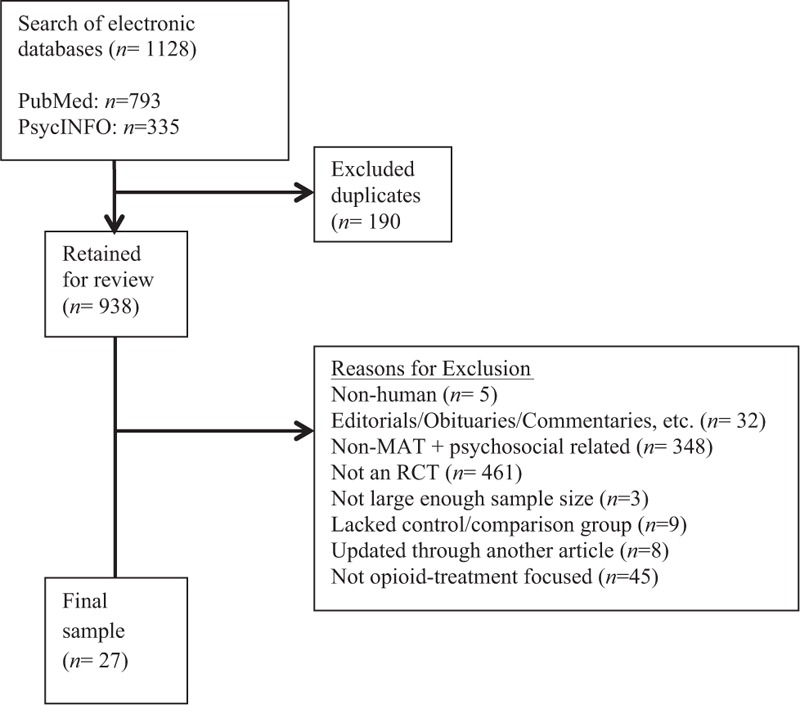
Verification
Claims the paper makes
The claims and statistics of this paper haven’t been checked yet.
Free: it reads the open-access text and checks the first 5 claims that cite a source we can check. Create a free account to check every claim.
Claims other papers make about this one
Each is checked against this paper’s own text: does it say what the citing paper says it does?
The source backs part of the claim, not all of it — or backs it for a different population, condition or comparison.
In the citing paper
“Recent reviews have highlighted the lack of research regarding psychological interventions (e.g., Integrated CBT) for patients with comorbid anxiety and opioid use and specifically the potential of psychological interventions to be paired with medication (e.g., suboxone) to address both anxiety and opioid use concurrently.(Dugosh et al., 2016; Langdon et al., 2019)”
From A systematic review and meta-analysis of psychosocial interventions for persons with comorbid anxiety and substance use disorders (2024) · cites this paper as Dugosh et al., 2016
Experimental — accuracy not yet measured
Self-check
Percentages, sums and reported differences re-computed from the paper’s own numbers.
The self-check needs the paper’s full text.
Citations
Cites
Preferred Reporting Items for Systematic Reviews and Meta-Analyses: the PRISMA statement
Moher, D., Liberati, A., Tetzlaff, J., Altman, D. G., & for the PRISMA Group (2009) · BMJ · doi:10.1136/bmj.b2535 · Cited by 83,823
Preferred reporting items for systematic reviews and meta-analyses: the PRISMA Statement.
(2009) · PubMed Central · Cited by 44,859
Preferred reporting items for systematic reviews and meta-analyses: The PRISMA statement
Moher, D., Liberati, A., Tetzlaff, J., Altman, D. G., & the PRISMA Group* (2009) · Annals of Internal Medicine · doi:10.7326/0003-4819-151-4-200908180-00135 · Cited by 37,554
Preferred Reporting Items for Systematic Reviews and Meta-Analyses: The PRISMA Statement
Moher, D., Liberati, A., Tetzlaff, J., & Altman, D. G. (2009) · Journal of Clinical Epidemiology · doi:10.1016/j.jclinepi.2009.06.005 · Cited by 19,575
Vital signs: overdoses of prescription opioid pain relievers---United States, 1999--2008.
Paulozzi, L. J., Jones, C. M., Mack, K. A., & Rudd, R. A. (2011) · PubMed · Cited by 1,540
A Meta-Analytic Review of Psychosocial Interventions for Substance Use Disorders
Dutra, L., Stathopoulou, G., Basden, S. L., Leyro, T. M., Powers, M. B., & Otto, M. W. (2008) · American Journal of Psychiatry · doi:10.1176/appi.ajp.2007.06111851 · Cited by 1,287 · cited 2×
“The goal of psychosocial treatment is to help patients control urges to use drugs and remain abstinent, while also serving to assist patients in coping with the emotional strife that often accompanies addiction (Dutra et al., 2008).”
BackgroundKampman, K., & Jarvis, M. (2015) · Journal of Addiction Medicine · doi:10.1097/adm.0000000000000166 · Cited by 678
Vital signs: overdoses of prescription opioid pain relievers---United States, 1999--2008.
(2011) · PubMed · Cited by 640
Vital Signs: Demographic and Substance Use Trends Among Heroin Users - United States, 2002-2013.
Jones, C. M., Logan, J. E., Gladden, R. M., & Bohm, M. K. (2015) · PubMed Central · Cited by 569
Weiss, R. D. (2011) · Archives of General Psychiatry · doi:10.1001/archgenpsychiatry.2011.121 · Cited by 540 · cited 3×
“One study (Weiss et al., 2011) examined the effectiveness of a manualized opioid dependence counseling intervention used in conjunction with buprenorphine during Phase 1 (brief treatment: buprenorphine-naloxone induction, 2 weeks of stabilization, 2 week taper, and 8 weeks of follow-up) and Phase 2…”
BackgroundMethodInfluential
Research works printed but not linked: 1
- Drummond DC Perryman K Psychosocial Interventions in Pharmacotherapy of Opioid Dependence: A Literature Review. London: St. George's University of London; 2007.
Cited by
Items 101–200 of 331
Sorrell, T. R., Weber, M., Alvarez, A., Beste, N., Hollins, U., Amura, C. R., & Cook, P. F. (2020) · Journal of Substance Abuse Treatment · doi:10.1016/j.jsat.2020.108027 · Cited by 16
Morin, K. A., Eibl, J. K., Caswell, J. M., Rush, B. R., Mushquash, C. J., Lightfoot, N., & Marsh, D. C. (2020) · PLoS ONE · doi:10.1371/journal.pone.0243317 · Cited by 18
“There is debate in the literature about whether or not adding mental health services to OAT programs improve outcomes and what is the best type of mental health service to incorporate into OAT programs [27, 37].”
BackgroundRansohoff, J. R., Petrides, A. K., Piscitello, G. J., Flood, J. G., & Melanson, S. E. F. (2019) · Drug and Alcohol Dependence · doi:10.1016/j.drugalcdep.2019.06.015 · Cited by 17
Garg, R., Kitchen, S. A., Men, S., Campbell, T. J., Bozinoff, N., Tadrous, M., Antoniou, T., Wyman, J., Werb, D., Munro, C., et al. (2022) · Drug and Alcohol Dependence · doi:10.1016/j.drugalcdep.2022.109459 · Cited by 16
Barbosa, C., Dowd, W. N., & Zarkin, G. A. (2020) · Value in Health · doi:10.1016/j.jval.2020.03.015 · Cited by 16
George, T. P., Welsh, L., Franchuk, S. L., & Vaccarino, F. J. (2022) · The Canadian Journal of Psychiatry · doi:10.1177/07067437211037625 · Cited by 14
“Furthermore, the integration of OAT with psychosocial treatment is recommended in OUD guidelines worldwide.(6) Thus, this lack of consistent integration of PSIs with OATs falls below established standards of care for OUD patients.”
BackgroundLiu, J., Grewen, K., & Gao, W. (2022) · Journal of Neuroscience · doi:10.1523/jneurosci.2232-21.2022 · Cited by 15
Treating Opioid Use Disorder and Opioid Withdrawal in the Context of Fentanyl
Martinez, S., Ellis, J. D., Bergeria, C. L., Huhn, A. S., & Dunn, K. E. (2025) · Annual Review of Clinical Psychology · doi:10.1146/annurev-clinpsy-081423-023518 · Cited by 21
“These therapies are especially beneficial in structured environments, such as supervised withdrawal or residential treatment programs, where they provide continuous support and improve overall treatment outcomes (Dugosh et al. 2016).”
Salleh, N. M., Voon, P., Karamouzian, M., Milloy, M., & Richardson, L. (2020) · Drug and Alcohol Dependence · doi:10.1016/j.drugalcdep.2020.108342 · Cited by 18
“The use of psychosocial counselling has been recognized as a useful informational social support not only to address mental and emotional well-being (Dugosh et al., 2016), but also in providing information on resources for housing, Salleh et al.”
BackgroundBrothers, S., Palayew, A., Simon, C., Coulter, A., Strichartz, K., Voyles, N., & Vincent, L. (2023) · Harm Reduction Journal · doi:10.1186/s12954-023-00756-3 · Cited by 18
“mandatory counseling may negatively affect patient attitudes toward treatment (WHO, 2004) other studies find that counseling may increase treatment retention and decrease opioid use and HIV risk [18, 34].”
BackgroundSaraiya, T. C., Jarnecke, A. M., Jones, J. L., Brown, D. G., Brady, K. T., & Back, S. E. (2021) · Drug and Alcohol Dependence · doi:10.1016/j.drugalcdep.2021.108755 · Cited by 15
Garland, E. L., Recasens, M., Taple, B. J., Donaldson, G. W., & Weisberg, R. B. (2024) · Annals of Medicine · doi:10.1080/07853890.2024.2392870 · Cited by 18
“…assisted treatment, including counseling, peer support, and contingency management [8–10]. however, studies show limited additive benefit of standard psycho-social therapies for addiction [11,12]. as such, novel adjunctive behavioral interventions are needed to improve MOUD treatment outcomes.”
BackgroundPsychosocial Interventions in Office-Based Opioid Treatment: A Systematic Review
Zerden, L. D. S., Guan, T., Lombardi, B. M., Sharma, A., & Garcia-Rico, Y. (2020) · Journal of the Society for Social Work and Research · doi:10.1086/708369 · Cited by 16
“Predominantly in methadone clinics, the most common psychosocial interventions provided for OUD were contingency management and cognitive behavioral therapy (Dugosh et al., 2016).”
BackgroundKameg, B., Fradkin, D., & Mitchell, A. M. (2020) · Journal of the American Association of Nurse Practitioners · doi:10.1097/jxx.0000000000000502 · Cited by 15
“A partial mu-opioid receptor agonist, buprenorphine has been shown to reduce not only cravings but also illicit opioid use while optimizing psychosocial outcomes (Dugosh et al., 2016).”
BackgroundMaina, G., Marshall, K., & Sherstobitoff, J. (2021) · Substance Abuse Research and Treatment · doi:10.1177/11782218211050372 · Cited by 16
Treating Opioid Use Disorder in General Medical Settings
(2021) · Springer eBooks · doi:10.1007/978-3-030-80818-1 · Cited by 15
Yaden, D. B., Berghella, A. P., Hendricks, P. S., Yaden, M. E., Levine, M., Rohde, J. S., Nayak, S. M., Johnson, M. W., & Garcia‐Romeu, A. (2023) · Pharmacological Research · doi:10.1016/j.phrs.2023.106998 · Cited by 15
Eibl, J. K., Morin-Taus, K. A., & Marsh, D. C. (2016) · Substance Abuse Treatment Prevention and Policy · doi:10.1186/s13011-016-0076-z · Cited by 13
“, (2016) highlight, more research is needed to know which patients will benefit from more integrated treatment strategies [8].”
BackgroundMorin, K. A., Eibl, J. K., Caswell, J. M., Gauthier, G. J., Rush, B. R., Mushquash, C. J., Lightfoot, N., & Marsh, D. C. (2019) · Substance Abuse Treatment Prevention and Policy · doi:10.1186/s13011-019-0213-6 · Cited by 19
A systematic review of gene-by-intervention studies of alcohol and other substance use
Neale, Z. E., Kuo, S. I., & Dick, D. M. (2020) · Development and Psychopathology · doi:10.1017/s0954579420000590 · Cited by 39
“Evidence suggests that treatment of psychiatric conditions is often most successful when a combination of pharmacological and psychosocial treatment is used (Anton et al., 2006; Balldin et al., 2003; Dugosh et al., 2016; Hien et al., 2015).”
BackgroundGiang, L. M., Trang, N. T., Diệp, N. B., Thuy, D. T. D., Thuy, D. T., Hòe, H. Đ., Vân, H. T. H., Thai, T. T., Nguyen, H. H., Lai, N. L., et al. (2022) · Trials · doi:10.1186/s13063-022-06278-w · Cited by 15
“Aim 2: To compare cost-effectiveness of two frontline interventions and of four adaptive strategies in improving both HIV and substance use outcomes among people with OUD who use methamphetamine at methadone clinics.”
BackgroundInfluentialPiette, J. D., Thomas, L., Newman, S., Marinec, N. S., Krauss, J. R., Chen, J., Wu, Z., & Bohnert, A. S. B. (2023) · Journal of Medical Internet Research · doi:10.2196/44165 · Cited by 18
“These findings are important because despite studies demonstrating the effectiveness of brief behavioral interventions for improving pain and decreasing OA risk [9,10,33], the growing population of patients at risk for adverse OA outcomes lacks access to treatment.”
Leung, K., Xu, E., Rosic, T., Worster, A., Thabane, L., & Samaan, Z. (2021) · BMC Psychiatry · doi:10.1186/s12888-021-03489-4 · Cited by 13
Nardi, W. R., Kelly, P., Roy, A., Becker, S., Brewer, J., & Sun, S. (2024) · Journal of Substance Use and Addiction Treatment · doi:10.1016/j.josat.2024.209442 · Cited by 11
Sureshkumar, K., Dalal, P. K., Kailash, S. Z., & Rudhran, V. (2021) · Indian Journal of Psychiatry · doi:10.4103/psychiatry.indianjpsychiatry_383_20 · Cited by 15
“[6] There are very few studies [8-10] which have examined the association between various psychosocial factors and relapse in patients of opioid dependence.”
Kiburi, S. K., Paruk, S., & Chiliza, B. (2022) · Frontiers in Digital Health · doi:10.3389/fdgth.2022.975168 · Cited by 13
Shadloo, B., Baheshmat, S., Abadi, Y. R., Shakeri, A., Gholami, J., & Rahimi‐Movaghar, A. (2021) · Journal of Substance Abuse Treatment · doi:10.1016/j.jsat.2021.108555 · Cited by 11
Substance Use Disorders: Basic Overview for the Anesthesiologist
Ruiz, F. J., Warner, N. S., Acampora, G. A., Coleman, J. R., & Kohan, L. R. (2023) · Anesthesia & Analgesia · doi:10.1213/ane.0000000000006281 · Cited by 11
Access to treatment before and after Medicare coverage of opioid treatment programs
Liu, R., Beetham, T., Newton, H., & Busch, S. H. (2024) · Health Affairs Scholar · doi:10.1093/haschl/qxae076 · Cited by 12
“18 While ancillary supportive services should never be a requirement for MOUD, availability of services offered by OTPs is consistent with best practice guidelines, indicating that all patients should have the option to utilize these services through a shared decision-making process.”
BackgroundPrice, C. J., Pike, K. C., Treadway, A., Palmer, J. K., & Merrill, J. O. (2024) · Mindfulness · doi:10.1007/s12671-024-02463-x · Cited by 12
“While there is some controversy about the effectiveness of psychosocial interventions for patients receiving MOUD (Dugosh et al., 2016; Schwartz, 2016; Trafton et al., 2004), the most robust trials have not shown a significant advantage of more intensive psychosocial interventions compared with…”
Rice, D. B., Hutton, B., Poulin, P. A., Sproule, B. A., Wolfe, D. M., Moher, D., Thavorn, K., Garber, G. E., Taha, S. A., Porath, A. J., et al. (2018) · BMJ Open · doi:10.1136/bmjopen-2018-023902 · Cited by 12
“A variety of approaches have been used to aid in OUD management, including cognitive–behavioural therapy, motivational interviewing, contingency management, supportive counselling and other strategies.(21) 22 While a quantitative comparison of the efficacy of psychosocial therapy has not been conducted, psychological…”
MethodSeghete, K. L. M., Graham, A. M., Shank, T. M., Alsup, S., Fisher, P. A., Wilson, A. C., & Ewing, S. W. F. (2020) · Current Addiction Reports · doi:10.1007/s40429-020-00296-x · Cited by 10
Riblet, N. B. V., Gottlieb, D. J., Shiner, B. R., Cornelius, S. L., & Watts, B. V. (2019) · Journal of Dual Diagnosis · doi:10.1080/15504263.2019.1701218 · Cited by 11
“It is also unclear whether patients with OUD benefit from general substance abuse treatment visits in addition to MAT (Amato, Minozzi, Davoli, & Vecchi, 2011; Carroll & Weiss, 2017; Dugosh et al., 2016; Sordo et al., 2017).”
BackgroundTop Ten Tips Palliative Care Clinicians Should Know About Opioid Use Disorder
Haley, E. M., Stone, J., Childers, J. W., Davis, A. V., Ehrman, S. E., Houser, M. W., Olenik, J. M., Roche, M. S., Jones, C. A., & Skarf, L. M. (2020) · Journal of Palliative Medicine · doi:10.1089/jpm.2020.0409 · Cited by 10
“5,31,32 MAT is an effective treatment for OUD shown to increase treatment retention, while decreasing opioid use, HIV infection, and mortality.”
Clark, A. E., Goodwin, S. R., Marks, R. M., Belcher, A. M., Heinlein, E., Bennett, M. E., & Roche, D. J. O. (2021) · Journal of Dual Diagnosis · doi:10.1080/15504263.2021.1965407 · Cited by 14
“scarce availability of evidence-based counseling alongside office-based buprenorphine treatment (Amato et al., 2011; Dugosh et al., 2016).”
BackgroundBuprenorphine Use in Palliative Care
Jones, K. F. (2019) · Journal of Hospice and Palliative Nursing · doi:10.1097/njh.0000000000000598 · Cited by 13
“As part of the waiver process, clinicians must attest to having access to a specialty level referral for appropriate counseling; however, counseling should not be mandated because there is evidence that buprenorphine prescribing alone is enough to improve outcomes and decrease drug use.(27)”
BackgroundApproved medications for opioid use disorder : current update
Soyka, M. (2025) · Expert Opinion on Pharmacotherapy · doi:10.1080/14656566.2025.2507124 · Cited by 10
“A study comparing CBT, contingency management and the combination of both with no additional treatment in BUP-maintained patients failed to show any differences concerning outcome parameters between the groups [144]”
Choi, S. A., Yan, C. H., Gastala, N., Touchette, D. R., & Stranges, P. M. (2023) · Journal of Substance Use and Addiction Treatment · doi:10.1016/j.josat.2023.209237 · Cited by 9
MacNeill, L., Brunelle, C., Skelding, B., & DiTommaso, E. (2020) · Canadian Journal of Nursing Research · doi:10.1177/0844562120924516 · Cited by 9
“Indeed, studies have shown that combining psychosocial interventions with pharmacotherapies results in better treatment outcomes (Amato et al., 2005; Bruneau et al., 2018; Dugosh et al., 2016; Dutra et al., 2008; Van den Brink & Hassen, 2006).”
BackgroundCanada’s Response to the Dual Public Health Crises: A Cautionary Tale
Krausz, M. R., Wong, J. S. H., Westenberg, J. N., Choi, F., Schütz, C. G., & Jang, K. L. (2021) · The Canadian Journal of Psychiatry · doi:10.1177/0706743721993634 · Cited by 14
“Psychosocial interventions such as cognitive behavioral therapy when provided with OAT have been shown to generally improve treatment outcomes.(7) The scaling up of harm reduction interventions has played an important role.”
BackgroundAugutis, M., Rosenberg, D., & Hillborg, H. (2016) · Journal of Social Work Practice in the Addictions · doi:10.1080/1533256x.2016.1235419 · Cited by 11
“Although the program studied considered itself a treatment program, it is not clear that it included many of the core components suggested in such MMT programs (Dugosh et al., 2016), which in addition to basic counseling, might include a range of psychosocial supports.”
BackgroundAttention Bias in Individuals with Addictive Disorders: Systematic Review Protocol
Zhang, M. W., Ying, J., Song, G., Ho, R., Fung, D. S. S., & Smith, H. E. (2018) · JMIR Research Protocols · doi:10.2196/resprot.9385 · Cited by 9
Psychosocial Approaches in the Treatment of Opioid Use Disorders
Bergman, B. G., Fallah‐Sohy, N., Hoffman, L. A., & Kelly, J. F. (2019) · Current clinical psychiatry · doi:10.1007/978-3-030-16257-3_6 · Cited by 11
Synthetic Anti-Cocaine Nanoaccine Successfully Prevents Cocaine-Induced Hyperlocomotion
Madge, H. Y. R., Alexander, S., Azuar, A., Zhang, J., Koirala, P., Burne, T. H. J., Tóth, I., & Stephenson, R. J. (2023) · Journal of Medicinal Chemistry · doi:10.1021/acs.jmedchem.3c00889 · Cited by 9
Shifting the Paradigm for Opioid Use Disorder: Changing the Language
Kameg, B. (2019) · The Journal for Nurse Practitioners · doi:10.1016/j.nurpra.2019.08.020 · Cited by 8
Hammond, C. J., Kady, A., Park, G. S. H., Vidal, C., Wenzel, K. R., & Fishman, M. J. (2021) · Journal of Addiction Medicine · doi:10.1097/adm.0000000000000861 · Cited by 9
“A recent systematic review by Dugosh et al found support for the efficacy of psychosocial interventions in combination with medications to treat OUD in adults, but also noted significant variability in the incremental benefit of adding psychosocial interventions to medication treatment across studies, outcomes, medica…”
BackgroundExpanding access to nurse-managed medication for opioid use disorder
Cos, T. A., Starbird, L. E., Lee, H., Chun, B., Gonnella, K., Bird, J., Livsey, K. R., Bastos, S., O’Brien, M. C., Clark, I. D., et al. (2021) · Nursing Outlook · doi:10.1016/j.outlook.2021.03.012 · Cited by 9
Wang, Y., Liu, J., Yue, S., Chen, L., Singh, A. K., Yu, T., Calipari, E. S., & Wang, Z.-J. (2025) · Neuropsychopharmacology · doi:10.1038/s41386-025-02102-6 · Cited by 8
“Various biological and psychosocial factors contribute to the high relapse rates in OUD, such as lack of social support and unstable social networks [5].”
Brown, A., Walters, J. E., Harmer, B., Cates, L., & Jones, A. E. (2023) · Journal of Substance Use and Addiction Treatment · doi:10.1016/j.josat.2023.209153 · Cited by 7
McAnulty, C., Bastien, G., Ledjiar, O., Socias, M. E., Foll, B. L., Lim, R., & Jutras‐Aswad, D. (2024) · Addictive Behaviors · doi:10.1016/j.addbeh.2024.108023 · Cited by 9
Berry, A. R. W., Finlayson, T. L., Mellis, L. M., & Urada, L. A. (2021) · International Journal of Environmental Research and Public Health · doi:10.3390/ijerph182111072 · Cited by 5
“However, there is significant evidence that cognitive behavioral therapy and contingency management are effective in methadone treatment programs [35].”
BackgroundPericot‐Valverde, I., Perez, A., Heo, M., Coleman, A., Ortiz, E. G., Merchant, K., Melling, T., & Litwin, A. H. (2022) · Contemporary Clinical Trials Communications · doi:10.1016/j.conctc.2022.100918 · Cited by 7
The Availability of Ancillary Counseling in the Practices of Physicians Prescribing Buprenorphine
Barry, D. T., Fazzino, T. L., Necrason, E., Ginn, J., Fiellin, L. E., Fiellin, D. A., & Moore, B. A. (2016) · Journal of Addiction Medicine · doi:10.1097/adm.0000000000000247 · Cited by 7
“…reported that of 8 studies conducted between 2008 and 2014 that examined buprenorphine treatment, 3 found a significant effect of psychosocial interventions (broadly defined) on treatment retention or drug use (Katz et al., 2011; Ruetsch et al., 2012; Brigham et al., 2014; Dugosh et al., 2016).”
BackgroundNeue Slow-release-Buprenorphinformulierungen zur Optimierung der Opioidsubstitution
Soyka, M., & Pogarell, O. M. (2019) · Der Nervenarzt · doi:10.1007/s00115-019-0783-6 · Cited by 10
Elison, S., Märtens, K., Yau, C., Davies, G., & Ward, J. (2021) · The American Journal of Drug and Alcohol Abuse · doi:10.1080/00952990.2020.1861618 · Cited by 8
“Previous studies have demonstrated that other CBT-based interventions have also resulted in similar outcomes including reduced opioid use and improved psychosocial functioning, especially when delivered in combination with substitute medication (5).”
BackgroundThe Role of Behavioral Interventions in Buprenorphine Maintenance Treatment: A Review
Carroll, K. M., & Weiss, R. D. (2019) · FOCUS The Journal of Lifelong Learning in Psychiatry · doi:10.1176/appi.focus.17206 · Cited by 10
Epidemiology of Opioid Use, Misuse, and Overdoses
Draghmeh, K., Gold, M. S., & Fuehrlein, B. (2025) · Current Addiction Reports · doi:10.1007/s40429-025-00649-4 · Cited by 6
McCormick, K. A., Samora, J., Claborn, K., Steiker, L. K. H., & DiNitto, D. M. (2024) · Drugs Education Prevention and Policy · doi:10.1080/09687637.2024.2306826 · Cited by 12
“…interventions, which focus on improving individuals’ physical and behavioral health outcomes, include medications for treating opioid addiction (Kampman & Jarvis, 2015) and psychosocial treatment (Bergman et al., 2019), with the standard of care being a combination of the two (Dugosh et al., 2016).”
Shikalgar, S., Weiner, S. G., Young, G. J., & Noor‐E‐Alam, M. (2024) · International Journal of Medical Informatics · doi:10.1016/j.ijmedinf.2024.105530 · Cited by 7
Martin, M. P., Phillips, M. A., Saxon, M., Love, K., Cessna, L., Woodard, D. L., Page, M., Curry, K. H., Paone, A., Pennington-Stallcup, B., et al. (2021) · International Journal of Prisoner Health · doi:10.1108/ijph-12-2020-0102 · Cited by 6
Comparing Perceptions of Addiction Treatment between Professionals and Individuals in Recovery
Sang, J., Patton, R., & Park, I. (2022) · Substance Use & Misuse · doi:10.1080/10826084.2022.2058706 · Cited by 9
“In fact, medication-assisted treatment (MAT)/Medications for Opioid Use Disorder (MOUD) is currently widely recognized as one of the most effective evidence-based strategies for addressing drug use and misuse (Carroll et al., 2018; Dugosh et al., 2016).”
BackgroundGallagher, J. R., Estreet, A., Nordberg, A., Zongrone, C., Minasian, R. M., & Szymanowski, S. (2022) · Journal of Human Behavior in the Social Environment · doi:10.1080/10911359.2022.2077500 · Cited by 6
“For example, MAT can help prevent opioid relapse or minimize the severity of a relapse, and it also increases retention in treatment for those who have opioid use disorders (Dugosh et al., 2016; Timko et al., 2016).”
BackgroundAre we ready to manage an opioid epidemic in the intensive care unit?
Das, A. K., Sharma, A. D., Kothari, N., & Goyal, S. (2022) · Anaesthesiology Intensive Therapy · doi:10.5114/ait.2022.118881 · Cited by 7
Unudurthi, S. D., Wright, K., Klimpel, J. M., Sud, A., Tan, A., & Warren, B. J. (2023) · Journal of Psychosocial Nursing and Mental Health Services · doi:10.3928/02793695-20230321-01 · Cited by 7
Reasons for not entering opioid agonist treatment: A survey among high-risk opioid users in Finland
Prami, T., Pölkki, M., Ruotsalainen, J., Nordbeck, E. B., Meyner, S., & Kaski, A. (2023) · Nordic Studies on Alcohol and Drugs · doi:10.1177/14550725231204723 · Cited by 6
“A systematic review from 2016 concluded that study results generally support psychosocial interventions when they are given in addition to OAT, although the additional effectiveness varies across studies, outcomes, medications and interventions (Dugosh et al., 2016).”
BackgroundHolistic approach to opioid use disorder: Think nitric oxide!
Sackner, M. A., Lopez, J. R., Banderas, V., & Adams, J. A. (2019) · Journal of Opioid Management · doi:10.5055/jom.2019.0543 · Cited by 7
Neeki, M. M., Dong, F., Archambeau, B., Cerda, M., Ratliff, S., Goff, A., Roloff, K. A., & Tran, L. (2020) · Cureus · doi:10.7759/cureus.9781 · Cited by 6
Current Best Practices for Acute and Chronic Management of Patients with Opioid Use Disorder
Peterkin, A. F., Laks, J., & Weinstein, Z. (2021) · Medical Clinics of North America · doi:10.1016/j.mcna.2021.08.009 · Cited by 6
Knudsen, H. K., Lofwall, M. R., Lin, L. A., WALSH, S. L., & Studts, J. L. (2019) · Drug and Alcohol Dependence · doi:10.1016/j.drugalcdep.2019.05.022 · Cited by 7
“The WHO practice guidelines point to the importance of psychosocial interventions (World Health Organization, 2009), but the more recent ASAM guidelines and systematic reviews note that there is not strong evidence for an incremental benefit of psychosocial treatment beyond medical management (American Society of Addi…”
BackgroundReframing the response to the opioid crisis: The critical role of resilience in public health
Roberts, D. L. (2024) · Open Health · doi:10.1515/ohe-2023-0006 · Cited by 6
A Review of Relapse in Opioid Use Disorder
Draghmeh, K., Gold, M. S., & Fuehrlein, B. (2025) · Current Addiction Reports · doi:10.1007/s40429-025-00672-5 · Cited by 6
“Previous studies that qualitatively assessed the use of PSI with OAT highlighted the need for more research on the benefits of PSI interventions in addition to OAT [93, 94].”
Tran, L. T., McKetin, R., Clark, B., Macdonald, C., Zahra, E., Arunogiri, S., Montebello, M. E., & Degenhardt, L. J. (2025) · Drug and Alcohol Dependence · doi:10.1016/j.drugalcdep.2025.112768 · Cited by 8
Cannabis Use Disorder Treatment Preferences: A Pilot Survey in Current Users of Cannabis
Lile, J. A., Turner, B. W., Cox, D. H., Bonn‐Miller, M. O., Katz, N. R., Shellenberg, T., Stoops, W. W., & Strickland, J. C. (2022) · Journal of Addiction Medicine · doi:10.1097/adm.0000000000001059 · Cited by 8
Reif, S., Stewart, M. T., Daily, S. M., Brolin, M. F., Lee, M. T., Panas, L., Ritter, G. A., Shields, M. C., Mazel, S. B., & Wicks, J. J. (2024) · Journal of Substance Use and Addiction Treatment · doi:10.1016/j.josat.2024.209544 · Cited by 5
Perspectives on the Pharmacological Treatment of Heroin Addiction
Bond, A. J., & Witton, J. (2017) · Clinical Medicine Insights Psychiatry · doi:10.1177/1179557317737322 · Cited by 10
Individual Factors Associated with Opioid Agonist Therapy Retention in Northern Ontario
Oukachbi, S., & Rizzo, S. (2020) · The Canadian Journal of Addiction · doi:10.1097/cxa.0000000000000076 · Cited by 5
Becker, S. J., Bowen, C. A., Reed, E. N., Lang, S. G., Correia, N., Yermash, J., Yap, K. R., Rash, C. J., & Garner, B. R. (2021) · Drug and Alcohol Dependence Reports · doi:10.1016/j.dadr.2021.100003 · Cited by 6
Hodgins, D. C., Budd, M., Czukar, G., Dubreucq, S., Jackson, L. A., Rush, B. R., Quilty, L. C., Adams, D., & Wild, T. C. (2022) · The Canadian Journal of Psychiatry · doi:10.1177/07067437221082858 · Cited by 5
“The key informant (program mangers) online survey was designed to collect descriptive data on individual programs and was drafted and pilot-tested in consultation with eligible Alberta-based health service providers and the project 640 The Canadian Journal of Psychiatry 67(8)”
BackgroundMethodInfluentialGuillou-Landréat, M., Dany, A., Challet‐Bouju, G., Laforgue, E., Cholet, J., Leboucher, J., Hardouin, J.-B., the OPAL Group, Bodénez, P., Grall‐Bronnec, M., et al. (2022) · Harm Reduction Journal · doi:10.1186/s12954-022-00608-6 · Cited by 5
Liu, C., & Li, Y. (2023) · Journal of Addictive Diseases · doi:10.1080/10550887.2022.2158664 · Cited by 10
“6 In this meta-analysis, we aim to compare the effectiveness of the combination of psychosocial plus methadone maintenance interventions to methadone maintenance treatments for opioid(s) dependence in treatment retention and drug use.”
Eren, K., Schuster, J., Herschell, A. D., Loveland, D., Neimark, G. B., Mihalyo, M. J., Hurford, M. O., Houck, P. R., & Ryan, N. D. (2021) · Journal of Addiction Medicine · doi:10.1097/adm.0000000000000914 · Cited by 6
“Randomized clinical trials testing the benefits of therapeutic interventions are not generally as tailored to the individual needs of clients receiving MOUD.”
MethodThe Effect of Stress Management Techniques on Persons with Addictive Behaviors: a Systematic Review
Louvardi, M., Chrousos, G. P., author, N. A. N., & Darviri, C. (2021) · Materia Socio Medica · doi:10.5455/msm.2021.33.213-218 · Cited by 12
MacLean, R. R., Ankawi, B., Driscoll, M., Gordon, M. A., Frankforter, T. L., Nich, C., Szollosy, S. K., Loya, J. M., Brito, L., Ribeiro, M. I. P., et al. (2024) · JMIR Research Protocols · doi:10.2196/54342 · Cited by 8
“Furthermore, integrating evidence-based psychotherapies, such as CBT, into MOUD clinical care has been met with mixed results [81-83].”
BackgroundMedication-assisted therapies for opioid use disorders in patients with chronic pain
Oesterle, T., Kolla, B. P., Rummans, T. A., & Gold, M. S. (2020) · Journal of the Neurological Sciences · doi:10.1016/j.jns.2020.116728 · Cited by 10
Silte, A. A., Li, E. P., Kale, B. S., Neel, L. T., Upadhyay, N., Flammia, R., Lyu, R., Onge, C. M. S., Reda, A., Woodard, S., et al. (2025) · Journal of Medicinal Chemistry · doi:10.1021/acs.jmedchem.5c00528 · Cited by 7
“14,15 Buprenorphine, a partial MOR agonist, and methadone, a full MOR agonist, are used to treat OUD through opioid replacement or detoxification therapy.”
Hong, P. Y. P., Kim, S.-H., Marley, J. A., & Park, J. (2021) · Social Work in Health Care · doi:10.1080/00981389.2021.1958127 · Cited by 4
“…(MAT; i.e., methadone, buprenorphine, and oral and injectable naltrexone) is found to be effective, there is a gap in understanding the most effective way to deliver psychosocial treatments in conjunction with MAT to address the larger social and behavioral health context (Dugosh et al., 2016).”
BackgroundMethodHefner, K. R., Choo, T.-H. J., Shmueli‐Blumberg, D., Pavlicová, M., King, J., Fishman, M. J., Shulman, M., Campbell, A. N. C., Greiner, M. G., Scodes, J. M., et al. (2022) · Drug and Alcohol Dependence Reports · doi:10.1016/j.dadr.2022.100100 · Cited by 4
“, 2011) and is beneficial for OUD generally (Dugosh et al., 2016).”
Horn, K. A., Mathis, S. M., Nagle, L., Hagaman, A. M., Dunkenberger, M. B., & Pack, R. P. (2024) · Harm Reduction Journal · doi:10.1186/s12954-024-01041-7 · Cited by 6
“Standards for MOUD are well-defined, yet there is much to learn regarding the type, frequency, and duration of supplemental recovery support services [34].”
BackgroundEffect of EEG neurofeedback therapy on addiction disorders: A systematic review and meta‐analysis
Wan, H., Chen, B., Li, X., & Bu, J. (2025) · Addiction · doi:10.1111/add.70164 · Cited by 6
Spas, J. J., Buscemi, J., Prasad, R., Janke, E. A., & Nigg, C. R. (2019) · Translational Behavioral Medicine · doi:10.1093/tbm/ibz004 · Cited by 4
Lehmann, K., Kuhn, S., Schulte, B., Meyer-Thompson, H., & Verthein, U. (2021) · Das Gesundheitswesen · doi:10.1055/a-1378-9249 · Cited by 5
“[23] Dugosh K, Abraham A, Seymour B et al.”
BackgroundUso problemático de los analgésicos opioides de prescripción: clasificación y tratamientos eficaces
Ruiz, A. I. H. (2018) · Medicina Clínica · doi:10.1016/j.medcli.2018.10.008 · Cited by 5
Kunstmann, W., Specka, M., Wodarz, N., & Scherbaum, N. (2020) · Das Gesundheitswesen · doi:10.1055/a-1173-9588 · Cited by 7
Pharmacotherapy of Substance Use Disorders: Challenges and Opportunities
Meyer, R. E. (2020) · Journal of Clinical Psychopharmacology · doi:10.1097/jcp.0000000000001218 · Cited by 5
Lent, M. R., Callahan, H. R., Womer, P., Mullen, P. M., Shook, C. B., DiTomasso, R. A., Felgoise, S. H., & Festinger, D. S. (2021) · Journal of Clinical Psychology · doi:10.1002/jclp.23170 · Cited by 6
Self-citationGuillou-Landréat, M., Levassor, P., Guerlais, M., Sebille, V., & Victorri‐Vigneau, C. (2021) · International Journal of Environmental Research and Public Health · doi:10.3390/ijerph18115749 · Cited by 5
“OMT have a clear positive impact, when it is combined with psychosocial interventions, as is the case in specialized centers [34–38].”
Weber, A. N., Miskle, B., Lynch, A., Arndt, S. V., & Ación, L. (2022) · Substance Abuse and Rehabilitation · doi:10.2147/sar.s356131 · Cited by 4
“Behavioral interventions including contingency management, cognitive behavior therapy, and motivational enhancement have been shown to reduce drug use.(3,4) Also, the US Food and Drug Administration (FDA) has approved medications for the treatment of three SUDs: acamprosate, disulfiram, and naltrexone to treat alcohol…”
BackgroundTreatment of Opioid Dependence
Soyka, M. (2018) · Springer eBooks · doi:10.1007/978-981-10-4358-1_12 · Cited by 5
Chen, Z., Wang, R., Zhang, M., Wang, Y., & Ren, Y. (2020) · BMJ Open · doi:10.1136/bmjopen-2019-034554 · Cited by 5
Factors affecting problem-solving court team decisions about medications for opioid use disorder
Andraka‐Christou, B., Viglione, J., Ahmed, F. Z., del Pozo, B., Atkins, D. N., Clark, M. H., Totaram, R., & Pivovarova, E. (2024) · Journal of Substance Use and Addiction Treatment · doi:10.1016/j.josat.2024.209525 · Cited by 4
Metadata
- Authors
- Dugosh, K., Abraham, A., Seymour, B., McLoyd, K., Chalk, M., & Festinger, D.
- Affiliations
- University of Georgia (US)
- Corresponding author
- Dugosh, Karen
- Venue
- Journal of Addiction Medicine
- Published
- 2016-03
- Volume
- 10
- Issue
- 2
- Pages
- 93-103
- ISSN
- 1932-0620 (ISSN-L)
- PMC
- PMC4795974
- OpenAlex
- W2315302680
- Semantic Scholar
- 8311903b73169e3786878a76a3896e8dd8ec53aa
- Cited by
- 333
- References
- 42
- Citations by year
- 2026: 19 · 2025: 27 · 2024: 31 · 2023: 35 · 2022: 31 · 2021: 61 · 2020: 52 · 2019: 35 · 2018: 21 · 2017: 14 · 2016: 6
- FWCI
- 3.74
- Type
- journal article
- Language
- en
- Open access
- hybrid
- doi.org
- Licence
- cc-by-nc-nd
- Locations
- Journal of Addiction Medicine (publishedVersion, cc-by-nc-nd)
- Europe PMC (PubMed Central) (publishedVersion, cc-by-nc-nd)
- PubMed Central (publishedVersion, cc-by-nc-nd)
- PubMed (publishedVersion)
- Digital Commons - PCOM (Philadelphia College of Osteopathic Medicine) (submittedVersion)
- Funders
- National Institute on Drug Abuse (HHSN271201200001C)
- Topics
- Health Sciences › Medicine › Public Health, Environmental and Occupational Health › Opioid Use Disorder Treatment
- Health Sciences › Medicine › Epidemiology › Substance Abuse Treatment and Outcomes
- Health Sciences › Medicine › Anesthesiology and Pain Medicine › Pain Management and Opioid Use
- Keywords
- opioid use disorder, psychosocial interventions, medication-assisted treatment, methadone, buprenorphine, naltrexone, contingency management, cognitive behavioral therapy, opioid use disorder treatment
- MeSH terms
- Analgesics, Opioid, Buprenorphine, Combined Modality Therapy, Humans, Methadone, Naltrexone, Narcotic Antagonists, Opioid-Related Disorders, Cognitive Behavioral Therapy
About these checks
Registry, retraction, Cites and statistics results are computed, not judged, with one exception: a printed reference that no index lists is read once by a model before it counts as a citation error. Claims are extracted by a model and kept only when their quote appears verbatim in the text; each cited source is then checked, with a model’s help, for whether it says what the claim relies on. Those verdicts can be wrong — read the claim’s quote and the cited source before relying on one.
Statistics and arithmetic are recomputed, not judged.
Confidence bands are shown only for fields calibrated on our annotated test set. None is calibrated yet, so no band is shown.
What counts as a claim ›How we measure confidence ›How we check this ›
Are you an author, or do you see a problem with this page? Request a review
Data sources
Bibliographic data: Semantic Scholar, OpenAlex, Crossref.
Contains information from the Semantic Scholar Academic Graph Datasets, made available under the ODC Attribution License (ODC-BY 1.0).
Semantic Scholar’s data is described in: Kinney, R., et al. (2023). The Semantic Scholar Open Data Platform. arXiv:2301.10140.
