

A Systematic Review on the Use of Psychosocial Interventions in Conjunction With Medications for the Treatment of Opioid Addiction
Open accessThe DOI matches its Crossref record; 42 of the 42 references it cites were found in a registry or an index.
Abstract
Opioid use and overdose rates have risen to epidemic levels in the United States during the past decade. Fortunately, there are effective medications (ie, methadone, buprenorphine, and oral and injectable naltrexone) available for the treatment of opioid addiction. Each of these medications is approved for use in conjunction with psychosocial treatment; however, there is a dearth of empirical research on the optimal psychosocial interventions to use with these medications. In this systematic review, we outline and discuss the findings of 3 prominent prior reviews and 27 recent publications of empirical studies on this topic. The most widely studied psychosocial interventions examined in conjunction with medications for opioid addiction were contingency management and cognitive behavioral therapy, with the majority focusing on methadone treatment. The results generally support the efficacy of providing psychosocial interventions in combination with medications to treat opioid addictions, although the incremental utility varied across studies, outcomes, medications, and interventions. The review highlights significant gaps in the literature and provides areas for future research. Given the enormity of the current opioid problem in the United States, it is critical to gain a better understanding of the most effective ways to deliver psychosocial treatments in conjunction with these medications to improve the health and well-being of individuals suffering from opioid addiction.
Overview
The claims and statistics of this paper haven’t been checked yet.
Free: it reads the open-access text and checks the first 5 claims that cite a source we can check. Create a free account to check every claim.
Integrity signals
Registry
Cites
Statistics
Figures
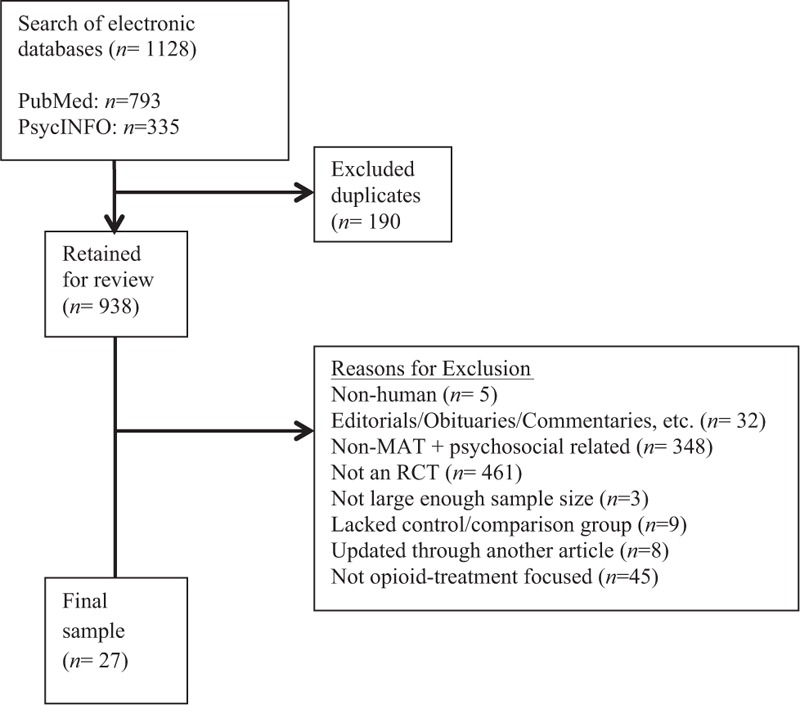
Verification
Claims the paper makes
The claims and statistics of this paper haven’t been checked yet.
Free: it reads the open-access text and checks the first 5 claims that cite a source we can check. Create a free account to check every claim.
Claims other papers make about this one
Each is checked against this paper’s own text: does it say what the citing paper says it does?
The source backs part of the claim, not all of it — or backs it for a different population, condition or comparison.
In the citing paper
“Recent reviews have highlighted the lack of research regarding psychological interventions (e.g., Integrated CBT) for patients with comorbid anxiety and opioid use and specifically the potential of psychological interventions to be paired with medication (e.g., suboxone) to address both anxiety and opioid use concurrently.(Dugosh et al., 2016; Langdon et al., 2019)”
From A systematic review and meta-analysis of psychosocial interventions for persons with comorbid anxiety and substance use disorders (2024) · cites this paper as Dugosh et al., 2016
Experimental — accuracy not yet measured
Self-check
Percentages, sums and reported differences re-computed from the paper’s own numbers.
The self-check needs the paper’s full text.
Citations
Cites
Preferred Reporting Items for Systematic Reviews and Meta-Analyses: the PRISMA statement
Moher, D., Liberati, A., Tetzlaff, J., Altman, D. G., & for the PRISMA Group (2009) · BMJ · doi:10.1136/bmj.b2535 · Cited by 83,823
Preferred reporting items for systematic reviews and meta-analyses: the PRISMA Statement.
(2009) · PubMed Central · Cited by 44,859
Preferred reporting items for systematic reviews and meta-analyses: The PRISMA statement
Moher, D., Liberati, A., Tetzlaff, J., Altman, D. G., & the PRISMA Group* (2009) · Annals of Internal Medicine · doi:10.7326/0003-4819-151-4-200908180-00135 · Cited by 37,554
Preferred Reporting Items for Systematic Reviews and Meta-Analyses: The PRISMA Statement
Moher, D., Liberati, A., Tetzlaff, J., & Altman, D. G. (2009) · Journal of Clinical Epidemiology · doi:10.1016/j.jclinepi.2009.06.005 · Cited by 19,575
Vital signs: overdoses of prescription opioid pain relievers---United States, 1999--2008.
Paulozzi, L. J., Jones, C. M., Mack, K. A., & Rudd, R. A. (2011) · PubMed · Cited by 1,540
A Meta-Analytic Review of Psychosocial Interventions for Substance Use Disorders
Dutra, L., Stathopoulou, G., Basden, S. L., Leyro, T. M., Powers, M. B., & Otto, M. W. (2008) · American Journal of Psychiatry · doi:10.1176/appi.ajp.2007.06111851 · Cited by 1,287 · cited 2×
“The goal of psychosocial treatment is to help patients control urges to use drugs and remain abstinent, while also serving to assist patients in coping with the emotional strife that often accompanies addiction (Dutra et al., 2008).”
BackgroundKampman, K., & Jarvis, M. (2015) · Journal of Addiction Medicine · doi:10.1097/adm.0000000000000166 · Cited by 678
Vital signs: overdoses of prescription opioid pain relievers---United States, 1999--2008.
(2011) · PubMed · Cited by 640
Vital Signs: Demographic and Substance Use Trends Among Heroin Users - United States, 2002-2013.
Jones, C. M., Logan, J. E., Gladden, R. M., & Bohm, M. K. (2015) · PubMed Central · Cited by 569
Weiss, R. D. (2011) · Archives of General Psychiatry · doi:10.1001/archgenpsychiatry.2011.121 · Cited by 540 · cited 3×
“One study (Weiss et al., 2011) examined the effectiveness of a manualized opioid dependence counseling intervention used in conjunction with buprenorphine during Phase 1 (brief treatment: buprenorphine-naloxone induction, 2 weeks of stabilization, 2 week taper, and 8 weeks of follow-up) and Phase 2…”
BackgroundMethodInfluential
Research works printed but not linked: 1
- Drummond DC Perryman K Psychosocial Interventions in Pharmacotherapy of Opioid Dependence: A Literature Review. London: St. George's University of London; 2007.
Cited by
Stigma as a fundamental hindrance to the United States opioid overdose crisis response
Tsai, A. C., Kiang, M. V., Barnett, M. L., Beletsky, L., Keyes, K. M., McGinty, E. E., Smith, L. R., Strathdee, S. A., Wakeman, S. E., & Venkataramani, A. S. (2019) · PLOS Medicine · doi:10.1371/journal.pmed.1002969 · Cited by 437
“Psychosocial interventions can also be effective when offered in conjunction with medication [54].”
BackgroundThe ASAM National Practice Guideline for the Treatment of Opioid Use Disorder: 2020 Focused Update
(2020) · Journal of Addiction Medicine · doi:10.1097/adm.0000000000000633 · Cited by 412
Witkiewitz, K., & Vowles, K. E. (2018) · Alcoholism: Clinical and Experimental Research · doi:10.1111/acer.13594 · Cited by 248
The Role of Behavioral Interventions in Buprenorphine Maintenance Treatment: A Review
Carroll, K. M., & Weiss, R. D. (2017) · American Journal of Psychiatry · doi:10.1176/appi.ajp.2016.16070792 · Cited by 211
Lofexidine versus clonidine for mitigation of opioid withdrawal symptoms: A systematic review
Kuszmaul, A. K., Palmer, E. C., & Frederick, E. K. (2020) · Journal of the American Pharmacists Association · doi:10.1016/j.japh.2019.10.004 · Cited by 192
Suicide Risk and Addiction: The Impact of Alcohol and Opioid Use Disorders
Rizk, M. M., Herzog, S., Dugad, S., & Stanley, B. (2021) · Current Addiction Reports · doi:10.1007/s40429-021-00361-z · Cited by 161
Recommendations for buprenorphine and methadone therapy in opioid use disorder: a European consensus
Dematteis, M., Auriacombe, M., D’Agnone, O., Somaini, L., Szerman, N., Littlewood, R., Alam, F., Alho, H., Benyamina, A., Bobes, J., et al. (2017) · Expert Opinion on Pharmacotherapy · doi:10.1080/14656566.2017.1409722 · Cited by 141
Winhusen, T. M., Walley, A. Y., Fanucchi, L. C., Hunt, T., Lyons, M., Lofwall, M. R., Brown, J. L., Freeman, P. R., Nunes, E. V., Beers, D., et al. (2020) · Drug and Alcohol Dependence · doi:10.1016/j.drugalcdep.2020.108325 · Cited by 142
Opioid Use Disorders: Perioperative Management of a Special Population
Ward, E. N., Quaye, A., & Wilens, T. E. (2018) · Anesthesia & Analgesia · doi:10.1213/ane.0000000000003477 · Cited by 142
The Next Stage of Buprenorphine Care for Opioid Use Disorder
Martin, S. A., Chiodo, L. M., Bosse, J. D., & Wilson, A. (2018) · Annals of Internal Medicine · doi:10.7326/m18-1652 · Cited by 130
“A systematic review of psychosocial counseling provided with MAT found that “support for the efficacy of delivering concurrent psychosocial interventions was less robust for buprenorphine” (45).”
Krawczyk, N., Buresh, M., Gordon, M., Blue, T. R., Fingerhood, M., & Agus, D. (2019) · Journal of Substance Abuse Treatment · doi:10.1016/j.jsat.2019.05.002 · Cited by 128
“health needs, the field has yet to produce clear indication on what specific type of psychosocial care is most effective for OUD and for whom (Dugosh et al., 2016).”
BackgroundExpanding the continuum of substance use disorder treatment: Nonabstinence approaches
Paquette, C. E., Daughters, S. B., & Witkiewitz, K. A. (2021) · Clinical Psychology Review · doi:10.1016/j.cpr.2021.102110 · Cited by 165
Hsu, D. J., McCarthy, E. P., Stevens, J. P., & Mukamal, K. J. (2017) · Addiction · doi:10.1111/add.13795 · Cited by 117
Joudrey, P. J., Chadi, N., Roy, P. J., Morford, K. L., Bach, P., Kimmel, S. D., Wang, E. A., & Calcaterra, S. L. (2020) · Drug and Alcohol Dependence · doi:10.1016/j.drugalcdep.2020.107968 · Cited by 129
Brothers, S., Viera, A., & Heimer, R. (2021) · Journal of Substance Abuse Treatment · doi:10.1016/j.jsat.2021.108449 · Cited by 108
“Since counseling may increase treatment retention and decrease opioid use and HIV risk (Davstad et al., 2009; Dugosh et al., 2016; Kelly et al., 2011), switching counseling to telehealth so that patients may still receive its benefits while maintaining social distancing may be optimal for patient health.”
BackgroundPharmacological and Behavioral Treatment of Opioid Use Disorder
Sofuoglu, M., DeVito, E. E., & Carroll, K. M. (2018) · Psychiatric Research and Clinical Practice · doi:10.1176/appi.prcp.20180006 · Cited by 113
“nation with an approved medication: methadone, buprenorphine, or naltrexone) (81, 82).”
BackgroundTherapies and Mechanisms of Opioid Withdrawal
Burma, N. E., Kwok, C. H. T., & Trang, T. (2017) · Pain Management · doi:10.2217/pmt-2017-0028 · Cited by 103
Opioid use disorder treatment for people experiencing homelessness: A scoping review
McLaughlin, M. F., Li, R., Carrero, N. D., Bain, P. A., & Chatterjee, A. (2021) · Drug and Alcohol Dependence · doi:10.1016/j.drugalcdep.2021.108717 · Cited by 100
“, 2018), PEH were consistently less likely than their housed counterparts to have enrolled in or received outpatient OAT for their opioid use (Bauer et al., 2016; Deck and Carlson, 2004; Dunn et al., 2019; Eyrich-Garg et al., 2008; Kelly et al., 2018; Krawczyk et al., 2020; Lundgren et al., 2003; Reynoso-Vallejo et al…”
BackgroundInfluentialManhapra, A., Agbese, E., Leslie, D. L., & Rosenheck, R. A. (2018) · Psychiatric Services · doi:10.1176/appi.ps.201700363 · Cited by 86
The neurobiological reward system in Prolonged Grief Disorder (PGD): A systematic review
Kakarala, S. E., Roberts, K. E., Rogers, M., Coats, T., Falzarano, F., Gang, J., Chilov, M., Avery, J., Maciejewski, P. K., Lichtenthal, W. G., et al. (2020) · Psychiatry Research: Neuroimaging · doi:10.1016/j.pscychresns.2020.111135 · Cited by 85
Bahji, A. (2024) · Journal of Clinical Medicine · doi:10.3390/jcm13040999 · Cited by 83
“Psychosocial interventions have demonstrated significant promise in the treatment of individuals with comorbid substance use and psychiatric disorders [37,38].”
BackgroundBarry, D. T., Beitel, M., Cutter, C. J., Fiellin, D. A., Kerns, R. D., Moore, B. A., Oberleitner, L., Madden, L. M., Liong, C., Ginn, J., et al. (2019) · Drug and Alcohol Dependence · doi:10.1016/j.drugalcdep.2018.10.015 · Cited by 81
“The efficacy of extensive psychosocial interventions in improving nonmedical opioid use and treatment retention outcomes during opioid agonist treatment for a heterogeneous population of patients with opioid use disorder (but not specifically with co-occurring chronic pain) has been called into question in recent syst…”
BackgroundKumar, N., Oles, W. C., Howell, B. A., Janmohamed, K., Lee, S. T., Funaro, M. C., O’Connor, P. G., & Alexander, M. (2021) · Journal of Substance Abuse Treatment · doi:10.1016/j.jsat.2021.108367 · Cited by 103
Mortality Among People With Opioid Use Disorder: A Systematic Review and Meta-analysis
Bahji, A., Cheng, B., Gray, S., & Stuart, H. L. (2020) · Journal of Addiction Medicine · doi:10.1097/adm.0000000000000606 · Cited by 90
Potential of Glial Cell Modulators in the Management of Substance Use Disorders
Jones, J. D. (2020) · CNS Drugs · doi:10.1007/s40263-020-00721-9 · Cited by 79
“Medications to treat OUD have a well-established efficacy, improving quality of life and reducing premature mortality [4, 5].”
BackgroundInfluentialJordan, C. J., Cao, J., Newman, A. H., & Xi, Z. (2019) · Neuropharmacology · doi:10.1016/j.neuropharm.2019.04.015 · Cited by 80
“Although beyond the scope of the current review, behavioral and psychosocial support is a key aspect in maintaining remission during maintenance programs (Dugosh et al., 2016).”
BackgroundRice, D., Corace, K., Wolfe, D., Esmaeilisaraji, L., Michaud, A., Grima, A., Austin, B., Douma, R., Barbeau, P., Butler, C., et al. (2020) · PLOS ONE · doi:10.1371/journal.pone.0244401 · Cited by 64
“In 2016, a systematic review of psychosocial interventions used in conjunction with OAT included 27 studies that were qualitatively synthesized [25].”
BackgroundInfluentialOvercoming Medication Stigma in Peer Recovery: A New Paradigm
Krawczyk, N., Negron, T. M., Nieto, M., Agus, D., & Fingerhood, M. (2018) · Substance Abuse · doi:10.1080/08897077.2018.1439798 · Cited by 70
“complement to medication, as well as how to make these interventions widely available and accessible.(8) Although not recognized by the American Society of Addiction Medicine as psychosocial treatment per se,(9) some”
BackgroundClemans-Cope, L., Lynch, V., Howell, E. M., Hill, I. T., Holla, N., Morgan, J., Johnson, P., Cross‐Barnet, C., & Thompson, J. A. (2019) · Drug and Alcohol Dependence · doi:10.1016/j.drugalcdep.2018.12.005 · Cited by 66
The case for a medication first approach to the treatment of opioid use disorder
Winograd, R., Presnall, N. J., Stringfellow, E. J., Wood, C. A., Horn, P., Duello, A., Green, L., & Rudder, T. (2019) · The American Journal of Drug and Alcohol Abuse · doi:10.1080/00952990.2019.1605372 · Cited by 64
An investigation of an open‐access model for scaling up methadone maintenance treatment
Madden, L. M., Farnum, S. O., Eggert, K. F., Quanbeck, A., Freeman, R. M., Ball, S. A., Schottenfeld, R. S., Shi, J. M., Savage, M. E., & Barry, D. T. (2018) · Addiction · doi:10.1111/add.14198 · Cited by 67
Morin, K. A., Eibl, J. K., Gauthier, G. J., Rush, B. R., Mushquash, C. J., Lightfoot, N., & Marsh, D. C. (2020) · Harm Reduction Journal · doi:10.1186/s12954-020-00396-x · Cited by 64
Advances in the delivery of buprenorphine for opioid dependence
Rosenthal, R. N., & Goradia, V. (2017) · Drug Design Development and Therapy · doi:10.2147/dddt.s72543 · Cited by 65
“not robust in support of only psychosocial treatment of OUD provided after detoxification from opioids.(8,9) More specifically, maintenance with buprenorphine has higher efficacy on treatment retention and adverse events than detoxification or psychological treatment.”
Heidbreder, C. A., Fudala, P. J., & Greenwald, M. K. (2023) · Drug and Alcohol Dependence Reports · doi:10.1016/j.dadr.2023.100133 · Cited by 73
Fordham, B., Sugavanam, T., Edwards, K., Hemming, K., Howick, J., Copsey, B. J., Lee, H., Kaidesoja, M., Kirtley, S., Hopewell, S., et al. (2021) · Health Technology Assessment · doi:10.3310/hta25090 · Cited by 69
Samples, H., Nowels, M., Williams, A. R., Olfson, M., & Crystal, S. (2023) · American Journal of Preventive Medicine · doi:10.1016/j.amepre.2023.01.037 · Cited by 54
Canadian Guidelines on Opioid Use Disorder Among Older Adults
Rieb, L. M., Samaan, Z., Furlan, A. D., Rabheru, K., Feldman, S., Hung, L., Budd, G., & Coleman, D. (2020) · Canadian Geriatrics Journal · doi:10.5770/cgj.23.420 · Cited by 57
Considerations in Addressing the Opioid Epidemic and Chronic Pain within the USA
Marshall, B., Bland, M. K., Hulla, R., & Gatchel, R. J. (2019) · Pain Management · doi:10.2217/pmt-2018-0070 · Cited by 51
Strayer, R. J., Hawk, K. F., Hayes, B. D., Herring, A. A., Ketcham, E. M., LaPietra, A. M., Lynch, J. J., Motov, S. M., Repanshek, Z. D., Weiner, S. G., et al. (2020) · Journal of Emergency Medicine · doi:10.1016/j.jemermed.2019.12.034 · Cited by 50
Identification and Management of Opioid Use Disorder in Primary Care: an Update
Donroe, J. H., Bhatraju, E. P., Tsui, J. I., & Edelman, E. J. (2020) · Current Psychiatry Reports · doi:10.1007/s11920-020-01149-0 · Cited by 52
Day, E., & Mitcheson, L. (2017) · Addiction · doi:10.1111/add.13644 · Cited by 53
“A review of a further 22 studies [22] supported the efficacy of providing psychosocial interventions in combination with medications to treat opioid addictions, but found that the incremental utility varied across studies, outcomes, medications and interventions.”
BackgroundChhatwal, J., Mueller, P. P., Chen, Q., Kulkarni, N. S., Adee, M. G., Zarkin, G. A., Larochelle, M. R., Knudsen, A. B., & Barbosa, C. (2023) · JAMA Network Open · doi:10.1001/jamanetworkopen.2023.14925 · Cited by 49
Kennedy, A. J., Wessel, C. B., Levine, R. E., Downer, K., Raymond, M. B., Osakue, D., Hassan, I. F., Merlin, J. S., & Liebschutz, J. M. (2021) · Journal of General Internal Medicine · doi:10.1007/s11606-020-06448-z · Cited by 48
What Obstetrician–Gynecologists Should Know About Substance Use Disorders in the Perinatal Period
Smid, M. C., & Terplan, M. (2022) · Obstetrics and Gynecology · doi:10.1097/aog.0000000000004657 · Cited by 50
Calcaterra, S. L., Bottner, R., Martín, M., Englander, H. L., Weinstein, Z., Weimer, M. B., Lambert, E., Ronan, M. V., Huerta, S., Zaman, T., et al. (2022) · Journal of Hospital Medicine · doi:10.1002/jhm.12908 · Cited by 44
Rhee, T. G., & Rosenheck, R. A. (2019) · Psychiatric Services · doi:10.1176/appi.ps.201900163 · Cited by 44
Rewarding recovery: the time is now for contingency management for opioid use disorder
Proctor, S. L. (2022) · Annals of Medicine · doi:10.1080/07853890.2022.2068805 · Cited by 38
Zadeh, E. M., Ziafat, K., Yazdani, K., Kamel, M. M., Wong, J. S. H., Modabbernia, A., Blanken, P., Verthein, U., Schütz, C. G., Jang, K. L., et al. (2021) · The American Journal of Drug and Alcohol Abuse · doi:10.1080/00952990.2021.1887202 · Cited by 45
“disorder has produced mixed results (3,5).”
BackgroundThe Treatment of Substance Use Disorders: Recent Developments and New Perspectives
Rosenthal, A., Ebrahimi, C., Wedemeyer, F., Romanczuk‐Seiferth, N., & Beck, A. (2022) · Neuropsychobiology · doi:10.1159/000525268 · Cited by 49
Panlilio, L. V., Secci, M. E., Schindler, C. W., & Bradberry, C. W. (2017) · Psychopharmacology · doi:10.1007/s00213-017-4726-2 · Cited by 36
“…could be susceptible to change through therapeutic interventions (e.g., contingency management) that enhance the relative value of delayed nondrug reinforcers (Dugosh et al. 2016; Holtyn et al. 2014; Lussier et al. 2006) is important for future study at the behavioral and neurobiological levels.”
Klein, A. A., & Seppala, M. D. (2019) · Journal of Substance Abuse Treatment · doi:10.1016/j.jsat.2019.06.009 · Cited by 41
Krawczyk, N., Bandara, S. N., Merritt, S., Shah, H., Duncan, A., McEntee, B., Schiff, M., Ahmad, N. J., Whaley, S., Latimore, A. D., et al. (2022) · Addiction Science & Clinical Practice · doi:10.1186/s13722-022-00313-6 · Cited by 38
“This was exemplified by some jails’ endorsement of extendedrelease naltrexone as a withdrawal medication despite this medication not being clinically indicated as such, certain providers’ preference for naltrexone over opioid agonists despite their stronger evidence-base [34], strict regimens for withdrawal management…”
BackgroundBarriers to Buprenorphine Expansion in Ohio: A Time-Elapsed Qualitative Study
Molfenter, T. D., Fitzgerald, M., Jacobson, N. A., McCarty, D. W., Quanbeck, A., & Zehner, M. E. (2019) · Journal of Psychoactive Drugs · doi:10.1080/02791072.2019.1566583 · Cited by 33
“Agonist and partial agonist pharmacotherapies block opioid receptors and, when paired with cognitive behavioral therapy, have greater treatment retention rates and reductions in use of illicit opioids compared to behavioral therapy alone (Dugosh et al. 2016; Mattick et al. 2014).”
BackgroundMarshall, T., Hancock, M., Kinnard, E. N., Olson, K. L., Abba‐Aji, A., Rittenbach, K., Stea, J. N., Tanguay, R. L., & Vohra, S. (2021) · Journal of Substance Abuse Treatment · doi:10.1016/j.jsat.2021.108646 · Cited by 39
Rozanova, J., Shenoi, S., Zaviryukha, I., Zeziulin, O., Kiriazova, T. K., Rich, K. M., Mamedova, E., & Yariy, V. (2020) · Substance Use & Misuse · doi:10.1080/10826084.2020.1791183 · Cited by 30
“However, a recent systematic review concluded that in combination with medication-assisted therapies the utility of social support (via psychosocial interventions) was not consistent (Dugosh et al., 2016).”
BackgroundSchwartz, R. P. (2016) · Journal of Addiction Medicine · doi:10.1097/adm.0000000000000236 · Cited by 30
“review by Dugosh et al., (2016) that examined the role of psycho-”
MethodThe role of neurologists in tackling the opioid epidemic
Volkow, N. D., & Koroshetz, W. J. (2019) · Nature Reviews Neurology · doi:10.1038/s41582-019-0146-8 · Cited by 29
Schwartz, L. P., Blank, L., & Hursh, S. R. (2021) · Drug and Alcohol Dependence · doi:10.1016/j.drugalcdep.2021.108562 · Cited by 34
Opioid use disorder in primary care: PEER umbrella systematic review of systematic reviews.
Korownyk, C. S., Perry, D., Ton, J., Kolber, M. R., Garrison, S., Thomas, B., Allan, G. M., Dugré, N., Finley, C. R., Ting, R., et al. (2019) · Europe PMC (PubMed Central) · Cited by 29
Andraka‐Christou, B., & Atkins, D. N. (2020) · The American Journal of Drug and Alcohol Abuse · doi:10.1080/00952990.2020.1807559 · Cited by 32
Samples, H., Williams, A. R., Crystal, S., & Olfson, M. (2022) · Journal of Substance Abuse Treatment · doi:10.1016/j.jsat.2022.108774 · Cited by 29
Bahji, A., Carlone, D., & Altomare, J. (2020) · Addiction · doi:10.1111/add.14946 · Cited by 31
Finlay, A. K., Morse, E. F., Stimmel, M. A., Taylor, E. N., Timko, C., Harris, A. H. S., Smelson, D. A., Yu, M., Blue‐Howells, J., & Binswanger, I. A. (2020) · Journal of General Internal Medicine · doi:10.1007/s11606-020-05944-6 · Cited by 28
Wild, T. C., Hammal, F., Hancock, M., Bartlett, N. T., Gladwin, K. K., Adams, D., Loverock, A., & Hodgins, D. C. (2020) · Drug and Alcohol Dependence · doi:10.1016/j.drugalcdep.2020.108434 · Cited by 27
McCrea, A. M. (2019) · Administration & Society · doi:10.1177/0095399719878727 · Cited by 31
“A recent literature review by Dugosh et al. (2016) finds that psychosocial therapy provided through substance and mental health providers helps improve clinical outcomes, with some services providing medications to help treat addiction.”
BackgroundHarvey, L. M., Fan, W., Cano, M. Á., Vaughan, E. L., Arbona, C., Essa, S., Sanchez, H. F., & de Dios, M. A. (2020) · Journal of Substance Abuse Treatment · doi:10.1016/j.jsat.2020.01.016 · Cited by 32
Gregory, V. L., & Ellis, R. J. B. (2020) · The American Journal of Drug and Alcohol Abuse · doi:10.1080/00952990.2020.1780602 · Cited by 30
“The systematic review by Dugosh and associates (23), despite various null findings, had some results indicating CBT to be beneficial in association with a particular aspect of one experimental intervention or on certain outcomes at different points in time in another RCT.”
ResultGoofballing of Opioid and Methamphetamine: The Science Behind the Deadly Cocktail
Hazani, H. M., Mohamed, I. N., Mustapha, M., Mohamed, W. M. Y., Yahaya, M. F., Teoh, S. L., Mohamed, R. M. P., Isa, M. F. M., Abdulrahman, S. M., Ramadah, R., et al. (2022) · Frontiers in Pharmacology · doi:10.3389/fphar.2022.859563 · Cited by 30
“Psychosocial interventions in conjunction with medications for the treatment of opioid addiction are approved as a part of comprehensive treatment for opioid addiction such as contingency management (CM) and cognitive behavioral therapy (CBT), with the majority focusing on methadone treatment (Dugosh et al., 2016).”
BackgroundPharmacotherapeutic management of co-morbid alcohol and opioid use
Hood, L. E., Leyrer‐Jackson, J. M., & Olive, M. F. (2020) · Expert Opinion on Pharmacotherapy · doi:10.1080/14656566.2020.1732349 · Cited by 31
Edelman, E. J., Gan, G., Dziura, J. D., Esserman, D. A., Morford, K. L., Porter, E., Chan, P. A., Cornman, D. H., Oldfield, B. J., Yager, J. E., et al. (2021) · JAIDS Journal of Acquired Immune Deficiency Syndromes · doi:10.1097/qai.0000000000002666 · Cited by 25
ENDING THE OPIOID EPIDEMIC REQUIRES A HISTORIC INVESTMENT IN MEDICATION‐ASSISTED TREATMENT
Saloner, B. K., & Barry, C. L. (2018) · Journal of Policy Analysis and Management · doi:10.1002/pam.22047 · Cited by 29
Current Understanding of the Neurobiology of Opioid Use Disorder: an Overview
Moningka, H., Lichenstein, S. D., & Yip, S. W. (2019) · Current Behavioral Neuroscience Reports · doi:10.1007/s40473-019-0170-4 · Cited by 29
Health(care) in the Crisis: Reflections in Science and Society on Opioid Addiction
Damiescu, R., Banerjee, M., Lee, D. Y. W., Paul, N. W., & Efferth, T. (2021) · International Journal of Environmental Research and Public Health · doi:10.3390/ijerph18010341 · Cited by 35
“Buprenorphine formulations are available either in monotherapy or in combination with naloxone [1,84].”
BackgroundMethodInfluentialWyse, J. J. B., Morasco, B. J., Dougherty, J., Edwards, B., Kansagara, D. L., Gordon, A. J., Korthuis, P. T., Tuepker, A., Lindner, S., Mackey, K., et al. (2021) · Drug and Alcohol Dependence · doi:10.1016/j.drugalcdep.2021.108923 · Cited by 27
Kelley, A. T., Incze, M. A., Baylis, J. D., Calder, S. G., Weiner, S. J., Zickmund, S. L., Jones, A. L., Vanneman, M. E., Conroy, M. B., Gordon, A. J., et al. (2022) · Substance Abuse · doi:10.1080/08897077.2022.2095082 · Cited by 33
“Psychosocial interventions, when added to MOUD, are strongly supported in guidelines; however, current evidence for their use is mixed.(108,109) Recent studies suggest benefit may be conditional upon individual patient preferences and needs.”
BackgroundA nationwide pharmacy chain responds to the opioid epidemic
Shafer, E., Bergeron, N. Q., Smith-Ray, R. L., Robson, C., & O’Koren, R. (2017) · Journal of the American Pharmacists Association · doi:10.1016/j.japh.2016.12.075 · Cited by 26
Bidirectional relationship between heroin addiction and depression: Behavioural and neural studies
Moustafa, A. A., Tindle, R., Cashel, S., Parkes, D., Mohamed, E., & Hamza, E. A. (2020) · Current Psychology · doi:10.1007/s12144-020-01032-4 · Cited by 34
“Dugosh et al. (2016) conducted a systematic review which included 27 articles examining the use of psychosocial interventions with medication to treat opioid addiction.”
BackgroundWarfield, S. C., Pack, R. P., Degenhardt, L. J., Larney, S., Bharat, C., Ashrafioun, L., Marshall, B. D. L., & Bossarte, R. M. (2020) · Journal of Substance Abuse Treatment · doi:10.1016/j.jsat.2020.108189 · Cited by 27
“In fact, research has under-studied and is without consensus on the topic of counseling services in support of OUD treatment (Blanco & Volkow, 2019; Dugosh et al., 2016).”
Association of Opioid Use Disorder Treatment With Alcohol-Related Acute Events
Xu, K. Y., Presnall, N. J., Mintz, C. M., Borodovsky, J. T., Bhat, N. R., Bierut, L. J., & Grucza, R. A. (2021) · JAMA Network Open · doi:10.1001/jamanetworkopen.2021.0061 · Cited by 25
Becker, S. J., Scott, K., Murphy, C. M., Pielech, M., Tosto, S. A., Yap, K. R., & Garner, B. R. (2019) · BMC Health Services Research · doi:10.1186/s12913-019-4308-6 · Cited by 24
Self-Help Groups And Medication Use In Opioid Addiction Treatment: A National Analysis
Wen, H., Druss, B. G., & Saloner, B. K. (2020) · Health Affairs · doi:10.1377/hlthaff.2019.01021 · Cited by 23
Meyer, B., Utter, G.-L., & Hillman, C. (2021) · JMIR Mental Health · doi:10.2196/31173 · Cited by 22
Kiluk, B. D., Kleykamp, B. A., Comer, S. D., Griffiths, R. R., Huhn, A. S., Johnson, M. W., Kampman, K. M., Pravetoni, M., Preston, K. L., Vandrey, R. G., et al. (2022) · JAMA Psychiatry · doi:10.1001/jamapsychiatry.2022.4020 · Cited by 27
Long-Acting Buprenorphine Formulations as a New Strategy for the Treatment of Opioid Use Disorder
Maremmani, I., Demattéis, M., Gorzelańczyk, E. J., Mugelli, A., Walcher, S., & Torrens, M. (2023) · Journal of Clinical Medicine · doi:10.3390/jcm12175575 · Cited by 22
“Integrated treatment programs involving pharmacological and psychosocial interventions are proven effective [38].”
BackgroundTreatment of opioid dependence with buprenorphine: current update
Soyka, M. (2017) · Dialogues in Clinical Neuroscience · doi:10.31887/dcns.2017.19.3/msoyka · Cited by 26
Therapeutic Approaches to Opioid Use Disorder: What is the Current Standard of Care?
Carley, J. A., & Oesterle, T. (2021) · International Journal of General Medicine · doi:10.2147/ijgm.s295461 · Cited by 31
Satcher, M. F., Belenko, S. R., Coetzer-Liversage, A., Wilson, K. J., McCart, M. R., Drazdowski, T. K., Fallin‐Bennett, A., Zaller, N. D., Schultheis, A. M., Hogue, A., et al. (2024) · Health & Justice · doi:10.1186/s40352-024-00291-8 · Cited by 27
“Research supports the use of such psychosocial approaches in combination with MOUD (e.g., Dugosh et al., 2016), particularly for patients with behavioral comorbidities and other high-risk clinical features (Samples et al., 2022), as is prevalent among patients impacted by the CLS (Baranyi et al.,…”
BackgroundMahu, I. T., Conrod, P., Barrett, S. P., Sako, A., Swansburg, J. E., Lawrence, M., Laroque, F., Morin, J., Chinneck, A., Nogueira‐Arjona, R., et al. (2019) · Addictive Behaviors · doi:10.1016/j.addbeh.2019.106056 · Cited by 23
Saunders, E. C., Moore, S. K., Walsh, O., Metcalf, S. A., Budney, A. J., Cavazos‐Rehg, P. A., Scherer, E. A., & Marsch, L. A. (2021) · Addiction Science & Clinical Practice · doi:10.1186/s13722-021-00213-1 · Cited by 21
Harris, R. A., Mandell, D. S., Kampman, K. M., Bao, Y., Campbell, K., Cidav, Z., Coviello, D. M., French, R., Livesey, C., Lowenstein, M., et al. (2021) · Contemporary Clinical Trials · doi:10.1016/j.cct.2021.106325 · Cited by 24
“We note that the evidence in support of CBT for treating OUD in conjunction with buprenorphine, while generally positive, is still quite limited [32,33].”
BackgroundEffectiveness of medication for opioid use disorders in transition-age youth: A systematic review
Becker, S. J., Scott, K., Helseth, S. A., Konnyu, K. J., Balk, E. M., Saldanha, I. J., Adam, G. P., & Steele, D. W. (2021) · Journal of Substance Abuse Treatment · doi:10.1016/j.jsat.2021.108494 · Cited by 25
van Reekum, E. A., Rosic, T., Hudson, J., Sanger, N., Marsh, D. C., Worster, A., Thabane, L., & Samaan, Z. (2020) · Biology of Sex Differences · doi:10.1186/s13293-020-00298-4 · Cited by 22
Watson, D. P., Andraka‐Christou, B., Clarke, T., & Wiegandt, J. (2019) · Journal of Substance Abuse Treatment · doi:10.1016/j.jsat.2019.10.004 · Cited by 20
“Given research on adjunctive MAT treatments has largely focused on psychotherapy and demonstrated limited or mixed results (Dugosh et al., 2016; Sokol, LaVertu, Morrill, Albanese, & Schuman-Olivier, 2018), development and rigorous assessment of novel interventions with potential to improve MAT responsiveness and reten…”
BackgroundPrescription opioid medication misuse among university students
Harries, M. D., Lust, K. A., Christenson, G., Redden, S. A., & Grant, J. E. (2018) · American Journal on Addictions · doi:10.1111/ajad.12807 · Cited by 21
Barber, C. M., & Terplan, M. (2023) · Frontiers in Pediatrics · doi:10.3389/fped.2023.1045745 · Cited by 19
“Behavioral interventions, such as contingency management, cognitive behavioral therapy, and family therapy, are helpful (66, 67) but absence of or non-adherence with behavioral health should not be used as justification to withhold MOUD (68).”
BackgroundBuprenorphine for Opioid Use Disorder in the Emergency Department: A Retrospective Chart Review
LeSaint, K. T., Klapthor, B., Wang, R. C., & Geier, C. (2020) · Western Journal of Emergency Medicine · doi:10.5811/westjem.2020.6.46452 · Cited by 17
Kiburi, S. K., Ngarachu, E., Tomita, A., Paruk, S., & Chiliza, B. (2023) · Journal of Substance Abuse Treatment · doi:10.1016/j.jsat.2022.108926 · Cited by 16
A Systematic Review of Psychosocial Interventions in Treatment of Opioid Addiction
Brown, A. (2018) · Journal of Social Work Practice in the Addictions · doi:10.1080/1533256x.2018.1485574 · Cited by 20
“…questions pertaining to opioid addiction in general, but Psychosocial Interventions and Opioid Addiction 251 none has looked at psychosocial interventions in the specific context of prescription opioid addiction (Amato, Minozzi, Davoli, & Vecchi, 2011; Dugosh et al., 2016; Veilleux et al., 2010).”
BackgroundResultMathis, S. M., Hagemeier, N. E., Hagaman, A. M., Dreyzehner, J. J., & Pack, R. P. (2018) · Current HIV/AIDS Reports · doi:10.1007/s11904-018-0409-9 · Cited by 20
Hyatt, J. M., & Lobmaier, P. P. K. (2020) · Health & Justice · doi:10.1186/s40352-020-0106-9 · Cited by 22
Metadata
- Authors
- Dugosh, K., Abraham, A., Seymour, B., McLoyd, K., Chalk, M., & Festinger, D.
- Affiliations
- University of Georgia (US)
- Corresponding author
- Dugosh, Karen
- Venue
- Journal of Addiction Medicine
- Published
- 2016-03
- Volume
- 10
- Issue
- 2
- Pages
- 93-103
- ISSN
- 1932-0620 (ISSN-L)
- PMC
- PMC4795974
- OpenAlex
- W2315302680
- Semantic Scholar
- 8311903b73169e3786878a76a3896e8dd8ec53aa
- Cited by
- 333
- References
- 42
- Citations by year
- 2026: 19 · 2025: 27 · 2024: 31 · 2023: 35 · 2022: 31 · 2021: 61 · 2020: 52 · 2019: 35 · 2018: 21 · 2017: 14 · 2016: 6
- FWCI
- 3.74
- Type
- journal article
- Language
- en
- Open access
- hybrid
- doi.org
- Licence
- cc-by-nc-nd
- Locations
- Journal of Addiction Medicine (publishedVersion, cc-by-nc-nd)
- Europe PMC (PubMed Central) (publishedVersion, cc-by-nc-nd)
- PubMed Central (publishedVersion, cc-by-nc-nd)
- PubMed (publishedVersion)
- Digital Commons - PCOM (Philadelphia College of Osteopathic Medicine) (submittedVersion)
- Funders
- National Institute on Drug Abuse (HHSN271201200001C)
- Topics
- Health Sciences › Medicine › Public Health, Environmental and Occupational Health › Opioid Use Disorder Treatment
- Health Sciences › Medicine › Epidemiology › Substance Abuse Treatment and Outcomes
- Health Sciences › Medicine › Anesthesiology and Pain Medicine › Pain Management and Opioid Use
- Keywords
- opioid use disorder, psychosocial interventions, medication-assisted treatment, methadone, buprenorphine, naltrexone, contingency management, cognitive behavioral therapy, opioid use disorder treatment
- MeSH terms
- Analgesics, Opioid, Buprenorphine, Combined Modality Therapy, Humans, Methadone, Naltrexone, Narcotic Antagonists, Opioid-Related Disorders, Cognitive Behavioral Therapy
About these checks
Registry, retraction, Cites and statistics results are computed, not judged, with one exception: a printed reference that no index lists is read once by a model before it counts as a citation error. Claims are extracted by a model and kept only when their quote appears verbatim in the text; each cited source is then checked, with a model’s help, for whether it says what the claim relies on. Those verdicts can be wrong — read the claim’s quote and the cited source before relying on one.
Statistics and arithmetic are recomputed, not judged.
Confidence bands are shown only for fields calibrated on our annotated test set. None is calibrated yet, so no band is shown.
What counts as a claim ›How we measure confidence ›How we check this ›
Are you an author, or do you see a problem with this page? Request a review
Data sources
Bibliographic data: Semantic Scholar, OpenAlex, Crossref.
Contains information from the Semantic Scholar Academic Graph Datasets, made available under the ODC Attribution License (ODC-BY 1.0).
Semantic Scholar’s data is described in: Kinney, R., et al. (2023). The Semantic Scholar Open Data Platform. arXiv:2301.10140.
