

The global epidemiology of nonalcoholic fatty liver disease (NAFLD) and nonalcoholic steatohepatitis (NASH): a systematic review
Open accessThe DOI matches its Crossref record; 38 of the 38 references it cites were found in a registry or an index.
Abstract
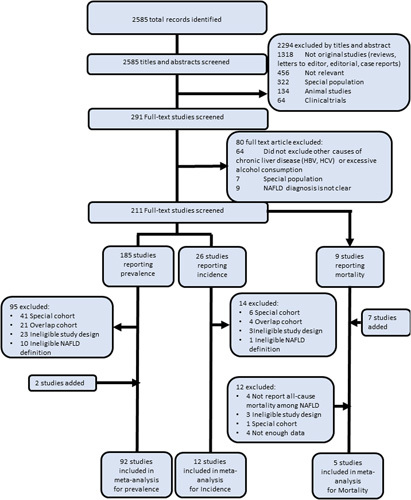
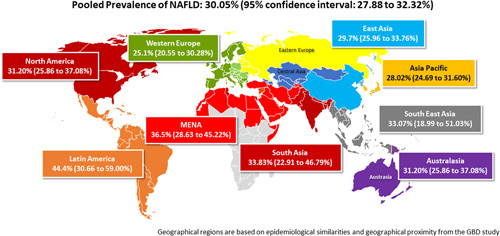
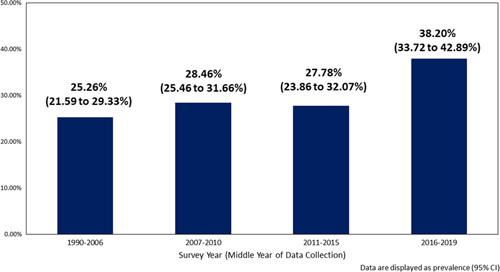
Background and Aims: NAFLD is a leading cause of liver-related morbidity and mortality. We assessed the global and regional prevalence, incidence, and mortality of NAFLD using an in-depth meta-analytic approach. Approach and Results: PubMed and Ovid MEDLINE were searched for NAFLD population-based studies from 1990 to 2019 survey year (last published 2022) per Preferred Reporting Items for Systematic Reviews and Meta-Analyses (PRISMA). Meta-analysis was conducted using random-effects models. Bias risk assessment was per Joanna Briggs Institute. Of 2585 studies reviewed, 92 studies (N=9,361,716) met eligibility criteria. Across the study period (1990–2019), meta-analytic pooling of NAFLD prevalence estimates and ultrasound-defined NAFLD yielded an overall global prevalence of 30.05% (95% CI: 27.88%–32.32%) and 30.69% (28.4–33.09), respectively. Global NAFLD prevalence increased by +50.4% from 25.26% (21.59–29.33) in 1990–2006 to 38.00% (33.71–42.49) in 2016–2019 ( p <0.001); ultrasound-defined NAFLD prevalence increased by +38.7% from 25.16% (19.46–31.87) in 1990–2006 to 34.59% (29.05–40.57) ( p =0.029). The highest NAFLD prevalence was in Latin America 44.37% (30.66%–59.00%), then Middle East and North Africa (MENA) (36.53%, 28.63%–45.22%), South Asia (33.83%, 22.91%–46.79%), South-East Asia (33.07%, 18.99%–51.03%), North America (31.20%, 25.86%–37.08%), East Asia (29.71%, 25.96%–33.76%), Asia Pacific 28.02% (24.69%–31.60%), Western Europe 25.10% (20.55%–30.28%). Among the NAFLD cohort diagnosed without a liver biopsy, pooled mortality rate per 1000 PY was 12.60 (6.68–23.67) for all-cause mortality; 4.20 (1.34–7.05) for cardiac-specific mortality; 2.83 (0.78–4.88) for extrahepatic cancer-specific mortality; and 0.92 (0.00–2.21) for liver-specific mortality. Conclusions: NAFLD global prevalence is 30% and increasing which requires urgent and comprehensive strategies to raise awareness and address all aspects of NAFLD on local, regional, and global levels.
Overview
The claims and statistics of this paper haven’t been checked yet.
Free: it reads the open-access text and checks the first 5 claims that cite a source we can check. Create a free account to check every claim.
Integrity signals
Registry
Cites
Statistics
Figures
Verification
Claims the paper makes
The claims and statistics of this paper haven’t been checked yet.
Free: it reads the open-access text and checks the first 5 claims that cite a source we can check. Create a free account to check every claim.
Claims other papers make about this one
Each is checked against this paper’s own text: does it say what the citing paper says it does?
The source backs part of the claim, not all of it — or backs it for a different population, condition or comparison.
In the citing paper
“Thus, MASLD is now the leading cause of chronic liver disease and hence liver fibrosis (47–49).”
From Targeting macrophages in liver fibrosis (2026) · cites this paper as [49]
Experimental — accuracy not yet measuredThe source backs part of the claim, not all of it — or backs it for a different population, condition or comparison.
In the citing paper
“The estimated global prevalence of MASLD in the general population has risen from 25% in 2016 12 to currently more than 30%, and the incidence is continually increasing. 12 -14”
From EASL-EASD-EASO Clinical Practice Guidelines on the management of metabolic dysfunction-associated steatotic liver disease (MASLD). (2024) · cites this paper as [12]
Experimental — accuracy not yet measuredThe source backs part of the claim, not all of it — or backs it for a different population, condition or comparison.
In the citing paper
“Compared to matched control populations, individuals with MASLD have increased all-cause mortality of 17.05/1,000 PY (range 10.31 -28.05). 12”
From EASL-EASD-EASO Clinical Practice Guidelines on the management of metabolic dysfunction-associated steatotic liver disease (MASLD). (2024) · cites this paper as [12]
Experimental — accuracy not yet measuredThe check wasn’t confident either way, so it gives no verdict — never disputed.
In the citing paper
“the “non-viral” subgroups probably consist of different proportions of HCCs due to each etiology across different trials, as the above example has shown [63–65]”
From Etiology-Based Treatment for Unresectable/Advanced Hepatocellular Carcinoma: Focus on Viral Hepatitis and Metabolic Dysfunction-Associated Steatohepatitis (2025) · cites this paper as [64]
Experimental — accuracy not yet measured
Self-check
Percentages, sums and reported differences re-computed from the paper’s own numbers.
The self-check needs the paper’s full text.
Citations
Cites
Bias in meta-analysis detected by a simple, graphical test
Egger, M., Smith, G. D., Schneider, M., & Minder, C. (1997) · BMJ · doi:10.1136/bmj.315.7109.629 · Cited by 56,722 · cited 1×
“[22] A funnel plot was used to investigate publication bias with the Egger regression test[23] and visual inspection to assess plot asymmetry.”
MethodMeta-analysis in clinical trials
DerSimonian, R., & Laird, N. (1986) · Controlled Clinical Trials · doi:10.1016/0197-2456(86)90046-2 · Cited by 39,552 · cited 1×
“Meta-analysis was performed on the adjusted NAFLD prevalence via random-effects models using the DerSimonian and Laird method[17] to estimate the pooled prevalence.”
MethodConducting Meta-Analyses in R with the metafor Package
Viechtbauer, W. (2010) · Journal of Statistical Software · doi:10.18637/jss.v036.i03 · Cited by 20,464 · cited 1×
“Analysis was conducted using the “metafor” package[24] in RStudio version 1.”
MethodYounossi, Z. M., Koenig, A. B., Abdelatif, D., Fazel, Y., Henry, L., & Wymer, M. (2016) · Hepatology · doi:10.1002/hep.28431 · Cited by 10,781 · cited 3×
“In 2016, a meta-analysis of studies published between 1990 and 2015 provided evidence that the global prevalence of NAFLD was about 25%, making it the most common cause of chronic liver disease (CLD).[1] The subsequent data from the Global Burden of Disease (GBD) study have supplemented this data and provided evidence…”
BackgroundResultSelf-citationMunn, Z., Moola, S., Lisy, K., Riitano, D., & Tufanaru, C. (2015) · International Journal of Evidence-Based Healthcare · doi:10.1097/xeb.0000000000000054 · Cited by 3,131 · cited 1×
“Quality assessment of the included studies was conducted using the Joanna Briggs Institute (JBI) critical appraisal instrument for prevalence studies against the following matrices: sample frame suitability, sampling strategy, sample size adequacy, study subjects and setting description, appropriate data analysis perf…”
MethodNon-alcoholic fatty liver disease
Powell, E. E., Wong, V. W.-S., & Rinella, M. (2021) · The Lancet · doi:10.1016/s0140-6736(20)32511-3 · Cited by 2,789 · cited 1×
“[6,7] In this context, the number of metabolic conditions that one carries not only increases the risk of having NAFLD but also the risk of progression to advanced liver disease and mortality.[8,9] Besides adverse clinical outcomes such as increased mortality, NAFLD is also associated with significant economic burden…”
BackgroundEstes, C., Razavi, H., Loomba, R., Younossi, Z., & Sanyal, A. J. (2018) · Hepatology · doi:10.1002/hep.29466 · Cited by 2,399 · cited 1×
“Nonetheless, these reported NAFLD incidence rates are in line with other incidence reports and is important information especially when forecasting the future burden of disease.[29,30,33] Our data showed that pooled mortality rate for NAFLD was 12.”
ResultSelf-citationThe prevalence and incidence of NAFLD worldwide: a systematic review and meta-analysis
Riazi, K., Azhari, H., Charette, J. H., Underwood, F. E., King, J. A., Afshar, E. E., Swain, M. G., Congly, S. E., Kaplan, G. G., & Shaheen, A.-A. (2022) · The Lancet Gastroenterology & Hepatology · doi:10.1016/s2468-1253(22)00165-0 · Cited by 2,246 · cited 3×
“Nonetheless, these reported NAFLD incidence rates are in line with other incidence reports and is important information especially when forecasting the future burden of disease.[29,30,33] Our data showed that pooled mortality rate for NAFLD was 12.”
BackgroundResultWilliams, C. D., Stengel, J., Asike, M. I., Torres, D. M., Shaw, J., Contreras, M., Landt, C. L., & Harrison, S. A. (2011) · Gastroenterology · doi:10.1053/j.gastro.2010.09.038 · Cited by 2,148 · cited 1×
“To reduce overestimation associated with a referral for liver biopsy, we only included studies with subjects who were not specifically referred for liver biopsy based on a clinical indication such as elevated liver enzymes.[26,27] Subsequently, the NASH prevalence in the general population was estimated by multiplying…”
MethodImproved tests for a random effects meta‐regression with a single covariate
Knapp, G., & Hartung, J. (2003) · Statistics in Medicine · doi:10.1002/sim.1482 · Cited by 2,075 · cited 1×
“Model coefficients were tested using the Knapp and Hartung adjustment.[21] Pairwise comparisons for categorical moderators were calculated using the Hommel method.”
Method
Cited by
Items 401–500 of 1,007
Bae, J., Han, E., Lee, H. W., Park, C., Chung, C. H., Lee, D. H., Cho, E. H., Rhee, E., Yu, J. H., Park, J. H., et al. (2024) · Diabetes & Metabolism Journal · doi:10.4093/dmj.2024.0541 · Cited by 27
“NAFLD is associated with increased all-cause mortality and an increased risk of extrahepatic diseases, such as cardiovascular diseases, chronic kidney disease, and sleep apnea [60-63].”
Bacteriophages and their potential for treatment of metabolic diseases
Deng, Y., Jiang, S., Duan, H., Shao, H., & Duan, Y. (2024) · Journal of Diabetes · doi:10.1111/1753-0407.70024 · Cited by 23
Mino, M., Kakazu, E., Sano, A., Tsuruoka, M., Matsubara, H., Kakisaka, K., Kogure, T., Sekine, K., Aoki, Y., Imamura, M., et al. (2024) · Amino Acids · doi:10.1007/s00726-024-03433-2 · Cited by 24
“An estimated 38% of the global adult population was affected between 2016 and 2019 (Younossi et al. 2023).”
Pecani, M., Andreozzi, P., Cangemi, R., Corica, B., Miglionico, M., Romiti, G. F., Stefanini, L., Raparelli, V., & Basili, S. (2025) · Journal of Clinical Medicine · doi:10.3390/jcm14082750 · Cited by 29
Perazza, F., Leoni, L., Selvatici, B., Girolami, F., Bonalumi, A., Beretta, A., Ferri, S., Petroni, M. L., Piscaglia, F., Ravaioli, F., et al. (2025) · Nutrients · doi:10.3390/nu17111906 · Cited by 26
Zargar, A. H., Bhansali, A. K., Majumder, A., Maheshwari, A., Bhattacharyya, A., Dasgupta, A., Saboo, B., Sethi, B. K., Sanyal, D., Seshadri, K., et al. (2025) · Diabetes Obesity and Metabolism · doi:10.1111/dom.16496 · Cited by 29
“124 Agonists of fibroblast growth factors 19 and 21 (FGF19 and FGF21) are being explored for their hepatoprotective effects, which include reducing lipotoxicity and oxidative stress, as well as improving lipid metabolism and insulin sensitivity.”
Han, J., Jeong, H., Lee, C., Sung, A., Choi, Y. H., & Jung, Y. (2025) · Liver International · doi:10.1111/liv.70224 · Cited by 26
Flores-Peña, R., Monroy-Ramírez, H. C., Caloca-Camarena, F., Arceo-Orozco, S., Salto-Sevilla, J. A., Galicia‐Moreno, M., & Armendáriz‐Borunda, J. (2025) · Antioxidants · doi:10.3390/antiox14080979 · Cited by 27
“This rate increased to 17.05 per 1,000 when biopsy was included as a diagnostic method [60].”
InfluentialJohn, B. V., Bastaich, D., Deng, Y., Singal, A. G., Dahman, B. A., & on behalf of the Veterans Analysis of Liver Disease (VALID) group of investigators (2025) · Hepatology · doi:10.1097/hep.0000000000001498 · Cited by 39
Caussy, C., Cusi, K. J., Rosenstock, J., Bugianesi, E., Thomas, M. K., Tang, Y., Mather, K. J., Loomba, R., Sanyal, A. J., & Hartman, M. L. (2025) · Diabetes Care · doi:10.2337/dc25-1306 · Cited by 33
Zhao, E., Wang, R., Chen, Y., Xie, H., Gao, Y., Dong, B., & Zhang, C. (2025) · Lipids in Health and Disease · doi:10.1186/s12944-025-02742-z · Cited by 30
“…(NAFLD) has emerged as one of the most prevalent chronic Liver diseases worldwide, with a recent systematic review reporting a global prevalence of 30.05% (95% confidence interval [CI]: 27.88%−32.32%), and with an alarming increase of 50.4% from 25.26% in 1990–2006 to 38.00% in 2016– 2019 [1].”
InfluentialIt is time to expand the fatty liver disease community of practice
Lazarus, J. V., Kopka, C. J., Younossi, Z. M., & Allen, A. M. (2023) · Hepatology · doi:10.1097/hep.0000000000000411 · Cited by 21
“It is time to expand the fatty liver disease community of practice An estimated 1 in 3 adults [1] — and 1 in 8 children [2] — worldwide have the form of chronic liver disease presently known as NAFLD.”
BackgroundSelf-citationFructose aggravates copper-deficiency-induced non-alcoholic fatty liver disease
Jiang, X. M., Hu, R., Huang, Y., Xu, Y., Zheng, Z., Shi, Y., Miao, J., & Liu, Y. (2023) · The Journal of Nutritional Biochemistry · doi:10.1016/j.jnutbio.2023.109402 · Cited by 19
Comprehensive analysis of epigenetic and epitranscriptomic genes’ expression in human NAFLD
Herranz, J. M., López-Pascual, A., Clavería-Cabello, A., Uriarte, I., Latasa, M. U., Irigaray-Miramon, A., Adán-Villaescusa, E., Castelló-Uribe, B., Sangro, B., Arechederra, M., et al. (2023) · Journal of Physiology and Biochemistry · doi:10.1007/s13105-023-00976-y · Cited by 23
Jia, X., Song, E., Liu, Y., Chen, J., Wan, P., Hu, Y., Ye, D., Chakrabarti, S., Mahajan, H., George, J., et al. (2023) · Cell Reports Medicine · doi:10.1016/j.xcrm.2023.101257 · Cited by 26
“1,2 While non-alcoholic fatty liver (NAFL) has a comparatively benign course, non-alcoholic steatohepatitis (NASH) and advanced fibrosis are strongly associated with adverse hepatic outcomes and are the leading indications for liver transplantation.”
BackgroundWang, X., Moore, M. P., Shi, H., Miyata, Y., Donnelly, S. K., Radiloff, D. R., & Tabas, I. (2023) · Molecular Therapy Methods & Clinical Development · doi:10.1016/j.omtm.2023.101165 · Cited by 21
Nabrdalik, K., Kwiendacz, H., Irlik, K., Hendel, M., Drożdż, K., Wijata, A. M., Nalepa, J., Janota, O., Wójcik, W., Gumprecht, J., et al. (2024) · The Journal of Clinical Endocrinology & Metabolism · doi:10.1210/clinem/dgae060 · Cited by 26
Seko, Y., Yamaguchi, K., Shima, T., Iwaki, M., Takahashi, H., Kawanaka, M., Tanaka, S., Mitsumoto, Y., Yoneda, M., Nakajima, A., et al. (2024) · Clinical Gastroenterology and Hepatology · doi:10.1016/j.cgh.2024.02.031 · Cited by 25
Sakane, S., Hikita, H., Shirai, K., Sakamoto, T., Narumi, R., Adachi, J., Kakita, N., Yamada, Y., Toyoda, H., Takahashi, H., et al. (2024) · Hepatology Communications · doi:10.1097/hc9.0000000000000448 · Cited by 23
“[1] As the frequency of liver-related events in patients with NAFLD is relatively low compared to that in patients with viral hepatitis, [2] screening for liver-related events, such as abdominal echocardiography and gastrointestinal endoscopy, at a high frequency in all patients with NAFLD is not…”
Feng, Y., Xu, W., Tang, S., Ye, Z., Fang, P., Abdullah, G., Yang, H., Kong, D., Huang, H., Wang, Y., et al. (2024) · Diabetes Research and Clinical Practice · doi:10.1016/j.diabres.2024.111749 · Cited by 20
Venn-Watson, S. K. (2024) · Metabolites · doi:10.3390/metabo14070355 · Cited by 22
“While the first 20 cases of NAFLD and NASH were reported in 1980, this disease has rapidly increased globally to affect one in three people today [10,11].”
BackgroundSavari, F., & Mard, S. A. (2024) · Heliyon · doi:10.1016/j.heliyon.2024.e28468 · Cited by 26
Țâru, M.-G., Tefas, C., Neamți, L., Minciună, I., Țâru, V., Maniu, A., Rusu, I., Petrushev, B., Procopciuc, L. M., Leucuta, D., et al. (2024) · PLoS ONE · doi:10.1371/journal.pone.0303971 · Cited by 24
Hong, S., Hao, Y., Sun, L., Li, P., Yang, J., Zhang, F., He, L., Zhang, J., & Wei, H. (2024) · Annals of Hepatology · doi:10.1016/j.aohep.2024.101589 · Cited by 22
Shou, J., Ma, J., Wang, X., Li, X., Chen, S., Kang, B., & Shaw, P. (2024) · Advanced Science · doi:10.1002/advs.202406191 · Cited by 22
Ciociola, E., Dutta, T., Sasidharan, K., Kovooru, L., Noto, F. R., Pennisi, G., Petta, S., Mirarchi, A., Maurotti, S., Scopacasa, B., et al. (2024) · Clinical and Molecular Hepatology · doi:10.3350/cmh.2024.0642 · Cited by 27
Castéra, L., Alazawi, W., Bugianesi, E., Caussy, C., Federici, M., Romero‐Gómez, M., Schattenberg, J. M., Basuroy, R., Prasad, P., Estulin, D., et al. (2025) · Liver International · doi:10.1111/liv.16224 · Cited by 20
“Two systematic reviews estimated MASLD prevalence at approximately 25% among adults in Europe [3, 7], although estimates vary depending upon diagnostic method and the database source [3, 4, 7, 8].”
InfluentialEnvironmental exposures and the risk of hepatocellular carcinoma
Rayapati, D., McGlynn, K. A., Groopman, J. D., & Kim, A. K. (2025) · Hepatology Communications · doi:10.1097/hc9.0000000000000627 · Cited by 28
“[12,88,89] HCC risk is significantly higher in persons with MASLD who also have diabetes, obesity, dyslipidemia, and hypertension.”
Brennan, P., Kopka, C. J., Agirre‐Garrido, L., Hansen, C. D., Alkhouri, N., Schattenberg, J. M., Wajcman, D. I., Isaacs, S. D., Michel, M. S., & Lazarus, J. V. (2025) · npj gut and liver. · doi:10.1038/s44355-024-00017-5 · Cited by 25
“An estimated 5.3% of adults worldwide are living with metabolic dysfunction-associated steatohepatitis (MASH) 1 .”
InfluentialDai, Q., Ain, Q., Seth, N., Zhao, H., Rooney, M., & Zipprich, A. (2025) · Aging Cell · doi:10.1111/acel.14502 · Cited by 22
Alcohol-Metabolizing Enzymes, Liver Diseases and Cancer
Liu, T., Zhang, F., Feng, Y., Han, P., & Gao, Y. (2025) · Seminars in Liver Disease · doi:10.1055/a-2551-3320 · Cited by 32
“86 Approximately 99% of patients diagnosed with NAFLD meet the criteria for MASLD.”
Boulos, M., Mousa, R. S., Jeries, N., Simaan, E., Alam, K., Bulus, B., & Assy, N. (2025) · International Journal of Molecular Sciences · doi:10.3390/ijms26073448 · Cited by 26
“These factors activate the innate immune response in the liver, resulting in fi brosis, the key process in MASLD progression to severe liver disease ( fi brosis or cirrhosis, present signi fi cantly higher mortality rates compared to those with mild or no fi brosis [44].”
InfluentialShakeel, L., Shaukat, A. F., & Akilimali, A. (2025) · Health Science Reports · doi:10.1002/hsr2.70920 · Cited by 27
“Gender disparities persist in disease prevalence; men are more likely to develop MASH, whereas postmenopausal women exhibit a higher overall prevalence of MASLD [4, 5].”
InfluentialZhao, X., Xu, D. Z., Ji, W., Lu, Z., Huang, C., Zhao, J., Xiao, T., Wang, D., Kong, Y., Jia, J., et al. (2025) · Chinese Medical Journal · doi:10.1097/cm9.0000000000003726 · Cited by 21
“[5] The prevalence of NAFLD has surged in recent decades and is predicted to continue climbing, driven by rising rates of obesity, diabetes, and metabolic syndrome.”
Sex and gender differences in metabolic dysfunction-associated liver disease
Penmetsa, R., Kapil, S. R., & VanWagner, L. B. (2025) · Indian Journal of Gastroenterology · doi:10.1007/s12664-025-01833-0 · Cited by 26
Lin, Z., Zhang, R., Ren, S., He, T., Mi, H., Jiang, W., & Su, C. (2025) · Preventive Medicine Reports · doi:10.1016/j.pmedr.2025.103248 · Cited by 27
“2 Authors Chenghao Su and Wei Jiang contributed equally to this work and share the corresponding author. regions of the same country, with Latin America, the Middle East, and North Africa showing markedly higher rates compared to other areas (Younossi et al., 2023).”
InfluentialLackner, C., Gouw, A. S. H., Alves, V. A. F., Arola, J. T., Bédossa, P., Behling, C. A., Brunt, E. M., Burt, A. D., Clouston, A. D., Cummings, O. W., et al. (2025) · Journal of Hepatology · doi:10.1016/j.jhep.2025.09.019 · Cited by 28
Global performance of non-invasive tests in MASLD: Insights from the G-MASLD study
Younossi, Z. M., de Avila, L., Petta, S., Hagström, H., Kim, S. U., Nakajima, A., Crespo, J., Castéra, L., Alkhouri, N., Zheng, M., et al. (2025) · Hepatology · doi:10.1097/hep.0000000000001564 · Cited by 30
Self-citationThe Basics of Metabolic Dysfunction–Associated Steatotic Liver Disease for Cardiologists
Khan, M. S., Javaid, S. S., Dinani, A. M., Wegermann, K., Pandey, A., Bhatt, A. S., Muthiah, M. D., Spall, H. G. C. V., Zannad, F. M., Butler, J., et al. (2025) · Journal of the American College of Cardiology · doi:10.1016/j.jacc.2025.08.100 · Cited by 27
Brar, A. S., Khanna, T., Sohal, A., Hatwal, J., Sharma, V., Singh, C. M., Batta, A., Chandra, P., & Mohan, B. (2026) · World Journal of Cardiology · doi:10.4330/wjc.v18.i1.111954 · Cited by 30
Screening for NAFLD—Current Knowledge and Challenges
Forlano, R., Sigon, G., Mullish, B. H., Yee, M. S., & Manousou, P. (2023) · Metabolites · doi:10.3390/metabo13040536 · Cited by 22
“Non-alcoholic fatty liver disease (NAFLD) is the most common cause of abnormal liver function tests worldwide, with a global estimated prevalence of 30% [1].”
BackgroundZhou, B., Ju, S.-Y., Mei, Y.-Z., Jiang, X., Wang, M., Zheng, A.-J., & Ding, Y. (2023) · Frontiers in Endocrinology · doi:10.3389/fendo.2023.1160532 · Cited by 27
Periodontitis and NAFLD ‐related diseases: A bidirectional two‐sample Mendelian randomization study
Qiao, F., Li, X., Liu, Y., Zhang, S., Liu, D., & Li, C. (2023) · Oral Diseases · doi:10.1111/odi.14785 · Cited by 21
Advances in Noninvasive Biomarkers for Nonalcoholic Fatty Liver Disease
Gîlcă-Blanariu, G.-E., Budur, D. S., Mitrică, D., Gologan, E., Timofte, O., Bălan, G. G., OLTEANU, V.-A., & Ștefănescu, G. (2023) · Metabolites · doi:10.3390/metabo13111115 · Cited by 25
“There has been a notable increase in the global burden of obesity and associated metabolic pathologies over the past years, including an increase in the prevalence of nonalcoholic fatty liver disease (NAFLD), reaching an estimated global prevalence of 30% [1].”
BackgroundFrom MASH to HCC: the role of Gas6/TAM receptors
Apostolo, D., Ferreira, L. L., Vincenzi, F., Vercellino, N., Minisini, R., Latini, F., Ferrari, B., Burlone, M. E., Pirisi, M., & Bellan, M. (2024) · Frontiers in Immunology · doi:10.3389/fimmu.2024.1332818 · Cited by 20
Radu, F. I., Patoni, C., Nancoff, A.-S., Marin, F.-S., Gaman, L. E., Bucurica, A., Socol, C., Jinga, M., Duţu, M., & Bucurica, S. (2024) · International Journal of Molecular Sciences · doi:10.3390/ijms25084201 · Cited by 21
“%) in 2016–2019 [4].”
Optimizing liver health before and after gene therapy for hemophilia A
Ragni, M. V., Mead, H., de Jong, Y. P., Kaczmarek, R., Leavitt, A. D., Long, B. R., Nugent, D. J., Sabatino, D. E., Fong, S., von Drygalski, A., et al. (2024) · Blood Advances · doi:10.1182/bloodadvances.2024013059 · Cited by 20
“MASLD is increasing in global prevalence, and is now present in approximately one-third of the population, 35 although the reported prevalence depends on detection methods.”
BackgroundXu, X. Y., Wang, X., Xu, G., Chen, X., Chen, T., Chen, J., Duan, Z., Song, J., Lv, T., Zhou, Y., et al. (2025) · Sensors and Actuators B Chemical · doi:10.1016/j.snb.2025.137580 · Cited by 19
Castelnuovo, G., Pérez-Díaz-del-Campo, N., Rosso, C., Armandi, A., Caviglia, G. P., & Bugianesi, E. (2024) · Nutrients · doi:10.3390/nu16132027 · Cited by 21
“The latest estimates indicate that the prevalence of the disease is increasingly reaching alarming levels, verging on a global pandemic [7].”
BackgroundCannella, R., Agnello, F., Porrello, G., Spinello, A., Infantino, G., Pennisi, G., Cabibi, D., Petta, S., & Bartolotta, T. V. (2024) · European Radiology · doi:10.1007/s00330-024-11076-w · Cited by 25
“…disease (NAFLD), recently de fi ned as metabolic dysfunction-associated steatotic liver disease (MASLD), is becoming the most common cause of chronic liver disease, with an estimated global prevalence of 30% in the general population, and it has been associated with metabolic dysfunction [1, 2].”
Machado, M. V. (2024) · Nutrients · doi:10.3390/nu16244294 · Cited by 21
Metabolic dysfunction‐associated steatotic liver disease and cancer risk: A cohort study
Yu, P., Wang, P., Liu, F., Wang, X., Si, C., Gong, J., Zhou, H., Gu, J., Qin, A., Song, W., et al. (2025) · Diabetes Obesity and Metabolism · doi:10.1111/dom.16186 · Cited by 23
Mitochondrial dysfunction in drug-induced hepatic steatosis: Recent findings and current concept
Borgne‐Sanchez, A., & Fromenty, B. (2025) · Clinics and Research in Hepatology and Gastroenterology · doi:10.1016/j.clinre.2025.102529 · Cited by 27
Non-invasive tests for fibrotic MASH for reducing screen failure in therapeutic trials
Fichez, J., Mouillot, T., Vonghia, L., Costentin, C. E., Moreau, C., Roux, M., Delamarre, A., Francque, S., Zheng, M., & Boursier, J. (2025) · JHEP Reports · doi:10.1016/j.jhepr.2025.101351 · Cited by 21
Adinolfi, L. E., Marrone, A., Rinaldi, L., Nevola, R., Izzi, A., & Sasso, F. C. (2025) · Exploration of Medicine · doi:10.37349/emed.2025.1001281 · Cited by 19
Alkhouri, N., Yip, T. C., Castéra, L., Takawy, M., Adams, L. A., Verma, N., Arab, J. P., Jafri, S., Zhong, B., Dubourg, J., et al. (2025) · The American Journal of Gastroenterology · doi:10.14309/ajg.0000000000003432 · Cited by 33
“Metabolic dysfunction-associated steatotic liver disease (MASLD) (1), which a ff ects an estimated 30% of the global adult population (2), is now the predominant cause of chronic liver disease in Western countries, leading to an increase in liver transplantation in the United States (3).”
Carnicero, J. A., Saurí, I., Redón, J., Navarro, J., Fernández, G., Mena‐Hurtado, C., de Campos, K. F., Alvarez-Ortega, C., Gómez, A., Martos-Rodríguez, C. J., et al. (2025) · Journal of Clinical Medicine · doi:10.3390/jcm14072441 · Cited by 21
“Epidemiological studies have shown a rising prevalence of MASLD from 25.3% in 1990–2006 to 38.0% in 2016–2019 [8] in parallel with the increasing epidemic of obesity and type 2 diabetes mellitus (T2DM) [9].”
InfluentialQueathem, E. D., Stagg, D. B., Nelson, A. B., Chaves, A., Crown, S. B., Fulghum, K., d’Avignon, D. A., Ryder, J. R., Bolan, P. J., Hayir, A., et al. (2025) · Journal of Clinical Investigation · doi:10.1172/jci191021 · Cited by 27
Wang, J., Yang, R., Miao, Y., Zhang, X., Paillard‐Borg, S., Fang, Z., & Xu, W. (2025) · Liver International · doi:10.1111/liv.70109 · Cited by 24
“Globally, the prevalence of MASLD has increased from 25.3% (1990–2006) to 38.2% (2016–2019) and is still growing rapidly, with an annual incidence rate of 4.9% [2, 3].”
InfluentialKalyesubula, M., Bank, H. C. V., Davidson, J. W., Burhans, M. S., Becker, M. M., Aljohani, A., Simcox, J., & Ntambi, J. M. (2025) · Journal of Lipid Research · doi:10.1016/j.jlr.2025.100824 · Cited by 21
Vidal-Trécan, T., Julla, J., Khoury, T. E., Venteclef, N., Riveline, J., Paradis, V., Valla, D. C., Gautier, J., & Castéra, L. (2025) · Clinical Gastroenterology and Hepatology · doi:10.1016/j.cgh.2025.02.018 · Cited by 29
Increased Mortality Among Lean Versus Non‐Lean Adults With MASLD: A Multicenter Study
Ghani, L. K., Aboona, M. B., Faulkner, C., Rangan, P., Rubin, M. I. N., Han, M. A. T., Fallon, M. B., Chen, V. L., & Wijarnpreecha, K. (2025) · Journal of Gastroenterology and Hepatology · doi:10.1111/jgh.17015 · Cited by 23
“of the global adult population [2] and projected to affect > 50% by 2040 [3], and is a leading cause of liver-related morbidity and mortality [4].”
Zhang, C., Li, M., Li, L., Wan, C. C., Xia, Y., Ma, H., & Xu, J. (2025) · Food & Function · doi:10.1039/d5fo02046h · Cited by 28
Wang, X., Hong, J., Liang, R., Bao, S., Li, L., Wang, J., & Feng, J. (2025) · Phytomedicine · doi:10.1016/j.phymed.2025.157180 · Cited by 20
Che, Z., Xue, W., Zhao, X., Hu, C., & Tian, Y. (2025) · Clinical and Translational Gastroenterology · doi:10.14309/ctg.0000000000000914 · Cited by 23
“Nonalcoholic fatty liver disease (NAFLD) is the most prevalent chronic liver disease worldwide, a ff ecting approximately 30% of the adult population and more than half of obese individuals (1).”
Younossi, Z. M., Paik, J. M., Lazarus, J. V., Burra, P., Eguchi, Y., Tacke, F., Crespo, J., Villela‐Nogueira, C. A., Brennan, P., Al‐Omar, H. A., et al. (2025) · Clinical Gastroenterology and Hepatology · doi:10.1016/j.cgh.2025.09.002 · Cited by 35
Self-citationGan, M., Chen, B., Qin, M., Zhang, L., & Wang, X. (2025) · Cardiovascular Diabetology · doi:10.1186/s12933-025-02941-z · Cited by 18
“The prevalence of MASLD continues to increase globally [2], with the 2024 Global Burden of Disease Study indicating that nearly 38% of adults worldwide are affected by MASLD [3].”
Gao, Y., Li, C., Chang, W., Du, B., Ye, X., Yeo, Y. H., Xia, Y., Guo, H., Zhang, X., Liu, W., et al. (2026) · Nature Communications · doi:10.1038/s41467-026-68414-3 · Cited by 31
“Serum biomarkers, such as the widely used fatty liver index, also face challenges with time demands and suboptimal accuracy 2,5 .”
Miura, K., Hayashi, H., Kamada, Y., Fujii, H., Takahashi, H., Oeda, S., Iwaki, M., Kawaguchi, T., Tomita, E., Yoneda, M., et al. (2023) · Hepatology Research · doi:10.1111/hepr.13938 · Cited by 20
Xu, M., Tan, J., Zhu, L., Ge, C., Zhang, Y., Gao, F., Dai, X., Kuang, Q., Chai, J., Zou, B., et al. (2023) · Advanced Science · doi:10.1002/advs.202302130 · Cited by 34
Alkhouri, N., Lazas, D. J., Loomba, R. S., Frías, J. P., Feng, S., Tseng, L., Balic, K., Agollah, G. D., Kwan, T., Iyer, J. S., et al. (2023) · Alimentary Pharmacology & Therapeutics · doi:10.1111/apt.17709 · Cited by 25
Ni, Y., Wang, X., Wu, Q., Yao, Y., Xu, Y., Li, Y., Feng, Q., Zhou, M., & Gou, X. (2023) · Frontiers in Endocrinology · doi:10.3389/fendo.2023.1272214 · Cited by 21
Liao, Y.-L., Zhu, G.-Y., & Chang, C. W. (2024) · Frontiers in Cardiovascular Medicine · doi:10.3389/fcvm.2023.1291438 · Cited by 22
Suárez, M., Gil-Rojas, S., Martínez-Blanco, P., Torres, A., Ramón, A., Blasco-Segura, P., Torralba, M., & Mateo, J. (2024) · Cancers · doi:10.3390/cancers16061114 · Cited by 20
“There are geographical differences within this prevalence [2].”
BackgroundArmandi, A., Bespaljko, H., Mang, A., Huber, Y., Michel, M. S., Labenz, C., Galle, P. R., Neerukonda, M., Bugianesi, E., Schuppan, D., et al. (2024) · Alimentary Pharmacology & Therapeutics · doi:10.1111/apt.17941 · Cited by 20
Yasin, A., Nguyen, M., Sidhu, A., Majety, P., Spitz, J. A., Asgharpour, A., Siddiqui, M. S., Sperling, L. S., Quyyumi, A. A., & Mehta, A. (2024) · Diabetes Research and Clinical Practice · doi:10.1016/j.diabres.2024.111650 · Cited by 20
Honey vesicle-like nanoparticles protect aged liver from non-alcoholic steatohepatitis
Liu, B., Nguyen, P. L., Yu, H., Li, X., Wang, H., Nguyen, T. G. B., Sahoo, P. K., Sur, M., Reddy, J., Sillman, S. J., et al. (2024) · Acta Pharmaceutica Sinica B · doi:10.1016/j.apsb.2024.05.002 · Cited by 25
Moore, M. P., Wang, X., Kennelly, J. P., Shi, H., Ishino, Y., Kano, K., Aoki, J., Cherubini, A., Ronzoni, L., Guo, X., et al. (2024) · Hepatology · doi:10.1097/hep.0000000000000933 · Cited by 20
Celiac Disease, Gluten-Free Diet and Metabolic Dysfunction-Associated Steatotic Liver Disease
Cazac, G.-D., Mihai, B. M., Ștefănescu, G., Gîlcă-Blanariu, G.-E., Mihai, C., Grigorescu, E.-D., Onofriescu, A., & Lăcătușu, C.-M. (2024) · Nutrients · doi:10.3390/nu16132008 · Cited by 24
“This increased prevalence is closely associated with the current pandemic rates of obesity and metabolic syndrome; therefore, the metabolic fatty liver is becoming the most frequent form of chronic liver disease and a public health challenge [31,32].”
BackgroundEffects of Moringa oleifera Leaf Extract on Liver Histopathology: A Systematic Review
Nurhayati, T., Ridho, M. F., Radhiyanti, P. T., Setiawan, S., Goenawan, H., & Tarawan, V. M. (2024) · Journal of Nutrition and Metabolism · doi:10.1155/2024/6815993 · Cited by 35
“Epidemiological studies reveal that NAFLD global prevalence in 2023 is 30% and still increasing in upcoming years [17].”
BackgroundAfonso, M. B., David, J. C., Alves, M. I., Santos, A. A., Campino, G., Ratziu, V., Gautheron, J., & Rodrigues, C. M. P. (2024) · Metabolism · doi:10.1016/j.metabol.2024.155975 · Cited by 23
Gad, A. I., Ibrahim, N. F., Almadani, N. A., Mahfouz, R., Nofal, H. A. E., Elrafey, D. S., Ali, H. T., Elhawary, A. T., & Sadek, A. M. E. M. (2024) · Diseases · doi:10.3390/diseases12080186 · Cited by 25
Tincopa, M. A., Díaz, L. A., Huang, D. Q., Arab, J. P., Arrese, M. A., Gadano, A., de Oliveira, C. P. M. S., Bettencourt, R., Madamba, E. V., Kim, S., et al. (2024) · Hepatology · doi:10.1097/hep.0000000000001121 · Cited by 25
“[1] MASLD has substantial associated morbidity and mortality, including progression to cirrhosis, end-stage liver disease with the need for liver transplantation, and HCC. [1,2] US Hispanic adults experience a disproportionately higher disease burden with a relative risk of 1.50 for developing…”
InfluentialReproducibility of ultrasound-derived fat fraction in measuring hepatic steatosis
Song, D., Wang, P., Han, J., Chen, H., Gao, R., Li, L., & Li, J. (2024) · Insights into Imaging · doi:10.1186/s13244-024-01834-1 · Cited by 28
“ALD has demonstrated a relatively stable prevalence in recent years, but the obesity pandemic has driven a sustained increase in the global incidence of MASLD to approximately 38% [3, 4], making it the most common chronic liver disease worldwide.”
BackgroundCaffeine ameliorates metabolic-associated steatohepatitis by rescuing hepatic Dusp9
Xin, X., Chen, C., Xu, X., Lv, S., Sun, Q., An, Z., Chen, Y., Xiong, Z., Hu, Y., & Feng, Q. (2025) · Redox Biology · doi:10.1016/j.redox.2025.103499 · Cited by 21
“Metabolic dysfunction-associated steatotic liver disease (MASLD) has become a global liver disease, affecting nearly one-quarter of the adult population worldwide [1,2].”
Physical exercise in liver diseases
Zhang, Y., Cao, C., Li, C., Witt, R. G., Huang, H., Tsung, A., & Zhang, H. (2024) · Hepatology · doi:10.1097/hep.0000000000000941 · Cited by 26
“[2,3] The major causes of mortality related to liver diseases are cirrhosis and HCC. [4,5] With a deep understanding of the pathophysiological mechanisms of liver diseases, the medical community’s choice of therapeutic approaches has been evolving.”
Gautam, J., Aggarwal, H., Kumari, D., Gupta, S. K., Kumar, Y., & Dikshit, M. (2024) · Biochimica et Biophysica Acta (BBA) - Molecular and Cell Biology of Lipids · doi:10.1016/j.bbalip.2024.159545 · Cited by 27
Protective effects of curcumin against valproic acid induced brain kidney and liver damage in rats
Kapakin, K. A. T., Bolat, İ., İskender, H., Dokumacıoğlu, E., Kirman, E. M., Bolat, M., & Gül, M. (2024) · Drug and Chemical Toxicology · doi:10.1080/01480545.2024.2391868 · Cited by 19
“…nervous system and also increased inflammatory recurrences by releasing il-6, il-18, tNF-α, and NF-kβ cytokines. the liver is one of the most important organs of the living body in terms of biochemical activity, and any functional disorder in this organ affects all systems (younossi et al., 2023).”
Liu, J., Fu, Q., Su, R., Liu, R., Wu, S., Li, K., Wu, J., & Zhang, N. (2024) · Frontiers in Endocrinology · doi:10.3389/fendo.2024.1460280 · Cited by 24
Gabbia, D. (2024) · Biology · doi:10.3390/biology13100760 · Cited by 17
“…have been investigated in many in vitro/in vivo studies that demonstrated their ability to improve the three main pathogenetic features of intracellular lipid accumulation: FA uptake, de novo lipogenesis, and decreased FA oxidation, as well as oxidative stress and inflammation through a…”
BackgroundPPARα-ERRα crosstalk mitigates metabolic dysfunction-associated steatotic liver disease progression
Antwi, M. B., Lefere, S., Clarisse, D., Koorneef, L. L., Heldens, A., Onghena, L., Decroix, K., Fijałkowska, D., Thommis, J., Hellemans, M., et al. (2024) · Metabolism · doi:10.1016/j.metabol.2024.156128 · Cited by 22
Erceg, S., Munjas, J., Sopić, M., Tomašević, R., Mitrović, M., Kotur‐Stevuljević, J., Mamić, M., Vujčić, S., Klisic, A. N., & Ninić, A. (2025) · International Journal of Molecular Sciences · doi:10.3390/ijms26062392 · Cited by 18
Fat, fibrosis, and the future: navigating the maze of MASLD/MASH
Friedman, S. L. (2025) · Journal of Clinical Investigation · doi:10.1172/jci186418 · Cited by 20
Nanoparticle-based therapeutic strategies for chronic liver diseases: Advances and insights
Padmanaban, S., Baek, J.-W., Sahithya, C. S., Saipriya, C., Samrot, A. V., Gosu, V., Park, I., Radhakrishnan, K., & Kim, D. (2025) · Liver Research · doi:10.1016/j.livres.2025.04.002 · Cited by 22
Feng, Q., Izzi‐Engbeaya, C. N., Branch, A. D., Mullish, B. H., Manousou, P., & Woodward, M. (2025) · The Journal of Clinical Endocrinology & Metabolism · doi:10.1210/clinem/dgaf342 · Cited by 19
Liu, A., Huang, M., Xi, Y., Deng, X., & Xu, K. (2025) · Biomedicines · doi:10.3390/biomedicines13061422 · Cited by 17
The use of circulating miRNAs for the diagnosis, prognosis, and personalized treatment of MASLD
Tobaruela-Resola, A. L., Milagro, F. I., Mogna-Peláez, P., Moreno-Aliaga, M. J., Abete, I., & Zulet, M. Á. (2025) · Journal of Physiology and Biochemistry · doi:10.1007/s13105-025-01110-w · Cited by 29
“MASLD affects 30% of the population and this rate is anticipated to rise even more [2].”
Proglucagon-derived peptides: human physiology and therapeutic potential
Gasbjerg, L. S., Nielsen, C. K., Suppli, M. P., Grøndahl, M. F. G., Holst, J. J., Knop, F. K., Jeppesen, P. B., & Lund, A. (2025) · Physiological Reviews · doi:10.1152/physrev.00057.2024 · Cited by 22
Patel, S. B., Belalcazar, L. M., Afreen, S., Balderas, R., Hegele, R. A., Karpe, F., Ponte-Negretti, C. I., & Rajpal, A. (2025) · Endocrine Practice · doi:10.1016/j.eprac.2025.07.014 · Cited by 23
Portal Hypertension in Nonalcoholic Fatty Liver Disease: Challenges and Paradigms
Mitten, E. K., Portincasa, P., & Baffy, G. (2023) · Journal of Clinical and Translational Hepatology · doi:10.14218/jcth.2023.00029 · Cited by 24
“22,116,117 Here, we focus on two aspects of the field related to subclinical portal hypertension: (1) the paradigm”
Metadata
- Authors
- Younossi, Z. M., Golabi, P., Paik, J. M., Henry, A., Van Dongen, C., & Henry, L.
- Affiliations
- Inova Health System (US)
- Betty and Guy Beatty Center for Integrated Research, Inova Health System, Falls Church, Virginia, USA
- Corresponding author
- Younossi, Zobair M.
- Venue
- Hepatology
- Published
- 2023-01-03
- Volume
- 77
- Issue
- 4
- Pages
- 1335-1347
- ISSN
- 0270-9139 (ISSN-L)
- PMC
- PMC10026948
- OpenAlex
- W4315619045
- Semantic Scholar
- e0a044235c08e95a83a81d9d88106233ad769e33
- Cited by
- 3,383
- References
- 38
- Citations by year
- 2026: 1056 · 2025: 1214 · 2024: 850 · 2023: 262
- FWCI
- 131.94
- Type
- journal article
- Language
- en
- Open access
- hybrid
- doi.org
- Licence
- Locations
- Hepatology (publishedVersion, cc-by-nc-nd)
- PubMed Central (publishedVersion, cc-by-nc-nd)
- PubMed (publishedVersion)
- Topics
- Health Sciences › Medicine › Hepatology › Liver Disease Diagnosis and Treatment
- Health Sciences › Medicine › Pathology and Forensic Medicine › Alcohol Consumption and Health Effects
- Health Sciences › Medicine › Hepatology › Liver Diseases and Immunity
- Keywords
- non-alcoholic fatty liver disease, nonalcoholic steatohepatitis, global prevalence, incidence, mortality, prevalence trends, regional variation, liver-related mortality, NAFLD risk factors
- MeSH terms
- Humans, North America, Prevalence, Risk Assessment, Non-alcoholic Fatty Liver Disease
About these checks
Registry, retraction, Cites and statistics results are computed, not judged, with one exception: a printed reference that no index lists is read once by a model before it counts as a citation error. Claims are extracted by a model and kept only when their quote appears verbatim in the text; each cited source is then checked, with a model’s help, for whether it says what the claim relies on. Those verdicts can be wrong — read the claim’s quote and the cited source before relying on one.
Statistics and arithmetic are recomputed, not judged.
Confidence bands are shown only for fields calibrated on our annotated test set. None is calibrated yet, so no band is shown.
What counts as a claim ›How we measure confidence ›How we check this ›
Are you an author, or do you see a problem with this page? Request a review
Data sources
Bibliographic data: Semantic Scholar, OpenAlex, Crossref.
Contains information from the Semantic Scholar Academic Graph Datasets, made available under the ODC Attribution License (ODC-BY 1.0).
Semantic Scholar’s data is described in: Kinney, R., et al. (2023). The Semantic Scholar Open Data Platform. arXiv:2301.10140.
