

The global epidemiology of nonalcoholic fatty liver disease (NAFLD) and nonalcoholic steatohepatitis (NASH): a systematic review
Open accessThe DOI matches its Crossref record; 38 of the 38 references it cites were found in a registry or an index.
Abstract
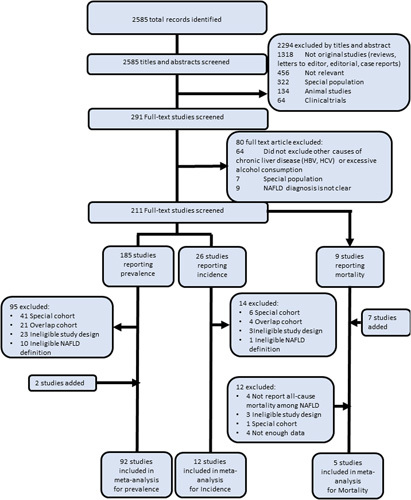
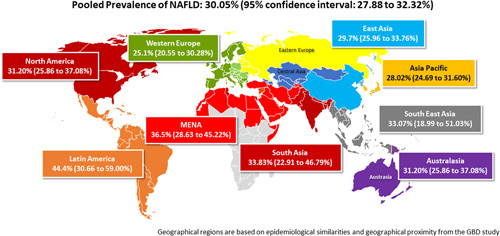
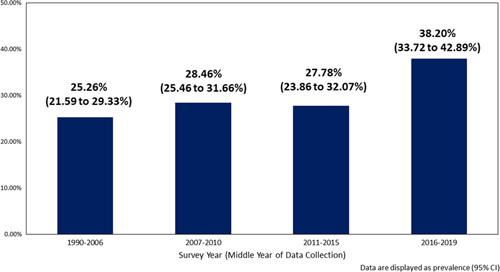
Background and Aims: NAFLD is a leading cause of liver-related morbidity and mortality. We assessed the global and regional prevalence, incidence, and mortality of NAFLD using an in-depth meta-analytic approach. Approach and Results: PubMed and Ovid MEDLINE were searched for NAFLD population-based studies from 1990 to 2019 survey year (last published 2022) per Preferred Reporting Items for Systematic Reviews and Meta-Analyses (PRISMA). Meta-analysis was conducted using random-effects models. Bias risk assessment was per Joanna Briggs Institute. Of 2585 studies reviewed, 92 studies (N=9,361,716) met eligibility criteria. Across the study period (1990–2019), meta-analytic pooling of NAFLD prevalence estimates and ultrasound-defined NAFLD yielded an overall global prevalence of 30.05% (95% CI: 27.88%–32.32%) and 30.69% (28.4–33.09), respectively. Global NAFLD prevalence increased by +50.4% from 25.26% (21.59–29.33) in 1990–2006 to 38.00% (33.71–42.49) in 2016–2019 ( p <0.001); ultrasound-defined NAFLD prevalence increased by +38.7% from 25.16% (19.46–31.87) in 1990–2006 to 34.59% (29.05–40.57) ( p =0.029). The highest NAFLD prevalence was in Latin America 44.37% (30.66%–59.00%), then Middle East and North Africa (MENA) (36.53%, 28.63%–45.22%), South Asia (33.83%, 22.91%–46.79%), South-East Asia (33.07%, 18.99%–51.03%), North America (31.20%, 25.86%–37.08%), East Asia (29.71%, 25.96%–33.76%), Asia Pacific 28.02% (24.69%–31.60%), Western Europe 25.10% (20.55%–30.28%). Among the NAFLD cohort diagnosed without a liver biopsy, pooled mortality rate per 1000 PY was 12.60 (6.68–23.67) for all-cause mortality; 4.20 (1.34–7.05) for cardiac-specific mortality; 2.83 (0.78–4.88) for extrahepatic cancer-specific mortality; and 0.92 (0.00–2.21) for liver-specific mortality. Conclusions: NAFLD global prevalence is 30% and increasing which requires urgent and comprehensive strategies to raise awareness and address all aspects of NAFLD on local, regional, and global levels.
Overview
The claims and statistics of this paper haven’t been checked yet.
Free: it reads the open-access text and checks the first 5 claims that cite a source we can check. Create a free account to check every claim.
Integrity signals
Registry
Cites
Statistics
Figures
Verification
Claims the paper makes
The claims and statistics of this paper haven’t been checked yet.
Free: it reads the open-access text and checks the first 5 claims that cite a source we can check. Create a free account to check every claim.
Claims other papers make about this one
Each is checked against this paper’s own text: does it say what the citing paper says it does?
The source backs part of the claim, not all of it — or backs it for a different population, condition or comparison.
In the citing paper
“Thus, MASLD is now the leading cause of chronic liver disease and hence liver fibrosis (47–49).”
From Targeting macrophages in liver fibrosis (2026) · cites this paper as [49]
Experimental — accuracy not yet measuredThe source backs part of the claim, not all of it — or backs it for a different population, condition or comparison.
In the citing paper
“The estimated global prevalence of MASLD in the general population has risen from 25% in 2016 12 to currently more than 30%, and the incidence is continually increasing. 12 -14”
From EASL-EASD-EASO Clinical Practice Guidelines on the management of metabolic dysfunction-associated steatotic liver disease (MASLD). (2024) · cites this paper as [12]
Experimental — accuracy not yet measuredThe source backs part of the claim, not all of it — or backs it for a different population, condition or comparison.
In the citing paper
“Compared to matched control populations, individuals with MASLD have increased all-cause mortality of 17.05/1,000 PY (range 10.31 -28.05). 12”
From EASL-EASD-EASO Clinical Practice Guidelines on the management of metabolic dysfunction-associated steatotic liver disease (MASLD). (2024) · cites this paper as [12]
Experimental — accuracy not yet measuredThe check wasn’t confident either way, so it gives no verdict — never disputed.
In the citing paper
“the “non-viral” subgroups probably consist of different proportions of HCCs due to each etiology across different trials, as the above example has shown [63–65]”
From Etiology-Based Treatment for Unresectable/Advanced Hepatocellular Carcinoma: Focus on Viral Hepatitis and Metabolic Dysfunction-Associated Steatohepatitis (2025) · cites this paper as [64]
Experimental — accuracy not yet measured
Self-check
Percentages, sums and reported differences re-computed from the paper’s own numbers.
The self-check needs the paper’s full text.
Citations
Cites
Bias in meta-analysis detected by a simple, graphical test
Egger, M., Smith, G. D., Schneider, M., & Minder, C. (1997) · BMJ · doi:10.1136/bmj.315.7109.629 · Cited by 56,722 · cited 1×
“[22] A funnel plot was used to investigate publication bias with the Egger regression test[23] and visual inspection to assess plot asymmetry.”
MethodMeta-analysis in clinical trials
DerSimonian, R., & Laird, N. (1986) · Controlled Clinical Trials · doi:10.1016/0197-2456(86)90046-2 · Cited by 39,552 · cited 1×
“Meta-analysis was performed on the adjusted NAFLD prevalence via random-effects models using the DerSimonian and Laird method[17] to estimate the pooled prevalence.”
MethodConducting Meta-Analyses in R with the metafor Package
Viechtbauer, W. (2010) · Journal of Statistical Software · doi:10.18637/jss.v036.i03 · Cited by 20,464 · cited 1×
“Analysis was conducted using the “metafor” package[24] in RStudio version 1.”
MethodYounossi, Z. M., Koenig, A. B., Abdelatif, D., Fazel, Y., Henry, L., & Wymer, M. (2016) · Hepatology · doi:10.1002/hep.28431 · Cited by 10,781 · cited 3×
“In 2016, a meta-analysis of studies published between 1990 and 2015 provided evidence that the global prevalence of NAFLD was about 25%, making it the most common cause of chronic liver disease (CLD).[1] The subsequent data from the Global Burden of Disease (GBD) study have supplemented this data and provided evidence…”
BackgroundResultSelf-citationMunn, Z., Moola, S., Lisy, K., Riitano, D., & Tufanaru, C. (2015) · International Journal of Evidence-Based Healthcare · doi:10.1097/xeb.0000000000000054 · Cited by 3,131 · cited 1×
“Quality assessment of the included studies was conducted using the Joanna Briggs Institute (JBI) critical appraisal instrument for prevalence studies against the following matrices: sample frame suitability, sampling strategy, sample size adequacy, study subjects and setting description, appropriate data analysis perf…”
MethodNon-alcoholic fatty liver disease
Powell, E. E., Wong, V. W.-S., & Rinella, M. (2021) · The Lancet · doi:10.1016/s0140-6736(20)32511-3 · Cited by 2,789 · cited 1×
“[6,7] In this context, the number of metabolic conditions that one carries not only increases the risk of having NAFLD but also the risk of progression to advanced liver disease and mortality.[8,9] Besides adverse clinical outcomes such as increased mortality, NAFLD is also associated with significant economic burden…”
BackgroundEstes, C., Razavi, H., Loomba, R., Younossi, Z., & Sanyal, A. J. (2018) · Hepatology · doi:10.1002/hep.29466 · Cited by 2,399 · cited 1×
“Nonetheless, these reported NAFLD incidence rates are in line with other incidence reports and is important information especially when forecasting the future burden of disease.[29,30,33] Our data showed that pooled mortality rate for NAFLD was 12.”
ResultSelf-citationThe prevalence and incidence of NAFLD worldwide: a systematic review and meta-analysis
Riazi, K., Azhari, H., Charette, J. H., Underwood, F. E., King, J. A., Afshar, E. E., Swain, M. G., Congly, S. E., Kaplan, G. G., & Shaheen, A.-A. (2022) · The Lancet Gastroenterology & Hepatology · doi:10.1016/s2468-1253(22)00165-0 · Cited by 2,246 · cited 3×
“Nonetheless, these reported NAFLD incidence rates are in line with other incidence reports and is important information especially when forecasting the future burden of disease.[29,30,33] Our data showed that pooled mortality rate for NAFLD was 12.”
BackgroundResultWilliams, C. D., Stengel, J., Asike, M. I., Torres, D. M., Shaw, J., Contreras, M., Landt, C. L., & Harrison, S. A. (2011) · Gastroenterology · doi:10.1053/j.gastro.2010.09.038 · Cited by 2,148 · cited 1×
“To reduce overestimation associated with a referral for liver biopsy, we only included studies with subjects who were not specifically referred for liver biopsy based on a clinical indication such as elevated liver enzymes.[26,27] Subsequently, the NASH prevalence in the general population was estimated by multiplying…”
MethodImproved tests for a random effects meta‐regression with a single covariate
Knapp, G., & Hartung, J. (2003) · Statistics in Medicine · doi:10.1002/sim.1482 · Cited by 2,075 · cited 1×
“Model coefficients were tested using the Knapp and Hartung adjustment.[21] Pairwise comparisons for categorical moderators were calculated using the Hommel method.”
Method
Cited by
Items 801–900 of 1,007
Metabolic disrupting chemicals in the intestine: the need for biologically relevant models
Erradhouani, C., Bortoli, S., Aït-Aïssa, S., Coumoul, X., & Brion, F. (2024) · FEBS Open Bio · doi:10.1002/2211-5463.13878 · Cited by 12
Getting in the zone: Metabolite transport across liver zones
van de Graaf, S. F. J., Paulusma, C. C., & Panhuis, W. I. H. (2024) · Acta Physiologica · doi:10.1111/apha.14239 · Cited by 12
“8 In addition, whereas the global prevalence of MASLD is 30%, in only a small percentage of MASLD patients it progresses toward metabolic dysfunction-associated steatohepatitis (MASH), 4 which is characterized by inflammation and fibrosis, and can ultimately progress into liver cirrhosis.”
HNF4α-CDKL3 axis restricts MASLD progression by targeting FoxO1 via noncanonical phosphorylation
Pang, Z., Zhang, H., Zheng, S., Yang, X., Liu, C., Han, Q. Q., Chen, Y., Li, Z., Zhang, X., Cao, L., et al. (2024) · Hepatology · doi:10.1097/hep.0000000000001147 · Cited by 10
Different fungal signatures in ALD and MAFLD
Zhang, D., Wang, Q., Li, D., Chen, C., Lv, Y., Huang, S., Zeng, F., Huang, X., Mao, F., & Bai, F. (2024) · Frontiers in Microbiology · doi:10.3389/fmicb.2024.1510507 · Cited by 11
“Alcoholic liver disease (ALD) and Metabolic Associated Fatty Liver Disease (MAFLD) are major contributors to global morbidity and mortality, with their prevalence steadily increasing (Eslam et al., 2020; Huang et al., 2023; Younossi et al., 2023).”
Валерьевна, К. И., Topchieva, L., Дуданова, О. П., & Shipovskaya, A. A. (2024) · Biochemistry (Moscow) · doi:10.1134/s0006297924110130 · Cited by 14
“According to the latest data global prevalence of NAFLD is 29-35% among adult population [2, 3], and it continues to grow rapidly [4].”
Ma, Z.-J., Qiu, Y., Yu, Z.-W., Song, T., Hu, Y., Peng, A., & Qi, R. (2024) · Journal of Advanced Research · doi:10.1016/j.jare.2024.12.016 · Cited by 15
“Non-alcoholic fatty liver disease (NAFLD) has become the most common chronic liver disease with a global average prevalence of up to 30 %, representing a significant global public health burden [1,2].”
Heymann, C. J. F., Mak, A. L., Holleboom, A. G., Verheij, J., Shiri‐Sverdlov, R., van Mil, S. W. C., Tushuizen, M. E., Koek, G. H., & Grefhorst, A. (2024) · Lipids in Health and Disease · doi:10.1186/s12944-024-02380-x · Cited by 11
Zhu, A., Yan, X., Chen, M., Lin, Y., Li, L., Wang, Y., Huang, J., He, J., Yang, M., Hua, W., et al. (2024) · Phytomedicine · doi:10.1016/j.phymed.2024.156341 · Cited by 10
Lu, C., Zhang, Y., Miao, J., Wei, W., Wang, Y., Han, Y., Li, Y., Tong, Y., Wang, T., & Bao, X. (2024) · International Immunopharmacology · doi:10.1016/j.intimp.2024.113936 · Cited by 10
Xu, H., Li, Y., Guo, N., Wu, S., Liu, C., Gui, Z., Xue, W., Jiang, X., Ye, M., Geng, Q., et al. (2024) · International Journal of Biological Sciences · doi:10.7150/ijbs.100794 · Cited by 13
Salazar, M. A., Reyes, S. E. O., Estévez, A. M., Lobos, J. A. S., Aldecoa-Castillo, J. M. D., Aguas, J. C. C., Alaniz-Monreal, S., Rodríguez, J. A. N., & Sánchez, D. M. F. A. (2025) · Medicina · doi:10.3390/medicina61010088 · Cited by 13
“MASLD progresses to Metabolic Dysfunction-Associated Steatohepatitis (MASH), with a global prevalence estimated at 5.27% and the highest prevalence found in Latin America at 7.11% [19].”
InfluentialCurrent Treatment Regimens and Promising Molecular Therapies for Chronic Hepatobiliary Diseases
Durazzo, M., Ferro, A., Navarro‐Tableros, V., Gaido, A., Fornengo, P., Altruda, F., Romagnoli, R., Moestrup, S. K., Calvo, P. L., & Fagoonee, S. (2025) · Biomolecules · doi:10.3390/biom15010121 · Cited by 11
“Non-alcoholic steatohepatitis (NASH), recently termed metabolic dysfunction-associated steatohepatitis (MASH), is an advanced and more aggressive form of MASLD, and its global prevalence has been roughly estimated to be around 5% [9].”
InfluentialHanamatsu, H., Suda, G., Ohara, M., Ogawa, K., Tamaki, N., Hikita, H., Haga, H., Maekawa, S., Sugiyama, M., Kakisaka, T., et al. (2025) · Journal of Gastroenterology · doi:10.1007/s00535-024-02206-8 · Cited by 10
“The prevalence of MASLD is estimated to be around 30% worldwide [1–3].”
Lei, Y., Tao, S., Yang, Y., Xie, F., & Xie, W. (2025) · Frontiers in Nutrition · doi:10.3389/fnut.2025.1526801 · Cited by 15
Zhao, D., Zheng, X., Wang, L., Xie, Y., Chen, Y., & Zhang, Y. (2025) · Nutrition & Metabolism · doi:10.1186/s12986-025-00903-6 · Cited by 12
Gbadamosi, S. O., Evans, K. A., Brady, B. L., & Hoovler, A. (2025) · Journal of Medical Economics · doi:10.1080/13696998.2025.2468582 · Cited by 12
Fan, X., Wang, Y., Wang, Y., Duan, H., Du, Y., Pan, T., & Zhong, X. (2025) · BMC Pharmacology and Toxicology · doi:10.1186/s40360-025-00898-z · Cited by 13
“Metabolic dysfunction-associated steatotic liver disease (MASLD) is a leading cause of chronic liver diseases globally, affecting approximately 25% of adults [1].”
Jin, X., Yip, T. C., Wong, G. L., Wong, V. W., & Lai, J. C. (2025) · ULTRASONOGRAPHY · doi:10.14366/usg.24219 · Cited by 13
Münte, E., Viebahn, G., Khurana, A., Fujiki, J., Nakamura, T., Lang, S., Demir, M., Schnabl, B., & Hartmann, P. (2025) · Microorganisms · doi:10.3390/microorganisms13030675 · Cited by 15
Modeling hepatic steatosis with human adult stem cell-derived liver organoids
Zhu, L., Liu, S., Wang, Z., Yang, Y., Han, P., Tong, W., Zhao, T., Wang, L., Cui, T., Yang, L., et al. (2025) · iScience · doi:10.1016/j.isci.2025.112344 · Cited by 13
“4,5 MASLD is associated with liver disease, disability, and mortality, as well as a heightened risk of metabolic syndrome, type 2 diabetes mellitus, atherosclerotic cardiovascular disease, and colorectal tumors.”
Nanomaterials as novel matrices to improve biomedical applications of MALDI-TOF/MS
Wang, Z., Tang, Y., Zhang, Y., Li, Y., Chen, C., Gao, S.-J., & Qiao, L. (2025) · Talanta · doi:10.1016/j.talanta.2025.128092 · Cited by 12
Wang, H., Wang, Z., Wang, D., Nie, K., Wu, W., Gao, Y., Shen, C., Jiang, X., Tang, Y., Su, H., et al. (2025) · Journal of Cellular and Molecular Medicine · doi:10.1111/jcmm.70524 · Cited by 16
Lee, Y. H., Lee, J., Jeong, J., Park, K., Baik, B., Kwon, Y., Kim, K., Khim, K. W., Ji, H., Lee, J. Y., et al. (2025) · Metabolism · doi:10.1016/j.metabol.2025.156266 · Cited by 14
Zhang, S., Zhao, R., Wang, R., Lu, Y., Xu, M., Lin, X., Lan, R., Zhang, S., Tang, H., Fan, Q., et al. (2025) · Nutrients · doi:10.3390/nu17091585 · Cited by 11
El‐Kassas, M., Villota‐Rivas, M., Alswat, K., Al-Naamani, K. M., Yilmaz, Y. N., Labidi, A., Sanai, F. M., Awad, A., Akroush, M., Alqahtani, S. A., et al. (2025) · Liver International · doi:10.1111/liv.70108 · Cited by 11
Self-citationPeng, W., Li, Z., & Fu, N. (2025) · Frontiers in Medicine · doi:10.3389/fmed.2025.1579879 · Cited by 13
Deep Learning Reveals Liver MRI Features Associated With PNPLA3 I148M in Steatotic Liver Disease
Chen, Y., Laevens, B. P. M., Lemainque, T., Müller‐Franzes, G. A., Seibel, T., Dlugosch, C., Clusmann, J., Koop, P., Gong, R., Liu, Y., et al. (2025) · Liver International · doi:10.1111/liv.70164 · Cited by 11
Xu, B., Liu, X., Pi, Y., & Li, K. (2025) · Frontiers in Medicine · doi:10.3389/fmed.2025.1568211 · Cited by 16
António, J., Antonio, B. B., Aragon, A. A., Bustillo, E., Candow, D. G., Collins, R., Davila, E. J., Durkin, B., Kalman, D., Lockwood, C., et al. (2025) · Journal of the International Society of Sports Nutrition · doi:10.1080/15502783.2025.2534128 · Cited by 17
“It is estimated that approximately 30% of the global adult population has MASLD, and it has become the most common form of liver disease in pediatric populations [56].”
FGF21 Analogues and MASLD: A Summary of Preclinical and Clinical Data
Boutari, C., Triantafyllou, A., Papalavrentios, L., Goulis, I., & Sinakos, E. (2025) · Current Pharmaceutical Design · doi:10.2174/0113816128374854250709050425 · Cited by 12
Hu, Z., He, Z., Wang, Y., Chu, Z., Zhou, Y., Li, W., Lu, J., Lin, Q., & Luo, F. (2025) · Critical Reviews in Food Science and Nutrition · doi:10.1080/10408398.2025.2556470 · Cited by 16
“In 2019, the global prevalence of MASLD was 38.2%, which is 1.5 times higher than 30 years ago (Younossi et al. 2023).”
InfluentialExtrahepatic Outcomes of Nonalcoholic Fatty Liver Disease
Ibrahim, M. K., Simon, T. G., & Rinella, M. E. (2023) · Clinics in Liver Disease · doi:10.1016/j.cld.2023.01.004 · Cited by 13
Mantovani, A., Csermely, A., Castagna, A., Antinori, E., Danese, E., Zusi, C., Sani, E., Ravaioli, F., Colecchia, A., Maffeis, C., et al. (2023) · Liver International · doi:10.1111/liv.15649 · Cited by 11
Adalı, G., Bilgic, N. M., Kalaman, A. E., Ozturk, O., & Ozdil, K. (2023) · Hepatology forum/Hepatology forum (Online) · doi:10.14744/hf.2023.2023.0032 · Cited by 12
“[1] In a recent meta-analysis, the global prevalence of NAFLD was 30%, [2] and the overall prevalence of MAFLD was 38.77%.”
InfluentialZhu, S., Wu, Z., Wang, W., Wei, L., & Zhou, H. (2023) · Journal of Endocrinological Investigation · doi:10.1007/s40618-023-02216-y · Cited by 12
“Obesity with visceral adiposity and adipose tissue expansion leads to liver metabolic dysfunctions through various mechanisms, like insulin resistance, inflammation, oxidative stress, and so on [4, 5], and has been a significant contributor to the growing burden of NAFLD [6].”
Nagai, K., Nagai, K., Iwaki, M., Kobayashi, T., Nogami, A., Oka, M., Saito, S., & Yoneda, M. (2023) · Life · doi:10.3390/life13112144 · Cited by 10
“The prevalence of MASLD has been reported to be 44.4%, 36.5, 33.8%, 33%, 31%, 30%, 28%, and 25% in Latin America, the Middle East and North Africa, South Asia, Southeast Asia, North America, East Asia, Asia Pacific, and Western Europe, respectively [4].”
BackgroundInfluentialDíez-Sainz, E., Aranaz, P., Amri, E., Riezu‐Boj, J. I., Lorente‐Cebrián, S., & Milagro, F. I. (2024) · International Journal of Molecular Sciences · doi:10.3390/ijms25031721 · Cited by 13
“The NAFLD incidence rate is rapidly increasing worldwide, being estimated at approximately 30%; thus, it is considered an emerging epidemic [2].”
BackgroundEvolving role of semaglutide in NAFLD: in combination, weekly and oral administration
Koureta, E., & Cholongitas, Ε. (2024) · Frontiers in Pharmacology · doi:10.3389/fphar.2024.1343587 · Cited by 15
“…the recommendation for patients with nonalcoholic fatty liver disease (NAFLD), which is an entity with rising prevalence (Vernon et al., 2011; Younossi et al., 2016; Mundi et al., 2020), still constitutes of exercise and dietary modi fi cations (Vilar-Gomez et al., 2015; Kenneally et al.,…”
BackgroundBae, J., & Lee, B. (2023) · Biomedicines · doi:10.3390/biomedicines11071928 · Cited by 11
“The global prevalence of this disease is approximately 30% and increasing [2], and it is currently the most common chronic liver disease worldwide.”
BackgroundLiu, G., Yang, L., Tang, Y., Lin, J., Wang, F., Shen, J., Chang, B., & Kong, X. (2023) · Journal of Ethnopharmacology · doi:10.1016/j.jep.2023.117330 · Cited by 10
Mehta, A., Lee, T. B., Alebna, P. L., Grandhi, G. R., Dixon, D. L., Salloum, F. N., Sanyal, A. J., & Siddiqui, M. S. (2023) · Journal of clinical lipidology · doi:10.1016/j.jacl.2023.09.003 · Cited by 13
Widmer, J. D., Eden, J., Abbassi, F., Angelico, R., Rössler, F., Müllhaupt, B., Dutkowski, P., Bueter, M., & Schlegel, A. A. (2023) · Liver International · doi:10.1111/liv.15791 · Cited by 9
“7,8 The highest NAFLD prevalence can be observed in Latin America with 44.4% (30.7%–59%), followed by the Middle East (including North Africa) with 36.5% (28.6%–45.2%).”
BackgroundInfluentialParsa, A. A., Azama, K. A., Vawer, M., Ona, M. A., & Seto, T. B. (2024) · Journal of the Endocrine Society · doi:10.1210/jendso/bvad165 · Cited by 9
Comprehensive meta-analysis reveals distinct gene expression signatures of MASLD progression
Piras, I. S., & DiStefano, J. K. (2024) · Life Science Alliance · doi:10.26508/lsa.202302517 · Cited by 12
“At present, MASLD is estimated to affect ~30% of the global population (4, 5, 6), and this fi gure is projected to rise to 56% by the year 2040 (7).”
BackgroundTian, Y., Xie, Y., Hong, X., Guo, Z., & Yu, Q. (2024) · Heliyon · doi:10.1016/j.heliyon.2024.e29013 · Cited by 12
“The global prevalence of nonalcoholic fatty liver disease (NAFLD) has soared to approximately 38% [1].”
Pei, Y., He, Y., Wang, X., Xie, C., Li, L., Sun, Q., Liu, L., Shan, S., Wang, P., Liu, T., et al. (2024) · European Journal of Pharmacology · doi:10.1016/j.ejphar.2024.176668 · Cited by 11
de Sousa, M. C., Delangre, E., Berthou, F., Harane, S. E., Maeder, C., Fournier, M., Krause, K., Gjorgjieva, M., & Foti, M. (2024) · JHEP Reports · doi:10.1016/j.jhepr.2024.101126 · Cited by 17
Estrogen receptor alpha in the female liver: Dr. Jekyll and Mr. Hyde
Torre, S. D., Cherubini, A., & Valenti, L. V. C. (2024) · Journal of Hepatology · doi:10.1016/j.jhep.2024.04.032 · Cited by 9
FOXO1 induced fatty acid oxidation in hepatic cells by targeting ALDH1L2
Cheng, J., Yang, S., Shou, D., Chen, J., Li, Y., Huang, C., Chen, H., & Zhou, Y. (2024) · Journal of Gastroenterology and Hepatology · doi:10.1111/jgh.16662 · Cited by 10
Kim, H. Y., Lee, H. A., Radu, P., & Dufour, J. (2024) · Scientific Reports · doi:10.1038/s41598-024-65127-9 · Cited by 11
Yuan, X., Yang, L., Gao, T., Gao, J., Wang, B., Liu, C., & Yuan, W. (2024) · Frontiers in Pharmacology · doi:10.3389/fphar.2024.1423903 · Cited by 11
Guo, Z., Yao, Z., Huang, B., Wu, D., Li, Y., Chen, X., Lu, Y., Wang, L., & Lv, W. (2024) · International Immunopharmacology · doi:10.1016/j.intimp.2024.112821 · Cited by 10
Differential effects of low or high-fat dairy and fat derived from dairy products on MASLD
Tirosh, O., Verman, M., Wajcman, D. I., Grinshpan, L. S., Isakov, N. F., Webb, M., Shibolet, O., Kariv, R., & Zelber‐Sagi, S. (2024) · JHEP Reports · doi:10.1016/j.jhepr.2024.101194 · Cited by 14
Chen, J., Rao, H., & Zheng, X. (2024) · Frontiers in Genetics · doi:10.3389/fgene.2024.1464865 · Cited by 10
Adalı, G., Aykut, H., Bilgiç, N. M., & Yilmaz, Y. N. (2024) · Heliyon · doi:10.1016/j.heliyon.2024.e37990 · Cited by 14
“The global prevalence of non-alcoholic fatty liver disease (NAFLD) is 30 % and increasing and is the fastest growing cause of HCC [5,6].”
BackgroundZhi, Y., Dong, Y., Li, X., Zhong, W., Lei, X., Tang, J. T., & Mao, Y. (2024) · Diabetes/Metabolism Research and Reviews · doi:10.1002/dmrr.3846 · Cited by 10
Jiao, B., Wang, B., Liu, B., Zhao, J., & Zhang, Y. (2024) · Frontiers in Endocrinology · doi:10.3389/fendo.2024.1468476 · Cited by 10
Metabolic Syndrome, Hepatic Steatosis and Testosterone: A Matter of Sex
Gangitano, E., Scannapieco, F., Lubrano, C., & Gnessi, L. (2024) · Livers · doi:10.3390/livers4040038 · Cited by 11
“However, Livers 2024 , 4 535 the percentages vary depending on the methods used for the assessment (ultrasound or biopsy) and the population studied [3], so in Latin America the prevalence is over 44% [3], and that in patients with excess weight is over 70% [11].”
InfluentialNPRC promotes hepatic steatosis via USP30-mediated deubiquitination of C/EBPβ
Jiang, F., Li, X., Lin, L., Li, M., & Zheng, J. (2024) · Metabolism · doi:10.1016/j.metabol.2024.156050 · Cited by 9
Sheptulina, A. F., Mamutova, E. M., Elkina, A. Y., Timofeev, Y. S., Metelskaya, V. A., Kiselev, A. R., & Drapkina, O. M. (2024) · Metabolites · doi:10.3390/metabo14110584 · Cited by 11
Zhang, J., Cheng, X., Wang, Y., Guo, H. Y., Liu, L., Liu, L., Gao, J., & He, M. (2024) · Environmental Pollution · doi:10.1016/j.envpol.2024.125233 · Cited by 14
Taesuwan, S., Kouvari, M., McKune, A. J., Panagiotakos, D. B., Khemacheewakul, J., Leksawasdi, N., Rachtanapun, P., & Naumovski, N. (2024) · Maturitas · doi:10.1016/j.maturitas.2024.108150 · Cited by 10
Yang, J., Ou, W., Lin, G., Wang, Y., Chen, D., Zeng, Z., Chen, Z., Lu, X., Wu, A., Lin, C., et al. (2024) · Nutrients · doi:10.3390/nu16223837 · Cited by 10
“As one of the fastest-growing metabolic diseases, nonalcoholic steatohepatitis (NASH), featuring lobular inflammation, steatosis and ballooning of liver tissue, is the progressive form of the NAFLD spectrum [1,2].”
Ghionescu, A.-V., Sorop, A., Linioudaki, E., Coman, C., Savu, L., Fogarasi, M., Lixandru, D., & Dima, S. (2024) · Scientific Reports · doi:10.1038/s41598-024-77416-4 · Cited by 8
Ghosh, S., Ghosh, A. J., Islam, R., Sarkar, S., & Saha, T. (2024) · PLoS ONE · doi:10.1371/journal.pone.0313548 · Cited by 9
Guan, C., Zou, X., Shi, W., Gao, J., Yang, C., Ge, Y., Xu, Z., Bi, S., & Zhong, X. (2024) · Journal of Lipid Research · doi:10.1016/j.jlr.2024.100701 · Cited by 12
Stols‐Gonçalves, D., Meijnikman, A. S., Tristão, L. S., dos Santos, C. L., Denswil, N. P., Verheij, J., Bernardo, W. M., & Nieuwdorp, M. (2024) · Cells · doi:10.3390/cells13221893 · Cited by 12
Liver fibrotic burden across the spectrum of hypothyroidism
Du, T., Huang, Y., Lv, Y., & Yuan, G. (2024) · Journal of Gastroenterology · doi:10.1007/s00535-024-02184-x · Cited by 10
“Metabolic dysfunction-associated steatotic liver disease (MASLD), formerly known as non-alcoholic fatty liver disease (NAFLD), currently affecting more than 30% of the global population [1].”
Noor, B., Zubair, A., Shahzad, R., Zahid, S., Anjum, S., Anjum, I., Riaz, M. U., & Soliman, M. M. (2024) · BioNanoScience · doi:10.1007/s12668-024-01617-4 · Cited by 10
“…association with liver scarring accounts for approximately 1million deaths per year [5], WHO reports suggested that 1,254,000 deaths are caused by liver disease deaths in 2016 [5], and the global prevalence for nonalcoholic fatty liver disease was 30% among adult population from 1990 to 2019 [6].”
Lazarus, J. V., Alazawi, W., Basuroy, R., Castéra, L., Estulin, D., Koulla, Y., Prasad, P., Romero‐Gómez, M., Takahashi, K., Wong, V. W., et al. (2024) · Annals of Hepatology · doi:10.1016/j.aohep.2024.101741 · Cited by 9
Abbasi, L., Irfan, Q., Zaidi, S. M. M., Jawed, I., Malik, A., & Kaleem, S. (2024) · European Journal of Gastroenterology & Hepatology · doi:10.1097/meg.0000000000002901 · Cited by 11
“Of those with NAFLD, about 20–30% progress to MASH, with a global prevalence of 5.27% and the highest rates, at 7.11%, seen in Latin America [3,4].”
InfluentialRomano, J., Burnside, J., Sebastiani, G., Ramji, A. S., Patel, K., Swain, M. G., & Saeed, S. (2024) · Annals of Hepatology · doi:10.1016/j.aohep.2024.101757 · Cited by 13
Lee, J., Han, C., Lee, D. Y., Sung, P. S., Bae, S. H., & Yang, H. (2024) · Gut and Liver · doi:10.5009/gnl240323 · Cited by 12
Malandris, K., Katsoula, A., Liakos, A., Karagiannis, T., Sinakos, E., Γιουλεμέ, Ό., Klonizakis, P., Theocharidou, E., Gigi, E., Bekiari, E., et al. (2024) · Diabetes Obesity and Metabolism · doi:10.1111/dom.16142 · Cited by 19
Katoch, S., Chhimwal, J., Singh, D., Kumar, D., & Patial, V. (2025) · Phytomedicine · doi:10.1016/j.phymed.2025.156368 · Cited by 13
Dimitriadis, K. S., Iliakis, P., Vakka, A., Pyrpyris, N., Pitsillidi, A., Tsioufis, P., Fragkoulis, C., Hering, D., Weil, J., Κόλλιας, Α., et al. (2025) · Cardiology in Review · doi:10.1097/crd.0000000000000850 · Cited by 11
Inukai, Y., Ito, T., Yokoyama, S., Yamamoto, K., Imai, N., Ishizu, Y., Honda, T., Shimizu, T., Hattori, M., Takeyama, T., et al. (2024) · Journal of Digestive Diseases · doi:10.1111/1751-2980.13325 · Cited by 10
Sedighi, M., Saber, A., Bagheri, A., Hazratian, S., Pasdar, Y., Najafi, F., Moradinazar, M., & Soleimani, D. (2025) · Nutrition & Metabolism · doi:10.1186/s12986-025-00897-1 · Cited by 10
Khan, F. A., Dsouza, S., Khamis, A. H., Abdul, F., Farooqi, M. H., Sulaiman, F., Mulla, F., Alawadi, F., Hassanein, M. M., & Bayoumi, R. (2025) · Journal of General Internal Medicine · doi:10.1007/s11606-025-09348-2 · Cited by 12
Alqahtani, S. A., AlAhmed, R. S., AlOmaim, W. S., Alghamdi, S. A., Al-hamoudi, W., Bzeizi, K. I., Albenmousa, A. H., Aghemo, A., Pugliese, N., Hassan, C., et al. (2025) · PLoS ONE · doi:10.1371/journal.pone.0317929 · Cited by 10
“This study addresses the critical requirement for AI tools in the Arabic-speaking world, where the prevalence of MASLD is estimated to be higher than in Western countries [22].”
Kakiyama, G., Bai-Kamara, N., Rodríguez‐Agudo, D., Takei, H., Minowa, K., Fuchs, M. A., Biddinger, S. B., Windle, J. J., Subler, M. A., Murai, T., et al. (2025) · Journal of Lipid Research · doi:10.1016/j.jlr.2025.100757 · Cited by 10
From NAFLD to MASLD: transforming steatotic liver disease diagnosis and management
Iruzubieta, P., Jiménez-González, C., Cabezas, J., & Crespo, J. (2025) · Metabolism and Target Organ Damage · doi:10.20517/mtod.2024.143 · Cited by 12
Donghia, R., Bonfiglio, C., Giannelli, G., & Tatoli, R. (2025) · Journal of Clinical Medicine · doi:10.3390/jcm14061950 · Cited by 11
“[6].”
Fan, W., Yang, S., Wei, Y., Tian, M., Liu, Q., Li, X., Ding, J., Li, X., Mao, M., Han, X., et al. (2025) · Diabetes Obesity and Metabolism · doi:10.1111/dom.16362 · Cited by 9
“1 5 However, the brain structural and pathophysiological mechanisms underlying the connection between MASLD and dementia and cognitive dysfunction remain poorly understood.”
The Growing Burden of Obesity: Addressing a Global Public Health Challenge
Burra, P., Verduci, E., Dias, J. A., Buti, M., Carboni, A., Demirtaş, C. Ö., Fracasso, P., Hartman, D., Laghi, A., Michl, P., et al. (2025) · United European Gastroenterology Journal · doi:10.1002/ueg2.70020 · Cited by 13
Miao, M.-Y., Han, W.-W., Lyu, J., Liu, Z., Jiang, W., Zhang, Z., Zhu, Z., Qin, L., & Chen, G. (2025) · American Journal of Obstetrics and Gynecology · doi:10.1016/j.ajog.2025.04.007 · Cited by 12
Li, Q., Gao, Y., Wang, D., Zhu, X., Jia, J., Liu, L.-L., Tian, H., Wang, L., Zhang, Y., & Zhang, D. (2025) · Academic Radiology · doi:10.1016/j.acra.2025.04.009 · Cited by 13
Choi, M. A., Rose, S., & Langouët, S. (2025) · Toxicology · doi:10.1016/j.tox.2025.154167 · Cited by 16
Huang, C., Gao, Z., Zhenxia, H., & Xu, J. (2025) · Scientific Reports · doi:10.1038/s41598-025-99540-5 · Cited by 12
“In East Asia, the prevalence is around 29.7%, ranging from 25.95 to 33.76%, despite lower rates of overweight and obesity compared to Western countries 5 .”
InfluentialAssociation Between Nonalcoholic Fatty Liver Disease and Risk of Early-onset Colorectal Cancer
Kim, S., Jung, J., Han, K., Koh, S., Im, J. P., Kim, B. G., Kim, J. S., & Lee, H. J. (2025) · Clinical Gastroenterology and Hepatology · doi:10.1016/j.cgh.2025.02.020 · Cited by 13
Attributable burden of steatotic liver disease on cardiovascular outcomes in Asia
Yin, S., Chen, Y.-T., Chang, W., Chen, T.-I., Yang, T.-H., Liu, X.-R., Huang, C.-W., Chen, Y., & Lee, M. (2025) · JHEP Reports · doi:10.1016/j.jhepr.2025.101479 · Cited by 14
Palomurto, S., Virtanen, K. A., Kärjä, V. J., Schwab, U., Kamińska, D., Käkelä, P., Pihlajamäki, J., & Männistö, V. (2025) · The Journal of Clinical Endocrinology & Metabolism · doi:10.1210/clinem/dgaf346 · Cited by 13
Bołdys, A., Bułdak, Ł., Nicze, M., & Okopień, B. (2025) · International Journal of Molecular Sciences · doi:10.3390/ijms26125883 · Cited by 11
“It is estimated that by 2030, the number of cases of liver function decompensation, the incidence of hepatocellular carcinoma, and mortality due to complications of liver cirrhosis in the course of Metabolic Dysfunction-Associated Steatohepatitis (MASH) will increase 2–3 times [4].”
James, L., Diamond, C., Al‐Mossawi, H., Andersson, A., Pandya, P., Shumbayawonda, E., Firouzabadi, L. I., Watson, L., Savage, L. J., Thomaides-Brears, H. B., et al. (2025) · Rheumatology · doi:10.1093/rheumatology/keaf344 · Cited by 13
“[36–38].”
The expanding role of semaglutide: beyond glycemic control
Zarei, M., Sabetkasaei, M., Mozafari, M., & Zaeri, S. (2025) · Journal of Diabetes & Metabolic Disorders · doi:10.1007/s40200-025-01663-z · Cited by 11
“The SUSTAIN 6 trial, a randomized, double-blind, placebo-controlled study lasting 109 weeks, assessed the safety of semaglutide [107 ].”
Xue, M., Rabbani, N., & Thornalley, P. J. (2025) · Antioxidants · doi:10.3390/antiox14080956 · Cited by 10
“…is treatment of early-stage MASLD, which has high global prevalence of 38% and associated increased risk of cardiovascular disease and progression to metabolic dysfunction-associated steatohepatitis (MASH), fibrosis, cirrhosis and MASH-related hepatocellular carcinoma—reviewed in [21,93,94].”
Role of natural compounds in non-alcoholic fatty liver diseases (NAFLD): a mechanistic approach
Wal, P., Yadav, S., Jha, S. K., Singh, A., Bhargavi, B., Shivaram, R., Imran, M., & Aziz, N. (2025) · Egyptian Liver Journal · doi:10.1186/s43066-025-00452-w · Cited by 12
“Accurate differentiation between NAFLD subtypes—including NAFL, NASH, and fibro-sis—continues to rely heavily on histopathological analysis, constraining epidemiological stratification and longitudinal assessments [103, 104].”
Non-invasive tests for MetALD and alcohol-related liver disease
Johansen, S., Thiele, M. S., & Krag, A. A. (2025) · JHEP Reports · doi:10.1016/j.jhepr.2025.101569 · Cited by 14
Luo, X., Huang, W., Lu, C.-H., Wu, G., Feng, Z.-X., Shen, S., Chen, M.-Z., Zheng, S.-S., & Yang, Z. (2025) · Frontiers in Cellular and Infection Microbiology · doi:10.3389/fcimb.2025.1638372 · Cited by 13
Liu, Q., Luan, H., Duan, Z., Ai, J., Wang, Y., & Chen, P. (2025) · Frontiers in Nutrition · doi:10.3389/fnut.2025.1660065 · Cited by 18
Metadata
- Authors
- Younossi, Z. M., Golabi, P., Paik, J. M., Henry, A., Van Dongen, C., & Henry, L.
- Affiliations
- Inova Health System (US)
- Betty and Guy Beatty Center for Integrated Research, Inova Health System, Falls Church, Virginia, USA
- Corresponding author
- Younossi, Zobair M.
- Venue
- Hepatology
- Published
- 2023-01-03
- Volume
- 77
- Issue
- 4
- Pages
- 1335-1347
- ISSN
- 0270-9139 (ISSN-L)
- PMC
- PMC10026948
- OpenAlex
- W4315619045
- Semantic Scholar
- e0a044235c08e95a83a81d9d88106233ad769e33
- Cited by
- 3,383
- References
- 38
- Citations by year
- 2026: 1056 · 2025: 1214 · 2024: 850 · 2023: 262
- FWCI
- 131.94
- Type
- journal article
- Language
- en
- Open access
- hybrid
- doi.org
- Licence
- Locations
- Hepatology (publishedVersion, cc-by-nc-nd)
- PubMed Central (publishedVersion, cc-by-nc-nd)
- PubMed (publishedVersion)
- Topics
- Health Sciences › Medicine › Hepatology › Liver Disease Diagnosis and Treatment
- Health Sciences › Medicine › Pathology and Forensic Medicine › Alcohol Consumption and Health Effects
- Health Sciences › Medicine › Hepatology › Liver Diseases and Immunity
- Keywords
- non-alcoholic fatty liver disease, nonalcoholic steatohepatitis, global prevalence, incidence, mortality, prevalence trends, regional variation, liver-related mortality, NAFLD risk factors
- MeSH terms
- Humans, North America, Prevalence, Risk Assessment, Non-alcoholic Fatty Liver Disease
About these checks
Registry, retraction, Cites and statistics results are computed, not judged, with one exception: a printed reference that no index lists is read once by a model before it counts as a citation error. Claims are extracted by a model and kept only when their quote appears verbatim in the text; each cited source is then checked, with a model’s help, for whether it says what the claim relies on. Those verdicts can be wrong — read the claim’s quote and the cited source before relying on one.
Statistics and arithmetic are recomputed, not judged.
Confidence bands are shown only for fields calibrated on our annotated test set. None is calibrated yet, so no band is shown.
What counts as a claim ›How we measure confidence ›How we check this ›
Are you an author, or do you see a problem with this page? Request a review
Data sources
Bibliographic data: Semantic Scholar, OpenAlex, Crossref.
Contains information from the Semantic Scholar Academic Graph Datasets, made available under the ODC Attribution License (ODC-BY 1.0).
Semantic Scholar’s data is described in: Kinney, R., et al. (2023). The Semantic Scholar Open Data Platform. arXiv:2301.10140.
