

The global epidemiology of nonalcoholic fatty liver disease (NAFLD) and nonalcoholic steatohepatitis (NASH): a systematic review
Open accessThe DOI matches its Crossref record; 38 of the 38 references it cites were found in a registry or an index.
Abstract
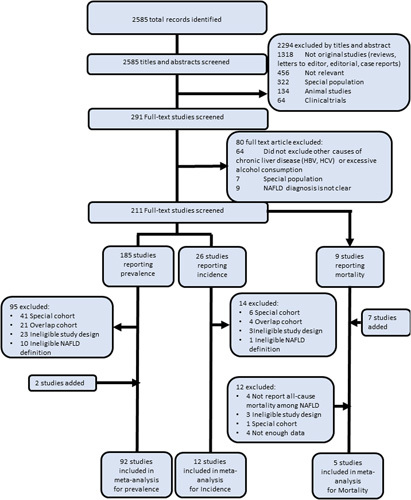
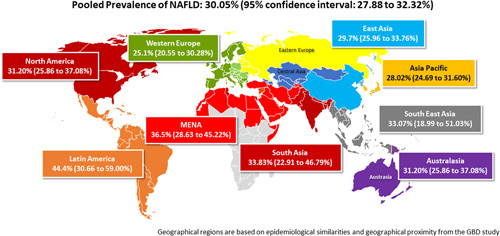
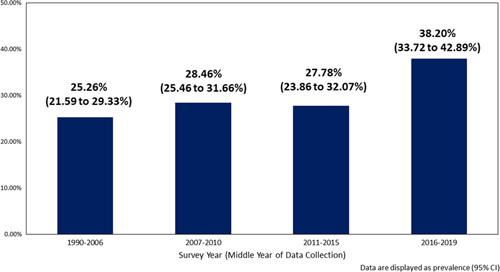
Background and Aims: NAFLD is a leading cause of liver-related morbidity and mortality. We assessed the global and regional prevalence, incidence, and mortality of NAFLD using an in-depth meta-analytic approach. Approach and Results: PubMed and Ovid MEDLINE were searched for NAFLD population-based studies from 1990 to 2019 survey year (last published 2022) per Preferred Reporting Items for Systematic Reviews and Meta-Analyses (PRISMA). Meta-analysis was conducted using random-effects models. Bias risk assessment was per Joanna Briggs Institute. Of 2585 studies reviewed, 92 studies (N=9,361,716) met eligibility criteria. Across the study period (1990–2019), meta-analytic pooling of NAFLD prevalence estimates and ultrasound-defined NAFLD yielded an overall global prevalence of 30.05% (95% CI: 27.88%–32.32%) and 30.69% (28.4–33.09), respectively. Global NAFLD prevalence increased by +50.4% from 25.26% (21.59–29.33) in 1990–2006 to 38.00% (33.71–42.49) in 2016–2019 ( p <0.001); ultrasound-defined NAFLD prevalence increased by +38.7% from 25.16% (19.46–31.87) in 1990–2006 to 34.59% (29.05–40.57) ( p =0.029). The highest NAFLD prevalence was in Latin America 44.37% (30.66%–59.00%), then Middle East and North Africa (MENA) (36.53%, 28.63%–45.22%), South Asia (33.83%, 22.91%–46.79%), South-East Asia (33.07%, 18.99%–51.03%), North America (31.20%, 25.86%–37.08%), East Asia (29.71%, 25.96%–33.76%), Asia Pacific 28.02% (24.69%–31.60%), Western Europe 25.10% (20.55%–30.28%). Among the NAFLD cohort diagnosed without a liver biopsy, pooled mortality rate per 1000 PY was 12.60 (6.68–23.67) for all-cause mortality; 4.20 (1.34–7.05) for cardiac-specific mortality; 2.83 (0.78–4.88) for extrahepatic cancer-specific mortality; and 0.92 (0.00–2.21) for liver-specific mortality. Conclusions: NAFLD global prevalence is 30% and increasing which requires urgent and comprehensive strategies to raise awareness and address all aspects of NAFLD on local, regional, and global levels.
Overview
The claims and statistics of this paper haven’t been checked yet.
Free: it reads the open-access text and checks the first 5 claims that cite a source we can check. Create a free account to check every claim.
Integrity signals
Registry
Cites
Statistics
Figures
Verification
Claims the paper makes
The claims and statistics of this paper haven’t been checked yet.
Free: it reads the open-access text and checks the first 5 claims that cite a source we can check. Create a free account to check every claim.
Claims other papers make about this one
Each is checked against this paper’s own text: does it say what the citing paper says it does?
The source backs part of the claim, not all of it — or backs it for a different population, condition or comparison.
In the citing paper
“Thus, MASLD is now the leading cause of chronic liver disease and hence liver fibrosis (47–49).”
From Targeting macrophages in liver fibrosis (2026) · cites this paper as [49]
Experimental — accuracy not yet measuredThe source backs part of the claim, not all of it — or backs it for a different population, condition or comparison.
In the citing paper
“The estimated global prevalence of MASLD in the general population has risen from 25% in 2016 12 to currently more than 30%, and the incidence is continually increasing. 12 -14”
From EASL-EASD-EASO Clinical Practice Guidelines on the management of metabolic dysfunction-associated steatotic liver disease (MASLD). (2024) · cites this paper as [12]
Experimental — accuracy not yet measuredThe source backs part of the claim, not all of it — or backs it for a different population, condition or comparison.
In the citing paper
“Compared to matched control populations, individuals with MASLD have increased all-cause mortality of 17.05/1,000 PY (range 10.31 -28.05). 12”
From EASL-EASD-EASO Clinical Practice Guidelines on the management of metabolic dysfunction-associated steatotic liver disease (MASLD). (2024) · cites this paper as [12]
Experimental — accuracy not yet measuredThe check wasn’t confident either way, so it gives no verdict — never disputed.
In the citing paper
“the “non-viral” subgroups probably consist of different proportions of HCCs due to each etiology across different trials, as the above example has shown [63–65]”
From Etiology-Based Treatment for Unresectable/Advanced Hepatocellular Carcinoma: Focus on Viral Hepatitis and Metabolic Dysfunction-Associated Steatohepatitis (2025) · cites this paper as [64]
Experimental — accuracy not yet measured
Self-check
Percentages, sums and reported differences re-computed from the paper’s own numbers.
The self-check needs the paper’s full text.
Citations
Cites
Bias in meta-analysis detected by a simple, graphical test
Egger, M., Smith, G. D., Schneider, M., & Minder, C. (1997) · BMJ · doi:10.1136/bmj.315.7109.629 · Cited by 56,722 · cited 1×
“[22] A funnel plot was used to investigate publication bias with the Egger regression test[23] and visual inspection to assess plot asymmetry.”
MethodMeta-analysis in clinical trials
DerSimonian, R., & Laird, N. (1986) · Controlled Clinical Trials · doi:10.1016/0197-2456(86)90046-2 · Cited by 39,552 · cited 1×
“Meta-analysis was performed on the adjusted NAFLD prevalence via random-effects models using the DerSimonian and Laird method[17] to estimate the pooled prevalence.”
MethodConducting Meta-Analyses in R with the metafor Package
Viechtbauer, W. (2010) · Journal of Statistical Software · doi:10.18637/jss.v036.i03 · Cited by 20,464 · cited 1×
“Analysis was conducted using the “metafor” package[24] in RStudio version 1.”
MethodYounossi, Z. M., Koenig, A. B., Abdelatif, D., Fazel, Y., Henry, L., & Wymer, M. (2016) · Hepatology · doi:10.1002/hep.28431 · Cited by 10,781 · cited 3×
“In 2016, a meta-analysis of studies published between 1990 and 2015 provided evidence that the global prevalence of NAFLD was about 25%, making it the most common cause of chronic liver disease (CLD).[1] The subsequent data from the Global Burden of Disease (GBD) study have supplemented this data and provided evidence…”
BackgroundResultSelf-citationMunn, Z., Moola, S., Lisy, K., Riitano, D., & Tufanaru, C. (2015) · International Journal of Evidence-Based Healthcare · doi:10.1097/xeb.0000000000000054 · Cited by 3,131 · cited 1×
“Quality assessment of the included studies was conducted using the Joanna Briggs Institute (JBI) critical appraisal instrument for prevalence studies against the following matrices: sample frame suitability, sampling strategy, sample size adequacy, study subjects and setting description, appropriate data analysis perf…”
MethodNon-alcoholic fatty liver disease
Powell, E. E., Wong, V. W.-S., & Rinella, M. (2021) · The Lancet · doi:10.1016/s0140-6736(20)32511-3 · Cited by 2,789 · cited 1×
“[6,7] In this context, the number of metabolic conditions that one carries not only increases the risk of having NAFLD but also the risk of progression to advanced liver disease and mortality.[8,9] Besides adverse clinical outcomes such as increased mortality, NAFLD is also associated with significant economic burden…”
BackgroundEstes, C., Razavi, H., Loomba, R., Younossi, Z., & Sanyal, A. J. (2018) · Hepatology · doi:10.1002/hep.29466 · Cited by 2,399 · cited 1×
“Nonetheless, these reported NAFLD incidence rates are in line with other incidence reports and is important information especially when forecasting the future burden of disease.[29,30,33] Our data showed that pooled mortality rate for NAFLD was 12.”
ResultSelf-citationThe prevalence and incidence of NAFLD worldwide: a systematic review and meta-analysis
Riazi, K., Azhari, H., Charette, J. H., Underwood, F. E., King, J. A., Afshar, E. E., Swain, M. G., Congly, S. E., Kaplan, G. G., & Shaheen, A.-A. (2022) · The Lancet Gastroenterology & Hepatology · doi:10.1016/s2468-1253(22)00165-0 · Cited by 2,246 · cited 3×
“Nonetheless, these reported NAFLD incidence rates are in line with other incidence reports and is important information especially when forecasting the future burden of disease.[29,30,33] Our data showed that pooled mortality rate for NAFLD was 12.”
BackgroundResultWilliams, C. D., Stengel, J., Asike, M. I., Torres, D. M., Shaw, J., Contreras, M., Landt, C. L., & Harrison, S. A. (2011) · Gastroenterology · doi:10.1053/j.gastro.2010.09.038 · Cited by 2,148 · cited 1×
“To reduce overestimation associated with a referral for liver biopsy, we only included studies with subjects who were not specifically referred for liver biopsy based on a clinical indication such as elevated liver enzymes.[26,27] Subsequently, the NASH prevalence in the general population was estimated by multiplying…”
MethodImproved tests for a random effects meta‐regression with a single covariate
Knapp, G., & Hartung, J. (2003) · Statistics in Medicine · doi:10.1002/sim.1482 · Cited by 2,075 · cited 1×
“Model coefficients were tested using the Knapp and Hartung adjustment.[21] Pairwise comparisons for categorical moderators were calculated using the Hommel method.”
Method
Cited by
Items 101–200 of 1,007
Tauil, R. B., Golono, P. T., de Lima, E. P., Goulart, R. D. Á., Guiguer, É. L., Bechara, M. D., Nicolau, C. C. T., Yanaguizawa, J. L., Fiorini, A. M. R., Méndez‐Sánchez, N., et al. (2024) · Pharmaceuticals · doi:10.3390/ph17101354 · Cited by 87
Implementation of a liver health check in people with type 2 diabetes
Abeysekera, K. W. M., Valenti, L., Younossi, Z., Dillon, J. F., Allen, A. M., Noureddin, M., Rinella, M. E., Tacke, F., Francque, S., Ginès, P., et al. (2024) · The Lancet Gastroenterology & Hepatology · doi:10.1016/s2468-1253(23)00270-4 · Cited by 63
Self-citationSteatotic Liver Disease: Metabolic Dysfunction, Alcohol, or Both?
Staufer, K., & Stauber, R. E. (2023) · Biomedicines · doi:10.3390/biomedicines11082108 · Cited by 81
“Its prevalence has been estimated at 31% in North America and Australasia, 44% in Latin America, 25% in Western Europe, 37% in the Middle East/North Africa, 34% in South Asia, 33% in Southeast Asia, and 28% in Asia-Pacific countries [1,15].”
BackgroundDiagnosis and Treatment of Liver Disease: Current Trends and Future Directions
Wazir, H., Abid, M., Essani, B., Saeed, H., Khan, M. A., Nasrullah, F., Qadeer, U., Khalid, A., Varrassi, G., Muzammil, M. A., et al. (2023) · Cureus · doi:10.7759/cureus.49920 · Cited by 125
“Research indicates that approximately 25% of the global population is grappling with NAFLD [2].”
BackgroundDecoding the Liver-Heart Axis in Cardiometabolic Diseases
Capone, F., Vacca, A., Bidault, G., Sarver, D. C., Kamińska, D., Strocchi, S., Vidal‐Puig, A., Greco, C. M., Lusis, A. J., & Schiattarella, G. G. (2025) · Circulation Research · doi:10.1161/circresaha.125.325492 · Cited by 81
Food inequity and insecurity and MASLD: burden, challenges, and interventions
Zelber‐Sagi, S., Carrieri, P., Pericàs, J. M., Wajcman, D. I., Younossi, Z. M., & Lazarus, J. V. (2024) · Nature Reviews Gastroenterology & Hepatology · doi:10.1038/s41575-024-00959-4 · Cited by 70
“6).”
Self-citationEpidemiology of liver diseases: global disease burden and forecasted research trends
Xiao, J., Wang, F., Yuan, Y., Gao, J., Lu, X., Chao, Y., Guo, F., Zhong, J., Che, Z., Li, W., et al. (2024) · Science China Life Sciences · doi:10.1007/s11427-024-2722-2 · Cited by 74
“Importantly, our prevalence data for MASLD stands at 15%, which is only half of the latest global epidemiology data of 30% (Paik et al., 2023b; Younossi et al., 2023a).”
ECM1 attenuates hepatic fibrosis by interfering with mediators of latent TGF-β1 activation
Link, F., Li, Y., Zhao, J., Munker, S., Fan, W., Nwosu, Z. C., Ye, Y., Wang, S., Huang, C., Hammad, S., et al. (2024) · Gut · doi:10.1136/gutjnl-2024-333213 · Cited by 68
Díaz, L. A., Arab, J. P., Idalsoaga, F. J., Perelli, J., Vega, J. A., Dirchwolf, M., Carreño, J., Samith, B., Valério, C. M., Moreira, R. O., et al. (2025) · Annals of Hepatology · doi:10.1016/j.aohep.2025.101903 · Cited by 87
“European countries and other Western regions face a similar scenario in terms of burden of MASLD, reaching an increase in the MASLD prevalence by +38.7% in the last two decades [46 − 48].”
InfluentialMetabolic syndrome traits increase the risk of major adverse liver outcomes in type 2 diabetes
Shang, Y., Grip, E. T., Modica, A., Skröder, H., Ström, O., Ntanios, F., Gudbjörnsdottir, S., & Hagström, H. (2024) · Diabetes Care · doi:10.2337/dc23-1937 · Cited by 61
Envisioning how to advance the MASH field
Allen, A. M., Younossi, Z. M., Diehl, A. M., Charlton, M., & Lazarus, J. V. (2024) · Nature Reviews Gastroenterology & Hepatology · doi:10.1038/s41575-024-00938-9 · Cited by 69
Self-citationRiley, D. R. J., Hydes, T., Hernadez, G., Zhao, S. S., Alam, U., & Cuthbertson, D. J. (2024) · Liver International · doi:10.1111/liv.16016 · Cited by 71
Younossi, Z. M., Razavi, H. A., Sherman, M., Allen, A. M., Anstee, Q. M., Cusi, K. J., Friedman, S. L., Lawitz, E., Lazarus, J. V., Schuppan, D., et al. (2025) · Alimentary Pharmacology & Therapeutics · doi:10.1111/apt.70020 · Cited by 80
Self-citationOpportunities and challenges following approval of resmetirom for MASH liver disease
Lazarus, J. V., Ivancovsky Wajcman, D., Mark, H. E., Younossi, Z. M., Kopka, C. J., Cohen, N., Bansal, M. B., Betel, M., & Brennan, P. N. (2024) · Nature Medicine · doi:10.1038/s41591-024-02958-z · Cited by 60
Self-citationChanging Epidemiology of Hepatocellular Carcinoma Within the United States and Worldwide
Rich, N. E. (2023) · Surgical Oncology Clinics of North America · doi:10.1016/j.soc.2023.06.004 · Cited by 75
Liu, C., Zhu, S., Zhang, J., Wu, P., Wang, X., Du, S., Wang, E., Kang, Y., Song, K., & Yu, J. (2023) · Journal of Gastroenterology · doi:10.1007/s00535-023-02040-4 · Cited by 69
“Non-alcoholic fatty liver disease (NAFLD) is a hepatic disorder that is closely associated with obesity, insulin resistance, type 2 diabetes mellitus (T2DM), hypertension, hyper-lipidemia, and metabolic syndrome [1], with a world-wide prevalence of 30% [2].”
BackgroundMotta, B. M., Masarone, M., Torre, P., & Persico, M. (2023) · Cancers · doi:10.3390/cancers15225458 · Cited by 66
“In Western Europe, an estimated prevalence of 25.1% (20.55–30.28%), for a total of approximately 366,000 patients, is reported [4].”
BackgroundInfluentialAssociation of food insecurity with MASLD prevalence and liver-related mortality
Younossi, Z. M., Zelber‐Sagi, S., Kugelmas, C., Lazarus, J. V., Paik, A., de Avila, L., Gerber, L. H., & Paik, J. M. (2024) · Journal of Hepatology · doi:10.1016/j.jhep.2024.08.011 · Cited by 66
Self-citationPaik, J. M., Duong, S., Zelber‐Sagi, S., Lazarus, J. V., Henry, L. L., & Younossi, Z. M. (2024) · The American Journal of Gastroenterology · doi:10.14309/ajg.0000000000002749 · Cited by 68
“Theglobal prevalence of MASLD has surged to 38% among adults over the past decade (13).”
BackgroundSelf-citationTakahashi, Y., Dungubat, E., Kusano, H., & Fukusato, T. (2023) · Biomedicines · doi:10.3390/biomedicines11102761 · Cited by 65
“The global prevalence of NAFLD is estimated to be as high as 30% [4] and approximately 1.5–6% of the general population have NASH [5].”
BackgroundInfluentialZhang, J., Ouyang, H., Gu, X.-N., Dong, S., Lu, B., Huang, Z., Li, J., & Ji, L. (2024) · Free Radical Biology and Medicine · doi:10.1016/j.freeradbiomed.2024.08.038 · Cited by 67
Aggeletopoulou, I., Tsounis, E. P., & Triantos, C. K. (2024) · International Journal of Molecular Sciences · doi:10.3390/ijms25094901 · Cited by 67
“A recent meta-analysis revealed an overall worldwide prevalence of 30%, marking a 50% increase between 1990 and 2019 [18].”
BackgroundLawitz, E., Fraessdorf, M., Neff, G. W., Schattenberg, J. M., Noureddin, M., Alkhouri, N., Schmid, B., Andrews, C. P., Takács, I., Hussain, S. A., et al. (2024) · Journal of Hepatology · doi:10.1016/j.jhep.2024.06.003 · Cited by 66
Tian, S., Lei, Y., Zhao, F., Che, J., Wu, Y.-H., Lei, P., Kang, Y. E., & Shan, Y. (2024) · Food & Function · doi:10.1039/d4fo01059k · Cited by 67
Azizi, N., Naghibi, H., Shakiba, M., Morsali, M., Zarei, D., Abbastabar, H., & Ghanaati, H. (2024) · European Radiology · doi:10.1007/s00330-024-11001-1 · Cited by 68
“Additionally, extrahepatic complications include chronic kidney disease, cardiovascular disease, sleep apnoea, and an increased risk of premature mortality [3 – 6].”
Danpanichkul, P., Suparan, K., Kim, D., & Wijarnpreecha, K. (2024) · Journal of Clinical Medicine · doi:10.3390/jcm13010278 · Cited by 54
Castera, L., Garteiser, P., Laouenan, C., Vidal-Trécan, T., Vallet-Pichard, A., Manchon, P., Paradis, V., Czernichow, S., Roulot, D., Larger, E., et al. (2024) · Journal of Hepatology · doi:10.1016/j.jhep.2024.03.023 · Cited by 53
Yang, M., Wang, J., Xiao, W., & Fan, X. (2024) · Frontiers in Medicine · doi:10.3389/fmed.2024.1410668 · Cited by 75
Autophagy and hepatic lipid metabolism: mechanistic insight and therapeutic potential for MASLD
Raza, S., Rajak, S., Yen, P. M., & Sinha, R. A. (2024) · npj Metabolic Health and Disease · doi:10.1038/s44324-024-00022-5 · Cited by 61
Diabetes as a risk factor for MASH progression
Gancheva, S., Roden, M., & Castéra, L. (2024) · Diabetes Research and Clinical Practice · doi:10.1016/j.diabres.2024.111846 · Cited by 65
Global Epidemiological Impact of PNPLA3 I148M on Liver Disease
Kozlitina, J., & Sookoian, S. C. (2024) · Liver International · doi:10.1111/liv.16123 · Cited by 70
Macrophages and platelets in liver fibrosis and hepatocellular carcinoma
Casari, M., Siegl, D., Deppermann, C., & Schuppan, D. (2023) · Frontiers in Immunology · doi:10.3389/fimmu.2023.1277808 · Cited by 59
Ezhilarasan, D. (2024) · Metabolism · doi:10.1016/j.metabol.2024.155912 · Cited by 58
Peleman, C., Hellemans, S., Veeckmans, G., Arras, W., Zheng, H., Koeken, I., San, E. V., Hassannia, B., Walravens, M., Kayirangwa, E., et al. (2024) · Cell Death and Differentiation · doi:10.1038/s41418-024-01348-9 · Cited by 70
“It is estimated that 30% of the global adult population has MASLD which is the most rapidly rising indication for liver transplantation in the USA [2, 3].”
BackgroundGries, J. J., Lazarus, J. V., Brennan, P., Siddiqui, M. S., Targher, G., Lang, C. C., Virani, S. S., Lavie, C. J., Isaacs, S. D., Arab, J. P., et al. (2024) · The Lancet. Gastroenterology & hepatology · doi:10.1016/s2468-1253(24)00310-8 · Cited by 68
MASLD/MASH and type 2 diabetes: Two sides of the same coin? From single PPAR to pan-PPAR agonists
Cooreman, M. P., Vonghia, L., & Francque, S. (2024) · Diabetes Research and Clinical Practice · doi:10.1016/j.diabres.2024.111688 · Cited by 59
Metabolic Messengers: small extracellular vesicles
Rohm, T. V., Rocha, K. C. E., & Olefsky, J. M. (2025) · Nature Metabolism · doi:10.1038/s42255-024-01214-5 · Cited by 65
“Obesity and T2D are primary risk factors for MAFLD, a significant contributor to liver-related mortality affecting approximately 30% of adults globally 55,56 .”
Harring, M., Golabi, P., Paik, J. M., Shah, D., Racila, A., Cable, R., Srishord, M., & Younossi, Z. M. (2023) · Clinical Gastroenterology and Hepatology · doi:10.1016/j.cgh.2023.02.013 · Cited by 51
Self-citationForlano, R., Stanic, T., Jayawardana, S., Mullish, B. H., Yee, M. S., Mossialos, E. A., Goldin, R. D., Petta, S., Tsochatzis, E. A., Thursz, M. R., et al. (2023) · Liver International · doi:10.1111/liv.15730 · Cited by 60
MASLD treatment—a shift in the paradigm is imminent
Machado, M. V. (2023) · Frontiers in Medicine · doi:10.3389/fmed.2023.1316284 · Cited by 51
Caussy, C., Vergès, B. L., Leleu, D., Duvillard, L., Subtil, F., Klich, A., Hervieu, V., Milot, L. M., Segrestin, B., Bin, S., et al. (2025) · Diabetes Care · doi:10.2337/dc24-2075 · Cited by 62
Zheng, N., Wang, H., Zhu, W., Li, Y., & Li, H. (2023) · Journal of Ethnopharmacology · doi:10.1016/j.jep.2023.117401 · Cited by 54
Soto, A., Spongberg, C. V., Martinino, A., & Giovinazzo, F. (2024) · Biomedicines · doi:10.3390/biomedicines12020397 · Cited by 57
Meyer, M., Schwärzler, J., Jukic, A., & Tilg, H. (2024) · Biomolecules · doi:10.3390/biom14040476 · Cited by 50
“Understanding the complex interplay between the different parts of innate immunity in liver inflammation will lead to the development of novel therapeutics in targeting this deleterious condition, affecting nearly a third of the world’s population [7].”
BackgroundLindvig, K. P., Thorhauge, K. H., Hansen, J. K., Kjærgaard, M., Hansen, C. D., Johansen, S., Jensen, E. L., Israelsen, M. E., Andersen, P., Bech, K., et al. (2024) · The Lancet. Gastroenterology & hepatology · doi:10.1016/s2468-1253(24)00274-7 · Cited by 65
Associations between Class I, II, or III Obesity and Health Outcomes
Yao, Z., Tchang, B. G., Albert, M. H., Blumenthal, R. S., Nasir, K., & Blaha, M. J. (2025) · NEJM Evidence · doi:10.1056/evidoa2400229 · Cited by 64
Lange, M., Nadkarni, D., Martin, L., Newberry, C., Kumar, S., & Kushner, T. (2023) · Hepatology Communications · doi:10.1097/hc9.0000000000000212 · Cited by 49
“As a consequence of the increasing prevalence of obesity, type 2 diabetes, and related metabolic conditions, NAFLD has become one of the most important causes of chronic liver disease worldwide, affecting 24% of the global population[1] and increasing the risk of all-cause mortality.[1,2] While there are several thera…”
BackgroundGhazanfar, H., Javed, N., Qasim, A., Zacharia, G. S., Ghazanfar, A., Jyala, A., Shehi, E., & Patel, H. (2024) · Cancers · doi:10.3390/cancers16061214 · Cited by 63
Li, N., Cui, C., Xu, J., Mi, M., Wang, J., & Yu, Q. (2024) · American Journal of Clinical Nutrition · doi:10.1016/j.ajcnut.2024.07.013 · Cited by 59
The liver–brain axis in metabolic dysfunction-associated steatotic liver disease
Mikkelsen, A. C. D., Kjærgaard, K., Schapira, A. H. V., Mookerjee, R. P., & Thomsen, K. L. (2024) · The Lancet. Gastroenterology & hepatology · doi:10.1016/s2468-1253(24)00320-0 · Cited by 67
Israelsen, M. E., Thorhauge, K. H., Andersen, P., Johansen, S., Schnefeld, H. L., Bech, K., Hansen, J. K., Torp, N., Jensen, E. L., Hansen, E. D., et al. (2025) · Clinical Gastroenterology and Hepatology · doi:10.1016/j.cgh.2025.02.007 · Cited by 62
Dua, A., KUMARI, R. R., Singh, M., Kumar, R., Pradeep, S., Ojesina, A. I., & Kumar, R. (2025) · Frontiers in Medicine · doi:10.3389/fmed.2025.1618275 · Cited by 72
Global burden and risk factors of MASLD: trends from 1990 to 2021 and predictions to 2030
Huang, M., Chen, H., Wang, H., Zhang, Y., Li, L., Lan, Y., & Ma, L. (2025) · Internal and Emergency Medicine · doi:10.1007/s11739-025-03895-6 · Cited by 58
“Non-alcoholic fatty liver disease (NAFLD) affects about 30.05–32.4% of the global population and is a key component of metabolic syndrome [1].”
InfluentialSex, Nutrition, and NAFLD: Relevance of Environmental Pollution
Dolce, A., & Torre, S. D. (2023) · Nutrients · doi:10.3390/nu15102335 · Cited by 51
“Non-alcoholic fatty liver disease (NAFLD) is the most common form of chronic liver disease with a 30% prevalence in the general population [1] and represents an increasing public health issue being an independent risk factor for several comorbidities, such as type 2 diabetes (T2D), hypertension, dyslipidemia, atherosc…”
BackgroundVogli, S., Naska, A., Marinos, G., Kasdagli, M., & Orfanos, P. (2023) · Nutrients · doi:10.3390/nu15173733 · Cited by 55
Sohn, W., Lee, Y., Kim, S. S., Kim, J. H., Jin, Y., Kim, G., Sung, P. S., Yoo, J., Chang, Y. W., Lee, E. J., et al. (2025) · Clinical and Molecular Hepatology · doi:10.3350/cmh.2025.0045 · Cited by 76
Loomba, R. S., Kowdley, K. V., Rodriguez, J., Kim, N. J., Alvarez, A. M., Morrow, L., Jeglinski, B. I., Clawson, A., Chowdhury, S. K., Bain, G., et al. (2025) · The Lancet. Gastroenterology & hepatology · doi:10.1016/s2468-1253(25)00067-6 · Cited by 52
Samy, A. M., Kandeil, M. A., Sabry, D., Abdel-Ghany, A. A., & Mahmoud, M. O. (2024) · Heliyon · doi:10.1016/j.heliyon.2024.e30387 · Cited by 60
“Over the past thirty years, NAFLD prevalence has risen from 25 % to 38 %, indicating a substantial upward trend [15].”
BackgroundMantovani, A., Csermely, A., Bilson, J., Borella, N., Enrico, S., Pecoraro, B., Shtembari, E., Morandin, R., Pοlyzos, S. A., Valenti, L. V. C., et al. (2024) · Gut · doi:10.1136/gutjnl-2024-332491 · Cited by 57
Sattar, N. A., & Lee, M. M. Y. (2025) · The Lancet Diabetes & Endocrinology · doi:10.1016/s2213-8587(24)00363-2 · Cited by 58
Antifibrotic therapies for metabolic dysfunction-associated steatotic liver disease
Schwabe, R. F., Tacke, F., Sugimoto, A., & Friedman, S. L. (2025) · JHEP Reports · doi:10.1016/j.jhepr.2025.101421 · Cited by 70
Martin, O. P., Wallace, M. S., Oetheimer, C., Patel, H. B., Butler, E. C., Wong, L. P., Huang, P., Elbaz, J., Costentin, C., Salloum, S., et al. (2025) · Nature Immunology · doi:10.1038/s41590-025-02255-y · Cited by 45
“Metabolic dysfunction-associated steatotic liver disease and metabolic dysfunction-associated steatohepatitis (MASLD/MASH) is the most common liver disease worldwide 1 and its incidence continues to increase.”
Interleukin-13 (IL-13)—A Pleiotropic Cytokine Involved in Wound Healing and Fibrosis
Roeb, E. (2023) · International Journal of Molecular Sciences · doi:10.3390/ijms241612884 · Cited by 52
“Keywords: NAFLD; NASH; IL-13; liver; fibrosis; metabolism; MASLD; MASH”
BackgroundInfluentialAggarwal, A., Biswas, S., Arora, U., Vaishnav, M., Shenoy, A., Swaroop, S., Agarwal, A., Elhence, A., Kumar, R. K., Goel, A., et al. (2024) · Clinical Gastroenterology and Hepatology · doi:10.1016/j.cgh.2024.04.018 · Cited by 53
Sripongpun, P., Kaewdech, A., Udompap, P., & Kim, W. R. (2024) · JHEP Reports · doi:10.1016/j.jhepr.2024.101127 · Cited by 59
Tesfai, K., Pace, J., El-Newihi, N., Martinez, M. E., Tincopa, M. A., & Loomba, R. S. (2024) · Clinical Gastroenterology and Hepatology · doi:10.1016/j.cgh.2024.06.038 · Cited by 52
Owrangi, S., Paik, J. M., Golabi, P., de Avila, L., Hashida, R., Nader, A., Paik, A., Henry, L. L., & Younossi, Z. M. (2024) · Alimentary Pharmacology & Therapeutics · doi:10.1111/apt.18451 · Cited by 61
“The progressive form of MASLD, metabolic dysfunction-associated steatohepatitis (MASH) [formerly called nonalcoholic steatohepatitis (NASH)] has been estimated to have a prevalence of 5.3% with similar increasing future projections [3].”
InfluentialSelf-citationZhu, G., Song, Y., Lu, Z., Yi, Q., Xu, R. L., Xie, Y. F., Geng, S., Yang, N., Zheng, L., Feng, X., et al. (2025) · Journal of Translational Medicine · doi:10.1186/s12967-025-06387-5 · Cited by 60
“Metabolic dysfunction-associated steatotic liver disease (MASLD), characterised by the accumulation of excess fat in the liver of individuals who consume little or no alcohol, has emerged as a global public health concern [1].”
Zhang, C., Zhang, Y., Dong, Y., Zi, R., Wang, Y., Chen, Y., Liu, C., Wang, J., Wang, X., Li, J., et al. (2024) · Cell Death Discovery · doi:10.1038/s41420-023-01770-x · Cited by 57
“Non-alcoholic fatty liver disease (NAFLD) is the most common liver disease worldwide, with an overall global prevalence of 30%, and its incidence is projected to increase by 56% over the next decade [3].”
Ferro, A., Saccu, G., Mattivi, S., Gaido, A., Sanchez, M. B. H., Haque, S., Silengo, L., Altruda, F., Durazzo, M., & Fagoonee, S. (2024) · Biomolecules · doi:10.3390/biom14030277 · Cited by 51
“It affects 30% of the population, but this rate is expected to increase further [4].”
BackgroundPharmaco‐Economic Assessment of Screening Strategies for High‐Risk MASLD in Primary Care
Younossi, Z. M., Paik, J. M., Henry, L. L., Stepanova, M., & Nader, F. (2024) · Liver International · doi:10.1111/liv.16119 · Cited by 58
Self-citationQuantitative PET imaging and modeling of molecular blood-brain barrier permeability
Chung, K. J., Abdelhafez, Y. G., Spencer, B. A., Jones, T., Quyen, T. N. T., Nardo, L., Chen, M. S., Sarkar, S., Medici, V., Lyo, V., et al. (2025) · Nature Communications · doi:10.1038/s41467-025-58356-7 · Cited by 57
“We studied metabolic dysfunction-associated steatotic liver disease (MASLD), the most common chronic liver disease globally 60 with potential associations with cognitive impairment 61 .”
Liver biopsy evaluation in MASH drug development: Think thrice, act wise
Harrison, S. A., & Dubourg, J. (2024) · Journal of Hepatology · doi:10.1016/j.jhep.2024.06.008 · Cited by 53
Integrating liver endpoints in clinical trials of cardiovascular and kidney disease
Zannad, F. M., Sanyal, A. J., Butler, J., Miller, V., & Harrison, S. A. (2024) · Nature Medicine · doi:10.1038/s41591-024-03223-z · Cited by 52
“Data from 2016–2019 suggest that approximately 38% of the global population had MASLD, and the rates of both MASLD and its more advanced form, metabolic-dysfunction-associated steatohepatitis (MASH), are increasing 14 .”
Armandi, A., Rosso, C., Caviglia, G. P., & Bugianesi, E. (2024) · Metabolism · doi:10.1016/j.metabol.2024.156080 · Cited by 53
Carbone, F., Després, J., Ioannidis, J. P. A., Neeland, I. J., Garruti, G., Busetto, L., Liberale, L., Ministrini, S., Vilahur, G., Schindler, T. H., et al. (2025) · European Journal of Clinical Investigation · doi:10.1111/eci.70059 · Cited by 57
The Rising Global Burden of MASLD and Other Metabolic Diseases (2000–2021)
Danpanichkul, P., Suparan, K., Díaz, L. A., Fallon, M. B., Chen, V. L., Namsathimaphorn, K., Rakwong, K., Inkongngam, T., Kaeosri, C., Kalligeros, M., et al. (2025) · United European Gastroenterology Journal · doi:10.1002/ueg2.70072 · Cited by 57
“The disease is now the most common chronic liver disease worldwide, affecting approximately 38% of the adult population [14].”
Metabolic Dysfunction-associated Steatotic Liver Disease and Type 2 Diabetes: A Deadly Synergy
Leith, D., Lin, Y. Y., & Brennan, P. (2024) · touchREVIEWS in Endocrinology · doi:10.17925/ee.2024.20.2.2 · Cited by 41
Stine, J. G., Long, M. T., Corey, K. E., Sallis, R. E., Allen, A. M., Armstrong, M. J., Conroy, D. E., Cuthbertson, D. J., Duarte‐Rojo, A., Hallsworth, K., et al. (2023) · Medicine & Science in Sports & Exercise · doi:10.1249/mss.0000000000003199 · Cited by 54
Rivera‐Esteban, J., Muñoz, S., Higuera, M., Sena, E., Bermúdez-Ramos, M., Bañares, J., Martínez-Gómez, M., Cusidó, M. S., Jiménez-Masip, A., Francque, S., et al. (2024) · Clinical Gastroenterology and Hepatology · doi:10.1016/j.cgh.2024.03.028 · Cited by 52
An overview of the cholesterol metabolism and its proinflammatory role in the development of MASLD
Zhang, L., Shi, Y., Liang, B., & Li, X. (2024) · Hepatology Communications · doi:10.1097/hc9.0000000000000434 · Cited by 53
“[85] MASLD is a progressive disease that encompasses a range of related disorders, such as simple steatosis, MASH, liver fibrosis, and potentially cirrhosis and HCC. [86,87] Generally, simple steatosis is defined as the presence of cytoplasmic lipid droplets in > 5% of hepatocytes.”
BackgroundGolabi, P., Owrangi, S., & Younossi, Z. M. (2024) · Alimentary Pharmacology & Therapeutics · doi:10.1111/apt.17833 · Cited by 65
“4,5 Because of its increasing incidence and prevalence, NAFLD has become the most common cause of chronic liver disease, while NASH is the second leading indications of all patients requiring liver transplantation and the top indication for those listed for liver transplantation due to…”
BackgroundSelf-citationZhou, B., Jiang, X., She, Q., & Ding, Y. (2024) · European Journal of Clinical Investigation · doi:10.1111/eci.14276 · Cited by 53
“40,41 Inflammation is also a hallmark of numerous cancers, with chronic inflammation triggering the activation of transcription factors in tumour cells such as nuclear factor-κ B, hypoxia-inducible factor 1 α and signal transducer and activator of transcription 3.”
Koliaki, C. C., Dalamaga, Μ., Kakounis, K., & Liatis, S. (2025) · Current Obesity Reports · doi:10.1007/s13679-025-00637-9 · Cited by 58
“Its overall global prevalence has steadily increased during the past decades and is now estimated at 38% [3, 4].”
Remnant cholesterol has a non-linear association with non-alcoholic fatty liver disease
Chen, J., Su, Y., Su, X., & Luo, F. (2023) · Diabetes Research and Clinical Practice · doi:10.1016/j.diabres.2023.110733 · Cited by 50
Sun, C., Xiong, X., Liu, M., Qi, L., Zhao, Q., Wei, G., Shi, J., & Li, X. (2024) · Biomedicine & Pharmacotherapy · doi:10.1016/j.biopha.2024.117156 · Cited by 47
Younossi, Z. M., Stepanova, M., Racila, A., Henry, L. L., Labriola, D., Taub, R. A., & Nader, F. (2024) · Hepatology · doi:10.1097/hep.0000000000001084 · Cited by 47
Self-citationGenetic Risk Factors for Metabolic Dysfunction-Associated Steatotic Liver Disease
Pei, Y., & Goh, G. B. (2025) · Gut and Liver · doi:10.5009/gnl240407 · Cited by 53
Guariglia, M., Saba, F., Rosso, C., & Bugianesi, E. (2023) · Nutrients · doi:10.3390/nu15245053 · Cited by 42
“Metabolic dysfunction associated fatty liver disease (MASLD) is one of the most common causes of liver disease, affecting 25% of the population, and its prevalence is increasing significantly in Western countries [1].”
BackgroundJiang, Y., Wu, L., Zhu, X., Bian, H., Gao, X., & Xia, M. (2024) · Lipids in Health and Disease · doi:10.1186/s12944-024-02092-2 · Cited by 52
“This rate included 4.20 per 1000 PYs for mortality specific to cardiac disease, 2.83 per 1000 PYs for mortality specific to extrahepatic cancer, and 0.92 per 1000 PYs for mortality specific to liver disease [8].”
BackgroundInfluentialMetALD: Clinical aspects, pathophysiology and treatment
Gratacós‐Ginès, J., Ariño, S., Sancho‐Bru, P., Bataller, R. A., & Pose, E. (2024) · JHEP Reports · doi:10.1016/j.jhepr.2024.101250 · Cited by 62
Zisis, M., Chondrogianni, M. E., Ανδρουτσάκος, Θ., Rantos, I., Oikonomou, E. K., Chatzigeorgiou, A., & Kassi, E. N. (2025) · Biomolecules · doi:10.3390/biom15030324 · Cited by 48
“NAFLD encompasses a wide spectrum ranging from simple hepatic steatosis to nonalcoholic steatohepatitis (NASH), which may advance to liver fibrosis and cirrhosis with liver failure and/or hepatocellular carcinoma [3,4].”
MASLD: Prevalence, Mechanisms, and Sex-Based Therapies in Postmenopausal Women
Milani, I., Chinucci, M., Leonetti, F., & Capoccia, D. (2025) · Biomedicines · doi:10.3390/biomedicines13040855 · Cited by 38
“The prevalence of obesity varies by region [3,4] and is higher in women than men [72–74] across all age groups, with the highest rates observed between ages 50 and 65 [73].”
InfluentialDong, X., Li, J.-M., Lü, X., Lin, X.-Y., Hong, M., Weng, S., & Pan, J. (2024) · Translational Gastroenterology and Hepatology · doi:10.21037/tgh-23-118 · Cited by 50
“It is widely acknowledged that the global burden of NAFLD/ NASH is progressively increasing, as evidenced by various systematic reviews (16,18,31).”
InfluentialAbdelnabi, M. N., Hassan, G. S., & Shoukry, N. H. (2024) · Frontiers in Immunology · doi:10.3389/fimmu.2024.1437046 · Cited by 46
“(1 – 3).”
Impact of PNPLA3 I148M on Clinical Outcomes in Patients With MASLD
Petta, S., Armandi, A., & Bugianesi, E. (2024) · Liver International · doi:10.1111/liv.16133 · Cited by 47
The steatotic liver disease burden paradox: unravelling the key role of alcohol
Torp, N., Israelsen, M. E., & Krag, A. A. (2024) · Nature Reviews Gastroenterology & Hepatology · doi:10.1038/s41575-024-01022-y · Cited by 48
“Despite the high estimated prevalence of 31–38% for metabolic dysfunction-associated steatotic liver disease (MASLD) 5,9,98 , as compared with 2–8% for metabolic and alcohol-related liver disease (MetALD) and 1–4% for alcohol-related liver disease (ALD) 6,7,10 , the liver-related complications and…”
Tsitsou, S., Bali, T., Adamantou, M., Saridaki, A., Poulia, K., Karagiannakis, D. S., Papakonstantinou, E., & Cholongitas, Ε. (2025) · Alimentary Pharmacology & Therapeutics · doi:10.1111/apt.70044 · Cited by 46
“MASLD prevalence, estimated at 30%–32% [5], is increasing exponentially at the same rate as type 2 diabetes and obesity as a result of unhealthy eating habits and a sedentary lifestyle [6].”
Çebi, M., & Yilmaz, Y. N. (2025) · Frontiers in Immunology · doi:10.3389/fimmu.2025.1575770 · Cited by 46
Luo, X., Wang, K., & Jiang, C. (2025) · Cell Host & Microbe · doi:10.1016/j.chom.2025.04.020 · Cited by 45
Metadata
- Authors
- Younossi, Z. M., Golabi, P., Paik, J. M., Henry, A., Van Dongen, C., & Henry, L.
- Affiliations
- Inova Health System (US)
- Betty and Guy Beatty Center for Integrated Research, Inova Health System, Falls Church, Virginia, USA
- Corresponding author
- Younossi, Zobair M.
- Venue
- Hepatology
- Published
- 2023-01-03
- Volume
- 77
- Issue
- 4
- Pages
- 1335-1347
- ISSN
- 0270-9139 (ISSN-L)
- PMC
- PMC10026948
- OpenAlex
- W4315619045
- Semantic Scholar
- e0a044235c08e95a83a81d9d88106233ad769e33
- Cited by
- 3,383
- References
- 38
- Citations by year
- 2026: 1056 · 2025: 1214 · 2024: 850 · 2023: 262
- FWCI
- 131.94
- Type
- journal article
- Language
- en
- Open access
- hybrid
- doi.org
- Licence
- Locations
- Hepatology (publishedVersion, cc-by-nc-nd)
- PubMed Central (publishedVersion, cc-by-nc-nd)
- PubMed (publishedVersion)
- Topics
- Health Sciences › Medicine › Hepatology › Liver Disease Diagnosis and Treatment
- Health Sciences › Medicine › Pathology and Forensic Medicine › Alcohol Consumption and Health Effects
- Health Sciences › Medicine › Hepatology › Liver Diseases and Immunity
- Keywords
- non-alcoholic fatty liver disease, nonalcoholic steatohepatitis, global prevalence, incidence, mortality, prevalence trends, regional variation, liver-related mortality, NAFLD risk factors
- MeSH terms
- Humans, North America, Prevalence, Risk Assessment, Non-alcoholic Fatty Liver Disease
About these checks
Registry, retraction, Cites and statistics results are computed, not judged, with one exception: a printed reference that no index lists is read once by a model before it counts as a citation error. Claims are extracted by a model and kept only when their quote appears verbatim in the text; each cited source is then checked, with a model’s help, for whether it says what the claim relies on. Those verdicts can be wrong — read the claim’s quote and the cited source before relying on one.
Statistics and arithmetic are recomputed, not judged.
Confidence bands are shown only for fields calibrated on our annotated test set. None is calibrated yet, so no band is shown.
What counts as a claim ›How we measure confidence ›How we check this ›
Are you an author, or do you see a problem with this page? Request a review
Data sources
Bibliographic data: Semantic Scholar, OpenAlex, Crossref.
Contains information from the Semantic Scholar Academic Graph Datasets, made available under the ODC Attribution License (ODC-BY 1.0).
Semantic Scholar’s data is described in: Kinney, R., et al. (2023). The Semantic Scholar Open Data Platform. arXiv:2301.10140.
