

The global epidemiology of nonalcoholic fatty liver disease (NAFLD) and nonalcoholic steatohepatitis (NASH): a systematic review
Open accessThe DOI matches its Crossref record; 38 of the 38 references it cites were found in a registry or an index.
Abstract
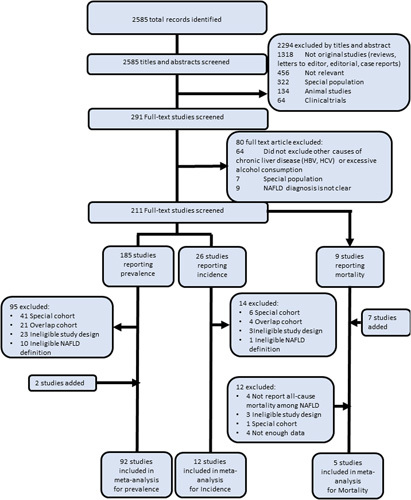
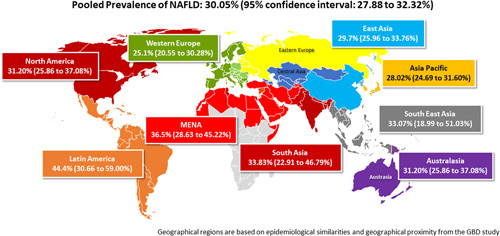
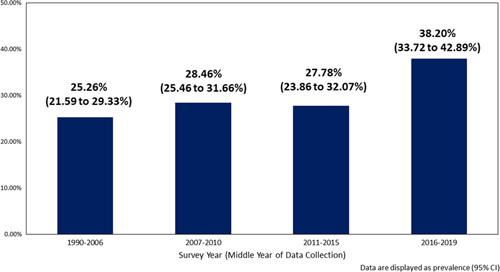
Background and Aims: NAFLD is a leading cause of liver-related morbidity and mortality. We assessed the global and regional prevalence, incidence, and mortality of NAFLD using an in-depth meta-analytic approach. Approach and Results: PubMed and Ovid MEDLINE were searched for NAFLD population-based studies from 1990 to 2019 survey year (last published 2022) per Preferred Reporting Items for Systematic Reviews and Meta-Analyses (PRISMA). Meta-analysis was conducted using random-effects models. Bias risk assessment was per Joanna Briggs Institute. Of 2585 studies reviewed, 92 studies (N=9,361,716) met eligibility criteria. Across the study period (1990–2019), meta-analytic pooling of NAFLD prevalence estimates and ultrasound-defined NAFLD yielded an overall global prevalence of 30.05% (95% CI: 27.88%–32.32%) and 30.69% (28.4–33.09), respectively. Global NAFLD prevalence increased by +50.4% from 25.26% (21.59–29.33) in 1990–2006 to 38.00% (33.71–42.49) in 2016–2019 ( p <0.001); ultrasound-defined NAFLD prevalence increased by +38.7% from 25.16% (19.46–31.87) in 1990–2006 to 34.59% (29.05–40.57) ( p =0.029). The highest NAFLD prevalence was in Latin America 44.37% (30.66%–59.00%), then Middle East and North Africa (MENA) (36.53%, 28.63%–45.22%), South Asia (33.83%, 22.91%–46.79%), South-East Asia (33.07%, 18.99%–51.03%), North America (31.20%, 25.86%–37.08%), East Asia (29.71%, 25.96%–33.76%), Asia Pacific 28.02% (24.69%–31.60%), Western Europe 25.10% (20.55%–30.28%). Among the NAFLD cohort diagnosed without a liver biopsy, pooled mortality rate per 1000 PY was 12.60 (6.68–23.67) for all-cause mortality; 4.20 (1.34–7.05) for cardiac-specific mortality; 2.83 (0.78–4.88) for extrahepatic cancer-specific mortality; and 0.92 (0.00–2.21) for liver-specific mortality. Conclusions: NAFLD global prevalence is 30% and increasing which requires urgent and comprehensive strategies to raise awareness and address all aspects of NAFLD on local, regional, and global levels.
Overview
The claims and statistics of this paper haven’t been checked yet.
Free: it reads the open-access text and checks the first 5 claims that cite a source we can check. Create a free account to check every claim.
Integrity signals
Registry
Cites
Statistics
Figures
Verification
Claims the paper makes
The claims and statistics of this paper haven’t been checked yet.
Free: it reads the open-access text and checks the first 5 claims that cite a source we can check. Create a free account to check every claim.
Claims other papers make about this one
Each is checked against this paper’s own text: does it say what the citing paper says it does?
The source backs part of the claim, not all of it — or backs it for a different population, condition or comparison.
In the citing paper
“Thus, MASLD is now the leading cause of chronic liver disease and hence liver fibrosis (47–49).”
From Targeting macrophages in liver fibrosis (2026) · cites this paper as [49]
Experimental — accuracy not yet measuredThe source backs part of the claim, not all of it — or backs it for a different population, condition or comparison.
In the citing paper
“The estimated global prevalence of MASLD in the general population has risen from 25% in 2016 12 to currently more than 30%, and the incidence is continually increasing. 12 -14”
From EASL-EASD-EASO Clinical Practice Guidelines on the management of metabolic dysfunction-associated steatotic liver disease (MASLD). (2024) · cites this paper as [12]
Experimental — accuracy not yet measuredThe source backs part of the claim, not all of it — or backs it for a different population, condition or comparison.
In the citing paper
“Compared to matched control populations, individuals with MASLD have increased all-cause mortality of 17.05/1,000 PY (range 10.31 -28.05). 12”
From EASL-EASD-EASO Clinical Practice Guidelines on the management of metabolic dysfunction-associated steatotic liver disease (MASLD). (2024) · cites this paper as [12]
Experimental — accuracy not yet measuredThe check wasn’t confident either way, so it gives no verdict — never disputed.
In the citing paper
“the “non-viral” subgroups probably consist of different proportions of HCCs due to each etiology across different trials, as the above example has shown [63–65]”
From Etiology-Based Treatment for Unresectable/Advanced Hepatocellular Carcinoma: Focus on Viral Hepatitis and Metabolic Dysfunction-Associated Steatohepatitis (2025) · cites this paper as [64]
Experimental — accuracy not yet measured
Self-check
Percentages, sums and reported differences re-computed from the paper’s own numbers.
The self-check needs the paper’s full text.
Citations
Cites
Bias in meta-analysis detected by a simple, graphical test
Egger, M., Smith, G. D., Schneider, M., & Minder, C. (1997) · BMJ · doi:10.1136/bmj.315.7109.629 · Cited by 56,722 · cited 1×
“[22] A funnel plot was used to investigate publication bias with the Egger regression test[23] and visual inspection to assess plot asymmetry.”
MethodMeta-analysis in clinical trials
DerSimonian, R., & Laird, N. (1986) · Controlled Clinical Trials · doi:10.1016/0197-2456(86)90046-2 · Cited by 39,552 · cited 1×
“Meta-analysis was performed on the adjusted NAFLD prevalence via random-effects models using the DerSimonian and Laird method[17] to estimate the pooled prevalence.”
MethodConducting Meta-Analyses in R with the metafor Package
Viechtbauer, W. (2010) · Journal of Statistical Software · doi:10.18637/jss.v036.i03 · Cited by 20,464 · cited 1×
“Analysis was conducted using the “metafor” package[24] in RStudio version 1.”
MethodYounossi, Z. M., Koenig, A. B., Abdelatif, D., Fazel, Y., Henry, L., & Wymer, M. (2016) · Hepatology · doi:10.1002/hep.28431 · Cited by 10,781 · cited 3×
“In 2016, a meta-analysis of studies published between 1990 and 2015 provided evidence that the global prevalence of NAFLD was about 25%, making it the most common cause of chronic liver disease (CLD).[1] The subsequent data from the Global Burden of Disease (GBD) study have supplemented this data and provided evidence…”
BackgroundResultSelf-citationMunn, Z., Moola, S., Lisy, K., Riitano, D., & Tufanaru, C. (2015) · International Journal of Evidence-Based Healthcare · doi:10.1097/xeb.0000000000000054 · Cited by 3,131 · cited 1×
“Quality assessment of the included studies was conducted using the Joanna Briggs Institute (JBI) critical appraisal instrument for prevalence studies against the following matrices: sample frame suitability, sampling strategy, sample size adequacy, study subjects and setting description, appropriate data analysis perf…”
MethodNon-alcoholic fatty liver disease
Powell, E. E., Wong, V. W.-S., & Rinella, M. (2021) · The Lancet · doi:10.1016/s0140-6736(20)32511-3 · Cited by 2,789 · cited 1×
“[6,7] In this context, the number of metabolic conditions that one carries not only increases the risk of having NAFLD but also the risk of progression to advanced liver disease and mortality.[8,9] Besides adverse clinical outcomes such as increased mortality, NAFLD is also associated with significant economic burden…”
BackgroundEstes, C., Razavi, H., Loomba, R., Younossi, Z., & Sanyal, A. J. (2018) · Hepatology · doi:10.1002/hep.29466 · Cited by 2,399 · cited 1×
“Nonetheless, these reported NAFLD incidence rates are in line with other incidence reports and is important information especially when forecasting the future burden of disease.[29,30,33] Our data showed that pooled mortality rate for NAFLD was 12.”
ResultSelf-citationThe prevalence and incidence of NAFLD worldwide: a systematic review and meta-analysis
Riazi, K., Azhari, H., Charette, J. H., Underwood, F. E., King, J. A., Afshar, E. E., Swain, M. G., Congly, S. E., Kaplan, G. G., & Shaheen, A.-A. (2022) · The Lancet Gastroenterology & Hepatology · doi:10.1016/s2468-1253(22)00165-0 · Cited by 2,246 · cited 3×
“Nonetheless, these reported NAFLD incidence rates are in line with other incidence reports and is important information especially when forecasting the future burden of disease.[29,30,33] Our data showed that pooled mortality rate for NAFLD was 12.”
BackgroundResultWilliams, C. D., Stengel, J., Asike, M. I., Torres, D. M., Shaw, J., Contreras, M., Landt, C. L., & Harrison, S. A. (2011) · Gastroenterology · doi:10.1053/j.gastro.2010.09.038 · Cited by 2,148 · cited 1×
“To reduce overestimation associated with a referral for liver biopsy, we only included studies with subjects who were not specifically referred for liver biopsy based on a clinical indication such as elevated liver enzymes.[26,27] Subsequently, the NASH prevalence in the general population was estimated by multiplying…”
MethodImproved tests for a random effects meta‐regression with a single covariate
Knapp, G., & Hartung, J. (2003) · Statistics in Medicine · doi:10.1002/sim.1482 · Cited by 2,075 · cited 1×
“Model coefficients were tested using the Knapp and Hartung adjustment.[21] Pairwise comparisons for categorical moderators were calculated using the Hommel method.”
Method
Cited by
Items 601–700 of 1,007
NAFLD and nutraceuticals: a review of completed phase III and IV clinical trials
Hegazi, O. E., Alalalmeh, S. O., Alnuaimi, G. R. H., Shahwan, M. J., Jairoun, A. A., Alorfi, N. M., Majrashi, S. A., Alkhanani, M., Alkhattabi, A., Alourfi, M. M., et al. (2023) · Frontiers in Medicine · doi:10.3389/fmed.2023.1227046 · Cited by 16
Romualdo, G. R., Heidor, R., Bacil, G. P., Moreno, F. S., & Barbisan, L. F. (2023) · Life Sciences · doi:10.1016/j.lfs.2023.121994 · Cited by 15
Utilization of Food-Derived β-Glucans to Prevent and Treat Non-Alcoholic Fatty Liver Disease (NAFLD)
Kei, N., Wong, V. W., Lauw, S., You, L., & Cheung, P. C. K. (2023) · Foods · doi:10.3390/foods12173279 · Cited by 16
López‐Alcántara, N., Oelkrug, R., Sentis, S. C., Kirchner, H., & Mittag, J. (2023) · iScience · doi:10.1016/j.isci.2023.108064 · Cited by 16
“INTRODUCTION Non-alcoholic fatty liver disease (NAFLD) is the most prevalent liver disease in Western countries, affecting around 30% of all adults.(1) NAFLD encompasses a wide spectrum of different stages, ranging from steatosis with normal hepatic function to non-alcoholic steatohepatitis (NASH) and further to cirrh…”
Effect of FTY720P on lipid accumulation in HEPG2 cells
Rida, R., & Kreydiyyeh, S. (2023) · Scientific Reports · doi:10.1038/s41598-023-46011-4 · Cited by 14
Remnant cholesterol and severity of nonalcoholic fatty liver disease
Huang, H., Wang, J., Wu, L. M., Ruan, J., Hou, L., Shen, C., & Xu, C. (2023) · Diabetology & Metabolic Syndrome · doi:10.1186/s13098-023-01220-9 · Cited by 16
“The pooled prevalence of NAFLD was estimated to be nearly 30% [2].”
BackgroundRomualdo, G. R., Valente, L. C., de Souza, J. L. H., Rodrigues, J., & Barbisan, L. F. (2023) · Ecotoxicology and Environmental Safety · doi:10.1016/j.ecoenv.2023.115688 · Cited by 15
Mourad, S., Abdualkader, A. M., Li, X., Jani, S., Ceddia, R. B., & Batran, R. A. (2024) · Experimental Physiology · doi:10.1113/ep091545 · Cited by 16
FILIPPO, O. D., Pietro, G. D., Nebiolo, M., Ribaldone, D. G., Gatti, M., Bruno, F., Gallone, G., Armandi, A., Birtolo, L. I., Zullino, V., et al. (2024) · European Journal of Clinical Investigation · doi:10.1111/eci.14188 · Cited by 14
Moon, A.-N., Briand, F., Breyner, N. M., Song, D. K., Madsen, M. R., Kim, H., Choi, K., Lee, Y., & Namkung, W. (2024) · Biomedicine & Pharmacotherapy · doi:10.1016/j.biopha.2024.116331 · Cited by 17
Zeng, M.-H., Shi, Q., Xu, L., & Mi, Y. (2024) · World Journal of Gastroenterology · doi:10.3748/wjg.v30.i10.1393 · Cited by 17
Lee, H. W., Kim, K. H., Ahn, S. H., Lee, H. C., & Choi, J. (2024) · Liver International · doi:10.1111/liv.15897 · Cited by 16
Non-invasive PET imaging of liver fibrogenesis using a RESCA-conjugated Affibody molecule
Wegrzyniak, O., Lechi, F., Mitran, B., Cheung, P., Bitzios, A., Persson, J., Löfblom, J., Nordström, H., Eriksson, J., Frejd, F. Y., et al. (2024) · iScience · doi:10.1016/j.isci.2024.109688 · Cited by 14
“25 With the rising prevalence of obesity 26 and type 2 diabetes, 27 the number of patients suffering from CLDs will continue to increase alarmingly.”
Sun, H.-J., Jiao, B., Wang, Y., Zhang, Y.-H., Chen, G., Wang, Z.-X., Zhao, H., Xie, Q., & Song, X. (2024) · World Journal of Gastroenterology · doi:10.3748/wjg.v30.i14.1968 · Cited by 17
Zyśk, B., Ostrowska, L., Smarkusz-Zarzecka, J., Orywal, K., Mroczko, B., & Cwalina, U. (2024) · Nutrients · doi:10.3390/nu16091381 · Cited by 16
“The global prevalence of metabolic dysfunction-associated steatotic liver disease (MASLD) has risen by approximately 50% in the general population over the past 30 years, now impacting up to one-third of the global population [3].”
BackgroundMohammed, D. M., Salem, M. B., Elzallat, M., Hammam, O. A., & Suliman, A. A. (2024) · Food Bioscience · doi:10.1016/j.fbio.2024.104286 · Cited by 16
Nóvoa, E., Lima, N. D. S., Gonzalez-Rellan, M. J., Chantada‐Vázquez, M. D. P., Verheij, J., Rodríguez, A., Esquinas-Román, E. M., Fondevila, M. F., Koning, M., Fernandez, U., et al. (2024) · Hepatology · doi:10.1097/hep.0000000000000930 · Cited by 19
“[2] Understanding the multiple and complex molecular pathways implicated in MASLD onset and progression is a major priority.”
Pugliese, N., Polverini, D., Lombardi, R., Pennisi, G., Ravaioli, F., Armandi, A., Buzzetti, E., Dalbeni, A., Liguori, A., Mantovani, A., et al. (2024) · Journal of Personalized Medicine · doi:10.3390/jpm14060568 · Cited by 21
“Metabolic dysfunction-associated steatotic liver disease (MASLD) represents a significant global public health concern, anticipated to emerge as the foremost indication for liver transplantation in the coming years [1–4].”
BackgroundInfluentialMaeda, T. (2024) · Hypertension Research · doi:10.1038/s41440-024-01759-8 · Cited by 15
“NAFLD is prevalent and appears to be increasing worldwide [5].”
A Precision Medicine Guided Approach to the Utilization of Biomarkers in MASLD
Thakral, N., Desalegn, H., Díaz, L. A., Cabrera, D., Loomba, R. S., Arrese, M. A., & Arab, J. P. (2024) · Seminars in Liver Disease · doi:10.1055/a-2364-2928 · Cited by 16
Veroli, B. D., Bentanachs, R., Roglans, N., Alegret, M., Giona, L., Profumo, E., Berry, A., Saso, L., Laguna, J. C., & Buttari, B. (2024) · Cells · doi:10.3390/cells13151247 · Cited by 18
“Human studies show that MASLD exhibits significant sex differences in development and progression, with higher prevalence and severity in men [25].”
BackgroundKawanaka, M., Kamada, Y., Takahashi, K., Iwaki, M., Nishino, K., Zhao, W., Seko, Y., Yoneda, M., Kubotsu, Y., Fujii, H., et al. (2024) · Gastro Hep Advances · doi:10.1016/j.gastha.2024.08.008 · Cited by 19
Essential roles of B cell subsets in the progression of MASLD and HCC
Petriv, N., Suo, H., Hochnadel, I., Timrott, K., Bondarenko, N., Neubert, L., Reinhard, E., Jedicke, N., Kaufhold, P., Guzmán, C. A., et al. (2024) · JHEP Reports · doi:10.1016/j.jhepr.2024.101189 · Cited by 23
López-Pascual, A., Russo-Cabrera, J. S., Ardaiz, N., Palmer, T., Graham, A.-R., Uriarte, I., Gomar, C., Ruiz-Guillamon, D., Latasa, M. U., Arechederra, M., et al. (2024) · Clinical Science · doi:10.1042/cs20241137 · Cited by 15
Dusilová, T., Kovář, J., Laňková, I., Thieme, L., Hubáčková, M., Šedivý, P., Pajuelo, D., Burian, M., Dezortová, M., Miklánková, D., et al. (2024) · Journal of Clinical Medicine · doi:10.3390/jcm13206100 · Cited by 16
“It affects 30% of the world’s adult population [1,2] and approximately 75% of patients with obesity [3].”
BackgroundPan, X., Lv, J., Liu, M., Li, Y., Zhang, Y., Zhang, R., Liu, J., Sun, C., & Guo, H. (2024) · PLoS ONE · doi:10.1371/journal.pone.0312877 · Cited by 15
Chien, S.-C., Chiu, H., Chiu, Y., Wang, R.-H., Dillera, K. P., Lee, K., Tsai, H., Tsai, Y.-S., Ou, H., & Cheng, P. (2025) · Digestive Diseases and Sciences · doi:10.1007/s10620-025-08844-z · Cited by 16
Bril, F., Berg, G. A., Barchuk, M., & Nogueira, J. P. (2025) · Journal of Lipid and Atherosclerosis · doi:10.12997/jla.2025.14.1.5 · Cited by 17
Forouzesh, P., Kheirouri, S., & Alizadeh, M. (2025) · Scientific Reports · doi:10.1038/s41598-024-73132-1 · Cited by 18
“It is estimated that 30% of the global population is affected by MASLD, and its prevalence is increasing 10 .”
Wang, J., Chen, X.-Y., Zhang, Y., Shen, Y., Zhu, M.-L., Zhang, J., & Zhang, J. (2025) · Frontiers in Physiology · doi:10.3389/fphys.2025.1562848 · Cited by 20
Zhang, J., Wang, W., Wang, X., Hao, H., Hu, W., Ding, Z., Dong, L., Liang, H., Zhang, Y., Kong, L.-H., et al. (2025) · Hepatology International · doi:10.1007/s12072-025-10792-9 · Cited by 21
“MASLD has emerged as the most prevalent liver disease worldwide, particularly among obese individuals and those with type 2 diabetes [12, 13].”
A new target for curcumin in the treatment of non-alcoholic fatty liver disease: the FTO protein
Ye, F., Yang, C., Pan, J., Ye, W., Zhang, J., Zeng, R., Chen, Z., & Liu, X. (2025) · International Journal of Biological Macromolecules · doi:10.1016/j.ijbiomac.2025.145642 · Cited by 20
Yashaswini, C. N., Cogliati, B., Qin, T., To, T., Williamson, T., Papp, T. E., Li, K., Rasul, R., Chen, L., Lightstone, A., et al. (2025) · doi:10.1101/2025.02.25.640143 · Cited by 13
Multidisciplinary clinic model enhances liver and metabolic health outcomes in adults with MASH
Stine, J. G., Bradley, D. P., McCall‐Hosenfeld, J. S., Motz, V. L., Tondt, J., Batra, S., Fitzgerald, B., Garcia, S., Hummer, B. L., Kindrew, C., et al. (2025) · Hepatology Communications · doi:10.1097/hc9.0000000000000649 · Cited by 17
“[1] Given treating metabolic dysfunction in silos is ineffective, growing interest in multidisciplinary care models has emerged and leading hepatology societies endorse a multidisciplinary approach.”
Association between arterial stiffness and MASLD in US young adults: base on NHANES 2005-2018
Li, Q., Tan, J.-X., Qin, Q.-Z., Ruan, G., Deng, T., & Gong, Y.-Z. (2025) · American Journal of Preventive Cardiology · doi:10.1016/j.ajpc.2025.101003 · Cited by 15
“This trend is particularly pronounced in Europe and North America, contributing to a substantial social and economic burden and an increase in liver disease-related mortality globally [5].”
PNPLA3 I148M variant links to adverse metabolic traits in MASLD during fasting and feeding
Jegodzinski, L., Rudolph, L., Castven, D., Sayk, F., Rout, A. K., Föh, B., Hölzen, L., Meyhöfer, S., Schenk, A., Weber, S. N., et al. (2025) · JHEP Reports · doi:10.1016/j.jhepr.2025.101450 · Cited by 16
Grossini, E., Pour, M. M. O., & Venkatesan, S. (2025) · International Journal of Molecular Sciences · doi:10.3390/ijms26115033 · Cited by 19
“Similarly, chronic ethanol exposure in ALD disrupts lipid metabolism, induces oxidative stress, and triggers inflammatory cascades, leading to hepatic steatosis, inflammation, and fibrosis progression [8,9].”
Li, Y., Sun, W., Liu, H., & Ruan, X. Z. (2025) · Genes & Diseases · doi:10.1016/j.gendis.2025.101761 · Cited by 22
“1,2 The pathogenesis of MASLD is complex, involving the interaction of multiple factors, including genetic predisposition, environmental influences, and lifestyle choices.”
Li, Z., Li, Q., Liu, Y., Chen, Y., Zhang, J., Zhang, H., & Feng, G. (2025) · Analytical Chemistry · doi:10.1021/acs.analchem.5c02797 · Cited by 13
Two‐Decade Trends in MASLD and Its Complications in the Middle East and North Africa (2010–2021)
Younossi, Z. M., Paik, J. M., Yilmaz, Y. N., Kanat, M., El‐Kassas, M., Al‐Busafi, S. A., Al-Naamani, K. M., Elzouki, A.-N. Y., Alswat, K., Cordie, A., et al. (2025) · Liver International · doi:10.1111/liv.70342 · Cited by 15
“In fact, the MENA region is considered one of the top two regions of the world with the highest prevalence of MASLD; however, there is variability in the MASLD-related disease burden in this region [2, 3].”
Self-citationBechman, K., Song, K., Abhishek, A., Adas, M. A., Ahmed, A., Bray, L., Davidson, A., Deepak, S., Dey, M., Vere, H. D., et al. (2025) · Rheumatology · doi:10.1093/rheumatology/keaf522 · Cited by 22
Liu, W., Zhai, D., Zhang, T., Mudoti, N. G., Chang, Q., Liu, Y., Zhao, Y., Ding, Y., & Xia, Y. (2023) · Food & Function · doi:10.1039/d3fo00882g · Cited by 16
NAFLD and NAFLD-related HCC in Asia: Burden and Surveillance
Koh, J. H., Wang, M., Suzuki, H., Muthiah, M. D., Ng, C. H., & Huang, D. Q. (2023) · Journal of Clinical and Experimental Hepatology · doi:10.1016/j.jceh.2023.06.013 · Cited by 19
Hepatic transcriptome signatures in mice and humans with nonalcoholic fatty liver disease
Ding, Y., Dai, X., Bao, M., Xing, Y., Liu, J., Zhao, S., Liu, E., Yuan, Z., & Bai, L. (2023) · Animal Models and Experimental Medicine · doi:10.1002/ame2.12338 · Cited by 13
Takezaki, D., Morizane, S., Ikeda, K., Iseki, M., Sakamoto, Y., Kawakami, Y., Hashiguchi, T., Shirakata, Y., Nishina, S., & Mukai, T. (2023) · Frontiers in Immunology · doi:10.3389/fimmu.2023.1214623 · Cited by 15
Rabadán-Chávez, G. M., de la Garza, R. I. D., & Jacobo‐Velázquez, D. A. (2023) · Biochimica et Biophysica Acta (BBA) - Molecular Basis of Disease · doi:10.1016/j.bbadis.2023.166853 · Cited by 17
McDonough, D. J., Mathew, M., Pope, Z., Schreiner, P. J., Jacobs, D. R., VanWagner, L. B., Carr, J. J., Terry, J. G., Gabriel, K. P., Reis, J. P., et al. (2023) · Journal of Clinical Medicine · doi:10.3390/jcm12175603 · Cited by 13
“NAFLD is typically asymptomatic and clinically inconspicuous [2] despite portending a high risk for development of cardiometabolic diseases [4].”
BackgroundNabrdalik, K., Kwiendacz, H., Irlik, K., Hendel, M., Drożdż, K., Wijata, A. M., Nalepa, J., Janota, O., Wójcik, W., Gumprecht, J., et al. (2023) · Cardiovascular Diabetology · doi:10.1186/s12933-023-02014-z · Cited by 14
“The global prevalence of NAFLD has been reported to reach 30.1% [2], and prevalence of MAFLD is approx.”
BackgroundInfluentialStarvation-resistant cavefish reveal conserved mechanisms of starvation-induced hepatic lipotoxicity
Pozo‐Morales, M., Cobham, A. E., Centola, C., McKinney, M. C., Liu, P., Perazzolo, C., Lefort, A., Libert, F., Bai, H., Rohner, N., et al. (2024) · Life Science Alliance · doi:10.26508/lsa.202302458 · Cited by 14
“It is known from non-alcoholic fatty liver disease that liver damage occurs when hepatic steatosis proceeds to steatohepatitis, characterized by the presence of in fl ammation (Younossi et al, 2023).”
BackgroundBurger, K., Jung, F., Staufer, K., Ladurner, R., Trauner, M., Baumann, A., Brandt, A., & Bergheim, I. (2024) · Redox Biology · doi:10.1016/j.redox.2024.103121 · Cited by 16
“MASLD is by now thought to be the most common chronic liver disease world-wide [1,28].”
BackgroundKaya, E., & Yilmaz, Y. N. (2024) · The Turkish Journal of Gastroenterology · doi:10.5152/tjg.2024.23629 · Cited by 18
Kaźmierczak-Siedlecka, K., Maciejewska, D., Sykulski, M., Gruszczyńska, A., Herman-Iżycka, J., Wyleżoł, M., Petriczko, K. K., Palma, J., Jakubczyk, K., Janda, K., et al. (2024) · Nutrients · doi:10.3390/nu16081173 · Cited by 14
“Metabolic dysfunction-associated steatotic liver disease (MASLD)—previously referred to as NAFLD or non-alcoholic fatty liver disease—affects over one-third of adults [1,2].”
BackgroundMetabolic dysfunction-associated steatotic liver disease: A silent pandemic
Samanta, A., & Sarma, M. S. (2024) · World Journal of Hepatology · doi:10.4254/wjh.v16.i4.511 · Cited by 14
Hepatic steatosis: Qualitative and quantitative sonographic assessment in comparison to histology
Tan, Z., Mehta, B., Kusel, K., Seow, J. H.-S., Zelesco, M., Abbott, S., Simons, R., Boardman, G., Welman, C. J., & Ayonrinde, O. T. (2024) · Australasian Journal of Ultrasound in Medicine · doi:10.1002/ajum.12381 · Cited by 17
“1,29,30 Beyond liver implications, individuals with MASLD have an increased risk of developing cardiovascular disease and chronic kidney disease.”
Brodosi, L., Stecchi, M., Musio, A., Bazzocchi, M., Risi, E., Marchignoli, F., Marchesini, G., & Petroni, M. L. (2024) · Acta Diabetologica · doi:10.1007/s00592-024-02287-0 · Cited by 17
“A systematic review and meta-analysis reported an increase from 25.3% in the period 1990–2006 to 38% in more recent epidemiological surveys (2016–2019)[2], and MASLD is now the second cause of liver transplantation in the United States and Europe, and the first in women [3, 4].”
BackgroundInfluentialWang, H., Liu, J., Qiang, S., Che, Y., & Hu, T. (2024) · Environmental Pollution · doi:10.1016/j.envpol.2024.124385 · Cited by 15
Joo, K., Kang, Y. W., Moon, S. Y., Baek, Y. H., & Son, M. (2024) · Journal of Periodontology · doi:10.1002/jper.24-0171 · Cited by 13
Zhao, J.-F., Zhou, B., Lv, Y., Teng, Q., Wang, X.-M., Li, X., & Ding, Y. (2024) · Frontiers in Oncology · doi:10.3389/fonc.2024.1368965 · Cited by 18
Kumar, A., Arora, A., Choudhury, A. K., Arora, V., Rela, M., Jothimani, D. K., Mahtab, M. A., Devarbhavi, H. C., Eapen, C. E., Goel, A., et al. (2024) · The American Journal of Gastroenterology · doi:10.14309/ajg.0000000000002951 · Cited by 19
“The global prevalence of NAFLD and MAFLD is on the rise, making it a signi fi cant public health concern (4).”
Yang, Y., & Wang, X. (2024) · Frontiers in Pharmacology · doi:10.3389/fphar.2024.1419384 · Cited by 24
Emerging mechanisms of non-alcoholic steatohepatitis and novel drug therapies
Hao, C. H. E. N., Zhou, Y., Hao, H., & XIONG, J. (2024) · Chinese Journal of Natural Medicines · doi:10.1016/s1875-5364(24)60690-4 · Cited by 23
Fatty Liver Disease Along Cushing Syndrome Evolution
Marengo, M., Briet, C., Munier, M., Boursier, J., Rodien, P., & Suteau, V. (2024) · The Journal of Clinical Endocrinology & Metabolism · doi:10.1210/clinem/dgae568 · Cited by 16
Arruda, V. M., Azevedo, G. T., Granato, M. J. M. G., Matos, A. C. P., Araújo, T. G., & Guerra, J. F. D. C. (2024) · International Journal of Molecular Sciences · doi:10.3390/ijms25179591 · Cited by 13
“Non-alcoholic fatty liver disease (NAFLD) is the most common chronic liver disease worldwide, affecting approximately 30% of the general population, with an increasing number of cases [1].”
BackgroundSong, X., Sun, J., Yue, Y., Li, D., & Chen, F. (2024) · Food Research International · doi:10.1016/j.foodres.2024.115123 · Cited by 16
Zou, J., Gu, Q., & Gu, D. (2024) · Frontiers in Public Health · doi:10.3389/fpubh.2024.1407976 · Cited by 16
Wong, R. J. (2024) · Metabolism and Target Organ Damage · doi:10.20517/mtod.2024.57 · Cited by 33
Tarar, Z. I., Farooq, U., Inayat, F., Basida, S. D., Ibrahim, F., Gandhi, M. H., Nawaz, G., Afzal, A., Chaudhary, A. J., Kamal, F., et al. (2024) · World Journal of Experimental Medicine · doi:10.5493/wjem.v14.i4.98543 · Cited by 16
Xiao, Y., Jiang, T., Qi, X., Zhou, J., Pan, T., Liao, Q., Liu, S., Zhang, H., Wang, J., Yang, X., et al. (2024) · International Journal of Biological Macromolecules · doi:10.1016/j.ijbiomac.2024.138292 · Cited by 16
Jatana, S., Krys, D., Verhoeff, K. K., Kung, J. Y. C., Jogiat, U., Montaño‐Loza, A. J., Shapiro, A. M. J., Dajani, K. Z., Anderson, B. L., & Bigam, D. L. (2024) · Transplantation · doi:10.1097/tp.0000000000005276 · Cited by 16
Malandris, K., Korakas, E., Sarakapina, A., Kalopitas, G., Iatridi, F., Liakos, A., Bekiari, E., Γιουλεμέ, Ό., Tzatzagou, G., Karagiannis, T., et al. (2024) · Digestive Diseases and Sciences · doi:10.1007/s10620-024-08799-7 · Cited by 15
“Metabolic dysfunction-associated steatotic liver disease (MASLD) is the most prevalent hepatic disorder world-wide affecting nearly 30% of the overall adult population [1].”
Sun, M., Zhong, M., Luo, F., Lan, M., Zhang, X., Nie, W., & Ma, Z. (2024) · Scientific Reports · doi:10.1038/s41598-024-83606-x · Cited by 15
Wang, J., Du, J., Wang, M., Jin, M., Tang, Z., & Mao, Y. (2025) · Frontiers in Nutrition · doi:10.3389/fnut.2025.1509232 · Cited by 20
Tian, C., Deng, S., Zhang, Z., Zheng, K., & Wei, L. (2025) · Life Sciences · doi:10.1016/j.lfs.2025.123557 · Cited by 17
Hwang, S. H., Choi, Y., Huh, D., Kim, L., Park, K., Lee, J., Choi, H. J., Lim, W., & Moon, K. W. (2025) · Environmental Pollution · doi:10.1016/j.envpol.2025.126085 · Cited by 16
The Intestinal Thread of Fate: How the Microbiota Shapes the Story of Liver Disease
Acierno, C., Nevola, R., Rinaldi, L., Sasso, F. C., Adinolfi, L. E., & Caturano, A. (2025) · Livers · doi:10.3390/livers5020017 · Cited by 16
Noninvasive Tests Used in Risk Stratification of Patients with Nonalcoholic Fatty Liver Disease
Henry, L. L., Eberly, K. E., Shah, D., Kumar, A. R., & Younossi, Z. M. (2023) · Clinics in Liver Disease · doi:10.1016/j.cld.2023.01.022 · Cited by 15
Self-citationNagy, D., Maude, H., Birdsey, G. M., RANDI, A. M., & Cebola, I. (2023) · Journal of Molecular Endocrinology · doi:10.1530/jme-23-0026 · Cited by 13
Țâru, M.-G., & Lupșor‐Platon, M. (2023) · Cancers · doi:10.3390/cancers15164097 · Cited by 15
“The same progressive trend of increased HCC incidence, together with the progression of the liver disease, has been reported in another study; increased incidence from those with simple steatosis (0.44 per 1000 person-years) to those with NASH (5.29 per 1000 person-years) [13].”
BackgroundInfluentialTasabehji, D., Saleh, S., & Mokadem, M. (2025) · Journal of Clinical Medicine · doi:10.3390/jcm14124012 · Cited by 14
Lai, P., Miao, G., Zhao, Y., Han, Y., Li, Y., Liu, Y., Guo, J., Zhang, W., Guo, X., Xu, Y., et al. (2025) · Nature Communications · doi:10.1038/s41467-025-57585-0 · Cited by 17
Allen, A. M., Lazarus, J. V., Alkhouri, N., Noureddin, M., Wong, V. W., Tsochatzis, E. A., de Avila, L., Racila, A., Nader, F., Mark, H. E., et al. (2025) · Hepatology Communications · doi:10.1097/hc9.0000000000000678 · Cited by 16
“[1,2] 8] The World Health Organization identifies these diseases as the ninth leading cause of death in lower – middle-income countries.”
Self-citationWu, J., Lin, Y., Hsu, W., Liu, T., Tsai, Y., Huang, P., Chuang, M., Yu, T., & Lai, C. (2025) · Hepatology International · doi:10.1007/s12072-025-10857-9 · Cited by 12
“Metabolic-associated steatotic liver disease (MASLD), previously known as nonalcoholic fatty liver disease (NAFLD), is the most common chronic liver condition worldwide, affecting more than 30% of the global population [1–3].”
Gut dysbiosis is linked to severe steatosis and enhances its diagnostic performance in MASLD
Borges‐Canha, M., Centelles-Lodeiro, J., Leite, A. R., Correia-Chaves, J., Lourenço, I. M., von Hafe, M., Vale, C., Martins, D., Silva, C., Ferreira, A. C., et al. (2025) · eGastroenterology · doi:10.1136/egastro-2025-100204 · Cited by 16
Wong, T. L., Kong, Y., & Ma, S. (2025) · Hepatology Communications · doi:10.1097/hc9.0000000000000837 · Cited by 19
Cost-Effectiveness of MASH Diagnosis and Management Approaches Among Those With Type 2 Diabetes
Lazarus, J. V., Agirre‐Garrido, L., Díaz, L. A., Danpanichkul, P., Kivuyo, S. L., Kondili, L. A., Hagström, H., Takahashi, H., Pericàs, J. M., Spearman, C. W., et al. (2025) · JAMA Network Open · doi:10.1001/jamanetworkopen.2025.42750 · Cited by 18
Cancer stem cells in hepatocellular carcinoma: therapy resistance and emerging treatments
Yadav, D. K., Yadav, R. K., Singh, A., Huang, Y., Bao, D., Yang, Z., Huang, H., Jiang, Y., Wang, P., Lin, S., et al. (2025) · Frontiers in Immunology · doi:10.3389/fimmu.2025.1704868 · Cited by 15
Imaging Evaluation for Steatotic Liver Disease
Chan, S. M., Martins, V. F., Marsh, K. A., Wang, K., Weeks, J. T., Han, A., Yin, M., Fowler, K. J., Sirlin, C. B., & Hong, C. W. (2026) · Korean Journal of Radiology · doi:10.3348/kjr.2025.0966 · Cited by 16
Yang, G., He, W., Qiu, X., Shen, S., Li, P., Yifei, F. E. N. G., Zhang, J., & Xiang, B. (2026) · Cardiovascular Diabetology · doi:10.1186/s12933-026-03112-4 · Cited by 18
“The global burden of MASLD continues to rise [2], with the 2024 Global Burden of Disease study estimating that it now affects approximately 38% of adults worldwide [3].”
Clinical obesity in Asian people: bridging the gap between adiposity and disease
Lim, S.-A., Ji, L., Tham, K. W., Misra, A., & Kadowaki, T. (2026) · Nature Reviews Endocrinology · doi:10.1038/s41574-026-01239-8 · Cited by 20
“…disease (MASLD), (formerly known as non-alcoholic fatty liver disease (NAFLD)), is highly prevalent in Asian populations, with meta-analyses reporting rates of approximately 30–34% across East Asia, South Asia and Southeast Asia, which are similar to or exceed those in Western countries 18–20 .”
From NAFLD to HCC: Advances in noninvasive diagnosis
Xu, Q., Feng, M., Ren, Y., Liu, X., Gao, H., Li, Z., Su, X., Wang, Q., & Wang, Y. (2023) · Biomedicine & Pharmacotherapy · doi:10.1016/j.biopha.2023.115028 · Cited by 19
Identification of High-Risk Patients With Nonalcoholic Fatty Liver Disease in Endocrinology Clinics
Younossi, Z. M., Henry, L. L., Isaacs, S. D., & Cusi, K. J. (2023) · Endocrine Practice · doi:10.1016/j.eprac.2023.06.012 · Cited by 15
Self-citationHu, Y., Li, J., Li, X., Wang, D., Xiang, R., Liu, W., Hou, S., Zhao, Q., Yu, X., Xu, M., et al. (2023) · Metabolism · doi:10.1016/j.metabol.2023.155661 · Cited by 12
Fu, C., Xiang, M.-L., Chen, S.-L., Dong, G., Liu, Z., Chen, C., Liang, J., Cao, Y., Zhang, M., & Liu, Q. (2023) · ACS Omega · doi:10.1021/acsomega.3c02082 · Cited by 15
Association between Impaired Ketogenesis and Metabolic-Associated Fatty Liver Disease
Bae, J., & Lee, B. (2023) · Biomolecules · doi:10.3390/biom13101506 · Cited by 15
Kaposi, P. N., Zsombor, Z., Rónaszéki, A., Budai, B. K., Csongrády, B., Stollmayer, R., Kalina, I., Győri, G., Bérczi, V., Werling, K., et al. (2023) · Diagnostics · doi:10.3390/diagnostics13213353 · Cited by 13
“Non-alcoholic fatty liver disease (NAFLD) is a highly prevalent and potentially serious condition affecting up to 30% of the population, and it is also the most common cause of chronic liver disease (CLD) worldwide [1].”
BackgroundA novel gene signature to diagnose MASLD in metabolically unhealthy obese individuals
Meroni, M., Chiappori, F., Paolini, E., Longo, M., Caro, E. R. D., Mosca, E., Chiodi, A., Merelli, I., Badiali, S., Maggioni, M., et al. (2023) · Biochemical Pharmacology · doi:10.1016/j.bcp.2023.115925 · Cited by 13
Linking fatty liver diseases to hepatocellular carcinoma by hepatic stellate cells
Chen, L., Ye, X.-S., Yang, L., Zhao, J., You, J., & Feng, Y. (2024) · Journal of the National Cancer Center · doi:10.1016/j.jncc.2024.01.002 · Cited by 21
Tailored Model of Care for Patients with Metabolic Dysfunction-Associated Steatotic Liver Disease
El‐Kassas, M., Awad, A., Elbadry, M., & Arab, J. P. (2024) · Seminars in Liver Disease · doi:10.1055/a-2253-9181 · Cited by 18
“20 To fully comprehend the impact of MASLD, it is necessary to consider clinical outcomes, patient-reported outcomes (PROs), and the economic burden of the disease.”
BackgroundAdiwidjaja, J., Spires, J., & Brouwer, K. L. R. (2024) · Pharmaceutical Research · doi:10.1007/s11095-024-03664-8 · Cited by 12
“The estimated global prevalence of NAFLD in adult populations is ~ 30% based on a meta-analysis over the study period of 1990–2019, with up to one-sixth of this subset of the population representing NASH patients [2].”
Domingues, I., Yagoubi, H., Zhang, W., Marotti, V., Kambale, E. K., Vints, K., Śliwińska, M. A., Leclercq, I. A., & Beloqui, A. (2024) · Drug Delivery and Translational Research · doi:10.1007/s13346-024-01576-z · Cited by 15
“In a significant number of patients, MASLD coexists with other dys-metabolic traits, such as obesity and type 2 diabetes mellitus (T2DM), suggesting that MASLD is the hepatic manifestation of the metabolic syndrome (MetS), impacting approximately 30% of the global adult population [2, 3].”
Background
Metadata
- Authors
- Younossi, Z. M., Golabi, P., Paik, J. M., Henry, A., Van Dongen, C., & Henry, L.
- Affiliations
- Inova Health System (US)
- Betty and Guy Beatty Center for Integrated Research, Inova Health System, Falls Church, Virginia, USA
- Corresponding author
- Younossi, Zobair M.
- Venue
- Hepatology
- Published
- 2023-01-03
- Volume
- 77
- Issue
- 4
- Pages
- 1335-1347
- ISSN
- 0270-9139 (ISSN-L)
- PMC
- PMC10026948
- OpenAlex
- W4315619045
- Semantic Scholar
- e0a044235c08e95a83a81d9d88106233ad769e33
- Cited by
- 3,383
- References
- 38
- Citations by year
- 2026: 1056 · 2025: 1214 · 2024: 850 · 2023: 262
- FWCI
- 131.94
- Type
- journal article
- Language
- en
- Open access
- hybrid
- doi.org
- Licence
- Locations
- Hepatology (publishedVersion, cc-by-nc-nd)
- PubMed Central (publishedVersion, cc-by-nc-nd)
- PubMed (publishedVersion)
- Topics
- Health Sciences › Medicine › Hepatology › Liver Disease Diagnosis and Treatment
- Health Sciences › Medicine › Pathology and Forensic Medicine › Alcohol Consumption and Health Effects
- Health Sciences › Medicine › Hepatology › Liver Diseases and Immunity
- Keywords
- non-alcoholic fatty liver disease, nonalcoholic steatohepatitis, global prevalence, incidence, mortality, prevalence trends, regional variation, liver-related mortality, NAFLD risk factors
- MeSH terms
- Humans, North America, Prevalence, Risk Assessment, Non-alcoholic Fatty Liver Disease
About these checks
Registry, retraction, Cites and statistics results are computed, not judged, with one exception: a printed reference that no index lists is read once by a model before it counts as a citation error. Claims are extracted by a model and kept only when their quote appears verbatim in the text; each cited source is then checked, with a model’s help, for whether it says what the claim relies on. Those verdicts can be wrong — read the claim’s quote and the cited source before relying on one.
Statistics and arithmetic are recomputed, not judged.
Confidence bands are shown only for fields calibrated on our annotated test set. None is calibrated yet, so no band is shown.
What counts as a claim ›How we measure confidence ›How we check this ›
Are you an author, or do you see a problem with this page? Request a review
Data sources
Bibliographic data: Semantic Scholar, OpenAlex, Crossref.
Contains information from the Semantic Scholar Academic Graph Datasets, made available under the ODC Attribution License (ODC-BY 1.0).
Semantic Scholar’s data is described in: Kinney, R., et al. (2023). The Semantic Scholar Open Data Platform. arXiv:2301.10140.
