

Hypertension in India: a systematic review and meta-analysis of prevalence, awareness, and control of hypertension
Open accessThe DOI matches its Crossref record; 72 of the 76 references it cites were found in a registry or an index.
Abstract
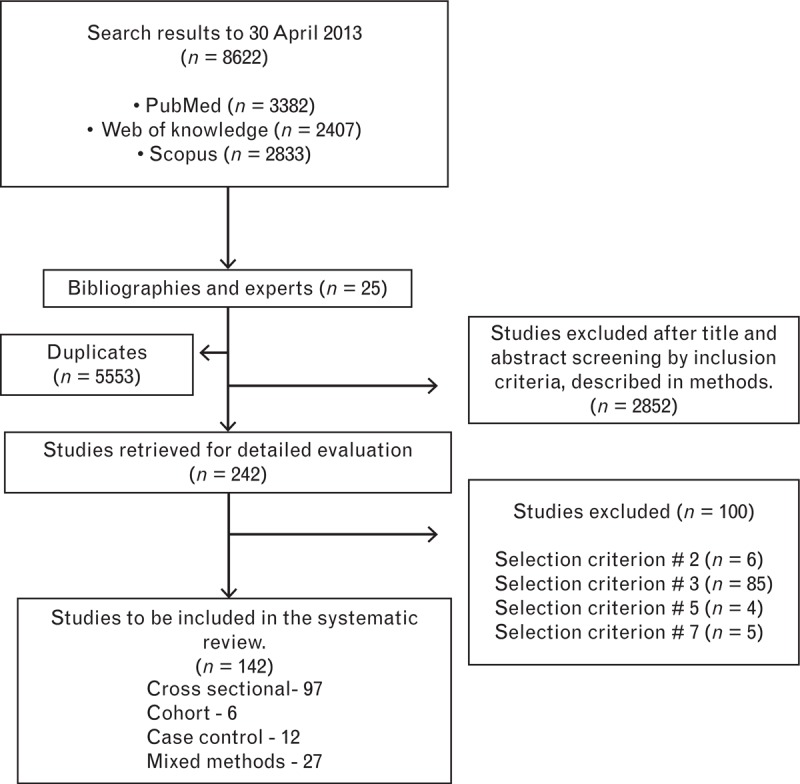
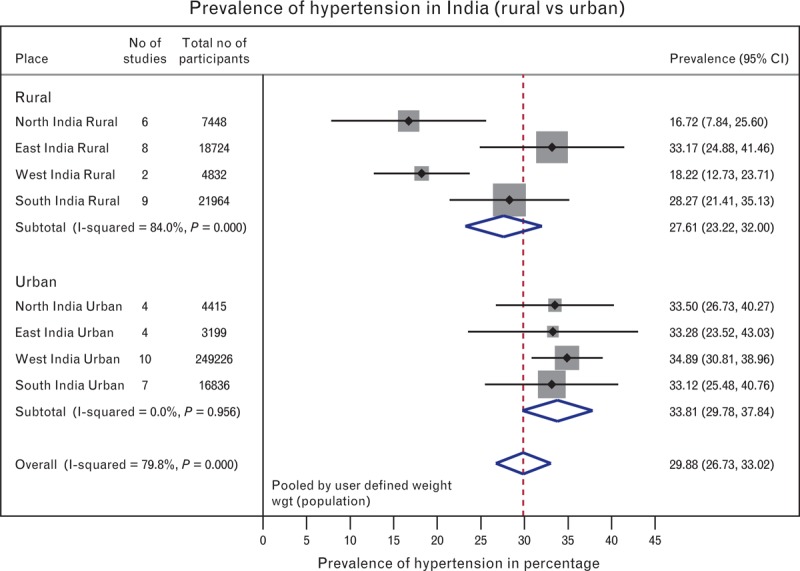
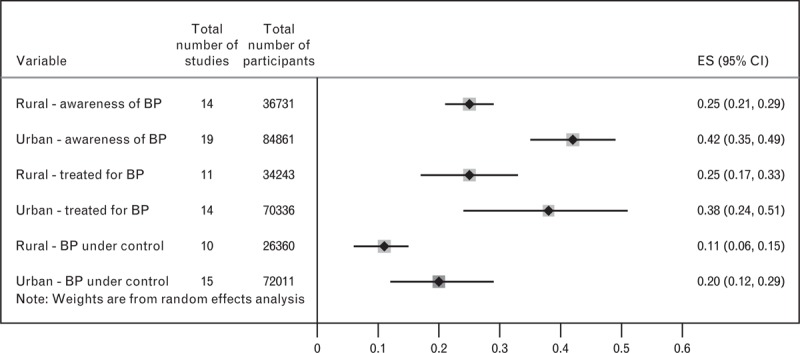
BACKGROUND: A region-specific (urban and rural parts of north, east, west, and south India) systematic review and meta-analysis of the prevalence, awareness, and control of hypertension among Indian patients have not been done before. METHODS: Medline, Web of Science, and Scopus databases from 1950 to 30 April 2013 were searched for 'prevalence, burden, awareness, and control of blood pressure (BP) or hypertension (≥140 SBP and or ≥90 DBP) among Indian adults' (≥18 years). Of the total 3047 articles, 142 were included. RESULTS: Overall prevalence for hypertension in India was 29.8% (95% confidence interval: 26.7-33.0). Significant differences in hypertension prevalence were noted between rural and urban parts [27.6% (23.2-32.0) and 33.8% (29.7-37.8); P = 0.05]. Regional estimates for the prevalence of hypertension were as follows: 14.5% (13.3-15.7), 31.7% (30.2-33.3), 18.1% (16.9-19.2), and 21.1% (20.1-22.0) for rural north, east, west, and south India; and 28.8% (26.9-30.8), 34.5% (32.6-36.5), 35.8% (35.2-36.5), and 31.8% (30.4-33.1) for urban north, east, west, and south India, respectively. Overall estimates for the prevalence of awareness, treatment, and control of BP were 25.3% (21.4-29.3), 25.1% (17.0-33.1), and 10.7% (6.5-15.0) for rural Indians; and 42.0% (35.2-48.9), 37.6% (24.0-51.2), and 20.2% (11.6-28.7) for urban Indians. CONCLUSION: About 33% urban and 25% rural Indians are hypertensive. Of these, 25% rural and 42% urban Indians are aware of their hypertensive status. Only 25% rural and 38% of urban Indians are being treated for hypertension. One-tenth of rural and one-fifth of urban Indian hypertensive population have their BP under control.
Overview
The claims and statistics of this paper haven’t been checked yet.
Free: it reads the open-access text and checks the first 5 claims that cite a source we can check. Create a free account to check every claim.
Integrity signals
Registry
Cites
Statistics
Figures
Verification
Claims the paper makes
The claims and statistics of this paper haven’t been checked yet.
Free: it reads the open-access text and checks the first 5 claims that cite a source we can check. Create a free account to check every claim.
Claims other papers make about this one
Each is checked against this paper’s own text: does it say what the citing paper says it does?
The source backs part of the claim, not all of it — or backs it for a different population, condition or comparison.
In the citing paper
“South Asian populations originating from the Indian subcontinent have a particularly high risk for cardiovascular and metabolic diseases, including CAD and type 2 DM.”
From 2020 International Society of Hypertension Global Hypertension Practice Guidelines (2020) · cites this paper as [141]
Experimental — accuracy not yet measuredThe cited source says what the claim attributes to it.
In the citing paper
“The prevalence of hypertension in rural India is estimated to be 27.6% [31], and the prevalence of type 2 diabetes in rural India is 16% [32], significantly contributing to the burden of disease.”
From Diagnostic Concordance of Telemedicine as Compared With Face-to-Face Care in Primary Health Care Clinics in Rural India: Randomized Crossover Trial (2023) · cites this paper as [31]
Self-check
Percentages, sums and reported differences re-computed from the paper’s own numbers.
The self-check needs the paper’s full text.
Citations
Cites
von Elm, E., Altman, D. G., Egger, M., Pocock, S. J., Gøtzsche, P. C., Vandenbroucke, J. P., & Initiative, F. T. S. (2007) · PLoS Medicine · doi:10.1371/journal.pmed.0040296 · Cited by 23,020
von Elm, E., Altman, D. G., Egger, M., Pocock, S. J., Gøtzsche, P. C., & Vandenbroucke, J. P. (2008) · Journal of Clinical Epidemiology · doi:10.1016/j.jclinepi.2007.11.008 · Cited by 17,893
von Elm, E., Altman, D. G., Egger, M., Pocock, S. J., Gøtzsche, P. C., Vandenbroucke, J. P., & Initiative, F. T. S. (2007) · Annals of Internal Medicine · doi:10.7326/0003-4819-147-8-200710160-00010 · Cited by 17,796
Lim, S. S., Vos, T., Flaxman, A. D., Danaei, G., Shibuya, K., Adair-Rohani, H., AlMazroa, M. A., Amann, M., Anderson, H. R., Andrews, K. G., et al. (2012) · The Lancet · doi:10.1016/s0140-6736(12)61766-8 · Cited by 11,805
Vandenbroucke, J. P., von Elm, E., Altman, D. G., Gøtzsche, P. C., Mulrow, C. D., Pocock, S. J., Poole, C., Schlesselman, J. J., Egger, M., & Initiative, F. T. S. (2007) · PLoS Medicine · doi:10.1371/journal.pmed.0040297 · Cited by 8,613 · cited 1×
“Quality scores were defined based on presence of eligibility criterion, sources and methods of selection of participants, reported numbers of outcome events or summary measures, and mentioned limitations of the study [62].”
Global burden of hypertension: analysis of worldwide data
Kearney, P. M., Whelton, M., Reynolds, K., Muntner, P., Whelton, P. K., & He, J. (2005) · The Lancet · doi:10.1016/s0140-6736(05)17741-1 · Cited by 8,594 · cited 3×
“An alarming rise in HTN projected by Global Burden of Hypertension 2005 study, [7] the GBD 2010 study [1] and WHO 2011 NCD India specific data [11] portray a grim picture for the 17.”
BackgroundLopez, A. D., Mathers, C. D., Ezzati, M., Jamison, D. T., & Murray, C. J. (2006) · The Lancet · doi:10.1016/s0140-6736(06)68770-9 · Cited by 5,630
Vandenbroucke, J. P., Elm, E. V., Altman, D. G., Gøtzsche, P. C., Mulrow, C. D., Pocock, S. J., Poole, C., Schlesselman, J. J., Egger, M., & initiative, F. T. S. (2007) · Annals of Internal Medicine · doi:10.7326/0003-4819-147-8-200710160-00010-w1 · Cited by 3,543
The Atlas of Heart Disease and Stroke
Mackay, J., Mensah, G. A., & Mendis, S. (2004) · Medical Entomology and Zoology · Cited by 1,550
Responding to the threat of chronic diseases in India
Srinath Reddy, K., Shah, B., Varghese, C., & Ramadoss, A. (2005) · The Lancet · doi:10.1016/s0140-6736(05)67343-6 · Cited by 728
Research works printed but not linked: 1
- Kaur M Blood pressure trends and hypertension among rural and urban Jat women of Haryana, India. Coll Antropol 2012; 36: 139– 144 22816211
Cited by
Items 101–200 of 787
Patra, S., & Bhise, M. D. (2016) · Journal of Public Health · doi:10.1007/s10389-016-0732-9 · Cited by 42
“…prevalence of smoking is the highest in eastern and southern regions owing to the high prevalence of cardiovascular diseases (Gupta et al. 2012), whereas, the prevalence of overweight/obesity, hypertension and diabetes is the highest in south Indian states (Baruah et al. 2014; Anchala et al. 2014).”
Balouchi, A., Rafsanjani, M. H., Al-Mutawaa, K., Naderifar, M., Rafiemanesh, H., Ebadi, A., Ghezeljeh, T. N., Shahraki-Mohammadi, A., & Al‐Mawali, A. (2021) · Current Problems in Cardiology · doi:10.1016/j.cpcardiol.2021.101069 · Cited by 49
Pediatric hypertension: an updated review
Ashraf, M., Irshad, M., & Parry, N. A. (2020) · Clinical Hypertension · doi:10.1186/s40885-020-00156-w · Cited by 58
Wander, G. S., & Ram, C. V. S. (2018) · Circulation · doi:10.1161/circulationaha.117.032877 · Cited by 39
Chauhan, S., Kumar, S., Patel, R., Simon, D. J., & Kumari, A. (2022) · BMC Geriatrics · doi:10.1186/s12877-022-03481-x · Cited by 53
“Furthermore, regional differences in disease prevalence may be explained by the region’s eating habits and dietary practices, tobacco consumption, and sedentary habits [36].”
BackgroundMillets, milk and maggi: contested processes of the nutrition transition in rural India
Nichols, C. E. (2017) · Agriculture and Human Values · doi:10.1007/s10460-017-9781-0 · Cited by 49
Arya, H., Syed, S. B., Singh, S. S., Ampasala, D. R., & Coumar, M. S. (2017) · Interdisciplinary Sciences Computational Life Sciences · doi:10.1007/s12539-017-0243-6 · Cited by 43
“4 million deaths are due to hypertension alone [9].”
Afsargharehbagh, R., Keikhaie, K. R., Rafiemanesh, H., Balouchi, A., Bouya, S., & Dehghan, B. (2019) · Current Hypertension Reports · doi:10.1007/s11906-019-0933-z · Cited by 42
Singh, P. K., Singh, L., Dubey, R., Singh, S., & Mehrotra, R. (2019) · BMJ Open · doi:10.1136/bmjopen-2018-028426 · Cited by 46
Bhatia, M. R., Kumar, M., Dixit, P., & Dwivedi, L. K. (2021) · Frontiers in Public Health · doi:10.3389/fpubh.2021.766458 · Cited by 38
Adherence to treatment among hypertensives of rural Kerala, India
Balasubramanian, A., Nair, S., Rakesh, P. S., & Leelamoni, K. (2018) · Journal of Family Medicine and Primary Care · doi:10.4103/jfmpc.jfmpc_423_16 · Cited by 46
“6%) are receiving treatment.[3] Studies have shown that only 10.”
BackgroundInfluentialWang, L., Song, L., Liu, B., Zhang, L., Wu, M., Cao, Z., & Wang, Y. (2019) · Current Hypertension Reports · doi:10.1007/s11906-019-0992-1 · Cited by 41
Qualitative Study of Barriers to Adherence to Antihypertensive Medication among Rural Women in India
Gupta, S., Dhamija, J., Mohan, I., & Gupta, R. (2019) · International Journal of Hypertension · doi:10.1155/2019/5749648 · Cited by 50
“High prevalence of hypertension is reported from various regions of India [3].”
Occupational Heat Stress and Kidney Health in Salt Pan Workers
Venugopal, V., Lennqvist, R., Latha, P. K., Shanmugam, R., Krishnamoorthy, M., Selvaraj, N., Balakrishnan, R., Omprashant, R., Purty, A. J., Bazroy, J., et al. (2023) · Kidney International Reports · doi:10.1016/j.ekir.2023.04.011 · Cited by 41
“This is in line with a high prevalence of hypertension in Indian disadvantaged populations.(49) Almost half of the workers had S-Cr values corresponding to eGFR of less than 90 ml/min per 1.”
ResultKanungo, S., Mahapatra, T., Bhowmik, K. K., Saha, J. K., Mahapatra, S. S., Pal, D., Roy, R., Bhadra, U. K., & Sarkar, K. (2016) · Journal of Human Hypertension · doi:10.1038/jhh.2016.30 · Cited by 35
Datta, S. (2016) · Journal of Basic and Clinical Pharmacy · doi:10.4103/0976-0105.195100 · Cited by 47
“[1] The overall prevalence of hypertension in India is estimated at 29%.[2] Cardiovascular diseases are responsible for 1.”
BackgroundDandge, S., Jeemon, P., & Reddy, P. S. (2019) · PLoS ONE · doi:10.1371/journal.pone.0211551 · Cited by 40
Upadhyay, J., S, N. N., Shetty, S., Saoji, A. A., & Yadav, S. S. (2023) · Journal of Ayurveda and Integrative Medicine · doi:10.1016/j.jaim.2023.100774 · Cited by 49
“In this study, following Nadi Shodhana Pranayama was observed to have a significant reduction in the SBP and DBP.”
BackgroundInfluentialHypertension and chronic kidney disease in Asian populations
Teo, B. W., Chan, G. C., Leo, C. C. H., Tay, J. C., Chia, Y. C., Siddique, S., Turana, Y., Chen, C., Cheng, H., Hoshide, S., et al. (2021) · Journal of Clinical Hypertension · doi:10.1111/jch.14188 · Cited by 40
Therapeutic adherence in hypertension: Current evidence and expert opinion from India
Dalal, J. J., Kerkar, P. G., Guha, S., Dasbiswas, A., Sawhney, J. P. S., Sivakadaksham, N., Maddury, S. R., Kumar, A., Chandra, N., Suryaprakash, G., et al. (2021) · Indian Heart Journal · doi:10.1016/j.ihj.2021.09.003 · Cited by 55
Adake, P., Somashekar, H. S., Rafeeq, P. M., Umar, D., Basheer, B., & Baroudi, K. (2015) · Journal of Advanced Pharmaceutical Technology amp Research · doi:10.4103/2231-4040.154543 · Cited by 33
“8% population are suffering from hypertension.[4] Although there is dramatic age‐related increase in the prevalence of hypertension, several important cardiovascular risk factors, particularly obesity, nutrient intake, physical activity, and diabetes also relate to the likelihood of hypertension.”
BackgroundAbariga, S. A., Khachan, H., & Kibria, G. M. A. (2019) · American Journal of Hypertension · doi:10.1093/ajh/hpz181 · Cited by 35
Mahajan, M. U., Naik, N., Jain, K., Patira, N. K., Prasad, S., Mogri, S., Muwonge, R., Lucas, E., Faruq, F., Sankaranarayanan, R., et al. (2019) · Journal of Global Oncology · doi:10.1200/jgo.18.00181 · Cited by 44
“Only a minority of the women who had heard of heart attack or stroke agreed that the diseases could be prevented by controlling high BP. Diabetes as a disease was known to only 43.3% of the younger women and 37.7% of the older women.”
ResultInfluentialEsakkimuthu, S., Mutheeswaran, S., Arvinth, S., Paulraj, M. G., Pandikumar, P., & Savarimuthu Ignacimuthu, S. J. (2016) · Journal of Ethnopharmacology · doi:10.1016/j.jep.2016.04.017 · Cited by 35
Clinical trials in vascular cognitive impairment following SPRINT-MIND: An international perspective
Elahi, F. M., Alladi, S., Black, S. E., Claassen, J. A. H. R., DeCarli, C. S., Hughes, T. M., Moonen, J. E. F., Pajewski, N. M., Price, B. R., Satizábal, C. L., et al. (2023) · Cell Reports Medicine · doi:10.1016/j.xcrm.2023.101089 · Cited by 40
Prevalence and Risk Factors of Hypertension in Myanmar: A Systematic Review and Meta-Analysis
Naing, C. M., & Aung, K. (2014) · Medicine · doi:10.1097/md.0000000000000100 · Cited by 32
Prevalence of coronary heart disease in rural and urban Vellore: A repeat cross-sectional survey
Oommen, A. M., Abraham, V. J., George, K., & Jose, V. J. (2016) · Indian Heart Journal · doi:10.1016/j.ihj.2015.11.015 · Cited by 30
Arora, N. K., Pillai, R. N., Dasgupta, R., & Garg, P. R. (2014) · Annals of the New York Academy of Sciences · doi:10.1111/nyas.12555 · Cited by 34
(2022) · doi:10.2196/preprints.42775 · Cited by 30
Verma, N., Buch, B., Taralekar, R., & Acharya, S. (2023) · JMIR Formative Research · doi:10.2196/42775 · Cited by 30
“6% [31], and the prevalence of type 2 diabetes in rural India is 16% [32], significantly contributing to the burden of disease.”
BackgroundPrevalence of undiagnosed hypertension: a public health challenge
Undavalli, V. K., P., P. M., & Narni, H. (2018) · International Journal of Community Medicine and Public Health · doi:10.18203/2394-6040.ijcmph20180974 · Cited by 29
Predicting mental health using smart-phone usage and sensor data
Thakur, S. S., & Roy, R. B. (2020) · Journal of Ambient Intelligence and Humanized Computing · doi:10.1007/s12652-020-02616-5 · Cited by 37
Thakur, J. S., & Nangia, R. (2022) · Frontiers in Public Health · doi:10.3389/fpubh.2022.768471 · Cited by 31
Singh, A., Gupta, A., Peres, M. A., Watt, R. G., Tsakos, G., & Mathur, M. R. (2015) · Journal of Public Health Dentistry · doi:10.1111/jphd.12136 · Cited by 30
Tablet PC Enabled Body Sensor System for Rural Telehealth Applications
Panicker, N. V., & Kumar, A. S. (2016) · International Journal of Telemedicine and Applications · doi:10.1155/2016/5747961 · Cited by 31
Najafi, F., Pasdar, Y., Shakiba, E., Hamzeh, B., Darbandi, M., Moradinazar, M., Navabi, J., Anvari, B., Saidi, M. R., & Bazargan‐Hejazi, S. (2019) · Journal of Preventive Medicine and Public Health · doi:10.3961/jpmph.18.257 · Cited by 34
“managing it correctly were higher than has been reported in similar previous studies [8,17-19].”
ResultBorah, P. K., Kalita, H. C., Paine, S. K., Khaund, P., Bhattacharjee, C. K., Hazarika, D., Sharma, M., & Mahanta, J. (2017) · Indian Heart Journal · doi:10.1016/j.ihj.2017.08.008 · Cited by 35
Kibria, G. M. A., Swasey, K. K., Sharmeen, A., Sakib, M. N., & Burrowes, V. J. (2018) · Health Science Reports · doi:10.1002/hsr2.83 · Cited by 30
Prevalence of hypertension and prehypertension in schoolchildren from Central India
Bharani, A., Patel, A. S., Sharma, M., Bhagwat, A., Ganguli, N., & Chouhan, D. S. (2019) · Annals of Pediatric Cardiology · doi:10.4103/apc.apc_13_18 · Cited by 28
“[28] There is a high prevalence of hypertension in India affecting one-fourth of adult population.[29] We have, however, not obtained a family history in our cohort and, therefore, do not know if parental hypertension in these children contributed to a higher prevalence of prehypertension and hypertension found in our…”
BackgroundCognitive Function and Cardiometabolic‐Inflammatory Risk Factors Among Older Indians and Americans
Hu, P., Lee, J., Beaumaster, S., Kim, J. K., Dey, S., Weir, D. R., & Crimmins, E. M. (2020) · Journal of the American Geriatrics Society · doi:10.1111/jgs.16734 · Cited by 30
Solanki, D. K., Sakure, A. A., Prakash, S., & Hati, S. (2022) · Journal of Food Science and Technology · doi:10.1007/s13197-022-05357-9 · Cited by 28
“According to a study, about 33% urban and 25% rural Indians are hypertensive (Anchala et al. 2014).”
BackgroundPrevalence of hypertension among Indian adults: Results from the great India blood pressure survey
Ramakrishanan, S., & Gupta, K. (2020) · Indian Heart Journal · doi:10.1016/j.ihj.2020.04.013 · Cited by 27
Suseela, R. P. B., Ambika, R. B., Mohandas, S., Menon, J. C., Numpelil, M., Vasudevan, B. K., Ved, R. R., Danaei, G., & Spiegelman, D. L. (2022) · BMJ Global Health · doi:10.1136/bmjgh-2022-010296 · Cited by 40
Anand, S., Kondal, D., Montez‐Rath, M. E., Zheng, Y., Shivashankar, R., Singh, K., Gupta, P., Gupta, R., Ajay, V. S., Mohan, V., et al. (2017) · PLoS ONE · doi:10.1371/journal.pone.0173554 · Cited by 30
“Clearly a lack of awareness of their condition[27, 28] is a major reason, but even among those with a diagnosis of diabetes or hypertension, there is little understanding of the need for regular medical care[29].”
BackgroundSelf-citationTarget blood pressure and control status in Asia
Chia, Y. C., Kario, K., Turana, Y., Nailes, J. M., Tay, J. C., Siddique, S., Park, S., Shin, J., Buranakitjaroen, P., Chen, C., et al. (2019) · Journal of Clinical Hypertension · doi:10.1111/jch.13714 · Cited by 26
Rauniyar, S. K., Rahman, M. M., Rahman, M. S., Abe, S. K., Nomura, S., & Shibuya, K. (2020) · BMC Public Health · doi:10.1186/s12889-020-09450-6 · Cited by 29
Effect of Aerobic Exercise Training on Blood Pressure in Indians: Systematic Review
Punia, S., Kulandaivelan, S., Singh, V., & Punia, V. (2016) · International Journal of Chronic Diseases · doi:10.1155/2016/1370148 · Cited by 30
“In a meta-analysis of 142 studies from rural and urban populations of India, it was concluded that hypertension is emerging as a major health problem in India [2] and is more in urban than in rural subjects [3] and is associated with a higher risk of developing coronary heart disease (CHD), congestive heart failure, a…”
BackgroundPrevalence and correlates of hypertension in a semi-rural population of Southern India
Singh, M., Kotwal, A., Mittal, C., Babu, S. R. A., Bharti, S., & Ram, C. V. S. (2017) · Journal of Human Hypertension · doi:10.1038/s41371-017-0010-5 · Cited by 26
“BMI and central obesity (waist -hip ratio) have been found to be associated with hypertension in a large number of Indian studies [9].”
BackgroundResultInfluentialJindal, D., Roy, A., Ajay, V. S., Yadav, S., Prabhakaran, D., & Tandon, N. (2019) · Global Heart · doi:10.1016/j.gheart.2019.06.002 · Cited by 27
“2, 2019 June 2019: 165-172 rural India, approximately three-quarters of adults with hypertension never receive treatment, and 90% of individuals receiving treatment for hypertension fail to achieve blood pressure control [4].”
BackgroundSelf-citationHypertension in Rural India: The Contribution of Socioeconomic Position
Thrift, A. G., Ragavan, R. S., Riddell, M. A., Joshi, R., Thankappan, K. R., Chow, C. K., Oldenburg, B. F., Mahal, A. S., Kalyanram, K., Kartik, K., et al. (2020) · Journal of the American Heart Association · doi:10.1161/jaha.119.014486 · Cited by 35
Recent studies on hypertension prevalence and control in India 2023
Gupta, R., Gaur, K., Ahuja, S., & Anjana, R. M. (2024) · Hypertension Research · doi:10.1038/s41440-024-01585-y · Cited by 39
“Variations in the prevalence of hypertension have been reported in earlier meta-analyses as well as in recent national studies from India [9, 11, 12, 26].”
Ram, C. V. S. (2022) · Cardiology and Therapy · doi:10.1007/s40119-022-00276-4 · Cited by 28
“However, the rates of hypertension awareness and treatment control in the country are low [6].”
BackgroundPrevalence and risk factors of hypertension and diabetes in the Katkari tribe of coastal Maharashtra
Deo, M., Pawar, P., Kanetkar, S., & Kakade, S. (2016) · Journal of Postgraduate Medicine · doi:10.4103/0022-3859.194204 · Cited by 25
“[6,7] Meta-analysis of more than 100 publications on the topic done by Anchala et al.”
BackgroundMethodResultLow quality cardiovascular care is important coronary risk factor in India
Gupta, R., Khedar, R. S., Gaur, K., & Xavier, D. (2018) · Indian Heart Journal · doi:10.1016/j.ihj.2018.05.002 · Cited by 29
“m hypertension urban and rural are from a meta-analysis by Anchala R, et al.(34) Data”
BackgroundKibria, G. M. A., Swasey, K. K., Hasan, M. Z., Choudhury, A., Gupta, R. D., Abariga, S. A., Sharmeen, A., & Burrowes, V. J. (2018) · Journal of the American Society of Hypertension · doi:10.1016/j.jash.2018.10.004 · Cited by 28
Kalikar, M. V., Nivangune, K., Dakhale, G. N., Bajait, C. S., Sontakke, S. D., Motghare, V. M., & Budania, R. (2017) · Europe PMC (PubMed Central) · doi:10.4103/jpp.jpp_39_17 · Cited by 24
“[1] The prevalence of hypertension in India is on the rise with 25% of urban and 10% of rural population being affected with it.[2] The purpose of antihypertensive treatment is to reduce morbidity and mortality associated with cardiovascular and cerebrovascular events resulting from hypertension.”
BackgroundDeGennaro, V. A., Malcolm, S., Crompton, L., Vaddiparti, K., Mramba, L. K., Striley, C. W., Cottler, L. B., Taylor, K., & Leverence, R. R. (2018) · BMJ Open · doi:10.1136/bmjopen-2017-020317 · Cited by 24
Venkateshmurthy, N. S., Geldsetzer, P., Jaacks, L. M., & Prabhakaran, D. (2018) · JAMA Internal Medicine · doi:10.1001/jamainternmed.2018.3511 · Cited by 24
Self-citationKumar, R., Kumar, C., Singh, P. K., Singh, L., Barik, A., & Chowdhury, A. (2020) · American Journal of Hypertension · doi:10.1093/ajh/hpaa034 · Cited by 25
Riddell, M. A., Mini, G., Joshi, R., Thrift, A. G., Guggilla, R. K., Evans, R. G., Thankappan, K. R., Chalmers, K., Chow, C. K., Mahal, A. S., et al. (2021) · Frontiers in Medicine · doi:10.3389/fmed.2021.771822 · Cited by 27
“The fidelity of the program and its dose were assessed through (1) meeting reports completed by ASHAs with support from Research Officers (ROs), during and after the community meetings; (2) monitoring and evaluation sheets completed by the ROs, and; (3) meeting attendance and BP/adherence monitoring sheets that were r…”
BackgroundMethodInfluentialKothavale, A., Puri, P., & Sangani, P. G. (2022) · BMC Geriatrics · doi:10.1186/s12877-022-02760-x · Cited by 26
Chakraborty, S., Kumar, R., Biswas, A. K., Barik, A., Gurung, P., & Praveen, D. (2022) · PLoS ONE · doi:10.1371/journal.pone.0264314 · Cited by 28
Dey, S., Mukherjee, A., Pati, M. K., Kar, A., Ramanaik, S., Pujar, A., Malve, V., Mohan, H. L., Jayanna, K., & Swaroop, N. (2022) · Archives of Public Health · doi:10.1186/s13690-022-00996-y · Cited by 42
Noninvasive Blood Pressure Monitoring via a Flexible and Wearable Piezoresistive Sensor
Bijender, Kumar, S., Soni, A., Yadav, R., Singh, S. P., & Kumar, A. (2024) · ACS Omega · doi:10.1021/acsomega.3c04786 · Cited by 28
Riddell, M. A., Joshi, R., Oldenburg, B. F., Chow, C. K., Thankappan, K. R., Mahal, A. S., Thomas, N., Srikanth, V. K., Evans, R. G., Kalyanram, K., et al. (2016) · BMJ Open · doi:10.1136/bmjopen-2016-012404 · Cited by 25
“2%))).(3) With the rapid urbanisation of Strengths and limitations of this study”
Taing, K. Y., Farkouh, M. E., Moineddin, R., Tu, J. V., & Jha, P. (2016) · BMC Cardiovascular Disorders · doi:10.1186/s12872-016-0424-y · Cited by 26
Ana, E., Chamidah, N., Andriani, P. E., & Lestari, B. (2019) · Journal of Physics Conference Series · doi:10.1088/1742-6596/1397/1/012067 · Cited by 23
Tuberculosis and other chronic morbidity profile of sewage workers of Delhi
Chandra, K., & Arora, V. K. (2018) · Indian Journal of Tuberculosis · doi:10.1016/j.ijtb.2018.09.003 · Cited by 22
Yoga Nidra for hypertension: A systematic review and meta-analysis
Ahuja, N., Bhardwaj, P., Pathania, M., Sethi, D., Kumar, A., Parchani, A., Chandel, A., & Phadke, A. (2024) · Journal of Ayurveda and Integrative Medicine · doi:10.1016/j.jaim.2023.100882 · Cited by 39
“In India, the overall prevalence of hypertension is 29.8%, with 27.6% in rural populations and 33.8% in urban [3].”
BackgroundInfluentialSolanki, J. D., Basida, S. D., Mehta, H. B., Panjwani, S. J., & Gadhavi, B. P. (2016) · Indian Heart Journal · doi:10.1016/j.ihj.2016.07.013 · Cited by 24
“Type 2 diabetes mellitus (T2DM) has reached epidemic proportion in India1 and hypertension (HTN) is prevailing in nearly one out of three urban Indian.4 Co-existence of T2DM and 8).”
BackgroundBusingye, D., Arabshahi, S., Evans, R. G., Srikanth, V. K., Kartik, K., Kalyanram, K., Riddell, M. A., Zhu, X., Suresh, O., & Thrift, A. G. (2017) · Journal of Human Hypertension · doi:10.1038/jhh.2016.85 · Cited by 23
Deo, M., Pawar, P., Kanetkar, S., & Kakade, S. (2018) · Journal of Postgraduate Medicine · doi:10.4103/jpgm.jpgm_245_17 · Cited by 22
“[13,21,30] Prevalence of both HTN and diabetes is progressively increasing not only in urban areas but also in the rural population.”
InfluentialKumar, S., Yadav, S., & Kumar, A. (2024) · Sensors & Diagnostics · doi:10.1039/d3sd00201b · Cited by 29
Prevalence, pattern & correlates of hypertension among tribal population of Kashmir, India
Ganie, M., Parvez, T., Viswanath, S., Sreenivas, V., Ramakrishnan, L., Nisar, S., Sahar, T., Robbani, I., Ali, S., Rashid, A., et al. (2021) · The Indian Journal of Medical Research · doi:10.4103/ijmr.ijmr_48_19 · Cited by 21
Longkumer, I., Yadav, S., Rajkumari, S., & Saraswathy, K. N. (2023) · Scientific Reports · doi:10.1038/s41598-023-37082-4 · Cited by 37
Joseph, P. G., Gupta, R., & Yusuf, S. (2017) · Elsevier eBooks · doi:10.1016/b978-0-323-42973-3.00004-4 · Cited by 23
Jose, A. P., & Prabhakaran, D. (2019) · The Indian Journal of Medical Research · doi:10.4103/ijmr.ijmr_549_19 · Cited by 21
Self-citationControl of hypertension among teachers in schools in Kerala (CHATS-K), India
Mini, G., Sarma, P. S., PRIYA, C. S. T., & Thankappan, K. R. (2020) · Indian Heart Journal · doi:10.1016/j.ihj.2020.06.005 · Cited by 23
Parashar, A., Willeboordse, M., Gupta, A. K., & van Schayck, O. C. P. (2022) · Contemporary Clinical Trials · doi:10.1016/j.cct.2022.106675 · Cited by 20
Krishnamoorthy, Y., Rajaa, S., Sulgante, S., Chinnakali, P., Jaswal, N., & Goel, S. (2022) · Journal of Public Health · doi:10.1093/pubmed/fdac006 · Cited by 24
Singh, S. K., Chauhan, K., & Puri, P. (2023) · BMC Women s Health · doi:10.1186/s12905-023-02171-z · Cited by 24
Hypertension in a Brazilian Urban Slum Population
Pau da Lima Urban Health Team, Unger, A., Felzemburgh, R. D. M., Snyder, R. E., Ribeiro, G. S., Mohr, S., Costa, V. B. A., Melendez, A. X. T. O., Reis, R. B., Santana, F. S., et al. (2015) · Journal of Urban Health · doi:10.1007/s11524-015-9956-1 · Cited by 26
Marak, B., Kaur, P., Rao, S. R., & Selvaraju, S. (2016) · Indian Journal of Tuberculosis · doi:10.1016/j.ijtb.2015.07.018 · Cited by 21
“India has rising burden of non-communicable diseases (NCDs), with hypertension and diabetes being two highly prevalent NCDs.(4,5) There are no data on the prevalence of risk behaviours and NCD comorbidities among TB patients in the tribal populations of the northeastern region of India.”
BackgroundRana, G., Yadav, S., Joshi, S., & Saraswathy, K. N. (2017) · Journal of Community Genetics · doi:10.1007/s12687-017-0321-9 · Cited by 21
Dubé, L., Webb, P., Arora, N. K., & Pingali, P. (2014) · Annals of the New York Academy of Sciences · doi:10.1111/nyas.12602 · Cited by 29
Nayak, D., Nahar, K., Bhalerao, R., Kaur, L., Parveen, T., Bhalla, R., Michael, J., Sharma, S., Singh, P., Jainab, A., et al. (2022) · Homeopathy · doi:10.1055/s-0042-1745755 · Cited by 21
Anupama, Y. J., Hegde, S. N., Uma, G., & Patil, M. (2016) · Journal of Human Hypertension · doi:10.1038/jhh.2016.81 · Cited by 20
Indian chronic kidney disease study: Design and methods
Kumar, V., Yadav, A. K., Gang, S. D., John, O., Modi, G. K., Ojha, J. P., Pandey, R. P., Parameswaran, S., Prasad, N., Sahay, M., et al. (2016) · Nephrology · doi:10.1111/nep.12789 · Cited by 19
“Projected epidemiologic transitions like aging, urbanization and increase in prevalence of diabetes and hypertension are likely to worsen the CKD burden.(3,5,6) While diabetes is the most frequent cause of CKD, the cause cannot be established in a significant proportion of cases, calling into question the appropriaten…”
BackgroundSankaran, S., Ravi, P. S., Wu, Y. E., Shanabogue, S., Ashok, S., Agnew, K. E., Fang, M. C., Khanna, R., Dandu, M., & Harrison, J. D. (2017) · Global Health Science and Practice · doi:10.9745/ghsp-d-17-00192 · Cited by 22
“population,(13) and considerably higher than those found in samples of the general Indian population, which are approximately 10% and 20% for rural and urban populations, respectively.(14) During one feedback session, a CHW stated, "people inmy village respectme now because they know I have knowledge.”
BackgroundChaudhary, P., Goyal, A., Goel, S. K., Kumar, A., Chaudhary, S., Keshri, S. K., & Subhedar, R. (2021) · Sleep Medicine · doi:10.1016/j.sleep.2020.12.042 · Cited by 25
Jamthikar, A. D., Gupta, D., Khanna, N. N., Araki, T., Saba, L., Nicolaides, A. N., Sharma, A., Omerzu, T., Suri, H. S., Gupta, A. K., et al. (2020) · Elsevier eBooks · doi:10.1016/b978-0-12-819445-4.00015-1 · Cited by 18
Ross, S., Chadha, K., Mishra, S., Lewington, S., Shepperd, S., Gathani, T., collaborators, O. B. O. T. N. S., Albert, S., Bhatnagar, A., Chadha, K., et al. (2022) · BMC Public Health · doi:10.1186/s12889-022-13818-1 · Cited by 17
Kayaroganam, R., Sarkar, S., Satheesh, S., Tamilmani, S., Sivanantham, P., & Kar, S. S. (2022) · Asian Nursing Research · doi:10.1016/j.anr.2022.07.001 · Cited by 17
Babu, B. V., Hazarika, C., Raina, S. K., Masoodi, S. R., Basappa, Y. C., Thomas, N., Kerketta, A. S., & Jebasingh, F. (2023) · Journal of Racial and Ethnic Health Disparities · doi:10.1007/s40615-023-01817-w · Cited by 18
Systemic hypertension and non-cardiac surgery
Misra, S. (2017) · Indian Journal of Anaesthesia · doi:10.4103/ija.ija_377_17 · Cited by 25
“6% in the rural population.[3] Hypertension being mostly asymptomatic, there is an increased probability of diagnosing it during a routine pre-operative assessment.”
BackgroundKnowledge, attitudes and practices related to dietary salt intake among adults in North India
Garg, V., Shivashankar, R., Kondal, D., Ghosh, S., Khandelwal, S., Gupta, R., Krishnan, A., Amarchand, R., Prabhakaran, D., & Mohan, S. (2018) · Public Health Nutrition · doi:10.1017/s1368980018003518 · Cited by 19
“Conservative estimates suggest that one in four adults in urban India and one in five adults in rural India have hypertension((4)).”
BackgroundSelf-citationTalukdar, D., Tripathi, M., Tripathi, V., & Teelucksingh, S. (2020) · Journal of Human Hypertension · doi:10.1038/s41371-020-0384-7 · Cited by 17
RetractedProfile of coronary artery disease in indian rural youth (< 35 yrs)
Patil, R., Shetty, L. H., Krishnan, S., Trivedi, A. S., Raghu, T. R., & Manjunath, C. N. (2020) · Indian Heart Journal · doi:10.1016/j.ihj.2020.08.002 · Cited by 17
Stroke Awareness among Elderly Hypertensives in a Rural Area of Bangalore District, India
Bhat, V., Thanmayi, G. S., & Kasthuri, A. (2020) · Journal of Stroke and Cerebrovascular Diseases · doi:10.1016/j.jstrokecerebrovasdis.2020.105467 · Cited by 17
Metadata
- Authors
- Anchala, R., Kannuri, N. K., Pant, H., Khan, H., Franco, O. H., Di Angelantonio, E., & Prabhakaran, D.
- Affiliations
- University of Cambridge (GB)
- Public Health Foundation (US)
- Erasmus MC (NL)
- Corresponding author
- Anchala, Raghupathy
- Venue
- Journal of Hypertension
- Published
- 2014-06
- Volume
- 32
- Issue
- 6
- Pages
- 1170-1177
- ISSN
- 0263-6352 (ISSN-L)
- PMC
- PMC4011565
- OpenAlex
- W2028825584
- Semantic Scholar
- 8a62255c3f7b79f8f2a7a97f53b750141021c8c7
- Cited by
- 782
- References
- 76
- Citations by year
- 2026: 45 · 2025: 67 · 2024: 80 · 2023: 97 · 2022: 103 · 2021: 79 · 2020: 70 · 2019: 65 · 2018: 52 · 2017: 49 · 2016: 55 · 2015: 14 · 2014: 6
- FWCI
- 6.66
- Type
- journal article
- Language
- en
- Open access
- hybrid
- doi.org
- Licence
- cc-by-nc-nd
- Locations
- Journal of Hypertension (publishedVersion, cc-by-nc-nd)
- Europe PMC (PubMed Central) (publishedVersion, cc-by-nc-nd)
- PubMed Central (publishedVersion, cc-by-nc-nd)
- PubMed (publishedVersion)
- EUR Research Repository (Erasmus University Rotterdam) (publishedVersion)
- EUR Research Repository (Erasmus University Rotterdam) (submittedVersion)
- RePub (Erasmus University Rotterdam) (submittedVersion, other-oa)
- Funders
- Wellcome Trust (084754)
- National Institute for Health and Care Research (NF-SI-0512-10165)
- British Heart Foundation (RG/08/014/24067)
- Medical Research Council (MR/L003120/1)
- Topics
- Health Sciences › Medicine › Cardiology and Cardiovascular Medicine › Blood Pressure and Hypertension Studies
- Health Sciences › Nursing › Nutrition and Dietetics › Sodium Intake and Health
- Health Sciences › Medicine › Cardiology and Cardiovascular Medicine › Cardiovascular Health and Risk Factors
- Keywords
- hypertension, hypertension prevalence, hypertension awareness, hypertension control, blood pressure, urban-rural differences, regional variation, India
- MeSH terms
- Attitude to Health, Blood Pressure, Geography, Humans, Hypertension, India, Risk Factors, Rural Population, Urban Population, Reproducibility of Results, Prevalence, Asian People
About these checks
Registry, retraction, Cites and statistics results are computed, not judged, with one exception: a printed reference that no index lists is read once by a model before it counts as a citation error. Claims are extracted by a model and kept only when their quote appears verbatim in the text; each cited source is then checked, with a model’s help, for whether it says what the claim relies on. Those verdicts can be wrong — read the claim’s quote and the cited source before relying on one.
Statistics and arithmetic are recomputed, not judged.
Confidence bands are shown only for fields calibrated on our annotated test set. None is calibrated yet, so no band is shown.
What counts as a claim ›How we measure confidence ›How we check this ›
Are you an author, or do you see a problem with this page? Request a review
Data sources
Bibliographic data: Semantic Scholar, OpenAlex, Crossref.
Contains information from the Semantic Scholar Academic Graph Datasets, made available under the ODC Attribution License (ODC-BY 1.0).
Semantic Scholar’s data is described in: Kinney, R., et al. (2023). The Semantic Scholar Open Data Platform. arXiv:2301.10140.
