

Hypertension in India: a systematic review and meta-analysis of prevalence, awareness, and control of hypertension
Open accessThe DOI matches its Crossref record; 72 of the 76 references it cites were found in a registry or an index.
Abstract
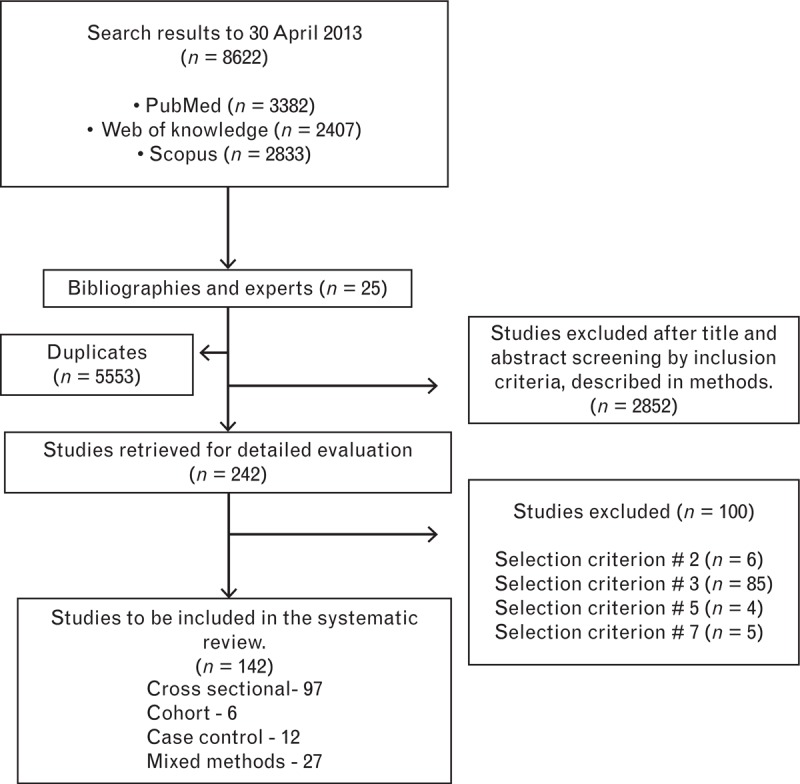
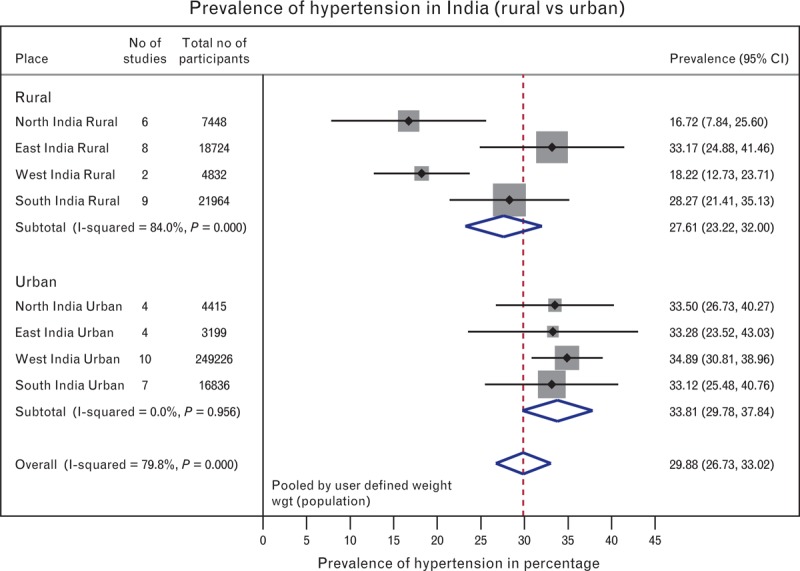
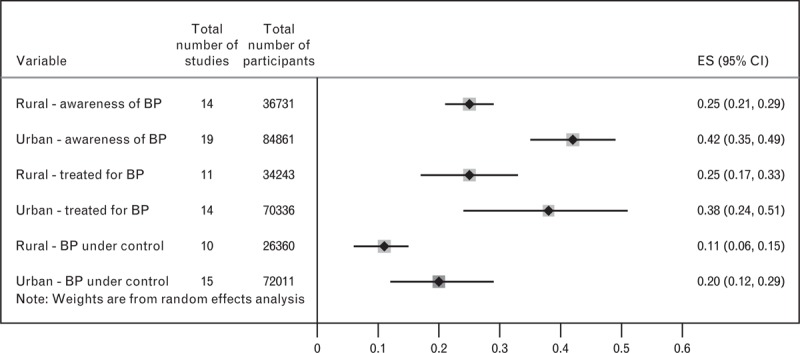
BACKGROUND: A region-specific (urban and rural parts of north, east, west, and south India) systematic review and meta-analysis of the prevalence, awareness, and control of hypertension among Indian patients have not been done before. METHODS: Medline, Web of Science, and Scopus databases from 1950 to 30 April 2013 were searched for 'prevalence, burden, awareness, and control of blood pressure (BP) or hypertension (≥140 SBP and or ≥90 DBP) among Indian adults' (≥18 years). Of the total 3047 articles, 142 were included. RESULTS: Overall prevalence for hypertension in India was 29.8% (95% confidence interval: 26.7-33.0). Significant differences in hypertension prevalence were noted between rural and urban parts [27.6% (23.2-32.0) and 33.8% (29.7-37.8); P = 0.05]. Regional estimates for the prevalence of hypertension were as follows: 14.5% (13.3-15.7), 31.7% (30.2-33.3), 18.1% (16.9-19.2), and 21.1% (20.1-22.0) for rural north, east, west, and south India; and 28.8% (26.9-30.8), 34.5% (32.6-36.5), 35.8% (35.2-36.5), and 31.8% (30.4-33.1) for urban north, east, west, and south India, respectively. Overall estimates for the prevalence of awareness, treatment, and control of BP were 25.3% (21.4-29.3), 25.1% (17.0-33.1), and 10.7% (6.5-15.0) for rural Indians; and 42.0% (35.2-48.9), 37.6% (24.0-51.2), and 20.2% (11.6-28.7) for urban Indians. CONCLUSION: About 33% urban and 25% rural Indians are hypertensive. Of these, 25% rural and 42% urban Indians are aware of their hypertensive status. Only 25% rural and 38% of urban Indians are being treated for hypertension. One-tenth of rural and one-fifth of urban Indian hypertensive population have their BP under control.
Overview
The claims and statistics of this paper haven’t been checked yet.
Free: it reads the open-access text and checks the first 5 claims that cite a source we can check. Create a free account to check every claim.
Integrity signals
Registry
Cites
Statistics
Figures
Verification
Claims the paper makes
The claims and statistics of this paper haven’t been checked yet.
Free: it reads the open-access text and checks the first 5 claims that cite a source we can check. Create a free account to check every claim.
Claims other papers make about this one
Each is checked against this paper’s own text: does it say what the citing paper says it does?
The source backs part of the claim, not all of it — or backs it for a different population, condition or comparison.
In the citing paper
“South Asian populations originating from the Indian subcontinent have a particularly high risk for cardiovascular and metabolic diseases, including CAD and type 2 DM.”
From 2020 International Society of Hypertension Global Hypertension Practice Guidelines (2020) · cites this paper as [141]
Experimental — accuracy not yet measuredThe cited source says what the claim attributes to it.
In the citing paper
“The prevalence of hypertension in rural India is estimated to be 27.6% [31], and the prevalence of type 2 diabetes in rural India is 16% [32], significantly contributing to the burden of disease.”
From Diagnostic Concordance of Telemedicine as Compared With Face-to-Face Care in Primary Health Care Clinics in Rural India: Randomized Crossover Trial (2023) · cites this paper as [31]
Self-check
Percentages, sums and reported differences re-computed from the paper’s own numbers.
The self-check needs the paper’s full text.
Citations
Cites
von Elm, E., Altman, D. G., Egger, M., Pocock, S. J., Gøtzsche, P. C., Vandenbroucke, J. P., & Initiative, F. T. S. (2007) · PLoS Medicine · doi:10.1371/journal.pmed.0040296 · Cited by 23,020
von Elm, E., Altman, D. G., Egger, M., Pocock, S. J., Gøtzsche, P. C., & Vandenbroucke, J. P. (2008) · Journal of Clinical Epidemiology · doi:10.1016/j.jclinepi.2007.11.008 · Cited by 17,893
von Elm, E., Altman, D. G., Egger, M., Pocock, S. J., Gøtzsche, P. C., Vandenbroucke, J. P., & Initiative, F. T. S. (2007) · Annals of Internal Medicine · doi:10.7326/0003-4819-147-8-200710160-00010 · Cited by 17,796
Lim, S. S., Vos, T., Flaxman, A. D., Danaei, G., Shibuya, K., Adair-Rohani, H., AlMazroa, M. A., Amann, M., Anderson, H. R., Andrews, K. G., et al. (2012) · The Lancet · doi:10.1016/s0140-6736(12)61766-8 · Cited by 11,805
Vandenbroucke, J. P., von Elm, E., Altman, D. G., Gøtzsche, P. C., Mulrow, C. D., Pocock, S. J., Poole, C., Schlesselman, J. J., Egger, M., & Initiative, F. T. S. (2007) · PLoS Medicine · doi:10.1371/journal.pmed.0040297 · Cited by 8,613 · cited 1×
“Quality scores were defined based on presence of eligibility criterion, sources and methods of selection of participants, reported numbers of outcome events or summary measures, and mentioned limitations of the study [62].”
Global burden of hypertension: analysis of worldwide data
Kearney, P. M., Whelton, M., Reynolds, K., Muntner, P., Whelton, P. K., & He, J. (2005) · The Lancet · doi:10.1016/s0140-6736(05)17741-1 · Cited by 8,594 · cited 3×
“An alarming rise in HTN projected by Global Burden of Hypertension 2005 study, [7] the GBD 2010 study [1] and WHO 2011 NCD India specific data [11] portray a grim picture for the 17.”
BackgroundLopez, A. D., Mathers, C. D., Ezzati, M., Jamison, D. T., & Murray, C. J. (2006) · The Lancet · doi:10.1016/s0140-6736(06)68770-9 · Cited by 5,630
Vandenbroucke, J. P., Elm, E. V., Altman, D. G., Gøtzsche, P. C., Mulrow, C. D., Pocock, S. J., Poole, C., Schlesselman, J. J., Egger, M., & initiative, F. T. S. (2007) · Annals of Internal Medicine · doi:10.7326/0003-4819-147-8-200710160-00010-w1 · Cited by 3,543
The Atlas of Heart Disease and Stroke
Mackay, J., Mensah, G. A., & Mendis, S. (2004) · Medical Entomology and Zoology · Cited by 1,550
Responding to the threat of chronic diseases in India
Srinath Reddy, K., Shah, B., Varghese, C., & Ramadoss, A. (2005) · The Lancet · doi:10.1016/s0140-6736(05)67343-6 · Cited by 728
Research works printed but not linked: 1
- Kaur M Blood pressure trends and hypertension among rural and urban Jat women of Haryana, India. Coll Antropol 2012; 36: 139– 144 22816211
Cited by
Items 501–600 of 787
GARG, A., Murphy, A., Krishna, A., Sahoo, S. K., Huffman, M. D., Kishore, S. P., & Shivashankar, R. (2023) · The National Medical Journal of India · doi:10.25259/nmji_35_6_357 · Cited by 3
Parmadiati, A. E., Mahdani, F. Y., Ernawati, D. S., Ayuningtyas, N. F., Surboyo, M. D. C., Pratiwi, A. S., Marsetyo, R. I., Inastu, C. R., Suryanijaya, V. E., & Fitri, A. R. (2023) · Journal of Health and Allied Sciences NU · doi:10.1055/s-0043-1776282 · Cited by 2
“11 In this study, among 401 elderly who participated, a total of 147 elderly (36.65”
BackgroundInfluentialRoomi, M. H. A. A., Srivastava, A., Girdhar, N., Jha, C., & Thakur, S. (2024) · Cureus · doi:10.7759/cureus.51667 · Cited by 4
Jambarsang, S., Soodejani, M. T., TATE, R. B., & Sefidkar, R. (2024) · Health Science Reports · doi:10.1002/hsr2.1897 · Cited by 1
Agrawal, P., Patrick, S., Thomas, M., Gupta, D., Matreja, P. S., Singh, P., & Zafar, S. (2024) · Drugs in Context · doi:10.7573/dic.2024-5-2 · Cited by 5
Expert Opinion on the Role of Sacubitril/Valsartan in the Management of Hypertension in India
Jadhav, U., Ray, S., Unni, T. G., Sawhney, J. P. S., Mehta, A., Guha, S., Karnik, R. D., Desai, B., Khan, A., Patel, K. P., et al. (2024) · Cardiology and Therapy · doi:10.1007/s40119-024-00390-5 · Cited by 3
Jadhav, U., Solanki, D., Kumar, S., Hazra, P. K., Alexander, T., Gupta, A., Ghatge, S., & Revankar, S. Y. (2024) · Cureus · doi:10.7759/cureus.74115 · Cited by 2
Unravelling prevalence of metabolic syndrome in Baiga tribe of Dindori district of central India
Shrivastava, S., Singh, K., Kavishwar, A., Kashyap, T., Golhani, V., Patkar, S., Kaur, H., & Chakma, T. (2024) · Clinical Epidemiology and Global Health · doi:10.1016/j.cegh.2024.101868 · Cited by 3
Decoding morbidity patterns in ASHA workers of Vadodara, Gujarat – A cross-sectional study
Chauhan, G., Pankaj, N., Dhakate, B. V., Gadhavi, K., & Pandit, N. B. (2024) · Journal of Family Medicine and Primary Care · doi:10.4103/jfmpc.jfmpc_119_24 · Cited by 3
“[23] found that 12.2% of research participants had hypertension, which was the most common chronic condition.”
InfluentialYadav, B., Rao, B., Narang, R., Jameela, S., Khanduri, S., Sharma, S., Dinesh, D., Srivastava, A., Bhardwaj, R., Gupta, B., et al. (2025) · BMC Complementary Medicine and Therapies · doi:10.1186/s12906-025-04802-4 · Cited by 2
“India harbors 29.8% hypertension patients with significant difference between rural and urban parts [2].”
InfluentialIn vitro, ex vivo and in vivo studies on anti-hypertensive-loaded transdermal and buccal patches
Majee, S. B., Gupti, S., Mishra, T., & Bera, R. (2025) · Journal of Drug Delivery and Therapeutics · doi:10.22270/jddt.v15i3.7044 · Cited by 2
“These are calcium channel blockers, angiotensin-converting enzyme inhibitors, beta-blockers, diuretics, alpha-blockers, and alpha agonists 5 .”
Chattopadhyay, A., Dey, C., & Mukherjee, S. (2025) · Springer eBooks · doi:10.1007/978-981-96-4379-0_1 · Cited by 4
Mandal, B., & Pradhan, K. C. (2025) · BMC Public Health · doi:10.1186/s12889-025-22267-5 · Cited by 7
Srikasem, S., Seephom, S., Viriyopase, A., Phutrakool, P., Khowinthaseth, S., Narajeenron, K., & ER-VIPE Study Group (2025) · JMIR Medical Education · doi:10.2196/70726 · Cited by 11
“These conditions contribute to a range of physical and mental health issues, including fatigue, anxiety, social isolation, depression, and an elevated risk of suicide [22,23].”
Gupta, R. D., Talukder, A., Haider, S. S., & Kibria, G. M. A. (2020) · Journal of Biosocial Science · doi:10.1017/s0021932020000346 · Cited by 2
Khan, M. Y., Pandit, S., Dalal, J. J., Bansal, S., Iyengar, S. S., Karnik, R. D., Khanna, U. B., Mane, A., Mehta, S. C., & Shah, S. P. (2021) · PubMed · Cited by 2
Dietary lipids and hypertension
Hu, X., & Yang, B. (2022) · Elsevier eBooks · doi:10.1016/b978-0-12-823914-8.00016-1 · Cited by 2
Protein creatinine index: A possible predictor of nephropathy in hypertensives, in Northern India
Ahsan, A., Manna, K., Yadav, G. S., Moinuddin, A., Ahmad, A., Gupta, R. C., & Alam, S. (2016) · Clinica Chimica Acta · doi:10.1016/j.cca.2016.06.017 · Cited by 2
Hypertension in Latin/Hispanic Population
Ruilope, L. M., Banegas, J. R., & Ruiz‐Hurtado, G. (2017) · Elsevier eBooks · doi:10.1016/b978-0-323-42973-3.00002-0 · Cited by 2
Bhore, A., Khandare, K., & Bansod, K. (2019) · International Journal of Research in Medical Sciences · doi:10.18203/2320-6012.ijrms20191299 · Cited by 2
“Despite availability of multiple effective antihypertensive drugs, control of HTN remains poor.(7) Therefore, assessment of drug prescribing pattern is necessary to ascertain that the current trends are according to guideline recommendations.”
BackgroundDhakal, M., & Dhakal, O. P. (2017) · International Journal of Medical Research and Review · doi:10.17511/ijmrr.2017.i04.08 · Cited by 2
Hypertension and Size of Aortic Root – Cause-and-Effect Relationship
Singh, V. P., Wander, G. S., Mohan, B., Aslam, N., Tandon, R., Chhabra, S. T., Singh, B., & Goyal, A. (2021) · Journal of Indian College of Cardiology · doi:10.4103/jicc.jicc_52_20 · Cited by 2
Managing cardiovascular disease risk in South Asian kidney transplant recipients
Prasad, G. V. R., & Bhamidi, V. (2021) · World Journal of Transplantation · doi:10.5500/wjt.v11.i6.147 · Cited by 4
Gender Heterogeneity in Self-Reported HypertensionPreprint
Bonsang, É., Caroli, È., & Garrouste, C. (2021) · SSRN Electronic Journal · doi:10.1016/j.ehb.2021.101071 · Cited by 5
Sukumar, G. M., Dagar, V., Kupatira, K., Banandur, P. S., & Gururaj, G. (2022) · Indian Journal of Occupational and Environmental Medicine · doi:10.4103/ijoem.ijoem_307_21 · Cited by 2
“[4,20] In a crude manner, we could opine that the prevalence observed in our study is nearly similar to the prevalence of hypertension among the adult general population.”
Kumar, V. M., MADHU, Y., Monica, N. S., SUVID, L., & Grace, N. S. (2022) · International Journal of Pharmacy and Pharmaceutical Sciences · doi:10.22159/ijpps.2022v14i11.46070 · Cited by 2
Prevalence and predictors of medication nonadherence among hypertensive patients
Sharma, D., Goel, N., Lehl, S. S., Walia, D., Puri, S., Shukla, K., & Mishra, S. (2022) · International Journal of Noncommunicable Diseases · doi:10.4103/jncd.jncd_11_22 · Cited by 3
Kumar, S., Bijender, Soni, A., Yadav, S., & Kumar, A. (2023) · Biomedical Engineering Advances · doi:10.1016/j.bea.2023.100100 · Cited by 2
Mukhopadhyay, P., De, M., Lahiri, S., Sarkar, M., & Haldar, A. (2023) · Journal of Family Medicine and Primary Care · doi:10.4103/jfmpc.jfmpc_2435_22 · Cited by 2
“[1,2] Currently, cardiovascular diseases and diabetes together comprise almost one‑fourth of all leading causes of mortality in India.”
BackgroundRanasinghe, P. D., Manchanayake, M., Perera, T., Liyanage, S., & Webb, D. J. (2024) · Journal of Hypertension · doi:10.1097/hjh.0000000000003952 · Cited by 3
“Uncontrolled HTN is alarmingly Asian countries like Bangladesh, Pakistan, Sri Lanka [20], Nepal [21], and India [22].”
Real time monitoring of vital signals through telemedicine for community healthcare
Panicker, N. V., & Sukesh Kumar, A. (2015) · International Conference on Control, Communication and Computing (ICCC) · doi:10.1109/iccc.2015.7432921 · Cited by 3
“In an analysis of hypertension prevalence in India reveals that 33 % of urban and 25% rural Indians are hypertensive [4].”
BackgroundRole of Stress in Newly Detected Type 2 Diabetes Mellitus and Hypertension
Kaur, B., & Bedi, U. (2017) · International Journal of Medical and Dental Sciences · doi:10.18311/ijmds/2017/18838 · Cited by 2
Awareness and practice of aerobic exercise and yoga among hypertensive patients in Anand city
Vaghela, N., Mishra, D. G., Mehta, J. N., Punjabi, H., Patel, H., & Sanchala, I. (2019) · Journal of Education and Health Promotion · doi:10.4103/jehp.jehp_146_18 · Cited by 2
“[1] In 2010, hypertension was considered as the third most common risk factor for burden of disease in South Asia and was the third “killer” disease leading to one in every eight deaths globally.[2,3] The World Health Statistics 2012 report depicted that 23.”
BackgroundComputational study of ACE and AGT gene of RAAS pathway
Nisha, N., Kaur, S., Kaur, S., Kumar, S., Galhna, K. K., & Kaur, K. (2018) · World News of Natural Sciences · Cited by 2
Bhajni, E., Sehgal, V. K., Kumar, A., & Sehgal, A. (2020) · International Journal of Medical and Dental Sciences · doi:10.18311/ijmds/2020/24723 · Cited by 3
Brar, I. (2014) · UWSpace (University of Waterloo) · Cited by 4
Saradamma, J. C. N., Kottarath, A. T., Saleem, A., Jaya, A. T., & Thaj, A. (2019) · Journal of Evidence Based Medicine and Healthcare · doi:10.18410/jebmh/2019/156 · Cited by 1
Aydoğan, Ü., Doğaner, Y. Ç., Ebiloglu, A., Gök, D. E., Cirpan, E., & Sağlam, K. (2019) · Sao Paulo Medical Journal · doi:10.1590/1516-3180.2019.0111220719 · Cited by 1
Karmakar, N., Nag, K., Ghosh, B., & Datta, A. (2019) · Indian Journal of Community Medicine · doi:10.4103/ijcm.ijcm_386_18 · Cited by 1
“, hypertension either systolic or diastolic or both which is higher than prevalence of hypertension among Indian adults (30%).[19] This might be due to measurement of blood pressure from a single visit usually overestimates hypertension prevalence.”
BackgroundSoman, H., Kumar, M. S. S., Kumar, T. R. N., Radhakrishnan, K., Deepanandan, L., & Kaul, R. N. (2021) · Oral Surgery · doi:10.1111/ors.12637 · Cited by 1
Kori, S., Sahasrabuddhe, A., & Arora, V. K. (2021) · National Journal of Community Medicine · doi:10.5455/njcm.20200106055847 · Cited by 3
Dewan, B., Shinde, S., & Kondekar, S. (2023) · Cardiology and Angiology An International Journal · doi:10.9734/ca/2023/v12i1309 · Cited by 2
Basu, S., Garg, S., Hossain, S., Gupta, D., & Duggal, K. (2022) · International Journal of Noncommunicable Diseases · doi:10.4103/jncd.jncd_83_20 · Cited by 1
Identifying Pre-hypertensives in the Community: At Risk Approach for Prevention of Hypertension
Singh, P., & Saxena, V. (2023) · Indian Journal of Community Health · doi:10.47203/ijch.2023.v35i02.007 · Cited by 1
“7% based on a meta-analysis of prevalence, awareness and control of hypertension.[15] Considering absolute precision of 2% at 5% significance level and 2 design effect, the final sample size was 1900.”
BackgroundEconomic impact of hypertension in Urban chitradurga
Naren, K., Mangasuli, V., Vijeth, S. B., Amrutha, A. M., Ahmed, N., & Sidenu, B. (2022) · MRIMS Journal of Health Sciences · doi:10.4103/mjhs.mjhs_13_22 · Cited by 1
Predictors of Control Status of Hypertension in India: A Systematic Review and Meta-analysis
Sivanantham, P., Anandraj, J., Kumar, S., Essakky, S., Gola, A., & Kar, S. S. (2023) · Journal of Prevention · doi:10.1007/s10935-023-00756-w · Cited by 1
“%) adults in India have HTN, with striking disparities across geographic regions (Anchala et al., 2014).”
InfluentialVasanthakumari, P., Kumarakuru, K., & Yousuff, N. (2023) · Journal of Mid-life Health · doi:10.4103/jmh.jmh_53_23 · Cited by 1
“[12] Anthropometric measurement of the experimental group in both female and male was observed 156.83 ± 10.38 and 164.83 ± 11.8 cm and height and weight was found to be 64.13 ± 8.30 and 74.18 ± 6.32 while control group was found 158.03 ± 10.18 and 168.13 ± 9.28 and height and weight was found 65.52…”
BackgroundInfluentialA Recent Survey on Risk Factors Affecting the Blood Pressure in India
Nimmala, S., Abbineni, S., Ramya, T., Rekha, P. G. V., & Rani, R. U. (2024) · Lecture notes in networks and systems · doi:10.1007/978-981-99-9442-7_6 · Cited by 1
Comorbidities in the Cancer Patient
Dhir, A. A., Tandon, S., Sawant, S. P., Bhaskar, M., Daddi, A., & Iyer, A. (2024) · Springer eBooks · doi:10.1007/978-981-99-3378-5_73 · Cited by 1
Ranjan, A., Agarwal, R., Mudgal, S. K., Kumar, S., & Arnav, A. (2025) · Discover Public Health · doi:10.1186/s12982-025-00547-0 · Cited by 1
“The prevalence of 29% recorded in the US National Health and Nutrition Examination Survey (NHANES) 2015–16 was comparable to this study [20].”
Sushan, A., Mohan, M., Robinson, A., Krishna, A., Kangusamy, B., Muthappan, S., & Abdulkader, R. S. (2025) · Clinical Epidemiology and Global Health · doi:10.1016/j.cegh.2025.102036 · Cited by 1
Changes in Cardiometabolic Risk Factors Over Two Decades in a Rural Population in Western India
Nila, S., Apte, A. A., Kalkonde, Y. V., Aggarwal, D., & Juvekar, S. K. (2025) · Indian Journal of Public Health · doi:10.4103/ijph.ijph_488_24 · Cited by 1
Mondal, A., & Kapoor, R. (2025) · Current Medical Research and Opinion · doi:10.1080/03007995.2025.2536603 · Cited by 1
Singh, M., Shergill, G. S., & Rajlaxmi (2025) · The Journal of Medical Research · doi:10.4103/jmr.jmr_28_25 · Cited by 1
Muthu, S. S., Sukumar, S., Kadavigere, R., Shivashankar, K. N., Vaishali, K., Ramesh Babu, M. G., Palaniswamy, H. P., Pradhan, A., Dkhar, W., Panakkal, N. C., et al. (2025) · Journal of Hypertension · doi:10.1097/hjh.0000000000004150 · Cited by 1
“Hypertension is a significant risk factor for cardiovascular diseases (CVD) and cerebro-vascular diseases, which contribute significantly to premature death [3,4].”
Hemram, A., Chettri, D., & Subba, D. (2025) · Discover Public Health · doi:10.1186/s12982-025-01087-3 · Cited by 1
Sharma, I., Campbell, M. K., Choi, Y., Luginaah, I., Were, J. M., Vargas‐González, J., & Stranges, S. (2025) · BMC Public Health · doi:10.1186/s12889-025-25471-5 · Cited by 1
“…and limited opportunity for recreational facilities and green spaces [25, 28–38] In contrast, several studies from LMICs showed that individuals from the least deprived, or the affluent, areas may experience higher odds of hypertension compared to those living in highly deprived areas [39–41].”
Deshmukh, S., Choudhary, K., Ahmad, A., Reddy, G., Rao, B. C. S., Srikanth, N., & Acharya, R. (2025) · Frontiers in Pharmacology · doi:10.3389/fphar.2025.1695614 · Cited by 1
Suneja, K., Singh, S., Sindhu, S., Singh, S., Kumar, N., Kumar, A., Kumar, S., Yadav, A., Bhagchandani, D., & Sawlani, K. K. (2026) · Cureus · doi:10.7759/cureus.101424 · Cited by 1
“Similar findings, including marked urban-rural differences, have been reported in a systematic review by Anchala et al. [8].”
Ribeiro-Pereira, J. A., de Mello, R. G. B., Piccoli, V., & Calheiros, J. M. (2026) · Revista Portuguesa de Cardiologia · doi:10.1016/j.repc.2025.11.008 · Cited by 1
Khawar, M. B., Maqsood, K., SANG, R., Malik, J., Afzal, A., Saeed, A., Liaqat, F., Naveed, H., Fiaz, A., Muanprasat, C., et al. (2026) · Frontiers in Public Health · doi:10.3389/fpubh.2026.1701954 · Cited by 2
Çelik, M., & Çelik, S. G. (2026) · Applied Psychophysiology and Biofeedback · doi:10.1007/s10484-026-09767-9 · Cited by 1
“Increased heart rates and high blood pressure can lead to more frequent cardiovascular events (Anchala et al., 2014; Zou et al., 2017).”
Reddy, P. S. T. T., Prathipal, M., Vinu, V., Noushad, N., Nair, A., Krishna, D. M., Dinesan, A., Prashanth, V., Thomson, J., Kumar, R., et al. (2026) · Cureus · doi:10.7759/cureus.104899 · Cited by 1
“Despite these efforts, evidence suggests that nearly three-fourths of individuals with hypertension do not seek appropriate care, resulting in preventable complications and increased morbidity [11].”
Vishwambhar, S. M., Gitte, S. V., & Vardhan, V. (2026) · International Journal of Community Medicine and Public Health · doi:10.18203/2394-6040.ijcmph20261421 · Cited by 1
Ganeshkumar, P., Rajagopalan, M., Kriina, M., Somasundaram, J., Kalva, J., Krishna, N. S., Prajitha, K. C., Sait, S., Venkatasamy, V., Venkatesan, S., et al. (2026) · American Journal of Preventive Cardiology · doi:10.1016/j.ajpc.2026.101705 · Cited by 1
“…aware of their hypertension status and the proportion under treatment among those with hypertension; b) the proportion treated and the proportion controlled among individuals aware of their hypertension status, and c) the mean change in systolic and diastolic blood pressure between surveys [15,16].”
InfluentialSaxena, V., Katre, R., & Singh, P. (2026) · Discover Public Health · doi:10.1186/s12982-026-02600-y · Cited by 1
“Based on a meta-analysis of prevalence, awareness, and control of hypertension in India, the sample size was determined using the estimated 10.7% prevalence of managed hypertension among rural Indians [15].”
InfluentialRoads to Health in Nigeria – Understanding the Intersection of Culture and Healing
Ibeneme, S. C., Eni, G. O., & Ezuma, A. D. (2016) · Current Therapeutic Research · doi:10.1016/j.curtheres.2016.05.002 · Cited by 1
Kodali, V. R. R., & Ali, I. (2016) · International Journal of Diabetes in Developing Countries · doi:10.1007/s13410-016-0513-6 · Cited by 1
“The situation in the Indian subcontinent is equally worse [20, 21].”
BackgroundSabale, R. (2016) · Journal of Medical Science And clinical Research · doi:10.18535/jmscr/v4i11.109 · Cited by 1
“Anchala R et al [19] , got the prevalence of hypertension as 33% in urban India.”
BackgroundPunia, S., Кulandaivelan, S., & Punia, V. (2016) · Journal of Exercise Science and Physiotherapy · doi:10.18376/jesp/2016/v12/i2/111261 · Cited by 1
General obesity and Cardiovascular diseases among Gaur Brahmin population of NCR/Delhi
Kumari, S., Sharma, N., Mishra, J., Saraswathy, K. N., Sagar, S., & Mondal, P. R. (2019) · Diabetes & Metabolic Syndrome Clinical Research & Reviews · doi:10.1016/j.dsx.2019.02.013 · Cited by 1
Birwadkar, G., & Ratta, A. K. (2019) · Journal of Evolution of Medical and Dental Sciences · doi:10.14260/jemds/2019/518 · Cited by 1
Eenu, Sheoran, P., & Sarin, J. (2021) · Indian Journal of Forensic Medicine & Toxicology · doi:10.37506/ijfmt.v15i2.14289 · Cited by 1
“managing hypertension among Indians as current rates of awareness, treatment and control of hypertension are very low for those who are on treatment.[2]”
BackgroundHOMOEOPATHY AND METABOLIC SYNDROME
Awasthi, P., Yadav, A. K., Dalmia, A., Sharma, N., & Bhardwaj, P. (2021) · Journal of Emerging Technologies and Innovative Research · Cited by 1
Karmakar, N., Datta, A., & Nag, K. (2021) · Kathmandu University Medical Journal · doi:10.3126/kumj.v19i2.49657 · Cited by 2
Bhat, A., Das, G., Mukherjee, A., Mukherjee, D., Gangopadhyay, G., & Biswas, A. (2022) · Neurology India · doi:10.4103/0028-3886.338653 · Cited by 2
Kamaraj, P., Selvam, J. M., Sivalingam, A., Pal, P., Kasiviswanathan, S., Suresh, A., Selvavinayagam, T. S., & Kaur, P. (2022) · Journal of Public Health and Primary Care · doi:10.4103/jphpc.jphpc_4_22 · Cited by 1
Chopra, H. K., Pancholia, A. K., Desai, B., Sinha, A. K., Dabhade, D. C., & Newale, S. (2022) · Journal of Cardiac Critical Care TSS · doi:10.1055/s-0042-1759804 · Cited by 2
International telehealth implementation—the Indian experience, project CardioGram
Shah, P. (2023) · Elsevier eBooks · doi:10.1016/b978-0-443-15980-0.00008-9 · Cited by 1
Prevalence of hypertension links with body mass index by academic population in Babylon city
Madhi, Z. S., Hasan, M. A., & Almusawi, A. A. H. (2023) · Journal of Advanced Pharmaceutical Technology amp Research · doi:10.4103/japtr.japtr_106_23 · Cited by 1
“In this study, BMI had a significant relationship with hypertension and the same was reported in other studies as well.[7,19,21,23] In this study, we were able to use the ROC curve to determine BMI over 25.”
ResultSharma, A., Basera, D. S., Suri, V., & Singh, S. M. (2023) · Annals of Neurosciences · doi:10.1177/09727531231158451 · Cited by 1
Exercise and Sleep Affect Blood Pressure and Blood Sugar of Hypertensive Patients
Gulia, S., Kalyani, C. V., & Rohilla, K. K. (2023) · Journal of Surgical Specialties and Rural Practice · doi:10.4103/jssrp.jssrp_4_23 · Cited by 1
Reshi, A., Abhijith, Y. V., N., S., Ramesh, A. C., & Narayana Swamy, D. M. (2023) · Apollo Medicine · doi:10.4103/am.am_101_23 · Cited by 1
Sathiyamoorthy, M., Divya, B., Ramadoss, R., Dineshkumar, T., Narayan, M., Vasanthi, V., Rameshkumar, A., & Rajkumar, K. (2024) · Journal of Nature and Science of Medicine · doi:10.4103/jnsm.jnsm_169_23 · Cited by 1
Prevalence of vitamin D deficiency in the hypertensive south Indian population
Balasubramaniyan, J. V., Murthy, J. S., Muralidharan, T. R., Krishnamurthy, P., Durbesula, A. T., & Arul, J. N. (2023) · Romanian Journal of Medical Practice · doi:10.37897/rjmp.2023.4.5 · Cited by 1
Sakthivel, M., Jayaseelan, V., Chinnakali, P., Hamide, A., Surendran, G., & Krishnamoorthy, Y. (2024) · Indian Journal of Community Medicine · doi:10.4103/ijcm.ijcm_583_22 · Cited by 3
“[19] The pooled prevalence of hypertension among people in South India was reported to be around 21-25%, which was also higher than the current study finding.”
ResultBenakattimath, P. M., Prafulla Kumar, D., & Natekar, D. S. (2024) · SSR Institute of International Journal of Life Sciences · doi:10.21276/ssr-iijls.2024.10.2.17 · Cited by 1
“The overall prevalence of hypertension in India is reported as 29.8% [15], with an exceptionally high predominance in Karnataka, which is one of the largest states of southern India [16] .”
BackgroundInfluentialArun, R., Kumar, P., Pradhan, K. B., & Singh, A. (2024) · Indian Journal of Cardiovascular Disease in Women · doi:10.25259/ijcdw_64_2023 · Cited by 1
Stakeholder Analysis for Hypertension Management in the Context of the Indian Public Health System
Ghosh, N., Karthikeyan, V., Das, S., Boro, P., & Chakraborty, S. N. (2023) · Indian Journal of Public Health · doi:10.4103/ijph.ijph_694_23 · Cited by 2
Homeopathy for Hypertension: A Comprehensive Scoping Review of the Current Evidence
Sehrawat, N., Varanasi, R., Dutta, A., Garg, K., Goyal, A., Singh, S., Bhatti, J., Oberai, P., & Nayak, D. (2024) · International Journal of High Dilution Research · doi:10.51910/ijhdr.v23icf.1422 · Cited by 1
Wilson, B., Kosambiya, J. K., & Patni, M. A. (2024) · Indian Journal of Community Medicine · doi:10.4103/ijcm.ijcm_33_24 · Cited by 1
“[16] Another major contributing factor to DM and HTN is education measured by the level of schooling received.”
BackgroundRole of yoga in cardiovascular disease prevention in the Indian population
Suri, P., Khanna, N., & Basu‐Ray, I. (2024) · Elsevier eBooks · doi:10.1016/b978-0-323-99645-7.00007-x · Cited by 1
Poojary, S. N., Kumar, N., Jacob, A. M., Shetty, S., & Kamath, N. (2024) · Journal of Health and Allied Sciences NU · doi:10.1055/s-0044-1801296 · Cited by 1
Ragavee, S., Prashanth, S. N., Priyanka, S., & Maheshkumar, K. (2025) · Journal of Indian System of Medicine · doi:10.4103/jism.jism_44_24 · Cited by 1
Tanmoy, S. A., & Das, A. (2025) · European Journal of Medical and Health Research · doi:10.59324/ejmhr.2025.3(1).21 · Cited by 1
Kulothungan, V., Seenappa, K., & Mohan, R. (2025) · Journal of Human Hypertension · doi:10.1038/s41371-025-01039-z · Cited by 1
“A study conducted by Anchala et al. (2017) found that only 26.4% of adults in India with hypertension were aware of their condition, and among those who were aware, only 32.5% were receiving treatment [20].”
InfluentialGupta, A., & Roy, A. (2017) · Indian Heart Journal · doi:10.1016/j.ihj.2017.05.015 · Cited by 1
“This prevalencewas similar to that reported in the western rural communities in the systematic review.(3) However, this study highlights that the prevalence of hypertension in these areaswas lower than other populations in the same region with similar population demographics.”
BackgroundResultDasbiswas, A., Tamboli, T. J., INGOLE, S. A., Naik, S., & Jain, R. (2017) · Journal of Evidence Based Medicine and Healthcare · doi:10.18410/jebmh/2017/451 · Cited by 1
Roy, S., & Ghosh, J. R. (2017) · Journal of Life Sciences · doi:10.1080/09751270.2017.1336014 · Cited by 1
“The prevalence of hypertension in India is twenty-five percent and ten percent in urban and rural area, respectively (Anchalaa et al. 2014).”
BackgroundA Novel Approach to Predict High Blood Pressure Using ABF Function
Nimmala, S., Yellasiri, R., & Cheruku, R. (2018) · International Journal of Modern Education and Computer Science · doi:10.5815/ijmecs.2018.07.07 · Cited by 1
Metadata
- Authors
- Anchala, R., Kannuri, N. K., Pant, H., Khan, H., Franco, O. H., Di Angelantonio, E., & Prabhakaran, D.
- Affiliations
- University of Cambridge (GB)
- Public Health Foundation (US)
- Erasmus MC (NL)
- Corresponding author
- Anchala, Raghupathy
- Venue
- Journal of Hypertension
- Published
- 2014-06
- Volume
- 32
- Issue
- 6
- Pages
- 1170-1177
- ISSN
- 0263-6352 (ISSN-L)
- PMC
- PMC4011565
- OpenAlex
- W2028825584
- Semantic Scholar
- 8a62255c3f7b79f8f2a7a97f53b750141021c8c7
- Cited by
- 782
- References
- 76
- Citations by year
- 2026: 45 · 2025: 67 · 2024: 80 · 2023: 97 · 2022: 103 · 2021: 79 · 2020: 70 · 2019: 65 · 2018: 52 · 2017: 49 · 2016: 55 · 2015: 14 · 2014: 6
- FWCI
- 6.66
- Type
- journal article
- Language
- en
- Open access
- hybrid
- doi.org
- Licence
- cc-by-nc-nd
- Locations
- Journal of Hypertension (publishedVersion, cc-by-nc-nd)
- Europe PMC (PubMed Central) (publishedVersion, cc-by-nc-nd)
- PubMed Central (publishedVersion, cc-by-nc-nd)
- PubMed (publishedVersion)
- EUR Research Repository (Erasmus University Rotterdam) (publishedVersion)
- EUR Research Repository (Erasmus University Rotterdam) (submittedVersion)
- RePub (Erasmus University Rotterdam) (submittedVersion, other-oa)
- Funders
- Wellcome Trust (084754)
- National Institute for Health and Care Research (NF-SI-0512-10165)
- British Heart Foundation (RG/08/014/24067)
- Medical Research Council (MR/L003120/1)
- Topics
- Health Sciences › Medicine › Cardiology and Cardiovascular Medicine › Blood Pressure and Hypertension Studies
- Health Sciences › Nursing › Nutrition and Dietetics › Sodium Intake and Health
- Health Sciences › Medicine › Cardiology and Cardiovascular Medicine › Cardiovascular Health and Risk Factors
- Keywords
- hypertension, hypertension prevalence, hypertension awareness, hypertension control, blood pressure, urban-rural differences, regional variation, India
- MeSH terms
- Attitude to Health, Blood Pressure, Geography, Humans, Hypertension, India, Risk Factors, Rural Population, Urban Population, Reproducibility of Results, Prevalence, Asian People
About these checks
Registry, retraction, Cites and statistics results are computed, not judged, with one exception: a printed reference that no index lists is read once by a model before it counts as a citation error. Claims are extracted by a model and kept only when their quote appears verbatim in the text; each cited source is then checked, with a model’s help, for whether it says what the claim relies on. Those verdicts can be wrong — read the claim’s quote and the cited source before relying on one.
Statistics and arithmetic are recomputed, not judged.
Confidence bands are shown only for fields calibrated on our annotated test set. None is calibrated yet, so no band is shown.
What counts as a claim ›How we measure confidence ›How we check this ›
Are you an author, or do you see a problem with this page? Request a review
Data sources
Bibliographic data: Semantic Scholar, OpenAlex, Crossref.
Contains information from the Semantic Scholar Academic Graph Datasets, made available under the ODC Attribution License (ODC-BY 1.0).
Semantic Scholar’s data is described in: Kinney, R., et al. (2023). The Semantic Scholar Open Data Platform. arXiv:2301.10140.
