

Hypertension in India: a systematic review and meta-analysis of prevalence, awareness, and control of hypertension
Open accessThe DOI matches its Crossref record; 72 of the 76 references it cites were found in a registry or an index.
Abstract
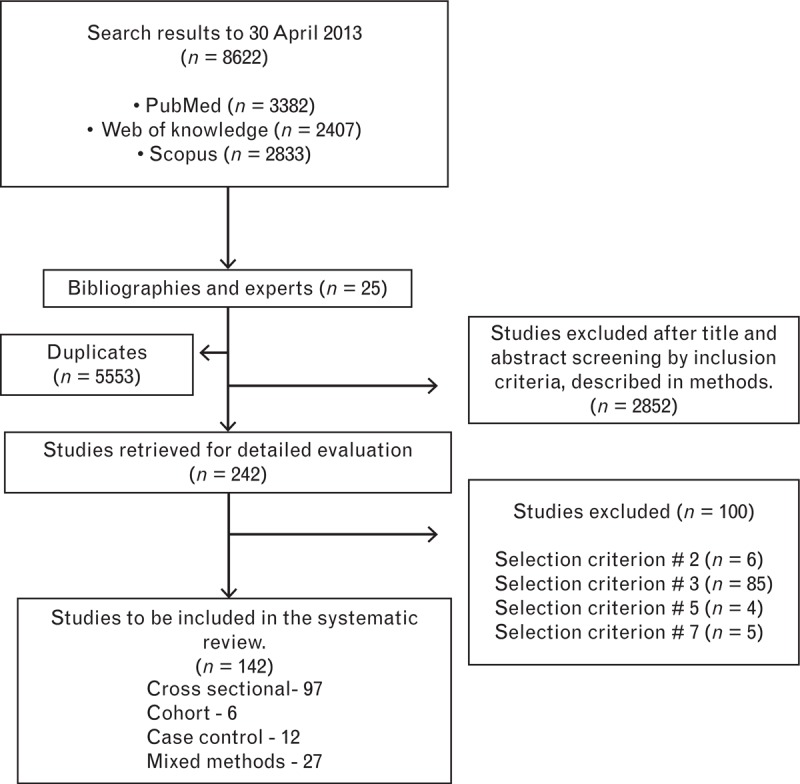
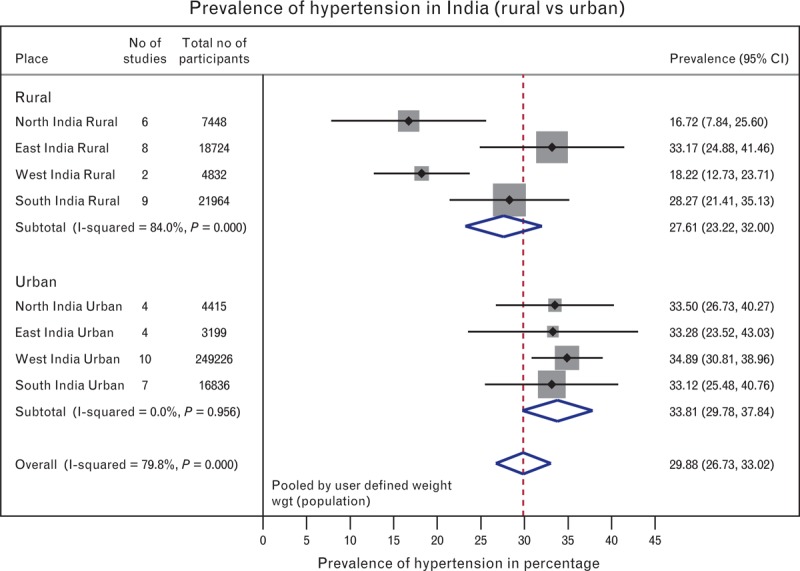
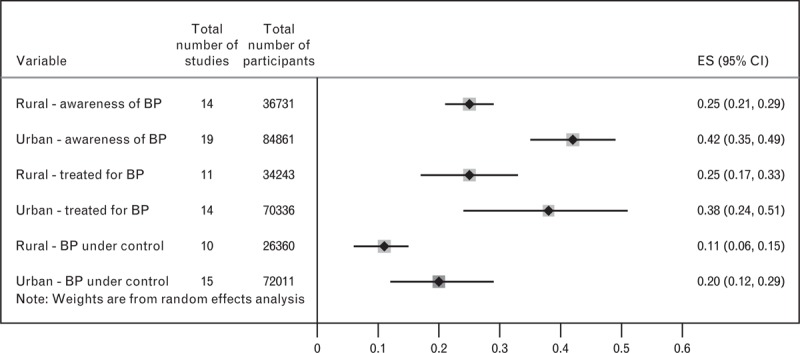
BACKGROUND: A region-specific (urban and rural parts of north, east, west, and south India) systematic review and meta-analysis of the prevalence, awareness, and control of hypertension among Indian patients have not been done before. METHODS: Medline, Web of Science, and Scopus databases from 1950 to 30 April 2013 were searched for 'prevalence, burden, awareness, and control of blood pressure (BP) or hypertension (≥140 SBP and or ≥90 DBP) among Indian adults' (≥18 years). Of the total 3047 articles, 142 were included. RESULTS: Overall prevalence for hypertension in India was 29.8% (95% confidence interval: 26.7-33.0). Significant differences in hypertension prevalence were noted between rural and urban parts [27.6% (23.2-32.0) and 33.8% (29.7-37.8); P = 0.05]. Regional estimates for the prevalence of hypertension were as follows: 14.5% (13.3-15.7), 31.7% (30.2-33.3), 18.1% (16.9-19.2), and 21.1% (20.1-22.0) for rural north, east, west, and south India; and 28.8% (26.9-30.8), 34.5% (32.6-36.5), 35.8% (35.2-36.5), and 31.8% (30.4-33.1) for urban north, east, west, and south India, respectively. Overall estimates for the prevalence of awareness, treatment, and control of BP were 25.3% (21.4-29.3), 25.1% (17.0-33.1), and 10.7% (6.5-15.0) for rural Indians; and 42.0% (35.2-48.9), 37.6% (24.0-51.2), and 20.2% (11.6-28.7) for urban Indians. CONCLUSION: About 33% urban and 25% rural Indians are hypertensive. Of these, 25% rural and 42% urban Indians are aware of their hypertensive status. Only 25% rural and 38% of urban Indians are being treated for hypertension. One-tenth of rural and one-fifth of urban Indian hypertensive population have their BP under control.
Overview
The claims and statistics of this paper haven’t been checked yet.
Free: it reads the open-access text and checks the first 5 claims that cite a source we can check. Create a free account to check every claim.
Integrity signals
Registry
Cites
Statistics
Figures
Verification
Claims the paper makes
The claims and statistics of this paper haven’t been checked yet.
Free: it reads the open-access text and checks the first 5 claims that cite a source we can check. Create a free account to check every claim.
Claims other papers make about this one
Each is checked against this paper’s own text: does it say what the citing paper says it does?
The source backs part of the claim, not all of it — or backs it for a different population, condition or comparison.
In the citing paper
“South Asian populations originating from the Indian subcontinent have a particularly high risk for cardiovascular and metabolic diseases, including CAD and type 2 DM.”
From 2020 International Society of Hypertension Global Hypertension Practice Guidelines (2020) · cites this paper as [141]
Experimental — accuracy not yet measuredThe cited source says what the claim attributes to it.
In the citing paper
“The prevalence of hypertension in rural India is estimated to be 27.6% [31], and the prevalence of type 2 diabetes in rural India is 16% [32], significantly contributing to the burden of disease.”
From Diagnostic Concordance of Telemedicine as Compared With Face-to-Face Care in Primary Health Care Clinics in Rural India: Randomized Crossover Trial (2023) · cites this paper as [31]
Self-check
Percentages, sums and reported differences re-computed from the paper’s own numbers.
The self-check needs the paper’s full text.
Citations
Cites
von Elm, E., Altman, D. G., Egger, M., Pocock, S. J., Gøtzsche, P. C., Vandenbroucke, J. P., & Initiative, F. T. S. (2007) · PLoS Medicine · doi:10.1371/journal.pmed.0040296 · Cited by 23,020
von Elm, E., Altman, D. G., Egger, M., Pocock, S. J., Gøtzsche, P. C., & Vandenbroucke, J. P. (2008) · Journal of Clinical Epidemiology · doi:10.1016/j.jclinepi.2007.11.008 · Cited by 17,893
von Elm, E., Altman, D. G., Egger, M., Pocock, S. J., Gøtzsche, P. C., Vandenbroucke, J. P., & Initiative, F. T. S. (2007) · Annals of Internal Medicine · doi:10.7326/0003-4819-147-8-200710160-00010 · Cited by 17,796
Lim, S. S., Vos, T., Flaxman, A. D., Danaei, G., Shibuya, K., Adair-Rohani, H., AlMazroa, M. A., Amann, M., Anderson, H. R., Andrews, K. G., et al. (2012) · The Lancet · doi:10.1016/s0140-6736(12)61766-8 · Cited by 11,805
Vandenbroucke, J. P., von Elm, E., Altman, D. G., Gøtzsche, P. C., Mulrow, C. D., Pocock, S. J., Poole, C., Schlesselman, J. J., Egger, M., & Initiative, F. T. S. (2007) · PLoS Medicine · doi:10.1371/journal.pmed.0040297 · Cited by 8,613 · cited 1×
“Quality scores were defined based on presence of eligibility criterion, sources and methods of selection of participants, reported numbers of outcome events or summary measures, and mentioned limitations of the study [62].”
Global burden of hypertension: analysis of worldwide data
Kearney, P. M., Whelton, M., Reynolds, K., Muntner, P., Whelton, P. K., & He, J. (2005) · The Lancet · doi:10.1016/s0140-6736(05)17741-1 · Cited by 8,594 · cited 3×
“An alarming rise in HTN projected by Global Burden of Hypertension 2005 study, [7] the GBD 2010 study [1] and WHO 2011 NCD India specific data [11] portray a grim picture for the 17.”
BackgroundLopez, A. D., Mathers, C. D., Ezzati, M., Jamison, D. T., & Murray, C. J. (2006) · The Lancet · doi:10.1016/s0140-6736(06)68770-9 · Cited by 5,630
Vandenbroucke, J. P., Elm, E. V., Altman, D. G., Gøtzsche, P. C., Mulrow, C. D., Pocock, S. J., Poole, C., Schlesselman, J. J., Egger, M., & initiative, F. T. S. (2007) · Annals of Internal Medicine · doi:10.7326/0003-4819-147-8-200710160-00010-w1 · Cited by 3,543
The Atlas of Heart Disease and Stroke
Mackay, J., Mensah, G. A., & Mendis, S. (2004) · Medical Entomology and Zoology · Cited by 1,550
Responding to the threat of chronic diseases in India
Srinath Reddy, K., Shah, B., Varghese, C., & Ramadoss, A. (2005) · The Lancet · doi:10.1016/s0140-6736(05)67343-6 · Cited by 728
Research works printed but not linked: 1
- Kaur M Blood pressure trends and hypertension among rural and urban Jat women of Haryana, India. Coll Antropol 2012; 36: 139– 144 22816211
Cited by
Items 401–500 of 787
Sarkar, A., Roy, D., Chauhan, M., Makwana, N. R., Parmar, D., & Yadav, S. (2019) · Europe PMC (PubMed Central) · doi:10.22122/ahj.v11i1.223 · Cited by 5
Jose, A. P., Kondal, D., Gupta, P., Maheshwari, A., Kaushik, A., More, A., Patil, M., Sharma, M., Bhise, M. D., Verma, N., et al. (2019) · European Heart Journal Supplements · doi:10.1093/eurheartj/suz056 · Cited by 5
“Similar findings of low awareness level and poor control of BP among hypertensives has been reported by several studies in the past.(4) Considering the high burden of hypertension and the low level of awareness among the general population, efforts such as MMM play a vital role in raising awareness, initiating prevent…”
ResultSelf-citationPradhan, A. K., Vishwakarma, P., Bhandari, M., Sethi, R., & Narain, V. S. (2020) · Cardiovascular Therapeutics · doi:10.1155/2020/4349612 · Cited by 6
“6% in rural population [3]; therefore, it continues to be a major public health challenge.”
BackgroundTrends of Epidemiological and Demographic Indicators of COVID-19 in India
Gupta, M. K., Bhardwaj, P., Goel, A. D., Saurabh, S., & Misra, S. (2021) · The Journal of Infection in Developing Countries · doi:10.3855/jidc.13243 · Cited by 5
Busingye, D., Evans, R. G., Arabshahi, S., Riddell, M. A., Srikanth, V. K., Kartik, K., Kalyanram, K., Zhu, X., Suresh, O., & Thrift, A. G. (2021) · Journal of Human Hypertension · doi:10.1038/s41371-021-00609-1 · Cited by 5
Solanki, J. D., Gadhavi, B. P., Makwana, A. H., Mehta, H., Shah, C. J., & Gokhale, P. A. (2016) · Journal of Pharmacology and Pharmacotherapeutics · doi:10.4103/0976-500x.195900 · Cited by 5
“Every third urban Indian is suffering from hypertension,[2] an iceberg disease that is going to double in number by 2025 as compared to 2000.”
BackgroundResultInfluentialOommen, A. M., Nand, K. Y., Abraham, V. J., George, K., & Jose, V. J. (2017) · Indian Journal of Pharmacology · doi:10.4103/ijp.ijp_747_16 · Cited by 6
“[1] A large proportion of those with risk factors such as diabetes and hypertension are unaware of their risks and are often not on adequate treatment.[2,3] Statins are recommended for cardiovascular protection for high‐risk groups (e.”
BackgroundWander, G. S., & Ram, C. V. S. (2018) · The Indian Journal of Medical Research · doi:10.4103/ijmr.ijmr_842_18 · Cited by 6
Kaur, A., Dhoat, P. S., Kaur, N., & Sahoo, S. S. (2024) · Journal of Pharmacy And Bioallied Sciences · doi:10.4103/jpbs.jpbs_406_23 · Cited by 4
Chinnaiyan, S., Dharmaraj, A., & Palanisamy, B. (2024) · Journal of Racial and Ethnic Health Disparities · doi:10.1007/s40615-024-02005-0 · Cited by 4
“Several studies confirm that hypertension increases with age [26–28].”
Ranjan, A., Pandey, S., Nirala, S. K., Singh, C., & Bhardwaj, M. (2025) · BMC Public Health · doi:10.1186/s12889-025-23198-x · Cited by 6
“A systematic review and meta-analysis conducted on the prevalence of hypertension reported that the overall prevalence of hypertension among adults in India was about 30% with an urban prevalence of 34% and a rural prevalence of 28% [7].”
InfluentialMathiyalagen, P., Rajagopal, A., Vasudevan, K., Gnanasekaran, S., Nagaraja, S. B., Bora, J. K., & Goel, S. (2025) · PLoS ONE · doi:10.1371/journal.pone.0332226 · Cited by 7
“Even among those diagnosed, the rate of treatment is just 14.5%, indicating significant barriers to accessing healthcare, such as economic constraints, lack of healthcare infrastructure, and inadequate follow-up [24].”
InfluentialAssessment of functioning of Health and Wellness Centers in a district of Western Gujarat
Rathod, H. K., Pithadia, P., Patel, D. A., Goswami, M., Parmar, D., & Kotecha, I. S. (2020) · Healthline · doi:10.51957/healthline_142_2020 · Cited by 4
Recent advancements in lipid-based nanocarriers for transdermal drug delivery
Parhi, R., Mohanta, B. C., Jena, G. K., & Sahoo, S. K. (2023) · Elsevier eBooks · doi:10.1016/b978-0-323-95171-5.00001-7 · Cited by 5
Yadav, P. K., Kalyani, V. C., Narayan, D., & Kataria, N. (2023) · Journal of Education and Health Promotion · doi:10.4103/jehp.jehp_1175_22 · Cited by 5
“These study findings were supported by the study conducted by Raghupathy Anchala and Nanda K Kannuri et al.[13] Entitled as “hypertension in India: a systematic review and meta‐analysis of prevalence, awareness, and control of hypertension” showed that majority of them were having good knowledge about how can they pre…”
ResultBhatia, M. R., Dixit, P., Kumar, M., & Dwivedi, L. K. (2023) · Frontiers in Cardiovascular Medicine · doi:10.3389/fcvm.2023.1265371 · Cited by 4
Wang, F., Yun, W., Wang, L., Xu, Z., Hai-ying, Y., Shu-fang, W., Zhen-yan, W., Chen, Y., Sun, Q., & Jing-xian, F. (2023) · Frontiers in Public Health · doi:10.3389/fpubh.2023.1297472 · Cited by 6
“In modern society, there is an increasing trend for hypertension to become more prevalent in young people due to stressful lifestyles, body mass index, and habits such as alcohol consumption and smoking (25–27).”
BackgroundUthakalla, V. K., Naidana, P. S., Yendapu, R. S., Pissey, S. S., & Devireddi, C. U. S. K. (2024) · Cureus · doi:10.7759/cureus.69942 · Cited by 6
“The discrepancy in prevalence estimates could be attributed to the inclusion of individuals above the age of 60 in their study [18].”
BackgroundShetty, K., Shetty, R., Rao, P., Ballal, M., Kiran, A., Reddy, S. K. N., Pai, U., & Samanth, J. (2017) · JOURNAL OF CLINICAL AND DIAGNOSTIC RESEARCH · doi:10.7860/jcdr/2017/25097.9958 · Cited by 4
Risk factors for cardiovascular disease in a healthy young population: Family matters
Kataria, N., Panda, A., Singh, S., Patrikar, S., & Sampath, S. (2020) · Medical Journal Armed Forces India · doi:10.1016/j.mjafi.2020.07.002 · Cited by 4
Nadhamuni, S., Gupta, G., Mullath, R., & Sridhar, S. (2020) · Journal of the Indian Institute of Science · doi:10.1007/s41745-020-00199-w · Cited by 4
How healthy is our primary health care workforce? A cross-sectional study
Behera, B. K., Bhatia, V., Giri, P. P., & Taywade, M. (2020) · Journal of Family Medicine and Primary Care · doi:10.4103/jfmpc.jfmpc_769_20 · Cited by 4
“Hypertension was the most prevalent chronic disease in 12.2%of the study participants, the prevalence of the disease is below the national average of 29.8% and 34.5% for East India.”
BackgroundInfluentialPathni, A. K., Sahoo, S. K., Moran, A. E., Cohn, J., Bhatia, S., Maheshwari, N., & Sharma, B. (2021) · Global Heart · doi:10.5334/gh.973 · Cited by 4
“A systemic review and meta-analysis revealed that only 25% rural and 38% urban adults with hypertension in India were receiving treatment [10].”
BackgroundMidha, T., Nigam, S., Martolia, D. S., & Kaur, S. (2018) · Indian Journal of Forensic and Community Medicine · doi:10.18231/2394-6776.2018.0022 · Cited by 4
“In 2014, meta analysis was conducted which showed that around 33% of the urban and 25% of the rural Indian population was found to suffer from hypertension.(3) Among these, approximately 25% of the rural population and 42% of the urban population had awareness of their increased blood pressure.”
MethodBurden of neurological disease
Ravindranath, V., Abhishek, M. L., & Wallin, M. T. (2022) · Elsevier eBooks · doi:10.1016/b978-0-323-85654-6.00019-8 · Cited by 4
Ghosh, S., & Peseyie, V. (2022) · American Journal of Human Biology · doi:10.1002/ajhb.23789 · Cited by 8
Uncontrolled hypertension in a rural population of Jammu and Kashmir
Arambam, P., Khashoo, R., Tewari, D., Saleem, Z., Shekhawat, S., & Kaul, U. (2022) · Indian Heart Journal · doi:10.1016/j.ihj.2022.11.012 · Cited by 7
Design and Development of IOT based Blood Pressure Measurement system
Hiwale, A., & Chaskar, U. M. (2022) · International Conference on Computing, Communication and Networking Technologies (ICCCNT) · doi:10.1109/icccnt54827.2022.9984292 · Cited by 4
“[5] People have been primarily affected in recent times by chronic illnesses like high blood pressure because of ageing and hectic lifestyles.”
BackgroundThe Burden of Hypertension and Prehypertension in a Community Health Centre of Haryana
Sindwani, P., Sharma, S., Ahmad, A., Kumar, A., Dalal, S., & Jain, P. (2023) · Cureus · doi:10.7759/cureus.33569 · Cited by 4
“[7] found a similar prevalence of hypertension (29.”
BackgroundPaul, A., Kini, S. B., Kumar, A., & Mallya, S. D. (2023) · Malaysian Family Physician · doi:10.51866/oa.308 · Cited by 4
Deshpande-Joshi, S. S., & Rao, S. R. (2018) · Journal of the American College of Nutrition · doi:10.1080/07315724.2017.1405750 · Cited by 4
Bharatraj, D. K., Varakantham, V., Sailoo, A. K. K., & Kodali, V. (2017) · Indian Journal of Pharmacology · doi:10.4103/ijp.ijp_590_17 · Cited by 4
“2% of urban Indian hypertensive population have their BP under control.[4] In a study by Ambrosioni et al.”
BackgroundThe case of the middle class: Social determinants of health in Mumbai
Kulkarni, M. (2018) · Journal of Health Psychology · doi:10.1177/1359105318788690 · Cited by 4
“The health behaviors we focus on include tobacco use and exercise, both of which are implicated in NCDs like diabetes, hypertension, and cardiovascular disease (CVD; Anchala et al., 2014; Park et al., 2003).”
BackgroundMethodDas, K., Mukherjee, K., Chanak, M., Pal, S., Ganguli, S., Bagchi, S. S., & Bose, K. (2019) · International Journal of Advancement in Life Sciences Research · doi:10.31632/ijalsr.2019v02i04.005 · Cited by 4
“The overall prevalence of hypertension in India has been reported as 29.8%, including 27.6% and 33.8% in rural and urban areas, respectively (Anchala et al., 2014).”
BackgroundResultInfluentialRahman, F., Muthaiah, N., Baalann, K. P., Singh, A. K., Uthra, S., & Kumaramanickavel, G. (2021) · Cardiovascular & Haematological Disorders - Drug Targets · doi:10.2174/1871529x21666210809123922 · Cited by 8
Compliance to Hypertension Treatment in Residents of a Fishermen Colony in District Kollam, Kerala
Aslami, A. N., & Jobby, A. (2015) · Nepal Journal of Epidemiology · doi:10.3126/nje.v5i2.12830 · Cited by 4
Borah, P. K., Paine, S. K., Kalita, H. C., Biswas, D., Hazarika, D., Bhattacharjee, C. K., & Mahanta, J. (2018) · Current Science · doi:10.18520/cs/v115/i10/1947-1949 · Cited by 4
Central obesity and hypertension among rural adults of Paschim Medinipur, West Bengal, India
Chanak, M., & Bose, K. (2019) · Anthropological Review · doi:10.2478/anre-2019-0017 · Cited by 7
“In India, HT exerts a notable public health burden on cardiovascular health status and healthcare systems (Leeder et al. 2004; Srinath Reddy et al. 2005; Anchala et al. 2014).”
BackgroundEuropean and American hypertension guidelines and goal blood pressure: Relevance to India
Ram, C. V. S. (2018) · Indian Heart Journal · doi:10.1016/j.ihj.2018.07.003 · Cited by 4
“Data emanating from India are consistent with this observation and demonstrate an emerging and growing risk from hypertension in this country.(3) A number of studies have shown that the chronic disease burden from hypertension is escalating in India with no end in sight.”
ResultMay Measurement Month 2022: an analysis of blood pressure screening results from India
Maheshwari, A., Verma, N., Tewari, A., Gupta, A. K., Lalwani, D., Maheshwari, S., Verma, A., Kaur, A. P., Patil, S., Kanchan, S., et al. (2025) · European Heart Journal Supplements · doi:10.1093/eurheartjsupp/suaf047 · Cited by 3
Ajay, A., Francis, P. T., Sreedevi, A., Nair, R. R., & Lalithambika, C. V. (2025) · Cureus · doi:10.7759/cureus.81117 · Cited by 5
“Socioeconomic factors also play a role, as lower socioeconomic status (SES) is linked to higher stress levels, limited healthcare access, and unhealthy lifestyle behaviors [14].”
Ondieki, A. O., Kimani, H. M., & Kahiga, T. (2021) · International Journal of Community Medicine and Public Health · doi:10.18203/2394-6040.ijcmph20213211 · Cited by 3
“8% in rural areas, indicating a transition from the metaanalysis and common description.(10) Another study in India indicated a higher prevalence of urban areas compared to rural areas, however, the rural prevalence is catching up with the urban prevalence.”
BackgroundBarure, R., Shanthaiah, D. M., Atluri, S., Shivaprasad, C., Kolla, G., Reddy, S. L. S., & Sarathi, V. (2022) · Indian Journal of Endocrinology and Metabolism · doi:10.4103/ijem.ijem_155_22 · Cited by 3
“This is in contrast to the higher rates of hypertension in the eastern‐Indian general population and warrants further studies to understand the differential observation.[15] The discrepancy in the prevalence of nephropathy (21.”
ResultPrajapati, A. K., Jain, S., Kumar, S., Bano, T., Gautam, N., Singh, G., & Ruchi (2024) · Journal of Family Medicine and Primary Care · doi:10.4103/jfmpc.jfmpc_1835_23 · Cited by 3
“[23] conducted a systematic review and meta‑analysis on hypertension in India and discovered that the prevalence of hypertension awareness was 25.3% (21.4–29.3).”
BackgroundInfluentialVijayakumar, K., Kannusamy, S., Krishnamoorthy, Y., Vasudevan, K., Thekkur, P., Goel, S., & Meshram, S. S. (2024) · Indian Journal of Public Health · doi:10.4103/ijph.ijph_84_23 · Cited by 3
Shetty, P., Sujatha, K. J., Mooventhan, A., Shashikiran, H. C., Yalla, D. R., Thayill, J., & Arun, P. G. (2024) · Journal of Bodywork and Movement Therapies · doi:10.1016/j.jbmt.2024.11.008 · Cited by 3
Parandiyal, N., Chutia, P., Sinha, S. S., Pandit, P., Majrashi, N. A. A., Qureshi, N. A., & Tripathi, S. M. (2024) · Frontiers in Dementia · doi:10.3389/frdem.2024.1486147 · Cited by 6
Jeny, R. E., Sabu, J. S., Murthy, M. K., & Madappa, N. U. (2018) · International Journal of Pharmacy and Pharmaceutical Sciences · doi:10.22159/ijpps.2018v10i3.24102 · Cited by 3
Gadre, V., & Trivedy, C. (2020) · Biodiversity · doi:10.1080/14888386.2020.1793814 · Cited by 3
Dillon, D. T., Webster, G. D., & Bisesi, J. H. (2021) · American Journal of Human Biology · doi:10.1002/ajhb.23586 · Cited by 5
“Similar estimates are seen in other studies investigating prevalence in LICs and LMICs globally (Anchala et al., 2014; Prince et al., 2012; Twagirumukiza et al., 2011).”
ResultBoitchi, A. B., Naher, S., Pervez, S., & Hossain, M. M. (2021) · Millennium Journal of Humanities and Social Sciences · doi:10.47340/mjhss.v2i2.1.2021 · Cited by 3
Mohanty, S., Nagarathna, R., Metri, K., Patil, S. S., Sanjay Kumar, S., Singh, A., & Nagendra, H. R. (2020) · Annals of Neurosciences · doi:10.1177/0972753120987457 · Cited by 3
Rajagopal, L., & Paramasivam, Y. G. (2020) · Journal of Evidence Based Medicine and Healthcare · doi:10.18410/jebmh/2020/382 · Cited by 3
Saleem, S. M., Singh, G., Zaidi, I., Haq, I., Singh, I., Anjum, S., Singh, M. P., & Goel, S. (2022) · Journal of Family Medicine and Primary Care · doi:10.4103/jfmpc.jfmpc_174_22 · Cited by 4
“[9,23] However, few studies[9,11,23] have shown that rural women are at higher risk of developing hypertension than males, which was, however, not observed in the present study.”
BackgroundResultMirdamadi, A., Abrishamkar, R., & Kargaran, A. (2022) · PubMed Central · doi:10.48305/arya.v18i1.2146 · Cited by 4
Nimmala, S., Rani, R. U., & Rao, P. S. (2023) · Communications in computer and information science · doi:10.1007/978-3-031-28183-9_12 · Cited by 4
Das, S., Kosuru, A., Maran, T., & Thaploo, V. (2023) · International Journal of Community Medicine and Public Health · doi:10.18203/2394-6040.ijcmph20230925 · Cited by 3
Peddi, D. R., Pallekonda, H., & Reddy, V. (2023) · Cureus · doi:10.7759/cureus.42775 · Cited by 9
“Despite the availability of several classes of antihypertensives and lifestyle modifications, more than 80% of hypertensive patients do not have optimal control of blood pressure [3,4].”
BackgroundJoshi, H. (2023) · International Journal of Diabetes in Developing Countries · doi:10.1007/s13410-023-01241-0 · Cited by 3
“Anchala [8] conducted a region-specific (urban and rural parts of north, east, west, and south India) systematic review and meta-analysis of the prevalence, awareness, and control of hypertension among Indian patients, which has never been done before, and came to the conclusion that about 33% of…”
Sivakumar, K., Ramasamy, M., Thankayyan, M., & Seenivasan, P. (2023) · Asian Journal of Medical Sciences · doi:10.3126/ajms.v14i10.56237 · Cited by 3
Verma, N., Matsushita, N., Salman, E., Ohkubo, T., & Imai, Y. (2023) · Journal of Clinical Hypertension · doi:10.1111/jch.14713 · Cited by 3
Jeyalakshmi, K., Devi, E. S., Rao, M., Shashidhara, Y., & Thunga, G. (2024) · Journal of Education and Health Promotion · doi:10.4103/jehp.jehp_793_23 · Cited by 9
“[2,3] Non‑adherence to the therapeutic regimen for hypertensive and diabetic illness can lead to disease‑associated complications such as stroke, renal disease, peripheral neuropathy, and retinopathy, which might eventually cause unwanted death among elderly population.”
BackgroundTargeting Hypertension: A Review on Pathophysiological Factors and Treatment Strategies
Raj, R., Garg, M., & Kaur, A. (2024) · Current Hypertension Reviews · doi:10.2174/0115734021293403240309165336 · Cited by 5
Dandsena, A., Panda, P., Rath, J., & Panigrahi, A. K. (2023) · CHRISMED Journal of Health and Research · doi:10.4103/cjhr.cjhr_33_23 · Cited by 3
Meshram, N., Shinkar, S., Verma, N., & Shrivastava, N. (2024) · Preventive Medicine Research & Reviews · doi:10.4103/pmrr.pmrr_42_24 · Cited by 3
Health literacy and tobacco cessation among hypertensive individuals: A mixed method study
Chauhan, D., Patel, D., Yogesh, M., & Trivedi, N. (2024) · Journal of Education and Health Promotion · doi:10.4103/jehp.jehp_1922_23 · Cited by 3
Prevalence of hypertension and its associated factors among tribal population in Southern Rajasthan
Mangal, N., Samanta, M., Patel, M., Dilip Kumar, L., Varghese, K. A., & Sharma, M. (2022) · Asian Journal of Medical Sciences · doi:10.3126/ajms.v13i6.43156 · Cited by 3
Khobragade, A. W., Ruikar, M., Singh, G., & Jha, A. (2025) · Cureus · doi:10.7759/cureus.80953 · Cited by 5
Obstructive Sleep Apnoea: A Risk Factor for Hypertension
Bader, G. N. (2018) · Journal of Cardiology and Cardiovascular Sciences · doi:10.29245/2578-3025/2018/2.1122 · Cited by 5
Sabherwal, S., Sood, I., Chinnakaran, A., Majumdar, A., & Dasgupta, S. (2020) · Journal of Occupational Health and Epidemiology · doi:10.29252/johe.9.2.85 · Cited by 4
“prevalence than the Northern Indian populations both in urban and rural areas [13, 23].”
BackgroundSubramani, T., Saravanan, K., & Ismail, S. C. (2022) · Indian Journal of Pharmaceutical Education and Research · doi:10.5530/ijper.56.4.205 · Cited by 3
Wang, L. (2016) · Heart Lung and Circulation · doi:10.1016/j.hlc.2015.12.093 · Cited by 3
“7%, respectively [6].”
BackgroundInfluentialHypertension as a Public Health Problem in India
Gupta, R. (2015) · Hypertension Journal · doi:10.5005/jp-journals-10043-0001 · Cited by 3
Hypertension Stages and Their Associated Risk Factors among Adult Women in India
Anand, E., & Singh, J. (2017) · Journal of Population and Social Studies · Cited by 3
Chinnakali, P., Nagappa, B., Thekkur, P., Majella, M. G., Nair, D., & Ramaswamy, G. (2018) · Journal of Family Medicine and Primary Care · doi:10.4103/jfmpc.jfmpc_134_17 · Cited by 3
“[3] In spite of these benefits, the studies have reported high prevalence (42%–89%) of uncontrolled BP among the treated hypertensive patients.[5,7] There is need to explore the burden of uncontrolled hypertension and also determine the factors contributing to failure in achieving the target BP.”
BackgroundPrevalence of Hypertension and Associated Risk Factors in Suburban Tamil Nadu
Mohanraj, S., Swaminathan, K., Velmurugan, G., Alexander, T. J., & Palaniswami, N. G. (2019) · Apollo Medicine · doi:10.4103/am.am_68_19 · Cited by 3
“Our results showed a 47% prevalence of HTN in the adult population screened, much higher than similar prevalence data in the systematic review.[11] The prevalence between both genders were similar.”
BackgroundResultKhandpur, S., Bhardwaj, M., Awasthi, A., Newtonraj, A., Purty, A. J., Khanna, T., Abraham, G., & Tiwari, S. (2021) · Diabetes Research and Clinical Practice · doi:10.1016/j.diabres.2021.108861 · Cited by 4
Bhargava, R., Chauhan, R., Tiwari, A. K., Mehra, S., Pabbi, S., Aggarwal, G., Sharma, V., & Bhardwaj, V. (2023) · Transplant Immunology · doi:10.1016/j.trim.2023.101802 · Cited by 3
Venkateshmurthy, N. S., Namara, K. M., Koorts, H., Mohan, S., Ajay, V. S., Jindal, D., Malipeddi, B. R., Roy, A., Tandon, N., Prabhakaran, D., et al. (2019) · BMJ Open · doi:10.1136/bmjopen-2018-027841 · Cited by 4
“This high prevalence is compounded by low levels of awareness, treatment, control and suboptimal self-management.(6)”
Self-citationVarghese, J. S., Venkateshmurthy, N. S., Sudharsanan, N., Jeemon, P., Patel, S. A., Thirumurthy, H., Roy, A., Tandon, N., Narayan, K. V., Prabhakaran, D., et al. (2023) · medRxiv · doi:10.1101/2023.06.02.23290909 · Cited by 3
“though none of these provide comprehensive estimates for all age groups and district-level 195 precision in estimates.(12,24) In 2017-18, the National Non-communicable Diseases Monitoring 196”
BackgroundSelf-citationSalagre, S., Ansari, N. N. A., & Mali, V. S. (2021) · Indian Journal of Nephrology · doi:10.4103/ijn.ijn_394_19 · Cited by 2
“8%.[12] So, from the above results, it is clear that, patients with CKD have 3 time high burden of HTN as compared to the general population.”
ResultHealth and Fitness of Postmenopausal Women in Urban versus Rural Gurugram
Ajmera, P., Kalra, S., Mohapatra, S., & Yadav, J. (2022) · Journal of Mid-life Health · doi:10.4103/jmh.jmh_86_22 · Cited by 2
“in 2014, 33% of Indians in urban areas and 25% in rural areas have hypertension.[11] Similar to the current study, the prevalence was higher in urban women.”
Hadaye, R. S., & Dey, A. (2024) · Journal of Family Medicine and Primary Care · doi:10.4103/jfmpc.jfmpc_1325_23 · Cited by 2
Dalal, J. J., Guha, S., Reddy, Y. V. C., Ponde, C. K., Shrivastava, S., Badani, R. S., Joshi, S., Pande, A., Kumar, V., Bhalla, N., et al. (2023) · Journal of the Association of Physicians of India · doi:10.59556/japi.71.0407 · Cited by 3
Li, S.-J., Miles, T., Vasisht, I., Dere, H., Agyekum, C., & Massoud, R. (2024) · BMJ Open Quality · doi:10.1136/bmjoq-2023-002716 · Cited by 2
Kulothungan, V., Mascarenhas, L., Das, P., & Mathur, P. (2024) · Diabetes & Metabolic Syndrome Clinical Research & Reviews · doi:10.1016/j.dsx.2024.103085 · Cited by 2
Bhatia, R., Haldar, P., Longkumer, I., Srivastava, M. V. P., Misra, P., Sharma, G., Singh, M. B., Kumar, R., & Salve, H. R. (2024) · Annals of Indian Academy of Neurology · doi:10.4103/aian.aian_471_24 · Cited by 2
Damania, H., Kolhe, D., Kadam, S., Rajput, J. J., Devarshi, S. P., Shaikh, A., & Badani, R. S. (2024) · Journal of the Association of Physicians of India · doi:10.59556/japi.72.0760 · Cited by 2
Chinnaiyan, S., & Palanisamy, B. (2025) · Journal of Racial and Ethnic Health Disparities · doi:10.1007/s40615-025-02288-x · Cited by 2
Socio-economic gradients in hypertension and diabetes management amid the COVID-19 pandemic in India
Aizawa, T. (2025) · PLoS ONE · doi:10.1371/journal.pone.0315867 · Cited by 3
Shetty, H. N., & Hari, G. (2025) · Archives of Gerontology and Geriatrics Plus · doi:10.1016/j.aggp.2025.100154 · Cited by 8
Kota, V. K., Wanjari, A., Kumar, S., Aacharya, S., Sontakke, T. R., & Agrawal, S. (2025) · Journal of Family Medicine and Primary Care · doi:10.4103/jfmpc.jfmpc_1962_24 · Cited by 2
Kibria, G. M. A., O’Hagan, J. R., Shariar, G., Khan, T., & Elfaramawi, M. (2026) · PLOS Global Public Health · doi:10.1371/journal.pgph.0004797 · Cited by 5
“The observed associations align with findings from prior studies in Bangladesh and other LMICs [27,29,30,32,33], which similarly reported increasing diabetes and hypertension prevalence with age, higher socioeconomic status, and urban residence.”
Ravi, R., Olickal, J. J., Adoor, A., Devasia, J. T., & Thankappan, K. R. (2026) · Frontiers in Public Health · doi:10.3389/fpubh.2026.1766812 · Cited by 2
“Use of digital tracking, follow-up calls, and decentralised drug procurement within Ayushman Bharat Health & Wellness Centres can improve adherence (43, 50, 51).”
EVALUATION OF CAUSATIVE FACTORS IN AMLODIPINE INDUCED PEDAL EDEMA
Shetty, K., Ranjan Shetty, K., Rao, P., Vivek, G., Naveenchandra, G. S., Razak, A., Deepak, S., & Kiran, A. (2016) · International Journal of Pharmacy and Pharmaceutical Sciences · doi:10.22159/ijpps.2016v8i11.14650 · Cited by 2
“8% HTN is most common risk factors for cardiovascular, cerebrovascular and renal diseases [1, 2].”
BackgroundHaritha, G., Aanandhi, M. V., & Shanmugasundaram, P. (2021) · Research Journal of Pharmacy and Technology · doi:10.52711/0974-360x.2021.00365 · Cited by 2
Prageetha, K., Koushik, M., Ananthaeashwar, V. M., Mohan, Y., & Jain, T. (2021) · National Journal of Community Medicine · doi:10.5455/njcm.20210805040452 · Cited by 2
Kharat, N., Sivanantham, P., Kumar, G. D., Devasia, J. T., & Kar, S. S. (2021) · International Journal of Noncommunicable Diseases · doi:10.4103/jncd.jncd_28_21 · Cited by 2
Datta, B. K., & Haider, M. R. (2022) · Clinical Hypertension · doi:10.1186/s40885-022-00213-6 · Cited by 5
“[5] found that prevalence of hypertension in India was 29.”
BackgroundPARADIGMATIC AGE SHIFT OF HYPERTENSION DISEASE: A STUDY AMONG YOUNG ADULTS
Pandey, D., Guleri, S. K., Sinha, U., Pandey, S., & Tiwari, S. (2023) · Asian Journal of Pharmaceutical and Clinical Research · doi:10.22159/ajpcr.2023.v16i4.47564 · Cited by 2
“The government of India has already focused its attention for the control of NCDs through the national program (NPCDCS), but still Fig.”
BackgroundInfluential
Metadata
- Authors
- Anchala, R., Kannuri, N. K., Pant, H., Khan, H., Franco, O. H., Di Angelantonio, E., & Prabhakaran, D.
- Affiliations
- University of Cambridge (GB)
- Public Health Foundation (US)
- Erasmus MC (NL)
- Corresponding author
- Anchala, Raghupathy
- Venue
- Journal of Hypertension
- Published
- 2014-06
- Volume
- 32
- Issue
- 6
- Pages
- 1170-1177
- ISSN
- 0263-6352 (ISSN-L)
- PMC
- PMC4011565
- OpenAlex
- W2028825584
- Semantic Scholar
- 8a62255c3f7b79f8f2a7a97f53b750141021c8c7
- Cited by
- 782
- References
- 76
- Citations by year
- 2026: 45 · 2025: 67 · 2024: 80 · 2023: 97 · 2022: 103 · 2021: 79 · 2020: 70 · 2019: 65 · 2018: 52 · 2017: 49 · 2016: 55 · 2015: 14 · 2014: 6
- FWCI
- 6.66
- Type
- journal article
- Language
- en
- Open access
- hybrid
- doi.org
- Licence
- cc-by-nc-nd
- Locations
- Journal of Hypertension (publishedVersion, cc-by-nc-nd)
- Europe PMC (PubMed Central) (publishedVersion, cc-by-nc-nd)
- PubMed Central (publishedVersion, cc-by-nc-nd)
- PubMed (publishedVersion)
- EUR Research Repository (Erasmus University Rotterdam) (publishedVersion)
- EUR Research Repository (Erasmus University Rotterdam) (submittedVersion)
- RePub (Erasmus University Rotterdam) (submittedVersion, other-oa)
- Funders
- Wellcome Trust (084754)
- National Institute for Health and Care Research (NF-SI-0512-10165)
- British Heart Foundation (RG/08/014/24067)
- Medical Research Council (MR/L003120/1)
- Topics
- Health Sciences › Medicine › Cardiology and Cardiovascular Medicine › Blood Pressure and Hypertension Studies
- Health Sciences › Nursing › Nutrition and Dietetics › Sodium Intake and Health
- Health Sciences › Medicine › Cardiology and Cardiovascular Medicine › Cardiovascular Health and Risk Factors
- Keywords
- hypertension, hypertension prevalence, hypertension awareness, hypertension control, blood pressure, urban-rural differences, regional variation, India
- MeSH terms
- Attitude to Health, Blood Pressure, Geography, Humans, Hypertension, India, Risk Factors, Rural Population, Urban Population, Reproducibility of Results, Prevalence, Asian People
About these checks
Registry, retraction, Cites and statistics results are computed, not judged, with one exception: a printed reference that no index lists is read once by a model before it counts as a citation error. Claims are extracted by a model and kept only when their quote appears verbatim in the text; each cited source is then checked, with a model’s help, for whether it says what the claim relies on. Those verdicts can be wrong — read the claim’s quote and the cited source before relying on one.
Statistics and arithmetic are recomputed, not judged.
Confidence bands are shown only for fields calibrated on our annotated test set. None is calibrated yet, so no band is shown.
What counts as a claim ›How we measure confidence ›How we check this ›
Are you an author, or do you see a problem with this page? Request a review
Data sources
Bibliographic data: Semantic Scholar, OpenAlex, Crossref.
Contains information from the Semantic Scholar Academic Graph Datasets, made available under the ODC Attribution License (ODC-BY 1.0).
Semantic Scholar’s data is described in: Kinney, R., et al. (2023). The Semantic Scholar Open Data Platform. arXiv:2301.10140.
