

Hypertension in India: a systematic review and meta-analysis of prevalence, awareness, and control of hypertension
Open accessThe DOI matches its Crossref record; 72 of the 76 references it cites were found in a registry or an index.
Abstract
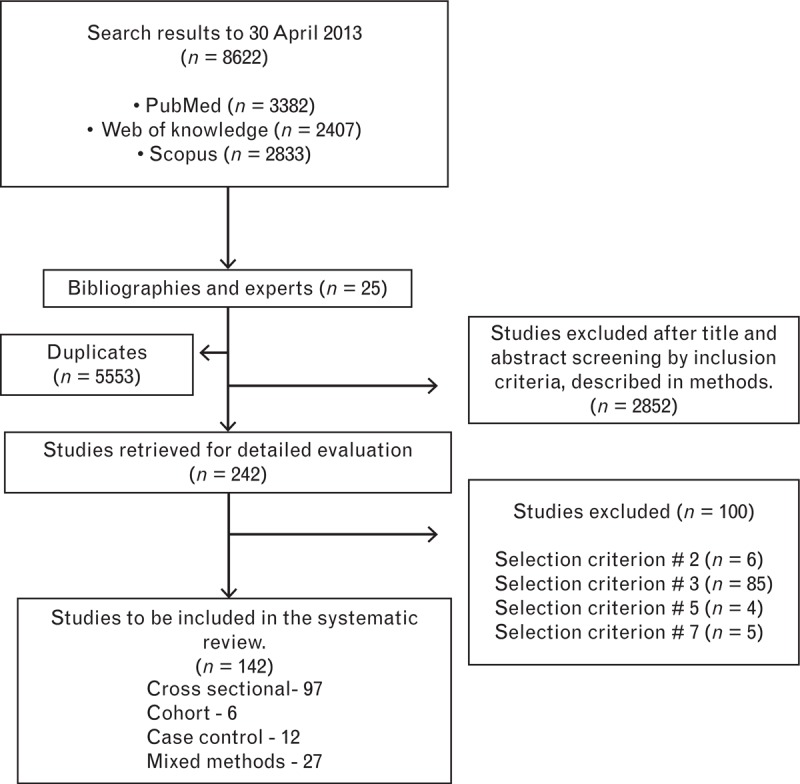
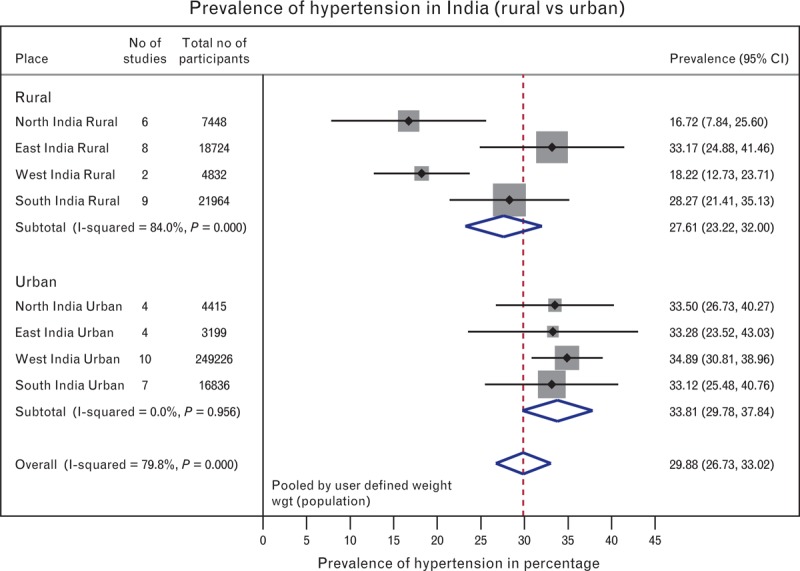
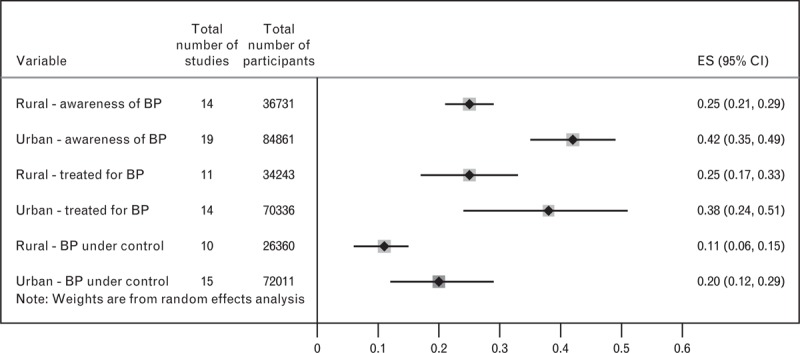
BACKGROUND: A region-specific (urban and rural parts of north, east, west, and south India) systematic review and meta-analysis of the prevalence, awareness, and control of hypertension among Indian patients have not been done before. METHODS: Medline, Web of Science, and Scopus databases from 1950 to 30 April 2013 were searched for 'prevalence, burden, awareness, and control of blood pressure (BP) or hypertension (≥140 SBP and or ≥90 DBP) among Indian adults' (≥18 years). Of the total 3047 articles, 142 were included. RESULTS: Overall prevalence for hypertension in India was 29.8% (95% confidence interval: 26.7-33.0). Significant differences in hypertension prevalence were noted between rural and urban parts [27.6% (23.2-32.0) and 33.8% (29.7-37.8); P = 0.05]. Regional estimates for the prevalence of hypertension were as follows: 14.5% (13.3-15.7), 31.7% (30.2-33.3), 18.1% (16.9-19.2), and 21.1% (20.1-22.0) for rural north, east, west, and south India; and 28.8% (26.9-30.8), 34.5% (32.6-36.5), 35.8% (35.2-36.5), and 31.8% (30.4-33.1) for urban north, east, west, and south India, respectively. Overall estimates for the prevalence of awareness, treatment, and control of BP were 25.3% (21.4-29.3), 25.1% (17.0-33.1), and 10.7% (6.5-15.0) for rural Indians; and 42.0% (35.2-48.9), 37.6% (24.0-51.2), and 20.2% (11.6-28.7) for urban Indians. CONCLUSION: About 33% urban and 25% rural Indians are hypertensive. Of these, 25% rural and 42% urban Indians are aware of their hypertensive status. Only 25% rural and 38% of urban Indians are being treated for hypertension. One-tenth of rural and one-fifth of urban Indian hypertensive population have their BP under control.
Overview
The claims and statistics of this paper haven’t been checked yet.
Free: it reads the open-access text and checks the first 5 claims that cite a source we can check. Create a free account to check every claim.
Integrity signals
Registry
Cites
Statistics
Figures
Verification
Claims the paper makes
The claims and statistics of this paper haven’t been checked yet.
Free: it reads the open-access text and checks the first 5 claims that cite a source we can check. Create a free account to check every claim.
Claims other papers make about this one
Each is checked against this paper’s own text: does it say what the citing paper says it does?
The source backs part of the claim, not all of it — or backs it for a different population, condition or comparison.
In the citing paper
“South Asian populations originating from the Indian subcontinent have a particularly high risk for cardiovascular and metabolic diseases, including CAD and type 2 DM.”
From 2020 International Society of Hypertension Global Hypertension Practice Guidelines (2020) · cites this paper as [141]
Experimental — accuracy not yet measuredThe cited source says what the claim attributes to it.
In the citing paper
“The prevalence of hypertension in rural India is estimated to be 27.6% [31], and the prevalence of type 2 diabetes in rural India is 16% [32], significantly contributing to the burden of disease.”
From Diagnostic Concordance of Telemedicine as Compared With Face-to-Face Care in Primary Health Care Clinics in Rural India: Randomized Crossover Trial (2023) · cites this paper as [31]
Self-check
Percentages, sums and reported differences re-computed from the paper’s own numbers.
The self-check needs the paper’s full text.
Citations
Cites
von Elm, E., Altman, D. G., Egger, M., Pocock, S. J., Gøtzsche, P. C., Vandenbroucke, J. P., & Initiative, F. T. S. (2007) · PLoS Medicine · doi:10.1371/journal.pmed.0040296 · Cited by 23,020
von Elm, E., Altman, D. G., Egger, M., Pocock, S. J., Gøtzsche, P. C., & Vandenbroucke, J. P. (2008) · Journal of Clinical Epidemiology · doi:10.1016/j.jclinepi.2007.11.008 · Cited by 17,893
von Elm, E., Altman, D. G., Egger, M., Pocock, S. J., Gøtzsche, P. C., Vandenbroucke, J. P., & Initiative, F. T. S. (2007) · Annals of Internal Medicine · doi:10.7326/0003-4819-147-8-200710160-00010 · Cited by 17,796
Lim, S. S., Vos, T., Flaxman, A. D., Danaei, G., Shibuya, K., Adair-Rohani, H., AlMazroa, M. A., Amann, M., Anderson, H. R., Andrews, K. G., et al. (2012) · The Lancet · doi:10.1016/s0140-6736(12)61766-8 · Cited by 11,805
Vandenbroucke, J. P., von Elm, E., Altman, D. G., Gøtzsche, P. C., Mulrow, C. D., Pocock, S. J., Poole, C., Schlesselman, J. J., Egger, M., & Initiative, F. T. S. (2007) · PLoS Medicine · doi:10.1371/journal.pmed.0040297 · Cited by 8,613 · cited 1×
“Quality scores were defined based on presence of eligibility criterion, sources and methods of selection of participants, reported numbers of outcome events or summary measures, and mentioned limitations of the study [62].”
Global burden of hypertension: analysis of worldwide data
Kearney, P. M., Whelton, M., Reynolds, K., Muntner, P., Whelton, P. K., & He, J. (2005) · The Lancet · doi:10.1016/s0140-6736(05)17741-1 · Cited by 8,594 · cited 3×
“An alarming rise in HTN projected by Global Burden of Hypertension 2005 study, [7] the GBD 2010 study [1] and WHO 2011 NCD India specific data [11] portray a grim picture for the 17.”
BackgroundLopez, A. D., Mathers, C. D., Ezzati, M., Jamison, D. T., & Murray, C. J. (2006) · The Lancet · doi:10.1016/s0140-6736(06)68770-9 · Cited by 5,630
Vandenbroucke, J. P., Elm, E. V., Altman, D. G., Gøtzsche, P. C., Mulrow, C. D., Pocock, S. J., Poole, C., Schlesselman, J. J., Egger, M., & initiative, F. T. S. (2007) · Annals of Internal Medicine · doi:10.7326/0003-4819-147-8-200710160-00010-w1 · Cited by 3,543
The Atlas of Heart Disease and Stroke
Mackay, J., Mensah, G. A., & Mendis, S. (2004) · Medical Entomology and Zoology · Cited by 1,550
Responding to the threat of chronic diseases in India
Srinath Reddy, K., Shah, B., Varghese, C., & Ramadoss, A. (2005) · The Lancet · doi:10.1016/s0140-6736(05)67343-6 · Cited by 728
Research works printed but not linked: 1
- Kaur M Blood pressure trends and hypertension among rural and urban Jat women of Haryana, India. Coll Antropol 2012; 36: 139– 144 22816211
Cited by
Items 301–400 of 787
Bhargava, M., & Fathima, K. (2018) · Indian Journal of Community Medicine · doi:10.4103/ijcm.ijcm_22_18 · Cited by 9
“[2] According to a systematic review and meta‑analysis, the prevalence of hypertension was 33% in urban and 25% in rural Indians.”
BackgroundLinkages between occupation and elevated blood pressure among men in India: a cross-sectional study
Shekhar, C., & Shil, A. (2020) · International Journal of Public Health · doi:10.1007/s00038-020-01411-5 · Cited by 11
Kalyani, C. V., Mirza, A. A., Sharma, S. K., Saxena, V., Rohilla, K. K., & Dakshinamurthy, S. (2020) · Journal of Family Medicine and Primary Care · doi:10.4103/jfmpc.jfmpc_679_20 · Cited by 9
Lalnuneng, A. (2021) · American Journal of Human Biology · doi:10.1002/ajhb.23656 · Cited by 12
“The significant increase in blood pressure with age in urban areas is also observed in Indian populations (Anchala et al., 2014; Muhkopadhyay & Mukhopadhyay, 2001; Nirmala, 2001).”
BackgroundResultTiwari, A., Datta, B. K., Haider, M. R., & Jahan, M. (2023) · SSM - Population Health · doi:10.1016/j.ssmph.2023.101409 · Cited by 12
Gupta, S., & Jhawat, V. (2017) · Value in Health Regional Issues · doi:10.1016/j.vhri.2016.10.005 · Cited by 11
Resistant Hypertension: Detection, Evaluation, and Management
Sanadhya, A. (2021) · RUHS Journal of Health Science · doi:10.37821/ruhsjhs.6.1.2021.379 · Cited by 9
Haq, M. A. U., Tiwari, S., & Tiwari, S. (2024) · Physical Education Theory and Methodology · doi:10.17309/tmfv.2024.1.13 · Cited by 10
“Rural areas harbor hypertension in about 25% of the population, while urban areas see a prevalence of 33% (Anchala et al., 2014).”
BackgroundSharma, A., Jose, A. P., Pandey, N., Vats, S., Bagre, V., Kumar, H., Nair, S., Kumar, P., Bhalla, S., Padmanabhan, S., et al. (2019) · Journal of Human Hypertension · doi:10.1038/s41371-019-0213-z · Cited by 8
Self-citationGrover, S., Anand, T., Kishore, J., Sinha, D. N., Malhotra, S., Dhawan, P., & Goel, S. (2023) · Preventive Medicine Reports · doi:10.1016/j.pmedr.2023.102281 · Cited by 8
Nayak, G., Ghosal, S., Ghosal, J., & Dutta, A. (2023) · BMC Public Health · doi:10.1186/s12889-023-16379-z · Cited by 9
Li, C., & Kelly, T. N. (2014) · Journal of Hypertension · doi:10.1097/hjh.0000000000000158 · Cited by 8
“[17] are also the first to provide hypertension prevalence estimates according to urbanization status and region in India.”
BackgroundInfluentialJhawat, V., Gupta, S., Agarwal, B. K., Roy, P., & Saini, V. (2018) · International Journal of Pharmacy and Pharmaceutical Sciences · doi:10.22159/ijpps.2018v10i2.23891 · Cited by 8
“The data suggested that among the essential hypertension affected population, only 38% of urban and 25% of the rural population are being treated for hypertension [3].”
BackgroundVaranasi, R., Kolli, R., Rai, Y., Ramesh, D., Rompicherla, K. G. R., Reddy, G. C., Baig, H. A., Patole, T., Srivastava, P., Bhalaerao, R., et al. (2020) · Indian Journal of Research in Homoeopathy · doi:10.4103/ijrh.ijrh_93_19 · Cited by 8
“,[4] in their study, determined that the overall prevalence of HTN in India is 29.”
BackgroundMethodMultidisciplinary Consensus Document on the Management of Uncontrolled Hypertension in India
Padmanabhan, R., Singh, R. G., Unni, G., Desai, B., Hiremath, S. K., Jain, V., Bhawal, S., Gulati, S., Shete, M. M., Nair, R., et al. (2020) · High Blood Pressure & Cardiovascular Prevention · doi:10.1007/s40292-020-00385-y · Cited by 8
Thulaseedharan, J. V., Sarma, P. S., Thankappan, K. R., Soman, B., Varma, R. P., Kannan, S., Nair, M. R., Jeemon, P., & Kutty, V. (2021) · Journal of Family Medicine and Primary Care · doi:10.4103/jfmpc.jfmpc_2469_20 · Cited by 8
“[7] A meta‐analysis on hypertension in India demonstrated that one‐tenth of rural and one‐fifth of urban Indian hypertensive population had their BP under control.[8]”
BackgroundVirk, A., Samdarshi, N., Saini, P., Mohapatra, A., Sahoo, S. S., & Goel, S. (2022) · Journal of Family Medicine and Primary Care · doi:10.4103/jfmpc.jfmpc_162_22 · Cited by 8
Vascular Disease in Young Indians (20-40 years): Role of Hypertension
Dalal, J. J., Sethi, K. K., Kerkar, P. G., Ray, S., Guha, S., & Hiremath, M. S. (2016) · JOURNAL OF CLINICAL AND DIAGNOSTIC RESEARCH · doi:10.7860/jcdr/2016/20204.8258 · Cited by 14
“IntRoductIon Hypertension (HTN) being one of the important risk factors for Cardiovascular Disease (CVD) is a significant health concern, especially in South-Asian region [1].”
BackgroundEdla, S. R., Kumar, A. M. V., Bairy, S., Raju, M. S. N., & Gupta, V. (2016) · Advances in Integrative Medicine · doi:10.1016/j.aimed.2016.11.001 · Cited by 10
Kar, S. S., Ravikumar, T., Kanagarethinam, R., & Nair, D. (2017) · Indian Journal of Occupational and Environmental Medicine · doi:10.4103/ijoem.ijoem_105_17 · Cited by 8
“[4,16,17] However, the prevalence of both diabetes and hypertension in this study is higher than that reported in the general population.[18,19]”
ResultSahu, S., Babu, V., & Kanungo, S. (2019) · Journal of Family Medicine and Primary Care · doi:10.4103/jfmpc.jfmpc_248_18 · Cited by 8
“8% in 2014.[4] Globally, raised BP is estimated to cause 7.”
BackgroundEffect of chronotherapy of antihypertensives in chronic kidney disease: A randomized control trial
Tiwari, V., Chaudhary, A. R., Dasgupta, S., Divyaveer, S. S., Sahu, R., Pal, A., Mondal, R. K., Chakravarty, K., Mandal, A., Sircar, D., et al. (2020) · Indian Journal of Nephrology · doi:10.4103/ijn.ijn_322_19 · Cited by 8
“[2] The prevalence of hypertension is higher among patients with CKD, progressively increasing with the severity of CKD. Data from Indian screening and early evaluation of kidney disease show that the prevalence of hypertension and CKD in the SEEK cohort are 43.5 and 17.2%, respectively.”
BackgroundInfluentialLaksham, K. B., Kumar, G., & Shidam, U. G. (2017) · Indian Journal of Social Psychiatry · doi:10.4103/0971-9962.209190 · Cited by 8
“[7] Thus, chronic physical diseases Address for correspondence: Dr. Karthik Laksham Balajee, S/o K. Laksham, 33, 6th Cross Street, Jawahar Nagar, Puducherry, India.”
BackgroundInfluentialPakhan, A. A., Jawade, S. S., Boob, M. A., & Somaiya, K. J. (2024) · Cureus · doi:10.7759/cureus.56414 · Cited by 10
“In India, the overall hypertension incidence was 29.8% (95% CI: 26.7-33.0) [7].”
BackgroundInfluentialKiru, G., Roy, A., Kondal, D., Chandrasekaran, A. M., Mukherjee, S., Mohan, B., Singh, K., Salwa, H., Christa, E., Lobo, A. S., et al. (2024) · International Journal of Cardiology Cardiovascular Risk and Prevention · doi:10.1016/j.ijcrp.2024.200346 · Cited by 8
Self-citationPati, S., Menon, J. C., Rehman, T., Agrawal, R., Kshatri, J. S., Palo, S. K., Janakiram, C., Mitra, S., Sreedevi, A., & Anand, T. (2025) · BMC Public Health · doi:10.1186/s12889-024-20922-x · Cited by 15
“These regions report a higher prevalence of CVDs, diabetes, and other chronic conditions compared to the national average, making them suitable for studying CMM management [40–42].”
Singh, J. A., Iqbal, S. A., Mohammed, T. H., Radhavan, P., Rajpal, S., Gajula, S., & Rath, S. (2025) · Journal of Family Medicine and Primary Care · doi:10.4103/jfmpc.jfmpc_1419_24 · Cited by 7
“This aligns with observations by Anchala et al. , [10] which indicated that only one‑tenth of rural and one‑fifth of urban Indian hypertensives had their BP under control.”
Gupta, R. D., Haider, M. R., Roy, S., Hashan, M. R., Baral, A., Tamanna, N., Mazumder, A., Haider, S. S., & Datta, B. K. (2025) · Journal of Clinical Hypertension · doi:10.1111/jch.70034 · Cited by 14
“Lifestyle factors, including alcohol consumption, smoking, poor diet, and physical inactivity, further exacerbate the issue [22].”
Ram, C. V. S., Muppalla, B. S., Parthasaradhi, S. V., Kumar, G. P., Ray, S., Jadhav, U. E., Sawhney, J. P. S., Unni, G., & Desai, N. (2022) · The American Journal of Cardiology · doi:10.1016/j.amjcard.2021.12.030 · Cited by 7
Hoq, M. I., Hossain, M., Jahan, S., Mahmud, H., Akter, F., Mahmud, F., Uddin, M., Siddiqui, S. A., & Jakaria, M. (2022) · Current Diabetes Reviews · doi:10.2174/1573399818666220429092805 · Cited by 11
Kamath, R., Brand, H., Arun, H. R., Vani Lakshmi, R., Sharma, N., & D’souza, R. M. C. (2023) · Healthcare · doi:10.3390/healthcare11111630 · Cited by 7
“Multicentric studies in India using similar tools indicate that hypertension prevalence is higher in urban geographies than in rural geographies [10].”
BackgroundUnderstanding clinical complexity in organ and organizational systems: Challenges local and global
Samitinjay, A., Vaishnavi, K., GONGIREDDY, R., Kulakarni, S. C., Panuganti, R., Vishwanatham, C., Achuta, K. M., & Biswas, R. (2023) · Journal of Evaluation in Clinical Practice · doi:10.1111/jep.13886 · Cited by 6
Praveena Daya, A., Rajanayagam, A. R. N., Asharaf, R. M., & Govindan, P. P. (2023) · Journal of Education and Health Promotion · doi:10.4103/jehp.jehp_32_23 · Cited by 7
Hirani, M. M., Gandhi, R. B., Thakkar, D. G., Kateshiya, N., & Yogesh, M. (2024) · Cureus · doi:10.7759/cureus.59036 · Cited by 9
“This prevalence rate is higher than the estimates reported in previous studies conducted in India, which ranged from 25% to 42% in urban areas [5,6].”
BackgroundResultHuang, G., Xu, J., Liu, Y., Liu, Z., Yun-lan, Z., Wu, Y., Wen, R.-L., Zhu, S., & Zhang, T. (2017) · Scientific Reports · doi:10.1038/s41598-017-09579-2 · Cited by 7
Hypertension: prevalence, awareness, treatment and control in a rural area of North Kerala, India
K., S. R., Mayamol, T. R., Divakaran, B., Karunakaran, U., & Jayasree, A. K. (2017) · International Journal of Community Medicine and Public Health · doi:10.18203/2394-6040.ijcmph20174184 · Cited by 8
Rural-Urban Differences in Hypertension among the Hmars of Manipur in Northeast India
Lalnuneng, A., & Khongsdier, R. (2017) · The Anthropologist · doi:10.1080/09720073.2017.1349627 · Cited by 9
“This paper also supports the general observation that blood pressure or hypertension is higher in urban than in rural areas (Nirmala 2001; Gupta 2004; Midha et al. 2013; Anchala et al. 2014; Gouda and Prusty 2015; Oommem et al. 2016, Mitra et al. 2017; Prabhakaran et al. 2017).”
BackgroundResultBhavani, P., Gupta, S., Thanikonda, S., & Epari, V. (2018) · The Indian Journal of Medical Research · doi:10.4103/ijmr.ijmr_678_17 · Cited by 7
Webber, M., Joubert, J., Fendt-Newlin, M., Devassy, S. M., Scaria, L., Benny, A. M., & Joubert, L. (2020) · International Journal of Environmental Research and Public Health · doi:10.3390/ijerph17228636 · Cited by 8
“Equivalent figures in rural areas are 25% and 10% [5].”
BackgroundIncident hypertension in urban slums of central India: a prospective cohort study
Pakhare, A. P., Lahiri, A., Shrivastava, N., Joshi, A., Khadanga, S., & Joshi, R. P. (2021) · Open Heart · doi:10.1136/openhrt-2020-001539 · Cited by 7
“[1] Previous studies by our group have estimated prevalence of hypertension and its risk factors in state-wide representative survey of Madhya Pradesh.”
BackgroundMini, G., Sathish, T., Sarma, P. S., & Thankappan, K. R. (2022) · Journal of the American Heart Association · doi:10.1161/jaha.121.023145 · Cited by 12
Satapathy, S. P., Panda, S. K., Panda, P. C., Lakra, K., Panda, S. C., Dhawan, P., & Goel, S. (2022) · Clinical Epidemiology and Global Health · doi:10.1016/j.cegh.2022.101061 · Cited by 9
Epidemiology of Hypertension in Asia
Sy, R. G., Llanes, E. J. B., Punzalan, F. E. R., Aherrera, J. A. M., & Cheng, P. V. C. Y. (2022) · Updates in hypertension and cardiovascular protection · doi:10.1007/978-3-030-95734-6_1 · Cited by 13
FORMULATION AND EVALUATION OF POLYMERIC MICROSPHERES USING BOX–BEHNKEN DESIGN
NEELAM, S., & Bharkatiya, M. (2022) · Asian Journal of Pharmaceutical and Clinical Research · doi:10.22159/ajpcr.2022.v15i10.45250 · Cited by 7
Singh, M., Yadav, K., Goswami, S., Parashar, M., Gupta, E., Verma, M., Goel, S., & Malhotra, S. (2022) · Journal of Family Medicine and Primary Care · doi:10.4103/jfmpc.jfmpc_164_22 · Cited by 10
“[24] A similar trend of poor treatment adherence was reported among rural areas as compared to urban in a metanalysis by Anchala R et al.[17] The urban–rural divide was significantly wider in the low‐ and middle‐income countries and low‐income countries.”
BackgroundResultKrishnan, A., Khurana, S., Sharma, S., & Menon, G. R. (2022) · International Journal of Microbiology Research · doi:10.4103/ijmr.ijmr_3275_20 · Cited by 7
Sharma, I., Campbell, M. K., Choi, Y., Luginaah, I., Were, J. M., Vargas‐González, J., & Stranges, S. (2023) · Hypertension Research · doi:10.1038/s41440-023-01217-x · Cited by 9
Population Preferences for Primary Care Models for Hypertension in Karnataka, India
Leslie, H. H., Babu, G. R., Saldanha, N. D., Turcotte‐Tremblay, A., Deepa, R., Kapoor, N. R., Shapeti, S. S., Prabhakaran, D., & Kruk, M. E. (2023) · JAMA Network Open · doi:10.1001/jamanetworkopen.2023.2937 · Cited by 8
Self-citationM, S. V., Malhotra, S., Gupta, S., Goswami, K., & Salve, H. R. (2023) · Cureus · doi:10.7759/cureus.47934 · Cited by 15
“The prevalence of hypertension among adolescents has reached almost close to the prevalence level of hypertension among adults in our study which is quite alarming [3,4].”
BackgroundPerception of receiving SMS based health messages among hypertensive individuals in urban slums
Mudgapalli, V., Sharan, S., Amadi, C., & Joshi, A. (2016) · Technology and Health Care · doi:10.3233/thc-151097 · Cited by 7
“Hypertension is also a key risk factor linked to the growing cardiovascular disease burden in South Asia, and is a crucial Public Health concern especially in India [2].”
InfluentialThe Role of High Salt Intake in the Development and Progression of Diverse Diseases
Kompanowska‐Jezierska, E., & Olszyński, K. H. (2018) · Elsevier eBooks · doi:10.1016/b978-0-12-811442-1.00013-4 · Cited by 8
Kalkonde, Y. V., Deshmukh, M. D., Nila, S., Jadhao, S., & Bang, A. T. (2019) · Trials · doi:10.1186/s13063-019-3870-x · Cited by 8
Savani, N. M., Chauhan, R. B., & Chudasama, R. K. (2020) · National Journal of Community Medicine · doi:10.5455/njcm.20200102053120 · Cited by 7
Dua, S., Singh, S., Chawla, A., Mohan, L., Bhattacharya, A., & Basannar, D. R. (2018) · Medical Journal Armed Forces India · doi:10.1016/j.mjafi.2018.03.008 · Cited by 7
“8% for Asian Indians in the plains.(39) This is surprising in view of the younger age and”
BackgroundPrabha, C., Bera, O. P., Mantri, N. M., Kaushal, R., Goel, A. D., Gupta, M. K., Charan, J., Joshi, N. K., & Bhardwaj, P. (2025) · BMC Public Health · doi:10.1186/s12889-025-24766-x · Cited by 6
South Asian ethnicity: What can we do to make this risk enhancer a risk equivalent?
Gupta, K., Rifai, M. A., Hussain, A., Minhas, A. M. K., Patel, J., Kalra, D. K., Samad, Z. Z., & Virani, S. S. (2022) · Progress in Cardiovascular Diseases · doi:10.1016/j.pcad.2022.10.001 · Cited by 6
Yogesh, M., Nagda, J., Patel, N. S., & Varu, J. (2024) · Journal of Health Population and Nutrition · doi:10.1186/s41043-024-00707-z · Cited by 7
Satish, P., Khetan, A. K., Barbhaya, D., Agarwal, M. A., Mohan, S. K. M., Josephson, R., & Webel, A. R. (2019) · Journal of Family Medicine and Primary Care · doi:10.4103/jfmpc.jfmpc_492_19 · Cited by 7
“Only 38% of urban and 25% of rural hypertensive patients were being treated, with control being achieved in only 10‐‐20% of this population.[6] Another South Indian study reported that 72% of patients with diabetes had suboptimal glycemic control with 46% not receiving any treatment and 15% being treated with alternat…”
BackgroundDeora, S., Mathur, D., Kaushik, A., Bhardwaj, P., & Singh, K. (2020) · Journal of Family Medicine and Primary Care · doi:10.4103/jfmpc.jfmpc_193_20 · Cited by 12
“This study replicates the findings of metanalysis in Indian patients which showed that 25% of rural and 42% of urban patients were aware of their hypertensive status.[13] The relationship of education with awareness is directly proportional.”
ResultMattar, S. A. M., Kan, J. Y. L., Goh, O. Q. M., Tan, Y., Kumaran, S. S., Shum, K. L., Lee, G., Balakrishnan, T., Zhu, L., Chong, C. J., et al. (2022) · BMJ Open · doi:10.1136/bmjopen-2021-055903 · Cited by 6
Spectrum of Movement Disorder Emergencies in a Tertiary Care Center in India
Bhoyar, A., Mahale, R. R., Kamble, N. L., Holla, V. V., Pal, P. K., & Yadav, R. (2022) · Annals of Indian Academy of Neurology · doi:10.4103/aian.aian_295_22 · Cited by 6
“This may explain the high incidence of hyperglycemia and stroke as cause of movement disorder emergency.[15] Diabetic striatopathy (DS) is a relatively uncommon hyperglycemic condition associated with chorea/ballism and unique reversible abnormality of basal ganglia on brain imaging with prevalence of 1 in 100,000.”
BackgroundPathak, B. G., Rahini, S., Manapurath, R. M., Nagaraja, S. B., Gupta, R., & Goel, S. (2022) · Journal of Family Medicine and Primary Care · doi:10.4103/jfmpc.jfmpc_166_22 · Cited by 6
“8% as per a systematic review done in 2014, and the study found that only one‐tenth of rural and one‐fifth of urban people have their BP under control.[9]”
BackgroundSahadevan, P., Sasidharan, A., Shankara, B. B., Pal, A., Kumari, D., Murhekar, M. V., Kaur, P., & Kamal, V. K. (2024) · Public Health · doi:10.1016/j.puhe.2024.07.032 · Cited by 13
Occupational stress and hypertension among railway loco pilots and section controllers
Jayakumar, D. (2017) · Indian Journal of Occupational and Environmental Medicine · doi:10.4103/ijoem.ijoem_45_17 · Cited by 6
“The overall prevalence of hypertension in India was 29.8% and regional prevalence was 27.6% in rural India and 33.8% in Urban India as per Anchala et al.[6] Hypertension being asymptomatic, it is important to check blood pressure regularly and organizations’ must conduct regular screening for blood pressure.”
BackgroundInfluentialKumar, R., Kumar, N., Ahmad, A., Kumar, M. T., Nath, R., Dixit, R., & Singh, S. K. (2018) · International Journal of Research in Medical Sciences · doi:10.18203/2320-6012.ijrms20185124 · Cited by 6
Michaud, A., Lamarre-Cliché, M., & Cloutier, L. (2019) · Blood Pressure Monitoring · doi:10.1097/mbp.0000000000000382 · Cited by 6
Yadecha, B., Bobo, F. T., Fetensa, G., Habte, A., & Shiferaw, B. Z. (2020) · Integrated Blood Pressure Control · doi:10.2147/ibpc.s277582 · Cited by 6
A Study on Quality of Life among Working Women with High Blood Pressure
Monteiro, M., D’Mello, L., & Govindaraju, B. M. (2016) · International Journal of Management Technology and Social Sciences · doi:10.47992/ijmts.2581.6012.0008 · Cited by 6
Sreelal, T. P., Thulaseedharan, J. V., Nair, S., Ravindran, R. M., Vijayakumar, K., & Varma, R. P. (2022) · Indian Heart Journal · doi:10.1016/j.ihj.2022.05.005 · Cited by 6
Sundarrajan, I. B., Muthukumar, T., Raja, V. P., & Thresa, S. S. (2022) · Journal of Family Medicine and Primary Care · doi:10.4103/jfmpc.jfmpc_654_21 · Cited by 11
“8%[3] and the burden of hypertension in a rural area of Tamil Nadu is 25.”
BackgroundWander, G. S., Salman, E., Matsushita, N., & Verma, N. (2023) · Indian Heart Journal · doi:10.1016/j.ihj.2023.04.004 · Cited by 9
Gummidi, B., John, R., Nagaraja, S. B., & Tripathy, J. P. (2020) · Contemporary Nurse · doi:10.1080/10376178.2020.1844577 · Cited by 6
“(Geldsetzer et al. 2018), with interstate and rural urban variation in the prevalence, whereas the treatment (25% in rural and 37% in urban India) and control (11% in rural and 20% in urban India) rate is poor (Anchala et al. 2014).”
BackgroundPosition statement on hypertension by Indian Society of Hypertension, 2023
Maheshwari, A., Gupta, R., Verma, N., Narasingan, S. N., Singh, R. B., Saboo, B., Kumar, C., Gupta, A., Srivastava, M. K., GUPTA, A. S., et al. (2024) · Journal of Human Hypertension · doi:10.1038/s41371-024-00960-z · Cited by 8
“Only 25% of rural communities are aware of their hypertension conditions [45].”
InfluentialSivanantham, P., Sahoo, J., Lakshminarayanan, S., Bobby, Z., & Kar, S. S. (2021) · Journal of Postgraduate Medicine · doi:10.4103/jpgm.jpgm_796_20 · Cited by 6
“[39] The higher prevalence, especially reported from a rural population shall be viewed with reference to time points when other studies compared were conducted.”
InfluentialAwareness of General Practitioners toward Hypertension Management
Rawat, R., Ram, V. S., Kumar, G., Varshney, A., Kumar, M. T., Kumar, P., & Agrawal, N. K. (2021) · Journal of Pharmacy And Bioallied Sciences · doi:10.4103/jpbs.jpbs_268_21 · Cited by 5
Raghavendra, U., Wei, J. K. E., Gudigar, A., Shetty, A., Samanth, J., Paramasivam, G., Jagadish, S., Kadri, N. A., Karabatak, M., Yıldırım, Ö., et al. (2022) · Contrast Media & Molecular Imaging · doi:10.1155/2022/5616939 · Cited by 5
A Review on Valeriana wallichii: Chemical Composition and Pharmacological Research
Husain, S. A., Jamal, G., Parveen, R., Khan, M. A., Srivastava, V., Mustafa, S., & Ahmad, S. (2022) · Current Traditional Medicine · doi:10.2174/2215083808666220914123526 · Cited by 12
Vitamin intake in obesity and hypertension: A population-based study from Haryana, North India
Yadav, N., Chaudhary, V., Saraswathy, K. N., & Devi, N. K. (2022) · Clinical Epidemiology and Global Health · doi:10.1016/j.cegh.2022.101178 · Cited by 9
Grover, A., Venkatesh, U., Ghai, G., Babu, V., Aggarwal, S. S., Singh, R., Chinnakali, P., Kishore, J., Singh, M. P., Goel, S., et al. (2022) · Journal of Family Medicine and Primary Care · doi:10.4103/jfmpc.jfmpc_173_22 · Cited by 8
“Anchala et al.[15] conducted a systematic review and meta‐analysis, summarizing the analysis of hypertension awareness, treatment, and control in 29 local studies in India where the level of awareness was found to be between 10% and 87.”
BackgroundResultInfluentialSanglir, M., Ramesh, R. M., Mathew, Z., George, K., Angami, S., & Prasad, J. (2023) · Journal of Family Medicine and Primary Care · doi:10.4103/jfmpc.jfmpc_662_22 · Cited by 5
“[26] Only a quarter of the study participants with hypertension already knew their status compared to the pooled Indian estimate of 37.6% reported by Anchala et al.[27] End organ pathology due to uncontrolled BP often starts long before symptoms surface and would have considerably progressed by the time medical care i…”
BackgroundInfluentialRecent Insights on Drug Delivery System in Hypertension: From Bench to Market
Sharma, G., & Sharma, A. (2023) · Current Hypertension Reviews · doi:10.2174/1573402119666230707120846 · Cited by 5
Tripathi, V., Talukdar, D., Tripathi, M., & Teelucksingh, S. (2023) · Journal of Human Hypertension · doi:10.1038/s41371-023-00876-0 · Cited by 8
“Anchala et al., [8] found the pooled prevalence of hypertension for the rural and urban population in North India to be 14.5% and 28.8%.”
InfluentialGarg, S., Dewangan, M., Nanda, P., Sahu, A., Xalxo, L., Bebarta, K. K., Gupta, V. K., Quereishi, M. J., Sahu, A. K., & Tandan, P. (2023) · BMC Family Practice · doi:10.1186/s12875-023-02231-1 · Cited by 6
“At the same time, the awareness in India on Hypertension has also found to be low [9].”
BackgroundRoy, P., Deb, N., Lahiri, P. R., & Goswami, B. K. (2024) · Indian Journal of Pathology and Microbiology · doi:10.4103/ijpm.ijpm_1020_23 · Cited by 5
Behavioral Interventions in Hypertension: A Lifestyle Medicine Approach
Wani, R. T., Khader, K., & Udawat, P. (2023) · Indian Journal of Public Health · doi:10.4103/ijph.ijph_672_23 · Cited by 7
Agimas, M. C., Derseh, N. M., Aragaw, F. M., Abebe, M. T., Birhan, T. Y., & Alemayehu, M. A. (2024) · PLoS ONE · doi:10.1371/journal.pone.0303940 · Cited by 8
Association of Mbo I-RFLP at the Renin Locus (rs2368564) with Essential Hypertension
Parchwani, D. N., Patel, D., Rawtani, J., & Dikshit, N. (2016) · Indian Journal of Clinical Biochemistry · doi:10.1007/s12291-015-0546-5 · Cited by 5
“In India, hypertension alone is responsible for 24 % of all coronary heart disease deaths and 57 % of all the stroke deaths [1].”
BackgroundFunctional relevance of promoter CpG island of human Angiotensin II type 1 receptor (AT1R) gene
Chaudhary, M., & Chaudhary, S. (2019) · Molecular and Cellular Biochemistry · doi:10.1007/s11010-019-03509-8 · Cited by 5
Dakshinamurthy, S., Saxena, V., Kumari, R., Mirza, A. A., & Dhar, M. (2020) · Journal of Family Medicine and Primary Care · doi:10.4103/jfmpc.jfmpc_54_20 · Cited by 5
“[24‑26]The prevalence of hypertension in our study is within the range of estimated prevalence of hypertension in urban India.”
BackgroundResultInfluentialMay Measurement Month 2018: an analysis of blood pressure screening campaign results in India
Maheshwari, A., Verma, N., Bhardwaj, S., Jose, A. P., Bhalla, S., More, A., Patil, M., Gupta, A. S., Gupta, B., Takalkar, A. A., et al. (2020) · European Heart Journal Supplements · doi:10.1093/eurheartj/suaa030 · Cited by 5
“Previous studies have already reported similar pattern of unawareness, poor control, and inadequatemedical facilities.(1,2,5) The worrisome trend and relentless occurrence of HTN, which may also present as complications such as myocardial infarction and stroke may be occurring at younger ages.”
BackgroundResultInfluentialImplementing an mHealth app to combat hypertension in India's vulnerable populations
Green, G., Koch, H., Kulaba, P., Garner, S. L., George, C. E., Hitchcock, J., & Norman, G. (2021) · Information Technology and People · doi:10.1108/itp-02-2020-0080 · Cited by 10
Sathiya, K., Vijayasamudeeswari, P., & Poongodi, R. (2021) · Research Journal of Pharmacy and Technology · doi:10.52711/0974-360x.2021.01003 · Cited by 5
Antihypertensive activity of Polyherbal Siddha Formulation Veppampoo Mathirai – A Review
Chitra, S. M., Anbu, N., & Ks, U. (2022) · Research Journal of Pharmacy and Technology · doi:10.52711/0974-360x.2022.00228 · Cited by 8
Kumar, S., Madhariya, S. N., Singh, D., Agrawal, R., Sahana, D., & Mourya, A. (2022) · Neurology India · doi:10.4103/0028-3886.344635 · Cited by 5
Thout, S. R., Yu, J., Santos, J. A., Hameed, M., & Coyle, D. H. (2023) · Dialogues in Health · doi:10.1016/j.dialog.2023.100109 · Cited by 6
Ragavan, R. S., Ismail, J., Evans, R. G., Srikanth, V. K., Kaye, M., Joshi, R., Thankappan, K. R., Chow, C. K., Riddell, M. A., Oldenburg, B. F., et al. (2023) · Obesity Research & Clinical Practice · doi:10.1016/j.orcp.2023.04.005 · Cited by 6
Shetty, K. (2017) · JOURNAL OF CLINICAL AND DIAGNOSTIC RESEARCH · doi:10.7860/jcdr/2017/23825.9763 · Cited by 5
“In India, about 33% urban and 25% rural populations are hypertensive [2].”
BackgroundKshatriya, G. K., Kumari, A., & Acharya, S. K. (2018) · Diabetes & Metabolic Syndrome Clinical Research & Reviews · doi:10.1016/j.dsx.2018.11.038 · Cited by 5
Feasibility of Measuring Sodium, Potassium and Creatinine From Urine Sample Dried on Filter Paper
Tarik, M., Ramakrishnan, L., Amarchand, R., Salve, H. R., Mathur, P., Joshi, P., & Krishnan, A. (2019) · Bioanalysis · doi:10.4155/bio-2018-0295 · Cited by 7
Spotlight on hypertension in the Indian subcontinent
Nadar, S. K. (2019) · Journal of Human Hypertension · doi:10.1038/s41371-019-0216-9 · Cited by 5
Metadata
- Authors
- Anchala, R., Kannuri, N. K., Pant, H., Khan, H., Franco, O. H., Di Angelantonio, E., & Prabhakaran, D.
- Affiliations
- University of Cambridge (GB)
- Public Health Foundation (US)
- Erasmus MC (NL)
- Corresponding author
- Anchala, Raghupathy
- Venue
- Journal of Hypertension
- Published
- 2014-06
- Volume
- 32
- Issue
- 6
- Pages
- 1170-1177
- ISSN
- 0263-6352 (ISSN-L)
- PMC
- PMC4011565
- OpenAlex
- W2028825584
- Semantic Scholar
- 8a62255c3f7b79f8f2a7a97f53b750141021c8c7
- Cited by
- 782
- References
- 76
- Citations by year
- 2026: 45 · 2025: 67 · 2024: 80 · 2023: 97 · 2022: 103 · 2021: 79 · 2020: 70 · 2019: 65 · 2018: 52 · 2017: 49 · 2016: 55 · 2015: 14 · 2014: 6
- FWCI
- 6.66
- Type
- journal article
- Language
- en
- Open access
- hybrid
- doi.org
- Licence
- cc-by-nc-nd
- Locations
- Journal of Hypertension (publishedVersion, cc-by-nc-nd)
- Europe PMC (PubMed Central) (publishedVersion, cc-by-nc-nd)
- PubMed Central (publishedVersion, cc-by-nc-nd)
- PubMed (publishedVersion)
- EUR Research Repository (Erasmus University Rotterdam) (publishedVersion)
- EUR Research Repository (Erasmus University Rotterdam) (submittedVersion)
- RePub (Erasmus University Rotterdam) (submittedVersion, other-oa)
- Funders
- Wellcome Trust (084754)
- National Institute for Health and Care Research (NF-SI-0512-10165)
- British Heart Foundation (RG/08/014/24067)
- Medical Research Council (MR/L003120/1)
- Topics
- Health Sciences › Medicine › Cardiology and Cardiovascular Medicine › Blood Pressure and Hypertension Studies
- Health Sciences › Nursing › Nutrition and Dietetics › Sodium Intake and Health
- Health Sciences › Medicine › Cardiology and Cardiovascular Medicine › Cardiovascular Health and Risk Factors
- Keywords
- hypertension, hypertension prevalence, hypertension awareness, hypertension control, blood pressure, urban-rural differences, regional variation, India
- MeSH terms
- Attitude to Health, Blood Pressure, Geography, Humans, Hypertension, India, Risk Factors, Rural Population, Urban Population, Reproducibility of Results, Prevalence, Asian People
About these checks
Registry, retraction, Cites and statistics results are computed, not judged, with one exception: a printed reference that no index lists is read once by a model before it counts as a citation error. Claims are extracted by a model and kept only when their quote appears verbatim in the text; each cited source is then checked, with a model’s help, for whether it says what the claim relies on. Those verdicts can be wrong — read the claim’s quote and the cited source before relying on one.
Statistics and arithmetic are recomputed, not judged.
Confidence bands are shown only for fields calibrated on our annotated test set. None is calibrated yet, so no band is shown.
What counts as a claim ›How we measure confidence ›How we check this ›
Are you an author, or do you see a problem with this page? Request a review
Data sources
Bibliographic data: Semantic Scholar, OpenAlex, Crossref.
Contains information from the Semantic Scholar Academic Graph Datasets, made available under the ODC Attribution License (ODC-BY 1.0).
Semantic Scholar’s data is described in: Kinney, R., et al. (2023). The Semantic Scholar Open Data Platform. arXiv:2301.10140.
