

Hypertension in India: a systematic review and meta-analysis of prevalence, awareness, and control of hypertension
Open accessThe DOI matches its Crossref record; 72 of the 76 references it cites were found in a registry or an index.
Abstract
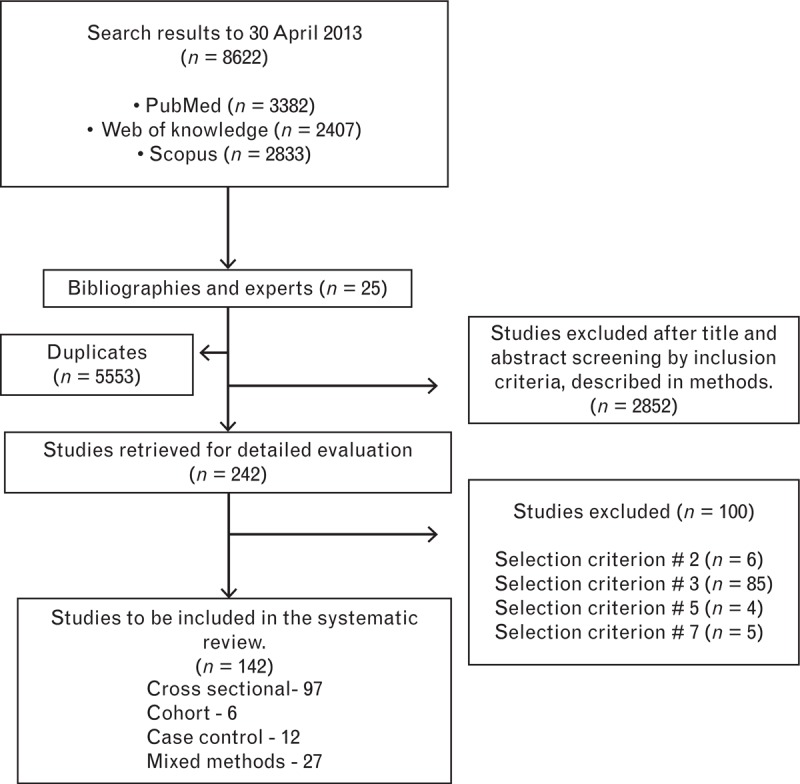
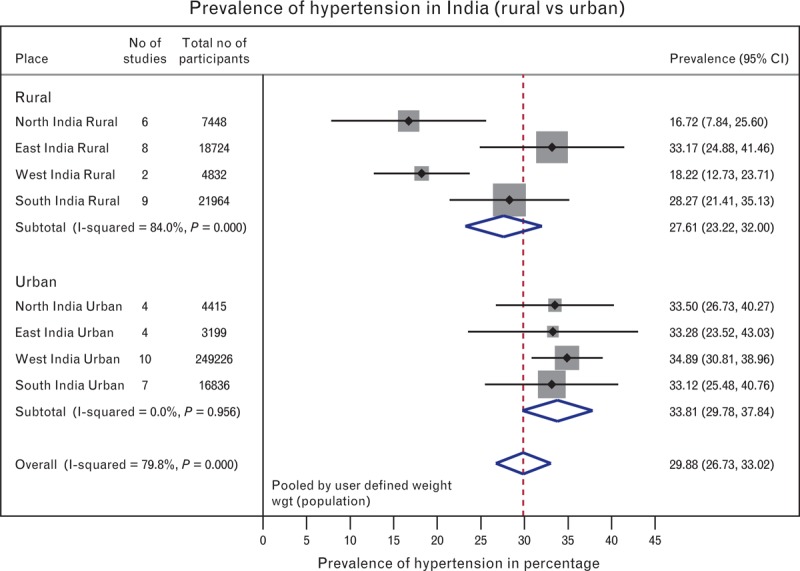
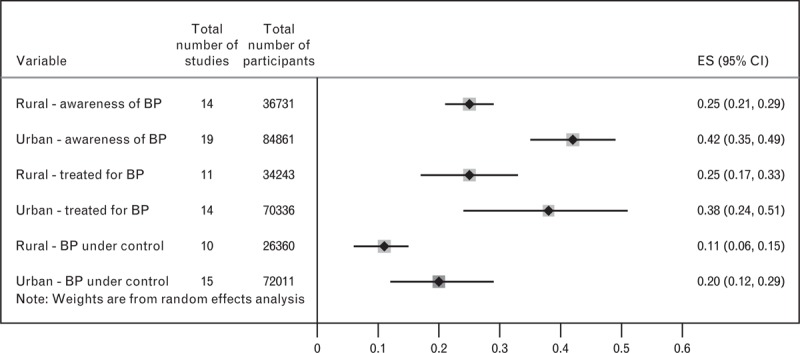
BACKGROUND: A region-specific (urban and rural parts of north, east, west, and south India) systematic review and meta-analysis of the prevalence, awareness, and control of hypertension among Indian patients have not been done before. METHODS: Medline, Web of Science, and Scopus databases from 1950 to 30 April 2013 were searched for 'prevalence, burden, awareness, and control of blood pressure (BP) or hypertension (≥140 SBP and or ≥90 DBP) among Indian adults' (≥18 years). Of the total 3047 articles, 142 were included. RESULTS: Overall prevalence for hypertension in India was 29.8% (95% confidence interval: 26.7-33.0). Significant differences in hypertension prevalence were noted between rural and urban parts [27.6% (23.2-32.0) and 33.8% (29.7-37.8); P = 0.05]. Regional estimates for the prevalence of hypertension were as follows: 14.5% (13.3-15.7), 31.7% (30.2-33.3), 18.1% (16.9-19.2), and 21.1% (20.1-22.0) for rural north, east, west, and south India; and 28.8% (26.9-30.8), 34.5% (32.6-36.5), 35.8% (35.2-36.5), and 31.8% (30.4-33.1) for urban north, east, west, and south India, respectively. Overall estimates for the prevalence of awareness, treatment, and control of BP were 25.3% (21.4-29.3), 25.1% (17.0-33.1), and 10.7% (6.5-15.0) for rural Indians; and 42.0% (35.2-48.9), 37.6% (24.0-51.2), and 20.2% (11.6-28.7) for urban Indians. CONCLUSION: About 33% urban and 25% rural Indians are hypertensive. Of these, 25% rural and 42% urban Indians are aware of their hypertensive status. Only 25% rural and 38% of urban Indians are being treated for hypertension. One-tenth of rural and one-fifth of urban Indian hypertensive population have their BP under control.
Overview
The claims and statistics of this paper haven’t been checked yet.
Free: it reads the open-access text and checks the first 5 claims that cite a source we can check. Create a free account to check every claim.
Integrity signals
Registry
Cites
Statistics
Figures
Verification
Claims the paper makes
The claims and statistics of this paper haven’t been checked yet.
Free: it reads the open-access text and checks the first 5 claims that cite a source we can check. Create a free account to check every claim.
Claims other papers make about this one
Each is checked against this paper’s own text: does it say what the citing paper says it does?
The source backs part of the claim, not all of it — or backs it for a different population, condition or comparison.
In the citing paper
“South Asian populations originating from the Indian subcontinent have a particularly high risk for cardiovascular and metabolic diseases, including CAD and type 2 DM.”
From 2020 International Society of Hypertension Global Hypertension Practice Guidelines (2020) · cites this paper as [141]
Experimental — accuracy not yet measuredThe cited source says what the claim attributes to it.
In the citing paper
“The prevalence of hypertension in rural India is estimated to be 27.6% [31], and the prevalence of type 2 diabetes in rural India is 16% [32], significantly contributing to the burden of disease.”
From Diagnostic Concordance of Telemedicine as Compared With Face-to-Face Care in Primary Health Care Clinics in Rural India: Randomized Crossover Trial (2023) · cites this paper as [31]
Self-check
Percentages, sums and reported differences re-computed from the paper’s own numbers.
The self-check needs the paper’s full text.
Citations
Cites
von Elm, E., Altman, D. G., Egger, M., Pocock, S. J., Gøtzsche, P. C., Vandenbroucke, J. P., & Initiative, F. T. S. (2007) · PLoS Medicine · doi:10.1371/journal.pmed.0040296 · Cited by 23,020
von Elm, E., Altman, D. G., Egger, M., Pocock, S. J., Gøtzsche, P. C., & Vandenbroucke, J. P. (2008) · Journal of Clinical Epidemiology · doi:10.1016/j.jclinepi.2007.11.008 · Cited by 17,893
von Elm, E., Altman, D. G., Egger, M., Pocock, S. J., Gøtzsche, P. C., Vandenbroucke, J. P., & Initiative, F. T. S. (2007) · Annals of Internal Medicine · doi:10.7326/0003-4819-147-8-200710160-00010 · Cited by 17,796
Lim, S. S., Vos, T., Flaxman, A. D., Danaei, G., Shibuya, K., Adair-Rohani, H., AlMazroa, M. A., Amann, M., Anderson, H. R., Andrews, K. G., et al. (2012) · The Lancet · doi:10.1016/s0140-6736(12)61766-8 · Cited by 11,805
Vandenbroucke, J. P., von Elm, E., Altman, D. G., Gøtzsche, P. C., Mulrow, C. D., Pocock, S. J., Poole, C., Schlesselman, J. J., Egger, M., & Initiative, F. T. S. (2007) · PLoS Medicine · doi:10.1371/journal.pmed.0040297 · Cited by 8,613 · cited 1×
“Quality scores were defined based on presence of eligibility criterion, sources and methods of selection of participants, reported numbers of outcome events or summary measures, and mentioned limitations of the study [62].”
Global burden of hypertension: analysis of worldwide data
Kearney, P. M., Whelton, M., Reynolds, K., Muntner, P., Whelton, P. K., & He, J. (2005) · The Lancet · doi:10.1016/s0140-6736(05)17741-1 · Cited by 8,594 · cited 3×
“An alarming rise in HTN projected by Global Burden of Hypertension 2005 study, [7] the GBD 2010 study [1] and WHO 2011 NCD India specific data [11] portray a grim picture for the 17.”
BackgroundLopez, A. D., Mathers, C. D., Ezzati, M., Jamison, D. T., & Murray, C. J. (2006) · The Lancet · doi:10.1016/s0140-6736(06)68770-9 · Cited by 5,630
Vandenbroucke, J. P., Elm, E. V., Altman, D. G., Gøtzsche, P. C., Mulrow, C. D., Pocock, S. J., Poole, C., Schlesselman, J. J., Egger, M., & initiative, F. T. S. (2007) · Annals of Internal Medicine · doi:10.7326/0003-4819-147-8-200710160-00010-w1 · Cited by 3,543
The Atlas of Heart Disease and Stroke
Mackay, J., Mensah, G. A., & Mendis, S. (2004) · Medical Entomology and Zoology · Cited by 1,550
Responding to the threat of chronic diseases in India
Srinath Reddy, K., Shah, B., Varghese, C., & Ramadoss, A. (2005) · The Lancet · doi:10.1016/s0140-6736(05)67343-6 · Cited by 728
Research works printed but not linked: 1
- Kaur M Blood pressure trends and hypertension among rural and urban Jat women of Haryana, India. Coll Antropol 2012; 36: 139– 144 22816211
Cited by
Items 201–300 of 787
Waghamare, S. R., Mittal, S., Pathania, M., Samanta, R., Kumawat, D., Gupta, N. K., & Mittal, S. K. (2021) · Indian Journal of Ophthalmology · doi:10.4103/ijo.ijo_1994_20 · Cited by 17
Risk factors predisposing to acute stroke in India: a prospective study
Ram, C. V. S., Kumar, S., Renjen, P. N., Kumar, P. G., Swaminathan, J., Reddy, C. R., Kondati, S., Sharma, M., Selvan, V. L. A., Sundaram, M., et al. (2021) · Journal of Hypertension · doi:10.1097/hjh.0000000000002915 · Cited by 29
“Copyright © 2021 Wolters Kluwer Journal of Hypertension of hypertension in India is projected to increase in the future [26].”
BackgroundFactors Associated With Hypertension Awareness, Treatment, and Control Among Adults in Kerala, India
Cao, Y., Sathish, T., Haregu, T., Wen, Y., de Mello, G. T., Kapoor, N., & Oldenburg, B. F. (2021) · Frontiers in Public Health · doi:10.3389/fpubh.2021.753070 · Cited by 17
Sogunuru, G. P., & Mishra, S. (2020) · Journal of Clinical Hypertension · doi:10.1111/jch.13798 · Cited by 17
Drug utilization studies using WHO prescribing indicators from India: A systematic review
Gujar, A., Gulecha, D. V., & Zalte, D. A. (2021) · Health Policy and Technology · doi:10.1016/j.hlpt.2021.100547 · Cited by 16
Soitong, P., Jangjaicharoen, S., Kaewsanit, A., Mali, P., Viriyakhaikul, Y., Boonnumma, S., Tipmabutr, S., Chalermchuang, P., Maneechot, W., Numnoi, C., et al. (2021) · PLoS ONE · doi:10.1371/journal.pone.0256260 · Cited by 18
“Some countries like India [15] and Vietnam [6] indicated that the prevalence of HT was 25% and 20.”
BackgroundInfluentialDevraj, J. P., Kumar, B. S., Sriswan, M. R., Jagdish, B., Priya, B., Neelu, S. B., Rao, V. D., Kumar, M., Geddam, J. J. B., & Hemalatha, R. (2021) · Evidence-based Complementary and Alternative Medicine · doi:10.1155/2021/2858235 · Cited by 21
“More than 50% of all stroke deaths and 24% of all coronary heart disease deaths in India are due to raised blood pressure [4].”
BackgroundPeng, M., Shi, X., Zhu, L., & Wang, Z. (2022) · Frontiers in Public Health · doi:10.3389/fpubh.2022.956711 · Cited by 20
Mohanty, S. K., Abhilasha, Mishra, R. S., Upadhyay, A. K., O’Donnell, O., & Maurer, J. (2023) · BMC Health Services Research · doi:10.1186/s12913-023-09318-6 · Cited by 18
Kurjogi, M. M., Vanti, G. L., & Kaulgud, R. S. (2021) · Indian Heart Journal · doi:10.1016/j.ihj.2021.10.006 · Cited by 16
Digital economy and high-quality development of the healthcare industry
Ding, Z., Qu, X., & Li, C. (2024) · Frontiers in Public Health · doi:10.3389/fpubh.2024.1331565 · Cited by 15
Pandey, K. R., & Meltzer, D. O. (2016) · PLoS ONE · doi:10.1371/journal.pone.0155293 · Cited by 16
“According to some surveys the prevalence of hypertension and hyperlipidemia may be higher than estimates from the Indian Sentinel Survey Study.”
ResultEffectiveness of deep breathing exercise on blood pressure among patients with hypertension
JANET, M. K. S., & GOWRI, D. P. M. (2017) · International Journal of Pharma and Bio Sciences · doi:10.22376/ijpbs.2017.8.1.b256-260 · Cited by 15
Venkateshmurthy, N. S., Ajay, V. S., Mohan, S., Jindal, D., Anand, S., Kondal, D., Tandon, N., Malipeddi, B. R., & Prabhakaran, D. (2018) · Trials · doi:10.1186/s13063-018-2813-2 · Cited by 16
Self-citationPulse wave analyzed cardiovascular parameters in young first degree relatives of hypertensives
Solanki, J., Mehta, H., & Shah, C. J. (2018) · Journal of Research in Medical Sciences · doi:10.4103/jrms.jrms_581_16 · Cited by 15
“This submerged iceberg population is large as recently revealed that one out of every third Indian is hypertensive (HT) or pre‐HT.[2] Family history of HTN, a major nonmodifiable risk factor, puts first‐degree relatives (FDRs) at a risk for incident HTN,[3,4] a disease leading to accelerated cardiovascular aging[5] (p…”
BackgroundVarakantham, V., Sailoo, A. K. K., & Bharatraj, D. K. (2017) · Hospital Pharmacy · doi:10.1177/0018578717738080 · Cited by 15
“High blood pressure (BP) is a major public health issue in India and is rampant among both urban and rural populations.(1) It is the key modifiable risk factor for many diseases.”
High blood pressure prediction based on AAA++ using machine-learning algorithms
Nimmala, S., Ramadevi, Y., Sahith, R., & Cheruku, R. (2018) · Cogent Engineering · doi:10.1080/23311916.2018.1497114 · Cited by 16
Patil, M., Hedaoo, R. P., Shah, R. P., Tauseef, S. M., Marzo, R. R., Ching, S. M., & Lambert, G. W. (2023) · INQUIRY The Journal of Health Care Organization Provision and Financing · doi:10.1177/00469580231167010 · Cited by 20
Dalal, J. J., Chandra, P., Chawla, R., Kumar, V., Abdullakutty, J., Natarajan, V., Naqvi, S. M. H., Gaurav, K., Rathod, R., Dhanaki, G. D., et al. (2023) · Drugs - Real World Outcomes · doi:10.1007/s40801-023-00400-3 · Cited by 23
“Only 25% of Indians in rural areas and 38% in urban areas are receiving treatment for hypertension while only one-tenth of the hypertensive population in rural and urban India has their blood pressure (BP) under control [5].”
BackgroundManagement of Hypertension in the Asia-Pacific Region: A Structured Review
Rahman, A., Magno, J. D. A., Cai, J., Han, M., Lee, H., Nair, T., Narayan, O. P., Jiampo, P., Minh, H. V., & Khurana, R. (2024) · American Journal of Cardiovascular Drugs · doi:10.1007/s40256-023-00625-1 · Cited by 22
“Socio-economic factors that affected BP control included living in an urban versus rural area [137, 138, 146, 154], household income [139, 141, 144–146, 149, 150], education level [141, 144, 145, 150, 154], marital status [145, 146, 149, 150], employment status [144, 146] and health insurance [139].”
BackgroundRana, R. K., Jha, R. R., Sinha, R., Kumar, D., Jaiswal, R., Patel, U. K., Prasad, J. B., Kar, S. S., & Goel, S. (2024) · PLoS ONE · doi:10.1371/journal.pone.0305223 · Cited by 18
Juneja, D., Munjal, M. K., Maharaj, M., Javeri, Y., Myatra, S. N., Nandakumar, S. M., Kothekar, A. T., Nikalje, A., Cherian, A., Nongthombam, R., et al. (2024) · Indian Journal of Critical Care Medicine · doi:10.5005/jp-journals-10071-24682 · Cited by 14
“C-Reactive protein has been studied as a prognostic marker in a few of these infections.”
BackgroundBlood pressure control in diabetes—the Indian perspective
Viswanathan, V., & Smina, T. P. (2019) · Journal of Human Hypertension · doi:10.1038/s41371-019-0212-0 · Cited by 14
Satish, P., Khetan, A. K., Raithatha, S. J., Bhende, P. V., & Josephson, R. (2019) · Indian Heart Journal · doi:10.1016/j.ihj.2019.11.257 · Cited by 14
A multicentre analysis of the outcome of arteriovenous fistula in maintenance haemodialysis
Jothi, S., Hareesh, K., Lesley, N., Vijayan, M., Anupama, S., Mathew, M., Parthasarathy, R., Saravanan, S., Nagarajan, P., Kumaraswamy, L., et al. (2020) · Seminars in Dialysis · doi:10.1111/sdi.12907 · Cited by 14
Brahmankar, T. R., & Prabhu, P. M. (2017) · International Journal of Community Medicine and Public Health · doi:10.18203/2394-6040.ijcmph20171361 · Cited by 14
Devassy, S. M., Webber, M., Scaria, L., Thiyagarajan, J. A., Fendt-Newlin, M., Joubert, J., Benny, A. M., Nannatt, A., & Joubert, L. (2020) · BMC Cardiovascular Disorders · doi:10.1186/s12872-020-01595-x · Cited by 17
Gupta, K., Ramakrishnan, S., Zachariah, G. A., Rao, J. S., Mohanan, P. P., Venugopal, K. N., Sateesh, S., Sethi, R., Jain, D., Bardolei, N., et al. (2020) · International Journal of Cardiology Hypertension · doi:10.1016/j.ijchy.2020.100055 · Cited by 15
Palal, D., & Stalin, P. (2018) · Journal of Public Health · doi:10.1007/s10389-018-0963-z · Cited by 13
Zaman, S. B., Silva, N. D., Goh, T. Y., Evans, R. G., Singh, R., Singh, R. P., Singh, A. R., Singh, P., & Thrift, A. G. (2022) · BMJ Innovations · doi:10.1136/bmjinnov-2022-000952 · Cited by 15
Muhammed, H., Misra, D. P., Jain, N., Ganguly, S., Pattanaik, S. S., Rai, M. K., Anuja, A. K., Mohindra, N., Kumar, S., & Agarwal, V. (2022) · Clinical Rheumatology · doi:10.1007/s10067-022-06349-y · Cited by 17
“Prevalence of hypertension in the general adult Indian population varies from 16 to 34% across studies [35], similar to that observed by us.”
ResultRakesh, P. S., Renjini, B. A., Mohandas, S., Menon, J. C., Numpelil, M., Sreedevi, A., & Vasudevan, B. K. (2023) · Indian Heart Journal · doi:10.1016/j.ihj.2023.06.004 · Cited by 14
Kumar, S., Yadav, S., & Kumar, A. (2023) · Journal of Human Hypertension · doi:10.1038/s41371-023-00856-4 · Cited by 16
“Blood pressure (BP) measurement is the keystone to prevent hypertension, which is the major factor of heart disease and the most signi fi cant cause of mortality worldwide, according to the world health organization (WHO) [1, 2].”
Seenappa, K., Kulothungan, V., Mohan, R., & Mathur, P. (2024) · International Journal of Public Health · doi:10.3389/ijph.2024.1606766 · Cited by 16
“Conversely, several studies in India have highlighted rural-urban discrepancies in raised blood pressure prevalence [14, 20, 32, 38].”
BackgroundGobezie, M. Y., Hassen, M., Tesfaye, N. A., Solomon, T., Demessie, M. B., Wendie, T. F., Tadesse, G., Kassa, T., & Tadese, F. (2024) · Frontiers in Cardiovascular Medicine · doi:10.3389/fcvm.2024.1335823 · Cited by 19
Khan, M. Y., Pandit, S., Ray, S., Mohan, J. C., Srinivas, B. C., Ramakrishnan, S., Mane, A., Mehta, S. C., & Shah, S. P. (2020) · Drugs - Real World Outcomes · doi:10.1007/s40801-020-00211-w · Cited by 16
Basu, S., Engtipi, K., & Kumar, R. (2020) · Chronic Illness · doi:10.1177/1742395320959418 · Cited by 17
“4%, with suboptimal blood pressure control in a majority of diagnosed patients contributing to excess morbidity and mortality due to early-onset microvascular and macrovascular complications.(3,4)Antihypertensive medications are highly effective in lowering blood pressure and reducing the risk of organ damage, provide…”
BackgroundAggarwal, P., Sinha, S. K., Khanra, D., Nath, R. K., Gujral, J. S., Reddy, N. V., & Mukherjee, A. (2021) · Indian Heart Journal · doi:10.1016/j.ihj.2021.01.016 · Cited by 13
Desai, N., Unni, G., Agarwala, R., Salagre, S., Godbole, S. G., Dengra, A. S., Abhyankar, M., & Revankar, S. Y. (2021) · Integrated Blood Pressure Control · doi:10.2147/ibpc.s272548 · Cited by 16
Khan, M. Y., Pandit, S., Abdulkutty, J., Navasundi, G. B., Hazra, P. K., Phadke, U., Mane, A., Mehta, S. C., & Shah, S. P. (2021) · Cardiology and Therapy · doi:10.1007/s40119-021-00217-7 · Cited by 17
“In spite of the negative outcomes of hypertension, overall awareness, treatment, and control of hypertension in India remains poor [5, 6].”
BackgroundMarmamula, S., Kumbham, T. R., Shidhaye, R. R., Modepalli, S. B., Barrenkala, N. R., Yellapragada, R., & Keeffe, J. E. (2022) · Scientific Reports · doi:10.1038/s41598-022-15943-8 · Cited by 13
Sugar, Salt, Fat, and Chronic Disease Epidemic in India: Is There Need for Policy Interventions?
Arora, N., Dasgupta, R., Pillai, R. N., & Kumar, R. (2015) · Indian Journal of Community Medicine · doi:10.4103/0970-0218.153858 · Cited by 13
“2%, respectively) in the last 15 years, with significant urban-rural differences.(2,3) Significantly, in the same period, prevalence of overweight and obesity increased almost four times (4-15%).”
BackgroundUrbanization and Socioeconomic Disparities in Hypertension among Older Adult Women in Sudan
Osman, S., Costanian, C., Annan, N. B., Fouad, F. M., Jaffa, M. A., & Sibai, A. M. (2019) · Annals of Global Health · doi:10.5334/aogh.2404 · Cited by 14
Fimasartan: A new armament to fight hypertension
Pradhan, A. K., Gupta, V., & Sethi, R. (2019) · Journal of Family Medicine and Primary Care · doi:10.4103/jfmpc.jfmpc_300_19 · Cited by 15
“8% in India in their meta‐analysis.[2] The prevalence of hypertension in this study was significantly higher in urban Indians than in rural Indians (33.”
BackgroundRoutray, S. S., Ray, G. K., Prakash, S., Sahu, A., Naik, A., & Mukherjee, S. (2022) · Vox Sanguinis · doi:10.1111/vox.13240 · Cited by 15
Begam, N. S., Kannan, S., & Mini, G. (2016) · Journal of Immigrant and Minority Health · doi:10.1007/s10903-016-0353-y · Cited by 13
“8 % which was lower than that of the upper and lower middle income countries [3].”
BackgroundNayak, A. R., Shekhawat, S., Lande, N. H., Kawle, A. P., Kabra, D. P., Chandak, N. H., Badar, S. R., Raje, D. V., Daginawala, H. F., & Kashyap, R. S. (2016) · Basic and Clinical Neuroscience Journal · doi:10.15412/j.bcn.03070408 · Cited by 13
“However, we observed high incidence of HTN (67%) in the patients with AIS, indicating more complicated scenario in Central India compared to reports from rest of the India (Anchala et al., 2014).”
BackgroundResultInfluentialChiramal, J. A., Johnson, J., Webster, J. J., Nag, D. R., Robert, D., Ghosh, T., Golla, S., Pawar, S., Krishnan, P., Drain, P. K., et al. (2024) · PLOS Global Public Health · doi:10.1371/journal.pgph.0003351 · Cited by 20
“One of the potential factors for higher incidence of hemorrhagic strokes among the Assamese indigenous population and the tea garden workers could be a high prevalence of hypertension reportedly between 33% to 60.8%, which is the largest single risk factor of stroke [15–18].”
BackgroundInfluentialSingh, S. M., Surendran, I., Jain, S., Sharma, A. D., Dua, D., Shouan, A., & Avasthi, A. (2019) · Asian Journal of Psychiatry · doi:10.1016/j.ajp.2019.03.004 · Cited by 16
Malignant Hypertension and the Role of Ophthalmologists: A Review Article
Mishra, P., Dash, N., Sahu, S. K., Kanaujia, V., & Sharma, K. (2022) · Cureus · doi:10.7759/cureus.27140 · Cited by 18
“Indian studies reflect the overall prevalence of hypertension as around 20-30% and among all hypertensives, 1-2% present with hypertensive crisis [13,14].”
BackgroundThakre, S., Anjankar, A. P., Singh, A., & Kumar, T. (2022) · Cureus · doi:10.7759/cureus.27997 · Cited by 12
“Lifestyle modifications must be the dominant factor in this strategy with required drugs [27,28].”
BackgroundControl status of hypertension in India: systematic review and meta-analysis
Kumar, S., Anandraj, J., Sivanatham, P., Essakky, S., Nain, J., Talukdar, R., Loganathan, V., & Kar, S. S. (2023) · Journal of Hypertension · doi:10.1097/hjh.0000000000003381 · Cited by 19
“But, since the previous estimate published in 2013 [7], latest estimates on the prevalence of control status of HTN in India is lacking.”
BackgroundThe Indian Consensus Statement for the Management of Lower Extremity Peripheral Artery Disease
Khanna, N. N., Krishna, V. N., Manjunath, C., Tyagi, S., Jindal, R., Chadha, M. D., Natesh, B. H., Warawdekar, G., WANGNOO, S. K., Chopra, H. K., et al. (2023) · Journal of Indian College of Cardiology · doi:10.4103/1561-8811.383634 · Cited by 17
Balsari, S., Vemulapalli, P., Gofine, M. L., Oswal, K. C., Merchant, R., Saunik, S., Greenough, G. P., & Khanna, T. (2017) · Journal of Human Hypertension · doi:10.1038/jhh.2017.54 · Cited by 12
Mehra, A., Sangwan, G., Grover, S., Kathirvel, S., & Avasthi, A. (2020) · Journal of Neurosciences in Rural Practice · doi:10.1055/s-0040-1715540 · Cited by 15
Jain, N., Pathania, M., & Bahurupi, Y. A. (2021) · International Journal of Preventive Medicine · doi:10.4103/ijpvm.ijpvm_465_20 · Cited by 11
“[2] Indian studies report hypertension to be 33% prevalent in urban and 25% in rural population.[3]”
BackgroundHighlighting the South Asian Heart Failure Epidemic
Srinivasan, N., Gullapalli, N., & Shah, K. (2024) · Cardiac failure review · doi:10.15420/cfr.2023.21 · Cited by 11
“21,22 The PURE study, which was conducted in urban and rural locations in 17 countries in Asia, Africa, Europe, and North and South America found that awareness and treatment of hypertension were extremely low in South Asian countries compared to other regions.”
BackgroundGupta, K., Jain, V., Qamar, A., Singal, A. K., Ramakrishnan, S., Gupta, R., & Bajaj, N. S. (2021) · Indian Heart Journal · doi:10.1016/j.ihj.2021.06.004 · Cited by 11
Vascular cognitive impairment in India: Challenges and opportunities for prevention and treatment
Arshad, F., Samim, M. M., Paplikar, A., Rajendran, S. P., Kalkonde, Y. V., & Alladi, S. (2021) · Cerebral Circulation - Cognition and Behavior · doi:10.1016/j.cccb.2021.100034 · Cited by 14
Maksimov, S. A., Balanova, Y. А., Shalnova, S. A., Аркадьевна, М. Г., Владимировна, К. А., & Drapkina, O. M. (2022) · BMC Public Health · doi:10.1186/s12889-022-12645-8 · Cited by 13
Prevalence of Hypertension in Boloor Diabetes Study (BDS-II) and its Risk Factors
Adhikari, P. (2015) · JOURNAL OF CLINICAL AND DIAGNOSTIC RESEARCH · doi:10.7860/jcdr/2015/16509.6781 · Cited by 11
Mini, G., Sarma, P. S., & Thankappan, K. R. (2019) · BMC Public Health · doi:10.1186/s12889-019-8082-5 · Cited by 11
Prevalence of Hypertension in Cardiovascular Disease in Iran: Systematic Review and Meta-Analysis
Fakhri, M., Sarokhani, D., Ghiasi, B., & Dehkordi, A. H. (2020) · International Journal of Preventive Medicine · doi:10.4103/ijpvm.ijpvm_351_18 · Cited by 13
“0).[95] Prevalence of hypertension in Indian populations is lower than that of cardiovascular patients in Iran.”
BackgroundRagavan, R. S., Joshi, R., Evans, R. G., Riddell, M. A., Thankappan, K. R., Chow, C. K., Oldenburg, B. F., Mahal, A. S., Kalyanram, K., Kartik, K., et al. (2020) · Journal of Hypertension · doi:10.1097/hjh.0000000000002594 · Cited by 13
“Rural regions encompass approximately 70% of the Indian population, and with India expected to be the most populous country by 2050 [4], the absolute burden”
BackgroundChaudhary, P., Goyal, A., Pakhare, A. P., Goel, S. K., Kumar, A., Reddy, M. A., & Anoohya, V. (2021) · Sleep And Breathing · doi:10.1007/s11325-021-02401-4 · Cited by 11
Gupta, R. D., Haider, S. S., Sutradhar, I., Hasan, M., Joshi, H., Haider, M. R., & Sarker, M. (2019) · Journal of Biosocial Science · doi:10.1017/s0021932019000531 · Cited by 16
“Although previous studies found urban–rural differences in hypertension awareness, antihypertensive medication use and control of BP (Anchala et al., 2014; Rahimi et al., 2015), no significant association was found in the present study.”
ResultLong-acting nifedipine in the management of essential hypertension: a review for cardiologists
Hazra, P. K. (2024) · American Journal of Cardiovascular Disease · doi:10.62347/rpmz6407 · Cited by 11
“A meta-analysis Am J Cardiovasc Dis 2024;14(6):396-413 found hypertension rates of 33% in urban areas and 25% in rural areas, but treatment rates are low, with 75% in rural areas and 62% in urban areas not receiving treatment [7].”
Zaidi, A. H., & de Ferranti, S. D. (2022) · JAMA Network Open · doi:10.1001/jamanetworkopen.2022.39290 · Cited by 9
The Pandemic of Coronary Heart Disease in South Asia: What Clinicians Need to Know
Gupta, K., Baloch, F., Kakar, T. S., Agarwal, H., Rawlley, B., Khan, U. I., Iqbal, R., Barolia, R., & Virani, S. S. (2023) · Current Atherosclerosis Reports · doi:10.1007/s11883-023-01110-5 · Cited by 14
Wagai, G., Jeelani, U., Beg, M. A., & Romshoo, G. J. (2023) · Journal of Family Medicine and Primary Care · doi:10.4103/jfmpc.jfmpc_2023_22 · Cited by 16
“In India, NCDs such as CVDs, cancer, and diabetes are estimated to account for around 60% of all deaths.[16,17]”
BackgroundRajadhyaksha, G. C., Reddy, H. D., Singh, A. K., Oomman, A., & Adhyapak, S. M. (2023) · International Journal of Microbiology Research · doi:10.4103/ijmr.ijmr_3096_21 · Cited by 10
“An increasing prevalence of hypertension with age has been observed in Indian studies 4 .”
BackgroundResultSingh, M. M., Basu, S., Lalwani, H. B., Rao, S., Maheshwari, V., Garg, S., & Sharma, N. (2023) · BMC Public Health · doi:10.1186/s12889-023-17021-8 · Cited by 14
Jha, K., Modi, P., Kumar, Y., Kumar, T., Singh, R., & Mishra, A. (2019) · Journal of Family Medicine and Primary Care · doi:10.4103/jfmpc.jfmpc_375_18 · Cited by 13
“Every third urban and fourth rural citizen of India is hypertensive and only 25 to 42% of them are actually aware of it.[1] The condition is more or less similar in even in most of the developed countries of the world.”
BackgroundMulchandani, R., Babu, G. R., Kaur, A., Singh, R., & Lyngdoh, T. (2022) · IJID Regions · doi:10.1016/j.ijregi.2022.02.010 · Cited by 10
“The high burden of non-communicable The prevalence of hypertension — a major risk factor for heart disease and stroke — is about 30% in India ( Anchala et al., 2014 ).”
Meta‐analysis on the association between the frequency of tooth brushing and hypertension risk
Zou, L., Zhang, M., Fu, W., Liu, Y., Wen, J., & Lu, Z. (2022) · Journal of Clinical Hypertension · doi:10.1111/jch.14498 · Cited by 12
Abhishek, M. L., Sundarakumar, J. S., Hameed, S. K. S., Teams, S. &. T. S., & Ravindranath, V. (2022) · Alzheimer s & Dementia · doi:10.1002/alz.12715 · Cited by 11
Shetty, S., Nandeesh, N., & Shetty, P. (2022) · International Journal of Yoga · doi:10.4103/ijoy.ijoy_107_22 · Cited by 14
“Submitted: 29‐Jun‐2022 Revised: 02‐Nov‐2022 Accepted: 04‐Nov‐2022 Published: 16‐Jan‐2023 just one‐tenth of rural and one‐fifth of the urban population having their BP under control.[6] Even hypertensive patients with optimum levels of BP are still at higher risk of CAD mortality than normotensive individuals.”
BackgroundZhao, L., Sun, W. Y., Wang, J., Wu, J., Zhang, Y., Liu, Y., & Liu, B. (2018) · Clinical and Experimental Hypertension · doi:10.1080/10641963.2018.1489544 · Cited by 10
“This year-by-year growth trend is even more pronounced in developing countries, especially in China, India, and Russia (3,4).”
BackgroundSun, Y. V., Liu, C., Staimez, L. R., Ali, M. K., Chang, H. H., Kondal, D., Patel, S. A., Jones, D. P., Mohan, V., Tandon, N., et al. (2020) · Wellcome Open Research · doi:10.12688/wellcomeopenres.16336.2 · Cited by 13
Self-citationIndrapal, M., Balakrishna, N., Bhaskar, V., Rachakulla, H., & Laxmaiah, A. (2022) · Indian Heart Journal · doi:10.1016/j.ihj.2022.08.006 · Cited by 10
Burden of Self-Reported Noncommunicable Diseases in 26 Villages of Anand District of Gujarat, India
Kumar, D., Raithatha, S., Gupta, S., Raj, R., & Kharod, N. (2015) · International Journal of Chronic Diseases · doi:10.1155/2015/260143 · Cited by 10
“Due to different sociodemographic characteristics of our population and the study design followed in our population, the self-reported prevalence might be reported to be lower as compared to other studies [11, 15, 17].”
ResultAdherence to treatment among hypertensive individuals in a rural population of North India
Misra, P., Salve, H. R., Srivastava, R., Kant, S., & Krisnan, A. (2017) · Indian Journal of Community Health · doi:10.47203/ijch.2017.v29i02.009 · Cited by 10
“(2) Non-compliance to the medication is the most common cause of treatment failure leading to disease progression in chronic conditions.”
BackgroundSolanki, J., Gadhavi, B. P., Makwana, A., Mehta, H., Shah, C. J., & Gokhale, P. A. (2018) · International Journal of Preventive Medicine · doi:10.4103/ijpvm.ijpvm_423_15 · Cited by 10
“8% prevalence of HTN in west India.[1] A size of 142 (82 males, 60 females) was sufficient to yield 90% confidence level keeping 10% margin of error.”
InfluentialKrishna, A., Pathni, A. K., Sharma, B., Shivashankar, R., Shrivastava, S., & Hering, D. (2020) · Journal of Clinical Hypertension · doi:10.1111/jch.13944 · Cited by 9
Chauhan, S., Kumar, S., Nath, N. J., Dosaya, D., & Patel, R. (2022) · Aging and Health Research · doi:10.1016/j.ahr.2022.100106 · Cited by 11
Sivanantham, P., Mathan Kumar, S., Essakky, S., Singh, M., Ghosh, S., Mehndiratta, A., & Kar, S. S. (2023) · PLoS ONE · doi:10.1371/journal.pone.0285542 · Cited by 11
“In India, where one-fourth and one tenth of the population have HTN and diabetes respectively, and with considerable disparities in addressing healthcare needs across states it is crucial that public health managers ensure the medical management of those identified through the survey [26, 27].”
BackgroundBera, O. P., Mondal, H., & Bhattacharya, S. (2023) · Cureus · doi:10.7759/cureus.50722 · Cited by 28
“In an effort to address this health challenge, India has established a target aiming for a 25% relative reduction in the prevalence of hypertension by 2025 [2].”
BackgroundAttributes of hypertension among industrial workers in Northern India - An alarming signal
Goyal, P., Goyal, G. K., Yadav, K., Bhatt, A., Nassa, K., Raushan, S. K., Aggarwal, D., & Dagar, R. (2024) · Journal of Family Medicine and Primary Care · doi:10.4103/jfmpc.jfmpc_1158_23 · Cited by 9
Mohanraj, S., Velmurugan, G., Dhivakar, M., Ramakrishnan, A., Cherian, M., Alexander, T. J., Thalappil, P., & Swaminathan, K. (2024) · Global Heart · doi:10.5334/gh.1354 · Cited by 12
Comparison of dual therapies for hypertension treatment in India: a randomized clinical trial
Prabhakaran, D., Roy, A., Chandrasekaran, A. M., Kondal, D., Mukherjee, S., Kiru, G., Singh, K., Salwa, H., Christa, E., Lobo, A. S., et al. (2025) · Nature Medicine · doi:10.1038/s41591-025-03854-w · Cited by 11
Self-citationKrishnamoorthy, Y., Jayaseelan, V., Debnath, K., & Kar, S. S. (2020) · Indian Journal of Occupational and Environmental Medicine · doi:10.4103/ijoem.ijoem_71_20 · Cited by 9
“Our study also found that only 30% were aware of their condition which is almost similar to the general population.[15] The awareness level still needs to be improved by periodic or annual screening of workers for high blood pressure.”
BackgroundInfluentialNakajima, A., Subban, V., Russo, M., Bryniarski, K. L., Kurihara, O., Araki, M., Minami, Y., Soeda, T., Yonetsu, T., Crea, F., et al. (2021) · International Journal of Cardiology · doi:10.1016/j.ijcard.2021.08.048 · Cited by 9
Geldsetzer, P., Neve, J. D., Mohan, V., Prabhakaran, D., Roy, A., Tandon, N., Davies, J. I., Vollmer, S., Bärnighausen, T., & Prenissl, J. (2022) · Global Heart · doi:10.5334/gh.1056 · Cited by 11
Self-citationMuhammad, T., Paul, R., Rashmi, R., & Srivastava, S. (2022) · Scientific Reports · doi:10.1038/s41598-022-17518-z · Cited by 15
Chauhan, V. S., Bansal, M., Sharma, V., & Gupta, R. (2022) · Indian Journal of Community Medicine · doi:10.4103/ijcm.ijcm_1154_21 · Cited by 14
“5 million lives each year.[1] The prevalence of hypertension in India has been continuously increasing, from 5% in the 1960s to around 30% till 2008.”
BackgroundRadithia, D., Subarnbhesaj, A., Ayuningtyas, N., Bakti, R. K., Mahdani, F. Y., Pratiwi, A. E., Ayunnisa, N., Putri, S., & Pramitha, S. R. (2023) · Journal of Clinical and Experimental Dentistry · doi:10.4317/jced.60195 · Cited by 9
Point-of-Care Devices in Healthcare: A Public Health Perspective
Zarnegar, A. (2023) · Studies in computational intelligence · doi:10.1007/978-3-031-42112-9_4 · Cited by 15
Prevalence of hypertension in people living in coastal areas of Bangladesh
Sayeed, M. A., Rahman, A. S., Ali, M. H., Afrin, S., Rhaman, M. M., Chowdhury, M. M. H., & Banu, A. (2016) · Ibrahim Medical College Journal · doi:10.3329/imcj.v9i1.27634 · Cited by 14
Obstructive sleep apnea risk for driving license applicants in India – A community based study
Dubey, A., Bajaj, D. K., Mishra, A., Singh, B. P., Gupta, V. K., Kant, S., & Dixit, S. (2017) · International Journal of Occupational Medicine and Environmental Health · doi:10.13075/ijomeh.1896.01021 · Cited by 13
Saif‐Ur‐Rahman, K., Hasan, M. N., Hossain, S., Shafique, S., Khalequzzaman, M., Haseen, F., Rahman, A., Anwar, I., & Islam, S. S. (2018) · BMJ Open · doi:10.1136/bmjopen-2017-020724 · Cited by 10
“8% with a significant difference between rural and urban areas.(9) Similar results have been reported from population-based studies in Bangladesh where age-standardised prevalence of prehypertension and hypertension were 27.”
Result
Metadata
- Authors
- Anchala, R., Kannuri, N. K., Pant, H., Khan, H., Franco, O. H., Di Angelantonio, E., & Prabhakaran, D.
- Affiliations
- University of Cambridge (GB)
- Public Health Foundation (US)
- Erasmus MC (NL)
- Corresponding author
- Anchala, Raghupathy
- Venue
- Journal of Hypertension
- Published
- 2014-06
- Volume
- 32
- Issue
- 6
- Pages
- 1170-1177
- ISSN
- 0263-6352 (ISSN-L)
- PMC
- PMC4011565
- OpenAlex
- W2028825584
- Semantic Scholar
- 8a62255c3f7b79f8f2a7a97f53b750141021c8c7
- Cited by
- 782
- References
- 76
- Citations by year
- 2026: 45 · 2025: 67 · 2024: 80 · 2023: 97 · 2022: 103 · 2021: 79 · 2020: 70 · 2019: 65 · 2018: 52 · 2017: 49 · 2016: 55 · 2015: 14 · 2014: 6
- FWCI
- 6.66
- Type
- journal article
- Language
- en
- Open access
- hybrid
- doi.org
- Licence
- cc-by-nc-nd
- Locations
- Journal of Hypertension (publishedVersion, cc-by-nc-nd)
- Europe PMC (PubMed Central) (publishedVersion, cc-by-nc-nd)
- PubMed Central (publishedVersion, cc-by-nc-nd)
- PubMed (publishedVersion)
- EUR Research Repository (Erasmus University Rotterdam) (publishedVersion)
- EUR Research Repository (Erasmus University Rotterdam) (submittedVersion)
- RePub (Erasmus University Rotterdam) (submittedVersion, other-oa)
- Funders
- Wellcome Trust (084754)
- National Institute for Health and Care Research (NF-SI-0512-10165)
- British Heart Foundation (RG/08/014/24067)
- Medical Research Council (MR/L003120/1)
- Topics
- Health Sciences › Medicine › Cardiology and Cardiovascular Medicine › Blood Pressure and Hypertension Studies
- Health Sciences › Nursing › Nutrition and Dietetics › Sodium Intake and Health
- Health Sciences › Medicine › Cardiology and Cardiovascular Medicine › Cardiovascular Health and Risk Factors
- Keywords
- hypertension, hypertension prevalence, hypertension awareness, hypertension control, blood pressure, urban-rural differences, regional variation, India
- MeSH terms
- Attitude to Health, Blood Pressure, Geography, Humans, Hypertension, India, Risk Factors, Rural Population, Urban Population, Reproducibility of Results, Prevalence, Asian People
About these checks
Registry, retraction, Cites and statistics results are computed, not judged, with one exception: a printed reference that no index lists is read once by a model before it counts as a citation error. Claims are extracted by a model and kept only when their quote appears verbatim in the text; each cited source is then checked, with a model’s help, for whether it says what the claim relies on. Those verdicts can be wrong — read the claim’s quote and the cited source before relying on one.
Statistics and arithmetic are recomputed, not judged.
Confidence bands are shown only for fields calibrated on our annotated test set. None is calibrated yet, so no band is shown.
What counts as a claim ›How we measure confidence ›How we check this ›
Are you an author, or do you see a problem with this page? Request a review
Data sources
Bibliographic data: Semantic Scholar, OpenAlex, Crossref.
Contains information from the Semantic Scholar Academic Graph Datasets, made available under the ODC Attribution License (ODC-BY 1.0).
Semantic Scholar’s data is described in: Kinney, R., et al. (2023). The Semantic Scholar Open Data Platform. arXiv:2301.10140.
