

Altered connectivity of the right anterior insula drives the pain connectome changes in chronic knee osteoarthritis
Open accessThe DOI matches its Crossref record; 56 of the 56 references it cites were found in a registry or an index.
Abstract
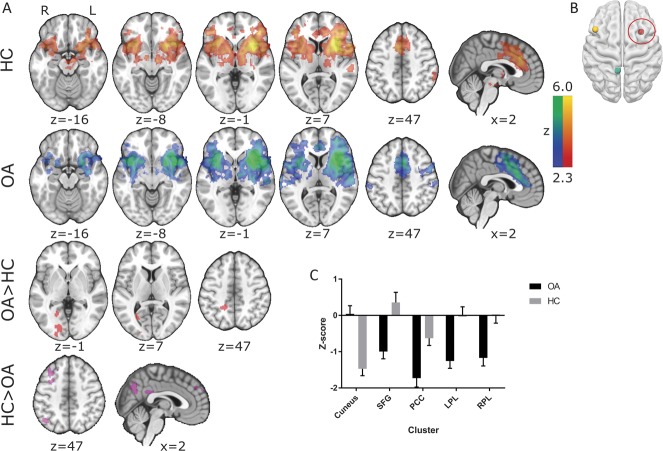
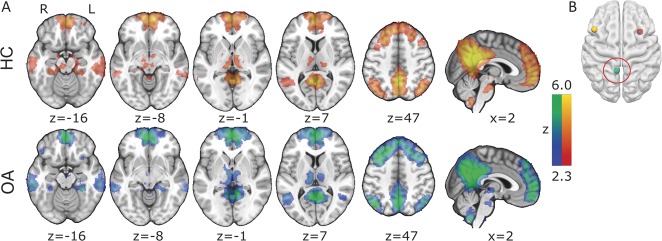
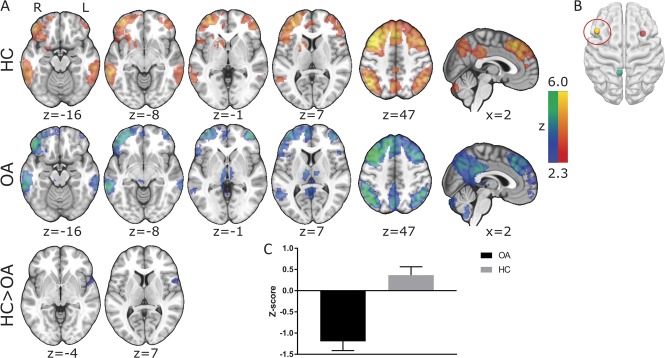
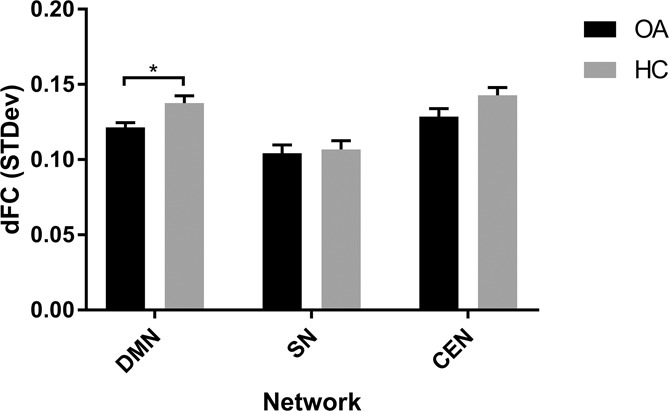
Resting-state functional connectivity (FC) has proven a powerful approach to understand the neural underpinnings of chronic pain, reporting altered connectivity in 3 main networks: the default mode network (DMN), central executive network, and the salience network (SN). The interrelation and possible mechanisms of these changes are less well understood in chronic pain. Based on emerging evidence of its role to drive switches between network states, the right anterior insula (rAI, an SN hub) may play a dominant role in network connectivity changes underpinning chronic pain. To test this hypothesis, we used seed-based resting-state FC analysis including dynamic and effective connectivity metrics in 25 people with chronic osteoarthritis (OA) pain and 19 matched healthy volunteers. Compared with controls, participants with painful knee OA presented with increased anticorrelation between the rAI (SN) and DMN regions. Also, the left dorsal prefrontal cortex (central executive network hub) showed more negative FC with the right temporal gyrus. Granger causality analysis revealed increased negative influence of the rAI on the posterior cingulate (DMN) in patients with OA in line with the observed enhanced anticorrelation. Moreover, dynamic FC was lower in the DMN of patients and thus more similar to temporal dynamics of the SN. Together, these findings evidence a widespread network disruption in patients with persistent OA pain and point toward a driving role of the rAI.
Overview
The claims and statistics of this paper haven’t been checked yet.
Free: it reads the open-access text and checks the first 5 claims that cite a source we can check. Create a free account to check every claim.
Integrity signals
Registry
Cites
Statistics
Figures
Verification
Claims the paper makes
The claims and statistics of this paper haven’t been checked yet.
Free: it reads the open-access text and checks the first 5 claims that cite a source we can check. Create a free account to check every claim.
Claims other papers make about this one
Each is checked against this paper’s own text: does it say what the citing paper says it does?
The cited source doesn’t support the claim as written.
In the citing paper
“Not only does each network independently demonstrate changes in functional connectivity in response to different types of chronic pain stimuli, it has been demonstrated that there is elevated functional connectivity among the DMN, FPN, and SN in individuals suffering from CMP [12,13,14,15,16,17,18].”
From Graph theory analysis of induced neural plasticity post-Acceptance and Commitment Therapy for chronic pain (2020) · cites this paper as [14]
Checked by a reasoning model — may be wrong.
Experimental — accuracy not yet measured
Self-check
Percentages, sums and reported differences re-computed from the paper’s own numbers.
The self-check needs the paper’s full text.
Citations
Cites
Jenkinson, M., Bannister, P., Brady, M., & Smith, S. (2002) · NeuroImage · doi:10.1006/nimg.2002.1132 · Cited by 11,888
The Pain Catastrophizing Scale: Development and validation.
Sullivan, M. J. L., Bishop, S. R., & Pivik, J. (1995) · Psychological Assessment · doi:10.1037//1040-3590.7.4.524 · Cited by 8,227 · cited 1×
“Directly before the scan session, all subjects undertook a battery of psychometric questionnaires including measures of educational level, low mood (Beck’s Depression Index), anxiety (StateTrait Anxiety Index), pain state (McGill Pain Questionnaire), and pain catastrophizing (Pain Catastrophizing Scale).(8,18,38,52,54…”
MethodPower, J. D., Barnes, K. A., Snyder, A. Z., Schlaggar, B. L., & Petersen, S. E. (2012) · NeuroImage · doi:10.1016/j.neuroimage.2011.10.018 · Cited by 7,429
Dissociable intrinsic connectivity networks for salience processing and executive control
Seeley, W. W., Menon, V., Schatzberg, A. F., Keller, J., Glover, G. H., Kenna, H., Reiss, A. L., & Greicius, M. D. (2007) · The Journal of Neuroscience · doi:10.1523/jneurosci.5587-06.2007 · Cited by 7,426 · cited 2×
“A brain network implicated in this process is the “salience network” (SN).(50) The core SN is formed by the bilateral anterior insula and the anterior middle cingulate cortex supporting the integration of external information, previous experience, and concurrent homeostatic state, to orient attention.”
BackgroundA global optimisation method for robust affine registration of brain images
Jenkinson, M., & Smith, S. (2001) · Medical Image Analysis · doi:10.1016/s1361-8415(01)00036-6 · Cited by 6,872 · cited 1×
“Linear registration (FLIRT) to the T1-weighted image (BBR) and Montreal Neurological Institute standard space (12 ̊ of freedom) was performed.(30,31) All data sets were denoised using ICA1 FIX (independent component analysis followed by FMRIB’s ICA-based noise reduction.”
MethodThe McGill Pain Questionnaire: Major properties and scoring methods
Melzack, R. (1975) · Pain · doi:10.1016/0304-3959(75)90044-5 · Cited by 6,845
Saliency, switching, attention and control: a network model of insula function
Menon, V., & Uddin, L. Q. (2010) · Brain Structure and Function · doi:10.1007/s00429-010-0262-0 · Cited by 5,592 · cited 2×
“The core SN is formed by the bilateral anterior insula and the anterior middle cingulate cortex supporting the integration of external information, previous experience, and concurrent homeostatic state, to orient attention.(39) Therefore, the SN is expected to play a dominant role in chronic pain, a condition believed…”
BackgroundDynamic functional connectivity: Promise, issues, and interpretations
Hutchison, R. M., Womelsdorf, T., Allen, E. A., Bandettini, P. A., Calhoun, V. D., Corbetta, M., Della Penna, S., Duyn, J. H., Glover, G. H., Gonzalez-Castillo, J., et al. (2013) · NeuroImage · doi:10.1016/j.neuroimage.2013.05.079 · Cited by 2,962
Sridharan, D., Levitin, D. J., & Menon, V. (2008) · Proceedings of the National Academy of Sciences · doi:10.1073/pnas.0800005105 · Cited by 2,892 · cited 2×
“Previous work in healthy volunteers has demonstrated the right anterior insula (rAI) as the main causal output within the SN, projecting to and influencing the central executive network (CEN) and DMN acting as a key switch between these networks.(22,39,53) There are, however, surprisingly few studies reporting SN chan…”
ResultREST: A Toolkit for Resting-State Functional Magnetic Resonance Imaging Data Processing
Song, X.-W., Dong, Z.-Y., Long, X.-Y., Li, S.-F., Zuo, X.-N., Zhu, C.-Z., He, Y., Yan, C.-G., & Zang, Y.-F. (2011) · PLoS ONE · doi:10.1371/journal.pone.0025031 · Cited by 1,872 · cited 1×
“Bivariate first-order coefficient-based voxel-wise Granger causality analysis (GCA) was calculated using the REST fMRI toolbox.(51) Granger causality analysis calculates an estimate of the causal effect of a region of interest on each voxel in the brain (X-Y effect) and the reverse (Y-X effect).”
MethodSalimi-Khorshidi, G., Douaud, G., Beckmann, C. F., Glasser, M. F., Griffanti, L., & Smith, S. M. (2014) · NeuroImage · doi:10.1016/j.neuroimage.2013.11.046 · Cited by 1,770
Disruption of Large-Scale Brain Systems in Advanced Aging
Andrews-Hanna, J. R., Snyder, A. Z., Vincent, J. L., Lustig, C., Head, D., Raichle, M. E., & Buckner, R. L. (2007) · Neuron · doi:10.1016/j.neuron.2007.10.038 · Cited by 1,592
Prevalence of chronic pain in the UK: a systematic review and meta-analysis of population studies
Fayaz, A., Croft, P., Langford, R. M., Donaldson, L. J., & Jones, G. T. (2016) · BMJ Open · doi:10.1136/bmjopen-2015-010364 · Cited by 1,355 · cited 3×
“It may be caused by any number of underlying pathologies such as arthritis, neuropathy, or migraine and is very common affecting between 33% and 50% of adults in the United Kingdom.19 The cause is not fully understood but central mechanisms have been implicated as predisposing factors.57 Interestingly, studies focusin…”
BackgroundInfluentialPaulus, M. P., & Stein, M. B. (2006) · Biological Psychiatry · doi:10.1016/j.biopsych.2006.03.042 · Cited by 1,325 · cited 1×
“This is interesting in the context that anxiety disorders have previously been related to hyperactivity of the AI within the SN network.(46,50) Thus, given the known influence of the SN on the CEN, it is possible that increased anxiety (a common comorbidity of chronic pain) plays a role in the maladaptation of SN-CEN…”
BackgroundGriffanti, L., Salimi-Khorshidi, G., Beckmann, C. F., Auerbach, E. J., Douaud, G., Sexton, C. E., Zsoldos, E., Ebmeier, K. P., Filippini, N., Mackay, C. E., et al. (2014) · NeuroImage · doi:10.1016/j.neuroimage.2014.03.034 · Cited by 1,262
Reduced resting-state brain activity in the “default network” in normal aging
Damoiseaux, J. S., Beckmann, C. F., Arigita, E. J. S., Barkhof, F., Scheltens, P., Stam, C. J., Smith, S. M., & Rombouts, S. A. R. B. (2008) · Cerebral Cortex · doi:10.1093/cercor/bhm207 · Cited by 1,187
Anticorrelations in resting state networks without global signal regression
Chai, X. J., Castañón, A. N., Öngür, D., & Whitfield-Gabrieli, S. (2012) · NeuroImage · doi:10.1016/j.neuroimage.2011.08.048 · Cited by 1,144 · cited 1×
“The CSF and WMmaps were then transformed to fMRI space using the previously calculated transform and were volume thresholded to retain only the top 20 and 198 cm(3), respectively, to minimise partial volume and global demeaning effects.(12) Mean CSF and WM time series were then extracted per subject using thesemasks a…”
MethodBeyond Feeling: Chronic Pain Hurts the Brain, Disrupting the Default-Mode Network Dynamics
Baliki, M. N., Geha, P. Y., Apkarian, A. V., & Chialvo, D. R. (2008) · The Journal of Neuroscience · doi:10.1523/jneurosci.4123-07.2008 · Cited by 853 · cited 1×
“Default mode network alterations are the most commonly reported network changes in chronic pain, yet we found no such group DMN FC difference.(5,7,10,35,37,41,43) It is possible that differences could be due to different patient cohort, subgroups (with more severe pathology and pain severity as discussed above), or an…”
BackgroundGoulden, N., Khusnulina, A., Davis, N. J., Bracewell, R. M., Bokde, A. L., McNulty, J. P., & Mullins, P. G. (2014) · NeuroImage · doi:10.1016/j.neuroimage.2014.05.052 · Cited by 810
Nociception, pain, negative moods, and behavior selection
Baliki, M. N., & Apkarian, A. V. (2015) · Neuron · doi:10.1016/j.neuron.2015.06.005 · Cited by 731
Intrinsic brain connectivity in fibromyalgia is associated with chronic pain intensity
Napadow, V., LaCount, L., Park, K., As‐Sanie, S., Clauw, D. J., & Harris, R. E. (2010) · Arthritis & Rheumatism · doi:10.1002/art.27497 · Cited by 645
Kucyi, A., & Davis, K. D. (2015) · Trends in Neurosciences · doi:10.1016/j.tins.2014.11.006 · Cited by 587 · cited 1×
“Interestingly, healthy individuals whose cognition wasmore impacted by a pain distractor or reported a reduced ability to disengage from painrelated thoughts displayed reduced variability between brain regions.(14,34,36) This suggests that impaired dynamic FC may be an additional important hallmark of the chronic pain…”
BackgroundCausal interactions between fronto-parietal central executive and default-mode networks in humans
Chen, A. C., Oathes, D. J., Chang, C., Bradley, T., Zhou, Z.-W., Williams, L. M., Glover, G. H., Deisseroth, K., & Etkin, A. (2013) · Proceedings of the National Academy of Sciences · doi:10.1073/pnas.1311772110 · Cited by 567 · cited 6×
“Granger causality analyses showing that the rAI displayed the highest number of outflowing causal connections and the lowest number of inflowing causal connections.22,53 Furthermechanistic evidence was given by a subsequent study using excitatory and inhibitory transcranial magnetic stimulation (TMS) to interrupt thes…”
BackgroundInfluentialFunctional reorganization of the default mode network across chronic pain conditions
Baliki, M. N., Mansour, A. R., Baria, A. T., & Apkarian, A. V. (2014) · PLoS ONE · doi:10.1371/journal.pone.0106133 · Cited by 532 · cited 4×
“For instance, several studies report increased (more positive) connectivity in patients,(4,10,37,41) whereas others report decreased positive connectivity or increased anticorrelations.(6,11) Although differential DMN-insula connectivity is a consistent finding in the pain literature, the different directions suggest…”
BackgroundResultInfluentialUddin, L. Q., Supekar, K. S., Ryali, S., & Menon, V. (2011) · The Journal of Neuroscience · doi:10.1523/jneurosci.4465-11.2011 · Cited by 520 · cited 1×
“Seed-based connectivity was calculated using 3 regions of interest (ROI) to investigate the 3 networks of interest using the SN—rAI (MNI coordinates [MNIxyz] 5 32, 16, 6), CEN—the left dorsolateral prefrontal cortex (lDLPFC; MNI coordinates [MNIxyz] 5246, 20, 44), and the DMN—posterior cingulate cortex (PCC; MNI coord…”
MethodDeconstructing the sensation of pain: The influence of cognitive processes on pain perception
Wiech, K. (2016) · Science · doi:10.1126/science.aaf8934 · Cited by 482
Dynamic Resting-State Functional Connectivity in Major Depression
Kaiser, R. H., Whitfield-Gabrieli, S., Dillon, D. G., Goer, F., Beltzer, M., Minkel, J., Smoski, M., Dichter, G., & Pizzagalli, D. A. (2016) · Neuropsychopharmacology · doi:10.1038/npp.2015.352 · Cited by 438
Mind wandering away from pain dynamically engages antinociceptive and default mode brain networks
Kucyi, A., Salomons, T. V., & Davis, K. D. (2013) · Proceedings of the National Academy of Sciences · doi:10.1073/pnas.1312902110 · Cited by 406 · cited 1×
“Interestingly, healthy individuals whose cognition wasmore impacted by a pain distractor or reported a reduced ability to disengage from painrelated thoughts displayed reduced variability between brain regions.(14,34,36) This suggests that impaired dynamic FC may be an additional important hallmark of the chronic pain…”
BackgroundKucyi, A., Moayedi, M., Weissman-Fogel, I., Goldberg, M. B., Freeman, B. V., Tenenbaum, H. C., & Davis, K. D. (2014) · The Journal of Neuroscience · doi:10.1523/jneurosci.5055-13.2014 · Cited by 396 · cited 1×
“Default mode network alterations are the most commonly reported network changes in chronic pain, yet we found no such group DMN FC difference.(5,7,10,35,37,41,43) It is possible that differences could be due to different patient cohort, subgroups (with more severe pathology and pain severity as discussed above), or an…”
BackgroundCorticolimbic anatomical characteristics predetermine risk for chronic pain
Vachon-Presseau, E., Tétreault, P., Petre, B., Huang, L., Berger, S. E., Torbey, S., Baria, A. T., Mansour, A. R., Hashmi, J. A., Griffith, J. W., et al. (2016) · Brain · doi:10.1093/brain/aww100 · Cited by 390
Report on a multicenter fMRI quality assurance protocol
Friedman, L., & Glover, G. H. (2006) · Journal of Magnetic Resonance Imaging · doi:10.1002/jmri.20583 · Cited by 385
A systematic framework for functional connectivity measures
Wang, H. E., Bénar, C. G., Quilichini, P. P., Friston, K. J., Jirsa, V. K., & Bernard, C. (2014) · Frontiers in Neuroscience · doi:10.3389/fnins.2014.00405 · Cited by 327 · cited 1×
“However, recent studies have argued that effective connectivity results from fMRI can be reproduced at much higher resolutions (eg, using MEG) lending weight to our use of such techniques.(40,58)”
BackgroundDefault mode network connectivity encodes clinical pain: An arterial spin labeling study
Loggia, M. L., Kim, J., Gollub, R. L., Vangel, M. G., Kirsch, I., Kong, J., Wasan, A. D., & Napadow, V. (2013) · Pain · doi:10.1016/j.pain.2012.07.029 · Cited by 317
Neural Primacy of the Salience Processing System in Schizophrenia
Palaniyappan, L., Simmonite, M., White, T. P., Liddle, E. B., & Liddle, P. F. (2013) · Neuron · doi:10.1016/j.neuron.2013.06.027 · Cited by 297
The Cortical Rhythms of Chronic Back Pain
Baliki, M. N., Baria, A. T., & Apkarian, A. V. (2011) · The Journal of Neuroscience · doi:10.1523/jneurosci.1984-11.2011 · Cited by 288
Hemington, K. S., Wu, Q., Kucyi, A., Inman, R. D., & Davis, K. D. (2016) · Brain Structure and Function · doi:10.1007/s00429-015-1161-1 · Cited by 220 · cited 2×
“Seed-based connectivity was calculated using 3 regions of interest (ROI) to investigate the 3 networks of interest using the SN—rAI (MNI coordinates [MNIxyz] 5 32, 16, 6), CEN—the left dorsolateral prefrontal cortex (lDLPFC; MNI coordinates [MNIxyz] 5246, 20, 44), and the DMN—posterior cingulate cortex (PCC; MNI coord…”
BackgroundMethodPain and analgesia: the value of salience circuits
Borsook, D., Edwards, R., Elman, I., Becerra, L., & Levine, J. (2013) · Progress in Neurobiology · doi:10.1016/j.pneurobio.2013.02.003 · Cited by 215 · cited 2×
“The tonic input of chronic pain or aversive state associated with its anticipation conceivably could affect the dynamic ability of the brain to switch between networks—a hypothesis supported by current data showing altered connectivity between and within networks.(9) Interestingly, healthy individuals whose cognition…”
BackgroundResultAltered Resting State in Diabetic Neuropathic Pain
Cauda, F., Sacco, K., Duca, S., Cocito, D., D'Agata, F., Geminiani, G. C., & Canavero, S. (2009) · PLoS ONE · doi:10.1371/journal.pone.0004542 · Cited by 213 · cited 1×
“Default mode network alterations are the most commonly reported network changes in chronic pain, yet we found no such group DMN FC difference.(5,7,10,35,37,41,43) It is possible that differences could be due to different patient cohort, subgroups (with more severe pathology and pain severity as discussed above), or an…”
BackgroundČeko, M., Shir, Y., Ouellet, J. A., Ware, M. A., Stone, L. S., & Seminowicz, D. A. (2015) · Human Brain Mapping · doi:10.1002/hbm.22757 · Cited by 171 · cited 1×
“For instance, several studies report increased (more positive) connectivity in patients,(4,10,37,41) whereas others report decreased positive connectivity or increased anticorrelations.(6,11) Although differential DMN-insula connectivity is a consistent finding in the pain literature, the different directions suggest…”
BackgroundBrain activity for chronic knee osteoarthritis: Dissociating evoked pain from spontaneous pain
Parksl, E. L., Gehal, P. Y., Balikil, M. N., Katzl, J., Schnitzerl, T. J., & Apkarianl, A. V. (2011) · European Journal of Pain · doi:10.1016/j.ejpain.2010.12.007 · Cited by 151 · cited 1×
“Interestingly, studies focusing on brain responses to evoked pain failed to consistently distinguish patients from healthy volunteers.(45,55) By contrast, resting-state functional magnetic resonance imaging (fMRI) studies regularly report altered functional connectivity (FC) in the default mode network (DMN), believed…”
ResultLeft frontal cortex connectivity underlies cognitive reserve in prodromal Alzheimer disease
Franzmeier, N., Duering, M., Weiner, M., Dichgans, M., Ewers, M., & (ADNI), F. T. A. D. N. I. (2017) · Neurology · doi:10.1212/wnl.0000000000003711 · Cited by 148
Intrinsic brain networks normalize with treatment in pediatric complex regional pain syndrome
Becerra, L., Sava, S., Simons, L. E., Drosos, A. M., Sethna, N., Berde, C., Lebel, A. A., & Borsook, D. (2014) · NeuroImage: Clinical · doi:10.1016/j.nicl.2014.07.012 · Cited by 136 · cited 1×
“Default mode network alterations are the most commonly reported network changes in chronic pain, yet we found no such group DMN FC difference.(5,7,10,35,37,41,43) It is possible that differences could be due to different patient cohort, subgroups (with more severe pathology and pain severity as discussed above), or an…”
BackgroundBehavioral Relevance of the Dynamics of the Functional Brain Connectome
Jia, H., Hu, X., & Deshpande, G. (2014) · Brain Connectivity · doi:10.1089/brain.2014.0300 · Cited by 117 · cited 1×
“Behavioural correlation studies found that reduced variability of FC between networks and/or regions is associated with lower performance in behavioural tasks in HCs and with slower processing speed in patients with bipolar disorder compared with controls.(32,42) In the context of chronic pain, the observed stronger i…”
ResultTargeted transcranial theta-burst stimulation alters fronto-insular network and prefrontal GABA
Iwabuchi, S. J., Raschke, F., Auer, D. P., Liddle, P. F., Lankappa, S. T., & Palaniyappan, L. K. (2016) · NeuroImage · doi:10.1016/j.neuroimage.2016.09.043 · Cited by 115 · cited 1×
“For instance, recent work has shown in HCs that individually targeted theta-burst TMS (excitatory stimulation) to the DLPFC alters effective connectivity of the anterior insula.(29) Thus, the reported altered effective connectivity of the rAI presents as a plausible and modifiable target for neuromodulatory treatment…”
BackgroundSelf-citationNguyen, T. T., Kovacevic, S., Dev, S. I., Lu, K., Liu, T. T., & Eyler, L. T. (2017) · Neuropsychology · doi:10.1037/neu0000317 · Cited by 109 · cited 2×
“Impaired temporal fluctuation of the DMN FC has been reported in a number of diseases including major depression(33) and bipolar disorders.(42) Reduced FC variability has been interpreted to reflect impaired switching between brain states characterised by more segregated subnetworks.”
BackgroundResultTănăsescu, R., Cottam, W. J., Condon, L. A., Tench, C. R., & Auer, D. P. (2016) · Neuroscience & Biobehavioral Reviews · doi:10.1016/j.neubiorev.2016.04.001 · Cited by 101 · cited 1×
“Interestingly, studies focusing on brain responses to evoked pain failed to consistently distinguish patients from healthy volunteers.(45,55) By contrast, resting-state functional magnetic resonance imaging (fMRI) studies regularly report altered functional connectivity (FC) in the default mode network (DMN), believed…”
Self-citationEgerton, M., & Mullan, K. (2008) · British Journal of Sociology · doi:10.1111/j.1468-4446.2007.00186.x · Cited by 75 · cited 1×
“Directly before the scan session, all subjects undertook a battery of psychometric questionnaires including measures of educational level, low mood (Beck’s Depression Index), anxiety (StateTrait Anxiety Index), pain state (McGill Pain Questionnaire), and pain catastrophizing (Pain Catastrophizing Scale).(8,18,38,52,54…”
MethodAltered fMRI resting‐state connectivity in individuals with fibromyalgia on acute pain stimulation
Ichesco, E., Puiu, T., Hampson, J. P., Kairys, A. E., Clauw, D. J., Harte, S. E., Peltier, S. J., Harris, R. E., & Schmidt‐Wilcke, T. (2016) · European Journal of Pain · doi:10.1002/ejp.832 · Cited by 71 · cited 1×
“with controls.(6,27) To make sense of these reported differences and discrepancies between studies, a broader approach combining different measurements of FC after rigorous quality control of putative confounds in chronic pain is still lacking.”
ResultAlterations in effective connectivity anchored on the insula in major depressive disorder
Iwabuchi, S. J., Peng, D., Fang, Y., Jiang, K., Liddle, E. B., Liddle, P. F., & Palaniyappan, L. (2014) · European Neuropsychopharmacology · doi:10.1016/j.euroneuro.2014.08.005 · Cited by 67 · cited 1×
“The reported altered connectivity between networks is similar to internetwork effective connectivity changes that have been reported in mental health disorders such as schizophrenia and major depressive disorder.(28,44) Interestingly, neuromodulatory treatment has been shown to impact on these internetwork connections…”
ResultSelf-citationAlshuft, H., Condon, L. A., Dineen, R. A., & Auer, D. P. (2016) · PLoS ONE · doi:10.1371/journal.pone.0161687 · Cited by 57 · cited 1×
“Arterial spin labelling, structural, and magnetic resonance spectroscopy data from this study have been reported elsewhere.(1,15,48) Resting-state data consisted of 165 single-echo gradient echo-planar volumes acquired over 5 minutes 30 seconds while participants were asked to keep their eyes closed and relax (time to…”
BackgroundSelf-citationOtti, A., Guendel, H., Henningsen, P., Zimmer, C., Wohlschlaeger, A. M., & Noll-Hussong, M. (2013) · Journal of Psychiatry and Neuroscience · doi:10.1503/jpn.110187 · Cited by 52 · cited 1×
“Default mode network alterations are the most commonly reported network changes in chronic pain, yet we found no such group DMN FC difference.(5,7,10,35,37,41,43) It is possible that differences could be due to different patient cohort, subgroups (with more severe pathology and pain severity as discussed above), or an…”
BackgroundCottam, W. J., Condon, L. A., Alshuft, H., Reckziegel, D., & Auer, D. P. (2016) · NeuroImage Clinical · doi:10.1016/j.nicl.2016.06.022 · Cited by 51 · cited 3×
“Cerebral blood flow data were taken from previously published material whereas gray matter density was calculated by using the FSL VBM toolbox.(15,17) Gray matter density was then extracted by back registering the seeds into subject space.”
BackgroundMethodSelf-citationReckziegel, D., Raschke, F., Cottam, W. J., & Auer, D. P. (2016) · Molecular Pain · doi:10.1177/1744806916650690 · Cited by 48 · cited 1×
“Arterial spin labelling, structural, and magnetic resonance spectroscopy data from this study have been reported elsewhere.(1,15,48) Resting-state data consisted of 165 single-echo gradient echo-planar volumes acquired over 5 minutes 30 seconds while participants were asked to keep their eyes closed and relax (time to…”
BackgroundSelf-citationCheng, J. C., Bosma, R. L., Hemington, K. S., Kucyi, A., Lindquist, M. A., & Davis, K. D. (2017) · NeuroImage · doi:10.1016/j.neuroimage.2017.06.005 · Cited by 45 · cited 1×
“Interestingly, healthy individuals whose cognition wasmore impacted by a pain distractor or reported a reduced ability to disengage from painrelated thoughts displayed reduced variability between brain regions.(14,34,36) This suggests that impaired dynamic FC may be an additional important hallmark of the chronic pain…”
BackgroundEmpirical validation of directed functional connectivity
Mill, R. D., Bagic, A. I., Bostan, A. C., Schneider, W., & Cole, M. W. (2016) · NeuroImage · doi:10.1016/j.neuroimage.2016.11.037 · Cited by 43
Is sedation-induced BOLD fMRI low-frequency fluctuation increase mediated by increased motion?
Hlinka, J., Alexakis, C., Hardman, J. G., Siddiqui, Q. A., & Auer, D. P. (2010) · Magnetic Resonance Materials in Physics Biology and Medicine · doi:10.1007/s10334-010-0199-6 · Cited by 20
Self-citation
Research works printed but not linked: 2
- 17. Drabek MM Reckziegel D Cottam WJ Li X Frowd N Alshuft H Scammell B Kurien T Auer DP Chronic pain-related sexual dimorphism in gray matter density: a whole-brain voxel-based morphometric study on osteoarthritis patients, Proceedings of the ISMRM-ESMRMB. 2017.
- 52. Spielberger C Gorsuch R Lushene R Vagg PR Jacobs GA Manual for the state-trait anxiety inventory. Palo Alto: Consulting Psychologists Press, 1983.
Cited by
Role of the Prefrontal Cortex in Pain Processing
Ong, W.-Y., Stohler, C. S., & Herr, D. R. (2019) · Molecular Neurobiology · doi:10.1007/s12035-018-1130-9 · Cited by 766
“Compared with controls, patients with painful knee osteoarthritis show reduced functional connectivity between the right anterior insula and other areas of the pain network [186].”
BackgroundHow does hip osteoarthritis differ from knee osteoarthritis?
Hall, M., van der Esch, M., Hinman, R. S., Peat, G., de Zwart, A., Quicke, J. G., Runhaar, J., Knoop, J., van der Leeden, M., de Rooij, M., et al. (2022) · Osteoarthritis and Cartilage · doi:10.1016/j.joca.2021.09.010 · Cited by 205
Galhardoni, R., da Silva, V. A., García-Larrea, L., Dale, C. S., Baptista, A. F., Barbosa, L. M., Menezes, L. M. B., de Siqueira, S. R. D. T., Valério, F., Rosí, J., et al. (2019) · Neurology · doi:10.1212/wnl.0000000000007396 · Cited by 146
Liu, J., Chen, L., Chen, X., Hu, K., Tu, Y., Lin, M., Huang, J., Liu, W., Wu, J., Qiu, Z., et al. (2019) · British Journal of Anaesthesia · doi:10.1016/j.bja.2019.06.017 · Cited by 104
Di Lernia, D., Lacerenza, M., Ainley, V., & Riva, G. (2020) · Journal of Personalized Medicine · doi:10.3390/jpm10040201 · Cited by 81
Metadata
- Authors
- Cottam, W. J., Iwabuchi, S. J., Drabek, M. M., Reckziegel, D., & Auer, D. P.
- Affiliations
- University of Nottingham (GB)
- Corresponding author
- Auer, Dorothee P.
- Venue
- Pain
- Published
- 2018-03-16
- Volume
- 159
- Issue
- 5
- Pages
- 929-938
- ISSN
- 0304-3959 (ISSN-L)
- 1872-6623
- PMC
- PMC5916486
- OpenAlex
- W2782813784
- Semantic Scholar
- 79a03d0cc7741800c790d995014f04ffb4e2e64b
- Cited by
- 110
- References
- 56
- Citations by year
- 2026: 9 · 2025: 9 · 2024: 16 · 2023: 18 · 2022: 21 · 2021: 16 · 2020: 9 · 2019: 11 · 2018: 1
- FWCI
- 5.50
- Type
- journal article
- Language
- en
- Open access
- hybrid
- doi.org
- Locations
- Pain (publishedVersion, cc-by)
- Europe PMC (PubMed Central) (publishedVersion, cc-by)
- PubMed Central (publishedVersion, cc-by)
- PubMed (publishedVersion)
- Repository@Nottingham (University of Nottingham) (submittedVersion, cc-by)
- Nottingham ePrints (University of Nottingham) (submittedVersion, cc-by)
- Topics
- Life Sciences › Neuroscience › Cognitive Neuroscience › Functional Brain Connectivity Studies
- Health Sciences › Medicine › Physiology (medical) › Pain Mechanisms and Treatments
- Life Sciences › Neuroscience › Cognitive Neuroscience › Pain Management and Placebo Effect
- Keywords
- chronic knee osteoarthritis, chronic pain, anterior insula, salience network, default mode network, resting-state functional connectivity, dynamic functional connectivity, effective connectivity, Granger causality, dorsal prefrontal cortex, posterior cingulate cortex
- MeSH terms
- Afferent Pathways, Aged, Aged, 80 and over, Anxiety, Cerebral Cortex, Chronic Disease, Female, Humans, Image Processing, Computer-Assisted, Functional Laterality, Magnetic Resonance Imaging, Male, Middle Aged, Models, Neurological, Oxygen, Surveys and Questionnaires, Case-Control Studies, Nonlinear Dynamics, Osteoarthritis, Knee
About these checks
Registry, retraction, Cites and statistics results are computed, not judged, with one exception: a printed reference that no index lists is read once by a model before it counts as a citation error. Claims are extracted by a model and kept only when their quote appears verbatim in the text; each cited source is then checked, with a model’s help, for whether it says what the claim relies on. Those verdicts can be wrong — read the claim’s quote and the cited source before relying on one.
Statistics and arithmetic are recomputed, not judged.
Confidence bands are shown only for fields calibrated on our annotated test set. None is calibrated yet, so no band is shown.
What counts as a claim ›How we measure confidence ›How we check this ›
Are you an author, or do you see a problem with this page? Request a review
Data sources
Bibliographic data: Semantic Scholar, OpenAlex, Crossref.
Contains information from the Semantic Scholar Academic Graph Datasets, made available under the ODC Attribution License (ODC-BY 1.0).
Semantic Scholar’s data is described in: Kinney, R., et al. (2023). The Semantic Scholar Open Data Platform. arXiv:2301.10140.
