

The DOI matches its Crossref record; 51 of the 51 references it cites were found in a registry or an index; none of the 55 sources its claims cite is checked for support yet.
Digit Symbol Substitution Test: The Case for Sensitivity Over Specificity in Neuropsychological Testing
Open accessAbstract
Purpose/Background: Development of the Digit Symbol Substitution Test (DSST) was initiated over a century ago as an experimental tool to understand human associative learning. Its clinical utility, owing to its brevity and high discriminant validity, was first recognized in the 1940s, and now the DSST is among the most commonly used tests in clinical neuropsychology. Methods: Specific studies and articles were reviewed to illustrate what the test measures, to evaluate its sensitivity to change, and to discuss its use in clinical practice. Results: The DSST is a valid and sensitive measure of cognitive dysfunction impacted by many domains. Performance on the DSST correlates with real-world functional outcomes (eg, the ability to accomplish everyday tasks) and recovery from functional disability in a range of psychiatric conditions including schizophrenia and major depressive disorder. Importantly, the DSST has been demonstrated to be sensitive to changes in cognitive functioning in patients with major depressive disorder and offers promise as a clinical decision-making tool for monitoring treatment effects in this and other disorders affecting cognition. Implications/Conclusions: The DSST is sensitive to the presence of cognitive dysfunction as well as to change in cognitive function across a wide range of clinical populations but has low specificity to determine exactly which cognitive domain has been affected. However, the DSST offers a practical and effective method to monitor cognitive functions over time in clinical practice.
Overview
AI snapshot
Written from the paper’s full text.
TL;DR
The Digit Symbol Substitution Test (DSST) is a brief, widely used paper-and-pencil measure that is sensitive to cognitive dysfunction and change across many clinical populations, including major depressive disorder (MDD). It is polyfactorial and has low specificity for identifying which cognitive domain is impaired, but it may be useful for monitoring cognition over time in clinical practice.
Key findings
- The DSST is sensitive to cognitive impairment and change across psychiatric, neurologic, pharmacologic, and sleep-related conditions; in MDD, a meta-analysis of 1904 subjects across 22 studies found moderate impairment versus controls (Cohen’s d = 0.55; 95% CI, 0.34–0.75; P < 0.001).
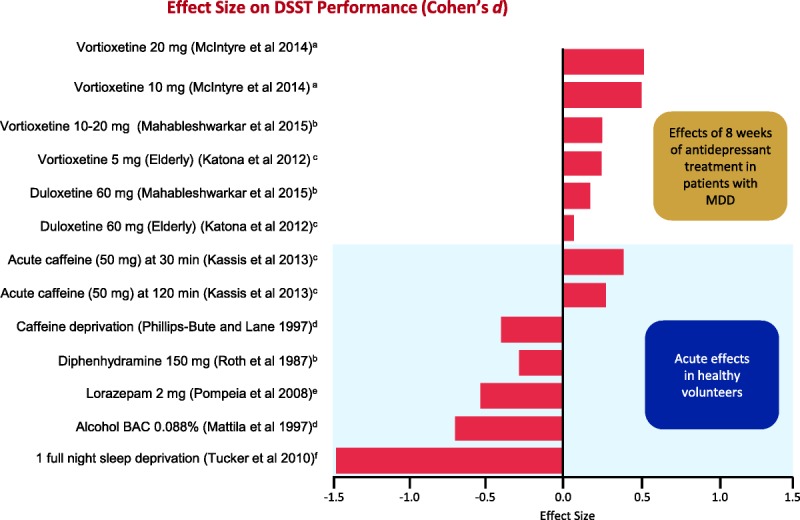
- Vortioxetine trials in MDD reported DSST treatment effect sizes of 0.51 and 0.52 for 10 or 20 mg in one study and 0.254 for 10 to 20 mg in another; a meta-analysis found vortioxetine improved DSST-assessed cognition more than other antidepressants.
- DSST performance correlates with real-world functional outcomes: in MDD patients 6 months after hospital discharge, DSST was strongly associated with functional recovery in work, school, and housing (odds ratio nearly 20).
- The DSST is polyfactorial and sensitive but not specific: impaired performance can arise from motor speed, attention, visuoperceptual functions, associative learning, working memory, and executive functions, so it does not by itself identify the affected cognitive domain.
Methods
- Narrative review of specific studies and articles to illustrate what the DSST measures, its sensitivity to change, and its use in clinical practice.
- Evidence reviewed includes DSST studies in brain damage, schizophrenia, MDD, diabetes, sleep restriction, alcohol intoxication, and sedative/hypnotic pharmacodynamic studies.
- Main synthesis compares DSST effect sizes across patient groups and pharmacologic benchmarks, including alcohol, antihistamines, benzodiazepines, caffeine, and sleep deprivation.
Limitations
- The paper states the DSST has low specificity for determining exactly which cognitive domain has been affected and raises the question of whether a single brief cognitive assessment can be sufficient for clinically meaningful conclusions.
- The paper notes that repeated DSST administration may produce learning or practice effects, although randomized designs can overcome resulting confounding in some studies.
- Evident from the text: this is a narrative review of selected studies rather than a systematic review, and it does not report a formal search strategy, inclusion criteria, or quantitative synthesis of all available DSST evidence.
Model-written summary. Check it against the paper before relying on it.
Integrity signals
Registry
Cites
Statistics
Figures
Verification
Claims the paper makes
39 Not checked yet · 28 Own interpretation · 11 Sources not found · 2 No basis given · 1 Own method
In the paper
“This observation suggests that improvement with exposure occurs in part for reasons other than associative learning of the pairs.”
§ Digit Symbol Substitution Test > DESCRIPTION AND HISTORY > What Does the DSST Measure?
What the sources say
- Not checked yetcites [22] Beres CA Baron A Improved digit symbol substitution by older women as a result of extended practice. J Gerontol. 1981; 36: 591– 597. 7264244 source
hedgedconditional- Asserted: passes — The authors put it forward as true.
- Checkable: passes — It can be checked against evidence.
- Load-bearing: passes — The paper’s conclusions depend on it.
- Based: passes — The paper gives a reason why it holds.
In the paper
“The sensitivity of the DSST is owed, in part, to its property as a polyfactoriaI measure.28”
§ Digit Symbol Substitution Test > DESCRIPTION AND HISTORY > Sensitivity and Sensitivity to Change of the DSST
What the sources say
- Not matchedcites [28] Ryan C Butters N Didario B The relationship between abstinence and recovery of function in male alcoholics. Clin Neuropsychol. 1980; 2: 125– 134.
Couldn’t be matched to a paper in Crossref, so it can’t be checked.
plainconditional- Asserted: passes — The authors put it forward as true.
- Checkable: passes — It can be checked against evidence.
- Load-bearing: passes — The paper’s conclusions depend on it.
- Based: passes — The paper gives a reason why it holds.
- Not matched
In the paper
“These findings indicate that the executive function of strategizing or consciously exerting effort to learn the pairings is among the activities that contribute to performance on this test.”
§ Digit Symbol Substitution Test > DESCRIPTION AND HISTORY > What Does the DSST Measure?
What the sources say
- Not checked yetcites [22] Beres CA Baron A Improved digit symbol substitution by older women as a result of extended practice. J Gerontol. 1981; 36: 591– 597. 7264244 source
hedgedcorrelational- Asserted: passes — The authors put it forward as true.
- Checkable: passes — It can be checked against evidence.
- Load-bearing: passes — The paper’s conclusions depend on it.
- Based: passes — The paper gives a reason why it holds.
In the paper
“This finding supports the observation that the DSST is a polyfactorial test”
§ Digit Symbol Substitution Test > DESCRIPTION AND HISTORY > What Does the DSST Measure?
What the sources say
- Not matchedcites [18] Lezak MD Neuropsychological Assessment. 3rd ed New York: Oxford University Press; 1995.
Couldn’t be matched to a paper in Crossref, so it can’t be checked.
plain- Asserted: passes — The authors put it forward as true.
- Checkable: passes — It can be checked against evidence.
- Load-bearing: unclear — It is unclear whether the paper’s conclusions depend on it.
- Based: passes — The paper gives a reason why it holds.
- Not matched
In the paper
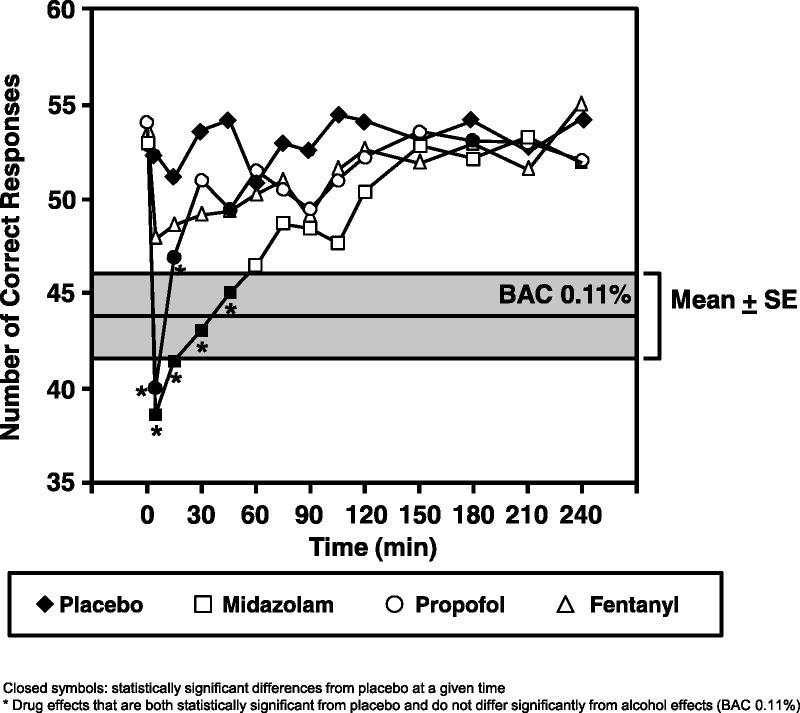
“Compared with placebo, triazolam significantly impaired performance on the DSST (P < 0.001) and increased beta amplitude on the EEG (P < 0.002).34”
§ Digit Symbol Substitution Test > DESCRIPTION AND HISTORY > Sensitivity and Sensitivity to Change of the DSST
What the sources say
- Not checked yetcites [34] Greenblatt DJ Gan L Harmatz JS Pharmocokinetics and pharmacodynamics of single-dose triazolam: electroencephalography compared with the Digit-Symbol Substitution Test. Br J Clin Pharmacol. 2005; 60: 244– 248. 16120062 PMC1884767 source
plaindirect- Asserted: passes — The authors put it forward as true.
- Checkable: passes — It can be checked against evidence.
- Load-bearing: passes — The paper’s conclusions depend on it.
- Based: passes — The paper gives a reason why it holds.
In the paper
“and that impairment in any one of the required domains (ie, motor speed associated with aging) results in performance decline.”
§ Digit Symbol Substitution Test > DESCRIPTION AND HISTORY > What Does the DSST Measure?
What the sources say
- Not matchedcites [18] Lezak MD Neuropsychological Assessment. 3rd ed New York: Oxford University Press; 1995.
Couldn’t be matched to a paper in Crossref, so it can’t be checked.
plaindirect- Asserted: passes — The authors put it forward as true.
- Checkable: passes — It can be checked against evidence.
- Load-bearing: unclear — It is unclear whether the paper’s conclusions depend on it.
- Based: passes — The paper gives a reason why it holds.
- Not matched
In the paper
“In both middle-aged and older persons, diabetes mellitus type 2 has been found to be associated with an increased risk of mild cognitive impairment and dementia.30”
§ Digit Symbol Substitution Test > DESCRIPTION AND HISTORY > Sensitivity and Sensitivity to Change of the DSST
What the sources say
- Not checked yetcites [30] Dong Y Kua ZJ Khoo EY The utility of brief cognitive tests for patients with type 2 diabetes mellitus: a systematic review. J Am Med Dir Assoc. 2016; 17: 889– 895. 27461866 source
plaincorrelational- Asserted: passes — The authors put it forward as true.
- Checkable: passes — It can be checked against evidence.
- Load-bearing: passes — The paper’s conclusions depend on it.
- Based: passes — The paper gives a reason why it holds.
In the paper
“That the DSST is sensitive to age effects is well known.23”
§ Digit Symbol Substitution Test > DESCRIPTION AND HISTORY > What Does the DSST Measure?
What the sources say
- Not checked yetcites [23] Hoyer WJ Stawski RS Wasylyshyn C Adult age and digit symbol substitution performance: a meta-analysis. Psychol Aging. 2004; 19: 211– 214. 15065945 source
boostedcorrelational- Asserted: passes — The authors put it forward as true.
- Checkable: passes — It can be checked against evidence.
- Load-bearing: unclear — It is unclear whether the paper’s conclusions depend on it.
- Based: passes — The paper gives a reason why it holds.
In the paper
“This correlation of specific QEEG indices with activation in the frontal lobes supports the theory that executive functioning plays a part in DSST performance.”
§ Digit Symbol Substitution Test > DESCRIPTION AND HISTORY > What Does the DSST Measure?
What the sources say
- Not matchedcites [25] Thornton KE Carmody DP Symbol Digit and the quantitative EEG. Neurotherapy. 2012; 16: 210– 222.
Couldn’t be matched to a paper in Crossref, so it can’t be checked.
plaincorrelational- Asserted: passes — The authors put it forward as true.
- Checkable: passes — It can be checked against evidence.
- Load-bearing: passes — The paper’s conclusions depend on it.
- Based: passes — The paper gives a reason why it holds.
- Not matched
A conclusion the paper draws from its own results — it cites no other source for it, so there is none to check. The quote shows it is in the paper.
In the paper
“The DSST is sensitive to the presence of cognitive dysfunction as well as to change in cognitive function across a wide range of clinical populations but has low specificity to determine exactly which cognitive domain has been affected.”
§ Digit Symbol Substitution Test > Abstract > Implications/Conclusions
plaincorrelational- Asserted: passes — The authors put it forward as true.
- Checkable: passes — It can be checked against evidence.
- Load-bearing: passes — The paper’s conclusions depend on it.
- Based: passes — The paper gives a reason why it holds.
- It may state two separate claims as one. 14
- Probably not a substantial claim. 16
In the paper
“In fact, deficits in processing speed as measured by DSST performance may mediate a wide range of other cognitive deficits and may further reflect a final common pathway of impairment in a range of simple and complex cognitive processes that are likely to include working memory and executive functions.29”
§ Digit Symbol Substitution Test > DESCRIPTION AND HISTORY > Sensitivity and Sensitivity to Change of the DSST
What the sources say
- Not checked yetcites [29] Amaresha AC Danivas V Shivakumar V Clinical correlates of parametric digit-symbol substitution test in schizophrenia. Asian J Psychiatr. 2014; 10: 45– 50. 25042951 PMC4156309 source
hedgedconditional- Asserted: passes — The authors put it forward as true.
- Checkable: passes — It can be checked against evidence.
- Load-bearing: unclear — It is unclear whether the paper’s conclusions depend on it.
- Based: passes — The paper gives a reason why it holds.
It may state two separate claims as one.
The paper states this without a source or data behind it here, so there is nothing to check it against. The quote shows it is in the paper.
In the paper
“now the DSST is among the most commonly used tests in clinical neuropsychology.”
§ Digit Symbol Substitution Test > Abstract > Purpose/Background
plain- Asserted: passes — The authors put it forward as true.
- Checkable: passes — It can be checked against evidence.
- Load-bearing: fails — The paper’s conclusions may not depend on it.
- Based: fails — The paper may give no reason why it holds.
Probably not a substantial claim. The paper’s conclusions may not depend on it. The paper may give no reason why it holds.
In the paper
“Since then, the DSST was found to be the single most sensitive test, among WAIS subtests, to determine the presence of brain damage and discriminate between patient groups (including healthy comparison groups).26”
§ Digit Symbol Substitution Test > DESCRIPTION AND HISTORY > Sensitivity and Sensitivity to Change of the DSST
What the sources say
- Not checked yetcites [26] Russell EW WAIS factor analysis with brain-damaged subjects using criterion measures. J Consult Clin Psychol. 1972; 39: 133– 139. 5045269
plaincorrelational- Asserted: passes — The authors put it forward as true.
- Checkable: passes — It can be checked against evidence.
- Load-bearing: unclear — It is unclear whether the paper’s conclusions depend on it.
- Based: passes — The paper gives a reason why it holds.
It may state two separate claims as one.
A conclusion the paper draws from its own results — it cites no other source for it, so there is none to check. The quote shows it is in the paper.
In the paper
“Working memory, another executive function, is likely required to hold in mind the task rules and for the continual updating of required symbol-digit pairs.”
§ Digit Symbol Substitution Test > DESCRIPTION AND HISTORY > What Does the DSST Measure?
hedgedconditional- Asserted: passes — The authors put it forward as true.
- Checkable: passes — It can be checked against evidence.
- Load-bearing: fails — The paper’s conclusions may not depend on it.
- Based: fails — The paper may give no reason why it holds.
Probably not a substantial claim. The paper’s conclusions may not depend on it. The paper may give no reason why it holds. It may state two separate claims as one.
A conclusion the paper draws from its own results — it cites no other source for it, so there is none to check. The quote shows it is in the paper.
In the paper
“For example, if pairings are rapidly learned following the first few trials, performance speed will improve because the subject will not need to refer to the key to check the accuracy of each pairing.”
§ Digit Symbol Substitution Test > DESCRIPTION AND HISTORY > What Does the DSST Measure?
plaindirect- Asserted: passes — The authors put it forward as true.
- Checkable: passes — It can be checked against evidence.
- Load-bearing: fails — The paper’s conclusions may not depend on it.
- Based: fails — The paper may give no reason why it holds.
Probably not a substantial claim. The paper’s conclusions may not depend on it. The paper may give no reason why it holds.
A conclusion the paper draws from its own results — it cites no other source for it, so there is none to check. The quote shows it is in the paper.
In the paper
“The DSST is a valid and sensitive measure of cognitive dysfunction impacted by many domains.”
§ Digit Symbol Substitution Test > Abstract > Results
plaincorrelational- Asserted: passes — The authors put it forward as true.
- Checkable: passes — It can be checked against evidence.
- Load-bearing: passes — The paper’s conclusions depend on it.
- Based: passes — The paper gives a reason why it holds.
It may state two separate claims as one.
A conclusion the paper draws from its own results — it cites no other source for it, so there is none to check. The quote shows it is in the paper.
In the paper
“Performance on the DSST correlates with real-world functional outcomes (eg, the ability to accomplish everyday tasks) and recovery from functional disability in a range of psychiatric conditions including schizophrenia and major depressive disorder.”
§ Digit Symbol Substitution Test > Abstract > Results
plaincorrelational- Asserted: passes — The authors put it forward as true.
- Checkable: passes — It can be checked against evidence.
- Load-bearing: passes — The paper’s conclusions depend on it.
- Based: unclear — It is unclear why the paper says it holds.
It may state two separate claims as one.
A conclusion the paper draws from its own results — it cites no other source for it, so there is none to check. The quote shows it is in the paper.
In the paper
“The DSST measures a range of cognitive operations.”
§ Digit Symbol Substitution Test > DESCRIPTION AND HISTORY > What Does the DSST Measure?
plaindirect- Asserted: passes — The authors put it forward as true.
- Checkable: passes — It can be checked against evidence.
- Load-bearing: fails — The paper’s conclusions may not depend on it.
- Based: passes — The paper gives a reason why it holds.
Probably not a substantial claim. The paper’s conclusions may not depend on it.
In the paper
“The authors showed that both elderly and young subjects improved not only within each day but also between days.”
§ Digit Symbol Substitution Test > DESCRIPTION AND HISTORY > What Does the DSST Measure?
What the sources say
- Not checked yetcites [22] Beres CA Baron A Improved digit symbol substitution by older women as a result of extended practice. J Gerontol. 1981; 36: 591– 597. 7264244 source
plaindirect- Asserted: passes — The authors put it forward as true.
- Checkable: passes — It can be checked against evidence.
- Load-bearing: passes — The paper’s conclusions depend on it.
- Based: passes — The paper gives a reason why it holds.
It may state two separate claims as one.
A conclusion the paper draws from its own results — it cites no other source for it, so there is none to check. The quote shows it is in the paper.
In the paper
“Good performance on the DSST requires intact motor speed, attention, and visuoperceptual functions, including scanning and the ability to write or draw (ie, basic manual dexterity).”
§ Digit Symbol Substitution Test > DESCRIPTION AND HISTORY > What Does the DSST Measure?
plaindirect- Asserted: passes — The authors put it forward as true.
- Checkable: passes — It can be checked against evidence.
- Load-bearing: fails — The paper’s conclusions may not depend on it.
- Based: fails — The paper may give no reason why it holds.
Probably not a substantial claim. The paper’s conclusions may not depend on it. The paper may give no reason why it holds.
In the paper
“and described (quoting Kinsbourne) DSST responses as “the end product of the integration of visual perceptual, oculomotor, fine manual motor, and mental functions.””
§ Digit Symbol Substitution Test > DESCRIPTION AND HISTORY > What Does the DSST Measure?
What the sources say
- Not matchedcites [19] Darby D Walsh K Neuropsychology. 5th ed Melbourne: Churchill Livingstone; 2005.
Couldn’t be matched to a paper in Crossref, so it can’t be checked.
plaindirect- Asserted: passes — The authors put it forward as true.
- Checkable: passes — It can be checked against evidence.
- Load-bearing: fails — The paper’s conclusions may not depend on it.
- Based: passes — The paper gives a reason why it holds.
Probably not a substantial claim. The paper’s conclusions may not depend on it.
- Not matched
In the paper
“For example, Glosser et al27 noted the sensitivity of the DSST in alcoholic Korsakoff patients, patients with right hemisphere damage, and patients with chronic alcoholism.”
§ Digit Symbol Substitution Test > DESCRIPTION AND HISTORY > Sensitivity and Sensitivity to Change of the DSST
What the sources say
- Not checked yetcites [27] Glosser G Butters N Kaplan E Visuoperceptual processes in brain damaged patients on the digit symbol substitution test. Int J Neurosci. 1977; 7: 59– 66. 893004 source
plaincorrelational- Asserted: passes — The authors put it forward as true.
- Checkable: passes — It can be checked against evidence.
- Load-bearing: unclear — It is unclear whether the paper’s conclusions depend on it.
- Based: passes — The paper gives a reason why it holds.
It may state two separate claims as one.
A conclusion the paper draws from its own results — it cites no other source for it, so there is none to check. The quote shows it is in the paper.
In the paper
“The decision to consciously engage in this learning strategy to improve performance speed calls for the executive functions of planning and strategizing.”
§ Digit Symbol Substitution Test > DESCRIPTION AND HISTORY > What Does the DSST Measure?
plaindirect- Asserted: passes — The authors put it forward as true.
- Checkable: passes — It can be checked against evidence.
- Load-bearing: fails — The paper’s conclusions may not depend on it.
- Based: fails — The paper may give no reason why it holds.
Probably not a substantial claim. The paper’s conclusions may not depend on it. The paper may give no reason why it holds.
A conclusion the paper draws from its own results — it cites no other source for it, so there is none to check. The quote shows it is in the paper.
In the paper
“Performance might also be affected by associative learning.”
§ Digit Symbol Substitution Test > DESCRIPTION AND HISTORY > What Does the DSST Measure?
hedgedconditional- Asserted: passes — The authors put it forward as true.
- Checkable: passes — It can be checked against evidence.
- Load-bearing: fails — The paper’s conclusions may not depend on it.
- Based: passes — The paper gives a reason why it holds.
Probably not a substantial claim. The paper’s conclusions may not depend on it.
In the paper
“Darby and Walsh19 emphasized that performance on the DSST is the final common pathway for expression of quite diverse types of impairment”
§ Digit Symbol Substitution Test > DESCRIPTION AND HISTORY > What Does the DSST Measure?
What the sources say
- Not matchedcites [19] Darby D Walsh K Neuropsychology. 5th ed Melbourne: Churchill Livingstone; 2005.
Couldn’t be matched to a paper in Crossref, so it can’t be checked.
plaindirect- Asserted: passes — The authors put it forward as true.
- Checkable: passes — It can be checked against evidence.
- Load-bearing: fails — The paper’s conclusions may not depend on it.
- Based: passes — The paper gives a reason why it holds.
Probably not a substantial claim. The paper’s conclusions may not depend on it.
- Not matched
A conclusion the paper draws from its own results — it cites no other source for it, so there is none to check. The quote shows it is in the paper.
In the paper
“The DSST is perhaps the most commonly used test in all of neuropsychology, owing to several inherent properties: brevity, reliability, and the minimal impact of language, culture, and education on test performance.”
§ Digit Symbol Substitution Test > DESCRIPTION AND HISTORY
hedgeddirect- Asserted: passes — The authors put it forward as true.
- Checkable: passes — It can be checked against evidence.
- Load-bearing: fails — The paper’s conclusions may not depend on it.
- Based: fails — The paper may give no reason why it holds.
Probably not a substantial claim. The paper’s conclusions may not depend on it. The paper may give no reason why it holds. It may state two separate claims as one.
In the paper
“Tucker et al39 also measured the effect of sleep deprivation on DSST performance and yielded similar results.”
§ Digit Symbol Substitution Test > DESCRIPTION AND HISTORY > Sensitivity and Sensitivity to Change of the DSST
What the sources say
- Not checked yetcites [39] Tucker AM Whitney P Belenky G Effects of sleep deprivation on dissociated components of executive functioning. Sleep. 2010; 33: 47– 57. 20120620 PMC2802247 source
plaindirect- Asserted: passes — The authors put it forward as true.
- Checkable: passes — It can be checked against evidence.
- Load-bearing: unclear — It is unclear whether the paper’s conclusions depend on it.
- Based: passes — The paper gives a reason why it holds.
It may state two separate claims as one.
What the paper did — it cites no source for this, so there is none to check. The quote shows it is in the paper.
In the paper
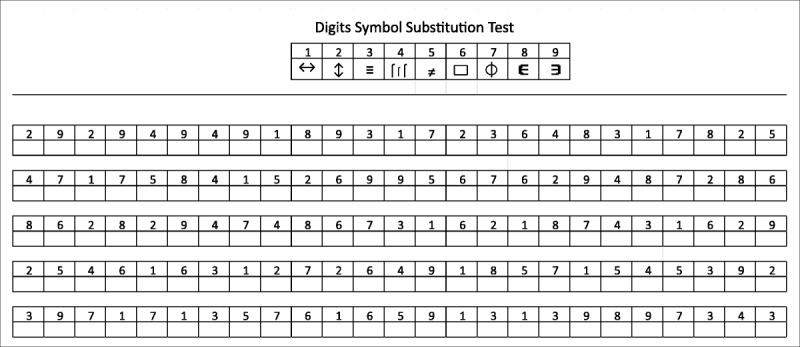
“the validity and reliability of the paper DSST depend on the test being administered in the manner it was validated.”
§ Digit Symbol Substitution Test > DESCRIPTION AND HISTORY
plaindirect- Asserted: passes — The authors put it forward as true.
- Checkable: passes — It can be checked against evidence.
- Load-bearing: fails — The paper’s conclusions may not depend on it.
- Based: fails — The paper may give no reason why it holds.
Probably not a substantial claim. The paper’s conclusions may not depend on it. The paper may give no reason why it holds.
None of the sources cited for this claim have been checked yet.
In the paper
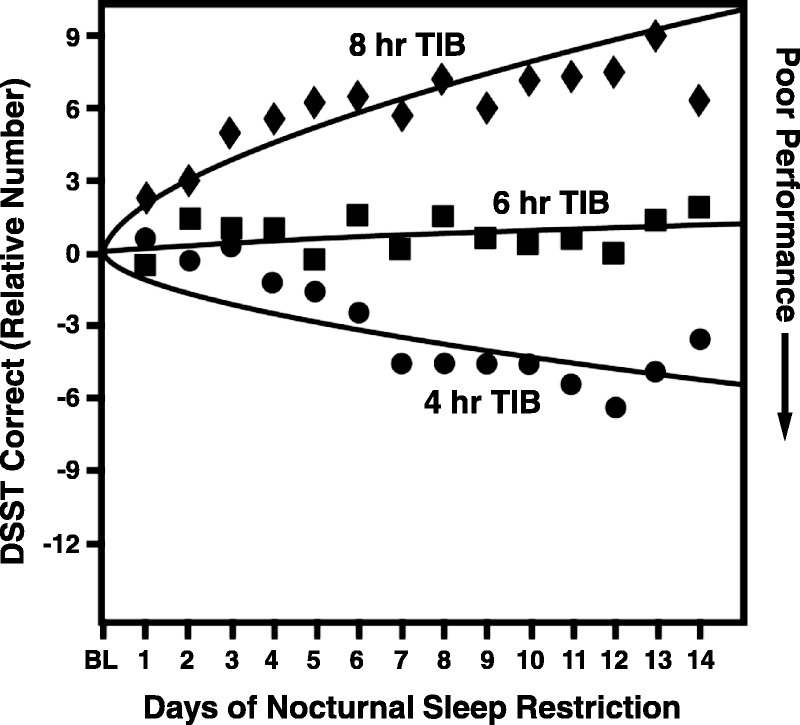
“The 8-hour group showed some improvement over the first few days (possibly a learning effect), whereas the 4-hour group differed from the 8-hour group by more than 12 points by the end of the first week and continued to decline over the second week.”
§ Digit Symbol Substitution Test > DESCRIPTION AND HISTORY > Sensitivity and Sensitivity to Change of the DSST
What the sources say
- Not checked yetcites [37] Van Dongen HP Maislin G Mullington JM The cumulative cost of additional wakefulness: dose-response effects on neurobehavioral functions and sleep physiology from chronic sleep restriction and total sleep deprivation. Sleep. 2003; 26: 117– 126. 12683469 source
- Not checked yetcites [38] Banks S Dinges DF Behavioral and physiological consequences of sleep restriction. J Clin Sleep Med. 2007; 3: 519– 528. 17803017 PMC1978335 source
plaincorrelationaln = 35- Asserted: passes — The authors put it forward as true.
- Checkable: passes — It can be checked against evidence.
- Load-bearing: passes — The paper’s conclusions depend on it.
- Based: passes — The paper gives a reason why it holds.
It may state two separate claims as one.
A conclusion the paper draws from its own results — it cites no other source for it, so there is none to check. The quote shows it is in the paper.
In the paper
“The DSST is sensitive to both the presence of cognitive dysfunction and change in cognitive function, across a wide range of clinical populations.”
§ Digit Symbol Substitution Test > CONCLUDING COMMENTS
plaincorrelational- Asserted: passes — The authors put it forward as true.
- Checkable: passes — It can be checked against evidence.
- Load-bearing: passes — The paper’s conclusions depend on it.
- Based: unclear — It is unclear why the paper says it holds.
It may state two separate claims as one.
A conclusion the paper draws from its own results — it cites no other source for it, so there is none to check. The quote shows it is in the paper.
In the paper
“Performance on the DSST correlates with real-world functional outcomes (eg, the ability to accomplish everyday tasks) and recovery from functional disability.”
§ Digit Symbol Substitution Test > CONCLUDING COMMENTS
plaincorrelational- Asserted: passes — The authors put it forward as true.
- Checkable: passes — It can be checked against evidence.
- Load-bearing: passes — The paper’s conclusions depend on it.
- Based: unclear — It is unclear why the paper says it holds.
It may state two separate claims as one.
A conclusion the paper draws from its own results — it cites no other source for it, so there is none to check. The quote shows it is in the paper.
In the paper
“However, where the objective of testing is not diagnosis, but rather to identify impairment regardless of its nature and origin or to detect change within a patient, a brief and simple test such as the DSST may offer important benefits to clinical practice.”
§ Digit Symbol Substitution Test > CONCLUDING COMMENTS
hedgedconditional- Asserted: passes — The authors put it forward as true.
- Checkable: passes — It can be checked against evidence.
- Load-bearing: passes — The paper’s conclusions depend on it.
- Based: passes — The paper gives a reason why it holds.
Probably not a substantial claim.
A conclusion the paper draws from its own results — it cites no other source for it, so there is none to check. The quote shows it is in the paper.
In the paper
“As discussed previously, the DSST's sensitivity to change is one of its main strengths.”
§ Digit Symbol Substitution Test > DESCRIPTION AND HISTORY > Clinical Meaningfulness in Patients With MDD
plain- Asserted: passes — The authors put it forward as true.
- Checkable: passes — It can be checked against evidence.
- Load-bearing: fails — The paper’s conclusions may not depend on it.
- Based: fails — The paper may give no reason why it holds.
Probably not a substantial claim. The paper’s conclusions may not depend on it. The paper may give no reason why it holds.
A conclusion the paper draws from its own results — it cites no other source for it, so there is none to check. The quote shows it is in the paper.
In the paper
“The utility of the DSST for monitoring patients in the clinic derives from several properties, many of which are shared by other neuropsychological tests, including its brevity, its sensitivity to change, and minimal impact from education and culture.”
§ Digit Symbol Substitution Test > CONCLUDING COMMENTS
plaindirect- Asserted: passes — The authors put it forward as true.
- Checkable: passes — It can be checked against evidence.
- Load-bearing: passes — The paper’s conclusions depend on it.
- Based: passes — The paper gives a reason why it holds.
It may state two separate claims as one.
- The authors state this as an assumption: Cognition is important for functioning and quality of life.
A conclusion the paper draws from its own results — it cites no other source for it, so there is none to check. The quote shows it is in the paper.
In the paper
“In the context of clinical decision making in a physician's office, this simple cognitive test can, in combination with a psychiatric clinical evaluation, be useful at the level of the individual patient for medication choice and dosing.”
§ Digit Symbol Substitution Test > CONCLUDING COMMENTS
plaincorrelational- Asserted: passes — The authors put it forward as true.
- Checkable: passes — It can be checked against evidence.
- Load-bearing: passes — The paper’s conclusions depend on it.
- Based: passes — The paper gives a reason why it holds.
Probably not a substantial claim.
- The authors state this as an assumption: Cognition is important for functioning and quality of life.
A conclusion the paper draws from its own results — it cites no other source for it, so there is none to check. The quote shows it is in the paper.
In the paper
“The DSST offers high sensitivity to detect impairment, but low specificity to determine exactly which cognitive domain has suffered the impairment.”
§ Digit Symbol Substitution Test > CONCLUDING COMMENTS
plaincorrelational- Asserted: passes — The authors put it forward as true.
- Checkable: passes — It can be checked against evidence.
- Load-bearing: passes — The paper’s conclusions depend on it.
- Based: fails — The paper may give no reason why it holds.
Probably not a substantial claim. The paper may give no reason why it holds. It may state two separate claims as one.
In the paper
“Further, there is growing awareness of the prevalence of cognitive symptoms and their impact on life functioning in MDD patients, leading to an increase in the recognition of such symptoms as clinically important targets for therapeutic improvement.47”
§ Digit Symbol Substitution Test > DESCRIPTION AND HISTORY > Clinical Meaningfulness in Patients With MDD
What the sources say
- Not checked yetcites [47] Mattingly G Anderson RH Mattingly SG The impact of cognitive challenges in major depression: the role of the primary care physician. Postgrad Med. 2016; 128: 665– 671. 27500820 source
plaindirect- Asserted: passes — The authors put it forward as true.
- Checkable: passes — It can be checked against evidence.
- Load-bearing: fails — The paper’s conclusions may not depend on it.
- Based: passes — The paper gives a reason why it holds.
Probably not a substantial claim. The paper’s conclusions may not depend on it.
The paper relies on this without support.
In clinical practice, the DSST is administered in the manner in which it was validated.
“the validity and reliability of the paper DSST depend on the test being administered in the manner it was validated.”
The authors state this as an assumption.
Cognition is important for functioning and quality of life.
“Although the importance of cognition for functioning and quality of life may be regarded as self-evident”
Claims other papers make about this one
Each is checked against this paper’s own text: does it say what the citing paper says it does?
The source backs part of the claim, not all of it — or backs it for a different population, condition or comparison.
In the citing paper
“Enhanced processing speed has been correlated with improved ability to perform day-to-day tasks and a lower risk of future cognitive/mobility/mood disorders [32].”
From Health Benefits of Video Games in Adolescents and Young Adults (2026) · cites this paper as [32]
Experimental — accuracy not yet measured
Self-check
Percentages, sums and reported differences re-computed from the paper’s own numbers.
Each contradiction between two passages listed here was confirmed by an independent check.
Rated minor: it would not touch a result — a value no result rests on, a p-value that stays on the same side of the significance level, or a conflict that is clerical, resolved elsewhere in the paper, or outside its own findings.
In the paper
§ Digit Symbol Substitution Test > DESCRIPTION AND HISTORY
“The original WAIS, developed in 1955, has 90 stimulus items (number of blanks into which the symbols are copied)”
§ Digit Symbol Substitution Test > DESCRIPTION AND HISTORY
“all of which were among the 67 stimulus items in its predecessor, the WBIS.”
Citations
Cites
Van Dongen, H. P. A., Maislin, G., Mullington, J. M., & Dinges, D. F. (2003) · Sleep · doi:10.1093/sleep/26.2.117 · Cited by 3,173
(1995) · Cited by 2,809
Randolph, C., Tierney, M. C., Mohr, E., & Chase, T. N. (1998) · Journal of Clinical and Experimental Neuropsychology · doi:10.1076/jcen.20.3.310.823 · Cited by 2,519
Snyder, H. R. (2013) · Psychological Bulletin · doi:10.1037/a0028727 · Cited by 1,667
Behavioral and Physiological Consequences of Sleep Restriction
Banks, S., & Dinges, D. F. (2007) · Journal of Clinical Sleep Medicine · doi:10.5664/jcsm.26918 · Cited by 1,505
Robbins, T. W., James, M., Owen, A. M., Sahakian, B. J., McInnes, L., & Rabbitt, P. (1994) · Dementia and Geriatric Cognitive Disorders · doi:10.1159/000106735 · Cited by 1,078
The Measurement of Adult Intelligence.
Wechsler, D. (1940) · Archives of Neurology And Psychiatry · doi:10.1001/archneurpsyc.1940.02280030188021 · Cited by 980
Benedict, R. H. B., DeLuca, J., Phillips, G. A., LaRocca, N. G., Hudson, L. D., & Rudick, R. A. (2017) · Multiple Sclerosis Journal · doi:10.1177/1352458517690821 · Cited by 846
A meta-analysis of cognitive deficits in first-episode Major Depressive Disorder
Lee, R. S. C., Hermens, D. F., Porter, M. A., & Redoblado-Hodge, M. A. (2012) · Journal of Affective Disorders · doi:10.1016/j.jad.2011.10.023 · Cited by 737
SAHAKIAN, B. J., MORRIS, R. G., EVENDEN, J. L., HEALD, A., LEVY, R., PHILPOT, M., & ROBBINS, T. W. (1988) · Brain · doi:10.1093/brain/111.3.695 · Cited by 666
Cited by
Sorted by citations
Items 301–400 of 840
Oliveira, D., da Costa, J. G. R., Marques, M. H., & Silva, A. G. (2025) · Journal of Pain · doi:10.1016/j.jpain.2025.105341 · Cited by 9
Jiang, H., Zhang, J., Li, S., Kwok, T. C. Y., Ng, S. C., Lee, A. T. C., & Xu, Z. (2025) · The Journal of Prevention of Alzheimer s Disease · doi:10.1016/j.tjpad.2025.100319 · Cited by 9
“In NHANES 2011 – 2014, cognition was evaluated using the Consortium to Establish a Registry for Alzheimer ’ s Disease Immediate Recall (CERAD-IR) and Delayed Recall (CERAD-DR) [17], the Animal Fluency Test (AFT) [18], and the Digit Symbol Substitution Test (DSST) [19].”
Circadian rhythms are associated with higher amyloid-β and tau and poorer cognition in older adults
Eckhardt, J. L., Isenberg, L., Aslanyan, V., Monreal, T. K., Stradford, J., Fenton, L. E., Contreras, J. A., Mack, W. J., & Pa, J. (2025) · Brain Communications · doi:10.1093/braincomms/fcaf322 · Cited by 13
Lehmann, V. F., Tripyla, A., Herzig, D., Meier, J., Banholzer, N., Maritsch, M., Zehetner, J., Giachino, D., Nett, P. C., Feuerriegel, S., et al. (2021) · Diabetes Obesity and Metabolism · doi:10.1111/dom.14456 · Cited by 9
Jamali, F., Aldughmi, M., Khasawneh, M. W., Dahbour, S. S., Salameh, A. A., & Awidi, A. (2021) · JMIR Research Protocols · doi:10.2196/29695 · Cited by 9
Gafni, T., Gabriel, K. P., Shuval, K., Yaffe, K. S., Sidney, S., & Weinstein, G. (2022) · Preventive Medicine · doi:10.1016/j.ypmed.2022.107291 · Cited by 10
Caffeine intake improves the cognitive performance of patients with chronic kidney disease
Jia, L., Zhao, H., Hao, L., Jia, L.-H., Jia, R., & Zhang, H. (2022) · Frontiers in Medicine · doi:10.3389/fmed.2022.976244 · Cited by 9
Pershin, I., Mustafaev, T., Ibragimova, D., & Ibragimov, B. (2023) · Journal of Imaging Informatics in Medicine · doi:10.1007/s10278-022-00760-2 · Cited by 9
“1 3 digital concentration tests, namely, digit symbol substitution, circle coverage, and reaction time tests [28, 29].”
MethodLyu, W., Chen, Y., Zhao, K., Tan, X. L., Wu, Y., & Qiu, S. (2023) · Frontiers in Neuroscience · doi:10.3389/fnins.2023.1141261 · Cited by 10
“, 2011) and digit symbol substitution test (DSST) (Jaeger, 2018) were also used for a more comprehensive understanding of cognitive function.”
MethodPredicted lean body mass in relation to cognitive function in the older adults
Gong, H., Tang, X., Chai, Y.-H., Qiao, Y.-S., Xu, H., Patel, I., Zhang, J., & Zhou, J. (2023) · Frontiers in Endocrinology · doi:10.3389/fendo.2023.1172233 · Cited by 8
Lin, Y., Chen, Z.-J., Tung, H., Ye, Y.-J., Lai, H., Hsiao, F., & Chen, L. (2024) · Experimental Gerontology · doi:10.1016/j.exger.2024.112487 · Cited by 9
“The number of correct symbols within the allowed time (120 s in this study), constitutes the score (Jaeger, 2018) verbal fluency tests the ability to speak the animal names as many as possible in 60 s, and use the correct amount to evaluation (Henderson et al., 2023).”
BackgroundSlower Decline in Processing Speed Is Associated with Familial Longevity
Andersen, S. L., Du, M., Cosentino, S., Schupf, N., Rosso, A. L., Perls, T. T., Paola Sebastiani, B., & Study, T. L. L. F. (2021) · Gerontology · doi:10.1159/000514950 · Cited by 9
Kujawski, S., Bach, A. M., Słomko, J., Pheby, D., Murovska, M., Newton, J. L., & Zalewski, P. (2021) · Journal of Clinical Medicine · doi:10.3390/jcm10132795 · Cited by 9
Su, S.-F., Kay, G., Hochadel, T. J., Rojo, J., Stein, J., Boinpally, R., & Periclou, A. (2021) · Clinical and Translational Science · doi:10.1111/cts.13145 · Cited by 7
Diabetes-Specific Dementia: A Structured Literature Review of Cognitive Assessment Methods
Faaitiiti, K. L., & Jupiter, D. C. (2021) · The Journal of Foot & Ankle Surgery · doi:10.1053/j.jfas.2021.11.003 · Cited by 9
Gabay, A., London, S. J., Yates, K. F., & Convit, A. J. (2021) · Psychiatry Research Neuroimaging · doi:10.1016/j.pscychresns.2021.111417 · Cited by 10
Repple, J., König, A., de Lange, S. C., Opel, N., Redlich, R., Meinert, S., Grotegerd, D., Mauritz, M., Hahn, T., Borgers, T., et al. (2021) · Biological Psychiatry Cognitive Neuroscience and Neuroimaging · doi:10.1016/j.bpsc.2021.02.010 · Cited by 12
Degree centrality and functional connections in presbycusis with and without cognitive impairments
Xu, X., Liu, Y., Feng, Y., Xǔ, J., Gao, J., Salvi, R., Wu, Y., Yin, X., & Chen, Y. (2022) · Brain Imaging and Behavior · doi:10.1007/s11682-022-00734-6 · Cited by 8
Measures of Cognition in Rheumatic Diseases
Yuen, K., Bingham, K. S., Tayer-Shifman, O. E., & Touma, Z. (2020) · Arthritis Care & Research · doi:10.1002/acr.24364 · Cited by 9
“The Revised Wechsler Adult Intelligence Scale (WAIS-R) Digit Symbol Substitution Test measures associative learning, motor speed, attention, and visuoperceptual functions (26,27).”
MethodHappich, F., König, H., & Hajek, A. (2021) · Scandinavian Journal of Caring Sciences · doi:10.1111/scs.12968 · Cited by 8
Rozenberg, D., Reid, W. D., Camp, P. G., Campos, J. L., Dechman, G., Davenport, P. W., Egan, H., Fisher, J. H., Guenette, J. A., Gold, D. A., et al. (2024) · CHEST Journal · doi:10.1016/j.chest.2024.05.027 · Cited by 8
Delmas, S., Tiwari, A. A., Tseng, H., Poisson, S. N., Diehl, M. K., & Lodha, N. (2025) · Brain and Behavior · doi:10.1002/brb3.70365 · Cited by 11
“Lower scores on DSST demonstrate poorer visuospatial processing.”
Associations of exercise snacks with cognitive function among older adults in NHANES 2011–2014
Wu, J., Wang, Y., Qiu, P., & Li, Y. (2025) · General Hospital Psychiatry · doi:10.1016/j.genhosppsych.2025.03.005 · Cited by 8
Sex Differences in the Neurovascular Health of Aging Adults
Sussman, B. L., Wiseman, H. E., Ranganathan, S., et al. (2025) · Stroke · doi:10.1161/strokeaha.125.051026 · Cited by 7
Inoue, M., Kusunoki, Y., Ohigashi, M., Osugi, K., Inoue, C., Otsuka, A., Azuma, D., Ikeda, H., Tamada, D., Inagaki, T., et al. (2025) · Diabetes Obesity and Metabolism · doi:10.1111/dom.16511 · Cited by 9
Zhang, X., Long, Y., Wang, Z., Wang, H., Nie, S., Zhao, C., Kang, S., Zhang, C., & Pan, C. (2025) · Frontiers in Nutrition · doi:10.3389/fnut.2025.1571990 · Cited by 12
Li, F., Li, D., Yu, J., et al. (2021) · Clinical Interventions in Aging · doi:10.2147/cia.s315837 · Cited by 8
Zhang, F., Liu, W., Zheng, Y., Liu, C., Hu, Y. G., Chen, H., Tang, X., Wei, Y., Zhang, T., Wang, J., et al. (2023) · Journal of Affective Disorders · doi:10.1016/j.jad.2023.01.011 · Cited by 8
Choi, K., Im, C., Yang, C., Lee, H. S., Kim, S., & Lee, S. (2023) · Schizophrenia · doi:10.1038/s41537-023-00377-6 · Cited by 9
Sasaki, N., Morse, G. S., Jones, L., et al. (2023) · Environmental Research · doi:10.1016/j.envres.2023.116861 · Cited by 8
Coronary Artery Calcium and Cognitive Decline in the Diabetes Prevention Program Outcomes Study
Gadde, K. M., Yin, X., Goldberg, R. B., Orchard, T. J., Schlögl, M., Dabelea, D., Ibebuogu, U. N., Watson, K. E., Pi-Sunyer, X., Crandall, J. P., et al. (2023) · Journal of the American Heart Association · doi:10.1161/jaha.123.029671 · Cited by 9
Measuring semantic memory using associative and dissociative retrieval tasks
Marko, M., Michalko, D., Kubinec, A., & Riečanský, I. (2024) · Royal Society Open Science · doi:10.1098/rsos.231208 · Cited by 8
Nicola, M. D., Adair, M., Rieckmann, A., & Cronquist Christensen, M. (2024) · Journal of Psychopharmacology · doi:10.1177/02698811241260996 · Cited by 8
Wang, T., Zheng, R., Zhang, S., Qin, H., Jin, H., Teng, Y., Ma, S., & Zhang, M. (2024) · Scientific Reports · doi:10.1038/s41598-024-77813-9 · Cited by 10
Easton, D. F., Gupta, C. C., Vincent, G. E., Vandelanotte, C., Duncan, M. J., Tucker, P., Milia, L. V. D., & Ferguson, S. A. (2025) · Chronobiology International · doi:10.1080/07420528.2025.2503866 · Cited by 8
Montano, C. B., Jackson, W. C., Vanacore, D., & Weisler, R. H. (2022) · Neuropsychiatric Disease and Treatment · doi:10.2147/ndt.s337703 · Cited by 8
Sandry, J. D., & Ricker, T. J. (2022) · Cognitive Research Principles and Implications · doi:10.1186/s41235-022-00412-7 · Cited by 6
Rudisill, T. M., Innes, K. (., Wen, S., Haggerty, T. S., & Smith, G. S. (2023) · Fundamental and Clinical Pharmacology · doi:10.1111/fcp.12868 · Cited by 8
Pepe, M., Nicola, M. D., Cocciolillo, F., Chiappini, S., Martinotti, G., Calcagni, M. L., & Sani, G. (2024) · Pharmaceuticals · doi:10.3390/ph17040452 · Cited by 8
“Performance on the DSST represents the final common pathway for the expression of different types of impairment, and the integrity of several mental functions is required to perform well on the task, such as motor speed, attention, visual perception, associative learning, and working memory [57].”
BackgroundMethodWebber, K., Patel, S., Kizer, J. R., Eastell, R., Psaty, B. M., Newman, A. B., & Cummings, S. R. (2024) · medRxiv · doi:10.1101/2024.08.07.24311629 · Cited by 8
The association between falls and autonomy in older adults is mediated by self-efficacy
Imani, H., & Godde, B. (2021) · Discover Psychology · doi:10.1007/s44202-021-00007-1 · Cited by 9
“, the ability to accomplish everyday tasks) [27, 28].”
BackgroundMethodInfluentialPerzl, J., Riedl, E. M., & Thomas, J. (2023) · Assessment · doi:10.1177/10731911231213845 · Cited by 9
Seo, D., So, J. M., Kim, J., Jung, H., Jang, I., Kim, H., Kang, D., Lim, Y., Choi, J., & Lee, E. (2024) · Scientific Reports · doi:10.1038/s41598-024-65486-3 · Cited by 9
Executive deficits after SARS-CoV-2 infection: A cross-sectional population study
Buer, S., Hagen, B. I., Søraas, A. V. L., White, R. A., Bø, R., Ellingjord‐Dale, M., Istre, M. S., Brunvoll, S. H., Lerdal, A., Landrø, N. I., et al. (2024) · Brain Behavior & Immunity - Health · doi:10.1016/j.bbih.2024.100857 · Cited by 6
Zakharov, V. V., Ostroumova, O. D., Кочетков, А. И., et al. (2024) · Russian Journal of Preventive Medicine · doi:10.17116/profmed20242710172 · Cited by 7
Cognitive Functioning Influences Mortality Risk Among Older Adults with COPD
Banerjee, S. K., Khubchandani, J., England-Kennedy, E. S., McIntyre, R., Kopera-Frye, K., & Batra, K. (2024) · Healthcare · doi:10.3390/healthcare12222220 · Cited by 7
“This test has been used widely in epidemiological studies and extensive details on the administration of these tests and performance within NHANES can be found elsewhere [24,25,27,29].”
Yang, T., Zhang, Y., Cai, Z., Wang, Y., & Deng, S. (2025) · Frontiers in Aging Neuroscience · doi:10.3389/fnagi.2025.1534303 · Cited by 8
“The DSST is a valid and sensitive measure of cognitive dysfunction and can monitor the effectiveness of treatments for cognitive impairment (Jaeger, 2018).”
Hajipour, M., Hicks, J. B., Allen, A. H., Beaudin, A. E., Raneri, J. K., Izadi, Z., Jen, R., Sériès, F., Skomro, R. P., Robillard, R., et al. (2025) · European Respiratory Journal · doi:10.1183/13993003.00201-2025 · Cited by 7
You, Y., Cui, Y., Zheng, K., Yang, H., Yu, C., Wang, Q., Chen, Y., & Ma, X. (2026) · iScience · doi:10.1016/j.isci.2026.115086 · Cited by 8
Panah, Z. E., Sharifi, A., Zoafa, S., Etemadi-Aleagha, A., Sohrabpour, S., Behzadi, M., Teymour, A., Heidari, R., & Erfanian, R. (2023) · European Archives of Oto-Rhino-Laryngology · doi:10.1007/s00405-023-08068-9 · Cited by 7
Storoschuk, K. L., Gharios, R., Potter, G. D., Galpin, A. J., House, B. T., & Wood, T. R. (2023) · Lifestyle Medicine · doi:10.1002/lim2.90 · Cited by 7
Wu, S., Wang, L., Liu, S., Qi, J., Shi, F., Zhuang, H., Qian, Y.-L., Mei, L., & Zhang, M. (2024) · Frontiers in Public Health · doi:10.3389/fpubh.2024.1390511 · Cited by 7
Popova, V. B., Antonova, E. A., Hlyabova, P. M., Rodyukova, I. S., Alpenidze, D. N., Drozdova, Y. V., Шамаева, К. И., Kryzhanovsky, S. M., Tarakanova, A. S., Yakubova, E., et al. (2024) · S S Korsakov Journal of Neurology and Psychiatry · doi:10.17116/jnevro2024124071131 · Cited by 9
Kujawski, S., Słomko, J., Morten, K., et al. (2020) · Medicina · doi:10.3390/medicina56040172 · Cited by 7
“…of the authors contributed to the study conception and the final manuscript revision; data curation, S.K.; formal analysis, K.B. and J.S.; project administration, P.Z. and J.L.N.; supervision, P.Z. and J.S.; writing—original draft, J.S. and S.K.; writing—review and editing, K.J.M., M.M. and J.L.N.”
BackgroundMind the Rhythm: ECG QT Dispersion and Cognition in Healthy Older Adults
Vrinceanu, T., Lagacé-Lavoie, G., Kaushal, N., Esmail, A., Vu, T. T. M., Berryman, N., Nigam, A., & Bherer, L. (2020) · Frontiers in Psychology · doi:10.3389/fpsyg.2020.566341 · Cited by 7
“The Digit Symbol Substitution Test was used to assess processing speed (Jaeger, 2018).”
MethodZhong, X., Yan, X., Liang, H. Y., Xia, R., Chen, B., & Zhao, H. (2021) · BMJ Open · doi:10.1136/bmjopen-2020-042177 · Cited by 7
Kasputytė, G., Bukauskienė, R., Širvinskas, E., et al. (2021) · The Heart Surgery Forum · doi:10.1532/hsf.3885 · Cited by 7
Jayakody, K., Gallagher, P., Lloyd, A. J., & Cousins, D. A. (2022) · Psychological Medicine · doi:10.1017/s003329172100547x · Cited by 6
Sinclair, L. I., Ball, H. A., Bauermeister, S., Gallacher, J., & Bolea-Alamanac, B. M. (2022) · Journal of Affective Disorders · doi:10.1016/j.jad.2022.03.043 · Cited by 7
Liou, Y., Chen, M., Hsu, J.-W., Huang, K., Huang, P., & Bai, Y. (2022) · Brain and Behavior · doi:10.1002/brb3.2570 · Cited by 7
Zhao, S., Han, T., Pei, X., Song, Y., Zhang, Y., Liu, L., Wang, X., Hou, W., & Sun, C. (2022) · Frontiers in Aging Neuroscience · doi:10.3389/fnagi.2022.991007 · Cited by 7
“…List Delayed Recall Test (CERAD-DR), the Animal Fluency (AF) test and the Digit Symbol Substitution Test (DSST), which have been widely used in epidemiological and clinical studies (Canning et al., 2004; Fillenbaum et al., 2008; Clark et al., 2009; Gao et al., 2009; Qin et al., 2017; Jaeger, 2018).”
MethodGiudicessi, A., Saelzler, U. G., Shadyab, A. H., Posis, A. I. B., Sundermann, E. E., Banks, S. J., & Panizzon, M. S. (2022) · Climacteric · doi:10.1080/13697137.2022.2129004 · Cited by 7
“The DSST assesses sustained attention and processing speed, and is sensitive to cognitive deficits in a wide range of brain diseases and conditions [29].”
BackgroundMcIntyre, R. S., Lipsitz, O., Rodrigues, N. B., Subramaniapillai, M., Nasri, F., Lee, Y., Fehnert, B., King, J., Chrones, L., Kratiuk, K., et al. (2022) · JMIR Mental Health · doi:10.2196/33871 · Cited by 7
Santanasto, A. J., Marron, M. M., Boudreau, R. M., Feitosa, M. F., Wojczynski, M. K., Arbeev, K. G., Thyagarajan, B., Schupf, N., Stallard, E., Paola Sebastiani, B., et al. (2019) · The Journals of Gerontology Series A · doi:10.1093/gerona/glz124 · Cited by 7
“The DSST measures processing speed and is a well-established marker of overall cognitive function (30).”
BackgroundEffects of different methods of cannabis use on cognition and blood THC: A systematic review.
Behzad, D., Patel, S., Besa, R., Chan, A. W. H., Chen, S., Rueda, S., Ruocco, A. C., & Di Ciano, P. (2025) · Progress in Neuro-psychopharmacology and Biological Psychiatry · doi:10.1016/j.pnpbp.2025.111399 · Cited by 7
Association of Plant-Based Protein Intake with Cognitive Function in Adults with CKD
Perez, L. M., You, Z., & Kendrick, J. (2023) · Kidney360 · doi:10.34067/kid.0000000000000278 · Cited by 6
Ramos, L., & Vicente, S. (2024) · Journal of Clinical and Experimental Neuropsychology · doi:10.1080/13803395.2024.2363343 · Cited by 6
Forget me not: The effect of doxycycline on human declarative memory
Wehrli, J. M., Xia, Y., Meister, L., Tursunova, S., Kleim, B., Bach, D. R., & Quednow, B. B. (2024) · European Neuropsychopharmacology · doi:10.1016/j.euroneuro.2024.08.006 · Cited by 6
“Beyond processing speed, DSST performance is influenced by associative learning, visuo-perceptual function, and working memory (Friedel, 2017; Jaeger, 2018).”
BackgroundMethodNeurofilament Light Protein as a Biomarker in Severe Mental Disorders: A Systematic Review
Squitti, R., Fiorenza, A., Martinelli, A., Brembati, V., Crescenti, D., Rongioletti, M. C. A., & Ghidoni, R. (2024) · International Journal of Molecular Sciences · doi:10.3390/ijms26010061 · Cited by 7
Muñoz-Perete, J. M., Carcelén-Fraile, M. D. M., Castellote‐Caballero, Y., & Carcelén‐Fraile, M. D. C. (2025) · Diagnostics · doi:10.3390/diagnostics15121477 · Cited by 8
“The Digit Symbol Substitution Test (DSST) [28] is a paper-based cognitive assessment administered on a single page.”
McCue, M., Khatib, R., Kabir, C., Blair, C., Fehnert, B., King, J., Spalding, A., Zaki, L. A. M., Chrones, L., Roy, A., et al. (2023) · JMIR Human Factors · doi:10.2196/42768 · Cited by 5
Anderson, J. A. E., Rashidi‐Ranjbar, N., Nazeri, A., Chad, J. A., Zhukovsky, P., Mulsant, B. H., Herrmann, N., Mah, L., Flint, A. J., Fischer, C. E., et al. (2023) · Biological Psychiatry Global Open Science · doi:10.1016/j.bpsgos.2023.08.018 · Cited by 7
The prevalence, risks, and detection of driving under the influence of nitrous oxide
Vinckenbosch, F. R. J., Jiménez, D. D., Helmerhorst, H. J. F., et al. (2023) · Wiley Interdisciplinary Reviews Forensic Science · doi:10.1002/wfs2.1508 · Cited by 6
Zou, X., Shi, Y., Su, J., Ye, Q., Lin, F., & Cai, G. (2023) · Journal of Exposure Science & Environmental Epidemiology · doi:10.1038/s41370-023-00628-9 · Cited by 7
Associations Between Estimates of Arterial Stiffness and Cognitive Functioning in Adults With HIV
Jones, R., Jessee, M. B., Booker, R., Martin, S. L., Vance, D. E., & Fazeli, P. L. (2023) · JAIDS Journal of Acquired Immune Deficiency Syndromes · doi:10.1097/qai.0000000000003374 · Cited by 6
de Lima, J. P., Manrique‐Huarte, R., Ferrán, S., et al. (2024) · Audiology and Neurotology · doi:10.1159/000536531 · Cited by 6
Peng, L., Xiang, Q., Zhou, Y. J., & Yin, R. (2024) · Journal of Alzheimer s Disease · doi:10.3233/jad-231375 · Cited by 5
Hong, J., Chu, N. M., Cockey, S. G., Long, J. J., Cronin, N., Ghildayal, N., Hall, R. K., Huisingh-Scheetz, M. J., Scherer, J. S., Segev, D. L., et al. (2024) · BMC Nephrology · doi:10.1186/s12882-024-03613-y · Cited by 6
Badu-Prempeh, N. B. A., Carboo, A. K., Amoa, A., Awuku-Aboagye, E., Amoah, A. A., & PEKYI-BOATENG, P. K. (2024) · Neurological Sciences · doi:10.1007/s10072-024-07825-w · Cited by 7
Exposome-wide association study of cognitive function in US older adults using the NHANES data
Jang, H., Lee, J., Nguyen, V. K., & Shin, H. (2025) · Exposome · doi:10.1093/exposome/osaf001 · Cited by 6
Ou, A., Wu, G. W. Y., Kassel, M. T., Mackin, R. S., Rampersaud, R., Reus, V. I., Mellon, S. H., & Wolkowitz, O. M. (2025) · Journal of Affective Disorders · doi:10.1016/j.jad.2025.02.115 · Cited by 6
Johnsen, B., Strand, B. H., Martinaityte, I., Lorem, G. F., & Schirmer, H. (2022) · Frontiers in Aging Neuroscience · doi:10.3389/fnagi.2022.906678 · Cited by 6
“• Digit Symbol Coding Test (DSCT), which is a part of the Wechsler Adult Intelligence Scale test battery (Wechsler, 2008), is used to examine psychomotor ability, sustained attention, processing speed, episodic memory, and executive function.”
MethodInfluentialMathew, A., Mesa, R. A., Nahodyl, L., Tremblay, J. O., Rundek, T., Hazzouri, A. Z. A., & Elfassy, T. (2023) · American Journal of Alzheimer s Disease & Other Dementias® · doi:10.1177/15333175231172283 · Cited by 5
Khatib, R., McCue, M., Blair, C., Roy, A., Franco, J., Fehnert, B., King, J., Sarkey, S., Chrones, L., Martin, M., et al. (2023) · JMIR Research Protocols · doi:10.2196/43788 · Cited by 5
Yamamoto, A., Tsukuda, B., Minami, S., Hayamizu, S., Naito, M., Koshikawa, Y., Funatsuki, T., Takano, C., Ogata, H., Takekita, Y., et al. (2023) · Neuropsychobiology · doi:10.1159/000531487 · Cited by 6
“The DSST [53, 54] is a cognitive test that matches symbols to numbers according to a key located at the top of a page.”
BackgroundSchneider, C., Prokopiou, P. C., Papp, K. V., Engels, N., Hsieh, S., Juneau, T., Schultz, A. P., Rentz, D. M., Sperling, R. A., Johnson, K. A., et al. (2024) · Alzheimer s & Dementia · doi:10.1002/alz.13839 · Cited by 9
Belge, J.-B., van Diermen, L., Sabbe, B., Morrens, M., Coppens, V., de Timary, P., Constant, E., Sienaert, P. A., & Schrijvers, D. L. (2021) · Neuropsychobiology · doi:10.1159/000515931 · Cited by 6
Improved Cognitive Function in the Tromsø Study in Norway From 2001 to 2016
Johnsen, B., Strand, B. H., Martinaityte, I., Mathiesen, E. B., & Schirmer, H. (2021) · Neurology Clinical Practice · doi:10.1212/cpj.0000000000001115 · Cited by 6
Zhao, S., Toniolo, S., Tang, Q.-Y., Scholcz, A., Ganse‐Dumrath, A., Gendarini, C., Broulidakis, M. J., Thompson, S., Manohar, S., & Masud Husain, B. (2025) · medRxiv · doi:10.1101/2025.06.23.25330153 · Cited by 5
Systemic inflammation in midlife is associated with late-life functional limitations
Tong, Y., Jia, Y., Gong, A., Li, F., & Zeng, R. (2024) · Scientific Reports · doi:10.1038/s41598-024-68724-w · Cited by 8
Hornbacher, R., Gully, B. J., Brown, Z. E., Brown, J. C., Magill, M., Cioe, P. A., Swift, R. M., Sanna, P. P., & Haass‐Koffler, C. L. (2024) · Alcoholism Clinical and Experimental Research · doi:10.1111/acer.15470 · Cited by 5
Hu, W., Wang, Y., Xie, Z., Liu, M., Han, X., Hu, Y., Wang, X., Dai, Y., Xu, Q. J., & Zhou, Y. F. (2024) · CNS Neuroscience & Therapeutics · doi:10.1111/cns.70162 · Cited by 5
Suzuki, M., Koshika, K., & Ichinohe, T. (2025) · Journal of Dental Anesthesia and Pain Medicine · doi:10.17245/jdapm.2025.25.1.55 · Cited by 5
Heindorf, G., Holbrook, A., Park, B., Light, G. A., Rast, P., Foti, D., Kotov, R., & Clayson, P. E. (2025) · Psychophysiology · doi:10.1111/psyp.14758 · Cited by 7
“The Digit Symbol Substitution Test (DSST) represents a measure of attention, visual scanning, associative learning, and vi-suoperceptual functions (Jaeger 2018; Lezak 2004).”
Joshi, R., Sharma, N., Esht, V., Chahal, A., Alshehri, M. M., Khan, A. R., Beg, R. A., Shaphe, M. A., Khan, M., & Alghadir, A. H. (2025) · Scientific Reports · doi:10.1038/s41598-025-93012-6 · Cited by 5
Sex differences in cognitive performance persist into your 80s
Julian, R., Fröhlich, S. M., Müller, K., Dammhahn, M., & Voelcker‐Rehage, C. (2025) · GeroScience · doi:10.1007/s11357-025-01585-x · Cited by 7
Ye, Y., Lin, Y., Haseba, T., Chen, F., Cui, F., Yi, X., Fan, W., & Li, G. (2025) · Annals of Medicine · doi:10.1080/07853890.2025.2496798 · Cited by 5
Nagai, Y., Fujimura, T., Uchida, W., Iseki, R., Kamagata, K., Aoki, S., & Kato, T. (2025) · NeuroImage · doi:10.1016/j.neuroimage.2025.121342 · Cited by 5
Zarei, S., Saffar, M., Shalbaf, R., Hassani‐Abharian, P., & Shalbaf, A. (2025) · Physical and Engineering Sciences in Medicine · doi:10.1007/s13246-025-01618-x · Cited by 8
Gu, B., Bu, Y., Hao, Z., Song, M., & Chen, J. (2025) · European journal of medical research · doi:10.1186/s40001-025-03522-2 · Cited by 5
Metadata
- Authors
- Jaeger, J.
- Affiliations
- Albert Einstein College of Medicine (US)
- Corresponding author
- Jaeger, Judith
- ORCID
- Jaeger, Judith
- Venue
- Journal of Clinical Psychopharmacology
- Published
- 2018-10
- Volume
- 38
- Issue
- 5
- Pages
- 513-519
- ISSN
- 0271-0749 (ISSN-L)
- 1533-712X
- PMC
- PMC6291255
- OpenAlex
- W2888254436
- Semantic Scholar
- 03a57054a4cacf4a26d3972a3d9d226a7a3b0249
- Cited by
- 836
- References
- 51
- Citations by year
- 2026: 103 · 2025: 169 · 2024: 175 · 2023: 119 · 2022: 100 · 2021: 100 · 2020: 52 · 2019: 17
- FWCI
- 5.73
- Type
- journal article
- Language
- en
- Open access
- hybrid
- doi.org
- Licence
- Locations
- Journal of Clinical Psychopharmacology (publishedVersion, cc-by-nc-nd)
- Europe PMC (PubMed Central) (publishedVersion, other-oa)
- PubMed Central (publishedVersion, cc-by-nc-nd)
- PubMed (publishedVersion)
- Topics
- Social Sciences › Psychology › Applied Psychology › Psychological Testing and Assessment
- Social Sciences › Psychology › Clinical Psychology › Historical and Modern Theater Studies
- Social Sciences › Psychology › Experimental and Cognitive Psychology › Cognitive Abilities and Testing
- Keywords
- Digit Symbol Substitution Test, cognitive impairment, neuropsychological assessment, major depressive disorder, schizophrenia, treatment monitoring, functional disability, sensitivity to change, associative learning, clinical decision-making
- MeSH terms
- Association Learning, Major Depressive Disorder, Humans, Neuropsychological Tests, Reproducibility of Results, Cognitive Dysfunction
About these checks
Registry, retraction, Cites and statistics results are computed, not judged, with one exception: a printed reference that no index lists is read once by a model before it counts as a citation error. Claims are extracted by a model and kept only when their quote appears verbatim in the text; each cited source is then checked, with a model’s help, for whether it says what the claim relies on. Those verdicts can be wrong — read the claim’s quote and the cited source before relying on one.
A language model drew the claims from the paper on 2026-10-08, under version 3 of the claim definition (model deepseek-v4.1-flash, prompt extract-v3).
A second model labelled each claim on 2026-10-08 (model jev-1.13-20260917, definition revision gold-guideline-v0.2).
Statistics and arithmetic are recomputed, not judged.
Confidence bands are shown only for fields calibrated on our annotated test set. None is calibrated yet, so no band is shown.
What counts as a claim ›How we measure confidence ›How we check this ›
Are you an author, or do you see a problem with this page? Request a review
