

The DOI matches its Crossref record; 40 of the 40 references it cites were found in a registry or an index.
A CONSORT-Compliant, Randomized, Double-Blind, Placebo-Controlled Pilot Trial of Purified Anthocyanin in Patients With Nonalcoholic Fatty Liver Disease
Open accessAbstract
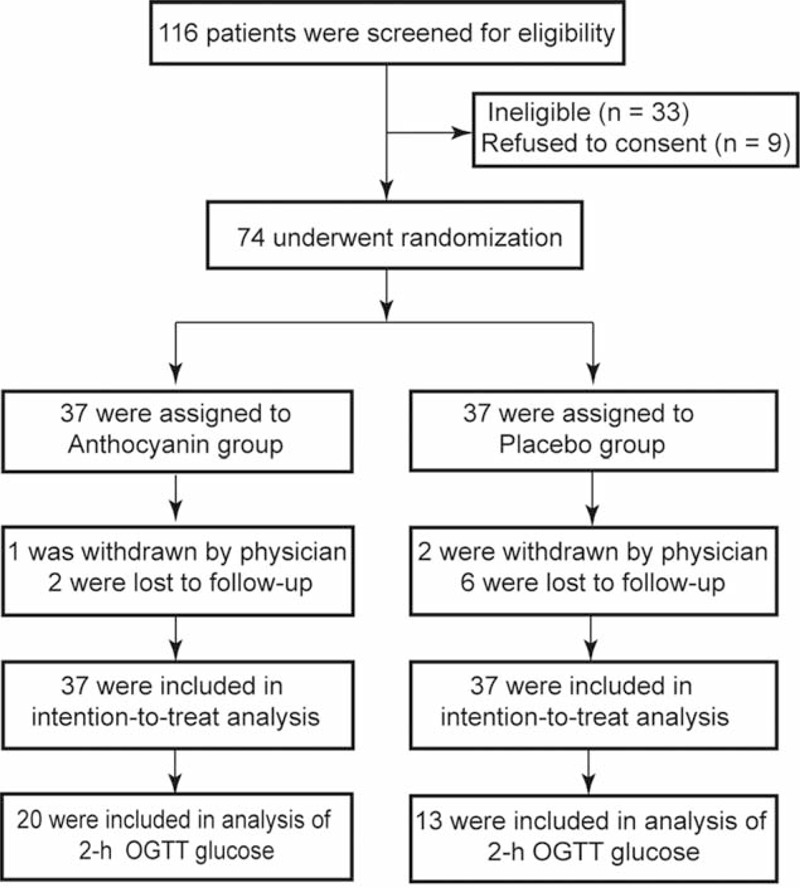
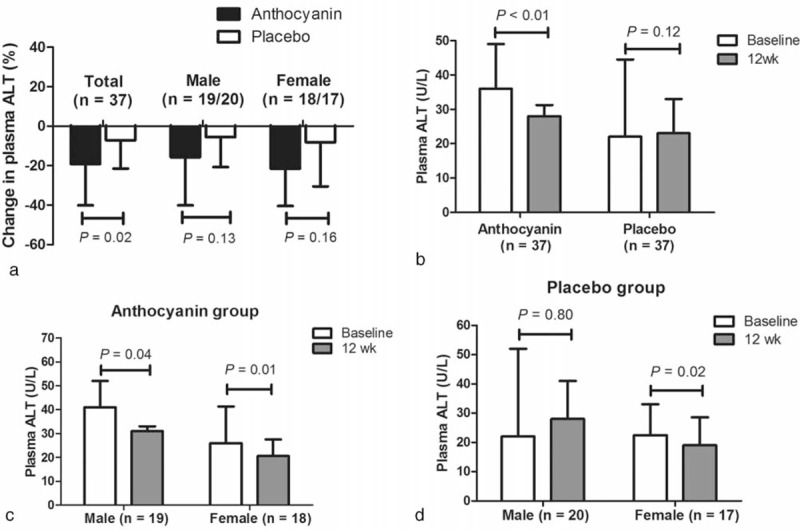
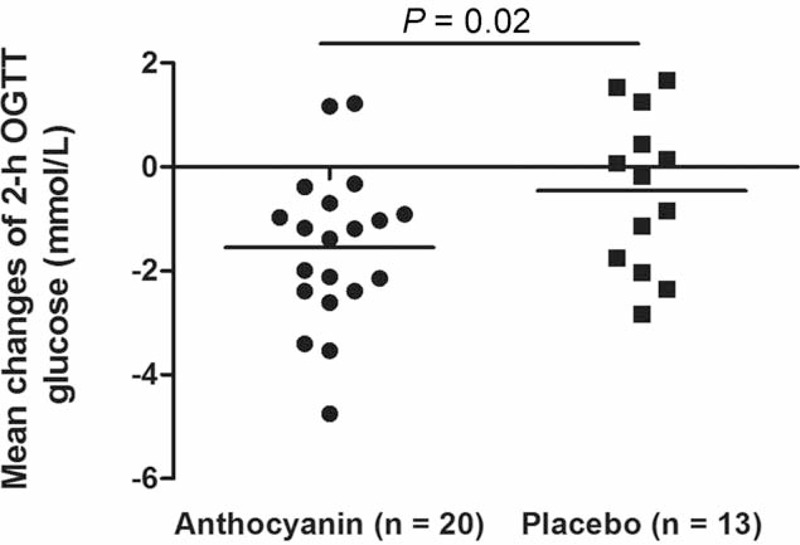
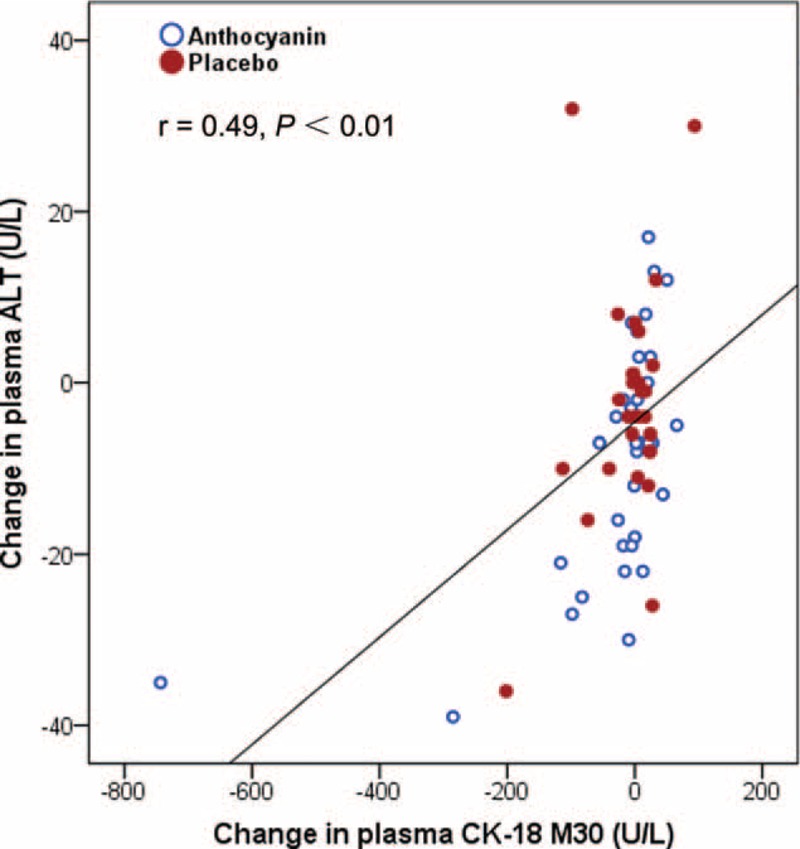
Nonalcoholic fatty liver disease (NAFLD) is a common liver disease that can progress to cirrhosis and liver failure. Anthocyanin, a member of the flavonoid family, has been shown to ameliorate NAFLD-associated pathologies in rodents.The aim of this CONSORT-compliant pilot study is to evaluate the effects of anthocyanin supplementation on insulin resistance and liver injury biomarkers in patients with NAFLD.A total of 74 subjects with NAFLD were divided into 2 groups in this double-blind, randomized study. Patients received either purified anthocyanin (320 mg/d) derived from bilberry and black currant or placebo for 12 weeks. Diet, physical activity, anthropometric parameters, glucose tolerance, and a set of biomarkers related to NAFLD were evaluated before and after intervention.No significant differences were observed in nutrient intake, physical activity, anthropometric parameters, or plasma lipid profile between patients receiving anthocyanin or placebo. Compared to controls, the anthocyanin group exhibited significant decreases (P < 0.05, all comparisons) in plasma alanine aminotransferase (-19.1% vs 3.1%), cytokeratin-18 M30 fragment (-8.8% vs 5.6%) and myeloperoxidase (-75.0% vs -44.8%). Significant decreases from baseline in fasting blood glucose and homeostasis model assessment for insulin resistance were observed in the anthocyanin group; however, these differences were not significant relative to placebo controls. In addition, the oral glucose tolerance test indicated that anthocyanin supplementation significantly decreased the 2-hour loading glucose level compared to control (-18.7% vs -3.8%, P = 0.02).A 12-week supplement of purified anthocyanin improved insulin resistance, indicators of liver injury, and clinical evolution in NAFLD patients. Further studies are warranted to determine the clinical applications of anthocyanin in NAFLD.This trial was registered at clinicaltrials.gov as NCT01940263.
Overview
The claims and statistics of this paper haven’t been checked yet.
Run the check — free, no account needed. It reads the open-access text and checks the sources it cites.
Integrity signals
Registry
Cites
Statistics
Figures
Verification
Claims the paper makes
The claims and statistics of this paper haven’t been checked yet.
Run the check — free, no account needed. It reads the open-access text and checks the sources it cites.
Claims other papers make about this one
Each is checked against this paper’s own text: does it say what the citing paper says it does?
The source backs part of the claim, not all of it — or backs it for a different population, condition or comparison.
In the citing paper
“anthocyanin supplementation (320 mg/day), a flavonoid, significantly improved insulin resistance and liver injury markers in patients with MASLD.”
From Strategies to promote liver fibrosis amelioration with involvement of restorative macrophages (2026) · cites this paper as [215]
Experimental — accuracy not yet measured
Self-check
Percentages, sums and reported differences re-computed from the paper’s own numbers.
The self-check needs the paper’s full text.
Citations
Cites
Moher, D., Hopewell, S., Schulz, K. F., Montori, V., Gotzsche, P. C., Devereaux, P. J., Elbourne, D., Egger, M., & Altman, D. G. (2010) · BMJ · doi:10.1136/bmj.c869 · Cited by 8,883
Pioglitazone, Vitamin E, or Placebo for Nonalcoholic Steatohepatitis
Sanyal, A. J., Chalasani, N., Kowdley, K. V., McCullough, A., Diehl, A. M., Bass, N. M., Neuschwander-Tetri, B. A., Lavine, J. E., Tonascia, J., Unalp, A., et al. (2010) · New England Journal of Medicine · doi:10.1056/nejmoa0907929 · Cited by 3,327
Angulo, P., Hui, J. M., Marchesini, G., Bugianesi, E., George, J., Farrell, G. C., Enders, F., Saksena, S., Burt, A. D., Bida, J. P., et al. (2007) · Hepatology · doi:10.1002/hep.21496 · Cited by 3,255
Prevalence and Control of Diabetes in Chinese Adults
Xu, Y. (2013) · JAMA · doi:10.1001/jama.2013.168118 · Cited by 2,710
Long-term follow-up of patients with NAFLD and elevated liver enzymes
Ekstedt, M., Franzén, L. E., Mathiesen, U. L., Thorelius, L., Holmqvist, M., Bodemar, G., & Kechagias, S. (2006) · Hepatology · doi:10.1002/hep.21327 · Cited by 2,302
The prevention and treatment of missing data in clinical trials
Little, R. J., D'Agostino, R., Cohen, M. L., Dickersin, K., Emerson, S. S., Farrar, J. T., Frangakis, C., Hogan, J. W., Molenberghs, G., Murphy, S. A., et al. (2012) · New England Journal of Medicine · doi:10.1056/nejmsr1203730 · Cited by 1,884
Flavonoid intake and cardiovascular disease mortality: a prospective study in postmenopausal women
Mink, P. J., Scrafford, C. G., Barraj, L. M., Harnack, L., Hong, C.-P., Nettleton, J. A., & Jacobs, D. R. (2007) · The American Journal of Clinical Nutrition · doi:10.1093/ajcn/85.3.895 · Cited by 945
Mudaliar, S., Henry, R. R., Sanyal, A. J., Morrow, L., Marschall, H., Kipnes, M., Adorini, L., Sciacca, C. I., Clopton, P., Castelloe, E., et al. (2013) · Gastroenterology · doi:10.1053/j.gastro.2013.05.042 · Cited by 931
Nonalcoholic Fatty Liver Disease in Lean Individuals in the United States
Younossi, Z. M., Stepanova, M., Negro, F., Hallaji, S., Younossi, Y., Lam, B. P., & Srishord, M. K. (2012) · Medicine · doi:10.1097/md.0b013e3182779d49 · Cited by 554
Dietary flavonoid intakes and risk of type 2 diabetes in US men and women
Wedick, N. M., Pan, A., Cassidy, A., Rimm, E. B., Sampson, L., ROSNER, B. A., Willett, W. C., Hu, F. B., Sun, Q., & van Dam, R. M. (2012) · American Journal of Clinical Nutrition · doi:10.3945/ajcn.111.028894 · Cited by 527
Cassidy, A., Mukamal, K. J., Liu, L., FRANZ, M. M., Eliassen, A. H., & Rimm, E. B. (2013) · Circulation · doi:10.1161/circulationaha.112.122408 · Cited by 497
Bhala, N. B., Angulo, P., van der Poorten, D., Lee, E., Hui, J. M., Saracco, G. M., Adams, L. A., Charatcharoenwitthaya, P., Topping, J. H., Bugianesi, E., et al. (2011) · Hepatology · doi:10.1002/hep.24491 · Cited by 450
Qin, Y., Xia, M., Ma, J., Hao, Y., Liu, J., Mou, H., Cao, L., & Ling, W. (2009) · The American Journal of Clinical Nutrition · doi:10.3945/ajcn.2009.27814 · Cited by 443
Self-citationKwok, R., Tse, Y. ‐., Wong, G. L. ‐., Ha, Y., Lee, A. U., Ngu, M. C., Chan, H. L. ‐., & Wong, V. W. ‐. (2014) · Alimentary Pharmacology & Therapeutics · doi:10.1111/apt.12569 · Cited by 405
Bioactives in Blueberries Improve Insulin Sensitivity in Obese, Insulin-Resistant Men and Women1–4
Stull, A. J., Cash, K. C., Johnson, W. D., Champagne, C. M., & Cefalu, W. T. (2010) · Journal of Nutrition · doi:10.3945/jn.110.125336 · Cited by 397
Zhu, Y., Ling, W., Guo, H., Song, F., Ye, Q., Zou, T., Li, D., Zhang, Y., Li, G., Xiao, Y., et al. (2012) · Nutrition Metabolism and Cardiovascular Diseases · doi:10.1016/j.numecd.2012.06.005 · Cited by 301
Self-citationIncreased Hepatic Myeloperoxidase Activity in Obese Subjects with Nonalcoholic Steatohepatitis
Rensen, S. S., Slaats, Y., Nijhuis, J., Jans, A., Bieghs, V., Driessen, A., Malle, E., Greve, J. W., & Buurman, W. A. (2009) · The American Journal of Pathology · doi:10.2353/ajpath.2009.080999 · Cited by 290
Myeloperoxidase: A Useful Biomarker for Cardiovascular Disease Risk Stratification?
Schindhelm, R. K., van der Zwan, L., Teerlink, T., & Scheffer, P. G. (2009) · Clinical Chemistry · doi:10.1373/clinchem.2009.126029 · Cited by 234
Guo, H., Xia, M., Zou, T., Ling, W., Zhong, R., & Zhang, W. (2011) · The Journal of Nutritional Biochemistry · doi:10.1016/j.jnutbio.2010.12.013 · Cited by 223
Self-citationJennings, A., Welch, A. A., Spector, T. D., MacGregor, A. J., & Cassidy, A. (2013) · Journal of Nutrition · doi:10.3945/jn.113.184358 · Cited by 220
Myeloperoxidase: A Leukocyte-Derived Protagonist of Inflammation and Cardiovascular Disease
Nußbaum, C., Klinke, A., Adam, M., Baldus, S. E., & Sperandio, M. (2012) · Antioxidants and Redox Signaling · doi:10.1089/ars.2012.4783 · Cited by 199
Joka, D., Wahl, K., Moeller, S., Schlué, J., Vaske, B., Bahr, M. J., Manns, M. P., Schulze‐Osthoff, K., & Bantel, H. (2011) · Hepatology · doi:10.1002/hep.24734 · Cited by 189
The Role of Diet and Nutrient Composition in Nonalcoholic Fatty Liver Disease
McCarthy, E. M., & Rinella, M. E. (2012) · Journal of the Academy of Nutrition and Dietetics · doi:10.1016/j.jada.2011.10.007 · Cited by 166
Guo, H., & Ling, W. (2015) · Reviews in Endocrine and Metabolic Disorders · doi:10.1007/s11154-014-9302-z · Cited by 158
Self-citationEffect of cranberry extracts on lipid profiles in subjects with type 2 diabetes
Lee, I. T., Chan, Y. C., Lin, C. W., Lee, W. J., & Sheu, W. H. (2008) · Diabetic Medicine · doi:10.1111/j.1464-5491.2008.02588.x · Cited by 150
Hassellund, S. S., Flaa, A., Kjeldsen, S. E., Seljeflot, I., Karlsen, A. S., Erlund, I., & Rostrup, M. (2012) · Journal of Human Hypertension · doi:10.1038/jhh.2012.4 · Cited by 139
Rensen, S. S., Bieghs, V., Xanthoulea, S., Arfianti, E., Bakker, J. A., Shiri-Sverdlov, R., Hofker, M. H., Greve, J. W., & Buurman, W. A. (2012) · PLoS ONE · doi:10.1371/journal.pone.0052411 · Cited by 116
Fitzpatrick, E., Mitry, R. R., Quaglia, A., Hussain, M. J., Bruyne, R. D., & Dhawan, A. K. (2010) · Journal of Pediatric Gastroenterology and Nutrition · doi:10.1097/mpg.0b013e3181e376be · Cited by 113
Histological progression of non‐alcoholic fatty liver disease in Chinese patients
Hui, A., Wong, V. W., Chan, H. L., Liew, C. T., Chan, J. L.-Y., Chan, F. K. L., & Sung, J. J. �. (2005) · Alimentary Pharmacology & Therapeutics · doi:10.1111/j.1365-2036.2005.02334.x · Cited by 91
Guo, H., Zhong, R., Liu, Y., Jiang, X., Tang, X., Li, Z., Xia, M., & Ling, W. (2014) · Nutrition · doi:10.1016/j.nut.2013.07.023 · Cited by 90
Self-citationSuda, I., Ishikawa, F., HATAKEYAMA, M., Miyawaki, M., Kudo, T., Hirano, K., Ito, A., Yamakawa, O., & Horiuchi, S. (2007) · European Journal of Clinical Nutrition · doi:10.1038/sj.ejcn.1602674 · Cited by 90
Insulin sensitizers in nonalcoholic fatty liver disease and steatohepatitis: Current status
Stein, L. L., Dong, M. H., & Loomba, R. S. (2009) · Advances in Therapy · doi:10.1007/s12325-009-0072-z · Cited by 85
Wright, O. R. L., Netzel, G. A., & Sakzewski, A. R. (2013) · Canadian Journal of Physiology and Pharmacology · doi:10.1139/cjpp-2012-0349 · Cited by 77
Is there any consensus as to what diet or lifestyle approach is the right one for NAFLD patients?
Finelli, C., & Tarantino, G. (2012) · PubMed · Cited by 76
Jiang, X., Tang, X., Zhang, P., Liu, G., & Guo, H. (2014) · Biochemical Pharmacology · doi:10.1016/j.bcp.2014.04.018 · Cited by 64
Self-citationTang, X., Shen, T., Jiang, X., Xia, M., Sun, X., Guo, H., & Ling, W. (2014) · Journal of Agricultural and Food Chemistry · doi:10.1021/jf504926n · Cited by 63
Self-citationMorrison, M. C., Liang, W., Mulder, P., Verschuren, L., Pieterman, E. J., Toet, K. H., Heeringa, P., Wielinga, P. Y., Kooistra, T., & Kleemann, R. (2014) · Journal of Hepatology · doi:10.1016/j.jhep.2014.12.011 · Cited by 61
Gómez‐García, A., Rodríguez, M. R., Alonso, C. G., Ochoa, D. Y. R., & Aguilar, C. Á. (2015) · Diabetes & Metabolism Journal · doi:10.4093/dmj.2015.39.1.59 · Cited by 58
Clinical and histological features of non‐alcoholic fatty liver disease in Hong Kong Chinese
Wong, V. W., Chan, H. L., Hui, A., Chan, K. ‐., Liew, C. T., Chan, F. K. L., & Sung, J. J. �. (2004) · Alimentary Pharmacology & Therapeutics · doi:10.1111/j.1365-2036.2004.02012.x · Cited by 53
Is fatty liver always benign and should not consequently be treated?
Fierbinteanu-Braticevici, C. G., Negreanu, L. M., & Tarantino, G. (2013) · PubMed · Cited by 28
Cited by
Sorted by citations
ESPEN guideline on clinical nutrition in liver disease
Plauth, M., Bernal, W., Dasarathy, S., Merli, M., Plank, L. D., Schütz, T., & Bischoff, S. C. (2019) · Clinical Nutrition · doi:10.1016/j.clnu.2018.12.022 · Cited by 674
ESPEN practical guideline: clinical nutrition in liver disease
Bischoff, S. C., Bernal, W., Dasarathy, S., Merli, M., Plank, L. D., Schütz, T., & Plauth, M. (2020) · Clinical Nutrition · doi:10.1016/j.clnu.2020.09.001 · Cited by 383
Guasch-Ferré, M., Merino, J., Sun, Q., Fitó, M., & Salas-Salvadó, J. (2017) · Oxidative Medicine and Cellular Longevity · doi:10.1155/2017/6723931 · Cited by 297
Salomone, F., Godos, J., & Zelber‐Sagi, S. (2015) · Liver International · doi:10.1111/liv.12975 · Cited by 261
Saleh, H. A., Yousef, M. H., & Abdelnaser, A. (2021) · Frontiers in Immunology · doi:10.3389/fimmu.2021.606069 · Cited by 269
Metadata
- Authors
- Zhang, P.-W., Chen, F.-X., Li, D., Ling, W.-H., & Guo, H.-H.
- Affiliations
- Sun Yat-sen University (CN)
- ORCID
- Li, Di
- Venue
- Medicine
- Published
- 2015-05
- Volume
- 94
- Issue
- 20
- Pages
- e758
- ISSN
- 0025-7974 (ISSN-L)
- PMC
- PMC4602870
- OpenAlex
- W2301998872
- Cited by
- 116
- References
- 40
- Citations by year
- 2026: 5 · 2025: 9 · 2024: 11 · 2023: 18 · 2022: 7 · 2021: 20 · 2020: 12 · 2019: 10 · 2018: 11 · 2017: 8 · 2016: 2 · 2015: 3
- FWCI
- 6.28
- Type
- journal article
- Language
- en
- Open access
- gold
- doi.org
- Licence
- cc-by-nc
- Locations
- Medicine (publishedVersion, cc-by-nc)
- Europe PMC (PubMed Central) (publishedVersion, cc-by-nc)
- PubMed Central (publishedVersion, cc-by-nc)
- PubMed (publishedVersion)
- Funders
- National Key Research and Development Program of China (2012CB517506)
- Topics
- Health Sciences › Medicine › Hepatology › Liver Disease Diagnosis and Treatment
- Health Sciences › Medicine › Biochemistry (medical) › Phytochemicals and Antioxidant Activities
- Health Sciences › Medicine › Endocrinology, Diabetes and Metabolism › Natural Antidiabetic Agents Studies
- Keywords
- non-alcoholic fatty liver disease, anthocyanins, Vaccinium myrtillus, black currant, flavonoids, dietary supplementation, insulin resistance, liver injury biomarkers, alanine aminotransferase, myeloperoxidase, oral glucose tolerance, fasting blood glucose
- MeSH terms
- Adult, Anthocyanins, Cholesterol, Double-Blind Method, Female, Glucose Tolerance Test, Humans, Insulin Resistance, Lipoproteins, LDL, Male, Middle Aged, Pilot Projects, Triglycerides, Non-alcoholic Fatty Liver Disease
About these checks
Registry, retraction, Cites and statistics results are computed, not judged, with one exception: a printed reference that no index lists is read once by a model before it counts as a citation error. Claims are extracted by a model and kept only when their quote appears verbatim in the text; each cited source is then checked, with a model’s help, for whether it says what the claim relies on. Those verdicts can be wrong — read the claim’s quote and the cited source before relying on one.
Statistics and arithmetic are recomputed, not judged.
Confidence bands are shown only for fields calibrated on our annotated test set. None is calibrated yet, so no band is shown.
What counts as a claim ›How we measure confidence ›How we check this ›
Are you an author, or do you see a problem with this page? Request a review
