

Physical activity programs for balance and fall prevention in elderly: A systematic review
Open accessThe DOI matches its Crossref record; 55 of the 57 references it cites were found in a registry or an index.
Abstract
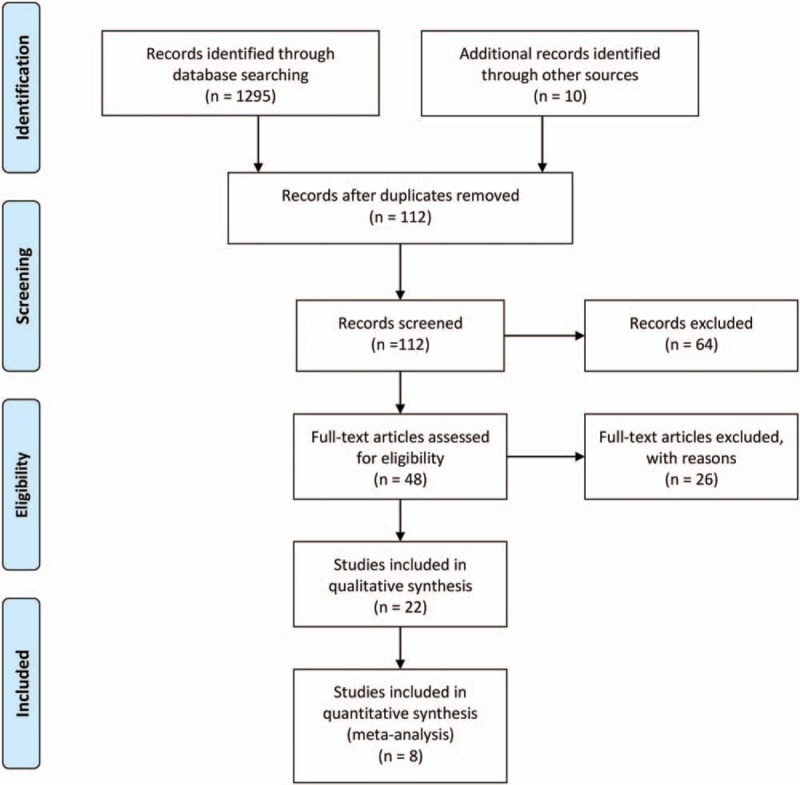
Background: Due to demographic changes the world's population is progressively ageing. The physiological decay of the elderly adult may lead to a reduction in the ability to balance and an increased risk of falls becoming an important issue among the elderly. In order to counteract the decay in the ability to balance, physical activity has been proven to be effective. The aim of this study is to systematically review the scientific literature in order to identify physical activity programs able to increase balance in the elderly. Methods: This review is based on the data from Medline-NLM, Pubmed, ScienceDirect, and SPORTDiscuss and includes randomized control trials that have analyzed balance and physical activity in healthy elderly over 65 years of age during the last decade. A final number of 8 manuscripts were included in the qualitative synthesis, which comprised 200 elderly with a mean age of 75.1 ± 4.4 years. The sample size of the studies varied from 9 to 61 and the intervention periods from 8 to 32 weeks. Results: Eight articles were considered eligible and included in the quantitative synthesis. The articles investigated the effects of resistance and aerobic exercise, balance training, T-bow© and wobble board training, aerobic step and stability ball training, adapted physical activity and Wii Fit training on balance outcomes. Balance measures of the studies showed improvements between 16% and 42% compared to baseline assessments. Conclusions: Balance is a multifactorial quality that can be effectively increased by different exercise training means. It is fundamental to promote physical activity in the aging adult, being that a negative effect on balance performance has been seen in the no-intervention control groups.
Overview
The claims and statistics of this paper haven’t been checked yet.
Free: it reads the open-access text and checks the first 5 claims that cite a source we can check. Create a free account to check every claim.
Integrity signals
Registry
Cites
Statistics
Figures
Verification
Claims the paper makes
The claims and statistics of this paper haven’t been checked yet.
Free: it reads the open-access text and checks the first 5 claims that cite a source we can check. Create a free account to check every claim.
Claims other papers make about this one
Each is checked against this paper’s own text: does it say what the citing paper says it does?
The cited source doesn’t support the claim as written.
In the citing paper
“In comparisons between distinct RTx, there were insufficient data to determine if unstable surfaces (70) or concurrent training (158) affected balance.”
From American College of Sports Medicine Position Stand. Resistance Training Prescription for Muscle Function, Hypertrophy, and Physical Performance in Healthy Adults: An Overview of Reviews (2026) · cites this paper as [158]
Checked by a reasoning model — may be wrong.
Experimental — accuracy not yet measured
Self-check
Percentages, sums and reported differences re-computed from the paper’s own numbers.
The self-check needs the paper’s full text.
Citations
Cites
1 retracted
Interventions for preventing falls in elderly people
Gillespie, L. D., Gillespie, W. J., Robertson, M. C., Lamb, S. E., Cumming, R. G., & Rowe, B. H. (2003) · The Cochrane Database of Systematic Reviews · doi:10.1002/14651858.cd000340 · Cited by 1,422
RetractedPreferred Reporting Items for Systematic Reviews and Meta-Analyses: the PRISMA statement
Moher, D., Liberati, A., Tetzlaff, J., Altman, D. G., & for the PRISMA Group (2009) · BMJ · doi:10.1136/bmj.b2535 · Cited by 83,823
Preferred Reporting Items for Systematic Reviews and Meta-Analyses: The PRISMA Statement
Moher, D., Liberati, A., Tetzlaff, J., Altman, D. G., & The PRISMA Group (2009) · PLoS Medicine · doi:10.1371/journal.pmed.1000097 · Cited by 64,042
Wang, G., Ma, R., Qiao, G., Wada, K., Aizawa, Y., & Satoh, T. (2015) · Integrative Medicine International · doi:10.1159/000368408 · Cited by 18,657
Bundesgesundheitsblatt - Gesundheitsforschung - Gesundheitsschutz
(2013) · Bundesgesundheitsblatt - Gesundheitsforschung - Gesundheitsschutz · doi:10.1007/103.1437-1588 · Cited by 11,796
Interventions for preventing falls in older people living in the community
Gillespie, L. D., Robertson, M. C., Gillespie, W. J., Sherrington, C., Gates, S., Clemson, L., & Lamb, S. E. (2012) · Cochrane Database of Systematic Reviews · doi:10.1002/14651858.cd007146.pub3 · Cited by 3,966
Falls in older people: epidemiology, risk factors and strategies for prevention
Rubenstein, L. Z. (2006) · Age and Ageing · doi:10.1093/ageing/afl084 · Cited by 3,287
Attention and the control of posture and gait: a review of an emerging area of research
Woollacott, M., & Shumway-Cook, A. (2002) · Gait & Posture · doi:10.1016/s0966-6362(01)00156-4 · Cited by 2,690
Inouye, S. K., Studenski, S., Tinetti, M. E., & Kuchel, G. A. (2007) · Journal of the American Geriatrics Society · doi:10.1111/j.1532-5415.2007.01156.x · Cited by 1,874
Effective Exercise for the Prevention of Falls: A Systematic Review and Meta‐Analysis
Sherrington, C., Whitney, J. C., Lord, S. R., Herbert, R. D., Cumming, R. G., & Close, J. C. T. (2008) · Journal of the American Geriatrics Society · doi:10.1111/j.1532-5415.2008.02014.x · Cited by 1,309 · cited 1×
“Physical activity has been therefore proven to counteract this phenomenon.([12]) There is however still uncertainty in which type of exercise may be the most effective to this purpose.”
Postural stability in the elderly: a comparison between fallers and non-fallers
Melzer, I. (2004) · Age and Ageing · doi:10.1093/ageing/afh218 · Cited by 706
Barnett, A. (2003) · Age and Ageing · doi:10.1093/ageing/32.4.407 · Cited by 684
Reviewing the definition of “elderly”
Orimo, H., Ito, H., Suzuki, T., Araki, A., Hosoi, T., & Sawabe, M. (2006) · Geriatrics & Gerontology International · doi:10.1111/j.1447-0594.2006.00341.x · Cited by 681
Physical activity is medicine for older adults
Taylor, D. (2014) · Postgraduate Medical Journal · doi:10.1136/postgradmedj-2012-131366 · Cited by 539
Giné-Garriga, M., Roqué-Fíguls, M., Coll-Planas, L., Sitjà-Rabert, M., & Salvà, A. (2014) · Archives of Physical Medicine and Rehabilitation · doi:10.1016/j.apmr.2013.11.007 · Cited by 468 · cited 1×
“There is however still uncertainty in which type of exercise may be the most effective to this purpose.([13,14]) Higher levels of physical activity reduce the overall morbidity andmortality and the risk of falling between 30% and 50%.”
Daley, M. J., & Spinks, W. L. (2000) · Sports Medicine · doi:10.2165/00007256-200029010-00001 · Cited by 366
Exercise for reducing fear of falling in older people living in the community
Kendrick, D., Kumar, A., Carpenter, H., Zijlstra, G. A. R., Skelton, D. A., Cook, J. R., Stevens, Z., Belcher, C. M., Haworth, D., Gawler, S. J., et al. (2014) · Cochrane Database of Systematic Reviews · doi:10.1002/14651858.cd009848.pub2 · Cited by 347
Prevention of falls in older patients.
Rao, S. (2005) · PubMed · Cited by 307
Zecevic, A. A., Salmoni, A. W., Speechley, M., & Vandervoort, A. A. (2006) · The Gerontologist · doi:10.1093/geront/46.3.367 · Cited by 287
Physical inactivity: associated diseases and disorders.
Knight, J. A. (2012) · PubMed · Cited by 286
Risk due to inactivity in physically capable older adults.
Simonsick, E. M., Lafferty, M. E., Phillips, C. L., Mendes de Leon, C. F., Kasl, S. V., Seeman, T. E., Fillenbaum, G., Hebert, P., & Lemke, J. H. (1993) · American Journal of Public Health · doi:10.2105/ajph.83.10.1443 · Cited by 242
Owino, V., Yang, S. Y., & Goldspink, G. (2001) · FEBS Letters · doi:10.1016/s0014-5793(01)02825-3 · Cited by 227
Effect of tai chi exercise on proprioception of ankle and knee joints in old people
Xu, D., Hong, Y., Li, J., & Chan, K. (2004) · British Journal of Sports Medicine · doi:10.1136/bjsm.2002.003335 · Cited by 220
Lacroix, A., Kressig, R. W., Muehlbauer, T., Gschwind, Y. J., Pfenninger, B., Bruegger, O., & Granacher, U. (2016) · Gerontology · doi:10.1159/000442087 · Cited by 212
Fernández-Argüelles, E. L., Rodríguez-Mansilla, J., Espejo-Antúnez, L., Garrido-Ardila, E. M., & Muñoz, R. P. (2014) · Archives of Gerontology and Geriatrics · doi:10.1016/j.archger.2014.10.003 · Cited by 208
Tai chi as a balance improvement exercise for older adults: a systematic review.
Liu, H., & Frank, A. D. (2010) · PubMed · Cited by 153
Demografischer Wandel und Krankheitshäufigkeiten: Eine Projektion bis 2050
Peters, E., Pritzkuleit, R., Beske, F., & Katalinic, A. (2010) · Bundesgesundheitsblatt - Gesundheitsforschung - Gesundheitsschutz · doi:10.1007/s00103-010-1050-y · Cited by 150
A minimal dose approach to resistance training for the older adult; the prophylactic for aging
Fisher, J. P., Steele, J., Gentil, P., Gießing, J., & Westcott, W. L. (2017) · Experimental Gerontology · doi:10.1016/j.exger.2017.09.012 · Cited by 129
Leung, D. P. K., Chan, C. K. L., Tsang, H. W. H., Tsang, W. W. N., & JONES, A. Y. M. (2011) · PubMed · Cited by 128
Effects of exercise on dual-task ability and balance in older adults: A systematic review
Gobbo, S., Bergamin, M., Sieverdes, J. C., Ermolao, A., & Zaccaria, M. (2013) · Archives of Gerontology and Geriatrics · doi:10.1016/j.archger.2013.10.001 · Cited by 115
Effects of a Salsa Dance Training on Balance and Strength Performance in Older Adults
Granacher, U., Muehlbauer, T., Bridenbaugh, S. A., Wolf, M., Roth, R., Gschwind, Y., Wolf, I., Mata, R., & Kressig, R. W. (2012) · Gerontology · doi:10.1159/000334814 · Cited by 111
Ansai, J. H., Aurichio, T. R., Gonçalves, R., & Rebelatto, J. R. (2015) · Geriatrics and gerontology international/Geriatrics & gerontology international · doi:10.1111/ggi.12497 · Cited by 111
Toulotte, C., Toursel, C., & Olivier, N. (2012) · Clinical Rehabilitation · doi:10.1177/0269215511434996 · Cited by 109
Balance Improvement by Strength Training for the Elderly
Lee, I.-H., & Park, S. (2013) · Journal of Physical Therapy Science · doi:10.1589/jpts.25.1591 · Cited by 107
There are no no-responders to low or high resistance training volumes among older women
Barbalho, M., Gentil, P., Izquierdo, M., Fisher, J. P., Steele, J., & Raiol, R. (2017) · Experimental Gerontology · doi:10.1016/j.exger.2017.09.003 · Cited by 99
Effects of Balance Training Using Wobble Boards in the Elderly
Ogaya, S., Ikezoe, T., Soda, N., & Ichihashi, N. (2011) · The Journal of Strength and Conditioning Research · doi:10.1519/jsc.0b013e31820019cf · Cited by 93
Cortical activation during balancing on a balance board
Herold, F., Orlowski, K., Börmel, S., & Müller, N. G. (2016) · Human Movement Science · doi:10.1016/j.humov.2016.11.002 · Cited by 88
Donath, L., Faude, O., Roth, R., & Zahner, L. (2013) · Scandinavian Journal of Medicine and Science in Sports · doi:10.1111/sms.12113 · Cited by 87
Maciaszek, J., & Osiński, W. (2010) · The American Journal of Chinese Medicine · doi:10.1142/s0192415x10007798 · Cited by 72
Bird, M., & Fell, J. W. (2014) · Journal of Aging and Physical Activity · doi:10.1123/japa.2013-0006 · Cited by 72
Controlled whole-body vibration training reduces risk of falls among community-dwelling older adults
Yang, F., King, G. A., Dillon, L., & Su, X. (2015) · Journal of Biomechanics · doi:10.1016/j.jbiomech.2015.06.029 · Cited by 71
Xbox Kinect training to improve clinical measures of balance in older adults: a pilot study
Bieryla, K. A. (2015) · Aging Clinical and Experimental Research · doi:10.1007/s40520-015-0452-y · Cited by 66
Marques, E. A., Figueiredo, P., Harris, T. B., Wanderley, F. A. C., & Carvalho, J. (2016) · Archives of Gerontology and Geriatrics · doi:10.1016/j.archger.2016.10.002 · Cited by 65
Sousa, N., Mendes, R., Silva, A., & Oliveira, J. (2017) · Clinical Rehabilitation · doi:10.1177/0269215516655857 · Cited by 64 · cited 5×
“Similar research design has been carried out by Sousa et al,([30]) where aerobic exercise alone has been compared to a combined aerobic and resistance exercise protocol to a control group in order to improve risk factors for fall preventions in the elderly.”
InfluentialZhao, Y., Chung, P., & Tong, T. K. (2017) · Geriatric Nursing · doi:10.1016/j.gerinurse.2017.02.011 · Cited by 60
Leisure-time Physical Activity and All-cause Mortality in an Elderly Cohort
Bembom, O., van der Laan, M., Haight, T., & Tager, I. (2009) · Epidemiology · doi:10.1097/ede.0b013e31819e3f28 · Cited by 59
Decreased postural control in people with moderate hearing loss
Thomas, E., Martines, F., Bianco, A., Messina, G., Giustino, V., Zangla, D., Iovane, A., & Palma, A. (2018) · Medicine · doi:10.1097/md.0000000000010244 · Cited by 57
Self-citationSouza, D., Barbalho, M., Vieira, C. A., Martins, W. R., Cadore, E. L., & Gentil, P. (2018) · Experimental Gerontology · doi:10.1016/j.exger.2018.12.001 · Cited by 55
Muir, S. W., Berg, K., Chesworth, B. M., Klar, N. S., & Speechley, M. R. (2010) · Physiotherapy Canada · doi:10.3138/physio.62.4.358 · Cited by 51
Patti, A., Bianco, A., Karsten, B., Montalto, M. A., Battaglia, G., Bellafiore, M., Cassata, D., Scoppa, F., Paoli, A., Iovane, A., et al. (2017) · Work · doi:10.3233/wor-172539 · Cited by 47
Self-citationImproved postural control after dynamic balance training in older overweight women
Bellafiore, M., Battaglia, G., Bianco, A., Paoli, A., Farina, F., & Palma, A. (2011) · Aging Clinical and Experimental Research · doi:10.1007/bf03337762 · Cited by 40
Self-citationEffects of a dynamic balance training protocol on podalic support in older women. Pilot Study
Battaglia, G., Bellafiore, M., Bianco, A., Paoli, A., & Palma, A. (2010) · Aging Clinical and Experimental Research · doi:10.1007/bf03337736 · Cited by 40
Self-citationGroup fitness activities for the elderly: an innovative approach to reduce falls and injuries
Bianco, A., Patti, A., Bellafiore, M., Battaglia, G., Şahin, F. N., Paoli, A., Cataldo, M. C., Mammina, C., & Palma, A. (2013) · Aging Clinical and Experimental Research · doi:10.1007/s40520-013-0144-4 · Cited by 38
Self-citationA Lower-Limb Training Program to Improve Balance in Healthy Elderly Women Using the T-Bow® Device
Chulvi‐Medrano, I., Colado, J. C., Abella, C. P., Naclerio, F., & García‐Massó, X. (2009) · The Physician and Sportsmedicine · doi:10.3810/psm.2009.06.1719 · Cited by 36
Balance Training in Elderly Women Using Public Parks
Leirós‐Rodríguez, R., & Soidán, J. L. G. (2014) · Journal of Women & Aging · doi:10.1080/08952841.2014.888220 · Cited by 32
Dunsky, A., Yahalom, T., Arnon, M., & Lidor, R. (2017) · Archives of Gerontology and Geriatrics · doi:10.1016/j.archger.2017.03.003 · Cited by 30
Bellafiore, M., Battaglia, G., Bianco, A., et al. (2010) · Nova Science Publishers (Nova Science Publishers, Inc.) · doi:10.3275/7354 · Cited by 1
Self-citation
Cited by
C.K, S., Chandran.K, S., & D, P. (2024) · International Journal of Innovative Science and Research Technology (IJISRT) · doi:10.38124/ijisrt/ijisrt24jul606 · Cited by 733
Papalia, G. F., Papalia, R., Diaz Balzani, L. A., Torre, G., Zampogna, B., Vasta, S., Fossati, C., Alifano, A. M., & Denaro, V. (2020) · Journal of Clinical Medicine · doi:10.3390/jcm9082595 · Cited by 180
“The decline in physical performance and cognitive capabilities with age causes progressive impairment of muscle strength, coordination, and balance [2], exposing people to a higher risk of falls [3,4].”
BackgroundPatti, A., Zangla, D., Şahin, F. N., Cataldi, S., Lavanco, G., Palma, A., & Fischietti, F. (2021) · Medicine · doi:10.1097/md.0000000000025289 · Cited by 155
Self-citationFalls among Older Adults: Screening, Identification, Rehabilitation, and Management
Giovannini, S., Brau, F., Galluzzo, V., Santagada, D. A., Loreti, C., Biscotti, L., Laudisio, A., Zuccalà, G., & Bernabei, R. (2022) · Applied Sciences · doi:10.3390/app12157934 · Cited by 149
Carvalho, G. F., Schwarz, A., Szikszay, T. M., Adamczyk, W. M., Bevilaqua‐Grossi, D., & Luedtke, K. (2019) · Brazilian Journal of Physical Therapy · doi:10.1016/j.bjpt.2019.11.001 · Cited by 113
Metadata
- Authors
- Thomas, E., Battaglia, G., Patti, A., Brusa, J., Leonardi, V., Palma, A., & Bellafiore, M.
- Affiliations
- University of Palermo (IT)
- Corresponding author
- Thomas, Ewan
- ORCID
- Venue
- Medicine
- Published
- 2019-07
- Volume
- 98
- Issue
- 27
- Pages
- e16218
- ISSN
- 0025-7974 (ISSN-L)
- 1536-5964
- PMC
- PMC6635278
- OpenAlex
- W2961036073
- Semantic Scholar
- 6858c0348a645288d7ab8bb3f7c4d573b5bb79f4
- Cited by
- 398
- References
- 56
- Citations by year
- 2026: 40 · 2025: 69 · 2024: 95 · 2023: 83 · 2022: 58 · 2021: 35 · 2020: 12 · 2019: 6
- FWCI
- 5.27
- Type
- journal article
- Language
- en
- Open access
- gold
- doi.org
- Licence
- Locations
- Medicine (publishedVersion, cc-by-nc-nd)
- PubMed Central (publishedVersion, cc-by-nc-nd)
- PubMed (publishedVersion)
- Nova Science Publishers (Nova Science Publishers, Inc.) (submittedVersion, other-oa)
- Topics
- Health Sciences › Health Professions › Physical Therapy, Sports Therapy and Rehabilitation › Balance, Gait, and Falls Prevention
- Health Sciences › Medicine › Public Health, Environmental and Occupational Health › Physical Activity and Health
- Health Sciences › Medicine › Geriatrics and Gerontology › Frailty in Older Adults
- Keywords
- physical activity programs, balance, fall prevention, older adults, exercise training, resistance training, aerobic exercise, balance training, wobble board, stability ball, Wii Fit, aging
- MeSH terms
- Accidental Falls, Aged, Postural Balance, Exercise Therapy, Humans, Exercise, Muscle Strength
About these checks
Registry, retraction, Cites and statistics results are computed, not judged, with one exception: a printed reference that no index lists is read once by a model before it counts as a citation error. Claims are extracted by a model and kept only when their quote appears verbatim in the text; each cited source is then checked, with a model’s help, for whether it says what the claim relies on. Those verdicts can be wrong — read the claim’s quote and the cited source before relying on one.
Statistics and arithmetic are recomputed, not judged.
Confidence bands are shown only for fields calibrated on our annotated test set. None is calibrated yet, so no band is shown.
What counts as a claim ›How we measure confidence ›How we check this ›
Are you an author, or do you see a problem with this page? Request a review
Data sources
Bibliographic data: Semantic Scholar, OpenAlex, Crossref.
Contains information from the Semantic Scholar Academic Graph Datasets, made available under the ODC Attribution License (ODC-BY 1.0).
Semantic Scholar’s data is described in: Kinney, R., et al. (2023). The Semantic Scholar Open Data Platform. arXiv:2301.10140.
