

The DOI matches its Crossref record; 54 of the 55 references it cites were found in a registry or an index; 52 of the 85 sources its claims cite were checked for support.
Apolipoprotein E metabolism and functions in brain and its role in Alzheimer's disease
Open accessAbstract
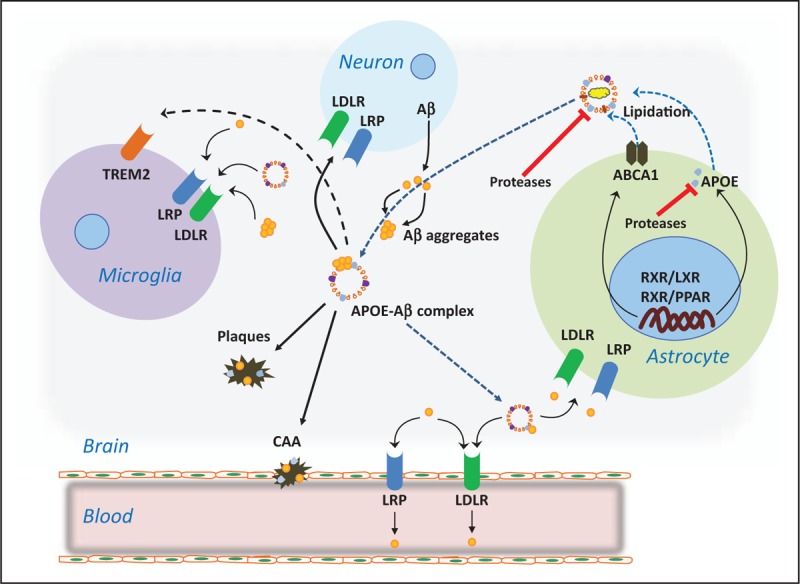
Purpose of review: APOE4 genotype is the strongest genetic risk factor for Alzheimer's disease. Prevailing evidence suggests that amyloid β plays a critical role in Alzheimer's disease. The objective of this article is to review the recent findings about the metabolism of apolipoprotein E (ApoE) and amyloid β and other possible mechanisms by which ApoE contributes to the pathogenesis of Alzheimer's disease. Recent findings: ApoE isoforms have differential effects on amyloid β metabolism. Recent studies demonstrated that ApoE-interacting proteins, such as ATP-binding cassette A1 (ABCA1) and LDL receptor, may be promising therapeutic targets for Alzheimer's disease treatment. Activation of liver X receptor and retinoid X receptor pathway induces ABCA1 and other genes, leading to amyloid β clearance. Inhibition of the negative regulators of ABCA1, such as microRNA-33, also induces ABCA1 and decreases the levels of ApoE and amyloid β. In addition, genetic inactivation of an E3 ubiquitin ligase, myosin regulatory light chain interacting protein, increases LDL receptor levels and inhibits amyloid accumulation. Although amyloid β-dependent pathways have been extensively investigated, there have been several recent studies linking ApoE with vascular function, neuroinflammation, metabolism, synaptic plasticity, and transcriptional regulation. For example, ApoE was identified as a ligand for a microglial receptor, TREM2, and studies suggested that ApoE may affect the TREM2-mediated microglial phagocytosis. Summary: Emerging data suggest that ApoE affects several amyloid β-independent pathways. These underexplored pathways may provide new insights into Alzheimer's disease pathogenesis. However, it will be important to determine to what extent each mechanism contributes to the pathogenesis of Alzheimer's disease.
Overview
AI snapshot
Written from the paper’s full text.
TL;DR
This review summarizes how apolipoprotein E (ApoE) metabolism and ApoE-interacting proteins influence Alzheimer’s disease through amyloid β-dependent and emerging amyloid β-independent pathways. It highlights ABCA1, LDLR/LRP1, TREM2, and ApoE effects on vascular function, neuroinflammation, metabolism, synaptic plasticity, and transcription.
Key findings
- APOE4 is the strongest genetic risk factor for Alzheimer’s disease, with ε4 risk-increasing and ε2 protective; brain amyloid β accumulation follows ApoE4 > ApoE3 > ApoE2.
- In >92,000 individuals, the ABCA1 loss-of-function variant N1800H occurred at 0.2% frequency and increased Alzheimer’s disease hazard ratio to 4.13, while APOE ε4/4 versus ε3/3 had a hazard ratio of 7.70; CSF from mild cognitive impairment and Alzheimer’s disease patients showed 30% less ABCA1-mediated cholesterol efflux than cognitively normal participants.
- Rare TREM2 missense variants are associated with approximately two-fold to four-fold increased Alzheimer’s disease risk; ApoE binds TREM2 and facilitates TREM2-mediated microglial phagocytosis, and TREM2 disease variants reduce ApoE–TREM2 affinity, though TREM2 binding affinity does not differ among ApoE isoforms.
- ApoE also affects amyloid β-independent pathways: ApoE4 binds promoter regions of ∼1700 genes in human glioblastoma cells, ApoE4 led to lower TREM2 expression than ApoE3 in primary microglia, and ApoE2 enhanced synaptosome–astrocyte binding and astrocyte phagocytic capacity in ApoE knock-in mice.
Methods
- Narrative review article synthesizing recent findings on ApoE metabolism and Alzheimer’s disease, focusing on ABCA1, ApoE receptors, ApoE proteases, and ApoE roles in cerebral vascular function, neuroinflammation, lipid/glucose metabolism, synaptic plasticity, and transcriptional regulation.
- Evidence is drawn from cited human studies, APP/ApoE mouse models, ApoE knock-in mice, and cell-based or in vitro experiments; no primary data collection or systematic quantitative analysis is described.
Limitations
- The paper states that it will be important to determine to what extent each mechanism contributes to Alzheimer’s disease pathogenesis; the exact in vivo ApoE protease remains elusive, and most previous studies used recombinant ApoE with no or little lipidation under in vitro conditions, so further physiological investigations are warranted.
- The paper notes that the physical TREM2–ApoE interaction may not explain differential ApoE isoform effects, that it is unknown whether ApoE actively transports amyloid β from parenchyma to blood vessels or cotranslocates to preformed aggregates, and that whether ApoE4 disrupts blood-brain barrier integrity independent of amyloid β is still debated.
- Evident from the text: as a narrative review, it lacks a systematic search strategy, explicit inclusion criteria, and quantitative synthesis, so conclusions depend on selected cited studies.
Model-written summary. Check it against the paper before relying on it.
Integrity signals
Registry
Cites
Statistics
Figures
Verification
Claims the paper makes
28 Supported · 19 Sources not found · 15 Partly supported · 11 No full text of the sources · 10 Own interpretation · 3 No basis given · 2 Supported so far · accuracy not yet measured
The cited sources support only part of this claim — read each source’s verdict below.
In the paper
“In addition to its role in lipid transport, ABCA1 also indirectly facilitates amyloid β clearance through ApoE lipidation in brain [6].”
§ Apolipoprotein E metabolism and functions in brain and its role in Alzheimer's disease > REGULATION OF APOLIPOPROTEIN E LIPIDATION AND METABOLISM
What the sources say
- Partly supportedcites [6] Koldamova R Fitz NF Lefterov I ATP-binding cassette transporter A1: from metabolism to neurodegeneration. Neurobiol Dis 2014; 72: 13– 21. 24844148 PMC4302328 sourceExperimental — accuracy not yet measured
The Introduction says ABCA1 affects apoE lipidation and that apoE is implicated in Aβ clearance. In “ABCA1 and AD model mice,” the authors propose that ABCA1-generated apoE-containing particles facilitate clearance in the brain, but present that specific mechanism as a hypothesis rather than an established fact. Page numbers are unavailable in our copy. (LLM, conf=0.84)
plaindirect- Asserted: passes — The authors put it forward as true.
- Checkable: passes — It can be checked against evidence.
- Load-bearing: passes — The paper’s conclusions depend on it.
- Based: passes — The paper gives a reason why it holds.
- Partly supported
The sources with a verdict support this claim; the rest weren’t checked yet, have no full text we could read, or their verdicts aren’t rated yet.
In the paper
“there is no or very low correlation between plasma and CSF ApoE levels [10,11].”
§ Apolipoprotein E metabolism and functions in brain and its role in Alzheimer's disease > REGULATION OF APOLIPOPROTEIN E LIPIDATION AND METABOLISM
What the sources say
- Not checked — no full text of the sourcecites [10] Martinez-Morillo E Hansson O Atagi Y Total apolipoprotein E levels and specific isoform composition in cerebrospinal fluid and plasma from Alzheimer's disease patients and controls. Acta Neuropathol 2014; 127: 633– 643. 24633805 source
- Supportedcites [11] Wildsmith KR Basak JM Patterson BW In vivo human apolipoprotein E isoform fractional turnover rates in the CNS. PLoS One 2012; 7: e38013. 22675504 PMC3366983 source
The Discussion explicitly says that previous findings show plasma and CSF ApoE concentrations are not correlated. The paper also reports distinct plasma and CSF ApoE labeling time courses, though those concern kinetics rather than levels. No page number is provided in our copy. (LLM, conf=0.91)
plain- Asserted: passes — The authors put it forward as true.
- Checkable: passes — It can be checked against evidence.
- Load-bearing: passes — The paper’s conclusions depend on it.
- Based: passes — The paper gives a reason why it holds.
Every source the paper cites for this claim was checked and supports it.
In the paper
“Because peripheral ApoE cannot penetrate the blood-brain barrier (BBB) [9]”
§ Apolipoprotein E metabolism and functions in brain and its role in Alzheimer's disease > REGULATION OF APOLIPOPROTEIN E LIPIDATION AND METABOLISM
What the sources say
- Supportedcites [9] Yoon H Flores LF Kim J MicroRNAs in brain cholesterol metabolism and their implications for Alzheimer's disease. Biochim Biophys Acta 2016; 1861: 2139– 2147. 27155217 PMC5097035 source
Section 2.2 (page unavailable) says the BBB blocks transport of lipoprotein-mediated peripheral cholesterol into the brain and reports that human ApoE expressed in mouse peripheral tissues was not detected in mouse CSF. Together, these statements support the cited point that peripheral ApoE does not enter the CNS across the barrier. (LLM, conf=0.86)
plain- Asserted: passes — The authors put it forward as true.
- Checkable: passes — It can be checked against evidence.
- Load-bearing: passes — The paper’s conclusions depend on it.
- Based: passes — The paper gives a reason why it holds.
- Supported
The cited sources support only part of this claim — read each source’s verdict below.
In the paper
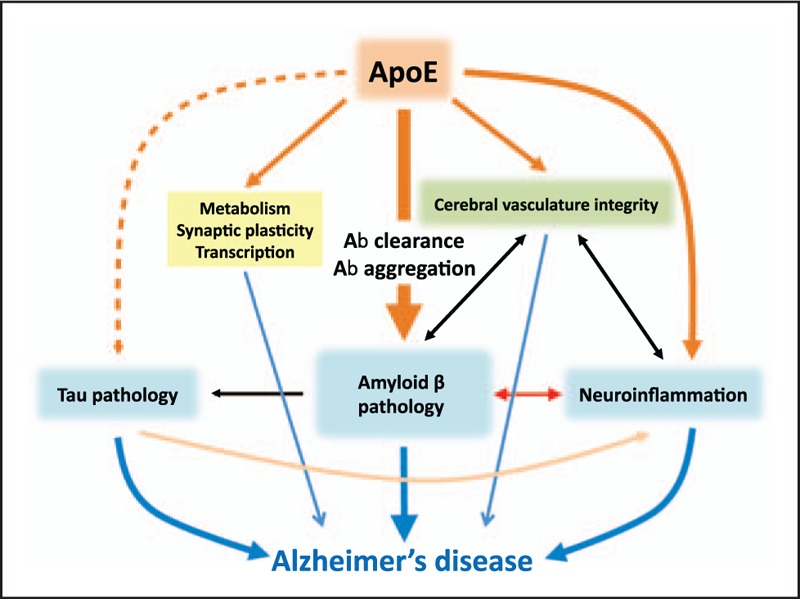
“In addition, ApoE may directly affect neuroinflammation, cerebral vascular integrity, metabolism, synaptic plasticity, and transcription through amyloid β-independent mechanisms [23,35,50].”
§ Apolipoprotein E metabolism and functions in brain and its role in Alzheimer's disease > INTRODUCTION
What the sources say
- Supportedcites [23] Tai LM Thomas R Marottoli FM The role of APOE in cerebrovascular dysfunction. Acta Neuropathol 2016; 131: 709– 723. 26884068 PMC4837016 source
The “APOE4 increases AD risk” section explicitly links APOE4 to AD-relevant pathogenic processes, including Aβ-independent pathways. The neuroinflammation section also describes an Aβ-independent inflammatory response associated with APOE4. (LLM, conf=0.93)
- Partly supportedcites [35] Tai LM Ghura S Koster KP APOE-modulated Abeta-induced neuroinflammation in Alzheimer's disease: current landscape, novel data, and future perspective. J Neurochem 2015; 133: 465– 488. 25689586 PMC4400246 sourceExperimental — accuracy not yet measured
The section “APOE modulation of Aβ-independent neuroinflammation” describes apoE effects on neuroinflammation and blood–brain barrier function without Aβ. The Introduction also lists metabolism and neuronal plasticity as functions modulated by neuroinflammation, but does not establish that apoE directly affects those functions or transcription through Aβ-independent mechanisms. The source supports the claim’s general possibility, not every pathway in the citing sentence. (LLM, conf=0.82)
- Supportedcites [50] Kim J Yoon H Basak JM Kim J Apolipoprotein E in synaptic plasticity and Alzheimer's disease: potential cellular and molecular mechanisms. Mol Cells 2014; 37: 767– 776. 25358504 PMC4255096 source
The Abstract identifies cerebral energy metabolism, neuroinflammation, neurovascular function, and synaptic plasticity as potential pathogenic mechanisms beyond apoE’s effects on Aβ. The section ‘Differential effects of ApoE isoforms on neurite outgrowth in vitro’ explicitly discusses ‘Aβ-independent pathogenic mechanisms,’ supporting the hedged claim. (LLM, conf=0.90)
hedgedconditional- Asserted: passes — The authors put it forward as true.
- Checkable: passes — It can be checked against evidence.
- Load-bearing: unclear — It is unclear whether the paper’s conclusions depend on it.
- Based: passes — The paper gives a reason why it holds.
- Supported
The cited sources support only part of this claim — read each source’s verdict below.
In the paper
“multiple lines of human and animal data clearly demonstrate that there is an isoform-specific difference in amyloid β clearance and accumulation [4,5].”
§ Apolipoprotein E metabolism and functions in brain and its role in Alzheimer's disease > INTRODUCTION
What the sources say
- Partly supportedcites [4] Kim J Basak JM Holtzman DM The role of apolipoprotein E in Alzheimer's disease. Neuron 2009; 63: 287– 303. 19679070 PMC3044446 sourceExperimental — accuracy not yet measured
The Human studies and In vivo animal data sections report apoE isoform-related differences in Aβ burden and deposition. The Aβ Clearance section reports faster clearance of Aβ bound to apoE2 or apoE3 than to apoE4 in one mouse study, but also cites a mouse study finding no difference and says isoform-specific clearance effects need further study. Thus, the claim that human and animal data clearly demonstrate differences in both clearance and accumulation overstates the clearance evidence. Page numbers were not supplied. (LLM, conf=0.87)
- Partly supportedcites [5] Castellano JM Kim J Stewart FR Human apoE isoforms differentially regulate brain amyloid-β peptide clearance. Sci Transl Med 2011; 3: 89ra57. PMC3192364 21715678 sourceExperimental — accuracy not yet measured
The Results report apoE isoform-dependent Aβ clearance in two mouse models, and the Introduction describes isoform-dependent amyloid deposition in humans and mice. But the Discussion says APOE genotype was not assessed in the cited human clearance study and calls for further investigation, so this paper does not establish isoform-specific Aβ clearance in humans. (LLM, conf=0.86)
boostedcorrelational- Asserted: passes — The authors put it forward as true.
- Checkable: passes — It can be checked against evidence.
- Load-bearing: passes — The paper’s conclusions depend on it.
- Based: passes — The paper gives a reason why it holds.
- Partly supported
The cited sources support only part of this claim — read each source’s verdict below.
In the paper
“It is well established that the amyloid β accumulation in human brain follows the pattern of ApoE4 > ApoE3 > ApoE2 [5].”
§ Apolipoprotein E metabolism and functions in brain and its role in Alzheimer's disease > INTRODUCTION
What the sources say
- Partly supportedcites [5] Castellano JM Kim J Stewart FR Human apoE isoforms differentially regulate brain amyloid-β peptide clearance. Sci Transl Med 2011; 3: 89ra57. PMC3192364 21715678 sourceExperimental — accuracy not yet measured
The Discussion reports an ε4 > ε3 > ε2 pattern in the frequency of brain-amyloid biomarkers among cognitively normal people under 70. The claim extends that finding to amyloid-β accumulation in human brains generally, whereas the human result concerns biomarker prevalence in a specific cohort, not a direct comparison of accumulation across all people. (LLM, conf=0.84)
boostedcorrelational- Asserted: passes — The authors put it forward as true.
- Checkable: passes — It can be checked against evidence.
- Load-bearing: unclear — It is unclear whether the paper’s conclusions depend on it.
- Based: passes — The paper gives a reason why it holds.
- Partly supported
Every source the paper cites for this claim was checked and supports it.
In the paper
“ABCA1 expression is suppressed by multiple microRNAs, such as miR-106b, miR-758, and miR-33 [9].”
§ Apolipoprotein E metabolism and functions in brain and its role in Alzheimer's disease > REGULATION OF APOLIPOPROTEIN E LIPIDATION AND METABOLISM
What the sources say
- Supportedcites [9] Yoon H Flores LF Kim J MicroRNAs in brain cholesterol metabolism and their implications for Alzheimer's disease. Biochim Biophys Acta 2016; 1861: 2139– 2147. 27155217 PMC5097035 source
The Concluding Remarks state that ABCA1 is targeted by miR-106b, miR-758, and miR-33 in the brain. Sections 4.4–4.6 describe reduced ABCA1 expression or protein levels for each miRNA. The claim’s shorter names are consistent with those used in the paper’s conclusion. (LLM, conf=0.95)
plaindirect- Asserted: passes — The authors put it forward as true.
- Checkable: passes — It can be checked against evidence.
- Load-bearing: unclear — It is unclear whether the paper’s conclusions depend on it.
- Based: passes — The paper gives a reason why it holds.
- Supported
The cited sources support only part of this claim — read each source’s verdict below.
In the paper
“In neuron, ApoE4 undergoes preferential proteolytic cleavage, generating neurotoxic fragments [20].”
§ Apolipoprotein E metabolism and functions in brain and its role in Alzheimer's disease > REGULATION OF APOLIPOPROTEIN E LIPIDATION AND METABOLISM
What the sources say
- Partly supportedcites [20] Tamboli IY Heo D Rebeck GW Extracellular proteolysis of apolipoprotein E (apoE) by secreted serine neuronal protease. PLoS One 2014; 9: e93120. 24675880 PMC3968057 sourceExperimental — accuracy not yet measured
The Results report that a protease secreted by hippocampal neurons generates more fragments from apoE4 than apoE3. But the paper locates this cleavage in extracellular conditioned medium, not inside neurons. The Introduction and Discussion describe evidence that apoE fragments can be neurotoxic; this study does not establish that its own fragments are neurotoxic. (LLM, conf=0.88)
plaindirect- Asserted: passes — The authors put it forward as true.
- Checkable: passes — It can be checked against evidence.
- Load-bearing: passes — The paper’s conclusions depend on it.
- Based: passes — The paper gives a reason why it holds.
- Partly supported
Every source the paper cites for this claim was checked and supports it.
In the paper
“Previous animal studies demonstrated that improvement of ApoE lipidation inhibits amyloid deposition in APP mouse models.”
§ Apolipoprotein E metabolism and functions in brain and its role in Alzheimer's disease > REGULATION OF APOLIPOPROTEIN E LIPIDATION AND METABOLISM
What the sources say
- Supportedcites [6] Koldamova R Fitz NF Lefterov I ATP-binding cassette transporter A1: from metabolism to neurodegeneration. Neurobiol Dis 2014; 72: 13– 21. 24844148 PMC4302328 source
The “ABCA1 and AD model mice” section reports that APP transgenic mice overexpressing ABCA1 have fewer amyloid plaques and larger apoE-containing particles. The paper also describes ABCA1’s role in the brain as affecting apoE lipidation, supporting the citing sentence’s paraphrase of the animal findings. Page numbers are unavailable in our copy. (LLM, conf=0.89)
boosteddirect- Asserted: passes — The authors put it forward as true.
- Checkable: passes — It can be checked against evidence.
- Load-bearing: unclear — It is unclear whether the paper’s conclusions depend on it.
- Based: passes — The paper gives a reason why it holds.
- Supported
Every source the paper cites for this claim was checked and supports it.
In the paper
“ApoE participates in the brain phospholipid homeostasis in an isoform-dependent manner.”
§ Apolipoprotein E metabolism and functions in brain and its role in Alzheimer's disease > APOLIPOPROTEIN E IN METABOLISM OF LIPID AND GLUCOSE
What the sources say
- Supportedcites [46] Zhu L Zhong M Elder GA Phospholipid dysregulation contributes to ApoE4-associated cognitive deficits in Alzheimer's disease pathogenesis. Proc Natl Acad Sci U S A 2015; 112: 11965– 11970. 26372964 PMC4586834 source
The Discussion states that ApoE3 increases brain PIP₂ levels by suppressing synj1 expression, whereas ApoE4 lacks that regulatory ability and reduces PIP₂ levels. It explicitly describes these as ApoE4 genotype-specific changes in brain phospholipid homeostasis. (LLM, conf=0.94)
plaindirect- Asserted: passes — The authors put it forward as true.
- Checkable: passes — It can be checked against evidence.
- Load-bearing: passes — The paper’s conclusions depend on it.
- Based: passes — The paper gives a reason why it holds.
- Supported
- It may state two separate claims as one. 23
- Probably not a substantial claim. 4
The cited sources support only part of this claim — read each source’s verdict below.
In the paper
“Deletion of ABCA1 gene increases amyloid β accumulation, whereas its overexpression prevents amyloid β aggregation in amyloid mouse models [6].”
§ Apolipoprotein E metabolism and functions in brain and its role in Alzheimer's disease > REGULATION OF APOLIPOPROTEIN E LIPIDATION AND METABOLISM
What the sources say
- Partly supportedcites [6] Koldamova R Fitz NF Lefterov I ATP-binding cassette transporter A1: from metabolism to neurodegeneration. Neurobiol Dis 2014; 72: 13– 21. 24844148 PMC4302328 sourceExperimental — accuracy not yet measured
The “ABCA1 and AD model mice” section reports that ABCA1 deficiency increases amyloid plaques and that mice overexpressing ABCA1 in the brain have fewer plaques. It proposes decreased Aβ aggregation as a hypothesis, but does not establish that overexpression prevents aggregation. Page numbers were not provided. (LLM, conf=0.86)
plaindirect- Asserted: passes — The authors put it forward as true.
- Checkable: passes — It can be checked against evidence.
- Load-bearing: passes — The paper’s conclusions depend on it.
- Based: passes — The paper gives a reason why it holds.
It may state two separate claims as one.
- Partly supported
The cited sources support only part of this claim — read each source’s verdict below.
In the paper
“Agonists of these nuclear receptors increased the levels of ABCA1 and decreased amyloid β accumulation in APP mouse models [6].”
§ Apolipoprotein E metabolism and functions in brain and its role in Alzheimer's disease > REGULATION OF APOLIPOPROTEIN E LIPIDATION AND METABOLISM
What the sources say
- Partly supportedcites [6] Koldamova R Fitz NF Lefterov I ATP-binding cassette transporter A1: from metabolism to neurodegeneration. Neurobiol Dis 2014; 72: 13– 21. 24844148 PMC4302328 sourceExperimental — accuracy not yet measured
The “ABCA1 and Alzheimer’s disease” section reports that LXR and RXR ligands increase Abca1 expression in mice and ameliorate amyloid pathology; “Therapeutic implications” discusses these effects in APP mice. The paper says PPARs regulate ABCA1 transcription, but does not report that PPAR agonists both increased ABCA1 and decreased amyloid accumulation in APP mice. It also notes that follow-up studies did not confirm the reported plaque reduction with the RXR agonist bexarotene. (LLM, conf=0.88)
plaindirect- Asserted: passes — The authors put it forward as true.
- Checkable: passes — It can be checked against evidence.
- Load-bearing: unclear — It is unclear whether the paper’s conclusions depend on it.
- Based: passes — The paper gives a reason why it holds.
It may state two separate claims as one.
- Partly supported
Every source the paper cites for this claim was checked and supports it.
In the paper
“pharmacological and genetic inhibition of miR-33 significantly increased ABCA1 level and decreased amyloid β levels in the brain [16].”
§ Apolipoprotein E metabolism and functions in brain and its role in Alzheimer's disease > REGULATION OF APOLIPOPROTEIN E LIPIDATION AND METABOLISM
What the sources say
- Supportedcites [16] Kim J Yoon H Horie T microRNA-33 regulates ApoE lipidation and amyloid-beta metabolism in the brain. J Neurosci 2015; 35: 14717– 14726. 26538644 PMC4635126 source
In the Results section, “Inhibition of miR-33 effectively decreases Aβ levels in the brain,” mir-33 deletion increased cortical ABCA1 and decreased Aβ40 and Aβ42. Antisense inhibition in APP/PS1 mice significantly increased cortical ABCA1 and decreased Aβ40; the Aβ42 decrease was a trend, not significant. Page numbers were not supplied. (LLM, conf=0.93)
plaindirect- Asserted: passes — The authors put it forward as true.
- Checkable: passes — It can be checked against evidence.
- Load-bearing: passes — The paper’s conclusions depend on it.
- Based: passes — The paper gives a reason why it holds.
It may state two separate claims as one.
- Supported
Every source the paper cites for this claim was checked and supports it.
In the paper
“Deletion of an E3 ubiquitin ligase increased LDLR and decreased ApoE and amyloid β in the brain.”
§ Apolipoprotein E metabolism and functions in brain and its role in Alzheimer's disease > REGULATION OF APOLIPOPROTEIN E LIPIDATION AND METABOLISM
What the sources say
- Supportedcites [19] Choi J Gao J Kim J The E3 ubiquitin ligase Idol controls brain LDL receptor expression, ApoE clearance, and Abeta amyloidosis. Sci Transl Med 2015; 7: 314ra184. PMC7153735 26582899 source
The Abstract reports that loss of Idol, an E3 ubiquitin ligase, increased brain LDLR and decreased ApoE and both soluble and insoluble Aβ in a transgenic mouse model of Aβ amyloidosis. This directly supports the cited paraphrase. (LLM, conf=0.95)
plaindirect- Asserted: passes — The authors put it forward as true.
- Checkable: passes — It can be checked against evidence.
- Load-bearing: passes — The paper’s conclusions depend on it.
- Based: passes — The paper gives a reason why it holds.
It may state two separate claims as one.
- Supported
The cited sources support only part of this claim — read each source’s verdict below.
In the paper
“more than 30 proteins are known to bind LRP1 [4].”
§ Apolipoprotein E metabolism and functions in brain and its role in Alzheimer's disease > REGULATION OF APOLIPOPROTEIN E LIPIDATION AND METABOLISM
What the sources say
- Partly supportedcites [4] Kim J Basak JM Holtzman DM The role of apolipoprotein E in Alzheimer's disease. Neuron 2009; 63: 287– 303. 19679070 PMC3044446 sourceExperimental — accuracy not yet measured
The “Lipoprotein receptor-related protein 1 (LRP1)” section identifies several protein ligands of LRP1. It does not state that more than 30 proteins bind LRP1, so the numerical claim is unsupported by our copy. (LLM, conf=0.86)
plain- Asserted: passes — The authors put it forward as true.
- Checkable: passes — It can be checked against evidence.
- Load-bearing: fails — The paper’s conclusions may not depend on it.
- Based: passes — The paper gives a reason why it holds.
Probably not a substantial claim. The paper’s conclusions may not depend on it.
- Partly supported
The cited sources support only part of this claim — read each source’s verdict below.
In the paper
“higher CSF ApoE levels were associated with higher CSF tau levels and cognitive decline in human [12].”
§ Apolipoprotein E metabolism and functions in brain and its role in Alzheimer's disease > REGULATION OF APOLIPOPROTEIN E LIPIDATION AND METABOLISM
What the sources say
- Partly supportedcites [12] Toledo JB Da X Weiner MW CSF Apo-E levels associate with cognitive decline and MRI changes. Acta Neuropathol 2014; 127: 621– 632. 24385135 PMC3988233 sourceExperimental — accuracy not yet measured
The Abstract reports that higher CSF Apo-E levels were associated with higher total and phosphorylated CSF tau levels. But the Results section on cognitive decline reports that *low*, not high, CSF Apo-E levels were associated with greater longitudinal cognitive decline. The claim is therefore supported for tau but misleading about the direction of the cognitive association. (LLM, conf=0.88)
plaincorrelational- Asserted: passes — The authors put it forward as true.
- Checkable: passes — It can be checked against evidence.
- Load-bearing: unclear — It is unclear whether the paper’s conclusions depend on it.
- Based: passes — The paper gives a reason why it holds.
It may state two separate claims as one.
- Partly supported
Every source the paper cites for this claim was checked and supports it.
In the paper
“The same group also reported that ApoE binds amyloid β and attenuates the uptake of amyloid β by cultured microglia [36].”
§ Apolipoprotein E metabolism and functions in brain and its role in Alzheimer's disease > APOLIPOPROTEIN E IN NEUROINFLAMMATION
What the sources say
- Supportedcites [36] Chakrabarty P Li A Ceballos-Diaz C IL-10 alters immunoproteostasis in APP mice, increasing plaque burden and worsening cognitive behavior. Neuron 2015; 85: 519– 533. 25619653 PMC4320003 source
The Results section reports that ApoE selectively bound aggregated Aβ42 in a pull-down assay. It also reports significantly reduced uptake of fluorescent Aβ by microglia maintained in ApoE-conditioned medium compared with controls (Figures 8E–F). (LLM, conf=0.94)
plaindirect- Asserted: passes — The authors put it forward as true.
- Checkable: passes — It can be checked against evidence.
- Load-bearing: unclear — It is unclear whether the paper’s conclusions depend on it.
- Based: passes — The paper gives a reason why it holds.
It may state two separate claims as one.
- Supported
The cited sources support only part of this claim — read each source’s verdict below.
In the paper
“In 5XFAD mice that express one copy of murine ApoE and one copy of ApoE4, ApoE4 colocalized more with CAA while murine ApoE colocalized more with plaques [34].”
§ Apolipoprotein E metabolism and functions in brain and its role in Alzheimer's disease > APOLIPOPROTEIN E IN CEREBRAL VASCULAR FUNCTION
What the sources say
- Partly supportedcites [34] Liao F Zhang TJ Jiang H Murine versus human apolipoprotein E4: differential facilitation of and co-localization in cerebral amyloid angiopathy and amyloid plaques in APP transgenic mouse models. Acta Neuropathol Commun 2015; 3: 70. 26556230 PMC4641345 sourceExperimental — accuracy not yet measured
The Results section reports that, in 5XFAD mice with one murine apoE and one apoE4 copy, plaques contained more murine apoE and parenchymal CAA contained more apoE4. The claim omits the parenchymal qualifier: the same section reports more murine apoE than apoE4 in leptomeningeal CAA. (LLM, conf=0.87)
plaincorrelational- Asserted: passes — The authors put it forward as true.
- Checkable: passes — It can be checked against evidence.
- Load-bearing: passes — The paper’s conclusions depend on it.
- Based: passes — The paper gives a reason why it holds.
It may state two separate claims as one.
- Partly supported
Every source the paper cites for this claim was checked and supports it.
In the paper
“ApoE affects cerebral vasculature by affecting cerebral blood flow, neuronal-vascular coupling, and BBB integrity [23].”
§ Apolipoprotein E metabolism and functions in brain and its role in Alzheimer's disease > APOLIPOPROTEIN E IN CEREBRAL VASCULAR FUNCTION
What the sources say
- Supportedcites [23] Tai LM Thomas R Marottoli FM The role of APOE in cerebrovascular dysfunction. Acta Neuropathol 2016; 131: 709– 723. 26884068 PMC4837016 source
The section “APOE4 disrupts cerebral blood flow” (page unavailable) reports APOE-related differences in cerebral blood flow and in task-related BOLD and perfusion responses, which it discusses in relation to neuronal–vascular coupling. The section “APOE4 induces BBB/blood-CSF barrier dysfunction” (page unavailable) reports evidence of increased vascular leakiness in APOE4 carriers. Together, these passages support the citing sentence’s broad summary. (LLM, conf=0.88)
plaindirect- Asserted: passes — The authors put it forward as true.
- Checkable: passes — It can be checked against evidence.
- Load-bearing: unclear — It is unclear whether the paper’s conclusions depend on it.
- Based: passes — The paper gives a reason why it holds.
It may state two separate claims as one.
- Supported
Every source the paper cites for this claim was checked and supports it.
In the paper
“Although some studies have shown that ApoE4 disrupts BBB integrity in non-APP mice, it was recently reported that non-APP ApoE4 knock-in mice do not have any widespread BBB disruption [27].”
§ Apolipoprotein E metabolism and functions in brain and its role in Alzheimer's disease > APOLIPOPROTEIN E IN CEREBRAL VASCULAR FUNCTION
What the sources say
- Supportedcites [27] Bien-Ly N Boswell CA Jeet S Lack of widespread BBB disruption in Alzheimer's disease models: focus on therapeutic antibodies. Neuron 2015; 88: 289– 297. 26494278 source
The Introduction reports minimal BBB disruption in mice expressing human APOE4. The results section also reports that antibody levels in APOE4 knock-in mice did not differ significantly from wild-type controls. The citation supports the sentence’s claim about the absence of widespread disruption; the opening reference to other studies is contextual. (LLM, conf=0.91)
plaindirect- Asserted: passes — The authors put it forward as true.
- Checkable: passes — It can be checked against evidence.
- Load-bearing: unclear — It is unclear whether the paper’s conclusions depend on it.
- Based: passes — The paper gives a reason why it holds.
It may state two separate claims as one.
- Supported
Every source the paper cites for this claim was checked and supports it.
In the paper
“In APP transgenic mouse models, murine ApoE is associated with increased amyloid β plaques while ApoE4 is associated with increased CAA [32,33].”
§ Apolipoprotein E metabolism and functions in brain and its role in Alzheimer's disease > APOLIPOPROTEIN E IN CEREBRAL VASCULAR FUNCTION
What the sources say
- Supportedcites [32] Fryer JD Simmons K Parsadanian M Human apolipoprotein E4 alters the amyloid-beta 40:42 ratio and promotes the formation of cerebral amyloid angiopathy in an amyloid precursor protein transgenic model. J Neurosci 2005; 25: 2803– 2810. 15772340 PMC6725147 source
The APPsw results report greater parenchymal plaque deposition with murine apoE than with either human isoform. They also report that apoE4 increases CAA relative to apoE3 and shifts deposition toward vessels relative to murine apoE (Fig. 4). This supports the paraphrase, though murine apoE produced more total amyloid deposition than apoE4. (LLM, conf=0.91)
- Supportedcites [33] Oddo S Caccamo A Cheng D LaFerla FM Genetically altering Abeta distribution from the brain to the vasculature ameliorates tau pathology. Brain Pathol 2009; 19: 421– 430. 18657136 PMC4072242 source
The Discussion reports that mouse apoE promotes parenchymal Aβ pathology more than human apoE4, while replacing mouse apoE with human apoE4 increases vascular Aβ deposits. The Introduction identifies vascular Aβ deposition as characteristic of CAA. The copy provides section labels but no page numbers. (LLM, conf=0.93)
plaincorrelational- Asserted: passes — The authors put it forward as true.
- Checkable: passes — It can be checked against evidence.
- Load-bearing: passes — The paper’s conclusions depend on it.
- Based: passes — The paper gives a reason why it holds.
It may state two separate claims as one.
- Supported
Every source the paper cites for this claim was checked and supports it.
In the paper
“Some amyloid β antibodies triggered amyloid-related imaging abnormalities (ARIAs) in clinical trials and ARIAs tend to be more frequent in APOE4 carriers [28].”
§ Apolipoprotein E metabolism and functions in brain and its role in Alzheimer's disease > APOLIPOPROTEIN E IN CEREBRAL VASCULAR FUNCTION
What the sources say
- Supportedcites [28] Sperling R Salloway S Brooks DJ Amyloid-related imaging abnormalities in patients with Alzheimer's disease treated with bapineuzumab: a retrospective analysis. Lancet Neurol 2012; 11: 241– 249. 22305802 PMC4063417 source
The Introduction (page not provided) identifies bapineuzumab as an amyloid-β antibody and reports treatment-related imaging abnormalities in clinical trials. The Findings (page not provided) report that ARIA-E incidence increased with APOE ε4 allele number, supporting the claim about greater frequency in carriers. (LLM, conf=0.92)
plaincorrelational- Asserted: passes — The authors put it forward as true.
- Checkable: passes — It can be checked against evidence.
- Load-bearing: unclear — It is unclear whether the paper’s conclusions depend on it.
- Based: passes — The paper gives a reason why it holds.
It may state two separate claims as one.
- Supported
Every source the paper cites for this claim was checked and supports it.
In the paper
“In the plasma, ApoE4 associates preferentially with large, triglyceride-rich VLDL particles while ApoE2 and ApoE3 have a preference for small, phospholipid-rich HDL [3].”
§ Apolipoprotein E metabolism and functions in brain and its role in Alzheimer's disease > APOLIPOPROTEIN E IN METABOLISM OF LIPID AND GLUCOSE
What the sources say
- Supportedcites [3] Huang Y Mahley RW Apolipoprotein E: structure and function in lipid metabolism, neurobiology, and Alzheimer's diseases. Neurobiol Dis 2014; 72: 3– 12. 25173806 PMC4253862 source
The “Lipid and Lipoprotein Binding Activity” section (page unavailable) states that, among plasma lipoproteins, apoE4 preferentially associates with large, triglyceride-rich VLDL, while apoE3 and apoE2 preferentially associate with small, phospholipid-rich HDL. This directly supports the citing sentence. (LLM, conf=0.95)
plaincorrelational- Asserted: passes — The authors put it forward as true.
- Checkable: passes — It can be checked against evidence.
- Load-bearing: unclear — It is unclear whether the paper’s conclusions depend on it.
- Based: passes — The paper gives a reason why it holds.
It may state two separate claims as one.
- Supported
The cited sources support only part of this claim — read each source’s verdict below.
In the paper
“In the periphery, ApoE has important implications in atherosclerosis and hyperlipoproteinemia [3,23], which also affect cerebral vasculature.”
§ Apolipoprotein E metabolism and functions in brain and its role in Alzheimer's disease > APOLIPOPROTEIN E IN CEREBRAL VASCULAR FUNCTION
What the sources say
- Partly supportedcites [3] Huang Y Mahley RW Apolipoprotein E: structure and function in lipid metabolism, neurobiology, and Alzheimer's diseases. Neurobiol Dis 2014; 72: 3– 12. 25173806 PMC4253862 sourceExperimental — accuracy not yet measured
The Introduction and Receptor and Heparan Sulfate Proteoglycan Binding Activity section describe ApoE’s role in plasma lipoprotein clearance and link ApoE variants to type III hyperlipoproteinemia. The paper does not substantiate the cited clause’s claim about atherosclerosis; its discussion of blood–brain barrier integrity does not link either peripheral condition to effects on cerebral vasculature. No page numbers are available in our copy. (LLM, conf=0.82)
- Supportedcites [23] Tai LM Thomas R Marottoli FM The role of APOE in cerebrovascular dysfunction. Acta Neuropathol 2016; 131: 709– 723. 26884068 PMC4837016 source
The Introduction links peripheral APOE4 to hyperlipidemia and atherosclerosis. The section on peripheral stress says APOE4-associated cardiovascular disease and altered lipid metabolism can contribute to cerebrovascular dysfunction, supporting the citing sentence’s broader paraphrase. (LLM, conf=0.90)
plaincorrelational- Asserted: passes — The authors put it forward as true.
- Checkable: passes — It can be checked against evidence.
- Load-bearing: unclear — It is unclear whether the paper’s conclusions depend on it.
- Based: passes — The paper gives a reason why it holds.
It may state two separate claims as one.
- Partly supported
The cited sources support only part of this claim — read each source’s verdict below.
In the paper
“ApoE modulates neuroinflammation through several pathways, including the alteration of cytokine levels in response to various stimulus, microglial migration, or microglia-mediated amyloid β phagocytosis [35].”
§ Apolipoprotein E metabolism and functions in brain and its role in Alzheimer's disease > APOLIPOPROTEIN E IN NEUROINFLAMMATION
What the sources say
- Partly supportedcites [35] Tai LM Ghura S Koster KP APOE-modulated Abeta-induced neuroinflammation in Alzheimer's disease: current landscape, novel data, and future perspective. J Neurochem 2015; 133: 465– 488. 25689586 PMC4400246 sourceExperimental — accuracy not yet measured
The section on Aβ-independent neuroinflammation reports APOE-dependent cytokine responses to LPS and differences in a chemokine that may affect microglial migration. The sections on Aβ-dependent neuroinflammation and neuroinflammatory receptors discuss Aβ phagocytosis, but do not establish that apoE modulates microglia-mediated Aβ phagocytosis. No page numbers are available in our copy. (LLM, conf=0.85)
plaindirect- Asserted: passes — The authors put it forward as true.
- Checkable: passes — It can be checked against evidence.
- Load-bearing: unclear — It is unclear whether the paper’s conclusions depend on it.
- Based: passes — The paper gives a reason why it holds.
It may state two separate claims as one.
- Partly supported
Every source the paper cites for this claim was checked and supports it.
In the paper
“The absence of LDLR or ApoE elevated the serum cholesterol dramatically while having very subtle effects on the fatty acids or lipids metabolism in the brain [45].”
§ Apolipoprotein E metabolism and functions in brain and its role in Alzheimer's disease > APOLIPOPROTEIN E IN METABOLISM OF LIPID AND GLUCOSE
What the sources say
- Supportedcites [45] Lee J Choi J Wong GW Wolfgang MJ Neurometabolic roles of ApoE and Ldl-R in mouse brain. J Bioenerg Biomembr 2016; 48: 13– 21. 26686234 PMC4733629 source
The Results (‘Apoe and Ldlr KO mice’; page unavailable) report increased serum total cholesterol in both knockout groups compared with wild-type mice. The Results (‘Loss of Ldlr and Apoe have moderate effects on cholesterol homeostasis’; page unavailable) report no large changes in brain cholesterol metabolites and no genotype-specific changes in the fatty acids examined. These findings concern mice studied at 6 and 12 weeks of age. (LLM, conf=0.89)
plaindirect- Asserted: passes — The authors put it forward as true.
- Checkable: passes — It can be checked against evidence.
- Load-bearing: passes — The paper’s conclusions depend on it.
- Based: passes — The paper gives a reason why it holds.
It may state two separate claims as one.
- Supported
Every source the paper cites for this claim was checked and supports it.
In the paper
“Recently, it was shown that ApoE can translocate to nucleus, bind DNA, and function as a transcription factor in human glioblastoma cells [53].”
§ Apolipoprotein E metabolism and functions in brain and its role in Alzheimer's disease > APOLIPOPROTEIN E IN THE TRANSCRIPTIONAL REGULATION
What the sources say
- Supportedcites [53] Theendakara V Peters-Libeu CA Spilman P Direct transcriptional effects of apolipoprotein E. J Neurosci 2016; 36: 685– 700. 26791201 PMC4719010 source
The Methods identify A172 cells as human glioblastoma cells. The Results report ApoE effects on SirT1 promoter activity in A172 cells, and the Discussion states that ApoE undergoes nuclear translocation, binds the SirT1 promoter, and acts as a transcriptional regulator. The claim accurately summarizes those findings. (LLM, conf=0.92)
plaindirect- Asserted: passes — The authors put it forward as true.
- Checkable: passes — It can be checked against evidence.
- Load-bearing: unclear — It is unclear whether the paper’s conclusions depend on it.
- Based: passes — The paper gives a reason why it holds.
It may state two separate claims as one.
- Supported
Every source the paper cites for this claim was checked and supports it.
In the paper
“ApoE4 enhanced the amyloid β-induced impairment of insulin signaling and accelerated the hippocampal-dependent cognitive deficits, as compared with ApoE3 [49].”
§ Apolipoprotein E metabolism and functions in brain and its role in Alzheimer's disease > APOLIPOPROTEIN E IN METABOLISM OF LIPID AND GLUCOSE
What the sources say
- Supportedcites [49] Chan ES Shetty MS Sajikumar S ApoE4 expression accelerates hippocampus-dependent cognitive deficits by enhancing Abeta impairment of insulin signaling in an Alzheimer's disease mouse model. Sci Rep 2016; 6: 26119. 27189808 PMC4870502 source
The Abstract describes the human ApoE-targeted replacement mice crossed with mutant human APP mice and reports impaired hippocampal insulin response and poorer spatial memory in ApoE4xAPP mice. The Discussion states that ApoE3xAPP hippocampal slices remained insulin-responsive and were associated with better spatial memory, and proposes that ApoE3, unlike ApoE4, attenuates Aβ42 inhibition of insulin-stimulated AMPA receptor function. The supplied passages have no page numbers. (LLM, conf=0.93)
plaindirect- Asserted: passes — The authors put it forward as true.
- Checkable: passes — It can be checked against evidence.
- Load-bearing: passes — The paper’s conclusions depend on it.
- Based: passes — The paper gives a reason why it holds.
It may state two separate claims as one.
- Rests on an assumption: Type 2 diabetes is associated with Alzheimer's disease.
- Supported
In the paper
“Although it is still a preliminary finding, anti-amyloid β antibody treatment dramatically decreased amyloid β accumulation and slowed cognitive decline in a clinical trial [2].”
§ Apolipoprotein E metabolism and functions in brain and its role in Alzheimer's disease > INTRODUCTION
What the sources say
- Not checked — no full text of the sourcecites [2] Sevigny J Chiao P Bussière T The antibody aducanumab reduces Aβ plaques in Alzheimer's disease. Nature 2016; 537: 50– 56. 27582220 source
hedgeddirect- Asserted: passes — The authors put it forward as true.
- Checkable: passes — It can be checked against evidence.
- Load-bearing: unclear — It is unclear whether the paper’s conclusions depend on it.
- Based: passes — The paper gives a reason why it holds.
It may state two separate claims as one.
In the paper
“Overexpression of LRP minireceptor increased toxic amyloid β levels and caused the deficits in learning and memory, whereas LDLR overexpression decreased amyloid β accumulation [18].”
§ Apolipoprotein E metabolism and functions in brain and its role in Alzheimer's disease > REGULATION OF APOLIPOPROTEIN E LIPIDATION AND METABOLISM
What the sources say
- Not checked — no full text of the sourcecites [18] Han SH Park JC Mook-Jung I Amyloid beta-interacting partners in Alzheimer's disease: from accomplices to possible therapeutic targets. Prog Neurobiol 2016; 137: 17– 38. 26721621 source
plaindirect- Asserted: passes — The authors put it forward as true.
- Checkable: passes — It can be checked against evidence.
- Load-bearing: passes — The paper’s conclusions depend on it.
- Based: passes — The paper gives a reason why it holds.
It may state two separate claims as one.
In the paper
“An increase in the production of CSF may be yet another mechanism that mediates the beneficial effects of nuclear receptors [15].”
§ Apolipoprotein E metabolism and functions in brain and its role in Alzheimer's disease > REGULATION OF APOLIPOPROTEIN E LIPIDATION AND METABOLISM
What the sources say
- Not checked — no full text of the sourcecites [15] Dai YB Wu WF Huang B Liver X receptors regulate cerebrospinal fluid production. Mol Psychiatry 2016; 21: 844– 856. 26324101 source
hedgedconditional- Asserted: passes — The authors put it forward as true.
- Checkable: passes — It can be checked against evidence.
- Load-bearing: fails — The paper’s conclusions may not depend on it.
- Based: passes — The paper gives a reason why it holds.
Probably not a substantial claim. The paper’s conclusions may not depend on it.
In the paper
“The N1800H variant was observed at 0.2% frequency and significantly increased the hazard ratio to 4.13.”
§ Apolipoprotein E metabolism and functions in brain and its role in Alzheimer's disease > REGULATION OF APOLIPOPROTEIN E LIPIDATION AND METABOLISM
What the sources say
- Not matchedcites [8]
Couldn’t be matched to a paper in Crossref, so it can’t be checked.
plaindirect- Asserted: passes — The authors put it forward as true.
- Checkable: passes — It can be checked against evidence.
- Load-bearing: passes — The paper’s conclusions depend on it.
- Based: passes — The paper gives a reason why it holds.
It may state two separate claims as one.
- Not matched
The paper states this without a source or data behind it here, so there is nothing to check it against. The quote shows it is in the paper.
In the paper
“Preliminary data suggest that ApoE4 may inhibit HtrA1-mediated tau degradation in vitro.”
§ Apolipoprotein E metabolism and functions in brain and its role in Alzheimer's disease > REGULATION OF APOLIPOPROTEIN E LIPIDATION AND METABOLISM
hedgedconditional- Asserted: passes — The authors put it forward as true.
- Checkable: passes — It can be checked against evidence.
- Load-bearing: fails — The paper’s conclusions may not depend on it.
- Based: passes — The paper gives a reason why it holds.
Probably not a substantial claim. The paper’s conclusions may not depend on it.
In the paper
“The TREM2 disease variants reduced the affinity between ApoE and TREM2, which led to an impairment of phagocytosis.”
§ Apolipoprotein E metabolism and functions in brain and its role in Alzheimer's disease > APOLIPOPROTEIN E IN NEUROINFLAMMATION
What the sources say
- Not matchedcites [40▪▪–42▪▪]
Couldn’t be matched to a paper in Crossref, so it can’t be checked.
plaindirect- Asserted: passes — The authors put it forward as true.
- Checkable: passes — It can be checked against evidence.
- Load-bearing: passes — The paper’s conclusions depend on it.
- Based: passes — The paper gives a reason why it holds.
It may state two separate claims as one.
- Not matched
In the paper
“In several studies using APP mice, TREM2 deficiency consistently decreased the number of plaque-associated microglia and inflammatory cytokines.”
§ Apolipoprotein E metabolism and functions in brain and its role in Alzheimer's disease > APOLIPOPROTEIN E IN NEUROINFLAMMATION
What the sources say
- Not checked — no full text of the sourcecites [37] Ulrich JD Holtzman DM TREM2 function in Alzheimer's disease and neurodegeneration. ACS Chem Neurosci 2016; 7: 420– 427. 26854967 source
boosteddirect- Asserted: passes — The authors put it forward as true.
- Checkable: passes — It can be checked against evidence.
- Load-bearing: unclear — It is unclear whether the paper’s conclusions depend on it.
- Based: passes — The paper gives a reason why it holds.
It may state two separate claims as one.
In the paper
“It was proposed that the lower affinity between ApoE and TREM2 disease variants may decrease the uptake of amyloid β-ApoE complex [40▪▪–42▪▪].”
§ Apolipoprotein E metabolism and functions in brain and its role in Alzheimer's disease > APOLIPOPROTEIN E IN NEUROINFLAMMATION
What the sources say
- Not matchedcites [40▪▪–42▪▪]
Couldn’t be matched to a paper in Crossref, so it can’t be checked.
hedgedconditional- Asserted: passes — The authors put it forward as true.
- Checkable: passes — It can be checked against evidence.
- Load-bearing: passes — The paper’s conclusions depend on it.
- Based: passes — The paper gives a reason why it holds.
Probably not a substantial claim.
- Not matched
The paper states this without a source or data behind it here, so there is nothing to check it against. The quote shows it is in the paper.
In the paper
“The most exciting finding comes from the discovery of TREM2 as a novel risk factor for Alzheimer's disease and its direct interaction with ApoE.”
§ Apolipoprotein E metabolism and functions in brain and its role in Alzheimer's disease > CONCLUSION
plaindirect- Asserted: passes — The authors put it forward as true.
- Checkable: passes — It can be checked against evidence.
- Load-bearing: passes — The paper’s conclusions depend on it.
- Based: unclear — It is unclear why the paper says it holds.
It may state two separate claims as one.
The paper relies on this without support.
APOE4 genotype is the strongest genetic risk factor for Alzheimer's disease.
“APOE4 genotype is the strongest genetic risk factor for Alzheimer's disease.”
The paper relies on this without support.
In the brain, apoE is produced predominantly by astrocytes and to some extent microglia.
“In the brain, apoE is produced predominantly by astrocytes and to some extent microglia.”
The paper relies on this without support.
ApoE2 has only 1–2% of binding affinity to LDL receptor (LDLR), compared with ApoE3 and ApoE4.
“For example, ApoE2 has only 1–2% of binding affinity to LDL receptor (LDLR), compared with ApoE3 and ApoE4.”
The paper relies on this without support.
Neuroinflammation contributes to Alzheimer's disease pathogenesis.
“Neuroinflammation is believed to contribute to Alzheimer's disease pathogenesis, although the exact mechanism is complex and not fully understood.”
The paper relies on this without support.
Rare missense variants in TREM2 are associated with an approximately two-fold to four-fold increase in risk of Alzheimer's disease.
“Rare missense variants in TREM2 are associated with an approximately two-fold to four-fold increase in risk of Alzheimer's disease.”
The paper relies on this without support.
In brain, the only lipoprotein particle is HDL-like in size.
“In brain, the only lipoprotein particle is HDL-like in size.”
The paper relies on this without support.
Type 2 diabetes is associated with Alzheimer's disease.
“Type 2 diabetes is associated with Alzheimer's disease, although it is still not clear whether it is a cause or consequence of Alzheimer's disease.”
Claims other papers make about this one
Each is checked against this paper’s own text: does it say what the citing paper says it does?
The cited source says what the claim attributes to it.
In the citing paper
“The APOE protein primarily mediates lipid transport in the brain. 12”
From Deletion of neuronal Idol ameliorates Alzheimer's disease–related pathologies via APOE receptors (2025) · cites this paper as [12]
Self-check
Percentages, sums and reported differences re-computed from the paper’s own numbers.
Each contradiction between two passages listed here was confirmed by an independent check.
Rated minor: it would not touch a result — a value no result rests on, a p-value that stays on the same side of the significance level, or a conflict that is clerical, resolved elsewhere in the paper, or outside its own findings.
In the paper
§ Apolipoprotein E metabolism and functions in brain and its role in Alzheimer's disease > REGULATION OF APOLIPOPROTEIN E LIPIDATION AND METABOLISM
“a well established loss-of-function mutation Asp1800His (N1800H) in ABCA1”
§ Apolipoprotein E metabolism and functions in brain and its role in Alzheimer's disease > REGULATION OF APOLIPOPROTEIN E LIPIDATION AND METABOLISM
“Substitution of an uncharged amino acid, asparagine, with a positively charged histidine is responsible for the loss of function.”
Citations
Cites
The amyloid hypothesis of Alzheimer's disease at 25 years
Selkoe, D. J., & Hardy, J. (2016) · EMBO Molecular Medicine · doi:10.15252/emmm.201606210 · Cited by 6,164 · cited 3×
“Amyloid b is synthesized in neurons and released into interstitial fluid [1].”
BackgroundInfluentialThe antibody aducanumab reduces Aβ plaques in Alzheimer’s disease
Sevigny, J., Chiao, P., Bussière, T., Weinreb, P. H., Williams, L., Maier, M., Dunstan, R., Salloway, S., Chen, T., Ling, Y., et al. (2016) · Nature · doi:10.1038/nature19323 · Cited by 3,059 · cited 1×
“a preliminary finding, anti-amyloid b antibody treatment dramatically decreased amyloid b accumulation and slowed cognitive decline in a clinical trial [2].”
BackgroundThe role of apolipoprotein E in Alzheimer's disease
Kim, J., Basak, J. M., & Holtzman, D. M. (2009) · Neuron · doi:10.1016/j.neuron.2009.06.026 · Cited by 1,661 · cited 19×
“Unlike the previous studies that implicated ApoE, ABCA1, and LRP1, this study demonstrated that bexarotene can directly interact with amyloid b and inhibit the nucleation of Ab42 aggregation.”
BackgroundResultInfluentialSelf-citationHuman ApoE isoforms differentially regulate brain amyloid-β peptide clearance
Castellano, J. M., Kim, J., Stewart, F. R., Jiang, H., DeMattos, R. B., Patterson, B. W., Fagan, A. M., Morris, J. C., Mawuenyega, K. G., Cruchaga, C., et al. (2011) · Science Translational Medicine · doi:10.1126/scitranslmed.3002156 · Cited by 1,242 · cited 2×
“It is well established that the amyloid b accumulation in human brain follows the pattern of ApoE4>ApoE3>ApoE2 [5].”
BackgroundSelf-citationYeh, F. L., Wang, Y., Tom, I., Gonzalez, L. C., & Sheng, M. (2016) · Neuron · doi:10.1016/j.neuron.2016.06.015 · Cited by 943
TREM2-mediated early microglial response limits diffusion and toxicity of amyloid plaques
Wang, Y., Ulland, T. K., Ulrich, J. D., Song, W., Tzaferis, J. A., Hole, J. T., Yuan, P., Mahan, T. E., Shi, Y., Gilfillan, S., et al. (2016) · Journal of Experimental Medicine · doi:10.1084/jem.20151948 · Cited by 840
Apolipoprotein E: Structure and function in lipid metabolism, neurobiology, and Alzheimer’s diseases
Huang, Y., & Mahley, R. W. (2014) · Neurobiology of Disease · doi:10.1016/j.nbd.2014.08.025 · Cited by 829 · cited 7×
“In the plasma, ApoE4 associates Volume 28 Number 1 February 2017 preferentially with large, triglyceride-rich VLDL particles while ApoE2 and ApoE3 have a preference for small, phospholipid-rich HDL [3].”
BackgroundInfluentialYuan, P., Condello, C., Keene, C. D., Wang, Y., Bird, T. D., Paul, S. M., Luo, W., Colonna, M., Baddeley, D., & Grutzendler, J. (2016) · Neuron · doi:10.1016/j.neuron.2016.05.003 · Cited by 817
Apolipoprotein E: a pathological chaperone protein in patients with cerebral and systemic amyloid
Wisniewski, T., & Frangione, B. (1992) · Neuroscience Letters · doi:10.1016/0304-3940(92)90444-c · Cited by 802
Apolipoprotein E Is a Ligand for Triggering Receptor Expressed on Myeloid Cells 2 (TREM2)
Atagi, Y., Liu, C.-C., Painter, M. M., Chen, X.-F., Verbeeck, C., Zheng, H., Li, X., Rademakers, R., Kang, S. S., Xu, H., et al. (2015) · Journal of Biological Chemistry · doi:10.1074/jbc.m115.679043 · Cited by 587
Cited by
Sorted by citations
Alzheimer’s disease: A matter of blood–brain barrier dysfunction?
Montagne, A., Zhao, Z., & Zlokovic, B. V. (2017) · Journal of Experimental Medicine · doi:10.1084/jem.20171406 · Cited by 672
The multiplex model of the genetics of Alzheimer's disease
Sims, R., Hill, M., & Williams, J. (2020) · Nature Neuroscience · doi:10.1038/s41593-020-0599-5 · Cited by 466
ApoE4: an emerging therapeutic target for Alzheimer’s disease
Safieh, M., Korczyn, A. D., & Michaelson, D. M. (2019) · BMC Medicine · doi:10.1186/s12916-019-1299-4 · Cited by 449
“Nevertheless, recent epidemiological data suggest that APOE4 carriers are better responders to NSAID treatment [61, 62, 89].”
BackgroundApolipoprotein E in lipoprotein metabolism, health and cardiovascular disease
Marais, A. D. (2019) · Pathology · doi:10.1016/j.pathol.2018.11.002 · Cited by 382
Agarwal, D., Sandor, C., Volpato, V., Caffrey, T. M., Monzón‐Sandoval, J., Bowden, R. J., Alegre‐Abarrategui, J., Wade‐Martins, R., & Webber, C. (2020) · Nature Communications · doi:10.1038/s41467-020-17876-0 · Cited by 328
Ma, Q., Zhao, Z., Sagare, A. P., Wu, Y., Wang, M., Owens, N. C., Verghese, P. B., Herz, J., Holtzman, D. M., & Zlokovic, B. V. (2018) · Molecular Neurodegeneration · doi:10.1186/s13024-018-0286-0 · Cited by 281
Metabolic Dysregulation Contributes to the Progression of Alzheimer’s Disease
Yan, X., Hu, Y., Wang, B., Wang, S., & Zhang, X. (2020) · Frontiers in Neuroscience · doi:10.3389/fnins.2020.530219 · Cited by 230
“Accumulating evidence has shown that ApoE, particularly ApoE4, binds to residues 12–28 of Aβ, and this binding promotes Aβ accumulation and strengthens Aβ pathology, especially oxidative stress (Ma et al., 1996; Potter and Wisniewski, 2012; Huang and Mahley, 2014; Liao et al., 2017).”
BackgroundMetabolic Network Analysis Reveals Altered Bile Acid Synthesis and Metabolism in Alzheimer’s Disease
Baloni, P., Funk, C. C., Yan, J., Yurkovich, J. T., Kueider-Paisley, A., Nho, K., Heinken, A., Jia, W., Mahmoudiandehkordi, S., Louie, G., et al. (2020) · Cell Reports Medicine · doi:10.1016/j.xcrm.2020.100138 · Cited by 211
“pathway activation increases ABCA1 levels, which in turn led to APOE lipidation and amyloid b clearance.(43) We also identified the transport of taurine as an important factor from themetabolic analysis.”
BackgroundXiong, M., Jiang, H., Serrano, J. R., Gonzales, E. R., Wang, C., Gratuze, M., Hoyle, R., Bien-Ly, N., Silverman, A. P., Sullivan, P. M., et al. (2021) · Science Translational Medicine · doi:10.1126/scitranslmed.abd7522 · Cited by 179
“It is known that the lipidation state of APOE strongly influences amyloid pathology in the brain (28, 40, 41).”
BackgroundAutophagy Dysfunction in Alzheimer’s Disease: Mechanistic Insights and New Therapeutic Opportunities
Di Meco, A., Curtis, M. E., Lauretti, E., & Praticò, D. (2020) · Biological Psychiatry · doi:10.1016/j.biopsych.2019.05.008 · Cited by 133
Martins, R. N., Villemagne, V., Sohrabi, H. R., Chatterjee, P., Shah, T. M., Verdile, G., Fraser, P., Taddei, K., Gupta, V. B., Rainey-Smith, S. R., et al. (2018) · Journal of Alzheimer’s Disease · doi:10.3233/jad-171145 · Cited by 129
“These include apoE effects on vascular function, neuroinflammation, metabolism, synaptic plasticity, and transcriptional regulation [72, 73].”
BackgroundIs Alzheimer’s Disease a Liver Disease of the Brain?
Bassendine, M. F., Taylor-Robinson, S. D., Fertleman, M., Khan, M., & Neely, D. (2020) · Journal of Alzheimer's Disease · doi:10.3233/jad-190848 · Cited by 124
“A number of subsequent studies suggest that ApoE4 inhibits A clearance and/or is less efficient in mediating A peripheral clearance compared with ApoE3 and ApoE2 [47] (reviewed in [48, 49]).”
Mitochondrial Regulation of Microglial Immunometabolism in Alzheimer’s Disease
Fairley, L. H., Wong, J. H., & Barron, A. M. (2021) · Frontiers in Immunology · doi:10.3389/fimmu.2021.624538 · Cited by 120
“Emerging evidence indicates that metabolic function plays a critical role in the regulation of microglial immune function in AD, with several genetic risk factors for AD identified as important regulators of microglial metabolic fitness (3, 9, 10).”
BackgroundThe role of the immune system in Alzheimer’s disease
Wu, K., Zhang, Y.-R., Huang, Y., Dong, Q., Tan, L., & Yu, J. (2021) · Ageing Research Reviews · doi:10.1016/j.arr.2021.101409 · Cited by 119
Decoding microglial immunometabolism: a new frontier in Alzheimer's disease research
Jung, E. S., Choi, H., & Mook-Jung, I. (2025) · Molecular Neurodegeneration · doi:10.1186/s13024-025-00825-0 · Cited by 124
“Among the risk genes identified through GWAS, TREM2 and APOE stand out as key regulators of multiple metabolic pathways, including glucose, lipid, and amino acid metabolism [34–37].”
Rodríguez-Giraldo, M., González-Reyes, R. E., Ramírez-Guerrero, S., Bonilla-Trilleras, C. E., Guardo-Maya, S., & Nava-Mesa, M. O. (2022) · International Journal of Molecular Sciences · doi:10.3390/ijms232113630 · Cited by 122
“Since the glymphatic system plays an important role in the clearance of substances in the CNS, interventions focused on astrocytes can improve the removal of Aβ.”
BackgroundInfluentialNeurovascular dysfunction and vascular amyloid accumulation as early events in Alzheimer's disease
Apátiga-Pérez, R., Soto-Rojas, L. O., Campa-Córdoba, B. B., Luna‐Viramontes, N. I., Cuevas, E., Villanueva‐Fierro, I., Ontiveros‐Torres, M. Á., Bravo-Muñoz, M., Flores-Rodríguez, P., Garcés‐Ramírez, L., et al. (2021) · Metabolic Brain Disease · doi:10.1007/s11011-021-00814-4 · Cited by 92
Shifting paradigms: The central role of microglia in Alzheimer’s disease
Schwabe, T., Srinivasan, K., & Rhinn, H. (2020) · Neurobiology of Disease · doi:10.1016/j.nbd.2020.104962 · Cited by 84
“In the healthy brain, APOE is predominantly produced by astrocytes (Liao et al., 2016).”
BackgroundAssociation of APOE e2 genotype with Alzheimer’s and non-Alzheimer’s neurodegenerative pathologies
Goldberg, T. E., Huey, E. D., & Devanand, D. P. (2020) · Nature Communications · doi:10.1038/s41467-020-18198-x · Cited by 82
“(3) FTLD related protein aggregation pathologies including 3R tau Picks disease, other 4R tauopathies and TDP-43 pathology, given suggestions that either AD pathology may promote other protein aggregation neurodegenerative disorders or that protein aggregation disorders share molecular properties that increase risk of…”
BackgroundSpotlight on the protein corona of liposomes
Onishchenko, N. R., Tretiakova, D. S., & Vodovozova, E. L. (2021) · Acta Biomaterialia · doi:10.1016/j.actbio.2021.07.074 · Cited by 81
A Crosstalk Between Brain Cholesterol Oxidation and Glucose Metabolism in Alzheimer’s Disease
Gamba, P., Staurenghi, E., Testa, G., Giannelli, S., Sottero, B., & Leonarduzzi, G. (2019) · Frontiers in Neuroscience · doi:10.3389/fnins.2019.00556 · Cited by 77
Insulin Resistance in Peripheral Tissues and the Brain: A Tale of Two Sites
Rhea, E. M., Banks, W. A., & Raber, J. (2022) · Biomedicines · doi:10.3390/biomedicines10071582 · Cited by 76
“By peripheral and central effects on the vasculature, central apoE can affect the periphery and peripheral apoE can affect the brain [32].”
BackgroundMarchi, C., Adorni, M. P., Caffarra, P., Ronda, N., Spallazzi, M., Barocco, F., Galimberti, D., Bernini, F., & Zimetti, F. (2019) · Journal of Lipid Research · doi:10.1194/jlr.p091033 · Cited by 64
“In the present work, we confirmed and extended the observation of Yassine et al. by evaluating the capacity of the CSF of AD patients and controls to promote cholesterol efflux; namely, cholesterol efflux capacity (CEC), by all major cholesterol efflux pathways of ABCA1 and ABCG1, two transporters largely expressed in…”
BackgroundInfluentialComprehensive analysis of oncogenic determinants across tumor types via multi-omics integration
Ubaid, S., Kushwaha, R., Kashif, M., & Singh, V. K. (2025) · Cancer Genetics · doi:10.1016/j.cancergen.2025.08.010 · Cited by 77
Transcriptional Effects of ApoE4: Relevance to Alzheimer’s Disease
Theendakara, V., Peters-Libeu, C. A., Bredesen, D. E., & Rao, R. V. (2018) · Molecular Neurobiology · doi:10.1007/s12035-017-0757-2 · Cited by 63
Weigand, A. J., Thomas, K. R., Bangen, K. J., Eglit, G. M. L., Delano‐Wood, L., Gilbert, P. E., Brickman, A. M., Bondi, M. W., & Initiative, F. T. A. D. N. (2021) · Alzheimer's & Dementia · doi:10.1002/alz.12173 · Cited by 59
“In addition to its role in the aggregation and clearance of A β , APOE has been implicated in neuroinflammatoryprocesses,cerebrovascularalterations,andsynap-tic plasticity, 11 but its effects on tau pathology remain unclear.”
Chernick, D., Ortiz‐Valle, S., Jeong, A., Qu, W., & Li, L. (2019) · Neuroscience Letters · doi:10.1016/j.neulet.2019.134306 · Cited by 64
Brain responses to intermittent fasting and the healthy living diet in older adults
Kapogiannis, D., Manolopoulos, A., Mullins, R. J., Avgerinos, K. I., Delgado‐Peraza, F., Mustapić, M., Nogueras‐Ortiz, C. J., Yao, P. J., Pucha, K. A., Brooks, J. A., et al. (2024) · Cell Metabolism · doi:10.1016/j.cmet.2024.05.017 · Cited by 63
The multimodal action of genistein in Alzheimer's and other age-related diseases
Mas‐Bargues, C., Borrás, C., & Viña, J. (2022) · Free Radical Biology and Medicine · doi:10.1016/j.freeradbiomed.2022.03.021 · Cited by 80
Statins and cognition: Modifying factors and possible underlying mechanisms
Jamshidnejad-Tosaramandani, T., Kashanian, S., Al-Sabri, M. H., Kročianová, D., Clemensson, L. E., Gentreau, M., & Schiöth, H. B. (2022) · Frontiers in Aging Neuroscience · doi:10.3389/fnagi.2022.968039 · Cited by 60
“The apolipoprotein E ε4 allele (APOE4) is the strongest genetic risk factor for AD (Liao et al., 2017).”
BackgroundLiu, S., Park, S.-A., Allington, G., Prelli, F., Sun, Y., Martá-Ariza, M., Scholtzova, H., Biswas, G. K., Brown, B., Verghese, P. B., et al. (2017) · Scientific Reports · doi:10.1038/s41598-017-08604-8 · Cited by 58
Iannucci, J., Sen, A., & Grammas, P. (2021) · Current Issues in Molecular Biology · doi:10.3390/cimb43010018 · Cited by 57
“ApoE4 impairs Aβ clearance compared to ApoE3, and increases amyloid formation in the brain [4].”
BackgroundChernick, D., Ortiz‐Valle, S., Jeong, A., Swaminathan, S. K., Kandimalla, K. K., Rebeck, G. W., & Li, L. (2018) · Journal of Neurochemistry · doi:10.1111/jnc.14554 · Cited by 51
“It has been shown that apoE interacts with Ab and that the level and lipidation state of apoE affect Ab aggregation and clearance (Bu 2009; Holtzman et al. 2012; Liao et al. 2017).”
Backgroundγ-Oryzanol Improves Cognitive Function and Modulates Hippocampal Proteome in Mice
Rungratanawanich, W., Cenini, G., Mastinu, A., Sylvester, M., Wilkening, A., Abate, G., Bonini, S. A., Aria, F., Marziano, M., Maccarinelli, G., et al. (2019) · Nutrients · doi:10.3390/nu11040753 · Cited by 52
“In the brain, ApoE is produced mainly by astrocytes and expressed in neurons responsive to excitotoxic injury [90,91].”
BackgroundPlasmalogen deficiency and neuropathology in Alzheimer's disease: Causation or coincidence?
Senanayake, V. K., & Goodenowe, D. B. (2019) · Alzheimer s & Dementia Translational Research & Clinical Interventions · doi:10.1016/j.trci.2019.08.003 · Cited by 51
“APOE ε2 [41] and Ab clearance is promoted by lipidation of apoE [38].”
BackgroundZhang, X., Yuan, T., Chen, X., Liu, X., Hu, J., & Liu, Z. (2023) · Progress in Lipid Research · doi:10.1016/j.plipres.2023.101256 · Cited by 51
Pinçon, A., de Montgolfier, O., Akkoyunlu, N., Daneault, C., Pouliot, P., Villeneuve, L. R., Lesage, F., Levy, B. I., Thorin‐Trescases, N., Thorin, É., et al. (2019) · Metabolites · doi:10.3390/metabo9050104 · Cited by 47
Hao, S., Wang, R., Zhang, Y., & Zhan, H. (2019) · Frontiers in Genetics · doi:10.3389/fgene.2018.00653 · Cited by 45
“omparison studies (GWAS) have identified a significant amount of common genetic variants associated with complex traits and diseases [6, 7, 8]. Many previous studies have identified genes such as APOE[9, 10] on chromosome 19. However, the causal relation of those associated genes and variants remain unclear. For examp…”
Jia, Y., Wang, N., Zhang, Y., Xue, D., Lou, H., & Liu, X. (2020) · Aging and Disease · doi:10.14336/ad.2019.0519 · Cited by 50
“The strongest genetic risk factor for AD is the E4 variant of apolipoprotein E (ApoE), which can affect Aβ clearance and tau-related neurodegeneration [20].”
BackgroundPhytosterols: Targeting Neuroinflammation in Neurodegeneration
Dash, R., Mitra, S., Ali, M. C., Oktaviani, D. F., Hannan, M. A., Choi, S. M., & Moon, I. S. (2020) · Current Pharmaceutical Design · doi:10.2174/1381612826666200628022812 · Cited by 47
Toxic amyloid-β oligomers induced self-replication in astrocytes triggering neuronal injury
Wang, W., Hou, T., Jia, L.-F., Wu, Q., Quan, M., & Jia, J. (2019) · EBioMedicine · doi:10.1016/j.ebiom.2019.03.049 · Cited by 42
Xiong, M., Wang, C., Gratuze, M., Saadi, F., Bao, X., Bosch, M. E., Lee, C., Jiang, H., Serrano, J. R., Gonzales, E. R., et al. (2023) · Molecular Neurodegeneration · doi:10.1186/s13024-023-00610-x · Cited by 41
“Apolipoprotein E (APOE) plays a critical role in lipid transport [11], although the ε4 allele of the APOE gene is detrimental for both CAA [5, 12–15] and AD [16, 17] by pathogenically enhancing Aβ aggregation and impairing Aβ clearance [18, 19].”
BackgroundPreparation of a new type 2 diabetic miniature pig model via the CRISPR/Cas9 system
Zou, X., Ouyang, H., Yu, T., Chen, X., Pang, D., Tang, X., & Chen, C. (2019) · Cell Death and Disease · doi:10.1038/s41419-019-2056-5 · Cited by 40
Glial cells and adaptive immunity in frontotemporal dementia with tau pathology
Hartnell, I. J., Blum, D. L., Nicoll, J. A. R., Dorothée, G., & Boche, D. (2020) · Brain · doi:10.1093/brain/awaa457 · Cited by 41
Navigating the intersection: Diabetes and Alzheimer's intertwined relationship
Kale, M. B., Bhondge, H. M., Wankhede, N. L., Shende, P. V., Thanekar, R., Aglawe, M. M., Rahangdale, S. R., Taksande, B. G., Pandit, S. B., Upaganlawar, A. B., et al. (2024) · Ageing Research Reviews · doi:10.1016/j.arr.2024.102415 · Cited by 38
Sex Differences in Astrocyte Activity
Gozlan, E., Lewit-Cohen, Y., & Frenkel, D. (2024) · Cells · doi:10.3390/cells13201724 · Cited by 43
“Funding: The author wishes to acknowledge the grant from ISF 3007/22 and the Phyllis and Norman Lipsett Foundation.”
BackgroundApolipoprotein E isoform-dependent effects on the processing of Alzheimer's amyloid-β
Chai, A. B., Lam, H. H. J., Kockx, M., & Gelissen, I. C. (2021) · Biochimica et Biophysica Acta (BBA) - Molecular and Cell Biology of Lipids · doi:10.1016/j.bbalip.2021.158980 · Cited by 41
Wei, L., Yue, L., Sun, L., et al. (2022) · Frontiers in Medicine · doi:10.3389/fmed.2022.780174 · Cited by 37
“Diagnostic Criteria for the Normal Elderly Subjects would be considered normal elderly if they were (1) age 55 or above; (2) scored 26–30 points on the Montreal Cognitive Assessment (MoCA) at the screening visit (22); (3) without cognitive symptoms as diagnosed by a physician; (4) without visual or hearing impairment;…”
BackgroundMethodResultInfluentialBadea, A., Wu, W., Shuff, J., Wang, M. S., Anderson, R. J., Qi, Y. P., Johnson, G. A., Wilson, J. G., Koudoro, S., Garyfallidis, E., et al. (2019) · Frontiers in Neuroinformatics · doi:10.3389/fninf.2019.00072 · Cited by 31
Xiao, S., Liu, Y.-J., Wang, L., Sha, Z., Che, X., Yu, Z., & Lee, S. (2022) · Frontiers in Cellular Neuroscience · doi:10.3389/fncel.2022.875138 · Cited by 41
Molecular Mechanisms in the Genesis of Seizures and Epilepsy Associated With Viral Infection
Löscher, W., & Howe, C. L. (2022) · Frontiers in Molecular Neuroscience · doi:10.3389/fnmol.2022.870868 · Cited by 35
Woodie, L. N., Johnson, R. M., Ahmed, B., Fowler, S., Haynes, W., Carmona, B. A., Reed, M. N., Suppiramaniam, V. D., & Greene, M. W. (2020) · Brain Behavior and Immunity · doi:10.1016/j.bbi.2020.05.053 · Cited by 33
Sharma, R. K., Calderon, C., & Vivas‐Mejía, P. E. (2021) · Frontiers in Medical Technology · doi:10.3389/fmedt.2021.678593 · Cited by 29
Yu, T., Tensaouti, Y., Stephanz, E. P., Chintamen, S., Rafikian, E. E., Yang, M., & Kernie, S. G. (2021) · Communications Biology · doi:10.1038/s42003-021-02841-4 · Cited by 33
Seaks, C. E., Weekman, E. M., Sudduth, T. L., Xie, K., Wasek, B., Fardo, D. W., Johnson, L. A., Bottiglieri, T., & Wilcock, D. M. (2022) · Journal of Cerebral Blood Flow & Metabolism · doi:10.1177/0271678x211069006 · Cited by 30
“Metabolic differences driven by ApoE isoforms are widespread and well documented.(32,33) However, no work that we are aware of has probed the transulfuration pathway or 1-C metabolism related to homocysteine in the context of ApoE isoform differences; though some studies have looked at the incidence of ApoE e4 and HHc…”
BackgroundAPOE4 , Blood Neurodegenerative Biomarkers, and Cognitive Decline in Community-Dwelling Older Adults
Ng, T. K. S., Beck, T. L., Boyle, P. A., Dhana, K., Desai, P., Evans, D. A., & Rajan, K. B. (2025) · JAMA Network Open · doi:10.1001/jamanetworkopen.2025.8903 · Cited by 29
Desimone, A. M. L., Hong, J., Brockie, S. T., Yu, W., Laliberté, A. M., & Fehlings, M. G. (2021) · JCI Insight · doi:10.1172/jci.insight.149227 · Cited by 29
“of plaque-associated microglia and inflammatory cytokines (56, 57).”
BackgroundTherapeutic potential of ApoE-mimetic peptides in CNS disorders: Current perspective
Ahmed, S., Pande, A. H., & Sharma, S. S. (2022) · Experimental Neurology · doi:10.1016/j.expneurol.2022.114051 · Cited by 29
Martin, L., Boutwell, B. B., Messerlian, C., & Adams, C. D. (2024) · Communications Biology · doi:10.1038/s42003-024-05887-2 · Cited by 26
Poblano, J., Castillo‐Tobías, I., Berlanga, L., Tamayo‐Ordoñez, M. C., Rodríguez‐Salazar, M. D. C., Silva‐Belmares, S. Y., Aguayo‐Morales, H., & Cobos-Puc, L. E. (2024) · Basic & Clinical Pharmacology & Toxicology · doi:10.1111/bcpt.14055 · Cited by 29
“4,13,20,22 Despite its indispensable functions, accumulating evidence underscores the neurotoxic tendencies of the ApoE4 isoform, thereby increasing the susceptibility of APOE ε 4 allele carriers to LOAD.”
ATP-binding cassette transporters and neurodegenerative diseases
Katzeff, J. S., & Kim, W. S. (2021) · Essays in Biochemistry · doi:10.1042/ebc20210012 · Cited by 23
Phospholipase Cγ2 regulates endocannabinoid and eicosanoid networks in innate immune cells
Jing, H., Reed, A., Ulanovskaya, O. A., Grigoleit, J.-S., Herbst, D. M., Henry, C. L., Li, H., Barbas, S., Germain, J., Masuda, K., et al. (2021) · Proceedings of the National Academy of Sciences · doi:10.1073/pnas.2112971118 · Cited by 24
Staurenghi, E., Leoni, V., Lo Iacono, M., Sottero, B., Testa, G., Giannelli, S., Leonarduzzi, G., & Gamba, P. (2022) · Antioxidants · doi:10.3390/antiox11112168 · Cited by 24
“Following receptor-mediated endocytosis ApoE is recycled, and cholesterol is used for cell membrane turnover and repair, dendritic growth, myelin formation, synaptogenesis, and neurotransmitter release [61,62].”
MethodDreaming of a New World Where Alzheimer’s Is a Treatable Disorder
Catania, M., Giaccone, G., Salmona, M., Tagliavini, F., & Fede, G. D. (2019) · Frontiers in Aging Neuroscience · doi:10.3389/fnagi.2019.00317 · Cited by 25
Mapstone, M. E., Gross, T. J., Macciardi, F. M., Cheema, A. K., Petersen, M. E., Head, E., Handen, B. L., Klunk, W. E., Christian, B. T., Silverman, W. P., et al. (2020) · Alzheimer s & Dementia Diagnosis Assessment & Disease Monitoring · doi:10.1002/dad2.12028 · Cited by 24
Ding, Y., Palecek, S. P., & Shusta, E. V. (2024) · Fluids and Barriers of the CNS · doi:10.1186/s12987-024-00580-2 · Cited by 22
“In the CNS, astrocytes, microglia and peri-cytes have been shown to secrete APOE [15, 16].”
BackgroundNeuroinflammation and Alzheimer's disease: Unravelling the molecular mechanisms
Kakkar, A., Singh, H., Singh, B. K., Kumar, A., Mishra, A. K., & Chopra, H. (2025) · Journal of Alzheimer s Disease · doi:10.1177/13872877251374353 · Cited by 26
“307 Understanding the molecular pathways underlying the potential proin fl ammatory effects of APOE4 will assist in designing effective therapeutic strategies to combat AD.”
Apolipoprotein E Interferes with IAPP Aggregation and Protects Pericytes from IAPP-Induced Toxicity
Gharibyan, A. L., Islam, T., Pettersson, N., Surano, S., Lundgren, J., Johansson, G., Genot, M., Schultz, N., Wennström, M., & Olofsson, A. (2020) · Biomolecules · doi:10.3390/biom10010134 · Cited by 22
Does Inflammation Play a Major Role in the Pathogenesis of Alzheimer's Disease?
Wiatrak, B., Jawień, P., Szeląg, A., & Jęśkowiak, I. (2023) · NeuroMolecular Medicine · doi:10.1007/s12017-023-08741-6 · Cited by 23
Plasma Biomarkers: Potent Screeners of Alzheimer’s Disease
Naveed, M., Mubeen, S., Khan, A., Ibrahim, S., & Meer, B. (2019) · American Journal of Alzheimer s Disease & Other Dementias® · doi:10.1177/1533317519848239 · Cited by 21
Mhatre‐Winters, I., Eid, A., Han, Y., Tieu, K., & Richardson, J. R. (2023) · ASN NEURO · doi:10.1177/17590914221144549 · Cited by 20
“ApoE is an immunomodulatory protein involved in various functions, including lipid transport, blood brain barrier integrity, neuronal plasticity, regulation and clearance of Aβ, and neuroimmune modulation of astrocytes and microglia (Flowers & Rebeck, 2020; Liao et al., 2017; Yamazaki et al., 2020).”
BackgroundPathogenesis, Animal Models, and Drug Discovery of Alzheimer’s Disease
Xia, Z.-D., Ma, R.-X., Wen, J.-F., Zhai, Y.-F., Wang, Y.-Q., Wang, F.-Y., Liu, D., Zhao, X.-L., Sun, B., Jia, P., et al. (2023) · Journal of Alzheimer's Disease · doi:10.3233/jad-230326 · Cited by 19
“Interestingly, the expression of APOE4 increased the expression of oligomers and plaque deposition, whereas APOE2 , as a protective factor, reduced the incidence of A (cid:2) accumulation and delayed the age of onset [138].”
Sacks, F. M., Furtado, J. D., & Jensen, M. K. (2022) · Biochimica et Biophysica Acta (BBA) - Molecular and Cell Biology of Lipids · doi:10.1016/j.bbalip.2022.159182 · Cited by 19
Hu, H., Wan, S., Hu, Y., Wang, Q., Li, H., & Zhang, N. (2025) · Annals of Medicine · doi:10.1080/07853890.2024.2445194 · Cited by 20
“Given that the lipidation level of APOE is directly linked to the extent of Aβ pathology in the brain [5, 204,205], APOE with a low lipidation level could exert a toxic effect by facilitating Aβ plaque seeding or obstructing the clearance of Aβ from the CNS.”
Apolipoprotein E Gene in α-Synucleinopathies: A Narrative Review
Liampas, I., Kyriakoulopoulou, P., Siokas, V., Tsiamaki, E., Stamati, P., Kefalopoulou, Z. M., Chroni, E., & Dardiotis, E. (2024) · International Journal of Molecular Sciences · doi:10.3390/ijms25031795 · Cited by 30
“Each allele is related to important structural and functional alterations in the proteinic molecule of APOE [34].”
BackgroundAlzheimer's Disease and Small Vessel Disease Differentially Affect White Matter Microstructure
Tranfa, M., Lorenzini, L., Collij, L. E., García, D. V., Ingala, S., Pontillo, G., Pieperhoff, L., Maranzano, A., Wolz, R., Haller, S., et al. (2024) · Annals of Clinical and Translational Neurology · doi:10.1002/acn3.52071 · Cited by 19
“0.054 , p = 0.001 ) and higher MD in the posterior limb of the internal capsule ( b = 0.050 , p = 0.008 ).”
InfluentialHino, K., Kaneko, S., Harasawa, T., Kimura, T., Takei, S., Shinohara, M., Yamazaki, F., Morita, S., Sato, S., Kubo, Y., et al. (2019) · Journal of Neuroscience · doi:10.1523/jneurosci.2721-18.2019 · Cited by 17
“Additionally, the expression of apolipoprotein E, which is involved in lipid transport (Liao et al., 2017), was not altered by prenatal undernutrition (Fig.”
BackgroundEffects of safflower yellow on cholesterol levels in serum and brain tissue of APP/PS1 mice
Du, C., Hou, J., Wang, C., Zhang, M., Zheng, Y., Yang, G., & Hu, Y. (2021) · Metabolic Brain Disease · doi:10.1007/s11011-021-00680-0 · Cited by 18
“However, APOE is also expressed in the brain and is involved in lipid homeostasis and clearance of Aβ peptide (Liao et al. 2017; Pinon et al. 2019).”
BackgroundMansuy, M., Baille, S., Canet, G., Borie, A. M., Cohen‐Solal, C., Vignes, M., Perrier, V., Chevallier, N., Guern, N. L., Deckert, V., et al. (2018) · Oncotarget · doi:10.18632/oncotarget.24802 · Cited by 16
“com for the vast majority of AD cases in humans [28], was assayed by ELISA in hemibrain homogenates.”
Wong, M. W. K., Braidy, N., Crawford, J., Pickford, R., Song, F., Mather, K. A., Attia, J., Brodaty, H., Sachdev, P. S., & Poljak, A. (2019) · Journal of Alzheimer s Disease · doi:10.3233/jad-190524 · Cited by 17
Endogenous Human Proteins Interfering with Amyloid Formation
Gharibyan, A. L., Jayaweera, S. W., Lehmann, M., Anan, I., & Olofsson, A. (2022) · Biomolecules · doi:10.3390/biom12030446 · Cited by 17
Metabolomics study to identify plasma biomarkers in alzheimer disease: ApoE genotype effect
Peña‐Bautista, C., Roca, M., López‐Cuevas, R., Baquero, M., Vento, M., & Cháfer‐Pericás, C. (2019) · Journal of Pharmaceutical and Biomedical Analysis · doi:10.1016/j.jpba.2019.113088 · Cited by 16
Neuroprotective actions of norepinephrine in neurological diseases
Ghasemi, M., & Mehranfard, N. (2024) · Pflügers Archiv - European Journal of Physiology · doi:10.1007/s00424-024-02999-w · Cited by 16
“ApoE is involved in lipid trafficking within the cell as well as between astrocytes and neurons, thereby contributing to preserving optimal neuronal function [120].”
Wagner, R., Dittrich, J., Thiery, J., Ceglarek, U., & Burkhardt, R. (2019) · Journal of Lipid Research · doi:10.1194/jlr.d084301 · Cited by 15
Gao, H., Zheng, W., Li, C., & Xu, H. J. (2021) · International Journal of Molecular Sciences · doi:10.3390/ijms222111582 · Cited by 14
“The different binding preference and interactions with members of the LDL receptor family have been proposed to account for the differential performance of ApoE isoforms in many aspects, including lipid transport, synaptic integrity and plasticity, Aβ metabolism [51].”
BackgroundApolipoprotein ε in Brain and Retinal Neurodegenerative Diseases
Abyadeh, M., Gupta, V., Paulo, J. A., Sheriff, S., Shadfar, S., Fitzhenry, M. J., Amirkhani, A., Gupta, V. B., Salekdeh, G. H., Haynes, P. A., et al. (2023) · Aging and Disease · doi:10.14336/ad.2023.0312-1 · Cited by 15
“In excitotoxic injury low levels of ApoE are also expressed by neurons [96-99].”
Nourian, Y. H., Beh-Pajooh, A., Aliomrani, M., et al. (2021) · NeuroToxicology · doi:10.1016/j.neuro.2021.09.008 · Cited by 13
Baloni, P., Funk, C. C., Yan, J., Yurkovich, J. T., Kueider‐Paisley, A., Nho, K. T., Heinken, A., Jia, W. P., MahmoudianDehkordi, S., Louie, G., et al. (2020) · SSRN Electronic Journal · doi:10.2139/ssrn.3596216 · Cited by 13
Matrix disequilibrium in Alzheimer’s disease and conditions that increase Alzheimer’s disease risk
Amontree, M., Deasy, S., Turner, R. S., & Conant, K. E. (2023) · Frontiers in Neuroscience · doi:10.3389/fnins.2023.1188065 · Cited by 13
“Astrocytes from these and other mice have been a focus of APOE-directed research as they are the major producers and secretors of brain APOE (Liao et al., 2017).”
BackgroundDementia with Lewy Bodies: Genomics, Transcriptomics, and Its Future with Data Science
Goddard, T. R., Brookes, K. J., Sharma, R., Moemeni, A., & Rajkumar, A. P. (2024) · Cells · doi:10.3390/cells13030223 · Cited by 13
“The APOE-ε 4 isoform is associated with a greater risk of dementia, and it is considered to promote the aggregation of amyloid-β (A β ) [45,48].”
BackgroundJensen, C. S., Musaeus, C. S., Frikke‐Schmidt, R., Andersen, B. B., Beyer, N., Gottrup, H., Høgh, P., Vestergaard, K., Wermuth, L., Frederiksen, K. S., et al. (2020) · Frontiers in Neuroscience · doi:10.3389/fnins.2020.00532 · Cited by 11
Secci, R., Hartmann, A., Walter, M., Grabe, H. J., der Auwera, S. V., Kowald, A., Palmer, D. H., Rimbach, G. H., Fuellen, G., & Barrantes, I. (2021) · Critical Reviews in Food Science and Nutrition · doi:10.1080/10408398.2021.1975638 · Cited by 11
“2019; Liao, Yoon, and Kim 2017).”
Gao, J., Zhou, N., Lu, M., Wang, Q., Zhao, C., Wang, J., Zhou, M., & Xu, Y. (2023) · Frontiers in Microbiology · doi:10.3389/fmicb.2022.1047121 · Cited by 12
“, 2019), lipid metabolism (Han et al., 2011; Liao et al., 2017), and the metabolism of several amino acids in the dopamine-norepinephrine pathway (Kaddurah-Daouk et al.”
BackgroundSerangeli, I., Diamanti, T., Jaco, A. D., & Elena, M. (2024) · European Journal of Neuroscience · doi:10.1111/ejn.16485 · Cited by 11
“Apolipoproteins have a major role in the transport of lipids across the body, with ApoE playing an important role as lipid acceptor in the CNS, forming high density lipoproteins and removing cholesterol from the cells (Liao et al., 2017).”
Ashford, B., Simpson, J. E., Dawson, C., Boche, D., Cooper‐Knock, J., Heath, P. R., Fillingham, D. J., Appleby‐Mallinder, C., Wei, W., Dunning, M., et al. (2025) · Brain Pathology · doi:10.1111/bpa.70019 · Cited by 13
“The APOE ε 4 haplotype is one of the most important risk factors for the development of late-onset AD [85].”
Wong, J. H., Lai, K. O., & Barron, A. M. (2025) · Current Opinion in Physiology · doi:10.1016/j.cophys.2025.100874 · Cited by 11
High-Throughput Microbore LC-MS Lipidomics to Investigate APOE Phenotypes
Gadara, D. C., Berka, V., & Spáčil, Z. (2023) · Analytical Chemistry · doi:10.1021/acs.analchem.3c02652 · Cited by 10
Optogenetics in Alzheimer’s Disease: Focus on Astrocytes
Mitroshina, Е. V., Kalinina, E. P., & Vedunova, M. V. (2023) · Antioxidants · doi:10.3390/antiox12101856 · Cited by 11
“It is involved in the homeostatic control of plasma and tissue lipids, is produced predominantly by astrocytes and microglia, and has three main isoforms: APOE-ε 2, APOE-ε 3, and APOE-ε 4, among which APOE-ε 3 is the most frequently expressed [42].”
BackgroundHypercholesterolemia drives microglial dysfunction and weakens response to amyloid plaques
Kaye, S. D., Gold, A., Lin, D., Chen, M., Zhu, J., & Gao, J. (2025) · Experimental Neurology · doi:10.1016/j.expneurol.2025.115272 · Cited by 10
“ApoE functions as a lipid transfer protein, facilitating the transport of cholesterol and other lipids through ApoE-containing lipoproteins 9,11–13 .”
Severe Combined Dyslipidemia With a Complex Genetic Basis
Le, R. T., Abbas, M., McIntyre, A. D., & Hegele, R. A. (2019) · Journal of Investigative Medicine High Impact Case Reports · doi:10.1177/2324709619877050 · Cited by 9
“Apo E mediates clearance of these lipoproteins and also plays an independent role in lipid metabolism in the brain.(6) Three common isoforms of apo E, namely, E4, E3, and E2, differ by single amino acid changes encoded by common polymorphisms within the APOE gene.”
Background
Metadata
- Authors
- Liao, F., Yoon, H., & Kim, J.
- Affiliations
- Washington University in St. Louis (US)
- Mayo Clinic (US)
- Corresponding author
- Kim, Jungsu
- Venue
- Current Opinion in Lipidology
- Published
- 2017-02
- Volume
- 28
- Issue
- 1
- Pages
- 60-67
- ISSN
- 0957-9672 (ISSN-L)
- 1473-6535
- PMC
- PMC5213812
- OpenAlex
- W2559764604
- Semantic Scholar
- 3d7b3b7fc89401daec1c6db2515f4640011229e7
- Cited by
- 191
- References
- 54
- Citations by year
- 2026: 14 · 2025: 24 · 2024: 24 · 2023: 22 · 2022: 23 · 2021: 22 · 2020: 26 · 2019: 25 · 2018: 7 · 2017: 4
- FWCI
- 8.21
- Type
- journal article
- Language
- en
- Open access
- hybrid
- doi.org
- Licence
- Locations
- Current Opinion in Lipidology (publishedVersion, cc-by-nc-nd)
- PubMed (publishedVersion)
- Europe PMC (PubMed Central) (submittedVersion, cc-by-nc-nd)
- PubMed Central (submittedVersion, cc-by-nc-nd)
- Funders
- National Institute on Aging (R01AG054102, R01 AG053500, R01AG053242, R21 AG050804)
- Topics
- Life Sciences › Neuroscience › Cellular and Molecular Neuroscience › Alzheimer's disease research and treatments
- Life Sciences › Neuroscience › Neurology › Neuroinflammation and Neurodegeneration Mechanisms
- Health Sciences › Medicine › Psychiatry and Mental health › Dementia and Cognitive Impairment Research
- Keywords
- apolipoprotein E, APOE ε4, Alzheimer's disease, amyloid-beta metabolism, ABCA1, LDL receptor, liver X receptor, retinoid X receptor, microRNA-33, TREM2, microglial phagocytosis, neuroinflammation, synaptic plasticity, vascular function, transcriptional regulation
- MeSH terms
- Alzheimer Disease, Animals, Apolipoproteins E, Brain, Gene Expression Regulation, Humans, Neuronal Plasticity, Transcription, Genetic
About these checks
Registry, retraction, Cites and statistics results are computed, not judged, with one exception: a printed reference that no index lists is read once by a model before it counts as a citation error. Claims are extracted by a model and kept only when their quote appears verbatim in the text; each cited source is then checked, with a model’s help, for whether it says what the claim relies on. Those verdicts can be wrong — read the claim’s quote and the cited source before relying on one.
A language model drew the claims from the paper on 2026-10-17, under version 3 of the claim definition (model deepseek-v4.1-flash, prompt extract-v3).
A second model labelled each claim on 2026-10-17 (model jev-1.13-20260917, definition revision gold-guideline-v0.2).
Cited sources are checked with a language model’s help (gpt-6-sol).
Statistics and arithmetic are recomputed, not judged.
Confidence bands are shown only for fields calibrated on our annotated test set. None is calibrated yet, so no band is shown.
What counts as a claim ›How we measure confidence ›How we check this ›
Are you an author, or do you see a problem with this page? Request a review
