

The neural mechanisms of mindfulness-based pain relief: a functional magnetic resonance imaging-based review and primer
Open accessThe DOI matches its Crossref record; 149 of the 149 references it cites were found in a registry or an index; 26 of the 161 sources its claims cite were checked for support.
Abstract
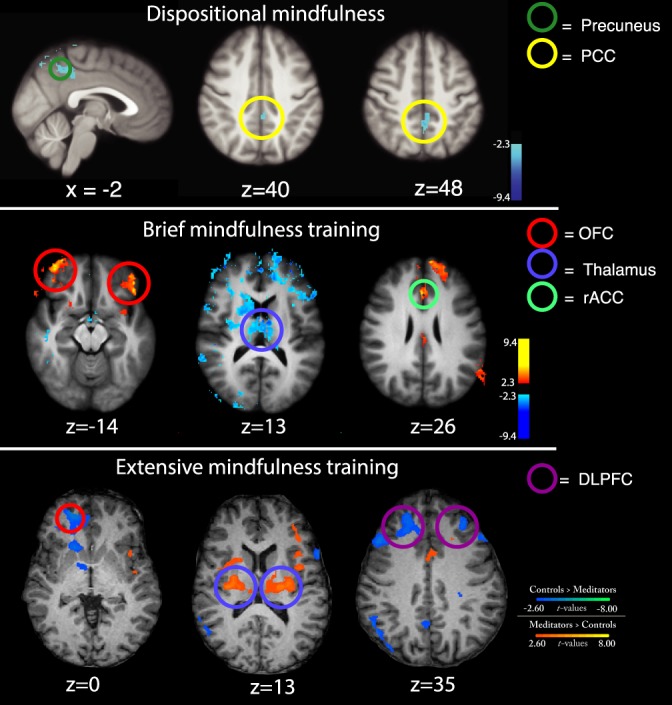
The advent of neuroimaging methodologies, such as functional magnetic resonance imaging (fMRI), has significantly advanced our understanding of the neurophysiological processes supporting a wide spectrum of mind–body approaches to treat pain. A promising self-regulatory practice, mindfulness meditation, reliably alleviates experimentally induced and clinical pain. Yet, the neural mechanisms supporting mindfulness-based pain relief remain poorly characterized. The present review delineates evidence from a spectrum of fMRI studies showing that the neural mechanisms supporting mindfulness-induced pain attenuation differ across varying levels of meditative experience. After brief mindfulness-based mental training (ie, less than 10 hours of practice), mindfulness-based pain relief is associated with higher order (orbitofrontal cortex and rostral anterior cingulate cortex) regulation of low-level nociceptive neural targets (thalamus and primary somatosensory cortex), suggesting an engagement of unique, reappraisal mechanisms. By contrast, mindfulness-based pain relief after extensive training (greater than 1000 hours of practice) is associated with deactivation of prefrontal and greater activation of somatosensory cortical regions, demonstrating an ability to reduce appraisals of arising sensory events. We also describe recent findings showing that higher levels of dispositional mindfulness, in meditation-naïve individuals, are associated with lower pain and greater deactivation of the posterior cingulate cortex, a neural mechanism implicated in self-referential processes. A brief fMRI primer is presented describing appropriate steps and considerations to conduct studies combining mindfulness, pain, and fMRI. We postulate that the identification of the active analgesic neural substrates involved in mindfulness can be used to inform the development and optimization of behavioral therapies to specifically target pain, an important consideration for the ongoing opioid and chronic pain epidemic.
Overview
CoChat Summary
TL;DR
This review synthesizes fMRI evidence showing that mindfulness-based pain relief engages distinct neural mechanisms depending on dispositional mindfulness and amount of training, from higher-order prefrontal regulation after brief practice to reduced appraisal after extensive practice. It also provides a primer for combining mindfulness, pain, and fMRI and argues that mindfulness analgesia is not mediated by endogenous opioids.
Key findings
- Mechanisms vary by training level: brief mindfulness training (<10 hours) is associated with higher-order regulation by orbitofrontal cortex and rostral anterior cingulate cortex of low-level nociceptive targets (thalamus and primary somatosensory cortex), whereas extensive training (>1000 hours) is associated with deactivation of prefrontal regions and greater activation of somatosensory cortical regions, reflecting reduced appraisals of sensory events.
- After four 20-minute mindfulness sessions, mindful attention to the breath during noxious heat (49°C) reduced pain intensity by 40% and pain unpleasantness by 57% compared with rest; greater pain relief was associated with pgACC, right anterior insula, and bilateral OFC activation and with bilateral thalamic deactivation.
- Higher dispositional mindfulness in meditation-naïve individuals was associated with lower pain and greater deactivation of the dorsal posterior cingulate cortex/precuneus; another study found higher trait mindfulness associated with higher pain threshold, weaker default mode network connectivity, and stronger precuneus–somatosensory connectivity.
- In long-term practitioners, Vipassana practice reduced pain unpleasantness by 22% and anticipatory anxiety by 29% but did not significantly reduce pain intensity; mindfulness analgesia persisted under opioid blockade with naloxone, indicating it is not mediated by endogenous opioids.
Methods
- Narrative review and fMRI primer synthesizing functional neuroimaging studies (ASL fMRI, BOLD fMRI), EEG, and psychophysical pain studies across dispositional mindfulness, brief training, and extensive meditation training.
- Reviewed samples include healthy meditation-naïve participants, chronic pain populations, briefly trained individuals, and adept meditators with >1000 hours, >4000 hours, or >10,000 hours of practice.
- Main analysis is qualitative synthesis of neural correlates and methodological recommendations; no new primary data collection or meta-analysis is reported.
Limitations
- The paper states that the precise neural mechanisms supporting mindfulness-based pain relief remain poorly characterized; most fMRI-mindfulness studies were conducted in healthy individuals, and more research is needed in specific chronic pain populations.
- The paper notes that ASL fMRI is not optimized for functional connectivity analyses, that the Zeidan et al. (2011) study lacked a matched active control group, and that mindfulness is susceptible to nonspecific effects and placebo responses, requiring strong control conditions.
- Evident from the text: this is a narrative review rather than a systematic or meta-analytic synthesis, and some cited evidence is preliminary or from small samples (e.g., Taylor et al. recruited 11 adept meditators and 51 controls).
Model-written summary. Check it against the paper before relying on it.
Integrity signals
Registry
Cites
Statistics
Figures
Verification
Claims the paper makes
14 Valid · 1 Not valid · 83 Not checked · 28 Own results and interpretations
Every source the paper cites for this claim was checked and supports it.
In the paper
“In the presence of noxious heat, mindfulness significantly reduced SI activation corresponding to the stimulation site (right leg), suggesting that mindfulness reduces ascending nociceptive inputs to somatosensory cortical regions.”
§ The neural mechanisms of mindfulness-based pain relief: a functional magnetic resonance imaging-based review and primer > 5. Multiple neural mechanisms supporting mindfulness-based pain reductions > 5.2. Neural and physiological processes supporting mindfulness-based pain relief after brief mental training
What the sources say
- Supportedcites [141] Zeidan F Martucci KT Kraft RA Gordon NS McHaffie JG Coghill RC Brain mechanisms supporting the modulation of pain by mindfulness meditation. J Neurosci 2011; 31: 5540– 8. 21471390 PMC3090218 source
The Results (Post-Meditation Training: MRI Session 2 Analyses; page unavailable) report significantly decreased SI activation at the stimulation site during meditation with noxious heat. The Discussion (Meditation Reduces Pain Through Multiple Brain Mechanisms; page unavailable) describes reduced pain-related afferent processing in SI and proposes modulation of ascending noxious information before it reaches cortical regions, matching the citing sentence’s suggested interpretation. (LLM, conf=0.91)
hedgedstates a cause- Asserted: passes — The authors put it forward as true.
- Checkable: passes — It can be checked against evidence.
- Load-bearing: passes — The paper’s conclusions depend on it.
- Based: passes — The paper gives a reason why it holds.
- Supported
Every source the paper cites for this claim was checked and supports it.
In the paper
“In the presence of noxious heat, mindfulness significantly reduced SI activation corresponding to the stimulation site (right leg), suggesting that mindfulness reduces ascending nociceptive inputs to somatosensory cortical regions.”
§ The neural mechanisms of mindfulness-based pain relief: a functional magnetic resonance imaging-based review and primer > 5. Multiple neural mechanisms supporting mindfulness-based pain reductions > 5.2. Neural and physiological processes supporting mindfulness-based pain relief after brief mental training
What the sources say
- Supportedcites [141] Zeidan F Martucci KT Kraft RA Gordon NS McHaffie JG Coghill RC Brain mechanisms supporting the modulation of pain by mindfulness meditation. J Neurosci 2011; 31: 5540– 8. 21471390 PMC3090218 source
The Results section 'Post-Meditation Training: MRI Session 2 Analyses' states that in the presence of noxious thermal stimuli, SI activation corresponding to the stimulation site significantly decreased during meditation relative to rest (Figure 5); the Methods ('MRI Session 1') confirm the noxious heat (49°C) was delivered to the posterior right calf, i.e. the leg. The Discussion ('Meditation Reduces Pain Through Multiple Brain Mechanisms') frames this as meditation significantly reducing pain-related afferent processing in SI, with a hedged account of thalamic gating modulating ascending noxious information before it reaches cortical regions — matching the citing sentence's 'suggesting' hedge. The abstract likewise reports reduced pain-related activation of the contralateral primary somatosensory cortex. (LLM, conf=0.90)
plainstates a cause- Asserted: passes — The authors put it forward as true.
- Checkable: passes — It can be checked against evidence.
- Load-bearing: passes — The paper’s conclusions depend on it.
- Based: passes — The paper gives a reason why it holds.
- Supported
The cited sources support only part of this claim — read each source’s verdict below.
In the paper
“To this extent, it is now well established that mindfulness meditation significantly reduces pain after brief mental training (4 days > 4 weeks).62,134–136,141”
§ The neural mechanisms of mindfulness-based pain relief: a functional magnetic resonance imaging-based review and primer > 5. Multiple neural mechanisms supporting mindfulness-based pain reductions > 5.2. Neural and physiological processes supporting mindfulness-based pain relief after brief mental training
What the sources say
- Not checked yetcites [62] Kingston J Chadwick P Meron D Skinner TC A pilot randomized control trial investigating the effect of mindfulness practice on pain tolerance, psychological well-being, and physiological activity. J Psychosom Res 2007; 62: 297– 300. 17324679 source
- Partly supportedcites [134] Zeidan F Adler-Neal AL Wells RE Stagnaro E May LM Eisenach JC McHaffie JG Coghill RC Mindfulness-meditation-based pain relief is not mediated by endogenous opioids. J Neurosci 2016; 36: 3391– 7. 26985045 PMC4792946 sourceExperimental — accuracy not yet measured
The Discussion states that mindfulness meditation significantly reduces pain after brief training, and the training-regimen section specifies four days of training. The Pain intensity results also report a significant reduction. Our copy does not establish the four-week end of the claimed training range (section labels available; page numbers not provided). (LLM, conf=0.88)
- Partly supportedcites [135] Zeidan F Emerson NM Farris SR Ray JN Jung Y McHaffie JG Coghill RC Mindfulness meditation-based pain relief employs different neural mechanisms than placebo and sham mindfulness meditation-induced analgesia. J Neurosci 2015; 35: 15307– 25. 26586819 PMC4649004 sourceExperimental — accuracy not yet measured
Our copy directly supports the core of the claim for the short end of the stated range: the Methods ('Experimental Sessions 3-6') state subjects underwent '4 separate days (20 m/d) of mindfulness-based mental training', and the Results ('Pain unpleasantness ratings', 'Pain intensity ratings') report that after this 4-day training mindfulness meditation significantly reduced pain unpleasantness (-44%) and pain intensity, with reductions significantly greater than placebo, sham mindfulness meditation and control. What this paper does not support is the upper bound of the cited range ('to 4 weeks'): no passage in our copy reports or relies on a training course longer than 4 days (it explicitly contrasts its regimen with 'traditional mindfulness-based training programs' and gave no home practice). Since the sentence carries several citations and does not say which part this one is offered for, the 4-week extension rests on the other references, not on Zeidan et al. 2015. (LLM, conf=0.70)
- Not checked yetcites [136] Zeidan F Gordon NS Merchant J Goolkasian P The effects of brief mindfulness meditation training on experimentally induced pain. J Pain 2010; 11: 199– 209. 19853530 source
- Supportedcites [141] Zeidan F Martucci KT Kraft RA Gordon NS McHaffie JG Coghill RC Brain mechanisms supporting the modulation of pain by mindfulness meditation. J Neurosci 2011; 31: 5540– 8. 21471390 PMC3090218 source
The Methods describe four 20-minute mindfulness-training sessions, and the Results report significant reductions in pain intensity and unpleasantness during meditation after training. This paper supports the four-day end of the training range cited alongside other sources. (LLM, conf=0.92)
boostedstates a cause- Asserted: passes — The authors put it forward as true.
- Checkable: passes — It can be checked against evidence.
- Load-bearing: passes — The paper’s conclusions depend on it.
- Based: passes — The paper gives a reason why it holds.
Every source the paper cites for this claim was checked and supports it.
In the paper
“Specifically, greater deactivation of the dorsal PCC and precuneus was associated with higher trait mindfulness, and greater activation of the dorsal PCC during noxious heat was associated with higher pain reports during noxious heat (Fig. 1).142”
§ The neural mechanisms of mindfulness-based pain relief: a functional magnetic resonance imaging-based review and primer > 5. Multiple neural mechanisms supporting mindfulness-based pain reductions > 5.1. Brain mechanisms supporting the relationship between higher trait mindfulness and lower pain sensitivity
What the sources say
- Supportedcites [142] Zeidan F Salomons T Farris SR Emerson NM Adler-Neal A Jung Y Coghill RC Neural mechanisms supporting the relationship between dispositional mindfulness and pain. PAIN 2018; 159: 2477– 85. 30015711 PMC6237620 source
The DISCUSSION opening (p. of section 'DISCUSSION') states verbatim that 'greater deactivation of the dorsal PCC (dPCC) and precuneus was associated with higher trait mindfulness during noxious heat when compared to innocuous stimulation (Figure 3)'. The RESULTS section 'Neuroimaging Findings' corroborates this ('Higher FMI ratings were associated with greater deactivation of a brain region extending from the precuneus to the dorsal PCC'), and the same passage supports the accompanying clause that greater dPCC CBF was associated with higher pain reports (unpleasantness r = .23, p = .04; intensity only a trend, r = .20, p = .08). (LLM, conf=0.92)
plainstates an association- Asserted: passes — The authors put it forward as true.
- Checkable: passes — It can be checked against evidence.
- Load-bearing: passes — The paper’s conclusions depend on it.
- Based: passes — The paper gives a reason why it holds.
- Supported
The cited sources support only part of this claim — read each source’s verdict below.
In the paper
“Taken together, these mechanistic findings13,71,115 show that attenuating the expectations of impending sensory events by sustaining attention in the present moment are directly associated with facilitating mindfulness-based pain relief.”
§ The neural mechanisms of mindfulness-based pain relief: a functional magnetic resonance imaging-based review and primer > 6. Neural mechanisms supporting pain relief after extensive mindfulness meditation experience
What the sources say
- Not checked yetcites [13] Brown CA Jones AK Meditation experience predicts less negative appraisal of pain: electrophysiological evidence for the involvement of anticipatory neural responses. PAIN 2010; 150: 428– 38. 20494517 source
- Partly supportedcites [71] Lutz A McFarlin DR Perlman DM Salomons TV Davidson RJ Altered anterior insula activation during anticipation and experience of painful stimuli in expert meditators. NeuroImage 2013; 64: 538– 46. 23000783 PMC3787201 sourceExperimental — accuracy not yet measured
Our copy supports the core: the Abstract (p. n/a) states that 'cultivating experiential openness down-regulates anticipatory representation of aversive events, and increases the recruitment of attentional resources during pain, which is associated with faster neural habituation', and the Discussion ('Summary and interpretation of the findings') frames reduced pre-pain baseline activity as the 'representation of the future' alongside increased phasic response as 'openness to the present', in a state defined by present-centred, non-elaborative awareness (Introduction, Open Monitoring). The behavioural correlate was lower unpleasantness in expert meditators, so an association between attenuated anticipation and reduced pain suffering is in the paper. Not supported: (a) the claim states as fact a 'direct association' the paper only offers as a suggestion ('These findings suggest...', 'We propose...'); (b) the causal wording that attenuating expectations occurs 'by sustaining attention in the present moment' is not asserted — the paper treats present-centredness and reduced anticipation as co-features of the Open Presence state, not one as the mechanism of the other; (c) the generalisation to 'mindfulness-based pain relief' exceeds the sample (>10,000 h experts doing Open Presence), and the Conclusions ('Implication of this study for mindfulness-based psychotherapeutic interventions') explicitly distinguish OP from an 8-week MBSR-type therapy and only predict, rather than demonstrate, that Open Monitoring-based interventions modulate these anticipatory processes. (LLM, conf=0.72)
- Not checked yetcites [115] Taylor VA Roy M Chang L Gill LN Mueller C Rainville P Reduced fear-conditioned pain modulation in experienced meditators: a preliminary study. Psychosomatic Med 2018; 80: 799– 806. 30134359 source
boostedstates an association- Asserted: passes — The authors put it forward as true.
- Checkable: passes — It can be checked against evidence.
- Load-bearing: passes — The paper’s conclusions depend on it.
- Based: passes — The paper gives a reason why it holds.
63 more claims · 5 with their cited sources checked
Create a free account to see all 126 claims and to verify the 134 references still open.
- It may state two separate claims as one. 48
- Probably not a substantial claim. 15
Claims other papers make about this one
Each is checked against this paper’s own text: does it say what the citing paper says it does?
The source backs part of the claim, not all of it — or backs it for a different population, condition or comparison.
In the citing paper
“The neurobiological mechanisms of mindfulness are actively being explored by researchers across the world.12, 13”
From Mechanisms of mindfulness in patients with migraine: Results of a qualitative study. (2023) · cites this paper as [12]
Experimental — accuracy not yet measured
Citations
Cites
Mindfulness-based interventions in context: Past, present, and future
Kabat-Zinn, J. (2003) · Clinical Psychology: Science and Practice · doi:10.1093/clipsy.bpg016 · Cited by 8,615 · cited 1×
“As skills in mindfulness meditation continue to develop, the practitioner brings mindfulness more effortlessly into meditation and other aspects of everyday life.(59) It is postulated that the state transitions”
BackgroundMindfulness-based interventions in context: Past, present, and future.
Kabat-Zinn, J. (2003) · Clinical Psychology: Science and Practice · doi:10.1093/clipsy/bpg016 · Cited by 8,612
A component based noise correction method (CompCor) for BOLD and perfusion based fMRI
Behzadi, Y., Restom, K., Liau, J., & Liu, T. T. (2007) · NeuroImage · doi:10.1016/j.neuroimage.2007.04.042 · Cited by 4,502 · cited 1×
“gray-matter brain, and (4) inputting segmented white values as covariates of no interest in the statistical analyses using a component-based noise correction method (CompCor; temporal or anatomical variants).(8)”
MethodKabat-Zinn, J. (1982) · General Hospital Psychiatry · doi:10.1016/0163-8343(82)90026-3 · Cited by 4,255 · cited 3×
“outcomes associated with mindfulness-based stress reduction (MBSR) and its varieties.(56,57)Mindfulness-based stress reduction is a structuralized, group-based psychosocial intervention consisting of mindfulness meditation, yoga, and cognitive-behavioral”
BackgroundShapiro, S. L., Carlson, L. E., Astin, J. A., & Freedman, B. (2006) · Journal of Clinical Psychology · doi:10.1002/jclp.20237 · Cited by 4,002 · cited 1×
“promote cross-experimental methodological validity and reliability.(32,72,103) In the context of the present review, the 2 primary forms of mindfulness practice are characterized as Shamatha (focused attention) and Vipassana (open monitoring).”
BackgroundIdentification of two related pentapeptides from the brain with potent opiate agonist activity
Hughes, J., Smith, T. W., Kosterlitz, H. W., Fothergill, L. A., Morgan, B. A., & Morris, H. R. (1975) · Nature · doi:10.1038/258577a0 · Cited by 3,806 · cited 1×
“spinal cord to reduce the elaboration of spinal and supraspinal nociceptive processing through the release of endogenous opioids(9,77,78) that largely bind with mu, delta, and kappa receptors.(54,69) Pain relief produced by placebo,(2,34,47,67,147) acupuncture,(51) conditioned pain modulation,(61) distraction,(108) an…”
BackgroundNeural systems supporting interoceptive awareness
Critchley, H. D., Wiens, S., Rotshtein, P., Öhman, A., & Dolan, R. J. (2004) · Nature Neuroscience · doi:10.1038/nn1176 · Cited by 3,406 · cited 1×
“The right anterior insula has been repeatedly implicated in processing interoceptive awareness and regulation of nociception.(20,21,26,64,86,109,111) The OFC, a highly evolved brain region, is associated with increasing positive mood and altering the contextualization of arising sensory events.”
BackgroundHölzel, B. K., Lazar, S. W., Gard, T., Schuman-Olivier, Z., Vago, D. R., & Ott, U. (2011) · Perspectives on Psychological Science · doi:10.1177/1745691611419671 · Cited by 3,024
The Neuroscience of Mindfulness Meditation
Tang, Y.-Y., Hölzel, B. K., & Posner, M. I. (2015) · Nature reviews. Neuroscience · doi:10.1038/nrn3916 · Cited by 2,889 · cited 1×
“The neural mechanisms supportingmindfulness-based practices still remain poorly characterized.(113)Mindfulness-based pain relief is believed to be associated with a spectrum of nonspecific factors such as distraction, slow breathing, placebo, condition-”
BackgroundFunctional-anatomic fractionation of the brain’s default network
Andrews-Hanna, J. R., Reidler, J. S., Sepulcre, J., Poulin, R., & Buckner, R. L. (2010) · Neuron · doi:10.1016/j.neuron.2010.02.005 · Cited by 2,767
Research works printed but not linked: 1
- Zeidan F The neurobiology of mindfulness meditation. In: Brown KW Creswell JD Ryan RM, editors. Handbook of mindfulness science: Theory, research and practice. New York: The Guilford Press, 2015.
Cited by
Lehninger Principles of Biochemistry (5th edition)
Nelson, D. L., & Cox, M. M. (2008) · Cited by 352
Multimodal non-invasive non-pharmacological therapies for chronic pain: mechanisms and progress
Shi, Y., & Wu, W. (2023) · BMC Medicine · doi:10.1186/s12916-023-03076-2 · Cited by 223
“Neuroimaging studies reveal mindfulness modulates activity and connectivity of key pain-related brain regions like the prefrontal cortex, anterior cingulate cortex, insula, thalamus, and amygdala [192].”
BackgroundWells, R. E., O’Connell, N., Pierce, C. R., Estave, P., Penzien, D. B., Loder, E., Zeidan, F., & Houle, T. T. (2021) · JAMA Internal Medicine · doi:10.1001/jamainternmed.2020.7090 · Cited by 183
Self-citationTimmermann, C., Bauer, P. R., Gosseries, O., Vanhaudenhuyse, A., Vollenweider, F., Laureys, S., Singer, T., Antonova, E., & Lutz, A. (2023) · Trends in Cognitive Sciences · doi:10.1016/j.tics.2022.11.006 · Cited by 150
Emotion regulation and the salience network: a hypothetical integrative model of fibromyalgia
Pinto, A. M., Geenen, R., Wager, T. D., Lumley, M. A., Häuser, W., Kosek, E., Ablin, J. N., Amris, K., Branco, J., Buskila, D., et al. (2022) · Nature Reviews Rheumatology · doi:10.1038/s41584-022-00873-6 · Cited by 172
Seminowicz, D. A., Burrowes, S. A. B., Kearson, A., Zhang, J., Krimmel, S. R., Samawi, L., Furman, A. J., Keaser, M. L., Gould, N. F., Magyari, T., et al. (2020) · Pain · doi:10.1097/j.pain.0000000000001860 · Cited by 110
Seminowicz, D. A., Burrowes, S. A., Kearson, A., Zhang, J., Krimmel, S. R., Samawi, L., Furman, A. J., Keaser, M. L., Gould, N. F., Magyari, T., et al. (2019) · doi:10.1101/19004069 · Cited by 110
Neural mechanisms supporting the relationship between dispositional mindfulness and pain
Zeidan, F., Salomons, T., Farris, S. R., Emerson, N. M., Adler-Neal, A., Jung, Y., & Coghill, R. C. (2018) · Pain · doi:10.1097/j.pain.0000000000001344 · Cited by 77
Self-citationNeurophysiological Mechanisms Supporting Mindfulness Meditation–Based Pain Relief: an Updated Review
Jinich-Diamant, A., Garland, E., Baumgartner, J., Gonzalez, N., Riegner, G., Birenbaum, J., Case, L., & Zeidan, F. (2020) · Current Pain and Headache Reports · doi:10.1007/s11916-020-00890-8 · Cited by 69
Self-citationMindfulness in migraine: A narrative review
Wells, R. E., Seng, E. K., Edwards, R. R., Victorson, D. E., Pierce, C. R., Rosenberg, L., Napadow, V., & Schuman-Olivier, Z. (2020) · Expert Review of Neurotherapeutics · doi:10.1080/14737175.2020.1715212 · Cited by 70
Aboushaar, N., & Serrano, N. (2024) · Frontiers in Pain Research · doi:10.3389/fpain.2024.1445280 · Cited by 89
Zorn, J., Abdoun, O., Bouet, R., & Lutz, A. (2020) · European Journal of Pain · doi:10.1002/ejp.1576 · Cited by 56
Zorn, J., Abdoun, O., Sonié, S., & Lutz, A. (2021) · Psychosomatic Medicine · doi:10.1097/psy.0000000000000938 · Cited by 31
“Participants are asked to indicate the degree to which they would be able to defuse from hypothetical situations with negative thoughts or feelings on a 6-point Likert scale ranging from “not at all” (0) to “very much” (5).”
BackgroundPollonini, L., Montero-Hernandez, S. A., Park, L., Miao, H., Mathis, K. B., & Ahn, H. B. (2020) · Journal of Neuroimaging · doi:10.1111/jon.12782 · Cited by 29
Neural Mechanisms of Hypnosis and Meditation-Induced Analgesia: A Narrative Review
Benedittis, G. D. (2021) · International Journal of Clinical and Experimental Hypnosis · doi:10.1080/00207144.2021.1917294 · Cited by 41
“Importantly, ACC/ventromedial-PFC (vmPFC or OFC, orbito-frontal cortex), which were more strongly activated in meditators, correlated positively with pain unpleasantness in controls and negatively in meditators (i.e., greater activity associated with less unpleasantness.”
BackgroundInfluentialRole of Occupational Therapy in Pain Management
American Occupational Therapy Association (2021) · American Journal of Occupational Therapy · doi:10.5014/ajot.2021.75s3001 · Cited by 35
“Intervention may include activities to address client factors, such as mindfulness (Dorado et al., 2018; Goodman et al., 2019; Zeidan et al., 2019) and biofeedback (Sielski et al., 2017).”
Mechanisms of mindfulness in patients with migraine: Results of a qualitative study.
Estave, P. M., Margol, C., Beeghly, S., Anderson, R., Shakir, M., Coffield, A., Byrnes, J., O'Connell, N., Seng, E., Gardiner, P., et al. (2023) · Headache The Journal of Head and Face Pain · doi:10.1111/head.14481 · Cited by 26
“Age (years); mean (SD) 46 (17) 44 (12) 44.”
Doborjeh, Z., Doborjeh, M., Crook‐Rumsey, M., Taylor, T., Wang, G., Moreau, D., Krägeloh, C. U., Wrapson, W., Siegert, R. J., Kasabov, N. K., et al. (2020) · Sensors · doi:10.3390/s20247354 · Cited by 30
“Other studies report reduced BOLD activation during mindfulness training [107,108].”
BackgroundTrisal, A., Singh, I., Garg, G., Jorwal, K., & Singh, A. K. (2024) · 3 Biotech · doi:10.1007/s13205-024-04187-0 · Cited by 32
“It also facilitates the amplification of the activity of the prefrontal cortex, stimulating attentiveness and avoiding overthinking (Zeidan et al. 2019).”
Mechanism of Action of Mindfulness-Based Interventions for Pain Relief—A Systematic Review
Ploesser, M., & Martin, D. D. (2024) · Journal of Integrative and Complementary Medicine · doi:10.1089/jicm.2023.0328 · Cited by 36
“3,10,16 56 These results are in agreement with other authors, implicating that the brain processes that underpin mindfulness-induced pain reduction alter depending on the level of meditation, where mindfulness-based pain relief is associated with higher order (OFC and rostral ACC) regulation of…”
InfluentialPoletti, S., Abdoun, O., Zorn, J., & Lutz, A. (2021) · European Journal of Pain · doi:10.1002/ejp.1774 · Cited by 24
Mindfulness Meditation in the Treatment of Chronic Pain
Brandel, M. G., Lin, C., Hennel, D., Khazen, O., Pilitsis, J. G., & Ben‐Haim, S. (2022) · Neurosurgery Clinics of North America · doi:10.1016/j.nec.2022.02.005 · Cited by 33
Meditation as an Adjunct to the Management of Acute Pain
Wipplinger, F., Holthof, N., Andereggen, L., Urman, R. D., Luedi, M. M., & Bello, C. (2023) · Current Pain and Headache Reports · doi:10.1007/s11916-023-01119-0 · Cited by 20
Mindfulness and Chronic Musculoskeletal Pain: An Umbrella Review
Cardle, P., Kumar, S., Leach, M., McEvoy, M. P., & Veziari, Y. (2023) · Journal of Multidisciplinary Healthcare · doi:10.2147/jmdh.s392375 · Cited by 26
“Findings from the research indicate that in novice meditators, with less than 10 hours of practice, higher order regulation occurred across the orbitofrontal cortex and rostral anterior cingulate cortex (brain areas that are involved with the processing of pain), which regulated low-level neural targets in the thalamu…”
BackgroundInfluentialNon pharmacoligical approaches for neurodegenerative diseases: A narrative review
Raza, M. L., Bhojani, A., Batool, S. K., & Zehra, D. (2024) · Experimental Gerontology · doi:10.1016/j.exger.2024.112620 · Cited by 22
“…gyrus, and fusiform gyrus can prevent cognitive impairment by increasing neural activity in these areas (Wang et al., 2023): mindfulness-based cognitive training improves attentiveness by amplifying prefrontal cortex activity and decreasing overthinking or mind drifting (Zeidan et al., 2019).”
BackgroundSchulz, E., Stankewitz, A., Winkler, A. M., Irving, S., Witkovský, V., & Tracey, I. (2020) · eLife · doi:10.7554/elife.55028 · Cited by 17
Hatchard, T., Penta, S. M., Mioduzsewski, O., Correia, S., Tissera, T., Brown, O., Haefner, S. A., Poulin, P. A., & Smith, A. (2022) · Acta Neurologica Belgica · doi:10.1007/s13760-022-01877-5 · Cited by 20
Kaur, H., Chaudhary, S., Mohanty, S., Sharma, G., Kumaran, S. S., Ghati, N., Bhatia, R., Nehra, A., & Pandey, R. (2021) · Integrative Medicine Research · doi:10.1016/j.imr.2021.100750 · Cited by 16
İnam, Ö., & Satılmış, İ. G. (2025) · BMC Women s Health · doi:10.1186/s12905-025-03659-6 · Cited by 18
“There are studies showing that mindfulness helps patients especially to cope with stress, pain or chronic diseases [29–36].”
A Latin American consensus meeting on the essentials of mixed pain
Fernández-Fairén, M., Calderón‐Ospina, C., Chen, J., Duarte-Vega, M., Fernández-Villacorta, F. J., Gómez-García, F., López-Almejo, L., Manzano‐García, A., Hernández-Méndez-Villamil, E., Helito, C. P., et al. (2023) · Current Medical Research and Opinion · doi:10.1080/03007995.2023.2177401 · Cited by 12
Abdoun, O., Poublan‐Couzardot, A., Offort, S., Pagnoni, G., & Antoine Lutz, A. (2025) · Biological Psychiatry Global Open Science · doi:10.1016/j.bpsgos.2025.100474 · Cited by 14
“Secondly, we anticipated that this framework would replicate and expand previous fi ndings about the effect of mind-fulness on pain regulation (18,19).”
Marais, C., Song, Y., Ferreira, R., Aounti, S., Duflos, C., Baptista, G., & Pers, Y. (2022) · BMC Rheumatology · doi:10.1186/s41927-022-00277-9 · Cited by 16
“Remarkably, all effects mentioned were proportional to meditation level of participants [19].”
BackgroundNeural mechanisms of pain relief through paying attention to painful stimuli
Kim, D., Woo, C., & Kim, S. (2021) · Pain · doi:10.1097/j.pain.0000000000002464 · Cited by 13
Costa, E. C. V., Gonçalves, P., Martins, F., Monteiro, S., & Pais-Vieira, C. (2025) · Healthcare · doi:10.3390/healthcare13182310 · Cited by 13
Fan, C., Wu, M., Liu, H., Chen, X., Zhen, G., Zhao, X., Zhou, J., & Jiang, Z. (2024) · Neuroscience & Biobehavioral Reviews · doi:10.1016/j.neubiorev.2024.105735 · Cited by 12
Çalışkan, E., & Gökkaya, F. (2025) · Current Pain and Headache Reports · doi:10.1007/s11916-025-01373-4 · Cited by 13
“For instance, the orbitofrontal cortex (OFC) is responsible for emotion-guided behaviors and researchers found that boosting positive mood and attitude changes toward pain was associated with increased OFC activity [ 37].”
Ito, Y., Browne, C. A., & Yamamoto, K. (2022) · Mindfulness · doi:10.1007/s12671-022-01888-6 · Cited by 14
Ganesan, A., Gauthaman, J., & Kumar, G. (2022) · Journal of Lifestyle Medicine · doi:10.15280/jlm.2022.12.1.1 · Cited by 15
“However, with high-intensity MM training of more than 1000 hours, there is the deactivation of pre-frontal regions and greater activation of somatosensory cortical regions that leads to inhibition of appraisals of consecutive sensory events [25].”
Backgroundda Silva, G. V., Magri, L. V., Melchior, M. D. O., Leite‐Panissi, C. R. A., & Gherardi‐Donato, E. C. D. S. (2022) · CRANIO® · doi:10.1080/08869634.2022.2086208 · Cited by 10
“Cognition is not only related to psychological outcomes such as emotional regulation, it is also the interpretation and modulation of pain [3–5].”
InfluentialRole of Occupational Therapy in Pain Management
American Occupational Therapy Association (2021) · American Journal of Occupational Therapy · doi:10.5014/ajot.2020.75s3001 · Cited by 11
Garrett, B., Tao, G., Taverner, T., Gromala, D., Musoke, R., Sun, C., Shaw, C., & Cordingley, E. (2024) · BMC Digital Health · doi:10.1186/s44247-024-00084-x · Cited by 10
“…these applications are theorized to act on the brain, in that cognitive applications provide distraction through focused engagement in problem solving, whilst mindfulness meditative applications stimulate activation of cortical and other regions offering a temporary altered state of mind [36, 40].”
BackgroundWang, C. (2025) · Frontiers in Psychology · doi:10.3389/fpsyg.2025.1649564 · Cited by 26
Melchior, M. D. O., Magri, L. V., Díaz‐Serrano, K. V., Júnior, E. B. C., Fregni, F., Pacheco‐Barrios, K., Lacchini, R., Leite‐Panissi, C. R. A., & Gherardi‐Donato, E. C. D. S. (2025) · Journal of Oral Rehabilitation · doi:10.1111/joor.70028 · Cited by 12
“Mindfulness-based interventions have been associated with changes in brain regions implicated in pain modulation, including the prefrontal cortex and anterior cingulate cortex [19, 33], which could hypothetically influence central sensitisation mechanisms over time.”
InfluentialGlobal Meditation Practices: A Literature Review
Valluri, J., Gorton, K. L., & Schmer, C. (2023) · Holistic Nursing Practice · doi:10.1097/hnp.0000000000000626 · Cited by 11
“4 Recent clear neuroimaging shows that MBIs can influence new neurocognitive pathways 16 and functional changes that help manage CP, stress, anxiety, and depression 8 All participants in the 15 articles recognized that they needed an intervention to improve their current health status.”
BackgroundENIGMA-Meditation: Worldwide Consortium for Neuroscientific Investigations of Meditation Practices
Ganesan, S., Barrios, F. A., Batta, I., Bauer, C. C. C., Braver, T. S., Brewer, J. A., Brown, K. W., Cahn, B. R., Cain, J. A., Calhoun, V. D., et al. (2024) · Biological Psychiatry Cognitive Neuroscience and Neuroimaging · doi:10.1016/j.bpsc.2024.10.015 · Cited by 9
“…among healthy individuals in memory (54) and executive functioning (55), emotion regulation and reactivity (56,57), and pain perception (58) are widely associated with dissociable activation and FC changes within the DMN, SN, and/or CEN, as well as the amygdala (59), thalamus, and…”
InfluentialSelf-citationBehavioral therapy for temporomandibular disorders
Ohrbach, R. K., & Sharma, S. (2021) · Frontiers of Oral and Maxillofacial Medicine · doi:10.21037/fomm-20-65 · Cited by 10
“Overall, general relaxation skills or mindfulness training tend to be superior for any chronic pain (93-95) and augment local treatment of behaviors well.”
BackgroundDorsolateral prefrontal cortex sensing analgesia
Ito, E., Oka, K., & Koshikawa, F. (2022) · Biophysics and Physicobiology · doi:10.2142/biophysico.bppb-v19.0014 · Cited by 8
“In the last several decades, enhanced mindfulness has been incorporated into therapeutic approaches, including treatments for people with chronic pain [32,33].”
BackgroundThe mindful migraine: does mindfulness-based stress reduction relieve episodic migraine?
Napadow, V. (2020) · Pain · doi:10.1097/j.pain.0000000000001859 · Cited by 9
“In fact, this intervention encompasses various techniques, including focused awareness of sensory, emotional, and cognitive events, and open monitoring, in a nonevaluativemanner,(8,10) likely relyingon top–downbrain-based mechanismsof action.(11,28) Aspain experience involves unpleasant sensory and emotional experienc…”
BackgroundPal, A., Mukhopadhyay, P., Bhattacharyya, D., & Ray, S. (2024) · Indian Journal of Anaesthesia · doi:10.4103/ija.ija_361_24 · Cited by 4
“[3,4] The study’s primary objective was to determine an MBI’s effectiveness in pain intensity, disability, and quality of life.”
BackgroundOlsson, A., Hedlund, S., & Landgren, K. (2021) · Issues in Mental Health Nursing · doi:10.1080/01612840.2021.1986759 · Cited by 8
Melchior, M. D. O., Antunes, L. G., Bataglion, C., & Magri, L. V. (2023) · Journal of Applied Oral Science · doi:10.1590/1678-7757-2022-0384 · Cited by 11
Dispositional mindfulness: Is it related to knee osteoarthritis population’s common health problems?
Chu, S., Lin, L., Chiu, A., & Wang, H. (2024) · PLoS ONE · doi:10.1371/journal.pone.0299879 · Cited by 5
Gill, L.-N., Tabry, V., Taylor, V. A., Lussier, M., Martinu, K., Bherer, L., Roy, M., & Rainville, P. (2021) · Frontiers in Pain Research · doi:10.3389/fpain.2021.673027 · Cited by 6
“Thus, the temporal dynamics of pain regulation by meditation in novice meditators (such as MBSR participant) should be further investigated and compared with that of meditators of different experience level (85, 86).”
BackgroundHoward, M. A., Lawn, T., & Kowalczyk, O. S. (2023) · Current Opinion in Supportive and Palliative Care · doi:10.1097/spc.0000000000000653 · Cited by 4
Nymberg, P., Calling, S., Stenman, E., Palmér, K., Hansson, E. E., Sundquist, K., Sundquist, J., & Zöller, B. (2021) · Pilot and Feasibility Studies · doi:10.1186/s40814-021-00810-6 · Cited by 9
Pain management in cervical cancer
Rosas, S. A., Plancarte, R., Hernández-Porras, B. C., García-Andreu, J., Velazquez, B. O. L., Reyes, I., & Alarcón-Barrios, S. (2024) · Frontiers in Oncology · doi:10.3389/fonc.2024.1371779 · Cited by 3
Davis, K. D. (2019) · PAIN Reports · doi:10.1097/pr9.0000000000000771 · Cited by 3
Magri, L. V., Melchior, M. D. O., da Silva, G. V., Gherardi‐Donato, E. C. D. S., & Leite‐Panissi, C. R. A. (2025) · PLoS ONE · doi:10.1371/journal.pone.0320515 · Cited by 4
“Mindfulness-based interventions have gained increasing recognition as effective tools for managing chronic pain, including TMD [21].”
Reytor-González, C., Jiménez-Flores, E., Toral-Noristz, M., Campuzano-Donoso, M., Román-Galeano, N. M., & Simancas‐Racines, D. (2025) · International Journal of Molecular Sciences · doi:10.3390/ijms262211130 · Cited by 4
“Psychosocial education, mindfulness, and management of central sensitization also contribute to symptom control [42,130,131].”
Melchior, M. D. O., Dorne, B., Mélo, A. M., Messias, N. S., Ribeiro-Silva, V. H. A., Ribeiro, L. G., Lara, L. A. D. S., Leite‐Panissi, C. R. A., Gherardi‐Donato, E. C. D. S., Mazzi‐Chaves, J. F., et al. (2026) · Special Care in Dentistry · doi:10.1111/scd.70141 · Cited by 2
Alternative Treatments for Pain through Dhikr, Hijamah and Herbal Medicine as Integrative Medicine
Elvina, M., Widada, W., Suwito, J., & Ibrahim, M. (2021) · IntechOpen eBooks · doi:10.5772/intechopen.94041 · Cited by 4
Baumgartner, J. N., & Schneider, T. R. (2023) · Mindfulness · doi:10.1007/s12671-023-02146-z · Cited by 4
“During mindfulness meditation, one maintains intentional and sustained attention onto the changing sensations of the breath as a physiological analog to the present moment (Zeidan et al., 2019).”
BackgroundSelf-citationNelson, S., Mitcheson, M., Nestor, B. A., Enlow, M. B., & Borsook, D. (2024) · Pain · doi:10.1097/j.pain.0000000000003241 · Cited by 3
“43,77,85 Moreover, changes in some of these areas have been captured after as little as 80 minutes of mindfulness practice, 85–87 which indicates that fMRI can be an appropriate and effective method to capture initial intervention response.”
MethodA New Model for Healing Part II
Ungar-Sargon, J. Y. (2024) · Addiction Research · doi:10.33425/2639-8451.1043 · Cited by 11
Park, R., Mohiuddin, M., Poulin, P. A., Salomons, T. V., Edwards, R. R., Nathan, H., Haley, C., & Gilron, I. (2020) · PAIN Reports · doi:10.1097/pr9.0000000000000868 · Cited by 2
“sory cortical regions, showing its ability to attenuate reactions of arising sensory events.(40,87) Mindfulness-based interventions have also been shown to moderate the relationship between pain intensity and pain catastrophizing.”
BackgroundBases biológicas del mindfulness y su aplicación en la práctica clínica
Gómez, S. M., Peñaloza, M., Rodríguez, N. B., & Alba, L. H. (2022) · Universitas Médica · doi:10.11144/javeriana.umed63-2.mind · Cited by 6
“La corteza prefrontal dorsolateral está conectada con las zonas de control sensorial y atencional, lo que facilita la generación de reacciones afectivas ante estímulos (42).”
BackgroundMani, R., Adhia, D. B., Awatere, S., Gray, A. R., Mathew, J., Wilson, L. C., Still, A., Jackson, D., Hudson, B., Zeidan, F. Z., et al. (2024) · Frontiers in Pain Research · doi:10.3389/fpain.2023.1271839 · Cited by 5
“MMT improves mood, increases autonomic modulation, and engages non-opioid mechanisms that could mediate pain outcomes (26 – 38).”
BackgroundSelf-citationMechanisms-Based Pain Therapies
da Nobrega, R. Q., Ji, R., & Cheng, J. (2023) · Springer eBooks · doi:10.1007/978-3-031-29231-6_14 · Cited by 5
Qamar, T., & Ibrahim, N. B. (2024) · Revista de Gestão Social e Ambiental · doi:10.24857/rgsa.v18n7-113 · Cited by 3
“Studies have shown that individuals with anxiety and cognitive impairment benefit from detached mindfulness intervention when it comes to working memory, information processing, and attention (Zeidan et al. 2019).”
BackgroundStriatal functional connectivity associated with Sahaja Yoga meditation
Perez-Diaz, O., Hernández, S. E., Brown, L. L., Xiao, Y., González–Mora, J. L., Rubia, K., & Barrós‐Loscertales, A. (2025) · Scientific Reports · doi:10.1038/s41598-025-98256-w · Cited by 3
Mun, C. J., Contreras, E., Xiao, Y., Eckert, R., Harting, A., Damera, S., Perez, I., Pandey, H. K., Mardian, A. S., LoVecchio, F., et al. (2025) · Pilot and Feasibility Studies · doi:10.1186/s40814-025-01692-8 · Cited by 1
“Notably, recent mechanistic studies have indicated that mindfulness-induced analgesia may be mediated by expectancy effects [9, 10], and that mindfulness meditation does not modulate the endogenous opioid system [11, 12], which plays a key role in pain relief [13, 14].”
Wexler, R. S., Balsamo, W., Fox, D. J., ZuZero, D., Parikshak, A., Kwin, S., Ramirez, J., Thompson, A. R., Carlson, H. L., Kern, T., et al. (2026) · Mindfulness · doi:10.1007/s12671-026-02782-1 · Cited by 1
“Moreover, this practice may disentangle self-referential processes from pain-related sensory input, a therapeutic approach supported by previous neurobiological research on the relationship between pain and participants’ sense of self (Riegner et al., 2023; Zeidan et al., 2015, 2019).”
Sánchez-Vidaña, D. I., Ahorsu, D. K., McCormack, L., Zeng, R. R., Miller, T., Viñas‐Guasch, N., Chan, N.-M. J., Lo, K. K.-H., González, P. C., Lau, B. W.-M., et al. (2026) · Journal of Behavioral Medicine · doi:10.1007/s10865-026-00673-3 · Cited by 2
“…resonance imaging (fMRI) has revealed that naïve and adept mind-fulness practitioners can regulate emotion through distinct neural mechanisms (Zeidan et al., 2019), we speculate MB-EAT can equip individuals with emotional eating with dif - ferent strategies to regulate emotion boosting the…”
Mishra, A., Sabikhi, Y., Singh, A., Santoshi, S., & Akhtar, S. (2026) · Letters in Drug Design & Discovery · doi:10.1016/j.lddd.2026.100419 · Cited by 1
Olfactory Imagery and Emotional Control
Portner, M. R. (2022) · IntechOpen eBooks · doi:10.5772/intechopen.108244 · Cited by 4
Tehrani, F. A., Farahani, M. N., Shahgholian, M., & Izanloo, B. (2022) · The Journal Of Psychological Science · doi:10.52547/jps.21.118.1975 · Cited by 1
Is psyche-soma dichotomy still clinically appropriate?
Torta, R., Botto, R., Giorgi, V., & Sarzi‐Puttini, P. (2023) · Clinical and Experimental Rheumatology · doi:10.55563/clinexprheumatol/x3pyfb · Cited by 3
“ating the perception of painful sensations (50-54).”
Gray, C., Jones, F. W., Agostinis, A., & Morris, J. (2024) · British Journal of Pain · doi:10.1177/20494637241232555 · Cited by 1
“18,23 Later sessions within MfH and Mindfulness-Based Stress Reduction include elements associated with compassion-based understanding of suffering and meditations that foster compassion.”
Zhao, H. Q., Zhou, M., Jiang, J. Q., Luo, Z. Q., & Wang, Y. H. (2024) · Frontiers in Neurology · doi:10.3389/fneur.2024.1393022 · Cited by 1
“Neuroimaging studies suggest mindfulness might involve top-down modulation from the prefrontal cortex and anterior cingulate cortex to suppress maladaptive pain signals (59).”
BackgroundDatko, M., Lutz, J., Gawande, R., Comeau, A., Gan, J. Y., To, M. N., Desbordes, G., Griswold, T. R., King, J. A., Loucks, E. B., et al. (2024) · Psychiatry Research Neuroimaging · doi:10.1016/j.pscychresns.2024.111941 · Cited by 1
Therapeutic dissociation: From non-ordinary states to psychological transformationPreprint
Clingo, J. (2024) · PsyArXiv (OSF Preprints) · doi:10.31234/osf.io/ypr7w · Cited by 1
Catastrofização e atenção plena na disfunção temporomandibular: estudo correlacional
da Silva, G. V. (2021) · Digital Library of Theses and Dissertations (Universidade de São Paulo) · doi:10.11606/d.22.2021.tde-15122021-082411
Neural Mechanisms of Mindful Disengagement from WorryPreprint
Westbrook, C. A., Dutcher, J. M., Kusmierski, S. N., Creswell, J. D., Akpan, E., & Hallion, L. S. (2022) · doi:10.31234/osf.io/3he2b
Pain: from neurobiology to disease
Gold, M. S., & Bačkonja, M. (2022) · Elsevier eBooks · doi:10.1016/b978-0-323-85654-6.00021-6
An Exploration of the Effects of Mindfulness on Pain: The Role of Pain Catastrophizing
Haliwa, I. (2022) · The Research Repository @ WVU (West Virginia University) · doi:10.33915/etd.11302
Magri, L. V., Melchior, M. D. O., da Silva, G. V., Gherardi‐Donato, E. C. D. S., & Leite‐Panissi, C. R. A. (2022) · Research Square · doi:10.21203/rs.3.rs-2345937/v1
The mechanism of mindfulness meditation on pain by functional magnetic resonance imaging method
Yıldız, Y., Kocahan, S., Çelenlioğlu, A. E., & Özler, M. (2023) · The European Research Journal · doi:10.18621/eurj.1245845
Positive Association between Dispositional Mindfulness and Knee OsteoarthritisCommon Health ProblemsPreprint
Chu, S., Chiu, A., & Wang, H. (2023) · Research Square · doi:10.21203/rs.3.rs-2798757/v1
ผลของโปรแกรมการดูแลวิถีพุทธต่อคุณภาพชีวิตด้านสุขภาพของผู้ป่วยมะเร็งท่อน้ำดีระยะลุกลาม
พงษ์พันนา, ป., พัดทอง, น., & ธนศิลป์, ส. (2021) · Journal of Nursing Research Innovation and Health · doi:10.58837/chula.jnrih.35.1.3
Dispositional mindfulness: Is it related to knee osteoarthritis population’s common health problems?Preprint
Chu, S., Lin, L., Chiu, A., & Wang, H. (2024) · Research Square · doi:10.21203/rs.3.rs-2798757/v2
Dispositional mindfulness: Is it related to knee osteoarthritis population’s common health problems?Preprint
Chu, S., Lin, L., Chiu, A., & Wang, H. (2024) · Research Square · doi:10.21203/rs.3.rs-2798757/v3
Nonpharmacological Pain Treatment
Marchand, S. (2024) · Springer eBooks · doi:10.1007/978-3-031-56541-0_7 · Cited by 5
İnam, Ö., & Satılmış, İ. G. (2024) · doi:10.2196/preprints.64220
Cheung, C. L., & Seminowicz, D. A. (2024) · Elsevier eBooks · doi:10.1016/b978-0-443-24705-7.00036-3
Petrović, N., Ladjevic, N. G., Jovanović, V., Jovičić, J., Lazić, M., & Lađević, N. (2024) · Serbian Journal of Anesthesia and Intensive Therapy · doi:10.5937/sjait2406097p
Application of Yoga in the Treatment of Chronic Headaches
Barska-Kobylińska, H., Byrska, M., Janura, M., Weimann, M., Przywara, G., Biegańska, O., Biczak, E., Malaka, E. K., Zubiak, M., & Langner, S. (2025) · Quality in Sport · doi:10.12775/qs.2025.41.60062
“Studies on the impact of mindfulness in stress reduction have shown that increasing awareness is linked to improvements in various chronic pain conditions (19-21).”
Vinu, V., Anand, M. P., Jois, S. N., Chaya, S. K., swamy, R. N., & Krishna, M. S. A. (2025) · Research Square · doi:10.21203/rs.3.rs-7083904/v1
Amorim, A. B., Gianola, M., Barrows, D., & Zeidan, F. Z. (2025) · Pain · doi:10.1097/j.pain.0000000000003832 · Cited by 1
Self-citationLuong, D., Lee, T. J., Simpson, R., Fetterly, M.-J., Jaglal, S. B., Allin, S. J., Craven, C., Hearn, J. H., Webster, F., & Munce, S. (2025) · Disability and Rehabilitation · doi:10.1080/09638288.2025.2580297
“This is consistent with studies in the general population that have hypothesized that mindfulness can provide pain relief due to increased cortical regulation which allows for reduced perception of painful sensations from sensory events [36].”
Pianaro, F. L., & Pinto, T. A. S. (2025) · RECIMA21 - Revista Científica Multidisciplinar · doi:10.47820/recima21.v6i11.6829
Metadata
- Authors
- Zeidan, F., Baumgartner, J. N., & Coghill, R. C.
- Affiliations
- University of California San Diego (US)
- Cincinnati Children's Hospital Medical Center (US)
- Corresponding author
- Zeidan, Fadel
- Venue
- PAIN Reports
- Published
- 2019-07
- Volume
- 4
- Issue
- 4
- Pages
- e759
- ISSN
- 2471-2531 (ISSN-L)
- PMC
- PMC6728003
- OpenAlex
- W2967768307
- Semantic Scholar
- 61aec2935780e8101570c8d8fe3bf5d20cb160b6
- Cited by
- 115
- References
- 147
- Citations by year
- 2026: 10 · 2025: 16 · 2024: 24 · 2023: 13 · 2022: 18 · 2021: 19 · 2020: 12 · 2019: 1
- FWCI
- 1.98
- Type
- journal article
- Language
- en
- Open access
- gold
- doi.org
- Locations
- PAIN Reports (publishedVersion, cc-by)
- PubMed Central (publishedVersion, cc-by)
- PubMed (publishedVersion)
- DOAJ (DOAJ: Directory of Open Access Journals) (submittedVersion, cc-by-sa)
- eScholarship (California Digital Library) (submittedVersion)
- eScholarship (California Digital Library) (submittedVersion, cc-by)
- Topics
- Social Sciences › Psychology › Clinical Psychology › Mindfulness and Compassion Interventions
- Life Sciences › Neuroscience › Cognitive Neuroscience › Pain Management and Placebo Effect
- Health Sciences › Medicine › Physiology (medical) › Pain Mechanisms and Treatments
- Keywords
- mindfulness meditation, analgesia, trait mindfulness, meditation training, orbitofrontal cortex, rostral anterior cingulate cortex, thalamus, primary somatosensory cortex, posterior cingulate cortex, self-referential processing
About these checks
Registry, retraction, Cites and statistics results are computed, not judged, with one exception: a printed reference that no index lists is read once by a model before it counts as a citation error. Claims are extracted by a model and kept only when their quote appears verbatim in the text; each cited source is then checked, with a model’s help, for whether it says what the claim relies on. Those verdicts can be wrong — read the claim’s quote and the cited source before relying on one.
The claim verdicts this report counts are experimental: their accuracy is not yet measured.
A language model drew the claims from the paper on 2026-10-04, under version 3 of the claim definition (model deepseek-v4.1-flash, prompt extract-v3).
A second model labelled each claim on 2026-10-04 (model jev-1.13-20260917, definition revision gold-guideline-v0.2).
Cited sources are checked with a language model’s help (gpt-6-sol and qwen3.8-omni-flash).
Statistics and arithmetic are recomputed, not judged.
Confidence bands are shown only for fields calibrated on our annotated test set. None is calibrated yet, so no band is shown.
What counts as a claim ›How we measure confidence ›How we check this ›
Are you an author, or do you see a problem with this page? Request a review
Data sources
Bibliographic data: Semantic Scholar, OpenAlex, Crossref.
Contains information from the Semantic Scholar Academic Graph Datasets, made available under the ODC Attribution License (ODC-BY 1.0).
Semantic Scholar’s data is described in: Kinney, R., et al. (2023). The Semantic Scholar Open Data Platform. arXiv:2301.10140.
