

The neural mechanisms of mindfulness-based pain relief: a functional magnetic resonance imaging-based review and primer
Open accessThe DOI matches its Crossref record; 149 of the 149 references it cites were found in a registry or an index; 26 of the 161 sources its claims cite were checked for support.
Abstract
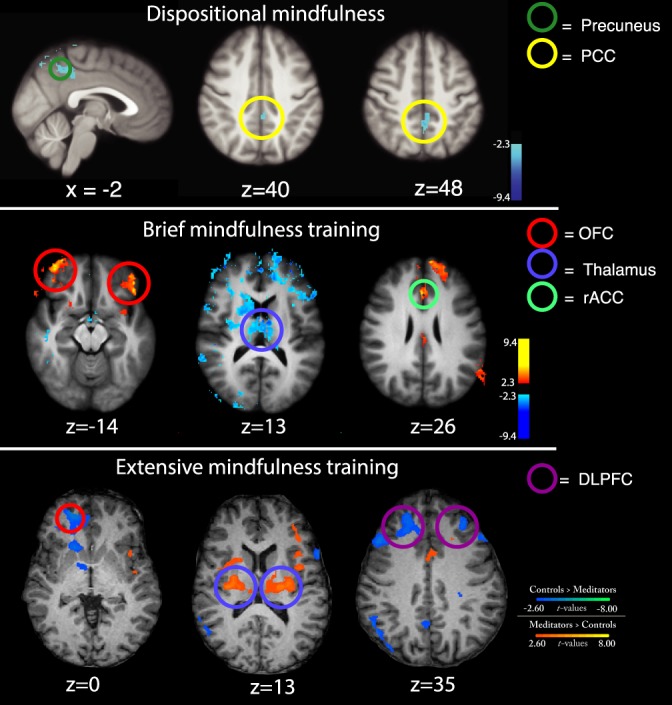
The advent of neuroimaging methodologies, such as functional magnetic resonance imaging (fMRI), has significantly advanced our understanding of the neurophysiological processes supporting a wide spectrum of mind–body approaches to treat pain. A promising self-regulatory practice, mindfulness meditation, reliably alleviates experimentally induced and clinical pain. Yet, the neural mechanisms supporting mindfulness-based pain relief remain poorly characterized. The present review delineates evidence from a spectrum of fMRI studies showing that the neural mechanisms supporting mindfulness-induced pain attenuation differ across varying levels of meditative experience. After brief mindfulness-based mental training (ie, less than 10 hours of practice), mindfulness-based pain relief is associated with higher order (orbitofrontal cortex and rostral anterior cingulate cortex) regulation of low-level nociceptive neural targets (thalamus and primary somatosensory cortex), suggesting an engagement of unique, reappraisal mechanisms. By contrast, mindfulness-based pain relief after extensive training (greater than 1000 hours of practice) is associated with deactivation of prefrontal and greater activation of somatosensory cortical regions, demonstrating an ability to reduce appraisals of arising sensory events. We also describe recent findings showing that higher levels of dispositional mindfulness, in meditation-naïve individuals, are associated with lower pain and greater deactivation of the posterior cingulate cortex, a neural mechanism implicated in self-referential processes. A brief fMRI primer is presented describing appropriate steps and considerations to conduct studies combining mindfulness, pain, and fMRI. We postulate that the identification of the active analgesic neural substrates involved in mindfulness can be used to inform the development and optimization of behavioral therapies to specifically target pain, an important consideration for the ongoing opioid and chronic pain epidemic.
Overview
CoChat Summary
TL;DR
This review synthesizes fMRI evidence showing that mindfulness-based pain relief engages distinct neural mechanisms depending on dispositional mindfulness and amount of training, from higher-order prefrontal regulation after brief practice to reduced appraisal after extensive practice. It also provides a primer for combining mindfulness, pain, and fMRI and argues that mindfulness analgesia is not mediated by endogenous opioids.
Key findings
- Mechanisms vary by training level: brief mindfulness training (<10 hours) is associated with higher-order regulation by orbitofrontal cortex and rostral anterior cingulate cortex of low-level nociceptive targets (thalamus and primary somatosensory cortex), whereas extensive training (>1000 hours) is associated with deactivation of prefrontal regions and greater activation of somatosensory cortical regions, reflecting reduced appraisals of sensory events.
- After four 20-minute mindfulness sessions, mindful attention to the breath during noxious heat (49°C) reduced pain intensity by 40% and pain unpleasantness by 57% compared with rest; greater pain relief was associated with pgACC, right anterior insula, and bilateral OFC activation and with bilateral thalamic deactivation.
- Higher dispositional mindfulness in meditation-naïve individuals was associated with lower pain and greater deactivation of the dorsal posterior cingulate cortex/precuneus; another study found higher trait mindfulness associated with higher pain threshold, weaker default mode network connectivity, and stronger precuneus–somatosensory connectivity.
- In long-term practitioners, Vipassana practice reduced pain unpleasantness by 22% and anticipatory anxiety by 29% but did not significantly reduce pain intensity; mindfulness analgesia persisted under opioid blockade with naloxone, indicating it is not mediated by endogenous opioids.
Methods
- Narrative review and fMRI primer synthesizing functional neuroimaging studies (ASL fMRI, BOLD fMRI), EEG, and psychophysical pain studies across dispositional mindfulness, brief training, and extensive meditation training.
- Reviewed samples include healthy meditation-naïve participants, chronic pain populations, briefly trained individuals, and adept meditators with >1000 hours, >4000 hours, or >10,000 hours of practice.
- Main analysis is qualitative synthesis of neural correlates and methodological recommendations; no new primary data collection or meta-analysis is reported.
Limitations
- The paper states that the precise neural mechanisms supporting mindfulness-based pain relief remain poorly characterized; most fMRI-mindfulness studies were conducted in healthy individuals, and more research is needed in specific chronic pain populations.
- The paper notes that ASL fMRI is not optimized for functional connectivity analyses, that the Zeidan et al. (2011) study lacked a matched active control group, and that mindfulness is susceptible to nonspecific effects and placebo responses, requiring strong control conditions.
- Evident from the text: this is a narrative review rather than a systematic or meta-analytic synthesis, and some cited evidence is preliminary or from small samples (e.g., Taylor et al. recruited 11 adept meditators and 51 controls).
Model-written summary. Check it against the paper before relying on it.
Integrity signals
Registry
Cites
Statistics
Figures
Verification
Claims the paper makes
14 Valid · 1 Not valid · 83 Not checked · 28 Own results and interpretations
Every source the paper cites for this claim was checked and supports it.
In the paper
“In the presence of noxious heat, mindfulness significantly reduced SI activation corresponding to the stimulation site (right leg), suggesting that mindfulness reduces ascending nociceptive inputs to somatosensory cortical regions.”
§ The neural mechanisms of mindfulness-based pain relief: a functional magnetic resonance imaging-based review and primer > 5. Multiple neural mechanisms supporting mindfulness-based pain reductions > 5.2. Neural and physiological processes supporting mindfulness-based pain relief after brief mental training
What the sources say
- Supportedcites [141] Zeidan F Martucci KT Kraft RA Gordon NS McHaffie JG Coghill RC Brain mechanisms supporting the modulation of pain by mindfulness meditation. J Neurosci 2011; 31: 5540– 8. 21471390 PMC3090218 source
The Results (Post-Meditation Training: MRI Session 2 Analyses; page unavailable) report significantly decreased SI activation at the stimulation site during meditation with noxious heat. The Discussion (Meditation Reduces Pain Through Multiple Brain Mechanisms; page unavailable) describes reduced pain-related afferent processing in SI and proposes modulation of ascending noxious information before it reaches cortical regions, matching the citing sentence’s suggested interpretation. (LLM, conf=0.91)
hedgedstates a cause- Asserted: passes — The authors put it forward as true.
- Checkable: passes — It can be checked against evidence.
- Load-bearing: passes — The paper’s conclusions depend on it.
- Based: passes — The paper gives a reason why it holds.
- Supported
Every source the paper cites for this claim was checked and supports it.
In the paper
“In the presence of noxious heat, mindfulness significantly reduced SI activation corresponding to the stimulation site (right leg), suggesting that mindfulness reduces ascending nociceptive inputs to somatosensory cortical regions.”
§ The neural mechanisms of mindfulness-based pain relief: a functional magnetic resonance imaging-based review and primer > 5. Multiple neural mechanisms supporting mindfulness-based pain reductions > 5.2. Neural and physiological processes supporting mindfulness-based pain relief after brief mental training
What the sources say
- Supportedcites [141] Zeidan F Martucci KT Kraft RA Gordon NS McHaffie JG Coghill RC Brain mechanisms supporting the modulation of pain by mindfulness meditation. J Neurosci 2011; 31: 5540– 8. 21471390 PMC3090218 source
The Results section 'Post-Meditation Training: MRI Session 2 Analyses' states that in the presence of noxious thermal stimuli, SI activation corresponding to the stimulation site significantly decreased during meditation relative to rest (Figure 5); the Methods ('MRI Session 1') confirm the noxious heat (49°C) was delivered to the posterior right calf, i.e. the leg. The Discussion ('Meditation Reduces Pain Through Multiple Brain Mechanisms') frames this as meditation significantly reducing pain-related afferent processing in SI, with a hedged account of thalamic gating modulating ascending noxious information before it reaches cortical regions — matching the citing sentence's 'suggesting' hedge. The abstract likewise reports reduced pain-related activation of the contralateral primary somatosensory cortex. (LLM, conf=0.90)
plainstates a cause- Asserted: passes — The authors put it forward as true.
- Checkable: passes — It can be checked against evidence.
- Load-bearing: passes — The paper’s conclusions depend on it.
- Based: passes — The paper gives a reason why it holds.
- Supported
The cited sources support only part of this claim — read each source’s verdict below.
In the paper
“To this extent, it is now well established that mindfulness meditation significantly reduces pain after brief mental training (4 days > 4 weeks).62,134–136,141”
§ The neural mechanisms of mindfulness-based pain relief: a functional magnetic resonance imaging-based review and primer > 5. Multiple neural mechanisms supporting mindfulness-based pain reductions > 5.2. Neural and physiological processes supporting mindfulness-based pain relief after brief mental training
What the sources say
- Not checked yetcites [62] Kingston J Chadwick P Meron D Skinner TC A pilot randomized control trial investigating the effect of mindfulness practice on pain tolerance, psychological well-being, and physiological activity. J Psychosom Res 2007; 62: 297– 300. 17324679 source
- Partly supportedcites [134] Zeidan F Adler-Neal AL Wells RE Stagnaro E May LM Eisenach JC McHaffie JG Coghill RC Mindfulness-meditation-based pain relief is not mediated by endogenous opioids. J Neurosci 2016; 36: 3391– 7. 26985045 PMC4792946 sourceExperimental — accuracy not yet measured
The Discussion states that mindfulness meditation significantly reduces pain after brief training, and the training-regimen section specifies four days of training. The Pain intensity results also report a significant reduction. Our copy does not establish the four-week end of the claimed training range (section labels available; page numbers not provided). (LLM, conf=0.88)
- Partly supportedcites [135] Zeidan F Emerson NM Farris SR Ray JN Jung Y McHaffie JG Coghill RC Mindfulness meditation-based pain relief employs different neural mechanisms than placebo and sham mindfulness meditation-induced analgesia. J Neurosci 2015; 35: 15307– 25. 26586819 PMC4649004 sourceExperimental — accuracy not yet measured
Our copy directly supports the core of the claim for the short end of the stated range: the Methods ('Experimental Sessions 3-6') state subjects underwent '4 separate days (20 m/d) of mindfulness-based mental training', and the Results ('Pain unpleasantness ratings', 'Pain intensity ratings') report that after this 4-day training mindfulness meditation significantly reduced pain unpleasantness (-44%) and pain intensity, with reductions significantly greater than placebo, sham mindfulness meditation and control. What this paper does not support is the upper bound of the cited range ('to 4 weeks'): no passage in our copy reports or relies on a training course longer than 4 days (it explicitly contrasts its regimen with 'traditional mindfulness-based training programs' and gave no home practice). Since the sentence carries several citations and does not say which part this one is offered for, the 4-week extension rests on the other references, not on Zeidan et al. 2015. (LLM, conf=0.70)
- Not checked yetcites [136] Zeidan F Gordon NS Merchant J Goolkasian P The effects of brief mindfulness meditation training on experimentally induced pain. J Pain 2010; 11: 199– 209. 19853530 source
- Supportedcites [141] Zeidan F Martucci KT Kraft RA Gordon NS McHaffie JG Coghill RC Brain mechanisms supporting the modulation of pain by mindfulness meditation. J Neurosci 2011; 31: 5540– 8. 21471390 PMC3090218 source
The Methods describe four 20-minute mindfulness-training sessions, and the Results report significant reductions in pain intensity and unpleasantness during meditation after training. This paper supports the four-day end of the training range cited alongside other sources. (LLM, conf=0.92)
boostedstates a cause- Asserted: passes — The authors put it forward as true.
- Checkable: passes — It can be checked against evidence.
- Load-bearing: passes — The paper’s conclusions depend on it.
- Based: passes — The paper gives a reason why it holds.
Every source the paper cites for this claim was checked and supports it.
In the paper
“Specifically, greater deactivation of the dorsal PCC and precuneus was associated with higher trait mindfulness, and greater activation of the dorsal PCC during noxious heat was associated with higher pain reports during noxious heat (Fig. 1).142”
§ The neural mechanisms of mindfulness-based pain relief: a functional magnetic resonance imaging-based review and primer > 5. Multiple neural mechanisms supporting mindfulness-based pain reductions > 5.1. Brain mechanisms supporting the relationship between higher trait mindfulness and lower pain sensitivity
What the sources say
- Supportedcites [142] Zeidan F Salomons T Farris SR Emerson NM Adler-Neal A Jung Y Coghill RC Neural mechanisms supporting the relationship between dispositional mindfulness and pain. PAIN 2018; 159: 2477– 85. 30015711 PMC6237620 source
The DISCUSSION opening (p. of section 'DISCUSSION') states verbatim that 'greater deactivation of the dorsal PCC (dPCC) and precuneus was associated with higher trait mindfulness during noxious heat when compared to innocuous stimulation (Figure 3)'. The RESULTS section 'Neuroimaging Findings' corroborates this ('Higher FMI ratings were associated with greater deactivation of a brain region extending from the precuneus to the dorsal PCC'), and the same passage supports the accompanying clause that greater dPCC CBF was associated with higher pain reports (unpleasantness r = .23, p = .04; intensity only a trend, r = .20, p = .08). (LLM, conf=0.92)
plainstates an association- Asserted: passes — The authors put it forward as true.
- Checkable: passes — It can be checked against evidence.
- Load-bearing: passes — The paper’s conclusions depend on it.
- Based: passes — The paper gives a reason why it holds.
- Supported
The cited sources support only part of this claim — read each source’s verdict below.
In the paper
“Taken together, these mechanistic findings13,71,115 show that attenuating the expectations of impending sensory events by sustaining attention in the present moment are directly associated with facilitating mindfulness-based pain relief.”
§ The neural mechanisms of mindfulness-based pain relief: a functional magnetic resonance imaging-based review and primer > 6. Neural mechanisms supporting pain relief after extensive mindfulness meditation experience
What the sources say
- Not checked yetcites [13] Brown CA Jones AK Meditation experience predicts less negative appraisal of pain: electrophysiological evidence for the involvement of anticipatory neural responses. PAIN 2010; 150: 428– 38. 20494517 source
- Partly supportedcites [71] Lutz A McFarlin DR Perlman DM Salomons TV Davidson RJ Altered anterior insula activation during anticipation and experience of painful stimuli in expert meditators. NeuroImage 2013; 64: 538– 46. 23000783 PMC3787201 sourceExperimental — accuracy not yet measured
Our copy supports the core: the Abstract (p. n/a) states that 'cultivating experiential openness down-regulates anticipatory representation of aversive events, and increases the recruitment of attentional resources during pain, which is associated with faster neural habituation', and the Discussion ('Summary and interpretation of the findings') frames reduced pre-pain baseline activity as the 'representation of the future' alongside increased phasic response as 'openness to the present', in a state defined by present-centred, non-elaborative awareness (Introduction, Open Monitoring). The behavioural correlate was lower unpleasantness in expert meditators, so an association between attenuated anticipation and reduced pain suffering is in the paper. Not supported: (a) the claim states as fact a 'direct association' the paper only offers as a suggestion ('These findings suggest...', 'We propose...'); (b) the causal wording that attenuating expectations occurs 'by sustaining attention in the present moment' is not asserted — the paper treats present-centredness and reduced anticipation as co-features of the Open Presence state, not one as the mechanism of the other; (c) the generalisation to 'mindfulness-based pain relief' exceeds the sample (>10,000 h experts doing Open Presence), and the Conclusions ('Implication of this study for mindfulness-based psychotherapeutic interventions') explicitly distinguish OP from an 8-week MBSR-type therapy and only predict, rather than demonstrate, that Open Monitoring-based interventions modulate these anticipatory processes. (LLM, conf=0.72)
- Not checked yetcites [115] Taylor VA Roy M Chang L Gill LN Mueller C Rainville P Reduced fear-conditioned pain modulation in experienced meditators: a preliminary study. Psychosomatic Med 2018; 80: 799– 806. 30134359 source
boostedstates an association- Asserted: passes — The authors put it forward as true.
- Checkable: passes — It can be checked against evidence.
- Load-bearing: passes — The paper’s conclusions depend on it.
- Based: passes — The paper gives a reason why it holds.
63 more claims · 5 with their cited sources checked
Create a free account to see all 126 claims and to verify the 134 references still open.
- It may state two separate claims as one. 48
- Probably not a substantial claim. 15
Claims other papers make about this one
Each is checked against this paper’s own text: does it say what the citing paper says it does?
The source backs part of the claim, not all of it — or backs it for a different population, condition or comparison.
In the citing paper
“The neurobiological mechanisms of mindfulness are actively being explored by researchers across the world.12, 13”
From Mechanisms of mindfulness in patients with migraine: Results of a qualitative study. (2023) · cites this paper as [12]
Experimental — accuracy not yet measured
Citations
Cites
Mindfulness-based interventions in context: Past, present, and future
Kabat-Zinn, J. (2003) · Clinical Psychology: Science and Practice · doi:10.1093/clipsy.bpg016 · Cited by 8,615 · cited 1×
“As skills in mindfulness meditation continue to develop, the practitioner brings mindfulness more effortlessly into meditation and other aspects of everyday life.(59) It is postulated that the state transitions”
BackgroundMindfulness-based interventions in context: Past, present, and future.
Kabat-Zinn, J. (2003) · Clinical Psychology: Science and Practice · doi:10.1093/clipsy/bpg016 · Cited by 8,612
A component based noise correction method (CompCor) for BOLD and perfusion based fMRI
Behzadi, Y., Restom, K., Liau, J., & Liu, T. T. (2007) · NeuroImage · doi:10.1016/j.neuroimage.2007.04.042 · Cited by 4,502 · cited 1×
“gray-matter brain, and (4) inputting segmented white values as covariates of no interest in the statistical analyses using a component-based noise correction method (CompCor; temporal or anatomical variants).(8)”
MethodKabat-Zinn, J. (1982) · General Hospital Psychiatry · doi:10.1016/0163-8343(82)90026-3 · Cited by 4,255 · cited 3×
“outcomes associated with mindfulness-based stress reduction (MBSR) and its varieties.(56,57)Mindfulness-based stress reduction is a structuralized, group-based psychosocial intervention consisting of mindfulness meditation, yoga, and cognitive-behavioral”
BackgroundShapiro, S. L., Carlson, L. E., Astin, J. A., & Freedman, B. (2006) · Journal of Clinical Psychology · doi:10.1002/jclp.20237 · Cited by 4,002 · cited 1×
“promote cross-experimental methodological validity and reliability.(32,72,103) In the context of the present review, the 2 primary forms of mindfulness practice are characterized as Shamatha (focused attention) and Vipassana (open monitoring).”
BackgroundIdentification of two related pentapeptides from the brain with potent opiate agonist activity
Hughes, J., Smith, T. W., Kosterlitz, H. W., Fothergill, L. A., Morgan, B. A., & Morris, H. R. (1975) · Nature · doi:10.1038/258577a0 · Cited by 3,806 · cited 1×
“spinal cord to reduce the elaboration of spinal and supraspinal nociceptive processing through the release of endogenous opioids(9,77,78) that largely bind with mu, delta, and kappa receptors.(54,69) Pain relief produced by placebo,(2,34,47,67,147) acupuncture,(51) conditioned pain modulation,(61) distraction,(108) an…”
BackgroundNeural systems supporting interoceptive awareness
Critchley, H. D., Wiens, S., Rotshtein, P., Öhman, A., & Dolan, R. J. (2004) · Nature Neuroscience · doi:10.1038/nn1176 · Cited by 3,406 · cited 1×
“The right anterior insula has been repeatedly implicated in processing interoceptive awareness and regulation of nociception.(20,21,26,64,86,109,111) The OFC, a highly evolved brain region, is associated with increasing positive mood and altering the contextualization of arising sensory events.”
BackgroundHölzel, B. K., Lazar, S. W., Gard, T., Schuman-Olivier, Z., Vago, D. R., & Ott, U. (2011) · Perspectives on Psychological Science · doi:10.1177/1745691611419671 · Cited by 3,024
The Neuroscience of Mindfulness Meditation
Tang, Y.-Y., Hölzel, B. K., & Posner, M. I. (2015) · Nature reviews. Neuroscience · doi:10.1038/nrn3916 · Cited by 2,889 · cited 1×
“The neural mechanisms supportingmindfulness-based practices still remain poorly characterized.(113)Mindfulness-based pain relief is believed to be associated with a spectrum of nonspecific factors such as distraction, slow breathing, placebo, condition-”
BackgroundFunctional-anatomic fractionation of the brain’s default network
Andrews-Hanna, J. R., Reidler, J. S., Sepulcre, J., Poulin, R., & Buckner, R. L. (2010) · Neuron · doi:10.1016/j.neuron.2010.02.005 · Cited by 2,767
Endogenous Pain Control Systems: Brainstem Spinal Pathways and Endorphin Circuitry
Basbaum, A. I., & Fields, H. L. (1984) · Annual Review of Neuroscience · doi:10.1146/annurev.ne.07.030184.001521 · Cited by 2,687 · cited 2×
“However, mindfulness meditation also deactivates the PAG, a central node in opioidergically mediated descending inhibition of pain.(7) To bridge this exploratory gap, Zeidan et al.”
BackgroundAttention regulation and monitoring in meditation
Lutz, A., Slagter, H. A., Dunne, J. D., & Davidson, R. J. (2008) · Trends in Cognitive Sciences · doi:10.1016/j.tics.2008.01.005 · Cited by 2,659
Endogenous opioid peptides: multiple agonists and receptors
Lord, J. A. H., Waterfield, A. A., Hughes, J., & Kosterlitz, H. W. (1977) · Nature · doi:10.1038/267495a0 · Cited by 2,485 · cited 1×
“spinal cord to reduce the elaboration of spinal and supraspinal nociceptive processing through the release of endogenous opioids(9,77,78) that largely bind with mu, delta, and kappa receptors.(54,69) Pain relief produced by placebo,(2,34,47,67,147) acupuncture,(51) conditioned pain modulation,(61) distraction,(108) an…”
BackgroundCognitive and emotional control of pain and its disruption in chronic pain
Bushnell, M. C., Čeko, M., & Low, L. A. (2013) · Nature Reviews Neuroscience · doi:10.1038/nrn3516 · Cited by 2,076 · cited 1×
“That is, the pgACC facilitates top-down regulation of negative effect, affective modulation of pain, and autonomic regulation.(11,16,101,120,121) The right anterior insula has been repeatedly implicated in processing interoceptive awareness and regulation of nociception.”
BackgroundAbstract reward and punishment representations in the human orbitofrontal cortex
O'Doherty, J., Kringelbach, M. L., Rolls, E. T., Hornak, J., & Andrews, C. (2001) · Nature Neuroscience · doi:10.1038/82959 · Cited by 2,003 · cited 1×
“The OFC, a highly evolved brain region, is associated with increasing positive mood and altering the contextualization of arising sensory events.(35,85,88,94) We propose a working theoretical”
BackgroundPlacebo-Induced Changes in fMRI in the Anticipation and Experience of Pain
Wager, T. D., Rilling, J. K., Smith, E. E., Sokolik, A., Casey, K. L., Davidson, R. J., Kosslyn, S. M., Rose, R. M., & Cohen, J. D. (2004) · Science · doi:10.1126/science.1093065 · Cited by 1,992 · cited 1×
“This was the first ASL fMRI placebo experiment and largely replicated the findings supporting other pain-placebo–focused brain imaging studies.(11,14,63,64,70,122,123)”
ResultKety, S. S., & Schmidt, C. F. (1948) · Journal of Clinical Investigation · doi:10.1172/jci101995 · Cited by 1,827
The clinical use of mindfulness meditation for the self-regulation of chronic pain
Kabat-Zinn, J., Lipworth, L., & Burney, R. (1985) · Journal of Behavioral Medicine · doi:10.1007/bf00845519 · Cited by 1,745 · cited 1×
“improved general vitality in chronic pain patients, effects that were maintained at 15-month follow-up.(58) However, this initial work lacked a control group, and thus, while promising, subsequent”
BackgroundCreswell, J. D. (2017) · Annual Review of Psychology · doi:10.1146/annurev-psych-042716-051139 · Cited by 1,702
Function of the thalamic reticular complex: the searchlight hypothesis
Crick, F. (1984) · Proceedings of the National Academy of Sciences · doi:10.1073/pnas.81.14.4586 · Cited by 1,651
Mindfulness meditation improves cognition: evidence of brief mental training
Zeidan, F., Johnson, S. K., Diamond, B. J., David, Z., & Goolkasian, P. (2010) · Consciousness and Cognition · doi:10.1016/j.concog.2010.03.014 · Cited by 1,363
Self-citationJain, S., Shapiro, S. L., Swanick, S., Roesch, S. C., Mills, P. J., Bell, I., & Schwartz, G. E. R. (2007) · Annals of Behavioral Medicine · doi:10.1207/s15324796abm3301_2 · Cited by 1,300 · cited 1×
“Others have postulated that mindfulness-induced pain relief engages mechanisms supporting divided attention, relaxation, and/or positive mood.(15,55) To better address this issue, Zeidan et al.”
BackgroundTHE MECHANISM OF PLACEBO ANALGESIA
Levine, J., Gordon, N., & Fields, H. (1978) · The Lancet · doi:10.1016/s0140-6736(78)92762-9 · Cited by 1,094
Pain intensity processing within the human brain: a bilateral, distributed mechanism
Coghill, R. C., Sang, C. N., Maisog, J. M., & Iadarola, M. J. (1999) · Journal of Neurophysiology · doi:10.1152/jn.1999.82.4.1934 · Cited by 1,077
Self-citationSpreng, R. N., & Grady, C. L. (2010) · Journal of Cognitive Neuroscience · doi:10.1162/jocn.2009.21282 · Cited by 985 · cited 1×
“[PCC]/precuneus, inferior, and lateral temporal cortices) and is associated with facilitating self-referential processes.(28,76,91,107) Specifically, greater deactivation of the dorsal PCC and”
BackgroundMeta-awareness, perceptual decoupling and the wandering mind
Schooler, J. W., Smallwood, J., Christoff, K., Handy, T. C., Reichle, E. D., & Sayette, M. A. (2011) · Trends in Cognitive Sciences · doi:10.1016/j.tics.2011.05.006 · Cited by 917
Amanzio, M., & Benedetti, F. (1999) · The Journal of Neuroscience · doi:10.1523/jneurosci.19-01-00484.1999 · Cited by 899
Activation of the Opioidergic Descending Pain Control System Underlies Placebo Analgesia
Eippert, F., Bingel, U., Schoell, E. D., Yacubian, J., Klinger, R., Lorenz, J., & Büchel, C. (2009) · Neuron · doi:10.1016/j.neuron.2009.07.014 · Cited by 839
Neural correlates of dispositional mindfulness during affect labeling
Creswell, J. D., Way, B. M., Eisenberger, N. I., & Lieberman, M. D. (2007) · Psychosomatic Medicine · doi:10.1097/psy.0b013e3180f6171f · Cited by 835 · cited 2×
“simply more “mindful” than others, as evinced by higher scores on standardized measures of dispositional/trait mindfulness without any formal training in meditation.(24,52,128,142)”
BackgroundDistributed processing of pain and vibration by the human brain
Coghill, R., Talbot, J., Evans, A., Meyer, E., Gjedde, A., Bushnell, M., & Duncan, G. (1994) · The Journal of Neuroscience · doi:10.1523/jneurosci.14-07-04095.1994 · Cited by 808 · cited 1×
“The right anterior insula has been repeatedly implicated in processing interoceptive awareness and regulation of nociception.(20,21,26,64,86,109,111) The OFC, a highly evolved brain region, is associated with increasing positive mood and altering the contextualization of arising sensory events.”
BackgroundSelf-citationThe orbitofrontal cortex and beyond: From affect to decision-making
Rolls, E. T., & Grabenhorst, F. (2008) · Progress in Neurobiology · doi:10.1016/j.pneurobio.2008.09.001 · Cited by 807 · cited 1×
“The OFC, a highly evolved brain region, is associated with increasing positive mood and altering the contextualization of arising sensory events.(35,85,88,94) We propose a working theoretical”
BackgroundOvertreating chronic back pain: time to back off?
Deyo, R. A., Mirza, S. K., Turner, J. A., & Martin, B. I. (2009) · The Journal of the American Board of Family Medicine · doi:10.3122/jabfm.2009.01.080102 · Cited by 796 · cited 1×
“and burden of chronic pain has dramatically increased Medicare expenditures for steroid injections (↑629%) and opioid treatments (↑423%).(31) The widespread use of opioids to alleviate chronic pain has led to the so-called “opioid epidemic”(84) with an exponential rise in opioid misuse and addiction.”
BackgroundOrganization of endogenous opiate and nonopiate pain control systems
Watkins, L. R., & Mayer, D. J. (1982) · Science · doi:10.1126/science.6281891 · Cited by 791 · cited 2×
“To date, the endogenous opioidergic system is characterized as the primary endogenous pain modulatory system.(127) Higher order brain regions (PFC; rACC) project to the PAG, the rostral ventral medulla, and the dorsal horn of the”
BackgroundPlacebo Effects Mediated by Endogenous Opioid Activity on μ-Opioid Receptors
Zubieta, J.-K., Bueller, J. A., Jackson, L. R., Scott, D. J., Xu, Y., Koeppe, R. A., Nichols, T. E., & Stohler, C. S. (2005) · The Journal of Neuroscience · doi:10.1523/jneurosci.0439-05.2005 · Cited by 779
Carlson, L. E., Speca, M., Patel, K. D., & Goodey, E. (2003) · Psychosomatic Medicine · doi:10.1097/01.psy.0000074003.35911.41 · Cited by 773 · cited 1×
“Mindfulness may have that ability because it uniquely enhances cognitive control,(138) emotion regulation,(73) acceptance (ie, nonreactivity),(68,92,116) and improves mood.(17,36) There is also a great deal of insight from Buddhist contemplatives in the way that mindfulness-based mental training impacts the subjective”
BackgroundThe subjective experience of pain: where expectations become reality
Koyama, T., McHaffie, J. G., Laurienti, P. J., & Coghill, R. C. (2005) · Proceedings of the National Academy of Sciences · doi:10.1073/pnas.0408576102 · Cited by 747 · cited 4×
“It can reasonably be construed, then, that this experiential acceptance should reduce expectations of impending noxious stimuli that could exacerbate the pain experience.(64,140) Lutz et al.”
BackgroundResultInfluentialSelf-citationCherkin, D. C., Sherman, K. J., Balderson, B. H., Cook, A. J., Anderson, M. L., Hawkes, R. J., Hansen, K. E., & Turner, J. A. (2016) · JAMA · doi:10.1001/jama.2016.2323 · Cited by 729 · cited 3×
“demonstrating that long-term mindfulness practice can lead to significant increases in pain threshold values and lower pain sensitivity even when participants are not explicitly practicing mindfulness.(13,19,43,46,82,83) Grant and Rainville(46) were the first to demonstrate that adept Zen practitioners (a mindfulness…”
BackgroundFunctional brain mapping of the relaxation response and meditation
Lazar, S. W., Bush, G., Gollub, R. L., Fricchione, G. L., Khalsa, G., & Benson, H. (2000) · NeuroReport · doi:10.1097/00001756-200005150-00042 · Cited by 717
Valet, M., Sprenger, T., Boecker, H., Willoch, F., Rummeny, E., Conrad, B., Erhard, P., & Tolle, T. R. (2004) · Pain · doi:10.1016/j.pain.2004.02.033 · Cited by 708
Brain Mechanisms Supporting the Modulation of Pain by Mindfulness Meditation
Zeidan, F., Martucci, K. T., Kraft, R. A., Gordon, N. S., McHaffie, J. G., & Coghill, R. C. (2011) · The Journal of Neuroscience · doi:10.1523/jneurosci.5791-10.2011 · Cited by 640 · cited 14×
“Importantly, the Zeidan et al. (2011) study lacked a matched and active control group, and thus, it was difficult to explicitly ascertain whether mindfulness reduces pain through brain mechanisms that are reflective of placebo analgesia.”
BackgroundResultInfluentialSelf-citationImaging attentional modulation of pain in the periaqueductal gray in humans
Tracey, I., Ploghaus, A., Gati, J. S., Clare, S., Smith, S., Menon, R. S., & Matthews, P. M. (2002) · The Journal of Neuroscience · doi:10.1523/jneurosci.22-07-02748.2002 · Cited by 569 · cited 1×
“Mindfulness-based analgesia, after brief mental training, is associated with greater activation of the rACC, OFC, and insular cortices, brain regions that contain high concentrations of opioid receptors.(18,117,124) However, mindfulness meditation also deactivates the PAG, a central node in opioidergically mediated de…”
BackgroundMechanisms of placebo analgesia: rACC recruitment of a subcortical antinociceptive network
Bingel, U., Lorenz, J., Schoell, E., Weiller, C., & Büchel, C. (2006) · Pain · doi:10.1016/j.pain.2005.08.027 · Cited by 567
Placebo effects on human μ-opioid activity during pain
Wager, T. D., Scott, D. J., & Zubieta, J.-K. (2007) · Proceedings of the National Academy of Sciences · doi:10.1073/pnas.0702413104 · Cited by 562
TREATMENT OF EXCESSIVE AXILLARY SWEATING
Gibbs, J. R. (1974) · The Lancet · doi:10.1016/s0140-6736(74)91979-5 · Cited by 559
Mapping the self in the brain's default mode network
Davey, C. G., Pujol, J., & Harrison, B. J. (2016) · NeuroImage · doi:10.1016/j.neuroimage.2016.02.022 · Cited by 559 · cited 1×
“[PCC]/precuneus, inferior, and lateral temporal cortices) and is associated with facilitating self-referential processes.(28,76,91,107) Specifically, greater deactivation of the dorsal PCC and”
BackgroundMorone, N. E., Greco, C. M., & Weiner, D. K. (2008) · Pain · doi:10.1016/j.pain.2007.04.038 · Cited by 546
The organization of afferent projections to the midbrain periaqueductal gray of the rat
Beitz, A. J. (1982) · Neuroscience · doi:10.1016/0306-4522(82)90157-9 · Cited by 544
Minding one’s emotions: Mindfulness training alters the neural expression of sadness.
Farb, N. A. S., Anderson, A. K., Mayberg, H., Bean, J., McKeon, D., & Segal, Z. V. (2010) · Emotion · doi:10.1037/a0017151 · Cited by 521
Placebo Analgesia: A Predictive Coding Perspective
Büchel, C., Geuter, S., Sprenger, C., & Eippert, F. (2014) · Neuron · doi:10.1016/j.neuron.2014.02.042 · Cited by 505 · cited 1×
“This was the first ASL fMRI placebo experiment and largely replicated the findings supporting other pain-placebo–focused brain imaging studies.(11,14,63,64,70,122,123)”
ResultGrossman, P., Tiefenthaler-Gilmer, U., Raysz, A., & Kesper, U. (2007) · Psychotherapy and Psychosomatics · doi:10.1159/000101501 · Cited by 505
The dorsolateral prefrontal cortex in acute and chronic pain
Seminowicz, D. A., & Moayedi, M. (2017) · The Journal of Pain · doi:10.1016/j.jpain.2017.03.008 · Cited by 502
Atlas, L. Y., & Wager, T. D. (2012) · Neuroscience Letters · doi:10.1016/j.neulet.2012.03.039 · Cited by 463 · cited 1×
“and secondary somatosensory cortices [SII]) and greater activation of the dorsolateral prefrontal cortex [DLPFC]), likely reflective of perceive controllability of pain(5,97,102) and lower expectations for pain.(6,64) This was the first ASL fMRI placebo experiment and largely replicated the findings supporting other p…”
ResultGarland, E. L., Manusov, E. G., Froeliger, B., Kelly, A., Williams, J. M., & Howard, M. O. (2014) · Journal of Consulting and Clinical Psychology · doi:10.1037/a0035798 · Cited by 431 · cited 1×
“through unique mechanisms, such as disengagement from pain-related threat,(119) extinction of fear conditioning, acceptance-based coping strategies,(81) and strengthening one’s ability to self-regulate affective appraisals of nociceptive input.(42) Much of the work on the efficacy of mindfulness-based interventions fo…”
BackgroundRegulation of emotional responses elicited by threat-related stimuli
Eippert, F., Veit, R., Weiskopf, N., Erb, M., Birbaumer, N., & Anders, S. (2007) · Human Brain Mapping · doi:10.1002/hbm.20291 · Cited by 419 · cited 1×
“The OFC, a highly evolved brain region, is associated with increasing positive mood and altering the contextualization of arising sensory events.(35,85,88,94) We propose a working theoretical”
BackgroundNeural representations of subjective reward value
Peters, J., & Büchel, C. (2010) · Behavioural Brain Research · doi:10.1016/j.bbr.2010.04.031 · Cited by 405 · cited 1×
“The OFC, a highly evolved brain region, is associated with increasing positive mood and altering the contextualization of arising sensory events.(35,85,88,94) We propose a working theoretical”
BackgroundExperimental design and the relative sensitivity of BOLD and perfusion fMRI
Aguirre, G. K., Detre, J. A., Zarahn, E., & Alsop, D. C. (2002) · NeuroImage · doi:10.1006/nimg.2001.0990 · Cited by 403
Kucyi, A., Moayedi, M., Weissman-Fogel, I., Goldberg, M. B., Freeman, B. V., Tenenbaum, H. C., & Davis, K. D. (2014) · The Journal of Neuroscience · doi:10.1523/jneurosci.5055-13.2014 · Cited by 396
Kong, J., Gollub, R. L., Rosman, I. S., Webb, J. M., Vangel, M. G., Kirsch, I., & Kaptchuk, T. J. (2006) · The Journal of Neuroscience · doi:10.1523/jneurosci.3556-05.2006 · Cited by 395 · cited 1×
“This was the first ASL fMRI placebo experiment and largely replicated the findings supporting other pain-placebo–focused brain imaging studies.(11,14,63,64,70,122,123)”
ResultMood Influences Supraspinal Pain Processing Separately from Attention
Villemure, C., & Bushnell, M. C. (2009) · The Journal of Neuroscience · doi:10.1523/jneurosci.3822-08.2009 · Cited by 393
Brain mediators of predictive cue effects on perceived pain
Atlas, L. Y., Bolger, N., Lindquist, M. A., & Wager, T. D. (2010) · The Journal of Neuroscience · doi:10.1523/jneurosci.0057-10.2010 · Cited by 389
Zeidan, F., Emerson, N. M., Farris, S. R., Ray, J. N., Jung, Y., McHaffie, J. G., & Coghill, R. C. (2015) · The Journal of Neuroscience · doi:10.1523/jneurosci.2542-15.2015 · Cited by 369 · cited 14×
“Importantly, the Zeidan et al. (2011) study lacked a matched and active control group, and thus, it was difficult to explicitly ascertain whether mindfulness reduces pain through brain mechanisms that are reflective of placebo analgesia.”
BackgroundMethodInfluentialSelf-citationHan, B., Compton, W. M., Jones, C. M., & Cai, R. (2015) · JAMA · doi:10.1001/jama.2015.11859 · Cited by 366
The effects of brief mindfulness meditation training on experimentally induced pain
Zeidan, F., Gordon, N. S., Merchant, J., & Goolkasian, P. (2010) · The Journal of Pain · doi:10.1016/j.jpain.2009.07.015 · Cited by 364
Self-citationTaylor, V. A., Grant, J., Daneault, V., Scavone, G., Breton, E., Roffe-Vidal, S., Courtemanche, J., Lavarenne, A. S., & Beauregard, M. (2011) · NeuroImage · doi:10.1016/j.neuroimage.2011.06.001 · Cited by 362
Mindfulness and emotion regulation—an fMRI study
Lutz, J., Herwig, U., Opialla, S., Hittmeyer, A., Jäncke, L., Rufer, M., Grosse Holtforth, M., & Brühl, A. B. (2014) · Social Cognitive and Affective Neuroscience · doi:10.1093/scan/nst043 · Cited by 342
The validation of an active control intervention for Mindfulness Based Stress Reduction (MBSR)
MacCoon, D. G., Imel, Z. E., Rosenkranz, M. A., Sheftel, J. G., Weng, H. Y., Sullivan, J. C., Bonus, K. A., Stoney, C. M., Salomons, T. V., Davidson, R. J., et al. (2012) · Behaviour Research and Therapy · doi:10.1016/j.brat.2011.10.011 · Cited by 335 · cited 2×
“enhancement program (HEP) to disentangle the mechanisms supporting mindfulness.(74,75,95) The HEP controlled for facilitator allegiance, social support, and other components related to participating in a mindfulness program.”
BackgroundConnections of midbrain periaqueductal gray in the monkey. II. Descending efferent projections
Mantyh, P. W. (1983) · Journal of Neurophysiology · doi:10.1152/jn.1983.49.3.582 · Cited by 331
Wager, T. D., Atlas, L. Y., Leotti, L. A., & Rilling, J. K. (2011) · The Journal of Neuroscience · doi:10.1523/jneurosci.3420-10.2011 · Cited by 328 · cited 1×
“This was the first ASL fMRI placebo experiment and largely replicated the findings supporting other pain-placebo–focused brain imaging studies.(11,14,63,64,70,122,123)”
ResultTeper, R., & Inzlicht, M. (2013) · Social Cognitive and Affective Neuroscience · doi:10.1093/scan/nss045 · Cited by 323
Effects of Brief and Sham Mindfulness Meditation on Mood and Cardiovascular Variables
Zeidan, F., Johnson, S. K., Gordon, N. S., & Goolkasian, P. (2010) · The Journal of Alternative and Complementary Medicine · doi:10.1089/acm.2009.0321 · Cited by 319 · cited 3×
“training sessions, subjects were instructed to close their eyes, and to take a deep breath “as we sit here in meditation” every 2 to 3 minutes.(135,139) All other aspects of the sham-mindfulness meditation intervention (ie, posture, training room, facilitator; time”
BackgroundMethodSelf-citationArterial spin labeling perfusion fMRI with very low task frequency
Wang, J., Aguirre, G. K., Kimberg, D. Y., Roc, A. C., Li, L., & Detre, J. A. (2003) · Magnetic Resonance in Medicine · doi:10.1002/mrm.10437 · Cited by 316 · cited 1×
“the course of an imaging series.(126) Accordingly, BOLD fMRI is not well suited to appropriately image task-related brain activation longer than 30 seconds.”
BackgroundState-dependent architecture of thalamic reticular subnetworks
Halassa, M. M., Chen, Z., Wimmer, R. D., Brunetti, P. M., Zhao, S., Zikopoulos, B., Wang, F., Brown, E. N., & Wilson, M. A. (2014) · Cell · doi:10.1016/j.cell.2014.06.025 · Cited by 309 · cited 1×
“1).(49) These findings are particularly consistent with the principles of”
ResultRosenkranz, M. A., Davidson, R. J., MacCoon, D. G., Sheridan, J. F., Kalin, N. H., & Lutz, A. (2013) · Brain, Behavior, and Immunity · doi:10.1016/j.bbi.2012.10.013 · Cited by 307 · cited 1×
“enhancement program (HEP) to disentangle the mechanisms supporting mindfulness.(74,75,95) The HEP controlled for facilitator allegiance, social support, and other components related to participating in a mindfulness program.”
BackgroundThe influence of carbon dioxide on brain activity and metabolism in conscious humans
Xu, F., Uh, J., Brier, M. R., Hart, J., Yezhuvath, U. S., Gu, H., Yang, Y., & Lu, H. (2011) · Journal of Cerebral Blood Flow & Metabolism · doi:10.1038/jcbfm.2010.153 · Cited by 304
Mindfulness meditation-based pain relief: a mechanistic account
Zeidan, F., & Vago, D. R. (2016) · Annals of the New York Academy of Sciences · doi:10.1111/nyas.13153 · Cited by 300
Self-citationCreswell, J. D., Taren, A. A., Lindsay, E. K., Greco, C. M., Gianaros, P. J., Fairgrieve, A., Marsland, A. L., Brown, K. W., Way, B. M., Rosen, R. K., et al. (2016) · Biological Psychiatry · doi:10.1016/j.biopsych.2016.01.008 · Cited by 299 · cited 2×
“Creswell et al.(23) compared behavioral, inflammatory stress [ie, interleukin-6 (IL-6)] and neural mechanisms”
BackgroundGrant, J. A., Courtemanche, J., & Rainville, P. (2011) · Pain · doi:10.1016/j.pain.2010.10.006 · Cited by 297
Neuropeptide Y applied in vitro can block the phase shifts induced by light in vivo
Yannielli, P. C., & Harrington, M. E. (2000) · NeuroReport · doi:10.1097/00001756-200005150-00043 · Cited by 296
Harris, R. E., Zubieta, J.-K., Scott, D. J., Napadow, V., Gracely, R. H., & Clauw, D. J. (2009) · NeuroImage · doi:10.1016/j.neuroimage.2009.05.083 · Cited by 296
McCracken, L. M., Gauntlett-Gilbert, J., & Vowles, K. E. (2007) · Pain · doi:10.1016/j.pain.2006.12.013 · Cited by 290
Nonopioid placebo analgesia is mediated by CB1 cannabinoid receptors
Benedetti, F., Amanzio, M., Rosato, R., & Blanchard, C. (2011) · Nature Medicine · doi:10.1038/nm.2435 · Cited by 289
Zeidan, F., Grant, J. A., Brown, C. A., McHaffie, J. G., & Coghill, R. C. (2012) · Neuroscience Letters · doi:10.1016/j.neulet.2012.03.082 · Cited by 284 · cited 1×
“Vipassana meditation has been described as a state of nonappraisal and/or a nonelaborative mental stance.(45,137) Indeed, there is little to no concrete consensus concerning where”
BackgroundSelf-citationRoles of the Insular Cortex in the Modulation of Pain: Insights from Brain Lesions
Starr, C. J., Sawaki, L., Wittenberg, G. F., Burdette, J. H., Oshiro, Y., Quevedo, A. S., & Coghill, R. C. (2009) · The Journal of Neuroscience · doi:10.1523/jneurosci.5173-08.2009 · Cited by 284 · cited 1×
“The right anterior insula has been repeatedly implicated in processing interoceptive awareness and regulation of nociception.(20,21,26,64,86,109,111) The OFC, a highly evolved brain region, is associated with increasing positive mood and altering the contextualization of arising sensory events.”
BackgroundSelf-citationGaylord, S. A., Palsson, O. S., Garland, E. L., Faurot, K. R., Coble, R. S., Mann, D. J., Frey, W., Leniek, K., & Whitehead, W. E. (2011) · American Journal of Gastroenterology · doi:10.1038/ajg.2011.184 · Cited by 281
Turner, J. A., Anderson, M. L., Balderson, B. H., Cook, A. J., Sherman, K. J., & Cherkin, D. C. (2016) · Pain · doi:10.1097/j.pain.0000000000000635 · Cited by 281
Gard, T., Holzel, B. K., Sack, A. T., Hempel, H., Lazar, S. W., Vaitl, D., & Ott, U. (2012) · Cerebral Cortex · doi:10.1093/cercor/bhr352 · Cited by 276
Attentional modulation of thalamic reticular neurons
McAlonan, K., Cavanaugh, J., & Wurtz, R. H. (2006) · The Journal of Neuroscience · doi:10.1523/jneurosci.5602-05.2006 · Cited by 261
A Mind-Body Program for Older Adults With Chronic Low Back Pain: A Randomized Clinical Trial
Morone, N. E., Greco, C. M., Moore, C. G., Rollman, B. L., Lane, B., Morrow, L. A., Glynn, N. W., & Weiner, D. K. (2016) · JAMA Internal Medicine · doi:10.1001/jamainternmed.2015.8033 · Cited by 258 · cited 1×
“demonstrating that long-term mindfulness practice can lead to significant increases in pain threshold values and lower pain sensitivity even when participants are not explicitly practicing mindfulness.(13,19,43,46,82,83) Grant and Rainville(46) were the first to demonstrate that adept Zen practitioners (a mindfulness…”
BackgroundToward an understanding of non-dual mindfulness
Dunne, J. (2011) · Contemporary Buddhism · doi:10.1080/14639947.2011.564820 · Cited by 256 · cited 2×
“promote cross-experimental methodological validity and reliability.(32,72,103) In the context of the present review, the 2 primary forms of mindfulness practice are characterized as Shamatha (focused attention) and Vipassana (open monitoring).”
BackgroundLow mindfulness predicts pain catastrophizing in a fear-avoidance model of chronic pain
Schütze, R., Rees, C., Preece, M., & Schütze, M. (2010) · Pain · doi:10.1016/j.pain.2009.10.030 · Cited by 248
Lutz, A., McFarlin, D. R., Perlman, D. M., Salomons, T. V., & Davidson, R. J. (2013) · NeuroImage · doi:10.1016/j.neuroimage.2012.09.030 · Cited by 233 · cited 4×
“Meditators and nonmeditators displayed comparable nociceptive flexion reflexes, suggesting that mindfulness does not (1) modulate nociceptive processes at the level of the spinal cord, (2) engage classical descending inhibition of pain mechanisms, and (3) reduce anticipatory responses corresponding to conditioned pain…”
BackgroundResultInfluentialPartial antagonism of placebo analgesia by naloxone
Grevert, P., Albert, L. H., & Goldstein, A. (1983) · Pain · doi:10.1016/0304-3959(83)90203-8 · Cited by 228
Saloner, B., & Karthikeyan, S. (2015) · JAMA · doi:10.1001/jama.2015.10345 · Cited by 226 · cited 1×
“The widespread use of opioids to alleviate chronic pain has led to the so-called “opioid epidemic”(84) with an exponential rise in opioid misuse and addiction.(50,98) These staggering statistics signify the importance of developing fastacting nonpharmacologic approaches to treat acute exacerba-”
BackgroundLindsay, E. K., Young, S., Smyth, J. M., Brown, K. W., & Creswell, J. D. (2018) · Psychoneuroendocrinology · doi:10.1016/j.psyneuen.2017.09.015 · Cited by 226
Lindsay, E. K., Young, S., Smyth, J. M., Brown, K. W., & Creswell, J. D. (2017) · doi:10.31219/osf.io/4se5m · Cited by 226
Kingston, J., Chadwick, P., Meron, D., & Skinner, T. C. (2007) · Journal of Psychosomatic Research · doi:10.1016/j.jpsychores.2006.10.007 · Cited by 218
Regional Differences in the CBF and BOLD Responses to Hypercapnia: A Combined PET and fMRI Study
Rostrup, E., Law, I., Blinkenberg, M., Larsson, H. B. W., Born, A. P., Holm, S., & Paulson, O. B. (2000) · NeuroImage · doi:10.1006/nimg.1999.0526 · Cited by 216 · cited 1×
“the brain (de) activations could be interpreted as meditationrelated mechanisms, when they are potentially due to physiological noise.(12,96) In our laboratory, we have seen (unpublished findings) significantly greater white-matter activation when”
BackgroundWay, B. M., Creswell, J. D., Eisenberger, N. I., & Lieberman, M. D. (2010) · Emotion · doi:10.1037/a0018312 · Cited by 211
Garland, E. L., Gaylord, S. A., Palsson, O., Faurot, K., Douglas Mann, J., & Whitehead, W. E. (2012) · Journal of Behavioral Medicine · doi:10.1007/s10865-011-9391-z · Cited by 210
Pain Sensitivity and Analgesic Effects of Mindful States in Zen Meditators: A Cross-Sectional Study
Grant, J. A., & Rainville, P. (2009) · Psychosomatic Medicine · doi:10.1097/psy.0b013e31818f52ee · Cited by 209 · cited 1×
“demonstrating that long-term mindfulness practice can lead to significant increases in pain threshold values and lower pain sensitivity even when participants are not explicitly practicing mindfulness.(13,19,43,46,82,83) Grant and Rainville(46) were the first to demonstrate that adept Zen practitioners (a mindfulness…”
BackgroundAttention modulates spinal cord responses to pain
Sprenger, C., Eippert, F., Finsterbusch, J., Bingel, U., Rose, M., & Büchel, C. (2012) · Current Biology · doi:10.1016/j.cub.2012.04.006 · Cited by 207
Cognitive modulation of pain-related brain responses depends on behavioral strategy
Seminowicz, D. A., Mikulis, D. J., & Davis, K. D. (2004) · Pain · doi:10.1016/j.pain.2004.07.027 · Cited by 203
Salomons, T. V., Johnstone, T., Backonja, M.-M., Shackman, A. J., & Davidson, R. J. (2007) · Journal of Cognitive Neuroscience · doi:10.1162/jocn.2007.19.6.993 · Cited by 195
Pathways for emotions and attention converge on the thalamic reticular nucleus in primates
Zikopoulos, B., & Barbas, H. (2012) · The Journal of Neuroscience · doi:10.1523/jneurosci.4793-11.2012 · Cited by 193 · cited 1×
“critically involved in integrating real-time sensory and affective information,(129) assessing value,(49) and regulating “passage to the cortex”.(146) Unfortunately, ASL fMRI does not provide optimized”
BackgroundSelective Opiate Modulation of Nociceptive Processing in the Human Brain
Casey, K. L., Svensson, P., Morrow, T. J., Raz, J., Jone, C., & Minoshima, S. (2000) · Journal of Neurophysiology · doi:10.1152/jn.2000.84.1.525 · Cited by 186 · cited 1×
“Mindfulness-based analgesia, after brief mental training, is associated with greater activation of the rACC, OFC, and insular cortices, brain regions that contain high concentrations of opioid receptors.(18,117,124) However, mindfulness meditation also deactivates the PAG, a central node in opioidergically mediated de…”
BackgroundA prefrontal non-opioid mechanism in placebo analgesia
Petrovic, P., Kalso, E., Petersson, K. M., Andersson, J., Fransson, P., & Ingvar, M. (2010) · Pain · doi:10.1016/j.pain.2010.03.011 · Cited by 182 · cited 1×
“We postulated that expert meditators may have exerted more effort in the presence of naloxone to counteract the effect of naloxone, and that other nonopioidergic systems(10) may have been engaged to compensate for opioid blockade.(89) By contrast, another group used a randomized, crossover design and reported that min…”
BackgroundThe role of the default mode network in component processes underlying the wandering mind
Poerio, G. L., Sormaz, M., Wang, H.-T., Margulies, D., Jefferies, E., & Smallwood, J. (2017) · Social Cognitive and Affective Neuroscience · doi:10.1093/scan/nsx041 · Cited by 181 · cited 1×
“[PCC]/precuneus, inferior, and lateral temporal cortices) and is associated with facilitating self-referential processes.(28,76,91,107) Specifically, greater deactivation of the dorsal PCC and”
BackgroundBrown, C. A., & Jones, A. K. P. (2010) · Pain · doi:10.1016/j.pain.2010.04.017 · Cited by 175
Herbert, J. (1975) · The Lancet · doi:10.1016/s0140-6736(75)90422-5 · Cited by 171
Brief mindfulness meditation training reduces mind wandering: the critical role of acceptance
Rahl, H. A., Lindsay, E. K., Pacilio, L. E., Brown, K. W., & Creswell, J. D. (2017) · Emotion · doi:10.1037/emo0000250 · Cited by 169
Connections of midbrain periaqueductal gray in the monkey. I. Ascending efferent projections
Mantyh, P. W. (1983) · Journal of Neurophysiology · doi:10.1152/jn.1983.49.3.567 · Cited by 169
Addressing the Opioid Epidemic
Nelson, L. S., Juurlink, D. N., & Perrone, J. (2015) · JAMA · doi:10.1001/jama.2015.12397 · Cited by 164
Meditation for Migraines: A Pilot Randomized Controlled Trial
Wells, R. E., Burch, R., Paulsen, R. H., Wayne, P. M., Houle, T. T., & Loder, E. (2014) · Headache: The Journal of Head and Face Pain · doi:10.1111/head.12420 · Cited by 161
Zikopoulos, B., & Barbas, H. (2007) · Reviews in the Neurosciences · doi:10.1515/revneuro.2007.18.6.417 · Cited by 156
fMRI in the presence of task-correlated breathing variations
Birn, R. M., Murphy, K., Handwerker, D. A., & Bandettini, P. A. (2009) · NeuroImage · doi:10.1016/j.neuroimage.2009.05.030 · Cited by 152
Davis, M. C., & Zautra, A. J. (2013) · Annals of Behavioral Medicine · doi:10.1007/s12160-013-9513-7 · Cited by 151
Neural bases of conditioned placebo analgesia
Lui, F., Colloca, L., Duzzi, D., Anchisi, D., Benedetti, F., & Porro, C. A. (2010) · Pain · doi:10.1016/j.pain.2010.09.021 · Cited by 149
Brain Mechanisms Supporting Discrimination of Sensory Features of Pain: A New Model
Oshiro, Y., Quevedo, A. S., McHaffie, J. G., Kraft, R. A., & Coghill, R. C. (2009) · The Journal of Neuroscience · doi:10.1523/jneurosci.5538-08.2009 · Cited by 133 · cited 1×
“The right anterior insula has been repeatedly implicated in processing interoceptive awareness and regulation of nociception.(20,21,26,64,86,109,111) The OFC, a highly evolved brain region, is associated with increasing positive mood and altering the contextualization of arising sensory events.”
BackgroundSelf-citationAttentional orienting is impaired by unilateral lesions of the thalamic reticular nucleus in the rat
Weese, G. D., Phillips, J. M., & Brown, V. J. (1999) · The Journal of Neuroscience · doi:10.1523/jneurosci.19-22-10135.1999 · Cited by 132
Mindfulness-meditation-based pain relief is not mediated by endogenous opioids
Zeidan, F., Adler-Neal, A. L., Wells, R. E., Stagnaro, E., May, L. M., Eisenach, J. C., McHaffie, J. G., & Coghill, R. C. (2016) · The Journal of Neuroscience · doi:10.1523/jneurosci.4328-15.2016 · Cited by 132 · cited 10×
“Importantly, the Zeidan et al. (2011) study lacked a matched and active control group, and thus, it was difficult to explicitly ascertain whether mindfulness reduces pain through brain mechanisms that are reflective of placebo analgesia.”
MethodInfluentialSelf-citation(2013) · doi:10.4324/9781315874586-12 · Cited by 123
Parallel driving and modulatory pathways link the prefrontal cortex and thalamus
Zikopoulos, B., & Barbas, H. (2007) · PLoS ONE · doi:10.1371/journal.pone.0000848 · Cited by 114
Physiological noise reduction for arterial spin labeling functional MRI
Restom, K., Behzadi, Y., & Liu, T. T. (2006) · NeuroImage · doi:10.1016/j.neuroimage.2006.01.026 · Cited by 101 · cited 1×
“As fMRI scanners increase their respective field strengths, physiological noise has become a significant confound reducing the applicability and generalization of functional neuroimaging findings.(93) This is an important caveat because state mindfulness meditation reliably (1) reduces respiration rate and, in paralle…”
BackgroundMacCoon, D. G., MacLean, K. A., Davidson, R. J., Saron, C. D., & Lutz, A. (2014) · PLoS ONE · doi:10.1371/journal.pone.0097551 · Cited by 100 · cited 1×
“enhancement program (HEP) to disentangle the mechanisms supporting mindfulness.(74,75,95) The HEP controlled for facilitator allegiance, social support, and other components related to participating in a mindfulness program.”
BackgroundVago, D. R., & Nakamura, Y. (2011) · Cognitive Therapy and Research · doi:10.1007/s10608-011-9391-x · Cited by 93
Relieving Pain in America: Insights From an Institute of Medicine Committee
Dzau, V. J., & Pizzo, P. A. (2014) · JAMA · doi:10.1001/jama.2014.12986 · Cited by 84 · cited 1×
“5 billion people worldwide, and costs the United States an estimated $635 billion per year in medical expenses and lost work productivity.(33) Despite treatment advances, the pervasiveness”
BackgroundKing, C. D., Goodin, B., Kindler, L. L., Caudle, R. M., Edwards, R. R., Gravenstein, N., Riley, J. L., & Fillingim, R. B. (2013) · Journal of Behavioral Medicine · doi:10.1007/s10865-012-9424-2 · Cited by 79
Neural mechanisms supporting the relationship between dispositional mindfulness and pain
Zeidan, F., Salomons, T., Farris, S. R., Emerson, N. M., Adler-Neal, A., Jung, Y., & Coghill, R. C. (2018) · Pain · doi:10.1097/j.pain.0000000000001344 · Cited by 77
Self-citationSteward, T., Picó-Pérez, M., Mata, F., Martínez-Zalacaín, I., Cano, M., Contreras-Rodríguez, O., Fernández-Aranda, F., Yucel, M., Soriano-Mas, C., & Verdejo-García, A. (2016) · PLOS ONE · doi:10.1371/journal.pone.0152150 · Cited by 70
Harrison, R., Zeidan, F., Kitsaras, G., Ozcelik, D., & Salomons, T. V. (2019) · The Journal of Pain · doi:10.1016/j.jpain.2018.10.011 · Cited by 67 · cited 4×
“In a similar study employing functional connectivity analyses with blood oxygen level-dependent (BOLD) signaling fMRI, Harrison et al.(52) found that greater trait mindfulness”
BackgroundMethodInfluentialSelf-citationDaubenmier, J., Hayden, D., Chang, V., & Epel, E. (2014) · Psychoneuroendocrinology · doi:10.1016/j.psyneuen.2014.05.012 · Cited by 62 · cited 1×
“Trait or dispositional mindfulness is the innate propensity to be aware of the present moment in a nonreactive manner.(27) Trait mindfulness can also be”
BackgroundThe Role of Trait Mindfulness in the Pain Experience of Adolescents
Petter, M., Chambers, C. T., McGrath, P. J., & Dick, B. D. (2013) · The Journal of Pain · doi:10.1016/j.jpain.2013.08.015 · Cited by 55 · cited 1×
“Individuals who are low on the trait mindfulness spectrum exhibit higher pain in a number of clinical pain populations.(81,90,100) Two recent studies combined psychophysics, noxious heat stimulation, and distinct functional neuroimaging techniques to identify the neural mechanisms supporting the postulated relationshi…”
Background(2011) · PubMed · Cited by 49
Mindfulness Meditation Modulates Pain Through Endogenous Opioids
Sharon, H., Maron-Katz, A., Ben Simon, E., Flusser, Y., Hendler, T., Tarrasch, R., & Brill, S. (2016) · The American Journal of Medicine · doi:10.1016/j.amjmed.2016.03.002 · Cited by 44
Brain mechanisms supporting violated expectations of pain
Zeidan, F., Lobanov, O. V., Kraft, R. A., & Coghill, R. C. (2015) · Pain · doi:10.1097/j.pain.0000000000000231 · Cited by 41
Self-citationAn investigation of the associations between measures of mindfulness and pain catastrophizing
Day, M. A., Smitherman, A., Ward, L. C., & Thorn, B. E. (2015) · The Clinical Journal of Pain · doi:10.1097/ajp.0000000000000102 · Cited by 32 · cited 1×
“In fact, growing research suggests that the nonreactivity component of mindfulness is negatively related to pain catastrophizing.(30) However, the long-term benefits of MBSR”
BackgroundPerthen, J. E., Bydder, M., Restom, K., & Liu, T. T. (2008) · Magnetic Resonance Imaging · doi:10.1016/j.mri.2007.10.008 · Cited by 32
Svedin, B. T., Payne, A., & Parker, D. L. (2016) · Magnetic Resonance in Medicine · doi:10.1002/mrm.25860 · Cited by 30
Hypnotic analgesia in conditions of stress is partially reversed by naloxone
Frid, M., & Singer, G. (1979) · Psychopharmacology · doi:10.1007/bf00433552 · Cited by 30
The relative efficacy of mindfulness versus distraction: The moderating role of attentional bias
Shires, A., Sharpe, L., & Newton John, T. R. O. (2019) · European Journal of Pain · doi:10.1002/ejp.1340 · Cited by 28
Reversal of hypnosis-induced analgesia by naloxone
Stephenson, J. B. P. (1978) · The Lancet · doi:10.1016/s0140-6736(78)92552-7 · Cited by 26
Enhancement of meditation analgesia by opioid antagonist in experienced meditators
May, L. M., Kosek, P., Zeidan, F., & Berkman, E. T. (2018) · Psychosomatic Medicine · doi:10.1097/psy.0000000000000580 · Cited by 24 · cited 2×
“4000 hours of meditation practice) potentially invalidates this interpretation.(79) Taken together, these findings are important because they provide supplementary evidence that”
BackgroundSelf-citationDoes meditation training lead to enduring changes in the anticipation and experience of pain?
Buhle, J., & Wager, T. D. (2010) · Pain · doi:10.1016/j.pain.2010.05.004 · Cited by 22
Fox, K. C. R., & Christoff, K. (2015) · Proceedings of the National Academy of Sciences · doi:10.1073/pnas.1504686112 · Cited by 17
Reduced fear-conditioned pain modulation in experienced meditators: a preliminary study
Taylor, V. A., Roy, M., Chang, L., Gill, L.-N., Mueller, C., & Rainville, P. (2018) · Psychosomatic Medicine · doi:10.1097/psy.0000000000000634 · Cited by 15
Mäki-Marttunen, V., Castro, M., Olmos, L., Leiguarda, R., & Villarreal, M. (2016) · Neuropsychologia · doi:10.1016/j.neuropsychologia.2016.01.022 · Cited by 13 · cited 1×
“[PCC]/precuneus, inferior, and lateral temporal cortices) and is associated with facilitating self-referential processes.(28,76,91,107) Specifically, greater deactivation of the dorsal PCC and”
BackgroundMindfulness-Based Stress Reduction vs Cognitive Behavioral Therapy for Chronic Low Back Pain
Gatchel, R. J., & Licciardone, J. C. (2016) · JAMA · doi:10.1001/jama.2016.7948 · Cited by 5
No, mindfulness meditation-based analgesia is not mediated by endogenous opioids
Zeidan, F. (2016) · The American Journal of Medicine · doi:10.1016/j.amjmed.2016.04.027 · Cited by 4 · cited 1×
“In our rebutting commentary of this study, we postulated that the authors’ interpretations were not justified because of the significant decrease in pain (ie, ↓19%) during mindfulness and naloxone infusion and the comparable reductions during meditation and saline infusion (ie, ↓25%).(133) Importantly, the authors did…”
BackgroundSelf-citationSharon, H., Simon, E. B., & Tarrasch, R. (2016) · The American Journal of Medicine · doi:10.1016/j.amjmed.2016.06.051 · Cited by 2
Research works printed but not linked: 1
- Zeidan F The neurobiology of mindfulness meditation. In: Brown KW Creswell JD Ryan RM, editors. Handbook of mindfulness science: Theory, research and practice. New York: The Guilford Press, 2015.
Cited by
Lehninger Principles of Biochemistry (5th edition)
Nelson, D. L., & Cox, M. M. (2008) · Cited by 352
Multimodal non-invasive non-pharmacological therapies for chronic pain: mechanisms and progress
Shi, Y., & Wu, W. (2023) · BMC Medicine · doi:10.1186/s12916-023-03076-2 · Cited by 223
“Neuroimaging studies reveal mindfulness modulates activity and connectivity of key pain-related brain regions like the prefrontal cortex, anterior cingulate cortex, insula, thalamus, and amygdala [192].”
BackgroundWells, R. E., O’Connell, N., Pierce, C. R., Estave, P., Penzien, D. B., Loder, E., Zeidan, F., & Houle, T. T. (2021) · JAMA Internal Medicine · doi:10.1001/jamainternmed.2020.7090 · Cited by 183
Self-citationTimmermann, C., Bauer, P. R., Gosseries, O., Vanhaudenhuyse, A., Vollenweider, F., Laureys, S., Singer, T., Antonova, E., & Lutz, A. (2023) · Trends in Cognitive Sciences · doi:10.1016/j.tics.2022.11.006 · Cited by 150
Emotion regulation and the salience network: a hypothetical integrative model of fibromyalgia
Pinto, A. M., Geenen, R., Wager, T. D., Lumley, M. A., Häuser, W., Kosek, E., Ablin, J. N., Amris, K., Branco, J., Buskila, D., et al. (2022) · Nature Reviews Rheumatology · doi:10.1038/s41584-022-00873-6 · Cited by 172
Metadata
- Authors
- Zeidan, F., Baumgartner, J. N., & Coghill, R. C.
- Affiliations
- University of California San Diego (US)
- Cincinnati Children's Hospital Medical Center (US)
- Corresponding author
- Zeidan, Fadel
- Venue
- PAIN Reports
- Published
- 2019-07
- Volume
- 4
- Issue
- 4
- Pages
- e759
- ISSN
- 2471-2531 (ISSN-L)
- PMC
- PMC6728003
- OpenAlex
- W2967768307
- Semantic Scholar
- 61aec2935780e8101570c8d8fe3bf5d20cb160b6
- Cited by
- 115
- References
- 147
- Citations by year
- 2026: 10 · 2025: 16 · 2024: 24 · 2023: 13 · 2022: 18 · 2021: 19 · 2020: 12 · 2019: 1
- FWCI
- 1.98
- Type
- journal article
- Language
- en
- Open access
- gold
- doi.org
- Locations
- PAIN Reports (publishedVersion, cc-by)
- PubMed Central (publishedVersion, cc-by)
- PubMed (publishedVersion)
- DOAJ (DOAJ: Directory of Open Access Journals) (submittedVersion, cc-by-sa)
- eScholarship (California Digital Library) (submittedVersion)
- eScholarship (California Digital Library) (submittedVersion, cc-by)
- Topics
- Social Sciences › Psychology › Clinical Psychology › Mindfulness and Compassion Interventions
- Life Sciences › Neuroscience › Cognitive Neuroscience › Pain Management and Placebo Effect
- Health Sciences › Medicine › Physiology (medical) › Pain Mechanisms and Treatments
- Keywords
- mindfulness meditation, analgesia, trait mindfulness, meditation training, orbitofrontal cortex, rostral anterior cingulate cortex, thalamus, primary somatosensory cortex, posterior cingulate cortex, self-referential processing
About these checks
Registry, retraction, Cites and statistics results are computed, not judged, with one exception: a printed reference that no index lists is read once by a model before it counts as a citation error. Claims are extracted by a model and kept only when their quote appears verbatim in the text; each cited source is then checked, with a model’s help, for whether it says what the claim relies on. Those verdicts can be wrong — read the claim’s quote and the cited source before relying on one.
The claim verdicts this report counts are experimental: their accuracy is not yet measured.
A language model drew the claims from the paper on 2026-10-04, under version 3 of the claim definition (model deepseek-v4.1-flash, prompt extract-v3).
A second model labelled each claim on 2026-10-04 (model jev-1.13-20260917, definition revision gold-guideline-v0.2).
Cited sources are checked with a language model’s help (gpt-6-sol and qwen3.8-omni-flash).
Statistics and arithmetic are recomputed, not judged.
Confidence bands are shown only for fields calibrated on our annotated test set. None is calibrated yet, so no band is shown.
What counts as a claim ›How we measure confidence ›How we check this ›
Are you an author, or do you see a problem with this page? Request a review
Data sources
Bibliographic data: Semantic Scholar, OpenAlex, Crossref.
Contains information from the Semantic Scholar Academic Graph Datasets, made available under the ODC Attribution License (ODC-BY 1.0).
Semantic Scholar’s data is described in: Kinney, R., et al. (2023). The Semantic Scholar Open Data Platform. arXiv:2301.10140.
