

Promoting Acceptance and Adherence to Noninvasive Ventilation in Chronic Obstructive Pulmonary Disease: A Randomized Controlled Trial.
Open accessThe DOI matches its Crossref record; 72 of the 80 references it cites were found in a registry or an index; 13 of the 26 sources its claims cite were checked for support.
Abstract
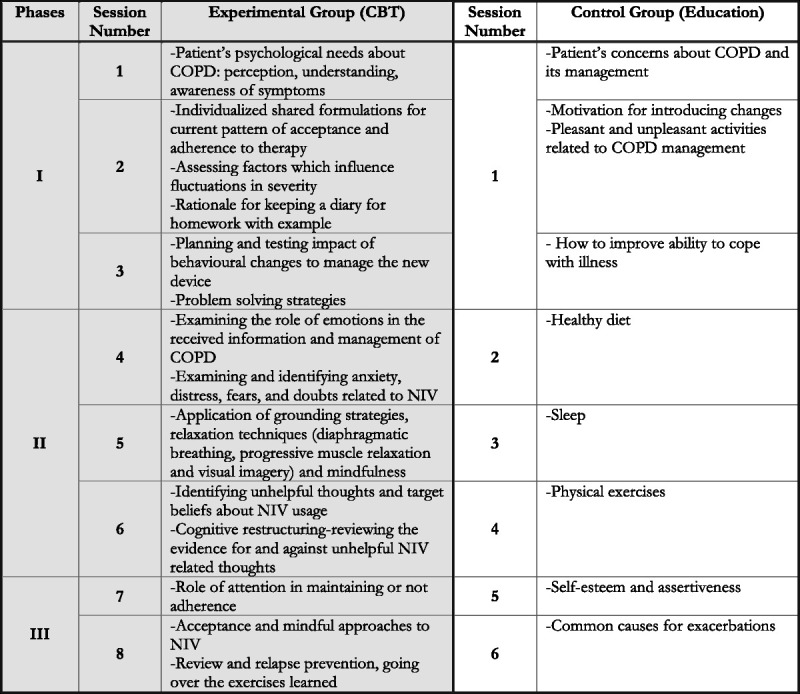
Objective: People with chronic obstructive pulmonary disease (COPD) may suffer from anxiety, depression, low quality of life, and cognitive deficits that could play a role in their clinical conditions. These situations could be worsened during the adaptation process to a new treatment such as noninvasive ventilation (NIV), which is often rejected or inappropriately used. The study aimed to analyze the impact of a brief psychological support intervention on adherence to NIV among patients with COPD. Methods: A two-branch randomized controlled trial was conducted on 90 patients with COPD who had an indication for NIV. The experimental group received cognitive behavioral therapy support, including counseling, relaxation, and mindfulness-based exercises. Controls received standard care and watched educational videos. The course had been structured for four to eight meetings at the hospital, at home, and/or via telemedicine. Results: The psychological intervention was related to improvements in both adherence to NIV (F(304) = 19.054, p < .001) and quality of life (F(156) = 10.264, p = .002) after eight meetings from baseline compared with the control group. Results indicated a significant change in the quality of life also over time (F(71.480) = 8.114, p = .006). Conclusions: The findings suggest that the psychological intervention is an appropriate treatment for acceptance of and adherence to NIV in COPD in clinical practice and highlight the importance of determining the underlying reasons for NIV use. Trial Registration: ClinicalTrials.gov identifier NCT02499653.
Overview
CoChat Summary
## TL;DR
This randomized controlled trial found that a short-term cognitive behavioral therapy (CBT) support intervention improved COPD patients’ adherence to noninvasive ventilation (NIV) and quality of life compared with an active control. The intervention also produced a slight short-term improvement in anxiety, while the paper emphasizes that adherence is influenced by psychological and cognitive factors.
## Key findings
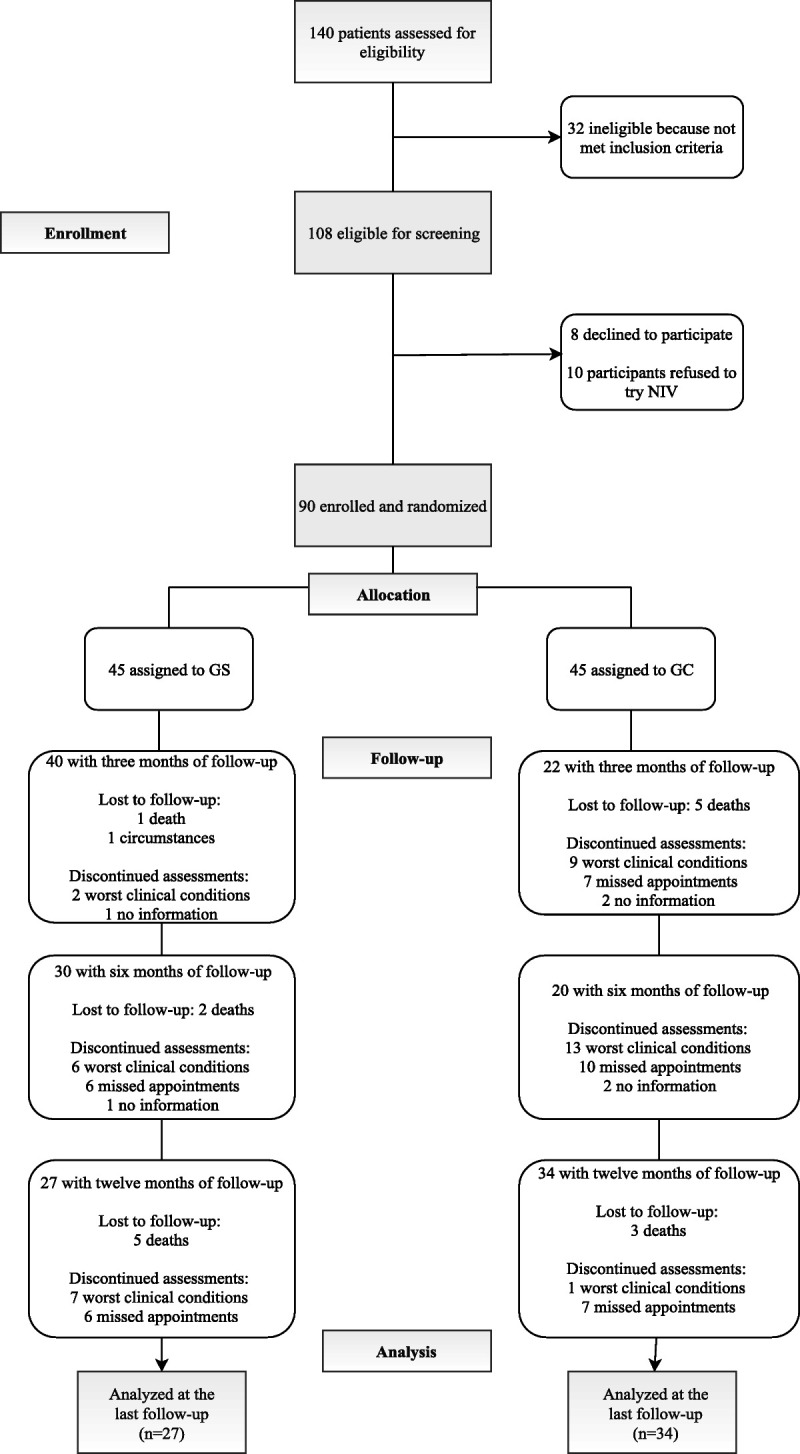
- The trial randomized 90 patients with COPD to psychological support (n = 45) or an educational video control (n = 45); the mean age was 76.20 (8.03) years and 51.11% were male.
- The intervention was associated with improved NIV adherence: F(304) = 19.054, p < .001.
- It also improved quality of life: F(156) = 10.264, p = .002; QoL also changed over time: F(71.480) = 8.114, p = .006.
- A slight improvement in anxiety was seen versus control: F(170) = 5.226, p = .023, but this was not maintained over time (F(77.416) = 2.747, p = .101).
## Methods
- Design: Two-arm randomized controlled trial with assessments at baseline, 3, 6, and 12 months after recruitment; registered as ClinicalTrials.gov NCT02499653.
- Sample/data: 90 COPD patients aged at least 18 years, with moderate to severe COPD and newly introduced to NIV, recruited in Milan, Italy between July 30, 2015, and December 31, 2018.
- Analysis: The paper used mixed-effects models under an intention-to-treat approach, with group and time as fixed effects and participant as a random effect; Bonferroni correction was applied.
## Limitations
- The paper states that dropout during follow-up affected psychological monitoring, clinical monitoring, and statistical analysis; follow-up attrition was substantial, with response rates of 62 at 3 months, 44.44% at 6 months, and 32.22% at 12 months.
- The paper states that the sample size was underestimated and smaller than expected, so results, especially at T3, should be interpreted with caution.
- The paper states that the sample represents only a narrow range of the overall COPD/NIV population, limiting generalizability.
- Evident from the text: the study used an active control (educational videos plus usual physician care) rather than a pure usual-care-only comparison, which may make the intervention contrast harder to interpret.
Model-written summary. Check it against the paper before relying on it.
Integrity signals
Registry
Cites
Statistics
Figures
Verification
Claims the paper makes
3 Valid · 4 Not valid · 8 Not checked · 45 Own results and interpretations
At least one cited source doesn’t support this claim or points to a different paper, and none confirmed it — see the verdicts below.
In the paper
“Baseline characteristics were similar by group and are summarized by descriptive comparisons following CONSORT guidelines (Tables 1, 2), notably estimates with 95% confidence interval (CI) representing two-tailed tests at a 5% significant level (65).”
§ Promoting Acceptance and Adherence to Noninvasive Ventilation in Chronic Obstructive Pulmonary Disease: A Randomized Controlled Trial > RESULTS > Participants Characteristics at Baseline and Study Period
What the sources say
- Disputedcites [65] Moher D Hopewell S Schulz KF Montori V Gøtzsche PC Devereaux PJ Elbourne D Egger M Altman DG. CONSORT 2010 explanation and elaboration: updated guidelines for reporting parallel group randomised trials. BMJ 2010; 340: c869. 20332511 PMC2844943 sourceExperimental — accuracy not yet measured
The Cluster analysis section reports significant between-cluster differences in age and disease severity (MRC scale), contrary to the claim that baseline characteristics were similar by group. Table 1 presents those demographic comparisons; page numbers were not supplied in our copy. (LLM, conf=0.88)
Checked by a reasoning model — may be wrong.
plain- Asserted: passes — The authors put it forward as true.
- Checkable: passes — It can be checked against evidence.
- Load-bearing: unclear — It is unclear whether the paper’s conclusions depend on it.
- Based: passes — The paper gives a reason why it holds.
- Disputed
The cited sources support only part of this claim — read each source’s verdict below.
In the paper
“This approach is supported by recent meta-analyses of controlled studies that emphasize that psychosocial interventions, especially those incorporating cognitive elements, reduce psychological distress (41) and, when based on meditative and relaxation practices, have the potential to improve physical and psychological outcomes (42).”
§ Promoting Acceptance and Adherence to Noninvasive Ventilation in Chronic Obstructive Pulmonary Disease: A Randomized Controlled Trial > INTRODUCTION
What the sources say
- Partly supportedcites [41] Farver-Vestergaard I Jacobsen D Zachariae R. Efficacy of psychosocial interventions on psychological and physical health outcomes in chronic obstructive pulmonary disease: a systematic review and meta-analysis. Psychother Psychosom 2015; 84: 37– 50. 25547641 sourceExperimental — accuracy not yet measured
The Methods (Design and interventions; page unavailable) describe a proposed intervention with cognitive reframing and psychological support intended to address patients’ fears and anxieties. But this paper is a trial protocol, not a meta-analysis of controlled studies, and it reports no finding that psychosocial interventions reduce psychological distress. (LLM, conf=0.82)
- Could not verifycites [42] Volpato E Banfi P Rogers SM Pagnini F. Relaxation techniques for people with chronic obstructive pulmonary disease: a systematic review and a meta-analysis. Evid Based Complement Alternat Med 2015; 2015: 628365. 26339268 PMC4539049 sourceExperimental — accuracy not yet measured
The Methods > Intervention section describes cognitive and motivational elements, but their purpose was to improve treatment adherence in patients with COPD. The Results > Intervention effectiveness and Conclusion report adherence and disease-knowledge outcomes, not a reduction in psychological distress. Searches for psychological distress, anxiety, and depression found no passage establishing the attributed effect. (LLM, conf=0.75)
plainstates a cause- Asserted: passes — The authors put it forward as true.
- Checkable: passes — It can be checked against evidence.
- Load-bearing: passes — The paper’s conclusions depend on it.
- Based: passes — The paper gives a reason why it holds.
- Partly supported
A result the paper reports from its own data — it cites no other source for it, so there is none to check. The quote shows it is in the paper.
In the paper
“On the other hand, anxiety significantly influenced NIV effective hours overtime (F(75.783) = 2.764, p = .001) as well as between groups (F(102.946) = 2.410, p < .001).”
§ Promoting Acceptance and Adherence to Noninvasive Ventilation in Chronic Obstructive Pulmonary Disease: A Randomized Controlled Trial > RESULTS > Outcome Analysis
plainstates a cause- Asserted: passes — The authors put it forward as true.
- Checkable: passes — It can be checked against evidence.
- Load-bearing: unclear — It is unclear whether the paper’s conclusions depend on it.
- Based: passes — The paper gives a reason why it holds.
A result the paper reports from its own data — it cites no other source for it, so there is none to check. The quote shows it is in the paper.
In the paper
“The intervention had a significant impact (F(304) = 19.054, p < .001) between groups, which was not maintained when both the mentioned covariates were added.”
§ Promoting Acceptance and Adherence to Noninvasive Ventilation in Chronic Obstructive Pulmonary Disease: A Randomized Controlled Trial > RESULTS > Outcome Analysis
plainstates an association- Asserted: passes — The authors put it forward as true.
- Checkable: passes — It can be checked against evidence.
- Load-bearing: passes — The paper’s conclusions depend on it.
- Based: passes — The paper gives a reason why it holds.
A result the paper reports from its own data — it cites no other source for it, so there is none to check. The quote shows it is in the paper.
In the paper
“In particular, the total scores of the ACE-R (F(14.453) = 5.140, p = .039), the MMSE (F(18.180) = 5.741, p = .028), and the Delirium Index (F(26.698) = 5.336, p = .029) significantly influenced the difference between the prescribed hours and the effective NIV hours over time, whereas the total score of the ACE-R had an impact on NIV adherence between groups (F(51.540) = 4.704, p = .035).”
§ Promoting Acceptance and Adherence to Noninvasive Ventilation in Chronic Obstructive Pulmonary Disease: A Randomized Controlled Trial > RESULTS > Outcome Analysis
plainstates an association- Asserted: passes — The authors put it forward as true.
- Checkable: passes — It can be checked against evidence.
- Load-bearing: passes — The paper’s conclusions depend on it.
- Based: passes — The paper gives a reason why it holds.
28 more claims
Create a free account to see all 60 claims and to verify the 4 references still open.
- Probably not a substantial claim. 16
- It may state two separate claims as one. 14
- The quote only partly states this claim. 1
Citations
Cites
The Hospital Anxiety and Depression Scale
Zigmond, A. S., & Snaith, R. P. (1983) · Acta Psychiatrica Scandinavica · doi:10.1111/j.1600-0447.1983.tb09716.x · Cited by 47,139
Moher, D., Hopewell, S., Schulz, K. F., Montori, V., Gotzsche, P. C., Devereaux, P. J., Elbourne, D., Egger, M., & Altman, D. G. (2010) · BMJ · doi:10.1136/bmj.c869 · Cited by 8,883
Vos, T., Barber, R. M., Bell, B., Bertozzi-Villa, A., Biryukov, S., Bolliger, I., Charlson, F., Davis, A., Degenhardt, L., Dicker, D., et al. (2015) · The Lancet · doi:10.1016/s0140-6736(15)60692-4 · Cited by 6,414
EQ-SD: a measure of health status from the EuroQol Group
Rabin, R., & Charro, F. D. (2001) · Annals of Medicine · doi:10.3109/07853890109002087 · Cited by 5,613
Clarifying Confusion: The Confusion Assessment Method: A New Method for Detection of Delirium
Inouye, S. K., van Dyck, C. H., Alessi, C. A., Balkin, S., Siegal, A. P., & Horwitz, R. I. (1990) · Annals of Internal Medicine · doi:10.7326/0003-4819-113-12-941 · Cited by 5,250
Leys, C., Ley, C., Klein, O., Bernard, P., & Licata, L. (2013) · Journal of Experimental Social Psychology · doi:10.1016/j.jesp.2013.03.013 · Cited by 4,147 · cited 1×
“Using the absolute median deviation method to detect outliers, we found that no data points were deemed to be extreme (64).”
MethodThe Brief Illness Perception Questionnaire
Broadbent, E., Petrie, K. J., Main, J., & Weinman, J. (2006) · Journal of Psychosomatic Research · doi:10.1016/j.jpsychores.2005.10.020 · Cited by 3,431 · cited 5×
“Psychological assessment was conducted during all the times of the study (T0, T1, T2, and T3, respectively) and consisted of measuring anxiety and depression, using the Hospital Anxiety and Depression Scale (HADS) (54), a 14-item scale; representation of the disease, assessed using the Brief Illness Perception Questio…”
MethodInfluentialRobins, R. W., Hendin, H. M., & Trzesniewski, K. H. (2001) · Personality and Social Psychology Bulletin · doi:10.1177/0146167201272002 · Cited by 3,041 · cited 1×
“Psychological assessment was conducted during all the times of the study (T0, T1, T2, and T3, respectively) and consisted of measuring anxiety and depression, using the Hospital Anxiety and Depression Scale (HADS) (54), a 14-item scale; representation of the disease, assessed using the Brief Illness Perception Questio…”
MethodSoriano, J. B., Abajobir, A. A., Abate, K. H., Abera, S. F., Agrawal, A., Ahmed, M. B., Aichour, A. N., Aichour, I., Aichour, M. T. E., Alam, K., et al. (2017) · The Lancet Respiratory Medicine · doi:10.1016/s2213-2600(17)30293-x · Cited by 2,538
Mioshi, E., Dawson, K., Mitchell, J., Arnold, R., & Hodges, J. R. (2006) · International Journal of Geriatric Psychiatry · doi:10.1002/gps.1610 · Cited by 2,016 · cited 11×
“53.61 (7.27) 49.98 (13.80) 49.38 (16.51) .85 B-IPQ, mean (SD) 37.07 (12.63) 36.68 (9.76) 37.46 (13.63) .43 ROSES, mean (SD) 30.41 (7.07) 29.48 (7.13) 31.37 (6.96) .23 Cognitive variables MMSE, mean (SD) 24.49 (7.04) 24.76 (6.48) 25.95 (4.11) .72 MMSE Adj., mean (SD) 24.72 (3.44) 24.22 (7.62) 24.58 (3.95) .52 ACE-R, me…”
MethodInfluentialThe burden of disease in older people and implications for health policy and practice
Prince, M. J., Wu, F., Guo, Y., Gutierrez Robledo, L. M., O'Donnell, M., Sullivan, R., & Yusuf, S. (2015) · The Lancet · doi:10.1016/s0140-6736(14)61347-7 · Cited by 1,989
Singh, D., Agusti, A., Anzueto, A., Barnes, P. J., Bourbeau, J., Celli, B. R., Criner, G. J., Frith, P., Halpin, D. M. G., Han, M., et al. (2019) · European Respiratory Journal · doi:10.1183/13993003.00164-2019 · Cited by 1,937 · cited 1×
“COPD is characterized by an irreversible obstruction of the airways, which is associated with a progressive inflammation of the lung tissue together with an increased respiratory limitation, punctuated by recurrent episodes of exacerbations (10).”
BackgroundThe Mini-Mental State Examination
Folstein, M. F. (1983) · Archives of General Psychiatry · doi:10.1001/archpsyc.1983.01790060110016 · Cited by 1,936
Official ERS/ATS clinical practice guidelines: noninvasive ventilation for acute respiratory failure
Rochwerg, B., Brochard, L., Elliott, M. W., Hess, D., Hill, N. S., Nava, S., Navalesi, P., Antonelli, M., Brozek, J., Conti, G., et al. (2017) · European Respiratory Journal · doi:10.1183/13993003.02426-2016 · Cited by 1,668
Chronic obstructive pulmonary disease: current burden and future projections
Lopez, A. D., Shibuya, K., Rao, C., Mathers, C. D., Hansell, A. L., Held, L. S., Schmid, V., & Buist, S. (2006) · European Respiratory Journal · doi:10.1183/09031936.06.00025805 · Cited by 1,335 · cited 1×
“Chronic obstructive pulmonary disease (COPD) is the fourth leading cause of death in the world (1), and it is predicted to be the third by 2030 (2,3).”
BackgroundEQ-5D and the EuroQol group: past, present and future
Devlin, N. J., & Brooks, R. (2017) · Applied Health Economics and Health Policy · doi:10.1007/s40258-017-0310-5 · Cited by 1,189
Vanfleteren, L. E. G. W., Spruit, M. A., Groenen, M., Gaffron, S., van Empel, V. P. M., Bruijnzeel, P. L. B., Rutten, E. P. A., Op ’t Roodt, J., Wouters, E. F. M., & Franssen, F. M. E. (2013) · American Journal of Respiratory and Critical Care Medicine · doi:10.1164/rccm.201209-1665oc · Cited by 828 · cited 1×
“Comorbidities and extrapulmonary aspects such as cardiovascular disease, anemia, decreased muscle mass, diabetes, metabolic syndrome, dysfunctional skeletal myopathies, and osteoporosis are common in COPD people (11,12).”
BackgroundSelf-Reported Population Health: An International Perspective based on EQ-5D
(2014) · Springer eBooks · doi:10.1007/978-94-007-7596-1 · Cited by 794 · cited 1×
“Finally, the evaluation of the introduction of psychological support during this complicated process in terms of healthcare costs should be implemented (49,76).”
BackgroundEuroQol-5D (EQ-5D): an instrument for measuring quality of life
Balestroni, G., & Bertolotti, G. (2015) · Monaldi Archives for Chest Disease · doi:10.4081/monaldi.2012.121 · Cited by 572
The measurement of fatigue: a new instrument
Schwartz, J. E., Jandorf, L., & Krupp, L. B. (1993) · Journal of Psychosomatic Research · doi:10.1016/0022-3999(93)90104-n · Cited by 562 · cited 1×
“Moreover, the Fatigue Severity Scale was used to assess fatigue (46); activities of daily living and instrumental activities of daily living were used to assess basic self-care tasks (47).”
MethodBourbeau, J., & Bartlett, S. J. (2008) · Thorax · doi:10.1136/thx.2007.086041 · Cited by 490
Comorbidities in Chronic Obstructive Pulmonary Disease
Chatila, W. M., Thomashow, B. M., Minai, O. A., Criner, G. J., & Make, B. J. (2008) · Proceedings of the American Thoracic Society · doi:10.1513/pats.200709-148et · Cited by 478
Depression and anxiety in patients with COPD
Yohannes, A. M., & Alexopoulos, G. S. (2014) · European Respiratory Review · doi:10.1183/09059180.00007813 · Cited by 463
Osadnik, C. R., Tee, V. S., Carson-Chahhoud, K. V., Picot, J., Wedzicha, J. A., & Smith, B. J. (2017) · Cochrane Database of Systematic Reviews · doi:10.1002/14651858.cd004104.pub4 · Cited by 422 · cited 1×
“When properly used, NIV provides significant benefits in clinical outcomes, improving QoL and life expectancy and reducing hospital admissions and length of stay (21,22).”
MethodMedication adherence issues in patients treated for COPD
Restrepo, R. (2008) · International Journal of Chronic Obstructive Pulmonary Disease · doi:10.2147/copd.s3036 · Cited by 407 · cited 1×
“On the other hand, it is also important to note that NIV requires some lifestyle and behavioral changes during their routine care, which may affect adherence to the treatment (30).”
BackgroundMuka, T., Imo, D., Jaspers, L., Colpani, V., Chaker, L., van der Lee, S. J., Mendis, S., Chowdhury, R., Bramer, W. M., Falla, A., et al. (2015) · European Journal of Epidemiology · doi:10.1007/s10654-014-9984-2 · Cited by 373
(2007) · EuroQol Group Monographs · doi:10.1007/1-4020-5511-0 · Cited by 367
The development of a hierarchical polychotomous ADL-IADL scale for noninstitutionalized elders
Kempen, G. I. J. M., & Suurmeijer, T. P. B. M. (1990) · The Gerontologist · doi:10.1093/geront/30.4.497 · Cited by 285 · cited 1×
“Moreover, the Fatigue Severity Scale was used to assess fatigue (46); activities of daily living and instrumental activities of daily living were used to assess basic self-care tasks (47).”
MethodTiming of noninvasive ventilation failure: causes, risk factors, and potential remedies
Ozyilmaz, E., Ugurlu, A. O., & Nava, S. (2014) · BMC Pulmonary Medicine · doi:10.1186/1471-2466-14-19 · Cited by 260 · cited 1×
“Nevertheless, only a few studies have paid attention to adherence to NIV in COPD people, and most of them have focused only on early NIV failure (33,34) or on the quantification of adherence (35).”
BackgroundDrop-out and attendance in pulmonary rehabilitation: the role of clinical and psychosocial variables
Fischer, M. J., Scharloo, M., Abbink, J. J., van ‘t Hul, A. J., van Ranst, D., Rudolphus, A., Weinman, J., Rabe, K. F., & Kaptein, A. A. (2009) · Respiratory Medicine · doi:10.1016/j.rmed.2008.11.020 · Cited by 203
Macrea, M., Oczkowski, S., Rochwerg, B., Branson, R. D., Celli, B., Coleman, J. M., Hess, D. R., Knight, S. L., Ohar, J. A., Orr, J. E., et al. (2020) · American Journal of Respiratory and Critical Care Medicine · doi:10.1164/rccm.202006-2382st · Cited by 192 · cited 1×
“For patients with chronic stable hypercapnic COPD, the use of nocturnal NIV in addition to usual care is recommended (18,19).”
BackgroundCognitive impairment in chronic obstructive pulmonary disease
Antonelli Incalzi, R., Marra, C., Giordano, A., Calcagni, M. L., Cappa, A., Basso, S., Pagliari, G., & Fuso, L. (2003) · Journal of Neurology · doi:10.1007/s00415-003-1005-4 · Cited by 172
Improving adherence with inhaler therapy in COPD
Lareau, & Yawn, B. P. (2010) · International Journal of COPD · doi:10.2147/copd.s14715 · Cited by 160
Italian population-based values of EQ-5D health states
Scalone, L., Cortesi, P. A., Ciampichini, R., Belisari, A., D’Angiolella, L. S., Cesana, G., & Mantovani, L. G. (2013) · Value in Health · doi:10.1016/j.jval.2013.04.008 · Cited by 145
Time of non-invasive ventilation
Nava, S., Navalesi, P., & Conti, G. (2006) · Intensive Care Medicine · doi:10.1007/s00134-005-0050-0 · Cited by 144 · cited 1×
“For patients with chronic stable hypercapnic COPD, the use of nocturnal NIV in addition to usual care is recommended (18,19).”
BackgroundNocebo and pain: an overview of the psychoneurobiological mechanisms
Blasini, M., Corsi, N., Klinger, R., & Colloca, L. (2017) · PAIN Reports · doi:10.1097/pr9.0000000000000585 · Cited by 139 · cited 1×
“Indeed, expectations are driven by not only medication but also the disease itself and the elaboration process of the information collected by the patients about it (68,69).”
BackgroundAtsou, K., CHOUAID, C., & Hejblum, G. (2011) · BMC Medicine · doi:10.1186/1741-7015-9-7 · Cited by 139 · cited 1×
“The prevalence of COPD in Europe ranges from about 15% to 20%, and it is higher in men than in women (5,6).”
BackgroundKale, M. S., Federman, A. D., Krauskopf, K., Wolf, M., O’Conor, R., Martynenko, M., Leventhal, H., & Wisnivesky, J. P. (2015) · PLoS ONE · doi:10.1371/journal.pone.0123937 · Cited by 117 · cited 1×
“Psychosomatic Medicine, V 84 • 488-504 500 as seen in other studies on medication adherence (70,71).”
BackgroundLau, M. A., & McMain, S. F. (2005) · The Canadian Journal of Psychiatry · doi:10.1177/070674370505001310 · Cited by 112 · cited 1×
“In particular, CBTcomponents included counseling and psychological support, mindfulness-based cognitive restructuring exercises, and relaxation training (61).”
Adler, D., Perrig, S., Takahashi, H., Espa, F., Rodenstein, D., Pépin, J. L., & Janssens, J.-P. (2012) · Sleep and Breathing · doi:10.1007/s11325-011-0605-y · Cited by 104 · cited 2×
“Moreover, most of the previous studies suggested that the difficult adjustment of the ventilator settings and the influence of NIVon sleep quality with spillover effects on daytime life can have an impact on its usage (36,37).”
BackgroundResultAdherence to COPD treatment: myth and reality
Rogliani, P., Ora, J., Puxeddu, E., Matera, M. G., & Cazzola, M. (2017) · Respiratory Medicine · doi:10.1016/j.rmed.2017.06.007 · Cited by 102
Krauskopf, K., Federman, A. D., Kale, M. S., Sigel, K. M., Martynenko, M., O’Conor, R., Wolf, M. S., Leventhal, H., & Wisnivesky, J. P. (2015) · COPD: Journal of Chronic Obstructive Pulmonary Disease · doi:10.3109/15412555.2014.922067 · Cited by 97 · cited 1×
“Psychosomatic Medicine, V 84 • 488-504 500 as seen in other studies on medication adherence (70,71).”
BackgroundPierobon, A., Bottelli, E. S., Ranzini, L., Bruschi, C., Maestri, R., Bertolotti, G., Sommaruga, M., Torlaschi, V., Callegari, S., & Giardini, A. (2017) · International Journal of COPD · doi:10.2147/copd.s133586 · Cited by 95
Koskela, J. T., Kilpeläinen, M., Kupiainen, H., Mazur, W., Sintonen, H., Boezen, M., Lindqvist, A. E., Postma, D. S., & Laitinen, T. (2014) · BMC Pulmonary Medicine · doi:10.1186/1471-2466-14-102 · Cited by 86 · cited 1×
“Comorbidities and exacerbations can impair the quality of life (QoL) during the early stage of the illness, increasing mortality in the end stage, the burden of COPD management, and the healthcare costs (15).”
BackgroundLong‐term adherence with non‐invasive ventilation improves prognosis in obese COPD patients
Borel, J., Pepin, J., Pison, C., Vesin, A., Gonzalez‐Bermejo, J., Court‐Fortune, I., & Timsit, J. (2014) · Respirology · doi:10.1111/resp.12327 · Cited by 83 · cited 1×
“Moreover, most of the previous studies suggested that the difficult adjustment of the ventilator settings and the influence of NIVon sleep quality with spillover effects on daytime life can have an impact on its usage (36,37).”
ResultDomain-specific cognitive impairment in patients with COPD and control subjects
Cleutjens, F. A. H. M., Franssen, F. M. E., Spruit, M. A., Vanfleteren, L. E. G. W., Gijsen, C., Dijkstra, J. B., Ponds, R., Wouters, E. F. �., & Janssen, D. J. A. (2016) · International Journal of COPD · doi:10.2147/copd.s119633 · Cited by 82 · cited 1×
“Psychosomatic Medicine, V 84 • 488-504 488 (13), and cognitive impairment, overall or in specific domains like memory, executive functions, and cognitive flexibility (14), can contribute to complicating the clinical frame.”
BackgroundFarver-Vestergaard, I., Jacobsen, D., & Zachariae, R. (2015) · Psychotherapy and Psychosomatics · doi:10.1159/000367635 · Cited by 79
Harrison, S. L., Robertson, N., Graham, C. D., Williams, J., Steiner, M. C., Morgan, M. D. L., & Singh, S. J. (2014) · Respiratory Medicine · doi:10.1016/j.rmed.2013.10.016 · Cited by 77
Lamers, F., Jonkers, C. C. M., Bosma, H., Chavannes, N. H., Knottnerus, J. A., & van Eijk, J. T. (2010) · COPD: Journal of Chronic Obstructive Pulmonary Disease · doi:10.3109/15412555.2010.510156 · Cited by 74
Uchmanowicz, I., Jankowska‐Polańska, B., Motowidło, U., Uchmanowicz, B., & Chabowski, M. (2016) · International Journal of COPD · doi:10.2147/copd.s102754 · Cited by 70 · cited 1×
“Anxiety and depression are common psychological comorbidities, which aggravate the clinical situation (16).”
BackgroundThe growing role of noninvasive ventilation in patients requiring prolonged mechanical ventilation
Hess, D. R. (2012) · Respiratory Care · doi:10.4187/respcare.01692 · Cited by 59 · cited 1×
“Nevertheless, only a few studies have paid attention to adherence to NIV in COPD people, and most of them have focused only on early NIV failure (33,34) or on the quantification of adherence (35).”
BackgroundCognitive Behavioral Therapy for People with Chronic Obstructive Pulmonary Disease: Rapid Review
Williams, M., Johnston, K., & Paquet, C. (2020) · International Journal of COPD · doi:10.2147/copd.s178049 · Cited by 58 · cited 1×
“Because of its scalability and increased recommendation in the management of COPD, CBT is particularly well positioned for promoting acceptance and adherence toNIV by targeting psychological factors such as anxiety, depression, representation of the disease, representation of the proposed therapies, therapeutic compli…”
BackgroundLeiva-Fernández, J., Leiva-Fernández, F., García-Ruiz, A., Prados-Torres, D., & Barnestein-Fonseca, P. (2014) · BMC Pulmonary Medicine · doi:10.1186/1471-2466-14-70 · Cited by 57 · cited 1×
“These statistical analyses were conducted taking into account data from scientific research with comparable primary outcome (45).”
MethodEvidence for cognitive–behavioral strategies improving dyspnea and related distress in COPD
Norweg, A., & Collins (2013) · International Journal of Chronic Obstructive Pulmonary Disease · doi:10.2147/copd.s30145 · Cited by 57
Volpato, E., Banfi, P., Rogers, S. M., & Pagnini, F. (2015) · Evidence-Based Complementary and Alternative Medicine · doi:10.1155/2015/628365 · Cited by 53 · cited 1×
“Psychosomatic Medicine, V 84 • 488-504 489 controlled studies that emphasize that psychosocial interventions, especially those incorporating cognitive elements, reduce psychological distress (41) and, when based onmeditative and relaxation practices, have the potential to improve physical and psychological outcomes (4…”
BackgroundSelf-citationSchmidt, M., Deslandes, E., Perbet, S., Mongardon, N., Dres, M., Razazi, K., Guérot, E., Terzi, N., Andrivet, P., Alves, M., et al. (2016) · Anesthesiology · doi:10.1097/aln.0000000000001124 · Cited by 38
Could targeting disease specific fear and anxiety improve COPD outcomes?
von Leupoldt, A., & Janssens, T. (2016) · Expert Review of Respiratory Medicine · doi:10.1080/17476348.2016.1198697 · Cited by 34
Linde, P., Hanke, G., Voltz, R., & Simon, S. T. (2017) · Supportive Care in Cancer · doi:10.1007/s00520-017-3928-9 · Cited by 33 · cited 1×
“Moreover, dyspnea during NIV is a complex problem:NIVaims to correct gaseous exchanges, but if it fails to relieve dyspnea—or worse, if dyspnea worsens during NIV—the combination of a life-threatening threat with a feeling of suffocation and thus lack of control leads to an aggravation of both dyspnea and anxiety, cre…”
BackgroundThe potential role of illness expectations in the progression of medical diseases
Pagnini, F. (2019) · BMC Psychology · doi:10.1186/s40359-019-0346-4 · Cited by 30 · cited 1×
“Psychological aspects, including emotions and expectations (17), could interact with the physical symptoms.”
BackgroundSelf-citation[Adherence to therapy in patients on hemodialysis].
Gerbino, G., Dimonte, V., Albasi, C., Lasorsa, C., Vitale, C., & Marangella, M. (2011) · PubMed · Cited by 27
Ko, B. S., Ahn, S., Lim, K. S., Kim, W. Y., Lee, Y.-S., & Lee, J. H. (2015) · Internal and Emergency Medicine · doi:10.1007/s11739-015-1293-6 · Cited by 27 · cited 1×
“Nevertheless, only a few studies have paid attention to adherence to NIV in COPD people, and most of them have focused only on early NIV failure (33,34) or on the quantification of adherence (35).”
BackgroundChristensen, H. M., Huniche, L., & Titlestad, I. L. (2017) · Journal of Clinical Nursing · doi:10.1111/jocn.13847 · Cited by 23 · cited 1×
“Many, especially when using NIV for the first time, find it a stressful experience, eliciting emotions such as fear, anxiety, and panic attacks along with feelings of suffocation and claustrophobia, which can undermine acceptance and adherence to treatment if not result in outright rejection (23,24).”
BackgroundThe impact of unpredictability on dyspnea perception, anxiety and interoceptive error processing
Tan, Y., Van den Bergh, O., Qiu, J., & von Leupoldt, A. (2019) · Frontiers in Physiology · doi:10.3389/fphys.2019.00535 · Cited by 22 · cited 1×
“Moreover, dyspnea during NIV is a complex problem:NIVaims to correct gaseous exchanges, but if it fails to relieve dyspnea—or worse, if dyspnea worsens during NIV—the combination of a life-threatening threat with a feeling of suffocation and thus lack of control leads to an aggravation of both dyspnea and anxiety, cre…”
BackgroundDomain-specific cognitive impairment in patients with COPD and control subjects
Cleutjens, F. A. H. M., Franssen, F. M. E., Spruit, M. A., et al. (2016) · doi:10.1183/13993003.congress-2016.pa3742 · Cited by 20
Anxiety and depression: Easing the burden in COPD patients.
Marsh, S. A., & Guck, T. P. (2016) · PubMed · Cited by 19
Volpato, E., Banfi, P., & Pagnini, F. (2017) · Trials · doi:10.1186/s13063-017-1802-1 · Cited by 18 · cited 1×
“gov repository (ID NCT02499653), and the details of the protocol were previously published (44).”
BackgroundSelf-citationPozzar, M., Volpato, E., Valota, C., Pagnini, F., & Banfi, P. I. (2020) · BMC Pulmonary Medicine · doi:10.1186/s12890-020-1157-3 · Cited by 17 · cited 1×
“These results stress the relevance of paying attention to the patients’ needs during the adaptation to a new device process that is suddenly perceived as another sign of limitation (67).”
BackgroundSelf-citationAlYami, M., AlAhmari, M., Alotaibi, H., AlRabeeah, S., AlBalawi, I., & Mubasher, M. (2015) · Annals of Thoracic Medicine · doi:10.4103/1817-1737.146855 · Cited by 14 · cited 1×
“When properly used, NIV provides significant benefits in clinical outcomes, improving QoL and life expectancy and reducing hospital admissions and length of stay (21,22).”
MethodIllness expectations predict the development of influenza-like symptoms over the winter season
Pagnini, F., Cavalera, C., Volpato, E., & Banfi, P. I. (2020) · Complementary Therapies in Medicine · doi:10.1016/j.ctim.2020.102396 · Cited by 11 · cited 1×
“Indeed, expectations are driven by not only medication but also the disease itself and the elaboration process of the information collected by the patients about it (68,69).”
BackgroundSelf-citationTselebis, A., Kosmas, E., Bratis, D., Pachi, A., Ilias, Ι., Harikiopoulou, M., Θεοδωρακοπούλου, Ε., Velentzas, K., Dumitru, S., Moussas, G., et al. (2014) · BioMed Research International · doi:10.1155/2014/401326 · Cited by 10
Statistical Tests for Mixed Linear Models
Khuri, A. I., Mathew, T., & Sinha, B. K. (1998) · Cited by 9
Patient’s needs and psychotherapy integration
Pagnini, F., Zanini, S., & Gislon, M. C. (2013) · International Journal of Psychotherapy · Cited by 2
Self-citation
Research works printed but not linked: 1
- Haynes RB Ackloo E Sahota N McDonald HP Yao X. Intervenciones para mejorar la adherencia a la medicación (Revisión Cochrane traducida). In: Library TC, editor. A Biblioteca Cochrane Plus. Chichester, United Kingdom: John Wiley & Sons, Ltd; 2008.
Cited by
Kruse, C. S., Betancourt, J., Gonzales, M., Dickerson, K., & Neer, M. (2022) · JMIR Mental Health · doi:10.2196/42301 · Cited by 33
“[36,41,44,49,54,56,57] 5 Increased mental well-being/cognitive flexibility [45-47,49”
Quality of life in patients with chronic respiratory failure on home mechanical ventilation
D'Cruz, R. F., Kaltsakas, G., Suh, E., & Hart, N. (2023) · European Respiratory Review · doi:10.1183/16000617.0237-2022 · Cited by 36
Jácome, C. I. O., Jácome, M., Correia, S., Flores, I., Farinha, P., Duarte, M., Winck, J. C., Catalán, J. S., Lobato, S. D., Luján, M., et al. (2024) · Archivos de Bronconeumología · doi:10.1016/j.arbres.2024.05.001 · Cited by 17
Prigent, A., Texereau, J., Schmitz, C., Ropars, C., Degreef, J.-M., Teulier, M., Darne, C., Lavergne, F., Pasche, H., & Morélot‐Panzini, C. (2025) · Thorax · doi:10.1136/thorax-2024-222033 · Cited by 10
“We speculate that the ability of nurses to resolve numerous issues without additional medical expertise is one potential way that the ETAPES intervention could optimise medical resource utilisation.”
Theunisse, C., de Graaf, N., Braam, A. W. E., et al. (2025) · Journal of Clinical Medicine · doi:10.3390/jcm14030868 · Cited by 9
Metadata
- Authors
- Volpato, E., Banfi, P., & Pagnini, F.
- Affiliations
- Università Cattolica del Sacro Cuore (IT)
- Corresponding author
- Volpato, Eleonora
- Venue
- Psychosomatic Medicine
- Published
- 2022-02-10
- Volume
- 84
- Issue
- 4
- Pages
- 488-504
- ISSN
- 0033-3174 (ISSN-L)
- 1534-7796
- PMC
- PMC9071031
- OpenAlex
- W4211117465
- Semantic Scholar
- c11554ffc13faa5d7469453e75c13c21095b828d
- Cited by
- 24
- References
- 80
- Citations by year
- 2026: 4 · 2025: 6 · 2024: 8 · 2023: 3 · 2022: 3
- FWCI
- 3.22
- Type
- journal article
- Language
- en
- Open access
- hybrid
- doi.org
- Licence
- Locations
- Psychosomatic Medicine (publishedVersion, cc-by-nc-nd)
- PubMed Central (publishedVersion, cc-by-nc-nd)
- PubMed (publishedVersion)
- Lirias (submittedVersion, cc-by-nc-nd)
- Topics
- Health Sciences › Medicine › Pulmonary and Respiratory Medicine › Chronic Obstructive Pulmonary Disease (COPD) Research
- Health Sciences › Medicine › Pulmonary and Respiratory Medicine › Respiratory Support and Mechanisms
- Health Sciences › Medicine › Physiology (medical) › Obstructive Sleep Apnea Research
- Keywords
- chronic obstructive pulmonary disease, non-invasive ventilation, medication adherence, psychological support interventions, cognitive behavioral therapy, mindfulness, relaxation training, quality of life, acceptance of treatment, anxiety, depression, telemedicine
- MeSH terms
- Anxiety, Exercise Therapy, Humans, Quality of Life, Pulmonary Disease, Chronic Obstructive, Noninvasive Ventilation
About these checks
Registry, retraction, Cites and statistics results are computed, not judged, with one exception: a printed reference that no index lists is read once by a model before it counts as a citation error. Claims are extracted by a model and kept only when their quote appears verbatim in the text; each cited source is then checked, with a model’s help, for whether it says what the claim relies on. Those verdicts can be wrong — read the claim’s quote and the cited source before relying on one.
The claim verdicts this report counts are experimental: their accuracy is not yet measured.
A language model drew the claims from the paper on 2026-10-11, under version 3 of the claim definition (model deepseek-v4.1-flash, prompt extract-v3).
A second model labelled each claim on 2026-10-11 (model jev-1.13-20260917, definition revision gold-guideline-v0.2).
Cited sources are checked with a language model’s help (gpt-6-sol).
Statistics and arithmetic are recomputed, not judged.
Confidence bands are shown only for fields calibrated on our annotated test set. None is calibrated yet, so no band is shown.
What counts as a claim ›How we measure confidence ›How we check this ›
Are you an author, or do you see a problem with this page? Request a review
Data sources
Bibliographic data: Semantic Scholar, OpenAlex, Crossref.
Contains information from the Semantic Scholar Academic Graph Datasets, made available under the ODC Attribution License (ODC-BY 1.0).
Semantic Scholar’s data is described in: Kinney, R., et al. (2023). The Semantic Scholar Open Data Platform. arXiv:2301.10140.
