

The impact of malnutrition on childhood infections
Open accessThe DOI matches its Crossref record; 47 of the 47 references it cites were found in a registry or an index.
Abstract
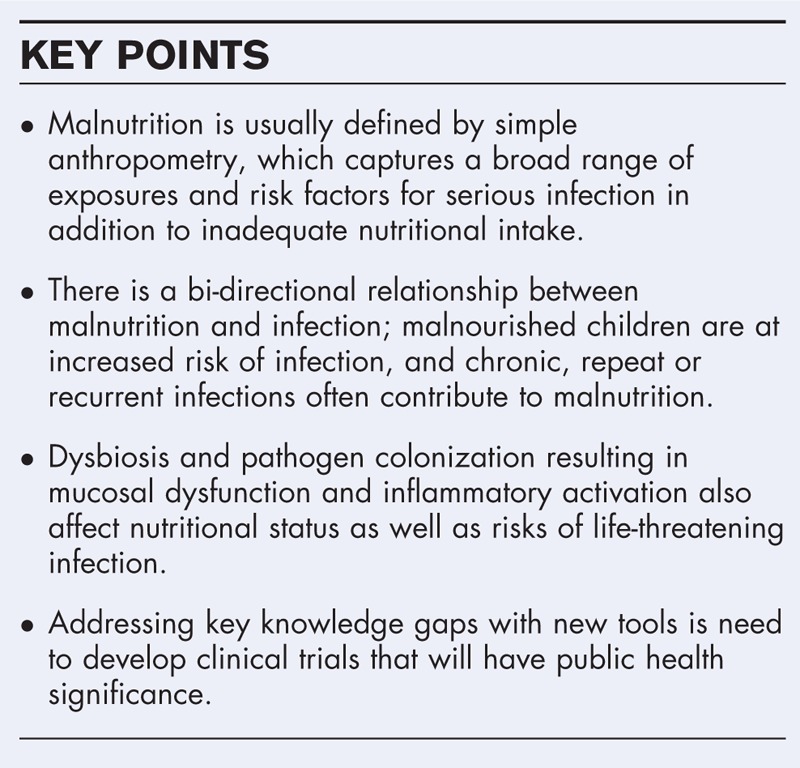
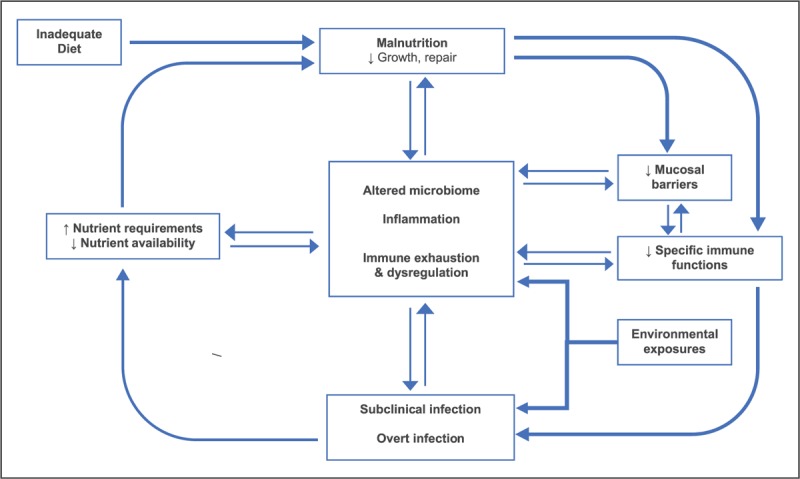
Purpose of review: Almost half of all childhood deaths worldwide occur in children with malnutrition, predominantly in sub-Saharan Africa and South Asia. This review summarizes the mechanisms by which malnutrition and serious infections interact with each other and with children's environments. Recent findings: It has become clear that whilst malnutrition results in increased incidence, severity and case fatality of common infections, risks continue beyond acute episodes resulting in significant postdischarge mortality. A well established concept of a ‘vicious-cycle’ between nutrition and infection has now evolving to encompass dysbiosis and pathogen colonization as precursors to infection; enteric dysfunction constituting malabsorption, dysregulation of nutrients and metabolism, inflammation and bacterial translocation. All of these interact with a child's diet and environment. Published trials aiming to break this cycle using antimicrobial prophylaxis or water, sanitation and hygiene interventions have not demonstrated public health benefit so far. Summary: As further trials are planned, key gaps in knowledge can be filled by applying new tools to re-examine old questions relating to immune competence during and after infection events and changes in nutritional status; and how to characterize overt and subclinical infection, intestinal permeability to bacteria and the role of antimicrobial resistance using specific biomarkers.
Overview
The claims and statistics of this paper haven’t been checked yet.
Free: it reads the open-access text and checks the first 5 claims that cite a source we can check. Create a free account to check every claim.
Integrity signals
Registry
Cites
Statistics
Figures
Verification
Claims the paper makes
The claims and statistics of this paper haven’t been checked yet.
Free: it reads the open-access text and checks the first 5 claims that cite a source we can check. Create a free account to check every claim.
Self-check
Percentages, sums and reported differences re-computed from the paper’s own numbers.
The self-check needs the paper’s full text.
Citations
Cites
Maternal and child undernutrition and overweight in low-income and middle-income countries
Black, R. E., Victora, C. G., Walker, S. P., Bhutta, Z. A., Christian, P., de Onis, M., Ezzati, M., Grantham-McGregor, S., Katz, J., Martorell, R., et al. (2013) · The Lancet · doi:10.1016/s0140-6736(13)60937-x · Cited by 8,475
Kotloff, K. L., Nataro, J. P., Blackwelder, W. C., Nasrin, D., Farag, T. H., Panchalingam, S., Wu, Y., Sow, S. O., Sur, D., Breiman, R. F., et al. (2013) · The Lancet · doi:10.1016/s0140-6736(13)60844-2 · Cited by 3,560 · cited 5×
“Worldwide, 5.6 million children die before their fifth birthday each year, with 80% of these deaths occurring in sub-Saharan Africa and Asia.”
BackgroundInfluentialGut Microbiomes of Malawian Twin Pairs Discordant for Kwashiorkor
Smith, M. I., Yatsunenko, T., Manary, M. J., Trehan, I., Mkakosya, R., Cheng, J., Kau, A. L., Rich, S. S., Concannon, P., Mychaleckyj, J. C., et al. (2013) · Science · doi:10.1126/science.1229000 · Cited by 1,173 · cited 1×
“receiving transplanted microbiota from malnourished children [33].”
Bacteremia among Children Admitted to a Rural Hospital in Kenya
Berkley, J. A., Lowe, B. S., Mwangi, I., Williams, T., Bauni, E., Mwarumba, S., Ngetsa, C., Slack, M. P. E., Njenga, S., Hart, C. A., et al. (2005) · New England Journal of Medicine · doi:10.1056/nejmoa040275 · Cited by 851 · cited 1×
“Some previous studies have suggested an increased likelihood of Gram negative bacteraemia in malnourished children [43].”
BackgroundSelf-citationImmune Dysfunction as a Cause and Consequence of Malnutrition
Bourke, C. D., Berkley, J. A., & Prendergast, A. J. (2016) · Trends in Immunology · doi:10.1016/j.it.2016.04.003 · Cited by 725 · cited 1×
“pathogen challenge, a range of abnormalities across multiple pathways in the innate and adaptive immune system have been described in these children [41,42].”
BackgroundSelf-citationMulti-country analysis of the effects of diarrhoea on childhood stunting
Checkley, W., Buckley, G., Gilman, R. H., Assis, A. M., Guerrant, R. L., Morris, S. S., Mølbak, K., Valentiner-Branth, P., Lanata, C. F., Black, R. E., et al. (2008) · International Journal of Epidemiology · doi:10.1093/ije/dyn099 · Cited by 653 · cited 1×
“At the same time, a meta-analysis assessing the impact of diarrhoea among several cohorts of children followed from birth until 24 months of age, demonstrated a 16% increase in stunting for every 5% increase in longitudinal incidence [16].”
BackgroundThe Immune System in Children with Malnutrition—A Systematic Review
Rytter, M. J. H., Kolte, L., Briend, A., Friis, H., & Christensen, V. B. (2014) · PLoS ONE · doi:10.1371/journal.pone.0105017 · Cited by 649 · cited 1×
“pathogen challenge, a range of abnormalities across multiple pathways in the innate and adaptive immune system have been described in these children [41,42].”
BackgroundBhutta, Z. A., Berkley, J. A., Bandsma, R. H. J., Kerac, M., Trehan, I., & Briend, A. (2017) · Nature Reviews Disease Primers · doi:10.1038/nrdp.2017.67 · Cited by 481
Self-citationAntibiotics as Part of the Management of Severe Acute Malnutrition
Trehan, I., Goldbach, H. S., LaGrone, L. N., Meuli, G. J., Wang, R. J., Maleta, K. M., & Manary, M. J. (2013) · New England Journal of Medicine · doi:10.1056/nejmoa1202851 · Cited by 351
Kosek, M., Haque, R., Lima, A., Babji, S., Shrestha, S., Qureshi, S., Amidou, S., Mduma, E., Lee, G., Yori, P. P., et al. (2013) · The American Society of Tropical Medicine and Hygiene · doi:10.4269/ajtmh.2012.12-0549 · Cited by 326
Cited by
Items 101–200 of 274
The Impact of COVID-19 in Sub-Saharan Africa Food Security and Human Development
Guina, J. A., Ferrão, J., Bell, V., & Fernandes, T. H. (2021) · European Journal of Agriculture and Food Sciences · doi:10.24018/ejfood.2021.3.2.267 · Cited by 7
“infections and parasitic diseases that reduce nutrient absorption and biological utilization [30].”
BackgroundEgbon, O. A., Belachew, A. M., & Bogoni, M. A. (2022) · All Life · doi:10.1080/26895293.2022.2067251 · Cited by 11
Perruzza, L., Heckmann, J., Jost, T. R., Raneri, M., Guglielmetti, S., Gargari, G., Palatella, M., Willers, M., Fehlhaber, B., Werlein, C., et al. (2024) · Nature Communications · doi:10.1038/s41467-024-52829-x · Cited by 7
Tag, Z. M., Alashwal, H., Chemaitelly, H. S., & Abu-Raddad, L. J. (2025) · EBioMedicine · doi:10.1016/j.ebiom.2025.105956 · Cited by 21
Continuum of care for maternal and child health and child undernutrition in Angola
Saito, A. M., & Kondo, M. (2024) · BMC Public Health · doi:10.1186/s12889-024-18144-2 · Cited by 9
Child Migrants in Family Detention in the US: Addressing Fragmented Care
Sridhar, S., Digidiki, V., Ratner, L., Kunichoff, D. F., & Gartland, M. G. (2024) · Children · doi:10.3390/children11080944 · Cited by 7
“Identifying the children and intervening at each point of contact with the medical system is essential to preventing long-term impacts on the health and development of children, including susceptibility to infections [32], cognitive and motor delays, and decreased productivity in adulthood [33].”
BackgroundAn, R., Shen, J., Zhang, Z., Lim, M. T., & Huynh, D. T. T. (2024) · Nutrients · doi:10.3390/nu16172970 · Cited by 10
“Exploring the long-term impact of ONS intake on growth, cognitive development, and overall health in this population would provide valuable insights for policymakers and healthcare providers. or PediaSure or Sustagen or NUTREN or “Boost Kid Essentials” or Kindercal or “Bright Beginnings” or “Peptamen Junior” or “S-26…”
BackgroundInfluentialKassaw, A., Kefale, D., Baye, F. D., Agimas, M. C., Yismaw, G. A., Zeleke, S., Munye, T., Chekole, B., Asferie, W. N., Abate, B. B., et al. (2024) · BMC Public Health · doi:10.1186/s12889-024-20063-1 · Cited by 6
“…that means; malnutrition cause infection by decreasing the immune system that fight against disease and infection also exposed the child for malnutrition/ wasting by experiencing decreased appetite, malabsorption, increasing nutrient requirements and compromised child nutritional status [61].”
BackgroundBundala, N., Kinabo, J., Jumbe, T. J., Rybak, C., Stuetz, W., & Sieber, S. (2020) · Journal of Nutritional Health & Food Science · doi:10.15226/jnhfs.2020.001168 · Cited by 7
“A poor dietary intake is a modifiable risk factor for dietary-related conditions such as nutrition deficiencies, overweight, obesity and non-communicable diseases [5,9,10,11].”
BackgroundADERIBIGBE, T. B., Walsh, S. J., Henderson, W. A., & Lucas, R. (2023) · Frontiers in Public Health · doi:10.3389/fpubh.2023.1196510 · Cited by 12
“Failure to provide adequate nutrition during this period may result in adverse health outcomes including diarrhoea, pneumonia, decreased vaccine efficacy (2), and stunting, leading to poor cognitive performance (3).”
BackgroundGuja, H., Belgiu, M., Baye, K., & Stein, A. (2024) · Maternal and Child Nutrition · doi:10.1111/mcn.13736 · Cited by 16
Corron, L., McPherson, C. B., Hill, E. C., & O’Donnell, L. (2024) · American Journal of Biological Anthropology · doi:10.1002/ajpa.25052 · Cited by 9
Risk Factors of Stunting in Kedisan, Gianyar District, Bali, Indonesia
Pradnyawati, L. G., Juwita, D. A. P. R., & Reviani, N. (2021) · Jurnal Berkala Epidemiologi · doi:10.20473/jbe.v9i32021.266-274 · Cited by 11
“Another study also showed that children with stunting are more likely to present at least one of the danger signs for bacterial pathogens identified as a potential causative agent of diarrhea relative to non-malnourished children (Walson & Berkley, 2018).”
BackgroundIckes, S., Craig, C., & Heidkamp, R. A. (2021) · Advances in Nutrition · doi:10.1093/advances/nmab107 · Cited by 10
Aivey, S. A., Rahman, M. M., Fukushima, Y., Ahmed, A., Prihanto, J. B., Sarker, M. H. R., Hawlader, M. D. H., & Moriyama, M. (2023) · Japan Journal of Nursing Science · doi:10.1111/jjns.12568 · Cited by 6
Zonta, M. L., Servián, A., Virgolini, B., Garraza, M., Minardi, G., & Navone, G. T. (2024) · American Journal of Human Biology · doi:10.1002/ajhb.24140 · Cited by 7
“The interactions between infections and undernutrition are complex and bidirectional (Walson & Berkley, 2018).”
Woeltje, M. M., Evanoff, A. B., Helmink, B. A., Culbertson, D. L., Maleta, K. M., Manary, M. J., & Trehan, I. (2021) · Public Health Nutrition · doi:10.1017/s1368980021004894 · Cited by 5
“Both severe acute malnutrition (SAM) and moderate acute malnutrition (MAM) remain important contributors to childhood mortality and are also associated with an increased risk of infectious diseases(2), diminished child development(3,4) and increases in chronic disease later in life(5)”
BackgroundMuggaga, C., Mugonola, B., Okello‐Uma, I., Kaaya, A. N., Taylor, D. M., & Ongeng, D. (2022) · Agriculture & Food Security · doi:10.1186/s40066-021-00352-3 · Cited by 7
“JL Walson JA Berkley 2018 The impact of malnutrition on childhood infections Curr Opin Infect Dis 31 3 231 236 68.”
BackgroundMalnutrition vaccines for an imminent global food catastrophe
Hotez, P. J. (2022) · Trends in Pharmacological Sciences · doi:10.1016/j.tips.2022.08.007 · Cited by 5
Trends in chronic childhood undernutrition in Bangladesh for small domains
Das, S., Baffour, B., & Richardson, A. (2023) · Population Studies · doi:10.1080/00324728.2023.2239772 · Cited by 7
“In the short term, a young child with undernutrition will experience severe weight loss and diarrhoea and become more vulnerable to disease and infection, resulting in an increased risk of death (Guerrant et al. 2013; Walson and Berkley 2018).”
BackgroundSulistiyowati, N., Tjandrarini, D. H., Titaley, C. R., Que, B. J., Hidayangsih, P. S., Suparmi, S., Sudikno, S., Purwatiningsih, Y., Indrawati, L., Siahaan, S. A. S., et al. (2024) · Frontiers in Public Health · doi:10.3389/fpubh.2024.1340559 · Cited by 8
Status Gizi dan Pemberian Kapsul Vitamin A sebagai Faktor Risiko Pneumonia Balita Usia 18-59 Bulan
Novarianti, W., Syukri, M., Izhar, M. D., Ridwan, M., & Faisal, F. (2021) · Jurnal Bidan Cerdas · doi:10.33860/jbc.v3i2.418 · Cited by 5
Kundu, S., Roy, S., Dey, R., Basu, S., Anam, M., & Ahmed, F. (2026) · Health Science Reports · doi:10.1002/hsr2.72241 · Cited by 5
Coe, M., Yoshioka, E., Odhiambo, D., Masheti, M., Amam, P., Nyaoke, J., Oduor, E., Serede, M., Ndirangu, A., Singa, B. O., et al. (2024) · BMC Health Services Research · doi:10.1186/s12913-024-11942-9 · Cited by 5
“Both malnutrition and HIV exposure are associated with changes in the immune system that increase morbidity from common childhood infectious diseases [11, 12].”
Foláyan, M. O., Finlayson, T. L., Oginni, A. B., Alade, M. A., Adeniyi, A. A., & Tantawi, M. E. (2022) · International Journal of Paediatric Dentistry · doi:10.1111/ipd.13016 · Cited by 6
Role of nutrients in combating infection
Yadav, N., Shah, A., George, R., Baral, T., & Miraj, S. S. (2023) · Elsevier eBooks · doi:10.1016/b978-0-323-85730-7.00034-5 · Cited by 10
Mujtaba, S., Patro, I. K., & Patro, N. (2023) · Brain Sciences · doi:10.3390/brainsci13101360 · Cited by 4
“Moreover, the unhealthy lifestyles in which the children grow lead them to encounter viral and bacterial infections, which are common problems in already malnourished children, especially those from a low socio-economic background due to the compromised immune system [28].”
BackgroundPicauly, I., Adi, A. A. A. M., Meiyetriani, E., Mading, M., Weraman, P., Nashriyah, S. F., Hidayat, A. T., Boeky, D. L. A., Lobo, V., Saleh, A., et al. (2023) · PLoS ONE · doi:10.1371/journal.pone.0293797 · Cited by 41
Shipanga, V., Kappas, M. W., & Wyss, D. (2023) · International Journal of Community Medicine and Public Health · doi:10.18203/2394-6040.ijcmph20234151 · Cited by 4
Sahu, S. K., Pradhan, D. D., Gudu, R. K., Tripathy, S. K., & Jena, P. (2024) · Cureus · doi:10.7759/cureus.65280 · Cited by 4
The NUTRIMAM Study Team, Mostafa, I., Ferdous, J., Parvin, I., Rahman, H. H., Saqeeb, K. N., Chisti, M. J., Ahmed, T., Manji, K. P., Duggan, C., et al. (2024) · Trials · doi:10.1186/s13063-024-08390-5 · Cited by 7
“Failure to return to normal nutritional status after an illness heightens a child’s susceptibility to further infections, perpetuating a cycle of worsening nutritional status [17].”
BackgroundLiu, J., Xie, W., Lei, Y., Cao, H., Yu, X., & Chen, Q. (2021) · Journal of Cardiac Surgery · doi:10.1111/jocs.15933 · Cited by 4
“In many studies, malnutrition has been described as being related to longer hospital stays, increased mortality, and worsening neurodevelopmental outcomes after cardiac surgery.(6,7) The time to reach total gastrointestinal feeding after cardiac surgery may be affected by many factors, and the postoperative feeding me…”
BackgroundShrestha, S., Chapagain, R. H., Purakayastha, D. R., Basnet, S., Wadhwa, N., Strand, T. A., & Basnet, S. (2021) · PLoS ONE · doi:10.1371/journal.pone.0260127 · Cited by 5
“A more recent review reconfirms this association whereby malnourished children in addition to having increased frequency of infectious disease are also at significantly higher risk of more severe disease [37].”
BackgroundUsman, S., Salma, W. O., & Asriati, A. (2021) · Journal of Client-centered Nursing Care · doi:10.32598/jccnc.7.4.387.1 · Cited by 4
“Nearly half of these deaths occur in malnourished children and strong epidemiological evidence suggests that this is due to susceptibility to life-threatening infections among malnourished children (Walson & Berkley 2018).”
BackgroundGoswami, P., Chakraborty, A., Mitra, K., Das, D. K., & Ray, S. (2022) · Acta Medica International · doi:10.4103/amit.amit_24_22 · Cited by 4
Suara, S. B., Ziblim, S., Abukari, S., Sarpong, N. N., & Sulemani, H. B. (2022) · South Asian Research Journal of Medical Sciences · doi:10.36346/sarjms.2022.v04i02.002 · Cited by 3
“It is important to prioritize child nutritional status because data show that malnourished children are susceptible to infections (Walson & Berkley, 2018) and a higher risk for poor academic performance (Abebe et al., 2017; Graff et al., 2010).”
BackgroundMardhiyah, D., Widianti, D., Sari, S. M., Ernawati, K., & Susilowati, R. W. (2021) · Majalah Sainstekes · doi:10.33476/ms.v8i2.2097 · Cited by 6
Millet-based supplement restored microbiota diversity of acute undernourished pigsPreprint
Li, X., Hui, Y., Ren, J., Song, Y., Liu, S., Che, L., Peng, X., & Dai, X. (2019) · bioRxiv · doi:10.1101/2019.12.13.875013 · Cited by 4
“Epigenetic modification during pre- and neo-natal 42 period, such as metabolic imprinting, will also increase the risk of malnutrition and diet-related 43 non-communicable diseases later in life [5,6].”
BackgroundAmoah, B. D., Owusu-Asenso, C. M., Addo-Osafo, K., Appiah-Lawson, E., Afrane, Y. A., & Tette, E. M. A. (2023) · Research Square · doi:10.21203/rs.3.rs-2891006/v1 · Cited by 5
Panda, P. (2024) · International journal of Nutrition Pharmacology Neurological Diseases · doi:10.4103/ijnpnd.ijnpnd_69_23 · Cited by 3
Khaliq, A., Nambiar, S., Miller, Y. D., & Wraith, D. (2024) · Children · doi:10.3390/children11111374 · Cited by 7
Ickes, S., Craig, C., & Heidkamp, R. A. (2020) · Maternal and Child Nutrition · doi:10.1111/mcn.13035 · Cited by 3
“Given common risk factors, it seems logical to assume that many interventions to prevent stunting will also prevent wasting (Briend, 2019; Myatt et al., 2018; Walson & Berkley, 2018).”
BackgroundAnsari, K. (2020) · Indian Journal of Public Health Research & Development · doi:10.37506/ijphrd.v11i7.10116 · Cited by 3
Vishwakarma, B., & David, A. (2021) · Pharmaceutical and Biosciences Journal · doi:10.20510/10.20510/pbj/9/i4/1640 · Cited by 4
Львовна, П. Т., & Khanferyan, R. A. (2023) · Meditsinskiy sovet = Medical Council · doi:10.21518/ms2023-037 · Cited by 4
Risk Factors for Stunting in Toddlers in Gowa Regency
Sukmawati, S., Adam, A., Sirajuddin, S., Nadimin, N., & Sanas, N. T. (2023) · Poltekita Jurnal Ilmu Kesehatan · doi:10.33860/jik.v17i1.2153 · Cited by 7
Anita (2024) · Nutrition · doi:10.1016/j.nut.2024.112487 · Cited by 3
Formulasi Biskuit sebagai Makanan Tambahan Balita Gizi Kurang menggunakan Tepung Tempe
Winarti, P. A., Kristianto, Y., Setyobudi, S. I., & Palupi, F. D. (2024) · Media Gizi Kesmas · doi:10.20473/mgk.v13i1.2024.352-361 · Cited by 8
Diet quality rather than caloric intake associated with labour wages in Kenya
Custodio, E., Jiménez, S., Ramos, M. P., Sartori, M., & Ferrari, E. (2025) · Food Security · doi:10.1007/s12571-025-01523-x · Cited by 3
“Undernutrition is linked with an increased risk of infectious diseases (Walson & Berkley, 2018), while overweight and obesity are risk factors for cardiovascular diseases, diabetes and other chronic diseases (Kearns et al., 2014).”
Chowdhury, M. R. K., Rahman, M. S., Billah, B., Kabir, R., Perera, N. K. P., & Kader, M. (2021) · Research Square · doi:10.21203/rs.3.rs-234367/v1 · Cited by 3
Yang, K. P., Khanna, S. K., Chaudhuri, A., Syam, S. B., & Bray, T. Μ. (2025) · Nutrients · doi:10.3390/nu17111751 · Cited by 2
“Early-life malnutrition adversely affects linear growth, increases susceptibility to infections, and contributes to long-term health risks, cognitive impairment, and reduced productivity in adulthood [2].”
Nutrition in Health Promotion Policies and Programs at the Community Level
Onyango, A. W., Nikiema, L. O., & Kimokoti, R. W. (2020) · Springer eBooks · doi:10.1007/978-3-030-05325-3_86-1 · Cited by 4
Jayalakshmi, R., & Kannan, S. (2021) · World Medical & Health Policy · doi:10.1002/wmh3.490 · Cited by 5
Ngwalangwa, F., Chirambo, C. M., Lindsjö, C., Dube, Q., Langton, J., Baker, T., & Hildenwall, H. (2020) · BMC Pediatrics · doi:10.1186/s12887-020-02305-4 · Cited by 2
Morgan, K., Zhou, S., Hill, R. A., Lyons, R. A., Paranjothy, S., & Brophy, S. T. (2021) · International Journal of Environmental Research and Public Health · doi:10.3390/ijerph181910265 · Cited by 3
“, short stature due to malnutrition and infection [3,4], poor weight gain due to genetic, endocrine and metabolic disorders [5–8]) and informs successful prevention strategies [1,5].”
Determinan Wasting pada Balita di Masa Pandemi COVID-19
Hasanah, D. K., Irwanto, I., & Adi, A. C. (2022) · Jurnal Manajemen Kesehatan Yayasan RS Dr Soetomo · doi:10.29241/jmk.v8i1.910 · Cited by 8
Pestilence and famine: Continuing down the vicious cycle with COVID-19
Hyder, S., Chhem, R. K., Claes, F. F., & Karlsson, E. A. (2022) · PLoS Pathogens · doi:10.1371/journal.ppat.1010810 · Cited by 2
“This leads to even more undernutrition, increasing susceptibility to disease, and moving further down the vicious cycle [8,9].”
BackgroundFaktor Biologis dan Sosial yang Berpengaruh terhadap Kejadian Wasting pada Balita
Sari, N. I. Y., & Maringga, E. G. (2022) · Jurnal Ilmu Kesehatan Masyarakat · doi:10.33221/jikm.v11i06.1884 · Cited by 2
Umijatil, S., & Andajani, S. (2023) · Universal Journal of Public Health · doi:10.13189/ujph.2023.110116 · Cited by 2
“The incidence of a sick baby affects his nutritional state [17], [18] .”
Knowledge of Breastfeeding among Health Workers in the University of Port Harcourt Teaching Hospital
Green, K. I., Woruka, A. P., & Oranu, E. O. (2022) · Scholars International Journal of Obstetrics and Gynecology · doi:10.36348/sijog.2022.v05i04.014 · Cited by 2
“Breastfeeding can prevent malnutrition, diarrhoea and pneumonia in infants, and has the single largest potential impact in preventing infant morbidity and mortality [3, 4].”
BackgroundAvianty, B. S. E., & Dewi, M. K. (2023) · SENTRI Jurnal Riset Ilmiah · doi:10.55681/sentri.v2i10.1668 · Cited by 1
EFFECT OF ORAL VITAMIN D3 ON THYMIC INDEX IN MALNOURISHED CHILDREN
Bashir, H., Malik, M. O., Amir, S., Ahmad, H., & Rehman, S. K. U. (2024) · Journal of Medical Sciences · doi:10.52764/jms.24.32.1.11 · Cited by 1
Malard-Adam, J. J., Adamowski, J., Tuy, H., & Melgar-Quiñonez, H. R. (2024) · Agricultural Systems · doi:10.1016/j.agsy.2024.104102 · Cited by 1
Sharma, J., Pandey, S., & Zode, M. (2025) · Ecology of Food and Nutrition · doi:10.1080/03670244.2025.2490532 · Cited by 1
“Undernutrition raises the likelihood of morbidities and mortality and increases susceptibility to infectious diseases like pneumonia and diarrhea, exacerbating the severity and adverse outcomes of these illnesses (Caulfield et al. 2004; Gwela et al. 2019; Walson and Berkley 2018).”
Nalwanga, D., Kinengyere, A. A., Kiggwe, A., Negash, A. A., Ocan, M., Nakalembe, L., Briend, A., Maitland, K., Musiime, V., & Karamagi, C. (2025) · BMJ Open · doi:10.1136/bmjopen-2024-091766 · Cited by 3
Exposto, L. A. S. M., Pacheco, A. D. C., Moniz, E. P., Ximenes, E. B., Carvalho, M., & Fernandes, D. R. M. U. (2025) · Asian Journal of Healthy and Science · doi:10.58631/ajhs.v4i6.226 · Cited by 1
Nutritional immunology in lifespan
Fallah, M., Naeini, F., Fahimzad, F. S., Nouri, A., Manesh, S. M. R., Haghighi, A., & Ebrahimpour‐Koujan, S. (2025) · Experimental Gerontology · doi:10.1016/j.exger.2025.113015 · Cited by 2
The influence of climate change on children attending primary care in Isiolo County, Northern Kenya
Muhu, B. W., Lokotola, C. L., & Robert, M. (2026) · African Journal of Primary Health Care & Family Medicine · doi:10.4102/phcfm.v18i1.5259 · Cited by 1
Birhanu, S., Alene, G. D., & Demilew, Y. M. (2026) · Food Science & Nutrition · doi:10.1002/fsn3.71548 · Cited by 1
“…with the vicious cycle between undernutrition and infection: infections deplete essential nutrients needed for immune function, while undernutrition increases susceptibility to recurrent infections, exacerbates illness severity, and delays recovery (Chiabi et al. 2018; Walson and Berkley 2018).”
Omore, R., Ogwel, B., Ochieng, J. B., Juma, J., Omballa, V., Ouma, A., Aol, G., Audi, A. O., Agogo, G. O., Odongo, G. S., et al. (2026) · PLoS ONE · doi:10.1371/journal.pone.0330888 · Cited by 1
“Malnutrition, which is prevalent among children in this age group in resource limited settings [20], heightens the risk of diarrhea, both in terms of incidence and severity [21].”
Makaba, R. M. E., Mubelo, M., Disuemi, E. B., Botomba, S., Nkongolo, B.-K., Mayavanga, J. B., Damien, N., Bruno, B. S., Ali, M. M., & Muyer, M. (2026) · BMJ Nutrition Prevention & Health · doi:10.1136/bmjnph-2025-001393 · Cited by 1
Multiomics characterization of acute child illness and mortality in Africa and South Asia
Espinosa, C. A., Njunge, J. M., Tickell, K. D., Diallo, A. H., Shahid, A. S. M. S. B., Gazi, M. A., Kazi, Z., Yoshioka, E., Tigoi, C., Mburu, M., et al. (2026) · Nature Communications · doi:10.1038/s41467-026-69754-w · Cited by 1
Self-citationPeanut butter–based formulations of amoxicillin for pediatric applications
Tran, H., Lee, D., Petnic, S., Bozzini, J. A., & Lu, S. (2019) · International Health · doi:10.1093/inthealth/ihz031 · Cited by 1
Aparece, C. G. Q., & Oncog, A. S. (2019) · Acta Scientific Paediatrics · doi:10.31080/aspe.2019.02.0186 · Cited by 1
Werdani, A. R., & Utari, D. M. (2020) · Jurnal Kesehatan Masyarakat · doi:10.15294/kemas.v16i2.23427 · Cited by 1
“Inflammation that occurs due to infection will increase the need for nutrients and decrease the availability of nutrients which then lead to malnutrition (Walson & Berkley, 2018).”
BackgroundALTERACIONES NUTRICIONALES EN ADULTOS POR EXCESO Y EN NIÑOS POR DÉFICIT
Rojas, Y. E. R., Garzón, E. N. Z., Guamán, L. D. G., & Castillo, S. K. O. (2022) · PUERTO MADERO EDITORIAL eBooks · doi:10.55204/pmea.1.c6 · Cited by 1
Nutritional Status and Severity of Pneumonia among Inpatient of Children Under Five Years
Kharisma, D. S., & Zahra, B. A. S. (2022) · Muhammadiyah Medical Journal · doi:10.24853/mmj.3.2.40-46 · Cited by 1
Elhami, S., Hatefimoadab, N., Mousaei, F. M., Naeimi, S., Azizi, M., Moghadam, D. S., & Ghassemi, M. (2022) · Asian Journal of Social Health and Behavior · doi:10.4103/shb.shb_83_22 · Cited by 1
Werdani, A. R., & Syah, J. (2023) · Nutrition Science and Health Research · doi:10.31605/nutrition.v1i2.2300 · Cited by 1
Agarwal, A., Agrawal, N., Sharma, N., Shukla, D., & Rajput, A. S. (2023) · National Journal of Community Medicine · doi:10.55489/njcm.140720233052 · Cited by 1
Mariana, P. P., & Lestari, K. S. (2022) · PROMOTIF Jurnal Kesehatan Masyarakat · doi:10.56338/promotif.v12i2.2661 · Cited by 7
Food Security and Human Health
Gupta, A., & Kaicker, A. (2023) · Journal of Ecophysiology and Occupational Health · doi:10.18311/jeoh/2023/34445 · Cited by 1
Nalwanga, D., Bakker, C., Kiggwe, A., Negash, A. A., Ocan, M., Briend, A., Maitland, K., Musiime, V., & Karamagi, C. (2023) · Wellcome Open Research · doi:10.12688/wellcomeopenres.20200.1 · Cited by 1
Mukhula, V. T., Harawa, P. P., Phiri, C., Khoswe, S., Mbale, E. W., Tigoi, C., Walson, J. L., Berkley, J. A., Bandsma, R., Tam, P. I., et al. (2023) · Journal of Tropical Pediatrics · doi:10.1093/tropej/fmad043 · Cited by 1
Self-citationFadmi, F. R., Otok, B. W., Kuntoro, K., & Melaniani, S. (2024) · Journal of Law and Sustainable Development · doi:10.55908/sdgs.v12i2.2354 · Cited by 1
van den Brink, D. A., Mponda, K., Thompson, D. S., van Hees, C., Ngong'a, F., Segula, E., Mbale, E. W., van Hensbroek, M. B., Bandsma, R., Walson, J. L., et al. (2024) · BMJ Paediatrics Open · doi:10.1136/bmjpo-2023-002289 · Cited by 1
Self-citationInfecciones bacterianas en pacientes con desnutrición infantil a nivel mundial
Ponce, N. R. P., Basurto, S. M. R., & Zambrano, M. A. R. (2024) · MQRInvestigar · doi:10.56048/mqr20225.8.3.2024.2410-2431 · Cited by 1
Pediatric AML in Resource-Limited Countries
Wijnen, N. E., Njuguna, F. M., & Kaspers, G. J. L. (2024) · Pediatric oncology · doi:10.1007/978-3-031-63366-9_16 · Cited by 1
Condemi, A., Marrali, D., Albano, C., Linares, G., Garbo, V., Boncori, G., Venuti, L., Cascio, A., & Colomba, C. (2025) · The Italian Journal of Pediatrics/Italian journal of pediatrics · doi:10.1186/s13052-025-01998-6 · Cited by 1
Shakya, E., Yang, Z., Dou, N., & Na, M. (2025) · Nutrition Reviews · doi:10.1093/nutrit/nuaf187 · Cited by 2
Efforts to increase nutritional status among Cytomegalovirus (CMV) infected children
Maulida, I., Prastiwi, R. S., & Umriaty, U. (2020) · International Journal of Public Health Science (IJPHS) · doi:10.11591/ijphs.v9i2.20388 · Cited by 2
“especially in developing countries such as Afrika and Asia [6-8].”
Changing speed of reduction in under-5 mortality rates over the 20th century
Karlsson, O., Dribe, M., & Subramanian, S. V. (2020) · Journal of Epidemiology & Community Health · doi:10.1136/jech-2019-213045 · Cited by 1
Paediatric Enterobacteriaceae infections in hospitalised children in Durban, KwaZulu-Natal
Krishinchand, H., Naidoo, K., Mahabeer, P., & Archary, M. (2021) · Southern African Journal of Infectious Diseases · doi:10.4102/sajid.v36i1.279 · Cited by 2
Wachukwu-Chikodi, H. I., & Sonye, C. U. (2022) · Asian Food Science Journal · doi:10.9734/afsj/2022/v21i730438 · Cited by 1
“Measles, malaria, diarrhea, pneumonia, and other infections are common among malnourished children [15].”
BackgroundConsultant, I., OLUFEMI, O., Joe‐Ikechebelu, N. N., OLUFEMI, O., MPH, S., Onabola, C. O., Ogundeji, Y. K., & AKANWA, A. (2022) · Journal of inclusive cities and built environment · doi:10.54030/2788-564x/2022/v2s3a2 · Cited by 1
Nutritional Supplements in Health Care
Badsha, I., Nachiyar, C. V., Namasivayam, S. K. R., Renugadevi, K., Sunkar, S., & Nellore, J. (2022) · Wiley eBooks · doi:10.1002/9781119746843.ch18 · Cited by 2
Influência de dieta desbalanceada hipoproteica na imunidade tecido-específica da mucosa intestinal
Santos, J. M. (2020) · Digital Library of Theses and Dissertations (Universidade de São Paulo) · doi:10.11606/d.42.2020.tde-19042022-163334 · Cited by 1
Khaliq, A. (2023) · Queensland University of Technology · doi:10.5204/thesis.eprints.241461 · Cited by 6
Guida, F., Zama, D., & Lanari, M. (2026) · Frontiers in Nutrition · doi:10.3389/fnut.2025.1747647 · Cited by 1
“Undernutrition is a major risk factor for severe disease in children under five, increasing the likelihood of pneumonia, mortality, recurrent infections, and repeated hospitalizations (4, 5).”
Moskalyuk, A., Voitenko, S. V., Fedulova, S. A., & Ms, V. (2013) · Fìzìologìčnij žurnal · doi:10.15407/fz59.03.025
Metadata
- Authors
- Walson, J. L., & Berkley, J. A.
- Affiliations
- University of Washington (US)
- Kenya Medical Research Institute (KE)
- Corresponding author
- Berkley, James A.
- ORCID
- Berkley, James A.
- Venue
- Current Opinion in Infectious Diseases
- Published
- 2018-06
- Volume
- 31
- Issue
- 3
- Pages
- 231-236
- ISSN
- 0951-7375 (ISSN-L)
- 1473-6527
- PMC
- PMC6037284
- OpenAlex
- W2790487502
- Semantic Scholar
- f457dd127909bd7d8cc1c5f1866556cb55dcd25a
- Cited by
- 273
- References
- 47
- Citations by year
- 2026: 19 · 2025: 20 · 2024: 46 · 2023: 51 · 2022: 49 · 2021: 47 · 2020: 24 · 2019: 13 · 2018: 3
- FWCI
- 2.79
- Type
- journal article
- Language
- en
- Open access
- hybrid
- doi.org
- Locations
- Current Opinion in Infectious Diseases (publishedVersion, cc-by)
- Europe PMC (PubMed Central) (publishedVersion, cc-by)
- PubMed Central (publishedVersion, cc-by)
- PubMed (publishedVersion)
- Funders
- Wellcome Trust
- Medical Research Council (MR/M007367/1)
- Topics
- Health Sciences › Nursing › Nutrition and Dietetics › Child Nutrition and Water Access
- Health Sciences › Nursing › Nutrition and Dietetics › Clinical Nutrition and Gastroenterology
- Health Sciences › Nursing › Nutrition and Dietetics › Infant Nutrition and Health
- Keywords
- child malnutrition, pediatric infection, dysbiosis, pathogen colonization, malabsorption, bacterial translocation, intestinal permeability, inflammation, immunocompetence, antibiotic prophylaxis, water, sanitation and hygiene, post-discharge mortality, antimicrobial resistance, asymptomatic infection, biomarkers
- MeSH terms
- Asia, Enteritis, Humans, Intestinal Absorption, Incidence, Survival Analysis, Africa South of the Sahara, Bacterial Translocation, Malnutrition, Dysbiosis
About these checks
Registry, retraction, Cites and statistics results are computed, not judged, with one exception: a printed reference that no index lists is read once by a model before it counts as a citation error. Claims are extracted by a model and kept only when their quote appears verbatim in the text; each cited source is then checked, with a model’s help, for whether it says what the claim relies on. Those verdicts can be wrong — read the claim’s quote and the cited source before relying on one.
Statistics and arithmetic are recomputed, not judged.
Confidence bands are shown only for fields calibrated on our annotated test set. None is calibrated yet, so no band is shown.
What counts as a claim ›How we measure confidence ›How we check this ›
Are you an author, or do you see a problem with this page? Request a review
Data sources
Bibliographic data: Semantic Scholar, OpenAlex, Crossref.
Contains information from the Semantic Scholar Academic Graph Datasets, made available under the ODC Attribution License (ODC-BY 1.0).
Semantic Scholar’s data is described in: Kinney, R., et al. (2023). The Semantic Scholar Open Data Platform. arXiv:2301.10140.
