

The impact of malnutrition on childhood infections
Open accessThe DOI matches its Crossref record; 47 of the 47 references it cites were found in a registry or an index.
Abstract
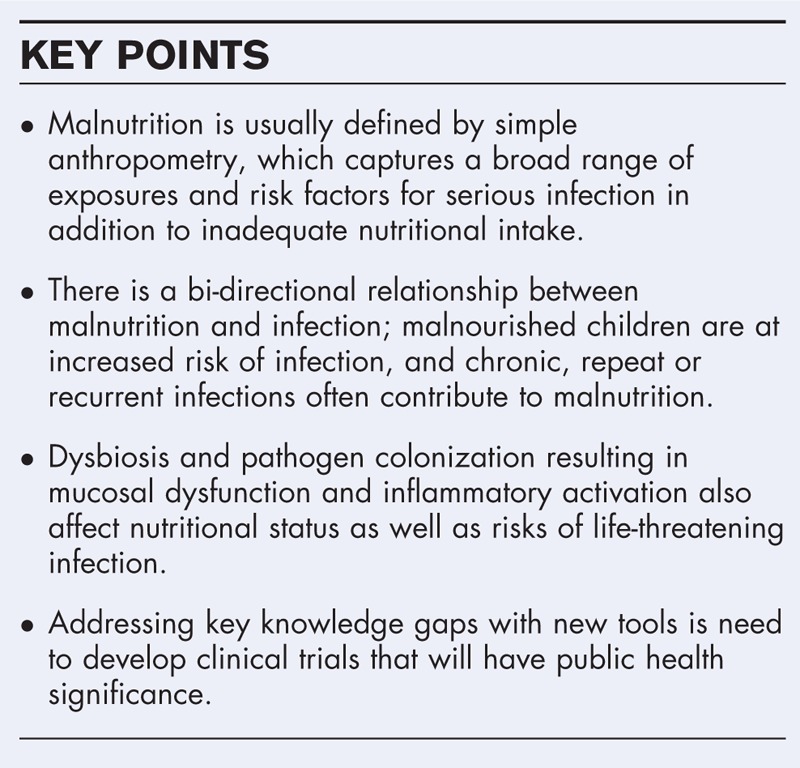
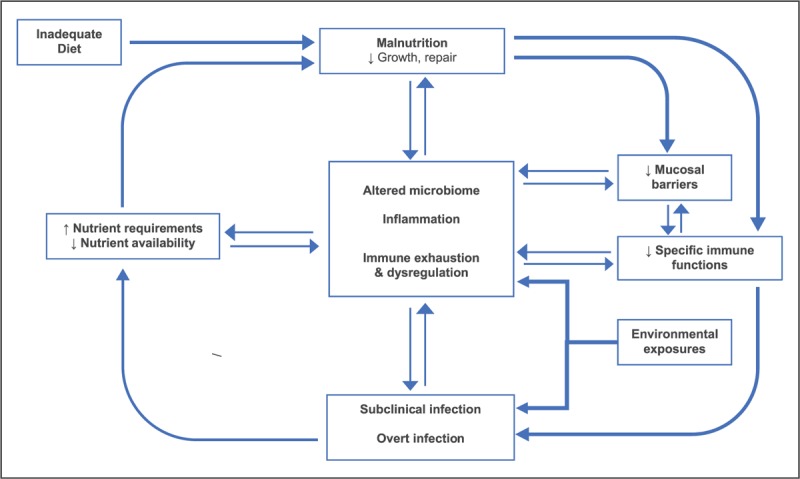
Purpose of review: Almost half of all childhood deaths worldwide occur in children with malnutrition, predominantly in sub-Saharan Africa and South Asia. This review summarizes the mechanisms by which malnutrition and serious infections interact with each other and with children's environments. Recent findings: It has become clear that whilst malnutrition results in increased incidence, severity and case fatality of common infections, risks continue beyond acute episodes resulting in significant postdischarge mortality. A well established concept of a ‘vicious-cycle’ between nutrition and infection has now evolving to encompass dysbiosis and pathogen colonization as precursors to infection; enteric dysfunction constituting malabsorption, dysregulation of nutrients and metabolism, inflammation and bacterial translocation. All of these interact with a child's diet and environment. Published trials aiming to break this cycle using antimicrobial prophylaxis or water, sanitation and hygiene interventions have not demonstrated public health benefit so far. Summary: As further trials are planned, key gaps in knowledge can be filled by applying new tools to re-examine old questions relating to immune competence during and after infection events and changes in nutritional status; and how to characterize overt and subclinical infection, intestinal permeability to bacteria and the role of antimicrobial resistance using specific biomarkers.
Overview
The claims and statistics of this paper haven’t been checked yet.
Free: it reads the open-access text and checks the first 5 claims that cite a source we can check. Create a free account to check every claim.
Integrity signals
Registry
Cites
Statistics
Figures
Verification
Claims the paper makes
The claims and statistics of this paper haven’t been checked yet.
Free: it reads the open-access text and checks the first 5 claims that cite a source we can check. Create a free account to check every claim.
Self-check
Percentages, sums and reported differences re-computed from the paper’s own numbers.
The self-check needs the paper’s full text.
Citations
Cites
Maternal and child undernutrition and overweight in low-income and middle-income countries
Black, R. E., Victora, C. G., Walker, S. P., Bhutta, Z. A., Christian, P., de Onis, M., Ezzati, M., Grantham-McGregor, S., Katz, J., Martorell, R., et al. (2013) · The Lancet · doi:10.1016/s0140-6736(13)60937-x · Cited by 8,475
Kotloff, K. L., Nataro, J. P., Blackwelder, W. C., Nasrin, D., Farag, T. H., Panchalingam, S., Wu, Y., Sow, S. O., Sur, D., Breiman, R. F., et al. (2013) · The Lancet · doi:10.1016/s0140-6736(13)60844-2 · Cited by 3,560 · cited 5×
“Worldwide, 5.6 million children die before their fifth birthday each year, with 80% of these deaths occurring in sub-Saharan Africa and Asia.”
BackgroundInfluentialGut Microbiomes of Malawian Twin Pairs Discordant for Kwashiorkor
Smith, M. I., Yatsunenko, T., Manary, M. J., Trehan, I., Mkakosya, R., Cheng, J., Kau, A. L., Rich, S. S., Concannon, P., Mychaleckyj, J. C., et al. (2013) · Science · doi:10.1126/science.1229000 · Cited by 1,173 · cited 1×
“receiving transplanted microbiota from malnourished children [33].”
Bacteremia among Children Admitted to a Rural Hospital in Kenya
Berkley, J. A., Lowe, B. S., Mwangi, I., Williams, T., Bauni, E., Mwarumba, S., Ngetsa, C., Slack, M. P. E., Njenga, S., Hart, C. A., et al. (2005) · New England Journal of Medicine · doi:10.1056/nejmoa040275 · Cited by 851 · cited 1×
“Some previous studies have suggested an increased likelihood of Gram negative bacteraemia in malnourished children [43].”
BackgroundSelf-citationImmune Dysfunction as a Cause and Consequence of Malnutrition
Bourke, C. D., Berkley, J. A., & Prendergast, A. J. (2016) · Trends in Immunology · doi:10.1016/j.it.2016.04.003 · Cited by 725 · cited 1×
“pathogen challenge, a range of abnormalities across multiple pathways in the innate and adaptive immune system have been described in these children [41,42].”
BackgroundSelf-citationMulti-country analysis of the effects of diarrhoea on childhood stunting
Checkley, W., Buckley, G., Gilman, R. H., Assis, A. M., Guerrant, R. L., Morris, S. S., Mølbak, K., Valentiner-Branth, P., Lanata, C. F., Black, R. E., et al. (2008) · International Journal of Epidemiology · doi:10.1093/ije/dyn099 · Cited by 653 · cited 1×
“At the same time, a meta-analysis assessing the impact of diarrhoea among several cohorts of children followed from birth until 24 months of age, demonstrated a 16% increase in stunting for every 5% increase in longitudinal incidence [16].”
BackgroundThe Immune System in Children with Malnutrition—A Systematic Review
Rytter, M. J. H., Kolte, L., Briend, A., Friis, H., & Christensen, V. B. (2014) · PLoS ONE · doi:10.1371/journal.pone.0105017 · Cited by 649 · cited 1×
“pathogen challenge, a range of abnormalities across multiple pathways in the innate and adaptive immune system have been described in these children [41,42].”
BackgroundBhutta, Z. A., Berkley, J. A., Bandsma, R. H. J., Kerac, M., Trehan, I., & Briend, A. (2017) · Nature Reviews Disease Primers · doi:10.1038/nrdp.2017.67 · Cited by 481
Self-citationAntibiotics as Part of the Management of Severe Acute Malnutrition
Trehan, I., Goldbach, H. S., LaGrone, L. N., Meuli, G. J., Wang, R. J., Maleta, K. M., & Manary, M. J. (2013) · New England Journal of Medicine · doi:10.1056/nejmoa1202851 · Cited by 351
Kosek, M., Haque, R., Lima, A., Babji, S., Shrestha, S., Qureshi, S., Amidou, S., Mduma, E., Lee, G., Yori, P. P., et al. (2013) · The American Society of Tropical Medicine and Hygiene · doi:10.4269/ajtmh.2012.12-0549 · Cited by 326
Cited by
Alebel, A., Demant, D., Petrucka, P., & Sibbritt, D. (2021) · BMC Infectious Diseases · doi:10.1186/s12879-020-05706-z · Cited by 194
“On the contrary, malnutrition increases the risk of infections by causing immune deficiency, resulting in the persistence of malnutrition as the most common cause of immunodeficiency [16, 137].”
BackgroundFourteen pathways between urban transportation and health: A conceptual model and literature review
Glazener, A., Sanchez, K., Ramani, T., Zietsman, J., Nieuwenhuijsen, M. J., Mindell, J. S., Fox, M., & Khreis, H. (2021) · Journal of Transport & Health · doi:10.1016/j.jth.2021.101070 · Cited by 178
“Several studies have suggested that charging stations built in accordance with the International Commission on Non-Ionizing Radiation Protection standards should ensure human safety (Bi et al., 2016; Ding et al., 2014b; Watanabe and Ishida, 2016; Wen and Huang, 2017).”
BackgroundPrediction of survival odds in COVID-19 by zinc, age and selenoprotein P as composite biomarker
Heller, R. A., Sun, Q., Hackler, J., Seelig, J., Seibert, L., Cherkezov, A., Minich, W. B., Seemann, P., Diegmann, J., Pilz, M., et al. (2021) · Redox Biology · doi:10.1016/j.redox.2020.101764 · Cited by 178
“The situation is worse in many developing parts of the world with limited access to high-quality food and water, causing high rates of childhood deaths from common infections [3].”
Godman, B., Haque, M., McKimm, J., Abu Bakar, M., Sneddon, J., Wale, J., Campbell, S., Martin, A. P., Hoxha, I., Abilova, V., et al. (2020) · Current Medical Research and Opinion · doi:10.1080/03007995.2019.1700947 · Cited by 171
Evaluation and Management of Respiratory Illness in Children With Cerebral Palsy
Marpole, R. M., Blackmore, A. M., Gibson, N., Cooper, M. S., Langdon, K., & Wilson, A. C. (2020) · Frontiers in Pediatrics · doi:10.3389/fped.2020.00333 · Cited by 137
Biomarkers of post-discharge mortality among children with complicated severe acute malnutrition
Njunge, J. M., Gwela, A., Kibinge, N., Ngari, M. M., Nyamako, L., Nyatichi, E., Thitiri, J., Gonzales, G. B., Bandsma, R., Walson, J. L., et al. (2019) · Scientific Reports · doi:10.1038/s41598-019-42436-y · Cited by 95
Self-citationImmunological factors linked to geographical variation in vaccine responses
van Dorst, M. M. A. R., Pyuza, J. J., Nkurunungi, G., Kullaya, V. I., Smits, H. H., Hogendoorn, P. C. W., Wammes, L. J., Everts, B., Elliott, A. M., Jochems, S. P., et al. (2023) · Nature reviews. Immunology · doi:10.1038/s41577-023-00941-2 · Cited by 97
“Poor nutritional status negatively impacts the immune system 181–183 , and new insight into the links between the diet, the microbiome and the immune system indicate that even well-nourished individuals may have altered vaccine responses via mechanisms that involve food-derived metabolites that…”
Current Status of Malnutrition and Stunting in Pakistani Children: What Needs to Be Done?
Ali, A. (2020) · Journal of the American College of Nutrition · doi:10.1080/07315724.2020.1750504 · Cited by 170
The Burden of Malnutrition and Fatal COVID-19: A Global Burden of Disease Analysis
Mertens, E., & Peñalvo, J. L. (2021) · Frontiers in Nutrition · doi:10.3389/fnut.2020.619850 · Cited by 101
“It is, however, reasonable to assume that also undernourished populations, including survivors of undernourishment, who often develop weaker immune systems, may be at greater risk of severe or fatal COVID-19 illness, since childhood malnutrition is associated with high morbidity and mortality globally, mainly due to i…”
Backgroundde Aquino, C. C., Leitão, R. A., Alves, L. A. O., Coelho‐Santos, V., Guerrant, R. L., Ribeiro, C., Malva, J. O., Silva, A. P., & Oriá, R. B. (2019) · Frontiers in Nutrition · doi:10.3389/fnut.2018.00131 · Cited by 83
“According to the World Health Organization (WHO), about 45% of deaths, among children under 5 years old, are directly related to various degrees of malnutrition in poor settings of the middle- and low-income countries (1).”
BackgroundKirolos, A., Blacow, R., Parajuli, A., Welton, N. J., Khanna, A., Allen, S. J., McAllister, D., Campbell, H. J., & Nair, H. (2021) · BMJ Global Health · doi:10.1136/bmjgh-2021-007411 · Cited by 88
McFadden, C., & Oxenham, M. F. (2020) · American Journal of Physical Anthropology · doi:10.1002/ajpa.24091 · Cited by 91
“Compounding the issue, the relationship is bilateral, with malnourished subadults being at greater risk of infection, and repeated infections contributing to malnutrition (Ibrahim et al., 2017; Walson & Berkley, 2018).”
BackgroundFan, Y., Yao, Q., Liu, Y., Jia, T., Zhang, J., & Jiang, E. (2022) · Frontiers in Nutrition · doi:10.3389/fnut.2022.814095 · Cited by 86
“These determinants of malnutrition and infections are significantly present in the under-5 years of age children in developing countries and adversely impact children’s health and development (25, 72, 73).”
BackgroundRazzaq, Z. U., Khan, M. K. I., Maan, A. A., & Rahman, S. U. (2020) · Journal of Food Measurement & Characterization · doi:10.1007/s11694-020-00498-x · Cited by 75
Examining the Complex Relationship Between Tuberculosis and Other Infectious Diseases in Children
Whittaker, E., López‐Varela, E., Broderick, C. M., & Seddon, J. A. (2019) · Frontiers in Pediatrics · doi:10.3389/fped.2019.00233 · Cited by 77
“The relationship between malnutrition, microbiome, intestinal infections, and host immunological status is complex as interplay exists between each of these and is beyond the scope of this review (206) (207) (208) (209) .”
BackgroundImmunometabolism: new insights and lessons from antigen-directed cellular immune responses
Ramalho, R., Rao, M., Zhang, C., Agrati, C., Ippolito, G., Wang, F., Zumla, A. I., & Maeurer, M. J. (2020) · Seminars in Immunopathology · doi:10.1007/s00281-020-00798-w · Cited by 70
Dimitrova, A., McElroy, S., Levy, M. C., Gershunov, A., & Benmarhnia, T. (2022) · The Lancet Planetary Health · doi:10.1016/s2542-5196(21)00325-9 · Cited by 76
Intestinal barrier dysfunction following traumatic brain injury
Pan, P., Song, Y., Du, X., Bai, L., Hua, X., Xiao, Y., & Yu, X. (2019) · Neurological Sciences · doi:10.1007/s10072-019-03739-0 · Cited by 59
The impact of malnutrition on infant mortality and life expectancy in Africa
Djoumessi, Y. F. (2022) · Nutrition · doi:10.1016/j.nut.2022.111760 · Cited by 51
Islam, M. Z., Billah, M. A., Islam, M. M., Rahman, M., & Khan, M. N. (2022) · Journal of Global Health · doi:10.7189/jogh.12.04070 · Cited by 59
Kiosia, A., Dagbasi, A., Berkley, J. A., Wilding, J. P. H., Prendergast, A. J., Li, J. V., Swann, J., Mathers, J. C., Kerac, M., Morrison, D., et al. (2024) · Nutrition Bulletin · doi:10.1111/nbu.12670 · Cited by 43
“It is estimated that more than 200 000 deaths resulting from diarrhoea are directly attributed to acute malnutrition on an annual basis (Tickell et al., 2020; Walson & Berkley, 2018).”
Self-citationVerrest, L., Wilthagen, E. A., Beijnen, J. H., Huitema, A. D. R., & Dorlo, T. P. C. (2021) · Clinical Pharmacokinetics · doi:10.1007/s40262-021-01031-z · Cited by 66
von Mollendorf, C., Berger, D., Gwee, A., Duke, T., Graham, H., Russell, F. M., Mulholland, K., & ARI review group (2022) · Journal of Global Health · doi:10.7189/jogh.12.10009 · Cited by 53
Weight Status and Body Composition Dynamics in Children and Adolescents During the COVID-19 Pandemic
Azoulay, E., Yackobovitch‐Gavan, M., Yaacov, H., Gilboa, I., Lopez, A., Sheppes, T., Waksman, Y., Lebenthal, Y., & Brener, A. (2021) · Frontiers in Pediatrics · doi:10.3389/fped.2021.707773 · Cited by 41
Gizaw, Z., Worku, A., Bitew, B. D., Lee, J., & Bisesi, M. S. (2022) · Scientific Reports · doi:10.1038/s41598-022-23981-5 · Cited by 84
Burnett, E., Parashar, U. D., & Tate, J. E. (2021) · The Pediatric Infectious Disease Journal · doi:10.1097/inf.0000000000003206 · Cited by 42
“More generally, anthropometric indicators of malnutrition may be caused by an array of conditions.(13,41) Studies included in this literature review also varied in when illness occurred relative to when malnutrition was measured and anthropometric indicators of malnutrition at 6 weeks of age including low birth weight…”
Recovery of children following hospitalisation for complicated severe acute malnutrition
Bwakura‐Dangarembizi, M., Dumbura, C., Amadi, B., Chasekwa, B., Ngosa, D., Majo, F. D., Sturgeon, J. P., Chandwe, K., Kapoma, C., Bourke, C. D., et al. (2021) · Maternal and Child Nutrition · doi:10.1111/mcn.13302 · Cited by 33
“It has long been proposed that a cycle exists whereby malnutrition impairs immunity, thereby increasing host susceptibility to infection, which in turn intensifies the severity of malnutrition (Katona & Katona ‐ Apte, 2008; Kau et al., 2011; Scrimshaw et al., 1968; Walson & A, 2018).”
Breastfeeding and weaning practices among mothers in Ghana: A population-based cross-sectional study
Appiah, P. K., Amu, H., Osei, E., Konlan, K. D., Mumuni, H. I., Orish, V. N., Maalman, R. S.-E., Kim, E., Kim, S., Bukari, M., et al. (2021) · PLoS ONE · doi:10.1371/journal.pone.0259442 · Cited by 31
Antibiotic-Resistant Enteric Infections
Shakoor, S., Platts-Mills, J. A., & Hasan, R. (2019) · Infectious Disease Clinics of North America · doi:10.1016/j.idc.2019.05.007 · Cited by 34
Marla, S., Chu, K., Chintamanani, S., Multani, D. S., Klempien, A., DeLeon, A. M., Kim, B.-S., Dunkle, L. D., Dilkes, B. P., & Johal, G. S. (2018) · PLoS Pathogens · doi:10.1371/journal.ppat.1007356 · Cited by 31
“This phenomenon is analogous to what has been well 565 established in the animal world that malnutrition compromises the immunity of infants 566 much more than that of adults (42,43).”
ResultDassie, G. A., Chala, T., Charkos, T. G., Erba, M. S., & Balcha, F. (2024) · Frontiers in Nutrition · doi:10.3389/fnut.2024.1452963 · Cited by 54
“A person may be underweight due to genetics, poor absorption of nutrients, increased metabolic rate or energy expenditure, lack of food (frequently due to poverty), low appetite, drugs that affect appetite, illness (physical or mental), or eating disorders such as anorexia nervosa (8, 9).”
Antimicrobial Resistance in Enterobacterales and Its Contribution to Sepsis in Sub-saharan Africa
Tompkins, K., Juliano, J. J., & van Duin, D. (2021) · Frontiers in Medicine · doi:10.3389/fmed.2021.615649 · Cited by 30
Chowdhury, M. R. K., Khan, H. T. A., Mondal, M. N. I., & Kabir, R. (2020) · Journal of Biosocial Science · doi:10.1017/s0021932020000425 · Cited by 25
Human determinants of age-dependent patterns of death from infection
Abel, L., & Casanova, J. (2024) · Immunity · doi:10.1016/j.immuni.2024.05.020 · Cited by 26
“35 The second defining feature of the U-shaped curve is the increase in mortality rates in the elderly.”
BackgroundMurray, R. D., Kerr, K. W., Brunton, C., Williams, J. A., DeWitt, T., & Wulf, K. (2021) · Nutrition and Dietary Supplements · doi:10.2147/nds.s287981 · Cited by 26
Akano, O. I., Oderinde, F. O., & Omotayo, A. O. (2023) · Journal of Agriculture and Food Research · doi:10.1016/j.jafr.2023.100525 · Cited by 36
Gazi, M. A., Das, S., Siddique, M. A., Alam, M. A., Fahim, S. M., Hasan, M. M., Hossaini, F., Kabir, M. M., Noor, Z., Haque, R., et al. (2020) · American Journal of Tropical Medicine and Hygiene · doi:10.4269/ajtmh.20-0049 · Cited by 27
“The burden of infectious diseases is greater in children with stunting.(9) Therefore, metabolic needs for these children require higher energy and AAs, which may divert EAAs to keep the immune system active at the expense of growth.”
BackgroundImproving Treatment and Outcomes for Melioidosis in Children, Northern Cambodia, 2009–2018
Chandna, A., Bonhoeffer, M., Miliya, T., Keang, S., Sao, S., & Turner, P. (2021) · Emerging infectious diseases · doi:10.3201/eid2704.201683 · Cited by 21
“Malnutrition might potentiate severity of melioidosis in children and is a well-recognized risk factor in other pediatric infections (4,11).”
BackgroundChowdhury, M. R. K., Rahman, M. S., Billah, B., Kabir, R., Perera, N. K. P., & Kader, M. (2022) · BMC Nutrition · doi:10.1186/s40795-022-00584-x · Cited by 21
Hondru, G., Wieringa, F. T., Poirot, E., Berger, J., Som, S. V., Theary, C., & Laillou, A. (2019) · Nutrients · doi:10.3390/nu11071527 · Cited by 27
“Other studies not as specific in terms of the types of malnutrition have concluded that under-nutrition in general increases the risk and severity of infections [8,15,18,28].”
BackgroundAkanbonga, S., Hasan, T., Chowdhury, U., Kaiser, A., Bonny, F. A., Lim, I. E., & Mahmud, I. (2023) · PLoS ONE · doi:10.1371/journal.pone.0286055 · Cited by 23
Sturgeon, J. P., Tome, J., Dumbura, C., Majo, F. D., Ngosa, D., Mutasa, K., Zyambo, K., Besa, E. C., Chandwe, K., Kapoma, C., et al. (2024) · Science Translational Medicine · doi:10.1126/scitranslmed.adh0673 · Cited by 20
“Although the wasting reflects long-term nutrient deprivation, edematous malnutrition is virtually always acute.”
BackgroundBaker, K. K., Mumma, J. A. O., Simiyu, S., Sewell, D., Tsai, K., Anderson, J. D., MacDougall, A., Dreibelbis, R., & Cumming, O. (2022) · BMJ Open · doi:10.1136/bmjopen-2021-059878 · Cited by 19
Robyn, S., Ntsiea, V., Brown, S. C., & Potterton, J. L. (2024) · BMC Pediatrics · doi:10.1186/s12887-023-04508-x · Cited by 28
“The risk of infection is directly related to the severity of the undernutrition [103, 104].”
BackgroundSaharan Dust and Childhood Respiratory Symptoms in Benin
McElroy, S., Dimitrova, A., Evan, A. T., & Benmarhnia, T. (2022) · International Journal of Environmental Research and Public Health · doi:10.3390/ijerph19084743 · Cited by 20
The impact of climate change and biodiversity loss on the health of children: An ethical perspective
Williams, P. C. M., Beardsley, J., Isaacs, D., Preisz, A., & Marais, B. J. (2023) · Frontiers in Public Health · doi:10.3389/fpubh.2022.1048317 · Cited by 29
Validation of a Feed Protocol in a Mouse Model That Mimics Marasmic Malnutrition
Ferreira-Paes, T., Seixas-Costa, P., & de Almeida-Amaral, E. E. (2021) · Frontiers in Veterinary Science · doi:10.3389/fvets.2021.757136 · Cited by 20
“Immunosuppression, poor sanitary conditions, limited access to health services, exposure to pathogens and the debility that malnutrition causes to the body are risk factors that increase the susceptibility and progression of diseases (20, 35).”
BackgroundVilander, A. C., Hess, A. M., Abdo, Z., Ibrahim, H., Doumbia, L., Douyon, S., Koné, K., Boré, A., Zambrana, L. E., Vilchez, S., et al. (2022) · Journal of Nutrition · doi:10.1093/jn/nxac087 · Cited by 21
“Malnutrition predisposes to decreased epithelial barrier function and microbial dysbiosis, which can increase the risk of diarrhea and worsen malnutrition (3, 4).”
Implementation of new indicators of pediatric malnutrition and comparison to previous indicators
Ezzat, M. A., AlBassam, E. M., Aldajani, E. A., Alaskar, R. A., & Devol, E. B. (2022) · International Journal of Pediatrics and Adolescent Medicine · doi:10.1016/j.ijpam.2022.12.003 · Cited by 17
“Children with malnutrition are at an increased risk of developing diarrhea and pneumonia [13].”
BackgroundNourishing nations during pandemics: why prioritize fish diets and aquatic foods in Africa
Khan, A. S., Ahmed, S. M., Sarr, C., Kabore, Y., Kahasha, G., Bangwe, L., Odhiambo, W., Gahunga, N., Mclean, B., Diop, H., et al. (2021) · MAST. Maritime studies/Maritime studies · doi:10.1007/s40152-021-00236-z · Cited by 30
Nomogram Including Neutrophil-to-Lymphocyte Ratio for the Prediction of Stroke-Associated Infections
Lan, Y., Sun, W., Chen, Y., Miao, J., Guo, L., Qiu, X., Song, X., Zhao, X., Zhu, Z., Fan, Y., et al. (2020) · Frontiers in Neurology · doi:10.3389/fneur.2020.574280 · Cited by 18
“Another explanation is avoidance of malnutrition, which is usually accompanied by dysbiosis and disturbances in normal barrier functions, leading to susceptibility to invasive infections (46, 47).”
BackgroundChilot, D., Belay, D. G., Merid, M. W., Kibret, A. A., Alem, A. Z., Asratie, M. H., Teshager, N. W., & Aragaw, F. M. (2023) · BMJ Open · doi:10.1136/bmjopen-2022-070978 · Cited by 23
Refrigerator ownership and child health and nutrition in low- and middle-income countries
Karlsson, O., & Subramanian, S. V. (2023) · Global Food Security · doi:10.1016/j.gfs.2023.100698 · Cited by 16
Parenti, M., McClorry, S., Maga, E. A., & Slupsky, C. M. (2021) · Nutrition Research · doi:10.1016/j.nutres.2021.05.005 · Cited by 15
Chilot, D., Diress, M., Gela, Y. Y., Sinamaw, D., Simegn, W., Andualem, A. A., Seid, A. M., Bitew, D. A., Seid, M. A., Eshetu, H. B., et al. (2023) · Scientific Reports · doi:10.1038/s41598-023-27728-8 · Cited by 15
Pathways Linking Nutritional Status and Infectious Disease: Causal and Conceptual Frameworks
Humphries, D. L., Scott, M. E., & Vermund, S. H. (2020) · Springer eBooks · doi:10.1007/978-3-030-56913-6_1 · Cited by 21
Oh, T. K., Song, K., & Song, I. (2021) · BMC Infectious Diseases · doi:10.1186/s12879-021-06377-0 · Cited by 16
“The malnutrition is known to increase both frequency of infection and long-term mortality due to infection [33].”
BackgroundPotential Impacts of Mass Nutritional Supplementation on Measles Dynamics: A Simulation Study
Noori, N., Skrip, L., Oron, A. P., McCarthy, K. A., Proctor, J. L., Chabot‐Couture, G., Althouse, B. M., Phelan, K. P. Q., & Trehan, I. (2022) · American Journal of Tropical Medicine and Hygiene · doi:10.4269/ajtmh.21-1083 · Cited by 22
“4,11 Few studies, though, have explored the impact of undernutrition on the transmission dynamics of infectious diseases.”
Ow, M. Y. L., Tran, N. T., Berde, Y., Nguyen, T. S., Tran, V. K., Jablonka, M. J., Baggs, G. E., & Huynh, D. T. T. (2024) · Frontiers in Nutrition · doi:10.3389/fnut.2024.1341963 · Cited by 23
“The short-term effects include growth impairment and recurrent illness (particularly gastrointestinal and respiratory infections) (1, 8).”
A combined model of child malnutrition and morbidity in Ethiopia using structural equation models
Takele, K., Zewotir, T. T., & Ndanguza, D. (2023) · Scientific Reports · doi:10.1038/s41598-023-27440-7 · Cited by 16
Konyole, S. O., Omollo, S. A., Kinyuru, J. N., Owuor, B., Estambale, B. B. A., Ritz, C., Michaelsen, K. F., Filteau, S., Wells, J. C. K., Roos, N., et al. (2023) · Journal of Nutrition · doi:10.1016/j.tjnut.2023.02.014 · Cited by 21
Khlevner, J., Naranjo, K., Hoyer, C., Carullo, A. S., Kerr, K. W., & Marriage, B. J. (2023) · Nutrients · doi:10.3390/nu15133011 · Cited by 13
“Children with malnutrition are more susceptible to infections, which also increases risk for mortality [7].”
BackgroundTroeger, C., Arndt, M. B., Aalruz, H., Abdoun, M., Abdullahi, A., Abebe, M., Abedi, A., Abie, A., Aboagye, R. G., Abolhassani, H., et al. (2025) · The Lancet Child & Adolescent Health · doi:10.1016/s2352-4642(25)00303-7 · Cited by 19
“37 A review of the literature concluded that although improvements in nutrition can reverse susceptibility to infection, this effect is not well characterised.”
Malnutrition and Medical Neglect
Burford, A., Alexander, R., & Lilly, C. (2019) · Journal of Child & Adolescent Trauma · doi:10.1007/s40653-019-00282-0 · Cited by 12
Millet-based supplement restored gut microbial diversity of acute malnourished pigs
Li, X., Yan, H., Leng, B., Ren, J., Song, Y., Che, L., Peng, X., Huang, B., Liu, S., Li, L., et al. (2021) · PLoS ONE · doi:10.1371/journal.pone.0250423 · Cited by 16
“Epigenetic modification during the pre- and neo-natal period, such as metabolic imprinting, will also increase the risk of malnutrition and diet-related non-communicable diseases [5, 6].”
BackgroundMistry, S. K., Hossain, M. B., Irfan, N. M., Saha, M., Saberin, S., Shamim, A. A., & Arora, A. (2022) · International Journal of Environmental Research and Public Health · doi:10.3390/ijerph19010550 · Cited by 15
“If a child remains malnourished during this period, it results in a compromised immune system and a higher risk of severe infectious diseases including diarrhoea and pneumonia [11,12].”
BackgroundA scoping review on the associations and potential pathways between malnutrition and measlesPreprint
Tran, I. C., Gregory, C. J., O’Connor, P. M., Imohe, A., Do, L. A. H., & Suchdev, P. S. (2023) · medRxiv · doi:10.1101/2023.01.21.23284872 · Cited by 15
“(103, 104) A systematic review found that 725 malnourished children had atrophied intestinal walls, which would likely have increased intestinal 726 permeability and predisposed those children to bacterial translocation from the gut into the 727 bloodstream.”
BackgroundResultInfluentialJeyakumar, A., Babar, P., Menon, P. G., Nair, R., Jungari, S. B., Tamboli, A., Dhamdhere, D., Hendre, K., Tushar, L., Dhiman, A., et al. (2022) · PLoS ONE · doi:10.1371/journal.pone.0278152 · Cited by 22
Islam, M. S., Chowdhury, M. R. K., Bornee, F. A., Chowdhury, H. A., Billah, B., Kader, M., & Rashid, M. (2023) · Children · doi:10.3390/children10111829 · Cited by 14
“Childhood undernutrition was another key factor associated with increased illness [39].”
BackgroundIjaiya, M., Anjorin, S., & Uthman, O. A. (2024) · Global Health Research and Policy · doi:10.1186/s41256-024-00371-0 · Cited by 17
“Similar to our findings reported above, multiple studies have noted increased child morbidity and mortality risk among wasted and double-burdened malnourished children [46–49].”
BackgroundResultSuriani, B., Sudirman, J., Mukarramah, S., Sabar, S., & Saleng, H. (2021) · Gaceta Sanitaria · doi:10.1016/j.gaceta.2021.10.056 · Cited by 18
Maineny, A., Longulo, O. J., & Endang, N. (2022) · Jurnal Bidan Cerdas · doi:10.33860/jbc.v4i1.758 · Cited by 25
Chilot, D., Belay, D. G., Shitu, K., Mulat, B., Alem, A. Z., & Geberu, D. M. (2022) · BMJ Open · doi:10.1136/bmjopen-2022-065257 · Cited by 11
Assessment of Nutritional Status of Under-Five Children in an Urban Area of South Delhi, India
Goyal, M., Singh, N., Kapoor, R., Verma, A., & Gedam, P. (2023) · Cureus · doi:10.7759/cureus.34924 · Cited by 17
“Undernourished children have a higher risk of death and are more likely to contract childhood illness [3-5].”
BackgroundSarkar, T., Patro, N., & Patro, I. K. (2020) · Biology Open · doi:10.1242/bio.054130 · Cited by 11
“Furthermore, viral and bacterial infections are another common issue in already malnourished children belonging to poorer communities because of the unhygienic surroundings in which the children grow (Rytter et al., 2014; Walson and Berkley, 2018).”
BackgroundKassaw, A., Kerebih, G., Zeleke, S., Chanie, E. S., Dessalegn, N., Bante, B., Teshome, A. A., Chekole, B., Walle, B. G., Bayih, W. A., et al. (2023) · Frontiers in Pediatrics · doi:10.3389/fped.2023.1141366 · Cited by 10
“Moreover, malnutrition is not only associated with an increased risk of pneumonia episodes but also increased severity and case fatality (25).”
Stepniewska, K., Allan, R. J., Anvikar, A. R., Anyorigiya, T., Ashley, E. A., Bassat, Q., Baudin, E., Björkman, A., Bonnet, M., Boulton, C., et al. (2024) · The Lancet Global Health · doi:10.1016/s2214-109x(24)00003-2 · Cited by 19
Respiratory Comorbidities and Complications of Cerebral Palsy
Spoto, G., Accetta, A. S., Grella, M. G., Modica, I. D., Nicotera, A. G., & Rosa, G. D. (2024) · Developmental Neurorehabilitation · doi:10.1080/17518423.2024.2374959 · Cited by 17
“54,55 It can be evaluated by assessing the weight for age, the triceps skin fold thickness, the upper arm fat, the arm muscle area or the dual-energy X-ray absorptiometry.”
Ali, M. S., Alemu, T. G., Techane, M. A., Wubneh, C. A., Assimamaw, N. T., Belay, G. M., Tamir, T. T., Muhye, A. B., Kassie, D. G., Wondim, A., et al. (2022) · Nutrition · doi:10.1016/j.nut.2022.111743 · Cited by 10
Gasparinho, C., Gonçalves, M. H., Chissaque, A., Silva, G. L., Fortes, F., & Gonçalves, L. A. P. (2022) · Nutrients · doi:10.3390/nu14112185 · Cited by 15
“In African settings such as Bengo, with the high risk of multiple parasites playing an important role in the progression and the severity of parasite-related disease (and, thus, increasing malnutrition levels) [9,33], a TT approach to intestinal parasites (not only for STHs, but also for protozoa) should be considered…”
BackgroundInfluentialAl-Taj, M. A., Serouri, A. A. A., Al-Muradi, A. M., Al-Dharhani, E., Al-faeq, N. N., Al-Amodi, F., Abdulwahab, M. M., Nawfal, A. M., Alshemerry, M. H., & Mujahed, M. A. (2023) · Journal of Nutritional Science · doi:10.1017/jns.2023.72 · Cited by 15
Aivey, S. A., Fukushima, Y., Rahman, M. M., Nahar, N. S., Ahmed, A., Prihanto, J. B., Hawlader, M. D. H., & Moriyama, M. (2024) · Journal of Family Medicine and Primary Care · doi:10.4103/jfmpc.jfmpc_1560_23 · Cited by 10
“[6,12,52] In this study, BMI was the only indicator used to assess malnutrition.”
MethodEkeng, B. E., Adedokun, O., Otu, V., Chukwuma, S. T., Okah, A., Asemota, O. A., Eshiet, U., Akpan, U., Nwagboso, R., Ebiekpi, E., et al. (2024) · Tropical Medicine and Infectious Disease · doi:10.3390/tropicalmed9100230 · Cited by 9
“This creates a vicious cycle where malnutrition and infection exacerbate each other, complicating recovery and worsening health outcomes [7].”
BackgroundWeckman, A. M., McDonald, C. R., Ngai, M., Richard‐Greenblatt, M., Leligdowicz, A., Conroy, A. L., Kain, K. C., Namasopo, S., & Hawkes, M. (2023) · EBioMedicine · doi:10.1016/j.ebiom.2023.104721 · Cited by 13
Garg, S., Dewangan, M., Patel, K., Krishnendhu, C., & Nanda, P. (2023) · BMC Pediatrics · doi:10.1186/s12887-023-03993-4 · Cited by 10
Saeedi, F. A., Hegazi, M. A., Alsaedi, H., Alganmi, A. H., Mokhtar, J. A., Metwalli, E. M., Hamadallah, H., Siam, G. S., Alaqla, A., Alsharabi, A., et al. (2024) · Children · doi:10.3390/children11040444 · Cited by 13
“The global burden of undernutrition and infectious diseases is substantial, especially among children with a particularly increased risk of antimicrobial resistance mostly related to increased exposure to HCAIs and antimicrobials [42].”
BackgroundInfection-elicited microbiota promotes host adaptation to nutrient restriction
Siqueira, M. K. D., Andrade‐Oliveira, V., Stacy, A., Guimarães, J. P. T., Alberca, R. W., Castoldi, Â., Santos, J. M., Davoli-Ferreira, M., Menezes-Silva, L., Turato, W. M., et al. (2023) · Proceedings of the National Academy of Sciences · doi:10.1073/pnas.2214484120 · Cited by 10
“, infection priming for nutrient restriction, and nutrient restriction priming for infection) is likely adaptive and may have arisen as a defense against the frequent co-occurrence of food precarity with infection and other stressors throughout mammalian evolution (31, 33, 37).”
BackgroundLambrecht, N., Müller‐Hauser, A. A., Sobhan, S., Schmidt, W., Huda, T. M. N., Waid, J. L., Wendt, A. S., Kader, A., & Gabrysch, S. (2023) · American Journal of Tropical Medicine and Hygiene · doi:10.4269/ajtmh.23-0152 · Cited by 9
Bacterial Infections and Nutrition: A Primer
Berkley, J. A. (2020) · Springer eBooks · doi:10.1007/978-3-030-56913-6_4 · Cited by 11
Self-citationNutrition in Health Promotion Policies and Programs at the Community Level
Onyango, A. W., Nikiema, L. O., & Kimokoti, R. W. (2021) · Springer eBooks · doi:10.1007/978-3-030-45009-0_86 · Cited by 10
Klanjšek, P., Pajnkihar, M., Varda, N. M., Močnik, M., Jančič, S. G., & Povalej, P. (2022) · Children · doi:10.3390/children9050731 · Cited by 10
“Nutritional status affects all aspects of a child’s health, including growth and development, physical activity, and response to serious illness [1].”
BackgroundKoyratty, N., Ntozini, R., Mbuya, M. N. N., Jones, A. D., Schuster, R. C., Kordas, K., Li, C., Tavengwa, N. V., Majo, F. D., Humphrey, J. H., et al. (2022) · BMJ Nutrition Prevention & Health · doi:10.1136/bmjnph-2022-000470 · Cited by 13
Child Stunting and Economic Outcomes in SAARC Countries: The Empirical EvidencePreprint
Seema, M., Baig, A., & Nasser, D. (2022) · Research Square · doi:10.21203/rs.3.rs-1314101/v1 · Cited by 12
“• Poor nutrition and frequent infections cause a child's nutritional condition to deteriorate and increase vulnerability to infections and diseases (21, 22).”
BackgroundAli, M. S., Kassahun, C. W., Wubneh, C. A., Mekonen, E. G., & Workneh, B. S. (2021) · Nutrition · doi:10.1016/j.nut.2021.111575 · Cited by 11
Egbon, O. A., Belachew, A. M., & Bogoni, M. A. (2022) · Spatial and Spatio-temporal Epidemiology · doi:10.1016/j.sste.2022.100533 · Cited by 10
Anwar, F., Yalawar, M., Suryawanshi, P., Ghosh, A. K., Jog, P. P., Khadilkar, A. V., Kishore, B., Paruchuri, A. K., Pote, P. D., Ravi, M. D., et al. (2023) · Nutrients · doi:10.3390/nu15112528 · Cited by 12
“Malnutrition in children is a common underlying reason for increased susceptibility to respiratory and gastrointestinal infections and increased risk of mortality [28,47].”
BackgroundFazid, S., Haq, Z. U., Gillani, B. H., Khan, A. J., Khan, M. N., Khan, A., Garzón, C. Á., Habib, I., Tanimoune, M., Ihtesham, Y., et al. (2023) · British Journal Of Nutrition · doi:10.1017/s0007114523002702 · Cited by 23
“Stunting or low height/length for age is caused by chronic malnutrition (2) .”
BackgroundWidjaja, N. A., Hamidah, A., Purnomo, M. T., & Ardianah, E. (2023) · F1000Research · doi:10.12688/f1000research.130176.3 · Cited by 9
Huq, K. A. T. M. E., Moriyama, M., Matsuyama, R., Chisti, M. J., Rahman, M. M., & Alam, N. H. (2021) · Children · doi:10.3390/children8090778 · Cited by 7
“As a significant proportion of children with severe pneumonia in developing countries have underlying malnutrition of various degrees [17,18], the systematic management of both problems is essential to prevent deaths [19].”
BackgroundYani, F. F., Julianty, R. J., Tafroji, W., Linosefa, L., Ihsan, I., Masnadi, N. R., & Safari, D. (2023) · Access Microbiology · doi:10.1099/acmi.0.000584.v3 · Cited by 7
“Another study reported that incidence of pneumonia was higher in malnourished children and is significantly different in children with no malnutrition as previously reported [14].”
Result
Metadata
- Authors
- Walson, J. L., & Berkley, J. A.
- Affiliations
- University of Washington (US)
- Kenya Medical Research Institute (KE)
- Corresponding author
- Berkley, James A.
- ORCID
- Berkley, James A.
- Venue
- Current Opinion in Infectious Diseases
- Published
- 2018-06
- Volume
- 31
- Issue
- 3
- Pages
- 231-236
- ISSN
- 0951-7375 (ISSN-L)
- 1473-6527
- PMC
- PMC6037284
- OpenAlex
- W2790487502
- Semantic Scholar
- f457dd127909bd7d8cc1c5f1866556cb55dcd25a
- Cited by
- 273
- References
- 47
- Citations by year
- 2026: 19 · 2025: 20 · 2024: 46 · 2023: 51 · 2022: 49 · 2021: 47 · 2020: 24 · 2019: 13 · 2018: 3
- FWCI
- 2.79
- Type
- journal article
- Language
- en
- Open access
- hybrid
- doi.org
- Locations
- Current Opinion in Infectious Diseases (publishedVersion, cc-by)
- Europe PMC (PubMed Central) (publishedVersion, cc-by)
- PubMed Central (publishedVersion, cc-by)
- PubMed (publishedVersion)
- Funders
- Wellcome Trust
- Medical Research Council (MR/M007367/1)
- Topics
- Health Sciences › Nursing › Nutrition and Dietetics › Child Nutrition and Water Access
- Health Sciences › Nursing › Nutrition and Dietetics › Clinical Nutrition and Gastroenterology
- Health Sciences › Nursing › Nutrition and Dietetics › Infant Nutrition and Health
- Keywords
- child malnutrition, pediatric infection, dysbiosis, pathogen colonization, malabsorption, bacterial translocation, intestinal permeability, inflammation, immunocompetence, antibiotic prophylaxis, water, sanitation and hygiene, post-discharge mortality, antimicrobial resistance, asymptomatic infection, biomarkers
- MeSH terms
- Asia, Enteritis, Humans, Intestinal Absorption, Incidence, Survival Analysis, Africa South of the Sahara, Bacterial Translocation, Malnutrition, Dysbiosis
About these checks
Registry, retraction, Cites and statistics results are computed, not judged, with one exception: a printed reference that no index lists is read once by a model before it counts as a citation error. Claims are extracted by a model and kept only when their quote appears verbatim in the text; each cited source is then checked, with a model’s help, for whether it says what the claim relies on. Those verdicts can be wrong — read the claim’s quote and the cited source before relying on one.
Statistics and arithmetic are recomputed, not judged.
Confidence bands are shown only for fields calibrated on our annotated test set. None is calibrated yet, so no band is shown.
What counts as a claim ›How we measure confidence ›How we check this ›
Are you an author, or do you see a problem with this page? Request a review
Data sources
Bibliographic data: Semantic Scholar, OpenAlex, Crossref.
Contains information from the Semantic Scholar Academic Graph Datasets, made available under the ODC Attribution License (ODC-BY 1.0).
Semantic Scholar’s data is described in: Kinney, R., et al. (2023). The Semantic Scholar Open Data Platform. arXiv:2301.10140.
