

Sirolimus Use in Liver Transplant Recipients With Hepatocellular Carcinoma: A Randomized, Multicenter, Open-Label Phase 3 Trial
Open accessThe DOI matches its Crossref record; 39 of the 39 references it cites were found in a registry or an index.
Abstract
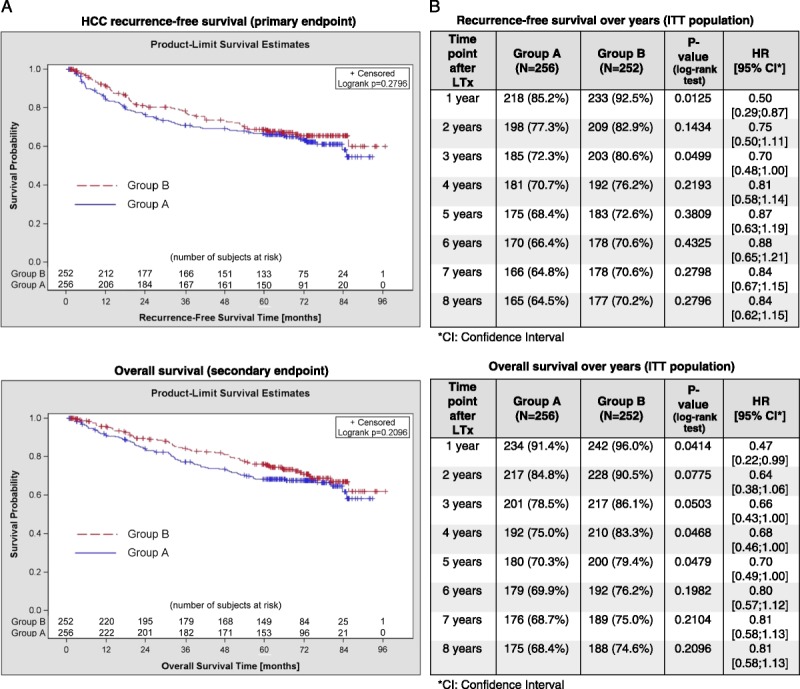
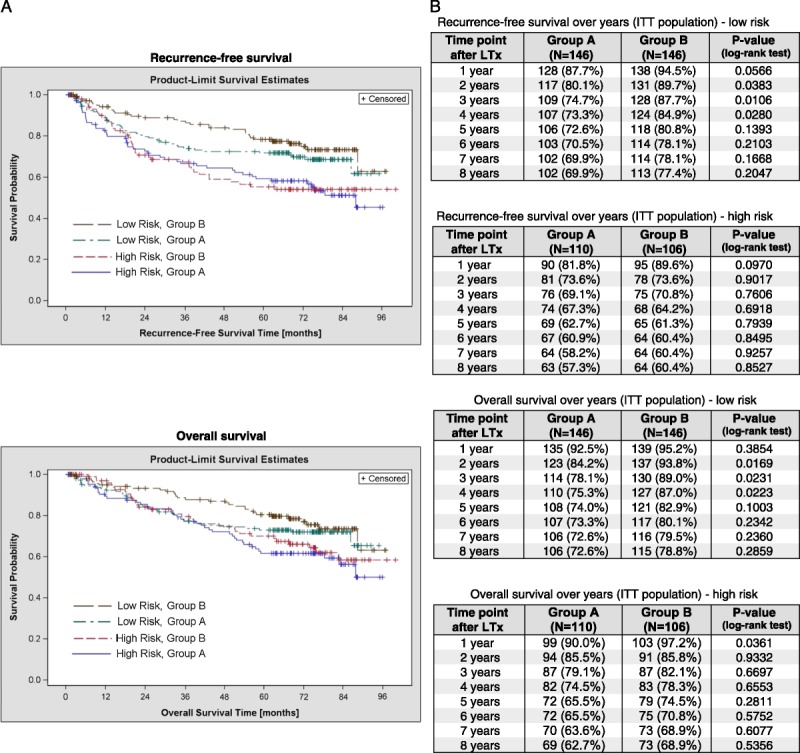
BACKGROUND: We investigated whether sirolimus-based immunosuppression improves outcomes in liver transplantation (LTx) candidates with hepatocellular carcinoma (HCC). METHODS: In a prospective-randomized open-label international trial, 525 LTx recipients with HCC initially receiving mammalian target of rapamycin inhibitor-free immunosuppression were randomized 4 to 6 weeks after transplantation into a group on mammalian target of rapamycin inhibitor-free immunosuppression (group A: 264 patients) or a group incorporating sirolimus (group B: 261). The primary endpoint was recurrence-free survival (RFS); intention-to-treat (ITT) analysis was conducted after 8 years. Overall survival (OS) was a secondary endpoint. RESULTS: Recurrence-free survival was 64.5% in group A and 70.2% in group B at study end, this difference was not significant (P = 0.28; hazard ratio [HR], 0.84; 95% confidence interval [95% CI], 0.62; 1.15). In a planned analysis of RFS rates at yearly intervals, group B showed better outcomes 3 years after transplantation (HR, 0.7; 95% CI, 0.48-1.00). Similarly, OS (P = 0.21; HR, 0.81; 95% CI, 0.58-1.13) was not statistically better in group B at study end, but yearly analyses showed improvement out to 5 years (HR, 0.7; 95% CI, 0.49-1.00). Interestingly, subgroup (Milan Criteria-based) analyses revealed that low-risk, rather than high-risk, patients benefited most from sirolimus; furthermore, younger recipients (age ≤60) also benefited, as well sirolimus monotherapy patients. Serious adverse event numbers were alike in groups A (860) and B (874). CONCLUSIONS: Sirolimus in LTx recipients with HCC does not improve long-term RFS beyond 5 years. However, a RFS and OS benefit is evident in the first 3 to 5 years, especially in low-risk patients. This trial provides the first high-level evidence base for selecting immunosuppression in LTx recipients with HCC.
Overview
The claims and statistics of this paper haven’t been checked yet.
Free: it reads the open-access text and checks the first 5 claims that cite a source we can check. Create a free account to check every claim.
Integrity signals
Registry
Cites
Statistics
Figures
Verification
Claims the paper makes
The claims and statistics of this paper haven’t been checked yet.
Free: it reads the open-access text and checks the first 5 claims that cite a source we can check. Create a free account to check every claim.
Claims other papers make about this one
Each is checked against this paper’s own text: does it say what the citing paper says it does?
The cited source says what the claim attributes to it.
In the citing paper
“The mTOR inhibitor sirolimus did not significantly change RFS in the SiLVER trial also, involving 525 patients with HCC undergoing liver transplantation91.”
From Adjuvant and neoadjuvant immunotherapies in hepatocellular carcinoma (2024) · cites this paper as [91]
Self-check
Percentages, sums and reported differences re-computed from the paper’s own numbers.
The self-check needs the paper’s full text.
Citations
Cites
Erdogan, D., Heijnen, B. H. M., Bennink, R. J., Kok, M., Dinant, S., Straatsburg, I. H., Gouma, D. J., & van Gulik, T. M. (2004) · Liver International · doi:10.1111/j.1478-3231.2004.00901.x · Cited by 11,700
Mazzaferro, V., Regalia, E., Doci, R., Andreola, S., Pulvirenti, A., Bozzetti, F., Montalto, F., Ammatuna, M., Morabito, A., & Gennari, L. (1996) · New England Journal of Medicine · doi:10.1056/nejm199603143341104 · Cited by 7,186
Self-citationA New Era of Systemic Therapy for Hepatocellular Carcinoma with Regorafenib and Lenvatinib
Kudo, M. (2017) · Liver Cancer · doi:10.1159/000462153 · Cited by 5,936
Acute Abdomen: A Rare Case of Ruptured Hepatocellular Carcinoma
Gloor, S., Jensen, K. O., Breitenstein, S., Binkert, C. A., Angst, E., & Hetzer, F. H. (2017) · Case Reports in Gastroenterology · doi:10.1159/000463378 · Cited by 5,370
Temsirolimus, Interferon Alfa, or Both for Advanced Renal-Cell Carcinoma
Hudes, G., Carducci, M., Tomczak, P., Dutcher, J., Figlin, R., Kapoor, A., Staroslawska, E., Sosman, J., McDermott, D., Bodrogi, I., et al. (2007) · New England Journal of Medicine · doi:10.1056/nejmoa066838 · Cited by 3,647 · cited 1×
“The mTOR inhibitors have proven effective in treating selective types of cancer, including renal cell adenocarcinoma.(13,14) Unfortunately, in HCC patients receiving LTx, the low level of evidence for a positive effect of mTOR inhibitors rests on retrospective data analyses 15-20 and small nonrandomized pilot”
BackgroundLlovet, J. M., Burroughs, A., & Bruix, J. (2003) · The Lancet · doi:10.1016/s0140-6736(03)14964-1 · Cited by 3,608
Motzer, R. J., Escudier, B., Oudard, S., Hutson, T. E., Porta, C., Bracarda, S., Grünwald, V., Thompson, J. A., Figlin, R. A., Hollaender, N., et al. (2008) · The Lancet · doi:10.1016/s0140-6736(08)61039-9 · Cited by 3,019 · cited 1×
“The mTOR inhibitors have proven effective in treating selective types of cancer, including renal cell adenocarcinoma.(13,14) Unfortunately, in HCC patients receiving LTx, the low level of evidence for a positive effect of mTOR inhibitors rests on retrospective data analyses 15-20 and small nonrandomized pilot”
BackgroundYao, F. Y., Ferrell, L., Bass, N. M., Watson, J. J., Bacchetti, P., Venook, A., Ascher, N. L., & Roberts, J. P. (2001) · Hepatology · doi:10.1053/jhep.2001.24563 · Cited by 2,262 · cited 1×
“In many of those surgical cases, liver transplantation (LTx) is the only potentially curative treatment option, especially in patients where the tumor size, number, and spread are limited according to the Milan Criteria,(2) or other defined parameters.(3,4) Because the vast majority of these patients have liver cirrho…”
BackgroundMazzaferro, V., Llovet, J. M., Miceli, R., Bhoori, S., Schiavo, M., Mariani, L., Camerini, T., Roayaie, S., Schwartz, M. E., Grazi, G. L., et al. (2009) · The Lancet Oncology · doi:10.1016/s1470-2045(08)70284-5 · Cited by 2,045 · cited 1×
“In many of those surgical cases, liver transplantation (LTx) is the only potentially curative treatment option, especially in patients where the tumor size, number, and spread are limited according to the Milan Criteria,(2) or other defined parameters.(3,4) Because the vast majority of these patients have liver cirrho…”
BackgroundSelf-citationGuba, M., von Breitenbuch, P., Steinbauer, M., Koehl, G., Flegel, S., Hornung, M., Bruns, C. J., Zuelke, C., Farkas, S., Anthuber, M., et al. (2002) · Nature Medicine · doi:10.1038/nm0202-128 · Cited by 1,739
Self-citation
Cited by
Items 101–200 of 456
Early Switch From Tacrolimus to Everolimus After Liver Transplantation: Outcomes at 2 Years
Saliba, F., Duvoux, C., Dharancy, S., Dumortier, J., Calmus, Y., Gugenheim, J., Kamar, N., Salamé, E., Neau‐Cransac, M., Vanlemmens, C., et al. (2019) · Liver Transplantation · doi:10.1002/lt.25664 · Cited by 35
“(14) There has been interest in using mTOR inhibitors for patients undergoing liver transplantation for HCC(22) because of studies suggesting a lower risk for HCC recurrence(23,24) and improved short-term outcomes in patients where HCC does recur.(25) In our study, at 2 years after transplant, HCC recurrence was seen…”
MethodSelf-citationLong-term care of transplant recipients: de novo neoplasms after liver transplantation
Burra, P., Shalaby, S., & Zanetto, A. (2018) · Current Opinion in Organ Transplantation · doi:10.1097/mot.0000000000000499 · Cited by 36
Self-citationEmerging drugs for prevention of T-cell mediated rejection in liver and kidney transplantation
Wong, T. C.-L., Lo, C., & Fung, J. (2017) · Expert Opinion on Emerging Drugs · doi:10.1080/14728214.2017.1330884 · Cited by 35
“Subgroup analyses showed that patients who had HCC within the Milan criteria, or younger recipients (age ≤ 60), benefited from sirolimus therapy [81].”
BackgroundTargeting the mTOR regulatory network in hepatocellular carcinoma: Are we making headway?
Yu, X., Chen, H., Liu, T., Wu, J. H., Zhu, J., & Shen, X. (2019) · Biochimica et Biophysica Acta (BBA) - Reviews on Cancer · doi:10.1016/j.bbcan.2019.03.001 · Cited by 35
Liver transplantation for colorectal liver metastases: What do we need to know?
Line, P., Ruffolo, L. I., Toso, C., Dueland, S., Nadalin, S., & Hernandez‐Alejandro, R. (2020) · International Journal of Surgery · doi:10.1016/j.ijsu.2020.03.079 · Cited by 37
Self-citationRole of Sorafenib in Patients With Recurrent Hepatocellular Carcinoma After Liver Transplantation
de’Angelis, N., Landi, F., Nencioni, M., Palen, A., Lahat, E., Salloum, C., Compagnon, P., Lim, C., Costentin, C. E., Caldéraro, J., et al. (2016) · Progress in Transplantation · doi:10.1177/1526924816664083 · Cited by 33
Smedman, T. M., Guren, T. K., Line, P., & Dueland, S. (2019) · Transplant International · doi:10.1111/tri.13471 · Cited by 34
“One of the most commonly reported side effects of mTOR inhibitors like sirolimus is mucositis/stomatitis which appears to be dose-dependent [23,24].”
BackgroundBerg, T., Aehling, N., Bruns, T., Welker, M., Weismüller, T. J., Trebicka, J., Tacke, F., Strnad, P., Sterneck, M. R., Settmacher, U., et al. (2024) · Zeitschrift für Gastroenterologie · doi:10.1055/a-2255-7246 · Cited by 32
Self-citationLiver transplantation beyond or downstaging within the Milan criteria for hepatocellular carcinoma
Rudnick, S., & Russo, M. W. (2017) · Expert Review of Gastroenterology & Hepatology · doi:10.1080/17474124.2018.1417035 · Cited by 31
“There was also no significant benefit of sirolimus in the subgroup whose tumor burden was beyond Milan criteria [65].”
BackgroundJung, D., Tak, E., Hwang, S., Song, G., Ahn, C., Kim, K., Moon, D., Ha, T., Park, G., Ryoo, B., et al. (2018) · Liver Transplantation · doi:10.1002/lt.25191 · Cited by 31
Piñero, F., Costa, P. E. G., BOTEON, Y. L., Duque, S. H., Marciano, S., Anders, M., Varón, A., Zerega, A. R., Poníachik, J., Soza, A., et al. (2018) · Clinics and Research in Hepatology and Gastroenterology · doi:10.1016/j.clinre.2018.03.014 · Cited by 31
Jiang, J., Huang, H., Chen, R., Lin, Y., & Ling, Q. (2023) · Frontiers in Immunology · doi:10.3389/fimmu.2023.1092401 · Cited by 31
mTOR Inhibition and Clinical Transplantation
Nashan, B. (2017) · Transplantation · doi:10.1097/tp.0000000000001690 · Cited by 31
“280).(37) Thus, the study outcome was negative although there was evidence for higher recurrence-free survival and overall mortality in the first few years after transplantation for patients with tumor features within Milan criteria.”
ResultMagyar, C. T. J., O'Kane, G. M., Aceituno, L., Li, Z., Vogel, A., Bruix, J., Mazzaferro, V., & Sapisochín, G. (2024) · Journal of Clinical Oncology · doi:10.1200/jco.24.00857 · Cited by 31
Self-citationSirolimus in Liver Transplant Recipients with Hepatocellular Carcinoma: An Updated Meta-Analysis
Zhang, Z., Li, L. X., Li, P., Lv, S., Pan, B., & He, Q. (2018) · Journal of Investigative Surgery · doi:10.1080/08941939.2018.1447053 · Cited by 31
Liver transplantation as therapy for hepatocellular carcinoma
Kim, B. S., Kahn, J. A., & Terrault, N. A. (2020) · Liver International · doi:10.1111/liv.14346 · Cited by 30
Yang, Z., Wang, S., Tian, X., Xie, Q., Zhuang, L., Li, Q., Chen, C., & Zheng, S. (2020) · Hepatobiliary & pancreatic diseases international · doi:10.1016/j.hbpd.2020.06.002 · Cited by 30
The Role of mTOR Inhibitors after Liver Transplantation for Hepatocellular Carcinoma
Todeschini, L., Cristin, L., Martinino, A., Mattia, A., Agnes, S., & Giovinazzo, F. (2023) · Current Oncology · doi:10.3390/curroncol30060421 · Cited by 29
“The authors found that early initiation of an everolimus-facilitated tacrolimus (TAC) reduction lowers the rate of HCC recurrence compared to tacrolimus control (3.6% vs. 11.5%, p = 0.136) at 5 years after LT [30].”
BackgroundMethodInfluentialLi, J., Zhang, L., Xing, H., Geng, Y., Lv, S., Luo, X., He, W., Fu, Z., Li, G., Hu, B., et al. (2024) · Advanced Science · doi:10.1002/advs.202309348 · Cited by 34
Costentin, C. E., Amaddeo, G., Decaens, T., Boudjéma, K., Bachellier, P., Muscari, F., Salamé, E., Bernard, P., Francoz, C., Dharancy, S., et al. (2017) · Liver International · doi:10.1111/liv.13388 · Cited by 29
Self-citationSIMONE, P. D., Carrai, P., Coletti, L., Ghinolfi, D., Petruccelli, S., & Filipponi, F. (2017) · Best Practice & Research Clinical Gastroenterology · doi:10.1016/j.bpg.2017.03.001 · Cited by 29
Suppression of Hepatocellular Carcinoma by Mycophenolic Acid in Experimental Models and in Patients
Chen, K., Sheng, J., Ma, B., Cao, W., Hernanda, P. Y., Liu, J., Boor, P. P. C., Tjon, A. S. W., Felczak, K., Sprengers, D., et al. (2019) · Transplantation · doi:10.1097/tp.0000000000002647 · Cited by 29
“In a recent prospective study, it has been shown that sirolimus in LT recipients with HCC does not improve long-term recurrence-free survival beyond 5 years, although a beneficial effect between 3 and 5 years after transplantation in subgroups was suggested.(14,15) Furthermore, higher rejection rates were reported for…”
BackgroundImproving surgical treatments for hepatocellular carcinoma
Malik, A. K., Geh, D., Evans, T. R. J., Chow, P. K. H., Mann, D. A., & White, S. A. (2025) · Nature Reviews Gastroenterology & Hepatology · doi:10.1038/s41575-025-01143-y · Cited by 34
“…might reflect the ability of mammalian target of rapamycin inhibition to suppress early recurrence through modulation of SASP and regenerative signalling, but its lack of sustained effect highlights the need for complementary strategies targeting long-term oncogenic drivers and immune escape 195 .”
Chang, C., Chen, Y.-J., Huang, T.-H., Chen, C., Kuo, F., Eng, H., Yong, C., Liu, Y., Lin, T., Li, W., et al. (2017) · Annals of Transplantation · doi:10.12659/aot.900779 · Cited by 29
“Post-operative immunosuppressants included prednisolone and tacrolimus as baseline therapy, which was combined with siro-limus in patients with proved or suspected HCC before transplantation [9].”
Efficacy of Sorafenib for the Treatment of Post-Transplant Hepatocellular Carcinoma Recurrence
Kang, S. H., Cho, H., Cho, E. J., Lee, J., Yu, S. J., Kim, Y. J., Yi, N., Lee, K., Suh, K., & Yoon, J. (2018) · Journal of Korean Medical Science · doi:10.3346/jkms.2018.33.e283 · Cited by 28
Wang, Y., Yong, C., Lin, C., Alam, H., Naseer, F., Lin, Y., Yeh, C., Wang, S.-H., Lin, T., Lin, T., et al. (2021) · Liver Transplantation · doi:10.1002/lt.26096 · Cited by 29
Common issues in the management of patients in the waiting list and after liver transplantation
Burra, P., Belli, L. S., Corradini, S. G., Volpes, R., Marzioni, M., Giannini, E. G., & Toniutto, P. (2017) · Digestive and Liver Disease · doi:10.1016/j.dld.2016.12.027 · Cited by 28
“Although there is no strong evidence for the use of mTORi-based immunosuppressive regimens [84], the SILVER study has suggested a lower HCC recurrence rate in low-risk patients (Milan in criteria) [85].”
Self-citationLee, S. K., Lee, S. W., Jang, J. W., Bae, S. H., Choi, J. Y., & Yoon, S. K. (2021) · International Journal of Molecular Sciences · doi:10.3390/ijms221910271 · Cited by 29
Generic chemoprevention of hepatocellular carcinoma
Divakar, S. K. A., & Hoshida, Y. (2018) · Annals of the New York Academy of Sciences · doi:10.1111/nyas.13971 · Cited by 28
Optimization of immunosuppressive medication upon liver transplantation against HCC recurrence
Khorsandi, S. E., & Heaton, N. D. (2016) · Translational Gastroenterology and Hepatology · doi:10.21037/tgh.2016.03.18 · Cited by 26
“The results were disappointing in that the study’s overall conclusion was that sirolimus did not affect HCC recurrence free survival (35).”
BackgroundResultInfluentialPiñero, F., Tanno, M., Soteras, G. A. A., Baña, M. T., Dirchwolf, M., Fassio, E., Ruf, A. E., Mengarelli, S., Borzi, S. M., Fernández, N., et al. (2020) · Annals of Hepatology · doi:10.1016/j.aohep.2020.06.003 · Cited by 29
Post-transplant Lymphoproliferative Disorder Following Cardiac Transplantation
Asleh, R., Alnsasra, H., Habermann, T. M., Briasoulis, Α., & Kushwaha, S. S. (2022) · Frontiers in Cardiovascular Medicine · doi:10.3389/fcvm.2022.787975 · Cited by 26
Xu, S., Zhang, Y., Wang, G., Yang, Q., Liu, B., Zhang, J., Li, H., Wang, G., Yang, Y., & Chen, G. (2016) · Clinics and Research in Hepatology and Gastroenterology · doi:10.1016/j.clinre.2016.03.006 · Cited by 26
RetractedAFP ratio predicts HCC recurrence after liver transplantation
Koch, C., Bette, T., Waidmann, O., Filmann, N., Schrecker, C., Trojan, J., Weiler, N., Vermehren, J., Schnitzbauer, A. A., Bechstein, W. O., et al. (2020) · PLoS ONE · doi:10.1371/journal.pone.0235576 · Cited by 26
Self-citationNEAT1/hsa-miR-372–3p axis participates in rapamycin-induced lipid metabolic disorder
Fan, G., Zhang, C., Wei, X., Wei, R., Qi, Z., Chen, K., Cai, X., Xu, L., Tang, L., Zhou, J., et al. (2021) · Free Radical Biology and Medicine · doi:10.1016/j.freeradbiomed.2021.02.033 · Cited by 26
Alqahtani, S. A., Sanai, F. M., Alolayan, A. A. M., Abaalkhail, F. A., Alsuhaibani, H., Hassanain, M. M., Alhazzani, W. A., Alsuhaibani, A. A., Algarni, A. A., Forner, A., et al. (2020) · Saudi Journal of Gastroenterology · doi:10.4103/sjg.sjg_477_20 · Cited by 28
“[166] However, a more recent prospective randomized controlled phase III trial comparing sirolimus with sirolimus‐free immunosuppression after liver transplantation, failed to show a difference in 5‐year disease‐free survival between both arms.[167]”
BackgroundPérez, P. G., Rodríguez‐Perálvarez, M., Guerrero, L., González, V. L., Sánchez, R., Centeno, M., Poyato, A., Briceño, J., Sánchez‐Frías, M., Montero, J. L., et al. (2017) · PLoS ONE · doi:10.1371/journal.pone.0175010 · Cited by 24
Lai, Q., Iesari, S., Finkenstedt, A., Hoppe‐Lotichius, M., Foguenne, M., Lehner, K., Otto, G., & Lerut, J. P. (2019) · Hepatobiliary & pancreatic diseases international · doi:10.1016/j.hbpd.2019.05.006 · Cited by 24
Self-citationEkpanyapong, S., Philips, N., Loza, B., Abt, P. L., Furth, E. E., Tondon, R., Khungar, V., Olthoff, K. M., Shaked, A. A., Hoteit, M. A., et al. (2019) · Journal of Clinical and Experimental Hepatology · doi:10.1016/j.jceh.2019.11.003 · Cited by 24
“H ep a to cellu la r C a rcin o m a highest AFP levels in post-transplant period, site and number of lesions at the time of recurrence, as well as initial treatment modalities for recurrent HCC.”
BackgroundInfluentialJeong, Y. H., Hwang, S., Lee, G. D., Choi, S., Kim, H. R., Kim, Y., Park, S.-I., & Kim, D. K. (2021) · Annals of Transplantation · doi:10.12659/aot.930383 · Cited by 23
Al‐Ameri, A. A. M., Yu, X., & Zheng, S. (2021) · Transplantation Reviews · doi:10.1016/j.trre.2021.100676 · Cited by 23
Immunosuppression and Liver Transplantation
Lerut, J. P., & Iesari, S. (2022) · Engineering · doi:10.1016/j.eng.2022.07.007 · Cited by 25
Self-citationShen, C., Peng, C., Shen, B., Zhu, Z., Xu, N., Li, T., & Xie, J. (2016) · Oncotarget · doi:10.18632/oncotarget.11591 · Cited by 23
Potential Therapeutic Strategies to Combat HCC
Altaf, S., Saleem, F., Sher, A. A., & Ali, A. (2022) · Current Molecular Pharmacology · doi:10.2174/1874467215666220103111009 · Cited by 22
Long-term Care of the Adult Liver Transplant Recipient
Neuberger, J. (2022) · Journal of Clinical and Experimental Hepatology · doi:10.1016/j.jceh.2022.03.012 · Cited by 22
Manzia, T. M., Lai, Q., Iesari, S., Perera, M. T. P. R., Komuta, M., Carvalheiro, A., Shah, T., Angelico, R., Quaranta, C., Nicolini, D., et al. (2018) · Transplant International · doi:10.1111/tri.13153 · Cited by 24
“2 years) post-LT follow-up period as well as an adapted immunosuppressive protocol should be implemented [32,33], maybe also consid-”
BackgroundSelf-citationAngelico, R., Parente, A., & Manzia, T. M. (2017) · Translational Gastroenterology and Hepatology · doi:10.21037/tgh.2017.08.07 · Cited by 22
“Despite the above consideration, more recently, the results from the SiLVER study definitely showed that LT recipients treated with mTORi were not superior in terms of recurrence free survival (18).”
BackgroundResultTargeting mTOR Kinase for Cancer Treatment: A Comprehensive Review With Clinical Insights
Hossain, M. J., & Hossain, M. A. (2025) · Drug Development Research · doi:10.1002/ddr.70167 · Cited by 22
Buchholz, B. M., Ferguson, J., Schnitzbauer, A. A., Nightingale, P., Schlitt, H. J., Geissler, E. K., Mirza, D. F., & the International SiLVER study group (2019) · Transplantation · doi:10.1097/tp.0000000000002980 · Cited by 21
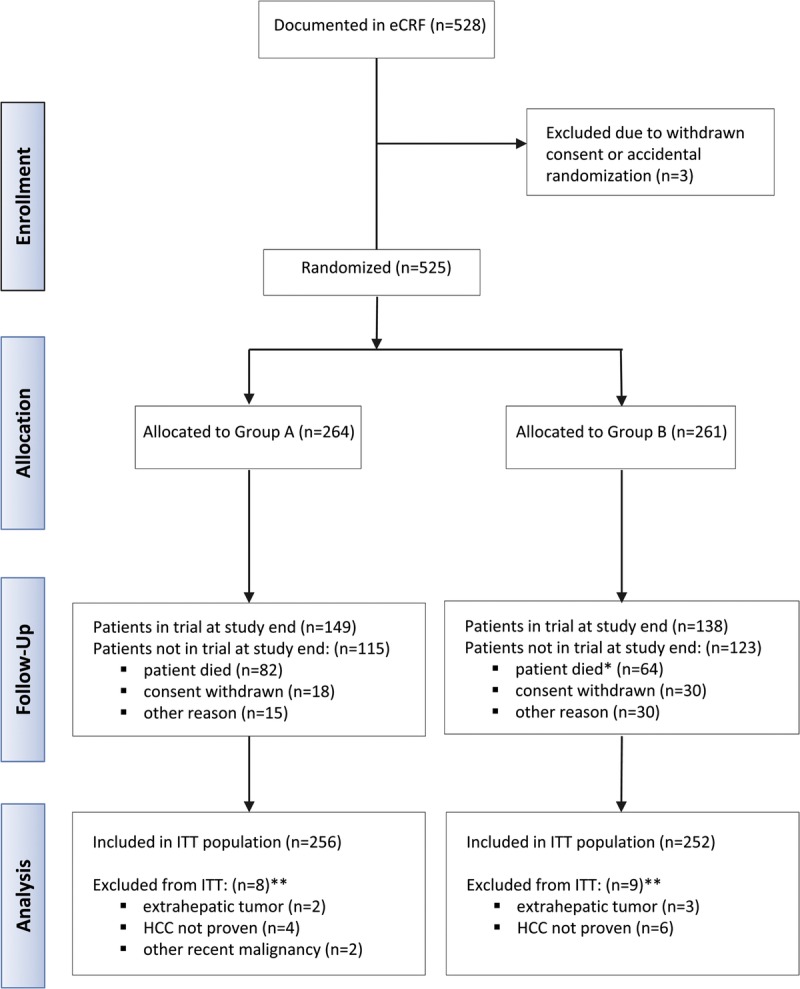
“(A) Study protocol and (B) Consort flow diagram, adopted from Geissler et al.(15) (A) LT recipients with HCC proven on explant histology were randomized to control, group A, or mTOR treatment, group B, at 4–6 wk after LT.”
BackgroundMethodInfluentialSelf-citationParente, A., Carvalho, M. F., Eden, J., Dutkowski, P., & Schlegel, A. A. (2022) · International Journal of Molecular Sciences · doi:10.3390/ijms23179747 · Cited by 22
Ghazal, K., Stenard, F., Dahlqvist, G., Barjon, C., Aoudjehane, L., Scatton, O., & Conti, F. (2017) · Clinics and Research in Hepatology and Gastroenterology · doi:10.1016/j.clinre.2017.10.001 · Cited by 21
Bardou, F.-N., Guillaud, O., Erard‐Poinsot, D., Chambon‐Augoyard, C., Thimonier, E., Vallin, M., Boillot, O., & Dumortier, J. (2019) · Transplant Immunology · doi:10.1016/j.trim.2019.101227 · Cited by 21
Lee, K., Kim, S. H., Yoon, K. C., Lee, J., Cho, J., Hong, S. K., Yi, N., Han, S., Park, S., & Suh, K. (2020) · Journal of Clinical Medicine · doi:10.3390/jcm9103264 · Cited by 21
“The SILVER trial showed that SRL can improve the three to five-year RFS and OS rates in low-risk patients within the Milan criteria [10].”
BackgroundMethodTherapeutic strategies for post-transplant recurrence of hepatocellular carcinoma
Sposito, C., Citterio, D., Virdis, M., Battiston, C., Busset, M. D. D., Flores, M., & Mazzaferro, V. (2022) · World Journal of Gastroenterology · doi:10.3748/wjg.v28.i34.4929 · Cited by 21
Self-citationYe, Q., Zhou, W., Xu, S., Que, Q., Zhan, Q., Zhang, L., Zheng, S., Ling, S., & Xu, X. (2023) · MedComm · doi:10.1002/mco2.439 · Cited by 20
“The outcomes of the only phase 3, multicenter, randomized trial SiL-VER disappointed clinicians, 34 but the reanalysis results revealed that in recipients with higher tumor activity or treatment with sirolimus ≥ 3 months improved prognosis in LT for HCC. 35 Our previous study yielded similar…”
ResultZhou, L., Pan, L., Zheng, Y., Du, G., Fu, X., Zhu, Z., Song, J., Liu, Z., Su, X., Chen, W., et al. (2018) · Oncology Letters · doi:10.3892/ol.2018.9226 · Cited by 20
“Accumulating evidence supports the clinical safety and efficacy of immuno-suppressant selection, and replacing FK506 therapy with SRL following LT for patients with HCC (13,15-17).”
InfluentialFodor, M., Zoller, H., Oberhuber, R., Sucher, R., Seehofer, D., Cillo, U., Line, P., Tilg, H., & Schneeberger, S. (2021) · Transplantation · doi:10.1097/tp.0000000000003973 · Cited by 20
Self-citationDaunting but Worthy Goal: Reducing the De Novo Cancer Incidence After Transplantation
Dantal, J., & Campone, M. (2016) · Transplantation · doi:10.1097/tp.0000000000001428 · Cited by 20
“In addition, some studies suggest that mTORi might reduce the incidence of HCC recurrence in LTRs with preexisting HCC(216-218) and currently, only the SiLVER was sufficiently powered to answer the question.(219) In this trial, LTRs with HCC were randomized at 4 to 6 weeks after Tx to receive, either or not, the incor…”
MethodA mixed blessing for liver transplantation patients — Rapamycin
Fan, G.-H., Zhang, C.-Z., Gao, F., Wei, X., Ling, S., Wang, K., Wang, J., Zheng, S., Nikfarjam, M., & Xu, X. (2022) · Hepatobiliary & pancreatic diseases international · doi:10.1016/j.hbpd.2022.10.004 · Cited by 19
Postoperative adjuvant therapy for hepatocellular carcinoma with microvascular invasion
Jiang, L., Yang, F., Li, J., Huang, Z., Cheng, Q., & Zhang, E. (2023) · World Journal of Gastrointestinal Surgery · doi:10.4240/wjgs.v15.i1.19 · Cited by 19
Challenges in Liver Transplantation for Hepatocellular Carcinoma: A Review of Current Controversies
Mauro, E., Sanduzzi‐Zamparelli, M., Jutras, G., Garcia, R., Soler, A., Llarch, N., Arce, V. H., Ruíz, P., Rimola, J., López, E., et al. (2024) · Cancers · doi:10.3390/cancers16173059 · Cited by 20
“Although retrospective studies and meta-analyses have claimed a favorable profile for these drugs [98], clinical trials have failed to show the benefits of this combination for HCC recurrence rates [99,100].”
BackgroundNazzal, M., Lentine, K. L., Naik, A. S., Ouseph, R., Schnitzler, M. A., Zhang, Z., Randall, H. B., Dharnidharka, V. R., Segev, D. L., Kasiske, B. L., et al. (2018) · Transplantation Direct · doi:10.1097/txd.0000000000000800 · Cited by 19
Ling, S., Feng, T., Zhan, Q., Duan, X., Jiang, G., Shen, T., Shan, Q., Xu, S., Ye, Q., Liu, P., et al. (2020) · Annals of Translational Medicine · doi:10.21037/atm.2020.01.10 · Cited by 19
“The role of SRL in HCC patients with LT is controversial (13-15).”
BackgroundResearch Progresses of Targeted Therapy and Immunotherapy for Hepatocellular Carcinoma
Wang, T., Zhang, Q., Wang, N., Liu, Z., Zhang, B., & Zhao, Y. (2020) · Current Medicinal Chemistry · doi:10.2174/0929867327666201013162144 · Cited by 20
Zhou, L., Wang, J., Lyu, S., Pan, L.-C., Shi, X., Du, G., & He, Q. (2021) · Technology in Cancer Research & Treatment · doi:10.1177/15330338211045820 · Cited by 19
Adams, A. M., Kaseb, A. O., & Cao, H. S. T. (2024) · Elsevier eBooks · doi:10.1016/b978-0-443-21901-6.00003-3 · Cited by 19
Gastaca, M., Valdivieso, A., Bustamante, J., Fernandez, J. R., Ruíz, P., Ventoso, A., Testillano, M., Palomares, I., Salvador, P., Prieto, M., et al. (2016) · Liver Transplantation · doi:10.1002/lt.24514 · Cited by 19
Wang, X., Zeng, J., Wang, L., Zhang, X., Liu, Z., Zhang, H., & Dong, J. (2017) · Oncology Reports · doi:10.3892/or.2017.5699 · Cited by 19
Yao, J., Wan, H., Zhang, J., Shen, W., Wei, X., Shi, C., Ou, B., Liu, D., Ge, L., Fei, J., et al. (2024) · Phytomedicine · doi:10.1016/j.phymed.2024.155552 · Cited by 18
Long‐Term Outcomes of Liver Transplant Recipients. What Do Patients Die From?
Romero, C. J., Marcacuzco, A., Caso, Ó., Manrique, A., García‐Sesma, Á., Calvo, J., Nutu, A., Moreno-González, E., Fernández, M. B. D. Q., & Justo, I. (2025) · World Journal of Surgery · doi:10.1002/wjs.12614 · Cited by 18
Mir, I. H., Guha, S., Behera, J., & Thirunavukkarasu, C. (2021) · Cell Biology International · doi:10.1002/cbin.11670 · Cited by 17
“Study phase Interventions Study status First‐line IMbrave150/ NCT03434379 480 III Atezolizumab + bevacizumab vs. Sorafenib Ongoing REFLECT 954 III Lenvatinib vs. Sorafenib Completed Checkmate‐459 743 III Nivolumab vs. Sorafenib Ongoing ZGDH3/ NCT02645981 668 II/III Donafenib vs. sorafenib Completed ORIENT‐32 566 II/II…”
InfluentialLiver transplantation in malignant disease
Lang, S. A., Bednarsch, J., Czigány, Z., Joechle, K., Kroh, A., Amygdalos, I., Strnad, P., Bruns, T., Heise, D., Ulmer, T. F., et al. (2021) · World Journal of Clinical Oncology · doi:10.5306/wjco.v12.i8.623 · Cited by 18
Immunosuppression in liver and intestinal transplantation
Lerut, J. P., & Gondolesi, G. E. (2021) · Best Practice & Research Clinical Gastroenterology · doi:10.1016/j.bpg.2021.101767 · Cited by 17
Self-citationIndication of Liver Transplant for HCC: Current Status and Future Directions
Horwitz, J. K., & Agopian, V. G. (2024) · Current Hepatology Reports · doi:10.1007/s11901-024-00641-y · Cited by 20
“Despite these results, sirolimus failed to improve long-term overall survival (beyond 5 years) post-LT in the randomized control SiLVER trial; however, the sirolimus arm did have improved recurrence-free survival and overall survival up to 3 and 5 years post-LT, respectively [77].”
Chen, J., Li, H., Zhuo, J., Lin, Z., Hu, Z., He, C., Wu, X., Jin, Y., Lin, Z., Su, R., et al. (2024) · Cancer Biology and Medicine · doi:10.20892/j.issn.2095-3941.2024.0267 · Cited by 18
mTOR inhibitors in pediatric liver transplant recipients
Dumortier, J., Couchonnal, E., Lacaille, F., Rivet, C., Debray, D., Boillot, O., Lachaux, A., Ackermann, O., Gonzales, E. M., Wildhaber, B. E., et al. (2018) · Clinics and Research in Hepatology and Gastroenterology · doi:10.1016/j.clinre.2018.11.010 · Cited by 17
Ye, Q., Ling, S., Jiang, G., Shan, Q., Xu, S., Zhan, Q., Wu, Y., Liu, Y., Zheng, S., & Xu, X. (2021) · European Journal of Surgical Oncology · doi:10.1016/j.ejso.2021.04.001 · Cited by 17
Misas, M. G., Ferrín, G., Rodríguez‐Perálvarez, M., González‐Rubio, S., Sánchez‐Frías, M., Amado, V., Laderas, J. C. P., Poyato, A., Ciria, R., Ayllón, M. D., et al. (2019) · International Journal of Molecular Sciences · doi:10.3390/ijms20020336 · Cited by 17
“, the SILVER trial [16]), which was sufficiently powered and with a prolonged follow-up, did not show a benefit in terms of recurrence-free survival rates.”
BackgroundInfluentialDe novo and recurrent malignancy
Shalaby, S., & Burra, P. (2020) · Best Practice & Research Clinical Gastroenterology · doi:10.1016/j.bpg.2020.101680 · Cited by 17
Self-citationHepatocellular carcinoma systemic treatment update: From early to advanced stage
Teng, W., Wu, T.-C., & Lin, S. (2024) · Biomedical Journal · doi:10.1016/j.bj.2024.100815 · Cited by 17
“Sirolimus, a mTOR inhibitor, did not improve RFS in patients with HCC who underwent liver transplantation in the SiLVER trial [36].”
Infections in Liver Transplantation
Mohanraj, B. S., Rangnekar, A. S., & Timpone, J. G. (2019) · Springer eBooks · doi:10.1007/978-1-4939-9034-4_3 · Cited by 22
“Patients with cirrhosis and portal hypertension are unlikely to tolerate hepatic resection of their HCC and are offered OLT in order to improve their recurrence-free survival.”
BackgroundInfluentialHong, S. K., Lee, K., Yoon, K. C., Kim, H., Ahn, S. W., Kim, H., Lee, J., Cho, J., Yi, N., & Suh, K. (2019) · Clinical Transplantation · doi:10.1111/ctr.13703 · Cited by 16
Pfrepper, C., Herber, A., Weimann, A., Siegemund, T., Engelmann, C., Aehling, N., Seehofer, D., Berg, T., & Petros, S. (2020) · Transplant International · doi:10.1111/tri.13804 · Cited by 17
“Although the use of mTORi is increasing, particularly in patients transplanted for hepatocellular carcinoma [19] and in those suffering from CNI adverse events [20], there are very few published data regarding interactions between mTORi and DOAC.”
BackgroundEvolving challenges with long‐term care of liver transplant recipients
Odenwald, M. A., Roth, H. F., Reticker, A., Segovia, M. C., & Pillai, A. A. (2023) · Clinical Transplantation · doi:10.1111/ctr.15085 · Cited by 16
Clinical Outcomes of Tuberculosis in Recipients After Living Donor Liver Transplantation
Salvador, N. G., Wee, S.-Y., Lin, C., Wu, C., Lu, H., Lin, T., Lee, W.-F., Chan, Y., Lin, L., & Chen, C. (2018) · Annals of Transplantation · doi:10.12659/aot.911034 · Cited by 16
“In patients with HCC or with unfavorable renal function, mTORi (Sirolimus/Everolimus) were given with or as a replacement for tacrolimus, respectively [27,28].”
BackgroundEverolimus Mitigates the Risk of Hepatocellular Carcinoma Recurrence after Liver Transplantation
SIMONE, P. D., Precisi, A., Lai, Q., Ducci, J., Campani, D., Marchetti, P., Gitto, S., & Crocetti, L. (2024) · Cancers · doi:10.3390/cancers16071243 · Cited by 15
Current Trends and Advancements in the Management of Hepatocellular Carcinoma
Teufel, A., Kudo, M., Qian, Y., Daza, J., Rodriguez, I., Reissfelder, C., Ridruejo, E., & Ebert, M. P. (2024) · Digestive Diseases · doi:10.1159/000538815 · Cited by 17
Manzia, T. M., Antonelli, B., Carraro, A., Conte, G., Guglielmo, N., Lauterio, A., Mameli, L., Cillo, U., Carlis, L. G. D., Gaudio, M. D., et al. (2024) · Hepatology International · doi:10.1007/s12072-024-10703-4 · Cited by 17
“…response after locoregional treatment according to the modified Response Evaluation Criteria in Solid Tumors (mRECIST), alpha-fetoprotein (AFP) levels, and the time spent on the waiting list before LT [16, 17]. mTORis have been shown to lower HCC recurrence in LT patients with HCC [4, 18, 19].”
MethodSelf-citationmTOR Signaling: Roles in Hepatitis B Virus Infection and Hepatocellular Carcinoma
Mei, L., Sun, H., Yan, Y., Ji, H., Su, Q., Chang, L., & Wang, L. (2024) · International Journal of Biological Sciences · doi:10.7150/ijbs.95894 · Cited by 16
“Significantly, the benefits of Sirolimus in the initial 3-5 years of recurrence free survival (RFS) and OS are more pronounced in low-risk patients compared to high-risk groups[157].”
BackgroundNew Scenarios in Liver Transplantation for Hepatocellular Carcinoma
Mauro, E., Rodríguez‐Perálvarez, M., D’Alessio, A., Crespo, G., Piñero, F., Martin, E. D., Colmenero, J., Pinato, D. J., & Forner, A. (2024) · Liver International · doi:10.1111/liv.16142 · Cited by 15
“…that mTOR inhibitors decrease the risk of HCC recurrence [168], but prospective studies and randomised trials have failed to confirm this effect [169, 170], probably owing to attrition bias: patients who withdrew mTOR inhibitors due to side effects are not accounted for in retrospective studies.”
Emamaullee, J. A., Bral, M., Meeberg, G., Montaño‐Loza, A. J., Bain, V. G., Burak, K. W., Bigam, D. L., Shapiro, A. M. J., & Kneteman, N. M. (2019) · Canadian Journal of Gastroenterology and Hepatology · doi:10.1155/2019/2509059 · Cited by 15
Self-citationManagement of Recurrent HCC After Liver Transplantation
Sarıcı, B., Işık, B., & Yılmaz, S. (2020) · Journal of Gastrointestinal Cancer · doi:10.1007/s12029-020-00498-6 · Cited by 15
Finotti, M., Vitale, A., Gringeri, E., D’Amico, F. E., Boetto, R., Bertacco, A., Lonardi, S., Bergamo, F., Feltracco, P., & Cillo, U. (2021) · Frontiers in Surgery · doi:10.3389/fsurg.2021.693387 · Cited by 15
Self-citationToniutto, P., Germani, G., Ferrarese, A., Bitetto, D., Zanetto, A., Fornasiere, E., Fumolo, E., Shalaby, S., & Burra, P. (2021) · The American Journal of Medicine · doi:10.1016/j.amjmed.2021.08.005 · Cited by 15
Self-citationZhou, L., Pan, L.-C., Zheng, Y.-G., Zhang, X., Liu, Z., Meng, X., Shi, H., Du, G., & He, Q. (2020) · Annals of Translational Medicine · doi:10.21037/atm.2020.03.129 · Cited by 15
Saidy, R. R. O., Postel, M. P., Pflüger, M. J., Schoening, W. N., Öllinger, R., Gül‐Klein, S., Schmelzle, M., Tacke, F., Pratschke, J., & Eurich, D. (2021) · Cancers · doi:10.3390/cancers13071617 · Cited by 15
“A randomized controlled trial comparing sirolimus with mTORI-free immunosuppression showed no benefit regarding HCC recurrence in the entire study population, whereas an exploratory analysis found improved survival when mTORI were administered for more than three months after LT [8,23].”
BackgroundMethodSelf-citationLucidi, C., Biolato, M., Lai, Q., Lattanzi, B., Lenci, I., Milana, M., Lionetti, R., Liguori, A., Angelico, M., Tisone, G., et al. (2021) · Annals of Hepatology · doi:10.1016/j.aohep.2021.100309 · Cited by 15
Garcia, K. B., Hussein, A., Satish, S., Wehrle, C. J., Karakaya, O. F., Panconesi, R., Sun, K., Jiao, C., Fernandes, E., Pinna, A. D., et al. (2024) · Cancers · doi:10.3390/cancers16233959 · Cited by 14
Self-citationNavarro‐Villarán, E., de la Cruz‐Ojeda, P., Contreras, L., González, R., Negrete, M., Hernández, M. A. R., Marín-Gómez, L. M., Álamo-Martínez, J. M., Calvo, A., Gómez‐Bravo, M. Á., et al. (2020) · Cellular Physiology and Biochemistry · doi:10.33594/000000230 · Cited by 15
Risk factors for hepatocellular carcinoma recurrence after liver transplantation
Toniutto, P., Fornasiere, E., Fumolo, E., & Bitetto, D. (2020) · Hepatoma Research · doi:10.20517/2394-5079.2020.40 · Cited by 14
“To confirm the potential beneficial role of the mTOR inhibitor sirolimus in decreasing the risk of HCC recurrence after LT, a prospective multicenter and randomized study was performed([157]).”
Background
Metadata
- Authors
- Geissler, E. K., Schnitzbauer, A. A., Zülke, C., Lamby, P. E., Proneth, A., Duvoux, C., Burra, P., Jauch, K.-W., Rentsch, M., Ganten, T. M., Schmidt, J., Settmacher, U., Heise, M., Rossi, G., Cillo, U., Kneteman, N., Adam, R., van Hoek, B., Bachellier, P., Wolf, P., Rostaing, L., Bechstein, W. O., Rizell, M., Powell, J., Hidalgo, E., Gugenheim, J., Wolters, H., Brockmann, J., Roy, A., Mutzbauer, I., Schlitt, A., Beckebaum, S., Graeb, C., Nadalin, S., Valente, U., Turrión, V. S., Jamieson, N., Scholz, T., Colledan, M., Fändrich, F., Becker, T., Söderdahl, G., Chazouillères, O., Mäkisalo, H., Pageaux, G.-P., Steininger, R., Soliman, T., de Jong, K. P., Pirenne, J., Margreiter, R., Pratschke, J., Pinna, A. D., Hauss, J., Schreiber, S., Strasser, S., Klempnauer, J., Troisi, R. I., Bhoori, S., Lerut, J., Bilbao, I., Klein, C. G., Königsrainer, A., Mirza, D. F., Otto, G., Mazzaferro, V., Neuhaus, P., & Schlitt, H. J.
- Affiliations
- University of Padua (IT)
- University Hospital Regensburg (DE)
- Université Paris-Est Créteil (FR)
- LMU Klinikum (DE)
- University Hospital Heidelberg (DE)
- Jena University Hospital (DE)
- University Medical Center of the Johannes Gutenberg University Mainz (DE)
- Fondazione IRCCS Ca' Granda Ospedale Maggiore Policlinico (IT)
- University Hospital Frankfurt (DE)
- Corresponding author
- Geissler, Edward K.
- ORCID
- Geissler, Edward K.
- Schnitzbauer, Andreas A.
- Lamby, Philipp E.
- Duvoux, Christophe
- Burra, Patrizia
- Schmidt, Jan
- Settmacher, Utz
- Heise, Michael
- Rossi, Giorgio
- Cillo, Umberto
- Kneteman, Norman
- Adam, René
- Bachellier, Philippe
- Rostaing, Lionel
- Bechstein, Wolf O.
- Rizell, Magnus
- Powell, James
- Hidalgo, Ernest
- Gugenheim, Jean
- Wolters, Heiner
- Roy, André
- Graeb, Christian
- Nadalin, Silvio
- Valente, Umberto
- Colledan, Michele
- Becker, Thomas
- Söderdahl, Gunnar
- Chazouillères, Olivier
- Pageaux, Georges-Philippe
- Soliman, Thomas
- Pirenne, Jacques
- Pratschke, Johann
- Schreiber, Stefan
- Strasser, Simone
- Troisi, Roberto I.
- Bhoori, Sherrie
- Lerut, Jan
- Bilbao, Itxarone
- Königsrainer, Alfred
- Mirza, Darius F.
- Mazzaferro, Vincenzo
- Schlitt, Hans J.
- Venue
- Transplantation
- Published
- 2016-01
- Volume
- 100
- Issue
- 1
- Pages
- 116-125
- ISSN
- 0041-1337 (ISSN-L)
- PMC
- PMC4683033
- OpenAlex
- W2173253647
- Semantic Scholar
- 2f82f9224f53dca199e9f425d13b54048adc5922
- Cited by
- 433
- References
- 39
- Citations by year
- 2026: 27 · 2025: 24 · 2024: 53 · 2023: 36 · 2022: 43 · 2021: 54 · 2020: 46 · 2019: 37 · 2018: 38 · 2017: 44 · 2016: 26
- FWCI
- 21.89
- Type
- journal article
- Language
- en
- Open access
- hybrid
- doi.org
- Licence
- cc-by-nc-nd
- Locations
- Transplantation (publishedVersion, cc-by-nc-nd)
- PubMed Central (publishedVersion, cc-by-nc-nd)
- PubMed (publishedVersion)
- Leiden Repository (Leiden University) (submittedVersion)
- Ghent University Academic Bibliography (Ghent University) (submittedVersion, cc-by-nc-nd)
- Työväentutkimus Vuosikirja (submittedVersion, other-oa)
- Data Archiving and Networked Services (DANS) (submittedVersion, other-oa)
- HAL (submittedVersion)
- BOA (University of Milano-Bicocca) (submittedVersion)
- Digital Access to Libraries (submittedVersion)
- University of Regensburg Publication Server (University of Regensburg) (submittedVersion)
- Lirias (KU Leuven) (submittedVersion)
- University of Birmingham Research Portal (University of Birmingham) (submittedVersion, cc-by)
- University of Groningen research database (University of Groningen / Centre for Information Technology) (submittedVersion, cc-by-nc-nd)
- Padua Research Archive (University of Padova) (submittedVersion)
- Funders
- Pfizer
- Universitätsklinikum Regensburg
- Universität Regensburg
- Topics
- Health Sciences › Medicine › Hepatology › Hepatocellular Carcinoma Treatment and Prognosis
- Health Sciences › Medicine › Surgery › Organ Transplantation Techniques and Outcomes
- Health Sciences › Medicine › Surgery › Transplantation: Methods and Outcomes
- Keywords
- rapamycin, liver transplantation, hepatocellular carcinoma, mTOR inhibitors, immunosuppression, recurrence-free survival, overall survival, Milan criteria, patient selection, adverse events
- MeSH terms
- Adult, Age Factors, Aged, Australia, Canada, Drug Therapy, Combination, Europe, Female, Carcinoma, Hepatocellular, Humans, Immunosuppressive Agents, Liver Neoplasms, Male, Middle Aged, Neoplasm Recurrence, Local, Prospective Studies, Risk Factors, Time Factors, Liver Transplantation, Treatment Outcome, Disease Progression, Risk Assessment, Disease-Free Survival, Sirolimus, Kaplan-Meier Estimate, Young Adult, Intention to Treat Analysis, TOR Serine-Threonine Kinases
About these checks
Registry, retraction, Cites and statistics results are computed, not judged, with one exception: a printed reference that no index lists is read once by a model before it counts as a citation error. Claims are extracted by a model and kept only when their quote appears verbatim in the text; each cited source is then checked, with a model’s help, for whether it says what the claim relies on. Those verdicts can be wrong — read the claim’s quote and the cited source before relying on one.
Statistics and arithmetic are recomputed, not judged.
Confidence bands are shown only for fields calibrated on our annotated test set. None is calibrated yet, so no band is shown.
What counts as a claim ›How we measure confidence ›How we check this ›
Are you an author, or do you see a problem with this page? Request a review
Data sources
Bibliographic data: Semantic Scholar, OpenAlex, Crossref.
Contains information from the Semantic Scholar Academic Graph Datasets, made available under the ODC Attribution License (ODC-BY 1.0).
Semantic Scholar’s data is described in: Kinney, R., et al. (2023). The Semantic Scholar Open Data Platform. arXiv:2301.10140.
