

The DOI matches its Crossref record; 69 of the 69 references it cites were found in a registry or an index.
Estimated transmissibility and impact of SARS-CoV-2 lineage B.1.1.7 in England
Open accessPreprint — published as 10.1126/science.abg3055 · Paper page
Abstract
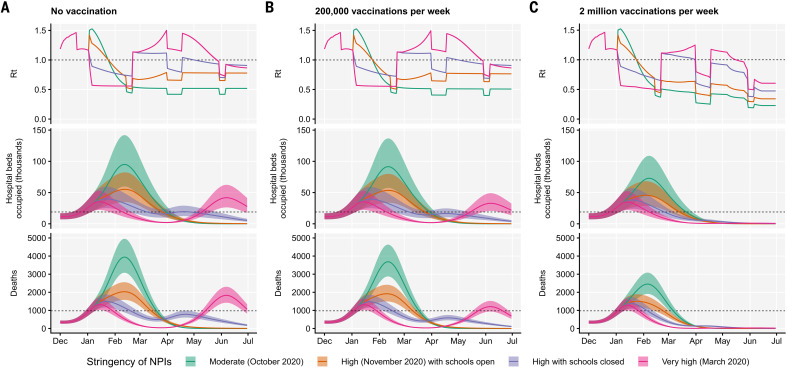
A novel SARS-CoV-2 variant, VOC 202012/01 (lineage B.1.1.7), emerged in southeast England in November 2020 and is rapidly spreading towards fixation. Using a variety of statistical and dynamic modelling approaches, we estimate that this variant has a 43–90% (range of 95% credible intervals 38–130%) higher reproduction number than preexisting variants. A fitted two-strain dynamic transmission model shows that VOC 202012/01 will lead to large resurgences of COVID-19 cases. Without stringent control measures, including limited closure of educational institutions and a greatly accelerated vaccine roll-out, COVID-19 hospitalisations and deaths across England in 2021 will exceed those in 2020. Concerningly, VOC 202012/01 has spread globally and exhibits a similar transmission increase (59–74%) in Denmark, Switzerland, and the United States.
Overview
The claims and statistics of this paper haven’t been checked yet.
Run the check — free, no account needed. It reads the open-access text and checks the sources it cites.
Integrity signals
Registry
Cites
Statistics
Figures
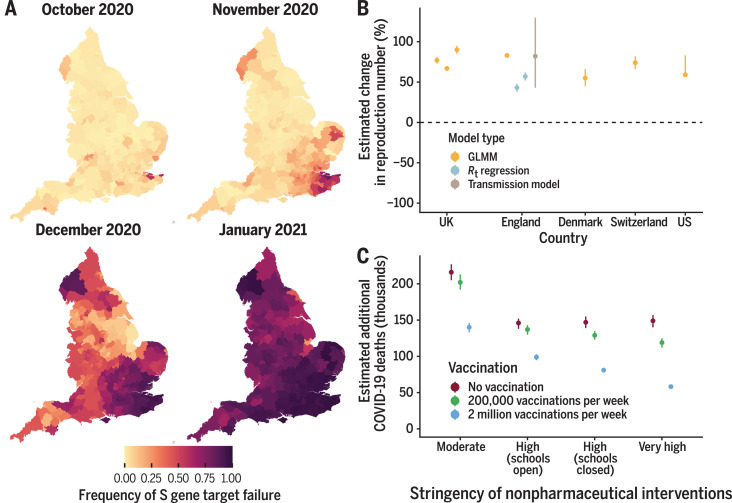
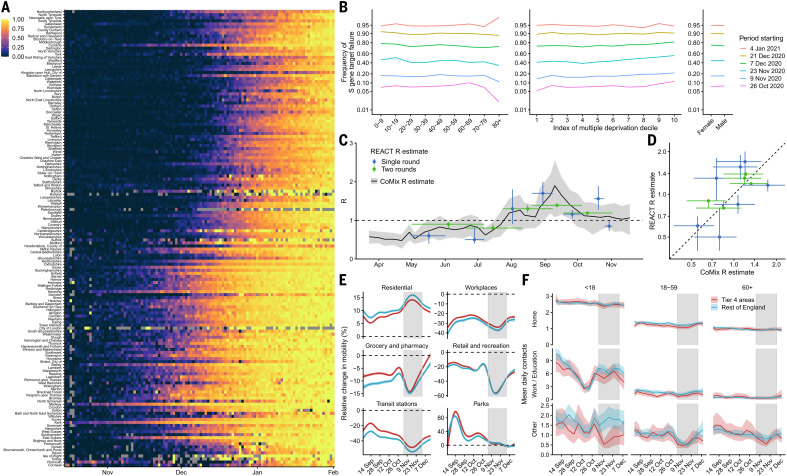
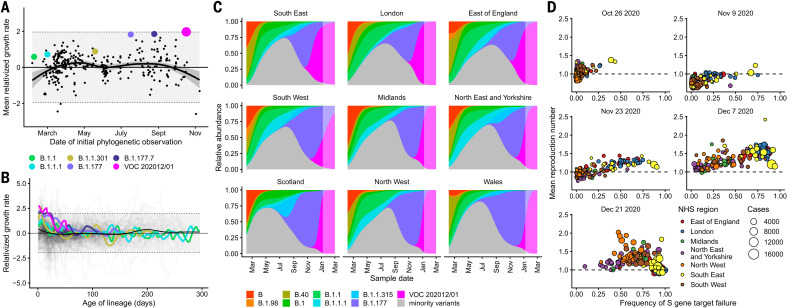
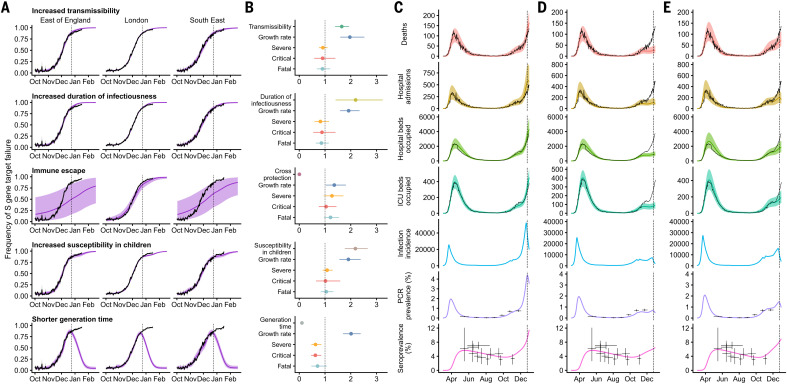
Verification
Claims the paper makes
The claims and statistics of this paper haven’t been checked yet.
Run the check — free, no account needed. It reads the open-access text and checks the sources it cites.
Claims other papers make about this one
Each is checked against this paper’s own text: does it say what the citing paper says it does?
The check wasn’t confident either way, so it gives no verdict — never disputed.
In the citing paper
“In addition, similar results have been reported by others using vaccinee and convalescent plasmas and a variety of different pseudotype and authentic virus assays15,31,45–49.”
From mRNA vaccine-elicited antibodies to SARS-CoV-2 and circulating variants (2021) · cites this paper as [15]
Experimental — accuracy not yet measuredIn the citing paper
“They are frequently sensitive to mutation in these residues and select for K417N, E484K and N501Y mutations in SARS-CoV-2 S protein expression libraries in yeast and VSV 12,15,33.”
From mRNA vaccine-elicited antibodies to SARS-CoV-2 and circulating variants (2021) · cites this paper as [15]
In the citing paper
“Additionally, K417N, Y453F, S477R, N501Y, and D614G represent circulating variants some of which have been associated with rapidly increasing case numbers14,15,19,33–35.”
From mRNA vaccine-elicited antibodies to SARS-CoV-2 and circulating variants (2021) · cites this paper as [15]
Self-check
Percentages, sums and reported differences re-computed from the paper’s own numbers.
The self-check needs the paper’s full text.
Citations
Cites
Early transmission dynamics in Wuhan, China, of novel coronavirus-infected pneumonia
Li, Q., Guan, X., Wu, P., Wang, X., Zhou, L., Tong, Y., Ren, R., Leung, K. S. M., Lau, E. H. Y., Wong, J. Y., et al. (2020) · New England Journal of Medicine · doi:10.1056/nejmoa2001316 · Cited by 16,575
Lauer, S. A., Grantz, K. H., Bi, Q., Jones, F. K., Zheng, Q., Meredith, H. R., Azman, A. S., Reich, N. G., & Lessler, J. (2020) · Annals of Internal Medicine · doi:10.7326/m20-0504 · Cited by 5,970
Ethier, S. N., & Kurtz, T. G. (1986) · Wiley series in probability and statistics · doi:10.1002/9780470316658 · Cited by 3,662
Docherty, A. B., Harrison, E. M., Green, C. A., Hardwick, H. E., Pius, R., Norman, L., Holden, K. A., Read, J. M., Dondelinger, F., Carson, G., et al. (2020) · BMJ · doi:10.1136/bmj.m1985 · Cited by 3,481
Advanced Bayesian Multilevel Modeling with the R Package brms
Bürkner, P.-C. (2018) · The R Journal · doi:10.32614/rj-2018-017 · Cited by 3,015
Social Contacts and Mixing Patterns Relevant to the Spread of Infectious Diseases
Mossong, J., Hens, N., Jit, M., Beutels, P., Auranen, K., Mikolajczyk, R., Massari, M., Salmaso, S., Tomba, G. S., Wallinga, J., et al. (2008) · PLoS Medicine · doi:10.1371/journal.pmed.0050074 · Cited by 2,900
Self-citationProjecting the transmission dynamics of SARS-CoV-2 through the postpandemic period
Kissler, S. M., Tedijanto, C., Goldstein, E., Grad, Y. H., & Lipsitch, M. (2020) · Science · doi:10.1126/science.abb5793 · Cited by 2,611
Estimated transmissibility and impact of SARS-CoV-2 lineage B.1.1.7 in England
Davies, N. G., Abbott, S., Barnard, R. C., Jarvis, C. I., Kucharski, A. J., Munday, J. D., Pearson, C. A. B., Russell, T. W., Tully, D. C., Washburne, A. D., et al. (2021) · Science · doi:10.1126/science.abg3055 · Cited by 2,581
Self-citationA dynamic nomenclature proposal for SARS-CoV-2 lineages to assist genomic epidemiology
Rambaut, A., Holmes, E. C., O’Toole, Á., Hill, V., McCrone, J. T., Ruis, C., du Plessis, L., & Pybus, O. G. (2020) · Nature Microbiology · doi:10.1038/s41564-020-0770-5 · Cited by 2,543
Tegally, H., Wilkinson, E., Giovanetti, M., Iranzadeh, A., Fonseca, V., Giandhari, J., Doolabh, D., Pillay, S., San, E. J., Msomi, N., et al. (2020) · doi:10.1101/2020.12.21.20248640 · Cited by 2,535
Cited by
Sorted by citations
Items 401–500 of 1,005
Portmann, L., de Kraker, M. E. A., Fröhlich, G., Thiabaud, A., Roelens, M., Schreiber, P. W., Troillet, N., Iten, A., Widmer, A. F., Harbarth, S., et al. (2023) · JAMA Network Open · doi:10.1001/jamanetworkopen.2022.55599 · Cited by 54
Self-citationZhan, Y., Lin, Z., Liang, J., Sun, R., Li, Y., Lin, B., Ge, F., Lin, L., Lu, H., Su, L., et al. (2023) · EClinicalMedicine · doi:10.1016/j.eclinm.2023.102359 · Cited by 55
Bounding the levels of transmissibility & immune evasion of the Omicron variant in South Africa
Pearson, C. A. B., Silal, S. P., Li, M. W. Z., Dushoff, J., Bolker, B. M., Abbott, S., van Schalkwyk, C., Davies, N. G., Barnard, R. C., Edmunds, W. J., et al. (2021) · doi:10.1101/2021.12.19.21268038 · Cited by 44
Self-citationKiem, C. T., Massonnaud, C., Lévy-Bruhl, D., Poletto, C., Colizza, V., Bosetti, P., Fontanet, A. L., Gabet, A., Olié, V., Zanetti, L. C. D. S., et al. (2021) · EClinicalMedicine · doi:10.1016/j.eclinm.2021.101001 · Cited by 57
The effect of COVID-19 vaccination in Italy and perspectives for living with the virus
Marziano, V., Guzzetta, G., Mammone, A., Riccardo, F., Poletti, P., Trentini, F., Manica, M., Siddu, A., Bella, A., Stefanelli, P., et al. (2021) · Nature Communications · doi:10.1038/s41467-021-27532-w · Cited by 55
The way of SARS-CoV-2 vaccine development: success and challenges
Dong, Y., Dai, T., Wang, B., Zhang, L., Zeng, L., Huang, J., Yan, H., Zhang, L., & Zhou, F. (2021) · Signal Transduction and Targeted Therapy · doi:10.1038/s41392-021-00796-w · Cited by 53
From quantum‐derived principles underlying cysteine reactivity to combating the COVID ‐19 pandemic
Mazmanian, K., Chen, T., Sargsyan, K., & Lim, C. (2022) · Wiley Interdisciplinary Reviews Computational Molecular Science · doi:10.1002/wcms.1607 · Cited by 53
Covid-19: virology, variants, and vaccines
Young, M., Crook, H., Scott, J. T., & Edison, P. (2022) · BMJ Medicine · doi:10.1136/bmjmed-2021-000040 · Cited by 55
Andrade, V. M., Christensen-Quick, A., Agnes, J. T., Tur, J., Reed, C., Kalia, R., Marrero, I., Elwood, D., Schultheis, K., Purwar, M., et al. (2021) · npj Vaccines · doi:10.1038/s41541-021-00384-7 · Cited by 51
Impact of a New SARS-CoV-2 Variant on the Population: A Mathematical Modeling Approach
González‐Parra, G., Martínez‐Rodríguez, D., & Villanueva, R. J. (2021) · Mathematical and Computational Applications · doi:10.3390/mca26020025 · Cited by 55
NeutrobodyPlex—monitoring SARS-CoV-2 neutralizing immune responses using nanobodies
Wagner, T. R., Kaiser, P. D., Gramlich, M., Ostertag, E., Ruétalo, N., Junker, D., Häring, J., Traenkle, B., Becker, M., Dulovic, A., et al. (2021) · EMBO Reports · doi:10.15252/embr.202052325 · Cited by 50
Dominance of Alpha and Iota variants in SARS-CoV-2 vaccine breakthrough infections in New York City
Duerr, R., Dimartino, D., Marier, C., Zappile, P., Wang, G., Lighter, J., Elbel, B. D., Troxel, A. B., & Heguy, A. (2021) · Journal of Clinical Investigation · doi:10.1172/jci152702 · Cited by 53
Yaniv, K., Ozer, E., Lewis, Y. E., & Kushmaro, A. (2021) · Water Research · doi:10.1016/j.watres.2021.117808 · Cited by 50
Ayoub, H. H., Mumtaz, G. R., Seedat, S., Makhoul, M., Chemaitelly, H. S., & Abu-Raddad, L. J. (2021) · Global Epidemiology · doi:10.1016/j.gloepi.2021.100068 · Cited by 48
Wotring, J. W., Fursmidt, R. M., Ward, L. S., & Sexton, J. Z. (2022) · Journal of Dairy Science · doi:10.3168/jds.2021-21247 · Cited by 52
Inter-domain communication in SARS-CoV-2 spike proteins controls protease-triggered cell entry
Qing, E., Li, P., Cooper, L. M., Schulz, S. R., Jäck, H., Rong, L., Perlman, S. M., & Gallagher, T. (2022) · Cell Reports · doi:10.1016/j.celrep.2022.110786 · Cited by 45
Tetz, G. V., & Tetz, V. (2022) · Microorganisms · doi:10.3390/microorganisms10020280 · Cited by 54
Rapid characterization of spike variants via mammalian cell surface display
Javanmardi, K., Chou, C., Terrace, C. I., Annapareddy, A., Kaoud, T. S., Guo, Q., Lutgens, J., Zorkic, H., Horton, A. P., Gardner, E. C., et al. (2021) · Molecular Cell · doi:10.1016/j.molcel.2021.11.024 · Cited by 54
The SARS-CoV-2 spike S375F mutation characterizes the Omicron BA.1 variant
Kimura, I., Yamasoba, D., Nasser, H., Zahradník, J., Kosugi, Y., Wu, J., Nagata, K., Uriu, K., Tanaka, Y., Ito, J., et al. (2022) · iScience · doi:10.1016/j.isci.2022.105720 · Cited by 50
Safety and Reactogenicity of the ChAdOx1 (AZD1222) COVID-19 Vaccine in Saudi Arabia
Bahrani, S. A., Albarrak, A. M., Alghamdi, O. A., Alghamdi, M. A., Hakami, F. H., Abaadi, A. K. A., Alkhrashi, S. A., Alghamdi, M. Y., Almershad, M. M., Alanazi, M. M., et al. (2021) · International Journal of Infectious Diseases · doi:10.1016/j.ijid.2021.07.052 · Cited by 52
Genetic emergence of B.1.617.2 in COVID-19
Kirola, L. (2021) · New Microbes and New Infections · doi:10.1016/j.nmni.2021.100929 · Cited by 51
Sofonea, M. T., Roquebert, B., Foulongne, V., Morquin, D., Verdurme, L., Trombert‐Paolantoni, S., Roussel, M., Bonetti, J.-C., Zerah, J., Haïm‐Boukobza, S., et al. (2022) · Emerging infectious diseases · doi:10.3201/eid2807.220033 · Cited by 51
Lung fibrosis: Post-COVID-19 complications and evidences
Hirawat, R., Jain, N., Saifi, M. A., Rachamalla, M., & Godugu, C. (2022) · International Immunopharmacology · doi:10.1016/j.intimp.2022.109418 · Cited by 54
Tallei, T. E., Fatimawali, F., Yelnetty, A., Idroes, R., Kusumawaty, D., Emran, T. B., Yesiloglu, T. Z., Sippl, W., Mahmud, S., Alqahtani, T., et al. (2021) · Frontiers in Pharmacology · doi:10.3389/fphar.2021.717757 · Cited by 49
An antibody class with a common CDRH3 motif broadly neutralizes sarbecoviruses
Liu, L., Iketani, S., Guo, Y., Reddem, E. R., Casner, R. G., Nair, M. S., Yu, J., Chan, J. F., Wang, M., Cerutti, G., et al. (2022) · Science Translational Medicine · doi:10.1126/scitranslmed.abn6859 · Cited by 51
Model-based evaluation of alternative reactive class closure strategies against COVID-19
Liu, Q.-H., Zhang, J., Cheng, P., Litvinova, M., Huang, S., Poletti, P., Trentini, F., Guzzetta, G., Marziano, V., Zhou, T., et al. (2022) · Nature Communications · doi:10.1038/s41467-021-27939-5 · Cited by 50
How will mass-vaccination change COVID-19 lockdown requirements in Australia?
Zachreson, C., Chang, S. L., Cliff, O. M., & Prokopenko, M. (2021) · The Lancet Regional Health - Western Pacific · doi:10.1016/j.lanwpc.2021.100224 · Cited by 49
SARS-CoV-2 diagnostic testing rates determine the sensitivity of genomic surveillance programs
Han, A. X., Toporowski, A., Sacks, J. A., Perkins, M. D., Briand, S. C., Kerkhove, M. D. V., Hannay, E., Carmona, S., Rodriguez, B., Parker, E., et al. (2023) · Nature Genetics · doi:10.1038/s41588-022-01267-w · Cited by 50
Vaccine escape in a heterogeneous population: insights for SARS-CoV-2 from a simple model
Gog, J. R., Hill, E. M., Danon, L., & Thompson, R. N. (2021) · Royal Society Open Science · doi:10.1098/rsos.210530 · Cited by 49
van Doremalen, N., Purushotham, J. N., Schulz, J. E., Holbrook, M. G., Bushmaker, T., Carmody, A., Port, J. R., Yinda, C. K., Okumura, A., Saturday, G. A., et al. (2021) · bioRxiv (Cold Spring Harbor Laboratory) · doi:10.1101/2021.01.09.426058 · Cited by 50
Rapid lateral flow tests for the detection of SARS-CoV-2 neutralizing antibodies
Wang, J. J., Zhang, N., Richardson, S. A., & Wu, J. V. (2021) · Expert Review of Molecular Diagnostics · doi:10.1080/14737159.2021.1913123 · Cited by 49
Emerging SARS-CoV-2 variants: impact on vaccine efficacy and neutralizing antibodies
Sharun, K., Tiwari, R., Dhama, K., Emran, T. B., Rabaan, A. A., & Mutair, A. S. A. (2021) · Human Vaccines & Immunotherapeutics · doi:10.1080/21645515.2021.1923350 · Cited by 51
Lives saved and hospitalizations averted by COVID-19 vaccination in New York City: a modeling study
Shoukat, A., VILCHES, T. N., Moghadas, S. M., Sah, P., Schneider, E. C., Shaff, J., Zucker, J. R., Quinn, C., Chokshi, D. A., & Galvani, A. P. (2021) · The Lancet Regional Health - Americas · doi:10.1016/j.lana.2021.100085 · Cited by 51
SARS-CoV-2 accessory protein ORF8 is secreted extracellularly as a glycoprotein homodimer
Matsuoka, K., Imahashi, N., Ohno, M., Ode, H., Nakata, Y., Kubota, M., Sugimoto, A., Imahashi, M., Yokomaku, Y., & Iwatani, Y. (2022) · Journal of Biological Chemistry · doi:10.1016/j.jbc.2022.101724 · Cited by 49
Cooperative multivalent receptor binding promotes exposure of the SARS-CoV-2 fusion machinery core
Pak, A. J., Yu, A., Ke, Z., Briggs, J. A. G., & Voth, G. A. (2022) · Nature Communications · doi:10.1038/s41467-022-28654-5 · Cited by 47
Empirical examples demonstrate how relational thinking might enrich science and practice
Eyster, H. N., Satterfield, T. A., & Chan, K. M. A. (2023) · People and Nature · doi:10.1002/pan3.10453 · Cited by 57
Human Organoids and Organs‐on‐Chips for Addressing COVID‐19 Challenges
Wang, Y., Wang, P., & Qin, J. (2022) · Advanced Science · doi:10.1002/advs.202105187 · Cited by 48
Chen, L., Lu, L., Choi, C. Y.-K., Cai, J., Tsoi, H., Chu, A. W., Ip, J. D., Chan, W.-M., Zhang, R., Zhang, X., et al. (2021) · Clinical Infectious Diseases · doi:10.1093/cid/ciab656 · Cited by 48
Çeli̇k, İ., Yadav, R., Düzgün, Z., Albogami, S. M., El‐Shehawi, A. M., Fatimawali, F., Idroes, R., Tallei, T. E., & Emran, T. B. (2021) · Biology · doi:10.3390/biology10090880 · Cited by 49
Fitness, growth and transmissibility of SARS-CoV-2 genetic variants
Volz, E. (2023) · Nature Reviews Genetics · doi:10.1038/s41576-023-00610-z · Cited by 51
SARS‐CoV‐2 virulence evolution: Avirulence theory, immunity and trade‐offs
Alizon, S., & Sofonea, M. T. (2021) · Journal of Evolutionary Biology · doi:10.1111/jeb.13896 · Cited by 53
Suleman, M., Yousafi, Q., Ali, J., Ali, S. S., Hussain, Z., Ali, S., Waseem, M., Iqbal, A., Ahmad, S., Khan, A., et al. (2021) · Computers in Biology and Medicine · doi:10.1016/j.compbiomed.2021.104936 · Cited by 49
Lumley, S., Rodger, G., Constantinides, B., Sanderson, N., Chau, K. K., Street, T. L., O’Donnell, D., Howarth, A., Hatch, S. B., Marsden, B. D., et al. (2021) · medRxiv · doi:10.1101/2021.03.09.21253218 · Cited by 48
Wollschläger, P., Tödt, D., Gerlitz, N., Pfaender, S., Bollinger, T., Sing, A., Dangel, A., Ackermann, N., Korn, K., Ensser, A., et al. (2021) · Clinical Microbiology and Infection · doi:10.1016/j.cmi.2021.05.025 · Cited by 47
Emergence of an early SARS-CoV-2 epidemic in the United States
Zeller, M., Gangavarapu, K., Anderson, C., Smither, A. R., Vanchiere, J. A., Rose, R., Snyder, D. J., Dudas, G., Watts, A., Matteson, N. L., et al. (2021) · Cell · doi:10.1016/j.cell.2021.07.030 · Cited by 51
Yuan, Y., Deng, Z., Chen, M., Yin, D., Zheng, J., Liu, Y., Liu, X., Zou, H., Zhang, C., & Sun, C. (2021) · Vaccines · doi:10.3390/vaccines9091044 · Cited by 47
A review: Antibody-dependent enhancement in COVID-19: The not so friendly side of antibodies
Sánchez‐Zuno, G. A., Matuz-Flores, M. G., González-Estévez, G., Nicoletti, F., Turrubiates‐Hernández, F. J., Mangano, K., & Muñóz-Valle, J. F. (2021) · International Journal of Immunopathology and Pharmacology · doi:10.1177/20587384211050199 · Cited by 48
Chatterjee, D., Tauzin, A., Marchitto, L., Gong, S. Y., Boutin, M., Bourassa, C., Beaudoin-Bussières, G., Bo, Y., Ding, S., Laumaea, A., et al. (2022) · Cell Reports · doi:10.1016/j.celrep.2022.110429 · Cited by 46
Pavot, V., Berry, C., Kishko, M., Anosova, N. G., Huang, D., Tibbitts, T., Raillard, A., Gautheron, S., Gutzeit, C., Koutsoukos, M., et al. (2022) · Nature Communications · doi:10.1038/s41467-022-29219-2 · Cited by 40
Aganović, A., Cao, G., Kurnitski, J., & Wargocki, P. L. (2022) · Building and Environment · doi:10.1016/j.buildenv.2022.109924 · Cited by 50
Evolutionary implications of SARS-CoV-2 vaccination for the future design of vaccination strategies
Rouzine, I. M., & Rozhnova, G. (2023) · Communications Medicine · doi:10.1038/s43856-023-00320-x · Cited by 49
Puente, J. H. L., Carreño, J. M., Sun, W., Suárez-Martínez, A., Ramírez-Martínez, L. A., Quezada-Monroy, F., la Rosa, G. P.-D., Vigueras-Moreno, R., Singh, G., Rojas-Martínez, O., et al. (2021) · mBio · doi:10.1128/mbio.01908-21 · Cited by 46
Lin, X., Glier, M. B., Kuchinski, K. S., Mierlo, T. R.-V., McVea, D., Tyson, J. R., Prystajecky, N., & Ziels, R. M. (2021) · mSystems · doi:10.1128/msystems.01068-21 · Cited by 47
The Genetic Variant of SARS-CoV-2: Would it matter for Controlling the Devastating Pandemic?
Guo, S., Liu, K., & Zheng, J. (2021) · International Journal of Biological Sciences · doi:10.7150/ijbs.59137 · Cited by 46
Mohammad, A., Abubaker, J. A., & Al‐Mulla, F. (2021) · Virus Research · doi:10.1016/j.virusres.2021.198522 · Cited by 44
Fröba, M., Große, M., Setz, C., Rauch, P., Auth, J., Spanaus, L., Münch, J., Ruétalo, N., Schindler, M., Morokutti-Kurz, M., et al. (2021) · International Journal of Molecular Sciences · doi:10.3390/ijms222413202 · Cited by 47
Emergence of SARS-CoV-2 Variants in the World: How Could This Happen?
Parra-Lucares, A., Segura, P., Rojas, V. A., Pumarino, C., Saint-Pierre, G., & Toro, L. (2022) · Life · doi:10.3390/life12020194 · Cited by 49
Servellita, V., Morris, M. K., Sotomayor-González, A., Gliwa, A. S., Torres, E., Brazer, N., Zhou, A. Y., Hernandez, K., Sankaran, M., Wang, B., et al. (2022) · Nature Microbiology · doi:10.1038/s41564-021-01041-4 · Cited by 46
Molecular insights into the adaptive evolution of SARS-CoV-2 spike protein
Yao, Z., Zhang, L., Duan, Y., Tang, X., & Lü, J. (2024) · Journal of Infection · doi:10.1016/j.jinf.2024.106121 · Cited by 49
Lassaunière, R., Fonager, J., Rasmussen, M., Frische, A., Polacek, C., Rasmussen, T. B., Lohse, L., Belsham, G. J., Underwood, A. P., Winckelmann, A. A., et al. (2021) · Frontiers in Microbiology · doi:10.3389/fmicb.2021.698944 · Cited by 44
Structure and Mutations of SARS-CoV-2 Spike Protein: A Focused Overview
Mehra, R., & Kepp, K. P. (2021) · ACS Infectious Diseases · doi:10.1021/acsinfecdis.1c00433 · Cited by 45
Yadav, P. D., Nyayanit, D. A., Sahay, R. R., Sarkale, P., Pethani, J. D., Patil, S., Baradkar, S., Potdar, V. A., & Patil, D. Y. (2021) · Journal of Travel Medicine · doi:10.1093/jtm/taab009 · Cited by 45
Socher, E., Conrad, M., Heger, L., Paulsen, F. P., Sticht, H., Zunke, F., & Arnold, P. (2021) · Biomedicines · doi:10.3390/biomedicines9050525 · Cited by 42
A highly potent antibody effective against SARS-CoV-2 variants of concern
Fenwick, C. W., Turelli, P., Perez, L. H., Pellaton, C., Esteves-Leuenberger, L., Farina, A., Campos, J., Lana, E., Fiscalini, F., Raclot, C., et al. (2021) · Cell Reports · doi:10.1016/j.celrep.2021.109814 · Cited by 46
Garushyants, S. K., Rogozin, I. B., & Koonin, E. V. (2021) · Communications Biology · doi:10.1038/s42003-021-02858-9 · Cited by 46
The Development of SARS-CoV-2 Variants: The Gene Makes the Disease
Pérez-Gómez, R. (2021) · Journal of Developmental Biology · doi:10.3390/jdb9040058 · Cited by 47
Dikdan, R. J., Marras, S. A. E., Field, A. P., Brownlee, A., Cironi, A., Hill, D. A., & Tyagi, S. (2022) · Journal of Molecular Diagnostics · doi:10.1016/j.jmoldx.2022.01.004 · Cited by 44
Yang, Z. L., Zhang, S., Tang, Y., Zhang, S., Xu, D.-Q., Yue, S., & Liu, Q. (2022) · Aging and Disease · doi:10.14336/ad.2021.1210 · Cited by 46
Biological Properties of SARS-CoV-2 Variants: Epidemiological Impact and Clinical Consequences
Hoteit, R., & Yassine, H. M. (2022) · Vaccines · doi:10.3390/vaccines10060919 · Cited by 47
Weiss, A., Touret, F., Baronti, C., Gilles, M., Hoen, B., Nougaırède, A., de Lamballerie, X. N., & Sommer, M. O. A. (2021) · PLoS ONE · doi:10.1371/journal.pone.0260958 · Cited by 45
Multiple expansions of globally uncommon SARS-CoV-2 lineages in Nigeria
Ozer, E. A., Simons, L. M., Adewumi, M. O., Fowotade, A., Omoruyi, E. C., Adeniji, J. A., Olayinka, O. A., Dean, T. J., Zayas, J. P., Bhimalli, P. P., et al. (2022) · Nature Communications · doi:10.1038/s41467-022-28317-5 · Cited by 48
Injectable Slow-Release Hydrogel Formulation of a Plant Virus-Based COVID-19 Vaccine Candidate
Nkanga, C. I., Ortega-Rivera, O. A., Shin, M. D., Moreno‐Gonzalez, M. A., & Steinmetz, N. F. (2022) · Biomacromolecules · doi:10.1021/acs.biomac.2c00112 · Cited by 45
Modelling airborne transmission of SARS-CoV-2 using CARA: risk assessment for enclosed spaces
Henriques, A., Mounet, N., Aleixo, L., Elson, P., Devine, J., Azzopardi, G., Andreini, M., Rognlien, M., Tarocco, N., & Tang, J. W.-T. (2022) · Interface Focus · doi:10.1098/rsfs.2021.0076 · Cited by 50
Nanoparticles in clinical trials of COVID-19: An update
Rauf, A., Abu‐Izneid, T., Khalil, A. A., Hafeez, N., Olatunde, A., Rahman, M. M., Semwal, P., Al-Awthan, Y. S., Bahattab, O. S., Khan, I. N., et al. (2022) · International Journal of Surgery · doi:10.1016/j.ijsu.2022.106818 · Cited by 47
Joyosemito, I. S., & Nasir, N. M. (2021) · Jurnal Sains Teknologi dalam Pemberdayaan Masyarakat · doi:10.31599/jstpm.v2i1.718 · Cited by 44
Emergence of a recurrent insertion in the N-terminal domain of the SARS-CoV-2 spike glycoprotein
Gerdol, M., Dishnica, K., & Giorgetti, A. (2022) · Virus Research · doi:10.1016/j.virusres.2022.198674 · Cited by 47
Moalla, M., & Dammak, S. (2023) · Journal of Global Responsibility · doi:10.1108/jgr-07-2022-0061 · Cited by 47
SARS-CoV-2 journey: from alpha variant to omicron and its sub-variants
Hattab, D., Amer, M. F. A., Al‐Alami, Z. M., & Bakhtiar, A. (2024) · Infection · doi:10.1007/s15010-024-02223-y · Cited by 48
A protein language model for exploring viral fitness landscapes
Ito, J., Strange, A. P., Liu, W., Joas, G., Lytras, S., Matsuno, K., Nao, N., Sawa, H., Mizuma, K., Kojima, I., et al. (2025) · Nature Communications · doi:10.1038/s41467-025-59422-w · Cited by 51
Meyers, L. M., Gutiérrez, A. H., Boyle, C., Terry, F. E., McGonnigal, B., Salazar, A. Μ., Princiotta, M. F., Martin, W. D., Groot, A. S. D., & Moise, L. (2021) · npj Vaccines · doi:10.1038/s41541-021-00331-6 · Cited by 44
Rice, A., Verma, M. S., Shin, A., Zakin, L., Sieling, P. A., Tanaka, S., Balint, J. P., Dinkins, K., Adisetiyo, H., Morimoto, B., et al. (2021) · Scientific Reports · doi:10.1038/s41598-021-94364-5 · Cited by 43
Francis, R. V., Billam, H., Clarke, M., Yates, C., Tsoleridis, T., Berry, L., Mahida, N., Irving, W. L., Moore, C., Holmes, N., et al. (2021) · The Journal of Infectious Diseases · doi:10.1093/infdis/jiab483 · Cited by 42
Corbett, K. S., Nason, M. C., Flach, B., Gagne, M., O’ Connell, S., Johnston, T. S., Shah, S. N., Edara, V. V., Floyd, K., Lai, L., et al. (2021) · doi:10.1101/2021.04.20.440647 · Cited by 43
Seroconversion and fever are dose-dependent in a nonhuman primate model of inhalational COVID-19
Dabisch, P. A., Biryukov, J., Beck, K., Boydston, J. A., Sanjak, J. S., Herzog, A., Green, B., Williams, G., Yeager, J. J., Bohannon, J. K., et al. (2021) · PLoS Pathogens · doi:10.1371/journal.ppat.1009865 · Cited by 43
International consensus on lung function testing during the COVID-19 pandemic and beyond
McGowan, A., Laveneziana, P., Bayat, S., Beydon, N., Boros, P. W., Burgos, F., Fležar, M., Franczuk, M., Galarza-Jimenez, M.-A., Kendrick, A. H., et al. (2021) · ERJ Open Research · doi:10.1183/23120541.00602-2021 · Cited by 44
Nasally inhaled therapeutics and vaccination for COVID‐19: Developments and challenges
Xi, J., Lei, L. R., Zouzas, W., & Si, X. A. (2021) · MedComm · doi:10.1002/mco2.101 · Cited by 45
Peng, L., Hu, Y., Mankowski, M. C., Ren, P., Chen, R. E., Wei, J., Zhao, M., Li, T., Tripler, T. N., Ye, L., et al. (2022) · Nature Communications · doi:10.1038/s41467-022-29288-3 · Cited by 43
Pople, D., Monk, E. J. M., Evans, S., Foulkes, S., Islam, J., Wellington, E., Atti, A., Hope, R., Robotham, J. V., Hopkins, S., et al. (2022) · BMJ · doi:10.1136/bmj-2022-070379 · Cited by 41
A comparative overview of SARS‑CoV‑2 and its variants of concern
Ahmad, A., Fawaz, M. A. M., & Aisha, A. (2022) · Infezioni in Medicina · doi:10.53854/liim-3003-2 · Cited by 50
Quantification of the spread of SARS-CoV-2 variant B.1.1.7 in Switzerland
Chen, C., Nadeau, S., Topolsky, I., Manceau, M., Huisman, J. S., Jablonski, K. P., Fuhrmann, L., Dreifuss, D., Jahn, K., Beckmann, C., et al. (2021) · Epidemics · doi:10.1016/j.epidem.2021.100480 · Cited by 39
Park, S. W., Bolker, B. M., Funk, S., Metcalf, C. J. E., Weitz, J. S., Grenfell, B. T., & Dushoff, J. G. (2022) · Journal of The Royal Society Interface · doi:10.1098/rsif.2022.0173 · Cited by 44
Self-citationEpidemic spreading under mutually independent intra- and inter-host pathogen evolution
Zhang, X., Ruan, Z., Zheng, M., Zhou, J., Boccaletti, S., & Barzel, B. (2022) · Nature Communications · doi:10.1038/s41467-022-34027-9 · Cited by 44
Dagpunar, J. S. (2021) · medRxiv · doi:10.1101/2021.06.03.21258293 · Cited by 43
Superspreading in the emergence of COVID-19 variants
Gómez‐Carballa, A., Pardo‐Seco, J., Bello, X., Martinón‐Torres, F., & Salas, A. (2021) · Trends in Genetics · doi:10.1016/j.tig.2021.09.003 · Cited by 42
Evolution of the SARS-CoV-2 genome and emergence of variants of concern
Safari, I., & Elahi, E. (2021) · Archives of Virology · doi:10.1007/s00705-021-05295-5 · Cited by 41
Carroll, T. D., Fox, D., van Doremalen, N., Ball, E. E., Morris, M. K., Sotomayor-González, A., Servellita, V., Rustagi, A., Yinda, C. K., Fritts, L., et al. (2022) · PLoS Pathogens · doi:10.1371/journal.ppat.1009914 · Cited by 39
Munday, J. D., Jarvis, C. I., Gimma, A., Wong, K. L., van Zandvoort, K., CMMID COVID-19 Working Group, Liu, Y., Hellewell, J., Davies, N. G. M., Villabona‐Arenas, C. J., et al. (2021) · BMC Medicine · doi:10.1186/s12916-021-02107-0 · Cited by 45
Self-citationProjecting the impact of a two-dose COVID-19 vaccination campaign in Ontario, Canada
VILCHES, T. N., Zhang, K., Exan, R. V., Langley, J. M., & Moghadas, S. M. (2021) · Vaccine · doi:10.1016/j.vaccine.2021.03.058 · Cited by 39
Alves, P. A., de Oliveira, E. G., Franco-Luiz, A. P. M., Almeida, L. T., Gonçalves, A. B., Borges, I. A., Rocha, F. D. S., Rocha, R. P., Bezerra, M. F., Miranda, P., et al. (2021) · Frontiers in Microbiology · doi:10.3389/fmicb.2021.713713 · Cited by 43
COVID-19 Vaccines and SARS-CoV-2 Transmission in the Era of New Variants: A Review and Perspective
Marcelin, J. R., Pettifor, A. E., Janes, H., Brown, E. R., Kublin, J. G., & Stephenson, K. E. (2022) · Open Forum Infectious Diseases · doi:10.1093/ofid/ofac124 · Cited by 41
Metadata
- Authors
- Davies, N. G., Abbott, S., Barnard, R. C., Jarvis, C. I., Kucharski, A. J., Munday, J. D., Pearson, C. A. B., Russell, T. W., Tully, D. C., Washburne, A. D., Wenseleers, T., Gimma, A., Waites, W., Wong, K. L. M., van Zandvoort, K., Silverman, J. D., CMMID COVID-19 Working Group, The COVID-19 Genomics UK (COG-UK) Consortium, Diaz-Ordaz, K., Keogh, R., Eggo, R. M., Funk, S., Jit, M., Atkins, K. E., & Edmunds, W. J.
- Affiliations
- London School of Hygiene & Tropical Medicine (GB)
- KU Leuven (BE)
- Pennsylvania State University (US)
- Corresponding author
- Davies, Nicholas G.
- ORCID
- Davies, Nicholas G.
- Abbott, Sam
- Barnard, Rosanna C.
- Jarvis, Christopher I.
- Kucharski, Adam J.
- Munday, James D.
- Pearson, Carl A. B.
- Russell, Timothy W.
- Tully, Damien C.
- Washburne, Alex D.
- Wenseleers, Tom
- Gimma, Amy
- Waites, William
- Wong, Kerry L. M.
- van Zandvoort, Kevin
- Silverman, Justin D.
- Keogh, Ruth
- Eggo, Rosalind M.
- Funk, Sebastian
- Jit, Mark
- Atkins, Katherine E.
- Edmunds, W. John
- Venue
- Science
- Publisher
- openRxiv
- Published
- 2020-12-26
- Volume
- 372
- Issue
- 6538
- ISSN
- 0036-8075 (ISSN-L)
- PMC
- PMC8128288
- OpenAlex
- W3134208712
- Cited by
- 2,557
- References
- 60
- Citations by year
- 2026: 54 · 2025: 90 · 2024: 184 · 2023: 323 · 2022: 839 · 2021: 1060 · 2020: 6
- FWCI
- 233.82
- Type
- journal article
- Language
- en
- Open access
- hybrid
- doi.org
- Licence
- cc-by
- Locations
- Science (publishedVersion, cc-by)
- medRxiv (acceptedVersion, cc-by)
- PubMed Central (publishedVersion, cc-by)
- PubMed (publishedVersion)
- University of Birmingham Research Portal (University of Birmingham) (publishedVersion, cc-by)
- ORCA Online Research @Cardiff (Cardiff University) (acceptedVersion, cc-by)
- Northumbria Research Link (Northumbria University) (acceptedVersion)
- LSHTM Research Online (London School of Hygiene and Tropical Medicine) (acceptedVersion)
- Strathprints: The University of Strathclyde institutional repository (University of Strathclyde) (acceptedVersion)
- Informationszentrum Lebenswissenschaften (ZB MED) (submittedVersion, cc-by)
- Lirias (KU Leuven) (submittedVersion, other-oa)
- Edinburgh Research Explorer (University of Edinburgh) (submittedVersion, cc-by)
- Apollo (University of Cambridge) (submittedVersion)
- Apollo
- Funders
- Bill and Melinda Gates Foundation (INV-016832, OPP1184344, INV-003174)
- University of Kentucky
- University of Bern
- Wellcome Trust (206250, 210758/Z/18/Z, 206250/Z/17/Z, Z/17/Z, 221303/Z/20/Z, 221303, 210758, 218554/Z/19/Z)
- UK Research and Innovation (ES/P010873/1, ES/P010873, MC_PC_19027)
- Universitätsspital Basel
- National Institute for Health Research Health Protection Research Unit (NIHR200908, NIHR200929)
- National Institute for Health and Care Research ((NIHR200929), MR/V027956/1, (NIHR200908), 16/137/109, 16/137/10)
- Research Councils UK (MR/S003975/1, ES/P010873/1)
- Academy of Medical Sciences (AMS-CSF4-Torok)
- University of Warwick
- European Commission (101003688, COVID-19, 19065)
- Public Health England
- CANDU Owners Group
- Eidgenössische Technische Hochschule Zürich
- Hôpitaux Universitaires de Genève
- Université de Sfax
- Foreign, Commonwealth and Development Office (221303/Z/20/Z)
- Medical Research Council (MR/S003975/1, 206250/Z/17/Z, MR/V027956/1, NIHR200908, COVID-19, MC_PC_19065)
- Economic and Social Research Council (ES/P010873/1)
- Statens Serum Institut
- Research England
- National Institute of General Medical Sciences (T32GM145449)
- H2020 European Research Council (757688)
- Health Data Research UK
- Topics
- Physical Sciences › Mathematics › Modeling and Simulation › COVID-19 epidemiological studies
- Health Sciences › Medicine › Infectious Diseases › SARS-CoV-2 and COVID-19 Research
- Physical Sciences › Mathematics › Applied Mathematics › Mathematical and Theoretical Epidemiology and Ecology Models
- Keywords
- SARS-CoV-2, B.1.1.7 variant, reproduction number, SARS-CoV-2 transmission, epidemic forecasting, COVID-19 containment measures, vaccine rollout, school closures, England
- MeSH terms
- COVID-19, SARS-CoV-2, COVID-19 Vaccines, Adolescent, Adult, Aged, Aged, 80 and over, Child, Child, Preschool, Communicable Disease Control, England, Europe, Female, Humans, Infant, Male, Middle Aged, Models, Theoretical, Mutation, Severity of Illness Index, Socioeconomic Factors, United States, Viral Load, Basic Reproduction Number, Young Adult
About these checks
Registry, retraction, Cites and statistics results are computed, not judged, with one exception: a printed reference that no index lists is read once by a model before it counts as a citation error. Claims are extracted by a model and kept only when their quote appears verbatim in the text; each cited source is then checked, with a model’s help, for whether it says what the claim relies on. Those verdicts can be wrong — read the claim’s quote and the cited source before relying on one.
Statistics and arithmetic are recomputed, not judged.
Confidence bands are shown only for fields calibrated on our annotated test set. None is calibrated yet, so no band is shown.
What counts as a claim ›How we measure confidence ›How we check this ›
Are you an author, or do you see a problem with this page? Request a review
