

The DOI matches its Crossref record; 69 of the 69 references it cites were found in a registry or an index.
Estimated transmissibility and impact of SARS-CoV-2 lineage B.1.1.7 in England
Open accessPreprint — published as 10.1126/science.abg3055 · Paper page
Abstract
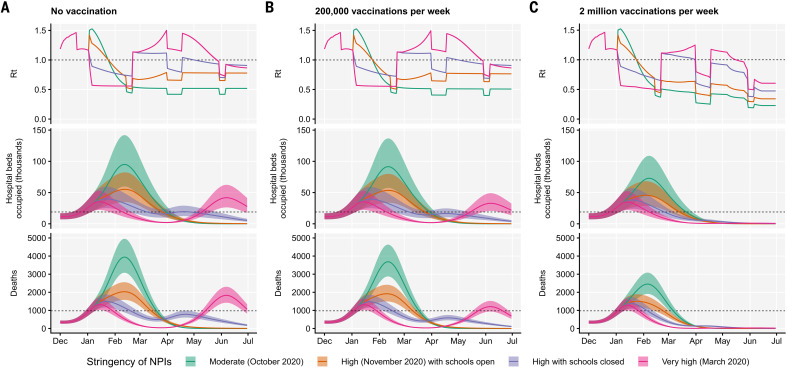
A novel SARS-CoV-2 variant, VOC 202012/01 (lineage B.1.1.7), emerged in southeast England in November 2020 and is rapidly spreading towards fixation. Using a variety of statistical and dynamic modelling approaches, we estimate that this variant has a 43–90% (range of 95% credible intervals 38–130%) higher reproduction number than preexisting variants. A fitted two-strain dynamic transmission model shows that VOC 202012/01 will lead to large resurgences of COVID-19 cases. Without stringent control measures, including limited closure of educational institutions and a greatly accelerated vaccine roll-out, COVID-19 hospitalisations and deaths across England in 2021 will exceed those in 2020. Concerningly, VOC 202012/01 has spread globally and exhibits a similar transmission increase (59–74%) in Denmark, Switzerland, and the United States.
Overview
The claims and statistics of this paper haven’t been checked yet.
Run the check — free, no account needed. It reads the open-access text and checks the sources it cites.
Integrity signals
Registry
Cites
Statistics
Figures
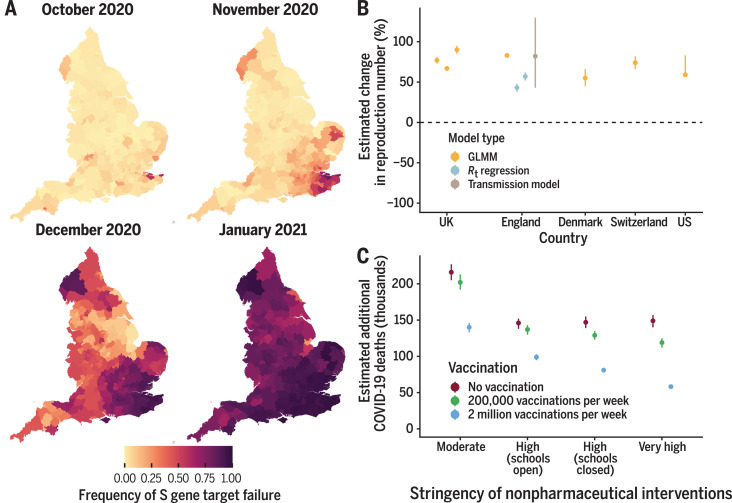
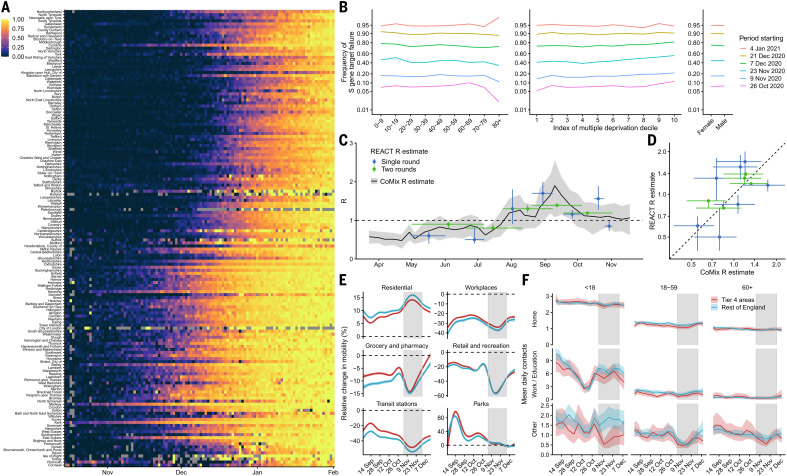
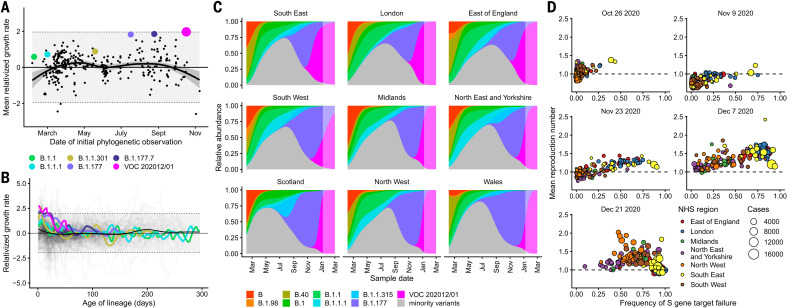
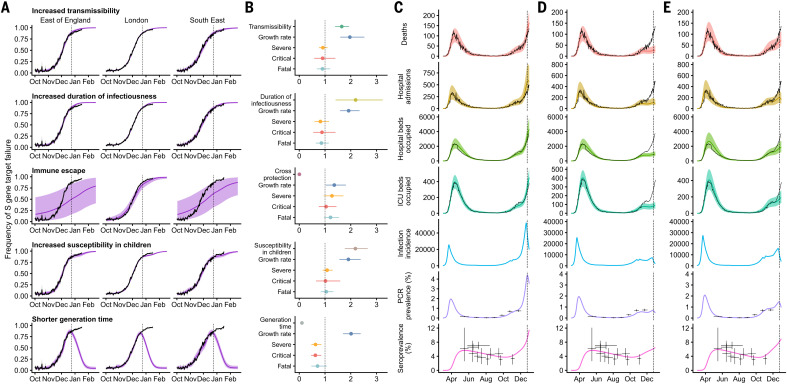
Verification
Claims the paper makes
The claims and statistics of this paper haven’t been checked yet.
Run the check — free, no account needed. It reads the open-access text and checks the sources it cites.
Claims other papers make about this one
Each is checked against this paper’s own text: does it say what the citing paper says it does?
The check wasn’t confident either way, so it gives no verdict — never disputed.
In the citing paper
“In addition, similar results have been reported by others using vaccinee and convalescent plasmas and a variety of different pseudotype and authentic virus assays15,31,45–49.”
From mRNA vaccine-elicited antibodies to SARS-CoV-2 and circulating variants (2021) · cites this paper as [15]
Experimental — accuracy not yet measuredIn the citing paper
“They are frequently sensitive to mutation in these residues and select for K417N, E484K and N501Y mutations in SARS-CoV-2 S protein expression libraries in yeast and VSV 12,15,33.”
From mRNA vaccine-elicited antibodies to SARS-CoV-2 and circulating variants (2021) · cites this paper as [15]
In the citing paper
“Additionally, K417N, Y453F, S477R, N501Y, and D614G represent circulating variants some of which have been associated with rapidly increasing case numbers14,15,19,33–35.”
From mRNA vaccine-elicited antibodies to SARS-CoV-2 and circulating variants (2021) · cites this paper as [15]
Self-check
Percentages, sums and reported differences re-computed from the paper’s own numbers.
The self-check needs the paper’s full text.
Citations
Cites
Early transmission dynamics in Wuhan, China, of novel coronavirus-infected pneumonia
Li, Q., Guan, X., Wu, P., Wang, X., Zhou, L., Tong, Y., Ren, R., Leung, K. S. M., Lau, E. H. Y., Wong, J. Y., et al. (2020) · New England Journal of Medicine · doi:10.1056/nejmoa2001316 · Cited by 16,575
Lauer, S. A., Grantz, K. H., Bi, Q., Jones, F. K., Zheng, Q., Meredith, H. R., Azman, A. S., Reich, N. G., & Lessler, J. (2020) · Annals of Internal Medicine · doi:10.7326/m20-0504 · Cited by 5,970
Ethier, S. N., & Kurtz, T. G. (1986) · Wiley series in probability and statistics · doi:10.1002/9780470316658 · Cited by 3,662
Docherty, A. B., Harrison, E. M., Green, C. A., Hardwick, H. E., Pius, R., Norman, L., Holden, K. A., Read, J. M., Dondelinger, F., Carson, G., et al. (2020) · BMJ · doi:10.1136/bmj.m1985 · Cited by 3,481
Advanced Bayesian Multilevel Modeling with the R Package brms
Bürkner, P.-C. (2018) · The R Journal · doi:10.32614/rj-2018-017 · Cited by 3,015
Social Contacts and Mixing Patterns Relevant to the Spread of Infectious Diseases
Mossong, J., Hens, N., Jit, M., Beutels, P., Auranen, K., Mikolajczyk, R., Massari, M., Salmaso, S., Tomba, G. S., Wallinga, J., et al. (2008) · PLoS Medicine · doi:10.1371/journal.pmed.0050074 · Cited by 2,900
Self-citationProjecting the transmission dynamics of SARS-CoV-2 through the postpandemic period
Kissler, S. M., Tedijanto, C., Goldstein, E., Grad, Y. H., & Lipsitch, M. (2020) · Science · doi:10.1126/science.abb5793 · Cited by 2,611
Estimated transmissibility and impact of SARS-CoV-2 lineage B.1.1.7 in England
Davies, N. G., Abbott, S., Barnard, R. C., Jarvis, C. I., Kucharski, A. J., Munday, J. D., Pearson, C. A. B., Russell, T. W., Tully, D. C., Washburne, A. D., et al. (2021) · Science · doi:10.1126/science.abg3055 · Cited by 2,581
Self-citationA dynamic nomenclature proposal for SARS-CoV-2 lineages to assist genomic epidemiology
Rambaut, A., Holmes, E. C., O’Toole, Á., Hill, V., McCrone, J. T., Ruis, C., du Plessis, L., & Pybus, O. G. (2020) · Nature Microbiology · doi:10.1038/s41564-020-0770-5 · Cited by 2,543
Tegally, H., Wilkinson, E., Giovanetti, M., Iranzadeh, A., Fonseca, V., Giandhari, J., Doolabh, D., Pillay, S., San, E. J., Msomi, N., et al. (2020) · doi:10.1101/2020.12.21.20248640 · Cited by 2,535
Cited by
Sorted by citations
Items 301–400 of 1,005
Hart, W. S., Maini, P. K., & Thompson, R. N. (2021) · eLife · doi:10.7554/elife.65534 · Cited by 66
Modeling the impact of SARS-CoV-2 variants and vaccines on the spread of COVID-19
Ramos, A. M., Pérez, M., Ferrández, M. R., Kubik, A. B., & Ivorra, B. (2021) · Communications in Nonlinear Science and Numerical Simulation · doi:10.1016/j.cnsns.2021.105937 · Cited by 72
A vaccine-induced public antibody protects against SARS-CoV-2 and emerging variants
Schmitz, A. J., Turner, J. S., Liu, Z., Zhou, J. Q., Aziati, I. D., Chen, R. E., Joshi, A., Bricker, T. L., Darling, T. L., Adelsberg, D. C., et al. (2021) · Immunity · doi:10.1016/j.immuni.2021.08.013 · Cited by 62
Xiang, Q., Li, L., Wu, J., Tian, M., & Fu, Y. (2022) · Microbiological Research · doi:10.1016/j.micres.2022.126993 · Cited by 80
Giovanetti, M., Fonseca, V., Wilkinson, E., Tegally, H., San, J. E., Althaus, C. L., Xavier, J., Slavov, S. N., Viala, V. L., Lima, A. R. J., et al. (2022) · Virus Evolution · doi:10.1093/ve/veac024 · Cited by 75
Bauer, S., Contreras, S., Dehning, J., Linden, M., Iftekhar, E. N., Mohr, S., Olivera‐Nappa, Á., & Priesemann, V. (2021) · PLoS Computational Biology · doi:10.1371/journal.pcbi.1009288 · Cited by 73
Evolution of the SARS-CoV-2 spike protein in the human host
Wrobel, A. G., Benton, D. J., Roustan, C., Borg, A., Hussain, S., Martin, S. R., Rosenthal, P. B., Skehel, J. J., & Gamblin, S. J. (2022) · Nature Communications · doi:10.1038/s41467-022-28768-w · Cited by 69
A highly virulent variant of HIV-1 circulating in the Netherlands
Wymant, C., Bezemer, D., Blanquart, F., Luca Ferretti, A., Gall, A., Hall, M. D., Golubchik, T., Bakker, M., Ong, S. H., Zhao, L., et al. (2022) · Science · doi:10.1126/science.abk1688 · Cited by 72
Langeveld, J., Schilperoort, R., Heijnen, L., Elsinga, G., Schapendonk, C. M. E., Fanoy, E. B., de Schepper, E. I. T., Koopmans, M., de Graaf, M., & Medema, G. J. (2022) · The Science of The Total Environment · doi:10.1016/j.scitotenv.2022.161196 · Cited by 75
Gandini, S., Rainisio, M., Iannuzzo, M. L., Bellerba, F., Cecconi, F., & Scorrano, L. (2021) · The Lancet Regional Health - Europe · doi:10.1016/j.lanepe.2021.100092 · Cited by 86
Despres, H. W., Mills, M. G., Shirley, D. J., Schmidt, M. M., Huang, M.-L. W., Roychoudhury, P., Jerome, K. R., Greninger, A. L., & Bruce, E. A. (2022) · Proceedings of the National Academy of Sciences · doi:10.1073/pnas.2116518119 · Cited by 65
Evolution and Control of COVID-19 Epidemic in Hong Kong
Wong, S., Au, A. K.-W., Lo, J., Ho, P., Hung, I. F., To, K. K., Yuen, K., & Cheng, V. C. (2022) · Viruses · doi:10.3390/v14112519 · Cited by 68
Mutations in SARS-CoV-2 structural proteins: a global analysis
Abavisani, M., Rahimian, K., Mahdavi, B., Tokhanbigli, S., Sisakht, M. M., Farhadi, A., Kodori, M., Mahmanzar, M., & Meshkat, Z. (2022) · Virology Journal · doi:10.1186/s12985-022-01951-7 · Cited by 71
Li, J., & Giabbanelli, P. J. (2021) · JMIR Medical Informatics · doi:10.2196/27419 · Cited by 69
SARS-CoV-2 mutations: the biological trackway towards viral fitness
Majumdar, P., & Niyogi, S. (2021) · Epidemiology and Infection · doi:10.1017/s0950268821001060 · Cited by 70
Nucleic Acid Testing of SARS-CoV-2
Yoo, H. M., Kim, I.-H., & Kim, S. (2021) · International Journal of Molecular Sciences · doi:10.3390/ijms22116150 · Cited by 71
Dynamics of SARS-CoV-2 Spike Proteins in Cell Entry: Control Elements in the Amino-Terminal Domains
Qing, E., Kicmal, T., Kumar, B., Hawkins, G. M., Timm, E. C., Perlman, S. M., & Gallagher, T. (2021) · mBio · doi:10.1128/mbio.01590-21 · Cited by 70
SARS-CoV-2: A Master of Immune Evasion
Rubio‐Casillas, A., Redwan, E. M. M. M., & Uversky, V. N. (2022) · Biomedicines · doi:10.3390/biomedicines10061339 · Cited by 72
Lessons from SARS-CoV-2 in India: A data-driven framework for pandemic resilience
Salvatore, M., Bhattacharyya, R., Purkayastha, S., Zimmermann, L., Ray, D., Hazra, A., Kleinsasser, M., Mellan, T. A., Whittaker, C., Flaxman, S. R., et al. (2022) · Science Advances · doi:10.1126/sciadv.abp8621 · Cited by 67
Abu-Raddad, L. J., Chemaitelly, H., Ayoub, H. H., Coyle, P., Malek, J. A., Ahmed, A. A., Mohamoud, Y. A., Younuskunju, S., Tang, P., Al Kanaani, Z., et al. (2021) · PLOS Medicine · doi:10.1371/journal.pmed.1003879 · Cited by 54
Increased infections, but not viral burden, with a new SARS-CoV-2 variant
Walker, A. S., Vihta, K.-D., Gethings, O., Pritchard, E., Jones, J., House, T., Bell, I., Bell, J. I., Newton, J. N., Farrar, J., et al. (2021) · doi:10.1101/2021.01.13.21249721 · Cited by 58
Charmet, T., Schaeffer, L., Grant, R., Galmiche, S., Chény, O., Von Platen, C., Maurizot, A., Rogoff, A., Omar, F., David, C., et al. (2021) · The Lancet Regional Health - Europe · doi:10.1016/j.lanepe.2021.100171 · Cited by 80
Hamer, S. A., Ghai, R. R., Zecca, I. B., Auckland, L. D., Roundy, C. M., Davila, E., Busselman, R. E., Tang, W., Pauvolid‐Corrêa, A., Killian, M. L., et al. (2021) · Transboundary and Emerging Diseases · doi:10.1111/tbed.14122 · Cited by 65
Zhang, H., Deng, S., Ren, L., Zheng, P., Hu, X., Jin, T., & Tan, X. (2021) · Cell Reports · doi:10.1016/j.celrep.2021.109708 · Cited by 69
One Year of SARS-CoV-2: Genomic Characterization of COVID-19 Outbreak in Qatar
Benslimane, F. M., Al-Khatib, H. A., Al-Jamal, O., Albatesh, D., Boughattas, S., Ahmed, A. A., Bensaad, M., Younuskunju, S., Mohamoud, Y. A., Badr, M. A., et al. (2021) · Frontiers in Cellular and Infection Microbiology · doi:10.3389/fcimb.2021.768883 · Cited by 66
SARS-CoV-2 variants, immune escape, and countermeasures
Zhang, Y., Zhang, H. C., & Zhang, W. (2022) · Frontiers of Medicine · doi:10.1007/s11684-021-0906-x · Cited by 72
Modelling the medium-term dynamics of SARS-CoV-2 transmission in England in the Omicron era
Barnard, R. C., Davies, N. G., Centre for Mathematical Modelling of Infectious Diseases COVID-19 working group, Munday, J. D., Lowe, R., Knight, G. M., Leclerc, Q. J., Tully, D. C., Hodgson, D., Pung, R., et al. (2022) · Nature Communications · doi:10.1038/s41467-022-32404-y · Cited by 68
Self-citationMolecular evolution of SARS‐CoV‐2 from December 2019 to August 2022
Wolf, J. M., Wolf, L. M., Bello, G. L., Maccari, J. G., & Nasi, L. A. (2022) · Journal of Medical Virology · doi:10.1002/jmv.28366 · Cited by 69
An ACE2 Triple Decoy that neutralizes SARS-CoV-2 shows enhanced affinity for virus variants
Tanaka, S., Nelson, G., Olson, C. A., Buzko, O. V., Higashide, W., Shin, A., Gonzalez, M. R., Taft, J. D., Patel, R. S., Buta, S., et al. (2021) · Scientific Reports · doi:10.1038/s41598-021-91809-9 · Cited by 65
Inference of the SARS-CoV-2 generation time using UK household data
Hart, W. S., Abbott, S., Endo, A., Hellewell, J., Miller, E., Andrews, N. J., Maini, P. K., Funk, S., & Thompson, R. N. (2022) · eLife · doi:10.7554/elife.70767 · Cited by 62
Self-citationGlobal spatial dynamics and vaccine-induced fitness changes of Bordetella pertussis
Lefrancq, N., Bouchez, V., Fernandes, N. J., Barkoff, A., Bosch, T., Dalby, T., Åkerlund, T., Darenberg, J., Fabianova, K., Vestrheim, D. F., et al. (2022) · Science Translational Medicine · doi:10.1126/scitranslmed.abn3253 · Cited by 65
Pirolli, D., Righino, B., Camponeschi, C., Ria, F., Sante, G. D., & Rosa, M. C. D. (2023) · Scientific Reports · doi:10.1038/s41598-023-28716-8 · Cited by 74
The RECOVERY Collaborative Group, Horby, P., Estcourt, L. J., Peto, L., Emberson, J., Staplin, N., Spata, E., Pessoa-Amorim, G., Campbell, M. R., Roddick, A., et al. (2021) · medRxiv · doi:10.1101/2021.03.09.21252736 · Cited by 69
Mutation Signatures and In Silico Docking of Novel SARS-CoV-2 Variants of Concern
Shahhosseini, N., Babuadze, G. G., Wong, G., & Kobinger, G. (2021) · Microorganisms · doi:10.3390/microorganisms9050926 · Cited by 66
Mouthwashes with CPC Reduce the Infectivity of SARS-CoV-2 Variants In Vitro
Muñoz‐Basagoiti, J., Perez‐Zsolt, D., León, R., Blanc, V., Regué, D. R., Cano‐Sarabia, M., Trinité, B., Pradenas, E., Blanco, J., Gispert, J., et al. (2021) · Journal of Dental Research · doi:10.1177/00220345211029269 · Cited by 67
SARS-CoV-2 variants and effectiveness of vaccines: a review of current evidence
Tatsi, E., Filippatos, F., & Michos, A. G. (2021) · Epidemiology and Infection · doi:10.1017/s0950268821002430 · Cited by 68
SARS-CoV-2 infection incidence during the first and second COVID-19 waves in Italy
Vinceti, M., Filippini, T., Rothman, K. J., Federico, S. D., & Orsini, N. (2021) · Environmental Research · doi:10.1016/j.envres.2021.111097 · Cited by 73
One year into the pandemic: Short-term evolution of SARS-CoV-2 and emergence of new lineages
Gónzález‐Candelas, F., Shaw, M., Phan, T. G., Kulkarni‐Kale, U., Paraskevis, D. N., Luciani, F., Kimura, H., & Sironi, M. (2021) · Infection Genetics and Evolution · doi:10.1016/j.meegid.2021.104869 · Cited by 65
Hetemäki, I., Kääriäinen, S., Alho, P., Mikkola, J., Savolainen‐Kopra, C., Ikonen, N., Nohynek, H., & Lyytikäinen, O. (2021) · Eurosurveillance · doi:10.2807/1560-7917.es.2021.26.30.2100636 · Cited by 65
Obéid, M., Suffiotti, M., Pellaton, C., Bouchaab, H., Cairoli, A., Salvadé, V., Stevenel, C., Hottinger, R., Pythoud, C., Coutechier, L., et al. (2022) · JAMA Oncology · doi:10.1001/jamaoncol.2022.0446 · Cited by 63
Molecular mechanism of ensitrelvir inhibiting SARS-CoV-2 main protease and its variants
Lin, M.-M., Zeng, X., Duan, Y., Yang, Z., Ma, Y., Yang, H., Yang, X., & Liu, X. (2023) · Communications Biology · doi:10.1038/s42003-023-05071-y · Cited by 65
Modular basis for potent SARS-CoV-2 neutralization by a prevalent VH1-2-derived antibody class
Rapp, M., Guo, Y., Reddem, E. R., Yu, J., Liu, L., Wang, P., Cerutti, G., Katsamba, P. S., Bimela, J. S., Bahna, F. A., et al. (2021) · Cell Reports · doi:10.1016/j.celrep.2021.108950 · Cited by 59
Jhun, H., Park, H., Hisham, Y., Song, C., & Kim, S. (2021) · Immune Network · doi:10.4110/in.2021.21.e32 · Cited by 65
Airborne transmission of SARS-CoV-2 in indoor environments: A comprehensive review
Shen, J., Kong, M., Dong, B., Birnkrant, M. J., & Zhang, J. “. (2021) · Science and Technology for the Built Environment · doi:10.1080/23744731.2021.1977693 · Cited by 69
ChAdOx1 nCoV-19 (AZD1222) protects Syrian hamsters against SARS-CoV-2 B.1.351 and B.1.1.7
Fischer, R. J., van Doremalen, N., Adney, D. R., Yinda, C. K., Port, J. R., Holbrook, M. G., Schulz, J. E., Williamson, B. N., Thomas, T., Barbian, K., et al. (2021) · Nature Communications · doi:10.1038/s41467-021-26178-y · Cited by 60
Souza, P. F. N., Mesquita, F. P., Amaral, J. L., Landim, P. G. C., Lima, K. R. P., Costa, M. B., Farias, I. R., Belém, M. O., Pinto, Y. O., Moreira, H. H. T., et al. (2022) · International Journal of Biological Macromolecules · doi:10.1016/j.ijbiomac.2022.03.058 · Cited by 67
Rapid assembly of SARS-CoV-2 genomes reveals attenuation of the Omicron BA.1 variant through NSP6
Taha, T. Y., Chen, I. P., Hayashi, J. M., Tabata, T., Walcott, K., Kimmerly, G. R., Syed, A. M., Ciling, A., Suryawanshi, R. K., Martin, H. S., et al. (2023) · Nature Communications · doi:10.1038/s41467-023-37787-0 · Cited by 70
Proteomic and genetic analyses of influenza A viruses identify pan-viral host targets
Haas, K. M., McGregor, M., Bouhaddou, M., Polacco, B. J., Kim, E., Nguyen, T. T., Newton, B. W., Urbanowski, M., Kim, H. J., Williams, M. A. P., et al. (2023) · Nature Communications · doi:10.1038/s41467-023-41442-z · Cited by 65
Aldwihi, L. A., Khan, S. I., Alamri, F. F., AlRuthia, Y. S., Alqahtani, F., Fantoukh, O. I., Assiri, A. M., & Almohammed, O. A. (2021) · International Journal of Environmental Research and Public Health · doi:10.3390/ijerph18105086 · Cited by 66
Chen, Y.-T. (2021) · International Journal of Environmental Research and Public Health · doi:10.3390/ijerph18147491 · Cited by 63
Tada, T., Dcosta, B. M., Zhou, H., Vaill, A., Kazmierski, W., & Landau, N. R. (2021) · bioRxiv (Cold Spring Harbor Laboratory) · doi:10.1101/2021.02.18.431897 · Cited by 59
Zhuang, X., Tsukuda, S., Wrensch, F., Wing, P. A. C., Schilling, M., Harris, J. M., Borrmann, H., Morgan, S. B., Cane, J., Mailly, L., et al. (2021) · iScience · doi:10.1016/j.isci.2021.103144 · Cited by 63
Rapid and accurate detection of SARS-CoV-2 mutations using a Cas12a-based sensing platform
He, C., Lin, C., Mo, G., Xi, B., Li, A., Huang, D., Wan, Y., Chen, F., Liang, Y., Zuo, Q., et al. (2021) · Biosensors and Bioelectronics · doi:10.1016/j.bios.2021.113857 · Cited by 61
Multiple COVID-19 Waves and Vaccination Effectiveness in the United States
Lin, L., Zhao, Y., Chen, B., & He, D. (2022) · International Journal of Environmental Research and Public Health · doi:10.3390/ijerph19042282 · Cited by 62
SARS-CoV-2 variants – Evolution, spike protein, and vaccines
Chen, K.-W. K., Huang, D. T., & Huang, L. (2022) · Biomedical Journal · doi:10.1016/j.bj.2022.04.006 · Cited by 63
Spatial and temporal fluctuations in COVID-19 fatality rates in Brazilian hospitals
Brizzi, A., Whittaker, C., Servo, L. M. S., Hawryluk, I., Junior, C. A. P., de Souza, W. M., Aguiar, R. S., de Araújo, L. J. T., Bastos, L. S., Blenkinsop, A., et al. (2022) · Nature Medicine · doi:10.1038/s41591-022-01807-1 · Cited by 74
Wang, H., Liu, C., Xie, X., Niu, M., Wang, Y., Cheng, X., Zhang, B., Zhang, D., Liu, M., Sun, R., et al. (2023) · Immunity · doi:10.1016/j.immuni.2023.05.007 · Cited by 65
Early epidemiological signatures of novel SARS-CoV-2 variants: establishment of B.1.617.2 in EnglandPreprint
Challen, R., Dyson, L., Overton, C. E., Guzman-Rincon, L. M., Hill, E. M., Stage, H. B., Brooks‐Pollock, E., Pellis, L., Scarabel, F., Pascall, D. J., et al. (2021) · medRxiv · doi:10.1101/2021.06.05.21258365 · Cited by 59
Quantifying the COVID19 infection risk due to droplet/aerosol inhalation
Bale, R., Akiyoshi, I. I. D. A., Yamakawa, M., Li, C., & Tsubokura, M. (2022) · Scientific Reports · doi:10.1038/s41598-022-14862-y · Cited by 63
SARS-CoV-2 Variants and Their Relevant Mutational Profiles: Update Summer 2021
Alkhatib, M., Svicher, V., Salpini, R., Ambrosio, F. A., Bellocchi, M. C., Carioti, L., Piermatteo, L., Scutari, R., Costa, G., Artese, A., et al. (2021) · Microbiology Spectrum · doi:10.1128/spectrum.01096-21 · Cited by 62
Gounant, V., Ferré, V. M., Soussi, G., Charpentier, C., Flament, H., Houhou‐Fidouh, N., Collin, G., Namour, C., Assoun, S., Bizot, A., et al. (2021) · Journal of Thoracic Oncology · doi:10.1016/j.jtho.2021.10.015 · Cited by 61
Essaidi-Laziosi, M., Alvarez, C., Puhach, O., Sattonnet‐Roche, P., Torriani, G., Tapparel, C., Kaiser, L., & Eckerle, I. (2021) · Emerging Microbes & Infections · doi:10.1080/22221751.2021.2021806 · Cited by 58
Raman Molecular Fingerprints of SARS‐CoV‐2 British Variant and the Concept of Raman Barcode
Pezzotti, G., Boschetto, F., Ohgitani, E., Fujita, Y., Shin‐Ya, M., Adachi, T., Yamamoto, T., Kanamura, N., Marin, E., Zhu, W., et al. (2021) · Advanced Science · doi:10.1002/advs.202103287 · Cited by 60
Lee, Y. S., Wing, P. A. C., Gala, D., Noerenberg, M., Järvelin, A. I., Titlow, J., Zhuang, X., Palmalux, N., Iselin, L., Thompson, M. K., et al. (2021) · eLife · doi:10.7554/elife.74153 · Cited by 59
Kissler, S. M., Fauver, J. R., Mack, C. D., Tai, C. G.-L., Breban, M. I., Watkins, A. E., Samant, R. M., Anderson, D. J., Ho, D. D., Grubaugh, N. D., et al. (2021) · Digital Access to Scholarship at Harvard (DASH) (Harvard University) · Cited by 60
The ins and outs of SARS-CoV-2 variants of concern (VOCs)
Salehi-Vaziri, ., Fazlalipour, M., Khorrami, S. M. S., Azadmanesh, K., Pouriayevali, M. H., Jalali, T., Shoja, Z., & Maleki, A. (2022) · Archives of Virology · doi:10.1007/s00705-022-05365-2 · Cited by 61
Recent Chronology of COVID-19 Pandemic
Siddiqui, S., Alhamdi, H. W. S., & Alghamdi, H. A. (2022) · Frontiers in Public Health · doi:10.3389/fpubh.2022.778037 · Cited by 80
Differential protection against SARS-CoV-2 reinfection pre- and post-Omicron
Chemaitelly, H. S., Ayoub, H. H., Coyle, P. V., Tang, P., Hasan, M. R., Yassine, H. M., Thani, A. A. A., Kanaani, Z. A., Al‐Kuwari, E., Jeremijenko, A. M., et al. (2025) · Nature · doi:10.1038/s41586-024-08511-9 · Cited by 61
Seif, F., Noorimotlagh, Z., Mirzaee, S. A., Kalantar, M., Barati, B., Fard, M. E., & Fard, N. K. (2021) · Environmental Research · doi:10.1016/j.envres.2021.111809 · Cited by 59
Impact of vaccination and non-pharmaceutical interventions on SARS-CoV-2 dynamics in Switzerland
Shattock, A. J., Rutte, E. A. L., Dünner, R. P., Sen, S., Kelly, S. L., Chitnis, N., & Penny, M. A. (2021) · Epidemics · doi:10.1016/j.epidem.2021.100535 · Cited by 64
Tiwari, A., Adhikari, S., Zhang, S., Solomon, T. B., Lipponen, A., Islam, M. A., Thakali, O., Sangkham, S., Shaheen, M. N. F., Jiang, G., et al. (2023) · Water · doi:10.3390/w15061018 · Cited by 61
Graham, M. S., Sudre, C. H., May, A., Antonelli, M., Murray, B. A. K., Varsavsky, T., Kläser, K., Canas, L. S., Molteni, E., Marc Modat, A., et al. (2021) · medRxiv · doi:10.1101/2021.01.28.21250680 · Cited by 63
Khan, A., Wei, D., Kousar, K., Abubaker, J. A., Ahmad, S., Ali, J., Al‐Mulla, F., Ali, S. S., Nizam‐Uddin, N., Sayaf, A. M., et al. (2021) · ChemBioChem · doi:10.1002/cbic.202100191 · Cited by 59
Feldman, J. E., Bals, J., Altomare, C. G., Denis, K. S., Lam, E. C., Hauser, B. M., Ronsard, L., Sangesland, M., Moreno, T. B., Okonkwo, V., et al. (2021) · Science Immunology · doi:10.1126/sciimmunol.abl5842 · Cited by 60
Nikolaidis, M., Papakyriakou, A., Chlichlia, K., Markoulatos, P., Oliver, S. G., & Amoutzias, G. D. (2022) · Viruses · doi:10.3390/v14040707 · Cited by 57
SARS-CoV-2 Infectivity and Severity of COVID-19 According to SARS-CoV-2 Variants: Current Evidence
Dao, T. L., Hoang, V. T., Colson, P., Lagier, J., Million, M., Raoult, D., Levasseur, A., & Gautret, P. (2021) · Journal of Clinical Medicine · doi:10.3390/jcm10122635 · Cited by 61
Zhang, L., Cui, Z., Li, Q., Wang, B., Yu, Y., Wu, J., Nie, J., Ding, R., Wang, H., Zhang, Y., et al. (2021) · Communications Biology · doi:10.1038/s42003-021-02728-4 · Cited by 58
Ringlander, J., Fingal, J., Kann, H., Prakash, K., Rydell, G. E., Andersson, M., Martner, A., Lindh, M., Horal, P., Hellstrand, K., et al. (2022) · Proceedings of the National Academy of Sciences · doi:10.1073/pnas.2112663119 · Cited by 57
Modeling COVID-19 dynamic using a two-strain model with vaccination
de León, U. A.-P., Avila-Vales, E. J., & Huang, K. (2022) · Chaos Solitons & Fractals · doi:10.1016/j.chaos.2022.111927 · Cited by 59
Recent insights into SARS‐CoV‐2 omicron variant
da Silva, S. J. R., Kohl, A., Pena, L., & Pardee, K. (2022) · Reviews in Medical Virology · doi:10.1002/rmv.2373 · Cited by 56
Chen, S. A., Arutyunova, E. I., Lu, J., Khan, M. B., Rut, W., Żmudziński, M., Shahbaz, S., Iyyathurai, J., Moussa, E. W., Turner, Z., et al. (2023) · ACS Central Science · doi:10.1021/acscentsci.3c00054 · Cited by 56
CRISPR‐Mediated Profiling of Viral RNA at Single‐Nucleotide Resolution
Chen, D., Huang, W., Zhang, Y., Chen, B., Tan, J., Yuan, Q., & Yang, Y. (2023) · Angewandte Chemie International Edition · doi:10.1002/anie.202304298 · Cited by 59
Rapid replacement of the Beta variant by the Delta variant in South AfricaPreprint
Tegally, H., Wilkinson, E., Althaus, C. L., Giovanetti, M., San, J. E., Giandhari, J., Pillay, S., Naidoo, Y., Ramphal, U., Msomi, N., et al. (2021) · medRxiv · doi:10.1101/2021.09.23.21264018 · Cited by 56
Therapeutic effect of CT-P59 against SARS-CoV-2 South African variant
Ryu, D.-K., Song, R., Kim, M., Kim, Y., Kim, C.-M., Kim, J., Kwon, K.-S., Tijsma, A. S. L., Nuijten, P. M., van Baalen, C. A., et al. (2021) · Biochemical and Biophysical Research Communications · doi:10.1016/j.bbrc.2021.06.016 · Cited by 55
A chitosan-mediated inhalable nanovaccine against SARS-CoV-2
Zhuo, S., Wu, J., Zhao, L., Li, W., Zhao, Y., & Li, Y. (2022) · Nano Research · doi:10.1007/s12274-021-4012-9 · Cited by 56
Krueger, T., Gogolewski, K., Bodych, M., Gambin, A., Giordano, G., Cuschieri, S., Czypionka, T., Perc, M., Petelos, E., Rosińska, M., et al. (2022) · Communications Medicine · doi:10.1038/s43856-022-00084-w · Cited by 56
Hunter, P. R., Colón‐González, F. J., Brainard, J. S., & Rushton, S. (2021) · Eurosurveillance · doi:10.2807/1560-7917.es.2021.26.28.2001401 · Cited by 59
SARS-CoV-2 transmission dynamics in Belarus in 2020 revealed by genomic and incidence data analysis
Nemira, A., Adeniyi, A. E., Леонидовна, Г. Е., Bulda, K. Y., Valentovich, L. N., Kras’ko, A. G., Glebova, O., Kirpich, A., & Skums, P. (2021) · Communications Medicine · doi:10.1038/s43856-021-00031-1 · Cited by 55
Lim, J., Stavins, R. A., Kindratenko, V., Baek, J. M., Wang, L., White, K., Kumar, J. S., Valera, E., King, W. P., & Bashir, R. (2022) · Lab on a Chip · doi:10.1039/d2lc00021k · Cited by 55
Lai, J., Coleman, K. K., Tai, S., German, J. R., Hong, F. H., Albert, B., Esparza, Y., Srikakulapu, A. K., Schanz, M., Maldonado, I. S., et al. (2022) · Clinical Infectious Diseases · doi:10.1093/cid/ciac846 · Cited by 60
Are, E. B., Song, Y., Stockdale, J. E., Tupper, P. F., & Colijn, C. (2022) · Journal of Theoretical Biology · doi:10.1016/j.jtbi.2022.111368 · Cited by 63
Inhalable nanocatchers for SARS-CoV-2 inhibition
Zhang, H., Zhu, W., Jin, Q., Pan, F., Zhu, J., Liu, Y., Chen, L., Shen, J., Yang, Y., Chen, Q., et al. (2021) · Proceedings of the National Academy of Sciences · doi:10.1073/pnas.2102957118 · Cited by 54
Euser, S. M., Aronson, S. J., Manders, I. G., Lelyveld, S. V., Herpers, B. L., Sinnige, J. C., Kalpoe, J., van Gemeren, C., Snijders, D., Jansen, R., et al. (2021) · International Journal of Epidemiology · doi:10.1093/ije/dyab145 · Cited by 55
Munitz, A., Yechezkel, M., Dickstein, Y., Yamin, D., & Gerlic, M. (2021) · Cell Reports Medicine · doi:10.1016/j.xcrm.2021.100264 · Cited by 53
Analysis of the Potential Efficacy and Timing of COVID-19 Vaccine on Morbidity and Mortality
Haghpanah, F., Lin, G., Levin, S. A., & Klein, E. Y. (2020) · EClinicalMedicine · doi:10.1016/j.eclinm.2021.100863 · Cited by 57
Verma, J. K., & Subbarao, N. (2021) · Virology · doi:10.1016/j.virol.2021.06.009 · Cited by 56
Chen, P., Bobrovitz, N., Premji, Z., Koopmans, M., Fisman, D. N., & Gu, F. (2021) · eLife · doi:10.7554/elife.70458 · Cited by 50
Understanding the Secret of SARS-CoV-2 Variants of Concern/Interest and Immune Escape
Lou, F., Li, M., Pang, Z., Jiang, L., Guan, L., Tian, L., Hu, J., Fan, J., & Fan, H. (2021) · Frontiers in Immunology · doi:10.3389/fimmu.2021.744242 · Cited by 54
Sandmann, F., Tessier, E., Lacy, J., Kall, M. M., van Leeuwen, E., Charlett, A., Eggo, R. M., Dabrera, G., Edmunds, W. J., Ramsay, M. E., et al. (2022) · Clinical Infectious Diseases · doi:10.1093/cid/ciac151 · Cited by 53
Self-citation
Metadata
- Authors
- Davies, N. G., Abbott, S., Barnard, R. C., Jarvis, C. I., Kucharski, A. J., Munday, J. D., Pearson, C. A. B., Russell, T. W., Tully, D. C., Washburne, A. D., Wenseleers, T., Gimma, A., Waites, W., Wong, K. L. M., van Zandvoort, K., Silverman, J. D., CMMID COVID-19 Working Group, The COVID-19 Genomics UK (COG-UK) Consortium, Diaz-Ordaz, K., Keogh, R., Eggo, R. M., Funk, S., Jit, M., Atkins, K. E., & Edmunds, W. J.
- Affiliations
- London School of Hygiene & Tropical Medicine (GB)
- KU Leuven (BE)
- Pennsylvania State University (US)
- Corresponding author
- Davies, Nicholas G.
- ORCID
- Davies, Nicholas G.
- Abbott, Sam
- Barnard, Rosanna C.
- Jarvis, Christopher I.
- Kucharski, Adam J.
- Munday, James D.
- Pearson, Carl A. B.
- Russell, Timothy W.
- Tully, Damien C.
- Washburne, Alex D.
- Wenseleers, Tom
- Gimma, Amy
- Waites, William
- Wong, Kerry L. M.
- van Zandvoort, Kevin
- Silverman, Justin D.
- Keogh, Ruth
- Eggo, Rosalind M.
- Funk, Sebastian
- Jit, Mark
- Atkins, Katherine E.
- Edmunds, W. John
- Venue
- Science
- Publisher
- openRxiv
- Published
- 2020-12-26
- Volume
- 372
- Issue
- 6538
- ISSN
- 0036-8075 (ISSN-L)
- PMC
- PMC8128288
- OpenAlex
- W3134208712
- Cited by
- 2,557
- References
- 60
- Citations by year
- 2026: 54 · 2025: 90 · 2024: 184 · 2023: 323 · 2022: 839 · 2021: 1060 · 2020: 6
- FWCI
- 233.82
- Type
- journal article
- Language
- en
- Open access
- hybrid
- doi.org
- Licence
- cc-by
- Locations
- Science (publishedVersion, cc-by)
- medRxiv (acceptedVersion, cc-by)
- PubMed Central (publishedVersion, cc-by)
- PubMed (publishedVersion)
- University of Birmingham Research Portal (University of Birmingham) (publishedVersion, cc-by)
- ORCA Online Research @Cardiff (Cardiff University) (acceptedVersion, cc-by)
- Northumbria Research Link (Northumbria University) (acceptedVersion)
- LSHTM Research Online (London School of Hygiene and Tropical Medicine) (acceptedVersion)
- Strathprints: The University of Strathclyde institutional repository (University of Strathclyde) (acceptedVersion)
- Informationszentrum Lebenswissenschaften (ZB MED) (submittedVersion, cc-by)
- Lirias (KU Leuven) (submittedVersion, other-oa)
- Edinburgh Research Explorer (University of Edinburgh) (submittedVersion, cc-by)
- Apollo (University of Cambridge) (submittedVersion)
- Apollo
- Funders
- Bill and Melinda Gates Foundation (INV-016832, OPP1184344, INV-003174)
- University of Kentucky
- University of Bern
- Wellcome Trust (206250, 210758/Z/18/Z, 206250/Z/17/Z, Z/17/Z, 221303/Z/20/Z, 221303, 210758, 218554/Z/19/Z)
- UK Research and Innovation (ES/P010873/1, ES/P010873, MC_PC_19027)
- Universitätsspital Basel
- National Institute for Health Research Health Protection Research Unit (NIHR200908, NIHR200929)
- National Institute for Health and Care Research ((NIHR200929), MR/V027956/1, (NIHR200908), 16/137/109, 16/137/10)
- Research Councils UK (MR/S003975/1, ES/P010873/1)
- Academy of Medical Sciences (AMS-CSF4-Torok)
- University of Warwick
- European Commission (101003688, COVID-19, 19065)
- Public Health England
- CANDU Owners Group
- Eidgenössische Technische Hochschule Zürich
- Hôpitaux Universitaires de Genève
- Université de Sfax
- Foreign, Commonwealth and Development Office (221303/Z/20/Z)
- Medical Research Council (MR/S003975/1, 206250/Z/17/Z, MR/V027956/1, NIHR200908, COVID-19, MC_PC_19065)
- Economic and Social Research Council (ES/P010873/1)
- Statens Serum Institut
- Research England
- National Institute of General Medical Sciences (T32GM145449)
- H2020 European Research Council (757688)
- Health Data Research UK
- Topics
- Physical Sciences › Mathematics › Modeling and Simulation › COVID-19 epidemiological studies
- Health Sciences › Medicine › Infectious Diseases › SARS-CoV-2 and COVID-19 Research
- Physical Sciences › Mathematics › Applied Mathematics › Mathematical and Theoretical Epidemiology and Ecology Models
- Keywords
- SARS-CoV-2, B.1.1.7 variant, reproduction number, SARS-CoV-2 transmission, epidemic forecasting, COVID-19 containment measures, vaccine rollout, school closures, England
- MeSH terms
- COVID-19, SARS-CoV-2, COVID-19 Vaccines, Adolescent, Adult, Aged, Aged, 80 and over, Child, Child, Preschool, Communicable Disease Control, England, Europe, Female, Humans, Infant, Male, Middle Aged, Models, Theoretical, Mutation, Severity of Illness Index, Socioeconomic Factors, United States, Viral Load, Basic Reproduction Number, Young Adult
About these checks
Registry, retraction, Cites and statistics results are computed, not judged, with one exception: a printed reference that no index lists is read once by a model before it counts as a citation error. Claims are extracted by a model and kept only when their quote appears verbatim in the text; each cited source is then checked, with a model’s help, for whether it says what the claim relies on. Those verdicts can be wrong — read the claim’s quote and the cited source before relying on one.
Statistics and arithmetic are recomputed, not judged.
Confidence bands are shown only for fields calibrated on our annotated test set. None is calibrated yet, so no band is shown.
What counts as a claim ›How we measure confidence ›How we check this ›
Are you an author, or do you see a problem with this page? Request a review
