

Transmission, infectivity, and antibody neutralization of an emerging SARS-CoV-2 variant in California carrying a L452R spike protein mutation
Open accessPreprint — published as 10.1016/j.cell.2021.04.025 · Paper page
The DOI matches its Crossref record; 66 of the 66 references it cites were found in a registry or an index.
Abstract
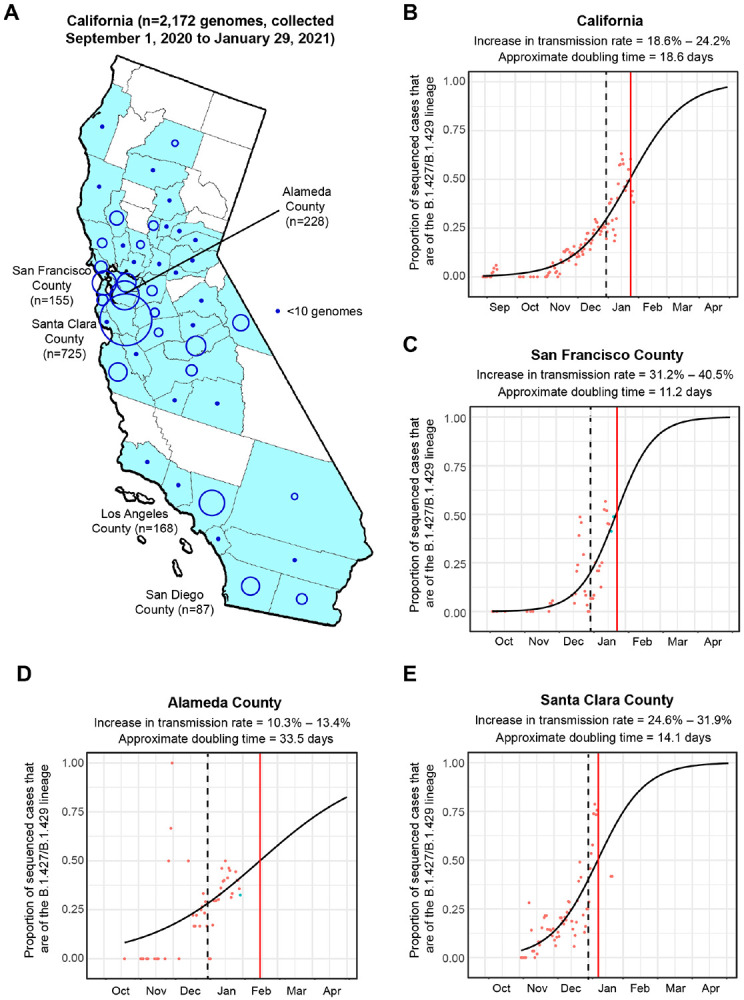
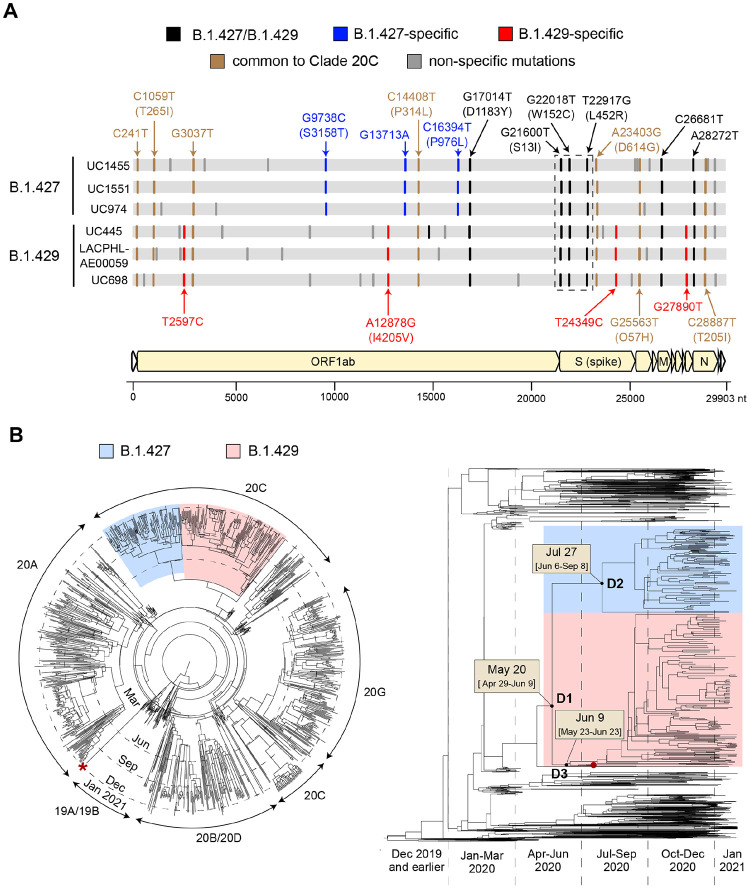
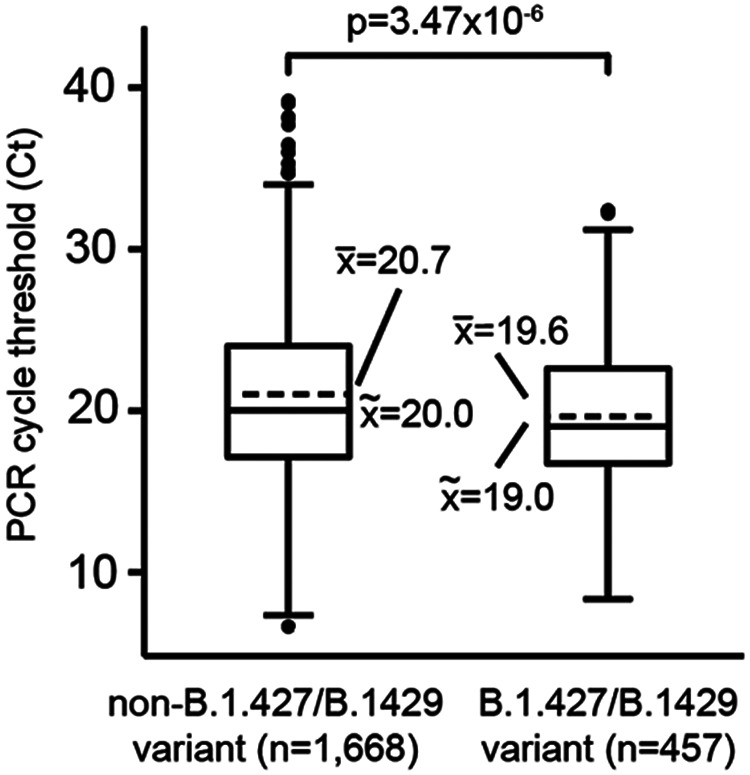
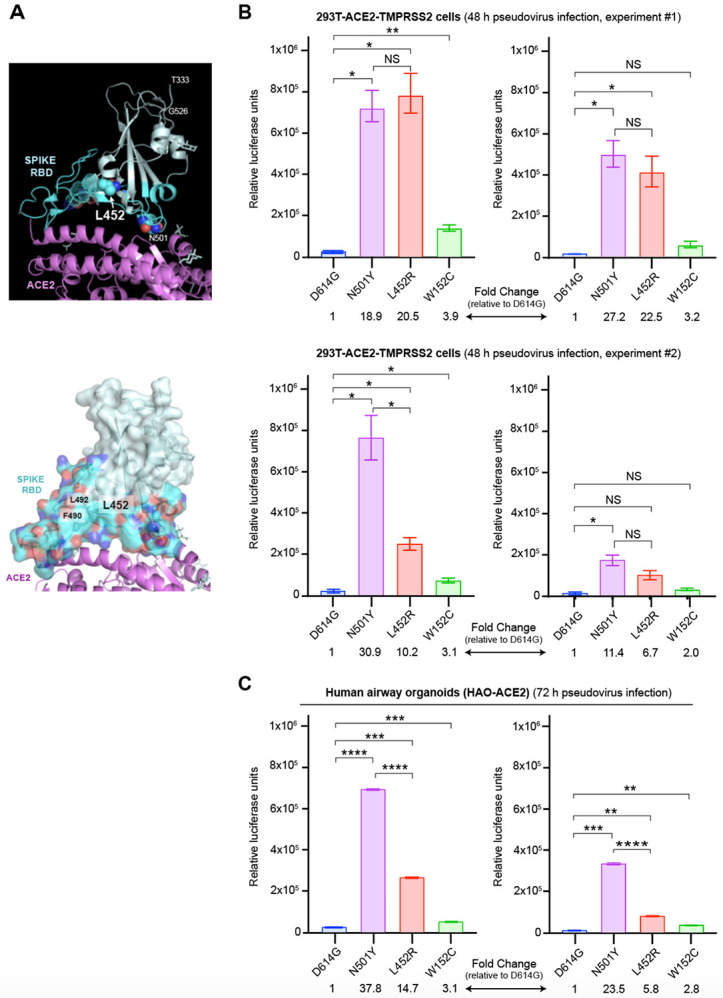
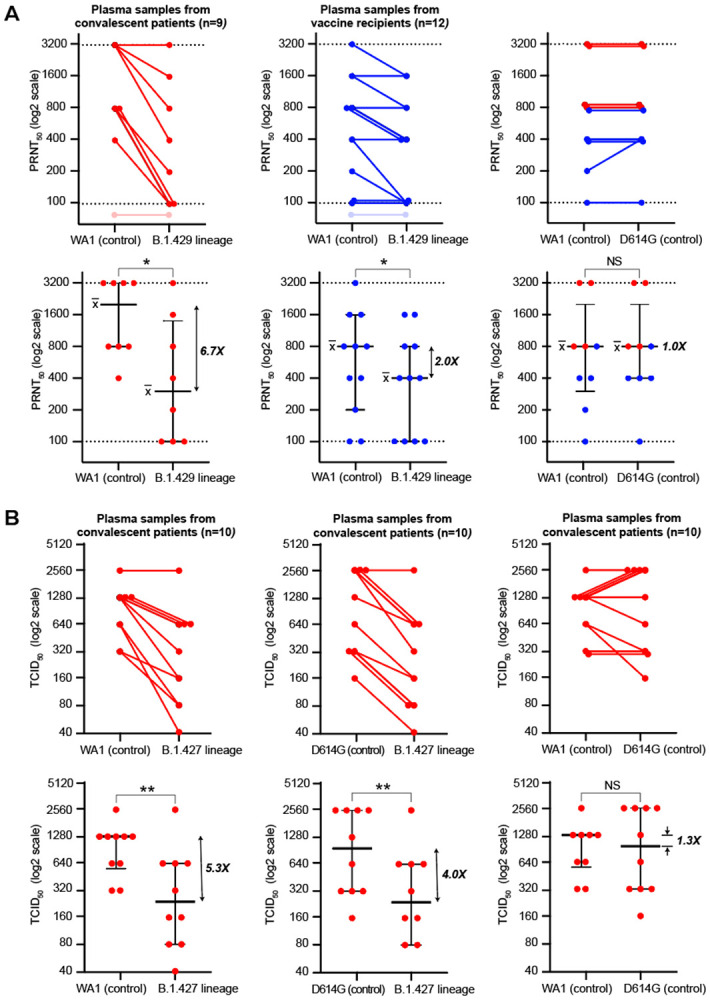
We identified a novel SARS-CoV-2 variant by viral whole-genome sequencing of 2,172 nasal/nasopharyngeal swab samples from 44 counties in California. Named B.1.427/B.1.429 to denote its 2 lineages, the variant emerged around May 2020 and increased from 0% to >50% of sequenced cases from September 1, 2020 to January 29, 2021, exhibiting an 18.6-24% increase in transmissibility relative to wild-type circulating strains. The variant carries 3 mutations in the spike protein, including an L452R substitution. Our analyses revealed 2-fold increased B.1.427/B.1.429 viral shedding in vivo and increased L452R pseudovirus infection of cell cultures and lung organoids, albeit decreased relative to pseudoviruses carrying the N501Y mutation found in the B.1.1.7, B.1.351, and P.1 variants. Antibody neutralization assays showed 4.0 to 6.7-fold and 2.0-fold decreases in neutralizing titers from convalescent patients and vaccine recipients, respectively. The increased prevalence of a more transmissible variant in California associated with decreased antibody neutralization warrants further investigation.
Overview
The claims and statistics of this paper haven’t been checked yet.
Free: it reads the open-access text and checks the first 5 claims that cite a source we can check. Create a free account to check every claim.
Integrity signals
Registry
Cites
Statistics
Figures
Verification
Claims the paper makes
The claims and statistics of this paper haven’t been checked yet.
Free: it reads the open-access text and checks the first 5 claims that cite a source we can check. Create a free account to check every claim.
Claims other papers make about this one
Each is checked against this paper’s own text: does it say what the citing paper says it does?
The cited source doesn’t support the claim as written.
In the citing paper
“This variant showed reduced resistance to neutralization by convalescent (4–6.7-fold) and post-vaccination sera (2–2.9-fold) against this variant [38, 39].”
From Waves and variants of SARS-CoV-2: understanding the causes and effect of the COVID-19 catastrophe (2022) · cites this paper as [38]
Checked by a reasoning model — may be wrong.
Experimental — accuracy not yet measured
Self-check
Percentages, sums and reported differences re-computed from the paper’s own numbers.
The self-check needs the paper’s full text.
Citations
Cites
MAFFT Multiple Sequence Alignment Software Version 7: Improvements in Performance and Usability
Katoh, K., & Standley, D. M. (2013) · Molecular Biology and Evolution · doi:10.1093/molbev/mst010 · Cited by 46,209
A novel coronavirus from patients with pneumonia in China, 2019
Zhu, N., Zhang, D., Wang, W., Li, X., Yang, B., Song, J., Zhao, X., Huang, B., Shi, W., Lu, R., et al. (2020) · New England Journal of Medicine · doi:10.1056/nejmoa2001017 · Cited by 28,244
Hoffmann, M., Kleine-Weber, H., Schroeder, S., Krüger, N., Herrler, T., Erichsen, S., Schiergens, T. S., Herrler, G., Wu, N.-H., Nitsche, A., et al. (2020) · Cell · doi:10.1016/j.cell.2020.02.052 · Cited by 20,286
Kearse, M., Moir, R., Wilson, A., Stones-Havas, S., Cheung, M., Sturrock, S., Buxton, S., Cooper, A., Markowitz, S., Duran, C., et al. (2012) · Bioinformatics · doi:10.1093/bioinformatics/bts199 · Cited by 20,027
Posterior summarization in Bayesian phylogenetics using tracer 1.7
Rambaut, A., Drummond, A. J., Xie, D., Baele, G., & Suchard, M. A. (2018) · Systematic Biology · doi:10.1093/sysbio/syy032 · Cited by 11,159
Bayesian Phylogenetics with BEAUti and the BEAST 1.7
Drummond, A. J., Suchard, M. A., Xie, D., & Rambaut, A. (2012) · Molecular Biology and Evolution · doi:10.1093/molbev/mss075 · Cited by 10,063 · cited 3×
“The resulting maximum clade credibility (MCC) tree was generated using 530 TreeAnnotator v.2.6.3 (Drummond et al., 2012) and visualized using FigTree v.1.4.4 531 (Rambaut, 2021).”
MethodInfluentialStructure of the SARS-CoV-2 spike receptor-binding domain bound to the ACE2 receptor
Lan, J., Ge, J., Yu, J., Shan, S., Zhou, H., Fan, S., Zhang, Q., Shi, X., Wang, Q., Zhang, L., et al. (2020) · Nature · doi:10.1038/s41586-020-2180-5 · Cited by 5,983
Korber, B., Fischer, W. M., Gnanakaran, S., Yoon, H., Theiler, J., Abfalterer, W., Hengartner, N., Giorgi, E. E., Bhattacharya, T., Foley, B., et al. (2020) · Cell · doi:10.1016/j.cell.2020.06.043 · Cited by 4,281
GISAID: Global initiative on sharing all influenza data – from vision to reality
Shu, Y., & McCauley, J. (2017) · Eurosurveillance · doi:10.2807/1560-7917.es.2017.22.13.30494 · Cited by 3,039 · cited 7×
“508 Multiple sequence alignment of 6 B.1.427/B.1.429 genomes and the Wuhan Hu-1 509 prototypical genome (GISAID ID: EPI_ISL_402125, GenBank accession number 510 MN908947) was performed using the MAFFT aligner v7.”
MethodInfluentialA dynamic nomenclature proposal for SARS-CoV-2 lineages to assist genomic epidemiology
Rambaut, A., Holmes, E. C., O’Toole, Á., Hill, V., McCrone, J. T., Ruis, C., du Plessis, L., & Pybus, O. G. (2020) · Nature Microbiology · doi:10.1038/s41564-020-0770-5 · Cited by 2,543
Research works printed but not linked: 2
- Chand M., Hopkins S., Dabreara G., Allen H., Lamagni T., Edeghere O., Achison C., Myers R., Barclay W., Ferguson N., (2020). Investigation of SARS-CoV-2 variants of concern in England, P.H. England, ed. (Crown), pp. 11.
- Davies N.G., Jarvis C.I., Edmunds W.J., Jewell N.P., Diaz-Ordaz K., and Keogh R.H. (2021). Increased hazard of death in community-tested cases of SARS-CoV-2 Variant of Concern 202012/01. medRxiv.
Cited by
Items 101–200 of 210
Rabaan, A. A., Al-Ahmed, S. H., Albayat, H., Alwarthan, S. M., Alhajri, M. M., Najim, M. A., Alshehail, B. M., Al-Adsani, W., Alghadeer, A., Abduljabbar, W. A., et al. (2023) · Medicina · doi:10.3390/medicina59030507 · Cited by 29
“Similar researchers, however, have shown that cellular immunity produced by existing vaccines against SARS-CoV-2 is largely conserved to the SARS-CoV-2 Omicron spike protein [46].”
BackgroundCantoni, D. M., Neto, M. M., Nadesalingam, A., Wells, D. A., Carnell, G., Ohlendorf, L., Ferrari, M., Palmer, P., Chan, A. C. Y., Smith, P., et al. (2022) · Frontiers in Immunology · doi:10.3389/fimmu.2022.773982 · Cited by 20
Role of Q675H Mutation in Improving SARS-CoV-2 Spike Interaction with the Furin Binding Pocket
Bertelli, A., D’Ursi, P., Campisi, G., Messali, S., Milanesi, M., Giovanetti, M., Ciccozzi, M., Caccuri, F., & Caruso, A. (2021) · Viruses · doi:10.3390/v13122511 · Cited by 18
Deng, X., Evdokimova, M., O’Brien, A., Rowe, C. L., Clark, N. M., Harrington, A., Reid, G., Uprichard, S. L., & Baker, S. C. (2021) · Viruses · doi:10.3390/v13091743 · Cited by 23
“We also identified a variant containing the L452R mutation (S3) that has been reported to contribute to evasion of vaccine-induced immunity [30].”
BackgroundSelf-citationClassifying COVID-19 variants based on genetic sequences using deep learning modelsPreprint
Basu, S., & Campbell, R. H. (2021) · bioRxiv (Cold Spring Harbor Laboratory) · doi:10.1101/2021.06.29.450335 · Cited by 11
“Also known as the Epsilon variant, this COVID-19 variant was identified in parts of the United States and was found to be not as infectious as the Alpha, Beta, and Gamma variants [44, 45].”
BackgroundMallm, J., Bundschuh, C., Kim, H., Weidner, N., Steiger, S., Lander, I., Börner, K., Bauer, K., Hübschmann, D., Beneš, V., et al. (2021) · medRxiv · doi:10.1101/2021.04.27.21254849 · Cited by 19
“429 strain from California (5-7) and is found together with the E484Q mutation in a newly emerging B.”
InfluentialResearch progress on vaccine efficacy against SARS-CoV-2 variants of concern
Bian, L., Liu, J., Gao, F., Gao, Q., He, Q., Mao, Q., Wu, X., Xu, M., & Liang, Z. (2022) · Human Vaccines & Immunotherapeutics · doi:10.1080/21645515.2022.2057161 · Cited by 31
Whole genome sequence analysis showing unique SARS-CoV-2 lineages of B.1.524 and AU.2 in Malaysia
Zainulabid, U. A., Yassim, A. S. M., Hussain, M., Aslam, A., Soffian, S. N., Ibrahim, M. S. M., Kamarudin, N., Kamarulzaman, M. N., Hin, H. S., & Ahmad, H. F. (2022) · PLoS ONE · doi:10.1371/journal.pone.0263678 · Cited by 17
Near-Complete Genome of SARS-CoV-2 Delta (AY.3) Variant Identified in a Dog in Kansas, USA
Doerksen, T., Lu, A., Noll, L. W., Almes, K. M., Bai, J., Upchurch, D. A., & Palinski, R. M. (2021) · Viruses · doi:10.3390/v13102104 · Cited by 23
“have consequently been labeled ‘variants of concern’ (VOCs) [4,7].”
BackgroundPrasetyoputri, A., Dharmayanthi, A. B., Iryanto, S. B., Andriani, A., Nuryana, I., Wardiana, A., Ridwanuloh, A. M., Swasthikawati, S., Hariyatun, H., Nugroho, H. A., et al. (2022) · PeerJ · doi:10.7717/peerj.13132 · Cited by 17
Aksenova, A. Y., Likhachev, I. V., Grishin, S. Y., & Galzitskaya, O. V. (2022) · International Journal of Molecular Sciences · doi:10.3390/ijms232113502 · Cited by 16
“6–24% increased over WT [70] Gamma 323–531 8.”
Leach, A., Ilca, F. T., Akbar, Z., Ferrari, M., Bentley, E. M., Mattiuzzo, G., Onuoha, S. C., Miller, A., Ali, H., & Rabbitts, T. H. (2021) · Antiviral Research · doi:10.1016/j.antiviral.2021.105147 · Cited by 16
Novel coronavirus mutations: Vaccine development and challenges
Luo, W.-R., Wu, X., Wang, W., Yu, J., Chen, Q., Zhou, X., Huang, X., Pan, H., Liu, Z., Gao, Y., et al. (2022) · Microbial Pathogenesis · doi:10.1016/j.micpath.2022.105828 · Cited by 19
Castelli, M., Baj, A., Criscuolo, E., Ferrarese, R., Diotti, R. A., Sampaolo, M., Novazzi, F., Gasperina, D. D., Focosi, D., Ferrari, D., et al. (2021) · Viruses · doi:10.3390/v13081514 · Cited by 15
Evaluation of mRNA-1273 against SARS-CoV-2 B.1.351 Infection in Nonhuman PrimatesPreprint
Corbett, K. S., Werner, A. P., Connell, S. O., Gagné, M., Lai, L., Moliva, J. I., Flynn, B. J., Choi, A., Koch, M. J., Foulds, K. E., et al. (2021) · bioRxiv (Cold Spring Harbor Laboratory) · doi:10.1101/2021.05.21.445189 · Cited by 14
Zhao, L. P., Roychoudhury, P., Gilbert, P. B., Schiffer, J. T., Lybrand, T. P., Payne, T. H., Randhawa, A. K., Thiebaud, S. E., Mills, M. G., Greninger, A. L., et al. (2022) · Scientific Reports · doi:10.1038/s41598-021-04376-4 · Cited by 17
“The current study includes: (1) a discovery case–control study of 683 COVID-19 patients (March-August 2020), and (2) a replication case–control study of 964 patients (June 2020– March 2021) from healthcare organizations in Washington State.”
MethodAn Antigenic Space Framework for Understanding Antibody Escape of SARS-CoV-2 Variants
Miller, N. L., Clark, T., Raman, R., & Sasisekharan, R. (2021) · Viruses · doi:10.3390/v13102009 · Cited by 10
“Further, variants have been detected that appear best defined by mutations at these ER2C/D biased sites [50,51] including at sites other than E484 and L452 such as E471 [52].”
BackgroundPirnay, J., Selhorst, P., Hong, S. L., Cochez, C., Potter, B. I., Maes, P., Petrillo, M., Dudas, G., Claes, V., der Beken, Y. V., et al. (2021) · Viruses · doi:10.3390/v13071359 · Cited by 9
Miljanovic, D., Milicevic, O. S., Lončar, A., Abazović, D., Despot, D., & Banko, A. V. (2021) · Frontiers in Microbiology · doi:10.3389/fmicb.2021.691154 · Cited by 13
“More importantly, those two variants were recently (in March 2021) classified in the group of variants of concern because they affect receptor binding affinity, with transmission increased by 20% and reduction in neutralization using convalescent and post-vaccination sera (Deng et al., 2021).”
BackgroundGenomic Surveillance of COVID-19 Variants With Language Models and Machine Learning
Nagpal, S., Pal, R., Ashima, et al. (2021) · bioRxiv · doi:10.1101/2021.05.25.445601 · Cited by 12
Evolution of Sequence and Structure of SARS-CoV-2 Spike Protein: A Dynamic Perspective
Sinha, A., Sangeet, S., & Roy, S. (2023) · ACS Omega · doi:10.1021/acsomega.3c00944 · Cited by 15
Transcriptomics and RNA-Based Therapeutics as Potential Approaches to Manage SARS-CoV-2 Infection
Arriaga-Canon, C., Contreras‐Espinosa, L., Rebollar‐Vega, R., Montiel-Manríquez, R., Cedro‐Tanda, A., García-Gordillo, J. A., Álvarez-Gómez, R. M., Jiménez-Trejo, F. J., Hernández, C. C., & Herrera, L. A. (2022) · International Journal of Molecular Sciences · doi:10.3390/ijms231911058 · Cited by 15
Impact of SARS-CoV-2 Mutations on PCR Assay Sequence Alignment
Negrón, D. A., Kang, J. C., Mitchell, S., Holland, M., Wist, S., Voss, J. D., Brinkac, L. M., Jennings, K., Guertin, S. L., Goodwin, B. G., et al. (2022) · Frontiers in Public Health · doi:10.3389/fpubh.2022.889973 · Cited by 14
Zepeda–Cervantes, J., Martínez-Flores, D., Ramírez‐Jarquín, J. O., Tecalco-Cruz, Á. C., Alavez-Pérez, N. S., Vaca, L. A., & Silva, R. E. S. (2022) · Viruses · doi:10.3390/v14010094 · Cited by 21
“Other mutations in amino-terminal domain that avoid the immune response include ∆140, N148S, K150T, K150E, K150Q, K150R, and S151P [43,46].”
BackgroundCalmBelt: Rapid SARS-CoV-2 Genome Characterization for Outbreak Tracking
Yingtaweesittikul, H., Ko, K. K. K., Rahman, N. A., Tan, S. Y. L., Nagarajan, N., & Suphavilai, C. (2021) · Frontiers in Medicine · doi:10.3389/fmed.2021.790662 · Cited by 14
Molecular Evolution and Epidemiological Characteristics of SARS COV-2 in (Northwestern) Poland
Serwin, K., Ossowski, A., Szargut, M., Cytacka, S., Urbańska, A., Majchrzak, A., Niedźwiedź, A., Czerska, E., Pawińska-Matecka, A., Gołąb, J., et al. (2021) · Viruses · doi:10.3390/v13071295 · Cited by 12
A SARS-CoV-2: Companion Animal Transmission and Variants Classification
Pandit, R., & Matthews, Q. L. (2023) · Pathogens · doi:10.3390/pathogens12060775 · Cited by 15
Lennerstrand, J., & Palanisamy, N. (2021) · Viruses · doi:10.3390/v13101974 · Cited by 14
“The L452R mutation was first identified in California, USA (epsilon variant) [58], and as a double mutant with the E484Q mutation in sequences isolated from Maharashtra, India (kappa variant) (BBC News published on 25 March 2021), and also as a double mutant with the T478K mutation in sequences isolated from India (de…”
BackgroundStoddard, S. V., Wallace, F. E., Stoddard, S. D., Cheng, Q., Acosta, D., Barzani, S., Bobay, M. L., Briant, J., Cisneros, C., Feinstein, S., et al. (2021) · Biophysica · doi:10.3390/biophysica1030023 · Cited by 11
Volkan, E. (2021) · Molecular Biotechnology · doi:10.1007/s12033-021-00353-4 · Cited by 14
“Carrying the L452R amino acid change, this variant quickly dominated the infection pool in California due to reported increased infectivity and transmissibility [45].”
BackgroundAi, Y.-H., Davis, A. A., Jones, D., et al. (2021) · medRxiv · doi:10.1101/2021.06.08.21258421 · Cited by 10
Smyth, D. S., Trujillo, M., Cheung, K., Gao, A., Hoxie, I., Kannoly, S., Kubota, N., Markman, M., San, K. M., Sompanya, G., et al. (2021) · medRxiv · doi:10.1101/2021.03.21.21253978 · Cited by 10
“Mutation L452R is unique to Pango lineage Variants of Concern 129 B.1.427 and B.1.429, which were first observed in California (25, 26).”
BackgroundInfluentialOse, N. J., Campitelli, P., Modi, T., Kazan, I. C., Kumar, S., & Ozkan, S. B. (2023) · bioRxiv (Cold Spring Harbor Laboratory) · doi:10.1101/2023.09.14.557827 · Cited by 1
“…al. 2022), the other mutations may allosterically regulate RBD openings through Furin cleavage site (residue ID range: 681-695) interactions to regulate hACE2 binding (Deng et al. 2021; Gobeil, Janowska, McDowell, Mansouri, Parks, Stalls, et al. 2021; Khan et al. 2021; Laiton-Donato et al. 2021).”
BackgroundEmergence and evolution of SARS-CoV-2 genetic variants during the Cuban epidemic
Tirado, M. G. G., Pérez, L., Tejero, Y., Mederos, D., Aguado, M. E., Pintos, Y., Valdés, O., Álvarez, M., de León, L. D. R. P., Rodríguez, W. B., et al. (2022) · Journal of Clinical Virology Plus · doi:10.1016/j.jcvp.2022.100104 · Cited by 19
AlMalki, F. A., Albukhaty, S., Alyamani, A. A., Khalaf, M. N., & Thomas, S. (2022) · Environmental Science and Pollution Research · doi:10.1007/s11356-022-18868-x · Cited by 16
Host Response to SARS-CoV2 and Emerging Variants in Pre-Existing Liver and Gastrointestinal Diseases
Nayak, B., Lal, G., Kumar, S., Das, C. J., Saraya, A., & Shalimar, S. (2021) · Frontiers in Cellular and Infection Microbiology · doi:10.3389/fcimb.2021.753249 · Cited by 9
“Additionally, this variant has P681R and L452R mutations in the RBD region (Cherian et al., 2021; Ferreira et al., 2021), with L452R also present in B.1.427/B.1.429 variants found in California, USA, which have been associated with increased transmissibility of virus (Deng et al., 2021).”
BackgroundInfluentialImportance of diabetes management during the COVID-19 pandemic
Pettus, J., & SKOLNIK, N. (2021) · Postgraduate Medicine · doi:10.1080/00325481.2021.1978704 · Cited by 17
“Variants of concern are classified as those for which there is evidence of an increase in transmissibility [9,10], more severe disease (e.”
BackgroundRise and Fall of SARS-CoV-2 Lineage A.27 in Germany
Calvignac‐Spencer, S., Budt, M., Huska, M. R., Richard, H., Leipold, L., Grabenhenrich, L., Semmler, T., von Kleist, M., Kröger, S., Wolff, T., et al. (2021) · Viruses · doi:10.3390/v13081491 · Cited by 11
“The polymorphic positions are labeled on the S protein structure (Figure 3B), indicating the localization of L452R (reduced antibody neutralization [7,8]) and N501Y (related to increased transmissibility [6]) in the RBD, A653V/H655Y in proximity to the S1/S2 furin cleavage site at position 681 that promotes infection…”
BackgroundGheeraert, A., Vuillon, L., Chaloin, L., Moncorgé, O., Véry, T., Pérez, S., Leroux, V., de Beauchêne, I. C., Mias‐Lucquin, D., Devignes, M., et al. (2022) · Journal of Chemical Information and Modeling · doi:10.1021/acs.jcim.2c00350 · Cited by 10
Repurposing of Four Drugs as Anti-SARS-CoV-2 Agents and Their Interactions with Protein Targets
Vesga, L. C., Ruiz-Hernández, C. A., Alvarez-Jacome, J. J., Duque, J. E., Rincón‐Orozco, B., & Méndez‐Sánchez, S. C. (2022) · Scientia Pharmaceutica · doi:10.3390/scipharm90020024 · Cited by 10
Chakraborty, C., Sharma, A. R., Bhattacharya, M., Mallik, B., Nandi, S. S., & Lee, S. (2022) · Infection Genetics and Evolution · doi:10.1016/j.meegid.2022.105282 · Cited by 15
Shrivastava, S., Mhaske, S. T., Modak, M. S., Virkar, R., Pisal, S. S., Mishra, A. C., & Arankalle, V. A. (2022) · Archives of Virology · doi:10.1007/s00705-021-05320-7 · Cited by 8
“Regarding the L452R and E484Q mutations in the Kappa variant, the substitution of a hydrophobic leucine (L) with a hydrophilic arginine (R) is similar to what occurred in the California variant, which was shown to correlate with increased transmissibility and decreased antibody neutralization [24].”
ResultAlenquer, M., Ferreira, F., Lousa, D., Valério, M., Medina-Lopes, M., Bergman, M., Gonçalves, J., Demengeot, J., Leite, R. B., Lilue, J., et al. (2021) · bioRxiv (Cold Spring Harbor Laboratory) · doi:10.1101/2021.04.22.441007 · Cited by 8
Tracking the Genomic Evolution of SARS-CoV-2 for 29 Months in South Korea
Jeong, S., Kim, J., Lee, S. K., Cho, E., Hyun, J., Song, W., & Kim, H. S. (2023) · Viruses · doi:10.3390/v15040873 · Cited by 7
“It caused >50% of cases detected in California from September 2020 to January 2021 [41].”
BackgroundHelmy, S. A., Morsi, R. M. E., Helmy, S. A. M., & El-Masry, S. M. (2022) · Journal of Drug Delivery Science and Technology · doi:10.1016/j.jddst.2022.103762 · Cited by 15
Sun, Q., Huang, Z.-Q., Yang, S., Li, Y., Ma, Y., Yang, F., Zhang, Y., & Xu, F. (2022) · Immunobiology · doi:10.1016/j.imbio.2022.152287 · Cited by 9
“Mutations such as L452R, E484K, N501Y, D614G, and P681R/H are widely considered to enhance the ability of the virus to enhance trans-missibility, escape immune protection, and aggravate disease (Deng et al., 2021; Starr et al., 2020; Lopez Bernal et al., 2021).”
Genomic surveillance of SARS-CoV-2 in the state of Delaware reveals tremendous genomic diversity
Franke, K., Isett, R. B., Robbins, A. K., Paquette‐Straub, C., Shapiro, C. A., Lee, M., & Crowgey, E. L. (2022) · PLoS ONE · doi:10.1371/journal.pone.0262573 · Cited by 10
Prediction of vaccine efficacy of the Delta variantPreprint
Chen, X., Azman, A. S., Lu, W., Sun, R., Zheng, N., Ge, S., Deng, X., Yang, J., Leung, D. T., & Yu, H. (2021) · medRxiv · doi:10.1101/2021.08.26.21262699 · Cited by 7
Self-citationThornlow, B. P., Hinrichs, A. S., Jain, M., Dhillon, N., La, S., Kapp, J. D., Anigbogu, I., Cassatt‐Johnstone, M., McBroome, J., Haeussler, M., et al. (2021) · bioRxiv (Cold Spring Harbor Laboratory) · doi:10.1101/2021.04.05.438352 · Cited by 4
“The average rate of increase of this lineage was similar to the increase of B.1.1.7 in southern California, but with a slightly later rise in frequency (Figure S2).”
InfluentialBang, M.-S., Kim, C., Cho, N., Seo, J.-W., Kim, D. Y., Yun, N. R., & Kim, D. (2023) · Frontiers in Immunology · doi:10.3389/fimmu.2023.1203803 · Cited by 7
Khullar, N., Bhatti, J. S., Singh, S., Thukral, B., Reddy, P. H., & Bhatti, G. K. (2023) · World Journal of Gastroenterology · doi:10.3748/wjg.v29.i14.2064 · Cited by 6
Featherstone, A. B., Brown, A. C., & Dass, S. C. (2022) · Microbiology Spectrum · doi:10.1128/spectrum.01862-22 · Cited by 9
“Our work used MHV incubated on stew-cut and ground beef, representing subprimal cuts of meat, at 7°C for 48 h to mimic SARS-CoV-2 survival on meat and meat packaging materials as they move through the processing plant (52).”
MethodHamdy, M. E., El‐Deeb, A. H., Hagag, N. M., Shahein, M. A., Alaidi, O., & Hussein, H. A. (2022) · Frontiers in Cellular and Infection Microbiology · doi:10.3389/fcimb.2022.875123 · Cited by 7
Chouikha, A., Lagaré, A., Ghedira, K., Diallo, A. B., Njouom, R., Sankhe, S., Derrar, F., Victoir, K., Dellagi, K., Triki, H., et al. (2022) · Viruses · doi:10.3390/v14051007 · Cited by 9
Khairnar, P., Soni, M., Handa, M., Riadi, Y., Kesharwani, P., & Shukla, R. (2022) · Journal of drug targeting · doi:10.1080/1061186x.2022.2056187 · Cited by 16
“More studies illustrated that L452R transformation had reduced affinity towards vaccine in comparison to the original variant [33].”
ResultGenome sequencing of SARS-CoV-2 reveals the prevalence of variant B 1.1.7 in Egypt
Seadawy, M. G., Gad, A. F., Abo-Elmaaty, S. A., & Hassan, M. G. (2021) · Infection Genetics and Evolution · doi:10.1016/j.meegid.2021.105191 · Cited by 8
Carolina, T., Laura, M., Dolores, A., et al. (2021) · medRxiv · doi:10.1101/2021.07.19.21260779 · Cited by 6
Coordinating SARS-CoV-2 genomic surveillance in the United States
Nelson, M. I., & Thielen, P. (2021) · Virus Evolution · doi:10.1093/ve/veab053 · Cited by 5
Kyung, K., Ku, J., Cho, E., Ryu, J., Woo, J., Jung, W., & Kim, D. (2023) · Bioengineering · doi:10.3390/bioengineering10101116 · Cited by 6
Miftahussurur, M., Savitri, C. M. A., Waskito, L. A., Rezkitha, Y. A. A., Dhamanti, I., Indriani, D. A. A., Suyanto, B., Rianda, R. V., & Yamaoka, Y. (2022) · F1000Research · doi:10.12688/f1000research.111285.1 · Cited by 8
Plummer, J., Contreras, D. A., Zhang, W., Binek, A., Zhang, R., Dezem, F. S., Chen, S. S., Davis, B. D., Martínez, J., Stotland, A. B., et al. (2022) · Clinical Infectious Diseases · doi:10.1093/cid/ciac295 · Cited by 5
“Although the L452R spike protein mutation increases transmission and infectivity [8, 12], these data provide promising information that T cells can co-opt their response over time when exposed to a more infectious variant, suggesting that there may be a lower risk of reinfection among patients previously infected by t…”
Emergence of a novel SARS-CoV-2 Pango lineage B.1.1.526 in West Bengal, India
Sarkar, R., Saha, R., Mallick, P., Sharma, R. P., Kaur, A., Dutta, S., & Chawla‐Sarkar, M. (2021) · Journal of Infection and Public Health · doi:10.1016/j.jiph.2021.11.020 · Cited by 7
SARS-CoV-2 Mutations and Variants: what do we know so far?
Pecho‐Silva, S., Barboza, J. J., Navarro‐Solsol, A. C., Rodriguez-Morales, A. J., Bonilla‐Aldana, D. K., & Panduro‐Correa, V. (2021) · Microbes Infection and Chemotherapy · doi:10.54034/mic.e1256 · Cited by 7
An Appraisal of the Current Scenario in Vaccine Research for COVID-19
Chong, W. C., Chellappan, D. K., Shukla, S. D., Peterson, G. M., Patel, R. P., Jha, N. K., Eri, R. D., Dua, K., Tambuwala, M. M., & Shastri, M. D. (2021) · Viruses · doi:10.3390/v13071397 · Cited by 9
First description of two immune escape indian B.1.1.420 and B.1.617.1 SARS-CoV2 variants in FrancePreprint
Garcia, V., Vig, V., Peillard, L., Ramdani, A., Mohamed, S., & Halfon, P. (2021) · bioRxiv (Cold Spring Harbor Laboratory) · doi:10.1101/2021.05.12.443357 · Cited by 5
“Beside the main variants previously described N501Y, E484K or L452R mutations on gene 53 coding to spike protein (3,4), in several countries, 2 new variants with N440K and E484Q and 54 L452R mutations associated with impaired antibody response and immune reactions were 55 identified in India 5,6.”
BackgroundMaison, D. P., Cleveland, S. B., & Nerurkar, V. R. (2021) · Research Square · doi:10.21203/rs.3.rs-378702/v3 · Cited by 1
Maiti, A. K. (2024) · International Journal of Molecular Sciences · doi:10.3390/ijms25126306 · Cited by 4
“All super-infective strains including alpha (B.1.1.7), delta (B.1.6.1.7), and omicron (BA series) possessed a D614G mutation, but had a different level of infective power, and vaccine neutralizing abilities that were due to other mutations in the spike gene [11].”
BackgroundInfluentialVariant-specific RT-qPCR for rapid screening of B.1.617 mutations in SARS-CoV-2
Jallul, M., Ibrahim, K., Zaghdani, A. A., Abdusalam, M. M., Dwigen, S. M. A., Atwair, W. S., Elbasir, M., Alhudiri, I. M., Meshri, S. E. E., & Elzagheid, A. I. (2022) · Libyan Journal of Medicine · doi:10.1080/19932820.2022.2121252 · Cited by 3
COVID-19 variants that escape vaccine immunity: Global and Indian context—are more vaccines needed?
Deb, B., Vilvadrinath, R., & Goel, S. (2021) · Journal of Biosciences · doi:10.1007/s12038-021-00226-7 · Cited by 5
“%) transmission rates (Deng et al. 2021), but as compared to other mutants showed only 4 substitutions in the S protein with no deletion of amino acids.”
BackgroundSARS-CoV-2 infectivity and antigenic evasion: spotlight on isolated Omicron sub-lineages
Barrera, A., Martínez-Valdebenito, C., Angulo, J., Palma, C., Hormazábal, J., Vial, C., Aguilera, X., Castillo-Torres, P. N., Pardo‐Roa, C., Balcells, M. E., et al. (2024) · Frontiers in Medicine · doi:10.3389/fmed.2024.1414331 · Cited by 4
Azam, M., Pribadi, F. S., Rahadian, A., Saefurrohim, M. Z., Dharmawan, Y., Fibriana, A. I., Lestarini, I. A., & Aljunid, S. M. (2021) · medRxiv · doi:10.1101/2021.12.07.21267206 · Cited by 4
Torres, C., Debat, H., & Viegas, M. (2021) · doi:10.1590/scielopreprints.2886 · Cited by 3
Laurini, E., Marson, D., Aulic, S., et al. (2021) · bioRxiv · doi:10.1101/2021.05.18.444605 · Cited by 3
Caracterización genómica y variantes del virus SARS-CoV-2
Wong‐Chew, R. M., Ramírez, J. B. D., Velázquez, X. V., Maldonado, L. A. C., Osorno, Z. R. G., Medina, L. Á. P., Velázquez, I. O. R., Vilchis, H. J., Bautista, D. G., Martínez, E. E. M., et al. (2021) · Acta Médica Grupo Ángeles · doi:10.35366/101743 · Cited by 13
Alpha to Omicron (Variants of Concern): Mutation Journey, Vaccines, and Therapy
Hamad, M., AlKhamach, D. M. H., Alsayadi, L. M., Sarhan, S. A., Saeed, B. Q., Sokóvić, M., Hadda, T. B., & Soliman, S. S. M. (2023) · Viral Immunology · doi:10.1089/vim.2022.0122 · Cited by 2
“This leads to a significant improvement in the electrostatic interaction between the S protein and ACE-2 (Deng et al, 2021), which is subsequently increasing the transmissibility of the virus (Joshi et al, 2021).”
Salimović-Bešić, I., Dedeić-Ljubović, A., Zahirović, E., Hasanović, M., Šehić, M., Vukovikj, M., Boshevska, G., Vegar-Zubović, S., Mehmedika-Suljić, E., & Izetbegović, S. (2022) · Heliyon · doi:10.1016/j.heliyon.2022.e12650 · Cited by 2
Predictive Models of within- and between-Species SARS-CoV-2 Transmissibility
Soares, R., Vieira, C. P., & Vieira, J. (2022) · Viruses · doi:10.3390/v14071565 · Cited by 3
Mathematical artificial intelligence design of mutation-proof COVID-19 monoclonal antibodies
Chen, J.-H., & Wei, G.-S. (2022) · arXiv.org · doi:10.48550/arxiv.2204.09471 · Cited by 2
“For example, the mutation L452R on the S protein RBD increases 20% of the transmissibility of SARS-CoV-2 [23], and has mild negative impacts on the neutralization by EUA antibody therapies according to Food and Drug Administration (FDA) [24,25].”
BackgroundVariations from SARS-CoV-2 to Omicron: A new threat knocking at world's door
Balkrishna, A., Rohela, A., Kumar, A., Arya, A., & Khan, N. (2022) · Journal of Applied Pharmaceutical Science · doi:10.7324/japs.2022.120404 · Cited by 3
Wani, S. U. D., Gautam, S. P., & Ali, M. A. (2021) · The Open COVID Journal · doi:10.2174/2666958702101010196 · Cited by 2
A Multiplex PCR Assay for Identifying All Major SARS-CoV-2 Variants
Dikdan, R. J., Marras, S. A. E., Field, A. P., et al. (2021) · medRxiv · doi:10.1101/2021.10.28.21263107 · Cited by 2
Ayass, M. A., Zhang, J., Zhu, K., Cao, W., Griko, N. B., Pashkov, V., Dai, J., Tripathi, T., & Abi-Mosleh, L. (2021) · medRxiv · doi:10.1101/2021.09.21.21263898 · Cited by 2
“Meanwhile, specific monoclonal antibody treatments may be less effective for treating cases of COVID-19 caused by variants with mutation of L452R (Deng et al., 2021, Corti et al., 2021).”
BackgroundInfluentialMouse Antibodies with Activity Against the SARS-CoV-2 D614G and B.1.351 VariantsPreprint
Troitskaya, L., Chan, N. L. S., Frank, B. T., Capon, D. J., Zabel, B. A., Ge, X., Luo, D., Martinelli, R., Jin, J., & Simmons, G. (2021) · bioRxiv (Cold Spring Harbor Laboratory) · doi:10.1101/2021.07.05.451203 · Cited by 2
Cantoni, D., Mayora-Neto, M., Nadesalingam, A., Wells, D., Carnell, G. W., Ohlendorf, L., Ferrari, M., Palmer, P., Chan, A., Smith, P., et al. (2021) · medRxiv · doi:10.1101/2021.05.24.21257729 · Cited by 2
Functional and Evolutionary Characterization of the NSP6 Protein in SARS-CoV-2 Omicron Variants
Souza, J. B., & Casseb, S. M. M. (2025) · SynBio · doi:10.3390/synbio3020007 · Cited by 1
AI-Designed, Mutation-Resistant Broad Neutralizing Antibodies Against Multiple SARS-CoV-2 Strains
Kang, Y., Jiao, Y., Jin, K., et al. (2023) · bioRxiv · doi:10.1101/2023.03.25.534209 · Cited by 1
Will New Variants Emerge after Delta and Omicron?
Yang, Z. L., Zhang, S., Tang, Y., Yue, S., Xu, D.-Q., Fu, R., Zhang, S., & Liu, Q. (2022) · Aging and Disease · doi:10.14336/ad.2022.0307 · Cited by 2
“L452R was also identified in the California variant, which was related with an increased viral load and an increased transmission rate of approximately 20% [10].”
BackgroundMarwan, M., Winardi, W., Mu'ti, A., Wahyuni, S., Jatmiko, R. W., Alfian, D. I., Nur, M. I., & Sewu, S. (2022) · Jurnal Respirasi · doi:10.20473/jr.v8-i.2.2022.99-105 · Cited by 1
“The number of confirmed cases, on the other hand, is increasing throughout California.(15,16) B.”
BackgroundInfluentialA Pre-Vaccination Baseline of SARS-CoV-2 Genetic Surveillance and Diversity in the United States
Capoferri, A. A., Shao, W., Spindler, J., Coffin, J. M., Rausch, J. W., & Kearney, M. F. (2022) · Viruses · doi:10.3390/v14010104 · Cited by 3
“Among these, the Delta VOC, which began to spread rapidly in the U.S. in early 2021, became the dominant form in the U.S until the emergence and spread of the Omicron VOC.”
BackgroundInfluentialHerlihy, S. E., & Gentile, C. (2021) · Advances in Molecular Pathology · doi:10.1016/j.yamp.2021.06.007 · Cited by 2
“427/429 were identified regionally in New York and California, respectively [36,37].”
Zainulabid, U. A., Yassim, A. S. M., Soffian, S. N., et al. (2021) · medRxiv · doi:10.1101/2021.08.11.21261902 · Cited by 1
Afshar, Z. M. (2022) · Eurasian Journal of Pulmonology · doi:10.14744/ejop_82_21 · Cited by 1
“ous variants.[23] It has been estimated that the transmissibility of the B.”
BackgroundProbiotics mediated control and immunomodulation of SARS-CoV-2 associated pathological conditions
Kumari, P. S., Viswapriya, V., Rajakumari, M. L., & Murugan, S. (2021) · Annals of Phytomedicine An International Journal · doi:10.21276/ap.covid19.2021.10.1.16 · Cited by 1
“429 (United States S13I, W152C, L452R, D614G ~20% increased transmissibility (Deng et al., 2021).”
Guilbaud, R., Maiga, A. I., Ouédraogo, A., Sawadogo, Y., Niama, F. R., Mahamat, O. O., Toni, T. D., Kabo, A. K., Mayengué, P. I., Koukouikila-Koussounda, F., et al. (2026) · Journal of Infection and Public Health · doi:10.1016/j.jiph.2026.103334
Casazza, K., Williams, G. M., Johengen, L., Keller, M., Hess, L. D., Phelps, S. E., Lamb, N. A., & Surtees, J. A. (2026) · bioRxiv (Cold Spring Harbor Laboratory) · doi:10.64898/2026.01.20.700715
Biología del SARS-CoV-2 y descripción de sus variantes
Hernández-Terán, A., Mejía-Nepomuceno, F., & Vázquez-Pérez, J. (2025) · Neumología y cirugía de tórax · doi:10.24875/nct.m25000008
Velarde, C. A., Hurtado, U. A., Cardona, A., Ortiz, C., & Ortiz, I. B. (2024) · Biomédica · doi:10.7705/biomedica.6862
“…la mutación L452R aumenta significativamente la infectividad hasta 22,5 veces en la línea celular 293T y hasta 14,7 veces en los organoides en comparación con el nivel de infectividad de estas mismas líneas celulares portando la mutación D614G, también relacionada con una mayor infectividad (33).”
BackgroundPark, J. M., Jo, S. M., Li, X., Maroufy, V., & Williams, G. W. (2023) · International Journal of One Health · doi:10.14202/ijoh.2023.172-180
SARS-CoV-2 Delta variant remains viable in environmental biofilms found in meat packaging plants
Featherstone, A. B., Mathijssen, A. J. T. M., Brown, A. C., & Dass, S. C. (2024) · PLoS ONE · doi:10.1371/journal.pone.0304504 · Cited by 2
Tewari, A., & Kumar, R. (2023) · Microbes Infection and Chemotherapy · doi:10.54034/mic.e1808
“The L452R mutation is associated with increased transmission of SARS-CoV-2 and a reduction in neutralization by convalescent plasma and therapeutic antibodies (10).”
Background
Metadata
- Authors
- Deng, X., Garcia-Knight, M. A., Khalid, M. M., Servellita, V., Wang, C., Morris, M. K., Sotomayor-González, A., Glasner, D. R., Reyes, K. R., Gliwa, A. S., Reddy, N. P., Sanchez San Martin, C., Federman, S., Cheng, J., Balcerek, J., Taylor, J., Streithorst, J. A., Miller, S., Kumar, G. R., Sreekumar, B., Chen, P.-Y., Schulze-Gahmen, U., Taha, T. Y., Hayashi, J., Simoneau, C. R., McMahon, S., Lidsky, P. V., Xiao, Y., Hemarajata, P., Green, N. M., Espinosa, A., Kath, C., Haw, M., Bell, J., Hacker, J. K., Hanson, C., Wadford, D. A., Anaya, C., Ferguson, D., Lareau, L. F., Frankino, P. A., Shivram, H., Wyman, S. K., Ott, M., Andino, R., & Chiu, C. Y.
- Affiliations
- University of California, San Francisco (US)
- Gladstone Institutes (US)
- California Department of Public Health (US)
- Los Angeles County Department of Public Health (US)
- Monterey County Health Department (US)
- Innovative Genomics Institute (US)
- Corresponding author
- Andino, Raul
- Chiu, Charles Y.
- ORCID
- Deng, Xianding
- Garcia-Knight, Miguel A
- Khalid, Mir M.
- Servellita, Venice
- Wang, Candace
- Morris, Mary Kate
- Sotomayor-González, Alicia
- Glasner, Dustin R
- Reyes, Kevin R
- Federman, Scot
- Cheng, Jing
- Balcerek, Joanna
- Taylor, Jordan
- Miller, Steve
- Kumar, G. Renuka
- Sreekumar, Bharath
- Taha, Taha Y.
- Hayashi, Jennifer
- Simoneau, Camille R.
- McMahon, Sarah
- Lidsky, Peter V.
- Xiao, Yinghong
- Hemarajata, Peera
- Green, Nicole M.
- Bell, John
- Hacker, Jill K.
- Hanson, Carl
- Wadford, Debra A.
- Lareau, Liana F.
- Frankino, Phillip A.
- Shivram, Haridha
- Wyman, Stacia K.
- Andino, Raul
- Chiu, Charles Y.
- Venue
- Cell
- Publisher
- openRxiv
- Published
- 2021-03-09
- Volume
- 184
- Issue
- 13
- Pages
- 3426-3437.e8
- ISSN
- 0092-8674 (ISSN-L)
- PMC
- PMC7987058
- OpenAlex
- W3155554970
- Cited by
- 651
- References
- 55
- Citations by year
- 2026: 10 · 2025: 26 · 2024: 59 · 2023: 64 · 2022: 234 · 2021: 257
- FWCI
- 48.62
- Type
- journal article
- Language
- en
- Open access
- bronze
- doi.org
- Locations
- Cell (publishedVersion)
- medRxiv (acceptedVersion, cc-by-nc-nd)
- PubMed Central (publishedVersion)
- PubMed (publishedVersion)
- eScholarship (California Digital Library) (submittedVersion)
- PubMed Central (submittedVersion, cc-by-nc-nd)
- Funders
- California Department of Public Health (NU50CK000539)
- Roddenberry Foundation
- Innovative Genomics Institute
- National Institutes of Health (4r33ai120977-03)
- Centers for Disease Control and Prevention (U50CI000498, NU50CK000539, 6NU50CK000539, U01CK000539, NU50CK000498, 6 NU50CK000498)
- University of California, San Francisco
- Canadian Institutes of Health Research
- National Heart, Lung, and Blood Institute (R01HL105704)
- National Institute on Drug Abuse (DP1DA038043)
- National Institute of Allergy and Infectious Diseases (R33-AI120977, R21AI129455)
- Topics
- Health Sciences › Medicine › Infectious Diseases › SARS-CoV-2 and COVID-19 Research
- Health Sciences › Medicine › Infectious Diseases › COVID-19 Clinical Research Studies
- Physical Sciences › Mathematics › Modeling and Simulation › COVID-19 epidemiological studies
- Keywords
- SARS-CoV-2, L452R mutation, spike protein mutations, viral transmissibility, viral shedding, antibody neutralization, N501Y mutation, convalescent sera, COVID-19 vaccines, lung organoids, California
About these checks
Registry, retraction, Cites and statistics results are computed, not judged, with one exception: a printed reference that no index lists is read once by a model before it counts as a citation error. Claims are extracted by a model and kept only when their quote appears verbatim in the text; each cited source is then checked, with a model’s help, for whether it says what the claim relies on. Those verdicts can be wrong — read the claim’s quote and the cited source before relying on one.
Statistics and arithmetic are recomputed, not judged.
Confidence bands are shown only for fields calibrated on our annotated test set. None is calibrated yet, so no band is shown.
What counts as a claim ›How we measure confidence ›How we check this ›
Are you an author, or do you see a problem with this page? Request a review
Data sources
Bibliographic data: Semantic Scholar, OpenAlex, Crossref.
Contains information from the Semantic Scholar Academic Graph Datasets, made available under the ODC Attribution License (ODC-BY 1.0).
Semantic Scholar’s data is described in: Kinney, R., et al. (2023). The Semantic Scholar Open Data Platform. arXiv:2301.10140.
