

The devil is in the details: Reporting and transparent research practices in sports medicine and orthopedic clinical trials
Open accessPreprint — published as 10.1136/bmjopen-2021-059347 · Paper page
The DOI matches its Crossref record; 89 of the 89 references it cites were found in a registry or an index; 4 of the 23 sources its claims cite were checked for support.
Abstract
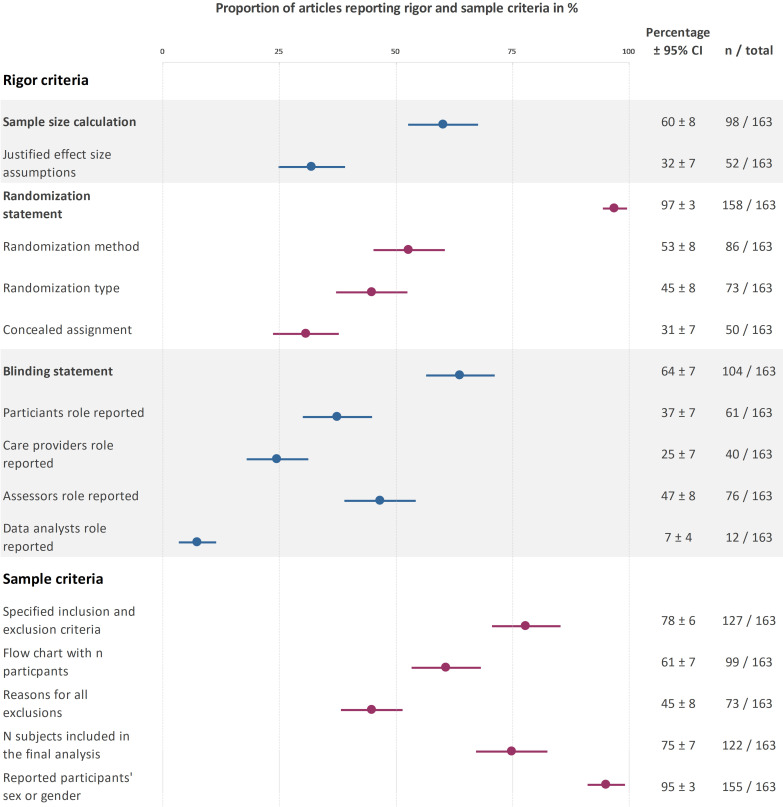
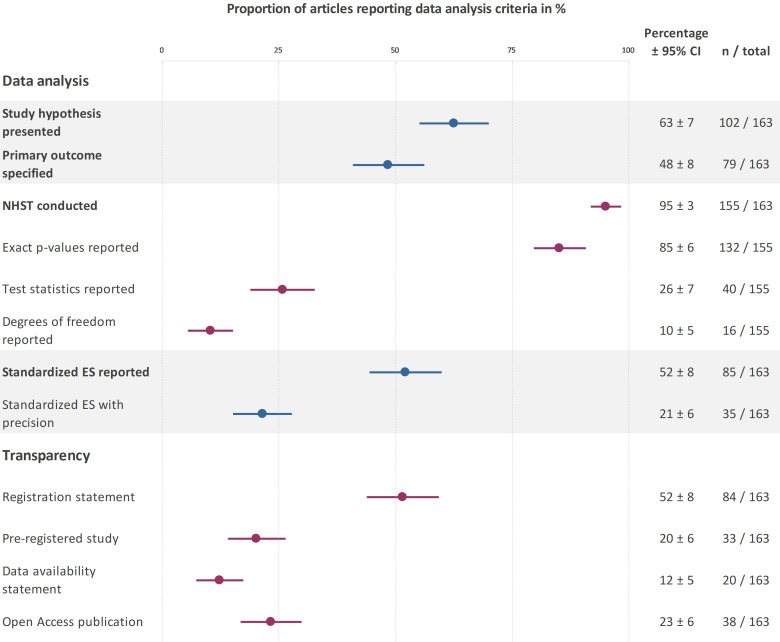
Introduction: While transparent reporting of clinical trials is essential to assess the risk of bias and translate research findings into clinical practice, earlier studies have shown that deficiencies are common. This study examined current clinical trial reporting and transparent research practices in sports medicine and orthopedics. Methods: The sample included clinical trials published in the top 25% of sports medicine and orthopedics journals over nine months. Two independent reviewers assessed pre-registration, open data and criteria related to scientific rigor, the study sample, and data analysis. Results: The sample included 163 clinical trials from 27 journals. While the majority of trials mentioned rigor criteria, essential details were often missing. Sixty percent (confidence interval [CI] 53-68%) of trials reported sample size calculations, but only 32% (CI 25-39%) justified the expected effect size. Few trials indicated the blinding status of all main stakeholders (4%; CI 1-7%). Only 18% (CI 12-24%) included information on randomization type, method, and concealed allocation. Most trials reported participants’ sex/gender (95%; CI 92-98%) and information on inclusion and exclusion criteria (78%; CI 72-84%). Only 20% (CI 14-26%) of trials were pre-registered. No trials deposited data in open repositories. Conclusions: These results will aid the sports medicine and orthopedics community in developing tailored interventions to improve reporting. While authors typically mention blinding, randomization and other factors, essential details are often missing. Greater acceptance of open science practices, like pre-registration and open data, is needed. These practices have been widely encouraged, we discuss systemic interventions that may improve clinical trial reporting. Registration: https://doi.org/10.17605/OSF.IO/9648H
Overview
CoChat Summary
TL;DR
This meta-research study assessed reporting and transparent research practices in 163 clinical trials published in the top 25% of sports medicine and orthopedics journals, finding that while most trials mention rigor criteria like blinding and randomization, essential details needed to assess risk of bias are frequently missing. Only 20% of trials were pre-registered and no trial deposited data in an open repository.
Key findings
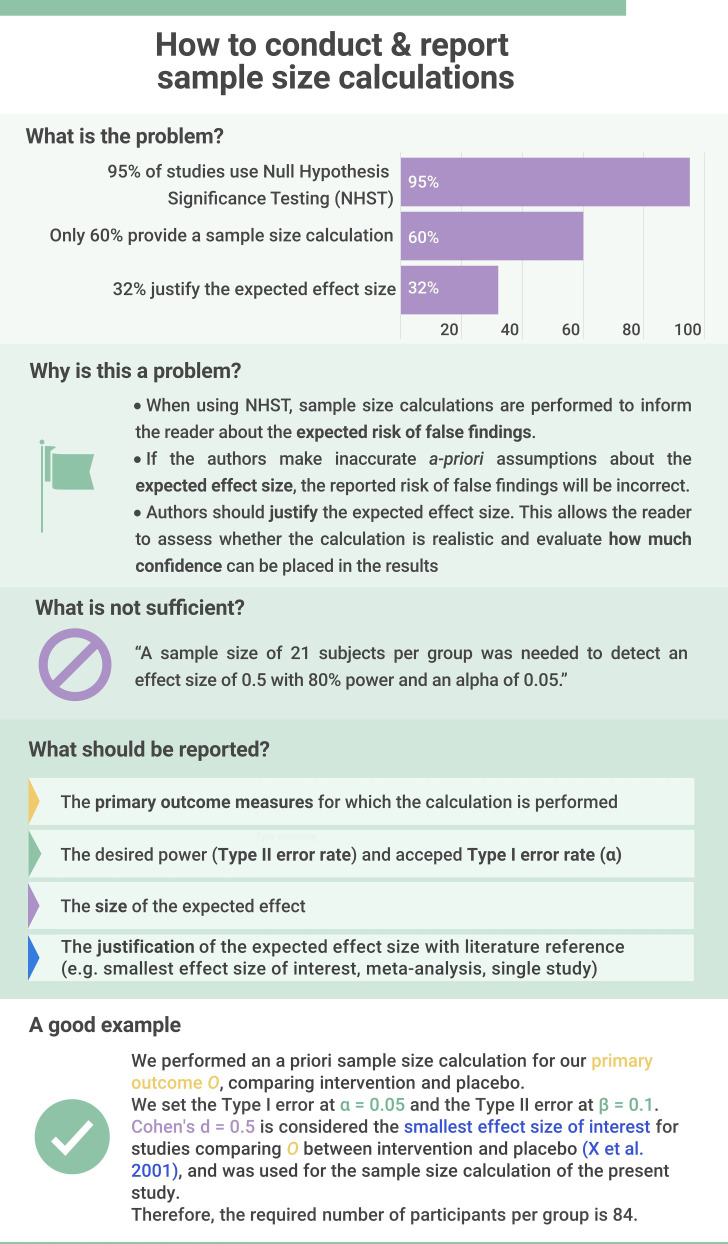
- Sixty percent (CI 53–68%) of trials reported sample size calculations, but only 32% (CI 25–39%) justified the expected effect size; among trials reporting a calculation (n=98), 53% (CI 43–63%) included a justification, 39% presented none, and 14% used arbitrary thresholds.
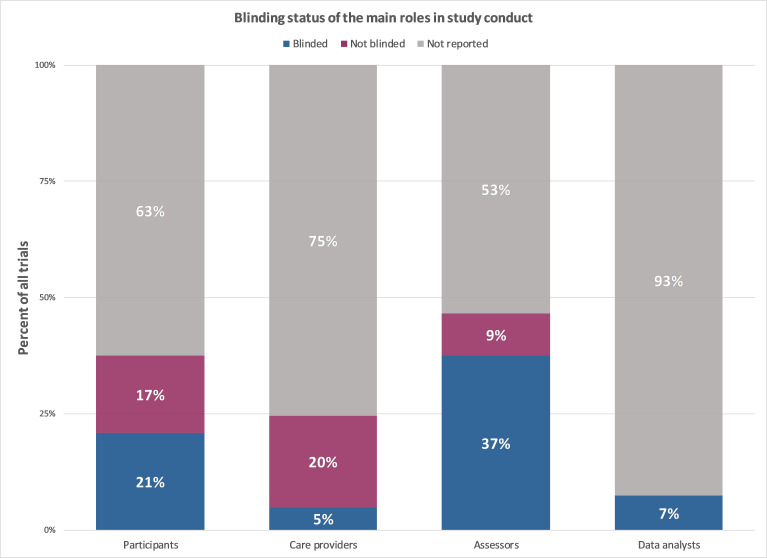
- Few trials indicated the blinding status of all main stakeholders (4%; CI 1–7%), and only 18% (CI 12–24%) included information on randomization type, method, and concealed allocation; 8% (CI 4–12%) provided complete allocation concealment information.
- Most trials reported participants' sex/gender (95%; CI 92–98%) and inclusion/exclusion criteria (78%; CI 72–84%); 75% reported the number of participants included in the final analysis.
- Only 20% (CI 14–26%) of trials were pre-registered (58% of registered trials were retrospective), and no trials deposited data in open repositories; 74% of trials with data availability statements said data were available upon request.
Methods
- Systematic examination of clinical trials published in the top 25% of orthopedics and sports medicine journals (Scimago Journal Rank) over nine months (2019/12–2020/08); 175 articles from 27 journals were screened, and 163 met the ICMJE clinical trial definition and were analyzed.
- Two independent reviewers (RS, GL, RP) performed full-text screening and data abstraction using preformatted Excel spreadsheets against CONSORT-based rigor, sample, data analysis, and transparency criteria; disagreements resolved by consensus.
- Exploratory analysis presenting prevalence as percentages with 95% confidence intervals; odds ratios with 95% CIs examined relationships between reporting completeness and pre-registration, flow charts, or sample size calculations (these analyses were not pre-registered).
Limitations
- Stated: CONSORT-based evaluation criteria for intervention reporting were not optimized for non-exercise or wait-and-see control interventions; odds ratios were exploratory post-hoc calculations requiring larger confirmatory studies; findings from the top 25% of journals may not generalize to journals not indexed by PubMed, lower tier journals, or non-English journals.
- Evident from the text: the study is exploratory and does not use formal sample size calculation (a precision-based estimate of 124–203 trials was used), and the preprint version was not certified by peer review.
Model-written summary. Check it against the paper before relying on it.
Integrity signals
Registry
Cites
Statistics
Figures
Verification
Claims the paper makes
4 Valid · 4 Not valid · 14 Not checked · 70 Own results and interpretations
The cited sources support only part of this claim — read each source’s verdict below.
In the paper
“In 42% of papers, risk of bias could not be assessed due to incomplete reporting (13).”
What the sources say
- Partly supportedcites [13] 13. Chess LE, Gagnier J. Risk of bias of randomized controlled trials published in orthopaedic journals. BMC Med Res Methodol. 2013;1376. doi:10.1186/1471-2288-13-76 Cited in: PubMed; PMID 23758875. sourceExperimental — accuracy not yet measured
The Results (Table 7) report that 42% of the assessed criteria could not be evaluated because of inadequate reporting. The claim changes the denominator to 42% of papers; the paper does not report that proportion of papers as unassessable. (LLM, conf=0.91)
plainstates a cause- Asserted: passes — The authors put it forward as true.
- Checkable: passes — It can be checked against evidence.
- Load-bearing: passes — The paper’s conclusions depend on it.
- Based: passes — The paper gives a reason why it holds.
- Partly supported
The cited sources support only part of this claim — read each source’s verdict below.
In the paper
“only 1% of studies in high-impact orthopedic journals reported all ten criteria needed for risk of bias assessment (13).”
What the sources say
- Partly supportedcites [13] 13. Chess LE, Gagnier J. Risk of bias of randomized controlled trials published in orthopaedic journals. BMC Med Res Methodol. 2013;1376. doi:10.1186/1471-2288-13-76 Cited in: PubMed; PMID 23758875. sourceExperimental — accuracy not yet measured
The Results section of our copy states 'Less than 1% of the included RCTs fulfilled all ten methodological criteria' (232 RCTs from the top five orthopaedic journals: JBJS Am, AJSM, OC, SJ, JOR), which supports the substance of the citing sentence. Two qualifiers are not matched: the figure is 'less than 1%' rather than '1%', and the denominator is randomized controlled trials only, not 'studies' in those journals generally (Abstract > Conclusion and Discussion likewise speak of 'very few studies/RCTs met all ten criteria' within the RCT sample). The Methods > Data extraction section confirms the ten criteria were risk-of-bias items judged on the completeness of reporting, so 'reported all ten criteria' is broadly consistent. (LLM, conf=0.72)
plain- Asserted: passes — The authors put it forward as true.
- Checkable: passes — It can be checked against evidence.
- Load-bearing: passes — The paper’s conclusions depend on it.
- Based: passes — The paper gives a reason why it holds.
- Partly supported
Every source the paper cites for this claim was checked and supports it.
In the paper
“the odds of obtaining data decline precipitously with time since publication (70).”
What the sources say
- Supportedcites [70] 70. Vines TH, Albert AYK, Andrew RL, Débarre F, Bock DG, Franklin MT, Gilbert KJ, Moore JS, Renaut S, Rennison DJ. The availability of research data declines rapidly with article age. Curr Biol. 2014;24(1):94-7. doi:10.1016/j.cub.2013.11.014 Cited in: PubMed; PMID 24361065. source
The Summary (p. 3) states that 'availability of the data was strongly affected by article age' and that 'for papers where the authors gave the status of their data, the odds of a dataset being extant fell by 17% per year'; the Results (p. 5) give the logistic estimate (OR = 0.83 [0.79-0.90], p < 0.0001) and the Discussion (p. 6-7) describe the 'rapid increase' in lost/inaccessible datasets, with the proportion still existing dropping from 100% in 2011 to 33% in 1991. The paper's title itself frames this as availability declining rapidly with article age, so the paraphrase that the odds of obtaining data decline precipitously with time since publication matches what the source attributes to itself. The only nuance is that the 17%/year odds ratio is conditional on an informative response, but the citing sentence carries no number or qualifier, so nothing is overstated. (LLM, conf=0.87)
plainstates a cause- Asserted: passes — The authors put it forward as true.
- Checkable: passes — It can be checked against evidence.
- Load-bearing: unclear — It is unclear whether the paper’s conclusions depend on it.
- Based: passes — The paper gives a reason why it holds.
- Supported
The sources with a verdict support this claim; the rest weren’t checked yet, have no full text we could read, or their verdicts aren’t rated yet.
In the paper
“Focusing on the magnitude and precision of differences, instead making decisions based on p-value thresholds, reduces the likelihood of spurious findings (72,73).”
What the sources say
- Supportedcites [72] 72. Bernards JR, Sato K, Haff GG, Bazyler CD. Current Research and Statistical Practices in Sport Science and a Need for Change. Sports (Basel). 2017;5(4). doi:10.3390/sports5040087 Cited in: PubMed; PMID 29910447. source
Bernards et al. (2017) make exactly this contrast: in '1. The Problem' they state that under NHST 'p < 0.05 is sufficient to state an intervention was effective without any regard to the magnitude of the effect,' which 'allows researchers to dredge their data' and 'can lead to an inflated rate of Type I errors' — i.e. spurious findings. In '3.6. Counter-Argument against Magnitude-Based Inferences' they assert as fact that, across 500,000 simulated randomised trials, 'magnitude-based inference methods outperformed NHST in respect of inferential error rates,' and also on publishable outcomes and publication bias with suboptimal samples. The precision component is covered in '3.5' (effect size inspected via its confidence interval plus smallest worthwhile change) and in '5. Conclusions' (inclusion of confidence intervals and effect statistics yields more transparent, informative research; a shift to magnitude-based inference 'may be a better fit from ... a reproducibility standpoint'). The Conclusions hedge slightly ('may'), but the error-rate point in 3.6 is stated with at least the confidence of the citing sentence, so the paraphrase is supported. (LLM, conf=0.82)
- Not checked yetcites [73] 73. Riemann BL, Lininger MR. Principles of Statistics: What the Sports Medicine Professional Needs to Know. Clin Sports Med. 2018;37(3):375-86. doi:10.1016/j.csm.2018.03.004 Cited in: PubMed; PMID 29903380. source
plainstates a cause- Asserted: passes — The authors put it forward as true.
- Checkable: passes — It can be checked against evidence.
- Load-bearing: unclear — It is unclear whether the paper’s conclusions depend on it.
- Based: passes — The paper gives a reason why it holds.
- Supported
A result the paper reports from its own data — it cites no other source for it, so there is none to check. The quote shows it is in the paper.
In the paper
“information on inclusion and exclusion criteria (78%; CI 72-84%)”
plain- Asserted: passes — The authors put it forward as true.
- Checkable: passes — It can be checked against evidence.
- Load-bearing: unclear — It is unclear whether the paper’s conclusions depend on it.
- Based: passes — The paper gives a reason why it holds.
42 more claims
Create a free account to see all 92 claims and to verify the 17 references still open.
- Probably not a substantial claim. 17
- It may state two separate claims as one. 32
Claims other papers make about this one
Each is checked against this paper’s own text: does it say what the citing paper says it does?
In the citing paper
“Inadequate reporting is also common in published studies [4–6], making it difficult for reviewers to evaluate manuscripts.”
From Is the future of peer review automated? (2022) · cites this paper as [5]
Self-check
Percentages, sums and reported differences re-computed from the paper’s own numbers.
Each contradiction between two passages listed here was confirmed by an independent check.
Rated minor: it would not touch a result — a value no result rests on, a p-value that stays on the same side of the significance level, or a conflict that is clerical, resolved elsewhere in the paper, or outside its own findings.
In the paper
“17% (CI 11-22%; n=24/90) reported the reasons for some exclusions”
Reported 17 · recomputed 26.666667
Rated minor: it would not touch a result — a value no result rests on, a p-value that stays on the same side of the significance level, or a conflict that is clerical, resolved elsewhere in the paper, or outside its own findings.
In the paper
“Among trials reporting sample size calculations (n=98), 53% (CI 43- It is made available under a CC-BY-ND 4.0 International license . is the author/funder, who has granted medRxiv a license to display the preprint in perpetuity. (which was not certified by peer review) medRxiv preprint doi: https://doi.org/10.1101/2021.07.20.21260565; this version posted September 8, 2021. The copyright holder for this preprint”
Reported 39 · recomputed 32.653061
Rated minor: it would not touch a result — a value no result rests on, a p-value that stays on the same side of the significance level, or a conflict that is clerical, resolved elsewhere in the paper, or outside its own findings.
In the paper
“33% (CI 26-41%; n=41/90) did not report any information.”
Reported 33 · recomputed 45.555556
Rated minor: it would not touch a result — a value no result rests on, a p-value that stays on the same side of the significance level, or a conflict that is clerical, resolved elsewhere in the paper, or outside its own findings.
In the paper
“Almost all sample size calculations were based on statistical power (93%; CI 8898%; n=96).”
Reported 93 · recomputed 97.959184
Rated minor: it would not touch a result — a value no result rests on, a p-value that stays on the same side of the significance level, or a conflict that is clerical, resolved elsewhere in the paper, or outside its own findings.
In the paper
§ Rigor and Sample Criteria · p. 13
“Blinding : Two-thirds of trials addressed blinding (Figure 2).”
§ Opportunities to improve reporting · p. 19
“Almost all trials addressed blinding, for example, but only 4% reported the blinding status of all main stakeholders.”
Citations
Cites
Rayyan-a web and mobile app for systematic reviews.
Ouzzani, M., Hammady, H., Fedorowicz, Z., & Elmagarmid, A. (2016) · Systematic Reviews · doi:10.1186/s13643-016-0384-4 · Cited by 26,092
CONSORT 2010 Statement: updated guidelines for reporting parallel group randomised trials
the CONSORT Group, Schulz, K. F., Altman, D. G., & Moher, D. (2010) · BMC Medicine · doi:10.1186/1741-7015-8-18 · Cited by 13,371
Hoffmann, T. C., Glasziou, P. P., Boutron, I., Milne, R., Perera, R., Moher, D., Altman, D. G., Barbour, V., Macdonald, H., Johnston, M., et al. (2014) · BMJ · doi:10.1136/bmj.g1687 · Cited by 10,548 · cited 2×
“intervention reporting (52,53) were beyond the scope of this study, previous studies assessed .”
BackgroundResultLakens, D. (2013) · Frontiers in Psychology · doi:10.3389/fpsyg.2013.00863 · Cited by 10,303 · cited 1×
“Effect sizes show the magnitude of effects within a study, while standardized effect sizes allow for comparisons across studies (48).”
BackgroundMoher, D., Hopewell, S., Schulz, K. F., Montori, V., Gotzsche, P. C., Devereaux, P. J., Elbourne, D., Egger, M., & Altman, D. G. (2010) · BMJ · doi:10.1136/bmj.c869 · Cited by 8,883
Estimating the reproducibility of psychological science
Open Science Collaboration (2015) · Science · doi:10.1126/science.aac4716 · Cited by 8,515 · cited 1×
“Inflated effect sizes were also observed in the psychological science reproducibility project, where replicated effects were generally smaller than those in the initial studies (71).”
ResultPower failure: why small sample size undermines the reliability of neuroscience
Button, K. S., Ioannidis, J. P. A., Mokrysz, C., Nosek, B. A., Flint, J., Robinson, E. S. J., & Munafò, M. R. (2013) · Nature Reviews Neuroscience · doi:10.1038/nrn3475 · Cited by 7,641 · cited 1×
“Category Assessment Rationale and Context Sample Size calculation Was an a priori sample size calculation performed? What type of sample size calculation was performed? Did the authors provide a justification for the expected effect size? - Low power is associated with high rates of spurious findings and overinflated…”
BackgroundWhat Makes Clinical Research Ethical?
Emanuel, E. J. (2000) · JAMA · doi:10.1001/jama.283.20.2701 · Cited by 2,710
Promoting an open research culture
Nosek, B. A., Alter, G., Banks, G. C., Borsboom, D., Bowman, S. D., Breckler, S. J., Buck, S., Chambers, C. D., Chin, G., Christensen, G., et al. (2015) · Science · doi:10.1126/science.aab2374 · Cited by 2,708
CONSORT 2010 statement: updated guidelines for reporting parallel group randomised trials
Schulz, K. F., Altman, D. G., Moher, D., & for the CONSORT Group (2010) · PLoS Medicine · doi:10.1371/journal.pmed.1000251 · Cited by 2,296
HARKing: Hypothesizing after the results are known
Kerr, N. L. (1998) · Personality and Social Psychology Review · doi:10.1207/s15327957pspr0203_4 · Cited by 1,989 · cited 1×
“HARKing HARKing, or hypothesizing after results are known, is defined as presenting a post hoc hypothesis as if it were an a priori hypothesis (33).”
BackgroundDwan, K., Gamble, C., Williamson, P. R., Kirkham, J. J., & the Reporting Bias Group (2013) · PLoS ONE · doi:10.1371/journal.pone.0066844 · Cited by 1,127 · cited 1×
“Outcomes that are statistically significant have higher odds of being fully reported than non-significant outcomes (29,30).”
BackgroundAngelis, C. D. D., Drazen, J., Frizelle, F., Haug, C., Hoey, J., Horton, R., Kotzin, S., Laine, C., Marušić, A., Overbeke, A. J., et al. (2005) · Circulation · doi:10.1161/01.res.0000162057.89022.b3 · Cited by 1,089 · cited 2×
“Although the ICJME has required clinical trial pre-registration since 2005 (61), only onefifth of trials were pre-registered.”
BackgroundMethodBiomedical research: increasing value, reducing waste.
Macleod, M. R., Michie, S., Roberts, I., Dirnagl, U., Chalmers, I., Ioannidis, J. P. A., Salman, R. A.-S., Chan, A.-W., & Glasziou, P. (2014) · The Lancet · doi:10.1016/s0140-6736(13)62329-6 · Cited by 1,003
Publication bias in clinical trials due to statistical significance or direction of trial results
Hopewell, S., Loudon, K., Clarke, M. J., Oxman, A. D., & Dickersin, K. (2009) · Cochrane Database of Systematic Reviews · doi:10.1002/14651858.mr000006.pub3 · Cited by 898
How Open Science Helps Researchers Succeed
McKiernan, E. C., Bourne, P. E., Brown, C. T., Buck, S., Kenall, A., Lin, J., McDougall, D., Nosek, B. A., Ram, K., Soderberg, C. K., et al. (2016) · eLife · doi:10.7554/elife.16800 · Cited by 798 · cited 2×
“- Open data facilitates collaboration and benefits society (56).”
BackgroundComparison of Registered and Published Primary Outcomes in Randomized Controlled Trials
Mathieu, S. (2009) · JAMA · doi:10.1001/jama.2009.1242 · Cited by 730 · cited 1×
“8 If NHST was performed, were exact p-values, degrees of freedom, and the test statistics presented? Were standardized effect sizes and their precision reported? significant results and introduces selective reporting bias (45,46).”
BackgroundBeyond Bar and Line Graphs: Time for a New Data Presentation Paradigm
Weissgerber, T. L., Milic, N. M., Winham, S. J., & Garovic, V. D. (2015) · PLOS Biology · doi:10.1371/journal.pbio.1002128 · Cited by 710 · cited 2×
“The actual data may suggest different conclusions from the summary statistics alone (49,50).”
BackgroundSelf-citationTurner, L., Shamseer, L., Altman, D. G., Schulz, K. F., & Moher, D. (2012) · Systematic Reviews · doi:10.1186/2046-4053-1-60 · Cited by 628 · cited 1×
“impair translation are still common (11,12).”
Where are all the female participants in Sports and Exercise Medicine research?
Costello, J. T., Bieuzen, F., & Bleakley, C. M. (2014) · European Journal of Sport Science · doi:10.1080/17461391.2014.911354 · Cited by 599 · cited 1×
“(75) observed that less than 40% of sports and exercise study participants were females, indicating sex bias, our study, on average, shows an even distribution of sex/gender.”
BackgroundUnderreporting Research Is Scientific Misconduct
Chalmers, L. (1990) · JAMA: The Journal of the American Medical Association · doi:10.1001/jama.1990.03440100121018 · Cited by 551 · cited 1×
“Publication bias The decision about whether to publish research findings depends on the strength and direction of the findings (27).”
BackgroundThe prevalence of statistical reporting errors in psychology (1985–2013)
Nuijten, M. B., Hartgerink, C. H. J., van Assen, M. A. L. M., Epskamp, S., & Wicherts, J. M. (2016) · Behavior Research Methods · doi:10.3758/s13428-015-0664-2 · Cited by 510 · cited 3×
“Twenty-five to 38% of medical articles (74), and up to 50% in psychology papers (47), contain p-values that don’t match the reported test-statistic and degrees of freedom.”
BackgroundThe Availability of Research Data Declines Rapidly with Article Age
Vines, T. H., Albert, A. Y. K., Andrew, R. L., Débarre, F., Bock, D. G., Franklin, M. T., Gilbert, K. J., Moore, J.-S., Renaut, S., & Rennison, D. J. (2014) · Current Biology · doi:10.1016/j.cub.2013.11.014 · Cited by 482 · cited 1×
“This is problematic, as such data are often unavailable and the odds of obtaining data decline precipitously with time since publication (70).”
BackgroundConsensus on Exercise Reporting Template (CERT): Modified Delphi Study
Slade, S. C., Dionne, C. E., Underwood, M., Buchbinder, R., Beck, B., Bennell, K., Brosseau, L., Costa, L., Cramp, F., Cup, E., et al. (2016) · Physical Therapy · doi:10.2522/ptj.20150668 · Cited by 478
Revised CIOMS International Ethical Guidelines for Health-Related Research Involving Humans
van Delden, J. J. M., & van der Graaf, R. (2017) · JAMA · doi:10.1001/jama.2016.18977 · Cited by 421 · cited 1×
“undermines public trust in biomedical research and raises concerns about whether the trial costs and patient risks were justified (5,6).”
BackgroundHoffmann, T. C., Erueti, C., & Glasziou, P. P. (2013) · BMJ · doi:10.1136/bmj.f3755 · Cited by 375 · cited 1×
“23 intervention reporting in detail (17,51,54,92).”
The citation advantage of linking publications to research data
Colavizza, G., Hrynaszkiewicz, I., Staden, I., Whitaker, K., & McGillivray, B. (2020) · PLOS ONE · doi:10.1371/journal.pone.0230416 · Cited by 335 · cited 1×
“The benefits of data sharing for authors include more citations (64,65), and increased opportunities to collaborate with researchers who want to perform secondary analyses (66).”
BackgroundChecco, A., Bracciale, L., Loreti, P., Pinfield, S., & Bianchi, G. (2021) · Humanities and Social Sciences Communications · doi:10.1057/s41599-020-00703-8 · Cited by 286 · cited 1×
“missing information for peer reviewers (82,83).”
Reporting of sample size calculation in randomised controlled trials: review
Charles, P., Giraudeau, B., Dechartres, A., Baron, G., & Ravaud, P. (2009) · BMJ · doi:10.1136/bmj.b1732 · Cited by 274 · cited 1×
“Common problems include failing to justify the expected treatment effect and not stating all values required for calculation (39).”
BackgroundClinical Trial Registration: A Statement from the International Committee of Medical Journal Editors
De Angelis, C., Drazen, J. M., Frizelle, F. A., Haug, C., Hoey, J., Horton, R., Kotzin, S., Laine, C., Marusic, A., Overbeke, A. J. P. M., et al. (2004) · Annals of Internal Medicine · doi:10.7326/0003-4819-141-6-200409210-00109 · Cited by 264
Evidence of experimental bias in the life sciences: why we need blind data recording
Holman, L., Head, M. L., Lanfear, R., & Jennions, M. D. (2015) · PLOS Biology · doi:10.1371/journal.pbio.1002190 · Cited by 263 · cited 1×
“A lack of blinding is associated with overinflated effect sizes (43).”
BackgroundReporting in randomized clinical trials improved after adoption of the CONSORT statement
Kane, R. L., Wang, J., & Garrard, J. (2007) · Journal of Clinical Epidemiology · doi:10.1016/j.jclinepi.2006.06.016 · Cited by 227 · cited 2×
“Persistent reporting deficiencies (12,21) indicate that”
BackgroundTaichman, D. B., Sahni, P., Pinborg, A., Peiperl, L., Laine, C., James, A., Hong, S.-T., Haileamlak, A., Gollogly, L., Godlee, F., et al. (2017) · PLOS Medicine · doi:10.1371/journal.pmed.1002315 · Cited by 219
(2021) · International Committee of Medical Journal Editors; Media Sphera Publishers; Association of Science Editors and Publishers eBooks · doi:10.24069/recicmje-2021 · Cited by 216
Catalogue of bias: attrition bias
Nunan, D., Aronson, J., & Bankhead, C. (2018) · BMJ Evidence-Based Medicine · doi:10.1136/ebmed-2017-110883 · Cited by 204 · cited 1×
“Attrition bias occurs when there are systematic differences between people who leave the study and those who continue (31).”
BackgroundAre Peer Reviewers Encouraged to Use Reporting Guidelines? A Survey of 116 Health Research Journals
Hirst, A., & Altman, D. G. (2012) · PLoS ONE · doi:10.1371/journal.pone.0035621 · Cited by 200 · cited 1×
“endorsement without enforcement is insufficient (77,78), and engaging individuals, journals, funders, and institutions is necessary to improve reporting (79,80).”
BackgroundBias in Meta-Analysis Due to Outcome Variable Selection Within Studies
Hutton, J. L., & Williamson, P. R. (2000) · Journal of the Royal Statistical Society Series C: Applied Statistics · doi:10.1111/1467-9876.00197 · Cited by 194 · cited 2×
“Outcome reporting bias Only particular outcome variables are included in publications and decisions about which variables to include are based on the statistical significance or direction of the results (23).”
BackgroundIncongruence between test statistics and P values in medical papers
García-Berthou, E., & Alcaraz, C. (2004) · BMC Medical Research Methodology · doi:10.1186/1471-2288-4-13 · Cited by 181
Hewitt, C., Hahn, S., Torgerson, D. J., Watson, J., & Bland, J. M. (2005) · BMJ · doi:10.1136/bmj.38413.576713.ae · Cited by 176
Preparing for Responsible Sharing of Clinical Trial Data
Mello, M. M., Francer, J. K., Wilenzick, M., Teden, P., Bierer, B. E., & Barnes, M. (2013) · New England Journal of Medicine · doi:10.1056/nejmhle1309073 · Cited by 175
Dechartres, A., Trinquart, L., Atal, I., Moher, D., Dickersin, K., Boutron, I., Perrodeau, E., Altman, D. G., & Ravaud, P. (2017) · BMJ · doi:10.1136/bmj.j2490 · Cited by 171 · cited 4×
“Persistent reporting deficiencies (12,21) indicate that”
BackgroundInfluentialShamseer, L., Hopewell, S., Altman, D. G., Moher, D., & Schulz, K. F. (2016) · Trials · doi:10.1186/s13063-016-1408-z · Cited by 168 · cited 1×
“endorsement without enforcement is insufficient (77,78), and engaging individuals, journals, funders, and institutions is necessary to improve reporting (79,80).”
BackgroundReproducible and reusable research: are journal data sharing policies meeting the mark?
Vasilevsky, N. A., Minnier, J., Haendel, M. A., & Champieux, R. E. (2017) · PeerJ · doi:10.7717/peerj.3208 · Cited by 165 · cited 1×
“In 2017, 21% of 316 biomedical journals (57) and 28% of funders (58) required open data.”
BackgroundQuestions About Questionable Research Practices in the Field of Management: A Guest Commentary
Banks, G. C., O’Boyle, E. H., Pollack, J. M., White, C. D., Batchelor, J. H., Whelpley, C. E., Abston, K. A., Bennett, A. A., & Adkins, C. L. (2016) · Journal of Management · doi:10.1177/0149206315619011 · Cited by 163 · cited 2×
“3 Table 1 Terminology and concepts Concept Questionable research practices Questionable research practices are defined as “Design, analytic, or reporting practices that have been questioned because of the potential for the practice to be employed with the purpose of presenting biased evidence in favor of an assertion”…”
BackgroundTaichman, D. B., Sahni, P., Pinborg, A., Peiperl, L., Laine, C., James, A., Hong, S.-T., Haileamlak, A., Gollogly, L., Godlee, F., et al. (2017) · New England Journal of Medicine · doi:10.1056/nejme1705439 · Cited by 156
What’s next for Registered Reports?
Chambers, C. (2019) · Nature · doi:10.1038/d41586-019-02674-6 · Cited by 154 · cited 1×
“Pre-registration and Registered Reports may prevent selective reporting (25,26), which is also known as cherry picking.”
BackgroundMoher, D., Simera, I., Schulz, K. F., Hoey, J., & Altman, D. G. (2008) · BMC Medicine · doi:10.1186/1741-7015-6-13 · Cited by 153 · cited 1×
“guidelines (7,8) have been recommended by the ICMJE and widely disseminated by the EQUATOR network (9,10).”
BackgroundWho is blinded in randomized clinical trials? A study of 200 trials and a survey of authors
Haahr, M. T., & Hróbjartsson, A. (2006) · Clinical Trials · doi:10.1177/1740774506069153 · Cited by 150 · cited 1×
“Terms like double-blind are ambiguous, interpreted differently, and don’t provide reliable information on blinding of specific stakeholder groups (44).”
BackgroundKirkham, J. J., Altman, D. G., Chan, A.-W., Gamble, C., Dwan, K. M., & Williamson, P. R. (2018) · BMJ · doi:10.1136/bmj.k3802 · Cited by 144 · cited 1×
“Outcomes that are statistically significant have higher odds of being fully reported than non-significant outcomes (29,30).”
BackgroundBarnes, C., Boutron, I., Giraudeau, B., Porcher, R., Altman, D. G., & Ravaud, P. (2015) · BMC Medicine · doi:10.1186/s12916-015-0460-y · Cited by 135 · cited 2×
“CONSORT writing templates may also help (60).”
BackgroundChristensen, G., Dafoe, A., Miguel, E. A., Moore, D. A., & Rose, A. K. (2019) · PLoS ONE · doi:10.1371/journal.pone.0225883 · Cited by 134 · cited 1×
“The benefits of data sharing for authors include more citations (64,65), and increased opportunities to collaborate with researchers who want to perform secondary analyses (66).”
BackgroundStrengthening the Practice of Exercise and Sport-Science Research
Halperin, I., Vigotsky, A. D., Foster, C., & Pyne, D. B. (2018) · International Journal of Sports Physiology and Performance · doi:10.1123/ijspp.2017-0322 · Cited by 130 · cited 1×
“Calls for more transparent reporting in orthopedics and sports medicine (19,26,59)”
BackgroundCurrent Research and Statistical Practices in Sport Science and a Need for Change
Bernards, J., Sato, K., Haff, G., & Bazyler, C. (2017) · Sports · doi:10.3390/sports5040087 · Cited by 120
Harms From Uninformative Clinical Trials
Zarin, D. A., Goodman, S. N., & Kimmelman, J. (2019) · JAMA · doi:10.1001/jama.2019.9892 · Cited by 115 · cited 1×
“Clinical trials must be properly designed, conducted, and reported (4) to facilitate”
BackgroundConsortium for Transparency in Exercise Science (COTES) Collaborators, Caldwell, A. R., Vigotsky, A. D., Tenan, M. S., Radel, R., Mellor, D. T., Kreutzer, A., Lahart, I. M., Mills, J. P., & Boisgontier, M. P. (2020) · Sports Medicine · doi:10.1007/s40279-019-01227-1 · Cited by 114 · cited 3×
“Sports medicine researchers have already noted that pre-registration and registered reports can prevent questionable research practice (26) (Table 1) or make them easier to detect (63).”
BackgroundPrinciples From Clinical Trials Relevant to Clinical Practice: Part I
Califf, R. M., & DeMets, D. L. (2002) · Circulation · doi:10.1161/01.cir.0000023260.78078.bb · Cited by 108
Taichman, D. B., Sahni, P., Pinborg, A., Peiperl, L., Laine, C., James, A., Hong, S.-T., Haileamlak, A., Gollogly, L., Godlee, F., et al. (2017) · JAMA · doi:10.1001/jama.2017.6514 · Cited by 108
Reporting guidelines: doing better for readers
Moher, D. (2018) · BMC Medicine · doi:10.1186/s12916-018-1226-0 · Cited by 107 · cited 1×
“endorsement without enforcement is insufficient (77,78), and engaging individuals, journals, funders, and institutions is necessary to improve reporting (79,80).”
BackgroundReveal, Don’t Conceal: Transforming Data Visualization to Improve Transparency
Weissgerber, T. L., Winham, S. J., Heinzen, E. P., Milin-Lazovic, J. S., Garcia-Valencia, O., Bukumiric, Z., Savic, M. D., Garovic, V. D., & Milic, N. M. (2019) · Circulation · doi:10.1161/circulationaha.118.037777 · Cited by 101 · cited 2×
“The actual data may suggest different conclusions from the summary statistics alone (49,50).”
BackgroundSelf-citationReal-world studies no substitute for RCTs in establishing efficacy
Gerstein, H. C., McMurray, J., & Holman, R. R. (2019) · The Lancet · doi:10.1016/s0140-6736(18)32840-x · Cited by 97 · cited 1×
“likelihood that results about new treatments will be trustworthy, reproducible and generalizable (2,3).”
BackgroundConfidence crisis of results in biomechanics research
Knudson, D. V. (2017) · Sports Biomechanics · doi:10.1080/14763141.2016.1246603 · Cited by 87 · cited 2×
“Calls for more transparent reporting in orthopedics and sports medicine (19,26,59)”
BackgroundHolden, S., Rathleff, M. S., Jensen, M. B., & Barton, C. J. (2018) · British Journal of Sports Medicine · doi:10.1136/bjsports-2017-097547 · Cited by 85 · cited 2×
“Incomplete reporting of exercise interventions (17) makes it impossible to .”
BackgroundArmijo-Olivo, S., Saltaji, H., da Costa, B. R., Fuentes, J., Ha, C., & Cummings, G. G. (2015) · BMJ Open · doi:10.1136/bmjopen-2015-008562 · Cited by 84 · cited 1×
“Randomization & concealed allocation Did the authors address whether randomization was used? If so, were the randomization type and method mentioned? Were the following details of the allocation concealment procedure addressed? - Who generated the randomization sequence? - Who enrolled participants? - Who assigned par…”
MethodRisk of bias of randomized controlled trials published in orthopaedic journals
Chess, L. E., & Gagnier, J. (2013) · BMC Medical Research Methodology · doi:10.1186/1471-2288-13-76 · Cited by 83 · cited 5×
“followed older studies suggesting that poor clinical trial reporting limits readers ability to assess study quality and risk of bias (13,60,61).”
BackgroundResultInfluentialExercise prescription: a case for standardised reporting
Slade, S. C., & Keating, J. L. (2012) · British Journal of Sports Medicine · doi:10.1136/bjsports-2011-090290 · Cited by 79 · cited 2×
“The minority of exercise studies provided enough information to allow others to replicate interventions (51).”
BackgroundLatif, L. A., Amadera, J. E. D., Pimentel, D. C., Pimentel, T., & Fregni, F. (2011) · Archives of Physical Medicine and Rehabilitation · doi:10.1016/j.apmr.2010.10.003 · Cited by 73 · cited 1×
“The majority of sample size calculations in rehabilitation trials are missing expected effect sizes (40).”
BackgroundRiemann, B. L., & Lininger, M. R. (2018) · Clinics in Sports Medicine · doi:10.1016/j.csm.2018.03.004 · Cited by 71 · cited 1×
“Focusing on the magnitude and precision of differences, instead making decisions based on p-value thresholds, reduces the likelihood of spurious findings (72,73).”
BackgroundChen, T., Li, C., Qin, R., Wang, Y., Yu, D., Dodd, J., Wang, D., & Cornelius, V. (2019) · JAMA Network Open · doi:10.1001/jamanetworkopen.2019.7242 · Cited by 68 · cited 1×
“8 If NHST was performed, were exact p-values, degrees of freedom, and the test statistics presented? Were standardized effect sizes and their precision reported? significant results and introduces selective reporting bias (45,46).”
BackgroundVerhagen, E. A. L. M., Hupperets, M., Finch, C. F., & van Mechelen, W. (2011) · Journal of science and medicine in sport · doi:10.1016/j.jsams.2011.02.007 · Cited by 64 · cited 2×
“Intervention effects can be up to three times larger in fully adherent participants compared to partly adherent participants (54).”
BackgroundWeissgerber, T., Riedel, N., Kilicoglu, H., Labbé, C., Eckmann, P., ter Riet, G., Byrne, J., Cabanac, G., Capes-Davis, A., Favier, B., et al. (2021) · Nature Medicine · doi:10.1038/s41591-020-01203-7 · Cited by 57
Self-citationSoboczenski, F., Trikalinos, T. A., Kuiper, J., Bias, R. G., Wallace, B. C., & Marshall, I. J. (2019) · BMC Medical Informatics and Decision Making · doi:10.1186/s12911-019-0814-z · Cited by 53 · cited 1×
“available to screen for risk of bias (RobotReviewer;RRID:SCR_021064 (85)), and CONSORT methodology criteria (CONSORT-TM;RRID:SCR_021051 (86)).”
Data sharing in clinical trials – practical guidance on anonymising trial datasets
Keerie, C., Tuck, C., Milne, G., Eldridge, S., Wright, N., & Lewis, S. C. (2018) · Trials · doi:10.1186/s13063-017-2382-9 · Cited by 51
Büttner, F., Toomey, E., McClean, S., Roe, M., & Delahunt, E. (2020) · British Journal of Sports Medicine · doi:10.1136/bjsports-2019-101863 · Cited by 47 · cited 1×
“unreasonably high number of papers that support the study hypothesis (20).”
BackgroundStatement on methods in sport injury research from the 1st METHODS MATTER Meeting, Copenhagen, 2019
Nielsen, R. O., Shrier, I., Casals, M., Nettel‐Aguirre, A., Møller, M., Bolling, C. S., Bittencourt, N. F. N., Clarsen, B. M., Wedderkopp, N., Soligard, T., et al. (2020) · British Journal of Sports Medicine · doi:10.1136/bjsports-2019-101323 · Cited by 46
Incentives for Clinical Trialists to Share Data
Lo, B., & DeMets, D. L. (2016) · New England Journal of Medicine · doi:10.1056/nejmp1608351 · Cited by 42 · cited 1×
“The benefits of data sharing for authors include more citations (64,65), and increased opportunities to collaborate with researchers who want to perform secondary analyses (66).”
First analysis of ‘pre-registered’ studies shows sharp rise in null findings
Warren, M. (2018) · Nature · doi:10.1038/d41586-018-07118-1 · Cited by 35 · cited 1×
“Sports medicine researchers have already noted that pre-registration and registered reports can prevent questionable research practice (26) (Table 1) or make them easier to detect (63).”
BackgroundToward assessing clinical trial publications for reporting transparency
Kilicoglu, H., Rosemblat, G., Hoang, L., Wadhwa, S., Peng, Z., Malički, M., Schneider, J., & ter Riet, G. (2021) · Journal of Biomedical Informatics · doi:10.1016/j.jbi.2021.103717 · Cited by 34
Toward assessing clinical trial publications for reporting transparencyPreprint
Kilicoglu, H., Rosemblat, G., Hoang, L. K., et al. (2021) · medRxiv · doi:10.1101/2021.01.12.21249695 · Cited by 34 · cited 1×
“available to screen for risk of bias (RobotReviewer;RRID:SCR_021064 (85)), and CONSORT methodology criteria (CONSORT-TM;RRID:SCR_021051 (86)).”
Current Status of Evidence‐Based Sports Medicine
Harris, J. D., Cvetanovich, G. L., Erickson, B. J., Abrams, G. D., Chahal, J., Gupta, A. K., McCormick, F. M., & Bach, B. R. (2014) · Arthroscopy The Journal of Arthroscopic and Related Surgery · doi:10.1016/j.arthro.2013.11.015 · Cited by 33 · cited 1×
“Our results are consistent with previous findings (62) that trial registrations were among the least reported CONSORT items in sports medicine.”
ResultRisks (and Benefits) in Comparative Effectiveness Research Trials
Feudtner, C., Schreiner, M., & Lantos, J. D. (2013) · New England Journal of Medicine · doi:10.1056/nejmp1309322 · Cited by 28 · cited 1×
“undermines public trust in biomedical research and raises concerns about whether the trial costs and patient risks were justified (5,6).”
BackgroundBernard, R., Weissgerber, T. L., Bobrov, E., Winham, S. J., Dirnagl, U., & Riedel, N. (2020) · Clinical Science · doi:10.1042/cs20201125 · Cited by 23 · cited 1×
“3 Table 1 Terminology and concepts Concept Questionable research practices Questionable research practices are defined as “Design, analytic, or reporting practices that have been questioned because of the potential for the practice to be employed with the purpose of presenting biased evidence in favor of an assertion”…”
BackgroundSelf-citationData sharing in clinical trials - practical guidance on anonymising trial datasets
Tuck, C., Lewis, S., Milne, G., et al. (2015) · Trials · doi:10.1186/1745-6215-16-s2-o66 · Cited by 21
BJSM educational editorials: methods matter
Verhagen, E. A. L. M., Stovitz, S. D., Mansournia, M. A., Nielsen, R. O., & Shrier, I. (2017) · British Journal of Sports Medicine · doi:10.1136/bjsports-2017-097998 · Cited by 14 · cited 2×
“and reporting to make research easier to understand, interpret, and translate into clinical practice (16).”
BackgroundLanglais, P.-C. (2023) · doi:10.52949/65 · Cited by 14
Losina, E. (2018) · Osteoarthritis and Cartilage · doi:10.1016/j.joca.2018.09.006 · Cited by 10 · cited 1×
“2 implement interventions in clinical practice or to assess the appropriateness of the control intervention (18).”
MethodWhat are innovations in peer review and editorial assessment for?
Halffman, W., & Horbach, S. P. J. M. (2020) · Genome Biology · doi:10.1186/s13059-020-02004-4 · Cited by 5 · cited 1×
“missing information for peer reviewers (82,83).”
Zenko, Z., Steele, J., & Mills, J. (2020) · Communications in Kinesiology · doi:10.5526/cik.v1i1.26 · Cited by 4
Zenko, Z., Steele, J., & Mills, J. P. (2020) · Communications in Kinesiology · doi:10.51224/cik0001 · Cited by 3
CORP: Assessing author compliance with data presentation guidelines for manuscript figures
Keehan, K. H., Gaffney, M. C., & Zucker, I. H. (2020) · American Journal of Physiology-Heart and Circulatory Physiology · doi:10.1152/ajpheart.00071.2020 · Cited by 1
Research works printed but not linked: 6
- ICMJE. Recommendations | Preparing a Manuscript for Submission to a Medical Journal: Methods - statistics [Internet]. 2021 [updated 2021 Apr 14
- 32. ICMJE. Recommendations | Preparing a Manuscript for Submission to a Medical Journal: Methods - statistics [Internet]. 2021 [updated 2021 Apr 14; cited 2021 Apr 14]. Available from: http://www.icmje.org/recommendations/browse/manuscript-preparation/preparingfor-submission.html
- 34. SCImago (nd). SJR - SCImago Journal & Country Rank [Portal] [Internet]. 2020 [cited 2021 Feb 22]. Available from: https://www.scimagojr.com/journalrank.php?category=2732
- BMC. Advancing peer review at BMC [Internet]. 2021 [updated 2021 Apr 8
- 84. BMC. Advancing peer review at BMC [Internet]. 2021 [updated 2021 Apr 8; cited 2021 Apr 8]. Available from: https://www.biomedcentral.com/about/advancing-peer-review
- 89. EU Trials Tracker. EU Trials Tracker - Who's not sharing clinical trial results? [Internet]: Evidence-Based Medicine Data Lab; University of Oxford. 2021 [updated 2021 Apr 12; cited 2021 Apr 12]. Available from: https://eu.trialstracker.net/
Cited by
Is the future of peer review automated?
Schulz, R., Barnett, A., Bernard, R., Brown, N. J. L., Byrne, J. A., Eckmann, P., Gazda, M. A., Kilicoglu, H., Prager, E. M., Salholz-Hillel, M., et al. (2022) · BMC Research Notes · doi:10.1186/s13104-022-06080-6 · Cited by 80
Self-citationSchulz, R., Langen, G., Prill, R., Cassel, M., & Weissgerber, T. L. (2022) · BMJ Open · doi:10.1136/bmjopen-2021-059347 · Cited by 23
Self-citationHammami, R., Negra, Y., Nebigh, A., Ramírez‐Campillo, R., Moran, J., & Chaabène, H. (2022) · The Journal of Strength and Conditioning Research · doi:10.1519/jsc.0000000000004394 · Cited by 31
Replacing bar graphs of continuous data with more informative graphics: are we making progress?
Riedel, N., Schulz, R., Kazezian, V., & Weissgerber, T. L. (2022) · Clinical Science · doi:10.1042/cs20220287 · Cited by 25
Self-citation
Metadata
- Authors
- Schulz, R., Langen, G., Prill, R., Cassel, M., & Weissgerber, T.
- Affiliations
- University of Potsdam (DE)
- Medizinische Hochschule Brandenburg Theodor Fontane (DE)
- Berlin Institute of Health at Charité - Universitätsmedizin Berlin (DE)
- Corresponding author
- Weissgerber, Tracey
- Venue
- BMJ Open
- Publisher
- openRxiv
- Published
- 2021-07-23
- Volume
- 12
- Issue
- 8
- Pages
- e059347-e059347
- ISSN
- 2044-6055 (ISSN-L)
- PMC
- PMC9364413
- OpenAlex
- W4290673869
- Semantic Scholar
- 2193515b1a67ed772ea630fb5eb9b0113ac108ea
- Cited by
- 23
- References
- 78
- Citations by year
- 2026: 3 · 2025: 7 · 2024: 2 · 2023: 5 · 2022: 6
- FWCI
- 3.02
- Type
- journal article
- Language
- en
- Open access
- gold
- doi.org
- Licence
- cc-by-nc
- Locations
- BMJ Open (publishedVersion, cc-by-nc)
- medRxiv (acceptedVersion, cc-by-nd)
- PubMed Central (publishedVersion, cc-by-nc)
- PubMed (publishedVersion)
- DOAJ (DOAJ: Directory of Open Access Journals) (submittedVersion, cc-by-sa)
- Refubium (Universitätsbibliothek der Freien Universität Berlin) (submittedVersion, cc-by-nc)
- Universitätsbibliothek der FU Berlin Hochschulschriftenstelle u. Dokumentenserver
- Topics
- Social Sciences › Decision Sciences › Statistics, Probability and Uncertainty › Meta-analysis and systematic reviews
- Social Sciences › Library and Information Sciences › Academic Publishing and Open Access
- Health Sciences › Nursing › Issues, ethics and legal aspects › Pharmaceutical industry and healthcare
- Keywords
- trial reporting quality, preregistration, open data, sample size justification, blinding, randomization, open science, research transparency, risk of bias
- MeSH terms
- Humans, Orthopedics, Sports Medicine
About these checks
Registry, retraction, Cites and statistics results are computed, not judged, with one exception: a printed reference that no index lists is read once by a model before it counts as a citation error. Claims are extracted by a model and kept only when their quote appears verbatim in the text; each cited source is then checked, with a model’s help, for whether it says what the claim relies on. Those verdicts can be wrong — read the claim’s quote and the cited source before relying on one.
The claim verdicts this report counts are experimental: their accuracy is not yet measured.
A language model drew the claims from the paper on 2026-10-04, under version 3 of the claim definition (model deepseek-v4.1-flash, prompt extract-v3).
A second model labelled each claim on 2026-10-04 (model jev-1.13-20260917, definition revision gold-guideline-v0.2).
Cited sources are checked with a language model’s help (gpt-6-sol and qwen3.8-omni-flash).
Statistics and arithmetic are recomputed, not judged.
Confidence bands are shown only for fields calibrated on our annotated test set. None is calibrated yet, so no band is shown.
What counts as a claim ›How we measure confidence ›How we check this ›
Are you an author, or do you see a problem with this page? Request a review
Data sources
Bibliographic data: Semantic Scholar, OpenAlex, Crossref.
Contains information from the Semantic Scholar Academic Graph Datasets, made available under the ODC Attribution License (ODC-BY 1.0).
Semantic Scholar’s data is described in: Kinney, R., et al. (2023). The Semantic Scholar Open Data Platform. arXiv:2301.10140.
