

Comprehensive deletion scan of anti-CRISPR AcrIIA4 reveals essential and dispensable domains for Cas9 inhibition
Open accessPreprint — published as 10.1073/pnas.2413743121
The DOI matches its Crossref record; 1 of the 1 references it cites were found in a registry or an index.
Abstract
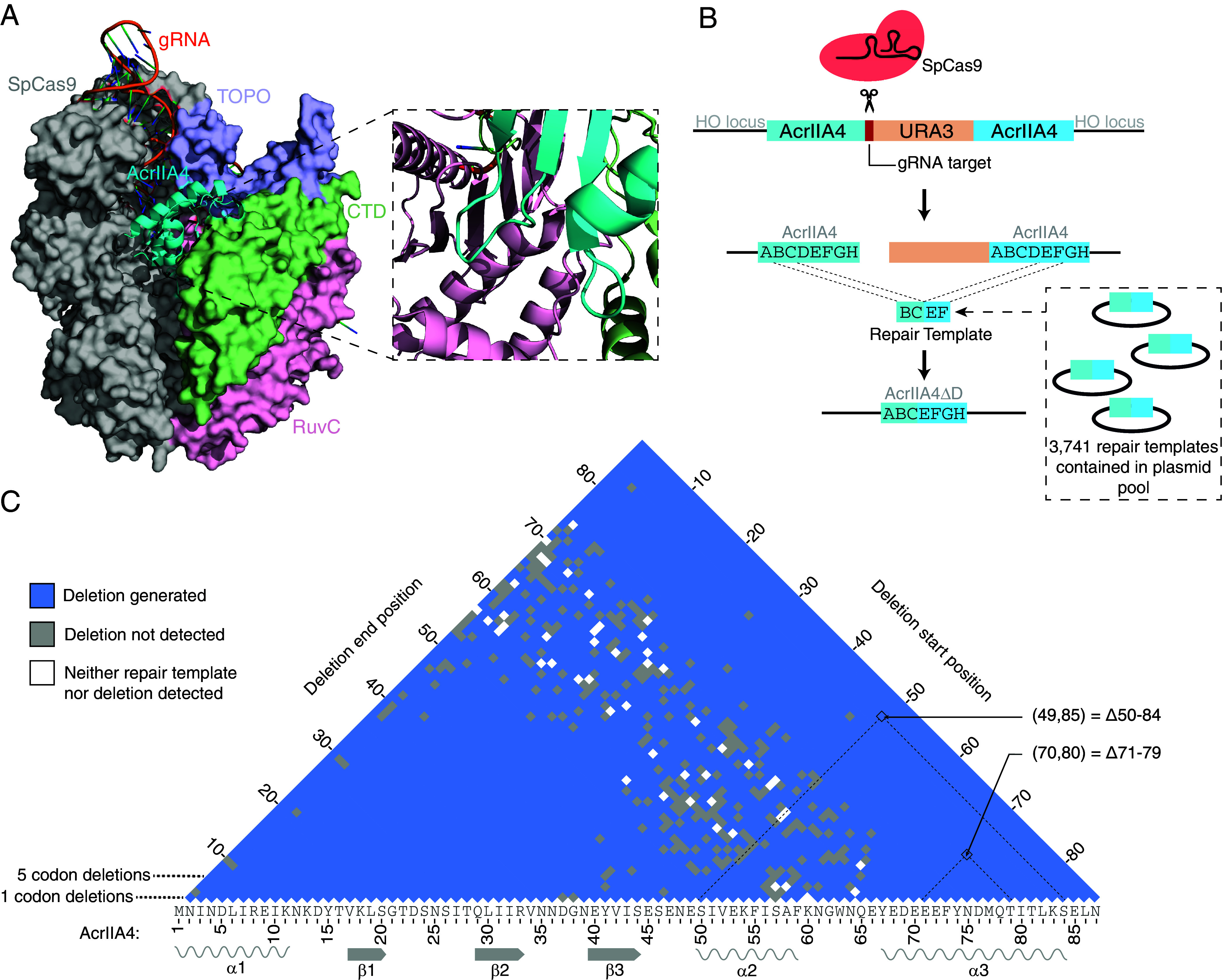
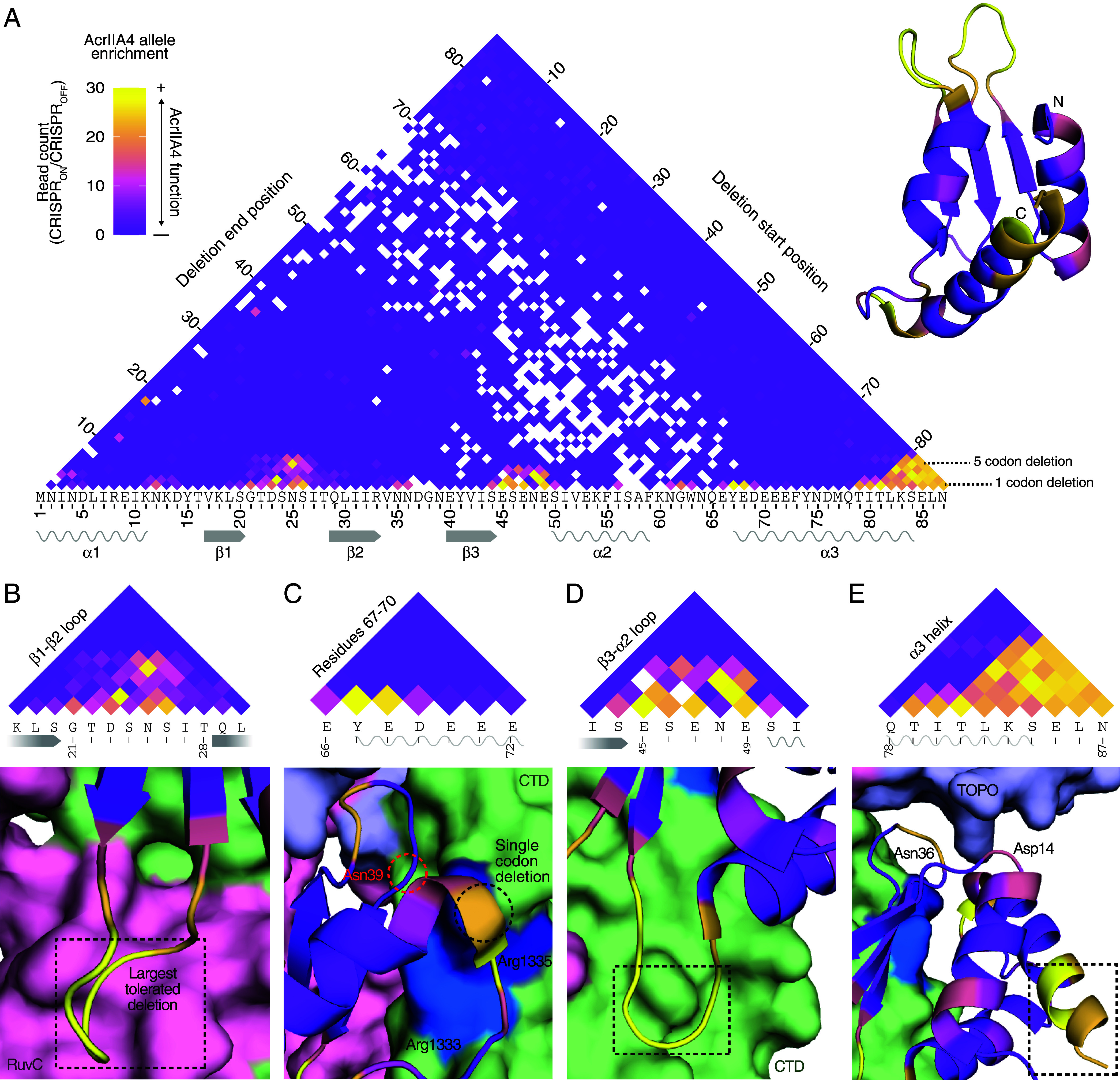
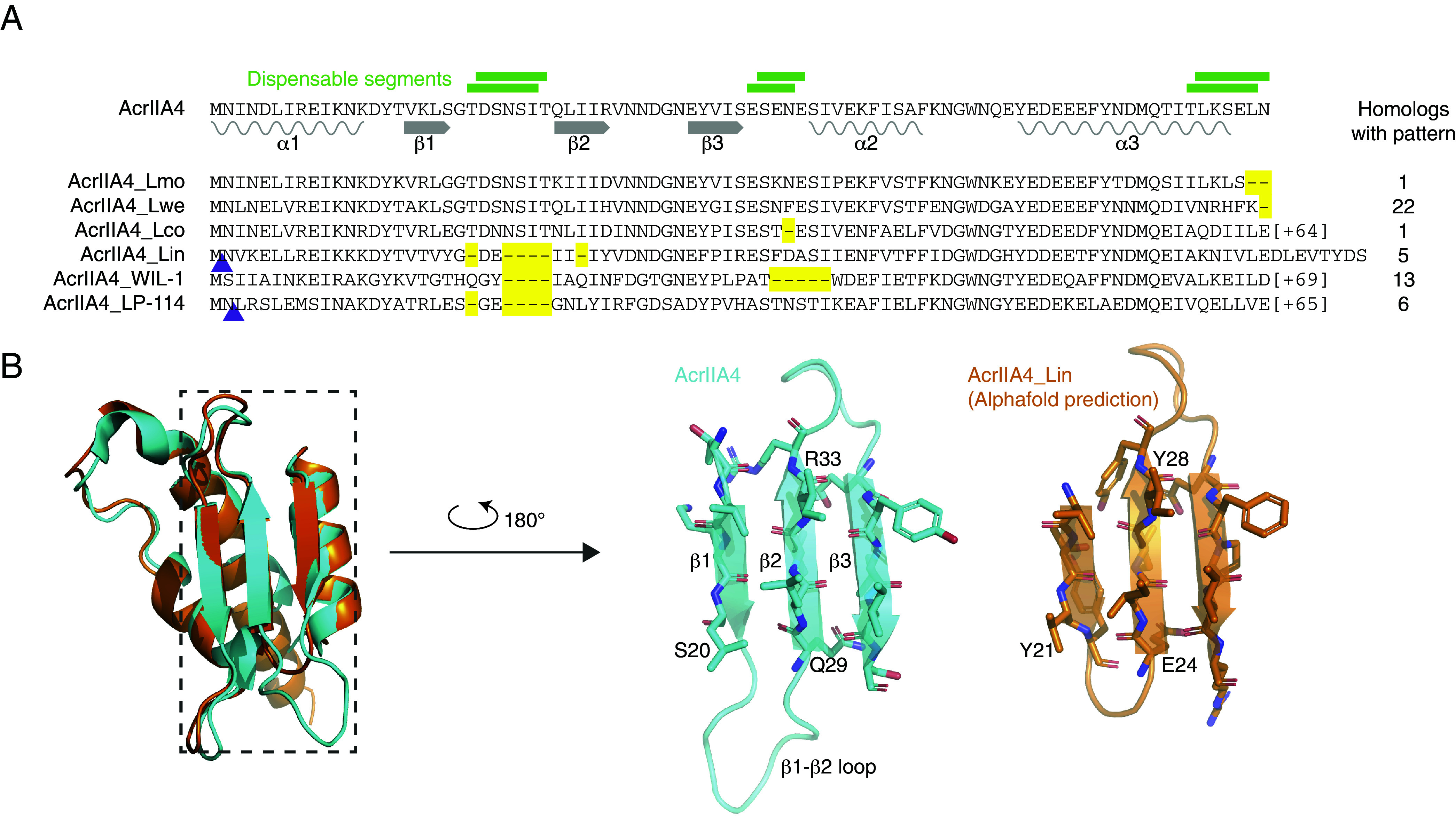
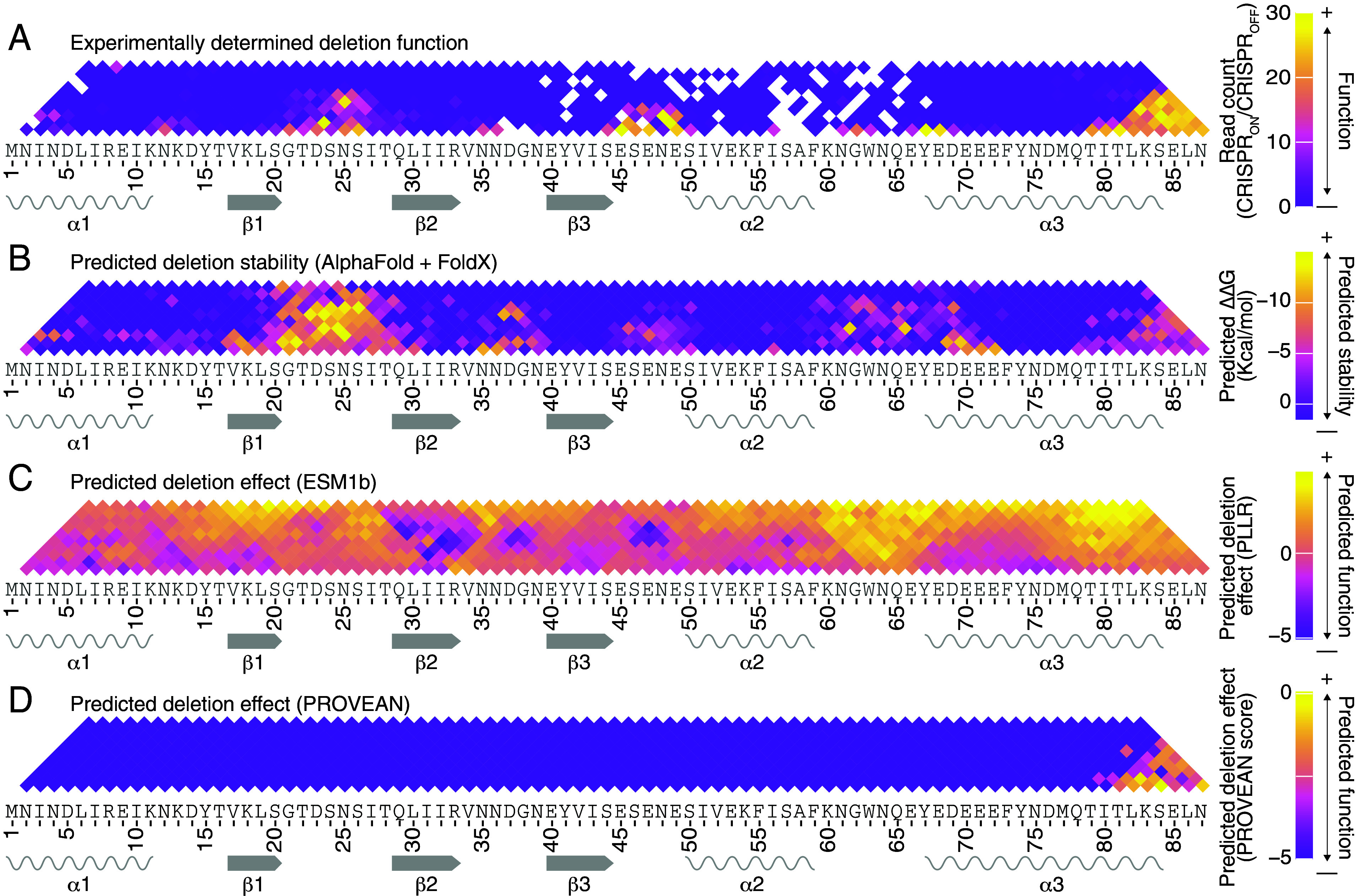
Delineating a protein’s essential and dispensable domains provides critical insight into how it carries out its function. Here, we developed a high-throughput method to synthesize and test the functionality of all possible in-frame and continuous deletions in a gene of interest, enabling rapid and unbiased determination of protein domain importance. Our approach generates precise deletions using a CRISPR library framework that is free from constraints of gRNA target site availability and efficacy. We applied our method to AcrIIA4, a phage-encoded anti-CRISPR protein that robustly inhibits SpCas9. Extensive structural characterization has shown that AcrIIA4 physically occupies the DNA-binding interfaces of several SpCas9 domains; nonetheless, the importance of each AcrIIA4 interaction for SpCas9 inhibition is unknown. We used our approach to determine the essential and dispensable regions of AcrIIA4. Surprisingly, not all contacts with SpCas9 were required, and in particular, we found that the AcrIIA4 loop that inserts into SpCas9’s RuvC catalytic domain can be deleted. Our results show that AcrIIA4 inhibits SpCas9 primarily by blocking PAM binding, and that its interaction with the SpCas9 catalytic domain is inessential.
Overview
The claims and statistics of this paper haven’t been checked yet.
Free: it reads the open-access text and checks the first 5 claims that cite a source we can check. Create a free account to check every claim.
Integrity signals
Registry
Cites
Statistics
Figures
Verification
Claims the paper makes
The claims and statistics of this paper haven’t been checked yet.
Free: it reads the open-access text and checks the first 5 claims that cite a source we can check. Create a free account to check every claim.
Self-check
Percentages, sums and reported differences re-computed from the paper’s own numbers.
The self-check needs the paper’s full text.
Citations
Cites
Highly accurate protein structure prediction with AlphaFold
Jumper, J., Evans, R., Pritzel, A., Green, T., Figurnov, M., Ronneberger, O., Tunyasuvunakool, K., Bates, R., Žídek, A., Potapenko, A., et al. (2021) · Nature · doi:10.1038/s41586-021-03819-2 · Cited by 43,764
Research works printed but not linked: 51
- M. Jinek, Structures of Cas9 endonucleases reveal RNA-mediated conformational activation. Science 343, 1247997 (2014). 24505130 PMC4184034 · DOI · Paper page
- A. R. Davidson, Anti-CRISPRs: Protein inhibitors of CRISPR-Cas systems. Annu. Rev. Biochem. 89, 309– 332 (2020). 32186918 PMC9718424
- 10.1146/annurev-biochem-011520-105250 · DOI · Paper page
- J. Lee, Tissue-restricted genome editing in vivo specified by microRNA-repressible anti-CRISPR proteins. RNA 25, 1421– 1431 (2019). 31439808 PMC6795140 · DOI · Paper page
- C. Li, HDAd5/35++ adenovirus vector expressing anti-CRISPR peptides decreases CRISPR/Cas9 toxicity in human hematopoietic stem cells. Mol. Ther. Methods Clin. Dev. 9, 390– 401 (2018). 30038942 PMC6054697 · DOI · Paper page
- B. J. Rauch, Inhibition of CRISPR-Cas9 with bacteriophage proteins. Cell 168, 150– 158.e10 (2017). 28041849 PMC5235966 · DOI · Paper page
- D. Dong, Structural basis of CRISPR–SpyCas9 inhibition by an anti-CRISPR protein. Nature 546, 436– 439 (2017). 28448066 · DOI · Paper page
- H. Yang, D. J. Patel, Inhibition mechanism of an anti-CRISPR suppressor AcrIIA4 targeting SpyCas9. Mol. Cell 67, 117– 127.e5 (2017). 28602637 PMC5595222 · DOI · Paper page
- J. Shin, Disabling Cas9 by an anti-CRISPR DNA mimic. Sci. Adv. 3, e1701620 (2017). 28706995 PMC5507636 · DOI · Paper page
- I. Kim, Solution structure and dynamics of anti-CRISPR AcrIIA4, the Cas9 inhibitor. Sci. Rep. 8, 3883 (2018). 29497118 PMC5832863 · DOI
- S. Munro, H. R. B. Pelham, Use of peptide tagging to detect proteins expressed from cloned genes: deletion mapping functional domains of Drosophila hsp70. EMBO J. 3, 3087– 3093 (1984). 6526011 PMC557822 · DOI · Paper page
- M. Seuma, B. Lehner, B. Bolognesi, An atlas of amyloid aggregation: the impact of substitutions, insertions, deletions and truncations on amyloid beta fibril nucleation. Nat. Commun. 13, 7084 (2022). 36400770 PMC9674652 · DOI · Paper page
- O. Shalem, Genome-scale CRISPR-Cas9 knockout screening in human cells. Science 343, 84– 87 (2014). 24336571 PMC4089965 · DOI · Paper page
- G. M. Findlay, Accurate classification of BRCA1 variants with saturation genome editing. Nature 562, 217– 222 (2018). 30209399 PMC6181777 · DOI · Paper page
- M. J. Sadhu, Highly parallel genome variant engineering with CRISPR–Cas9. Nat. Genet. 50, 510– 514 (2018). 29632376 PMC6115196 · DOI · Paper page
- J. D. Boeke, F. LaCroute, G. R. Fink, A positive selection for mutants lacking orotidine-5′-phosphate decarboxylase activity in yeast: 5-fluoro-orotic acid resistance. Mol. Gen. Genet. 197, 345– 346 (1984). 6394957 · DOI · Paper page
- A. W. Gibson, Constitutive mutations of the Saccharomyces cerevisiae MAL-activator genes MAL23, MAL43, MAL63, and mal64. Genetics 146, 1287– 1298 (1997). 9258674 PMC1208075 · DOI
- R. L. Finley Jr., H. Zhang, J. Zhong, C. A. Stanyon, Regulated expression of proteins in yeast using the MAL61–62 promoter and a mating scheme to increase dynamic range. Gene 285, 49– 57 (2002). 12039031 · DOI
- C. A. Weller, Highly complete long-read genomes reveal pangenomic variation underlying yeast phenotypic diversity. Genome Res. 33, 729– 740 (2023). 37127330 PMC10317115 · DOI
- E. M. Basgall, Gene drive inhibition by the anti-CRISPR proteins AcrIIA2 and AcrIIA4 in Saccharomyces cerevisiae. Microbiology 164, 464– 474 (2018). 29488867 PMC5982135 · DOI · Paper page
- E. W. Sayers, Database resources of the National Center for Biotechnology Information. Nucleic Acids Res. 52, D33– D43 (2024). 37994677 PMC10767890
- S. Pascarella, P. Argos, Analysis of insertions/deletions in protein structures. J. Mol. Biol. 224, 461– 471 (1992). 1560462 · DOI · Paper page
- M. Topolska, A. Beltran, B. Lehner, Deep indel mutagenesis reveals the impact of insertions and deletions on protein stability and function. bioRxiv [Preprint] (2023). 10.1101/2023.10.06.561180 (Accessed 4 October 2024). PMC11914627 40097423 · DOI
- C. B. Macdonald, DIMPLE: deep insertion, deletion, and missense mutation libraries for exploring protein variation in evolution, disease, and biology. Genome Biol. 24, 36 (2023). 36829241 PMC9951526 · DOI · Paper page
- T. Stadelmann, A deep mutational scanning platform to characterize the fitness landscape of anti-CRISPR proteins. bioRxiv [Preprint] (2021). 10.1101/2021.08.21.457204 (Accessed 26 September 2024). PMC11662660 39558174 · doi:10.1101/2021.08.21.457204
- S. Emond, Accessing unexplored regions of sequence space in directed enzyme evolution via insertion/deletion mutagenesis. Nat. Commun. 11, 3469 (2020). 32651386 PMC7351745 · DOI · Paper page
- K. R. McCarthy, Recurrent deletions in the SARS-CoV-2 spike glycoprotein drive antibody escape. Science 371, 1139– 1142 (2021). 33536258 PMC7971772 · DOI · Paper page
- J. Tenthorey, Indels allow antiviral proteins to evolve functional novelty inaccessible by missense mutations. bioRxiv [Preprint] (2024), 10.1101/2024.05.07.592993 (Accessed 11 May 2024). PMC12230231 40139185 · doi:10.1101/2024.05.07.592993
- M. J. Landrum, ClinVar: improving access to variant interpretations and supporting evidence. Nucleic Acids Res. 46, D1062– D1067 (2018). 29165669 PMC5753237 · DOI · Paper page
- 1000 Genomes Project Consortium, A map of human genome variation from population-scale sequencing. Nature 467, 1061– 1073 (2010). 20981092 PMC3042601 · DOI · Paper page
- X. Guo, High-throughput creation and functional profiling of DNA sequence variant libraries using CRISPR–Cas9 in yeast. Nat. Biotechnol. 36, 540– 546 (2018). 29786095 PMC5990468 · DOI
- A. Shams, Comprehensive deletion landscape of CRISPR-Cas9 identifies minimal RNA-guided DNA-binding modules. Nat. Commun. 12, 5664 (2021). 34580310 PMC8476515 · DOI
- S. B. Montgomery, The origin, evolution, and functional impact of short insertion–deletion variants identified in 179 human genomes. Genome Res. 23, 749– 761 (2013). 23478400 PMC3638132 · DOI · Paper page
- B. Dunn, T. Stearns, D. Botstein, Specificity domains distinguish the Ras-related GTPases Ypt1 and Sec4. Nature 362, 563– 565 (1993). 8464499 · DOI
- P. Brennwald, P. Novick, Interactions of three domains distinguishing the Ras-related GTP-binding proteins Ypt1 and Sec4. Nature 362, 560– 563 (1993). 8464498 · DOI · Paper page
- M. Stremlau, M. Perron, S. Welikala, J. Sodroski, Species-specific variation in the B30.2(SPRY) domain of TRIM5α determines the potency of human immunodeficiency virus restriction. J. Virol. 79, 3139– 3145 (2005). 15709033 PMC548447 · DOI · Paper page
- M. W. Yap, S. Nisole, J. P. Stoye, A single amino acid change in the SPRY domain of human Trim5α leads to HIV-1 restriction. Curr. Biol. 15, 73– 78 (2005). 15649369 · DOI · Paper page
- S. L. Sawyer, L. I. Wu, M. Emerman, H. S. Malik, Positive selection of primate TRIM5α identifies a critical species-specific retroviral restriction domain. Proc. Natl. Acad. Sci. U.S.A. 102, 2832– 2837 (2005). 15689398 PMC549489 · DOI · Paper page
- D. Perez-Caballero, T. Hatziioannou, A. Yang, S. Cowan, P. D. Bieniasz, Human tripartite motif 5α domains responsible for retrovirus restriction activity and specificity. J. Virol. 79, 8969– 8978 (2005). 15994791 PMC1168745 · DOI · Paper page
- D. M. Becker, V. Lundblad, Introduction of DNA into yeast cells. Curr. Protoc. Mol. Biol. Chapter 13, Unit 13.7 (2001). 18265102
- D. Mumberg, R. Muller, M. Funk, Regulatable promoters of Saccharomyces cerevisiae: comparison of transcriptional activity and their use for heterologous expression. Nucleic Acids Res. 22, 5767– 5768 (1994). 7838736 PMC310147 · DOI · Paper page
- K. A. Curran, Short synthetic terminators for improved heterologous gene expression in yeast. ACS Synth. Biol. 4, 824– 832 (2015). 25686303 · DOI · Paper page
- M. Valencia, NEJ1 controls non-homologous end joining in Saccharomyces cerevisiae. Nature 414, 666– 669 (2001). 11740566 · DOI · Paper page
- M. Mirdita, ColabFold: making protein folding accessible to all. Nat. Methods 19, 679– 682 (2022). 35637307 PMC9184281
- L. Gerasimavicius, X. Liu, J.A. Marsh, Identification of pathogenic missense mutations using protein sability predictors. Sci. Rep. 10, 15387 (2020). 32958805 PMC7506547
- J. Schymkowitz, The FoldX web server: an online force field. Nucleic Acids Res. 33, W382– W388 (2005). 15980494 PMC1160148
- G. R. Buel, K. J. Walters, Can AlphaFold2 predict the impact of missense mutations on structure? Nat. Struct. Mol. Biol. 29, 1– 2 (2022). 35046575 PMC11218004
- N. Brandes, G. Goldman, C. H. Wang, C. J. Ye, V. Ntranos, Genome-wide prediction of disease variant effects with a deep protein language model. Nat. Genet. 55, 1512– 1522 (2023). 37563329 PMC10484790
- Y. Choi, G. E. Sims, S. Murphy, J. R. Miller, A. P. Chan, Predicting the functional effect of amino acid substitutions and indels. Plos One 7, e46688 (2012). 23056405 PMC3466303
- Y. Choi, A. P. Chan, PROVEAN web server: a tool to predict the functional effect of amino acid substitutions and indels. Bioinformatics 31, 2745– 2747 (2015). 25851949 PMC4528627
- 10.1002/PRO.4792 · DOI · Paper page
Metadata
- Authors
- Iturralde, A. B., Weller, C. A., & Sadhu, M. J.
- Affiliations
- National Institutes of Health (US)
- Corresponding author
- Sadhu, Meru J
- Venue
- Proceedings of the National Academy of Sciences
- Publisher
- openRxiv
- Published
- 2024-07-09
- Volume
- 121
- Issue
- 48
- Pages
- e2413743121-e2413743121
- ISSN
- 0027-8424 (ISSN-L)
- PMC
- PMC11621469
- OpenAlex
- W4404587503
- Cited by
- 4
- References
- 1
- Citations by year
- 2026: 3 · 2025: 1
- FWCI
- 0.54
- Type
- journal article
- Language
- en
- Open access
- hybrid
- doi.org
- Licence
- cc-by-nc-nd
- Locations
- Proceedings of the National Academy of Sciences (publishedVersion, cc-by-nc-nd)
- bioRxiv (Cold Spring Harbor Laboratory) (acceptedVersion)
- PubMed Central (publishedVersion, cc-by-nc-nd)
- PubMed (publishedVersion)
- PubMed Central (submittedVersion, public-domain)
- Funders
- National Institutes of Health (1ziahg200401-03, 1ZIAHG200401, ZIA HG200401)
- National Human Genome Research Institute (1ZIAHG200401)
- Topics
- Life Sciences › Biochemistry, Genetics and Molecular Biology › Molecular Biology › CRISPR and Genetic Engineering
- Life Sciences › Biochemistry, Genetics and Molecular Biology › Genetics › Bacterial Genetics and Biotechnology
- Life Sciences › Biochemistry, Genetics and Molecular Biology › Molecular Biology › Biochemical and Structural Characterization
- Keywords
- deletion mutagenesis, phage defense, CRISPR/Cas9
About these checks
Registry, retraction, Cites and statistics results are computed, not judged, with one exception: a printed reference that no index lists is read once by a model before it counts as a citation error. Claims are extracted by a model and kept only when their quote appears verbatim in the text; each cited source is then checked, with a model’s help, for whether it says what the claim relies on. Those verdicts can be wrong — read the claim’s quote and the cited source before relying on one.
Statistics and arithmetic are recomputed, not judged.
Confidence bands are shown only for fields calibrated on our annotated test set. None is calibrated yet, so no band is shown.
What counts as a claim ›How we measure confidence ›How we check this ›
Are you an author, or do you see a problem with this page? Request a review
How to cite
Cite CoChat for the checks on this page, and the paper for its own findings.
- This page
- CoChat. (2026). Citation check: Comprehensive deletion scan of anti-CRISPR AcrIIA4 reveals essential and dispensable domains for Cas9 inhibition. https://app.cochat.ai/papers/10.1101/2024.07.09.602757
- The paper
- Iturralde, A. B., Weller, C. A., & Sadhu, M. J. (2024). Comprehensive deletion scan of anti-CRISPR AcrIIA4 reveals essential and dispensable domains for Cas9 inhibition. Proceedings of the National Academy of Sciences. https://doi.org/10.1101/2024.07.09.602757
Data sources
Bibliographic data: Semantic Scholar, OpenAlex, Crossref.
Contains information from the Semantic Scholar Academic Graph Datasets, made available under the ODC Attribution License (ODC-BY 1.0).
Semantic Scholar’s data is described in: Kinney, R., et al. (2023). The Semantic Scholar Open Data Platform. arXiv:2301.10140.
