

Engineering rice Nramp5 modifies cadmium and manganese uptake selectivity using yeast assay system
Open accessPreprint — published as 10.3389/fpls.2024.1482099 · Paper page
The DOI matches its Crossref record; 1 of the 1 references it cites were found in a registry or an index.
Abstract
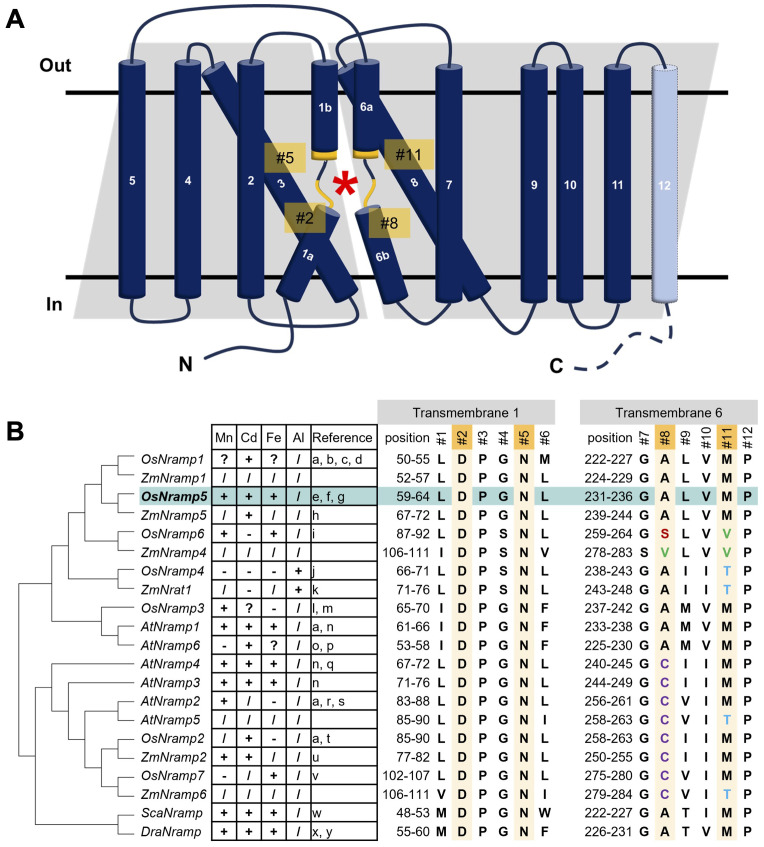
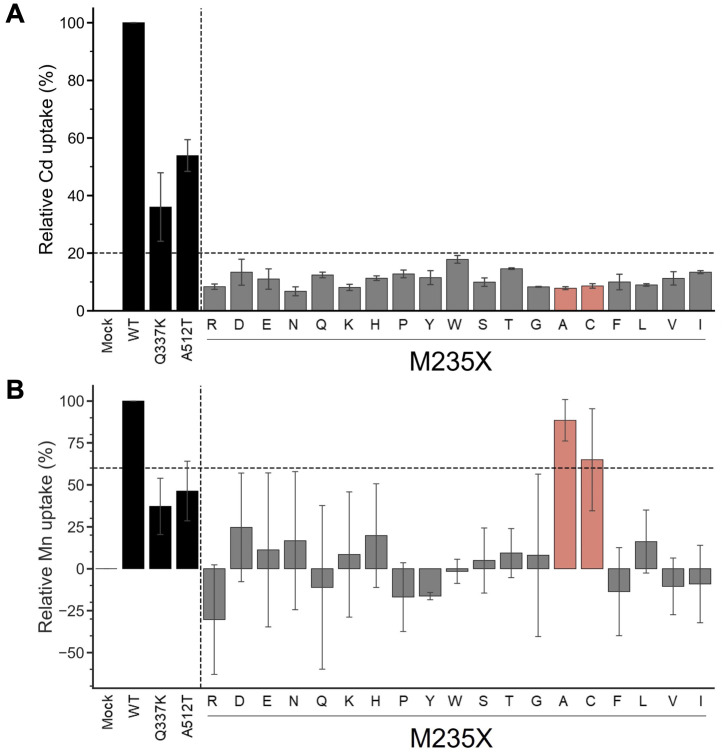
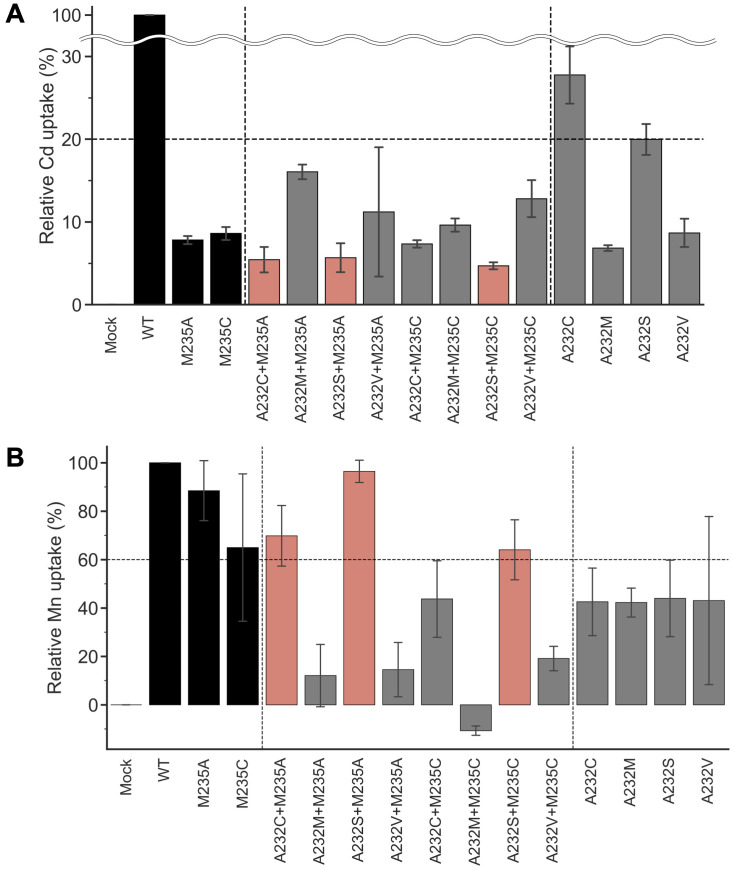
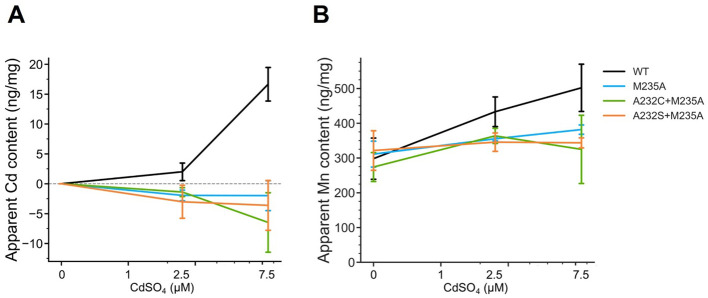
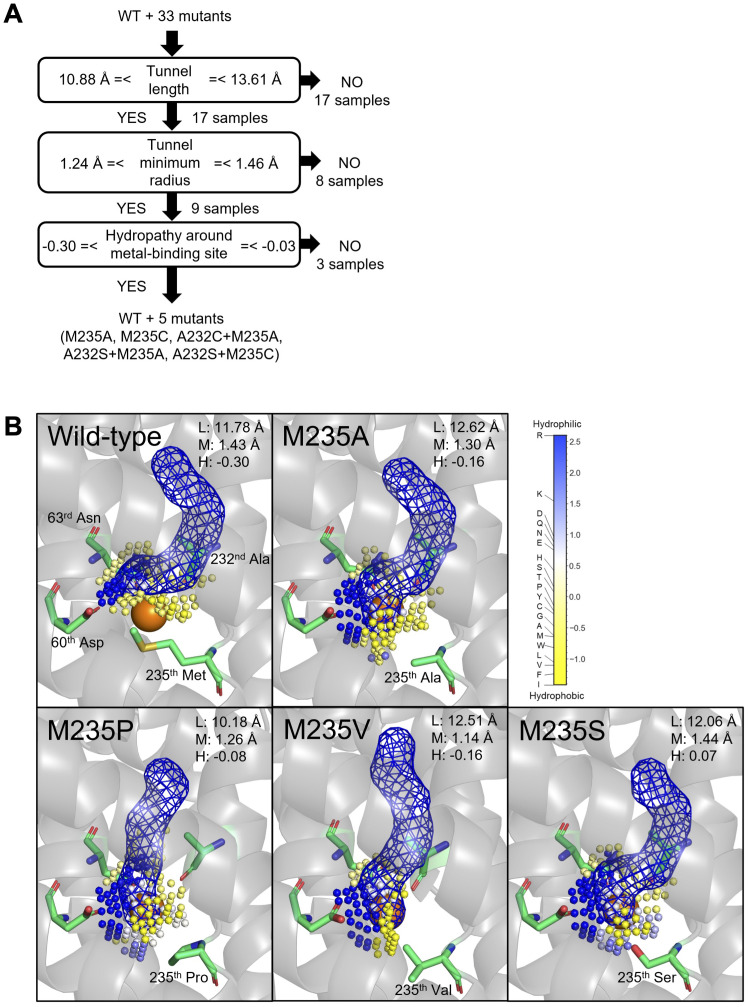
Cd is a seriously hazardous heavy metal for both plants and humans and international regulations regarding Cd intake have become stricter in recent years. Three-quarters of the Cd intake comes from plant-based foods, half of which comes from cereals. Therefore, it is anticipated that the Cd uptake efficiency of cereals, including rice, a staple crop in Asia, will be reduced. Natural resistance-associated macrophage protein (Nramp) is the principal transporter involved in the uptake and translocation of metal ions in various plants. In rice, OsNramp5 is a transporter of Mn, which is an essential micronutrient for plant growth, and is responsible for Cd uptake. Although several attempts have been made to engineer the metal uptake characteristics of OsNramp5, in many cases, both Cd and Mn uptake efficiencies are impaired. Therefore, in this study, we engineered OsNramp5 to reduce Cd uptake while retaining Mn uptake efficiency for low-Cd rice production. OsNramp5 was engineered using amino acid substitution(s) at the 232 nd Ala and 235 th Met of OsNramp5, which have been suggested to be key residues for metal uptake efficiency and/or selectivity by structural analyses of bacterial Nramps. The metal uptake efficiency was first analyzed using a yeast model assay system. Several mutants showed less than 8.6% Cd and more than 64.1% Mn uptake efficiency compared to the original OsNramp5. The improved metal uptake characteristics were confirmed by direct measurement of the metal content in the yeast using inductively coupled plasma optical emission spectroscopy. Notably, several mutants reduced Cd uptake efficiency to the background level while retaining more than 64.7% Mn uptake efficiency under conditions mimicking heavily polluted soils in the world. In addition, computational structural modeling suggested requirements for the spatial and chemical properties of the metal transport tunnel and metal-binding site, respectively, for Cd/Mn uptake efficiency.
Overview
The claims and statistics of this paper haven’t been checked yet.
Free: it reads the open-access text and checks the first 5 claims that cite a source we can check. Create a free account to check every claim.
Integrity signals
Registry
Cites
Statistics
Figures
Verification
Claims the paper makes
The claims and statistics of this paper haven’t been checked yet.
Free: it reads the open-access text and checks the first 5 claims that cite a source we can check. Create a free account to check every claim.
Self-check
Percentages, sums and reported differences re-computed from the paper’s own numbers.
The self-check needs the paper’s full text.
Citations
Cites
Highly accurate protein structure prediction with AlphaFold
Jumper, J., Evans, R., Pritzel, A., Green, T., Figurnov, M., Ronneberger, O., Tunyasuvunakool, K., Bates, R., Žídek, A., Potapenko, A., et al. (2021) · Nature · doi:10.1038/s41586-021-03819-2 · Cited by 43,764
Research works printed but not linked: 82
- 10.1105/tpc.17.00578 · DOI · Paper page
- 10.1038/s41586-019-1711-4 · DOI · Paper page
- 10.20710/dojo.59.2_197 · DOI
- 10.2760/3942 · doi:10.2760/3942
- 10.1073/pnas.1607734113 · DOI · Paper page
- 10.1016/j.str.2016.09.017 · DOI
- 10.7554/eLife.41124.001 · doi:10.7554/elife.41124.001
- 10.1074/jbc.RA119.011336 · DOI
- 10.1016/j.jmb.2021.166991 · DOI · Paper page
- 10.1111/pbi.13399 · DOI · Paper page
- 10.1042/BJ20090655 · DOI · Paper page
- 10.1105/tpc.109.073023 · DOI · Paper page
- 10.1021/bi048014v · DOI · Paper page
- 10.1111/pce.13843 · DOI · Paper page
- 10.1038/srep32073 · DOI
- 10.3390/ijms22126414 · DOI
- 10.1146/annurev-arplant-043015-112301 · DOI · Paper page
- 10.1042/bj3470749 · doi:10.1042/bj3470749 · Paper page
- 10.1371/journal.pcbi.1005659 · DOI · Paper page
- 10.1093/nar/gkh340 · DOI · Paper page
- 10.2903/j.efsa.2009.980 · DOI · Paper page
- 10.1038/nsmb.2904 · DOI · Paper page
- 10.1073/pnas.81.1.140 · DOI · Paper page
- 10.1073/pnas.2204574119 · DOI
- 10.1111/nph.14783 · DOI · Paper page
- 10.1289/ehp.1306587 · DOI · Paper page
- 10.1038/nprot.2007.13 · DOI · Paper page
- 10.4161/psb.6.2.14880 · DOI · Paper page
- 10.1186/s12859-021-04519-4 · DOI
- 10.1093/nar/gkad324 · DOI
- 10.1093/plphys/kiac434 · DOI
- 10.1038/s41592-022-01685-y · DOI · Paper page
- 10.20710/dojo.88.3_213 · doi:10.20710/dojo.88.3_213
- Hutchinson, T. C. , Meema, K. M. , Page, A. L. , Chang, A. C. , and El-Amamy, M. (1987). Lead, Mercury, Cadmium and Arsenic in the Environment., eds. T. C. Hutchinson and K. M. Meema . Published on behalf of the Scientific Committee on Problems of the Environment of the International Council of Scientific Unions by Wiley.
- 10.1073/pnas.1211132109 · DOI · Paper page
- 10.1038/srep00286 · DOI · Paper page
- 10.1023/B:BIOM.0000045729.68774.a1 · DOI
- 10.1093/bioinformatics/8.3.275 · DOI · Paper page
- 10.1038/bjc.2012.311 · DOI · Paper page
- 10.1093/bioinformatics/bty386 · DOI · Paper page
- 10.1016/j.apgeochem.2019.104388 · DOI · Paper page
- 10.1093/jxb/erac302 · DOI
- 10.3390/ijms23158162 · DOI
- 10.1016/j.plantsci.2023.111831 · DOI
- 10.3390/ijms19051430 · DOI
- 10.3389/fpls.2019.01124 · DOI
- 10.1038/s41587-020-0455-x · DOI · Paper page
- 10.3389/fpls.2018.00606 · DOI
- 10.1038/s41592-022-01488-1 · doi:10.1038/s41592-022-01488-1 · Paper page
- 10.1093/bioinformatics/bty1057 · DOI · Paper page
- 10.1016/j.jhazmat.2022.129498 · DOI
- 10.1007/BF00381306 · DOI
- 10.1094/MPMI-01-17-0005-R · DOI
- 10.1074/jbc.M111.305649 · DOI · Paper page
- 10.1111/tpj.12914 · DOI · Paper page
- 10.1007/s12403-022-00530-z · DOI
- 10.3390/plants12244182 · DOI
- 10.7554/eLife.84006 · DOI
- 10.1016/0014-5793(95)00853-2 · DOI · Paper page
- 10.1371/journal.pone.0146021 · DOI · Paper page
- 10.1105/tpc.112.096925 · DOI · Paper page
- 10.3389/fpls.2014.00106 · DOI · Paper page
- 10.1016/s0140-6736(98)09356-8 · DOI · Paper page
- 10.1007/s11104-018-3849-5 · DOI · Paper page
- 10.1038/s41467-019-13093-6 · DOI
- 10.1093/jxb/err136 · DOI · Paper page
- 10.1093/molbev/msab120 · DOI · Paper page
- 10.1093/nar/gkac506 · DOI · Paper page
- 10.1073/pnas.97.9.4991 · DOI · Paper page
- 10.1016/S1470-2045(06)70545-9 · DOI · Paper page
- 10.1111/pce.12138 · DOI · Paper page
- 10.1093/ckj/sfx062 · DOI
- 10.1016/j.bone.2020.115768 · DOI
- World Health Organization (2022). Guidelines for drinking-water quality: Fourth edition incorporating the first and second addenda., ed. World Health Organization.
- 10.1073/pnas.1004949107 · DOI · Paper page
- 10.1038/ncomms3442 · DOI · Paper page
- 10.1371/journal.pone.0083990 · DOI · Paper page
- 10.1093/jxb/eru259 · DOI · Paper page
- 10.1016/j.jmb.2004.06.025 · DOI
- 10.1007/s11356-014-3892-6 · DOI
- 10.1186/s12284-018-0254-x · DOI · Paper page
- 10.1038/s41587-022-01254-w · DOI · Paper page
Metadata
- Authors
- Inoue, J., Teramoto, T., Kazama, T., & Nakamura, T.
- Affiliations
- Kyushu University (JP)
- Corresponding author
- Nakamura, Takahiro
- Venue
- Frontiers in Plant Science
- Publisher
- openRxiv
- Published
- 2024-08-19
- Volume
- 15
- Pages
- 1482099-1482099
- ISSN
- 1664-462X (ISSN-L)
- PMC
- PMC11614607
- OpenAlex
- W4404554818
- Cited by
- 18
- References
- 1
- Citations by year
- 2026: 14 · 2025: 4
- FWCI
- 4.38
- Type
- journal article
- Language
- en
- Open access
- gold
- doi.org
- Licence
- Locations
- Frontiers in Plant Science (publishedVersion, cc-by)
- bioRxiv (Cold Spring Harbor Laboratory) (acceptedVersion, cc-by-nc-nd)
- PubMed Central (publishedVersion, cc-by)
- PubMed (publishedVersion)
- DOAJ (DOAJ: Directory of Open Access Journals) (submittedVersion)
- Funders
- Japan Society for the Promotion of Science (20H05680, 22H02611, 24H02270)
- Topics
- Life Sciences › Agricultural and Biological Sciences › Plant Science › Plant Micronutrient Interactions and Effects
- Physical Sciences › Environmental Science › Pollution › Heavy metals in environment
- Physical Sciences › Chemistry › Analytical Chemistry › Heavy Metals in Plants
- Keywords
- OsNRAMP5, rice, cadmium uptake, manganese uptake, metal transporters, heavy metal tolerance, yeast model, site-directed mutagenesis, amino acid substitutions, metal binding sites, structural modeling, contaminated soil
About these checks
Registry, retraction, Cites and statistics results are computed, not judged, with one exception: a printed reference that no index lists is read once by a model before it counts as a citation error. Claims are extracted by a model and kept only when their quote appears verbatim in the text; each cited source is then checked, with a model’s help, for whether it says what the claim relies on. Those verdicts can be wrong — read the claim’s quote and the cited source before relying on one.
Statistics and arithmetic are recomputed, not judged.
Confidence bands are shown only for fields calibrated on our annotated test set. None is calibrated yet, so no band is shown.
What counts as a claim ›How we measure confidence ›How we check this ›
Are you an author, or do you see a problem with this page? Request a review
How to cite
Cite CoChat for the checks on this page, and the paper for its own findings.
- This page
- CoChat. (2026). Citation check: Engineering rice Nramp5 modifies cadmium and manganese uptake selectivity using yeast assay system. https://app.cochat.ai/papers/10.1101/2024.08.18.605937
- The paper
- Inoue, J., Teramoto, T., Kazama, T., & Nakamura, T. (2024). Engineering rice Nramp5 modifies cadmium and manganese uptake selectivity using yeast assay system. Frontiers in Plant Science. https://doi.org/10.1101/2024.08.18.605937
Data sources
Bibliographic data: Semantic Scholar, OpenAlex, Crossref.
Contains information from the Semantic Scholar Academic Graph Datasets, made available under the ODC Attribution License (ODC-BY 1.0).
Semantic Scholar’s data is described in: Kinney, R., et al. (2023). The Semantic Scholar Open Data Platform. arXiv:2301.10140.
