

Dynamic birth and death of Argonaute gene family functional repertoire across Caenorhabditis nematodes
Open accessPreprint — published as 10.1093/gbe/evaf106
The DOI matches its Crossref record; 86 of the 86 references it cites were found in a registry or an index.
Abstract
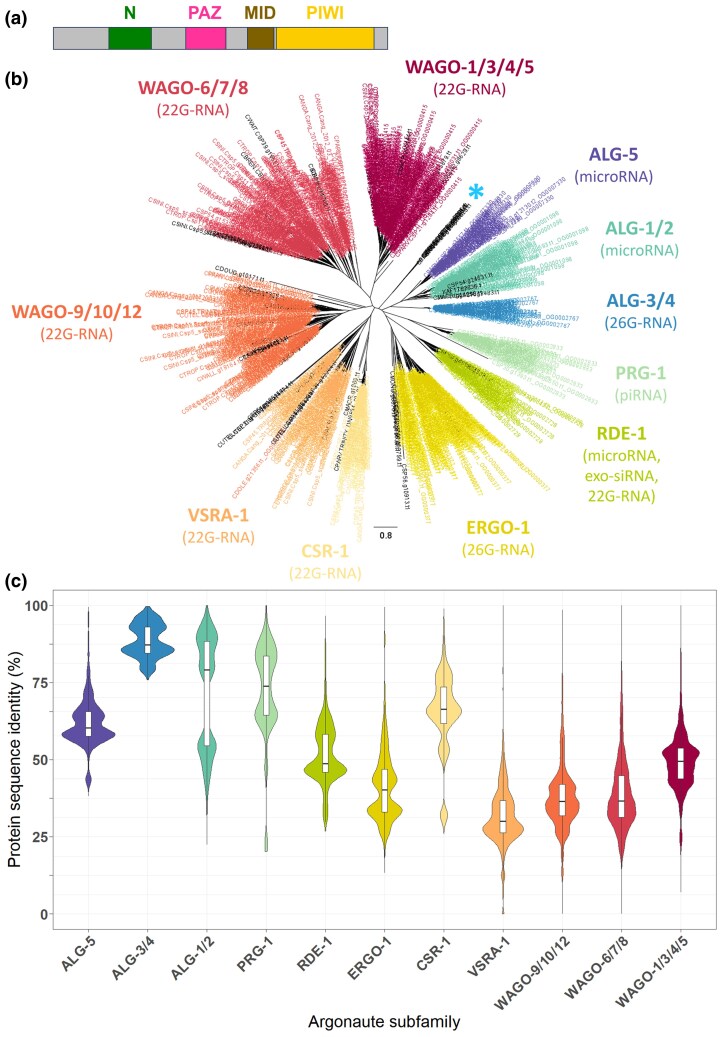
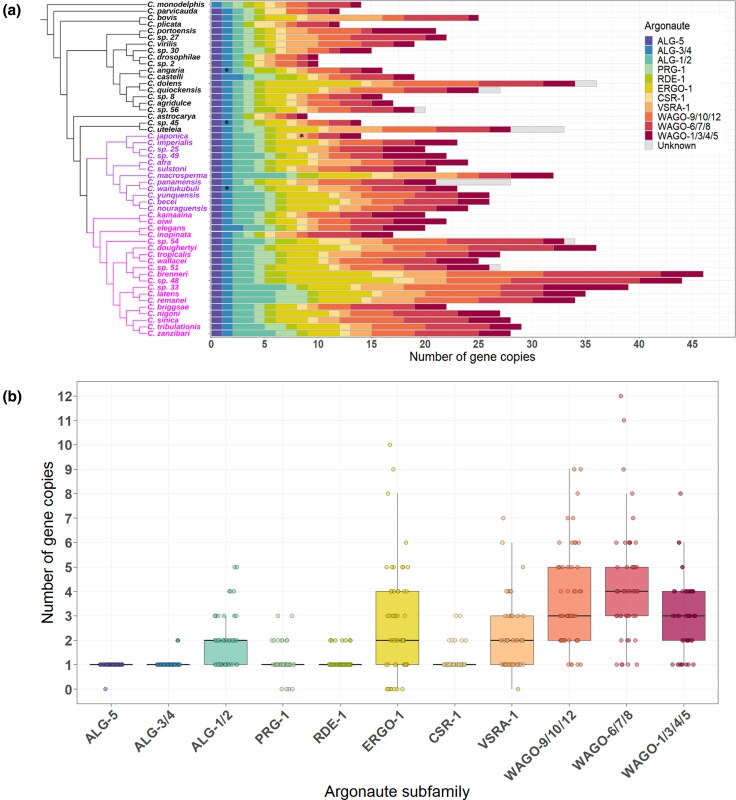
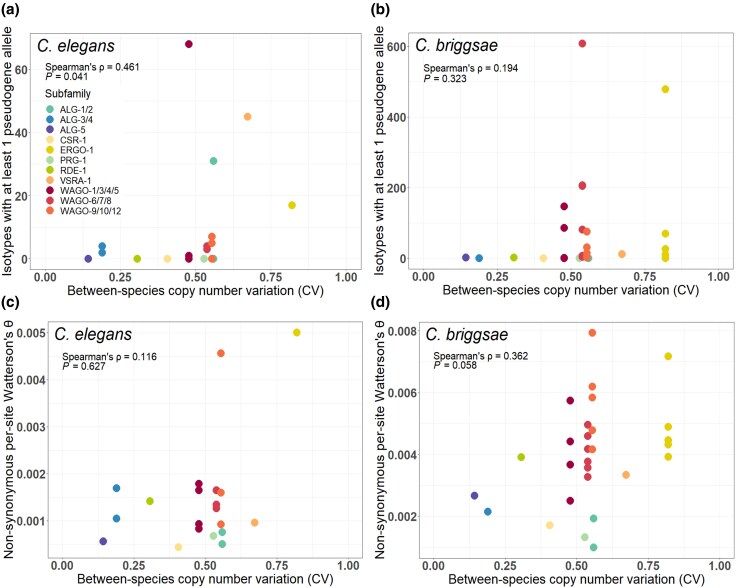
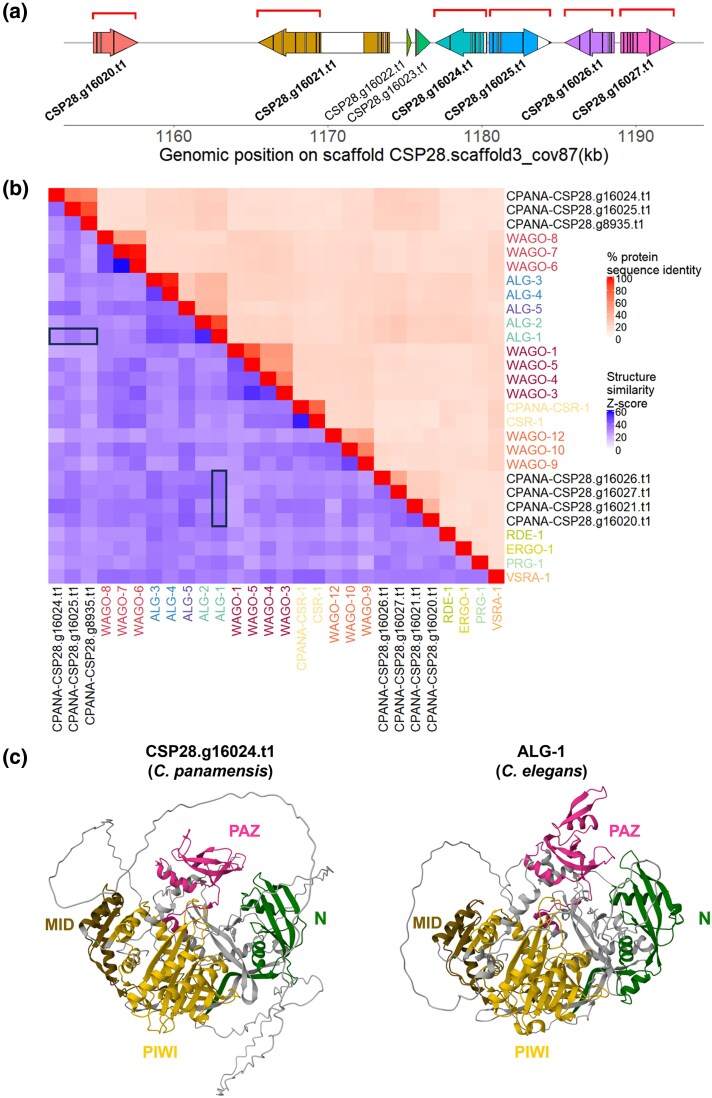
Diverse small RNA pathways, comprised of Argonaute effector proteins and their bound small RNA molecules, define critical systems for regulating gene expression in all domains of life. Some small RNA pathways have undergone significant evolutionary change in nematode roundworms, including gains of novel Argonaute genes and losses of entire pathways. Differences in the functional complement of Argonautes among species therefore profoundly influence the available repertoire of mechanisms for gene regulation. Despite intensive study of Argonaute function in Caenorhabditis elegans , the extent of Argonaute gene family dynamism and functional breadth remains unknown. We therefore comprehensively surveyed Argonautes across 51 Caenorhabditis species, yielding over 1200 genes from 11 subfamilies. We documented multiple cases of diversification, including the birth of a potentially novel Argonaute subfamily and the origin of the ALG-5 microRNA Argonaute near the base of the Caenorhabditis phylogeny, as well as evidence of adaptive sequence evolution and gain of a new splice isoform for CSR-1 in a clade of 31 species. We also detected repeated independent losses of multiple components of the piRNA pathway, mirroring other instances of piRNA pathway loss across the phylum. Gene gain and loss occurs significantly faster than expected within several Argonaute subfamilies, potentially associated with transposable element proliferation coevolving with WAGO-9/10/12 copy number variation. Our characterization of Argonaute diversity across Caenorhabditis demonstrates exceptional functional dynamism in the evolution of gene regulation, with broad implications for mechanisms of control over ontogenetic development and genome integrity. Author Summary: For organisms to develop properly to survive and reproduce, they must express their genes in the right amount, in the appropriate cell types and time during development. One important mechanism that organisms use to regulate gene expression involves small RNA pathways, where short molecules of RNA serve as targeting guides by binding to Argonaute effector proteins. To understand how small RNA pathways evolve over time, we searched for Argonaute genes throughout the genomes of 51 species of Caenorhabditis nematode worms and found over 1200 Argonaute genes belonging to 11 different Argonaute subfamilies. We then documented cases where species have evolved potentially new types of Argonautes, or new protein isoforms of existing Argonautes. We also identified repeated cases of evolutionary loss of entire Argonaute subfamilies, including for the PRG-1 Argonaute needed in the piRNA regulatory pathway, and characterized how some Argonaute subfamilies gain and lose genes significantly faster than expected. Our findings demonstrate substantial variation in the functional repertoire of Argonaute genes found among Caenorhabditis species, with this evolutionary dynamism implicating fundamental differences between species in how they regulate gene expression across their genomes throughout development.
Overview
The claims and statistics of this paper haven’t been checked yet.
Free: it reads the open-access text and checks the first 5 claims that cite a source we can check. Create a free account to check every claim.
Integrity signals
Registry
Cites
Statistics
Figures
Verification
Claims the paper makes
The claims and statistics of this paper haven’t been checked yet.
Free: it reads the open-access text and checks the first 5 claims that cite a source we can check. Create a free account to check every claim.
Self-check
Percentages, sums and reported differences re-computed from the paper’s own numbers.
The self-check needs the paper’s full text.
Citations
Cites
The Sequence Alignment/Map format and SAMtools
Li, H., Handsaker, B., Wysoker, A., Fennell, T., Ruan, J., Homer, N., Marth, G., Abecasis, G., Durbin, R., & 1000 Genome Project Data Processing Subgroup (2009) · Bioinformatics · doi:10.1093/bioinformatics/btp352 · Cited by 62,041
STAR: ultrafast universal RNA-seq aligner
Dobin, A., Davis, C. A., Schlesinger, F., Drenkow, J., Zaleski, C., Jha, S., Batut, P., Chaisson, M., & Gingeras, T. R. (2013) · Bioinformatics · doi:10.1093/bioinformatics/bts635 · Cited by 51,709
Highly accurate protein structure prediction with AlphaFold
Jumper, J., Evans, R., Pritzel, A., Green, T., Figurnov, M., Ronneberger, O., Tunyasuvunakool, K., Bates, R., Žídek, A., Potapenko, A., et al. (2021) · Nature · doi:10.1038/s41586-021-03819-2 · Cited by 43,764
BEDTools: a flexible suite of utilities for comparing genomic features
Quinlan, A. R., & Hall, I. M. (2010) · Bioinformatics · doi:10.1093/bioinformatics/btq033 · Cited by 27,437
BLAST+: architecture and applications
Camacho, C., Coulouris, G., Avagyan, V., Ma, N., Papadopoulos, J., Bealer, K., & Madden, T. L. (2009) · BMC Bioinformatics · doi:10.1186/1471-2105-10-421 · Cited by 22,074
Full-length transcriptome assembly from RNA-Seq data without a reference genome
Grabherr, M. G., Haas, B. J., Yassour, M., Levin, J. Z., Thompson, D. A., Amit, I., Adiconis, X., Fan, L., Raychowdhury, R., Zeng, Q., et al. (2011) · Nature Biotechnology · doi:10.1038/nbt.1883 · Cited by 21,039
ModelFinder: fast model selection for accurate phylogenetic estimates
Kalyaanamoorthy, S., Minh, B. Q., Wong, T. K. F., von Haeseler, A., & Jermiin, L. S. (2017) · Nature Methods · doi:10.1038/nmeth.4285 · Cited by 18,449
IQ-TREE 2: New Models and Efficient Methods for Phylogenetic Inference in the Genomic Era
Minh, B. Q., Schmidt, H. A., Chernomor, O., Schrempf, D., Woodhams, M. D., von Haeseler, A., & Lanfear, R. (2020) · Molecular Biology and Evolution · doi:10.1093/molbev/msaa015 · Cited by 16,873
Robinson, J. T., Thorvaldsdóttir, H., Winckler, W., Guttman, M., Lander, E. S., Getz, G., & Mesirov, J. P. (2011) · Nature Biotechnology · doi:10.1038/nbt.1754 · Cited by 15,390
TBtools: An Integrative Toolkit Developed for Interactive Analyses of Big Biological Data
Chen, C., Chen, H., Zhang, Y., Thomas, H. R., Frank, M. H., He, Y., & Xia, R. (2020) · Molecular Plant · doi:10.1016/j.molp.2020.06.009 · Cited by 14,517
UFBoot2: Improving the Ultrafast Bootstrap Approximation
Hoang, D. T., Chernomor, O., von Haeseler, A., Minh, B. Q., & Vinh, L. S. (2018) · Molecular Biology and Evolution · doi:10.1093/molbev/msx281 · Cited by 10,881
Complex heatmaps reveal patterns and correlations in multidimensional genomic data
Gu, Z., Eils, R., & Schlesner, M. (2016) · Bioinformatics · doi:10.1093/bioinformatics/btw313 · Cited by 10,034
ColabFold - Making protein folding accessible to all
Mirdita, M., Schütze, K., Moriwaki, Y., Heo, L., Ovchinnikov, S., & Steinegger, M. (2021) · doi:10.1101/2021.08.15.456425 · Cited by 9,391
InterProScan 5: genome-scale protein function classification
Jones, P., Binns, D., Chang, H.-Y., Fraser, M., Li, W., McAnulla, C., McWilliam, H., Maslen, J., Mitchell, A., Nuka, G., et al. (2014) · Bioinformatics · doi:10.1093/bioinformatics/btu031 · Cited by 9,301
Varadi, M., Anyango, S., Deshpande, M., Nair, S., Natassia, C., Yordanova, G., Yuan, D., Stroe, O., Wood, G., Laydon, A., et al. (2022) · Nucleic Acids Research · doi:10.1093/nar/gkab1061 · Cited by 7,850
OrthoFinder: phylogenetic orthology inference for comparative genomics
Emms, D. M., & Kelly, S. (2019) · Genome Biology · doi:10.1186/s13059-019-1832-y · Cited by 7,676
Manni, M., Berkeley, M. R., Seppey, M., Simão, F. A., & Zdobnov, E. M. (2021) · Molecular Biology and Evolution · doi:10.1093/molbev/msab199 · Cited by 6,187
RepeatModeler2 for automated genomic discovery of transposable element families
Flynn, J. M., Hubley, R., Goubert, C., Rosen, J., Clark, A. G., Feschotte, C., & Smit, A. F. (2020) · Proceedings of the National Academy of Sciences · doi:10.1073/pnas.1921046117 · Cited by 3,848
SeqKit: A Cross-Platform and Ultrafast Toolkit for FASTA/Q File Manipulation
Shen, W., Le, S., Li, Y., & Hu, F. (2016) · PLOS ONE · doi:10.1371/journal.pone.0163962 · Cited by 3,380
C. elegans: des neurones et des gènes
Gally, C., & Bessereau, J.-L. (2003) · médecine/sciences · doi:10.1051/medsci/20031967725 · Cited by 3,287
Database resources of the national center for biotechnology information
Sayers, E. W., Bolton, E. E., Brister, J. R., Canese, K., Chan, J., Comeau, D. C., Connor, R., Funk, K., Kelly, C., Kim, S., et al. (2022) · Nucleic Acids Research · doi:10.1093/nar/gkab1112 · Cited by 2,812
Search and sequence analysis tools services from EMBL-EBI in 2022
Madeira, F., Pearce, M., Tivey, A. R. N., Basutkar, P., Lee, J., Edbali, O., Madhusoodanan, N., Kolesnikov, A., & Lopez, R. (2022) · Nucleic Acids Research · doi:10.1093/nar/gkac240 · Cited by 2,267
The evolutionary significance of cis-regulatory mutations
Wray, G. A. (2007) · Nature Reviews Genetics · doi:10.1038/nrg2063 · Cited by 1,521
Mol* Viewer: modern web app for 3D visualization and analysis of large biomolecular structures
Sehnal, D., Bittrich, S., Deshpande, M., Svobodová, R., Berka, K., Bazgier, V., Velankar, S., Burley, S. K., Koča, J., & Rose, A. S. (2021) · Nucleic Acids Research · doi:10.1093/nar/gkab314 · Cited by 1,154
Developmentally Regulated piRNA Clusters Implicate MILI in Transposon Control
Aravin, A. A., Sachidanandam, R., Girard, A., Fejes-Toth, K., & Hannon, G. J. (2007) · Science · doi:10.1126/science.1142612 · Cited by 1,033
Large-Scale Sequencing Reveals 21U-RNAs and Additional MicroRNAs and Endogenous siRNAs in C. elegans
Ruby, J. G., Jan, C., Player, C., Axtell, M. J., Lee, W., Nusbaum, C., Ge, H., & Bartel, D. P. (2006) · Cell · doi:10.1016/j.cell.2006.10.040 · Cited by 983
Weaver, S., Shank, S. D., Spielman, S. J., Li, M., Muse, S. V., & Kosakovsky Pond, S. L. (2018) · Molecular Biology and Evolution · doi:10.1093/molbev/msx335 · Cited by 983
Dali server: structural unification of protein families
Holm, L. (2022) · Nucleic Acids Research · doi:10.1093/nar/gkac387 · Cited by 935
Burley, S. K., Bhikadiya, C., Bi, C., Bittrich, S., Chao, H., Chen, L., Craig, P. A., Crichlow, G. V., Dalenberg, K., Duarte, J. M., et al. (2023) · Nucleic Acids Research · doi:10.1093/nar/gkac1077 · Cited by 887
Sela, I., Ashkenazy, H., Katoh, K., & Pupko, T. (2015) · Nucleic Acids Research · doi:10.1093/nar/gkv318 · Cited by 835
CAFE 5 models variation in evolutionary rates among gene families
Mendes, F. K., Vanderpool, D., Fulton, B., & Hahn, M. W. (2021) · Bioinformatics · doi:10.1093/bioinformatics/btaa1022 · Cited by 833
Smith, M. D., Wertheim, J. O., Weaver, S., Murrell, B., Scheffler, K., & Kosakovsky Pond, S. L. (2015) · Molecular Biology and Evolution · doi:10.1093/molbev/msv022 · Cited by 811
Phylogeny-Aware Gap Placement Prevents Errors in Sequence Alignment and Evolutionary Analysis
Löytynoja, A., & Goldman, N. (2008) · Science · doi:10.1126/science.1158395 · Cited by 802
WormBase ParaSite − a comprehensive resource for helminth genomics
Howe, K. L., Bolt, B. J., Shafie, M., Kersey, P., & Berriman, M. (2017) · Molecular and Biochemical Parasitology · doi:10.1016/j.molbiopara.2016.11.005 · Cited by 745
Yigit, E., Batista, P. J., Bei, Y., Pang, K. M., Chen, C.-C. G., Tolia, N. H., Joshua-Tor, L., Mitani, S., Simard, M. J., & Mello, C. C. (2006) · Cell · doi:10.1016/j.cell.2006.09.033 · Cited by 650
PRG-1 and 21U-RNAs Interact to Form the piRNA Complex Required for Fertility in C. elegans
Batista, P. J., Ruby, J. G., Claycomb, J. M., Chiang, R., Fahlgren, N., Kasschau, K. D., Chaves, D. A., Gu, W., Vasale, J. J., Duan, S., et al. (2008) · Molecular Cell · doi:10.1016/j.molcel.2008.06.002 · Cited by 588
The evolutionary journey of Argonaute proteins
Swarts, D. C., Makarova, K., Wang, Y., Nakanishi, K., Ketting, R. F., Koonin, E. V., Patel, D. J., & van der Oost, J. (2014) · Nature Structural & Molecular Biology · doi:10.1038/nsmb.2879 · Cited by 543
A nuclear Argonaute promotes multigenerational epigenetic inheritance and germline immortality
Buckley, B. A., Burkhart, K. B., Gu, S. G., Spracklin, G., Kershner, A., Fritz, H., Kimble, J., Fire, A., & Kennedy, S. (2012) · Nature · doi:10.1038/nature11352 · Cited by 514
Comparative studies of gene expression and the evolution of gene regulation
Romero, I. G., Ruvinsky, I., & Gilad, Y. (2012) · Nature Reviews Genetics · doi:10.1038/nrg3229 · Cited by 488
The Natural Biotic Environment of Caenorhabditis elegans
Schulenburg, H., & Félix, M.-A. (2017) · Genetics · doi:10.1534/genetics.116.195511 · Cited by 437
Das, P. P., Bagijn, M. P., Goldstein, L. D., Woolford, J. R., Lehrbach, N. J., Sapetschnig, A., Buhecha, H. R., Gilchrist, M. J., Howe, K. L., Stark, R., et al. (2008) · Molecular Cell · doi:10.1016/j.molcel.2008.06.003 · Cited by 418
Identification of eight members of the Argonaute family in the human genome☆
Sasaki, T., Shiohama, A., Minoshima, S., & Shimizu, N. (2003) · Genomics · doi:10.1016/s0888-7543(03)00129-0 · Cited by 409
The Evolution of Gene Expression in cis and trans
Signor, S. A., & Nuzhdin, S. V. (2018) · Trends in Genetics · doi:10.1016/j.tig.2018.03.007 · Cited by 296
A C. elegans Piwi, PRG-1, Regulates 21U-RNAs during Spermatogenesis
Wang, G., & Reinke, V. (2008) · Current Biology · doi:10.1016/j.cub.2008.05.009 · Cited by 289
WormBase in 2022—data, processes, and tools for analyzing Caenorhabditis elegans
Davis, P., Zarowiecki, M., Arnaboldi, V., Becerra, A., Cain, S., Chan, J., Chen, W. J., Cho, J., da Veiga Beltrame, E., Diamantakis, S., et al. (2022) · Genetics · doi:10.1093/genetics/iyac003 · Cited by 269
Seth, M., Shirayama, M., Gu, W., Ishidate, T., Conte, D., & Mello, C. C. (2013) · Developmental Cell · doi:10.1016/j.devcel.2013.11.014 · Cited by 234
Wang, S. H., & Elgin, S. C. R. (2011) · Proceedings of the National Academy of Sciences · doi:10.1073/pnas.1107892109 · Cited by 232
Conine, C. C., Batista, P. J., Gu, W., Claycomb, J. M., Chaves, D. A., Shirayama, M., & Mello, C. C. (2010) · Proceedings of the National Academy of Sciences · doi:10.1073/pnas.0911685107 · Cited by 215
Protection of Germline Gene Expression by the C. elegans Argonaute CSR-1
Wedeles, C. J., Wu, M. Z., & Claycomb, J. M. (2013) · Developmental Cell · doi:10.1016/j.devcel.2013.11.016 · Cited by 209
Vasale, J. J., Gu, W., Thivierge, C., Batista, P. J., Claycomb, J. M., Youngman, E. M., Duchaine, T. F., Mello, C. C., & Conte, D. (2010) · Proceedings of the National Academy of Sciences · doi:10.1073/pnas.0911908107 · Cited by 196
The Expanded Universe of Prokaryotic Argonaute Proteins
Ryazansky, S., Kulbachinskiy, A., & Aravin, A. A. (2018) · mBio · doi:10.1128/mbio.01935-18 · Cited by 180
Conine, C. C., Moresco, J. J., Gu, W., Shirayama, M., Conte, D., Yates, J. R., & Mello, C. C. (2013) · Cell · doi:10.1016/j.cell.2013.11.032 · Cited by 177
The Nematode Caenorhabditis elegans
Kenyon, C. J. (1988) · Science · doi:10.1126/science.3287621 · Cited by 159
Comparative genomics of 10 new Caenorhabditis species
Stevens, L., Félix, M.-A., Beltran, T., Braendle, C., Caurcel, C., Fausett, S., Fitch, D., Frézal, L., Gosse, C., Kaur, T., et al. (2019) · Evolution Letters · doi:10.1002/evl3.110 · Cited by 149
Biology and genome of a newly discovered sibling species of Caenorhabditis elegans
Kanzaki, N., Tsai, I. J., Tanaka, R., Hunt, V. L., Liu, D., Tsuyama, K., Maeda, Y., Namai, S., Kumagai, R., Tracey, A., et al. (2018) · Nature Communications · doi:10.1038/s41467-018-05712-5 · Cited by 145
Sarkies, P., Selkirk, M. E., Jones, J. T., Blok, V., Boothby, T., Goldstein, B., Hanelt, B., Ardila-Garcia, A., Fast, N. M., Schiffer, P. M., et al. (2015) · PLOS Biology · doi:10.1371/journal.pbio.1002061 · Cited by 137
The RNase PARN-1 Trims piRNA 3′ Ends to Promote Transcriptome Surveillance in C. elegans
Tang, W., Tu, S., Lee, H.-C., Weng, Z., & Mello, C. C. (2016) · Cell · doi:10.1016/j.cell.2016.02.008 · Cited by 135
Lewis, S. H., Salmela, H., & Obbard, D. J. (2016) · Genome Biology and Evolution · doi:10.1093/gbe/evw018 · Cited by 120
Seroussi, U., Lugowski, A., Wadi, L., Lao, R. X., Willis, A. R., Zhao, W., Sundby, A. E., Charlesworth, A. G., Reinke, A. W., & Claycomb, J. M. (2023) · eLife · doi:10.7554/elife.83853 · Cited by 120
de Albuquerque, B. F. M., Placentino, M., & Ketting, R. F. (2015) · Developmental Cell · doi:10.1016/j.devcel.2015.07.010 · Cited by 100
CaeNDR, the Caenorhabditis Natural Diversity Resource
Crombie, T. A., McKeown, R., Moya, N. D., Evans, K. S., Widmayer, S. J., LaGrassa, V., Roman, N., Tursunova, O., Zhang, G., Gibson, S. B., et al. (2023) · Nucleic Acids Research · doi:10.1093/nar/gkad887 · Cited by 99
Recent Molecular Genetic Explorations of Caenorhabditis elegans MicroRNAs
Ambros, V., & Ruvkun, G. (2018) · Genetics · doi:10.1534/genetics.118.300291 · Cited by 98
Wisotsky, S. R., Kosakovsky Pond, S. L., Shank, S. D., & Muse, S. V. (2020) · Molecular Biology and Evolution · doi:10.1093/molbev/msaa037 · Cited by 94
Ahmed, M. I., Roberts, N. G., Adediran, F., Smythe, A. B., Kocot, K. M., & Holovachov, O. V. (2022) · Frontiers in Ecology and Evolution · doi:10.3389/fevo.2021.769565 · Cited by 90
la Rosa, P. M. G. D., Thomson, M. L., Trivedi, U. H., Tracey, A., Tandonnet, S., & Blaxter, M. (2020) · G3 Genes Genomes Genetics · doi:10.1093/g3journal/jkaa020 · Cited by 89
RNA-Interference Pathways Display High Rates of Adaptive Protein Evolution in Multiple Invertebrates
Palmer, W. H., Hadfield, J. D., & Obbard, D. J. (2018) · Genetics · doi:10.1534/genetics.117.300567 · Cited by 89
Laricchia, K. M., Zdraljevic, S., Cook, D. E., & Andersen, E. C. (2017) · Molecular Biology and Evolution · doi:10.1093/molbev/msx155 · Cited by 87
Jellyfish genomes reveal distinct homeobox gene clusters and conservation of small RNA processing
Nong, W., Cao, J., Li, Y., Qu, Z., Sun, J., Swale, T., Yip, H. Y., Qian, P. Y., Qiu, J.-W., Kwan, H. S., et al. (2020) · Nature Communications · doi:10.1038/s41467-020-16801-9 · Cited by 84
Caenorhabditis evolution in the wild
Cutter, A. D. (2015) · BioEssays · doi:10.1002/bies.201500053 · Cited by 82
Self-citationBrown, K. C., Svendsen, J. M., Tucci, R. M., Montgomery, B. E., & Montgomery, T. A. (2017) · Nucleic Acids Research · doi:10.1093/nar/gkx536 · Cited by 81
Shi, Z., Montgomery, T. A., Yan, Q., & Ruvkun, G. (2013) · Genome Research · doi:10.1101/gr.149112.112 · Cited by 75
From early lessons to new frontiers: the worm as a treasure trove of small RNA biology
Youngman, E. M., & Claycomb, J. M. (2014) · Frontiers in Genetics · doi:10.3389/fgene.2014.00416 · Cited by 69
RECURRENT AND RECENT SELECTIVE SWEEPS IN THE piRNA PATHWAY
Simkin, A., Wong, A., Poh, Y.-P., Theurkauf, W. E., & Jensen, J. D. (2013) · Evolution · doi:10.1111/evo.12011 · Cited by 65
Functional diversification of Argonautes in nematodes: an expanding universe
Buck, A. H., & Blaxter, M. (2013) · Biochemical Society Transactions · doi:10.1042/bst20130086 · Cited by 63
Adaptive evolution of testis-specific, recently evolved, clustered miRNAs inDrosophila
Mohammed, J., Bortolamiol-Bécet, D., Flynt, A. S., Gronau, I., Siepel, A. C., & Lai, E. C. (2014) · RNA · doi:10.1261/rna.044644.114 · Cited by 55
Charlesworth, A. G., Seroussi, U., Lehrbach, N. J., Renaud, M. S., Sundby, A. E., Molnar, R. I., Lao, R. X., Willis, A. R., Woock, J. R., Aber, M. J., et al. (2021) · Nucleic Acids Research · doi:10.1093/nar/gkab619 · Cited by 55
Nematode endogenous small RNA pathways
Hoogstrate, S. W., Volkers, R. J. M., Sterken, M. G., Kammenga, J. E., & Snoek, B. L. (2014) · Worm · doi:10.4161/worm.28234 · Cited by 50
The USTC co-opts an ancient machinery to drive piRNA transcription in C. elegans
Weng, C., Kosalka, J., Berkyurek, A. C., Stempor, P., Feng, X., Mao, H., Zeng, C., Li, W.-J., Yan, Y.-H., Dong, M.-Q., et al. (2019) · Genes & Development · doi:10.1101/gad.319293.118 · Cited by 48
Beltran, T., Barroso, C., Birkle, T. J. Y., Stevens, L., Schwartz, H. T., Sternberg, P. W., Fradin, H., Gunsalus, K. C., Piano, F., Sharma, G., et al. (2019) · Developmental Cell · doi:10.1016/j.devcel.2018.12.026 · Cited by 47
Padeken, J., Methot, S. P., Zeller, P. J., Delaney, C. E., Kalck, V., & Gasser, S. M. (2020) · Genes & Development · doi:10.1101/gad.344234.120 · Cited by 42
Nguyen, D. A. H., & Phillips, C. M. (2021) · Nature Communications · doi:10.1038/s41467-021-24526-6 · Cited by 41
Caenorhabditis nematodes colonize ephemeral resource patches in neotropical forests
Sloat, S. A., Noble, L. M., Paaby, A. B., Bernstein, M. R., Chang, A. S., Kaur, T., Yuen, J. G., Tintori, S., Jackson, J. L., Martel, A., et al. (2022) · Ecology and Evolution · doi:10.1002/ece3.9124 · Cited by 40
Kelley, J. L., Desvignes, T., McGowan, K. L., Perez, M. A., Arias‐Rodríguez, L., Brown, A. P. C., Culumber, Z. W., & Tobler, M. (2020) · Journal of Evolutionary Biology · doi:10.1111/jeb.13727 · Cited by 26
Microevolution of Nematode miRNAs Reveals Diverse Modes of Selection
Jovelin, R., & Cutter, A. D. (2014) · Genome Biology and Evolution · doi:10.1093/gbe/evu239 · Cited by 23
Self-citationSun, S., Kanzaki, N., Dayı, M., Maeda, Y., Yoshida, A., Tanaka, R., & Kikuchi, T. (2022) · BMC Genomics · doi:10.1186/s12864-022-09011-8 · Cited by 22
Kieninger, M. R., Stevens, L., Collins, J., & Blaxter, M. (2024) · Wellcome Open Research · doi:10.12688/wellcomeopenres.22416.1 · Cited by 3
Research works printed but not linked: 5
- 2019, Function and Evolution of Nematode RNAi Pathways, Noncoding RNA, 5
- 2022, Temperature-dependent Small RNA Expression Depends on Wild Genetic Backgrounds of Caenorhabditis briggsae, Mol Biol Evol, 39
- 2024, Diversification of small RNA pathways underlies germline RNA interference incompetence in wild Caenorhabditis elegans strains, Genetics, 226
- 2023, Evolutionary Shortcuts via Multinucleotide Substitutions and Their Impact on Natural Selection Analyses, Mol Biol Evol, 40
- 2022, Chromosome-Level Reference Genomes for Two Strains of Caenorhabditis briggsae: An Improved Platform for Comparative Genomics, Genome Biol Evol, 14
Metadata
- Authors
- Fusca, D. D., Kasimatis, K. R., Zhu, H. V., & Cutter, A. D.
- Affiliations
- University of Toronto (CA)
- Corresponding author
- Fusca, Daniel D.
- Kasimatis, Katja R.
- Zhu, Hongyu Vicky
- Venue
- Genome Biology and Evolution
- Publisher
- openRxiv
- Published
- 2024-10-29
- Volume
- 17
- Issue
- 6
- ISSN
- 1759-6653 (ISSN-L)
- PMC
- PMC12152482
- OpenAlex
- W4411192972
- Cited by
- 5
- References
- 86
- Citations by year
- 2026: 2 · 2025: 3
- FWCI
- 2.70
- Type
- journal article
- Language
- en
- Open access
- gold
- doi.org
- Licence
- Locations
- Genome Biology and Evolution (publishedVersion, cc-by-nc)
- bioRxiv (Cold Spring Harbor Laboratory) (acceptedVersion, cc-by-nc)
- PubMed Central (publishedVersion, cc-by-nc)
- PubMed (publishedVersion)
- Funders
- Innovation, Science and Economic Development Canada
- University of Toronto
- Alliance de recherche numérique du Canada
- Natural Sciences and Engineering Research Council of Canada (rgpin-2018-05098)
- Topics
- Life Sciences › Biochemistry, Genetics and Molecular Biology › Genetics › Chromosomal and Genetic Variations
- Life Sciences › Biochemistry, Genetics and Molecular Biology › Molecular Biology › RNA Interference and Gene Delivery
- Life Sciences › Agricultural and Biological Sciences › Plant Science › Plant Molecular Biology Research
- Keywords
- Argonaute proteins, Caenorhabditis, small RNA pathways, microRNA pathway, gene gain and loss, transposable elements, gene regulatory evolution, nematode phylogeny
- MeSH terms
- Animals, Caenorhabditis, Multigene Family, Phylogeny, Caenorhabditis elegans, Evolution, Molecular, Caenorhabditis elegans Proteins, RNA, Small Interfering, MicroRNAs, Argonaute Proteins
About these checks
Registry, retraction, Cites and statistics results are computed, not judged, with one exception: a printed reference that no index lists is read once by a model before it counts as a citation error. Claims are extracted by a model and kept only when their quote appears verbatim in the text; each cited source is then checked, with a model’s help, for whether it says what the claim relies on. Those verdicts can be wrong — read the claim’s quote and the cited source before relying on one.
Statistics and arithmetic are recomputed, not judged.
Confidence bands are shown only for fields calibrated on our annotated test set. None is calibrated yet, so no band is shown.
What counts as a claim ›How we measure confidence ›How we check this ›
Are you an author, or do you see a problem with this page? Request a review
Data sources
Bibliographic data: Semantic Scholar, OpenAlex, Crossref.
Contains information from the Semantic Scholar Academic Graph Datasets, made available under the ODC Attribution License (ODC-BY 1.0).
Semantic Scholar’s data is described in: Kinney, R., et al. (2023). The Semantic Scholar Open Data Platform. arXiv:2301.10140.
