

The DOI matches its Crossref record; 148 of the 148 references it cites were found in a registry or an index.
Biological structure and function emerge from scaling unsupervised learning to 250 million protein sequences
Open accessPreprint — published as 10.1073/pnas.2016239118 · Paper page
Abstract
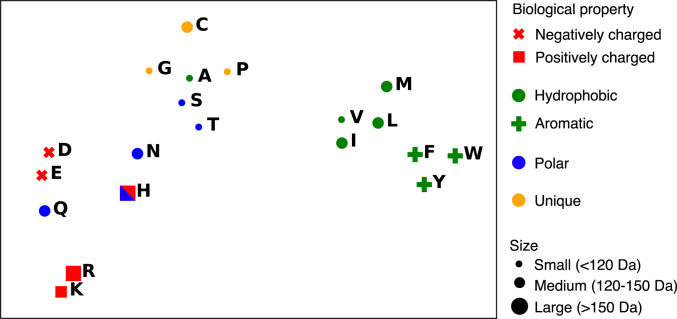
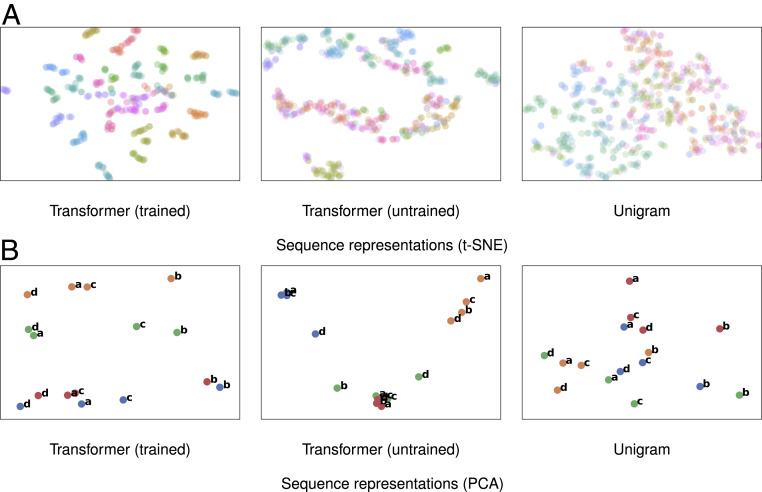
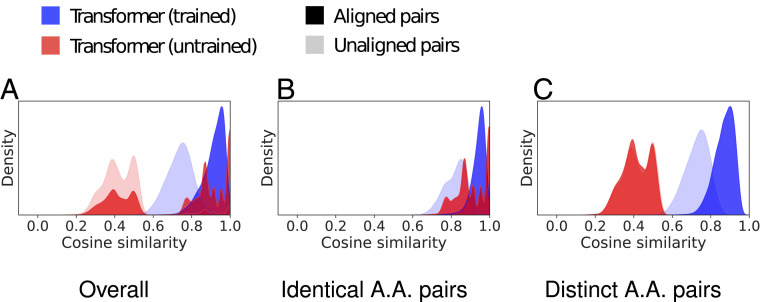
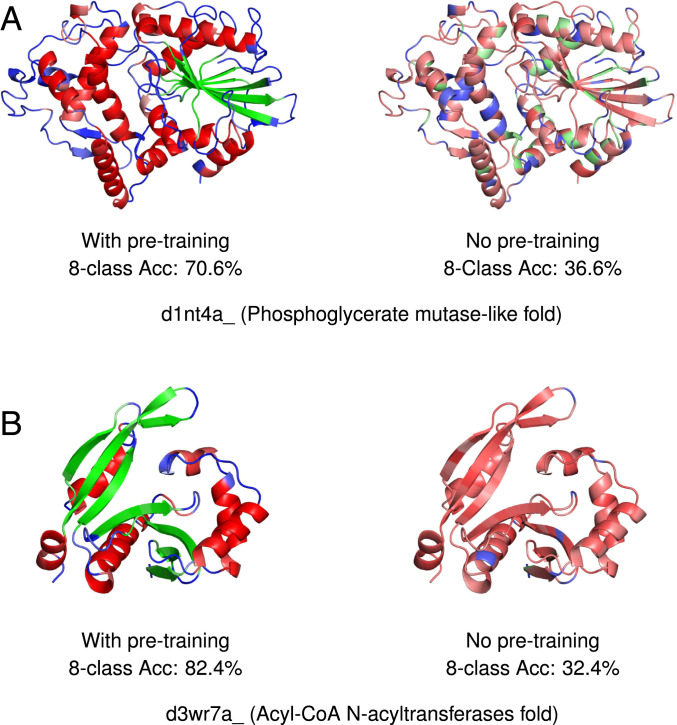
In the field of artificial intelligence, a combination of scale in data and model capacity enabled by un-supervised learning has led to major advances in representation learning and statistical generation. In the life sciences, the anticipated growth of sequencing promises unprecedented data on natural sequence diversity. Protein language modeling at the scale of evolution is a logical step toward predictive and generative artificial intelligence for biology. To this end we use unsupervised learning to train a deep contextual language model on 86 billion amino acids across 250 million protein sequences spanning evolutionary diversity. The resulting model contains information about biological properties in its representations. The representations are learned from sequence data alone. The learned representation space has a multi-scale organization reflecting structure from the level of biochemical properties of amino acids to remote homology of proteins. Information about secondary and tertiary structure is encoded in the representations and can be identified by linear projections. Representation learning produces features that generalize across a range of applications, enabling state-of-the-art supervised prediction of mutational effect and secondary structure, and improving state-of-the-art features for long-range contact prediction.
Overview
The claims and statistics of this paper haven’t been checked yet.
Run the check — free, no account needed. It reads the open-access text and checks the sources it cites.
Integrity signals
Registry
Cites
Statistics
Figures
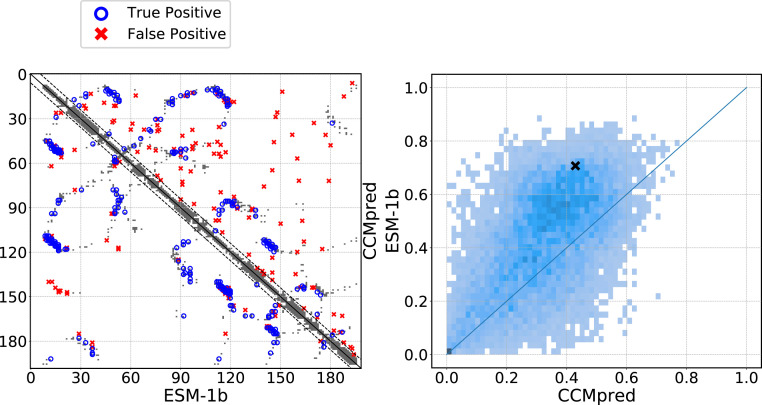
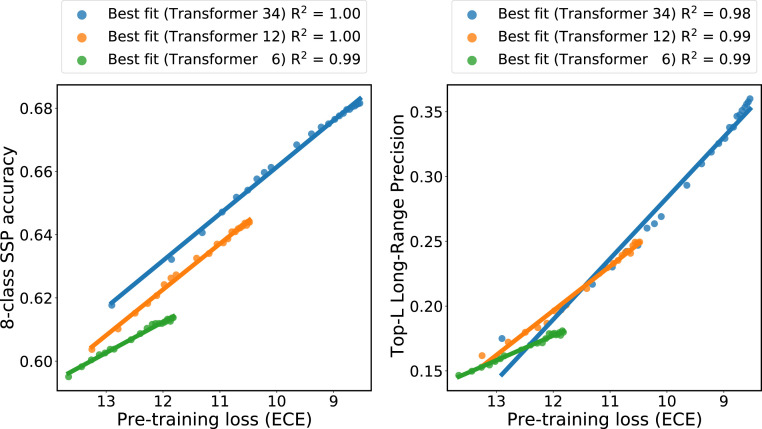
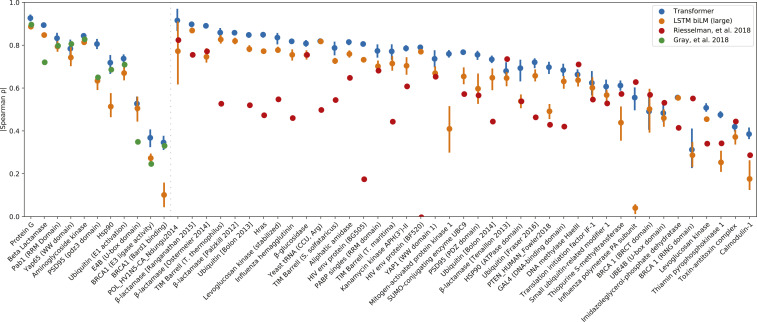
Verification
Claims the paper makes
The claims and statistics of this paper haven’t been checked yet.
Run the check — free, no account needed. It reads the open-access text and checks the sources it cites.
Self-check
Percentages, sums and reported differences re-computed from the paper’s own numbers.
The self-check needs the paper’s full text.
Citations
Cites
Vaswani, A., Shazeer, N., Parmar, N., Uszkoreit, J., Jones, L., Gomez, A. N., Kaiser, L., & Polosukhin, I. (2017) · arXiv · doi:10.48550/arxiv.1706.03762 · Cited by 120,404 · cited 3×
“We investigate the Transformer (Vaswani et al., 2017), which has emerged as a powerful general-purpose model architecture for representation learning and generative modeling of textual data, and outperforms more traditionally employed recurrent and convolutional architectures, such as LSTM and GConv networks (Hochreit…”
MethodHochreiter, S., & Schmidhuber, J. (1997) · Neural Computation · doi:10.1162/neco.1997.9.8.1735 · Cited by 102,318
Basic local alignment search tool
Altschul, S. F., Gish, W., Miller, W., Myers, E. W., & Lipman, D. J. (1990) · Journal of Molecular Biology · doi:10.1006/jmbi.1990.9999 · Cited by 98,669
BERT: Pre-training of Deep Bidirectional Transformers for Language Understanding
Devlin, J., Chang, M.-W., Lee, K., & Toutanova, K. (2018) · arXiv · doi:10.48550/arxiv.1810.04805 · Cited by 73,173 · cited 5×
“…a form of unsupervised learning in which context within the text is used to predict missing words, have been shown to materialize representations of word meaning that can generalize across problems (Collobert & Weston, 2008; Dai & Le, 2015; Peters et al., 2018; Devlin et al., 2018).”
BackgroundMethodInfluentialBERT: Pre-training of Deep Bidirectional Transformers for Language Understanding
Devlin, J., Chang, M.-W., Lee, K., & Toutanova, K. (2019) · Proceedings of the 2019 Conference of the North American Chapter of the Association for Computational Linguistics: Human Language Technologies, Volume 1 (Long and Short Papers) · doi:10.18653/v1/n19-1423 · Cited by 54,325 · cited 5×
“…a form of unsupervised learning in which context within the text is used to predict missing words, have been shown to materialize representations of word meaning that can generalize across problems (Collobert & Weston, 2008; Dai & Le, 2015; Peters et al., 2018; Devlin et al., 2018).”
BackgroundMethodInfluentialGlove: Global Vectors for Word Representation
Pennington, J., Socher, R., & Manning, C. (2014) · Proceedings of the 2014 Conference on Empirical Methods in Natural Language Processing (EMNLP) · doi:10.3115/v1/d14-1162 · Cited by 34,071 · cited 1×
“A.1 B ACKGROUND ON LANGUAGE MODELS AND EMBEDDINGS Deep language models are parametric functions that map sequences into distributed word representations in a learned vector space (Bengio et al., 2003; Mikolov et al., 2013a;b; Pennington et al., 2014; Lample et al., 2017).”
Background(2008) · Journal of Machine Learning Research · Cited by 33,051
Efficient Estimation of Word Representations in Vector Space
Mikolov, T., Chen, K., Corrado, G., & Dean, J. (2013) · arXiv · doi:10.48550/arxiv.1301.3781 · Cited by 26,568 · cited 1×
“A.1 B ACKGROUND ON LANGUAGE MODELS AND EMBEDDINGS Deep language models are parametric functions that map sequences into distributed word representations in a learned vector space (Bengio et al., 2003; Mikolov et al., 2013a;b; Pennington et al., 2014; Lample et al., 2017).”
BackgroundDistributed Representations of Words and Phrases and their Compositionality
Mikolov, T., Sutskever, I., Chen, K., Corrado, G., & Dean, J. (2013) · arXiv · doi:10.48550/arxiv.1310.4546 · Cited by 24,533 · cited 1×
“A.1 B ACKGROUND ON LANGUAGE MODELS AND EMBEDDINGS Deep language models are parametric functions that map sequences into distributed word representations in a learned vector space (Bengio et al., 2003; Mikolov et al., 2013a;b; Pennington et al., 2014; Lample et al., 2017).”
BackgroundReducing the dimensionality of data with neural networks
Hinton, G. E., & Salakhutdinov, R. R. (2006) · Science · doi:10.1126/science.1127647 · Cited by 20,928
Research works printed but not linked: 24
- 10.1103/PhysRevE.87 · DOI
- Mikolov, T. , Sutskever, I. , Deoras, A. , Le, H.-S. , Kom-brink, S. , and Cernocky, J. Subword language modeling with neural networks. preprint (http://www.fit.vutbr.cz/imikolov/rnnlm/char.pdf), 8, 2012.
- Riesselman, A. J. , Shin, J.-E. , Kollasch, A. W. , McMahon, C. , Simon, E. , Sander, C. , Manglik, A. , Kruse, A. C. , and Marks, D. S. Accelerating protein design using autoregressive generative models. bioRxiv, pp. 757252, 2019.
- 2011, Learning generative models for protein fold families, Proteins: Structure, Function, and Bioinformatics, 79, 1061, 10.1002/prot.22934 · DOI · Paper page
- 10.1093/nar/gkt1223 · DOI · Paper page
- Devlin, J. , Chang, M. , Lee, K. , and Toutanova, K. BERT: pre-training of deep bidirectional transformers for language understanding. CoRR, abs/1810.04805, 2018b. URL http://arxiv.org/abs/1810.04805. · arXiv
- 2013, Improved contact prediction in proteins: using pseu-dolikelihoods to infer potts models, Physical Review E, 87, 012707, 10.1103/PhysRevE.87.012707 · DOI · Paper page
- 10.1093/nar/gkt1240 · DOI · Paper page
- 2018, Quantitative missense variant effect pre-diction using large-scale mutagenesis data, Cell systems, 6, 116, 10.1016/j.cels.2017.11.003 · DOI
- 10.1093/nar/gky1085 · DOI
- Johnson, J. , Douze, M. , and Jégou, H. Billion-scale similarity search with gpus. CoRR, abs/1702.08734, 2017. URL http://arxiv.org/abs/1702.08734. · arXiv
- 2019, NetSurfP-2.0: Improved prediction of protein structural features by integrated deep learning, Proteins, 87, 520, 10.1002/prot.25674 · DOI
- Liu, Y. , Ott, M. , Goyal, N. , Du, J. , Joshi, M. , Chen, D. , Levy, O. , Lewis, M. , Zettlemoyer, L. , and Stoyanov, V. RoBERTa: A Robustly Optimized BERT Pretraining Approach. 7 2019. URL http://arxiv.org/abs/1907.11692. · arXiv
- 10.1093/nar/gkw1081 · DOI
- 10.1038/nmeth.1818 · DOI · Paper page
- 10.1038/s41592-018-0138-4 · DOI · Paper page
- 10.1093/bioinformatics/btu500 · DOI
- 10.1016/j.sbi.2011.03.005 · DOI
- 10.1093/bioinformatics/btu739 · DOI · Paper page
- 10.1093/nar/gkm895 · DOI
- 2008, Graphical models of residue coupling in protein families, IEEE/ACM Transactions on Computational Biology and Bioinformatics, 5, 183, 10.1109/TCBB.2007.70225 · DOI · Paper page
- Vaswani, A. , Shazeer, N. , Parmar, N. , Uszkoreit, J. , Jones, L. , Gomez, A. N. , Kaiser, Ł. , and Polosukhin, I. Attention is all you need. In Advances in neural information processing systems, pp. 5998–6008, 2017b.
- 2017, Accurate de novo prediction of protein contact map by ultra-deep learning model, PLoS computational biology, 13, e1005324, 10.1371/journal.pcbi.1005324 · DOI · Paper page
- 10.1073/pnas.0805923106 · DOI · Paper page
Cited by
Sorted by citations
Highly accurate protein structure prediction with AlphaFold
Jumper, J., Evans, R., Pritzel, A., Green, T., Figurnov, M., Ronneberger, O., Tunyasuvunakool, K., Bates, R., Žídek, A., Potapenko, A., et al. (2021) · Nature · doi:10.1038/s41586-021-03819-2 · Cited by 43,764
“In parallel, the success of attention-based networks for language processing 52 and, more recently, computer vision 31,53 has inspired the exploration of attention-based methods for interpreting protein sequences 54–56 .”
Evolutionary-scale prediction of atomic level protein structure with a language model
Lin, Z., Akin, H., Rao, R., Hie, B., Zhu, Z., Lu, W., Smetanin, N., Verkuil, R., Kabeli, O., Shmueli, Y., et al. (2022) · doi:10.1101/2022.07.20.500902 · Cited by 5,990
“[14] Alexander Rives, Joshua Meier, Tom Sercu, Siddharth Goyal, Zeming Lin, Jason Liu, Demi Guo, Myle Ott, C.”
BackgroundSelf-citationRives, A., Meier, J., Sercu, T., Goyal, S., Lin, Z., Liu, J., Guo, D., Ott, M., Zitnick, C. L., Ma, J., et al. (2021) · Proceedings of the National Academy of Sciences · doi:10.1073/pnas.2016239118 · Cited by 3,286
Self-citationSignalP 6.0 predicts all five types of signal peptides using protein language models
Teufel, F., Armenteros, J. J. A., Johansen, A. R., Gíslason, M. H., Pihl, S. I., Tsirigos, K. D., Winther, O., Brunak, S., von HEIJNE, G., & Nielsen, H. (2022) · Nature Biotechnology · doi:10.1038/s41587-021-01156-3 · Cited by 3,088
ProtTrans: Toward Understanding the Language of Life Through Self-Supervised Learning
Elnaggar, A., Heinzinger, M., Dallago, C., Rehawi, G., Wang, Y., Jones, L., Gibbs, T., Feher, T., Angerer, C., Steinegger, M., et al. (2022) · IEEE Transactions on Pattern Analysis and Machine Intelligence · doi:10.1109/tpami.2021.3095381 · Cited by 2,329
“As previously established for another protein LM [24], the t-SNE projections (Fig.”
BackgroundMethodResultInfluential
Metadata
- Authors
- Rives, A., Meier, J., Sercu, T., Goyal, S., Lin, Z., Liu, J., Guo, D., Ott, M., Zitnick, C. L., Ma, J., & Fergus, R.
- Affiliations
- Meta (United States) (US)
- New York University (US)
- Harvard University (US)
- Yale University (US)
- Corresponding author
- Rives, Alexander
- ORCID
- Venue
- Proceedings of the National Academy of Sciences
- Publisher
- openRxiv
- Published
- 2019-04-29
- Volume
- 118
- Issue
- 15
- ISSN
- 0027-8424 (ISSN-L)
- PMC
- PMC8053943
- OpenAlex
- W3146944767
- Cited by
- 3,280
- References
- 100
- Citations by year
- 2026: 780 · 2025: 816 · 2024: 697 · 2023: 448 · 2022: 305 · 2021: 161 · 2020: 51 · 2019: 18
- FWCI
- 126.76
- Type
- journal article
- Language
- en
- Open access
- hybrid
- doi.org
- Licence
- cc-by-nc-nd
- Locations
- Proceedings of the National Academy of Sciences (publishedVersion, cc-by-nc-nd)
- bioRxiv (Cold Spring Harbor Laboratory) (acceptedVersion, cc-by-nc-nd)
- PubMed Central (publishedVersion, cc-by-nc-nd)
- PubMed (publishedVersion)
- Knowledge@UChicago (University of Chicago) (submittedVersion, cc-by-nc-nd)
- University of Chicago
- Funders
- National Science Foundation (1339362)
- Topics
- Life Sciences › Biochemistry, Genetics and Molecular Biology › Molecular Biology › Machine Learning in Bioinformatics
- Life Sciences › Biochemistry, Genetics and Molecular Biology › Molecular Biology › Protein Structure and Dynamics
- Life Sciences › Biochemistry, Genetics and Molecular Biology › Molecular Biology › RNA and protein synthesis mechanisms
- Keywords
- protein language models, unsupervised learning, protein evolution, protein structure prediction, secondary structure prediction, protein tertiary structure, remote homology
- MeSH terms
- Unsupervised Machine Learning, Amino Acids, Protein Conformation, Sequence Homology, Amino Acid, Sequence Analysis, Protein
About these checks
Registry, retraction, Cites and statistics results are computed, not judged, with one exception: a printed reference that no index lists is read once by a model before it counts as a citation error. Claims are extracted by a model and kept only when their quote appears verbatim in the text; each cited source is then checked, with a model’s help, for whether it says what the claim relies on. Those verdicts can be wrong — read the claim’s quote and the cited source before relying on one.
Statistics and arithmetic are recomputed, not judged.
Confidence bands are shown only for fields calibrated on our annotated test set. None is calibrated yet, so no band is shown.
What counts as a claim ›How we measure confidence ›How we check this ›
Are you an author, or do you see a problem with this page? Request a review
