

The DOI matches its Crossref record; 148 of the 148 references it cites were found in a registry or an index.
Biological structure and function emerge from scaling unsupervised learning to 250 million protein sequences
Open accessPreprint — published as 10.1073/pnas.2016239118 · Paper page
Abstract
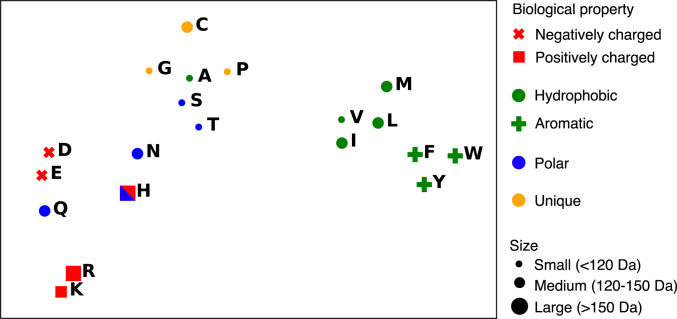
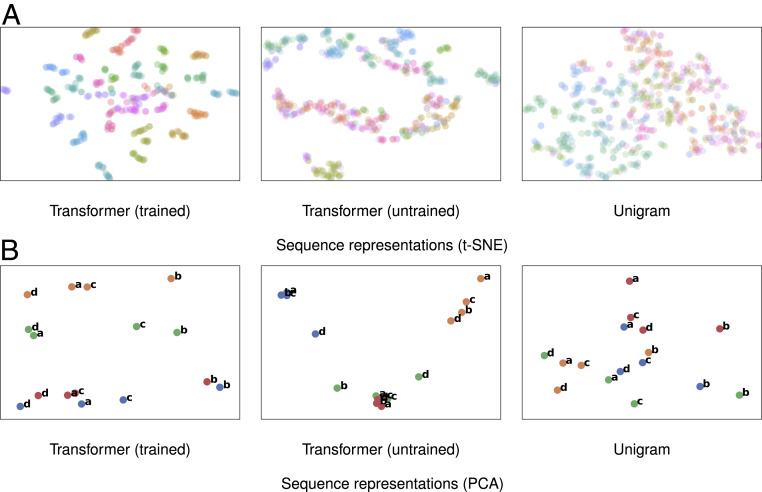
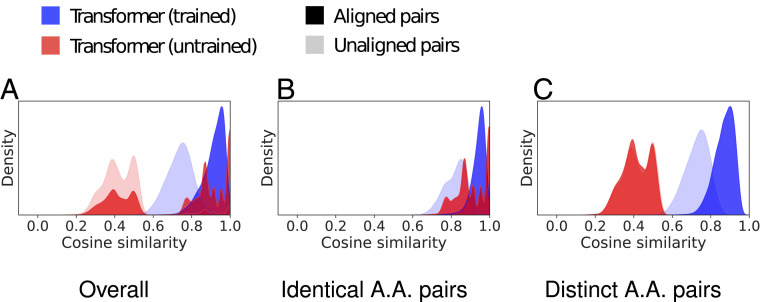
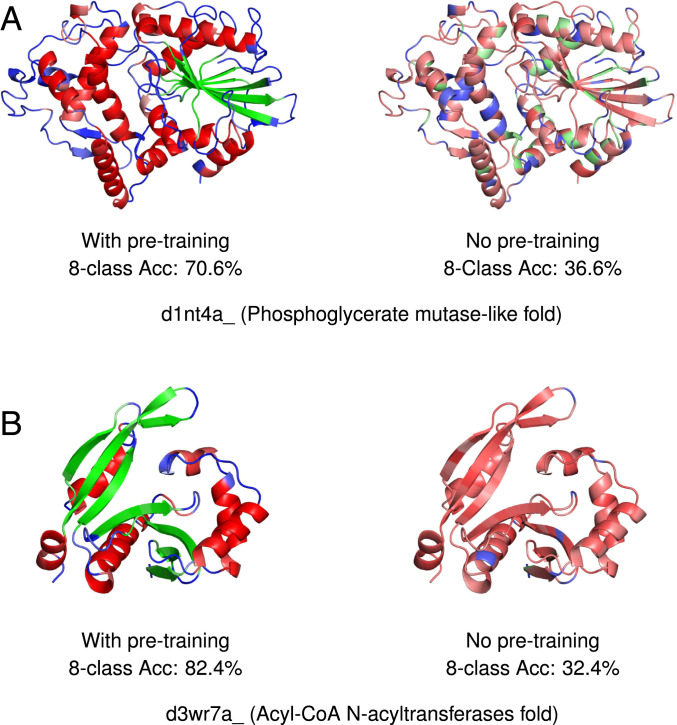
In the field of artificial intelligence, a combination of scale in data and model capacity enabled by un-supervised learning has led to major advances in representation learning and statistical generation. In the life sciences, the anticipated growth of sequencing promises unprecedented data on natural sequence diversity. Protein language modeling at the scale of evolution is a logical step toward predictive and generative artificial intelligence for biology. To this end we use unsupervised learning to train a deep contextual language model on 86 billion amino acids across 250 million protein sequences spanning evolutionary diversity. The resulting model contains information about biological properties in its representations. The representations are learned from sequence data alone. The learned representation space has a multi-scale organization reflecting structure from the level of biochemical properties of amino acids to remote homology of proteins. Information about secondary and tertiary structure is encoded in the representations and can be identified by linear projections. Representation learning produces features that generalize across a range of applications, enabling state-of-the-art supervised prediction of mutational effect and secondary structure, and improving state-of-the-art features for long-range contact prediction.
Overview
The claims and statistics of this paper haven’t been checked yet.
Run the check — free, no account needed. It reads the open-access text and checks the sources it cites.
Integrity signals
Registry
Cites
Statistics
Figures
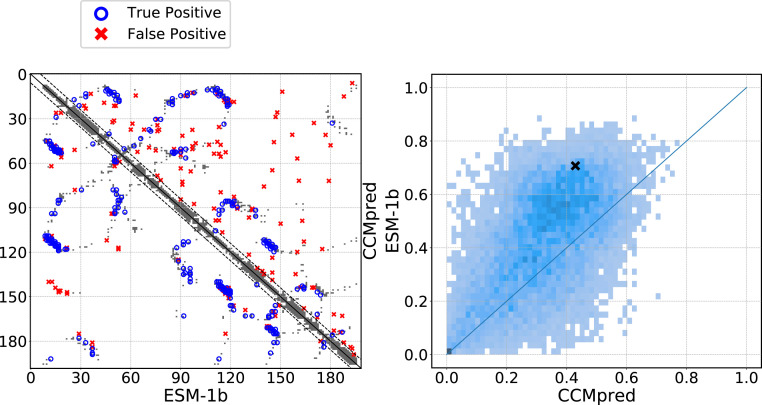
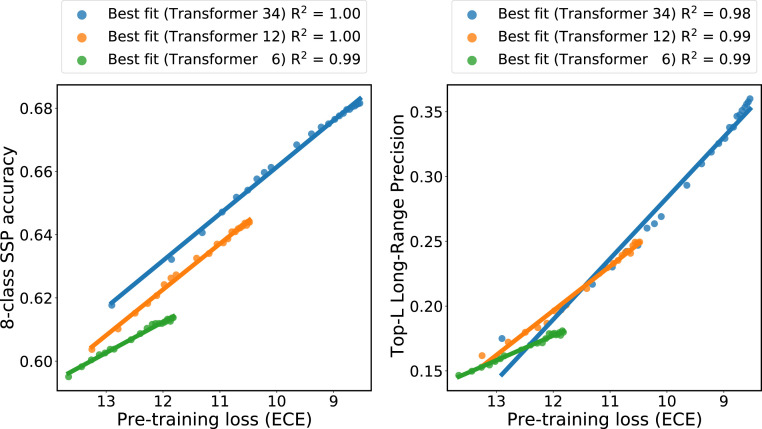
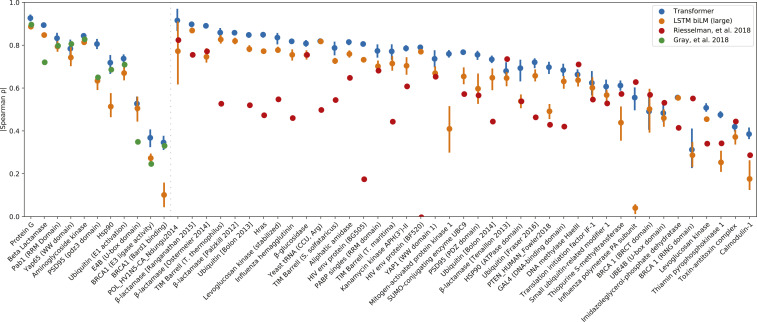
Verification
Claims the paper makes
The claims and statistics of this paper haven’t been checked yet.
Run the check — free, no account needed. It reads the open-access text and checks the sources it cites.
Self-check
Percentages, sums and reported differences re-computed from the paper’s own numbers.
The self-check needs the paper’s full text.
Citations
Cites
Vaswani, A., Shazeer, N., Parmar, N., Uszkoreit, J., Jones, L., Gomez, A. N., Kaiser, L., & Polosukhin, I. (2017) · arXiv · doi:10.48550/arxiv.1706.03762 · Cited by 120,404 · cited 3×
“We investigate the Transformer (Vaswani et al., 2017), which has emerged as a powerful general-purpose model architecture for representation learning and generative modeling of textual data, and outperforms more traditionally employed recurrent and convolutional architectures, such as LSTM and GConv networks (Hochreit…”
MethodHochreiter, S., & Schmidhuber, J. (1997) · Neural Computation · doi:10.1162/neco.1997.9.8.1735 · Cited by 102,318
Basic local alignment search tool
Altschul, S. F., Gish, W., Miller, W., Myers, E. W., & Lipman, D. J. (1990) · Journal of Molecular Biology · doi:10.1006/jmbi.1990.9999 · Cited by 98,669
BERT: Pre-training of Deep Bidirectional Transformers for Language Understanding
Devlin, J., Chang, M.-W., Lee, K., & Toutanova, K. (2018) · arXiv · doi:10.48550/arxiv.1810.04805 · Cited by 73,173 · cited 5×
“…a form of unsupervised learning in which context within the text is used to predict missing words, have been shown to materialize representations of word meaning that can generalize across problems (Collobert & Weston, 2008; Dai & Le, 2015; Peters et al., 2018; Devlin et al., 2018).”
BackgroundMethodInfluentialBERT: Pre-training of Deep Bidirectional Transformers for Language Understanding
Devlin, J., Chang, M.-W., Lee, K., & Toutanova, K. (2019) · Proceedings of the 2019 Conference of the North American Chapter of the Association for Computational Linguistics: Human Language Technologies, Volume 1 (Long and Short Papers) · doi:10.18653/v1/n19-1423 · Cited by 54,325 · cited 5×
“…a form of unsupervised learning in which context within the text is used to predict missing words, have been shown to materialize representations of word meaning that can generalize across problems (Collobert & Weston, 2008; Dai & Le, 2015; Peters et al., 2018; Devlin et al., 2018).”
BackgroundMethodInfluentialGlove: Global Vectors for Word Representation
Pennington, J., Socher, R., & Manning, C. (2014) · Proceedings of the 2014 Conference on Empirical Methods in Natural Language Processing (EMNLP) · doi:10.3115/v1/d14-1162 · Cited by 34,071 · cited 1×
“A.1 B ACKGROUND ON LANGUAGE MODELS AND EMBEDDINGS Deep language models are parametric functions that map sequences into distributed word representations in a learned vector space (Bengio et al., 2003; Mikolov et al., 2013a;b; Pennington et al., 2014; Lample et al., 2017).”
Background(2008) · Journal of Machine Learning Research · Cited by 33,051
Efficient Estimation of Word Representations in Vector Space
Mikolov, T., Chen, K., Corrado, G., & Dean, J. (2013) · arXiv · doi:10.48550/arxiv.1301.3781 · Cited by 26,568 · cited 1×
“A.1 B ACKGROUND ON LANGUAGE MODELS AND EMBEDDINGS Deep language models are parametric functions that map sequences into distributed word representations in a learned vector space (Bengio et al., 2003; Mikolov et al., 2013a;b; Pennington et al., 2014; Lample et al., 2017).”
BackgroundDistributed Representations of Words and Phrases and their Compositionality
Mikolov, T., Sutskever, I., Chen, K., Corrado, G., & Dean, J. (2013) · arXiv · doi:10.48550/arxiv.1310.4546 · Cited by 24,533 · cited 1×
“A.1 B ACKGROUND ON LANGUAGE MODELS AND EMBEDDINGS Deep language models are parametric functions that map sequences into distributed word representations in a learned vector space (Bengio et al., 2003; Mikolov et al., 2013a;b; Pennington et al., 2014; Lample et al., 2017).”
BackgroundReducing the dimensionality of data with neural networks
Hinton, G. E., & Salakhutdinov, R. R. (2006) · Science · doi:10.1126/science.1127647 · Cited by 20,928
Research works printed but not linked: 24
- 10.1103/PhysRevE.87 · DOI
- Mikolov, T. , Sutskever, I. , Deoras, A. , Le, H.-S. , Kom-brink, S. , and Cernocky, J. Subword language modeling with neural networks. preprint (http://www.fit.vutbr.cz/imikolov/rnnlm/char.pdf), 8, 2012.
- Riesselman, A. J. , Shin, J.-E. , Kollasch, A. W. , McMahon, C. , Simon, E. , Sander, C. , Manglik, A. , Kruse, A. C. , and Marks, D. S. Accelerating protein design using autoregressive generative models. bioRxiv, pp. 757252, 2019.
- 2011, Learning generative models for protein fold families, Proteins: Structure, Function, and Bioinformatics, 79, 1061, 10.1002/prot.22934 · DOI · Paper page
- 10.1093/nar/gkt1223 · DOI · Paper page
- Devlin, J. , Chang, M. , Lee, K. , and Toutanova, K. BERT: pre-training of deep bidirectional transformers for language understanding. CoRR, abs/1810.04805, 2018b. URL http://arxiv.org/abs/1810.04805. · arXiv
- 2013, Improved contact prediction in proteins: using pseu-dolikelihoods to infer potts models, Physical Review E, 87, 012707, 10.1103/PhysRevE.87.012707 · DOI · Paper page
- 10.1093/nar/gkt1240 · DOI · Paper page
- 2018, Quantitative missense variant effect pre-diction using large-scale mutagenesis data, Cell systems, 6, 116, 10.1016/j.cels.2017.11.003 · DOI
- 10.1093/nar/gky1085 · DOI
- Johnson, J. , Douze, M. , and Jégou, H. Billion-scale similarity search with gpus. CoRR, abs/1702.08734, 2017. URL http://arxiv.org/abs/1702.08734. · arXiv
- 2019, NetSurfP-2.0: Improved prediction of protein structural features by integrated deep learning, Proteins, 87, 520, 10.1002/prot.25674 · DOI
- Liu, Y. , Ott, M. , Goyal, N. , Du, J. , Joshi, M. , Chen, D. , Levy, O. , Lewis, M. , Zettlemoyer, L. , and Stoyanov, V. RoBERTa: A Robustly Optimized BERT Pretraining Approach. 7 2019. URL http://arxiv.org/abs/1907.11692. · arXiv
- 10.1093/nar/gkw1081 · DOI
- 10.1038/nmeth.1818 · DOI · Paper page
- 10.1038/s41592-018-0138-4 · DOI · Paper page
- 10.1093/bioinformatics/btu500 · DOI
- 10.1016/j.sbi.2011.03.005 · DOI
- 10.1093/bioinformatics/btu739 · DOI · Paper page
- 10.1093/nar/gkm895 · DOI
- 2008, Graphical models of residue coupling in protein families, IEEE/ACM Transactions on Computational Biology and Bioinformatics, 5, 183, 10.1109/TCBB.2007.70225 · DOI · Paper page
- Vaswani, A. , Shazeer, N. , Parmar, N. , Uszkoreit, J. , Jones, L. , Gomez, A. N. , Kaiser, Ł. , and Polosukhin, I. Attention is all you need. In Advances in neural information processing systems, pp. 5998–6008, 2017b.
- 2017, Accurate de novo prediction of protein contact map by ultra-deep learning model, PLoS computational biology, 13, e1005324, 10.1371/journal.pcbi.1005324 · DOI · Paper page
- 10.1073/pnas.0805923106 · DOI · Paper page
Cited by
Sorted by citations
Highly accurate protein structure prediction with AlphaFold
Jumper, J., Evans, R., Pritzel, A., Green, T., Figurnov, M., Ronneberger, O., Tunyasuvunakool, K., Bates, R., Žídek, A., Potapenko, A., et al. (2021) · Nature · doi:10.1038/s41586-021-03819-2 · Cited by 43,764
“In parallel, the success of attention-based networks for language processing 52 and, more recently, computer vision 31,53 has inspired the exploration of attention-based methods for interpreting protein sequences 54–56 .”
Evolutionary-scale prediction of atomic level protein structure with a language model
Lin, Z., Akin, H., Rao, R., Hie, B., Zhu, Z., Lu, W., Smetanin, N., Verkuil, R., Kabeli, O., Shmueli, Y., et al. (2022) · doi:10.1101/2022.07.20.500902 · Cited by 5,990
“[14] Alexander Rives, Joshua Meier, Tom Sercu, Siddharth Goyal, Zeming Lin, Jason Liu, Demi Guo, Myle Ott, C.”
BackgroundSelf-citationRives, A., Meier, J., Sercu, T., Goyal, S., Lin, Z., Liu, J., Guo, D., Ott, M., Zitnick, C. L., Ma, J., et al. (2021) · Proceedings of the National Academy of Sciences · doi:10.1073/pnas.2016239118 · Cited by 3,286
Self-citationSignalP 6.0 predicts all five types of signal peptides using protein language models
Teufel, F., Armenteros, J. J. A., Johansen, A. R., Gíslason, M. H., Pihl, S. I., Tsirigos, K. D., Winther, O., Brunak, S., von HEIJNE, G., & Nielsen, H. (2022) · Nature Biotechnology · doi:10.1038/s41587-021-01156-3 · Cited by 3,088
ProtTrans: Toward Understanding the Language of Life Through Self-Supervised Learning
Elnaggar, A., Heinzinger, M., Dallago, C., Rehawi, G., Wang, Y., Jones, L., Gibbs, T., Feher, T., Angerer, C., Steinegger, M., et al. (2022) · IEEE Transactions on Pattern Analysis and Machine Intelligence · doi:10.1109/tpami.2021.3095381 · Cited by 2,329
“As previously established for another protein LM [24], the t-SNE projections (Fig.”
BackgroundMethodResultInfluentialAccurate proteome-wide missense variant effect prediction with AlphaMissense
Cheng, J., Novati, G., Pan, J., Bycroft, C., Žemgulytė, A., Applebaum, T., Pritzel, A., Wong, L. H., Zielinski, M., Sargeant, T., et al. (2023) · Science · doi:10.1126/science.adg7492 · Cited by 2,163
“After pretraining, the masked language modeling head can already be used for variant effect prediction by computing the log-likelihood ratio between the reference and alternative amino acid probabilities, as done in MSA Transformer ( 27 ) and Evolutionary Scale Modeling [ESM ( 28 )].”
MethodSignalP 6.0 predicts all five types of signal peptides using protein language models
Teufel, F., Armenteros, J. J. A., Johansen, A. R., Gíslason, M. H., Pihl, S. I., Tsirigos, K. D., Winther, O., Brunak, S., von HEIJNE, G., & Nielsen, H. (2022) · Repository for Publications and Research Data (ETH Zurich) · doi:10.3929/ethz-b-000524414 · Cited by 1,905
Scientific discovery in the age of artificial intelligence.
Wang, H., Fu, T., Du, Y., Gao, W., Huang, K., Liu, Z., Chandak, P., Liu, S., Van Katwyk, P., Deac, A., et al. (2023) · Nature · doi:10.1038/s41586-023-06221-2 · Cited by 1,823
DeepTMHMM predicts alpha and beta transmembrane proteins using deep neural networksPreprint
Hallgren, J., Tsirigos, K. D., Pedersen, M. D., Armenteros, J. J. A., Marcatili, P., Nielsen, H., Krogh, A., & Winther, O. (2022) · bioRxiv (Cold Spring Harbor Laboratory) · doi:10.1101/2022.04.08.487609 · Cited by 1,528
Lin, T., Wang, Y., Liu, X., & Qiu, X. (2022) · AI Open · doi:10.1016/j.aiopen.2022.10.001 · Cited by 1,422
Large language models generate functional protein sequences across diverse families
Madani, A., Krause, B., Greene, E. R., Subramanian, S., Mohr, B. P., Holton, J. M., Olmos, J. L., Xiong, C., Sun, Z. Z., Socher, R., et al. (2023) · Nature Biotechnology · doi:10.1038/s41587-022-01618-2 · Cited by 1,078
Machine-learning-guided directed evolution for protein engineering
Yang, K. K., Wu, Z., & Arnold, F. H. (2019) · Nature Methods · doi:10.1038/s41592-019-0496-6 · Cited by 1,130
“However, more sophisticated continuous vector encodings of sequences can be learned from patterns in unlabeled sequences 52,70–76 or from structural information 77 .”
BackgroundProteinBERT: a universal deep-learning model of protein sequence and function
Brandes, N., Ofer, D., Peleg, Y., Rappoport, N., & Linial, M. (2022) · Bioinformatics · doi:10.1093/bioinformatics/btac020 · Cited by 1,009
“Existing works show that, other things being equal, larger models and additional pretraining computation time correlates with improved model performance [2, 5, 20].”
BackgroundMethodInfluentialProtGPT2 is a deep unsupervised language model for protein design
Ferruz, N., Schmidt, S., & Höcker, B. (2022) · Nature Communications · doi:10.1038/s41467-022-32007-7 · Cited by 795
“Given both the growth of proteinsequence databases and the lack of annotation for a signi fi cant part of the protein space, protein sequences have become great candidates for unsupervised training 4,10,11 and now offer the opportunity to encode and generate protein sequences.”
BackgroundMethodDisease variant prediction with deep generative models of evolutionary data
Frazer, J., Notin, P., Dias, M., Gomez, A., Min, J. K., Brock, K., Gal, Y., & Marks, D. S. (2021) · Nature · doi:10.1038/s41586-021-04043-8 · Cited by 791
Simulating 500 million years of evolution with a language model
Hayes, T., Rao, R., Akin, H., Sofroniew, N. J., Oktay, D., Lin, Z., Verkuil, R., Tran, V. Q., Deaton, J., Wiggert, M., et al. (2025) · Science · doi:10.1126/science.ads0018 · Cited by 937
Self-citationDeepLoc 2.0: multi-label subcellular localization prediction using protein language models
Thumuluri, V., Armenteros, J. J. A., Johansen, A. R., Nielsen, H., & Winther, O. (2022) · Nucleic Acids Research · doi:10.1093/nar/gkac278 · Cited by 736
Language models enable zero-shot prediction of the effects of mutations on protein function
Meier, J., Rao, R., Verkuil, R., Liu, J., Sercu, T., & Rives, A. (2021) · doi:10.1101/2021.07.09.450648 · Cited by 635
Self-citationAutomated model building and protein identification in cryo-EM maps
Jamali, K., Käll, L., Zhang, R., Brown, A., Kimanius, D., & Scheres, S. H. W. (2024) · Nature · doi:10.1038/s41586-024-07215-4 · Cited by 686
“The sequence module performs cross-attention for each residue with the user-provided amino acid sequences, which are embedded using the pretrained protein language model ESM-1b 31 .”
Rethinking Attention with Performers
Choromanski, K., Likhosherstov, V., Dohan, D., Song, X., Gane, A., Sarlos, T., Hawkins, P., Davis, J., Mohiuddin, A., Kaiser, L., et al. (2020) · arXiv · doi:10.48550/arxiv.2009.14794 · Cited by 695
“…2018), document generation/summarization, time series prediction, generative modeling (e.g. image generation (Parmar et al., 2018)), music generation (Huang et al., 2019), and bioinformatics (Rives et al., 2019; Madani et al., 2020; Ingraham et al., 2019; Elnaggar et al., 2019; Du et al., 2020).”
BackgroundModeling aspects of the language of life through transfer-learning protein sequences
Heinzinger, M., Elnaggar, A., Wang, Y., Dallago, C., Nechaev, D., Matthes, F., & Rost, B. (2019) · BMC Bioinformatics · doi:10.1186/s12859-019-3220-8 · Cited by 606
“Similar to the results described in [51], our projection of the embedding space confirmed that the model successfully captured bio-chemical and bio-physical properties on the most fine-grained level, i.e. the 20 standard amino acids (Fig.”
BackgroundResultInfluentialNucleotide Transformer: building and evaluating robust foundation models for human genomics
Dalla-Torre, H., Gonzalez, L., Mendoza-Revilla, J., Lopez Carranza, N., Grzywaczewski, A. H., Oteri, F., Dallago, C., Trop, E., de Almeida, B. P., Sirelkhatim, H., et al. (2025) · Nature Methods · doi:10.1038/s41592-024-02523-z · Cited by 772
“These protein LMs, when applied to downstream tasks using transfer learning, demonstrated the ability to compete with and even outperform previous methods for tasks such as predicting protein structure 3,4 and function 6,7 , even in data-scarce regimens 8 .”
Large-scale chemical language representations capture molecular structure and properties
Ross, J., Belgodere, B., Chenthamarakshan, V., Padhi, I., Mroueh, Y., & Das, P. (2022) · Nature Machine Intelligence · doi:10.1038/s42256-022-00580-7 · Cited by 590
Sequence modeling and design from molecular to genome scale with Evo
Nguyen, E., Poli, M., Durrant, M. G., Kang, B., Katrekar, D., Li, D. B., Bartie, L. J., Thomas, A. W., King, S. H., Brixi, G., et al. (2024) · Science · doi:10.1126/science.ado9336 · Cited by 580
Learning the protein language: Evolution, structure, and function
Bepler, T., & Berger, B. (2021) · Cell Systems · doi:10.1016/j.cels.2021.05.017 · Cited by 483
DeepGOPlus: improved protein function prediction from sequence
Kulmanov, M., & Hoehndorf, R. (2019) · Bioinformatics · doi:10.1093/bioinformatics/btz595 · Cited by 492
Efficient evolution of human antibodies from general protein language models
Hie, B., Shanker, V. R., Xu, D., Bruun, T. U. J., Weidenbacher, P. A. B., Tang, S., Wu, W. C. H., Pak, J. E., & Kim, P. S. (2023) · Nature Biotechnology · doi:10.1038/s41587-023-01763-2 · Cited by 472
“Because we used general language models 19,20 , trained on non-redundant sequence datasets that are meant to represent variation across all natural proteins 23 , these models can only learn more general evolutionary rules than could a model trained specifically on antibody sequences 24–27 or a…”
Illuminating protein space with a programmable generative model
Ingraham, J. B., Baranov, M., Costello, Z., Barber, K. W., Wang, W., Ismail, A., Frappier, V., Lord, D. M., Ng-Thow-Hing, C., Van Vlack, E. R., et al. (2023) · Nature · doi:10.1038/s41586-023-06728-8 · Cited by 444
Enzyme function prediction using contrastive learning
Yu, T., Cui, H., Li, J. C., Luo, Y., Jiang, G., & Zhao, H. (2023) · Science · doi:10.1126/science.adf2465 · Cited by 466
Chai-1: Decoding the molecular interactions of life
Discovery, C., Boitreaud, J., Dent, J., McPartlon, M., Meier, J., Reis, V., Rogozhnikov, A., & Wu, K. (2024) · doi:10.1101/2024.10.10.615955 · Cited by 517
Self-citationSingle-sequence protein structure prediction using a language model and deep learning
Chowdhury, R., Bouatta, N., Biswas, S., Floristean, C., Kharkar, A., Roy, K., Rochereau, C., Ahdritz, G., Zhang, J., Church, G. M., et al. (2022) · Nature Biotechnology · doi:10.1038/s41587-022-01432-w · Cited by 455
“Language models were first developed as a means to extract semantic information from a sequence of words (a key requirement for natural language processing) 26 .”
BackgroundMethodLearning inverse folding from millions of predicted structuresPreprint
Hsu, C., Verkuil, R., Liu, J. J., Lin, Z., Hie, B., Sercu, T., Lerer, A. K., & Rives, A. W. (2022) · bioRxiv (Cold Spring Harbor Laboratory) · doi:10.1101/2022.04.10.487779 · Cited by 492
“…2018; Eguchi et al., 2020), jointly generate structures and sequences (An-ishchenko et al., 2021; Wang et al., 2021), or model sequences directly (Rives et al., 2021; Madani et al., 2021; Shin et al., 2021; Gligorijevic et al., 2021; Bryant et al., Augmenting inverse folding with predicted…”
BackgroundSelf-citationGenome-wide prediction of disease variant effects with a deep protein language model
Brandes, N., Goldman, G., Wang, C. H., Ye, C., & Ntranos, V. (2023) · Nature Genetics · doi:10.1038/s41588-023-01465-0 · Cited by 489
ProtTrans: Towards Cracking the Language of Life’s Code Through Self-Supervised LearningPreprint
Elnaggar, A., Heinzinger, M., Dallago, C., Rehawi, G., Wang, Y., Jones, L., Gibbs, T., Feher, T., Angerer, C., Steinegger, M., et al. (2020) · bioRxiv (Cold Spring Harbor Laboratory) · doi:10.1101/2020.07.12.199554 · Cited by 424
Expanding functional protein sequence spaces using generative adversarial networks
Repecka, D., Jauniskis, V., Karpus, L., Rembeza, E., Rokaitis, I., Zrimec, J., Poviloniene, S., Laurynenas, A., Viknander, S., Abuajwa, W., et al. (2021) · Nature Machine Intelligence · doi:10.1038/s42256-021-00310-5 · Cited by 388
“On the other hand, machine learning methods are not limited by the number of sequence variations they can process 14–16 and, instead of depending on a semi-random local search process, infer protein properties 15,17 and function 16,18 directly from the amino-acid sequence.”
BackgroundHow to build the virtual cell with artificial intelligence: Priorities and opportunities
Bunne, C., Roohani, Y., Rosen, Y., Gupta, A., Zhang, X., Roed, M., Alexandrov, T., AlQuraishi, M., Brennan, P., Burkhardt, D. B., et al. (2024) · Cell · doi:10.1016/j.cell.2024.11.015 · Cited by 393
High-resolution de novo structure prediction from primary sequence
Wu, R., Ding, F., Wang, R., Shen, R., Zhang, X., Luo, S., Su, C., Wu, Z., Xie, Q., Berger, B., et al. (2022) · doi:10.1101/2022.07.21.500999 · Cited by 392
“…Helixon US Inc, USA ‡ Westlake Laboratory of Life Sciences and Biomedicine, Hangzhou, Zhejiang 310012, China § Computer Science & Artificial Intelligence Laboratory, Massachusetts Institute of Technology, Cambridge, MA 02139 ¶ Correspondence 1 sufficient to predict the protein 3D structures ( 23 ).”
BackgroundMethodSelf-citationLarge language models (LLMs): survey, technical frameworks, and future challenges
Kumar, P. (2024) · Artificial Intelligence Review · doi:10.1007/s10462-024-10888-y · Cited by 395
Rao, R., Liu, J., Verkuil, R., Meier, J., Canny, J. F., Abbeel, P., Sercu, T., & Rives, A. (2021) · doi:10.1101/2021.02.12.430858 · Cited by 350
Self-citationHøie, M. H., Kiehl, E. N., Petersen, B., Nielsen, M., Winther, O., Nielsen, H., Hallgren, J., & Marcatili, P. (2022) · Nucleic Acids Research · doi:10.1093/nar/gkac439 · Cited by 374
“In doing so, they generate complex numerical representations of protein sequences (also referred to as sequence embeddings), that can be exploited to perform downstream prediction tasks, thus bypassing the need to generate computationally expensive MSAs.”
BackgroundMethodInfluentialBERTology Meets Biology: Interpreting Attention in Protein Language Models
Vig, J., Madani, A., Varshney, L. R., Xiong, C., Socher, R., & Rajani, N. F. (2020) · doi:10.1101/2020.06.26.174417 · Cited by 338
“Sequence-only language models have since been trained through autoregressive or autoencoding self-supervision objectives for both discriminative and generative tasks, for example, using LSTMs or Transformer-based architectures [2, 9, 60, 64].”
MethodThe language of proteins: NLP, machine learning & protein sequences
Ofer, D., Brandes, N., & Linial, M. (2021) · Computational and Structural Biotechnology Journal · doi:10.1016/j.csbj.2021.03.022 · Cited by 365
“As of the present day, fine-tuning of pretrained deep models have shown considerable promise for improving our ability to solve problems, even on small data [79,83,19].”
BackgroundInfluentialTransformer protein language models are unsupervised structure learners
Rao, R., Meier, J., Sercu, T., Ovchinnikov, S., & Rives, A. (2020) · doi:10.1101/2020.12.15.422761 · Cited by 341
Self-citationUsing deep learning to annotate the protein universe
Bileschi, M. L., Belanger, D., Bryant, D. H., Sanderson, T., Carter, B., Sculley, D., Bateman, A., DePristo, M. A., & Colwell, L. J. (2022) · Nature Biotechnology · doi:10.1038/s41587-021-01179-w · Cited by 332
Evaluating Protein Transfer Learning with TAPE
Rao, R., Bhattacharya, N., Thomas, N., Duan, Y., Chen, X., Canny, J., Abbeel, P., & Song, Y. S. (2019) · doi:10.1101/676825 · Cited by 719
Fast, accurate antibody structure prediction from deep learning on massive set of natural antibodies
Ruffolo, J. A., Chu, L., Mahajan, S. P., & Gray, J. J. (2023) · Nature Communications · doi:10.1038/s41467-023-38063-x · Cited by 364
“Prior work has demonstrated that protein language models can learn structural features from sequence pre-training 55 alone (17, 33).”
BackgroundProtein design and variant prediction using autoregressive generative models
Shin, J.-E., Riesselman, A. J., Kollasch, A. W., McMahon, C., Simon, E., Sander, C., Manglik, A., Kruse, A. C., & Marks, D. S. (2021) · Nature Communications · doi:10.1038/s41467-021-22732-w · Cited by 320
Utilizing graph machine learning within drug discovery and development
Gaudelet, T., Day, B., Jamasb, A. R., Soman, J., Regep, C., Liu, G., Hayter, J. B. R., Vickers, R., Roberts, C., Tang, J., et al. (2021) · Briefings in Bioinformatics · doi:10.1093/bib/bbab159 · Cited by 313
BepiPred ‐3.0: Improved B‐cell epitope prediction using protein language models
Clifford, J. N., Høie, M. H., Deleuran, S., Peters, B., Nielsen, M., & Marcatili, P. (2022) · Protein Science · doi:10.1002/pro.4497 · Cited by 296
Accurate RNA 3D structure prediction using a language model-based deep learning approach
Shen, T., Hu, Z., Sun, S., Liu, D., Wong, F. J., Wang, J., Chen, J., Wang, Y., Hong, L., Xiao, J., et al. (2024) · Nature Methods · doi:10.1038/s41592-024-02487-0 · Cited by 314
Tubiana, J., Schneidman-Duhovny, D., & Wolfson, H. J. (2022) · Nature Methods · doi:10.1038/s41592-022-01490-7 · Cited by 274
State-of-the-Art Estimation of Protein Model Accuracy Using AlphaFold
Roney, J. P., & Ovchinnikov, S. (2022) · Physical Review Letters · doi:10.1103/physrevlett.129.238101 · Cited by 281
Machine learning for functional protein design
Notin, P., Rollins, N. J., Gal, Y., Sander, C., & Marks, D. S. (2024) · Nature Biotechnology · doi:10.1038/s41587-024-02127-0 · Cited by 304
“This has led to a wide diversity of models, inspired by learning paradigms initially introduced in the natural language-processing literature, such as autoregressive modeling 20,52,61,141 , masked-language modeling 15,146,175,176 or seq2seq architectures 177,178 .”
Generative models for graph-based protein design
Ingraham, J., Garg, V., Barzilay, R., & Jaakkola, T. (2019) · DSpace@MIT (Massachusetts Institute of Technology) · Cited by 258
Rhea, the reaction knowledgebase in 2022
Bansal, P., Morgat, A., Axelsen, K. B., Muthukrishnan, V., Coudert, E., Aimo, L., Hyka‐Nouspikel, N., Gasteiger, E., Kerhornou, A., Neto, T. B., et al. (2021) · Nucleic Acids Research · doi:10.1093/nar/gkab1016 · Cited by 251
Improved protein structure prediction by deep learning irrespective of co-evolution information
(2021) · doi:10.1038/s42256-021-00348-5 · Cited by 256
“Recently, language models such as Transformer have been used to model protein sequences[33].”
MethodOpportunities and Challenges for Machine Learning-Assisted Enzyme Engineering
Yang, J., Li, F.-Z., & Arnold, F. H. (2024) · ACS Central Science · doi:10.1021/acscentsci.3c01275 · Cited by 268
Elnaggar, A., Heinzinger, M., Dallago, C., Rihawi, G., Wang, Y., Jones, L., Gibbs, T., Fehér, T., Angerer, C. M., Steinegger, M., et al. (2020) · arXiv (Cornell University) · doi:10.48550/arxiv.2007.06225 · Cited by 364
“As previously established for another protein LM [24], the t-SNE projections (Fig.”
BackgroundMethodResultInfluentialMachine learning in protein structure prediction
AlQuraishi, M. (2021) · Current Opinion in Chemical Biology · doi:10.1016/j.cbpa.2021.04.005 · Cited by 263
Autonomous Discovery in the Chemical Sciences Part II: Outlook
Coley, C. W., Eyke, N. S., & Jensen, K. F. (2019) · Angewandte Chemie International Edition · doi:10.1002/anie.201909989 · Cited by 257
SaProt: Protein Language Modeling with Structure-aware VocabularyPreprint
Su, J., Han, C., Zhou, Y., Shan, J., Zhou, X., & Yuan, F. (2023) · bioRxiv (Cold Spring Harbor Laboratory) · doi:10.1101/2023.10.01.560349 · Cited by 264
“Its training lasted 3 months and utilized 64 NVIDIA 80G A100 GPUs, with a computational cost similar to ESM-1b (Rives et al., 2019).”
BackgroundMethodInfluentialBilingual language model for protein sequence and structure
Heinzinger, M., Weissenow, K., Sanchez, J. G., Henkel, A., Mirdita, M., Steinegger, M., & Rost, B. (2024) · NAR Genomics and Bioinformatics · doi:10.1093/nargab/lqae150 · Cited by 311
“…: embedding-based annotation transfer using the shortest Euclidean distance measured in embedding space of unsupervised pLMs ESM-1b [5], ProtT5 and ProstT5 with different inputs (AA=amino acid sequence input, p3Di=3Di predicted by ProstT5, 3Di=3Di from experimental structures,…”
PredictProtein - Predicting Protein Structure and Function for 29 Years
Bernhofer, M., Dallago, C., Karl, T., Satagopam, V., Heinzinger, M., Littmann, M., Olenyi, T., Qiu, J., Schütze, K., Yachdav, G., et al. (2021) · Nucleic Acids Research · doi:10.1093/nar/gkab354 · Cited by 246
Direct prediction of intrinsically disordered protein conformational properties from sequence
Lotthammer, J. M., Ginell, G. M., Griffith, D., Emenecker, R. J., & Holehouse, A. S. (2024) · Nature Methods · doi:10.1038/s41592-023-02159-5 · Cited by 236
DeepLoc 2.1: multi-label membrane protein type prediction using protein language models
Ødum, M. T., Teufel, F., Thumuluri, V., Armenteros, J. J. A., Johansen, A. R., Winther, O., & Nielsen, H. (2024) · Nucleic Acids Research · doi:10.1093/nar/gkae237 · Cited by 230
“We use sequence-based embeddings from the ProtT5 ( 6 ) and ESM-1B protein language models ( 7 ) and implement the same model architecture used by DeepLoc 2.0, performing interpretable attention pooling over sequence embeddings with discrete cosine transform regularization.”
InfluentialDeep Learning in Protein Structural Modeling and Design
Gao, W., Mahajan, S. P., Sulam, J., & Gray, J. J. (2020) · Patterns · doi:10.1016/j.patter.2020.100142 · Cited by 227
“Rives et al.59 trained a transformer model with 670 million parameters on 86 billion amino acids across 250 million protein sequences span- ning evolutionary diversity.”
MethodProGen: Language Modeling for Protein GenerationPreprint
Madani, A., McCann, B., Naik, N., Keskar, N. S., Anand, N., Eguchi, R. R., Huang, P., & Socher, R. (2020) · bioRxiv (Cold Spring Harbor Laboratory) · doi:10.1101/2020.03.07.982272 · Cited by 383
“Recent research (Alley et al., 2019; Rives et al., 2019; Rao et al., 2019) has begun to capitalize on the much larger set of raw protein sequences by adapting state-of-the-art representation learning techniques (Devlin et al., 2018) from natural language processing (NLP) to classification of protein…”
BackgroundAntibody structure prediction using interpretable deep learning
Ruffolo, J. A., Sulam, J., & Gray, J. J. (2022) · Patterns · doi:10.1016/j.patter.2021.100406 · Cited by 216
Fine-tuning protein language models boosts predictions across diverse tasks
Schmirler, R., Heinzinger, M., & Rost, B. (2024) · Nature Communications · doi:10.1038/s41467-024-51844-2 · Cited by 229
“Overall, pLMs have also shown to be not particularly sensitive to hyperparameter changes, neither in our work not that of others (S Sledzieski et al & JL Ferres bioRxiv doi 10.1101/2023.11.09.566187).”
InfluentialUniKP: a unified framework for the prediction of enzyme kinetic parameters
Yu, H., Deng, H., He, J., Keasling, J. D., & Luo, X. (2023) · Nature Communications · doi:10.1038/s41467-023-44113-1 · Cited by 226
Fast and Flexible Protein Design Using Deep Graph Neural Networks
Strokach, A. V., Becerra, D., Corbi‐Verge, C., Perez‐Riba, A., & Kim, P. M. (2020) · Cell Systems · doi:10.1016/j.cels.2020.08.016 · Cited by 230
Genome modeling and design across all domains of life with Evo 2Preprint
Brixi, G., Durrant, M. G., Ku, J., Poli, M., Brockman, G., Chang, D., Gonzalez, G. A., King, S. B., Li, D. B., Merchant, A. T., et al. (2025) · bioRxiv (Cold Spring Harbor Laboratory) · doi:10.1101/2025.02.18.638918 · Cited by 218
Self-citationRapid in silico directed evolution by a protein language model with EVOLVEpro
Jiang, K., Yan, Z., Bernardo, M. D., Sgrizzi, S. R., Villiger, L., Kayabölen, A., Kim, B., Carscadden, J. K., Hiraizumi, M., Nishimasu, H., et al. (2024) · Science · doi:10.1126/science.adr6006 · Cited by 234
Sledzieski, S., Singh, R., Cowen, L., & Berger, B. (2021) · Cell Systems · doi:10.1016/j.cels.2021.08.010 · Cited by 235
Informed training set design enables efficient machine learning-assisted directed protein evolution
Wittmann, B. J., Yue, Y., & Arnold, F. H. (2021) · Cell Systems · doi:10.1016/j.cels.2021.07.008 · Cited by 215
Generating functional protein variants with variational autoencoders
Hawkins‐Hooker, A., Depardieu, F., Baur, S., Couairon, G., Chen, A., & Bikard, D. (2021) · PLoS Computational Biology · doi:10.1371/journal.pcbi.1008736 · Cited by 217
“76 Deep sequence models such as LSTMs and transformers trained on datasets spanning the entire 77 range of known sequences have been shown to learn representations which distill structural and 78 functional information from the sequence [30, 31].”
BackgroundMachine Learning-Guided Protein Engineering
Kouba, P., Kohout, P., Haddadi, F., Bushuiev, A., Samusevich, R., Sedlář, J., Damborský, J., Pluskal, T., Šivic, J., & Mazurenko, S. (2023) · ACS Catalysis · doi:10.1021/acscatal.3c02743 · Cited by 218
Learning protein fitness models from evolutionary and assay-labeled data
Hsu, C., Nisonoff, H. M., Fannjiang, C., & Listgarten, J. (2022) · Nature Biotechnology · doi:10.1038/s41587-021-01146-5 · Cited by 240
“We assessed a total of 13 published machine learning methods for protein fitness (1) weak-positive only learning methods that rely on probability density modeling of evolutionarily related sequences (profile HMM 27 , EVmutation 23 and DeepSequence 24 ); (2) semi-supervised learning methods that rely on unlabeled UniRe…”
BackgroundMethodInfluentialCan we predict T cell specificity with digital biology and machine learning?
Hudson, D., Fernandes, R. A., Basham, M., Ogg, G. S., & Koohy, H. (2023) · Nature reviews. Immunology · doi:10.1038/s41577-023-00835-3 · Cited by 209
“However, the advent of automated protein structure prediction with software programs such as RoseTTaFold, ESMFold and AlphaFold-Multimer provide potential opportunities for large-scale sequence and structure interpretations of TCR epitope specificity 63–65 .”
Method(2023) · doi:10.1101/2023.12.07.570727 · Cited by 207
“They include UniRep [Alley et al., 2019a], the RITA suite [Hesslow et al., 2022], the ESM1 and ESM2 suite [Rives et al., 2021, Meier et al., 2021, Lin et al., 2023], VESPA [Marquet et al., 2022], the CARP suite [Yang et al., 2023a] and the ProGen2 suite [Nijkamp et al., 2022].”
BackgroundMethodChen, J., Hu, Z., Sun, S., Tan, Q., Wang, Y., Yu, Q., Zong, L., Hong, L., Xiao, J., Shen, T., et al. (2022) · doi:10.1101/2022.08.06.503062 · Cited by 247
“Inspired by recent great success in natural language processing, computer vision, and bioinformatics [64][65][66], we explore the possibilities of a general transformer architecture in RNA-related studies.”
BackgroundLanguage models generalize beyond natural proteins
Verkuil, R., Kabeli, O., Du, Y., Wicky, B. I. M., Milles, L. F., Dauparas, J., Baker, D., Ovchinnikov, S., Sercu, T., & Rives, A. (2022) · doi:10.1101/2022.12.21.521521 · Cited by 181
“[7] Alexander Rives, Joshua Meier, Tom Sercu, Siddharth Goyal, Zeming Lin, Jason Liu, Demi Guo, Myle Ott, C.”
BackgroundSelf-citationLearning functional properties of proteins with language models
Ünsal, S., Ataş, H., Albayrak, M., Turhan, K., Acar, A. C., & Doğan, T. (2022) · Nature Machine Intelligence · doi:10.1038/s42256-022-00457-9 · Cited by 206
“Finally, ProtALBERT, ProtT5-XL, SeqVec and ESM-1b are the best performers for the others class (Supplementary Fig.”
InfluentialModeling conformational states of proteins with AlphaFold
Sala, D., Engelberger, F., Mchaourab, H. S., & Meiler, J. (2023) · Current Opinion in Structural Biology · doi:10.1016/j.sbi.2023.102645 · Cited by 182
DeepGOPlus: improved protein function prediction from sequence
Kulmanov, M., & Hoehndorf, R. (2021) · Computer applications in the biosciences · doi:10.1093/bioinformatics/btaa763 · Cited by 200
AbLang: an antibody language model for completing antibody sequences
Olsen, T. H., Moal, I. H., & Deane, C. M. (2022) · Bioinformatics Advances · doi:10.1093/bioadv/vbac046 · Cited by 198
Controllable protein design with language models
Ferruz, N., & Höcker, B. (2022) · Nature Machine Intelligence · doi:10.1038/s42256-022-00499-z · Cited by 209
“In an effort led by Facebook AI, ESM-1b, an encoder Transformer trained on 250 million protein sequences, was published 48 .”
BackgroundMethodSingh, R., Sledzieski, S., Bryson, B. D., Cowen, L., & Berger, B. (2023) · Proceedings of the National Academy of Sciences · doi:10.1073/pnas.2220778120 · Cited by 216
“Specifically, we investigate the pretrained models Prose (30), ESM (76), and ProtBert (27), with default dimensions dt = 6165, 1280, and1024, respectively (SI Appendix, S2).”
ProteInfer, deep neural networks for protein functional inference
Sanderson, T., Bileschi, M. L., Belanger, D., & Colwell, L. J. (2023) · eLife · doi:10.7554/elife.80942 · Cited by 197
“, 2021), predicting the functional effects of mutations (Riesselman et al., 2018; Rives et al., 2021; Rao et al., 2019; Frazer et al., 2021), and protein design (Yang et al.”
BackgroundA general model to predict small molecule substrates of enzymes based on machine and deep learning
Kroll, A., Ranjan, S., Engqvist, M. K. M., & Lercher, M. J. (2023) · Nature Communications · doi:10.1038/s41467-023-38347-2 · Cited by 193
“In this work, wego beyond the current state-of-the-artby creating maximally informative protein representations, using a customized, task-speci fi c version of the ESM-1b transformer model 34 .”
BackgroundMethodInfluentialTurnover number predictions for kinetically uncharacterized enzymes using machine and deep learning
Kroll, A., Rousset, Y., Hu, X.-P., Liebrand, N. A., & Lercher, M. J. (2023) · Nature Communications · doi:10.1038/s41467-023-39840-4 · Cited by 186
UDSMProt: universal deep sequence models for protein classification
Strodthoff, N., Wagner, P., Wenzel, M. A., & Samek, W. (2020) · Bioinformatics · doi:10.1093/bioinformatics/btaa003 · Cited by 192
Prihoda, D., Maamary, J., Waight, A., Juan, V., Fayadat-Dilman, L., Svozil, D., & Bitton, D. A. (2022) · mAbs · doi:10.1080/19420862.2021.2020203 · Cited by 190
“Multiple methods were developed with the goal of encoding meaningful compact representations of protein sequences by pre-training on raw corpuses of amino acid sequences [23][24] or MSAs [25].”
MethodTransformer-based deep learning for predicting protein properties in the life sciences
Chandra, A. A., Tünnermann, L., Löfstedt, T., & Gratz, R. (2023) · eLife · doi:10.7554/elife.82819 · Cited by 202
“Mutation prediction was also among one of the tasks in Rives et al., 2021 and Rao et al., 2019 to verify the potential of their new pre-trained Transformer models.”
BackgroundMethodResultInfluentialAnkh ☥: Optimized Protein Language Model Unlocks General-Purpose ModellingPreprint
Elnaggar, A., Essam, H., Salah-Eldin, W., Moustafa, W., Elkerdawy, M., Rochereau, C., & Rost, B. (2023) · bioRxiv (Cold Spring Harbor Laboratory) · doi:10.1101/2023.01.16.524265 · Cited by 243
“Notably, PLM sizes have jumped from ∼ 10(6) [4] to ∼ 10(9) [10] parameters recently.”
BackgroundApplications of transformer-based language models in bioinformatics: a survey
Zhang, S., Fan, R., Liu, Y., Chen, S., Liu, Q., & Zeng, W. (2023) · Bioinformatics Advances · doi:10.1093/bioadv/vbad001 · Cited by 176
Computational and artificial intelligence-based methods for antibody development
Kim, J., McFee, M., Fang, Q., Abdin, O., & Kim, P. M. (2023) · Trends in Pharmacological Sciences · doi:10.1016/j.tips.2022.12.005 · Cited by 178
Embeddings from deep learning transfer GO annotations beyond homology
Littmann, M., Heinzinger, M., Dallago, C., Olenyi, T., & Rost, B. (2021) · Scientific Reports · doi:10.1038/s41598-020-80786-0 · Cited by 176
Transformers in single-cell omics: a review and new perspectives
Szałata, A., Hrovatin, K., Becker, S., Tejada-Lapuerta, A., Cui, H., Wang, B., & Theis, F. J. (2024) · Nature Methods · doi:10.1038/s41592-024-02353-z · Cited by 189
“Transformers have been very impactful in the processing of sequential data, for which they were originally designed 5 , such as natural language 18 , DNA 10 or protein sequences 19 .”
Metadata
- Authors
- Rives, A., Meier, J., Sercu, T., Goyal, S., Lin, Z., Liu, J., Guo, D., Ott, M., Zitnick, C. L., Ma, J., & Fergus, R.
- Affiliations
- Meta (United States) (US)
- New York University (US)
- Harvard University (US)
- Yale University (US)
- Corresponding author
- Rives, Alexander
- ORCID
- Venue
- Proceedings of the National Academy of Sciences
- Publisher
- openRxiv
- Published
- 2019-04-29
- Volume
- 118
- Issue
- 15
- ISSN
- 0027-8424 (ISSN-L)
- PMC
- PMC8053943
- OpenAlex
- W3146944767
- Cited by
- 3,280
- References
- 100
- Citations by year
- 2026: 780 · 2025: 816 · 2024: 697 · 2023: 448 · 2022: 305 · 2021: 161 · 2020: 51 · 2019: 18
- FWCI
- 126.76
- Type
- journal article
- Language
- en
- Open access
- hybrid
- doi.org
- Licence
- cc-by-nc-nd
- Locations
- Proceedings of the National Academy of Sciences (publishedVersion, cc-by-nc-nd)
- bioRxiv (Cold Spring Harbor Laboratory) (acceptedVersion, cc-by-nc-nd)
- PubMed Central (publishedVersion, cc-by-nc-nd)
- PubMed (publishedVersion)
- Knowledge@UChicago (University of Chicago) (submittedVersion, cc-by-nc-nd)
- University of Chicago
- Funders
- National Science Foundation (1339362)
- Topics
- Life Sciences › Biochemistry, Genetics and Molecular Biology › Molecular Biology › Machine Learning in Bioinformatics
- Life Sciences › Biochemistry, Genetics and Molecular Biology › Molecular Biology › Protein Structure and Dynamics
- Life Sciences › Biochemistry, Genetics and Molecular Biology › Molecular Biology › RNA and protein synthesis mechanisms
- Keywords
- protein language models, unsupervised learning, protein evolution, protein structure prediction, secondary structure prediction, protein tertiary structure, remote homology
- MeSH terms
- Unsupervised Machine Learning, Amino Acids, Protein Conformation, Sequence Homology, Amino Acid, Sequence Analysis, Protein
About these checks
Registry, retraction, Cites and statistics results are computed, not judged, with one exception: a printed reference that no index lists is read once by a model before it counts as a citation error. Claims are extracted by a model and kept only when their quote appears verbatim in the text; each cited source is then checked, with a model’s help, for whether it says what the claim relies on. Those verdicts can be wrong — read the claim’s quote and the cited source before relying on one.
Statistics and arithmetic are recomputed, not judged.
Confidence bands are shown only for fields calibrated on our annotated test set. None is calibrated yet, so no band is shown.
What counts as a claim ›How we measure confidence ›How we check this ›
Are you an author, or do you see a problem with this page? Request a review
